



Abstract
This article reviews five decades of literature in English investigating the nature of locations where most firearm-related violence occurs in public places, with a focus on neighbourhood-level and land-use characteristics. A search for peer-reviewed articles in Scopus, Web of Science and PubMed from 1970 to 2022 resulted in 112 articles. A bibliometric followed by a thematic analysis of the articles shed light on two questions: Which types of neighbourhood characteristics attract firearm-related violence? and What are the typical land uses associated with firearm-related violence? The article concludes by reporting examples from research of safety interventions implemented to tackle firearm violence.
Introduction
Crime, particularly violence in cities, constitutes a threat to urban sustainability (UN-Habitat 2019). The Chicago School of Sociology and research conducted on neighbourhood-level characteristics have since then been key to the understanding of the geographic distribution of violence (Hipp and Boessen 2013; Kornhauser 1978; Morenoff, Sampson and Raudenbush 2001; Shaw and McKay 1942). Despite the growing scholarship linking crime to different types of land use and types of urban environments (Armitage and Monchuk 2011; Poyner 2006; Taylor and Harrell 1996), evidence has been relatively fragmented (Inlow 2019; Summers and Johnson 2017). This study seeks to further our current understanding of this topic by reviewing five decades of literature in English investigating the nature of the public places where firearm-related violence occurs in cities. A search for peer-reviewed articles was conducted using Scopus, Web of Science and PubMed from 1970 to 2022, finding 4,246 publications from which 112 articles were selected. This review aims to serve as a reference for researchers and practitioners who seek to better understand the situational conditions of firearm-related violence in public places and ways of preventing it by answering the following questions: Which types of neighbourhood characteristics attract most gun-related violence? What are the main typical land-use types associated with firearm-related violence?
Other literature reviews on the topic have been published in the past few decades, but they tend to be either cross-national analyses (e.g., LaFree 1999; Trent and Pridemore 2011) or focused on one type of violence, such as mass shootings (e.g., Kim, Capellan and Adler 2021) or linked to aspects of violence and housing (Lens 2013). While cross-sectional studies can provide valuable insights, they may not be the most appropriate approach for conducting a systematic literature overview, especially if the goal is to understand trends over time or unravel mechanisms. Reviews focusing on mass shootings in particular can be problematic because the mechanisms underlying this rare type of violence do not apply to other types of firearm violence. Situational/opportunity perspectives focusing on environments, which propose that variation in crime rates is dependent upon the pool of potential offenders and opportunities available to commit offences, are still rare (Trent and Pridemore 2011; but see e.g., Stucky, 2017).
Gun-related violence or firearm violence includes both lethal and nonlethal violence. These are violent offences where the victim(s) sustained lethal or near-lethal injuries including murders, attempted murders, as well as serious robberies, sexual attacks, and aggravated assaults that took place in an open, public space. Some of the studies do not differentiate between for example homicide with or without a gun and they may be included in this review. The spectrum of definitions includes for example not only gun homicide (Semenza, Stansfield and Link 2022), gun assault (Huebner et al. 2016), gun violence (Abdalla et al. 2012), gun crime (Muggy et al. 2022), and shootings (Xu and Griffiths 2017), but also ‘violent crime’ as stated by Clery et al. (2020) that includes aggravated assault, assault, homicide, justifiable homicide and negligent homicide or when several types of violence are studied such as in Stucky, Ottensmann and Payton (2012). Only intentional violence and violence against others are included, leaving suicide and accidents outside of the scope of the study.
Methodology
A systematic review aims at gathering all evidence that fits the selected qualification criteria in order to answer specific research questions (Chandler et al., 2019) and uses systematic and documented methods to minimise bias. Xiao and Watson (2019) highlight the need for systematic reviews within the field of urban planning as they see a lack of this within existing research. A comprehensive search for academic articles in the English language was conducted using three different databases, Scopus, Web of Science and PubMed from December 2022 to January 2023 (Appendix 1). First, a search with a set of keywords in the respective databases was carried out. A total of 4,246 articles were identified. The systematic overview protocol of type PRISMA-P 2015 (Moher et al. 2015) was adopted to support inclusion based on the following criteria:
Articles in English from 1970 to 2022 published in Scopus (title, abstract, keywords), PubMed (title, abstract) and Web of Science Core Collection (abstract). Neighbourhood-level studies were the main focus. Country, county, and city-level studies were excluded. Articles in which firearms have been used with different outcomes: killed, injured and noninjured. Studies that had any of the following categories of violence were included: homicide, gun assault, gun violence, gun crime, shooting, gun homicide and murder. Studies looking at violence occurring in public places, both indoors (bars, schools and restaurants) and outdoors (parks, stations and streets). Studies reporting the link between particular land-use and firearm violence (e.g., the presence of or proximity to bars, schools, parks/green areas). Studies reporting the link between neighbourhood level characteristics (demography, socioeconomic conditions) and firearm violence.
The results of the PRISMA overview protocol describe the process of defining the eligibility of the articles included (Figure 1). Out of 4,246 records, 3,390 were removed after an initial screening because they were from the fields of physics or biology (keywords captured topics outside of the scope such as laser and sprout shootings). Subsequently, 856 records were screened based on the title: 86 were duplicates and 203 were deemed to be outside the inclusion criteria. This included articles that were focused on for example economic consequences, the forensic aspects and intimate partner violence. That left 567 records screened based on title and abstract, which was done separately by the two independent authors. The records were marked with one of the three colours; green, yellow or red, and the two lists were then compared. Records marked green or yellow by both reviewers stayed in the selection while the others were removed. The remaining 246 articles were retrieved and assessed according to the inclusion criteria and 146 were excluded. An additional eight articles were included to reflect newly published articles or articles that were not identified in the search. The process of selection resulted in 112 articles. This represented an overall match of 76.7% of publications (a Cohen's Kappa coefficient of 0.49, which is a moderate level of agreement after accounting for the possibility of a chance agreement in determining inter-rater reliability). In practice, researchers identified the mismatches and then discussed why these studies should be included or excluded. A new wave of detailed reading targeting these articles led to an agreement by revisiting the criteria of selection. Although there is no universally accepted standard that states that a 76.7% match of the publications is sufficient, researchers are aware that the process of selection depends on a number of factors, such as the nature of the publications, the goals of the study, the complexity of the coding used to select the publications but also differences in research experience between the researchers. The articles excluded focused on national, regional or municipal-level studies or comparisons or studies that were only borderline when it came to matching our criteria of selection.
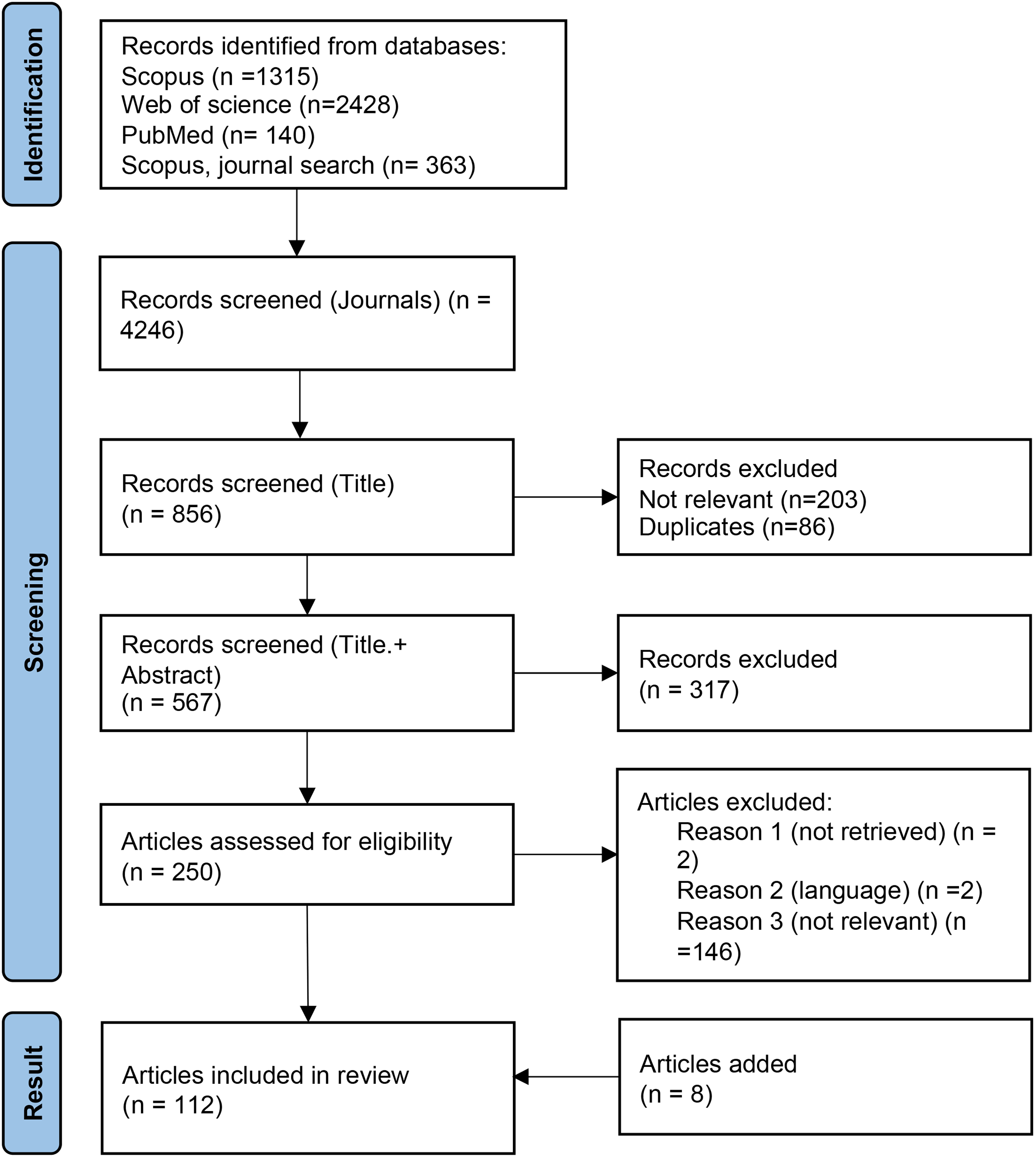
The methodological steps used to perform the search.
The bibliometric analysis included all English-language articles obtained through the search in Scopus, Web of Science and PubMed (Appendix 1). A visualisation of the research themes was conducted with the help of the program VOSviewer version 1.16.19 (https://www.vosviewer.com/). The title and abstract were used for the 250 articles that were assessed for eligibility and a threshold of ten mentions of a keyword was used. With these criteria, 112 terms met the threshold, but after a relevance score, only 80 terms were selected.
In the in-depth thematic analysis, we identified neighbourhood characteristics and types of land use that were most associated with gun-related violence. The characteristics of the neighbourhoods were split into ten different categories: the importance of socioeconomics, race and ethnicity and diversity, housing-related characteristics, characteristics of people living in these neighbourhoods identified by age and sex/gender, household, work status and education, presence of drugs and gangs, and finally, indications of types of community and crime prevention programmes. Out of the land-use factors, we identified different categories that are well-known by urban planners: alcohol outlets, housing-related attributes, stores and services, education facilities, food service, transport, commercial areas, green areas, community services and others. We reported the ‘frequency of appearance in the results section’ of neighbourhood characteristics followed by those related to the types of land use. The level of appearance was defined as a ‘variable/factor that shows significant impact on gun-related violence’ or a ‘factor mentioned as being associated with this type of violence’ or a ‘factor that has been tested but turned out to be nonsignificant’. Finally, the final section highlights the recommendations provided by the literature to combat gun-related violence in public places.
Findings
Bibliometric Analysis
Out of 4,246 articles, 112 articles were included in this review. The oldest article included was published in 1975 in the Journal of Criminal Law and Criminology investigating homicide in Chicago between 1965 and 1973 (Block 1975). The author found that 2% of the city blocks accounted for 22% of homicides. The area was also among the most economically deprived where young black males were over-represented both as offenders and as victims. One of the latest articles was published in Journal of Research in Crime and Delinquency by O'Brien and Ciomek (2023). They studied the persistence of violence in neighbourhoods in Boston and found that social disorder, private conflict, private neglect and public denigration had an increasing effect on gun-related violence, but the effect varied according to geographical scale.
Overall, despite expanding theoretical attention in the 1970s, research on land use and crime was primarily on individual land uses but in the 1990s, as ‘place’ has received more attention the focus dramatically changed to become mainstream. Research has focused on the impact of businesses, schools, bars, public transportation, and several other specific land use (Stucky, 2017).
Figure 2 shows the number of publications by year and by type of journal: Criminology/Sociology, Medicine/Epidemiology and Geography/Environmental studies. As could be expected, half of the articles are published in journals in Criminology/Sociology followed by journals in Medicine/Epidemiology and then journals in Geography/Environmental studies, urban planning accounting for less than 10% of the total amount. Note that more than 60% of the articles were published in the past 10 years; the year with most published articles was 2018 with 12 articles, and 2022 comes as close second with 11 published articles.
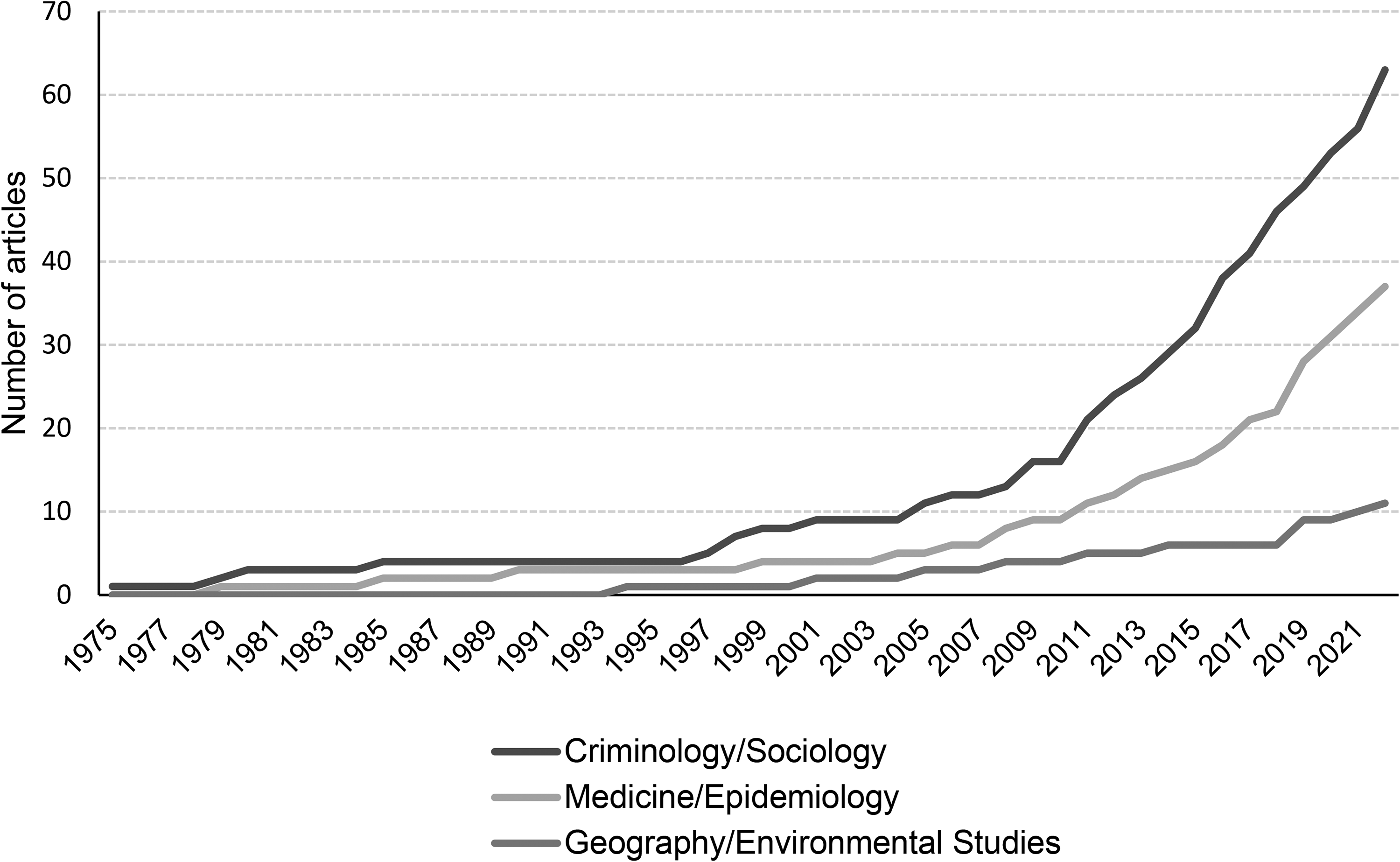
Annual share of total publications on firearm violence in public places: land-use and neighbourhood-level characteristics, 1970–2020, N = 112.
There was a great over-representation of studies from the United States (82%), with the city of Chicago having the highest number of articles followed by Los Angeles. From South America, studies from Brazil, Colombia and Argentina were represented, followed by European studies (Italy, the Netherlands, France, the United Kingdom and Sweden) and New Zealand.
Except for the literature overviews, descriptive quantitative or confirmatory statistical analyses are used in all articles. Regression analysis was the most widely used method (56%, n = 62). The most common regression type was negative binomial regression, which represented 26% of the regression methods, while different types of Poisson regressions were used in 18% of the studies. Other regressions include ordinary least square and logistic regression, followed by Bayesian, fixed effect and geographically weighted regression. As many as 34% (n = 38) of the total used some sort of spatial analysis as their main objective, 18% of these were Risk Terrain Models (RTM) followed by cluster analysis of different types. While almost all studies made use of some sort of statistical test, this was the case as a main method in 12% (n = 13) of the studies. Most of these, 85%, used descriptive statistics with two of them also utilising near-repeat calculator to study the pattern of shootings and hand grenade attacks (Sturup et al. 2018; Sturup, Gerell, and Rostami 2020). Barata et al. (1998) used Spearman's rank correlation to study intra-urban differentials of death rates and weighted displacement quotient was used to assess the effect of police interventions by Piza and O'Hara (2014). Other approaches were used in 5% (n = 6) of the total and represented a diverse sample of techniques. The Lotka-Volterra competition model was used to analyse the ecology of gang territories by Brantingham et al. (2012), while Drake, Lemke and Yang (2022) utilised joinpoint trend analysis for investigating clustering of homicides. Three of them made use of Bayesian statistics.
The gender of the lead author was defined on the binary scale of woman or man. The classification was based on the first name and in cases of uncertainty, a profile on ResearchGate or a university website. For all years, the number of articles with a woman as first author were 36% (n = 40). The ratio seems to be stable over time as the rate for the past 3 years, 2020–2023, was 35% (n = 9) women and 65% men (n = 17), while there was a slightly higher share of women for the first 30 years, 1975–2005, with 41% (n = 7) women and 58% (n = 10) men.
Figure 3(a) shows the network of words used in the title and abstract of the 250 articles assessed for eligibility. Figure 3(b) shows the network connected to the word ‘shootings’ where we see connections to a wide variety of words, from public space to police. While neighbourhood characteristics showed up in many of these clusters regardless of how we split the clusters, land-use factors rarely appear in titles and abstracts and therefore become ‘invisible’ in the visualisation in VOSviewer.
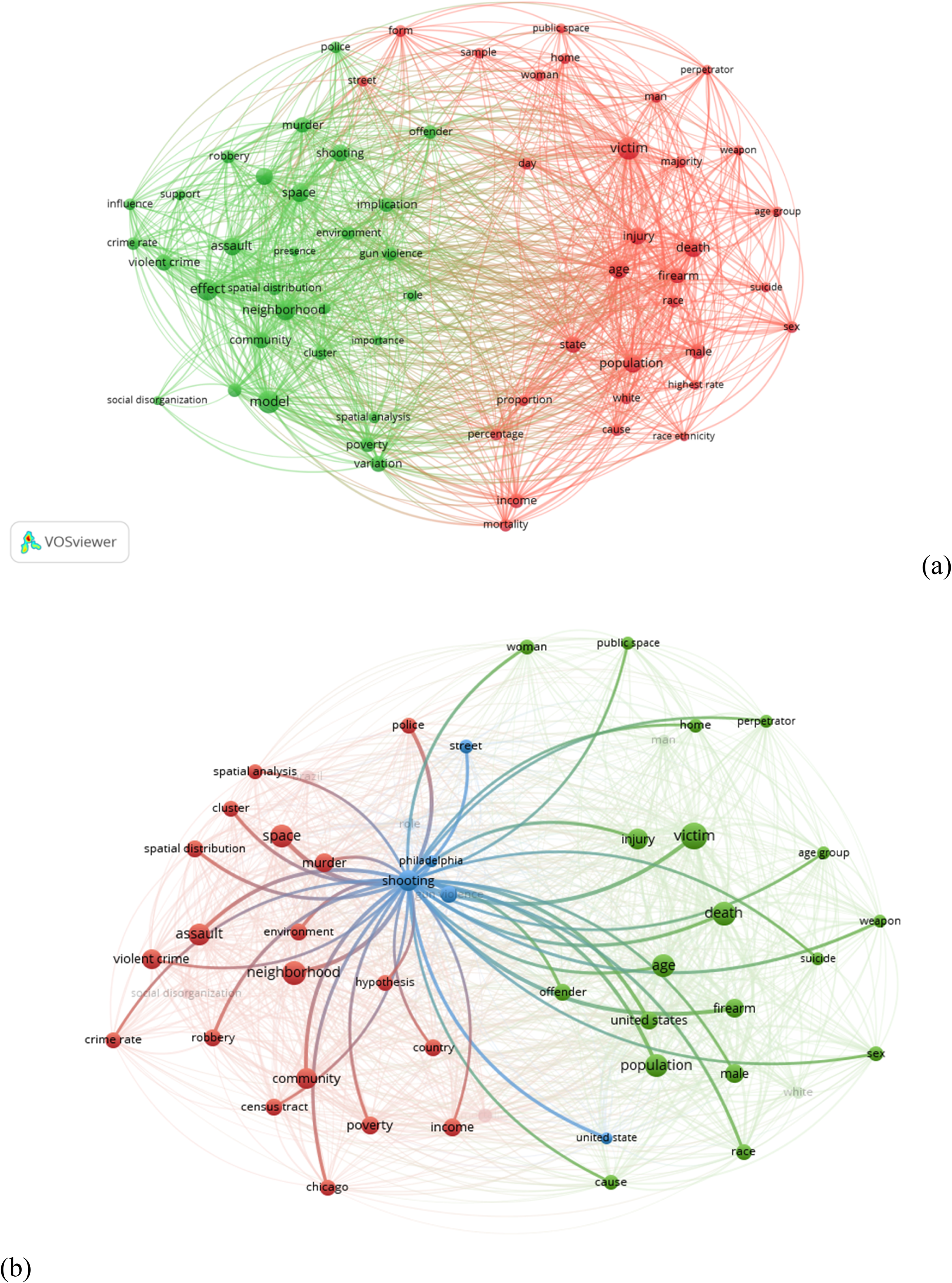
(a) Network visualisation map of title and abstract words from the 250 assessed articles. (b) The network connected to the word “shooting”.
In-depth Analysis by Research Themes
Figure 4 presents a model of the conceptual framework used for the analysis in this study. We first identify neighbourhood and population characteristics that influence firearm violence in the Neighbourhood level characteristics that attract firearm-related violence sections. Then, we focus on the effect of land uses on firearm-related violence in the Land uses associated with firearm-related violence section. Finally, the outcome of firearm violence sparks the need for interventions presented in the Safety interventions to tackle firearm-related violence section.
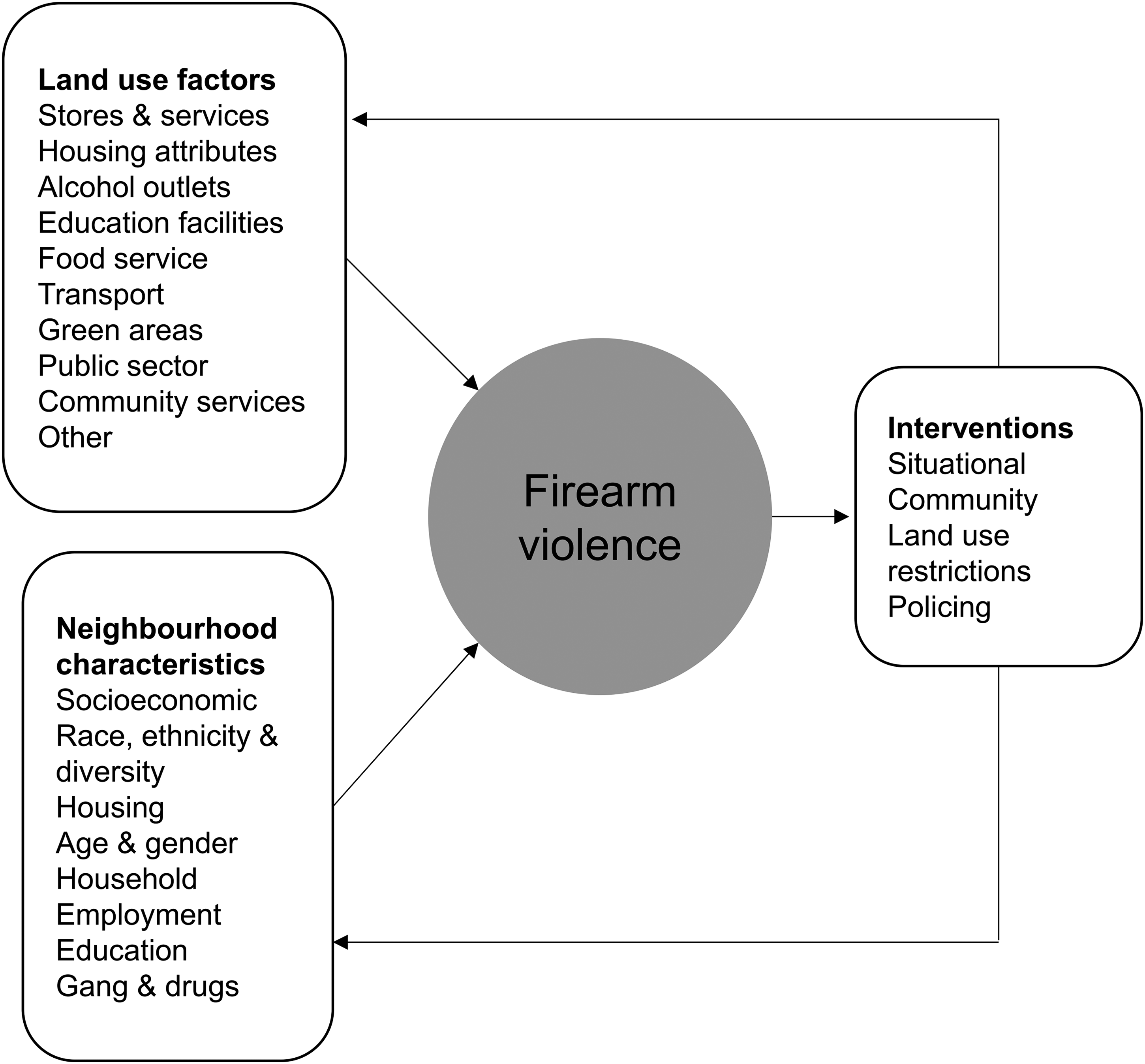
Conceptual framework model for the study.
Neighbourhood Level Characteristics That Attract Firearm-Related Violence
Figure 5 shows the proportion of the effect of appearances/measurements of keywords by category in articles (left axis, bar chart) and the proportion of the total appearances/measurements by category (right axis, white dots). For example, about a third of the appearances analysed the effect of poverty, deprivation and socio-economic conditions on firearm violence and more than half are associated with fire arm violence. Race, ethnicity and ethnic diversity at neighbourhood level were the second most common factors studied in these studies, followed by housing (type of tenancy), population, age and gender, community and crime prevention programmes, and finally household characteristics. On average, articles assessed (or controlled for) three neighbourhood-level characteristics per article at the same time (e.g., population demographics, poverty and housing ownership).
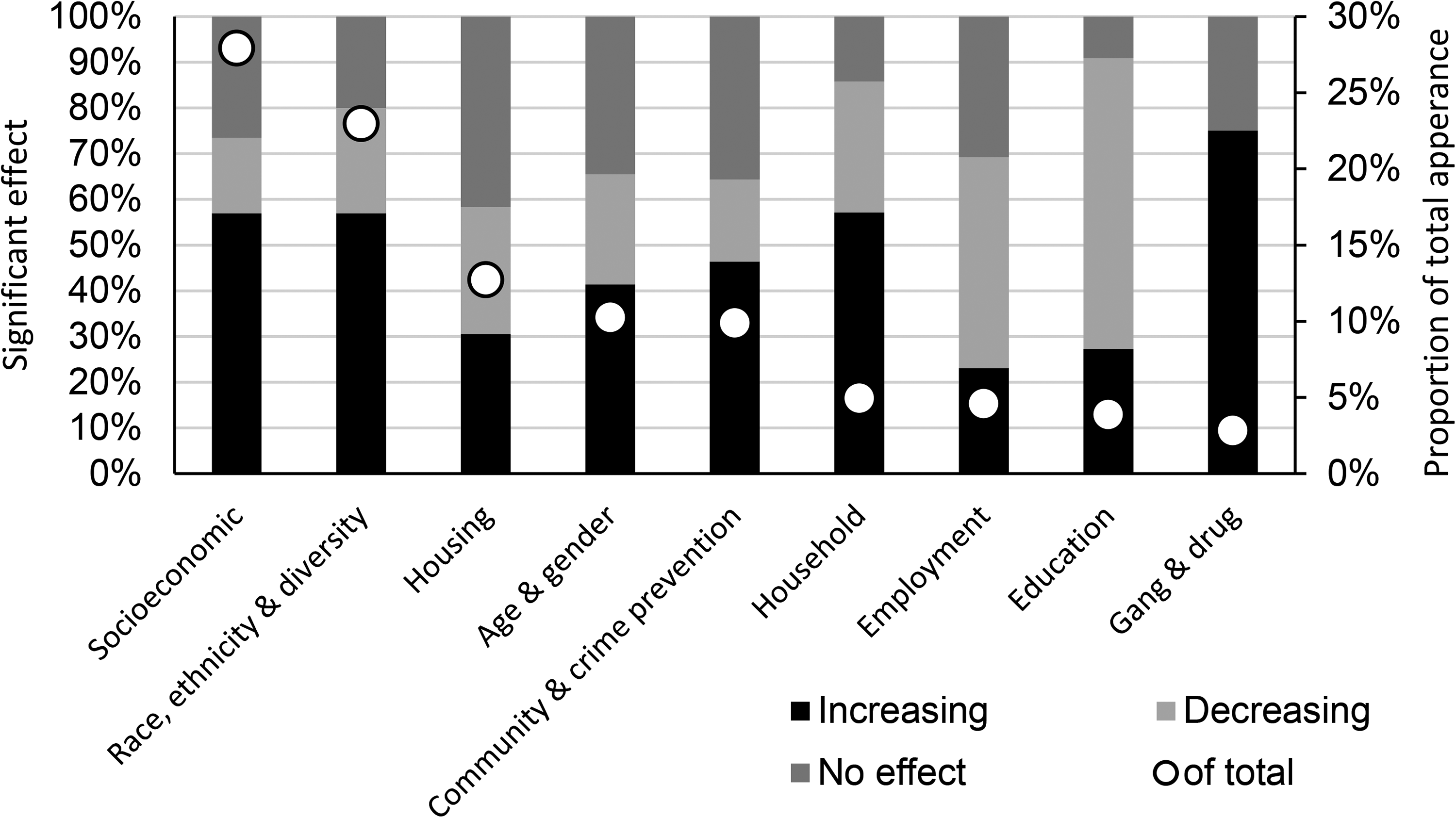
Neighbourhood-level factors affecting firearm violence (proportion of effect per category), and proportion of appearances in articles shown by the white dots (N = 69 articles). A descriptive table with the 69 articles is available on request.
The impact of gang and drug-related activities on firearm violence is one of the least investigated in the literature, though it is consistently associated with it (see Figure 5). Findings are also conclusive about the reducing effect of a population's educational level and employment status (e.g., having a job) on firearm violence. Note that very often the demographics and socio-economic characteristics of the population were implemented as ‘controls’ in the models, not as the ‘causes’ of firearm-related violence. The mechanisms linking these neighbourhood characteristics and firearm violence are often complex and differ highly from study to study as discussed in more detail in the next section.
Socioeconomic characteristics
There were 26 measures of socioeconomic disadvantage alone, 20 of which showed an association with an increasing effect on firearm violence, one a decreasing effect and five no effect. A high concentration of poverty increases the risk of firearm violence in an area, meaning that both the risk of being a victim and an offender of firearm violence is higher in these areas. Hipp and Yates (2011) showed that such effects of poverty are not homogenous, as their results indicate that a poverty level of between 25% and 40% strongly increased the number of murders, while with higher levels of poverty, the effect levelled off. Other relative measures of poverty, such as disadvantage and social stress, were also studied. For instance, Dalve et al. (2021) found a strong relationship between firearm injuries and neighbourhood disadvantage, where one decile of disadvantage increased firearm injuries by 28%. Moise (2020) found no significant effect for economic inequality on violent crimes in Dade County. Morenoff, Sampson and Raudenbush (2001) found that concentrated inequality of socioeconomic resources was directly related to the rate of homicides in an area.
Race, diversity and immigration
The effect of immigration was assessed 18 times in the form of immigrant concentration, Latino immigration and those who are foreign born. Latino immigration in Chicago shows associations with firearm violence (Wang 2005; Wang and Arnold 2008), but in other cases, immigration was shown to have a decreasing effect on firearm violence (e.g., Martinez, Stowell and Iwama 2016), or in five other case studies, no effect (e.g., Akins, Rumbaut and Stansfield 2009). Index of dissimilarity, a measurement of segregation, showed no effect on fatal assault in the study by Krieger et al. (2017), while ethnic segregation was shown to increase the risk of homicides in Baton Rouge (Barton, Valasik and Brault 2021). Martinez, Stowell and Iwama (2016) found an effect for neighbourhood diversity, meaning that homogeneity increases the risk of homicide. Composite diversity, a measurement of ethnic integration, was shown to have a decreasing effect on violent injuries in Oakland and showed the greatest effect in block groups with an African American or Hispanic majority (Berezin et al. 2017).
Housing conditions/ownership
Owner-occupied housing was shown to have a decreasing effect on firearm violence in three studies (Barton, Valasik and Brault 2021; Caetano et al. 2021; Gjelsvik, Zierler and Blume 2004). Gjelsvik, Zierler and Blume (2004) found that a 10-fold increase of owner-occupied housing resulted in a 12% decrease in homicide in neighbourhoods in Massachusetts and Rhode Island. High rates of tenant-occupied housing was found to correspond to high-risk areas in two studies (Drake, Lemke and Yang 2022; Sadler et al. 2022). In Harries County, high-risk areas had 65% tenant occupation while low-risk areas only had 12% (Drake, Lemke and Yang 2022). For Milwaukee, most hot spots for homicide had higher tenant occupation than the average in the city. Areas with no pattern and emerging hot spots instead had lower than average tenant occupation, highlighting the fact that the relationship between housing ownership and firearm-related violence is complex (Sadler et al. 2022). Newly built housing was shown to have a decreasing effect on homicide in a study about gentrification in Chicago (Papachristos et al. 2011), but gentrification itself in an area was found to increase the risk of homicide in Denver in a study by Hughes, Schaible and Jimmerson (2020). In Porto Alegre, Brazil, Santos, Barcellos and Carvalho (2006) found that overcrowding and substandard housing had an increasing effect on homicide in an area. Poor housing conditions, without proper sanitation, showed the highest values. This is confirmed by a previous literature overview (Lens 2013) which found that although the precise mechanisms through which subsidised housing affected violent crime were unclear, it is most likely that concentrated disadvantage played the greatest role where effects were observed rather than the physical attributes of housing.
Household conditions
The composition of households and its effect on firearm violence was assessed with relation to several aspects. Female-headed households were found to have an increasing effect on firearm violence in five studies (Berezin et al. 2017; Dobrin, Lee and Price 2005; Gjelsvik, Zierler and Blume 2004; Jones-Webb and Wall 2008; Livingston et al. 2014), while both Zhang et al. (2015) and Robinson et al. (2009) found no significant effect. The percentage of divorced males was shown to increase the risk of gun homicide in a study by Semenza, Stansfield and Link (2022), and when differentiating by race, white divorced people were a higher risk factor than black. Patino et al. (2014) found no significant relationship for divorced parents and homicide in their study in Medellín, Colombia. In Minneapolis, the proportion of single-headed families was associated with less criminal violence, even though the effect was small (Britt et al. 2005). Avakame (1997) found that family stability had a decreasing effect on homicide in Chicago, and the effect persisted when checking for population heterogeneity. Messner and Tardiff (1985) found that both single males and people living alone were associated with an increased risk of homicide. Robinson et al. (2009) did not find any significant effect of the rate of children in foster care in a neighbourhood and homicide.
Work & employment status
Having or not having employment is in many studies shown to have a close relationship to firearm violence in a neighbourhood. Most of the studies point towards having high employment rates or job accessibility as a decreasing factor for firearm violence, for example communities immune to homicide in Chicago were shown to have lower rates of unemployment than neighbourhoods that experienced homicide (Ferrandino 2018). In a study in Prince Georges County, a 1% increase of unemployment in a neighbourhood increased the odds of being a homicide victim by 1.4 (Dobrin, Lee and Price 2005). Kyriacou et al. (1999) found that employment was one of the two variables, the other being mean income, with the strongest correlation to gang-related homicides in a neighbourhood where both had a decreasing effect. Professional employment was used as a variable by Martinez, Stowell and Iwama (2016), who found it to have a decreasing effect on homicide in San Diego. Patino et al. (2014), however, found no significant effect of unemployment in their models of Medellín, Colombia, and Caetano et al. (2021) found that unemployment had a small decreasing effect on violent crime in California.
Gang and drug-related activities
Gang, organised crime and drug-related activities were found to have an increasing effect on firearm violence. In a study in St. Louis, Huebner et al. (2016) found that the level of gang membership increases the risk of gun assault both in immediate and neighbouring communities. However, it is important to note that the level of gang membership may have little to do with the actual rate of firearm-violence and more with police action in these areas given the reality of already existing higher rates of violence. Moreover, Robinson et al. (2009) found a positive linear relationship between gang densities in an area and the number of homicides per square mile in Los Angeles. Additionally, zip codes with high gang densities accounted for 40% of the homicides while only representing 16% of the total county area. In Calí, Yaccelga and Castillo-Valencia (2019) found that a high density of different gangs in an area increased the risk of gang-related homicides, as it increased the risk of them having borders in close proximity to each other. Cohen and Tita (1999) studied the sharp growth of homicides in the 1990s in Pittsburgh and found that the newly emerging crack markets were not a direct factor, while gang-related homicides were. In St. Louis, the occurrence of a gang or drug homicide was found to decrease the risk of another homicide of the same type in the following year (Cohen et al. 1998). The same pattern was found in Chicago; however, for drug homicides there was a temporary increase in the risk, following the year of decline.
Age and gender
Within age and gender, the most widely assessed factors were young and male. The measure of young spanned from the age of 7 to 35 with different intervals and the effect on violence varies. Caetano et al. (2021) studied the ratio of different age groups in a population and found an increasing effect for ages below 18, a decreasing effect for youth between 18 and 29 and an increasing effect for the ages of 30–39 and 40–49. Browning and Jackson (2013) found that males were more likely to witness severe violence in Chicago. Messner and Tardiff (1985) found that the percentage of males had an increasing effect on homicide, while the percentage of males 21–35 years of age had a decreasing effect, and black males showed no significant effect. In a study in Oakland, the proportion of males in a population was the second highest indicator in regard to violent injuries; only the rate for nonhigh school graduates was higher (Berezin et al. 2017).
Educational levels
In most studies, lower degrees of education in a neighbourhood (or a lower percentage of educated individuals) were associated with firearm violence. Educational attainment was found to be significantly lower in high-risk areas versus low-risk areas in Harris County that was studied by Drake, Lemke and Yang (2022). In Chicago, the level of education of male adults showed a significant difference between communities immune to homicide and those communities affected by it (Ferrandino 2018). Males over 25 with less than a high school education were 19% in immune areas, whereas in afflicted areas it was 40%. When looking at males over 25 with a college degree, the relationship was the opposite, with 57% in immune areas and only 12% in afflicted areas (Ferrandino 2018). In Rhode Island and Massachusetts, a 10% increase in higher education in a neighbourhood was associated with a 12% reduction of the risk of homicide (Gjelsvik, Zierler and Blume 2004). Conversely, Caetano et al. (2021) found that the percentage of residents with a high school education, compared to those without a high school education, was associated with violence in California.
Community and crime prevention
Active streets were shown to have a decreasing impact on homicide in a study in Chicago (Browning and Jackson 2013). The effect was lasting when adding socioeconomic and land-use control variables. Morrison et al. (2017) found that neighbourhood connectedness, a factor containing several neighbourhood characteristics, decreased the odds of being the victim of a gun assault in Philadelphia, while Barton, Valasik and Brault (2021) suggested that the influence of environmental characteristics of the neighbourhood on homicide depended on socio-demographic characteristics. Collective efficacy on a street segment level (measured as the number of calls residents made to report trash, graffiti, potholes, etc. to the mayor's action centre) had a decreasing effect on shootings in Indianapolis (Magee 2020), but both physical disorder and collective efficacy lost their significance when information from nearby areas was included in the analysis. O'Brien and Ciomek (2023) study in Boston also explored smaller segments within a neighbourhood in their analysis of gun-related violence, finding that there was substantial consistency in which parcels experienced public violence across years. In the Netherlands, Nieuwbeerta et al. (2008) explored the effect different neighbourhood characteristics had on each other in a study. They found that low social cohesion increased the probability of homicide in an area, while confidence in the police did not show any significant effect. Police intervention in the form of increased foot patrols in high-violence areas in Newark was studied by Piza and O'Hara (2014). They found that shootings decreased by over 60% relative to the precinct, while the effect for murder was not statistically significant. The concentration of gun seizures of the police showed no significant effect on gun assaults in St. Louis (Huebner et al. 2016).
Land Uses Associated With Firearm-Related Violence
Figure 6 summarises the impact of researched land uses on firearm-related violence. Stores and services (e.g., convenience stores, grocery stores, ATMs, drugstores, laundries/dry cleaning services, tobacco retailers, petrol stations and overall commercial land use) with most appearances (29 in total) are linked to increases in firearm-related violence.
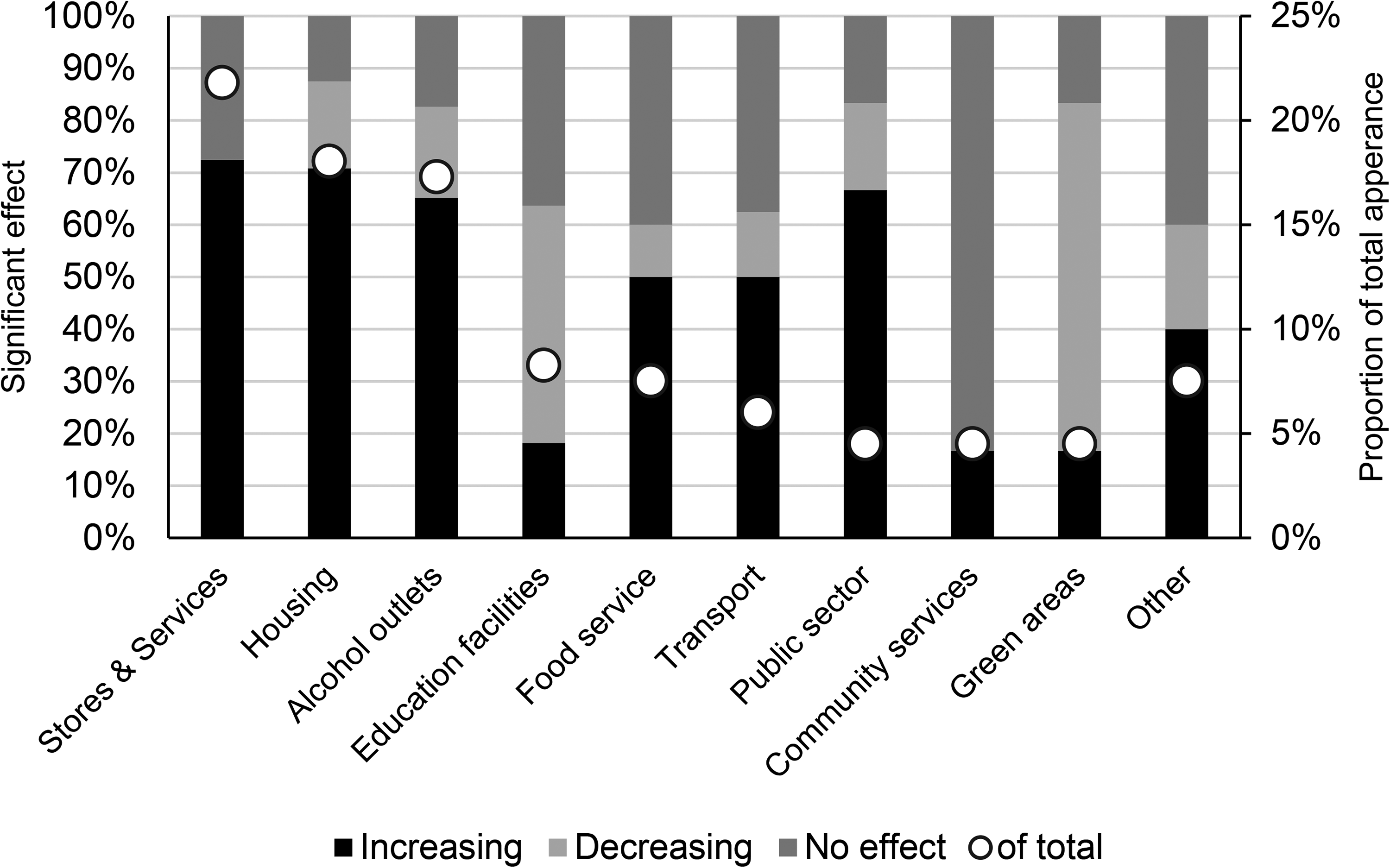
Land-use factors affecting firearm violence (proportion of effect per category), and proportion of appearances in articles shown by the white dots (N = 43 articles). A descriptive table with the 43 articles is available on request.
Other land uses that are also associated with firearm-related violence are public sector (e.g., emergency services, hospitals, police stations, medical clinics, and public hospitals), housing-related attributes (e.g., vacant housing, public housing, foreclosures, blighted property, and vacant lots) and alcohol outlets (e.g., bars and restaurants) in this order (Figure 6). Protective land-use factors seem to be green areas, such as parks, and educational facilities such as schools and universities (excluding studies of school shootings because they were not at the intra-urban level). The mechanisms are not well understood. In total, land-use factors were assessed 133 times in 43 articles (38% of 112), often checking for population and other neighbourhood characteristics. Some show an increasing effect (risk factors) on firearm-related violence, while others show a decreasing (protective factors) or nonsignificant effect. Below, we discuss these associations in more detail.
Stores and retail services
Stores and services include a variety of different establishments. Both convenience and grocery stores show an increasing effect on firearm violence. Valasik, Brault and Martinez (2019) found that being within 533 m (1750 ft) of a convenience store in Baton Rouge, Louisiana increased the risk of being a victim of a homicide by more than five times than in the rest of the city. Muggy et al. (2022) found that convenience stores in Pittsburgh had an increasing effect on gun crime at a distance above 25 m (85 ft). In Los Angeles, the analysis was split into low and high socio-economic status areas for convenience stores and supermarkets. There was an increasing effect on gun crime for both areas. However, the effect was much greater in areas with low socio-economic status.
The causal relationship between certain facilities and firearm violence is clearly connected to area-specific factors that are not always revealed in these studies but may be essential to explain the mechanisms between these establishments and violence. For instance, in Bogotá, Colombia, the proximity to drugstores was associated with homicides (Giménez-Santana, Caplan and Drawve 2018), while the density of ATMs was associated with homicide in St. Louis (Fox et al. 2021). Car checking outlets were a part of the risk area factor for homicides in a study in Irvington by Caplan, Kennedy and Miller (2011). Petrol stations did not show any significant influence on gun crime as regards proximity, while at a greater distance, they had a slightly decreasing effect in New Orleans (Muggy et al. 2022). In Newark, petrol stations did not have any effect on shootings in a study by Xu and Griffiths (2017), nor for medical or recreational dispensaries of marijuana in Denver (Hughes, Schaible and Jimmerson 2020). Moreover, Boessen and Hipp (2015) analysed the impact of commercial areas on homicide at both block and block group level and found that commercial buildings had an increasing effect on violence at block level, but with a nonsignificant effect at group level. In a study about homicide at the workplace, Copeland (1985) found that the most common place was at small businesses, which constituted the place of 10% of the homicides while 7% occurred at machine shops.
Housing-related attributes
Vacant housing was the most frequent factor analysed — in all studies, vacant housing increased firearm violence. One example is the study by Drake, Lemke and Yang (2022) in Harris County, Texas that found that high-risk areas for firearm violence were higher in vacant property than low-risk areas. For blighted vacant property, shootings occurring within 61 m (200 ft) of the property increased by 1.3 times in Detroit (Oliphant 2021). Inlow (2020) showed that mixed land use compared with single families increased the count of homicide in Portland. In a study in St. Louis, Missouri, Fox et al. (2021) found that vacant housing, public housing and vacant lots all had a relative risk factor higher than 4.5 for homicides. However, Griffiths and Tita (2009) showed that there was no significant effect of public housing on homicide in Los Angeles. Similarly, foreclosure was not shown to have any effect on homicide in Indianapolis (Stucky, Ottensmann and Payton 2012). Jay et al. (2019) found that the demolition of vacant buildings decreased firearm assaults in neighbourhoods in Detroit (an 11% decrease with 5 demolitions), supporting the evidence of vacant housing as an important factor in firearm violence prevention. Livingston et al. (2014) analysed the distance between firearm violence and the victim's home and found that 15% were injured at their home address, 25% within one block and 55% within one mile. Similarly, Brolan, Wilson and Yardley (2016) found that 15% of contract murders occurred at the doorstep of the victim's home, while 22% were in an enclosed public space.
Alcohol outlets
Alcohol outlets consist of a variety of establishments, from the bar at the corner of the street to large liquor and beer stores. There were 12 articles that assessed the effect of alcohol outlets on firearm violence. Out of 23 mentions of different types of alcohol outlets in studies, 15 showed an increasing effect, two a decreasing and five a nonsignificant effect. Britt et al. (2005) showed that adding one alcohol establishment to a neighbourhood results in an increase in the number of criminal violence acts. Oliphant (2021), on the other hand, analysed the distance to alcohol outlets, where the effect was 7.8 times as many shootings within 30.5 m (100 ft) and 4.0 times within 61 m (200 ft). Jay (2020) showed an increase in shootings within one block from a beer store, but this effect disappeared at a distance of two blocks. Similarly, Xu and Griffiths (2017) found an increasing effect on shootings in proximity to liquor stores, with a decreasing effect with a greater distance. In a study in Detroit, liquor stores were the second most common place attracting lethal violence in 9% of cases, only after bars in 33% of cases (Swartz 1980). In Chicago, Crandall et al. (2015) did not find any significant city-wide pattern for proximity to liquor licences. Although liquor stores show an increased effect on firearm violence in several studies, Morrison et al. (2017) showed the opposite relation in a study on gun assault in Philadelphia, and for Detroit, Muggy et al. (2022) found no significant relation for gun crime. Caetano et al. (2021) found that the percentage of off-premises outlets of the total amount of alcohol outlets had a decreasing effect on violent crime, while on-premises outlets such as bars had a higher risk factor. Two studies showed that the effect of alcohol outlets on violence varies over the time of day (Oliphant 2021; Morrison et al. 2017).
Educational facilities
Educational facilities were assessed in six articles where schools, public schools, school zones and universities were investigated. The effect of universities on gun crime varied by town in a study by Muggy et al. (2022), as it showed a decreasing effect in Detroit, New Orleans and Pittsburgh, but showed no significant effect in Los Angeles. Levine et al. (2021) did not find any effect of public schools on firearm homicides in Harris County while in Bogotá, Giménez-Santana, Caplan and Drawve (2018) showed that the density of public schools was associated with homicide in the area. Schools were associated with gun violence in Boston (Barboza 2018), but showed a decreasing effect on gun crime in Los Angeles and New Orleans (Muggy et al. 2022), and no effect was found on shootings in Detroit (Oliphant 2021).
Food services
Restaurants are in some studies analysed together with bars, as examples of on-premises alcohol outlets. However, not all restaurants serve alcohol and therefore they are regarded primarily as food-service establishments. The effect of restaurants on gun crime was shown by Muggy et al. (2022) and it varies by distance. When Copeland (1985) investigated murders occurring at workplaces in Dade County, Florida, 9.6% of these happened at a restaurant which was the second most common place after small businesses. In a study on mass shootings in the United States, Zakopoulos et al. (2022) found that the density of both McDonalds and Starbucks decreased as the distance from the mass shooting site increased. Fast food was assessed in two additional studies that both found no significant effect (Muggy et al. 2022; Xu and Griffiths 2017). For coffee shops, Papachristos et al. (2011) found a decreasing effect on homicide when studying the effect of gentrification of neighbourhoods in Chicago.
Transit environments
In a study by Muggy et al. (2022), the effect of transit stations on gun crime differed between cities. For instance, in Pittsburgh and Detroit, transit stops showed a decreasing effect after 39 to 48 m (30 and 160 ft) respectively, while in Los Angeles they showed an increasing effect and no significant effect could be found in New Orleans. The presence of a transit stop in a neighbourhood showed no significant effect on murder in Denver (Hughes, Schaible and Jimmerson 2020). In Detroit, Oliphant (2021) found clustering of shootings at distances above 33 m (75 ft) from bus stops. Yang (2019) analysed clustering of gun-related crime in Chicago and found that hot spot areas were randomly distributed in the area, regardless of safe-passage routes.
Green areas
Shepley et al. (2019) performed a literature review based on 45 articles and concluded that the presence of parks and green spaces reduces urban crime. They found that being under tree cover reduces the risk of being the victim of gunshot assault in Philadelphia (Kondo et al. 2017). The relation was especially evident on weekdays and in low-income areas. Green areas were included in the analysis in six articles (Branas et al. 2011; Jay 2020; Kondo et al. 2017; Kuo and Sullivan 2001; Moise 2020; Shepley et al. 2019).While most found a decreasing effect on firearm violence, Moise (2020) showed that the neighbourhood greenness index had an increasing effect on violent crimes in Dade County.
Public sector
The public sector, apart from education, is represented by police stations, hospitals, and medical clinics. They were assessed in six articles (Clery et al. 2020; Fondevila et al. 2021; Giménez-Santana, Caplan and Drawve 2018; Levine et al. 2021; Morrison et al. 2017; Muggy et al. 2022). Police stations in Buenos Aires showed a crime-deterrent effect for short distances in a study by Fondevila et al. (2021), where they found that the rate of homicides increased as the distance to a police station increased, up to 600 m, whereafter the frequency instead decreases with distance. The average distance between stations was 1.035 km, thus the highest homicide rate seems to occur at the midpoint of neighbouring police stations. Clery et al. (2020) found that more than 50% of violent crimes in Detroit occurred within 5 km of a hospital and 99% within 10 km. In Harris County, Levine et al. (2021) did not find any significant effect of distance to the nearest hospital on firearm homicide. Both medical clinics and public hospitals, however, showed an increasing effect on homicide in Bogotá (Giménez-Santana, Caplan and Drawve 2018).
Community services
Community services were assessed in four articles (Giménez-Santana, Caplan and Drawve 2018; Levine et al. 2021; Morenoff, Sampson and Raudenbush 2001; Thomas, Harris and Drawve 2021). Neither voluntary associations nor local organisations showed any significant effect on homicide rates in Chicago (Morenoff, Sampson and Raudenbush 2001), and the same was valid for churches in Harris County (Levine et al. 2021). Thomas, Harris and Drawve (2021) did not find any significant effect for religious or civilian associations nor for family services on the level of gun crime in Little Rock. Community kitchens, however, did show an effect on homicide in Bogotá (Giménez-Santana, Caplan and Drawve 2018). The density of community kitchens was related to a relative risk value of 2.24 and as Giménez-Santana, Caplan and Drawve (2018) point out, it is usually a service delivered to socially disadvantaged neighbourhoods — thus it can be connected to the concentration of socio-economic disadvantage as a factor of firearm violence.
Other factors
Aspects ranging from firearm dealers, CCTVs, gang graffiti to street configuration is assessed in ten articles. The impact of firearm dealers on violence is inconclusive. Zakopoulos et al. (2022), who analysed mass shootings, and Semenza, Stansfield and Link (2022), who analysed gun homicides, found an increasing effect of firearm dealers; in the latter article, it was only valid for gun stores in surrounding counties. Levine et al. (2021) found that gun stores had a decreasing effect on firearm homicide but the majority did not find any significant effect (Moise 2020; Thomas, Harris and Drawve 2021). Semenza et al. (2022) found a more nuanced set of results; they showed that the effects of firearm dealers on shootings were suppressed in a citywide analysis, while it did have significant and strong attractive effects in disadvantaged neighbourhoods. CCTVs were found to have a decreasing effect in areas with already low crime rates, but in the whole city of Newark no significant effect could be found (Caplan, Kennedy and Petrossian 2011). The presence of gang graffiti, both in threatening and nonthreatening form, was shown to have an increasing effect on gang homicides by Hughes, Schaible and Kephart (2021).
Safety Interventions to Tackle Firearm-Related Violence
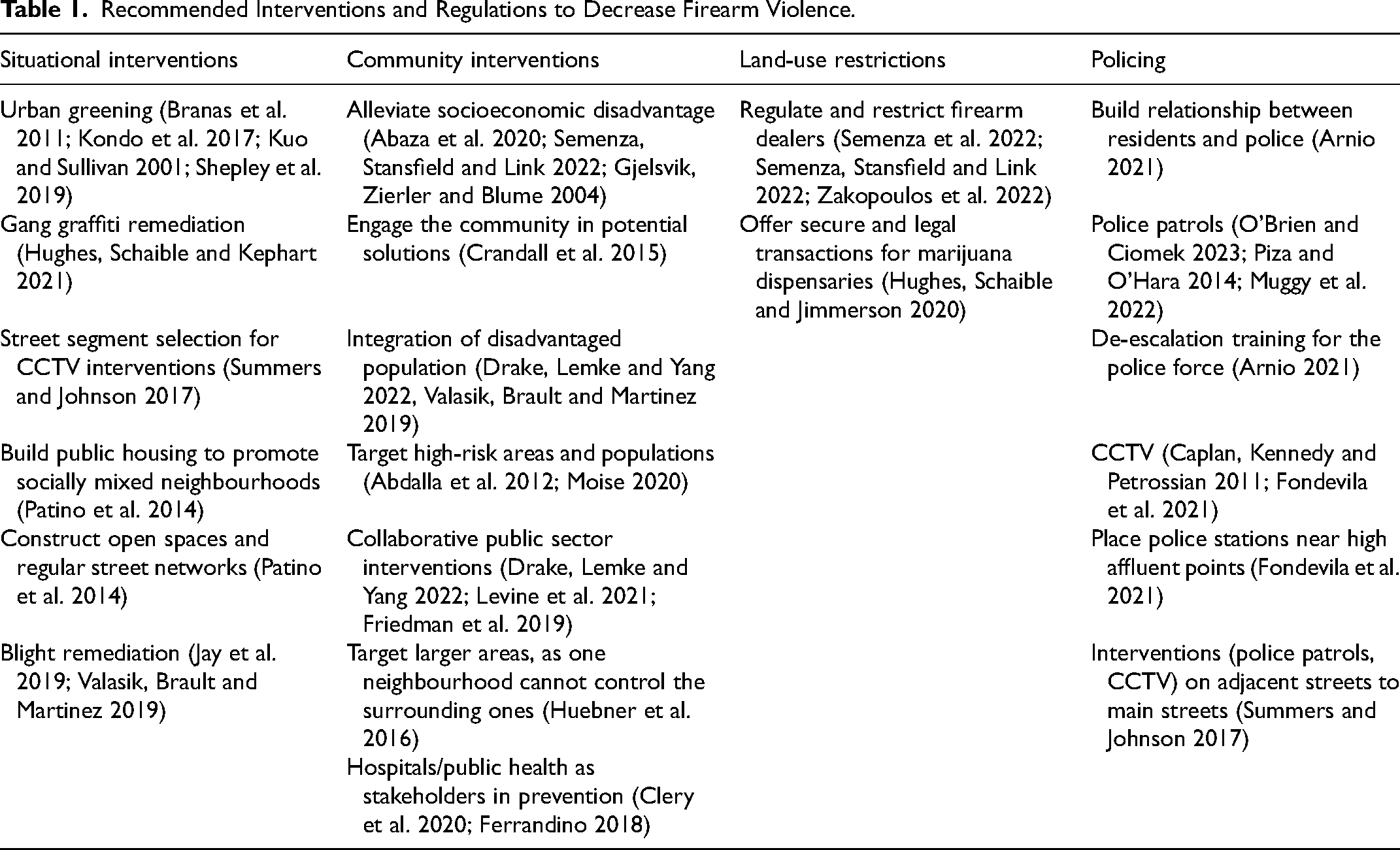
Table 1 summarises suggestions for interventions for tackling firearm-related violence deriving from the research discussed in previous sections. Note that most articles are from the United States and these suggestions are therefore better tailored to North American contexts.
Recommended Interventions and Regulations to Decrease Firearm Violence.
Community interventions
Strong social ties, high levels of trust among neighbours, local attachment as well as civic engagement are all considered protective factors against violence and crime in general but how are these effects brought about? Most of the suggestions concern poverty alleviation and deconcentrating disadvantage. Friedman et al. (2019) argue that large-scale investments in job creation, and educational opportunities together with gun control are fundamental. Increased incarceration of offenders is believed to put additional socio-economic stress on a community, and therefore Abaza et al. (2020) propose that the focus should be on alleviating socio-economic deprivation with targeted education, health, and employment efforts. To invest in communities is a long-term strategy and is unlikely to change violence patterns overnight, but Semenza et al. (2022) argue that this can create conditions that diminish the violence. Another way to tackle high-risk communities is to focus on integration of individuals. Drake, Lemke and Yang (2022) suggest that integration could potentially suppress structural racism and its socioeconomic consequences, which generate firearm violence.
Land-use restrictions
Even though firearm dealers were found mostly to have no significant effect on firearm violence, three articles suggest regulations to restrict gun sales. Semenza et al. (2022) argue that targeting gun dealers in hot spots of gun crime could reduce the availability of firearms in the neighbourhood considerably. On the contrary, Semenza, Stansfield and Link (2022) suggest that controlling gun stores in affluent communities might be effective in curbing the flow of guns to illegal markets, from where most of the guns in disadvantaged communities come. To impose local gun restriction policies, such as restrictions for domestic violence offenders or shutting down inactive gun dealerships, could be an effective measure to reduce firearm access, especially to high-risk individuals, and thus reduce the risk of firearm violence (Zakopoulos et al. 2022). To reduce the risk of firearm violence in connection to marijuana dispensaries, Hughes, Schaible and Jimmerson (2020) suggest that effort is put into offering secure and legal transaction alternatives, as this is not offered by most banks.
Policing
Police-monitored closed-circuit television (CCTV) can be used to deter crimes, but the placement needs to be carefully evaluated and the effect should not be measured as an average for the city (Caplan, Kennedy and Petrossian 2011). Summers and Johnson (2017) highlight that interventions such as CCTVs and police patrols should include streets adjacent to main streets in their coverage in order to effectively suppress ‘outdoor severe violence’. Fondevila et al. (2021) suggest planning the placement of CCTVs in relation to police stations to cover areas with high levels of violence. If not possible, the police should cover the area by foot patrols. Muggy et al. (2022) suggest that foot patrols should concentrate on high-risk areas, such as convenience stores and transit stations in areas with low socioeconomic status. To focus police patrols not only on current hot spots but also on vulnerable areas is suggested by O'Brien and Ciomek (2023), while Piza and O'Hara (2014) highlight that any police interventions need to be designed to minimise displacement effects.
Parks and green areas
Branas et al. (2011) found that the greening of vacant lots reduces crime via an increase in social control on the streets. To plant trees in barren inner city areas was suggested by Kuo and Sullivan (2001) as a way to create safer neighbourhoods. Kondo et al. (2017) propose that local planners and policy makers include urban greening in crime prevention initiatives in high-crime areas. To provide safe, accessible green spaces to a community will according to Shepley et al. (2019) support desirable behaviour and additionally improve the wellbeing of the residents. Patino et al. (2014) suggest that a heterogenous and cluttered urban layout can provide concealment and escape routes for committing homicide, and therefore suggest that open spaces should be considered in city planning.
Conclusions and Recommendations
The bibliometric analysis shows that research is dominated by North American scholarship which took off primarily after the mid-1990s and experienced an increase during the 2010s. The generalisability of the findings for other city contexts is therefore limited. Previous reviews were either cross-sectional or focused on one type of violence often overlooking the impact of land use and neighbourhood factors on firearm-related violence. This review shows that land-use factors related to firearm-related violence rarely appear in titles and abstracts and therefore become ‘invisible’ in the international literature. The largest majority is composed of articles using confirmatory analysis and spatial methods (only a third of the articles has had a female author as their first author). This field is interdisciplinary, dominated by criminologists/sociologists, epidemiologists and other related disciplines that are not primarily focused on the environmental dimension of firearm violence.
In this review, we do not argue for a direct deterministic causal link between a particular land use feature and firearm violence but instead, we offer a comprehensive overview of types of land use and neighbourhood factors that matter for the geography of firearm violence regardless of city size, location and national contexts. How these environmental factors interact with each other and play out in each specific neighbourhood and city context is of course important to explain the mechanisms that generate firearm violence but this is outside the scope of the review and a matter of importance to be investigated in future research.
From this review we can discern several emerging patterns that illuminate the current state of research and its implications for planning practice:
First, situational factors (in isolation or in conjunction) such as commercial land use, vacant housing, bars and other alcohol outlets are often associated with firearm violence. These findings are important because urban planners can use this evidence to make informed decisions about land use zoning and future urban development policies. Planners can determine where certain types of businesses or housing should be located to minimise potential risks in future developments. For areas that already exist, local authorities can implement policies to regulate the density and location of bars and alcohol outlets in areas where firearm violence is a concern. Moreover, collaboration between urban planners and law enforcement agencies can be enhanced based on this evidence, hopefully leading to coordinated efforts to address firearm violence through urban design, community policing, and other crime prevention strategies. Finally, this evidence can also lead experts to engage with local communities to address their concerns related to violence (such as place and time avoidance), improving therefore people's safety perceptions. Second, we found that firearm-related violence is associated with neighbourhood-level factors such as gang and drug-related activities, poverty/socio-economic conditions, household characteristics and race/ethnicity. Planners can prioritise community development initiatives aimed at improving socio-economic conditions in disadvantaged neighbourhoods (resources and efforts could be on areas where firearm violence is more pronounced). This may also involve strategies to increase access to education, job opportunities, affordable housing, and social services. For instance, housing policies can be adjusted to address household characteristics associated with firearm violence. Third, although the mechanisms are not well understood and the methodology differs from study to study, findings show that a high/moderate educational and employment level in an area is protective against firearm violence as well as the presence of green areas and the presence of educational facilities. Thus, urban planners can prioritise initiatives aimed at improving educational attainment and employment opportunities in neighbourhoods with higher rates of firearm violence (for instance, this may involve partnering with local educational institutions, workforce development agencies, and employers to create training and job placement programmes). There is a need to prioritise the creation and maintenance of parks and green spaces in neighbourhoods to enhance the overall quality of life. These strategies have an intention to promote community wellbeing, safety and social equity, aligned with the goals of sustainable and inclusive urban development.
Our review of the literature has identified several additional areas where more research is needed. For instance, Livingston et al. (2014) call for improved records of nonfatal firearm injuries, as they are not as well documented as fatal injuries. In order to accurately understand how physical and social characteristics interact at neighbourhood level, Thomas, Harris and Drawve (2021) suggest the use of multilevel hierarchal models to aid the development of policies and community-level risk mitigation efforts. Recommendations also include interventions in high-risk areas, and two articles propose applying RTMs to gain such information (Caplan, Kennedy and Miller 2011; Valasik, Brault and Martinez 2019). Yang (2019) suggests that using a GIS platform to provide spatial information to residents is a way to build trust and in turn a better understanding of the community, which can aid in the work to reduce gun-related violence. Note that our findings show that although gang/drug related factors have the highest impact on fire arm violence, these factors are not often studied. Future studies should focus on the mechanisms between fire arm violence and gang/drug related activities.
Although relatively few studies make concrete suggestions for safety experts and planners to deal with firearm violence, the literature shows a few examples. Abdalla et al. (2012) and Moise (2020) argue that interventions should be targeted at high-risk communities in order to gain most effect, while Huebner et al. (2016), on the other hand, suggest that gun violence should be tackled broadly in society though long-term interventions. Gjelsvik, Zierler and Blume (2004) highlight that increased home ownership and access to college education as things that could improve socioeconomic conditions and in turn decrease the risk of homicide especially for men in the community.
Research is unanimous about the need to engage local stakeholders, such as community members, city leadership and the business community (Crandall et al. 2015). Following the same line of thought, both Levine et al. (2021) and Drake, Lemke and Yang (2022) call for collaboration of public-sector stakeholders and high-risk communities. Improved public health resources were mentioned by Ferrandino (2018) as important contributors to tackle homicide when it reached an endemic level, and Clery et al. (2020) argue that hospitals should be incentivised to participate in violence prevention as a part of their service to the community. Arnio (2021) proposes better police training to improve communication with communities, while Ferrandino (2018) calls for a new focus on communities that are ‘immune’ to violence in order to properly understand what deters violence, because so far, most studies centre around high-risk populations and neighbourhoods.
It is important to keep in mind that the reported studies utilised different methods and theoretical approaches, which makes it difficult to compare findings, over and above differences across contexts. For example, various studies showed how socio-demographic and land-use factors alone or in combination affect firearm-related violence, but it is unclear to what extent differences might merely be an artefact of the data and methods, even when similar methods were applied.
What this paper does not accomplish, nor does it attempt to accomplish, is proving an explanation for why homicides occur. As the title of this article makes it clear, this review focuses on where firearm violence takes place. Conclusions drawn here are based on hundreds of publications on land use and neighbourhood factors which are more likely to show ‘expected’ results than studies that are uncertain or with ‘unexpected’ findings. Our conclusions are based on original assumptions by authors referred here and the limitations of their research in terms of data, methods and theoretical frameworks. Using meta-analysis approaches, future research could consider whether it would be possible to calculate average effect sizes or other summary statistics for the key neighbourhood characteristics and land uses associated with fire gun violence. This would also enable researchers to account for the potential publication biases that selectively report positive effects. Despite these limitations, a systematic review of this kind can inform researchers and planners about the most common factors that pose a risk to and/or are protective against firearm-related violence, which is fundamental in the discussion of safety as an integral part of the social sustainability of cities.
Supplemental Material
sj-docx-1-jpl-10.1177_08854122231219918 - Supplemental material for Where Does Firearm-Related Violence Occur in Cities?
Supplemental material, sj-docx-1-jpl-10.1177_08854122231219918 for Where Does Firearm-Related Violence Occur in Cities? by Vania Ceccato and Jorun Westman in Journal of Planning Literature
Footnotes
Appendix
Declaration of Conflicting Interests
The authors declared no potential conflicts of interest with respect to the research, authorship, and/or publication of this article
Funding
The authors disclosed receipt of the following financial support for the research, authorship, and/or publication of this article: This work was supported by the Svenska Forskningsrådet Formas (grant number 2020-01999).

Supplemental Material
Supplemental material for this article is available online.
Author Biographies
References
Supplementary Material
Please find the following supplemental material available below.
For Open Access articles published under a Creative Commons License, all supplemental material carries the same license as the article it is associated with.
For non-Open Access articles published, all supplemental material carries a non-exclusive license, and permission requests for re-use of supplemental material or any part of supplemental material shall be sent directly to the copyright owner as specified in the copyright notice associated with the article.
