




Abstract
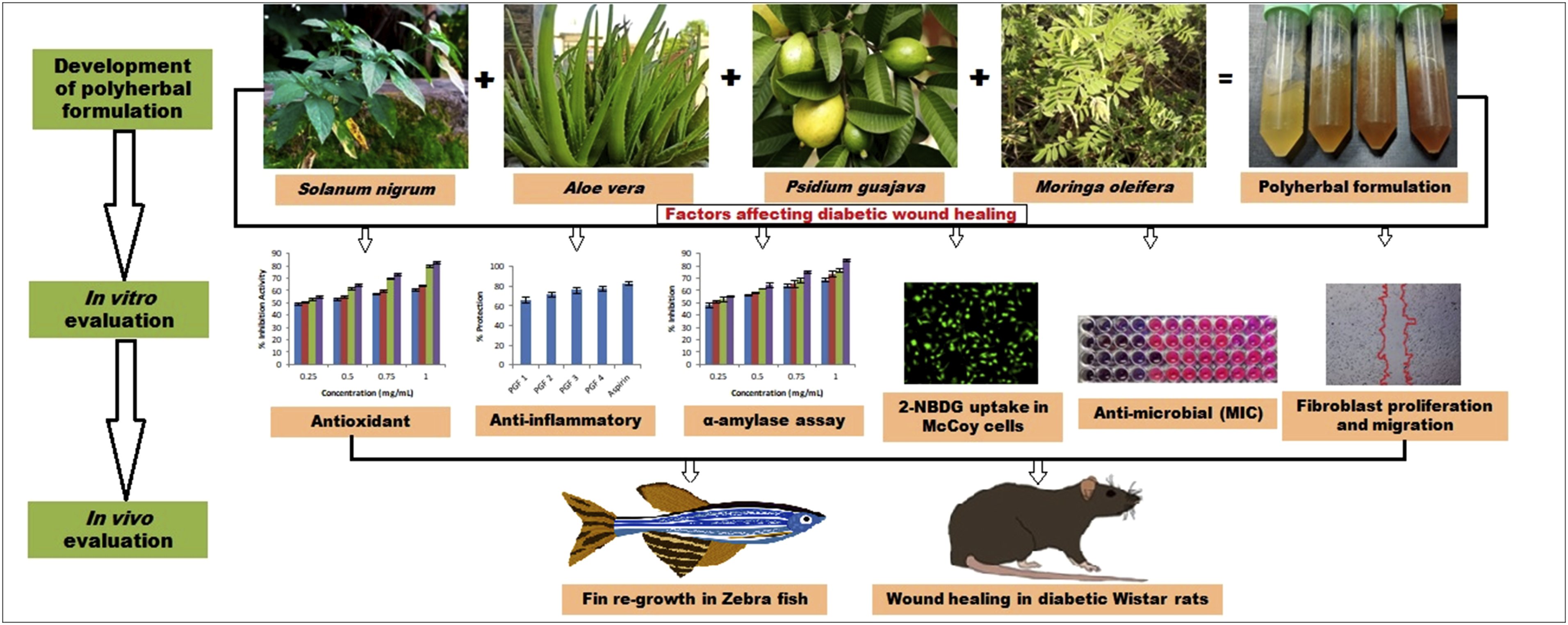
A common and fatal consequence of diabetes, diabetic foot ulcers (DFU) are linked to an increased risk of mortality and amputation. The current study aimed to develop and evaluate a polyherbal gel formulation (PGF) employing hydro-alcoholic extracts of Solanum nigrum (fruits), Aloe vera (leaves), Psidium guajava (fruits), and Moringa oleifera (bark) at different concentrations for the efficient treatment and management of DFU. The anti-oxidant, anti-diabetic, anti-inflammatory, anti-bacterial, and wound healing activities of PGFs were investigated using a range of cell-based in-vitro assays and animal models. Each PGF exhibited a remarkable α-amylase inhibitory activity, with PGF 4 demonstrating the highest inhibition of α-amylase (IC50- 0.093 mg/mL). Fluorescent microscopy analysis revealed significant glucose uptake by McCoy fibroblast cells in the presence of PGFs. In addition to this, the PGFs exhibited notable anti-bacterial efficacy against a spectrum of tested pathogens. The administration of PGFs to McCoy cells displayed enhanced wound closure, with 86.04 % closure rate in presence of PGF 4 in scratch assay. In-vivo assessments encompassed the evaluation of PGFs efficacy in inducing caudal fin regeneration in Zebra fish, revealing PGF 3 and PGF 4 to be effective with a substantial 56.67% and 73.3% regeneration, respectively, after 8 days post-amputation. In a diabetic rat model, wherein circular wounds were inflicted, a 14 days regimen of topical PGF 4 application demonstrated enhanced efficacy compared to the standard Calendula cream (79%) in expediting diabetic wound closure. Collectively, these findings underscore the promising potential of PGF 4 for advance therapeutic approach in the management of DFUs.
Get full access to this article
View all access options for this article.