




Abstract
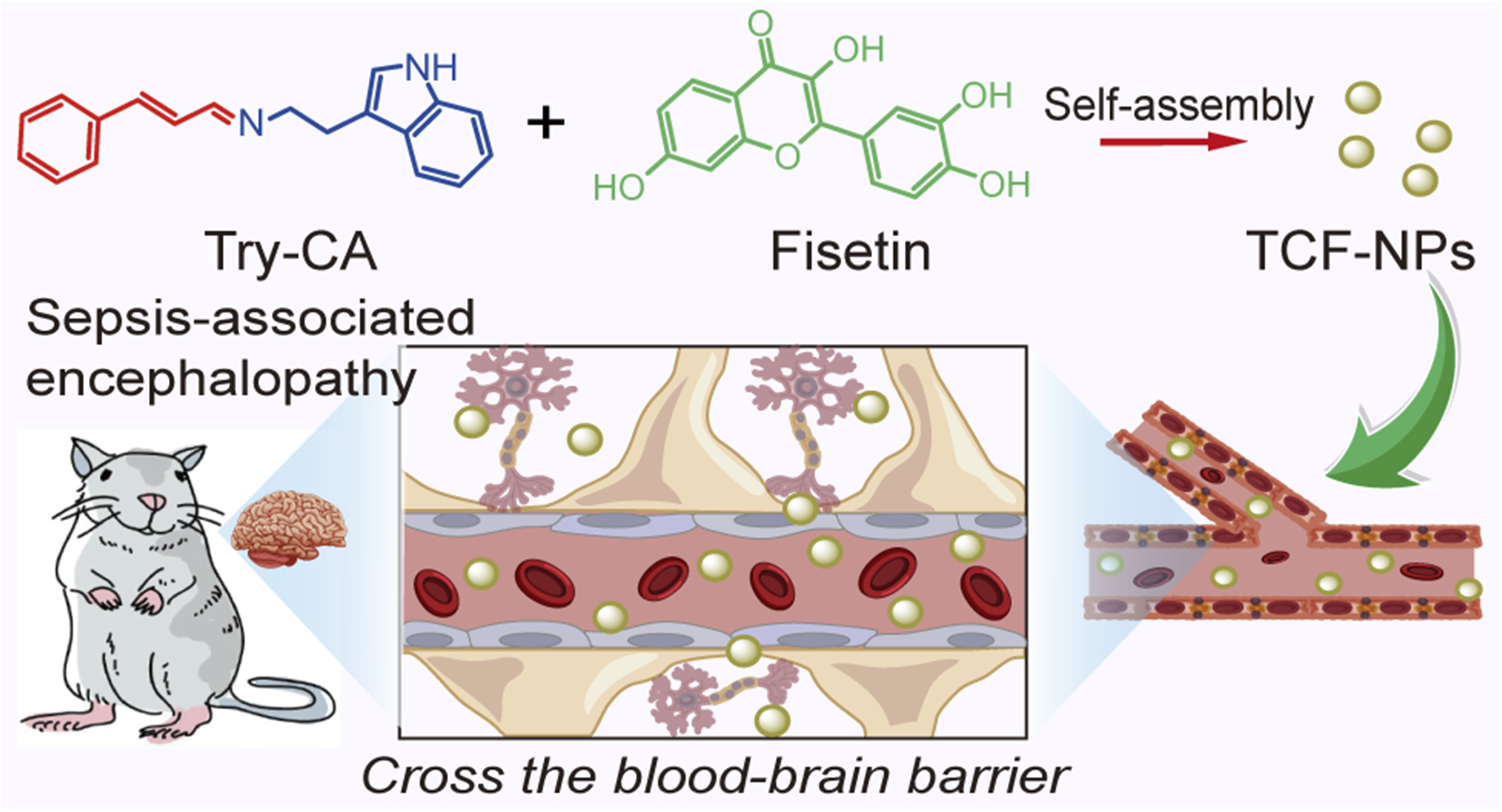
Sepsis-associated encephalopathy (SAE) is an acute diffuse brain dysfunction, but its clinical treatment just focuses on antibiotics and supportive therapy, which fail to directly limit the development of SAE. Herein, this work highlights the development of pH-triggered small molecule nanodrugs self-assembled from tryptamine (Try)-cinnamaldehyde (CA) and fisetin for targeted SAE therapy. The imine linkage in Try-CA and acid-dependent protonation of Try and fisetin endow the nanodrugs with pH-triggered dynamic changes of particle sizes, surficial charges, and drug release. Moreover, the combined use of Try-CA and fisetin also endows the nanodrugs with superior antioxidative, anti-inflammatory and antibacterial capabilities compared to their individual use. These characteristics of the nanodrugs facilitate long-term circulation stability, effective penetration through BBB, selective accumulation in the brain, and target to central and peripheral focal areas, thereby achieving comprehensive treatment or relief of SAE. Thus, these attractive experimental results illuminate the enormous potential of such pH-triggered small molecule nanodrugs for targeted SAE therapy, advancing their use in clinics.
Get full access to this article
View all access options for this article.
References
Supplementary Material
Please find the following supplemental material available below.
For Open Access articles published under a Creative Commons License, all supplemental material carries the same license as the article it is associated with.
For non-Open Access articles published, all supplemental material carries a non-exclusive license, and permission requests for re-use of supplemental material or any part of supplemental material shall be sent directly to the copyright owner as specified in the copyright notice associated with the article.
