



Abstract
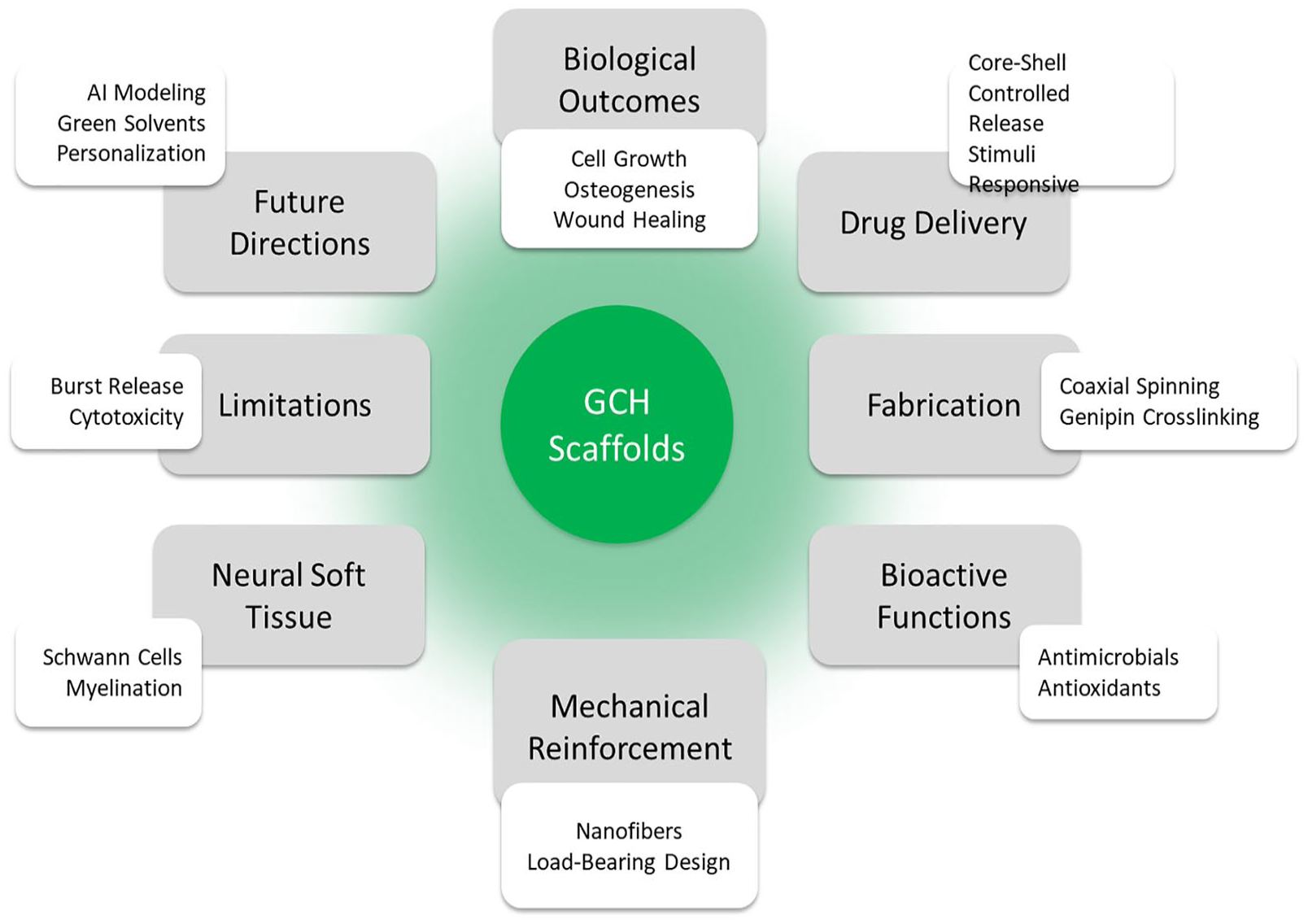
Gelatin–Polycaprolactone Hybrids (GCHs) represent a promising class of biomaterials that synergize the mechanical robustness of polycaprolactone (PCL) with the bioactivity and hydrophilicity of gelatin. This hybrid configuration enables multifunctional performance in diverse biomedical applications, including tissue regeneration, wound healing, and localized drug delivery. Recent advances in fabrication techniques—such as coaxial electrospinning, genipin crosslinking, and nanoparticle reinforcement—have enhanced scaffold architecture, mechanical resilience, and therapeutic efficacy. GCHs have also been functionalized with antimicrobial, antioxidant, and osteoinductive agents, broadening their utility across soft and hard tissue repair. However, challenges persist, including mechanical instability in gelatin-rich constructs, initial burst drug release, and limitations in scalable, biocompatible manufacturing. This review provides an overview of GCHP design, validation, and application, highlighting current limitations and emerging strategies for clinical translation. The integration of green fabrication methods, tissue-specific design, and AI-guided scaffold optimization is proposed as a pathway toward sustainable, personalized biomedical solutions.
Keywords
Get full access to this article
View all access options for this article.