




Abstract
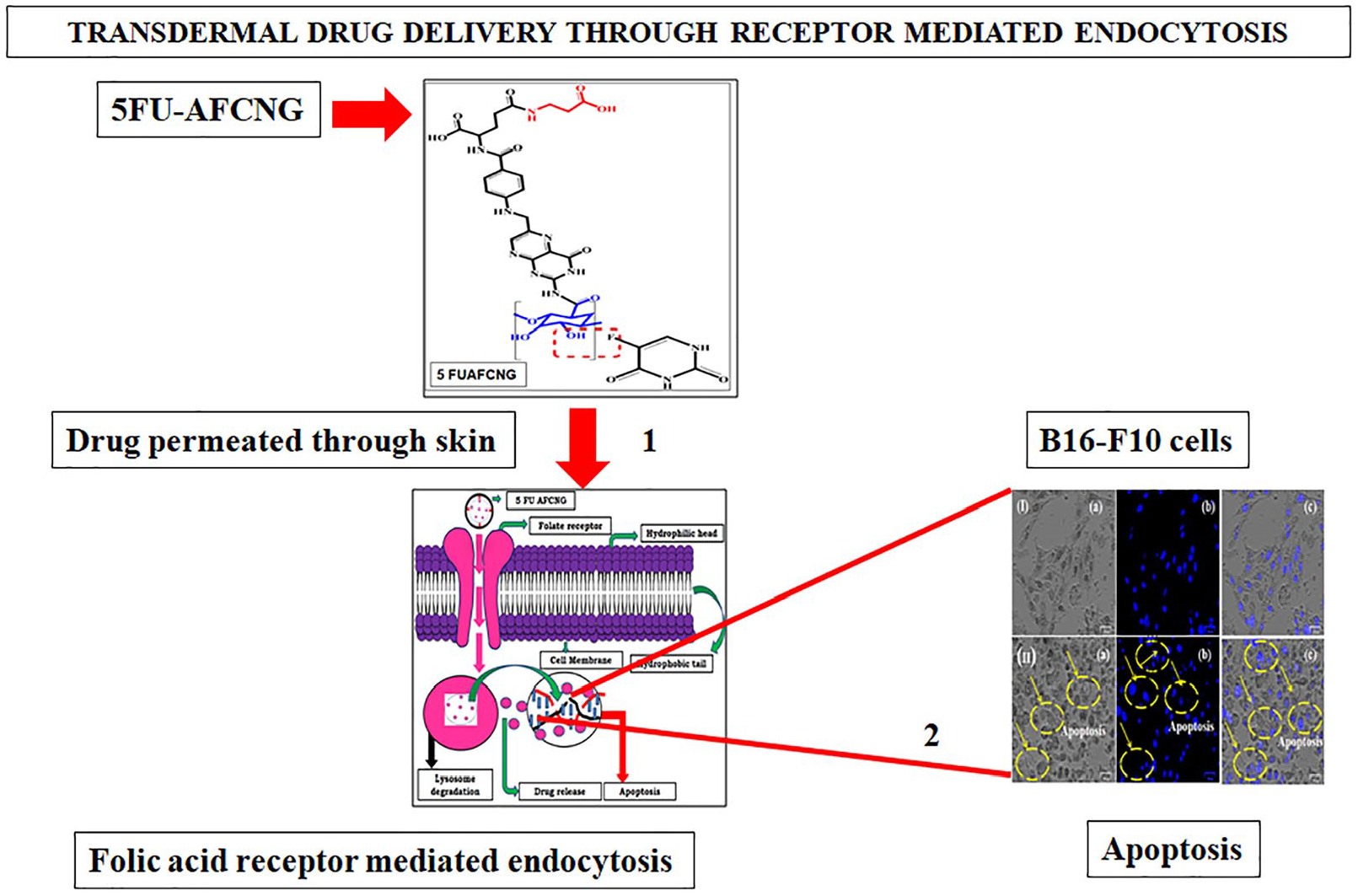
Melanoma, a malignant skin cancer, is commonly treated using surgery, chemotherapy, and radiation therapy; however, these approaches often present challenges such as systemic toxicity and side effects. Transdermal drug delivery offers a promising alternative, providing ease of application and reduced adverse effects. In this study, we synthesized and characterized amine-functionalized cellulose nanogels (AFCNG) conjugated with 5-fluorouracil (5FU) for transdermal drug delivery. The nanogel was developed through acid hydrolysis, TEMPO oxidation, and amidation using EDC/NHS coupling to form stable amide linkages. FTIR spectroscopy and fluorescence analysis confirmed successful 5FU conjugation via hydrogen bonding. Characterization studies revealed the nanogel’s porous, amorphous structure, pH-responsiveness, and good colloidal stability. The 5FU-AFCNG exhibited a high drug loading efficiency of 83.42%, with an initial burst release followed by sustained drug release. Furthermore, the nanogel demonstrated excellent biodegradability and hemocompatibility. Cytotoxicity studies using B16-F10 melanoma cells indicated a dose-dependent reduction in cell viability, highlighting the therapeutic potential of 5FU-AFCNG. These findings suggest that 5FU-AFCNG is a promising candidate for transdermal drug delivery in melanoma treatment.
Get full access to this article
View all access options for this article.