




Abstract
Background and Purpose
The consequences of climate change on individuals’ and communities’ health are numerous. Nurses are among the healthcare professionals most confronted with the climate crisis, and have great potential to limit its impact on vulnerable populations. However, our knowledge of educational options for preparing nurses to address climate change remains limited. The aim of this scoping review was to examine how climate change is integrated into the academic curricula or continuing education of nurses.
Methods and Procedures
Arksey and O’Malley's (2005) framework was used to conduct this scoping review. Documentary search strategies were developed and tested in four databases, and a search of the grey literature was carried out. A two-stage selection process was implemented. Data from 16 scientific articles were extracted and 11 grey literature references were included in the analyses. A narrative summary allowed to synthesize the findings.
Results
Academic and healthcare organizations are increasingly implementing innovative and participatory educational initiatives to raise nurses’ awareness of climate change's health impacts and encourage students and nurses to act in their daily lives and clinical practice. Challenges include a dense curriculum, the absence of a climate competency framework, and theoretical content being presented in an unstimulating manner.
Conclusions
The use of innovative, interactive teaching methods, reference to a theoretical model centered on planetary health, and climate change content distributed throughout the curriculum are some ways to stimulate students’ interest in climate issues. Collaborative efforts involving academia and organizations are needed to foster nurses’ awareness and encourage a variety of climate-oriented actions with planetary reach.
Background and Purpose
Climate change represents the greatest threat to human health of the twenty-first century (Costello et al., 2009; IPCC, 2023; Romanello et al., 2023; Yang et al., 2019). The concentration of greenhouse gases (GHGs) in the atmosphere is now at an all-time high, causing global warming and ocean acidification (Intergovernmental Panel on Climate Change [IPCC], 2023). On a planetary scale, it is estimated that the healthcare systems of all countries collectively constitute the fifth largest emitter of GHGs in the world (Health Care Climate Council, 2020). The Canadian healthcare system is responsible for 4.6% of national CO2 emissions (Eckelman et al., 2018). It is therefore urgent that the healthcare system itself contributes to reducing its GHGs emissions.
The scientific consensus indicates that a global temperature rise of 1.5°C above pre-industrial levels will lead to irreversible health impacts and biodiversity loss (International Panel on Climate Change, 2023). The United States Environmental Protection Agency (US EPA, 2023) states that climate change is contributing to an increase in the frequency and intensity of extreme weather events, such as heatwaves, forest fires, floods and storms. The consequences for human health of these climatic transformations are numerous. Heatstroke-induced heart attacks are on the rise (Gosselin et al., 2021; Liu et al., 2022). Globally, a loss of almost ten percent of food crops occurred between 1964 and 2007 due to heatwaves or other extreme weather events (Lesk et al., 2016). An increase of several thousand deaths annually attributable to higher carbon concentrations in the air is anticipated (Silva et al., 2017). High temperatures combined with increased rainfall or flooding in certain regions favour the transmission of vector-borne diseases such as malaria (Parham & Michael, 2010). Climate change increases physical and psychological health risks, amplifying the demand for care and straining healthcare systems (Or & Seppänen, 2024). As a result of climate change, some 250,000 additional deaths per year will be attributable to malnutrition, heatwaves, malaria and diarrhea between 2030 and 2050 (WHO, 2023).
Certain populations are more affected by the impacts of environmental change. These include children, pregnant women, the elderly, migrants, members of indigenous or remote communities, and people with chronic illnesses, including those with mental disorders (Watts et al., 2015). Urgent measures, such as integrating climate change into health policies, strengthening medical infrastructure, and training healthcare professionals, are essential to protect vulnerable populations and ensure system resilience (Freifeld et al., 2023). It is necessary both to strengthen efforts to educate nurses on the impacts of climate change on these populations and to promote research demonstrating the relationships between the environment and health (Valentine-Maher et al., 2018).
Yang et al. (2019) argue that healthcare professionals contribute significantly to the wellbeing of individuals affected by climate change. As front-line medical staff, nurses have an important role to play in protecting people from the effects of climate change. Québec, Canadian and international nursing associations and professional orders have expressed growing concern about the impact of pollution and climate change issues on human and global health, stressing the importance of educating nurses about these factors (American Nurses Association [ANA], 2007; American Nurses for Healthy Environments [ANHE], 2011; Canadian Federation of Nurses Union [CFNU], 2019; International Council of Nurses [ICN], 2018; Ordre des infirmières et infirmiers du Québec [OIIQ], 2019). Nurses have the opportunity to make a significant contribution to the fight against climate change because of their numbers and the high level of trust placed in nurses by the public (Leffers & Butterfield, 2018; Milton, 2018; Valentine-Maher et al., 2018). Nursing's commitment to health equality places nurses in a privileged position to speak up on behalf of the population, to promote the latter's interests and improve their living conditions (Nicholas & Breakey, 2017). Not only do nurses work closely with vulnerable populations (Butterfield et al., 2021; Polivka et al., 2012), they also can work jointly with individuals and community groups to limit the health impacts of climate change or, at a minimum, to facilitate adaptation to the adverse consequences of climate change (ICN, 2018). By remaining alert to these realities, nurses can reflect on how nursing practice can be adapted to reduce social inequities and climate injustices (Lilienfeld et al., 2018).
Nurses need to be prepared to cope with these environmental issues and to address them in collaboration with vulnerable populations. However, an overview of the literature revealed a number of challenges associated with the integration of climate change content into nursing education: a lack of uniformity in the provision of climate change content in academic programs, a limited number of teachers adequately trained in the subject, university or faculty resistance due to already dense curricula, a lack of time or opportunities for training in clinical settings, and a lack of interest in the subject of climate change (Barna et al., 2012; Cruz et al., 2018; Leffers et al., 2017; McDermott-Levy et al., 2019; Neal-Boylan et al., 2019). Lopez-Medina et al. (2019) carried out a systematic review of environmental health competencies and pedagogical approaches used to educate nurses about sustainability issues. These authors pointed out that a systemic and interdisciplinary approach to embedding environmental issues in curricula was still lacking. Although their synthesis highlighted content elements to be integrated into nursing education, the authors’ main focus was on how a transformation leading to sustainable clinical nursing practices would reduce the impact of healthcare on climate change. Dalapati et al. (2023), for their part, published a scoping review indicating that educational interventions focused on climate change generally increase students’ awareness of climate change-related health issues. However, their study focused on interdisciplinary programs and excluded educational initiatives developed specifically in nursing schools, for example, or for continuing education.
The main aim of this literature review was to examine how climate change is integrated into the academic curricula or continuing education of nurses. The term academic refers to training provided in a school setting, regardless of level, and leading to a diploma or a professional license to practice. The term continuing education refers to training offered to practicing registered nurses through clinical networks. To our knowledge, this is the first literature review to focus specifically on this subject. Some studies have been carried out in the past, but they considered healthcare professionals in general and did not present results specific to nursing education, or they addressed sustainability issues in a global manner, without examining issues associated with climate change and health. Numerous articles have pointed to the relevance of educating nurses about climate change, but this observation has been based mainly on studies of nurses’ perceptions of climate change (Anåker et al., 2015, 2021; Aronsson et al., 2024; Chen & Price, 2020; Cruz et al., 2018; Kalogirou et al., 2020). Such studies examined nurses’ or students’ attitudes toward integrating climate change into curricula but did not explore the impact of climate change education on nurses’ clinical practice.
This literature review made it possible to determine whether the existing literature adequately supports the integration of climate change content, as related to nursing practice, into academic curricula and continuing education, by detailing, among other things, the impact of educational interventions on nursing practice. Indeed, the proliferation of nursing schools around the world and the growth in the number of articles published in scientific nursing journals are proof that nursing is a flourishing science and there is a need to develop knowledge specific to this discipline, as distinct from other health professions (Baker et al., 2021; Banks-Wallace et al., 2008; Collins & Hewer, 2014). The present study could help strengthen the scientific bases underpinning the nursing practices taught in nursing programs. It could also help identify gaps in the literature where more research is needed. In addition, it could be used as a reference point or basis for discussion by organizations wishing to enhance the training they provide by synthesizing current initiatives in nursing education. The integration of climate change into nursing education has the potential to improve the quality of patient care and positively impact their health. The first step remains to identify and document existing efforts to integrate this theme in nursing education while highlighting the gaps what can still be done to optimize educational strategies and their impact on nursing practice.
Methods and Procedures
In order to achieve this objective, an exploratory literature review in the form of a scoping review was carried out, based on the methodology developed by Arksey and O’Malley (2005) and Levac et al. (2010). A detailed version of the search protocol, review steps and search strategies used in the different databases is available in open access online (Diallo et al., 2023). All elements of the PRISMA-ScR guidelines were considered in the development of the methodology and in the reporting of the results (Tricco et al., 2018).
Identification of the Research Question
The research question that guided the literature search was: How are issues related to climate change addressed in the nursing curriculum and in nursing continuing education?
Identification of Relevant Studies
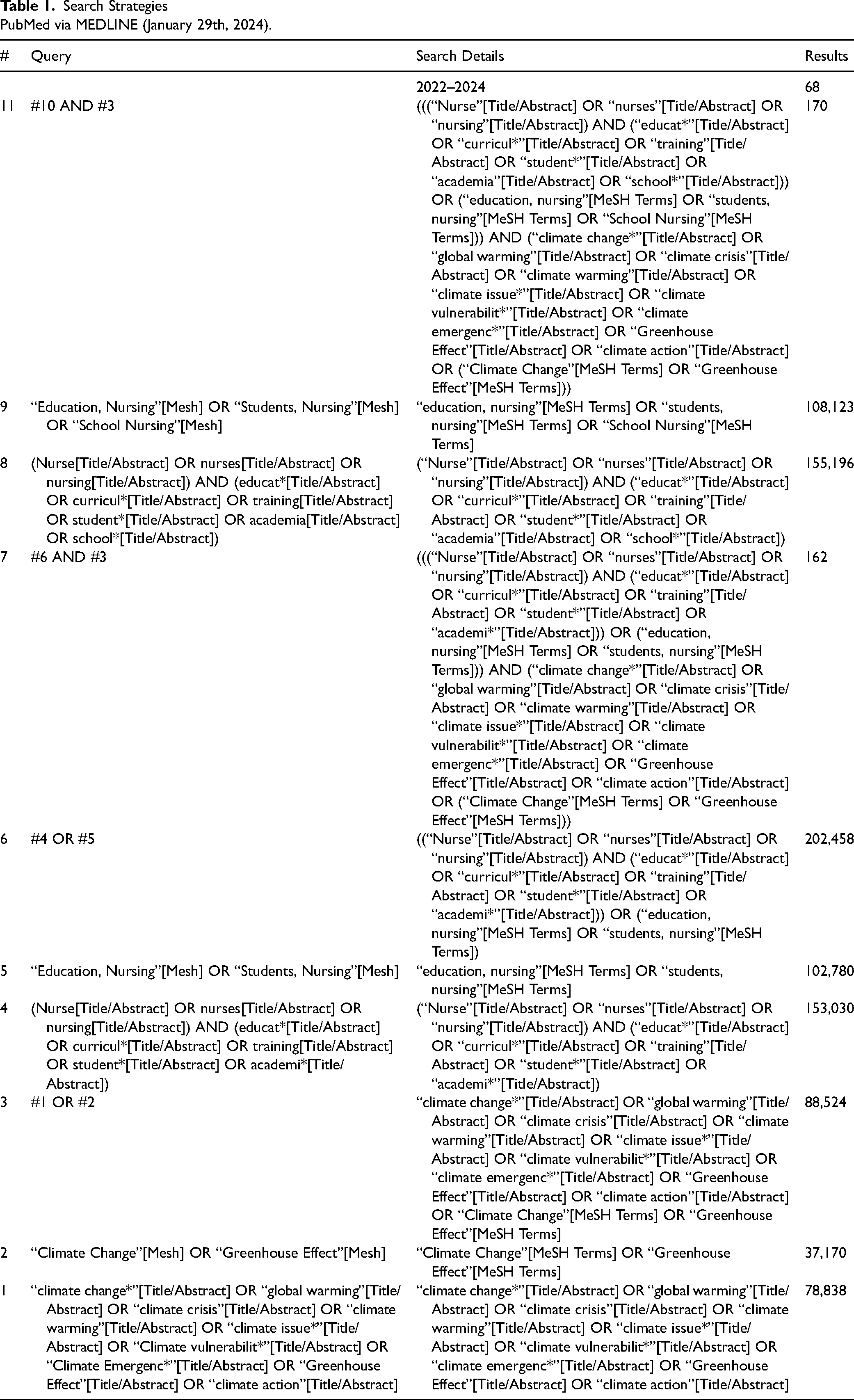
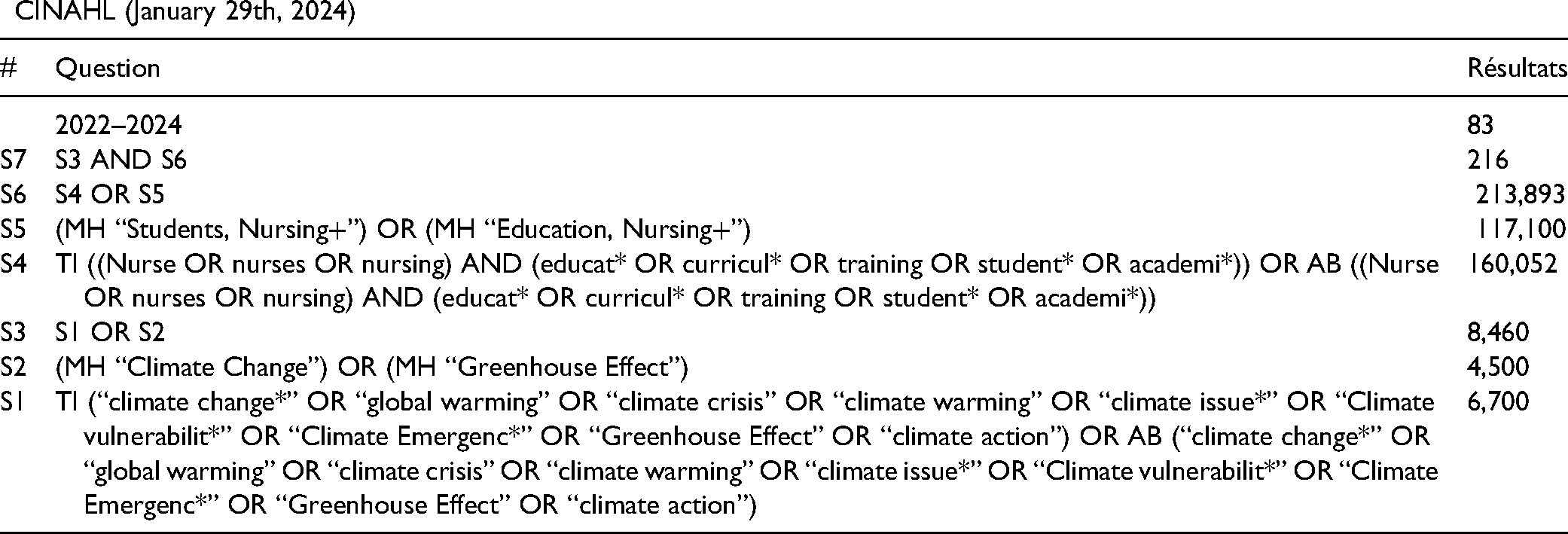
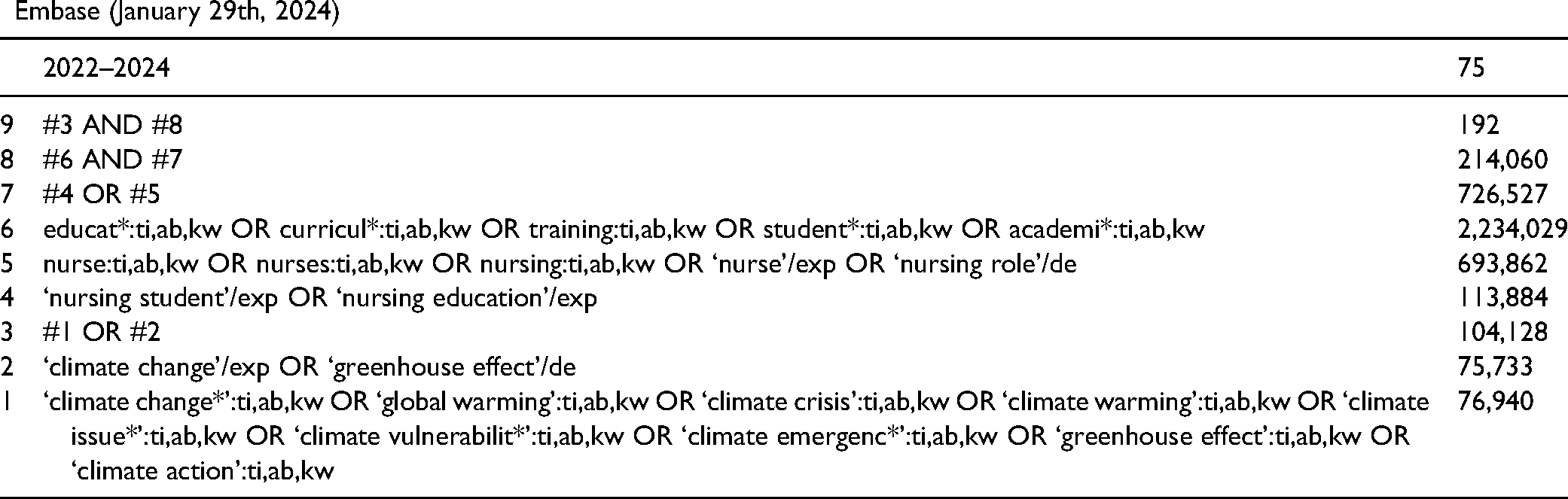
The creation of detailed search strategies enabled us to identify the literature relevant to the integration of climate change content into nursing education. The search strategies were revised several times by members of the research team with the help of a librarian specialized in health sciences. The main concepts chosen were climate change, nurses and education, which formed the basis for the selection of free and controlled vocabularies that were included in the search strategies. The documentary search was carried out in four databases: MEDLINE (PubMed), CINAHL, Embase and Web of Science. The detailed search strategies are available in Table 1. All studies in English and French, regardless of the country in which they were carried out or the date of publication, were considered. Qualitative and quantitative empirical studies as well as conceptual papers, discussion papers and editorials were considered. The initial search of the databases was carried out in January 2022. An update was carried out in January 2024 to identify potential new articles published in 2022 or 2023.
Search Strategies
PubMed via MEDLINE (January 29th, 2024).
CINAHL (January 29th, 2024)
Embase (January 29th, 2024)
Web of science (January 29th, 2024)

Selection of Studies
The studies identified in the databases were next imported into the Covidence platform (Veritas Health Innovation). First, the duplicates were removed. Next, two members of the research team (MR, TD) carried out an initial independent selection of studies based on article titles and abstracts. These two researchers then selected a smaller number of articles, based on a reading of the full text of the studies. In cases where the two researchers disagreed about whether to include an article, the opinion of a third team member (AB) was sought.
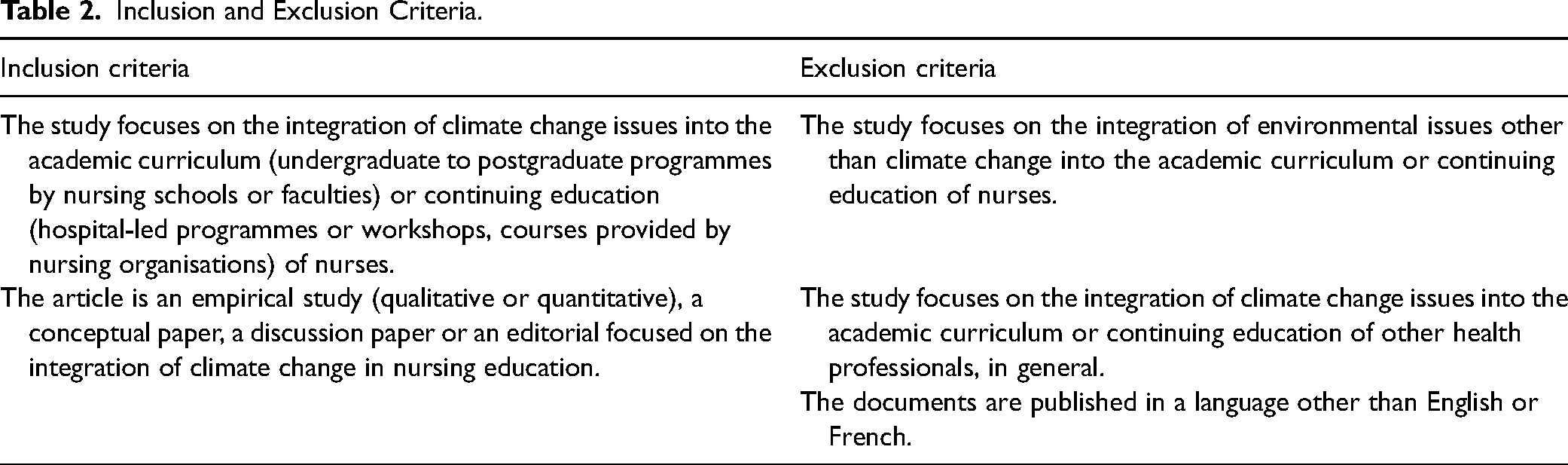
Studies that examined environmental issues other than climate change in the context of nursing education were excluded, as were articles that did not focus specifically on nurses. The full list of inclusion and exclusion criteria is available in Table 2.
Inclusion and Exclusion Criteria.
A total of 480 scientific articles were identified through the search strategies used in the databases. As soon as the articles were imported into Covidence, 253 duplicates were removed. Of the 227 articles that were selected based on title and abstract, 39 articles were retained. The full text of these articles was consulted, and 23 studies were excluded because they did not meet the established inclusion criteria. Only 16 articles were included in this scoping review. Figure 1 provides further details regarding the reasons for article exclusion in the form of a PRISMA (Preferred Reporting Items for Systematic Reviews and Meta-Analyses) diagram. In addition, 11 documents or texts from the grey literature originating from nursing organizations were retained. The updated literature search strategy carried out in January of 2024 identified four additional studies that were incorporated into the discussion. No relevant grey literature was published by the targeted associations for the period of 2022 to 2024.
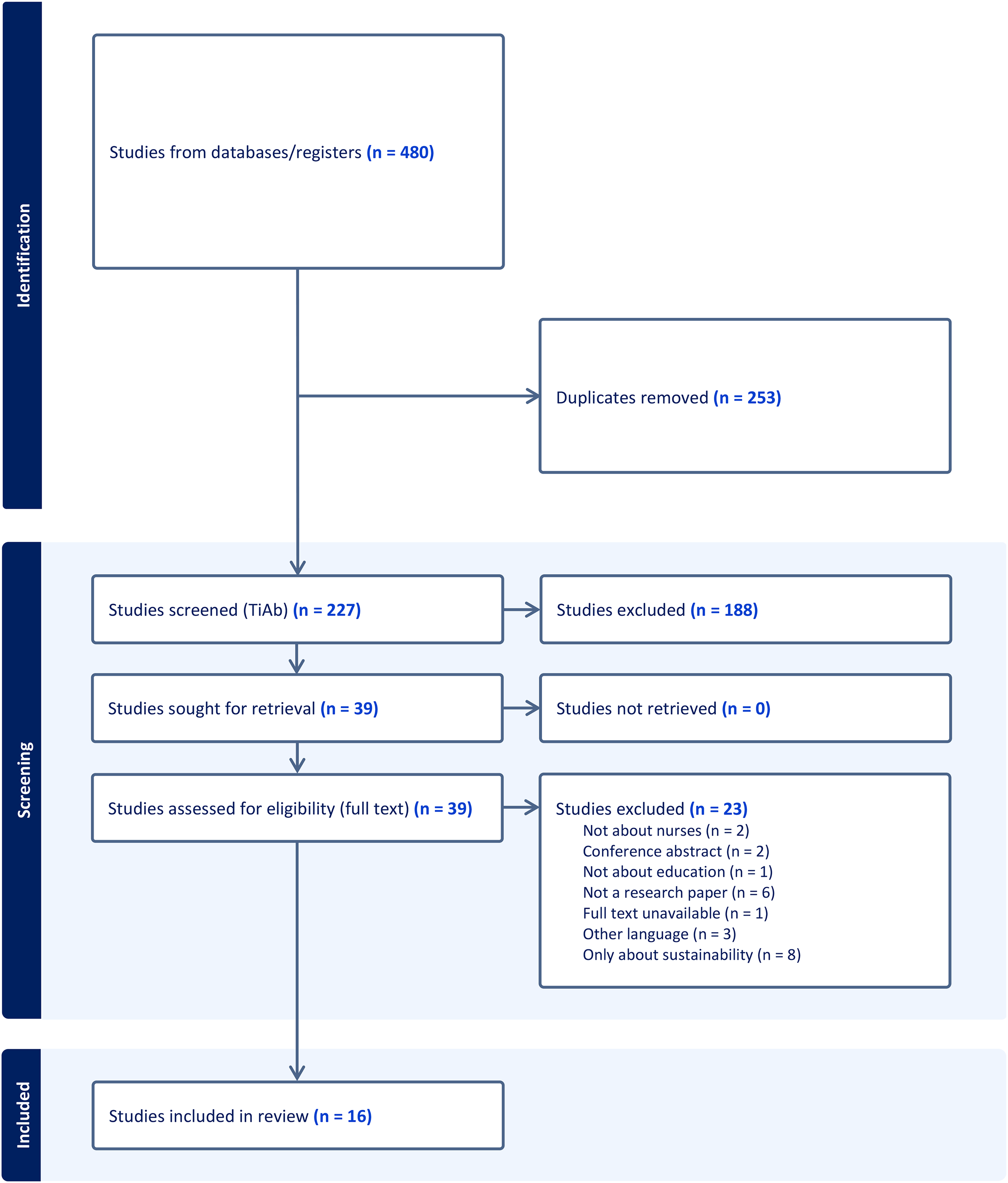
Flow Chart.
Data Extraction
The research team used an Excel spreadsheet to extract data from the selected articles. The information collected included the authors, year of publication, country of study, study objectives, method, number of participants (if applicable) and most relevant results.
Analysis, Synthesis and Presentation of Results
The data was then analyzed by the research team and consisted in an in-depth examination of the findings directed toward answering the research question through a narrative summary. The results were grouped according to the following broad topics: teaching methods and educational content, the challenges of integrating climate change into nursing studies, and the authors’ recommendations concerning nursing education. Qualitative and quantitative data were analyzed and integrated for joint presentation in the Results section.
Grey Literature Search
In addition to consulting the abovementioned scientific databases, the research team screened the grey literature. Members of the team consulted the websites of various nursing organizations, associations and groups to identify publications focused on nursing education and climate change. Organizations from the province of Québec, Canada and the United States were identified, as well as a number of international nursing associations. Publications on social media were not considered.
Results
Scientific Literature
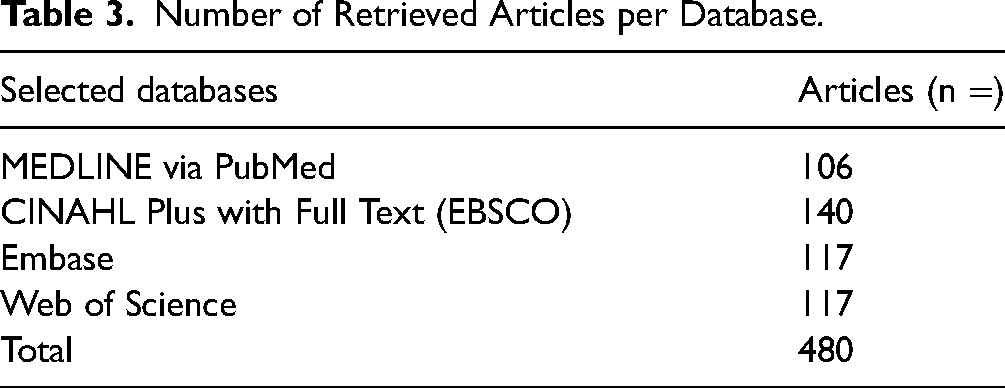
Table 3 shows the number of articles retained from each database used in the search.
Number of Retrieved Articles per Database.
Grey Literature
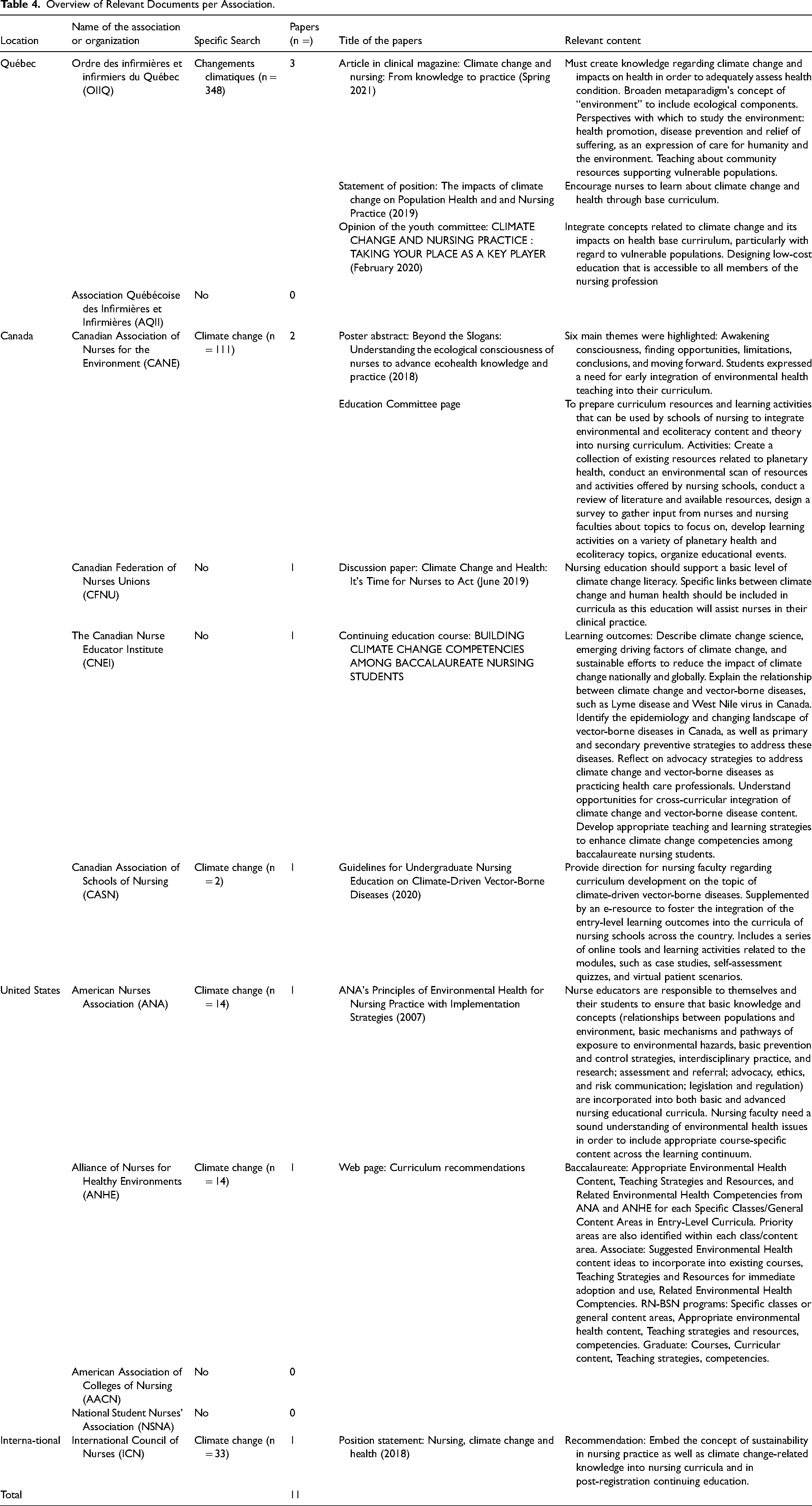
A total of 12 websites from nursing organizations in Québec, Canada, the United States and abroad were consulted. From these sources, 11 relevant documents or texts were identified through eight of the organizations. Table 4 specifies the organizations from which these texts were collected, as well as their geographical affiliation, the number of papers identified per association as well as relevant content associated with climate change and nursing education in these documents.
Overview of Relevant Documents per Association.
Characteristics of Selected Studies
The 16 studies selected made use of a variety of methods. Four of these (25%) are quantitative empirical studies, while three (18.75%) are qualitative empirical studies. Two of the 16 studies (12.5%) are literature reviews, including one systematic review. The majority of the articles retained were discussion papers, which account for seven of the 16 articles (43.75%). The selected studies were published between 2012 and 2021, with nine of the 16 papers (56.25%) having been published during 2019. The majority of the studies, nine in all (56.25%), were carried out in the USA, or discuss topics specific to that country. Three studies (18.75%) were carried out in the UK, one study (6.25%) came from Finland, and three studies (18.75%) involved participants from more than one country, including Saudi Arabia, Iraq, Egypt, the Palestinian Territories, the Netherlands, Spain and Germany. Fourteen studies (87.5%) present results related to academic curricula, and eight of the studies (50%) address continuing education. More details on the studies and significant data are available in Table 5.
Overview of Selected Studies.
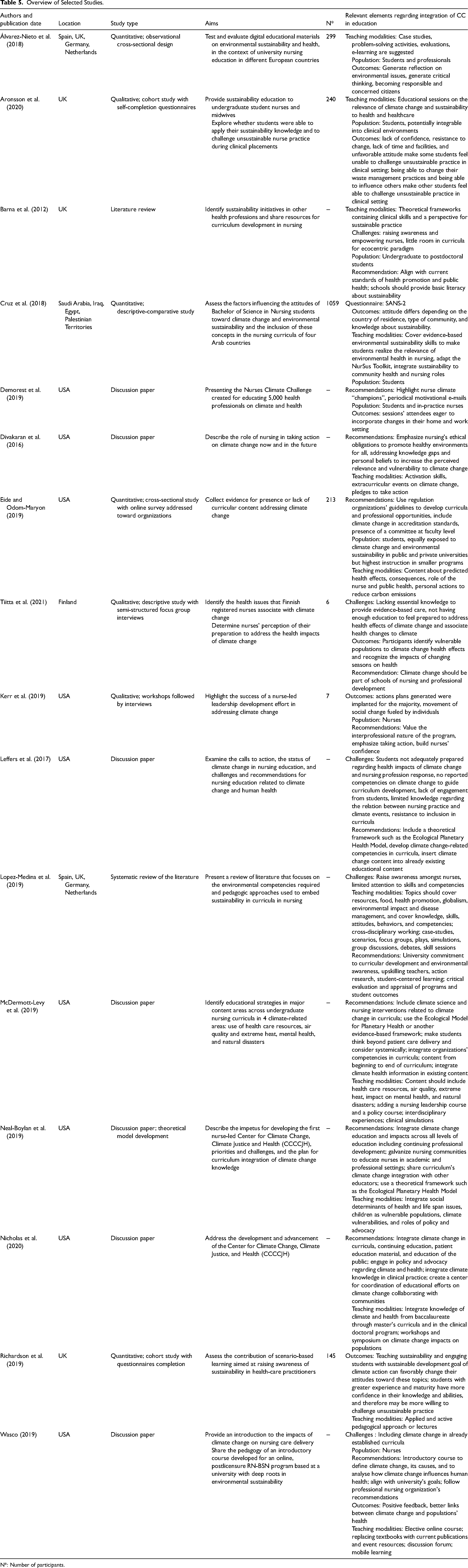
N*: Number of participants.
Methods for Integrating Climate Change into Education
Overall, the authors of the studies focused on two issues concerning the integration of climate change into the academic curricula or continuing education of nurses: the theoretical content that should be covered and the type of teaching interventions suitable for transmitting climate change-related knowledge and competencies.
The climate change-related topics to be covered in nursing education are numerous. Among the first topics that should be addressed is the relevance of climate change to health (Aronsson et al., 2020; Canadian Association of Nurses for the Environment [CANE], 2018; Cruz et al., 2018; Lopez-Medina et al., 2019; OIIQ, 2021a) and the health consequences of climate change (ANA, 2007; CFNU, 2019; Eide & Odom-Maryon, 2019), as this will foster awareness of the value of addressing climate change in nursing education. Study authors suggested covering social determinants and vulnerable populations (Neal-Boylan et al., 2019; OIIQ, 2021a, 2021b), climate disasters (McDermott-Levy et al., 2019) and the impact of climate change on mental health (McDermott-Levy et al., 2019). Specific aspects of the nursing profession should also be integrated into climate change-related education. For example, climate change should be associated with the nursing role in courses covering community health (Cruz et al., 2018; Eide & Odom-Maryon, 2019), health promotion (Lopez-Medina et al., 2019; OIIQ, 2021a) or population advocacy (ANA, 2007; Neal-Boylan et al., 2019). Content focused on legislation and policy should also be part of basic climate change education (ANA, 2007). Technical competencies should be taught (Cruz et al., 2018; Divakaran et al., 2016), as should communication and decision-making competencies (Lopez-Medina et al., 2019). Finally, content focused on attitudes toward climate change (Lopez-Medina et al., 2019) or personal actions that can reduce carbon emissions (Eide & Odom-Maryon, 2019) can be integrated into education.
The methods that can be used to convey this content are equally varied. Study authors suggested both in-class sessions (Aronsson et al., 2020) and online content (Álvarez-Nieto et al., 2018), as well as adapted content made accessible on mobile devices at any time (Wasco, 2019). Several authors suggested integrating climate change into academic curricula from the bachelor to the doctoral level (ANA, 2007; CANE, 2018; Griffin et al., 2022; OIIQ, 2019; Nicholas et al., 2020), while other authors proposed addressing this content during extracurricular activities (Divakaran et al., 2016; Wasco, 2019). McDermott-Levy et al. (2019) indicated that a course focusing on nursing leadership and policy may be an appropriate context for introducing nurses to climate action in clinical settings. Interdisciplinary activities or courses may also be appropriate, considering that interprofessional collaboration is required for taking large-scale action against climate change (ANA, 2007; Lopez-Medina et al., 2019; McDermott-Levy et al., 2019). Some authors placed value on the creation of opportunities for students or nurses to speak out on climate issues (Divakaran et al., 2016), whether this be through discussion forums (Wasco, 2019) or debates (Lopez-Medina et al., 2019). Scenario-based simulation or case studies (Lopez-Medina et al., 2019; McDermott-Levy et al., 2019; Richardson et al., 2019) also provided opportunities to put into practice the theoretical competencies developed during training.
Impact on Students or Nurses
A few pedagogical initiatives have been developed and reported on in a structured manner in the literature, in efforts to integrate the topic of climate change into nursing education and assess the knowledge acquired by students. Álvarez-Nieto et al. (2018) developed and validated electronic educational materials based on the NurSusTOOLKIT Sustainability Literacy and Competency framework, in an effort to improve, among other things, knowledge about the effects of climate change and students’ competencies and skills in this area. For the study, 299 students, 20 professionals (teachers, clinicians, advisors) and two technical experts were questioned, and in general they suggested that theoretical content be presented using case studies or problem-solving situations. The use of e-learning was viewed by educators as a means of facilitating content integration (Álvarez-Nieto et al., 2018). Scenario-based learning, an applied and active teaching approach, was also evaluated by Richardson et al. (2019). Clinical situations dealing with the health effects of climate change were integrated into theoretical courses or practical activities throughout the three-year curriculum of nursing students to increase their awareness of and commitment to climate change and sustainability. Of the 145 students who were exposed to these educational activities over three years, the majority reported having more positive attitudes toward integrating sustainable principles into their clinical practice and intended to make an effort to counter climate-damaging practices in their clinical setting (Richardson et al., 2019). The authors also reported that students with more experience and maturity are more confident about their knowledge and competencies, and more inclined to want to combat environmentally harmful practices. Aronsson et al. (2020) tested a similar program and identified two student profiles at the end of the three years. Students who had been able to influence peers to change their habits or who had improved their own day-to-day waste management practices believed more strongly in their ability to transform clinical practices to make them more sustainable. Conversely, this perception was weaker among students who lacked confidence or were resistant to change, who perceived lack of time as a barrier to changing their practice, or who viewed sustainable practices unfavourably.
Climate-change related content has also been integrated in the field of continuing education. Demorest et al. (2019) highlighted the creation of the Nurse Climate Challenge, a website that offers several informative resources related to climate and the health impacts of climate change, while focusing on the short- and long-term benefits of climate action taken by nurses. Among the resources available are short presentations, a list of individual or collective actions for reducing GHG emissions or examples of messages designed to challenge colleagues to take action (Demorest et al., 2019). Nurses who have attended information sessions about the tools provided indicated that they intended to incorporate changes into their clinical and home practices. The team of Kerr et al. (2019) developed another program, called Be the Spark for Health Professionals. This program consists of three multidisciplinary group sessions aimed at enhancing understanding of both the individual and organizational resources required to address the health impacts of climate change, and the psychology of climate communication. Following these sessions, participants were asked to develop an action plan for addressing a climate issue. Kerr et al. (2019) reported that most action plans developed were implemented. These included organizing a conference on zoonoses, facilitating an informative webinar for nurses on the adverse health effects of climate change, and persuading an organizational leader to respond to a climate-related population issue.
An RN-BSN program team at the University of Pennsylvania, for its part, developed a seven-week elective course called Climate Change and Human Health, whose aim was to inform students about the health effects of climate change and instill in them a sense of responsibility toward the population and global health (Wasco, 2019). Learning activities included participating in discussion forums and reflecting on how the advocacy role of nurses can contribute to improving the health of populations affected by climate change. Students questioned after completing the full course held a positive opinion of the training provided. They felt better able to draw links between climate change and population health.
Discussion
The literature review demonstrates that some initiatives have been developed by nursing schools or in clinical practice settings to equip nurses to address climate change issues and integrate these into nursing practice. A variety of theoretical content is taught, with a focus on the populations most vulnerable to climate change and its impact on their health, and on the acquisition of various competencies relevant to interventions with individuals. Research shows that students and nurses are generally in favour of integrating these aspects into academic curricula or continuing education. Moreover, they subsequently demonstrate a desire to take action in their everyday life or in their workplace to limit their impact on the climate.
Challenges
There are a number of challenges involved in integrating climate change-related training into academic programs. Study authors pointed out that the first challenge is to make nurses aware of the issues surrounding the health effects of climate change (Barna et al., 2012; Lopez-Medina et al., 2019) and to instill in nurses a sense of empowerment relative to this issue (Barna et al., 2012). Registered nurses are not adequately prepared to limit the impacts of climate change, to facilitate population adaptation, or to strengthen the climate change resilience of individuals (Leffers et al., 2017). Limited attention is given in educational programs to competencies associated with environmental health or interprofessional collaboration, and few active, participatory teaching methods are incorporated to stimulate student learning (Lopez-Medina et al., 2019). Therefore, students are minimally engaged in applying the content taught (Leffers et al., 2017).
Chen and Price (2020) pointed out that one of the barriers to integrating climate change into academic curricula may come from the students themselves. Indeed, they may perceive climate change content as an addition that overburdens the training program if it is not integrated into the core curriculum and learning objectives. Aronsson et al. (2020) also reported that students perceive that they will be restricted in their future work environment from implementing sustainable clinical practices or from creating initiatives aimed at limiting the impacts of climate change in their practice. They attributed this to a strict organizational culture that resists both change and the use of evidence associated with the impacts of climate on care and health. Even when students are aware of the importance of taking action to limit climate change and of their professional obligation to protect population health, they are demotivated by a feeling of not knowing what to do given the enormity of the climate problem (Schenk et al., 2021). Other students have difficulty seeing the relevance of climate change to their education. They pointed out that the nurse's main role is to save lives and fail to associate climate change with impacts on patients’ physical and mental health (Anåker et al., 2021).
One of the main considerations is the apportioning of the program and the amount of content that must already be delivered to students. Little room is left in the curriculum for the integration of climate change content (Barna et al., 2012; Wasco, 2019). Moreover, faculty may resist including climate change in the curriculum due to the pre-existing burden created by program standards and accrediting body requirements for nursing programs (Leffers et al., 2017). Thus, climate competencies are left out of curricula because they are not deemed essential to programs, or they are not considered during curriculum development because they are not required by accrediting bodies (Leffers et al., 2017). Teachers, who themselves sometimes have little or no training on climate change, may feel anxious about integrating climate change into their existing course content or being called on to prepare sessions entirely devoted to climate change (Chen & Price, 2020).
As a result, practicing nurses in clinical settings lack evidence-based knowledge on which to base their care of individuals experiencing the impacts of climate change (Tiitta et al., 2021). Tiitta et al. interviewed six Finnish nurses who had not taken any courses focused on climate change and health. It was observed generally that they did not feel prepared to intervene to address the health effects of climate change, because they had not received any formal education on the subject. The nurses did, however, report being able to recognize the populations most vulnerable to the health impacts of climate change but did not know what to do about these effects and had no practice guidelines to help them (Tiitta et al., 2021).
Recommendations
Nevertheless, various authors suggest possible avenues toward better integration of climate change into nurses’ academic curricula or continuing education. One of these is to follow the recommendations of program accreditation bodies (Cadet, 2022; Eide & Odom-Maryon, 2019; McDermott-Levy et al., 2019; Wasco, 2019) or practice regulation bodies such as professional orders (Eide & Odom-Maryon, 2019) regarding climate change and sustainability when updating academic programs or continuing education options. For example, the Canadian Association of Nurses for the Environment (CANE, n.d.) developed and classified educational resources and activities that can be used by nursing schools to integrate environmental content and literacy into curricula. The Alliance of Nurses for Healthy Environments (ANHE, 2011) has also developed a guide with recommendations for integrating climate change content into baccalaureate programs, which includes a description of competencies to be developed and pedagogical strategies for achieving this. In addition, it is necessary to ensure critical evaluation of these programs by measuring outcomes in terms of the integration of climate change into students’ nursing practice (Lopez-Medina et al., 2019) or the development of the climate competencies detailed in the curriculum (Leffers et al., 2017).
Eide and Odom-Maryon (2019) and Nicholas et al. (2020) recommend establishing a faculty-level climate committee to coordinate efforts at climate change content delivery. These efforts should also be aligned with university or organizational goals for combating climate change and raising awareness of environmental impacts (Lopez-Medina et al., 2019; Wasco, 2019). The creation of the Center for Climate Change, Climate Justice, and Health at Massachusetts General Hospital's Institute of Health Professions is a case in point. One of the centre's objectives is to ensure the development, integration, and evaluation of climate change-related content, such as the health impacts of climate change, health policy and nursing leadership, through theoretical and clinical activities integrated throughout the nursing program (Bernhardt et al., 2023). The faculty's mission of research and knowledge development should also extend to the role of nurses with respect to climate change (ANA, 2007). Québec's Nurses’ Association (OIIQ, 2021a) argued that it is necessary to create knowledge relating to climate change and its health impacts to adequately assess the health status of populations. The findings of climate science and their relationship to nursing practice should be included in the nursing curriculum (McDermott-Levy et al., 2019) to equip students with a minimum level of environmental literacy (CFNU, 2019). In addition, action research focused on climate issues should be promoted (Lopez-Medina et al., 2019), and this research should involve the participation of the patient community and disseminate the results to them (Nicholas et al., 2020).
Various methods for integrating climate change content are proposed, while considering the current density of academic programs. Québec's Nurses’ Association (OIIQ, 2021a) proposed expanding the concept of the environment in the nursing metaparadigm to include ecological components. Leffers et al. (2017) and McDermott-Levy et al. (2019) advised inserting theory about climate change and its health impacts into already existing content; for example, discussing air pollution in a course on cardiorespiratory pathophysiology. The Canadian Association of Schools of Nursing (CASN, 2020) offers a guide to vector-borne diseases and nursing, with suggestions for curriculum integration, online resources and participatory activities, such as case studies and scenarios. If program load permits, Wasco (2019) recommended offering an introductory course on climate change, its causes and its health impacts. Content should be integrated at various points using innovative methods (Abebe et al., 2023) throughout academic training, from the bachelor to the doctoral level (ICN, 2018; McDermott-Levy et al., 2019; Neal-Boylan et al., 2019), or be offered at any time through continuing education focused on various aspects of nursing practice related to climate change (ICN, 2018; Neal-Boylan et al., 2019; Nicholas et al., 2020). Introducing innovative methods such as film presentations (Lopez-Medina et al., 2019; Ward et al., 2022) may require that teachers also receive updated training so that they are able to adequately convey content to students. The Canadian Nurse Educators Institute (CNEI, n.d.) has previously offered basic climate change training for teachers, to improve their understanding of the relationship between climate change and health and to help them develop learning strategies that facilitate the acquisition of environmental competencies by undergraduate students.
It was suggested that a theoretical model is needed to support the education of nurses, as well as the development of clear and concrete learning objectives (Leffers et al., 2017; McDermott-Levy et al., 2019; Neal-Boylan et al., 2019). Leffers et al. (2017) developed the Ecological Planetary Health Model, a model for integrating climate change into academic nursing programs, which focuses on global health and inter-connectivity between different societal systems. This model aims to broaden the perspective of nurses and students by showing them the different levels at which they can intervene, as well as the various mitigation, adaptation, and resilience factors applicable to climate change. The individual sphere concerns our individual impact on climate change, or inversely the impact of climate change on our behaviours (for example, the use of active transportation). The regional and national spheres, as well as the international sphere, represent the economic aspect of decisions relating to the environment and climate change, as well as the role of policy decisions in combating climate change. Finally, the planetary sphere represents the consideration of ecosystems and human survival from a sustainability perspective. Within these spheres nurses can act on various factors specific to each population. A theoretical framework of this kind accords with the recommendations of Divakaran et al. (2016), who suggested focusing attention on the ethical obligation to promote healthy environments for all, and of McDermott-Levy et al. (2019), who argued that it is necessary for nurses to reflect on climate change in a way that extends beyond the provision of care and to consider their interventions in systemic terms.
Finally, recommendations were also made in the literature concerning nurses who have already received climate change-related training or are taking action to combat its adverse health impacts. Demorest et al. (2019) suggested spotlighting climate champions; these are nurses committed to influencing their colleagues to learn about and combat climate change. To encourage nurses to more actively engage in combating or learning about climate change, organizations need to identify and address nurses’ knowledge gaps and personal beliefs when developing training, so that nurses more fully perceive the relevance of climate change (Divakaran et al., 2016). The cost of such training should remain affordable to encourage nurses to enrol (OIIQ, 2021b). The creation of academic or professional nursing communities would also promote peer-to-peer learning (Neal-Boylan et al., 2019) and consolidate nurses’ confidence in their knowledge and abilities (Kerr et al., 2019).
Limitations
One of the limitations of this scoping review is that the quality of the methodology and results of the scientific articles selected was not assessed. However, Arksey and O’Malley (2005) indicated that this step is optional when carrying out a scoping review. Only references written in French or English were retained. Relevant articles in other languages or the websites of nursing organizations in some countries were therefore not consulted. Additionally, some relevant results may have been contained in articles focused mainly on the concept of sustainability in nursing education. Finally, the research team did not interview any nurses in the context of the study, to validate the relevance of our findings. Nevertheless, preliminary results were presented at the International Council of Nurses 2023 Congress and at the World Nursing Science Conference 2023. The nurses present demonstrated a clear interest in the topic of climate change and affirmed the need to expose students and nurses to theoretical content and practical situations to increase their climate-related knowledge and competencies.
Conclusions
The results of this scoping review highlight the emergence of climate change-related content in the academic curricula and continuing education of nurses in recent years. Given the considerable impact of climate change on the physical and psychological health of the populations most vulnerable to its consequences, several academic and professional organizations have taken steps to adapt the training offered to nurses and provide them with the theoretical and practical knowledge they need to intervene with their patients. Once students and nurses become aware of the relationships between nursing practice, health, and climate change, they are more likely to adopt more environmentally responsible habits in their daily lives, to speak out about climate-related issues experienced by patients, and to seek out more opportunities to learn about climate change. Organizations have demonstrated that simple educational initiatives can be integrated into nurses’ academic curricula, despite already dense programs, and have a positive impact on nurses’ attitudes toward and interest in climate change. Academic organizations and healthcare institutions are encouraged to be creative in integrating climate-related factors into the training they offer, to enrich content with a theoretical perspective promoting climate action in different areas, and to encourage nurses to take action to combat climate change daily and in the context of patient care.
This article encourages the timely integration of climate change into nursing education and urges educators to take advantage of the generally positive attitude of students and nurses toward combating the impacts of climate change. Information about initiatives already underway can be disseminated through the publication of scientific articles highlighting local projects. Formal collaboration between academic leaders and healthcare organizations is also encouraged, so that the health impacts of climate change become a priority for nurses pursuing a clinical career, as well as for those pursuing advanced practice or research training.
However, integrating climate change into nursing education is not enough; the impact of these changes on patient care must be measured. To this end, future studies could focus on assessing the effectiveness and benefits of climate-related educational initiatives on nursing practice. Among other aspects, these evaluations should include a theoretical justification for the metrics assessed, the identification and application of climate issues to clinical situations by healthcare providers, patient health outcomes, and the improvement of nursing care quality indicators.
Thus, following efforts to disseminate research and best practices in integrating climate change into academic and continuing education, nurses from all backgrounds would have a variety of climate action levers at their disposal. They would be able to advance the vital role of the nursing profession in improving people's living conditions, while working toward the common goal of better planetary health.
Footnotes
Acknowledgements
For all her assistance in developing our bibliographic search strategy, we would like to express our gratitude to Marie-Claude Laferrière, our library consultant at Université Laval. Finally, we thank Nina Alexakis Gilbert for her support with linguistic revision of this article.
Data Availability Statement
The datasets generated during and/or analyzed during the current study are available from the corresponding author on reasonable request. Anyone may share or adapt the content of this study as by CC BY open access license description, as long as the original paper is properly cited.
Declaration of Conflicting Interests
The authors declared no potential conflicts of interest with respect to the research, authorship, and/or publication of this article.
Funding
The authors disclosed receipt of the following financial support for the research, authorship, and/or publication of this article: We would like to thank the Faculty of Nursing Sciences of Université Laval for the research support fund granted (fund SAR–SR-133186).
