




Abstract
Background
Genomic technologies such as genetic testing and precision treatments are rapidly becoming routine in oncology care, and nurses play an increasingly important role in supporting the growing demands for genomics-informed healthcare. Policy infrastructure such as competencies, standards, scope of practice statements, and education and curriculum frameworks are urgently needed to guide these practice and education changes.
Purpose
This study is part of a larger three-phase project to develop recommendations and catalyze action for genomics-informed oncology nursing education and practice for the Canadian Association of Nurses in Oncology and the Canadian Association of Schools of Nursing. This phase aimed to enhance understanding of policy needs and action drivers for genomics-informed oncology nursing education and practice through the perspectives of Canadian oncology nurses and patient partners.
Methods
Interpretive description methodology guided the study. Twenty semi-structured virtual interviews were conducted; 17 with oncology nurses in various domains of practice, and three with patient partner representatives. Data collection and analysis occurred concurrently.
Results
Our analysis identified three themes: 1) nurses and patients recognize that it is time for action, 2) nurses and patients see advantages to executing intentional, strategic, and collaborative policy development, and 3) leadership and advocacy are required to drive action.
Conclusion
Nursing policy infrastructure is required to increase genomic literacy, support nurses in providing safe patient care, and establish clear roles, responsibilities, and accountabilities within the interdisciplinary team. Strong leadership and advocacy at the practice, organizational, and systems levels are vital to accelerating action.
Background and purpose
As scientific advancements in genomics contribute to personalized preventive, diagnostic, prognostic, and therapeutic strategies for a wide range of conditions, nurses are striving to locate themselves within these changing practices and the healthcare team. In cancer care, the mainstreaming of genomics has led to a sharp increase in the utilization of genomic services across high-income countries such as Canada, which is having significant implications for the workforce (Dragojlovic et al., 2021, 2023). For example, cancer care for individuals with several different types of cancer now includes routine genetic testing (Arts-de Jong et al., 2016; Konstantinopoulos et al., 2020) and approved targeted therapies (Liu et al., 2022; Yip et al., 2019). The integration of genomics also adds further layers of complexity with new equity and ethical considerations, such as inequitable access amongst people who face racial discrimination, live in rural settings, or have lower socioeconomic status (Balogun & Olopade, 2021; Curtin et al., 2022; Jooma et al., 2019; Khoury et al., 2022) that must be addressed by healthcare providers. Nurses play a critical role in delivering these genomic-informed treatments, providing education, supporting patients and families, and addressing these unique ethical and equity concerns. To provide genomically informed care that improves patient satisfaction and outcomes and contributes to cost-effectiveness, all members of the interdisciplinary team require genomics knowledge, skills, and competencies (Dragojlovic et al., 2023).
The safe and equitable integration of genomics must be supported by infrastructure through policy, education, and research to prepare and support the health workforce. Nursing policy infrastructure, such as standards of practice, competencies, scope of practice statements, position statements, and curriculum frameworks, are typically relied upon to guide the integration of new practices, knowledge, and technology. These documents shape and articulate the scope of nursing roles, serve as benchmarks for self-evaluation, provide guidance for continuing competence, and function as both regulatory and aspirational tools to support practice. Countries that have experienced progress in integrating genomics into nursing practice and education have illustrated the importance of policy to guide decisions, plans, and actions to achieve genomics and precision healthcare goals (Calzone, Kirk, et al., 2018; Kurnat-Thoma et al., 2021; Tonkin et al., 2020a). The development of comparable infrastructure has yet to unfold in nursing across Canada (Puddester et al., 2023); however, Canadian nurses have indicated a need for this infrastructure (Limoges et al., 2022) and interest in learning more about genomics and providing genomics-informed care (Bottorff, Blaine, et al., 2005; Dewell et al., 2021; Hébert et al., 2022; Swadas et al., 2022).
Collaboration, communication, public and patient involvement, leadership, and engagement within the profession are critical success factors for integrating genomics into nursing (Tonkin et al., 2020a). As a result, seeking the perspectives of oncology nurses and patient partners who have experience in genomics is an important step towards collaborative policy development. This article reports on findings from Phase Two of a three-phased project. Guided by an Advisory Committee comprising international and interdisciplinary members (medicine, genetic counseling, pharmacy, nursing), the project generated evidence to inform policy recommendations for the Canadian Association of Schools of Nursing (CASN) (the national nursing education accreditation body) and the Canadian Association of Nurses in Oncology (CANO) (the national professional association for nurses in oncology) to support genomics-informed oncology nursing education and practice. In Phase One, we conducted a comparative policy and document analysis of the United States (U.S.) and the United Kingdom (U.K.) to identify key features of their nursing policy infrastructure and the drivers that led to their development (Chiu et al., 2024). Phase Two was designed to build on these findings and explored the policy needs of Canadian nurses to support the integration of genomics into oncology nursing education and practice and the drivers that exist to accelerate progress.
The research questions that guided this study were: What types of policy documents are required to guide nursing practice and education to enable genomics-informed oncology nursing practice across Canada? What key features (content, characteristics, and structures) are required within nursing policy documents to ensure safe, equitable, and accessible genomics-informed oncology nursing practice and education? What factors can help accelerate the development and implementation of policy to guide nursing practice and education to enable the integration of genomics-informed oncology nursing care that aligns with the quintuple aim (enhanced patient and provider satisfaction, population health outcomes, health equity, and cost-effectiveness)?
Methods
Design
We used interpretive description (ID) (Thorne, 2016) as our methodology, given our focus on developing knowledge to inform practice. ID is a pragmatic qualitative research approach that is well-suited for developing knowledge for applied practice. Our study was informed by our ‘theoretical scaffolding’ (Thorne, 2016), which includes our disciplinary epistemological positioning as a team of nurse researchers, the existing global literature surrounding the integration of genomics across nursing, as well as findings generated from Phase One of our larger project.
Recruitment and sample
Using purposive sampling, we recruited participants through the research team's professional networks. Our inclusion criteria were regulated nurses of any designation, practising in all domains of practice - clinical practice, education, research, policy, and administration (Canadian Nurses Association, 2015) - and in any province/territory across Canada. Nurses in clinical practice were required to have experience in genomics and oncology, which was confirmed during recruitment. We intended to include as many diverse perspectives as possible and did not place any limitations on years of practice experience (i.e., participants ranged from less than one year of practice experience to over 20 years). Oncology was selected as it is an area where nurses have become early adopters of genomics-informed care. We also recruited individuals who represented patient perspectives through their engagement as patient partners experienced with genomics-informed healthcare in different networks, organizations, and boards. Patient partners were recruited through the research team's professional networks. We recruited 20 participants, which was our intended sample size.
Data collection
Four members of the research team (PC, JL, RP, AP) conducted 60-minute semi-structured virtual interviews using online video conferencing platforms (e.g., Microsoft Teams, Zoom, and Webex) between June 2023 and September 2023. To provide participants context to the interview questions, we presented a 10-minute pre-recorded video before each interview, summarizing previous findings of our comparative policy and document analysis. The semi-structured interviews were audio-recorded and transcribed through the video conferencing platform, de-identified, and cleaned by each interviewer after the interview. Interviews were supported by an interview guide (supplementary file 1) that was informed by our comparative policy and document analysis findings and refined based on our analysis of the first three interviews. Given the number of research members conducting interviews, the two research members who conducted the first five interviews met with the larger team to discuss any anticipated challenges and questions requiring clarity. The research team engaged in reflexive journaling during and after each interview to support analysis. Further, research team members had the opportunity to review completed interview transcripts to ensure consistency, and the team met several times during the four months of data collection to de-brief findings. Since the purpose of exploratory studies is not to obtain a complete description of all aspects of a phenomenon, we assessed whether there was enough information power within the data to decide when to conclude data collection by considering whether there was sufficient variation, complexity, and richness in the data to inform practice (Malterud et al., 2016).
Data analysis
Data collection and analysis occurred concurrently. We coded data from the transcripts inductively and drew on a constant comparative approach (Glaser & Strauss, 1967), allowing us to build on ideas from previous interviews to inform subsequent interviews. Three team members (PC, JL, AG) first analyzed the data separately and then held data analysis meetings to discuss similarities and differences in our categories and themes. The fourth member (AP) independently analyzed the transcripts and then engaged with the first three team members to discuss and confirm the findings. Using guidance provided by Thorne (2016), we first identified different organizing structures to conceptualize the data. We identified the best organizing structure by considering the goals of the study, our intended audience, and feedback about the relevance of findings from our Advisory Committee.
Rigor
We maintained rigor by adhering to Thorne's (2016) evaluative criteria, including epistemological integrity by ensuring coherence between the research questions, data collection, analysis and philosophical underpinnings of the study; interpretive authority through reflexive journalling, research team debriefing, prolonged engagement with the data, and use of participant quotes; representative credibility by ensuring theoretical claims were consistent with sampling decisions and data sources; and analytic logic through a robust audit trail.
Ethical considerations
This study was conducted according to ethical research principles (Canadian Institutes of Health Research, 2022) and approved by two institutional Research Ethics Boards.
Findings
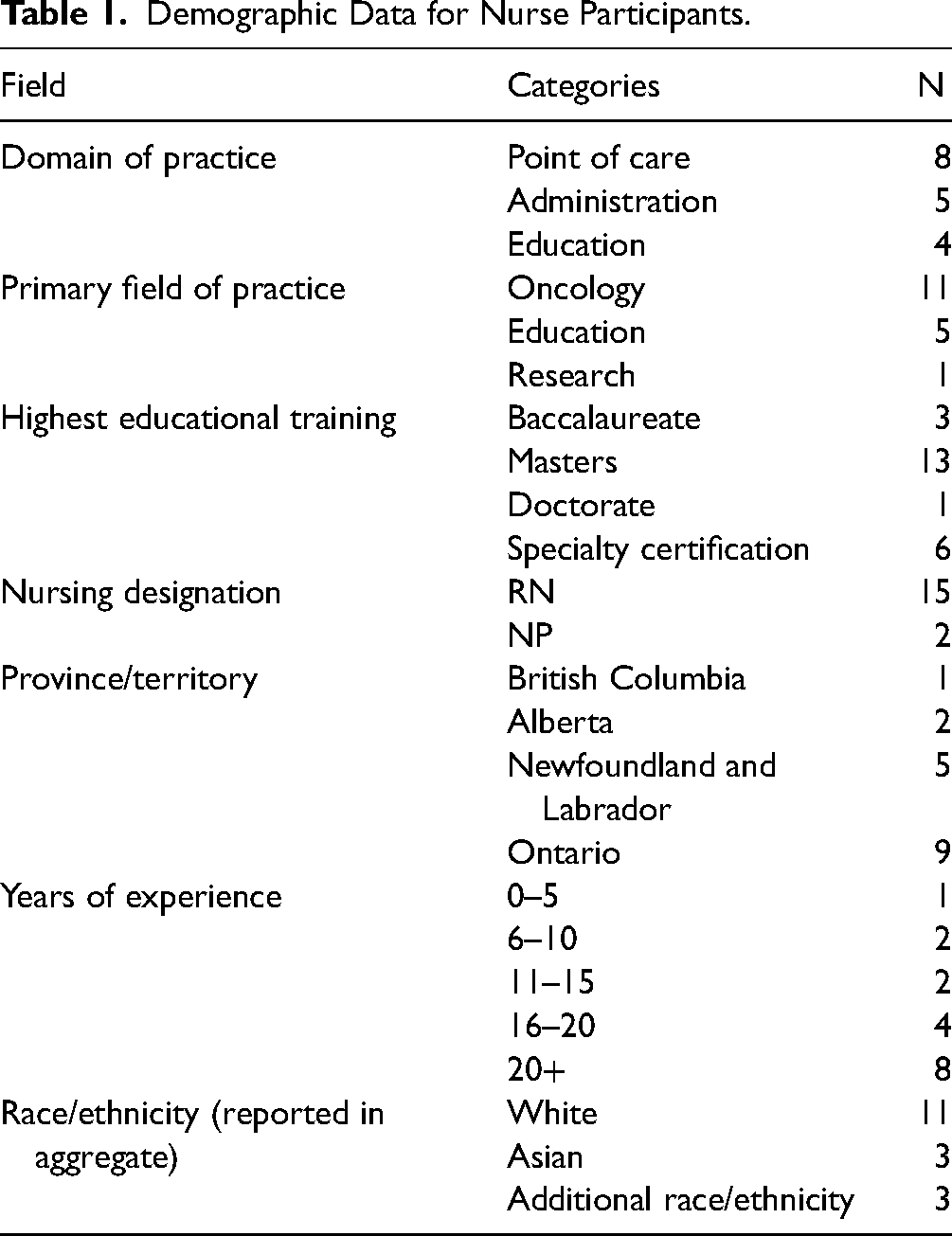
Our sample included 17 nurses and three patient representatives (see Table 1 for demographic data of nurse participants). The study participants identified gaps, requirements, and opportunities to enhance the policy infrastructure supporting genomics-informed oncology nursing education and practice. We identified three themes during our analysis: 1) nurses and patients recognize it is time for action, 2) nurses and patients see advantages in executing intentional, strategic, and collaborative policy development, and 3) leadership and advocacy are required to drive action. Additional supporting quotes for each theme and subtheme can be found in supplementary file 2. We use the term ‘nurses’ to indicate nurse participants, ‘patient representatives’ to indicate patient participants, and ‘participants’ to indicate both.
Demographic Data for Nurse Participants.
Recognizing it is time for action
When asked about the need for policy infrastructure, nurses in patient care settings and patient representatives acknowledged that genomics was becoming a more significant part of diagnosis and treatment in cancer care and that nursing policy was required to shape nurses’ roles and responsibilities within the interdisciplinary team to contribute to safe patient care. Nurses in education identified the need for changes to curriculum and guidance on what should be covered in undergraduate, graduate, and continuing education to increase genomic literacy.
Increasing genomic literacy to provide safe, competent care
Nurses acknowledged that rapid advancement in genomics required them to acquire new knowledge and skills to help patients navigate treatment pathways and provide safe and competent care. Many felt they required nursing policy to guide these new requirements and changes in their practice. Participants explained how the continuum of care from prevention, screening, diagnosis, and treatment was now more complex and individualized. One nurse said, “…we need policies around access to genetic screening and follow-up…we need some standards of practice like care pathways… evidence-based pathways, starting from when we refer someone for genetic testing, right through to follow-up and ongoing continuity and consistency of care” (P12 - Nurse).
For many nurses, the importance of increasing their genomic literacy was driven by a strong sense of responsibility to educate patients and families about the implications of genomics-informed healthcare. Nurses wanted to accurately answer questions about direct-to-consumer testing, know where to find credible information and know how to navigate the healthcare system, such as by accessing genetic testing. They indicated that these types of questions have become more common. One nurse said, “[patients are] becoming a lot more familiar with the role of genetics and genomics in terms of personalized medicine. It's just sort of being talked about more, it's in the media more, and so patients do have questions about that when they come in” (P13 - Nurse). However, nurses also described uncertainty in answering these questions, how much information was appropriate to provide, and where to obtain the required information.
Nurses talked about their struggles to integrate genomics into their existing practices, primarily because of a lack of role clarity and uncertainty surrounding the breadth and depth of knowledge required to support patients and families. As such, actions aimed at addressing their knowledge needs were a high priority so that they could develop the necessary skills to deliver safer care. Participants agreed that all nurses need a foundational level of genomics knowledge and skill, while those in specialty areas or advanced practice roles would require a deeper understanding to provide more complex care. Nurses stated that foundational genomics knowledge needed to be added to routine skills such as providing psychosocial support, appropriately communicating risk information, making referrals, accessing resources, providing patient education, navigating health systems, engaging in patient advocacy, and providing family-centred care. Specialist knowledge in genomics was needed to understand and interpret genetic test results, risk stratification, and how genetic variants influence disease presentation, prevention, treatment options, and prognosis. Nurses identified the development of competencies, standards of practice, and education and curriculum frameworks as important to advancing education and practice.
Nurses often mentioned needing more knowledge about the legal and ethical issues of genomics as well. Some participants raised concerns about potential genetic discrimination by insurance companies and needing knowledge about genetic non-discrimination legislation. Others identified the importance of being knowledgeable about legislation regarding collecting, using, and sharing genomic data. One nurse said, “How do we ensure that that data is stored and encrypted in a way that only those people who should have access to it do? All those things around ensuring people's personal information can't necessarily be traced back to them, and that data is secure” (P10 - Nurse). Nurses were challenged by ethical issues such as individual and relational autonomy on decisions related to genetic testing and how to encourage family discussions about hereditary risk. They wanted guidance to navigate these complex situations through policy and education.
When asked about their expectations of nurses’ genomic knowledge and skills, patient representatives’ responses mirrored those articulated by the nurses. One patient representative said, “As a patient, if I'm going to meet with a nurse in genomics, I want to make sure that they are going to be skilled with taking an in-depth history and physical…that they know how extensive a mutation may be in my family, to identify those of us [who] are at risk of potentially carrying this mutation, to be able to help me navigate through what's to come once I have that knowledge. What can I do in the form of prevention, and what services can I [access]?” (P16 - Patient). A patient representative noted that nurses were essential to supporting decisions related to pursuing further treatment and interventions, disclosing genetic results to family members, deciding whether to encourage family members to be tested and understanding where to find reliable information.
Shaping nurses’ roles and responsibilities in interdisciplinary teams
All participants identified the importance of a coordinated interprofessional team and the value of understanding each other's scope and roles, especially as patients encounter genomics-informed healthcare for the first time. Collaboration amongst interprofessional team members was described as essential to patients receiving consistent and accurate information. One patient representative said, “You want GPs, nurses, and then specialists, oncologists, and the surrounding team on the same page when they're talking about genomics and what personalized medicine and targeted medicine means… because there can be a lot of different interpretations out there [when] people start googling what this stuff means. And so, when it gets into actual care, there needs to be a good unity of information” (P4 - Patient). Participants identified the need to collaborate with a wide range of professionals during genomics-informed care, including researchers, genetic counselors, medical ethicists, radiation therapists, pathologists, cytogeneticists, and people in advanced practice or specialist roles.
While they recognized that each discipline brings a unique perspective, there was uncertainty regarding nurses’ roles and scopes of practice within the larger team, especially in the current medical model of genomics service: “I think [nurses] need a clear understanding or description of the nursing scope in this role. Who is communicating these results to the patient? What is my role once the patient has received their results? Do I talk to them about it or refer those questions back to the physician?” (P13 - Nurse). Nurses articulated the importance of feeling confident in their knowledge, and a key priority was gaining clarity about their roles, responsibilities, and competencies to optimize their contribution to the interdisciplinary team for patient safety. Despite the challenges with role clarity, many participants identified how nurses were crucial to genomics-informed healthcare, specifically as navigators and educators. One participant said, “The care has to be so individualized now that I think it is impossible not to have nurses and nurse navigators that are versed in genetics and genomics. I can’t see how we can proceed without having them …that's our patient's point of contact, most of the time, it is nurses” (P16 - Nurse). Many nurses identified that competencies and standards of practice could help provide direction for engaging in these roles and activities.
Nurses and patients see advantages to executing intentional, strategic, and collaborative policy development
When participants were asked how they thought nursing policy development could unfold, they discussed the importance of having an intentional, strategic, and collaborative approach to address the needs of different audiences (e.g., students and practising nurses) and practice contexts (e.g., oncology-specific versus nursing). They also expressed divergent perspectives on the types of nursing policy documents required, the level of specificity needed to guide education and practice, and whether policies should be interprofessional.
Being intentional
Nurses discussed the types of policy documents that would benefit nursing, interprofessional practice, and education and how intentional and targeted strategies were required given the pressing needs and gaps. Addressing the genomic literacy gaps amongst students and practising nurses was a priority, and providing education and curriculum frameworks was a recurring recommendation. One nurse said, “I think we need policy on what would be the bare minimum of knowledge…whether this comes in the form of integrating that knowledge into the curriculum for new grads or for the continued nursing education for nurses who have been in the profession for a long time” (P18 - Nurse). When asked about the types of policy documents that would be helpful, participants identified the need for a layered approach and a suite of tools, including competencies, scope of practice standards, best-practice guidelines, and position statements. Some nurses thought genomics-informed nursing policy should be overarching and not specific to oncology; others expressed a need for policy and professional practice support to guide practice and education specific to the oncology context.
Being strategic
Participants suggested reviewing current policy documents guiding nursing practice and education to determine how they could be strategically augmented to address genomics-informed practices. When creating new nursing policy documents, such as competencies or standards of practice, some participants suggested the value of being targeted and ensuring existing expectations of nurses are not simply reiterated. One participant said: “I think as a place to start, it would be really important to do the vital few versus the useful many that are unbelievably specific to genetics, genomics, or personalized healthcare, versus some broad statement that nurses need to consider the ethical considerations of genetic counselling… we already do that, right? So, be unbelievably crisp so that when I pick up that document, I know exactly what my scope is. What is this very specific slice that is not already encompassed in other areas?” (P7 - Nurse). In addition, participants discussed how to encourage the uptake of new policies. For example, when presenting new policy or changes to existing policy, participants said nursing leaders must communicate the value and practical application of policy to nurses to achieve buy-in. Some participants stressed the importance of providing clear and specific examples so that nurses understand what it means to be practice-ready when providing genomics-informed oncology nursing care.
Being collaborative
Participants stated that nursing policy development should be a collaborative effort and that those most impacted by policy, such as point-of-care nurses, patients, nurses working in clinical trials, and nurses from equity-deserving groups, should be involved to maximize utility and uptake. A critical point was raised by one nurse who identified the need to engage with groups such as the Canadian Black Nurses Alliance and the Canadian Indigenous Nurses Association early in the policy development process to ensure diverse perspectives were included. Participants referred to the mistrust of genetics and genomics amongst some groups stemming from historical harms and a general climate of skepticism associated with genetics and genomics research, government, and pharmaceutical companies. To rebuild public trust, one nurse suggested that traditional Indigenous healers and other Indigenous community members needed to be included in policy development processes. Participants identified potential partners, including provincial and national nursing associations; local, national, and international oncology nursing organizations; academic institutions; and people with lived experience. Some participants emphasized that nurses must be involved in developing policies they will be required to implement. One nurse said, “I think it's a collaborative effort, and I think nursing has to make sure we have a voice at the table because otherwise, people make decisions for us without really understanding what nursing brings to the table, what our scope is, what our knowledge set is, how we can support these initiatives” (P10 - Nurse).
While nurses acknowledged the value of interdisciplinary collaboration, when asked about their recommendations on creating nursing-specific or interprofessional competencies, their responses varied. Some suggested that profession-specific competencies should be a first step due to the differences in scope amongst team members, while others indicated the value of starting with interprofessional policy. One nurse said, “Yes, we need some nursing-specific competencies, but in caring for families with genetic-based cancers, we need multidisciplinary, interprofessional-based care. So, I think some of the competencies are going to need to be interprofessional, not just intra-professional, not just nursing, but that's where we'd need nursing and medicine and all those other disciplines working together to develop those competencies and make sure that they're developed collaboratively and that we're all working together to develop those” (P12 - Nurse). In addition to members of the interdisciplinary team, some participants highlighted the value of including patient perspectives in developing nursing policy. One patient representative discussed the importance of engaging those with lived experience and said, “…Instinctively you want people with a lot of lived experience in patient interaction to be involved at a fairly high level in this kind of policy formation because that's, to me, that's most likely to make sure that the experience of medical staffing, patient interaction is really reflected realistically in the policies that are arrived at” (P4 - Patient).
Supporting leadership and advocacy to drive action
To accelerate the development of nursing policy infrastructure, participants identified the importance of nurse and health service organization leaders and advocacy for investments to advance genomics nursing and genomics healthcare more broadly. Specifically, building networks and collaborating with all system partners were described as key drivers.
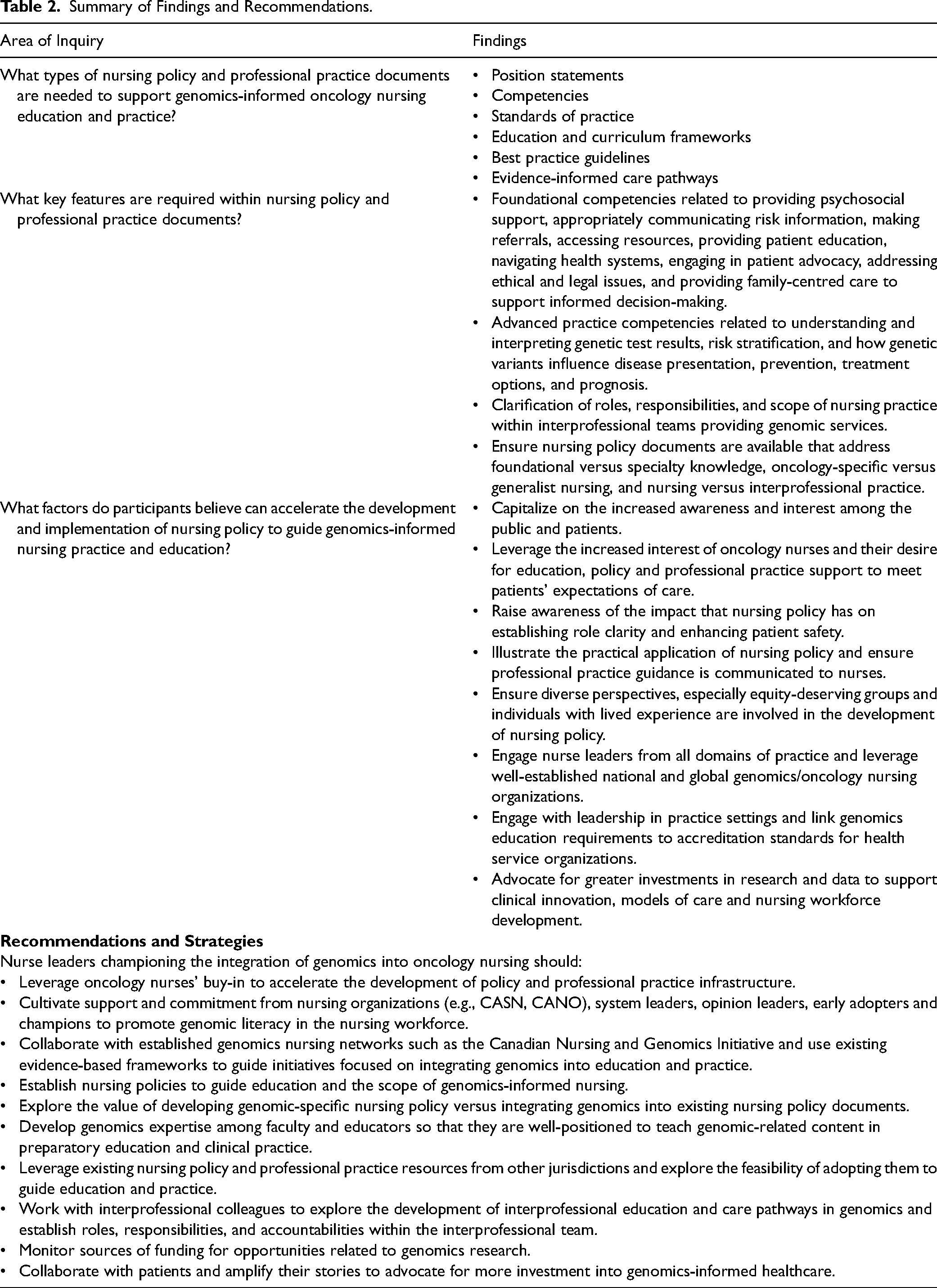
Summary of Findings and Recommendations.
Engaging nurse leaders
Participants identified the need for a consolidated group of nurse leaders from different domains of practice to drive change. One nurse participant said, “To be able to drive the change and the policy, there does need to be some sort of consolidated group that drives that…it's not going to be just one person. There needs to be a higher-level group or organizations or programs that are pushing that change and creating awareness so that it will fill in the gaps in terms of knowledge” (P3 - Nurse).
Many participants identified that accelerating the integration of genomics into oncology nursing practice would require including content in undergraduate nursing education. However, given the lack of educators with genomics expertise and the limited room to introduce additional content into curricula, nurses suggested that strong leadership from educational institutions would be required to first support educators in teaching this foundational knowledge. Nurses thought leadership from professional nursing associations and specialty practice groups could fill a gap by developing specialty education for practising nurses.
Many nurses identified a need for credible, evidence-based, and accessible information and that existing nursing organizations could play a leadership role in facilitating this. Leveraging resources of well-established national and global genomics or oncology nursing organizations were noted strategies to support the development of genomic literacy for nurses in practice. One nurse said, “Leveraging the impact and the relationships with CANO, CASN and the Canadian Nurses Association within the community [of] practice is going to be key. I do think that a lot of nurses look to CANO, specifically within oncology as a guiding light and to also support their education at the CANO conferences. I think [that] would be beneficial because there is a large platform of nurses there.” (P1 - Nurse). Regarding the role of provincial nursing regulators, there were mixed perspectives on what their involvement should entail in advancing genomics-informed nursing practice. Some believed it was a professional practice issue rather than a regulatory issue, while others suggested regulatory documents were needed to clearly outline expectations.
Engaging leadership within health service organizations
To fully participate in genomics-informed care, nurses identified the importance of strong leadership in practice settings, especially as they continue to work with resource constraints, competing priorities, and a novice and burned-out workforce. One nurse spoke about the importance of practice-based leadership, “I think investing in strong practice-based leadership is really important…If you're very much operational, you're just worried about having a body in place to provide care…and then, do I have the right body to provide care? But the people who are telling you who the right body is to provide care…are your practice leadership team who are very much involved in more provincial, national, competency-based work or position statements and have their finger on the pulse in terms of international standards and conferences” (P14 - Nurse). Leadership at the practice level was noted to be critical to supporting the integration of new knowledge, practices, innovations, and models of care.
There was a recurring sentiment that nursing policy infrastructure is vital to guide commitment and action amongst organizational leaders. This was illustrated by one nurse's comment, “Having those policy documents [and] organizational position statements gives the supporting documents needed for operational leaders to recognize…nationally, these organizations are saying that nurses need this, and if we're going to keep being the center of excellence and cancer care…then we need our nurses to be doing these things…we also need to have the supporting documents to say why the provincial government should be giving more educational funding for our nurses” (P19 - Nurse). Many participants identified mandatory requirements, such as hospital accreditation standards, as a driver that could assist practice settings in recognizing genomics as a priority. Having an accreditation standard would require healthcare facilities to prioritize education and create obligations to support the development of clinical programs and care pathways that address patient needs related to genomics. One participant said: “If you build it into the accreditation standards for Canada, it becomes the priority that creates more urgency and a sense of necessity than it otherwise would. If it's not there, they're only going to focus on those things that are in the accreditation standards and that are required organizational practices” (P3 - Nurse). These narratives highlighted the importance of leadership at the employer level and the utility of policy infrastructure in guiding decisions about education and practice development needs.
Advocating for investments in genomics-informed healthcare
On a broader level, participants described the need to advocate to all levels of government to invest in growing a workforce with genomic competence to expand the delivery of genomics-informed healthcare. Advocacy was discussed through avenues such as raising public awareness of the importance and usefulness of nurses’ involvement in genomics. One patient representative discussed the value of research and data in supporting lobbying efforts to increase investment in genomics initiatives. Another patient representative suggested that public demand and raising awareness of the fiscal benefits of expanding the genomics workforce will drive government action: “My take is that the government responds…when the public makes it an issue, and so I think it has to be made an issue and not only the severity of it, but the benefits from investing in it” (P5 - Patient). Nurses were identified as being critical to this advocacy agenda.
Discussion
All participants recognized the significant role that nurses could play in ensuring oncology patients fully benefit from the advancements of genomic technologies. Some of these contributions were made possible by integrating genomics into routine nursing practices such as health assessments and health teaching, while others were made through new roles such as patient navigation. Nurses identified that the gap in policy and professional practice support contributed to their role uncertainty and made it challenging to develop concerted strategies for the education and implementation of genomics in care. Participants stated that developing this infrastructure would guide education to increase genomic literacy and clarify scopes of practice, responsibilities, and accountabilities within the interprofessional team. Participants identified leadership solutions to accelerate the integration of genomics into oncology nursing education and practice. In the discussion below, we situate our findings within the context of the existing literature and explore a) the intersecting drivers for action that can be leveraged in Canada and beyond; b) considerations for developing genomics-informed oncology nursing policy infrastructure strategically, intentionally, and collaboratively; and c) how leadership and advocacy can be strengthened to accelerate genomics-informed oncology nursing education and practice. A summary of findings and recommendations can be found in Table 2.
Leveraging intersecting drivers for action
Our findings revealed intersecting drivers that nurse leaders from different domains of practice can use to accelerate the development of nursing policy infrastructure to guide education and practice.
Nurses’ buy-in as a driver
Nurses in this study recognized that genomics is highly relevant to oncology practice and that roles and practice contexts would influence the amount and depth of required genomic knowledge. This finding aligns with prior Canadian (Bottorff, McCullum, et al., 2005; Dewell et al., 2020; Hébert et al., 2022; Swadas et al., 2022) and international research (Calzone et al., 2013; Dagan et al., 2021; Seven et al., 2017; Yeşilçinar et al., 2022; Zhao et al., 2022), where nurses were interested in learning more about different aspects of genomics and recognized its importance to patient care. The buy-in by our participants suggests a supportive context for nursing policy infrastructure development across Canada. This is significant as several implementation science frameworks indicate that the values, beliefs, and interests of end-users are key determinants for the successful implementation of any innovation, including genomic healthcare (Damschroder et al., 2022; Roberts et al., 2019; Tonkin et al., 2020b).
Scholarship related to implementing innovations and integrating genomics into nursing also indicates that support from nursing organizations and endorsement by strong system leaders, opinion leaders, early adopters, and champions are essential (Calzone, Kirk, et al., 2018; Rogers, 2003). This aligns with our findings, as nurses in this study highlighted the importance of professional organizations in supporting policy, practice, and education development. Specifically, they identified CANO as the ‘go to’ organization for credible and reliable oncology nursing practice and policy. This suggests that a strong policy message, practice support, and specialty training from CANO would influence the profession and impact the uptake of strategies to support genomics-informed care.
As partners on this project, CASN and CANO have already demonstrated buy-in and interest in supporting the development of genomic nursing policy infrastructure to strengthen education and practice. These organizations can take swift action by drawing on nurses’ buy-in, leveraging established genomics nursing networks such as the Canadian Nursing and Genomics Initiative (Limoges et al., 2022), and using tools and frameworks such as the Global Genomics Nursing Alliance's Roadmap (Tonkin et al., 2020b) to guide initiatives focused on integrating genomics into education and practice. The first two stages of the roadmap require exploring and scoping factors of potential influence for change and engaging in readiness planning by assessing needs. Findings from this study can inform these initial steps and support continued engagement with the wider nursing community, patient partners, and the interdisciplinary team to facilitate the successful implementation of genomics into education and practice.
Quality, safe patient care as a driver
Both nurse and patient representative participants identified genomics as a complex and rapidly evolving science and that policy infrastructure was required to support and shape nursing practice that contributes to patient safety. With the increased demand for and access to genetic testing, more patients are turning to healthcare providers to help them understand the implications of test results for their care (Dragojlovic et al., 2023). Low genomics competency can lead to incorrect prescription of genetic testing, misinterpretation of genetic test results leading to incorrect interventions and therapies, inadequate genetic counseling, missed or delayed referrals, and confusion amongst patients and families (Bonadies et al., 2014; Brierley et al., 2012; Farmer et al., 2019). These issues have substantial implications for the health and well-being of patients and families, the liability of healthcare providers, and costs to the health system (Bonadies et al., 2014; Brierley et al., 2012; Farmer et al., 2019).
The nurses in our study recognized the potential for such harm due to low genomic literacy, and some were hesitant to provide genomics-informed care due to concerns about patient harm. However, this motivated them to address their gaps in knowledge and skills so they could be confident in adopting these new practices safely. Enhancing patient care and experience is core to redesigning healthcare systems and is also a key outcome of learning health systems (Menear et al., 2019). As such, healthcare providers must develop the necessary knowledge, skills, and competencies to interact with patients and ensure their care needs are met safely and equitably. To move from recognition to action, nursing policy is necessary to guide education development and establish roles, responsibilities, and accountabilities within the interprofessional team (Dragojlovic et al., 2020; Rahman et al., 2022; Starkweather et al., 2018).
Strategic, intentional, and collaborative nursing policy development
To accelerate action, policy documents must be developed in collaboration with those whom they will impact, and concerted leadership is needed to implement them (Carpenter-Clawson et al., 2023; Thomas et al., 2023). The nurses in this study wanted to contribute to important goals and outcomes of genomics-informed healthcare. They told us they required policy, professional practice guidance, and implementation plans that were developed strategically, intentionally, and collaboratively. Leaders who have developed genomics-informed nursing policy infrastructure in other parts of the world have found that despite having national nursing policy documents, integration remained a challenge (Calzone, Jenkins, et al., 2018). As a result, early focus on implementation is critical (Calzone, Kirk, et al., 2018; Carpenter-Clawson et al., 2023; Thomas et al., 2023). To support successful policy development and implementation, participants from our study highlighted a range of ideas.
Policy priorities for genomics-informed nursing education
In response to scientific advancements in genomics, CASN updated their National Nursing Education Framework in 2022 to include ‘genomics’ as foundational knowledge to nursing practice across the lifespan. Nurses in our study who were familiar with this change highlighted the value of this inclusion, as CASN accreditation is contingent upon meeting components within the framework. However, while nurses welcomed the addition of genomics to the framework, they also identified that a priority must be to develop the expertise of educators so that they could teach this content in preparatory education and clinical practice. The faculty knowledge gap is not unique to Canada and is part of a global challenge for integrating genomics across nursing (Read & Ward, 2016). Since having trained faculty who are confident and competent in genomics is a key building block for the successful integration of genomics into nursing (Tonkin et al., 2020a), a policy priority for nursing education across Canada should be to develop genomics literacy amongst those who are expected to teach genomic content.
Organizations such as CASN and CANO can provide leadership by assisting faculty and educators to address their knowledge gaps. Specific consideration can be placed on supporting promising initiatives implemented in other jurisdictions for upskilling faculty members and creating a community of genomic champions within the education sector (Kronk et al., 2023). As indicated in several general and genomics-specific implementation frameworks (Damschroder et al., 2022; Roberts et al., 2019; Tonkin et al., 2020a, 2020b), a careful assessment of the internal and external contexts is required to ensure the successful integration of innovations. Therefore, a first step may be to assess the opportunities and expertise within CANO and CASN and leverage existing resources from other genomics and oncology nursing organizations such as the Global Genomics Nursing Alliance (n.d.), International Society of Nurses in Genetics (2023), and the Oncology Nursing Society (n.d.).
Consensus on what constitutes foundational knowledge and how it should be incorporated across the education continuum must be achieved. The lack of foundational genomics education in undergraduate education was consistently reported by participants as a barrier to genomic integration. This is also not unique to Canada and aligns with the current state of genomic literacy amongst nurses in other jurisdictions worldwide (Mikkelsen et al., 2022; Thomas et al., 2023; Wright et al., 2020). A key enabler for integrating genomics into nursing is enhancing education and workforce development by embedding core competencies across all levels, roles, and clinical specialties (Tonkin et al., 2020a). Therefore, addressing these education gaps through a concerted and coordinated approach will be crucial to successfully integrating genomics into oncology nursing in Canada.
Considerations for aligning policy across professions and jurisdictions
Participants identified the lack of role clarity and confusion amongst nurses and interprofessional team members as a barrier to fully optimizing their contributions to patient care. Specifically, they held different perspectives on whether competencies, standards of practice, and education frameworks should be nursing-specific or interprofessional. This reflects wider discussions on how professional practice is advanced within the context of team-based care. Consulting evidence-informed frameworks and policy documents developed in other jurisdictions can provide meaningful ideas for addressing these important considerations. For example, our comparative policy and document analysis found that genomics-informed policy documents in the U.S. and U.K. are mainly specific to professions, with little evidence of interprofessional competency development. While interprofessional education and collaboration are often viewed as an important strategy for improved health service delivery, the amount of interprofessional policy and professional practice guidance remains low. Given the complexity of genomics knowledge and the different approaches required for mainstream versus specialized genomics healthcare, collaborative discussions with interprofessional colleagues across Canada are required. Existing evidence exploring the feasibility, appropriateness, and impact of different education models, such as interdisciplinary courses (Blazer et al., 2011; Rahman et al., 2022) and interprofessional services (King & Smith, 2020) can provide much-needed guidance in this area.
There were also discussions about whether existing standards and scope of practice documents, competencies, and practice guidelines developed in other jurisdictions could be adapted, modified, or adopted in the Canadian oncology context. These important questions can accelerate action by avoiding duplication and building on existing resources. Encouraging nurse leaders responsible for policy development to avoid silos and link to other countries can also promote greater consistency and harmonization. For example, leaders affiliated with the Global Genomics Nursing Alliance are expected to release a global genomics nursing competency framework in 2024 for nurses at all levels of practice (Dwyer et al., 2022), and there are opportunities to explore how these can be adapted to the Canadian context. These linkages can help to ensure that Canadian nurses’ genomic knowledge, skills, and competencies align with internationally agreed-upon standards.
Genomic-specific nursing policy versus integration into existing policy documents
Another consideration is whether stand-alone genomic-specific nursing policy documents are required or whether content can be integrated into existing competencies and standards of practice. The professional practice expectations of nurses are essentially the same across all practice settings. For example, all nurses are expected to be responsible and accountable for their practice by following legislation, regulatory standards, and employer policy; practice according to ethical standards; engage in continuing competence; engage in activities only when they have the required knowledge, skill, and competence; and advocate for patients. Therefore, attention could be placed on exploring how genomics content fits into existing nursing policy infrastructure. Our comparative policy and document analysis (Chiu et al., 2024) showed evidence of a mixed approach in the U.S. and U.K. In some instances, genomics was added to existing nursing standards of practice or competencies (Nursing and Midwifery Council, 2018, 2019, 2022). In others, entirely new documents were developed to guide genomics-informed nursing (International Society of Nurses in Genetics, 2022). While there is no commonly agreed approach, these divergent perspectives warrant further discussion to determine the most appropriate policy development and implementation strategy to avoid confusion and increase utility.
Leadership and advocacy for action
Developing and implementing nursing policy infrastructure requires strong and sustained leadership and advocacy (Calzone et al., 2018; Kurnat-Thoma et al., 2021). Participants noted that collaborating with other disciplines and leveraging the resources of well-established national and global organizations could accelerate genomic literacy amongst nurses and support the development of policy and practice guidance. Genomics nursing organizations discussed earlier are valuable resources for realizing these goals. Further, exploring how other new knowledge forms and practices have been integrated into generalist nursing policy documents can also provide valuable lessons (Puddester et al., 2023).
Securing interest and funding is critical to develop the genomics nursing workforce (Tonkin et al., 2020a), and staying abreast of funding priorities will be instrumental in helping nurses remain at the forefront of genomics-informed healthcare research, education, and policy. To ensure genomics remains on the policy agendas of decision-makers and funding bodies, a notable strategy identified by some participants was to use patient experiences to illustrate the value of genomics-informed nursing practice on patient outcomes. These stories can be beneficial for advocacy initiatives given that patient needs drive action. Canadian oncology nurse leaders can use these stories to engage their partners within and beyond the nursing profession, to increase motivation for action, and to seek ways to strategically align with policy and funding priorities within the broader genomics landscape. Special attention can be placed on seeking investments to support education, policy, practice development, and research that explores the effectiveness of different education approaches and the impact of a genomically competent workforce on patient outcomes.
Limitations
Given the small sample size of participants and unequal representation from each jurisdiction, additional research will be required to fully understand the policy needs of oncology nurses across Canada and the implementation strategies that can be tailored to fit jurisdictional and practice-setting contexts. However, the knowledge that has been generated provides a useful starting point to inform the beginning stages of addressing urgent genomics-informed oncology nursing policy infrastructure needs. Future research can be expanded to include healthcare professionals and leaders in practice, education, and policy beyond nursing to accelerate genomics into all areas of healthcare.
Conclusion
Findings from this study further our understanding of the kinds of infrastructure required to support genomics-informed oncology nursing education and practice, as well as the drivers that exist across Canada to mobilize action. Preparing the nursing workforce through enhanced genomic literacy and shaped roles and responsibilities within the interdisciplinary team are important strategies for accelerating genomics and precision health. Now is an opportune time for nurse leaders to work strategically and collaboratively to ensure oncology nurses have the necessary policy and professional practice support required to provide safe and equitable genomics-informed care. The knowledge from this study informs oncology nursing across Canada and lays the groundwork for approaches to integrate genomics across all areas, including generalist and specialist nursing.
Supplemental Material
sj-docx-1-cjn-10.1177_08445621241252615 - Supplemental material for Developing Policy Infrastructure to Guide Genomics-Informed Oncology Nursing in Canada: An Interpretive Descriptive Study
Supplemental material, sj-docx-1-cjn-10.1177_08445621241252615 for Developing Policy Infrastructure to Guide Genomics-Informed Oncology Nursing in Canada: An Interpretive Descriptive Study by Patrick Chiu, Jacqueline Limoges, Rebecca Puddester, Andrea Gretchev, Lindsay Carlsson, Kathleen Leslie, Don Flaming, Ann Meyer and April Pike in Canadian Journal of Nursing Research
Supplemental Material
sj-docx-2-cjn-10.1177_08445621241252615 - Supplemental material for Developing Policy Infrastructure to Guide Genomics-Informed Oncology Nursing in Canada: An Interpretive Descriptive Study
Supplemental material, sj-docx-2-cjn-10.1177_08445621241252615 for Developing Policy Infrastructure to Guide Genomics-Informed Oncology Nursing in Canada: An Interpretive Descriptive Study by Patrick Chiu, Jacqueline Limoges, Rebecca Puddester, Andrea Gretchev, Lindsay Carlsson, Kathleen Leslie, Don Flaming, Ann Meyer and April Pike in Canadian Journal of Nursing Research
Footnotes
Declaration of conflicting interests
The authors declared no potential conflicts of interest with respect to the research, authorship, and/or publication of this article.
Funding
This study is part of a larger project funded through the Canadian Institutes of Health Research (CIHR) Policy Catalyst Grant (competition number: 202210P03).

Supplemental material
Supplemental material for this article is available online.
Author biographies
References
Supplementary Material
Please find the following supplemental material available below.
For Open Access articles published under a Creative Commons License, all supplemental material carries the same license as the article it is associated with.
For non-Open Access articles published, all supplemental material carries a non-exclusive license, and permission requests for re-use of supplemental material or any part of supplemental material shall be sent directly to the copyright owner as specified in the copyright notice associated with the article.
