




Abstract
Study background
Incivility in nursing educational institutions, which may be perpetrated by both students and faculty, is troubling given that such institutions have a mandate to prepare students for caring, relational nursing practice.
Purpose
The purpose of this study was to contribute to understanding nursing academic incivility through an examination of nursing faculty's perspectives on student and faculty incivility.
Methods
The study was conducted using a mixed methods, descriptive, survey design with collection and analysis of quantitative and qualitative data. The sample consisted of 52 faculty members.
Results
A large majority of faculty thought that incivility in the nursing academic environment is a problem, with most considering it to be a mild or moderate problem. Students acted unprofessionally by showing disrespect, displaying superiority, engaging in disruptive behaviors, or not taking responsibility for their role in their learning. Faculty acted unprofessionally by showing disrespect, displaying superiority, or not being supportive. Faculty perceived that stress, personality, failure to deal with incivility, and an attitude of entitlement contributed to incivility. They thought that educational interventions, policies, and an academic environment that is conducive to civility are needed to address the problem.
Conclusion
Until evidence is available to support the effectiveness of interventions for academic incivility, nursing educational institutions are encouraged to implement strategies suggested by faculty in this study.
Background and Purpose
Academic Incivility
Given that nursing academic institutions have a mandate to prepare students for caring, relational nursing practice, it is expected that such institutions manifest a civil ethos. Yet, incivility exists within nursing academic settings (Clark et al., 2013, 2020; Lasiter et al., 2012; Sauer et al., 2017; Small et al., 2019; Sprunk et al., 2014). Civility is defined as “choosing to authentically engage in respectful, welcoming, and inclusive ways to foster equity, belonging, community, and connection, including instances when opposing views are expressed” (Clark et al., 2022, p. 266). It is synonymous with courteous, polite, gracious, well-mannered, and accommodating behavior and is the standard for professional decorum (Meires, 2018). Incivility, on the other hand, refers to uncivil behavior (ie, presenting as speech, body language, action, or inaction when action is warranted); behavior that is rude, disrespectful, disruptive, or exclusive, and that may be harmful (Clark, 2008a; Clark & Ritter, 2018). It has been described as spanning a continuum from less to more serious behaviors (Clark & Ahten, 2012). At the far left, incivility is represented by behaviors considered annoying, distracting, or impolite (e.g., negative comments, dismissive gestures, and interruptions). With progression toward the right, behaviors escalate (e.g., intimidation and bullying). At the far right, incivility becomes aggressive, threatening, and ultimately, violent.
Academic incivility may occur in any teaching-learning setting (e.g., classroom, online, laboratory, clinical placement) or space where interaction occurs (e.g., office, group meetings) (Babenko-Mould & Laschinger, 2014; Clark, 2013; Marchiondo et al., 2010). It may be both initiated and experienced by students and by faculty, with students and faculty encountering similar behaviors. It may take the following forms:
Student-to-student incivility occurs as a result of student behaviors, such as being rude, hostile, disregarding, condescending, or intimidating; being disruptive in the classroom (e.g., having side conversations that interfere with hearing the teacher, arriving late for class, using phone in class); and not being caring (e.g., refusing to be helpful, taking advantage, or gossiping) (Altmiller, 2012; Chachula et al., 2022; Clark, 2008b; Cooper et al., 2009; Jenkins et al., 2013; Sauer et al., 2017; Small et al., 2019). Faculty-to-student incivility occurs as a result of faculty behaviors, such as being demeaning, belittling (e.g., criticizing student in front of others), or intimidating (e.g., threatening discipline or unsatisfactory performance); being unfair, unjustly critical, or subjective in evaluation; raising voice; making negative comments about student to others; using ineffective teaching methods; and not being approachable, responsive, or receptive to student needs (Altmiller, 2012; Chachula et al., 2022; Clark, 2008b; Clarke et al., 2012; Holtz et al., 2018; Lasiter et al., 2012; Mott, 2014; Small et al., 2019). Student-to-faculty incivility occurs as a result of student behaviors, such as being rude, hostile, or intimidating (e.g., threatening formal complaint to administration); being disruptive in the classroom (e.g., arriving late for class, leaving class early, not paying attention, acting uninterested); using harassment (e.g., arguing about grades, demanding more time for assignments, challenging professor expertise); providing unfair or abusive comments in course evaluations; not taking responsibility for learning; and being overly informal or passive-aggressive in communicating (Altmiller, 2012; Christensen et al., 2020, 2021; Clark, 2008b; Frisbee et al., 2019; Sprunk et al., 2014). Faculty-to-faculty incivility occurs as a result of faculty behaviors, such as being rude, hostile, or condescending; gossiping; creating friction; challenging faculty credibility; excluding other faculty; interrupting or refusing to listen; being inattentive or disruptive in meetings (e.g., using phone); and failing to share in workload (Casale, 2017; Clark et al., 2013; Cotter & Clukey, 2019; McGee, 2020).
Academic incivility is a complex, multifaceted phenomenon (Adeniran et al., 2015; Penconek, 2020). Little attention has been given to examining nursing academic incivility from a theoretical perspective. But, several theories have been proposed to understand the phenomenon, including the model of oppression, attribution theory, empowerment models, critical social theory (Penconek, 2020), social learning theory (Lynette et al., 2016), and the social-ecological model (Adeniran et al., 2015). The social-ecological model, in particular, may be useful because of emphasis on behavior as occurring from an intricate transaction between individuals and their environments. The model considers personal, interpersonal, institutional, and societal (i.e., community and public policy) forces that affect behavior (McLeroy et al., 1988; Stokols, 1992).
Influencing Factors
Although little is known about sociodemographic factors that may contribute to academic incivility, nursing students and nursing faculty have identified other personal factors that they perceived as reasons for incivility in nursing education. These included student and faculty stress (e.g., from workload and other life demands, student fear of being unsuccessful) (Clark, 2008a; Lane et al., 2021; Small et al., 2019) and failure to address the problem (Altmiller, 2012; Clark, 2008a; Clark et al., 2013, 2020); student entitlement and consumerist attitude (Christensen et al., 2020, 2021; Clark, 2008a) and competitive rivalry (Sauer et al., 2017); and faculty superiority attitude, authoritarianism, or other problematic personality characteristics (Altmiller, 2012; Clark, 2008a; Clark et al., 2013; Karaçay & Oflaz, 2022; Small et al., 2019) and inadequate or incompetent teaching (Aul, 2017; Clark, 2008a; Small et al., 2019). Nursing students and nursing faculty have also referred to the reciprocity of incivility, indicating that uncivil behavior may trigger a like behavior by the recipient (Altmiller, 2012; Christensen et al., 2020; Clark, 2008a; Sherrod & Lewallen, 2021). Such interpersonal exchange may perpetuate and escalate the incivility (Clark, 2008a).
There is also evidence that institutional factors may play a role in nursing academic incivility. Incivility was greater in public compared with private or religious educational institutions (Karaçay & Oflaz, 2022; Lashley & de Meneses, 2001) and in larger (i.e., higher student enrollment) compared with smaller nursing programs (Lashley & de Meneses, 2001). Nursing faculty and administrators perceived that their institutions lacked clear policies or support to faculty for addressing academic incivility (Christensen et al., 2020, 2021; Clark et al., 2013, 2020; Lane et al., 2021). As well, faculty identified institutional forces such as imbalance of power (Clark et al., 2013), power struggle (e.g., senior vs. novice faculty), possessiveness of academic territory (e.g., course materials) (Peters, 2014), and hierarchical structures (higher vs. lower degree faculty, tenured vs non-tenured faculty) (Berquist et al., 2017; Sherrod & Lewallen, 2021) as contributing to faculty-to-faculty incivility.
With respect to the larger society, authors have speculated that a cultural shift to increased incivility in society (Williams, 2017), with spill-over into academia, may help explain incivility in nursing education (Clark & Springer, 2007). There is evidence of societal influence on the basis of generation or country of origin. Nursing students and faculty reported different experiences or perceptions of academic incivility depending on their generation (e.g., generation X vs baby boomer) (Mott, 2014; Ziefle, 2018). Based on faculty perceptions within countries, academic incivility was higher in some countries than in others, which may reflect cultural diversities (Al-Jubouri et al., 2021).
Consequences
Academic incivility has a number of negative consequences. Not only may it interfere with teaching and learning (Altmiller, 2012; Luparell, 2007; Mott, 2014), it may also adversely affect faculty and student psychological and physical health. Students and faculty who experienced incivility, whether perpetrated by students or faculty, had effects such as anxiety, fear, or stress; decreased self-confidence, self-esteem, or self-competence; and headaches or sleep disturbance (Christensen et al., 2021; Holtz et al., 2018; Lasiter et al., 2012; Luparell, 2007; Marchiondo et al., 2010; McGee, 2020; Mott, 2014; Sauer et al., 2017; Sprunk et al., 2014). As well, academic incivility may have a socio-economic impact. Student incivility was threatening to faculty reputations or job security (Christensen et al., 2021; Luparell, 2004; Sprunk et al., 2014) and costly in terms of time and finances needed to address it (Luparell, 2007; Sprunk et al., 2014). Faculty and other sources of academic incivility were associated with student dissatisfaction with their nursing program (Marchiondo et al., 2010) and with student intent to leave their program (Clarke et al., 2012). Student and faculty incivility were associated with faculty decreased job satisfaction and increased intent to leave their job (Frisbee et al., 2019). Furthermore, academic incivility may have negative implications for nursing practice; nursing students who exhibited incivility in academic settings continued to do so in post-licensure nursing practice (Luparell & Frisbee, 2019).
Extent of the Problem
Incivility in nursing education has been recognized as a troubling problem for many years. In recent studies, from 30% to 71% of faculty or faculty and administrators perceived incivility to be a moderate or serious problem in the educational environment, with only 6% to 12% considering it not a problem at all (Al-Jubouri et al., 2021; Aul, 2017; Casale, 2017; Clark et al., 2020; McGee, 2020). Faculty perceived higher incivility than did students (Wagner et al., 2019) and considered students to be more likely than faculty to engage in incivility (Al-Jubouri et al., 2021; Frisbee et al., 2019). Although some faculty and students have experienced serious incivility (e.g., threats to personal safety and violence), such behavior is infrequent in nursing education (Clark & Springer, 2007; McGee, 2020; Small et al., 2019).
Interventions
Despite the prevalence of nursing academic incivility, limited research has been conducted to examine interventions for such behavior. Nursing students and nursing faculty and administrators offered suggestions for strategies that they thought would be helpful to addressing the problem. These included having educational sessions about incivility, with skills training for preventing and managing incivility, for students and faculty; implementing a code of conduct or ground rules for acceptable behavior in the academic environment; having policies that address the issue and indicate zero tolerance; using open and effective communication; focusing on stress reduction; and promoting relationship building and role modeling of professionalism (Aul, 2017; Clark, 2008a, 2013; Clark et al., 2014, 2020; Small et al., 2019). Studies that tested interventions for student incivility were mostly small-scale evaluations of educational interventions (e.g., information sharing, skill application, reflective learning), using qualitative, quantitative, or mixed methods with convenience samples. Results from such interventions indicated increased student recognition of and insight into incivility (including awareness of own behavior and civil treatment of others), increased student empowerment (i.e., self-efficacy and confidence) to deal with incivility, and improved levels of student incivility or civility (Clark, 2011; Murray, 2020; Olsen et al., 2020). No studies were found that addressed effectiveness of interventions for nursing faculty incivility. Given the contribution of both students and faculty to academic incivility and the reciprocal nature of incivility, it would seem that effective interventions are equally warranted for students and faculty.
Study Rationale and Purpose
Although there is a growing body of international research on incivility in nursing education, many of the studies have taken place in the United States. Little research has been conducted on nursing academic incivility within Canada. Most published studies found were based on student perspectives on academic incivility (Chachula et al., 2022; Clarke et al., 2012; MacDonald et al., 2022; Small et al., 2019), including two that focused on student perspectives on interventions to address bullying (cognitive rehearsal training [Fehr & Seibel, 2016], forum theater [O’Flynn-Magee et al., 2022]). Of three studies involving nursing faculty, one was about clinical teachers’ encounters with incivility in practice settings (Hunt & Marini, 2012). The other two had mixed samples of nursing faculty and other participants (i.e., other health faculty, other university personnel), with combined perspectives on faculty-to-faculty violence (Berquist et al., 2017) or on institutional processes and resources for bullying experienced by nursing and other health care students (O’Flynn-Magee et al., 2020).
The purpose of this study was to contribute to understanding nursing academic incivility within a Canadian educational context through a detailed examination of nursing faculty's perspectives on student and faculty incivility. The research question was as follows: What are faculty members’ perceptions and experiences of student and faculty incivility in the nursing academic environment? Findings from this study may help inform interventions to address academic incivility; that is, behavior, which is discordant with the ethics and values (e.g., respect, honesty, compassion, caring, responsiveness, equity, open communication, collaboration, constructive resolution of differences) inherent to the nursing profession (American Nurses Association, 2015; Canadian Nurses Association, 2017; International Council of Nurses, 2021).
Methods and Procedures
Study Design and Research Ethics
This study was conducted using a mixed methods, cross-sectional, descriptive, survey design, with triangulation of quantitative and qualitative data as described by Sandelowski (2000). In such mixed methods research the quantitative and qualitative findings are complementary for fuller understanding of the phenomenon of interest.
The study was approved by the administrators of the eligible academic settings and by a research ethics board. Potential participants were provided written information about the purpose and nature of the study and about participant rights. Written consent was not required as consent was implied by completion and submission of the anonymous surveys, which were then analyzed by aggregating the data.
Setting and Sample
The study took place in three nursing academic settings, associated with public institutions, in an eastern Canadian province. The participants were faculty employed in nursing academic programs for diploma, baccalaureate, and graduate level nursing education. They were recruited to the study through information about the study sent by email dissemination to all faculty within the programs. Of the 129 eligible participants, and with two email reminders about the survey, the final sample consisted of 52 faculty for a response rate of 40%. Forty-nine (94%) participants identified as female gender, 3 (6%) as male gender, and all but one (98%) as Caucasian. Of the 50 participants who reported their ages, the range was 28 to 64 years, with a mean of 47 years; of the 51 who reported years of academic teaching, the range was 1 to 35 years, with a mean of 12 years. Their academic rank ranged from nursing instructor (e.g., teaching students in laboratory or clinical settings) to professor (i.e., teaching and research responsibilities).
Data Collection
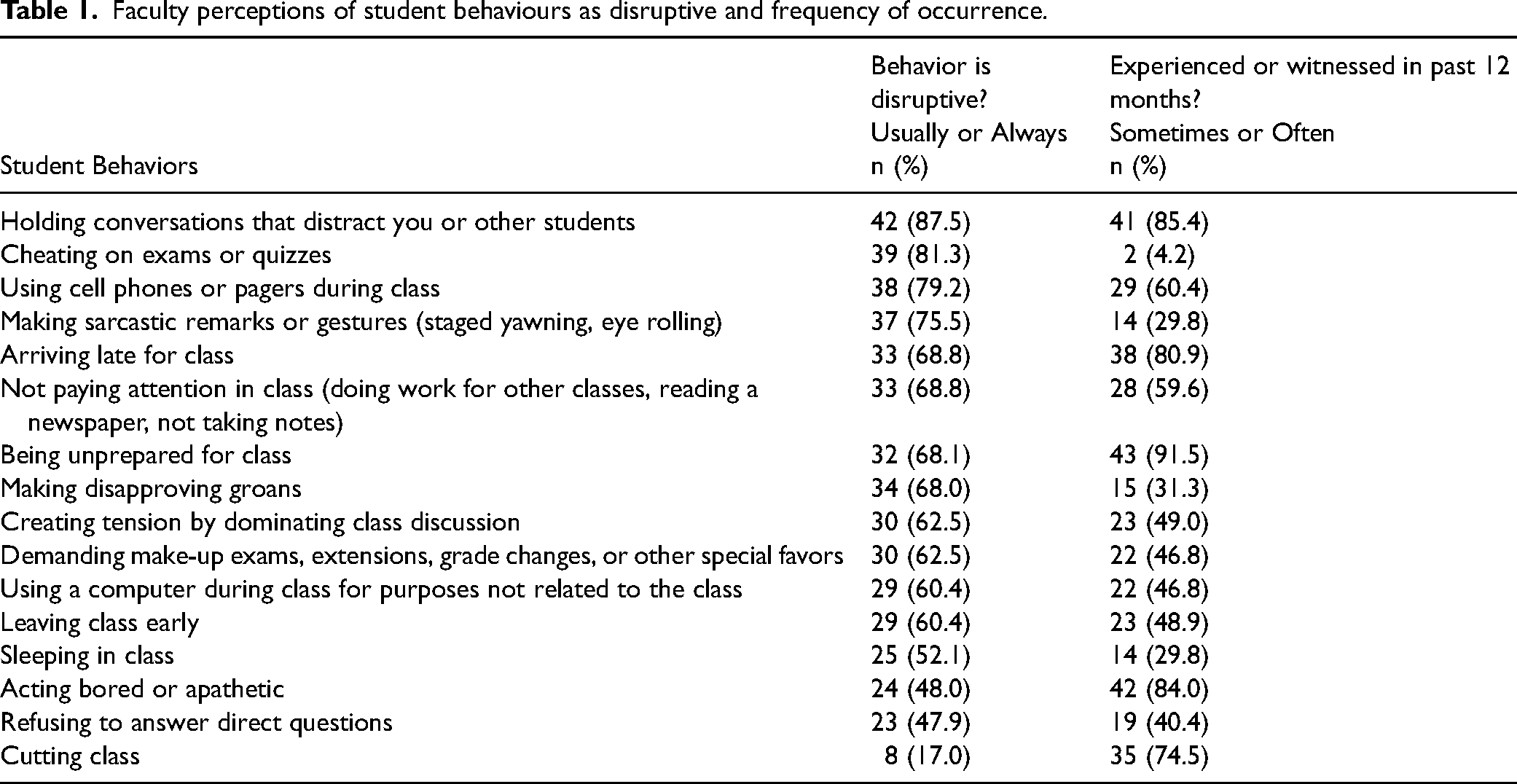
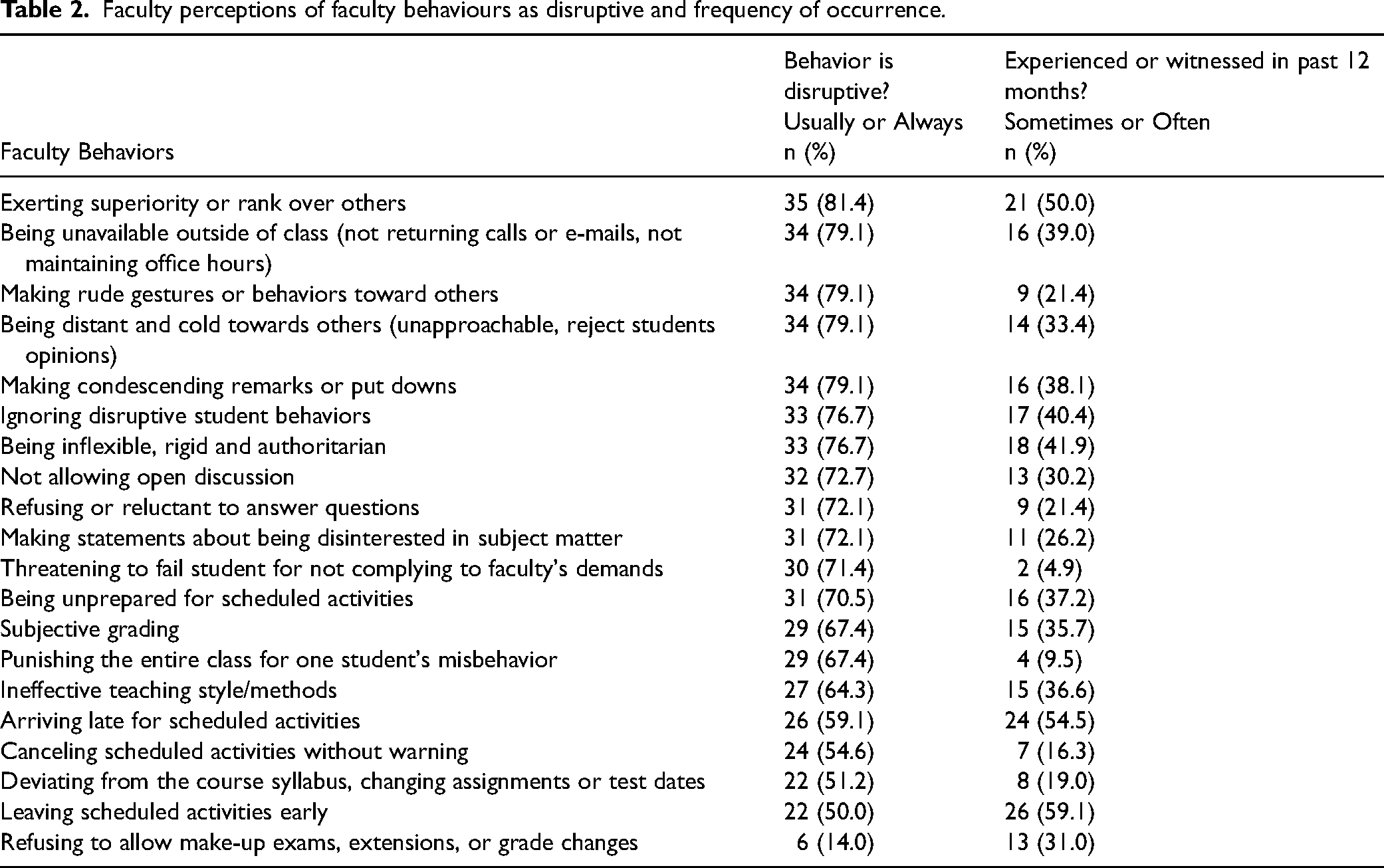
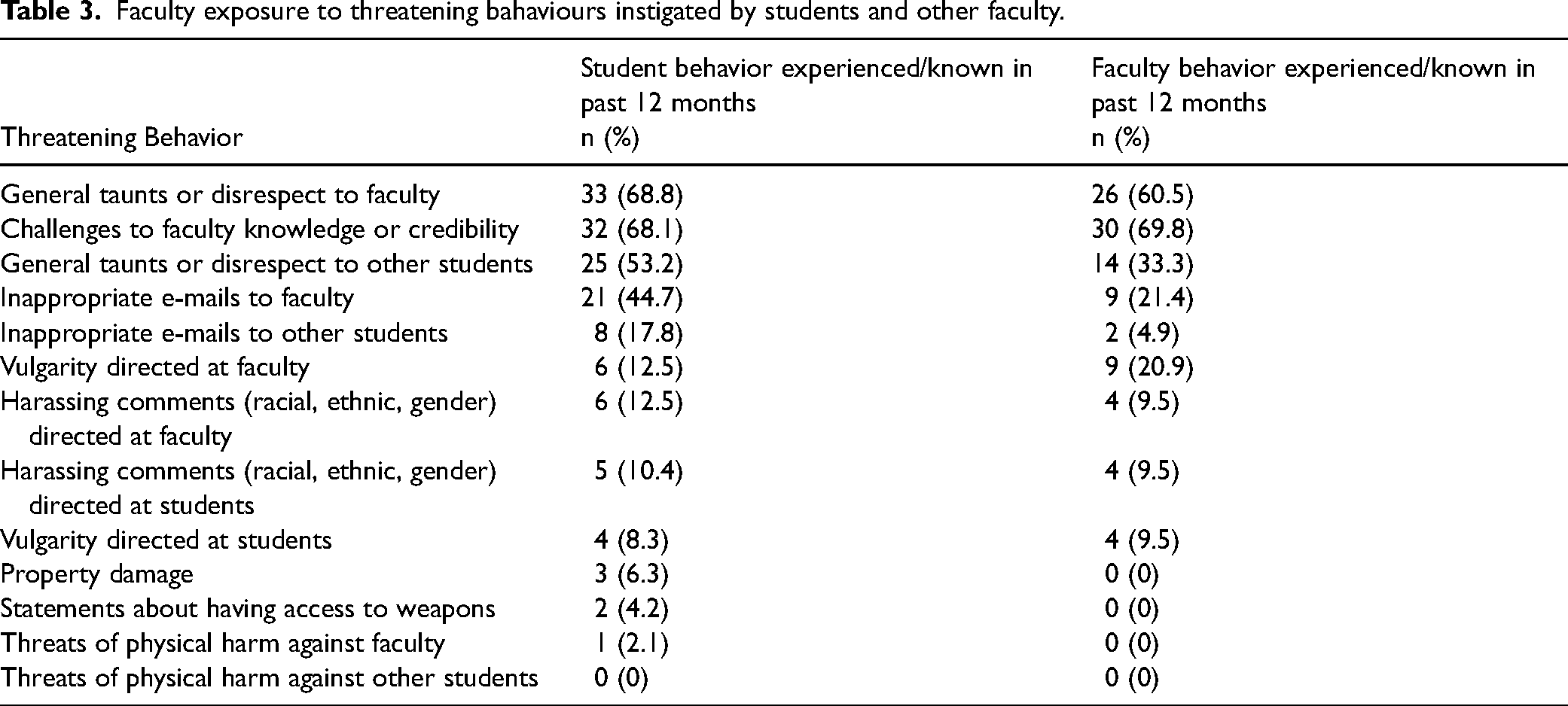
The data were collected in 2014 by use of the Incivility in Nursing Education (INE) Survey (the 2010 version) (Clark et al., 2009, 2015). The initial INE underwent validity and reliability testing with satisfactory results and has demonstrated good reliability in subsequent studies. The INE was chosen for this study as it permits examination of faculty perceptions and experiences in relation to both student and faculty academic incivility, is inclusive of all nursing educational settings where incivility may occur (e.g., classroom, online, clinical), and is a mixed methods instrument with both quantitative and qualitative items. Section I of the instrument elicits demographic data. Section II is composed of two lists of student behaviors and two lists of faculty behaviors, with the lists representing behaviors that may be considered uncivil (16 student and 20 faculty items, see Tables 1 and 2) and behaviors that may be considered threatening (13 student and 13 faculty items, see Table 3). For the uncivil lists, respondents are asked (a) whether they consider each behavior to be disruptive (i.e., Always, Usually, Sometimes, or Never) and (b) how often they have experienced or seen each of the behaviors within the nursing academic environment in the past 12 months (i.e., Often, Sometimes, Rarely, or Never). For the threatening lists, respondents are asked whether each behavior has happened to them or someone they know within the nursing academic environment in the past 12 months (i.e., Yes or No). In Section II, respondents are also asked about their perceptions of the extent to which academic incivility is a problem (i.e., No problem at all, Mild problem, Moderate problem, Serious problem, or I don’t know/can’t answer) and asked whether they think students or faculty are more likely to engage in the behaviors (i.e., Faculty much more likely, Faculty little more likely, About equal, Students little more likely, Students much more likely, Don’t know). Section III has 5 open-ended questions eliciting respondents’ opinions on student and faculty incivility, including how it occurs, factors that contribute to it, and how it should be addressed. In this study, the INE was administered through a link embedded in information about the study sent by e-mail to individual nursing faculty. The link permitted the survey to be completed through secure Web-based technology. In this study, reliability estimates, using Cronbach's alpha coefficients, were .88 for student and .97 for faculty incivility behaviors. It was .95 for the instrument overall.
Faculty perceptions of student behaviours as disruptive and frequency of occurrence.
Faculty perceptions of faculty behaviours as disruptive and frequency of occurrence.
Faculty exposure to threatening bahaviours instigated by students and other faculty.
Data Analysis
The quantitative data from the 52 INE surveys were entered into the SPSS statistical program and analyzed for frequencies and percentages. Response rates across the quantitative items ranged from 79% to 96%. As there were some missing responses, valid percentages are reported. To indicate frequencies for the disruptive behaviors, the ordinal Likert data of Usually and Always and of Sometimes and Often were combined. The qualitative questions yielded 177 narrative responses, with response rates ranging from 58% to 77% across the questions. The qualitative responses were transcribed verbatim. The text data were then analyzed using content analysis as proposed by Graneheim and Lundman (2003) and using the qualitative questions as template guides. The analysis involved several steps: reading and rereading the raw data several times to become familiar with the content; highlighting key words, phrases, and sentences on the transcript; grouping such text into categories on the basis of similarity in content and meaning; and assigning fitting category labels. All team members participated in generating categories for discussion and final consensus.
Results
Quantitative Findings
Student behaviors that faculty perceived as disruptive and the frequencies with which faculty experienced or witnessed such behaviors in the past 12 months are located in Table 1. Overall, from 17% to 88% of faculty considered the student behaviors to be usually or always disruptive and from 4% to 92% had sometimes or often experienced or witnessed such behavior. Thirteen of the 16 student behaviors were perceived by a majority of faculty to be usually or always disruptive; whereas, 7 of 16 had been sometimes or often experienced or witnessed by a majority of faculty. The student behavior most commonly noted by faculty as disruptive was holding conversations that distract you or other students (see Table 1). It was considered usually or always disruptive by 88% of faculty and had been sometimes or often experienced or witnessed by 85% of faculty. Other student behaviors that at least 60% of faculty considered usually or always disruptive (68% to 79%) and at least 60% had sometimes or often experienced or witnessed (60% to 92%) were using cellphones during class, arriving late for class, not paying attention in class, and being unprepared for class. Some student behaviors, although considered by a majority of faculty (52% to 81%) to be usually or always disruptive, were reported by fewer faculty as having been sometimes or often experienced or witnessed. These were making disapproving groans (31%), making sarcastic remarks or gestures (30%), sleeping in class (30%), and cheating on exams or quizzes (4%). On the other hand, two behaviors, cutting class and acting bored or apathetic, considered usually or always disruptive by only 17% and 48% of faculty, respectively, were sometimes or often experienced or witnessed by majorities of faculty (75% and 84%, respectively).
Other findings (not included in Table 1) of interest are in relation to student behaviors that were, at least, sometimes and behaviors that were never considered by faculty to be disruptive and student behaviors that were, at least, rarely and behaviors that were never experienced or witnessed by faculty. Holding conversations … and arriving late for class, were considered by all faculty to be disruptive, at least, sometimes; for all other behaviors, from 2% to 34% of faculty never considered the behaviors to be disruptive. Arriving late for class had been experienced or witnessed by all faculty, at least, rarely; for all other behaviors, from 2% to 68% of faculty had never experienced or witnessed the behaviors. Cheating on exams or quizzes was the behavior most often reported (68%) as never been experienced or witnessed.
Faculty behaviors that faculty perceived as disruptive and the frequencies with which faculty experienced or witnessed such behaviors in the past 12 months are located in Table 2. Overall, from 14% to 81% of faculty considered the faculty behaviors in Table 2 to be usually or always disruptive and from 5% to 59% had sometimes or often experienced or witnessed such behavior. Almost all of the behaviors, 19 of 20, were perceived by at least 50% of faculty to be usually or always disruptive. However, only three of those behaviors had been sometimes or often experienced or witnessed by at least 50% of faculty (50% to 59%). The one behavior infrequently reported by faculty (14%) as usually or always disruptive was refusing to allow make-up exams, extensions, or grade changes and it was also experienced or witnessed by a minority of faculty (31%). The faculty behavior most commonly reported by faculty as usually or always disruptive was exerting superiority or rank over others and it was experienced sometimes or often by 50% of faculty. The faculty behavior least commonly reported by faculty as having been encountered was threatening to fail student for not complying to faculty's demands; although it was perceived by 71% of faculty as usually or always disruptive, it was experienced or witnessed sometimes or often by just 5% of faculty.
Other findings (not included in Table 2) are also noteworthy. Across all faculty behaviors, at least some faculty (2% to 26%) never considered particular behaviors as disruptive and at least some (9% to 66%) never experienced or witnessed particular behaviors. Threatening to fail student … was the behavior most often reported (66%) as never been experienced or witnessed.
Student and faculty threatening behaviors that faculty or someone they knew had experienced in the past 12 months are located in Table 3. The most commonly reported threatening behaviors exhibited by students were general taunts or disrespect to faculty (69%), challenges to faculty knowledge or credibility (68%), and general taunts or disrespect to other students (53%). Those behaviors were also the most commonly reported faculty threatening behaviors, with 61%, 70%, and 33% of faculty, respectively, having experienced or known about them. More serious threats were not encountered at all or were infrequently encountered. Faculty did not report any occurrences of faculty threats of physical harm against students or against faculty and any occurrences of faculty statements about having access to weapons. However, although there were no reported occurrences of student threats of physical harm against other students, 1 to 2 faculty had experienced or known of student statements about having access to weapons and of student threats of physical harm against faculty.
A large majority of faculty thought that incivility in the nursing academic environment is a problem. Most commonly, faculty (48%) perceived it as a moderate problem; 27% and 18%, respectively, perceived it as a mild or serious problem. Only 5% thought that it was not a problem at all, while 2% indicated not knowing. Most often, faculty thought that students are much more likely than faculty to engage in incivility (39%); an additional 32% thought that students are a little more likely, for a total of approximately 70% of faculty attributing academic incivility predominantly to students. Twenty-three percent of faculty thought that students and faculty are about equally likely to engage in the behavior and only 2% thought that faculty are a little more likely than students to behave uncivilly. No faculty thought that faculty are much more likely than students to be uncivil. Five percent of faculty did not know whether faculty or students were more responsible for academic incivility.
Qualitative Findings
Consistent with the quantitative findings, the qualitative findings revealed that faculty thought both student and faculty incivility existed in nursing education, based on having personally experienced incivility or knowing about others’ experiences. A few faculty, although aware that incivility existed in nursing academia, emphasized that incivility does not apply to all students, for example, “many of my students approach me with respect,” that they had not seen faculty incivility “very often,” or that faculty “model good behavior and talk to students about professionalism.” The narrative responses resulted in categories indicating faculty perceptions of how students and faculty behave uncivilly and categories indicating factors that contribute to student and faculty incivility. The responses also revealed faculty thoughts on strategies to address academic incivility (see Figure 1). Behaviors identified by faculty as revealing how students and faculty demonstrated incivility lend support to the quantitative findings indicating that such behaviors occurred (see Tables 1 and 2). Faculty did not mention any incidences of serious threatening behaviors, which provides support to the quantitative findings indicating the infrequency of such behaviors (see Table 3).
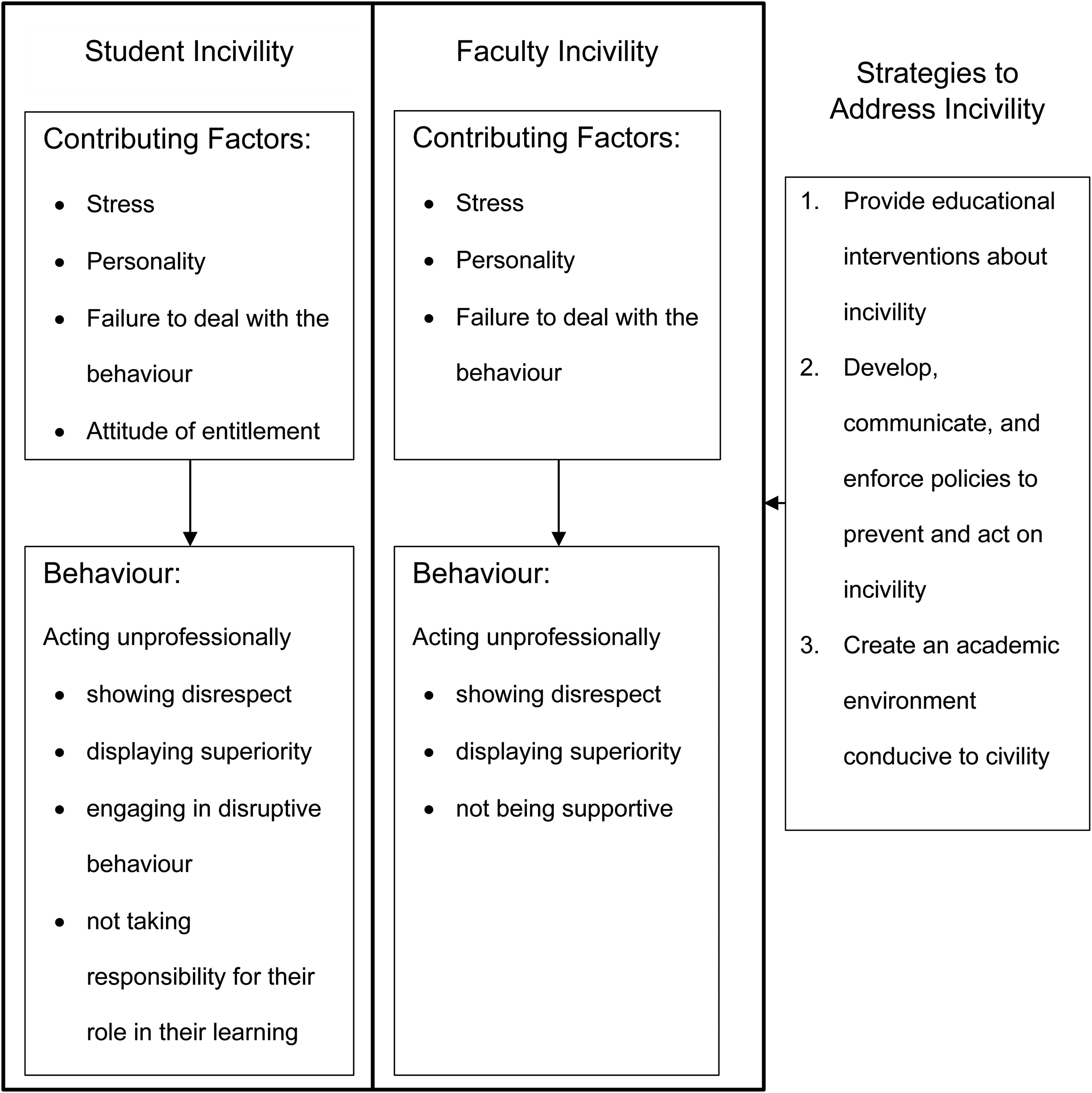
Faculty members’ perceptions of student and faculty contribution to incivility and suggestions to address the behaviour.
How Students and Faculty Contribute to Incivility
Faculty frequently mentioned “professionalism” and referred to student and faculty “lack of professionalism.” They perceived students and faculty to demonstrate incivility through acting unprofessionally. Students acted unprofessionally by showing “disrespect,” displaying “superiority,” engaging in “disruptive behavior,” or not taking “responsibility for their role in their learning” (see Figure 1). Students seem to “lack a true understanding of what professionalism is and how it is portrayed in behavior.” “They seem to not get how to consistently behave professionally.”
Students showed disrespect toward other students and to faculty by making “rude remarks” or rude body gestures (e.g., “sighing”, “eye-rolling”), making “negative comments,” using “poor manners” (e.g., “common etiquette” and “common courtesies such as please, thank you are often absent”), or communicating inappropriately. A faculty member described how student negative comments contributed to incivility: They often have skewed ideas about how they should be treated and often about how they actually are treated. How they perceive what their faculty is saying or doing is not always the way it was meant … . They often get their feelings hurt and then take it out by talking about certain faculty to other students about how unfair they are with their grades/evaluations, or they don’t do well and slander the faculty knowledge … . Talking among themselves about ‘unfairness’ and it snowballs into the faculty being unfairly judged by all students.
Faculty also provided examples that illustrate poor manners and inappropriate communication; for instance, students sending emails to faculty with the “salutation ‘hey’ and the tone of the message sounds too casual” and sending emails that are “abrupt, accusatory and demanding.”
Students displayed superiority, such as by “holding the attitude that they are more important than others, failing to demonstrate consideration … for others,” or “intimidating” and “bullying peers.” They engaged in disruptive behaviors in teaching-learning settings, such as by “text[ing] in class even though I have clearly instructed them not to,” “having conversations with other class members while the faculty member (or worse - guest speaker!) is talking,” “refusing to follow classroom/lab rules/policies,” “packing up bags before the class has ended,” or “constantly showing up late [for class] or leaving early without informing the instructor as to the possible reason.”
Their failure to take responsibility for their learning was apparent, for example, when they lacked “initiative” for “self-learning” as adult learners, did not “accept ‘constructive feedback’ and see it as a positive instead of a negative,” were “unable to master the program content, blaming faculty for their failure,” “were not engaged with material presented” or were “disinterest[ed] in subject area” or classroom activities, or were “not … prepared for class or clinical (did not read required text readings, not completed an extensive review of patient … data).” A faculty member described how student unpreparedness contributes to incivility: Being unprepared … for the lecture … hence the subject matter becomes more difficult to comprehend which causes the student to lack insight on the subject leading to apathetic behaviour in the classroom – the instructor is therefore often perceived as not bringing the material ‘to life’ or not making the subject matter interesting enough to hold the students attention.
Faculty acted unprofessionally by showing “disrespect,” displaying “superiority,” or not being supportive toward students or to other faculty. Faculty disrespect was apparent, such as when they talked negatively about other faculty or students, exhibited “rude” or a “lack of courteous behavior” (e.g., “talking during presentations/meetings”), or did not contribute to or perform their share of teamwork. Superiority was evident when faculty portrayed “dominance” or “inflated self-worth” through behaviors, such as “raising one's voice at a colleague”; “bullying,” “belittling,” “demean[ing],” or “intimidat[ing]” others; talking to others in a “condescending tone”; being “intolerant of other [faculty members’] differing educational skills and abilities”; not “being open” to another's “point of view” or others’ “differences of opinion”; or “controlling conversations during a meeting.” “Some faculty appear to think that their opinion/questions/right to speak in meetings, discussions, etc supersedes those of all others.” “Not supporting” others was revealed through behaviors, such as being “inflexible toward students’ issues,” not being accessible to students, or lacking “empathy … for peers” (e.g., “going along with inappropriate conversations rather than advocating for peers”).
Factors that Contribute to Student and Faculty Incivility
Faculty thought that “stress”, “personality”, and failure to “deal” with incivility contributed to both student and faculty incivility and an “attitude of entitlement” also contributed to student incivility (see Figure 1). These reflect personal factors, with failure to deal with incivility also occurring at the institutional level. Being under stress was the predominant reason identified for incivility. Stress may occur from “life in general” for both students and faculty, and especially, stress from program demands may occur for students and stress from work for faculty. Students may feel “overwhelmed by school work and disappointed with academic performance” or may experience lack of success or “risk of failure.” They may feel they are “being treated differently than others” or that they are “wronged by faculty” or that “faculty is out to get them.” Faculty may experience stress or “burnout” from heavy workload or other work demands (e.g., promotion and tenure) or feel dissatisfied with their work situation (e.g., “unhappy with teaching assignment,” “lack … fulfillment in present position,” “feel that workload is uneven” among faculty). Faculty may feel “devalued” or “undervalued” by students or co-workers. One faculty member stated, “a majority of faculty are burnt out trying to ensure a positive learning experience but become fatigued at the demands the students place on them.” They may experience “frustration” in response to demands placed upon them or to the incivility of others and respond unprofessionally, letting “emotion cloud their professionalism.”
Personality may play a role in incivility through characteristics conducive to such behavior. In addition to a sense of superiority, students and faculty portrayed other characteristics that faculty thought contribute to incivility. For students, those were having “difficulty working/collaborating with other students,” “being perfectionist,” having “jealousy,” and “being pessimistic”; for faculty, having a “sense of competition” and being “jealous.” Differences in personality between individuals may lead to “personality clashes.” In illustrating the role of personality and referring to students, one faculty member stated, “individual personality is also a big factor, if they have been bullies before, they continue this behavior in post-secondary as well.”
Faculty members thought that incivility may occur or be perpetuated because students, faculty, or program administrators fail to deal with it. Students may simply “[let] it go among peers” or “tolerat[e] it” and “[be] silent when others are being incivil.” Students may “fear … repercussions” were they to act against incivility. Faculty may fail to deal with incivility by not pre-empting it or not addressing it when it happens. Expectations for appropriate behavior may not be conveyed to students or such messages may be inconsistently communicated or enforced among faculty. “For example, one faculty member may request that a student not use a cell phone in the learning environment and another faculty may ignore the student use of a cell phone in the learning environment.” Faculty may “turn a blind eye, tolerating inappropriate behaviors by others”; hence, there may be “lack of consequences” for the perpetrator. Faculty may have “discomfort or inability to address the behaviors” (e.g., have “poor conflict resolution skills or communication skills,” “not sure how to handle it or easier to ignore it”) or may fear “retribution” for reporting or calling the behavior into question. Administrators may not seem “approachable” or “support[ive]” toward others reporting incivility or may “ignor[e] uncivil behavior from a faculty member.”
An attitude of entitlement is apparent when students “feel that they are ‘paying’ for their education” and “faculty should be providing them with a ‘service’.” There are some students who have stated they pay good money for the program therefore they should be able to choose their partners for example. I have had students who feel they are entitled to choose their placements and should not be forced to practice in settings they do not enjoy.
“It appears to be a ‘me’ generation where demanding what you want rather than working hard is acceptable.” Students “expect to be ‘spoon fed’ by faculty” and “want everything handed to them on a silver platter (i.e., notes, exam questions …).” They may act “as if the rules don’t apply to them,” “think that everything should revolve around them,” or “believ[e] they are beyond reproach.” An attitude of entitlement may be reflected in behaviors and expectations, such as “demanding/arguing for changes in grades that they have not earned” or expecting faculty “answers or responses to emails etc immediately” or “to be available at all time” – “whenever they want us to be.”
Strategies to Address Academic Incivility
Faculty suggested institutional level strategies they thought would be helpful to addressing academic incivility:
Providing educational interventions about incivility for both students and faculty, such as through formal meetings and workshops. The education should focus on raising “awareness of the issue of incivility” and “its existence” in nursing education, raising awareness of what is considered “acceptable and unacceptable behavior” (i.e., “appropriate etiquette”), raising awareness of the “impact” of incivility on those experiencing it, increasing “self-awareness” of one's contribution to incivility (i.e., “people need to gain insight into how their behavior impacts others around them”), and enhancing “communication skills.” Developing and enforcing policies to prevent and act on incivility and communicating such policies to both students and faculty, for example, through student and faculty orientation packages and student and faculty handbooks. Policies should indicate “zero tolerance” and “clear consequences” for incivility. Creating an academic environment that is conducive to civility. Such an environment involves “administrators support[ing] faculty and students who report incivility” (students and faculty “should not be afraid” to report incivility) and faculty and administrators “fostering a culture of respect” through leading by example in “maintain[ing] professional behaviors at all times” (i.e., “role modeling and setting the tone from top down or middle outward”) and expecting professional behavior from collegues and students alike.
Discussion
Faculty in this study perceived that incivility existed in nursing education as they had been subjected to it by students or by faculty or they were aware of students or other faculty having been subjected to it. Student and faculty behaviors they thought indicated incivility and that they had encountered included various disruptive, threatening, and other unprofessional behaviors. This is consistent with research whereby nursing faculty reported similar student and faculty incivility (Casale, 2017; Christensen et al., 2020, 2021; Clark, 2008b; Clark et al., 2013; Cotter & Clukey, 2019; Frisbee et al., 2019; McGee, 2020; Sprunk et al., 2014). Most commonly, faculty in this study considered the extent of academic incivility to be a moderate problem, with a majority considering it to be mild or moderate, but some considering it to be serious. In other studies, a majority of faculty considered academic incivility to be a moderate problem (Clark & Springer, 2007) or moderate to serious problem (Aul, 2017; Clark, 2008b; McGee, 2020). A small number of faculty in this study thought that incivility in the nursing academic environment is not a problem at all or thought that student-to-faculty incivility is not applicable to all nursing students or that faculty incivility is not seen very often. In other studies there also were small proportions of faculty or faculty and administrators who thought that incivility in nursing education, in general, is not a problem (Clark et al., 2020) or that faculty-to-faculty incivility, in particular, is not a problem (Casale, 2017; Clark et al., 2013; McGee, 2020). In this study and in other studies (Clark & Springer, 2007; Frisbee et al., 2019), faculty thought students are more likely than faculty to engage in uncivil behavior. That perception is supported by other findings in this study (see Tables 1–3), and in previous research (Clark, 2008b), suggesting that more faculty were exposed to student than to faculty incivility.
Faculty focused largely on personal factors as contributing to student and faculty engagement in incivility, including stress, personality characteristics, and failure to deal with the behavior, and for students, the additional factor of attitude of entitlement. They thought administrators at the institutional level also failed to deal with the behavior. Other faculty have suggested similar contributing factors. In particular, in a conceptual model, derived from both faculty and student descriptions of incivility in nursing education and developed to illustrate the behavior, faculty and student stress, faculty attitude of superiority, and student attitude of entitlement were highlighted as influencing students and faculty toward engaging in the behavior. Continuing incivility was thought to occur when encounters or opportunities for students and faculty to resolve the conflict were missed, avoided, or poorly managed (Clark, 2008a). However, as suggested in the literature, academic incivility is a complex phenomenon (Adeniran et al., 2015; Penconek, 2020) with potentially many different contributing factors, including other personal and institutional influences and societal influences (e.g., Al-Jubouri et al., 2021; Berquist et al., 2017; Clark et al., 2013; Lashley & de Meneses, 2001; Peters, 2014; Small et al., 2019; Ziefle, 2018).
Given faculty's perceptions of factors that contributed to incivility and their perceptions of how students and faculty demonstrated incivility, that is, acting unprofessionally (i.e., students and faculty showing disrespect or superiority; students engaging in disruptive behaviors or not taking responsibility for their learning; faculty not being supportive toward students and other faculty), the strategies faculty suggested as potentially helpful are perhaps not surprising. They thought that educational institutions should provide educational interventions about incivility for students and faculty to raise awareness of the issue (including about acceptable and unacceptable behavior, impact on others, and self-contribution to incivility) and to enhance communication skills; develop, communicate, and enforce policies to prevent and address incivility and that indicate zero tolerance and clear consequences for such behavior; and create an academic environment conducive to civility (i.e., one in which administrators support students and faculty with respect to incivility and in which administrators and faculty lead by example in promoting professionalism and hence a culture of respect). Nursing faculty and administrators in other studies suggested similar institutional strategies including educational interventions (with skill-building for effective communication), policies to address the issue (with immediate and direct action), a code of conduct for acceptable behavior, relationship-building, and role modeling professionalism (with effective, competent leadership). They also thought that resources should be provided for stress reduction (Clark, 2008a, 2013; Clark et al., 2020). Interestingly, evaluations of educational interventions for student incivility, similar to the educational interventions suggested by faculty in this study, showed student increased recognition of and insight into incivility, increased empowerment to deal with incivility, and improved behavior (Clark, 2011; Murray, 2020; Olsen et al., 2020.
Study Limitations and Implications for Nursing Education and Research
This study is limited by the small convenience sample of largely Caucasian females from educational settings in one Canadian province. It is possible that the convenience sample introduced response bias. Faculty who experienced incivility may have been more likely to participate in the study in order to express their concerns. It is also possible that faculty who experienced incivility may have declined to participate because of the sensitive nature of the topic. Furthermore, faculty may not have participated if they had not experienced incivility or if they did not perceive it as a significant problem in their settings. Although the data were collected in 2014, the findings are consistent with findings from earlier and more current studies on incivility in academia. Despite limitations, the study is strengthened by the mixed qualitative and quantitative methods and contributes to the small body of research on incivility in Canadian educational settings; in particular, it provides insight into student and faculty incivility from the perspectives of faculty who were exposed to it.
The unprofessional behaviors of students and faculty as perceived by faculty in this study are antithetical to nursing ethics and values and have no place in institutions that have an obligation to prepare students for professional nursing practice. Not only may exposure to incivility negatively impact the well-being of faculty and students (Holtz et al., 2018; Luparell, 2007; Mott, 2014; Sprunk et al., 2014), but it may interfere with the socialization of students as caring professional nurses (Del Prato, 2013) and interfere with faculty professionalism, as was the case in this study when faculty let “emotion cloud their professionalism”. The fear is that nursing student incivility may also occur in their nursing practice as students (Randle, 2003) and be carried forward into their practice, post-licensure (Luparell & Frisbee, 2019). As suggested by faculty in this study, it is imperative that faculty lead by example and role model professionalism at all times. It seems important that nursing students are exposed early and often to nursing's theoretical and philosophical knowledge about the nature and essence of professional nursing. Nursing schools may also consider instituting a rigorous process to screen both prospective students and faculty for professional qualities, including the ability to interact and work well with others and engage in respectful communication and empathetic interpersonal relationships (Frisbee et al., 2019; Luparell, 2005). Until more evidence is available to support the effectiveness of interventions for academic incivility, it is appropriate that academic institutions implement strategies suggested by faculty in this study, along with those proposed by nursing faculty, students, and administrators in other research (Aul, 2017; Clark, 2008a; Clark et al., 2014, 2020; Small et al., 2019). The social ecological model, which takes into account personal, interpersonal, and contextual factors (McLeroy et al., 1988; Stokols, 1992) may be used to guide a comprehensive approach (Adeniran et al., 2015).
Much of the research to date on incivility as experienced by faculty is focused on women faculty. Similarly, where race or ethnicity has been reported, samples have been described as largely Caucasian or White, with much of the research occurring in the United States. Studies that include other genders, ethnicities, and cultures are warranted. As well, many studies about faculty experiences of incivility are small in scope. Large ethnographic studies of nursing academic incivility that consider both student and faculty perspectives and the various levels of influence may shed further light on the complexity of the problem. Rigorous research is needed to determine effective interventions to address academic incivility, with the need particularly salient for faculty incivility. For instance, in this study and in other studies, faculty suggested the development and enforcement of policies, including zero tolerance policy, to address student and faculty incivility. Research is needed to determine the nature of policies that work and how best to develop, implement, and enforce them. Because academic incivility is not considered a problem by some faculty, research on their perspectives, experiences, and potential institutional differences may contribute to further understanding this persistent problem.
Conclusion
Incivility in nursing education was evidenced by unprofessional behaviors exhibited by both nursing students and nursing faculty. Faculty thought that nursing academic institutions need to address both student and faculty incivility. Indeed, nursing academic institutions have an obligation to ensure that the teaching-learning environment reflects civility. Although research is needed to determine the effectiveness of proposed strategies to address incivility, as intimated by faculty in this study, a starting point to addressing the problem may be for faculty and administrators to lead by example and role model professional behaviors in their interactions with both students and each other. One faculty member summed it up aptly, remedying incivility “is essentially about treating each other well” - a quintessential element of nursing professionalism.
Footnotes
Acknowledgement
We thank with sincere gratitude Patricia Granger MN for her contribution to the project, including to the data collection and quantitative data analysis, and Andrea Brennan-Hunter (retired Associate Professor) for statistical advice.
Declaration of Conflicting Interests
The authors declared no potential conflicts of interest with respect to the research, authorship, and/or publication of this article.
Funding
The authors disclosed receipt of the following financial support for the research, authorship, and/or publication of this article: A small seed grant was received from the Center for Nursing Studies, St. John's, NL to help support the study.
