




Abstract
This article explores the nineteenth-century view that the organization of maritime safety – the ability to control or circumvent the natural forces of waterways and ensure safe navigation and rescue at sea – was one of several ‘standards of civilization’ attributable to western states that would justify a derogation of a state's sovereignty if not met. It investigates this hierarchical understanding by discussing examples of maritime safety in the context of colonialism and informal imperialism. Focusing on three examples of trans-imperial projects at chokepoints of global navigation – Cape Guardafui, Cape Spartel and the Bosporus Strait – the article shows how this standard was an argumentative foundation on which powers could agree to exchange, cooperate and collaborate in response to maritime hazards. These projects show different configurations of sovereignty: the vertical relationship of a hierarchy between sovereign and less than fully sovereign nations as well as the horizontal relationship of a shared sovereignty between empires.
Keywords
In 1879, Travers Twiss, a prominent legal scholar who embodied the complicity of law in the imperialist project by championing Leopold II's occupation of the Congo, gave a lecture on the ‘International Conventions for the Maintenance of Sea-Lights’ at the Seventh Annual Conference of the Association for the Reform and Codification of the Law of Nations. He argued that sea-lights were an ‘invention of the European mind’ (a claim complicated by the fact that the first known light tower, the Pharos of Alexandria, was built in North Africa), perfected by recent technological advances in French and British engineering. At the time, Twiss claimed, lighting technology had advanced to the extent that states had a duty to ensure its satisfactory and trustworthy application worldwide. Twiss described three models through which such services were then being provided: first, by a state levying duties in a port under its rule; second, free of charge, as in the United States or Japan; or third, by an ‘international lighthouse’ – an arrangement based on the joint contributions of interested maritime states in cases where a coastal power was unable to operate necessary safety structures or the levying of dues in a nearby port was impractical. It was this third model that Twiss aimed to promote in his lecture. While he referred to the ‘benefit of all passing vessels of every nationality’ and ‘the interest of humanity’, his concern was mainly with improving maritime safety and security along routes beneficial to European trade, consumption and colonial expansion. 1
Even on the eve of high imperialism, this proposal for an ‘international concert to light up the dangerous portions of the African seaway’, 2 in particular, was not unconventional. Despite the textbook definition of imperialism as largely about the competition among colonial empires, the fight for markets, establishing spheres of interest and the scramble for territories, 3 a growing field of trans- and inter-imperial history shows that there were in fact plenty of examples in which nineteenth-century imperial powers and their agents worked together – knowingly or unknowingly and even across political aisles and in mutually disputed regions of the globe – to pursue shared interests. 4 The reasons for this type of cooperation, collaboration or exchange were often a collectively perceived threat or hazard, 5 an opportunity that would in the long term bolster the position of a single imperial power, or both. To achieve these objectives, international conferences and organizations were often the instrument of choice. Indeed, it seems that the early history of international organizations was entangled with informal forms of imperial expansion. 6
Many of these inter-imperial arrangements dealt with water in general or the sea in particular. This follows logically from the way in which imperialism ushered in a fundamental transformation of human relationships with nature in general and water in particular to render territories conquerable and exploitable. Historians have long recognized the importance of waterways as crucial in this context. 7 However, despite its fluid and connective nature, water is ‘unruly’. 8 Meteorological phenomena, water currents or geological features along coasts or the seabed could easily disrupt maritime connections. Water could rapidly become a threat to ships, crews, passengers and cargo, and therefore needed to be managed. Maritime safety could thus simultaneously have a strategic, economic and humanitarian rationale. In western national contexts, nineteenth-century maritime safety, whether concerned with prevention or with relief in the aftermath of ship accidents, was increasingly provided either by state authorities such as coastguards or by volunteer lifesaving organizations and private companies (for example, privately run lighthouses or salvage companies) that entered into agreements with states. The relationship between these maritime services and the domestic sovereignty of states can be thought of in manifold ways, although, depending on local contexts and the services rendered, their pertinence varies. For example, the provision of these services may be explained through biopolitical reasoning, aiming to preserve the integrity of the population, 9 or through institutional economics, explaining the profitability (or lack thereof) of a public good such as a lighthouse. 10
However, there is also a moral dimension hinted at in Twiss's lecture: both the ability to tame or circumvent the natural forces of waterways and to provide safety and humanitarian lifesaving at sea were considered by diplomats and scholars characteristics of ‘civilized’ states. 11 In order to respond to an unprecedented expansion of maritime trade and naval activity driven by the advent of steamships and international telegraph networks, western nations covered their coastlines with navigation aids during the second half of the nineteenth century. From 1860 to 1885, the number of lighthouses in western states grew significantly (in France by 35 per cent, Britain by 68 per cent, the United States by 84 per cent, Russia by 174 per cent and Germany by 212 per cent). This increase was sustained by a number of important advances in lighting technology, such as the Fresnel lens in combination with oil lamps and, less practically, arc lighting. 12
At the same time, the long nineteenth century saw a growing acceptance in western societies of the imperative of saving drowning and shipwrecked persons – an imperative that translated not only into the creation of national lifesaving organizations, but also into soft and hard law prescribing the duty to assist ships in distress and the people on board, ultimately also on an international level. 13 This imperative was accompanied – and reinforced – by the availability of increasingly professional lifesaving technology. For the lifeboat alone, the century saw an evolution from pulling to sailing, steam- and motor-driven craft. 14 As this form of technically advanced, ‘enlightened’ governance of maritime safety was considered an attribute of ‘civilized’ states, it could serve as a standard to describe a hierarchy between ‘core’ western states and peripheral states that were not (or not yet) considered fully sovereign, and therefore not part of the ‘society of nations’. 15 Twiss's thinking was very much in line with this view and was typical of a broader current of nineteenth-century legal thought that justified interventions on the basis of civilizational hierarchies. This study therefore returns frequently to Twiss as a reference point, not only because he articulated these hierarchies clearly, but also because of his particular concern with maritime safety.
After further expanding on the role of maritime safety in colonial and imperial agendas, this article focuses more thoroughly on three case studies of inter-imperial projects that reflect this hierarchy and show different configurations of sovereignty. They highlight both the vertical hierarchy between sovereign and less-than-fully sovereign nations and the horizontal relationship of shared sovereignty between empires. They are a reflection of what Lauren Benton has described as the messiness of ‘layered and divided sovereignty’ that characterized the spaces of empires in the nineteenth century – and contrasted with older accounts of the history of sovereignty in western Europe centred on territorial control. 16 The case studies concern three naval chokepoints that were crucial to the informal and formal expansion of European empires: Cape Guardafui, Cape Spartel and the Bosporus. Accordingly, they have left a wealth of traces in the national archives of Germany, Britain and France, on which this article is based.
Maritime safety within the scope of the colonizing project
There is a long historical tradition of analysing the role of technology and science in the imperial project. 17 Yet the role of maritime safety technology – such as lighthouses, lightships and other types of navigational aids – as ‘tools of empire’ has been largely ignored in this history, as Eric Tagliacozzo has noted. 18 These tools had several functions. In addition to the monetary loss of shipwrecked vessels, the incapacity to control disasters more generally, and maritime accidents in particular, called into question the technological superiority of the colonizer over the colonized, in line with the hierarchical thinking that Twiss laid out. It was in the colonizer's interest to show superiority in that regard. Most importantly, maritime safety structures were, in a practical sense, part of a security infrastructure that supported the rule and exploitation of colonies.
Germany is a rewarding example in this context. In contrast to other European powers, it took possession of its colonies comparatively late – a development made possible by the founding of the Kaiserreich in 1871. At least in some sections of the German public, unification had sparked high hopes for the global reach of German culture and political influence, and for the establishment of markets for the new nation, and it also provided a unifying objective in the face of domestic social tensions. 19 German colonial ambitions coincided with a time when technologies of maritime safety were flourishing. Accordingly, the archives of the Colonial Department of the German Foreign Ministry contain a wealth of material on these safety issues. 20 The documents range from coastal charts and discussions about appropriate locations for beacons and lighthouses to orders for technology and labour contracts for German or indigenous staff. They are evidence of the importance that the Colonial Department attached to the issue within the context of the opening up of its newly acquired territories for exploitation, in particular through the lighting of harbours such as Swakopmund, Lüderitz Bay (both now in Namibia) and Victoria (today Limbe in Cameroon). 21 This exploitation was characterized by everyday violence perpetrated against both the local population and the environment, as visible in the German genocide of the Ovaherero and Nama in 1904 in German South West Africa. In this colony, ‘death and development’ went ‘hand in hand’. 22 How closely developmental infrastructures for the saving of life could be linked to colonial or even genocidal violence can be seen, for example, at the port of Lüderitz: its small peninsula, Shark Island, was both the location of a lighthouse and a concentration camp. 23 Harsh environmental conditions were the justification for both installations.
Several other elements stand out from the German sources: the potential return on investment for a given route and the likelihood of increased future traffic were meticulously evaluated in each case. Lighthouse equipment was expensive, not to mention the salaries of the mostly western lighthouse keepers and their staff or security guards, the transport of the lights, the maintenance by experts from Europe, and gas and oil costs. For the firms of a colonial power this meant the prospect of worthwhile business, which, in the German case, was almost always given to the company Julius Pintsch. 24 The difficulty of obtaining trained employees is evident in the fact that the job of a lighthouse keeper was exempt from the racist wage rules applied to ‘coloured employees’ in Cameroon, since lighthouse keepers could not easily be replaced if they demanded higher salaries. 25
Furthermore, lighthouses, in addition to being an architectural support for a lighting device, could be markers of territory – statements of rule and the imperial project more generally. In Limbe (then Victoria), the colonial administration's plan to erect a lighthouse to improve maritime safety around Ambas Bay coincided with the initiative of a plantation owner named Ernst Friederici to build a Bismarck tower on Cape Nachtigal through the collection of donations. Although one German expert preferred the erection of a lighthouse in a different location – despite it being ‘desirable in a patriotic sense’ – the colonial administration ultimately decided to combine the two structures to save costs. 26 The beaconing of the West African coast coincides here with the (unachieved) project of beaconing the entire German territory in remembrance of German unification within the context of the ‘Bismarck cult’. 27
Finally, maritime safety structures, as with most other built infrastructure, were always in the first instance meant to benefit the colonizer, not the colonized. One can speculate whether this explains the complete absence of the German Society for Rescue of the Shipwrecked (Deutsche Gesellschaft zur Rettung Schiffbrüchiger) – the German humanitarian organization concerned with rescuing the drowning on domestic coasts – in German colonies. 28 There, the colonizers usually remained a minority, and their state institutions only had a limited presence, with little grass-roots legitimacy. 29 This meant that such a service – which, in most European countries, was volunteer-based – would have been difficult to organize, especially on sparsely populated coastlines. It was even more difficult in contexts of colonial rule based on racial differentiation, where non-Europeans were thought to lack the civilizational qualities necessary to commit to organized forms of humanitarian work. Although rare, there were notable exceptions, where lifesaving stations were established outside western Europe and North America: the Dominions of Australia, New Zealand and South Africa, as well as lifesaving stations run by the Spanish Sociedad Española de Náufragos in the Canary Islands, Puerto Rico and North Africa at the entrance to the Strait of Gibraltar. The French Société Centrale de Sauvetage des Naufragés operated stations in Algeria and Tunisia, and the French Société des Hospitaliers-Sauveteurs Bretons was involved in creating lifesaving stations in the French Protectorate of Morocco, but only in 1923. 30
Rendering the passage along the veins of globalized shipping safe, in particular, between Europe and Asia following the opening of the Suez Canal in 1869, was certainly a greater concern for European governments. Tagliacozzo, for example, has studied how, between the 1860s and 1910, the British and Dutch transformed South East Asia into a ‘lit-archipelago’ through the erection of lighthouses in a process of imperial competition to make Singapore and Batavia, respectively, as attractive to shipping as possible. Businesses, some of them local, pressured the colonial administration for better lighting infrastructure. But this story also hints at the certain mutual dependence of the Dutch and British colonizers (as unequal in size and importance as they were) on their respective lighting installations and, in the case of the Dutch, reliance on British lighting technology. 31
Maritime safety and informal imperialism
In other contexts, navigational safety was not always pursued by the authorities of imperial governments directly, even if they remained heavily involved in one way or another within the scope of informal imperialism in relation to what Twiss referred to as ‘oriental nations’. In the case of Japan, the running of the lighthouse system was under domestic control, but at first with heavy foreign involvement. With the opening of its harbours to American gunboat imperialism through the unequal treaties of the mid-nineteenth century, the issue of the humanitarian treatment of shipwrecked Americans by Japan had already been a central point. 32 Eventually, a tariff convention that Japan concluded with France, Great Britain, the Netherlands and the United States in 1866 required the country to also ‘provide all the Ports open to Foreign trade with such lights, buoys and beacons as may be necessary to render secure the navigation of the approaches to the said Ports’. 33 However, since Japan did not possess the expertise and technology to carry out this request, it asked the British Board of Trade to identify an engineer to do so on its behalf. The Scottish engineer Richard Henry Brunton, trained by the Stevenson family of lighthouse builders, was eventually selected and oversaw the surveying (with the aid of a Royal Naval vessel), the construction and the shipment of prefabricated components from Britain to Japan for 34 lighthouses between 1868 and 1875. 34
A similar situation applied to China, where lighthouse structures also facilitated physical access with a view to making China predictable and safe for foreign trade, in particular within the scope of the Chinese treaty ports. Here, a government agency, the Marine Department of the Chinese Maritime Customs Service, developed a network of lighthouses along the coast of China in the late 1860s, following the 1858 Treaty of Tientsin, which required China to provide lighting off its coasts. By 1883, it operated 77 lights, including lightships. By 1886, it employed 58 foreign and 144 Chinese lighthouse keepers, forming an almost continuous chain of lights along the Chinese coast. In this case, pressure for the establishment of a lighthouse system came from the treaty-port press, as well as from British metropolitan and colonial chambers of commerce. British trade profited from the service. However, although the inspector general of the service, Robert Hart, was British, he also ordered French lighthouse parts built in Shanghai, and was subsequently criticized by his compatriots for not having the right loyalties. The service had close links to Britain, with an office in London and operating in English and Chinese, but its staff included French, American, German and later Japanese nationals. 35
Maritime safety in contexts of formal and informal empire, as different as they may have been, revealed some shared features. First, they show how specialized engineering – in this case, maritime safety engineering – was a business that exporting governments sought to support. The British Board of Trade, an agency that advised the British government on all questions related to maritime safety in the examples discussed here, was particularly skilled in promoting relevant British expertise. The main idea behind this was that, for Britain, free trade carried with it the danger of a decline in British shipping through growing exposure to foreign competitors. 36 The Board of Trade set out to compensate for this disadvantage not only by raising the standards of the British shipping sector, but also by dealing with the prevention of and response to maritime accidents. Despite tensions regarding issues such as the costs of lighthouse fees or contracts with national providers of lighting technology, this was an objective on which all imperial powers with interests in the respective regions could agree.
Second, these infrastructures of maritime safety reflect broader international hierarchies. The willingness of the ‘two great civilized nations of the far East’ – that is, Japan and China, alongside the Ottoman Empire
37
– to carry out the ‘established practice of the nations of the Western world, as regards the lighting up of their coasts to passing vessels’ was, to thinkers like Twiss, proof that these states could be equal members in the ‘society of nations’ and that direct western intervention was not necessary.
38
This was just one of several markers of ‘civilization’ that Twiss had identified in his writings, another being western anti-slavery practices. Meeting the standards of these practices could confer upon them the rights of a western nation.
39
In cases where they did not, however, they could be imposed on them by the foreign powers – for example, in the form of an international commission or some other type of international jurisdiction.
40
Legal thinkers in the second half of the nineteenth century who believed that insufficient local government should be supplanted by international government were not rare. In 1887, the French diplomat René Lavollée also cited the lighthouse as an example of how international interests could be imposed on another state: Sometimes, when they [‘civilized’ countries] have found themselves faced with a government too primitive or too weak to take the initiative in a measure demanded both by trade and by humanity, they have even joined together to accomplish this work at common expense, under the name, but in reality, in place of the territorial government.
41
The interrelated interests of trade and humanity also provided the argumentative foundation for the inter-imperial projects at the centre of this study: Cape Guardafui, Cape Spartel and the Bosporus Strait.
Three lights
Cape Guardafui
Twiss delivered his lecture in 1879 at a time when, as he noted, ‘we’ were only ‘on the threshold of the East African question’ and it could be expected that Europeans would ‘penetrate the heart of Africa from the east’. 42 The maritime safety of the Horn of Africa was of importance in this context as any ship coming from the Suez Canal and going south along the African coast had to pass by it. Since the opening of the Suez Canal, the easternmost point of the Horn of Africa and the African mainland, Cape Guardafui, also mattered to ships continuing from the Gulf of Aden in the direction of India and the Far East. Cape Guardafui was known to be particularly dangerous (Figure 1); the name was often interpreted as meaning ‘Look and escape!’ in the old Mediterranean lingua franca. The frequent occurrence of shipwrecks represented a source of profit for the Majeerteen Sultanate, which controlled the Horn of Africa but derived little economic benefit from the developing international trade along its coastlines. Starting in 1839, the Sultanate entered into agreements with the British: in return for rewards, shipwrecked British crews would be protected and their wrecks would be guarded against plunder. Around the same time, the Omani Sultanate requested the construction of a lighthouse at Cape Guardafui. 43 This request was renewed in 1877 by Britain and France, following the shipwrecks that summer of the British steamer Cashmere and the French steamer Meikong. 44 However, all requests were rejected by the Majerteen sultan, and local opposition to the lighthouse project continued into the twentieth century. In fact, the importance of wrecking rights went beyond mere profit. The sultan considered shipwrecks an instrument in negotiations within the context of a reciprocal system of treaty obligations with local rulers and foreign powers around issues of rescue and salvage. 45 It was thus logical that another attempt in 1877 by the Khedive of Egypt – whose sovereignty had recently been re-established over the Somali coast with British backing – to erect a lighthouse financed by fee payments from concerned steam companies also failed, despite the support of 13 governments. 46
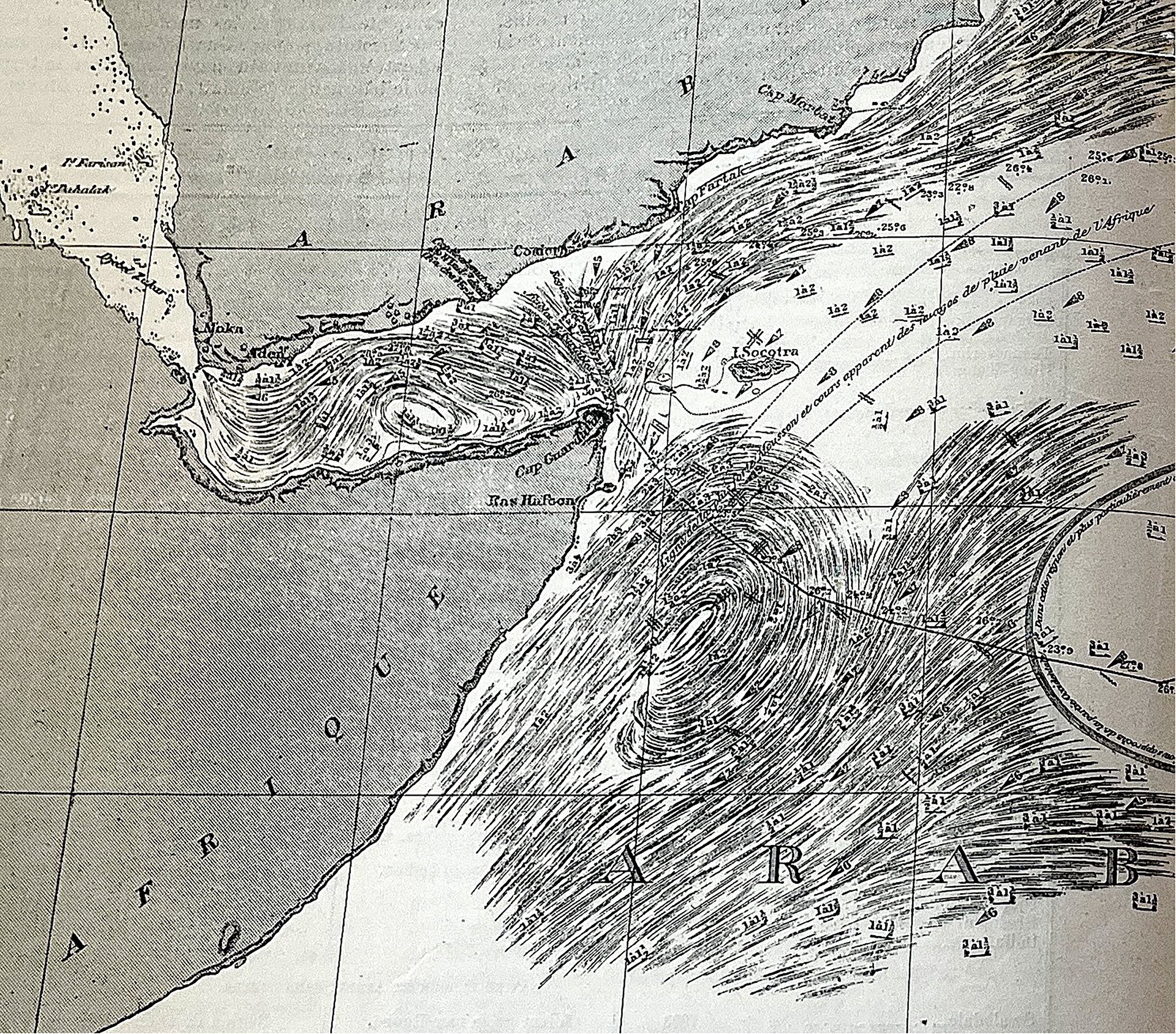
Excerpt from a map produced by the Ligue Maritime Française, circa 1910, for a pamphlet arguing for the establishment of lighthouses on Socotra and Guardafui, which shows the winds and currents that made the navigation on the route connecting the Gulf of Aden with the Far East or the East African coast particularly dangerous.
The Egyptian government, while sending an expedition to Cape Guardafui in 1878 to study the environmental conditions for the construction of a lighthouse, was struggling both to provide the necessary finances and to assert its authority over the Somali coast. This can be understood from the expedition's report. While the expedition selected a suitable spot for the lighthouse, it suggested that a warship would need to be sent to oversee the erection of the structure, along with a force of at least 500 infantry, 25 cavalry, and 4 light field guns in order to manage potential opposition from the local population. 47 The lighthouse was to be built like a fortress, with eight-metre-high walls and accommodating a garrison of 50 men with all the necessary supplies to withstand a year-long siege. 48
However, Egypt lacked the political and material means necessary to impose the lighthouse on this remote coastline, and the project was abandoned until 11 years later, when Somalia was carved up between Britain and Italy. In this deal, Italy claimed the Horn of Africa (officially informing foreign powers of this claim in 1889), although its management was at first carried out mainly by Italian colonial societies. The European powers mostly accepted this claim, but, in return, they expected the Italians to ensure safe navigation ‘deriving from this non-contested quasi-sovereignty’. 49
In July 1901, the Italian government made a proposal for the construction of a lighthouse, but it resembled that made by the Egyptians years earlier. It suggested collecting additional and fixed tonnage duties from ships passing through the Suez Canal with the argument that such a lighthouse would be of great utility to all foreign navies. 50 In all likelihood, Italy's preference for an international solution derived from the notoriously limited state resources it could muster for its overly ambitious colonial projects. 51 This raised eyebrows in some foreign ministries. As the new sovereign on the Somali coast, it would have been up to Italy to ensure the safety of passing ships, but, similarly to Egypt, it sought to share the costs. This puzzled officials at the French Foreign Ministry even years later, who were surprised that Italy would put itself on the same level as a state such as Egypt. 52 Nevertheless, while some governments posed conditions – France, for instance, requested a lowering of the lighthouse fees in the Red Sea in return for the collection of lighthouse fees for Guardafui 53 – most interested nations were in principle ready to support this international cooperation. Encouraged, in March–April 1903, the Italians dispatched a hydrographic vessel on a mission to Cape Guardafui to carry out another study. A new location was proposed and a construction plan of seven months was devised, but at the same time the hostility of the local population was again deemed to be a major problem: it was estimated that a garrison of at least 60 local soldiers (ascari) would be required to defend the heavily fortified lighthouse (Figure 2). 54
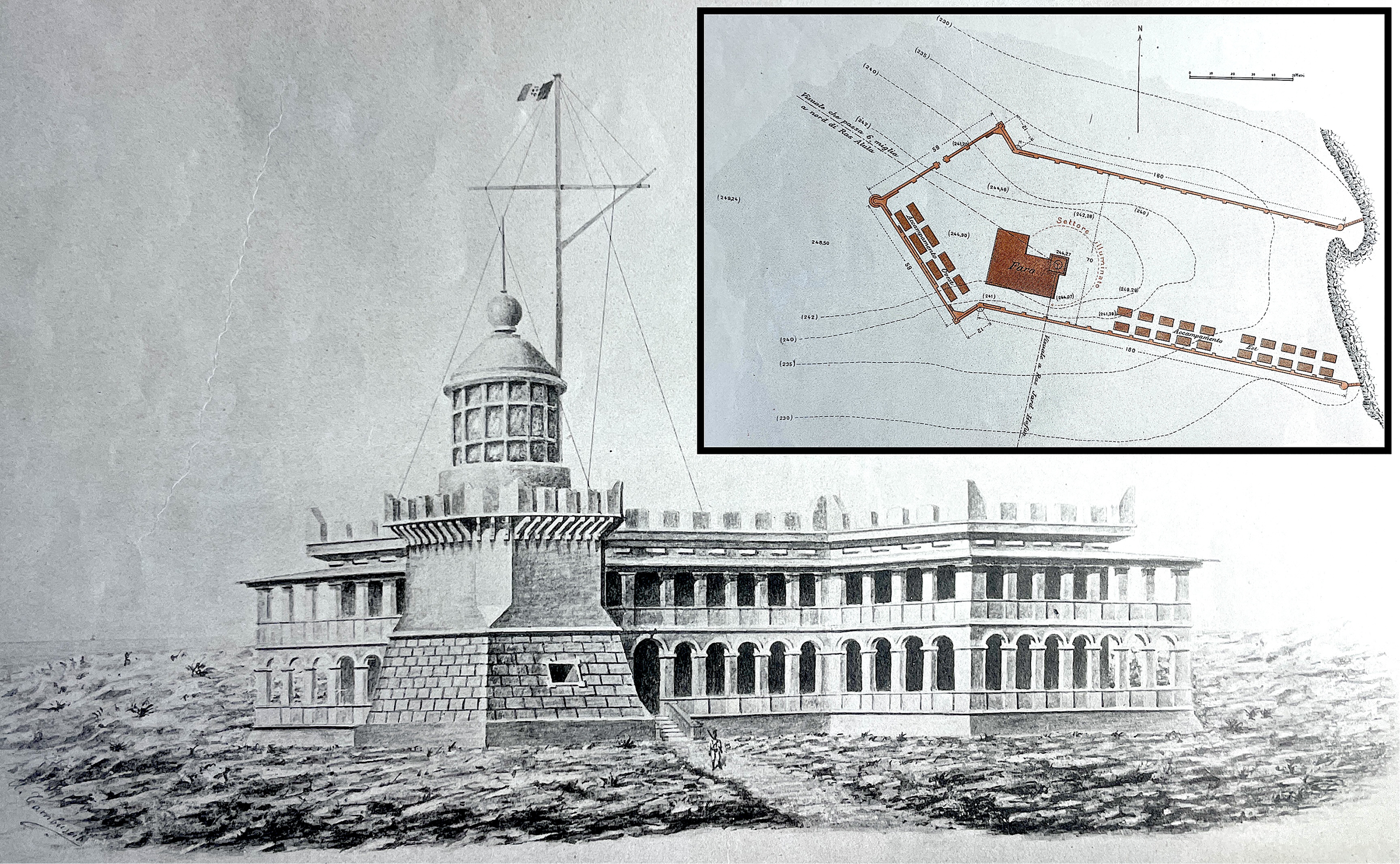
The 1905 Italian blueprint for a heavily fortified lighthouse at Cape Guardafui, to be financed by international contributions.
The lighthouse, however, would not be built until 1924, and then by Italy alone. Besides local opposition to Italian rule and the lighthouse, another obstacle was the modalities of financing the lighthouse through the collection of fees. In December 1905, following up on the French request, the Italians proposed a new tonnage duty system based on the extent to which ships would rely on the services of the lighthouse. Vessels sailing to and from the Bay of Bengal, the straits of the Far East, the Dutch East Indies or Australia would pay lower dues than those trading with the African coast. Ships operating between the East African and Arabian coasts would also be charged reduced rates. This proposition did not receive unanimous support from governments and the shipping industry. One major objection came from the British Board of Trade, which argued that neither the staff of the Suez Canal Company nor the port authorities of Aden and Zanzibar – the places suggested by the Italian government for the collection of dues – were under Italian jurisdiction and lacked the means of sanctioning a non-payment. Moreover, the governments of both Britain and India voiced opposition on the grounds that the collection of dues in the ports of Aden and Zanzibar would disadvantage the respective ports. In October 1906, the Board of Trade turned down the Italian proposal again based on the impracticality of the financing scheme. 55
Still committed to an international solution, the Italians proposed in July 1908 to abandon the tonnage system altogether and instead introduce a global contribution system, according to which interested governments would pay annual lump sums. This time it took intensive lobbying from the commercial navy and also maritime associations and companies from different countries to induce the British to agree to the new proposal, by October 1912. As early as the 1880s, organizations such as the German Nautical Society (Nautischer Verein) and League of Shipmaster Associations (Verband Deutscher Seeschiffer-Vereine), the British Shipmaster's Society and the Ligue Maritime Française, as well as American shipping circles, were discussing the lighting of the Somali coast, occasionally corresponding transnationally on the issue and pressuring their respective governments. 56 Eventually, Britain proposed that each state should pay an annual sum based on the tonnage of its ships using the lighthouse. 57 By June 1914, Italy had received support for this plan from most relevant governments, but due to the outbreak of the First World War, the internationally financed lighthouse of Cape Guardafui never came into existence. 58 Italy would eventually build the lighthouse on its own, in 1924, as a simple metal signalling tower (which was christened ‘Francesco Crispi’ after the former prime minister, a fierce proponent of Italian colonialism). After it was destroyed by local insurgents, it was rebuilt in 1930 as a massive monumental stone lighthouse in the shape of a fascio littorio (Figure 3). 59
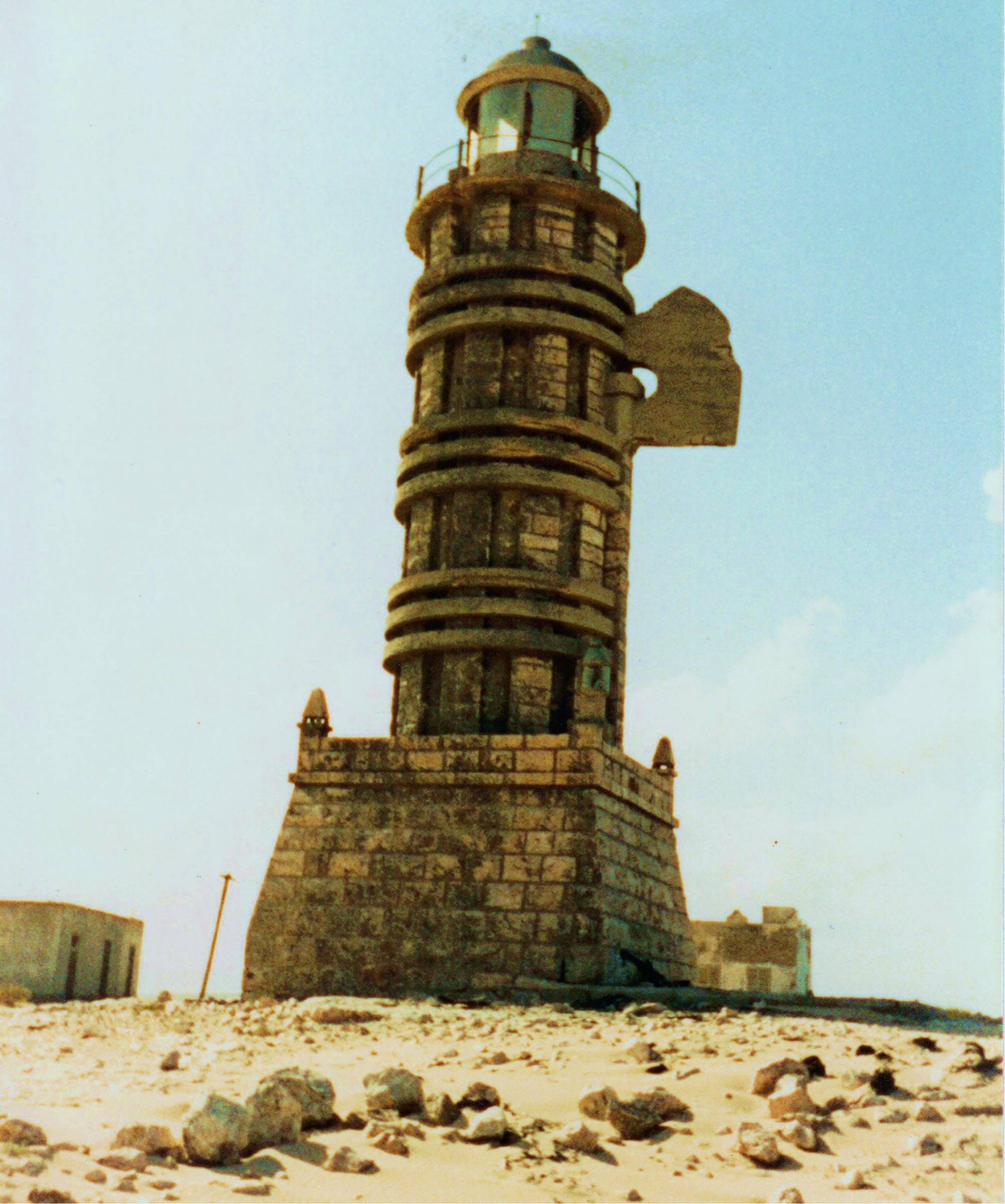
The Guardafui lighthouse in the shape of a fascio littorio, completed in 1930; photograph taken in 1987.
Two key dimensions characterize the Guardafui lighthouse projects from the 1870s. The first is how the planned imposition of maritime safety and security at Cape Guardafui through the erection of a fortress-like lighthouse on a remote coastline with very few permanent buildings symbolized the conquest not only of the shores and water, but also of the native population and their wrecking practices. In colonial contexts, lighthouses could become fortresses of control and surveillance. 60 The second dimension is the intervention of shipping, commercial and colonial organizations in the question. For France, the Ligue Maritime Française, a patriotic organization founded in 1899 to promote French naval power and imperialism, was particularly vocal. 61 In 1912, it urged the French government to intervene with the British government to support the Italian lighthouse project. The Ligue Maritime Française was also speaking on behalf of actors with shared interests, such as the Chamber of Commerce of Oran and the Syndicate of Maritime Insurers of Bordeaux, representing 85 French and foreign companies. The insurance industry argued that it was annually underwriting risks exceeding one billion francs on ships passing between Europe and the Far East. Around 3,000 steamships passed through the Strait of Guardafui each year, incurring considerable costs through accidents. It supported the lighthouse project of Guardafui ‘both from a humanitarian and a commercial point of view’. 62 However, in a pamphlet, the Ligue Maritime Française also criticized that Italy was acting ‘contra bonos mores’ in terms of international law by not effectively assuming this responsibility on its own: ‘The sovereign power alone bears the cost of establishing and maintaining its lighthouses and beacons’. It was irrelevant whether a lighthouse benefitted international or local navigation more. This, the pamphlet argued, was a general principle, ‘accepted by all peoples’, which applied not only to European nations but also to colonies. By acquiring colonial territory through conquest or treaties, they created for themselves ‘regalian obligations’, which included the lighting of coastlines. 63 This statement, similar to the reaction by the French Foreign Ministry described earlier, shows that what was at stake with the lighthouse project was the perception of Italy as a fully sovereign imperial power in the sense suggested by Twiss. Indeed, after the end of the nation's unification process in 1871, Italian colonial policy was designed to project an image of modernity and to dispel stereotypes of Italians as backward, disorderly or lacking military vigour. These efforts aimed to transform Italy's position from Europe's periphery to a central player within a transcontinental empire spanning key ports from the Adriatic to the Indian Ocean, an attempt that lost credibility on the international stage with the Italian defeat by Ethiopia in Adwa in 1896. 64 This situation helps explain the manner in which Italy's ability to manage the lighthouse project was interpreted by other European stakeholders.
Italy's colonial ambitions underwent a renewal under fascism – a shift reflected in the architecture of the lighthouse design of 1930. Its architectural style linked Italy's assertion of control over the local population and its classical Roman claims of thalassocracy to a new imperial ethos introduced by fascism. Under Mussolini, colonial policy was no longer conceived merely in terms of prestige or national recognition, but also as an integral component of the regime's ideology. The Guardafui lighthouse became an architectural emblem of this turn, standing at once as a sign of domination and of a ‘New Roman Empire’ projected across the seas. According to Federico Ugolini, the symbol of the fascio on the lighthouse fulfilled a similar purpose to the Jupiter Soter on the ancient lighthouse of Alexandria or the genius at the Ostia harbour lighthouse: they were meant to protect sailors from misfortune, a role here claimed by the fascist government. 65
Cape Spartel
In contrast to Italy, which was expected to prove its status as a legitimate colonial power, Morocco was clearly not yet considered part of the society of fully sovereign nations by nineteenth-century European diplomats and businessmen. On the contrary, Morocco became a playground for imperial interventions. This applied in particular to the strategically important city of Tangier, which, in sharp contrast to the Horn of Africa, was a densely populated international hub, where the Makhzen (government) granted extensive territorial privileges to foreigners. Tangier becoming an international zone in 1923 was preceded by the formation of international organizations in the city, such as a Sanitary Council (1840), a Hygiene and Road Works Commission (1892) and the International Organisation of the Cape Spartel Lighthouse (1865). 66 The lighting of the Moroccan coast was considered notoriously insufficient in shipping circles even at the start of the twentieth century, 67 but while most of its coast was only relevant to intra-Moroccan navigation, this was different for Cape Spartel. As the north-westernmost promontory of continental Africa, the cape was an important point for ships navigating through the Strait of Gibraltar, a commercial avenue for vessels bound to and from Atlantic destinations. The approach to the strait is dangerous, given the combination of strong currents, high cliffs and few natural harbours (Figure 4).
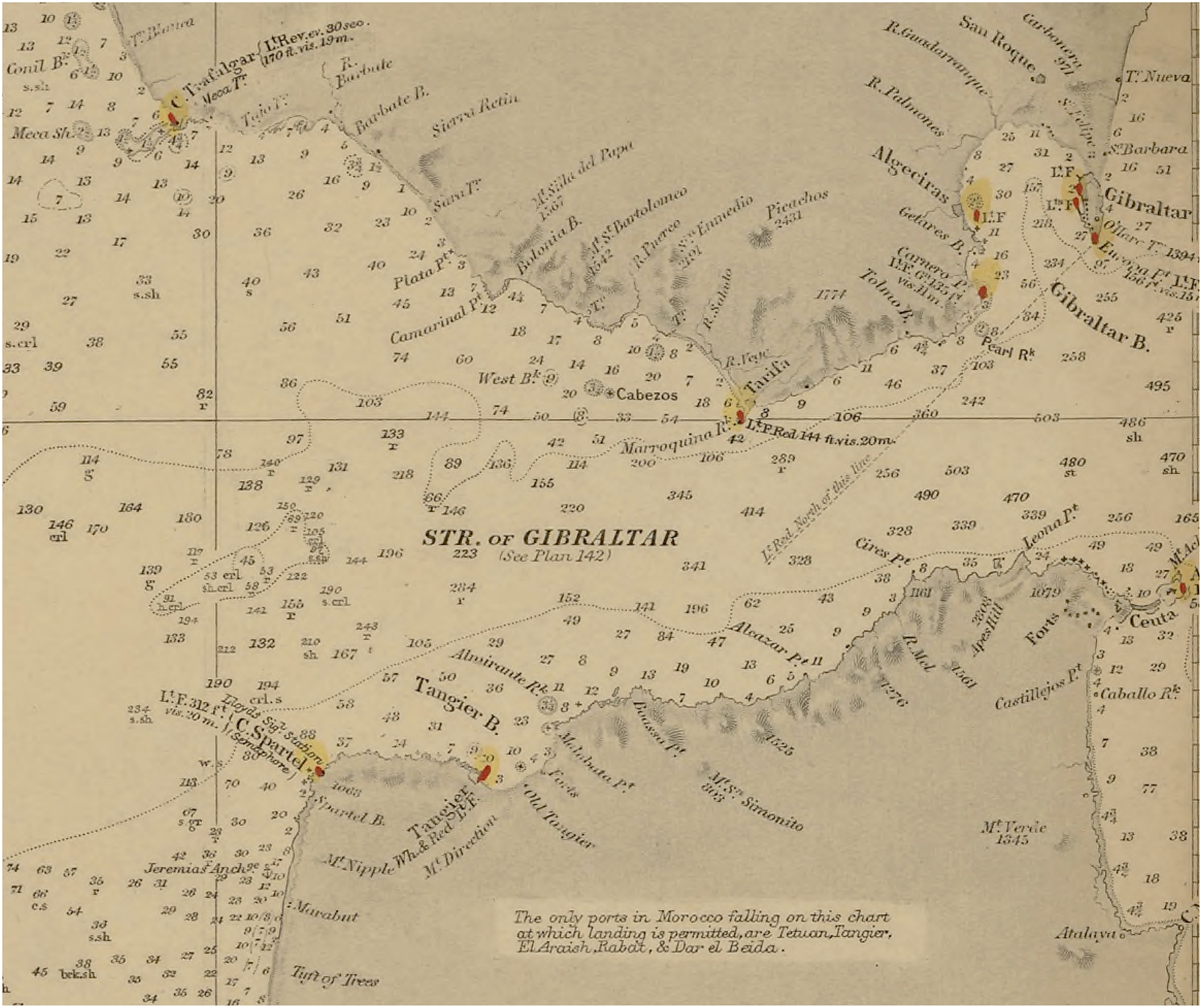
Map showing the entrance to the Strait of Gibraltar, indicating the location of the lighthouse and Lloyd's signal station at Cape Spartel, to the west of Tangier, as well as the lighthouse at Gibraltar operated by Trinity House across the strait.
In 1849, the American consul in Tangier proposed that a US warship patrol the cape in order to assist shipwrecked vessels. A year later, his French counterpart made a similar suggestion. However, it was the British representative in Tangier, Sir John Drummond Hay, who in 1852 discussed with the British government the erection of a lighthouse. As so often with initiatives in maritime safety, it took a disastrous event to act as a catalyst. The Brazilian frigate Dona Isabel was wrecked south of the Strait of Gibraltar in 1861, killing all aboard, including 250 cadets. That same year, a commercial treaty between Spain and Sultan Muhammad IV of Morocco obliged the latter to build a lighthouse at Spartel. Soon thereafter, the French engineer Léon Jacquet was hired to oversee the construction, and the lighthouse was completed in 1864 (Figure 5). It appears, however, that none of the interested parties were satisfied with putting the lighthouse under the control of the sultan alone. The latter, in turn, did not want to provide the finances for the structure's maintenance on his own. The lighthouse was only of limited use for Moroccan navigation, and the sultan had already struggled with the construction costs. Furthermore, Britain feared undue French influence across the strait from where Britain operated its own lighthouse through Trinity House at Gibraltar. After all, France had almost single-handedly overseen the construction and contributed its expertise and even parts of the construction costs. To avoid any political abuse, Britain, France and Spain requested a neutral status for the lighthouse, and this status was established by a convention among these powers with the sultan, to which Austria-Hungary, Belgium, Italy, the Netherlands, Portugal, the United States and Sweden-Norway acceded as well. 68 The convention was concluded on 31 May 1865. Germany only joined in 1878 once it had developed imperial maritime ambitions. In January 1876, the German representative in Tangier hinted that it was embarrassing that Germany was not yet party to the convention – especially as the country increasingly benefitted from it – and asked for permission to join. 69 Russia acceded in 1899. 70 Morocco, for its part, was party to the convention but not represented in the commission that was formed on the basis of the convention, the Conseil International de Surveillance et de l’Entretien du Phare de Cap Spartel (in English often referred to as the International Commission for the Cape Spartel Lighthouse).
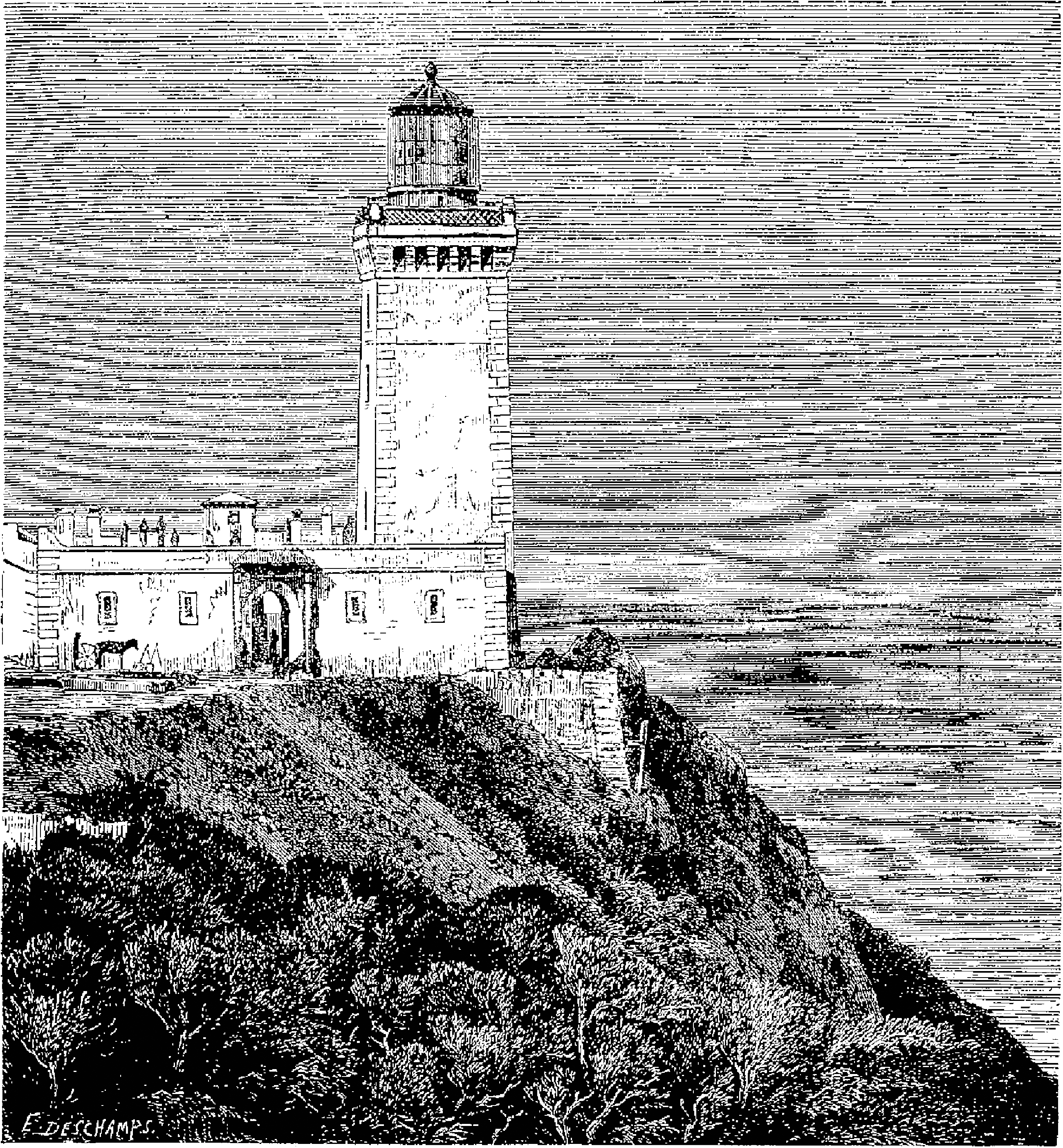
Engraving showing the Cape Spartel lighthouse based on a photograph from the French Lighthouse Service, 1870.
The treaty stipulated that the Moroccan government would bear the costs of the construction as well as the necessary maintenance, but that the administrative costs would be borne by the member states, which would each contribute equal parts to a fund. Through the International Commission, they would be responsible for the ‘superior direction and administration’, establishing rules and controlling their execution, and changing them only with unanimous agreement. Notably, they would supervise the lighthouse employees, such as the lighthouse keepers (usually nationals of countries with no direct colonial interests in Morocco at the time of hiring, such as Belgium or Austria-Hungary) and inspectors. A set of regulations that was added to the convention stipulated that the commission’s membership would consist of the diplomatic or consular representatives of the signatory states at Tangier. The presidency would rotate monthly. The sultan, in return, committed to providing a guard composed of a caïd (commander) and four soldiers, who were remunerated by the member states. The ruler also committed to protecting the lighthouse and its employees in the event of domestic or international war. In exchange, the foreign powers would respect the neutrality of the lighthouse and would continue to pay their contributions even in the event of a war between the member states themselves or between them and Morocco. Furthermore, it was put in writing that this arrangement would not infringe on ‘the rights, proprietary and of sovereignty, of the Sultan, whose flag alone shall be hoisted on the tower of the Pharos’. The rationale advanced for the arrangement was that Morocco had no notable commercial or military navy and would therefore not greatly benefit from the maritime safety structure. 71
When important decisions had to be taken – for example, regarding updates to the lighthouse's lighting and signalling systems or repairs to the access road – this produced busy diplomatic correspondence not only among the interested member states, but also between domestic associations with the relevant expertise, such as chambers of commerce or nautical societies (for example, the Deutscher Nautischer Verein) or national lighthouse institutions (such as the French Service Central des Phares et Balises). For particular technical questions, subcommissions were created (for instance, in 1913, to improve the lighthouse by installing a group flashing light with four white flashes). 72 This form of technical cooperation went on relatively undisturbed until the outbreak of the First World War, despite the fact that Morocco was repeatedly at the centre of international crises.
However, as in similar forms of inter-imperial governance, there was a delicate equilibrium between competition and cooperation. Discussions did not always proceed smoothly when national interests came into play – for instance, in relation to the provision of engineering parts and services. Such discussions were ignited over the hiring of the French Jacquet (who had built the lighthouse) as an inspector and the provision of oil. When it came to the ordering of oil, the German delegate complained that since the lighthouse was an ‘international enterprise’, it was ‘important that it should not be exclusively dependent on any particular power. To ensure this independence, it is essential that the company supplying the oils consumed by the lighthouse should be, and remain, privately owned’. 73 Similarly, when Lloyd’s of London installed a signal station at Cape Spartel, the French government objected to the installation being part of the lighthouse complex, and it was ultimately operated separately. 74
What appears not to have required negotiation was the view of maritime safety as a marker of civilization. Along these lines, the French chargé d’affaires, Charles Jaegerschmidt, claimed during the discussion on building the lighthouse that there was a ‘natural resistance of the Moors to any innovation’ – innovation that only Christian nations would be able to achieve. This was an observation shared by the French Commission des Phares, which was responsible for the lighting of French coasts and believed that the plan to build the lighthouse would not only be ‘worthy of Christian nations’ but also be important to the ‘general interests of humanity’. Even after its construction, the lighthouse was presented in a similar fashion to European publics – for instance, at the World Exhibition of 1869. 75 It thus makes sense that the Cape Spartel Convention served Twiss as the preferred model for lighting sea passages that were important for the use of several nations but that the authorities on the ground were unwilling or unable to provide: ‘Why should we not hope to see the day arrive when INTERNATIONAL LIGHTHOUSES shall be amongst the trophies of peace, which the civilization of Europe shall set up amidst the islands of the far East?’ 76 The simplicity of the Spartel Convention in terms of its financing scheme (through governmental contributions rather than lighthouse fees) was also appealing. Indeed, during the negotiations for the Guardafui lighthouse, Spartel was sometimes cited as a desirable example. 77 The final example studied here also resembled, to a certain extent, the institutional blueprint of the Cape Spartel Lighthouse Commission: the International Commission of the Black Sea Lightship and Lifesaving Service. 78
The Bosporus Strait
The efficient lighting of coastlines is evidently in the interests not only of opening up new regions for commerce and imperial penetration, making shipping along these coasts predictable, but also of saving lives ex ante. Even in the previous examples, this humanitarian dimension usually emerged as an argument to justify the installation of maritime safety structures. In the case of the Guardafui lighthouse project, the idea was repeatedly discussed of saving the shipwrecked from local wreckers, reinforcing the notion that the local population had not yet made the ‘civilizational’ progress from wrecking to rescue practices that European societies had already undergone. 79 However, the realization of this objective remained vague. At the Spartel lighthouse, there was a shelter for shipwrecked survivors. 80 Still, although the lighthouse personnel at Spartel were required to notify the president of the International Commission immediately of any shipwrecks, they were explicitly prohibited from making direct contact with the shipwrecked, as this was not part of their duties. 81 In contrast, at the entrance to the Turkish Straits via the Bosporus, an inter-imperial institution was created that put the immediate saving of lives at the centre.
As in the case of the Guardafui lighthouse project, it was the western insurance and shipping industry in Constantinople (since 1930, Istanbul) that, starting in the late 1850s, pressured first the Ottoman government (Sublime Porte) and then, when no satisfying reaction was forthcoming, western diplomatic missions, to improve the safety of navigation at the entrance to the Bosporus, asking them to intervene with the Sublime Porte on their behalf. 82 Similar to the case of the Spartel lighthouse, the diplomatic missions in Constantinople persuaded the Ottoman authorities of the necessity of creating an international commission in 1867 to study the question. 83 What distinguished this case from other inter-imperial projects of maritime safety, however, was the emphasis on the humanitarian rescue of shipwrecked people. The first pamphlets advocating for maritime safety structures at the entrance to the Bosporus foregrounded the ‘evilness’ of the hydrographical and meteorological conditions around the Bosporus and, in particular, the problem of the ‘false Bosporuses’ – geological formations on the coastlines leading to the Bosporus that were frequently mistaken by ship commanders for the actual entrance, luring them dangerously close to the coast. 84 Once a shipwreck occurred, the victims of the accident were left to their own devices, as the coastline was sparsely populated at the time. In any event, organized lifesaving based on the moral imperative to save people from perishing at sea had no tradition in the Ottoman Empire. 85 The pamphlet of the short-lived foreign-led Shipwreck Aid Society of Constantinople collected accounts of recent accidents on the Black Sea coast, as well as testimonies of ship commanders confirming the need for improved safety structures around the Bosporus. 86 The pamphlet was in the tradition of the nineteenth-century humanitarian literary genre, aiming to incite the reader to feel horror, sympathy and guilt in order to mobilize support. 87
Accordingly, the International Commission of the Bosporus, to the formation of which the Ottoman government reluctantly agreed, focused not only on the installation of beacons, bell buoys and a lightship around the entrance to the Bosporus, but also on the building of lifeboat stations and shelters. 88 The British Board of Trade was again involved in providing technical expertise. 89 The commission, composed at a minimum of delegates from Austria-Hungary, France, Great Britain, Russia, Sweden-Norway and the Ottoman Empire itself, completed its work and was dissolved in 1871 after the different structures of the service started to operate at the entrance to the Bosporus (for a map of the beacons and a picture of a lifesaving crew in a lifeboat, see Figures 6 and 7). 90 Both the captains of the lightship and the instructors of the otherwise Ottoman lifeboatmen were hired from Trinity House and the British Coastguard Service, respectively, while the service itself was for several years under the direct orders of the imperial port prefecture in Constantinople, which financed the service through fees collected from vessels passing through the Bosporus. 91 However, in 1883, after reports of mismanagement and negligence in the Black Sea Lightship and Lifesaving Service, the foreign powers decided to reinstate the International Commission permanently, not without strong resistance from the Ottoman government, which considered it a considerable intervention in the state's sovereignty. It was possible, however, to circumvent this opposition by focusing on bookkeeping: the foreign powers reserved the right to control the expenditures of the organization, which ultimately allowed them to control the smallest investments and operations of the service. 92 While the presidency of the commission was initially assumed by the Ottoman prefect of the port of Constantinople, by 1893 it had passed to the French consul general, with no Ottoman delegates remaining. 93 Internationally, the service acquired an excellent reputation for its work. Between 1870 and 1910, it responded to 837 accidents and saved 5,105 out of 5,693 shipwrecked people. In 1914, in addition to the lightvessel and rocket stations, the maritime safety structure consisted of 15 lifeboat stations located 100 miles east and west of the Bosporus. 94
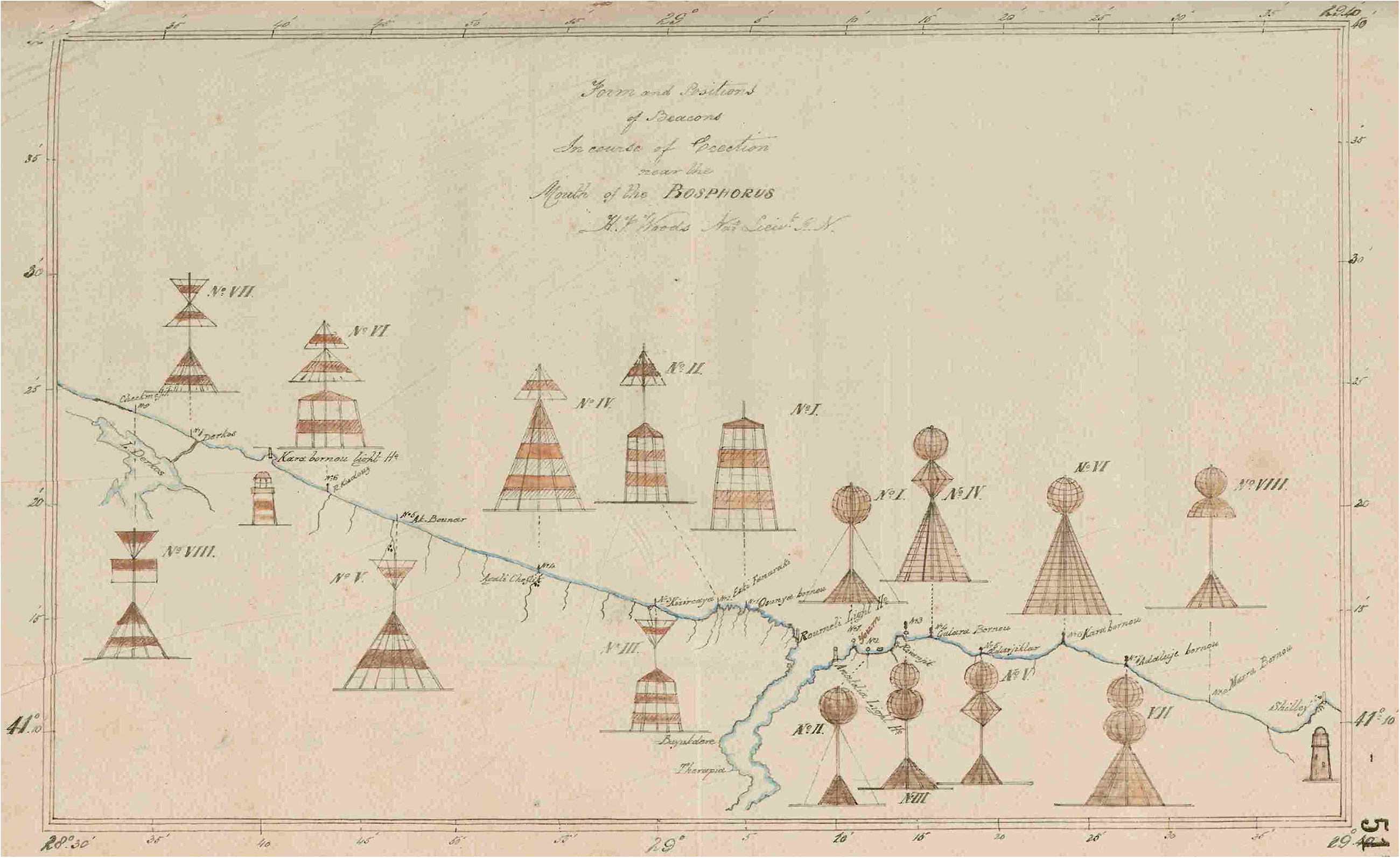
Projected forms and positions of beacons along the coastlines leading to the entrance of the Bosporus as part of the Black Sea Lightship and Lifesaving Service, 1865.
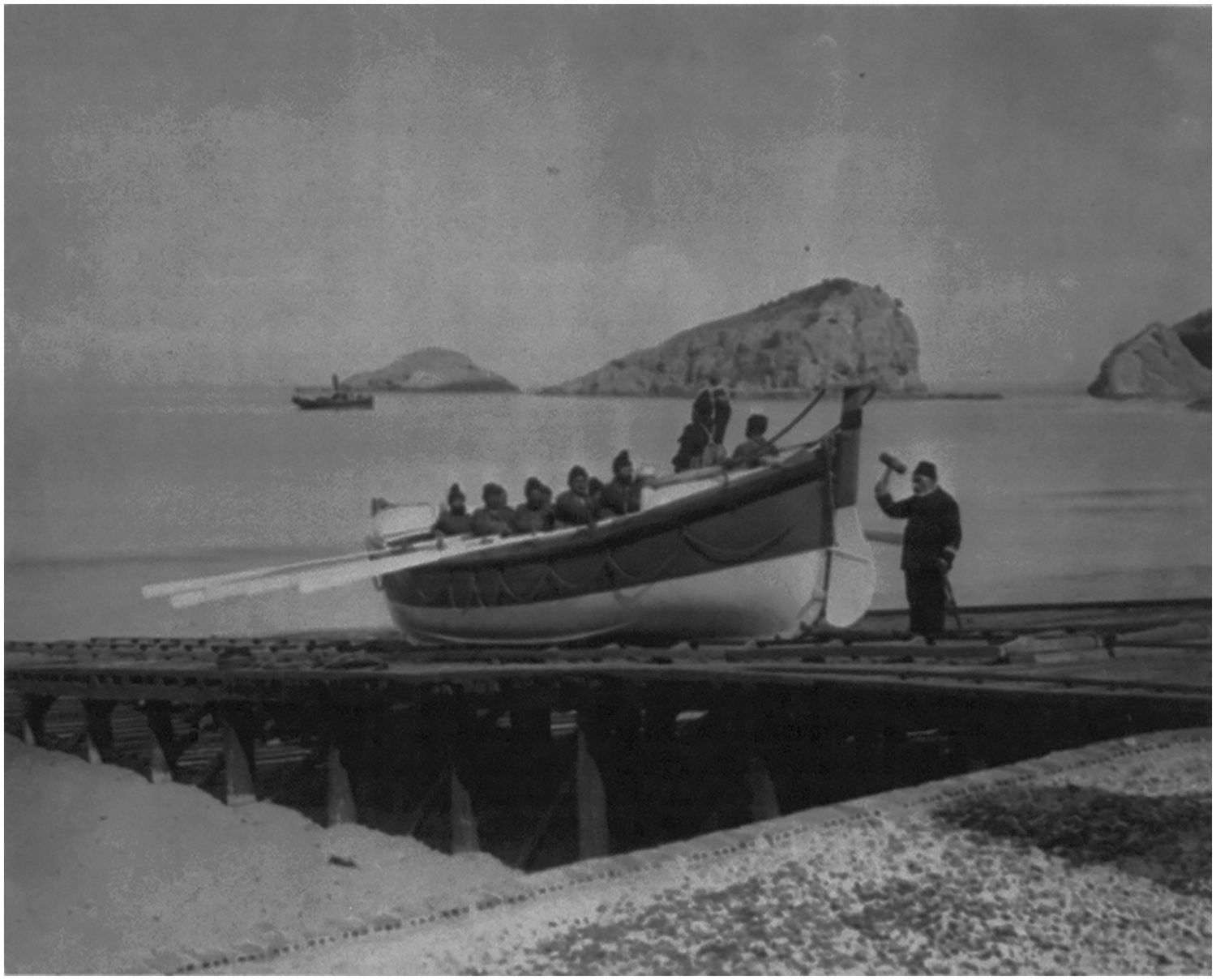
Launching of a lifeboat of the Black Sea Lightship and Lifesaving Service, 1880s.
Despite the close control of the International Commission, Ottoman agency in the context of the service was more substantial than Moroccan agency in the case of Cape Spartel. This was visible in Ottoman participation in the temporary and permanent international commissions, which appears to have been sidelined by the western member states towards the end of the nineteenth century, but also in the large number of Ottoman employees in the service. It was their professionalism and dedication to rescuing the drowning that impressed western observers, who associated heroic humanitarian behaviour towards strangers with western civilization. 95 A 1876 article in the Pall Mall Gazette argued that if the Turkish staff of the lifesaving service could operate to such a standard, there was hope that the Ottoman administration more generally would eventually rise to the same level. 96 While, in the case of Guardafui and Spartel, the standard of civilization was mainly associated with high-level engineering and the control of ‘untamed’ nature and local populations, in the case of the Bosporus lifesaving service, humanitarian morality became the bar by which Ottoman claims to full European-style sovereignty were measured.
Concluding thoughts: Configurations of imperial sovereignty
Over the nineteenth century and in accelerated fashion in its second half, the growth of maritime trade as well as other naval and imperial activities incited a diverse set of actors – notably, merchants, chambers of commerce, boards of trade, shipowners and captains, insurance companies, naval officers, humanitarian activists, diplomats and legal scholars – to advocate for better maritime safety. European nations invested heavily in the lighting of their coastlines and the installation of navigational aids. In many European states, volunteer lifesaving societies increasingly assumed responsibility for rescuing the shipwrecked. Maritime safety also became an issue of imperial competition, as lighthouses began to be built along waterways crucial to colonial exploitation.
On the one hand, lighthouses were widely visible physical landmarks of European expansion within the scope of the imperial project. They were practical infrastructures necessary for political control and surveillance as well as economic exploitation, as shown in the example of German South West Africa and Cameroon. But they were also symbols of imperial sovereignty, as manifested in the architecture of the Bismarck light tower in Limbe or the fascio littorio-shaped decorations on the Francesco Crispi lighthouse at Guardafui and its earlier blueprints for a fort-like version that could withstand a year-long siege. These designs reveal the ambiguity of lighthouses as places of refuge and protection, on the one hand, and as instruments to deter people from coming too close to a dangerous coastline, on the other – or even the lighthouse itself, considering that the Cape Guardafui lighthouse designs aimed to protect the lighthouse personnel and the shipwrecked from local wreckers and insurrectionists. 97
On the other hand, the commitment to safety at sea became not only a necessary attribute of maritime powers, but also a marker of their status as civilized, ‘humane’ and fully sovereign nations. The Italian Colonial Office called the project to build the Guardafui lighthouse ‘un’impresa altamente umanitaria’ (highly humanitarian undertaking), and the initial study undertaken by the hydrographic vessel Staffetta to plan the lighthouse construction concluded that it would ‘achieve the undeniable general economic advantage as well as the intelligently humanitarian purpose and high commercial interest that this work represents for such a conspicuous number of important nations of the civilized world’. 98 In the context of Germany joining the Cape Spartel Convention, a letter from the State Secretary of the Interior to other ministries stated that the member states and the sultan had taken over the costs ‘in the interest of humanity’. 99 Despite the centrality of this humanitarian discourse, actual lifesaving services remained limited in the colonial world. The Bosporus lifesaving service was established in a power that, within the scope of the Eastern Question, had an ambiguous sovereign status in the European order that remained unresolved. The Ottoman authorities appear to have understood that the presentation of a well-functioning lifesaving service would contribute to showcasing their modernization efforts and move them towards a perpetually ill-defined standard of civilization, from the periphery closer to the centre. 100 Twiss, too, in his lecture, argued that the wish of non-European nations to be equal required them to meet certain standards and behaviours in the field of maritime safety, or else they could be imposed upon them. 101 For instance, the idea was that Japan and China were able to manage the lighting of their coastlines, but Morocco was not.
This hierarchical thinking at the intersection of imperial and commercial expansion, safety and humanitarianism was a common denominator around which imperial powers could agree, motivating them to seek shared forms of maritime safety governance through inter-imperial institutions. To be sure, in several cases, the ceding of sovereignty to these institutions happened through the consent of the territorial sovereign in question. However, even consent could be a facade if these derogations occurred within the context of colonial or imperial abuses. And even if the legal arrangements insisted on the protection of the sovereignty of the host state and did not touch on questions of territorial sovereignty properly speaking (that is, the territory on which a maritime safety structure stood), the practices of financing and managing maritime safety structures arrogated more and more authority from the host state. This trend was only reversed when states gained full independence. In the case of Cape Spartel, Morocco terminated the 1865 convention in 1958, assuring all relevant countries that it would continue to ‘provide the same services and to facilitate navigation in the interest of all’. 102 The International Commission of the Black Sea Lightship and Lifesaving Service at the Bosporus was disbanded after the First World War, and its structures were gradually transformed into a nationwide, Turkish-controlled service. 103 After Somalia gained independence from United Nations-mandated Italian trusteeship in 1960, the Cape Guardafui lighthouse appears to have remained in operation under Somali authority until the 1980s. Since then, it has been abandoned, although its ruined silhouette still dominates the cape.
Footnotes
Acknowledgements
The author wishes to thank the participants at the conference ‘The Rescuing Sovereign at Sea: Historical Perspectives on Maritime Law, Morals, and Politics’, held at the Leibniz Centre for Literary and Cultural Research, Berlin, in 2024, and the panel ‘The Depths of Imperialism: Water as Space, Environment and Security Concern’ at the Sixth Conference of the New Diplomatic History Network in 2025, for their feedback on earlier versions of this article. The author is also grateful for comments received during the review process. All remaining errors are the author's own.
Declaration of conflicting interests
The author declared no potential conflicts of interest with respect to the research, authorship and/or publication of this article.
Funding
This article is part of the project Archipelagic Imperatives: Shipwreck and Lifesaving in European Societies since 1800, which has received funding from the European Research Council under the European Union's Horizon 2020 research and innovation programme (grant agreement number 863393). The author is also grateful to the University of Vienna, which supported the open-access publication of this article.
