




Abstract
Long-Term Care (LTC) in Canada faces persistent challenges in quality, staffing, and accountability. InterRAI assessment instruments, used nationally and internationally, provide validated scales, quality indicators, and care planning tools that support evidence-based resident assessment. Yet, their potential has been limited by delayed access, facility-level aggregation, and lack of integration with workforce and operational data. OnSPARK (Ontario Supporting Partnerships to Advance Care and Knowledge in Long-Term Care) addresses this gap as Canada’s largest sector-governed LTC data platform. By integrating de-identified interRAI assessments, electronic health records, and staffing data from more than 200 Ontario homes, OnSPARK delivers unit-level analytics, near real-time performance reporting, and a secure environment for embedded research and artificial intelligence development. This article describes how OnSPARK enables interRAI to function as the backbone of a learning health system in LTC, advancing unit-level reporting, workforce-outcome linkages, artificial intelligence-enabled tools, and collaboratives such as the Seniors Quality Leap Initiative.
Introduction
For more than three decades, interRAI has provided scientifically validated assessment instruments that support the care of older adults and other vulnerable populations worldwide.1,2 These standardized tools generate clinical scales, risk algorithms, and quality indicators that inform resident care planning, organizational management, and policy.3,4 In Canada, interRAI is mandated in Long-Term Care (LTC) and widely used across home care, hospital, and community settings. 5 Despite its strengths, interRAI’s potential has been limited by delayed access to data, facility-level aggregation that obscures frontline variation, and the absence of linkage to staffing and operational information.6,7
The COVID-19 pandemic highlighted the systematic limitations in LTC. 8 While interRAI assessments provided critical information on resident needs, LTC leaders and policy-makers lacked timely infrastructure to connect these data with rapidly evolving staffing pressures, infection control challenges, and care delivery disruptions. 9 Calls for real-time, linked, and sector-owned data systems have intensified to build on earlier success of interRAI-based communities of practice that demonstrated improved resident outcomes through shared measurement and feedback, such as the national antipsychotic reduction initiative. 10
In response, Ontario LTC home operators partnered with McMaster University and the St. Joseph’s Health System Centre for Integrated Care to launch the Ontario Supporting Partnerships to Advance Care and Knowledge (OnSPARK) Data Platform in 2024. OnSPARK is Canada’s first sector-governed learning health system platform for LTC, integrating de-identified resident assessments, electronic medical records, and staffing data from over 200 homes, representing nearly one-third of the province’s LTC sector and more than 6 billion data points. The platform’s architecture enables near real-time performance reporting through a secure Insight Portal, sector-facing benchmarking, and a sandbox for embedded trials and Artificial Intelligence (AI) development. Homes retain custodianship of their data under Ontario’s Personal Health Information Protection Act (PHIPA) Section 44, ensuring privacy, trust, and sector-led governance.
This article aims to describe how the OnSPARK Long-Term Care Data Platform operationalizes interRAI as the foundation for a learning health system in long-term care. It illustrates how sector-governed data infrastructure can be used to strengthen decision-making, workforce planning, and policy design at multiple levels of the system. We focus on four core applications: unit-level reporting of interRAI quality indicators and scales, linkage of staffing structures with resident outcomes, development and validation of AI-enabled products using interRAI measures, and infrastructure to support learning health systems and quality alliances such as the Seniors Quality Leap Initiative. 11 This article is intended for health leaders, policy-makers, and researchers seeking practical models of data-enabled system improvement.
The OnSPARK Data Platform
The OnSPARK Data Platform
12
emerged as a legacy of pandemic-era research, when the urgent need for robust, real-time data systems in LTC became clear. In partnership with several leading LTC organizations, OnSPARK is operated through a collaboration of St. Joseph’s Health System Centre for Integrated Care, McMaster University, and the Bruyere Health Research Institute, to launch the province’s first dedicated LTC data-sharing infrastructure. OnSPARK now operates as a voluntary network of institutional partnerships and is the largest LTC data platform in Canada (Figure 1). Map of OnSPARK Data Collaborative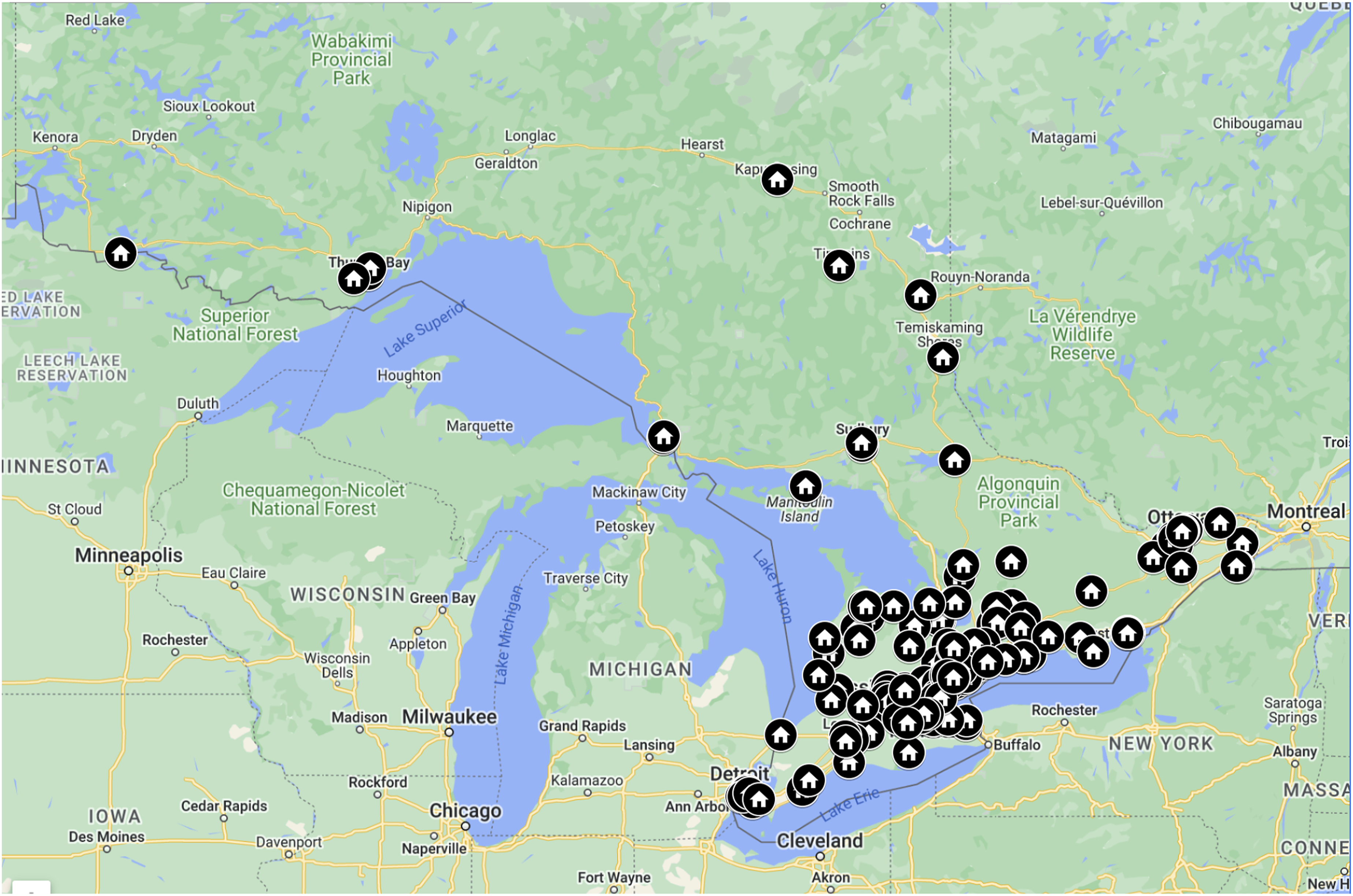
Today, OnSPARK integrates more than six billion structured data points from over 200 participating homes, representing 32% of Ontario’s LTC homes and 38% of residents. 12 The platform links multiple sources of information: interRAI assessments, electronic medical records (including medication, diagnoses, and treatment data), payroll and scheduling-based staffing records, and public health data such as emergency transfers and hospitalization rates. Facility-level variables provide additional context on environment and operations. All data are de-identified at source and securely stored under PHIPA-compliant governance.
Homes participating in OnSPARK authorize secure, automated data transfers from their electronic health record and workforce management systems under standardized data-sharing agreements. These transfers occur through batch uploads facilitated by their Electronic Health Record (EHR) provider and through parallel customized pipelines established with corporate scheduling and payroll systems. All data are de-identified at the source before transfer and undergo validation and, where necessary, transformation into a harmonized data models or standards (e.g., ICD-10, ATC). Resident data are linked to staffing and operational data using backward-linkable key structures that allow longitudinal analysis while maintaining privacy. Integration is governed under PHIPA Section 44, with data custodianship retained by the contributing homes. This architecture enables interoperability across vendors and data domains while ensuring that no identifiable information leaves the originating organizations (Figure 2). Illustration of OnSPARK Data Resources. *Not Yet Available in Canada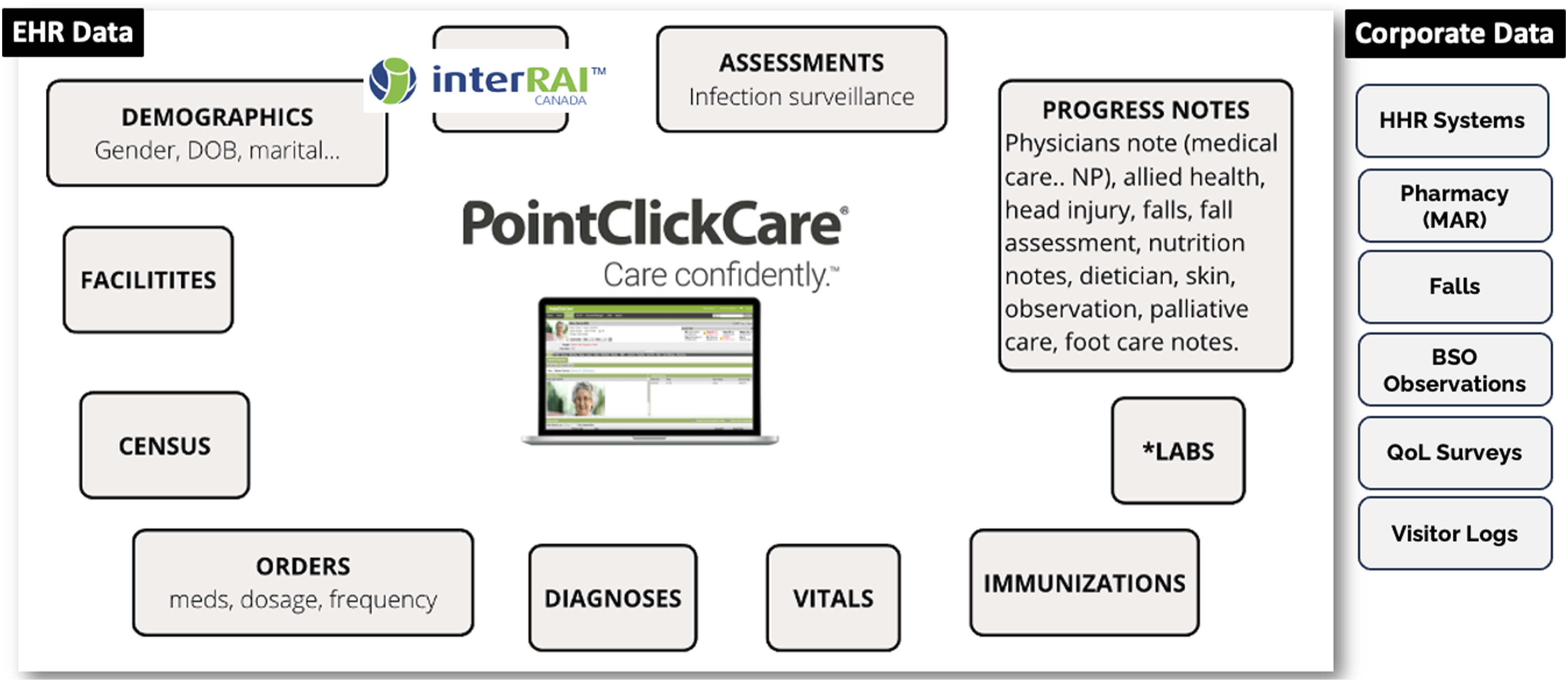
Unlike traditional survey-based datasets or retrospective repositories, OnSPARK draws directly from operational systems. Payroll data provide actual shift-level staffing information, while interRAI assessments supply standardized measures of resident needs and outcomes. This design produces longitudinal datasets that are both highly accurate and responsive to change, enabling near real-time analytics for unit-level management, system-wide benchmarking, and embedded research.
Unit-Level Performance and Planning
A defining feature of OnSPARK is its ability to deliver analytics at the level of the clinical microsystem, the care unit. Traditional reporting in Canadian LTC has relied on facility-level aggregation, most notably through Canadian Institute for Health Information (CIHI) reports based on interRAI assessments. 13 While these reports are invaluable for provincial and national benchmarking, they may obscure important within-home variation. 14 Evidence suggests that resident outcomes, staffing dynamics, and care processes differ substantially across units within the same home, reflecting differences in leadership, culture, and staff composition.15,16
OnSPARK enables interRAI quality indicators and scales, including the Cognitive Performance Scale, CHESS, ADL Hierarchy, and Self-Reported Quality of Life instrument (where used), to be reported at the unit level. These indicators are refreshed continuously and paired with real-time operational data such as staff absenteeism, agency use, and direct hours of care. The result is actionable intelligence that frontline managers can use to tailor or monitor interventions to their own teams rather than relying on home-wide data.
Two homes with comparable facility-level quality profiles may exhibit very different patterns when examined at the unit level. One home may demonstrate uniformly moderate antipsychotic prescribing rates across units, while another may show a single unit with disproportionately high rates driving the facility average upwards. In such cases, unit-level analytics allow leaders to target improvement efforts where they are most needed rather than deploying broad interventions that may dilute resources (Figure 3). Unit-Level Variation in Antipsychotic Use. Example of How Antipsychotic Use Can Be Displayed at the Unit Level Within LTC Homes. Unit-Level Reporting Allows Managers to Identify Variation Within Homes That Would Otherwise Be Masked by Facility-Level Averages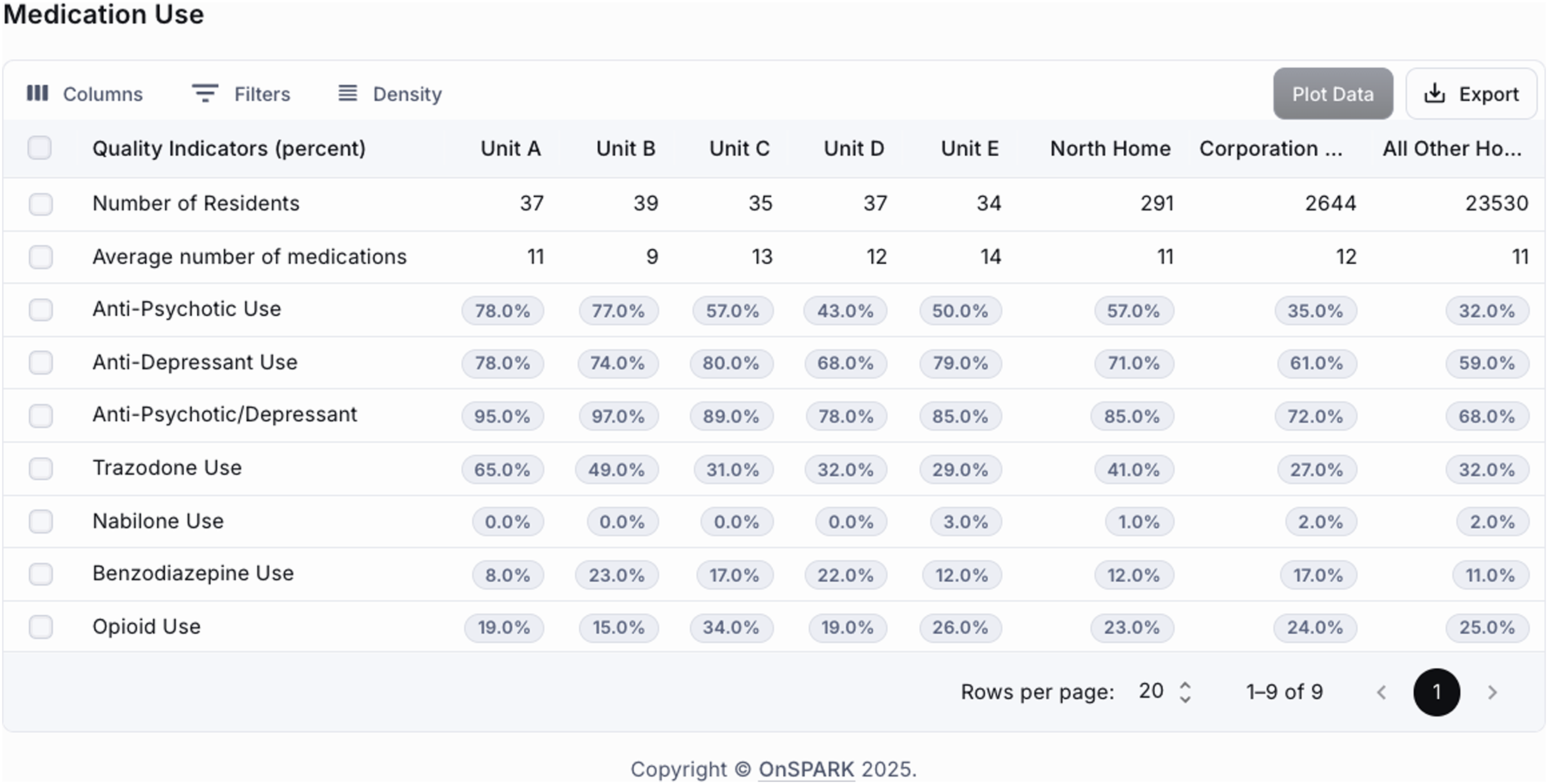
OnSPARK also enables cross-unit benchmarking across homes, allowing managers to compare their units with anonymized peers. This benchmarking provides insight into which staffing configurations, work environments, or clinical practices are associated with better outcomes. Collaboratives such as the Seniors Quality Leap Initiative, 11 which already use interRAI quality indicators 10 to promote shared learning, can now be supported with unit-level feedback that accelerates the cycle of measurement, comparison, and improvement.
Linking Staffing Structures to Resident Outcomes
interRAI assessments have long been used to evaluate resident outcomes, but until now they have rarely been linked directly with high-resolution workforce data. 16 The integration of human resource and payroll records within OnSPARK enables a new class of analyses connecting staff intensity, mix, tenure, and stability to interRAI-derived quality indicators at the unit level.
This linkage allows the sector to move beyond blunt metrics such as hours per resident day to examine more nuanced dimensions of workforce structure. For example, a medium-sized Ontario long-term care corporation recently demonstrated the operational potential of this integration through OnSPARK. Detailed payroll and scheduling data (over one million shift-level records) were linked securely with resident assessment data from the interRAI RAI-MDS 2.0. This linkage allowed each shift, staff role, and employment type to be connected to contemporaneous resident outcomes such as pain, behaviour, restraint use, and hospital transfers. Analysis revealed, for example, that homes with higher proportions of full-time personal support workers and longer staff tenure were associated with lower hospital transfer rates and fewer behavioural incidents, while greater reliance on agency staff correlated with poorer resident outcomes. 17 The project illustrated how data extracted directly from workforce management and clinical systems can provide useful insights for operational monitoring and policy development. Building on this success, the same data are being used to evaluate the effectiveness of new provincially sponsored staff scheduling changes by comparing shift-level staffing metrics and resident outcomes before and after changes are implemented. These examples open the opportunity for policy-makers to work with homes to experiment on staff compliment, intensity, and retention experiments with rigorous and efficient evaluation of benefits.
These insights are particularly valuable given the sector’s reliance on agency staff during periods of shortage. By quantifying the relationship between agency use and interRAI outcomes, homes can evaluate the trade-offs between temporary workforce stabilization and potential impacts on resident care. This evidence can then inform recruitment, retention, and scheduling strategies designed to maximize both workforce sustainability and resident well-being.
The combination of interRAI’s validated outcome measures with OnSPARK’s detailed staffing data could represent a breakthrough in workforce evaluation for Canadian LTC. It is intended to provide homes, researchers, and policy-makers with a real-time laboratory to identify which staffing models are most effective, under which conditions, and for which resident populations.
AI Development and Validation
OnSPARK also provides the foundation for developing and validating AI applications in LTC. The interRAI assessments supply standardized, validated measures of cognition, function, mood, and quality of life that serve as reliable input features for predictive modelling. OnSPARK contributes the infrastructure required to link these measures with resident outcomes, workforce data, and operational variables in a secure, PHIPA-compliant environment. Together, they create a sandbox where new algorithms can be trained, tested, and refined using real-world data from more than 200 homes.
Predictive models for emergency department transfers, end-of-life transitions, and injurious falls can be trained using interRAI indicators such as the Cognitive Performance Scale, CHESS, and ADL Hierarchy. 18 Medication optimization tools can be developed by linking medication records to interRAI measures of symptoms and behaviours. These models can then be evaluated in silent mode, tested prospectively in participating homes, and, once validated, embedded into electronic medical records such as PointClickCare to inform frontline decision-making.
The use of interRAI structures ensures that algorithms are grounded in validated measures with known psychometric properties, reducing the risk of biased or unreliable predictions. 19 At the same time, the OnSPARK sandbox allows for responsible innovation by ensuring that all model development and evaluation occurs within a secure governance framework where LTC operators retain custodianship of their data. This approach aligns with emerging national priorities on responsible AI and sovereign data use.20,21
OnSPARK + interRAI as a Learning Health System
A core ambition of OnSPARK is to bring the concept of a learning health system to life in LTC. interRAI has always embodied elements of this approach through its “measure once, use many times” principle, but historically the cycle from assessment to feedback has been too slow to support more tactical decision-making. OnSPARK provides the missing infrastructure by enabling continuous data collection, near real-time reporting, and sector-led governance that ensures findings are translated directly into action.
This model supports multiple methods of embedded learning. Cluster and stepped-wedge trial designs can be implemented across participating homes to test new models of care, with interRAI assessments supplying standardized outcome measures. OnSPARK automates outcome monitoring and enables homes to direct or participate in research without the burden of additional primary data collection. This lowers barriers to experimentation and allows pragmatic trials to be scaled across the sector to answer core questions of staffing structures, care practices, and environmental influences. For example, it is now possible to rapidly evaluate whether investments made in on-site diagnostic equipment are having the intended benefits in reducing hospital transfers by linking implementation dates with accessible transfer data recorded in the EHR.
OnSPARK also enables deviant sampling, where outlier units or homes with exceptionally high or low performance are identified using interRAI quality indicators and staffing data.22,23, These units can then be studied more closely through contextual inquiry, including qualitative interviews, workflow mapping, or leadership analysis. The goal is not only to identify what differs but to understand why those differences exist. Insights from high-performing units can then be adapted and spread, while barriers identified in lower-performing units can be addressed directly.
The continuous feedback loop is central to this design. Data collected through interRAI assessments and operational records flow into OnSPARK, where they are processed and returned to homes through dashboards and benchmarking reports. Homes act on these insights, implementing changes to staffing, care processes, or policies. The outcomes of these changes are then captured by subsequent interRAI assessments, creating an iterative cycle of measurement and improvement. 24
Policy and Accountability
The integration of interRAI within OnSPARK also provides an essential foundation for policy evaluation and system accountability. The Fixing Long-Term Care Act in Ontario 25 and similar provincial policies have set ambitious expectations around staffing levels, quality standards, and transparency, but monitoring progress towards these goals requires infrastructure that is accurate, timely, and trusted by the sector. OnSPARK, anchored in sector governance and built on validated interRAI measures, is positioned to meet this need.
By linking human resource data with interRAI-derived outcomes, OnSPARK allows policy-makers to move beyond blunt compliance reporting to evaluate how staffing models influence resident quality of care and quality of life. For example, instead of simply tracking whether homes are meeting hours per resident per day requirements, policy-makers can assess whether those hours, distributed across different staff roles, are associated with improvements in interRAI quality indicators such as pain management, behavioural symptoms, or social engagement.
OnSPARK also reduces the reporting burden on homes by repurposing existing operational and assessment data for accountability purposes. Rather than submitting additional surveys or parallel reports, homes contribute de-identified data once, which are then processed to generate facility and system-level metrics. This aligns with calls for smarter regulation that minimizes administrative load while enhancing transparency and public trust.
The use of interRAI quality indicators ensures that the measures used in policy monitoring are psychometrically robust and internationally comparable. When combined with OnSPARK’s real-time infrastructure, these indicators can be used not only to track progress but also to simulate the effects of policy changes before implementation.
Finally, the sector-governed nature of OnSPARK builds legitimacy and trust into the accountability process. Homes retain custodianship of their data, and all outputs are co-produced with operators, researchers, and policy-makers. This shared governance model reduces adversarial dynamics and instead fosters a cooperative environment where data are used to support collective improvement.
Discussion
The OnSPARK experience demonstrates how validated assessment systems can be operationalized within a sector-governed platform to deliver continuous evidence for care improvement and accountability in LTC. InterRAI provides the scientific foundation through standardized instruments and quality indicators, while OnSPARK ensures these measures are available in real time, integrated with workforce and operational data, and returned directly to homes through unit-level reporting. Together, they enable LTC leaders to act on timely insights rather than retrospective reports.
Several contributions are noteworthy. Unit-level analytics give managers visibility into variation within homes and the ability to target interventions where they are most effective. Linking staffing structures with resident outcomes allows homes and policy-makers to move beyond blunt staffing targets towards evidence-based workforce planning. The secure OnSPARK environment supports the responsible development of AI tools using interRAI measures, ensuring innovations are both scientifically rigorous and operationally relevant. The cooperative governance model, which ensures operators retain custodianship of their data, also builds the trust necessary for sector-wide adoption.
Yet, challenges remain. While the implementation of OnSPARK has demonstrated the feasibility of linking workforce and clinical data at scale, it has also surfaced important operational and technical challenges. Participating homes vary widely in their scheduling and human resource software, and data maturity, requiring extensive alignment of data definitions and transfer processes. Achieving interoperability has depended on developing standardized data schemas based on a common staff feature set. Scaling the platform across diverse operators will rely on establishing more automated data sharing routines and validation mechanisms. The main barriers have been variability in local information technology capacity and the need for sustained engagement to ensure data accuracy and trust. Despite these challenges, the success of early integrations shows that scalable, interoperable data infrastructure is achievable when homes retain custodianship and co-develop governance and standards collaboratively.
Sustaining and expanding the platform will also require continued investment in both technical capacity and sector engagement. Governance processes must balance rapid innovation with privacy and security obligations. Policy-makers must also be prepared to use the insights generated to guide regulation and funding, including willingness to allow the sector to experiment with new models of staffing. Despite these challenges, OnSPARK shows that a sector-led, scientifically grounded platform can make meaningful progress towards a learning health system in LTC.
Conclusion
The Canadian LTC sector has long benefited from interRAI assessments, which provide validated and internationally comparable measures of resident needs and outcomes. What has been missing is the infrastructure to operationalize these measures in near real time, link them with staffing and operational data, and return actionable insights to homes and policy-makers. OnSPARK fills this gap by providing a sector-governed, PHIPA-compliant platform that integrates interRAI assessments with electronic health records and workforce data from more than 200 homes.
By combining validated assessment standards with sector-led infrastructure, the OnSPARK platform creates a foundation for a learning health system in LTC. It enables continuous cycles of measurement, feedback, and improvement at the unit, home, and system levels. It creates the conditions for the responsible development of AI-enabled tools that improve care and efficiency. It provides policy-makers with timely, outcome-focused evidence to guide regulation and investment. Most importantly, it empowers the sector to lead its own improvement agenda, aligning scientific standards with operational realities in ways that are practical, scalable, and transformative.
Footnotes
Acknowledgements
This work was conducted using data accessed through the OnSPARK Long-Term Care Data Platform, hosted by McMaster University and the St. Joseph’s Health System Centre for Integrated Care in partnership with long-term care operators, PointClickCare, and leading LTC research institutes, including Bruyère Health Research and the Schlegel-UW Research Institute for Aging. We gratefully acknowledge PointClickCare for supporting this research.
Ethical Approval
This article did not involve primary data collection involving human participants. Ethics approval was therefore not required.
Funding
The authors disclosed receipt of the following financial support for the research, authorship, and/or publication of this article: The authors received no direct financial support for the research, authorship, or publication of this article. OnSPARK is supported through foundational infrastructure funding from the Ontario Ministry of Long-Term Care and foundational project grants from the Canadian Institutes for Health Research (CIHR) and the Canadian Centre for Caregiving Excellence (CCCE).
Declaration of Conflicting Interests
The authors declared the following potential conflicts of interest with respect to the research, authorship, and/or publication of this article: The authors are involved in the OnSPARK platform, hosted by McMaster University and St. Joseph’s Health System Centre for Integrated Care. All authors declare no other conflicts of interest.
Data Availability Statement
The OnSPARK Data Platform houses de-identified clinical and staffing data contributed by participating Ontario long-term care homes. Access to the data for research or quality improvement purposes is subject to approval under the platform’s governance policies. For more information, please consult the OnSPARK Data Governance Policy:  .
.