




Abstract
Mindfulness practices in education have been shown to significantly improve students’ emotional regulation and overall well-being. As an emerging and innovative approach in early childhood education and contemporary school psychology, this study explores the integration of mindfulness practices in schools and highlights their benefits for enhancing students’ learning experiences and well-being. It focuses on the teaching practices used to facilitate mindfulness with children aged 4 to 5 years. Eight mindfulness teachers in elementary schools participated in Skype interviews, and 24 children aged four to five took part in focus groups. Data were analyzed using inductive thematic analysis. This study contributes to the growing body of research on mindfulness in early childhood and ethical practice in contemporary school psychology.
Keywords
Introduction
There has been a surge of interest in the implementation of mindfulness practices in schools. Mindfulness in education has seen remarkable growth over the past decade, with schools worldwide adopting programs for students from early childhood to adolescence. Mindfulness practices have mainstreamed across all levels of education and have been implemented with millions of children transnationally including the United States, the United Kingdom, Canada, Hong Kong, Australia, and New Zealand (Choudhury & Moses, 2016; Kucinskas, 2019; Wilson, 2014).
Mindfulness is defined as the intentional practice of focusing attention in a specific manner, fostering awareness of the present moment without judgment (Kabat-Zinn, 1994). Within an educational context, mindfulness practices can be incorporated into teaching approaches and pedagogies. These practices may include physical activities such as quiet walks, yoga, stretching exercises, and breathing techniques, which are particularly effective when children’s energy levels begin to wane (Holt et al., 2022). Additionally, mindfulness activities such as visualization or listening to calming music, along with focus-oriented activities like chalk doodling or one-word reflections necessitate minimal guidance and are easily accessible to children during periods of stress, sadness, or reduced attentiveness (Holt et al., 2022). Existing research suggests practices such as these can improve students’ emotional regulation, develop altruistic behaviors, improve resilience, and enhance executive functioning skills (Rechtschaffen, 2014; Schonert-Reichl & Lawlor, 2010).
Critics of mindfulness argue that the growing excitement around it has given rise to a lucrative industry, resulting in the commodification of mindfulness (Hyland, 2015; McMahan, 2008; Spector & Johnson, 2006; Wilson, 2014). Thus, there is existing literature that questions the authenticity and effectiveness of mindfulness (Finn & Petrili, 1998). In relation to mindfulness practices in early childhood education, there is literature that raises concerns as to the ethical practice of mindfulness in schools; specifically, the limitation of children’s agency (Ecclestone & Hayes, 2009; Gagen, 2015). Additionally, there are commentators who express concerns as to the underlying motivations for implementing mindfulness in education. Some commentators, therefore, argue that psychologized, medicalized and neoliberal priorities are at play in the presence of mindfulness in education (Barker & Mills, 2018; Reveley, 2016; Sánchez-Allred & Choudhury, 2016). Mindfulness can be mobilized in different forms for diverse purposes, and for diverse outcomes (Kucinskas, 2019). However, with the surge and growth of mindfulness in education, a host of questions and concerns arise.
In light of the emergence of mindfulness in early childhood education, this study explores the teaching practices and pedagogies used to mobilize mindfulness and the perceived benefits associated with children’s wellbeing and development. This exploration is important as this research area is relatively underexamined, yet it may significantly inform children’s learning and development and contribute to education and contemporary school psychology more broadly (Greenberg & Harris, 2012; Meiklejohn et al., 2012; Weare, 2012; Wilson, 2014).
Literature Review
How Mindfulness Can Be Defined
Although there is no formal theory on how mindfulness is defined, conceptualized or how it benefits children, neuropsychological proposals suggest that mindfulness enhances attention to the present moment, leading to improved sustained attention (Zelazo & Lyons, 2012). It facilitates self-regulation by promoting top-down processes while reducing bottom-up distractions and difficult thoughts. Increases in attentional and emotional self-regulation are believed to positively correlate with social competence, academic achievement, and well-being (Waters et al., 2015).
The intellectual history and existing research on mindfulness are diverse and can span multiple disciplines. In the work of Pirson and Langer (2015) mindfulness is understood as facilitating cognitive shifts concerned with benefits associated with conceptual distinctions. Whereas, in the work of, Velmans and Schneider (2006), and Siegel (2010), mindfulness can be used to develop key areas of the brain concerned with awareness, attention, resilience and emotional regulation.
Regarding the implementation of mindfulness in education, Rechtschaffen (2014) describes mindfulness as “a learning culture that facilitates social and personal development” that is constructed through five literacies: somatic literacy, cognitive literacy, emotional literacy, social literacy, and ecological literacy (Rechtschaffen, 2014). Langer (1997) however uses the term “mindful learning” to describe mindfulness in education. There are three characteristics outlined in Langer’s (1997, p. 4) approach to mindful learning: “the continuous creation of new categories; openness to new information; and an implicit awareness of more than one perspective.”
Although Rechtschaffen (2014) and Langer (1997) both describe mindfulness in education, their perspectives are different. These contrasts in definitions of mindfulness in education speak to the diversity in how mindfulness can be conceptualized and consequently mobilized.
Why Implement Mindfulness in Education?
There is growing interest in applying mindfulness practices to preschool and kindergarten children. This age level is crucial for early intervention, given the brain’s plasticity during the first 5 years of life (Asby, 2018). Neuropsychological research indicates that attention networks may be more malleable before age nine, suggesting that early intervention could be particularly effective (Tao et al., 2017). However, developmental challenges in younger children, such as shorter attention spans and lower levels of metacognition, may render mindfulness practices ineffective unless appropriately adapted (Greenberg & Harris, 2012). Therefore, further research is needed to explore how mindfulness can be effectively implemented with young children.
Executive functions develop rapidly in early childhood and provide a crucial foundation for school readiness. One method to support executive functioning development is through mindfulness-based interventions. While studies with older children and adults have endorsed this approach, research involving young children has been limited. A study by Wood et al. (2018) evaluated the effectiveness, acceptability, and feasibility of Mini-Mind, a 12-session mindfulness-based intervention designed specifically for preschoolers (3–5 years old). The findings showed mostly nonsignificant, small-to-medium effects favoring the intervention group on indirect measures of executive functioning skills. Additionally, Mini-Mind received high ratings for feasibility and acceptability from children and stakeholders. Overall, the findings support the implementation and further evaluation of Mini-Mind in diverse settings.
Children can experience stress from digital media, challenges with early math and language concepts, grade transitions, and separation from family and friends. Bhandari and Douglas (2024) argue that mindfulness is an effective practice for enhancing children’s mental health amidst these stressors. When integrated into early childhood education, mindfulness can promote physical and emotional well-being by calming the mind and reducing tension, anxiety, and stress. Similarly, Holt et al. (2022) and Zylowska et al. (2008) argue children as young as preschool age are experiencing difficulties related to anxiety, stress, and hyperactivity (attention deficit hyperactive disorder), which may be alleviated through mindfulness practices. School-based mindfulness research has shown that students experience “enhanced attention, improved concentration, and decreased anxiety” from practicing mindfulness (Beauchemin et al., 2008). Wisner et al. (2010) claim that mindfulness practices in education can improve emotional and behavioral self-regulation, frustration tolerance, and self-control.
Proponents of mindfulness argue there is an urgent need in education to implement mindfulness-based pedagogies (Rechtschaffen, 2014; Rempel, 2012; Schonert-Reichl et al., 2015). Proponents claim that children need to build skills such as empathy, resilience, and emotional regulation in order to combat the stress and pressure of living in today’s highly charged world (Rempel, 2012). Similarly, Ryan (2012, p. 172) argues that children need to be taught about the importance of “kindness and being connected to their fellow human beings and the environment that sustains them.” These commentators, therefore, believe that mindfulness can meet those needs. It is apparent that proponents of mindfulness feel that there is an urgency and a place for mindfulness in education, and that mindfulness should be prioritized in educational agendas.
Mindfulness practices in education claim to facilitate and optimize children’s learning through enhancing children’s social, psychological and physiological development (Schonert-Reichl et al., 2015). A study conducted by Durlak et al. (2011) found that the greatest amount of growth in elementary school students after implementing mindfulness was an increase in their social-emotional skills. Further, Schonert-Reichl et al. (2015) found that mindfulness can offer a higher level of awareness that is associated to a higher intake of knowledge, greater focus, enhanced memory, and a decrease in cortisol levels. Additionally, Rechtschaffen (2014) found that mindfulness pedagogies can encourage attention, self-regulatory and compassion qualities in children. Rather having education systems and teachers imposing rigidity, tightly structured curriculums, and controlling disciplinary measures to develop attention, self-regulatory and compassion abilities in children, “mindfulness actively fosters these qualities” (Rechtschaffen, 2014, p. 18). Mindfulness is, therefore, “promoted to render educational systems more effective in achieving both traditional and more contemporary goals” (Sánchez-Allred & Choudhury, 2016, p. 116).
There is, however, a tension in what these commentators consider the objectives and assumed outcomes of mindfulness to be. Some commentators see mindfulness as a means to develop children’s resiliency for a world assumed to be harsh (Rempel, 2012; Schonert-Reichl et al., 2015). On the other hand, some commentators see mindfulness as empowering children to shape their present and future lives (Rechtschaffen, 2014; Ryan, 2012). Furthermore, interest in mindfulness in education is viewed by some commentators as a response to unprecedented stress levels experienced by children (Mendelson et al., 2010). Research indicates that heightened stress can negatively impact children’s learning and development, prompting educational institutions to support children’s emotional wellbeing. This marks a shift that Rempel (2012) argues, educators have not seen in previous generations.
The interest and promotion surrounding mindfulness in education signals a tension between traditional schooling and more child centered pedagogies. Traditional schooling pedagogies typically consist of routine-based lessons that are teacher-directed, and focused on standardized stages and goals (Daniels & Shumow, 2003; Stipek & Byler, 2004). Langer (1997) argues that learning in a rote manner encourages mediocrity and deprives learners of maximizing their own potential. Child centered pedagogies, on the other hand, emphasize the importance of encouraging learning environments, direct experience, positive relationships, and socio-emotional and cognitive skills development (Department for Education, 2017; Langer, 1997). Child centered approaches thus acknowledge children as active constructors of knowledge who develop and learn in different ways, and at different rates (Department for Education, 2017). Some commentators suggest that a shift has occurred in children’s stress levels, which has negatively impacted their emotional wellbeing and abilities to effectively learn in school (Mendelson et al., 2010; Rempel, 2012). As a response to this shift, there are commentators who argue that traditional schooling is no longer equipped to serve the needs of children (Hyland, 2009; Rechtschaffen, 2014). Mindfulness pedagogies are, therefore, argued to provide child centered pedagogies that can support children’s emotional wellbeing development, and thus better serve their learning progression in school (Schonert-Reichl et al., 2015).
Mindfulness Programs in Schools
An array of mindfulness programs have been integrated into schools systems (Hyland, 2015; Rempel, 2012). Programs such as MindUp, Mini Mind, OpenMind, and the Mindfulness in Schools Project have been implemented within school (Rechtschaffen, 2014). These initiatives aim to enhance emotional well-being; however, the methodologies and degree of mindfulness incorporated vary significantly.
The MindUp program, mobilized in both the United Kingdom and the United States, aims to provide students with tools to manage their emotions, reduce stress levels, increase awareness and focus, and increase their levels of optimism and empathy (Schonert-Reichl & Lawlor, 2010). The MindUp program claims to be scientifically based, derived from cognitive neuroscience, and aligned with positive psychology and social and emotional learning (Maloney et al., 2016).
Jackman (2021) highlights that mindfulness practices can be effectively taught to children, with various mindfulness-based interventions developed and evaluated for this age group. Specifically, Jackman discusses the OpenMind programs for preschool students. Research increasingly shows that preschool children not only can learn mindfulness practices but also experience social-emotional and academic growth when supported in their use (Bazzano et al., 2023, et al). The OpenMind programs utilize a dynamic dual-process approach, enhancing children’s self-regulation skills through targeted teaching and regular, contextualized practice. These programs offer a framework for teaching mindfulness that promotes school readiness, and social-emotional competence.
Methodology
As part of a larger study, this component focused on the teaching practices used to implement mindfulness practices in early childhood. The research questions are:
Overarching research question: How is mindfulness implemented in early childhood education settings?
Sub question 1: How do teachers incorporate mindfulness into their teaching practices and what are their perceptions of students’ wellbeing development?
Sub question 2: What are preschool students experiences and perceptions of mindfulness in school?
Participants
The growing phenomenon of mindfulness is recognized as an international trend (Wilson, 2014). However, for the past few decades, the United States has been the largest developer and promoter of mindfulness (Wilson, 2014). Therefore, this study selected the United States as the location to recruit participants. The surge in popularity and diversity surrounding the mobilization of mindfulness in the United States is expected to provide insights into the teaching practices, approaches, and perceptions regarding the implementation of mindfulness in early childhood education.
This study explored how mindfulness is integrated into early childhood education and specifically, how mindfulness practices can enhance the wellbeing of children. It was essential to obtain the views and experiences of teachers in educational settings, in addition to children who experienced mindfulness practices in schools. Thus, both teachers and early childhood student participants were selected for this study.
This exploratory study aims to investigate a new phenomenon. To achieve this, eligibility criteria was established to ensure participant data aligned with the research objectives. In the initial phase of recruitment, purposive sampling was used to select participants (Creswell, 2006). This was done by conducting online searches for mindfulness interventions in schools in the United States. With the growing popularity of mindfulness in education, numerous resources were available to identify schools implementing these practices (Ryan, 2012). These included reports on specific schools that adopted mindfulness and websites such as “Mindful Schools,” which offered directories and contact information for educators using mindfulness pedagogies.
The selection criteria required elementary school teacher participants to have implemented mindfulness practices with children aged 4 and 5, and who had engaged in mindfulness teaching practices for at least 6 months. This age range of students is suited to the study’s aims and research questions, addressing gaps in the existing literature on mindfulness in early childhood education (Greenberg & Harris, 2012; Weare, 2012; Wilson, 2014). This ensured that all teachers were knowledgeable sharing their perspectives. Additionally, to maintain economic and demographic diversity, it was essential to include a mix of public and private elementary schools.
Eight teachers in elementary schools in New York, San Francisco, Boston, and Texas participated in Skype interviews and 24 children, aged 4 to 5 years, in elementary schools in New York, San Francisco, Boston, and Texas participated in focus groups (for further details see Table 1). It was anticipated that selecting participants from a range of locations would encourage cross-cultural data to be collected, and thus shed light on the diversity and multiplicities of how and why mindfulness is mobilized with children (Davidov et al., 2018). It is important to note that elementary school teachers were not required to have formal training or certification in mindfulness to participate in the study. The interviews did not directly inquire about participants’ formal training, and they did not disclose this information.
Overview of Participant Groups.
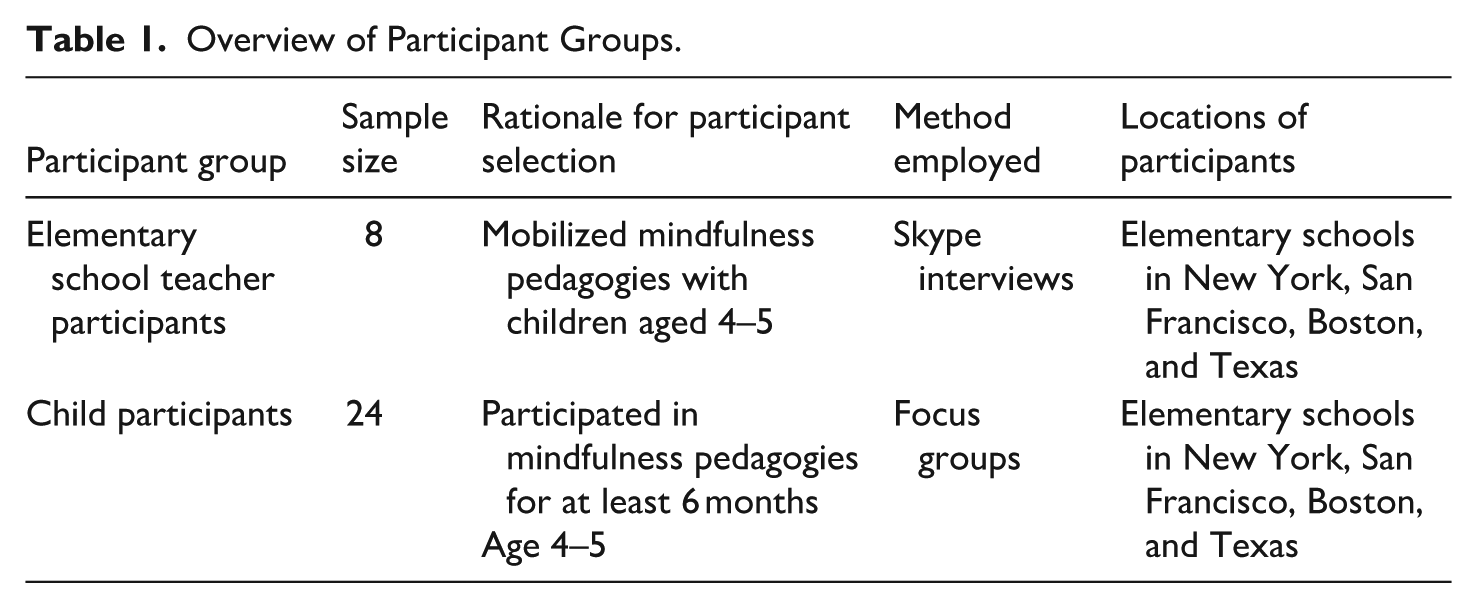
Four elementary schools, each in a different location (New York, San Francisco, Boston, and Texas), and two elementary school teacher participants from each school, were initially selected and contacted via email to request their consent. San Francisco and New York were public schools, whereas Boston and Texas were Private schools. The New York and Boston schools were located in urban areas, and the schools in San Francisco and Texas were located in suburban areas.
Four elementary schools (New York, San Francisco, Boston, and Texas) provided consent for two teacher participants from each school to engage in Skype interviews. After the interviews, I built rapport with the teachers and sought access to data from the students in their classes who were practicing mindfulness pedagogies. This approach reflects convenience sampling (Rooney & Evans, 2018). I then asked the teachers if they would be willing to conduct focus groups, successfully recruiting one teacher from each location, resulting in four child focus groups. The teachers selected children participating in mindfulness activities within their classrooms. They implemented a child-friendly consent procedure by drawing names from a container and asking each child if they were willing to participate, emphasizing that it was their choice. All children agreed to join the focus groups. Following this process, informed consent and assent were obtained.
Ethics
Ethical approval was obtained from the Ethics Committee at a public research university in the United Kingdom.
Participant consent forms were sent to participants via email to secure prior informed consent. For the semi-structured interviews, although prior consent was obtained, the participant approval form was presented again upon arrival at the setting, and written consent was secured (British Educational Research Association [BERA], 2011).
It is important to note that the focus groups included child participants, which required a different consent process and protocol. A separate consent form was necessary to obtain consent from teachers, senior staff members, and parents. Written parental consent is mandatory for children under 16 years of age to participate in research (British Psychological Society (BPS), 2014). For the focus groups, children’s assent was sought, thereby recognizing their rights. This method adhered to Articles 3 and 12 of the United Nations Convention on the Rights of the Child. Article 3 states that the best interests of the child must be the primary consideration in all actions concerning children. Article 12 requires that children capable of forming their own views be granted the right to express those views freely in all matters affecting them, in accordance with their age and maturity (BERA, 2011, p. 7).
Methods
Two methods of data collection were employed for this study: Skype interviews and focus groups. The questions for the Skype interviews were guided by grounded theory (Charmaz, 2006). The interview questions included initial open-ended questions, intermediate questions, and concluding questions. They aimed to elicit in-depth details about the reasoning behind implementing mindfulness in classrooms, the tools and resources relied upon, the benefits and limitations of mindfulness implementation, and the perceived changes and outcomes for children. Examples of these questions included below in Table 2:
Skype Interview Questions.
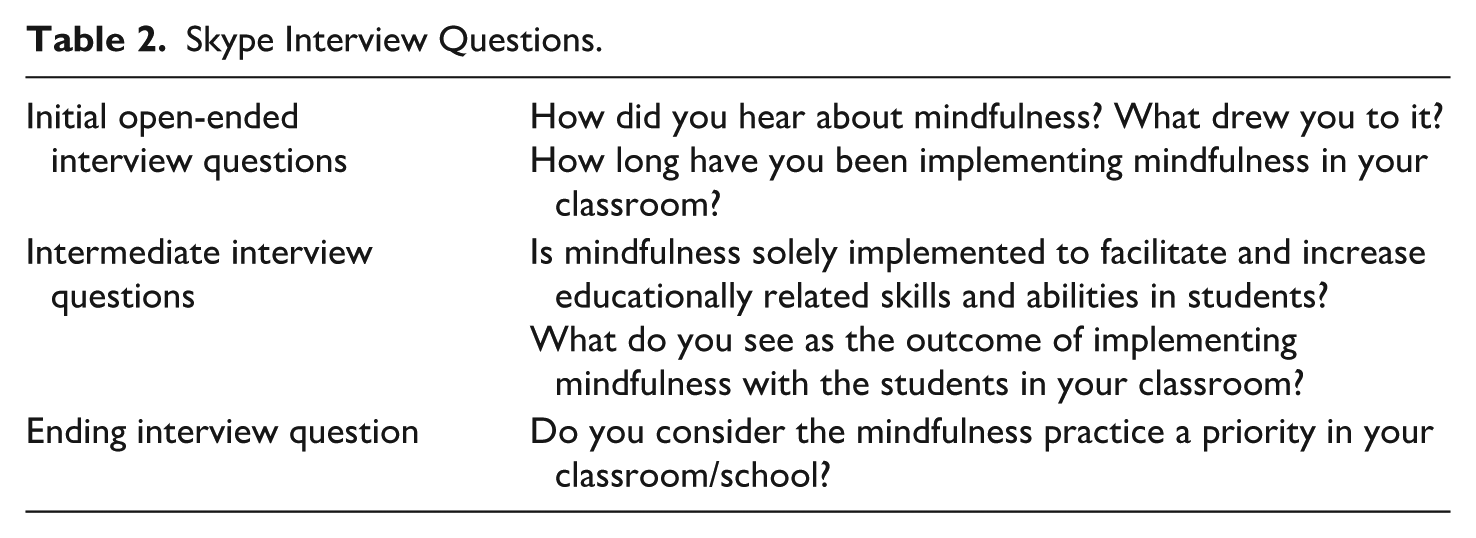
During the interview process, I aimed to create an informal atmosphere that resembled a conversation. Although I had the interview questions at hand, they primarily served as guidance for the discussion.
The Skype interview method provided insights into how participants mobilize mindfulness in a classroom context. This approach allowed for an exploration of how educational settings influence the application of mindfulness, as well as the views and values participants associate with it. The interviews included eight elementary school teachers who practice mindfulness in schools across New York, San Francisco, Boston, and Texas. Each Skype interview lasted between 35 min and 1 hr. The questions were informed by grounded theory (Charmaz, 2006), incorporating initial open-ended questions, intermediate questions, and concluding questions to structure the conversation.
Four focus groups were conducted with preschool students engaged in mindfulness practices in elementary located in New York, San Francisco, Boston, and Texas. Each focus group lasted between 35 and 50 min. There were two elementary objectives for conducting these child focus groups. First, this study aims to explore the implementation of mindfulness practices among children. Consequently, it was essential to gather data from the children’s perspectives to understand their perceptions and participation in mindfulness pedagogies. Collecting data directly from children was anticipated to yield insights that differ from those provided by adults, revealing significant differences in perceptions (Mishna et al., 2004). Christensen and Prout (2002) assert that children are competent individuals and equal participants, making them valuable participants in research. In alignment with this perspective, this study does not portray children as vulnerable and dependent; therefore, it did not rely solely on adult perspectives for data collection regarding children.
Secondly, grounded theory captures various understandings and experiences of a new phenomenon. Collecting data from student participants, while the other method focused on teachers, contributes to exploring the diversity of mindfulness practices with children (Charmaz, 2006; Creswell, 2006).
To address the two rationales of the child focus groups, the interview questions were designed to recognize the importance of “children’s voice” (Christensen & Prout, 2002). In developing the focus group questions, we drew upon Charmaz’s (2006) grounded theory approach, albeit in a modified form. The focus group questions were exclusively composed of initial open-ended queries, without intermediate or concluding questions. Considering that the preschool participants were aged 4 and 5, the questions were formulated in a clear, concrete, and concise manner (Hill, 2005).

Data Analysis
The methodology of this study was guided by grounded theory; however, the analysis required a different approach to highlight themes that reflect participants’ diverse understandings and experiences of mindfulness rather than to generate theory. Sokolowski (2000) notes that while the primary aim of grounded theory analysis is to develop theory, some researchers focus on identifying patterns within the data. Such focused analyses yield conceptual thematic findings instead of substantive theories (Sokolowski, 2000). The objective of this analysis was to capture and address a broad range of diverse experiences and understandings of mindfulness, rather than to create new theories about it (Charmaz, 2006).
Inductive thematic analysis was conducted to identify commonalities, differences, and tensions in the experiences and understandings among participant groups. Using thematic analysis within the framework of grounded theory enabled the extraction of themes from the rich, detailed data accounts (Braun & Clarke, 2006). This method can be applied across various epistemologies and research questions (Braun & Clarke, 2006). Its flexible nature allows thematic analysis to transcend theoretical limitations, making it compatible with the constructionist paradigm (Braun & Clarke, 2006). The data sets were analyzed using a six-phase process as outlined by Braun and Clarke (2006).
The data sets were analyzed using a six-phase process guided by the phases outlined by Braun and Clarke (2006). The first phase involved transcribing the interviews recorded on the Dictaphone. Pseudonyms were assigned to the transcripts, and the transcription process focused on capturing both implicit and explicit verbal nuances (Braun & Clarke, 2006). Once all the interviews were transcribed, the transcripts were read multiple times to gain familiarity with the data. In the second phase, initial codes were generated to capture important features and occurrences in the data that were relevant to the research aims and questions. These initial codes were noted on the right side of each transcript to highlight extracts. For the third phase, the initial codes were organized into potential themes, which were recorded on the left side of the transcripts. This organization occurred inductively to identify commonalities across the data. During this phase, the codes were compared and contrasted, leading to the merging or redundancy of some codes. In phase four, the themes were reviewed and refined to ensure each theme represented a distinct commonality within the coded extracts. Duplicate themes were either removed or merged, while redundant themes were discarded. It was crucial that the themes coalesced meaningfully, with clear and identifiable distinctions maintained between them (Braun & Clarke, 2006). Theoretical saturation was achieved during this phase, as no remaining accounts within the data contributed to the themes (Guest et al., 2011). Phase five involved generating thematic maps, which provided a rich overview of the themes, allowing them to be clearly defined and named. Finally, in phase six, the coded extracts were re-read within the context of the themes. This iterative process involved moving between the coded extracts, research questions, and relevant literature to ensure the extracts provided vivid and compelling participant accounts.
Reflexivity was maintained throughout the data collection and analysis process by consistently situating and resituating within the context of the analysis, fostering a dialog among the methodology, participants, and research questions (Hammersley, 2012). This reflexivity was further supported by self-reflective notes, supervisory discussions, and the exploration of emerging findings.
Findings
The findings presented below illustrate the approaches participants adopted to mobilize and integrate mindfulness into their classrooms, in addition to the reported benefits for children’s wellbeing. The thematic map below (Figure 1) provides an overview of the findings.
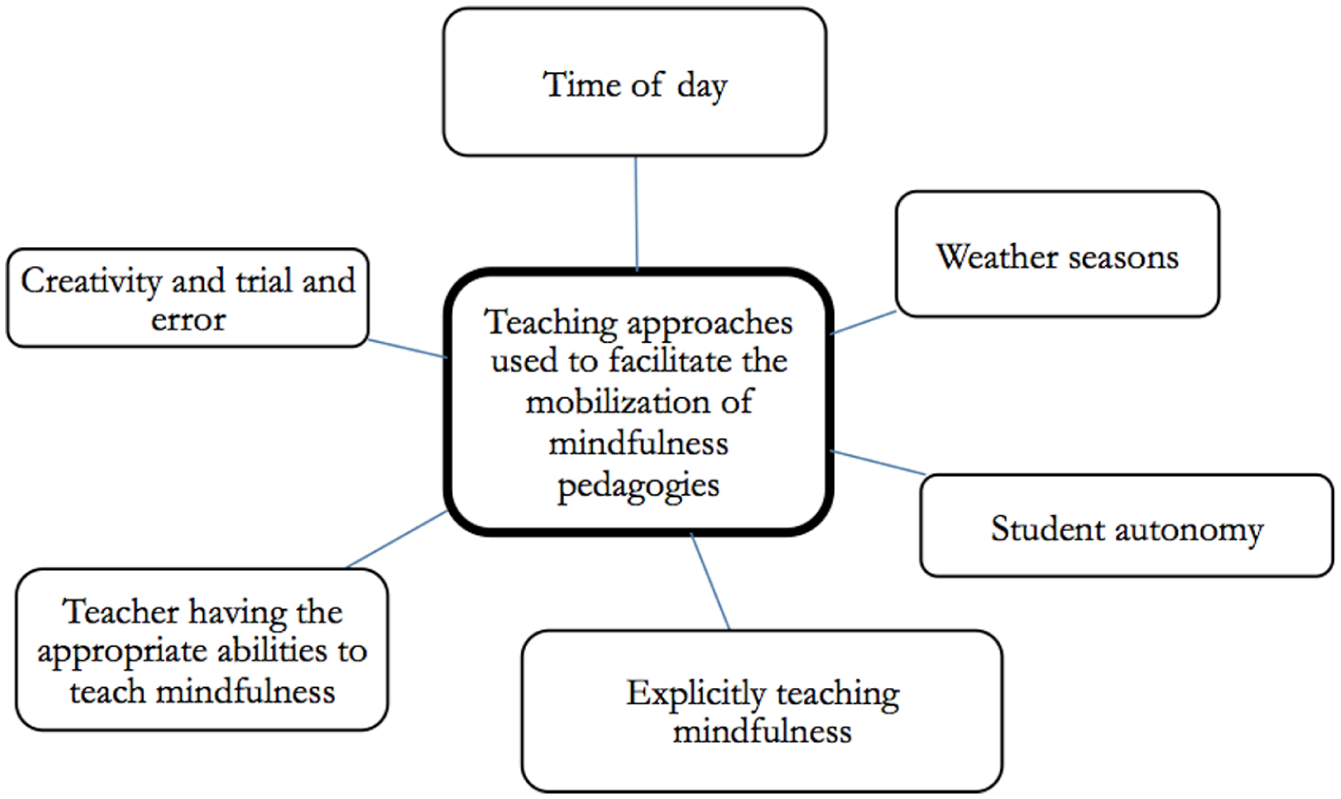
Thematic Map of Findings.
Time of Day
The elementary school teacher participants felt that the time of day can influence the approach taken to practice mindfulness. For example, particularly in the morning:
The mindfulness practice, ‘Generating gratitude’ is a great way to start the day! It puts us all in a positive and refreshed frame of mind to start the day (TP 2-6).
For the participant quoted above, they felt that mindfulness approaches provided opportunities for children to talk about what they were grateful for. For this participant, they believed that this approach to mindfulness has the potential to create a positive and harmonious classroom environment.
Similarly, a child participant also expressed how the “Generating Gratitude” practice in the morning contributed to an increase in positive emotions:
When we share our grateful mornings, I can remember my parents making sure I had breakfast. Sharing this with my friends makes me feel good in the mornings (CHP 4-4).
On the contrary, in the afternoon, or when children had a lot of energy and needed encouragement to focus on tasks, participants explained that “body scan” and “anchor breathing” mindfulness practices were used:
After lunch I often use body scan or anchor breathing to help kids regulate. They have been running around, socializing, you know, burning off steam. But some can be over stimulated or not able to transition well from a lunch break to sitting and reading or focusing on an art project. That transition can take a while for some kids to settle (TP 2-4).
For the participant quoted above, it is apparent that using the “body scan” or “anchor breathing” approach is specifically suitable when students are over-stimulated. The participant highlights that at different times throughout the day children may be over-stimulated and therefore require some support to regulate.
Weather Seasons
Participants also spoke of the weather seasons and the time of year influencing their mindfulness practices. For example, one teacher explained that a more physically active approach to mindfulness was geared toward the winter season:
The ‘Super Stretch’ activities in winter are fabulous. Stretching and holding different positions gets kids moving and warmed up. In the winter here, kids often don’t get outside as much, they may be more sluggish and irritable (TP 2-6).
The quote above reinforces the idea of mindfulness practices and pedagogies contributing to a range of outcomes. For this participant, they present mindfulness as a means to warm children up in the winter time, in addition to increase their energy levels and prevent irritableness. There is a sense that for this participant, they are offering children an alternative to being outside and thus providing children with the opportunity to continue to engage in physical activities even though due to the weather, children are spending more time indoors. Furthermore, on a practical level, the motivations underlying this participants use of “Super Stretch” may be for the immediate and everyday classroom experience of solving key issues in professional educational practice; classroom management, children’s energy levels, and children’s productivity.
Conversely, a teacher referenced that the summer season influenced their choice of mindfulness approach:
If kids are hot and bothered, I will try and fit in ‘the body scan’. Kids can stay seated or lay on the floor if they choose. Find a position where they are comfortable. It gives them a chance to check in with themselves and notice how they are feeling. It’s a quick and easy way for kids to accept and be ok with the feelings of being hot and bothered in the summer (TP 2-4).
The quote above emphasizes that weather conditions can in fact influence what mindfulness practice teachers adopt. For this participant, they present the mindfulness practice, “the body scan” as a means for children to connect with themselves and accept their current situation and feelings, thus providing children with a sense of grounding and regulation.
Student Autonomy
In the interviews, student autonomy was found as an important component to successfully mobilize mindfulness. Several elementary school teacher participants highlighted that mindfulness is an available option for students, and therefore, a choice for the students:
Mindfulness needs to be presented as a positive tool and not a means to control kids. The locus of control needs to rest with the kids, not the teacher (TP 2-2). The Peace Corner is a perfect example of students excising control and autonomy as to when they choose to participate in a form of mindfulness (TP 2-3).
Both of these quotes presented above are about encouraging children to take charge of their development. In essence, the participants’ quotes above show that mindfulness can be presented in different forms, such as the “Peace Corner,” as a means to for the teacher to encourage interdependence rather than dependence in how children learn.
Aligned to participants highlighting student autonomy as an important component to successfully mobilize mindfulness, there were also participants who described that children’s involvement in mindfulness activities was not forced. It appears that the teachers are providing children with agency. However, a certain kind of agency is preferred for children and essentially useful to the school environment, that is the agency of self-regulation. The quotes presented below indicate that children were provided with the choice to participate in mindfulness:
When I am working with children, I ask them to join me in a practice, I don’t tell them they have to participate in mindfulness. That’s the beauty of mindfulness, it’s always on offer and available, and when you accept the invitation it is your experience (CP 1-2). When I blend in a mindfulness practice or decide to switch things up, I invite the class to get involved. Mindfulness is not an authoritative top down, part of teaching. It’s the complete opposite (TP 2-7).
Along similar lines, there was a teacher who mentioned that for children with special needs, options to accommodate them, whilst including them in the mindfulness activity was part of their approach. Mindfulness may help children and adolescents with attention deficit hyperactivity disorder (ADHD) by enhancing attention, reducing stress, and improving mood. A study by Zylowska et al. (2008) showed improvements in self-reported ADHD symptoms and test performance on attention and cognitive inhibition tasks, along with reductions in anxiety and depressive symptoms. Mindfulness practices could be a feasible intervention for some adults and adolescents with ADHD, leading to improvements in behavioral and neurocognitive challenges (Zylowska et al., 2008).
I have had some students in my class who have attention deficit hyperactivity disorder. It is a lot to expect for them to remain focused during certain mindfulness sessions. I make accommodations for those students. If they do not wish to participate, or can only do so for a shorter period of time that is of course ok (TP 2-7).
Mindfulness is not just about providing children with agency, providing options and accommodations for children with special needs, it is also about inclusivity and empowerment of all children involved. The quote above emphasizes that there is no right or wrong way in which children can participate and engage with mindfulness in the classroom. Although mindfulness pedagogies can be diverse, there is a common thread within the findings that suggest mindfulness should boost children’s educability by shaping the kind of agency they perform.
Additionally, there were child participants who spoke of the option to spend time in the “Peace Corner or Safe Space” as a helpful and positive option:
In my classroom we have a place that’s called the peace corner. The teacher always gives us the choice. It’s not like the rest of the classroom. We spend time in there to feel happier. This can happen at any time. It’s nice to have a place in the classroom like this (CHP 2-4). The safe space is my favourite place in the classroom. Our teacher lets us go there when we want, especially when we are frustrated or not having a good day. It is there for us to take some time out and relax (CHP 3-1).
The quotes from the child participants reveal their appreciation for a designated area in the classroom that provides easy access to calm. The first participant highlights the distinction between the “Peace Corner” and the rest of the classroom, suggesting that they associate the “Peace Corner” with a more positive experience than in the main classroom. The second participant explicitly states that the “Safe Space” is their favorite part of the classroom, similarly expressing a positive association with their experiences of self-regulation in the “Safe Space.” Existing research highlights that in a school environment, a response strategy for students experiencing emotional dysregulation is essential (Brasfield et al., 2025). Promoting social and emotional learning helps students develop crucial skills. Mindfulness is an effective practice that aids students in de-escalating heightened emotions. A useful strategy is the classroom calming corner, a designated area with soft materials and soothing elements that helps students regain equilibrium and stay engaged. Research conducted by Brasfield et al. (2025) indicated that calming corners in both elementary and middle school classrooms were successful in helping students return to a state of balance.
Aligned to providing children with agency in mindfulness approaches, a teacher reinforced the importance of learning mindfulness through a self-directed way:
We all have the capacity to learn through mindfulness. Not in a didactic manner though. That is not at all what mindfulness is about or represents (TP 1-5).
For this participant, they feel that fundamentally mindfulness is not taught didactically. This participant emphasizes that everyone has the abilities to engage and participate in mindfulness; however, there are authentic manners in which mindfulness should be taught.
Explicitly Teaching Mindfulness
A teacher brought up the importance of explicitly teaching children mindfulness:
Telling students to focus and calm down does not work. Students need to be explicitly taught and given the opportunity to develop those skills through a range of mindfulness lessons and approaches. I incorporate different mindfulness lessons into my teaching of brain activity and teach students how to understand emotional and behavioral reactions. This helps with how they learn at school. We all hold the ability to be more mindful and it’s a matter of teaching students how to develop mindful skills (TP 2-8).
The participant’s quote suggests that formally directing children to pay attention and regulate their emotions is ineffective. Their perspective aligns with Langer (1997) and Rechtschaffen (2014), who discuss the attention-distraction dichotomy. This participant believes that when children are explicitly given the opportunity to learn and practice mindfulness, they can develop skills for focusing and self-regulation. It is clear that some teachers prefer active learning methods that engage children rather than relying on formal didactic approaches to promote mindfulness.
Along similar lines of encouraging active learning in order to engage children in mindfulness pedagogies, there was a child participant who spoke of teaching involvement:
Our teacher does mindfulness with us so it’s for anyone, not only for kids. She joins in with us (CHP 4-5).
This child participant believes that mindfulness is for everyone. If the teacher actively engages in mindfulness practices, it may encourage children to participate and better understand the goals and objectives of these practices.
Although the findings in this theme emphasize that teachers are taking the initiative, accessing resources, and essentially teaching themselves, the quote below infers that there are standards in which teachers should be meeting:
Mindfulness for children starts with the teachers. If teachers can practice mindfulness themselves, understand and immerse themselves in it. If teachers are on board with the practice of mindfulness it can trickle down and teachers can then transfer the skills, or specifically the practice, so that children can also benefit (CP 1-3).
The participant’s quote above suggests that although there is flexibility and innovativeness in how mindfulness in mobilized, it is also important that teachers have the abilities to appropriately and authentically teach mindfulness practices to children. This quote however raises a tension. There is a notion that mindfulness is often viewed as a professional skill that teachers must be trained to teach. However, it is also a personal practice that does not require formal training and can be applied in various unique ways. Etty-Leal (2021) emphasizes that the key to teaching mindfulness to children lies in the educator’s commitment to their own personal practice.
Creativity and Trial and Error
To ensure mindfulness practices deliver lasting benefits to children Etty-Leal (2021) suggests mindfulness pedagogies must be well-developed, flexible, and robust. They should prioritize a human-centered approach, grounded in sound pedagogical principles, and be facilitated by teachers who possess the appropriate training and creativity to design and implement inquiry-based, mindfulness programs for learners of all ages Etty-Leal (2021). Participants commented on creativity and trial and error as a further approach that can be used to facilitate mindfulness pedagogies:
Creativity, thinking out of the box as not all students may take to the mindfulness practice. I would say that teachers need to be of course creative and willing to use like a trial and error approach with mindfulness use (TP 2-3). Creativity is a must! I’m forever adapting and trying new things. Especially at this age level, you have to continuously keep the kids engaged and excited and wanting to be involved. That’s how and when the learning happens. Nothing is ever in stone. A mindfulness teaching may work one day but not for the next day. (TP 2-6). I have a tool bag of strategies for teaching children to regulate. Mindfulness is a go to strategy, most definitely. But trying different ways, removing, and changing things up, the kids don’t take to every approach or transition every time. So, adding in more or different resources keeps kids engaged and interested (TP 2-8).
The participants’ accounts above emphasize the importance of creativity and experimentation in implementing mindfulness pedagogies. The first quote highlights that not all children learn the same way, making it crucial for teachers to embrace creativity and trial-and-error methods. The second participant also regards creativity as essential in using mindfulness approaches in the classroom, emphasizing adaptability to keep children engaged and excited about mindfulness teachings. They believe that when children are interested and eager to participate, genuine learning occurs. In the third quote, this participant frequently tries new methods to ensure children remain engaged. It is clear that they value the flexibility mindfulness offers, allowing resources to be adjusted to meet the needs of both teachers and students. In essence, these findings suggest that elementary school teachers use trial-and-error strategies and creativity to engage children and facilitate learning. The accounts of the three participants highlight the diversity in teaching approaches used to implement mindfulness pedagogies.
Discussion
This study highlights participants’ teaching approaches for implementing and practicing mindfulness in early childhood education and the reported benefits for children’s well-being.
The findings indicate that various factors can influence teaching approaches, including time of day and weather conditions. These elements were identified as significant in affecting teachers’ decisions regarding instructional methods, resources, and mindfulness practices. Participants emphasized that transitional periods between lessons, following breaks, and morning sessions are particularly critical for implementing mindfulness. As Hooker and Fodor (2008) suggest, there are optimal times during the day when mindfulness can be most effective. They note that “teaching mindfulness at the beginning and end of the school day, as well as during transition points, can have positive effects on students” (Hooker & Fodor, 2008, p. 90).
Mukadam (2023) argues that a mindful pedagogy in early childhood education fosters a child-centered philosophy and creates an emotionally supportive environment, thereby enhancing self-regulation through effective co-regulation. Janz et al. (2019) recommend embedding mindfulness activities into preschoolers’ daily routines, as this can significantly improve their cognitive and emotional development, particularly in building self-regulation skills. These activities typically require only 2 to 5 min, allowing for easy integration into natural classroom transitions, which is well-suited to the limited attention spans of young children.
Similarly, Bhandari and Douglas (2024) discuss the importance of embedding mindfulness practices into classroom routines, incorporating brief, frequent mindfulness activities without disrupting the core curriculum. This approach aims to make mindfulness a seamless aspect of daily learning experiences. By integrating mindfulness into routine activities, educators can cultivate an environment that promotes children’s well-being and develops practical mindfulness skills that support academic growth. This transformation reframes mindfulness from an additional burden for teachers into a comprehensive strategy for enhancing the mental and emotional well-being of both teachers and students. Etty-Leal (2021) similarly suggests that teachers incorporate mindfulness techniques into core curriculum subjects to improve academic performance, foster compassion, and promote overall well-being.
Furthermore, some commentators suggest using the weather to facilitate mindfulness exercises. For example, children can develop intrapersonal skills by noticing how they feel when it rains compared to when it is sunny, or by using the sounds of rain or wind to enhance their attention abilities (Kaiser-Greenland, 2010; Rechtschaffen, 2016; Rempel, 2012).
Across participant groups, the findings suggest that involvement in mindfulness was optional. It seems that if teachers formally and directly instructed mindfulness, the students were encouraged to participate, however, if they did not wish to engage, that option was available. Bhandari and Douglas (2024) caution that teachers should avoid imposing mindfulness activities on children. Instead, they should be attentive to each child’s individual readiness and willingness to participate, creating an environment that emphasizes consent and comfort. It was noted in the findings that the allocated mindfulness space within the classroom, typically known as the “Peace Corner” or “Safe Space,” was offered as a choice and opportunity that was available throughout the day. There were no participants who mentioned when the “Peace Corner” or “Safe Space” was unavailable or off bounds. There was a sense that in order to reap the benefits of mindfulness, it was important that students did not feel like mindfulness activities were forced.
The elementary school teachers described practicing mindfulness through a structured approach. They discussed various mindfulness activities, such as teaching students about brain functioning to illustrate how the brain responds to overwhelming emotions. As Meiklejohn et al. (2012) explain, mindfulness can be taught using a direct method, where teachers formally instruct students in mindfulness lessons, enabling them to grasp the objectives of these lessons. Additional commentators suggest that formal mindfulness practices and mindfulness curricula approaches have a fundamental place in early education settings (Bhandari & Douglas, 2024; Holt et al., 2022; Janz et al., 2019).
Some commentators argue that mindfulness fosters agency, self-acceptance, and a sense of belonging (Jennings, 2016; Rechtschaffen, 2014; Schussler et al., 2016). This literature highlights the importance of teachers in creating learning environments where students have control over their mindfulness experiences, which can enhance student autonomy and trust in their learning and mindfulness practice (Rechtschaffen, 2014).
While the teachers in this study emphasized autonomy, agency, and choice for students as crucial elements in their teaching approaches during the implementation of mindfulness, these findings contradict the views of some commentators. Ecclestone (2004) and Thompson (2007) argue that mindfulness in education characterizes students as emotionally vulnerable, effectively removing their agency. Additionally, Hayes (2008) contends that mindfulness is adopted due to a perceived lack of autonomy among students. Although participants in this study believe that mindfulness fosters agentic behavior in students, a distinct contradiction exists in the literature, which expresses concerns about mindfulness undermining student agency (Barker & Mills, 2018; Ecclestone, 2004; Hayes, 2008; Reveley, 2016; Thompson, 2007) and reinforcing a marginalized and vulnerable representation of children (Gagen, 2015; Sánchez-Allred & Choudhury, 2016).
Creativity and testing out different ways of delivering mindfulness pedagogies were reported as essential by the elementary school teacher participants. Participants spoke of using trial and error approaches that involved regularly trying new mindfulness exercises, and implementing and removing resources, while trying to ensure children remained engaged in the mindfulness pedagogies. In line with the research conducted by Kucinskas (2019), mindfulness educators mobilize “interactive contemplative exercises by using trial-and-error process” with students (Kucinskas, 2019, p. 89). Furthermore, a systematic literature review conducted by Holt et al. (2022) that explored how school-based mindfulness programs have been adapted for use in schools for children aged 3 to 9 years of age revealed significant variability in program design and delivery. Most programs included mindful movement, visuals/props, sensory activities, reflection on experiences, and metaphorical language to teach mindfulness to young children. Experiential practices were prioritized over instructional practices, such as attitudinal features. Mindfulness has primarily been used to enhance cognitive functioning, especially attention and executive functioning.
It is important to highlight that preschool children face key developmental challenges, including attention, memory, abstract reasoning, and language skills. Consequently, preschool students typically require shorter sessions and more opportunities to recap practices, reflecting their developmental differences in attention and memory (Petersen & Posner, 2012). Since preschool children generally have lower abstract reasoning skills and perceive their world in concrete terms (Epstein, 2003), they are more likely to engage when stories or games are incorporated. Zelazo and Lyons (2012) noted that visuals can help children focus their attention on their breath. Additionally, adaptations that include mindful movement, such as yoga and stretches, are beneficial due to young children’s challenges with sitting still for extended periods (Kaiser-Greenland, 2010).
This finding resonates with multiple commentators. Kabat-Zinn (2014, p. xxi) explains that mindfulness is not “a cookie-cutter, one-size-fits-all approach; there is no right way to teach mindfulness.” Rechtschaffen (2014) further states that incorporating mindfulness into the classroom at any age level requires teachers to be creative, innovative, and willing to experiment for mindfulness to be successful. The findings from this study, along with the literature, indicate that teachers have the opportunity to be creative in their delivery methods for mindfulness, allowing them the flexibility to adopt the approaches that best suit their needs (Meiklejohn et al., 2012).
It was also noted in the findings that it was important for the teachers who implement mindfulness to have appropriate knowledge and skills to teach mindfulness to children. Bhandari and Douglas (2024) recommend that teachers practice any mindfulness activity they plan to introduce to children. This ensures teachers are well-versed and can tailor practices to meet their students’ needs. Selected mindfulness activities must align with the classroom environment. For example, focused breathing requires a quiet atmosphere, while stretching exercises may need more energetic instruction. By practicing mindfulness with children, teachers demonstrate the value of these practices in real time.
There is a tension between viewing mindfulness as a “professional” skill that teachers need to be trained to teach and recognizing it as a somewhat non-professional practice that does not require formal training. The teachers in this study are “on-the-ground” educators who implement mindfulness in idiosyncratic and individual ways, without being bound to a standardized curriculum for mindfulness delivery. These teachers take the initiative to seek out mindfulness programs and resources that they believe add value to students’ learning experiences, development, and well-being. As Kabat-Zinn (2003, p. 149) points out, mindfulness “cannot be taught to others in an authentic way without the instructor’s practicing it in his or her own life.” To authentically teach mindfulness, it is therefore suggested to “practice what you teach. Mindfulness is not something you learn about at a seminar or read about and then pass along” (Kabat-Zinn, 2003, p. 150).
Although these findings complement existing literature and research (Kabat-Zinn, 2014; Kucinskas, 2019; Rechtschaffen, 2014), the variation in the application of mindfulness—specifically, the pedagogies, teaching approaches, and mindfulness training/qualifications—raises concerns among contributors to both academic and popular discussions. These findings highlight worries about the debasement and detraditionalization of mindfulness (Lopez, 2008), the marginalization of children (Gagen, 2015; Sánchez-Allred & Choudhury, 2016), and the restriction of children’s agency (Ecclestone, 2004; Hayes, 2008; Thompson, 2007).
Mindfulness can be implemented with children in various ways and through different resources, often in an impromptu manner at the discretion of teachers. Consequently, it can be argued that there is little standardization across mindfulness pedagogies. The variation and scope that mindfulness offers appeal to teachers’ goals and objectives. However, this lack of distinct procedures or “manualization” raises concerns about the efficacy, validity, and accountability of how mindfulness is implemented with children. Nonetheless, the study’s findings indicate that these concerns are not explicitly shared among the participants. Whether for reasons of teachability, to support students’ well-being, to enhance learning experiences, or to address longstanding issues, the teachers in this study adopt various approaches to implement mindfulness with children.
This study shows that mindfulness is teachable through a diverse and hybrid approach, and that its implementation requires teachers to creatively adapt to varying resources and environments. The data also suggest that mindfulness can support children’s wellbeing, particularly in emotional regulation. Additionally, it is believed that preschool children can be educated through mindfulness, which may enhance their educability by shaping their sense of agency.
This study demonstrates that educators employ various strategies to engage students; however, there is a notable lack of empirical research regarding the pedagogical application of mindfulness in early childhood education, despite a substantial understanding of the concept. Although evidence supports the integration of mindfulness into education, practical implementation remains limited. Further research is necessary to ensure effective application across diverse educational contexts. The recognition of well-being has become a central focus in today’s education system. Schools are increasingly implementing interventions to promote well-being, with mindfulness emerging as a particularly effective approach for children. Research on mindfulness in educational settings is still in its early stages. Once considered a niche practice, mindfulness is now gaining widespread acceptance. As these practices and programs expand globally, the interdisciplinary body of research on mindfulness in early childhood continues to grow.
Strengths and Limitations of the Study
The findings in this study contribute to a clearer understanding of how mindfulness can be mobilized with elementary school aged children, in the United States. This study has offered findings that illustrate what mindfulness practices can entail, how these pedagogies are constructed, how the goals and objectives of the practices are realized and achieved, and how mindfulness pedagogies are reconciled within the existing settings, practices, and curriculums. In doing so, this study has provided understandings of the factors, which are at play in the mobilization of mindfulness in early childhood education.
Participant bias is a limitation to consider for this study. In terms of the adult participants in this study, this may be representative of a group that has positive preconceived notions and ideas toward mindfulness and are, therefore, advocates for mobilizing it with children.
Recommendations for Future Research
There is a need for on-going, rigorous research in order to strengthen and tease out the efficacy of mindfulness approaches and pedagogies; in particular, research focused on the transportability of mindfulness pedagogies (Meiklejohn et al., 2012). Investigating the transportability may contribute to establishing the feasibility, flexibility, and sustainability of mindfulness pedagogies (Meiklejohn et al., 2012).
Footnotes

Ethical Considerations
Ethical approval for this study was gained from the Ethics Committee at the University of Warwick, England, United Kingdom.
Funding
The author received no financial support for the research, authorship, and/or publication of this article.
Declaration of Conflicting Interests
The author declared no potential conflicts of interest with respect to the research, authorship, and/or publication of this article.