



Abstract
Rapid Automatic Naming (RAN) has been widely recognized as a reliable predictor of reading proficiency. Although RAN represents the speed of cognitive processing, there are few studies that have addressed RAN as a cognitive process in its own right Furthermore, RAN performance of ELL (English Language Learners) has been less frequently investigated. We have two parts to this study. First, we examine the factor structure of an enlarged composite measure of speed measure by adding four additional tests comprising color naming, and two number naming tasks to the traditional RAN of digit and letter naming. In the second part, we determine the association of Speed with broad cognitive processes comprising Executive Functions, and Information processing. Participants were students in English medium schools in India. They were divided into two age groups (8–14 and 15–20) for statistical analyses of six Speed measures Results show a strong unitary speed factor in the 8 to 14 age group. In contrast, in the 15 to 20 group RAN tests comprising digits and letters showed a very small loading on the same factor. Addressing the second objective, which is the impact of speed on various cognitive tasks, the results show that response speed has a minimal influence on Nonverbal Configurations (simultaneous) tasks, and tasks of executive functions comprising Working Memory, and Visual-Spatial Processing. These tests will enable us to isolate specific cognitive deficiencies from response speed. In a re-examination of the relation between Reading & RAN-type tests, we could suggest that serial articulation is the common and essential feature that binds rapid naming tasks and reading fluency.
Speed of Cognitive Processing Within a Broader Cognitive Framework
Rapid Automatization Naming (RAN) has been studied mostly in relation to reading (Norton & Wolf, 2012). Variations in rapid automatized naming time in children provide a strong predictor of their later ability to read, and its relationship with other predictors such as phonological awareness, verbal IQ, and existing reading skills. We believe that the scope of RAN may be sufficiently increased by investigating its association with complex cognitive processing that is implicit in verbal IQ and other aspects of reading such as cognitive strategies in serial repetition (See Kirby et al., 2003) for a review, and Georgiou et al., 2020 for a recent discussion. Additionally, the separation of speed and cognitive processing may be used to estimate the relative influence of speed in testing the cognitive abilities of older adults prone to a general slowing down of response.
To increase the scope of RAN and its association with broad cognitive measures in the present study, first, we intend to enlarge the number of “speed tests.” Basically, RAN includes two kinds of tests of naming speed; these are naming time for single digits and letters, and colors and pictures of common objects. In their early papers, Denckla and Rudel (1974, 1976) raised the question of separating these two categories of stimuli. They suggested that RAN for pictures (objects) and color can be separated from the speed of naming numbers and letters (Denckla & Rudel, 1974, p. 193). More recently van Den Bos et al. (2002) reported finding two factors for students aged 12 to 16, but not for samples of younger students. In later research, J. Das and Chang (2022) included a younger age group between the ages of 8 and 10, as well as an older age group. It was shown in a factor analysis that both alpha-numeric and color naming have loadings on the same factor, but for age groups of 11 to 14, and 15 to 20, a two-factor solution fits the data. In the present paper, we have added additional digit and color naming tasks. Figure 1 below lists the broader battery of naming tasks speed. In the second part of this paper, then, the place of response speed could be examined within a Cognitive framework comprising measures of executive functions and information processing integrating Configurations (simultaneous processing) and Sequential (successive) processing.
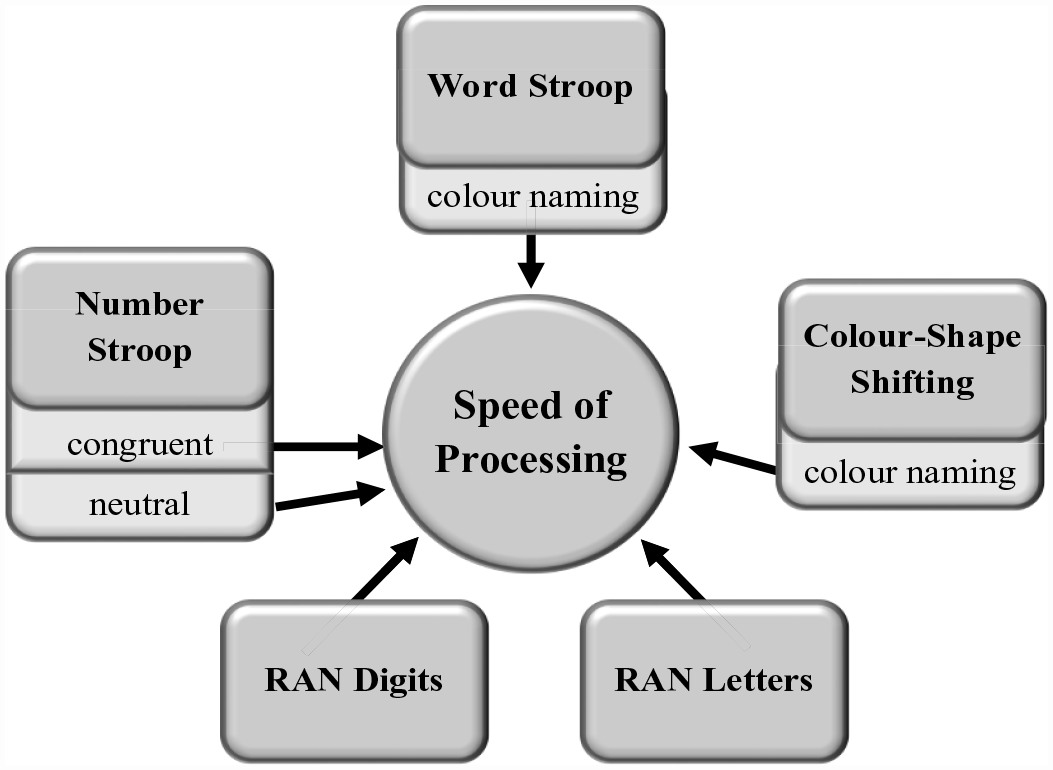
Speed of processing battery of tests.
Background
Two Major Processes in Rapid Naming
The process of rapid naming, as seen in RAN, and the complex naming tasks included in the broad speed composite diagram, involve two major cognitive processes: encoding and assembling a motor program for articulation. Research suggests that these two processes can be separated, as evidenced by a study by Al Dahhan et al. (2020), which showed that motor processing related to speech production does not activate the same brain areas as phonological and orthographic processing during reading. Additionally, the relationship between serial RAN and reading appears to depend on the serial format in which RAN tasks are presented, as demonstrated by recent studies (Altani et al., 2018; Protopapas et al., 2018). There is also a notable difference in naming time between alphanumeric items and colors, objects, and shapes, with alphanumeric items being named faster and reaching an asymptote during adolescence, while naming time for other stimuli remains slow and does not progress toward an asymptote (J. Das & Chang, 2022). The intervening process in this difference has been suggested to depend on the demand for accessing the semantic lexicon (J. P. Das, 2009, 2020).
The following excerpt from the abstract of the previous study (J. Das & Chang, 2022) is a summary of what we already know.
We report one stable factor of speed for ages 8 to 10 that splits into two separate but correlated factors for ages 11 to 14, 15 to 17, and 18 to 20 representing the speed of response to tests that contain letters, numbers, and color stimuli. Developmental changes in response speed across the four adjacent age groups were examined; the trajectory was not consistently incremental, especially for naming colors that did not increase beyond age 11 to 14. In conclusion, a fairly reasonable deconstruction of the concepts of RAN has been presented in this report. The major components are encoding and articulation, and the necessity of distinguishing between alpha-numeric naming time, and color naming. The latter is invariably slower as it requires additional time for semantic access.
Brain-Based Intelligence Test (BBIT-India)
BBIT structure (J. P. Das et al., 2020) comprises major categories of cognitive processes namely Planning & Executive Functions comprising Cognitive Flexibility, Inhibition and Attention, and Working Memory (Miyake & Friedman, 2012) and two Information-Integration categories comprising nonverbal and verbal configuration (Simultaneous Processing), and Sequences and Articulation (Successive Processing) (J. P. Das et al., 1975; Luria, 1966, 1973).
Objectives of the Present Study
We ask which of the processes, and to what extent the tests of BBIT may share a common variance with a broader Speed composite of six subtests rather than four in the previous study (J. Das & Chang, 2022). Anticipating the results, we will determine which of the BBIT tests are positively associated with Speed and which tests have an insignificant correlation.
To summarize, the present paper has two objectives: First, to examine the structure of the Speed construct by adding a few more tests in BBIT that appear to have minimal access to the semantic lexicon. Second, more importantly, to determine the correlation of Speed (six subtests shown in the above Figure 1) with the major cognitive processes of BBIT.
Methods
Participants
The total number of participants was 1,700 students within an age range of 8 to 20 years. The entire set of data was collected from five different states of India. At each age from 8 to 20, the number of participants was not less than 80 students. The medium of instruction in schools was English for all students. However, English was their second or third language, thus, they could be classified as English Language Learners (ELL). The administration of RAN tests was part of a larger project of standardization of an intelligence test. Parents/guardians and the students 15 years and older consented to take the tests. Teachers and the school authorities permitted the testing.
Tests
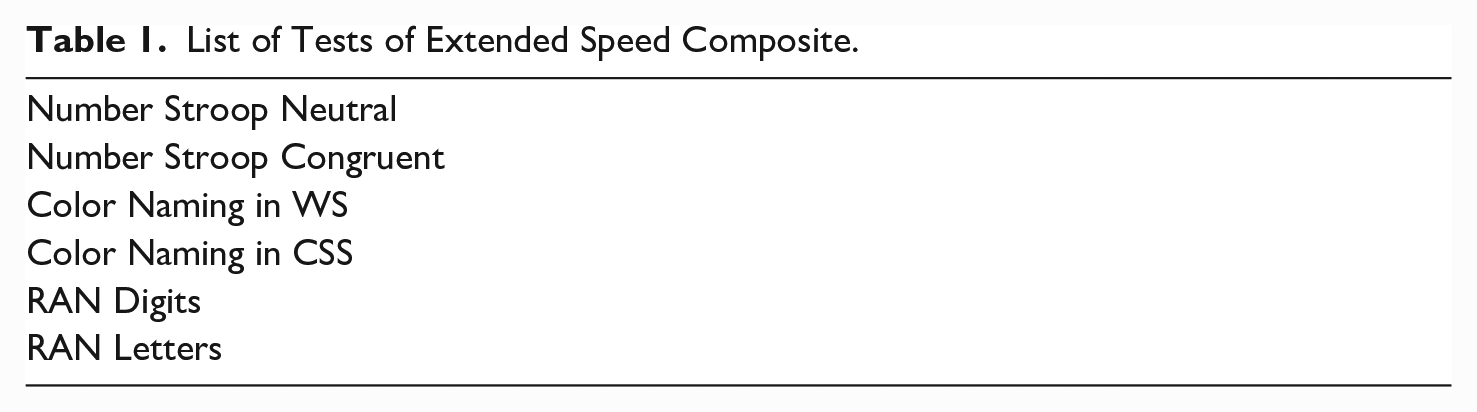
A list of Tests of Speed Composite is shown below, followed by a brief description of the tests and administration (see Appendix 1).
Results
The factor structure of the extended Speed of Processing construct required factor analysis. We opted for a confirmatory factor analysis in order to determine if the extended speed battery of six tests in Table 1. Our hypothesis specified one Speed Composite for BBIT in line with WISC and Cognitive Assessment System2 (Naglieri et al., 2014), and then examine the relative factor loadings of the six subtests on the unitary factor (see Footnote for this procedure). We divided the participants into two age groups, ages 8 to 14 and 15 to 20. The participants in the first group were students in grade school (Grades 3–10) whereas the older group of participants were students in Grades 11, 12, and Bachelor-degree classes as is commonly followed in India.
List of Tests of Extended Speed Composite.
Speed Factor of BBIT
As discussed earlier in the present study, we examined the factor structure of the extended speed in BBIT. Specifically, we ask if the Speed construct reveals one unitary factor at a younger age group (8–14 years) but splits into two at an older age (15–20 years; J. Das & Chang, 2022; van den Bos et al., 2002). We hasten to add that the strength of the Speed construct is neither diminished nor enhanced depending on the outcome of factor analysis; instead, factor analysis results are expected to contribute to understanding the Speed of the Processing construct.
The CFAs of the Speed of Processing composite in BBIT were conducted to provide valid evidence of the speed scales. Age 6 to 7 was excluded as not all subtests within the Speed Composite were administered in that group. Specifically, six subtests (Number Stroop Congruent, Number Stroop Neutral, Color Naming in Verbal Stroop, Color Naming in Color-Shape Shifting, RAN Digits, RAN Letters) were analyzed regarding their contributions to the latent trait, Speed of Processing.
A description of the six Speed Tests is given in the Appendix of the present paper. Note: This extended speed composite consists of four pre-existing tests (J. Das & Chang, 2022) and two additional tests (Number Stroop congruent & Neutral). See Appendix for test description.
The Extended Speed Battery
Confirmatory Factor Analysis (CFA) showed that the one-speed factor best described the performance of the eight to 14-year-age group, and age group 15 to 20 as shown in Table 2. For both age groups, the best fit was confirmed for one factor. However, for the older group, starting by age 15, the one-factor model speed is not as strong in terms of the goodness of fit index. It should split into two factors. As the CFA table shows, the original RAN (i.e., digits and letters) speed has a much smaller loading for the older group because RAN digits and letter naming speed have reached an asymptote.
Confirmatory Factor Analytic Results of Speed of Processing Composite.
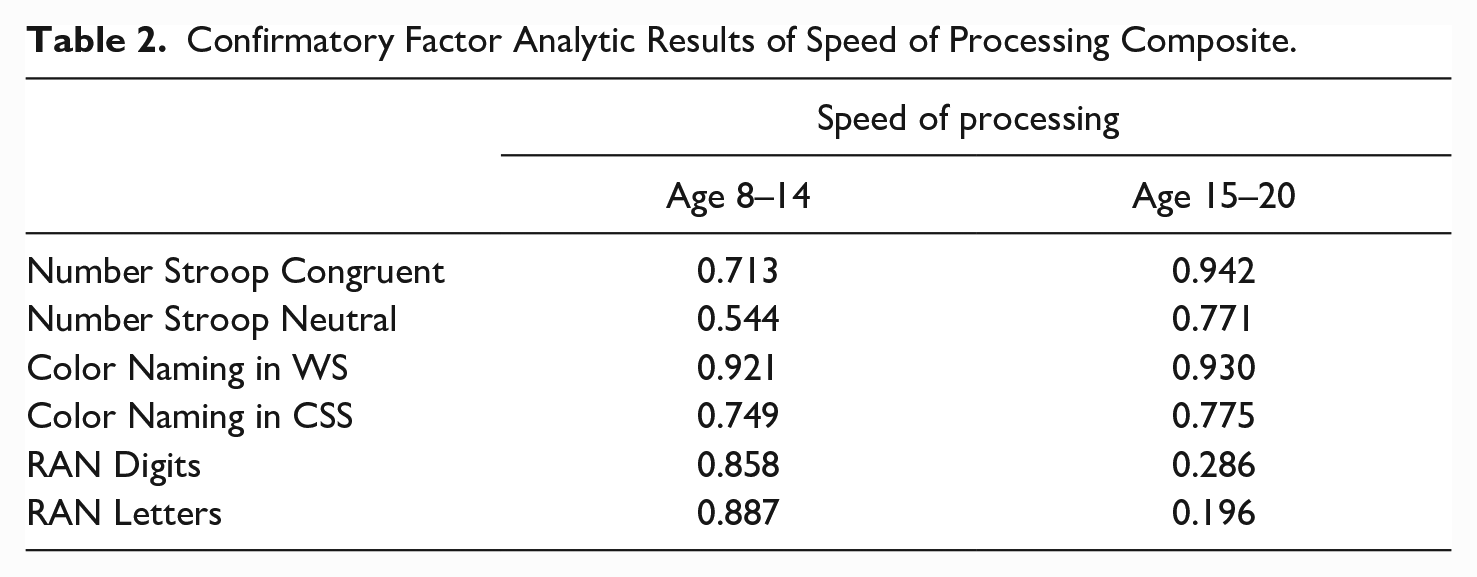
We assume that by age 15 and above, strategies and not basic RAN speed of number and letter naming play a preeminent role. The results are consistent with the J. Das and Chang (2022) study that showed RAN speed does not increase beyond Age 1.
Part 2 Association of BBIT and Speed Composite
In the second part of the present paper, Speed, and its correlations with BBIT Tests of Planning-Executive Functions as well as Information Integration to determine the association of Speed Tests & BBIT. BBIT is presented in Figure 2 and Table 3. Briefly, BBIT comprised tests divided into four categories of Planning-Executive Functions and two of Information-Integration. The BBIT as the acronym suggests, is broadly based on a Brain-Based approach to Intelligence (J. P. Das, 2018).
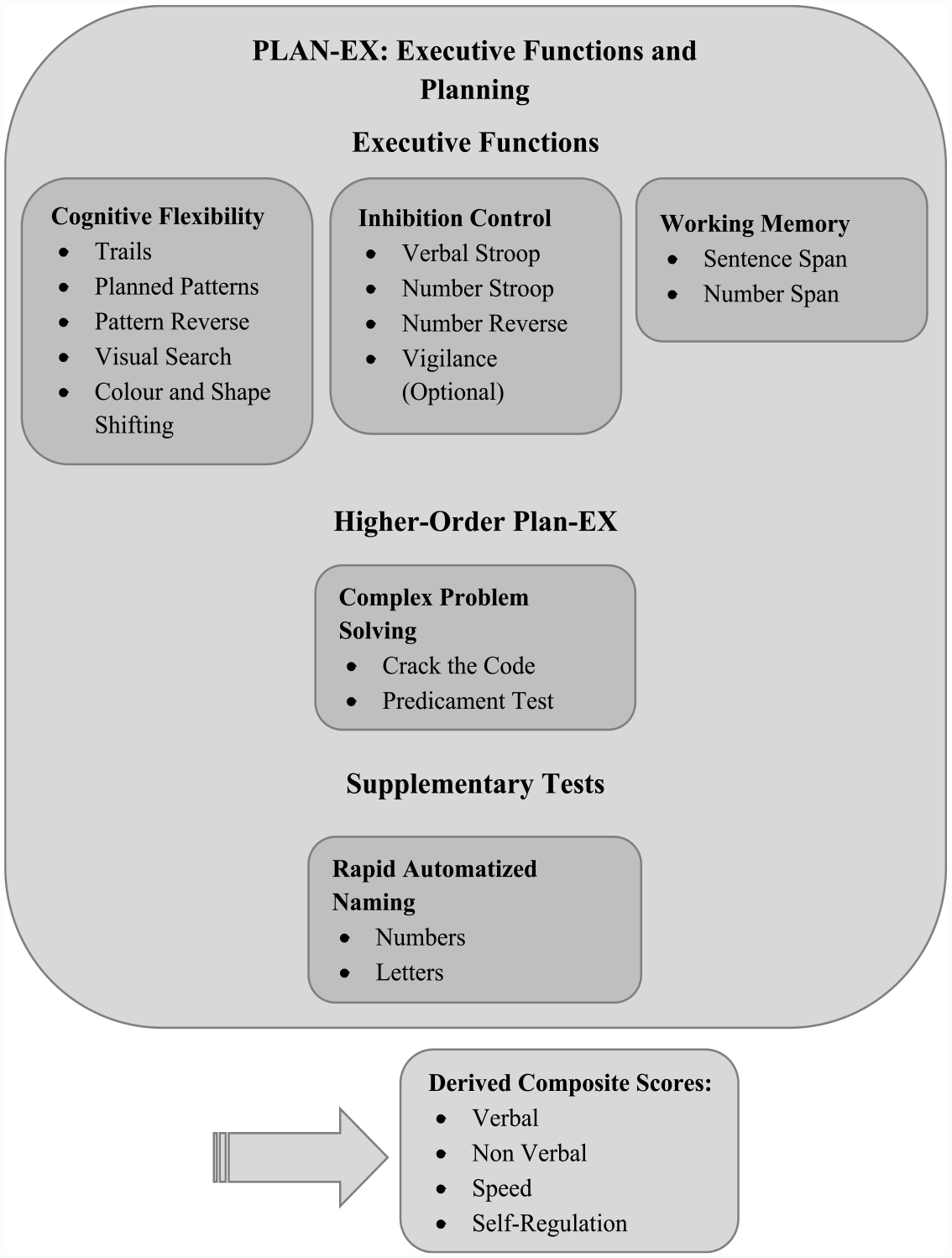
Plan- Ex: Executive Functions and Planning.
Means and Standard Deviations of Speed Scores of the Two Age Groups Included in the Extended Speed Tests.
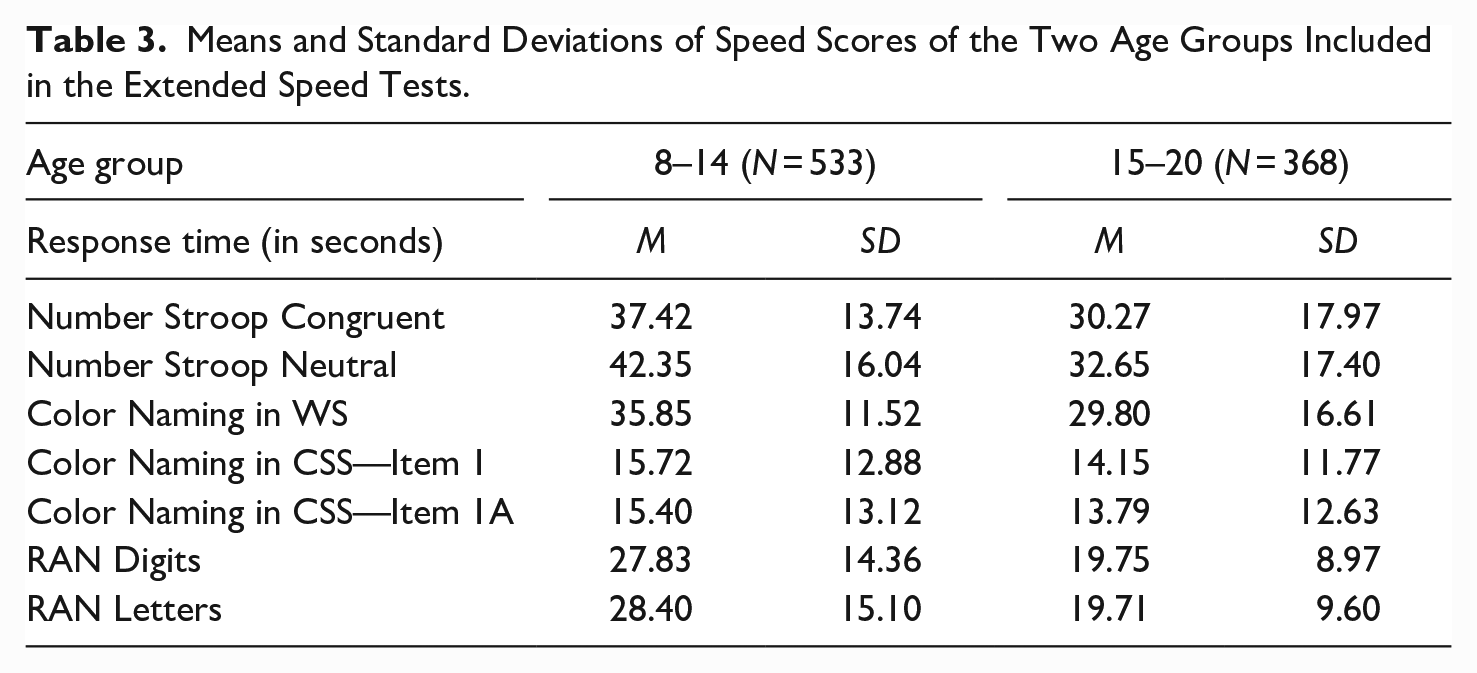
BBIT—India
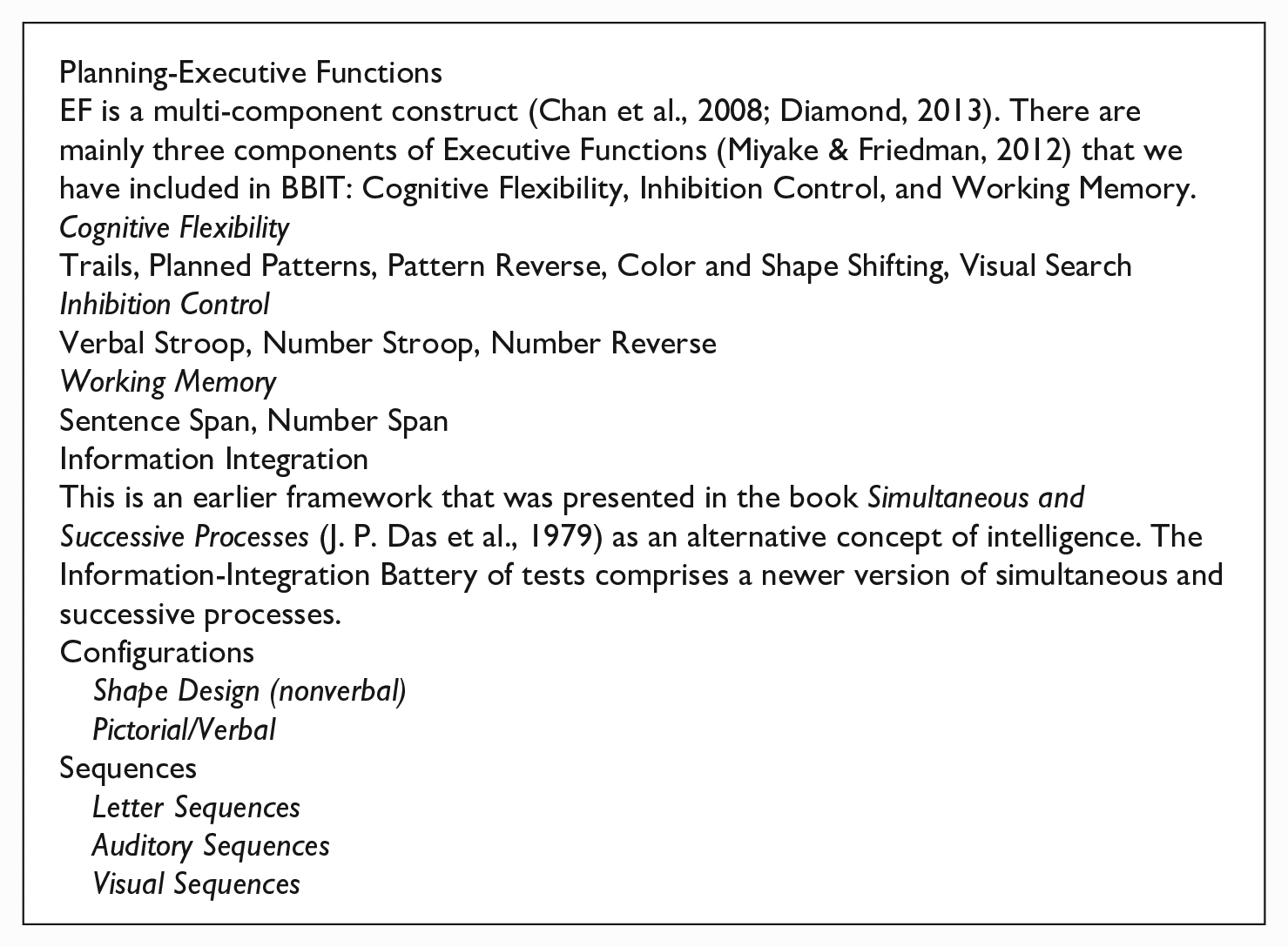
BBIT (Brain-Based Intelligence Tests) of Planning-Executive Functions and Information Integration
BBIT- India Battery is presented in detail in the interpretation manual (J. P. Das et al., 2020) (See Figure 2).
It is composed of two distinct groups of cognitive functions which are Planning & Executive Functions as graphically presented in Figure 2, and Information Integration comprising Configurations (Simultaneous) and Sequences (Successive) are described below.
Each of these broad cognitive processes comprises the following components Planning & Executive Functions, and Information Integration. Executive Functions (Pl-EX) tests include: (a) Measures of Cognitive Flexibility, (b) Inhibition and attention control, and (c) Working Memory. These components of Executive Functions are formalized by Miyake and associates (Miyake & Friedman, 2012). It has gained wide acceptance. Additionally, Planning and Executive Functions have a book-length discussion in J. Das and Misra (2015).
Information Integration includes Simultaneous and Successive Cognitive processes (Luria, 1966, 1969, 1973). It has been presented at length first in J. P. Das et al. (1975, 1979) and subsequently as PASS Theory in J. P. Das et al. (1994). It is unnecessary to provide an elaboration in the present paper.
Speed Factors & BBIT
We propose that measures of cognitive processing speed as given in Figure 2 must satisfy two conditions—(a) the tasks can be differentiated in terms of Encoding and Articulation. Encoding Color requires accessing the semantic lexicon, which is at a deeper level of processing compared to digits and letters that need accessing the symbolic lexicon access which is at a shallower level of processing (see Craik & Lockhart, 1972 for Levels of Processing). The two new additional subtests–Number Stroop Neutral, and Number Stroop Congruent—satisfy the two conditions in that both require relatively minimal access to the semantic lexicon. Furthermore, (b) the task must require rapid serial Articulation (see Appendix for administration and content of all subtests).
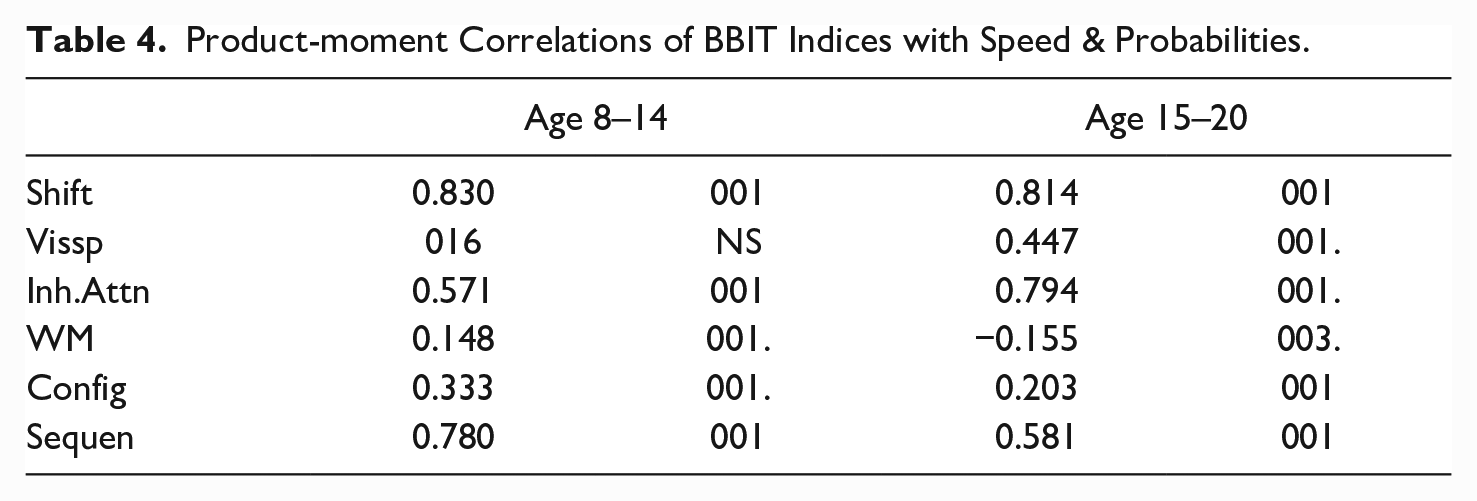
Subsequently, we will compute the correlation of categories of processing in BBIT tests with extended Speed as shown above in Figure 2. To repeat, BBIT structure includes major categories of cognitive processes namely Cognitive Flexibility, Inhibition and Attention, Working Memory, and two Information-Integration categories comprising nonverbal and verbal configuration (Simultaneous Processing), and Sequences &Articulation (Successive Processing). All of these can be accommodated within the PASS Cognitive Processes (J. P. Das et al., 1975, 1994), and a brain-based approach to Intelligence (J. P. Das, 2018). We ask which of these processes, and to what extent the tests of BBIT may share a common variance with Speed composite. Anticipating the results, we will determine which BBIT tests are positively associated with Speed and which tests do not.
Notice in Table 4 that given the very large sample size, values of most of the correlations are significant at p < .01. It may be more informative, then, to arrange the correlation coefficients in a hierarchical order considering their size. Accordingly, Shift, Attention-Inhibition, and Sequencing are at the high end whereas Visual-Spatial, WM, and Configuration are at the low end regarding Speed. Unexpectedly, Visual-Spatial correlation with Speed is higher for ages 15 to 20. The results of Test-by-Test correlations (not shown here) between Speed measures comprising RAN Digit and Letter Naming, Color Naming, and Stroop Number Naming generally confirm this trend.
Product-moment Correlations of BBIT Indices with Speed & Probabilities.
Discussion
In accordance with the overall objective of the study, we investigated the composition of a broad Speed factor derived from the items in subtests of BBIT. We note that none of these items were used in making composite scale scores of the five major processes of BBIT (Cognitive Flexibility comprising its subtests, Inhibition-Attention, Working Memory, Configurations & Sequencing).
Returning to the review in the introductory part of this study, we begin to discuss the differences in naming time between alpha-numeric items on one hand, and other items that were added as composites of extended Speed tests on the other. Alpha-numerics are named faster and reach an asymptote at adolescence, whereas the naming time for Colors, Objects, Shapes, and other stimulus items is slow, and does not seem to progress quickly, if at all, toward reaching an asymptote. The intervening process between encoding and articulation has been suggested to hinge on the demand for accessing the semantic lexicon (J. P. Das, 2009, p. 200). As we have mentioned earlier, an integrative theoretical review of possible explanations has been presented by Theios and Amrhein (1989). We note that the two together as given below define lexical access time.
“The theory accounts for slower naming of pictures (colors in the present paper) than reading of words. Reading aloud involves a fast, grapheme-to-phoneme transformation process, whereas picture naming involves two additional processes: (a) determining the meaning of the pictorial stimulus and (b) finding a name for the pictorial stimulus. We conducted a reading-naming experiment, and the time to achieve (a) and (b) was determined to be approximately 160 msec” (p. 5).
That is not an entirely new proposition as it is related to explaining reading. However, a common explanation for naming time for colors and letters may be a slightly different one.
Symbolic vs Semantic Lexical Access
On the basis of previous research, as the literature shows the speed of naming alpha-numeric is likely to reach an asymptote earlier than colors and objects (Georgiou & Stewart, 2013; Georgiou et al., 2020). Continuing with this line of argument, beyond 14 years of age, our previous study that did not include Neutral and Number Congruent subtests (J. Das & Chang, 2022) shows that semantic access time for non-alphanumeric color stimulus remains less automatized whereas alpha-numeric naming speed is closer to get automatized. In fact, alpha-numeric time reaches asymptote past the age of 14, whereas color naming speed may continue to improve as several studies have reported (Albuquerque & Simões, 2010; van Den Bos et al., 2002). Adding the two Number test items tilts the use of the semantic lexical access. A neurophysiological explanation in addition to the cognitive one we have provided may help. Do these component processes of RAN (i.e., encoding, articulation, and continuous serial naming) have a basis in the brain? Perhaps it is a strong possibility.
In a re-examination of the RAN and Reading relationship, we suggest the following: The strongest relation between serial RAN and reading suggests that the serial format of the RAN tasks is essential in the RAN-reading relationship (Altani et al., 2018; Protopapas et al., 2018). A caveat should be added—Reading here refers to reading fluency. It does not include other components such as phonics, vocabulary and comprehension. As it has been mentioned in previous studies including ours (J. P. Das, 2009, 2020; J. Das & Chang, 2022), a serial or successive presentation is perhaps an essential condition for the association between RAN-type tasks and Reading.
In conclusion, Rapid Naming Time involves two essential operations: Encoding and Articulation. Encoding is largely influenced by the time required to access the semantic lexicon, which can vary from extensive to minimal. Articulation speed is primarily determined by the rate of serial presentation. Our study’s results indicate that a straightforward measure of processing speed, such as a RAN score for digit and letter naming, may not significantly contribute to the commonality among individuals aged 15 and above. Furthermore, we suggest that a measure of sheer speed in senior adults can be distinguished from cognitive processing ability. Therefore, we propose that tests of working memory and nonverbal configuration (simultaneous processing) may be more effective in assessing cognitive decrement in older adults, based on the strength of their correlation. Conversely, tests of a serial sequence of stimulus items (successive processing) may better estimate cognitive decrement or loss of speed in old age, which is commonly observed but also subject to debate.
Footnotes
Appendix
Declaration of Conflicting Interests
The author(s) declared no potential conflicts of interest with respect to the research, authorship, and/or publication of this article.
Funding
The author(s) received no financial support for the research, authorship, and/or publication of this article.
