




Abstract
The aim of this manuscript is to present and discuss an attempt at transformative change in an on-reserve school in northern Saskatchewan. Myriad studies and government statistics have stated that on- reserve Indigenous students occupy the lowest levels of success in Canada as it relates to almost any recognized metric. In response to the ongoing inequity in education, a 3-year project was undertaken with potential national implications. In this project, a holistic approach was utilized which places an emphasis on leadership development, curriculum, teaching and learning, local Indigenous pedagogies, and mental health support. The confluence of approaches in this project have challenged standard approaches to school transformation by placing an emphasis on the local context and knowledge systems that already place the community in a position of strength. Data collection and project development was primarily focused on document analysis, classroom visits, meetings, and professional development with the faculty, planning sessions, instructional monitoring and student academic, cultural, and mental health assessments, and research projects. This manuscript offers wise practice considerations for diverse on- reserve schools through relationally collaborative interventions rooted in school psychology principles as key agents of change, resulting in: higher teacher retention; more comprehensive and effective lesson planning, implementation, and assessment; enhanced integration of Indigenous values within the classroom (e.g., PISIM); and improved teacher and student mental wellness in the classroom (e.g., teacher utilization of EFSS).
Keywords
Introduction
The major focus of this paper is to present our attempt at transformative change in an on- reserve school in northern Saskatchewan to address on-reserve First Nations educational disparities (44% graduation rate) compared to off-reserve not specific to Indigenous youth (88% graduation rate) as indicated by Indigenous Services Canada (2018). This chronic educational inequity of First Nations children stems from a multiplicity of colonial factors including, but not limited to: (a) incomprehensive educational systems on-reserves; and (b) high incidences of poverty, domestic violence, substance abuse, crime, teenage pregnancies, and other social issues rooted in intergenerational trauma.
The school transformation project was led by school leaders in two provinces, subject matter experts, school psychologists, Indigenous academics across disciplines, allied academics, and local knowledge keepers. The wealth of diverse thinking and experiences included within this project is a noteworthy strength central to the potential we have for inciting transformative change. There is arguably no more important or timely need within the Canadian educational scene than to address the educational and psychological needs of First Nations children and youth (e.g., see “Education for reconciliation” in the Truth and Reconciliation Commission’s [TRC] final report, volume 6 [2015]). In order to address this need, teachers need: (1) specialized training (e.g., how to use assessment to assess learning and use results to plan instruction, understanding of local Indigenous practices (smudging), ceremonies (feasts), and why they are important and how to best reinforce and engage students in these practices, basic support toward counseling of students in a manner that is consistent with local cultural norms, and how to engage and build relationships with members of the local community—elders, chief and council, families, caregivers), (2) current, relevant information, (3) guidance and support with respect to their teaching in order to enrich their insight and maximize their capacity to assess, evaluate, plan, manage, instruct, and facilitate the learning and developmental potential of all their students (Andrews & Lupart, 2015), and (4) support from school psychologists relative to the mental health of children and youth. We will summarize and present the rationale, development, and goals of our 3-year First Nations project (2017–2020) as well as some of the assessment and intervention practices we incorporated and associated results from our work.
It is important to highlight that our project team members were comprised of multiple stakeholders and perspectives, including school, community, professional, government, and scholarly members, including the authors of this manuscript. Respectively, the first author was a project member who has been Professor and Chair of a School and Applied Child Psychology program for many years and whose applied skills, research and scholarly interests has been with respect to child psychopathology, psycho-educational assessment, and inclusive and diversity education. In addition, he is a registered psychologist and lived and taught for 2 years in a First Nations community in northern Saskatchewan. Another member and second author is an Assistant Professor of Indigenous Psychology who has worked as an applied mixed-method researcher with Indigenous organizations for over 18 years. His current research includes Indigenous employment experiences, allyship, mentorship, interactions with police, mental health programing, and readiness to practice in primary health and policy. The third author has many years of experience as a school administrator of a private school for special needs children and youth and has served as an international presenter and consultant for many years. In addition, our team included the principal, lead staff, and several teachers of the on-reserve school, an Assistant Professor who is an Indigenous scholar, researcher, and teacher, two teachers who have many years of teaching experience with special needs students across elementary, junior high, and senior high schools, a registered psychologist, and two school psychology PhD students. Hence, our project team integrated and used the experience and skills of school psychologists, educators, and school administrators, teachers, and scholars, many of whom were Indigenous, in the development and delivery of holistic on-reserve school intervention.
Guiding Framework
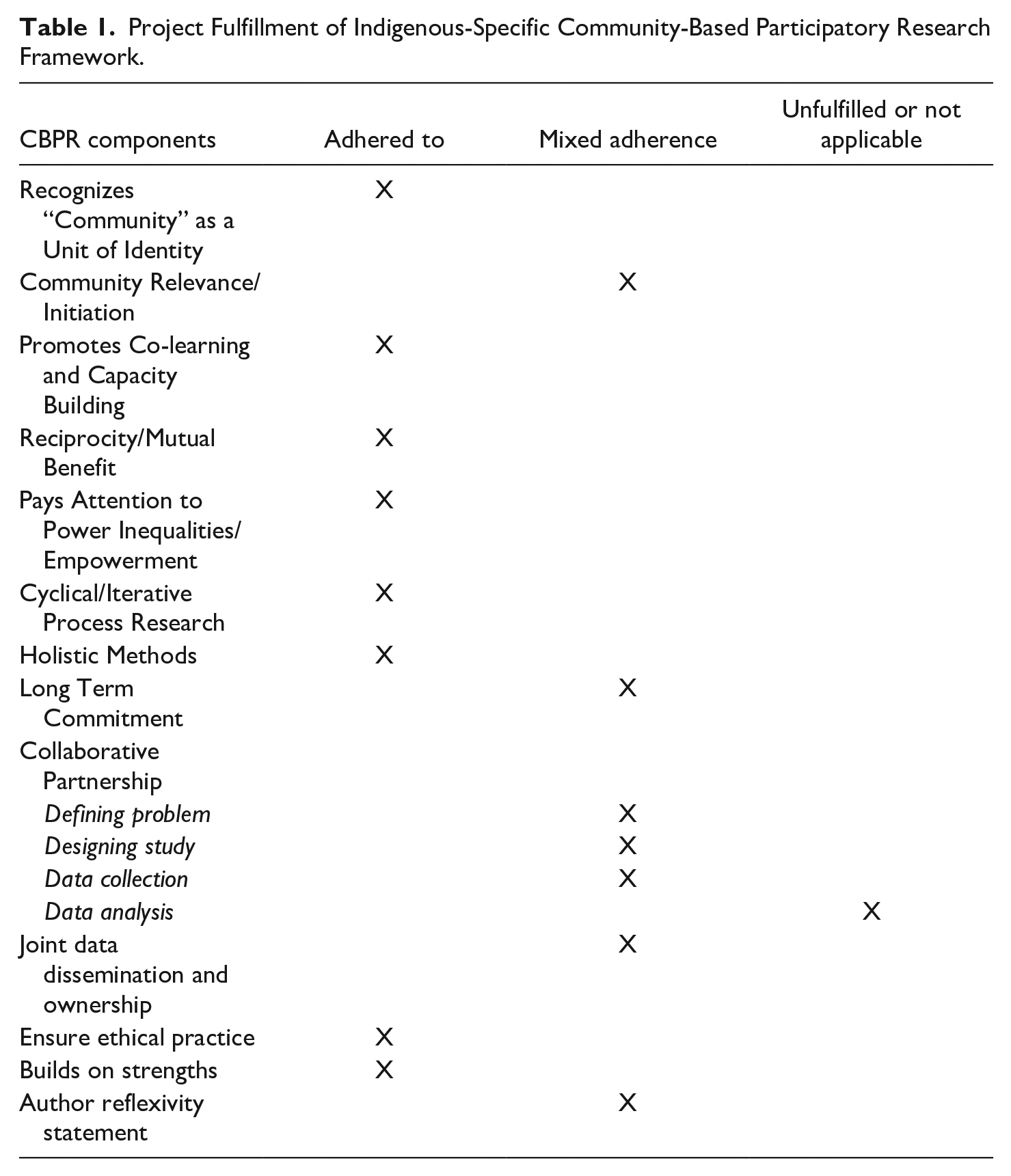
There is no single theoretical framework that this project has been built upon, since there are influential theories present in each element of the design of school transformation (Battiste, 2017; Goulet & Goulet, 2014; Ormrod et al., 2010; Shriberg & Clinton, 2016; Song et al., 2019). Overall, the project tried to follow practices of community-based research and intervention. As shown in Table 1, we adhered to 8 of the 16 standards of Community -Based Participatory Research (CBPR) and partially fulfilled 6 others. Partially fulfilled components were due, in part, to the fact that this project was contracted as part of a larger initiative beyond this community and was designed as an educational intervention and not a research project. Also, since the project was multifaceted with goals’ emphases nested within different stakeholder groups (e.g., cultural knowledge at the local level; math and literacy standards set by the provincial and federal levels), different interventions integrated the partnering of First Nation’s culture at different levels. For example, math and literacy interventions were largely based on assessments and teaching strategies that exceeded provincial standards, lesson plans were produced on traditional values and language and integrated traditional games into the school year’s ending ceremony, and mental health resources for teachers introduced techniques cultivated from emotionally focused Western practices adapted for the on-reserve context (Louie et al., 2019). In the sections that follow, we describe the background, process, and design decisions for future school psychologists hoping to contribute to school interventions on-reserve.
Project Fulfillment of Indigenous-Specific Community-Based Participatory Research Framework.
Beginning Stages: 2015–2017
In 2015, the Calgary Academy Education and Research Foundation (CAERF) began an Indigenous education initiative to respond to the Calls to Action raised in the Truth and Reconciliation Commission (TRC, 2015) which was led by the third author of this manuscript who was President and CEO of CAERF. There were three phases to our beginning stages led by the third author of this manuscript. Phase I involved a comprehensive review of discourse about Indigenous education, to identify common themes, challenges, and pitfalls and to uncover what is in place that is working well. Dialog with First Nations Educational Researchers and others directly working with First Nations communities (e.g., academics at the University of British Columbia, University of Calgary, University of Saskatchewan, University of Northern British Columbia, Simon Fraser University, Mount Royal University, and members of the Federal Government and Provincial Governments) constituted Phase II. Phase III involved site visits to observe schools in action and further discussions with front line educators whose schools are succeeding and/or struggling. In this regard, there were over 20 First Nations schools and communities across western Canada that were visited within which school leaders, chiefs and members of band councils engaged in conversations with the third author of this manuscript about their reserve schools for us to learn more about their successes and issues relative to indigenous education.
CAERF completed an initial review of readily available online articles regarding K-12 Aboriginal education in Canada in July and August 2015 as part of Phase 1. With 3,650,000 results cited on Google search, this review only scratched the surface of the online content accessible to the public regarding First Nations, Inuit, and Metis (FNIM) education in Canada. Many publicly available publications in the initial review were highly politicized, emotional, and biased, and of the 220 articles about Aboriginal Education reviewed, only a fraction was found to have credible “objective” content. However, articles still helped to define the many complexities and challenges facing the current state of primary and secondary Indigenous education in Canada (e.g., Coles, 2018; Statistics Canada, 2019) and provided important considerations for the project in terms of moving forward with the Indigenous Education Initiative (e.g., Auditor General of British Columbia, 2018; Ontario Ministry of Education, 2018; TRC, 2015; United Nations, 2008). General insights from this review revealed that:
Indigenous education is a highly complex and emotional issue compounded by historical policies, multiple stakeholders, strong interest groups, and highly politicized positions,
There is an overall lack of leadership, consensus, and accountability by all parties, including federal, provincial, and Indigenous governments,
Many educational decisions appear to be based on politics rather than on pedagogy or what is best for students,
The federal government has retained constitutional authority to make laws regarding K-12 education on-reserves,
The federal government funds Indigenous education, however, there is no federal education authority that oversees or is responsible for the quality of educational delivery,
There is a dearth of reliable benchmarks and related metrics to assess socio-economic and academic outcomes for First Nations students,
There are currently three basic models by which First Nations students receive primary and secondary education services (i.e., federal schools controlled by the Department of Indigenous Affairs and Northern Development Canada (AANDC/the Department); local schools operated by individual First Nations (also referred to as band-operated schools); and provincial and/or territorial public-school systems),
The existing funding formula is fundamentally unsustainable to build and to deliver comprehensive elementary and secondary education programs, and
Success is currently defined by non-Indigenous standards, such as graduation and literacy rates.
Phase 2 and 3
To build on the learnings from the above phase 1 review and as part of Phase 2 and 3 CAERF held conversations with Band Chiefs, Councilors, and Elders, academics, policy makers, First Nations mental health providers, First Nations principals and teachers, and many others who have worked directly with First Nations communities. The collective insights of the participants who shared their in-depth knowledge, understanding and experiences about Indigenous education in Canada were both enlightening and engaging. While these in-depth conversations covered a wide range of specializations and interests, there was a shared passion for the subject matter, a broad and deep understanding of the complexities and challenges, a great concern for the urgent need for meaningful action, and a shared goal with respect to better education for indigenous students. Participants confirmed some findings from the web search, including the (1) widespread fragmentation of the Canadian Indigenous Education system across jurisdictions, (2) limited metrics to measure any level of effectiveness, (3) inadequate use of First Nations cultural content or pedagogical practices, (4) dearth of resources to attract prepare and support teachers who work with Indigenous students, especially on-reserve, and (5) political complexities at all levels, including the federal, provincial, and band-level interests groups.
Additionally, they identified significant barriers, including (6) the chasm between the Indigenous worldviews and Western culture and society (e.g., fundamental purpose of education), (7) the widely diverse economic, political, social and cultural perspectives of each Indigenous community, (8) the need for an educational process/system that reflects Indigenous cultures, traditions, and values, and supports integrating outcomes valued by their communities, (9) the ability and time required to establish trusting relationships among multi-faceted stakeholder groups, leaders, and community groups, and (10) the poverty, poor health and low levels of wellness affecting Indigenous communities and their students.
In Phase III, as noted above, CAERF interviewed First Nations schools in Alberta and Saskatchewan as potential partners for a coordinated intervention. Schools that excelled at conventional math and literacy metrics were excluded, as they were not in need of an intervention as were schools that were not interested in collaborating. After some deliberation, a First Nations school in Saskatchewan agreed to partner with CAERF, with support of Indian Northern Affairs Canada (INAC).
The school agreed with the partnership given that the intervention involved a multi-prong approach. Specially, they requested that in addition to math and literacy assessments and training, that the intervention involve an intergenerational engagement initiative that fosters a sense of community pride, healing, and agency, and a positive education experience. Secondly, that the initiative support leadership and teacher capacity building within schools, including accountability measures and mental health resources. Thirdly, that the initiative helps to develop locally relevant curriculum (i.e., strategies, resources, and content) and corresponding pedagogy (teaching, learning, and assessment approaches), as is consistent with models of Indigenous self-determination (Brayboy & Castagno, 2009). Data to assess implementation were collected via document analysis, classroom visits, meetings, and professional development session evaluations, planning sessions, instructional monitoring, and students’ academic, cultural, and mental health outcomes.
First to Second Year of the Project: 2017–2018
From January to August 2017, we worked on action plans associated with the above indicated expectations. The primary expectations were to (1) track and improve math and literacy outcomes for the school’s students; (2) help students and teachers develop the capacity to better manage the complex social and mental health issues (e.g., children depression, anxiety, suicide, sexual abuse, drugs and alcohol, and violence); and (3) Indigenize the curriculum and instructional delivery by incorporating local content (e.g., local values and language) and a cultural perspective toward children and youth (e.g., children as gifts that we do not own or control, but are responsible for equipping; Fellner, 2019). Work involved assembling a team of subject matter experts capable of taking on the task, acquiring appropriate assessment tools and teaching strategies, and consulting with community partners as to their needs and timelines.
When school started again in September 2017 with the permission of the Chief and school administration as well as with information given to and acceptance received from teachers and students, members of the team (two of our experienced teachers) followed students within the school to gain an understanding of their routines, engagement in their learning, and skillsets. During our observations, we noticed that students were generally respectful of staff and each other, students were visibly supportive of each other, particularly when playing sports or during recess, and students seemed very eager to learn. However, there was a great deal of discretionary time offered to students, lessons’ goals were not always clear or not evident, lessons did not take pre-skills or current student functioning into consideration, learning was not routinely monitored or assessed, and instruction did not seem to be related to student achievement indicators. Across the school, but particularly in elementary and junior high, students demonstrated difficulty maintaining focus in afternoon classes, students seemed unable to infer the objectives of their lessons, and there did not appear to be an observable plan of action to address special needs students.
In October 2017, members of the team (two of our experienced teachers) followed teachers within the school to gain an understanding of their routines, engagement in their teaching, instructional approaches, lesson planning, teacher process and product goals, teacher-student interactions, task demands, competing priorities, and challenges. In this regard, we noticed that there was very little evidence that teachers adhered to a year plan that considers where students are or need to be (i.e., what they need to learn) or how to get them there (e.g., pedagogical sequences). Many lessons lacked structure, activities were not clear to students with respect to central concepts and expectations, lessons lacked an appropriate level of scaffolding to be understood by students of varying ability, and classroom management approaches appeared limited and variant across classrooms.
Based on our observations above and discussions with the school leadership, we agreed upon using a comprehensive assessment and instructional system called, “Response to Intervention (RTI).” RTI is data-based decision-making system designed to evaluate interventions based on student academic and behavioral needs (Fuchs et al., 2012). RTI assessments place students within levels of performance based on age, called tiers, with interventions varying in intensity and topic depending on individual student need. Services are revised as needed through student progress monitoring, and assessments are used to compare results to curriculum/student learning goals. In our assessment process and with the assessment results and associated interpretations we used for providing guidance toward improved teaching-learning transactions, we were very sensitive and referential to the importance of communicative interactions, student growth, social relationships, and the diversity of learning as advised by those who have considered and have reported limitations of assessment practices for indigenous students (e.g., Preston & Claypool, 2021). Moreover, we were very conscious of how standardized testing is problematic for indigenous students due to the bias of westernized knowledge in the development and use many tests (Nelson-Barber & Trumbull, 2007; Philpott, 2006).
Essentially, RTI embeds assessment and intervention within a school -wide, multi-tiered system of academic and behavioral supports, in which evidenced-based instruction, universal screening, and progress monitoring are provided to all students. The intensity of the support is increased from tier 1 to 3. In the typical practice of RTI, all students in the school are provided evidenced-based core instruction in tier 1. Tier 2 involves the provision of more intense interventions, targeted toward students struggling within the mainstream classes. Tier 3 typically provides specialized and individualized instruction to students for who do not successfully respond to tier 2 interventions, based on assessments and recommendations from school psychologists.
Within and across all the tiers, the academic progress of students is assessed using repeated measures that increase in frequency from tier 2 (e.g., every 2 to 4 weeks) to tier 3 (e.g., every 1–2 weeks). This is done to acquire information to evaluate the effectiveness of the interventions provided to the students. Results are discussed by administrators, teachers, school psychologists, and parents, who work together to develop an action plan that achieves positive student outcomes. Typically, teams of educators (e.g., school leadership teams, RTI data teams, and problem-solving teams) meet regularly to analyze data and improve supportive services. At all levels of RTI, instructional decisions are made based on the analysis of student performance.
In December 2017, team members met to plan next steps for January to August 2018. The plan included a process for mentoring and assisting the teachers in lesson planning and instructional delivery with respect to critical elements of excellent teaching (Andrews, 2004). Teaching techniques included check-ins with students, quick introductory questions to begin the lesson, purposeful and intentional goals for the lesson including both product and process goals, review of previous lessons and preview of current lesson, facilitation of interesting ideas, development of new concepts, summary/consolidation of the lesson, and provision of homework (see Figure 1). Attention was given to developing the ability of the teachers to focus on goals for the entire school (e.g., maximization of academic skills of students, increasing self-esteem and self-confidence of students), and focusing on the classroom organization, structures, and routines, (e.g., recognition of students’ accomplishments, work schedules, good work boards, homework boards, study skills, seating arrangements, and the integration of studies (e.g., art, drama, multimedia, wood shop, sports teams).
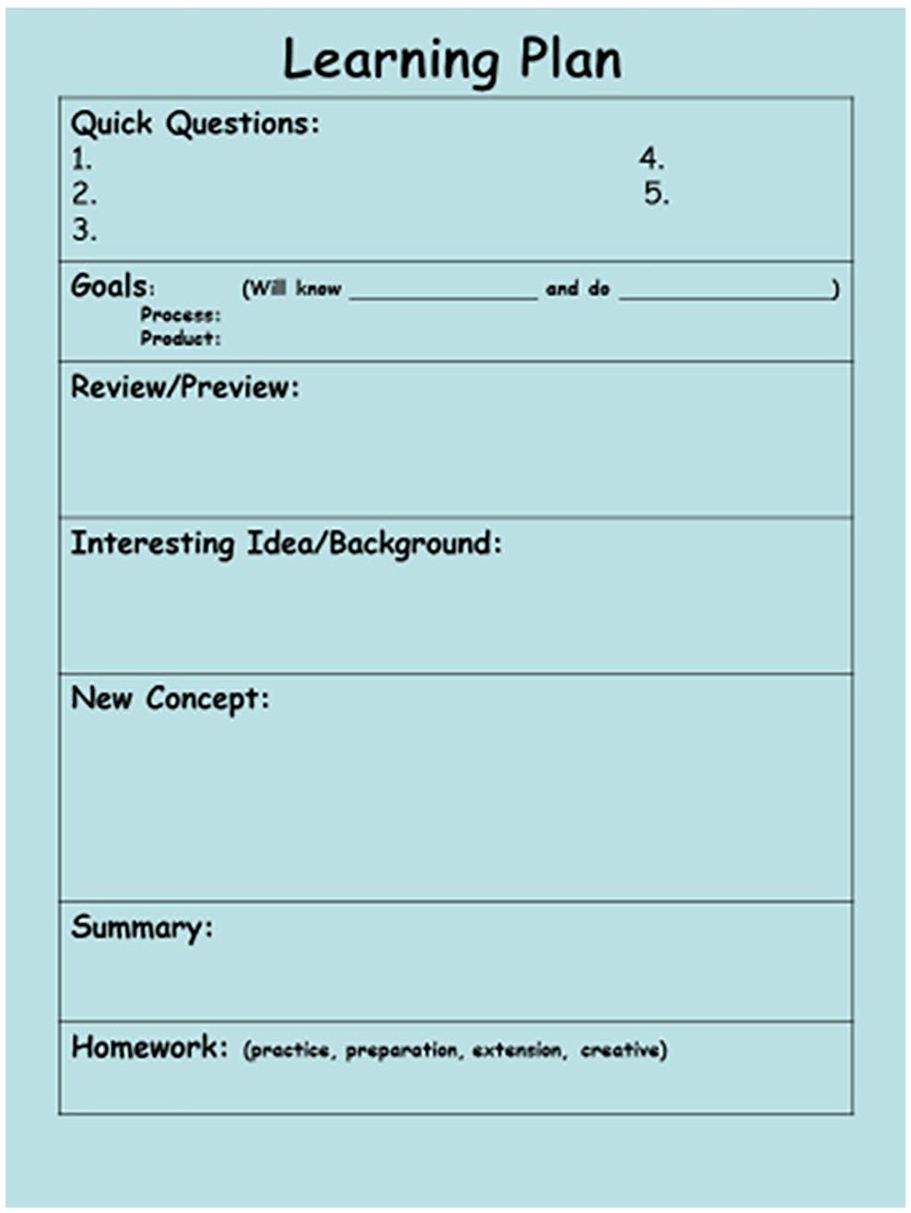
Example learning plan offered to support in-class teaching.
The central aim of these early developments was to start with two or three activities each month that teachers can excel with and move on from there. Teacher development in these areas was monitored and recorded. Pictures and videos of classrooms and teacher-student interactions were taken throughout the months to view the developments of teachers and students. To assist with student assessments, AIMSWEB was used with the students across all the grades. 1 Two in-school personnel were trained by school psychologists to monitor student performance in reading, writing, and math and trained teachers to do the same.
Results from the AIMSWEB testing and psycho-educational assessments (January–March 2018) revealed that most students in the school had significant academic difficulties to very significant academic difficulties, and that many students within the school had social-emotional/developmental issues that need to be addressed. The results suggested that this First Nations school required more resources than Canada’s “typical” school. For example, on average, approximately 10% to 15% of students are identified as having the need for strategic interventions. In the First Nations school, 10% to 15% of the students were at academic grade level and 85% to 90% required strategic interventions. Although no published research exists testing the AIMSWEB’s validity in this population, or for Indigenous populations in general, a dissertation by Blanchard (2015) found that AIMSWEB correlated with state education assessments in three Ojibwe reservation schools in Minnesota. The implication of these findings was that the First Nations school required personnel who are well trained in special education and in need of substantial special education and school psychology resources to meet the needs of the students.
During May to July 2018, we developed and operationalized a Multifactorial Transactional Program and Evaluation Plan. The plan involved tracking inputs and outcomes for teachers and students regarding professional development, decolonization and Indigenization, and mental health support (see Figure 2 below). Implementation included a baseline data collection on student progress (i.e., AIMSWEB’s math, reading, and writing achievement, along with psycho-educational assessments) and teacher effectiveness (e.g., classroom designs, teaching tactics) that was replicated throughout the next 2 years.
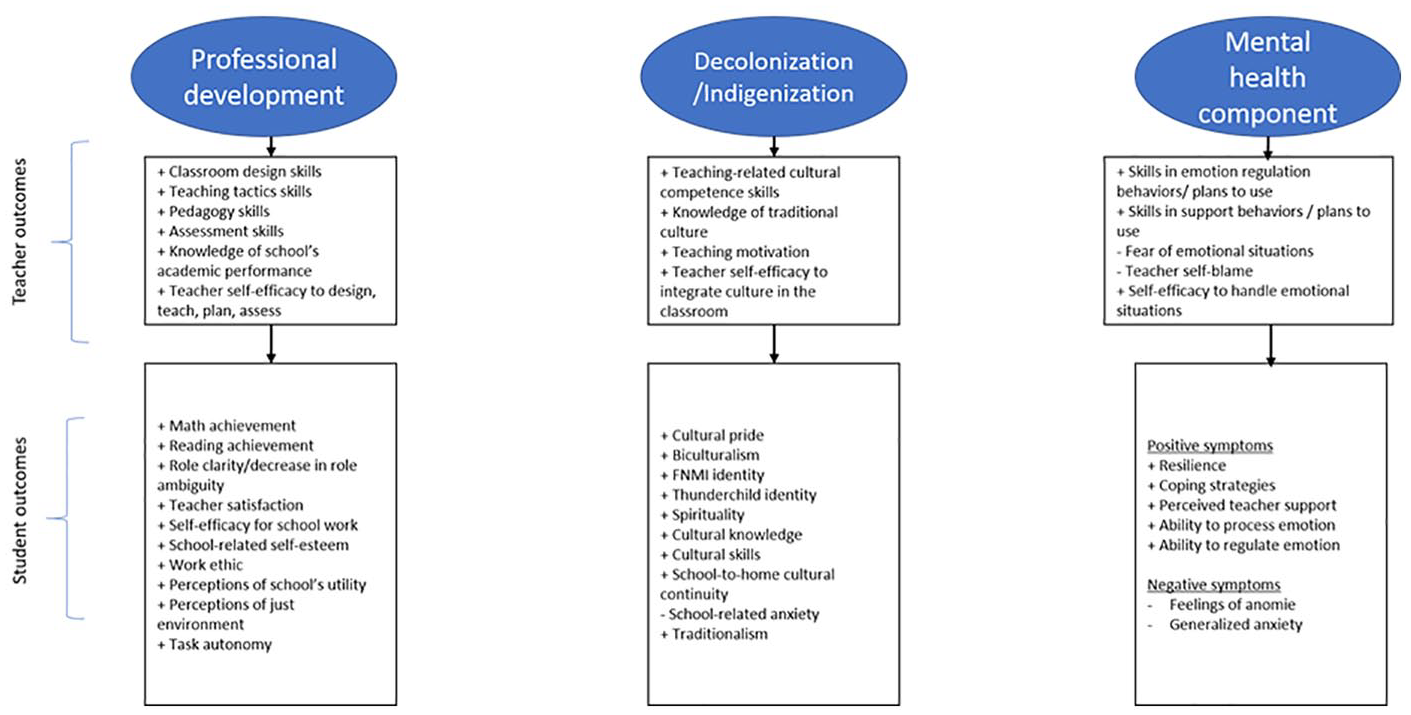
Multifactorial Transactional Program and Evaluation Plan by school-defined intervention goal and teacher and student outcomes.
To achieve the student outcomes delineated in Figure 2, the school superintendent, administrators, and consultant team distilled four areas of concentration for teachers. They were to (1) maximize student potential, (2) foster students’ self-esteem and self-worth, (3) develop students’ pro-social skills, and (4) nurture independent learners. Each area of concentration was associated with a different strategy to be included in teacher training. Matched intentionally with the concentration areas, the strategies included: (1) lesson planning and delivery, (2) relationship building and predictability, (3) organization culture and contextualizing learning, and (4) active student learning (see Figure 3 below). These strategies were considered to have the most immediate and positive impact on student learning without requiring a level of complexity that might hinder implementation. Practically speaking, they were also within the realm of the school’s control and their implementation could be scaffolded depending on teacher preparedness and ability.
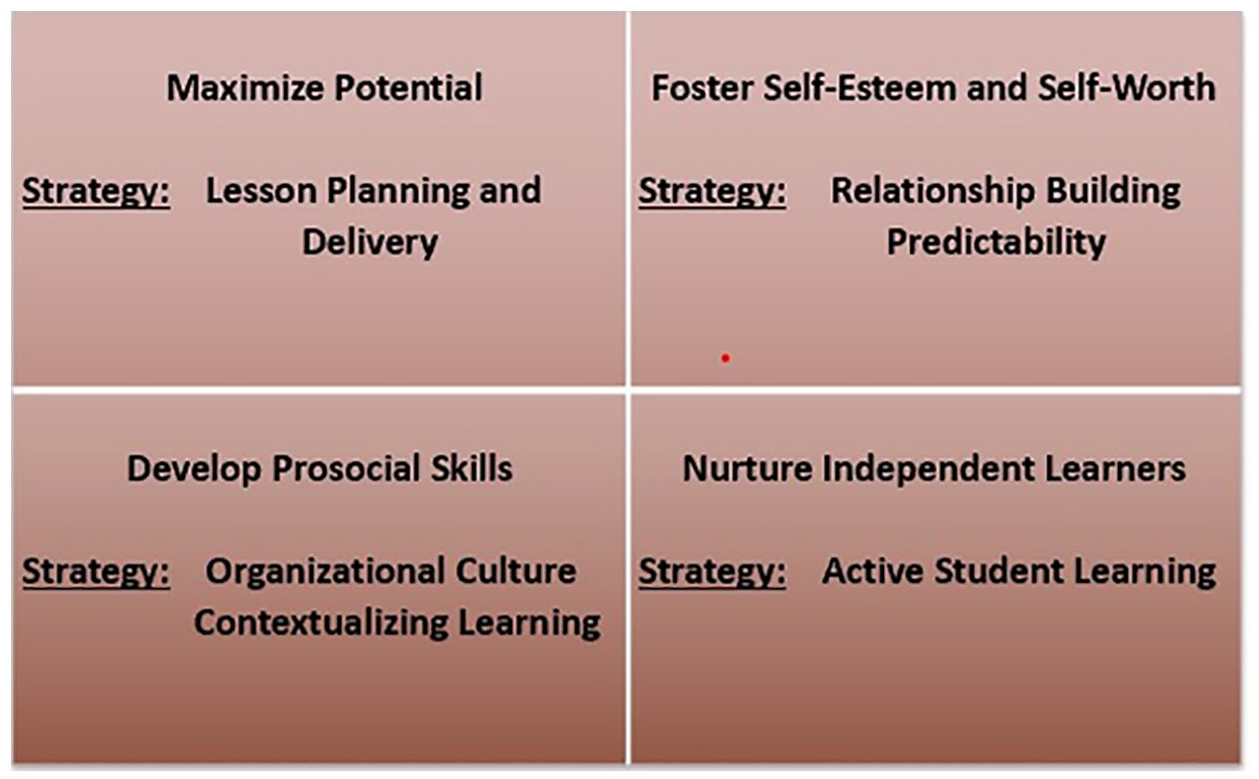
Four concentrations of teacher attention with associated strategies.
Teachers were trained in the four strategies by team members who were on-site at the school for 2 to 3 weeks of each month. Each week they would work through published tactics associated with each strategy across concentrations. In this regard, teachers were taught how to use tools that would accelerate academic growth, build self-esteem and self-confidence, enhance students’ independence as learners, improve pro-social skills, and further deepen the connection of students to their culture. Each tactic was modeled and then staff were guided, observed, and coached through the implementation of those tactics to develop their proficiency and independence. Teacher proficiency with previous materials and acquisition of new materials continued to use a sequence of MAPP: role-modeling (M), acknowledgment (A), promoting (P), and practicing (P), or “MAPPing.” That is, every classroom or interpersonal tactic was demonstrated by project staff, performed by teachers, encouraged by staff and peers, and attempted in the classroom with feedback from the project team. Although the acronym in this sense (MAPP) is not well-known, the ingredients of this sequence are well-supported in the training literature (Salas et al., 2012).
Of note, a heavy emphasis was placed on research-based lesson and unit planning protocols that enabled teachers to move through the curriculum both vertically and horizontally, “being in two places in the curriculum at once.” The overarching focus of the lesson planning was to make sure teachers were very clear about the lesson as a whole and each part of that lesson as to:
(1) What do you expect the students to know at the end of the lesson (content goal)
(2) What do you expect students to be able to do (process goal)
(3) How will you know that the content and process goals have been achieved (product goal)
There was also a significant effort made to shift learning toward the students through a wide range of active learning strategies, some of which were subject specific while others were more generalizable and focused on both core literacies and core competencies. Accountability structures and routines were put in place to support this change process, as were assessment procedures to monitor the success of the intervention. In addition, “just in time” needs and opportunities that arose as the project progressed were also addressed.
Second to Third Year of the Project: 2018–2019
From August 2018 to May 2019, work continued to layer on complexity and sophistication in teacher practice. However, this period was also productive in developing culturally specific curriculum, implementing psycho-social-cultural assessments, and providing teacher-specific resources for mental health.
A central community strength was the Band’s Indigenous language and culture. As such, a significant development in this project was the articulation of the school’s vision and mission in Indigenous terms. With support from project members, teachers in the school developed the school’s vision and mission in accordance with PISIM (see Figure 4). The word PISIM, which, in Cree, means “sun,” serves as an acronym for five principles associated with Band membership. The five principles are Pimatsiwin (celebrating life), Ispihteyitamowin (understanding prayer), Sahkitowin (loving self and others), Instotamowin (acting with an understanding of holism), and Manacitowin (respect for all creation). According to the teachings of this community, the sun is significant in that the Cree people came into being when “the creator” took an ember from the sun and put it into their hearts. The PISIM framework derived directly from the culture of community members on school staff, embodies the core beliefs of the school and of the community, and serves to guide the behavior of everyone in the school, as well as the school’s interactions with the larger community. It is also an anchor point for Indigenizing the curriculum and providing a relatable prism through which staff, teachers, and students can exist together healthily and amicably. Hence, it was developed and utilized as a way for teachers and students to be able to continually refer to and consider the expectations and responsibilities of their social behavior and incorporate indigenous culture within their school (Mcintosh, 2014).
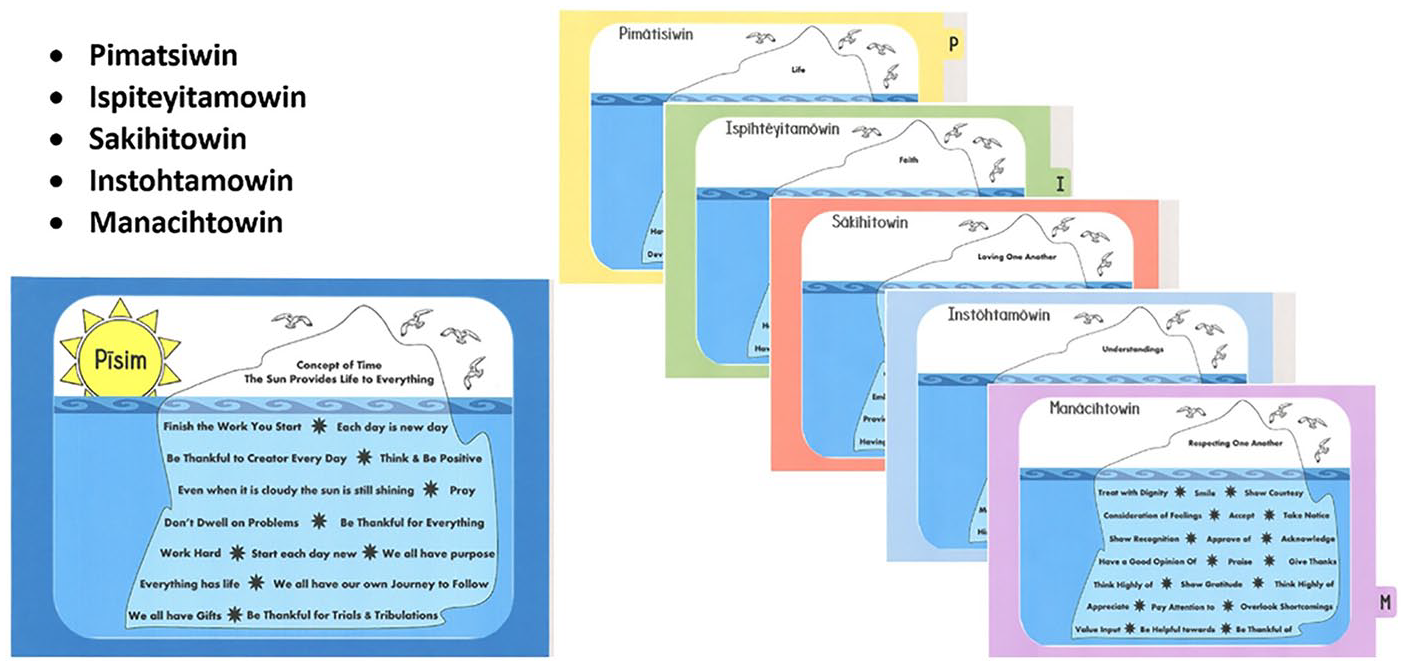
PISIM model of Indigenous education.
Building off the PISIM model, one of our project team members met with staff and Elders from the school’s Indigenous community to operationalize each of PISIM’s components. Most schools approach Indigenizing work through content alone, but our approach was focused on challenging the pedagogies and infusing local knowledge into everyday teaching. Accordingly, methods of teaching PISIM integrated the “MAPPing” process of role-modeling, acknowledging, promoting, and practicing helping teachers reinforce the values through concrete action (see Figure 5). These cultural-based resources were taught in professional development seminars alongside workshops to aid math and literacy teaching.
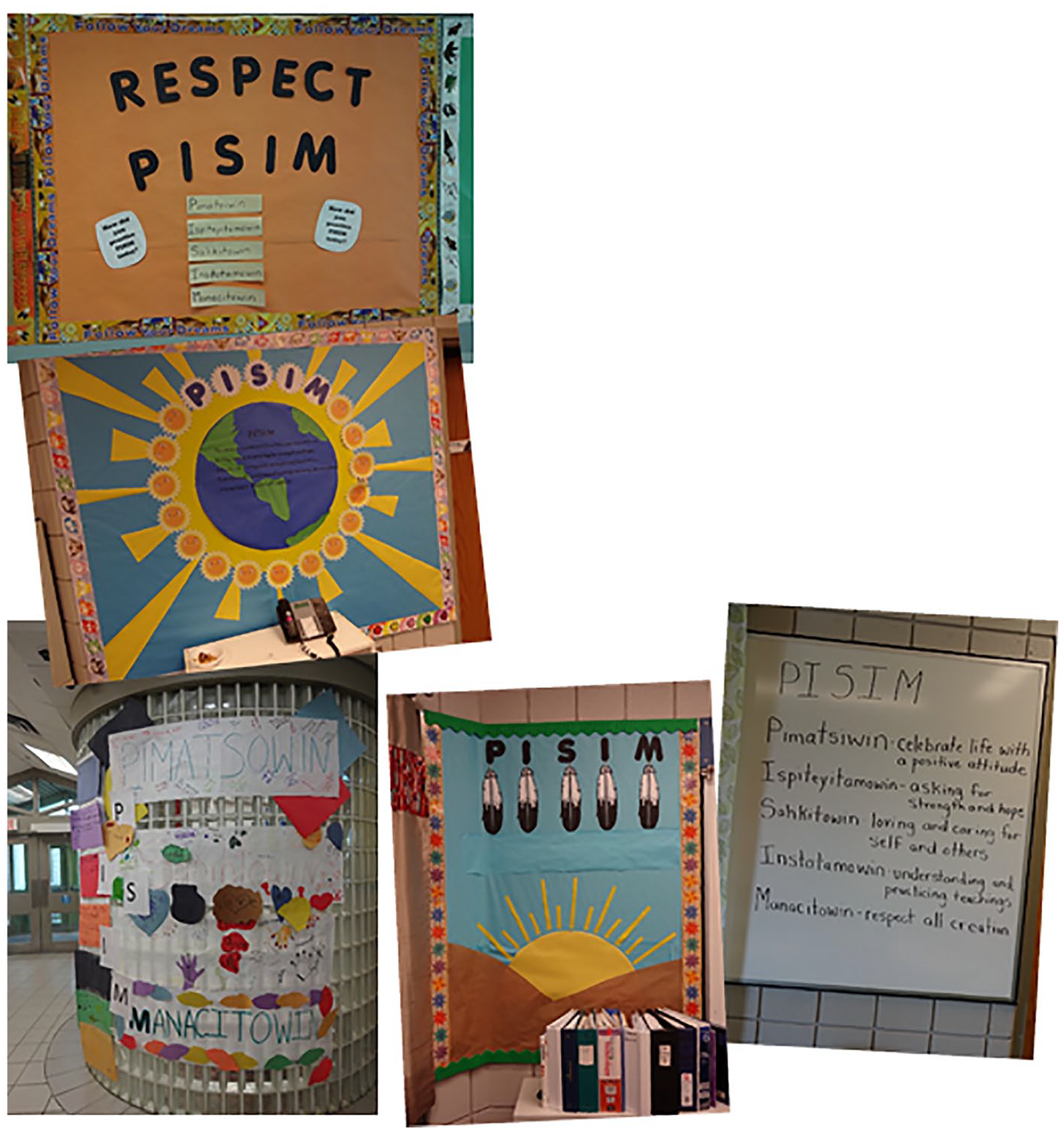
PISIM principles, MAPP Approach, EFSS.
Within 2018–2019, a snapshot of student performance was taken, and the results suggested that, overall, the changes made to teacher practice had been successful in arresting the slide in student performance. In over 75% of the classes, the achievement gap that had been created over the years was starting to close. The data also indicated was that there was a direct correlation between teacher buy-in (measured by in-class observations) and student performance. In other words, those teachers who became early adopters of this pedagogical approach were able to achieve the greatest rate of growth with their students in the shortest period.
As this project moved into its third and final year, the focus was on sustainability and enabling this model to stand on its own without outside intervention. Therefore, while the development of teacher practice will continue, it will be the staff from within the school who will take on a large part of the training and coaching. In this regard, project staff began focusing its efforts on training school coaches as well as helping put into place various distributed leadership structures such as professional learning communities to facilitate this process of sustainability. Onboarding practices for new staff were revised in alignment with the schools’ goals, as teacher attrition was expected and frequent. Similarly, the use of technology and formative and summative assessments became pivotal for gauging the effectiveness of educational interventions in real-time during this second to third year.
In mid-2018, our school and organizational psychologists created a list of constructs that were of interest to our interventions and student population, but that were neglected in our math and literacy assessments. Following the brainstorming session, the second author collected dozens of validated quantitative scales to assess student perspectives relative to their dispositions (e.g., work ethic, Miller et al., 2001), culture (e.g., Snowshoe et al., 2015), home (e.g., Powers et al., 2003), and school (e.g., Patrick et al., 2007). Data was collected school-wide at the beginning of the school year in Fall 2018 and then again in 2019.
Surveys indicated that, overall, the majority of students endorsed a strong work ethic (86%), felt they were graded fairly (75%) and that school prepares them for life afterschool at least most of the time (61%). Students identified with their First Nation community (78%), experienced personal and family use of sacred plants and participated in cultural ceremonies (69%–97%), and felt that there was home-to-school continuity sometimes or very much (61%). Students anticipated being successful in both First Nations and White/Anglo ways of life (54%; i.e., bi-Culturalism), felt that there was at least one form of home to school collaboration (92%), provided correct definitions of the core principles of PISIM (72%–95%), agreed that they are able to process their emotions (68%), and agreed or strongly agreed that their teachers support them practically (97%) and treated them with respect (86%).
Areas/constructs where responses indicated that students had more disagreement were with respect to role clarity, their personal resilience, and school-based anxiety, powerlessness, meaninglessness, and whether their teachers supported them emotionally. Specially, smaller percentages of students felt like they understood what was expected of them (24%) or that they were resilient (20%). Conversely, students reported significant school-based anxiety (69% reporting school-based anxiety at least every month), and, tragically, about a third of students report feeling powerlessness most of the time (31%) while half reported a sense of meaninglessness all or most of the time (50%). To add to this unpleasant situation, only about 2/5th’s perceived their teachers as supportive emotionally (44%).
In 2019, we conducted a follow-up to these assessments. Student attrition and absenteeism meant repeated measures tests lacked sample size and power. For example, although 114 students completed at least one of three surveys in 2018 and 119 in 2019, only 21 to 30 completed the same survey both years. Between-subjects tests increased the sample size for comparisons of 2018 to 2019, but the students who completed the surveys were different, so it was better thought of as two cross-sectional data collections. Despite the challenges, we ran analyses to compare change over time as well between cohorts. There were no significant between-subject mean differences between 2018 and 2019 (p < .05), and few within-subject differences, most of which were negative. Paired-sample t-tests found increases in smudge experiences (M[2018] = 2.76 v. M[2019] = 3.23) and resilience (M[2018] = 2.84 v. M[2019] = 3.21), and decreases in work ethic (M[2018] = 4.28 v. M[2019] = 3.93), First Nations identity (M[2018] = 3.95 v. M[2019] = 3.74), emotional processing (M[2018] = 3.65 v. M[2019] = 3.30), and perceived teachers’ emotional support (M[2018] = 3.42 v. M[2019] = 3.10). A major limitation in this assessment is being unable to control for attendance, enrollment in classrooms with high teacher compliance, or some other proxy for exposure to our intervention.
Teachers feel the brunt of students’ emotional and behavioral issues; however, few teacher education programs include training on how to handle them. Following the AIMSWEB assessment, teachers identified 32 children and youth within the school (approximately 20% of the school population) who were thought to have significant learning and development issues. School psychologists associated with the project conducted psycho-educational assessments of the 32 children and youth and subsequently responded by introducing resources for these children and youth and their teachers, including integrated instructional and social-emotional support interventions for the classrooms.
For other emotional-behavioral issues, the school requested teacher training specific to responding to the mental health needs of students (and sometimes their family members). Teacher training programs for mental health are generally lacking, or requiring substantial training, hence, we adopted a framework developed by Dr. Adele Lafrance, referred to as Emotionally Focused School Support (EFSS; Mission Empowerment, 2022). EFSS is a shortened and adapted version of Emotionally Focused Family Therapy (Robinson et al., 2015, 2016; Strahan et al., 2017) designed with teachers in mind, who often do not have the time or opportunity to undergo additional mental health training (see Figure 5).
EFSS involves a two-step process that asks teachers to validate their students’ emotions through acknowledgment and empathy with their experience, followed by actions to support their emotional or practical needs. EFSS can be learned quickly and practiced immediately (Robinson, personal communication, 2018) and it aligned nicely with several teacher practices that are effective with Indigenous students (e.g., being a listener, kind, real, and understanding the students; Sorkness & Kelting-Gibson, 2006), Indigenous perspectives on good counseling practice (e.g., finding balance in emotional expression; McCormick, 1996), and Indigenous scholarship about how to engage with one another cross-culturally, i.e., in an way attempts to avoid harm and establish ethical relationships (Ermine, 2007).
Trainings on EFSS was delivered on a re-occurring basis, supplemented with other easy-to-learn techniques for relaxation, mindfulness, problem-based coping, and suicide prevention (i.e., QPR, see Aldrich et al., 2018). Post training evaluations showed that the training content was effective in raising confidence to deal with one’s own negative emotions and reducing anxiety around interactions that involve difficult student emotions, but the effect only held with Indigenous teachers. Qualitative results were generally positive, with many teachers reporting that they enjoyed the trainings and learned something useful, however there were some requests that the program be more inclusive of traditional Indigenous methods of responding to emotional-behavioral issues. It should be stated that trainings did not stand alone but were alongside other local culturally based reforms (e.g., daily smudge; viewing children as gifts) expected to have positive mental health impacts.
Third Year to End of Project: 2019–2020
The collaborative team made significant progress in helping teachers and students develop their capacity to better manage mental health complexities (e.g., teacher training relative to EFSS and student resilience, powerlessness, meaninglessness) and instill pride relative to their culture (e.g., PISIM). The intervention substantially improved the skills and capacities of teachers to (1) deliver “best practices” instruction that incorporates First Nation Ways of Learning, Knowing and Doing, (2) incorporate a cultural perspective toward the children and youth’s mastery of the learning material, and (3) maximize the literacy, numeracy, and communication learning and development of children and youth. Across each objective, meta-learning was emphasized for long-term achievement. For example, slogans devised within teacher trainings from our collaborative team included “learn to read and then be able to read to learn,” “learn math so they can eventually use math to further learn,” and “learn to write and speak so they can speak and write to empower themselves and use the language to further learn.”
Moreover, we (4) identified and developed measures to monitor and focus instruction in all the areas relative to the project goals (i.e., academic measures of reading, writing, math, instructional and student behavior measures to monitor the development of effective teaching and successful student work ethic, learning and behavior, cultural measures relative to student First Nation identity, smudging frequency, cultural continuity between home and school, and mental health measures relative resilience, emotional processing, interactional justice, school-based anxiety, feelings of powerlessness and meaninglessness); (5) instituted a daily and weekly timetable in order to maximize the instructional time of students that did not exist before our involvement; and (6) developed timetabling for increased reading instruction and utilized two specialized reading programs (REWARDS, Reading Vistas). Due to the heightened awareness brought on by in-class observations, (7) there is now one teacher for every four students and resources reallocated to maximize student achievement.
For the first time, (8) the yearly calendar has been set to substantially increase the number of instructional days, from a previous 130 days of instruction to currently 160 days of instruction, more in line with schools off-reserve (~180). Teacher teams (9) were redesigned so that 3 out of 4 Monday afternoons are scheduled to provide teacher/instructional support and training, (10) instructional support was rescheduled to ensure there was a project based instructional leader in the school 3 weeks of each month, and (11) support relative to cultural integration and mental health were extended from once a quarter to 2 times a month. Finally, (12) we lengthened the school days for elementary and junior high school students from 700 to 850 hours, increased the school days for high school students from 800 to 1000 days, and maximized instruction by 200 hours for elementary, junior high, and high school students.
Significance to School Psychology
Our work in the First Nations community and school over the past few years has highlighted the need for school psychology and education to work together to support the learning and development of children and youth and their families as well as the learning and development of teachers. Indigenous education has come a long way and needs to continue along the path of better understanding, appreciating, respecting, and addressing the learning and associated cultural needs of Indigenous children and youth and their families. Our shared work requires a move from our past preoccupation with assessment and placement toward a better integration of effective teaching and learning practices, inclusive of First Nation ways of Knowing and Doing. School psychologists can have very meaningful and impactful role with this pathway.
School psychologists who work with First Nation children, youth, and families need to be willing and able to cooperate and help where we can by sharing ideas and recognizing the valuable contributions of the children, youth, and families in their academic and social learning and development. Due to our training and skill set we are in a very good position to work toward social change, to be culturally responsive, help provide those in need with access to resources, advocate for social justice, facilitate empowerment by continually self-examining our knowledge and understanding of the people for whom we provide service.
Through working together, we can increase understanding and the ability of teachers and students to excel in their personal and professional journeys. As indicated in the story of our work above, we think we have been successful in taking beginning steps toward a holistic approach to on-reserve school transformation: pursuing pedagogy, leadership, cultural knowledge, and mental health as paths of change.
Conclusion
In conclusion, we witnessed a very significant development in teacher motivation and skill over the time of the project which was partly evidenced by the relatively high return of teachers to the school compared to previous years. Importantly, we learned that an important need for sustaining improvements in First Nation education is capacity building including the retention of personnel, reinforcement of lessons learned, celebration of successes, and continual cultural awareness and sensitivity. We saw significant changes in the teachers’ lesson plans and delivery; we saw significant changes in the ways teachers organize and structure their classrooms and how students are recognized for their efforts and performance in academic tasks (i.e., student good work boards) compared to previous years. We saw that the initiatives positively impacted teachers’ instructional effectiveness and accomplishment, students’ learning and achievement, students’ sense of self-identity, self-efficacy, resilience, and sense of purpose, and overall school improvement. Simultaneously, these initiatives countered some of the impacts of colonization and oppression through reinforcing cultural aspects of the community school-wide with respect to teaching language, involvement of Elders, values, and ideology, and focus on positive student identity development and empowerment.
In the end, we believe there can be/should be future collaborative work and future research for on-reserve school transformation based on our experience with this project. Two suggestions would be: (1) exploring the value of a high school program that is aimed at preparing students for immediate entry into 21st century employment opportunities like technological programing, 3D printing and other forms of work that may be conducted from their community rather than them having to transition out of their local community, and (2) developing and operationalizing a very customized teacher development program for teachers seeking opportunities at on reserve schools that provides a way for teachers to not only know what to teach but how to teach First Nation/Indigenous children and youth to obtain and satisfy their life goals.
Footnotes
Acknowledgements
We want to acknowledge the exemplary and committed service of the following people with respect to the First Nations project over the years: Dr. Dustin Louie, Margann MacGregor, Matt Oldham, George Lafond, Diane Istvanffy, Jenelle Kent, Deborah Hamilton, Dr. Erica Makarenko, Alethea Heudes, Serena Seeger, Irene Oaks and the administration, teaching, and support staff of the First Nations reserve school.
Authors’ Note
The information in the submitted manuscript has not been published elsewhere and is not currently being considered for publication. All ethical guidelines were followed as required.
Declaration of Conflicting Interests
The author(s) declared no potential conflicts of interest with respect to the research, authorship, and/or publication of this article.
Funding
The author(s) received no financial support for the research, authorship, and/or publication of this article.
