




Abstract
Research extensively highlights the importance of social-emotional skills in learning and development. In this study, we evaluated whether social and emotional variables directly impact students’ perceived cognitive competence and academic performance through a structural equation model. Survey responses (N = 29,384) were collected from 114 K-12 schools in a large school district in Alberta. Results showed that cognitive competence was directly predicted by social cognition and social competence but indirectly by emotional competence through the mediating effect of social competence. Academic performance was also directly predicted by social cognition. Cognitive competence was positively associated with academic emotions, while academic performance was negatively associated with them. Overall, our findings suggest that learning is a highly social process, and investing in the development of social-emotional skills must be a priority, with a primary focus on creating positive and supportive learning environments. Future research may adjust this model and target more specific social-emotional variables.
Keywords
Social and emotional skills, such as engagement, collaboration, resilience, and motivation, are essential for students’ academic and future success (Lee & Shute, 2009). Many scholars have pointed out the importance of these skills for students to function in today’s knowledge-based societies effectively (e.g., Care, 2018; Geisinger, 2016; Rotherham & Willingham, 2010). In K-12 classrooms, social and emotional learning programs and interventions designed to target those skills were effective for academic success and achievement in standardized assessments and the healthy development of children (e.g., Durlak et al., 2011; Taylor et al., 2017). These studies have also demonstrated that social-emotional skills are malleable and teachable.
Our study aims to explore the relationships among students’ academic performance and their social-emotional skills, namely, social cognition, social competence, academic emotions, emotional competence, and cognitive competence. Our goal is to provide preliminary empirical evidence regarding the complex relationships among these variables and discuss the importance of teaching those skills in educational institutions.
Cognition and Learning
Aspects of cognition, such as reasoning, attention, memory, problem-solving, and language, have been most heavily focused on in schools and educational research (e.g. Glaser, 1991; Greeno et al., 1996; Salomon, 1997). The relationship between cognitive skills and academic performance and achievement was investigated in numerous studies. For example, DiPerna et al. (2002) showed that cognitive skills like reading, writing, and critical thinking were significant predictors of students’ academic achievement, and Peng and Kievit (2020) found that academic skills and cognitive competencies predicted each other in development. Furthermore, children who were stronger in executive functioning tasks achieved higher academic performance (Nesayan et al., 2019).
Social cognition, defined as the way students process and utilize information in social contexts, is an integral part of learning (Vygotsky, 1962). Social settings such as a classroom environment allow students to interact and collaborate with each other. Several studies have shown that these environments enhance students’ learning and cognition. For example, Schunk (1989), Csibra and Gergely (2006), and Powell and Kalina (2009) have studied the various cognitive and psychological processes that enable individuals to take advantage of being part of a social group and, in turn, how that social learning impacts their cognition. These studies have emphasized the importance of social cognition for students’ learning and academic achievement. From these studies, it was evident that there is a positive relationship between individual constructs, for example, self-efficacy (Schunk, 1989) and cognitive constructivism (Piaget, 1953; Powell & Kalina, 2009) and social learning skills, and thus overall performance and achievement.
While aspects of cognition are foundational for a student’s learning and achievement, these skills alone are not enough to guarantee academic and social success. Researchers and educators have long known that cognitive skills are both profoundly affected by and nested within the processes of emotion (Immordino-Yang & Damasio, 2007) and other affective variables such as engagement and motivation (Kyllonen, 2016; Kyllonen et al., 2014).
Social-Emotional Skills of Learning and Development
Cultivating life-long learning habits in students to acquire new knowledge and skills involves more than focusing on cognitive skills. Life-long learning habits develop within a context of social and emotional interactions, for example, a safe and supportive context of student-to-teacher relationships (Pianta, 1999). In 2003, the United Nations Educational, Scientific and Cultural Organization (UNESCO) spearheaded a global effort to promote the growing empirical research that supports social and emotional variables in academic learning endeavors (Elias, 2003; Durlak et al., 2011, 2015; Greenberg et al., 2003; Hoffman, 2009; Pellegrino & Hilton, 2012; Zins et al., 2004). Socio-emotional skills like engagement, empowerment, motivation, resilience, and cognitive skills like reading, writing, and critical thinking are important co-predictors of students’ academic achievement. In the last decade, an increasing number of studies has shown that socio-emotional skills have a profound and lasting impact on academic success (e.g., stronger school performance and more persistence during post-secondary education) and social success (e.g., better employment status and higher earnings; Kyllonen, 2016; Lee & Shute, 2009), underscoring the importance of socio-emotional variables in education.
Although highly interdependent, the nuances between social and emotional competencies should be recognized. While social competencies embrace a large set of skills that aid a child in interacting effectively and solve social problems (Dirks et al., 2007), emotional competencies are defined as the ability to understand, regulate, and express emotions (Mayer & Salovey, 1997; Saarni, 2000; Saarni & Crowley, 1990). Together, social, emotional, and cognitive skills are needed to help a child process, understand, interpret situations, and implement specific responses (Franco et al., 2017; Mostow et al., 2002). The development of social and emotional competencies helps young children feel more confident in building relationships and friendships, resolving conflicts, persisting when faced with challenges, coping with anger and frustrations, and managing emotions (Parlakian, 2003). When emotions are directly related to academic learning, they are defined as academic emotions (Pekrun et al., 2002a). Being particularly pertinent to academic settings, these emotions are important to focus on when considering students’ social and emotional well-being at school. Numerous studies have found that academic emotions have a direct positive effect on cognitive competence and academic performance (Bandura, 1982; Linnenbrink, 2007; Olafson & Ferraro, 2001; Pekrun & Linnenbrink-Garcia, 2014; Schutz & Pekrun, 2007; Wigfield et al., 2006).
Balancing Cognitive and Social-Emotional Skills
Students must be supported in developing strong social, emotional, and cognitive competencies. Children need a balanced set of cognitive, social, and emotional skills to achieve positive outcomes in school and life in general (Goldberg et al., 2019; Organisation for Economic Co-operation and Development [OECD], 2015). Having recognized that, current research focuses on the significance of social-emotional skills. Social-emotional skills are powerful competencies since they have been shown to (a) facilitate learning, (b) build emotional resilience, (c) promote prosocial behavior, and (d) instill pluralistic thinking (Asah & Singh, 2019, p. 56). Furthermore, social-emotional skills are malleable and can be enhanced through explicit instruction (Nelson et al., 2003; Payton et al., 2008). Hence, social and emotional learning (SEL) programs are developed to teach students the social and emotional skills that contribute to higher academic achievement (Brackett et al., 2012; Salovey & Sluyter, 1997; Zins et al., 2004). A meta-analysis by Durlak et al. (2011) of 207 studies examining the effects of SEL programs revealed that students enrolled in such programs performed significantly better in school and on standardized tests compared to non-participating students. In addition to academic performance, SEL participants demonstrated significantly improved social and emotional skills, attitudes, and behavior compared to controls (Durlak et al., 2011). Long-term positive effects on students’ in social-emotional performance, attitudes and wellbeing were shown with SEL interventions (Taylor et al., 2017). Economists are thus calling for a greater focus on these skills because it has been shown that the most significant returns on education investments happen through nurturing children’s non-cognitive skills, as well as their social, emotional, and behavioral skills that lead to future success (Committee for Economic Development, 2004). In fact, among the factors that have been reported to increase academic success were improved quality of interpersonal relationships between teachers and students and a decrease in problem behavior (Brackett et al., 2012; Elias et al., 1997). A balance between cognitive, social, and emotional skills is essential and can be established through instructional practice (Goldberg et al., 2019; Jones & Bouffard, 2012). However, that requires an understanding of the interplay between these skills in the learning process, which is an area that needs more exploration.
Context and Aims
While many studies have explored these variables and their impact on students’ learning, studies that analyzed all these variables simultaneously are scarce. In this study, we used a survey that measured social and emotional variables in K-12 students in western Canada, to better understand how these variables are involved in student learning and to measure students’ latent traits of social-emotional skills, which may enhance students’ academic and social success. While the survey’s main focus was the social and emotional variables, some cognitive dimensions relating to academic performance were also targeted through survey items. .
Theoretical Model
Guided by our literature review, we developed a theoretical model that connects the social, emotional, and cognitive variables of the newly developed socio-emotional learning scale, Student Voice Survey, as shown in Figure 1. The social part was composed of two variables: social cognition and social competence; the emotional part was composed of two variables: academic emotions and emotional competence; and the cognitive part was composed of two variables: cognitive competence and academic performance. In this study, our purpose was to gather preliminary empirical evidence for the theorized SEM model using the newly developed socio-emotional learning scale.
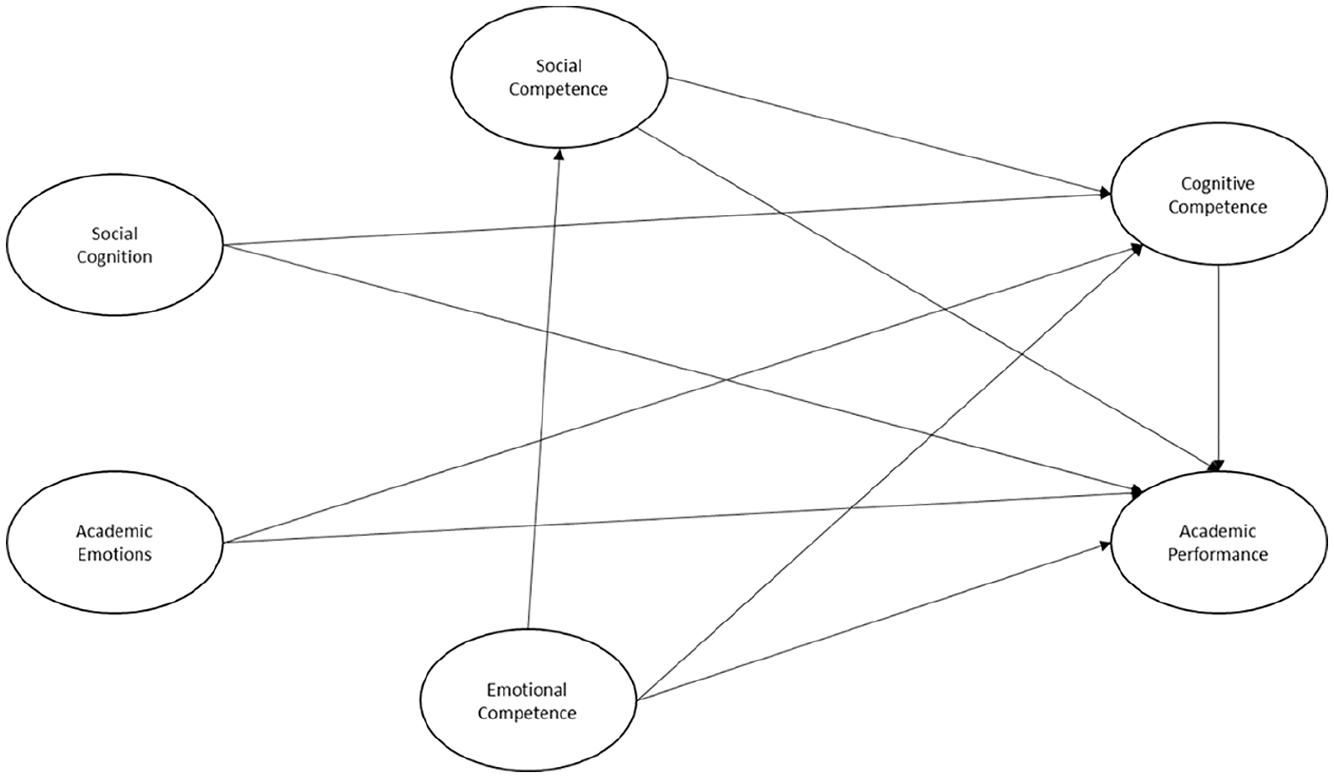
Predicted model and connections.
Our goal was to better understand the interrelations between cognitive, social, and emotional aspects of students’ learning and the effect of social and emotional variables on students’ perceived cognition and academic performance. We assumed that perceived social variables (i.e., social cognition and social competence) and emotional variables (i.e., emotional competence and academic emotions) of learning impact students’ perceived cognitive competence and academic performance in schools. Based on the literature and previous empirical findings, our hypotheses were as follows:
Method
Sample and Procedure
The research ethics approval was obtained before the start of the data collection. A pilot study focusing on the development and psychometric properties of the survey was followed by the main study in which the revised survey was administered to a large group of students. Data for the main study were collected through an online survey administered via Google Forms between October and December of 2019 in 114 schools. The sample included 29,384 elementary (40.1%) and secondary (59.9%) school students studying in the western region of Canada. Of those students, 67% were born in Canada. The sample included 13.2% fourth-graders, 13.5% fifth-graders, 13.4% sixth-graders, 13% seventh graders, 12.3% eighth graders, 10.7% ninth-graders, 8.6% tenth graders, 7.7% eleventh graders, and 7.6% twelfth graders. Of these recruited students, 48.3% identified themselves as male, whereas 47.7% identified themselves as female.
Measures
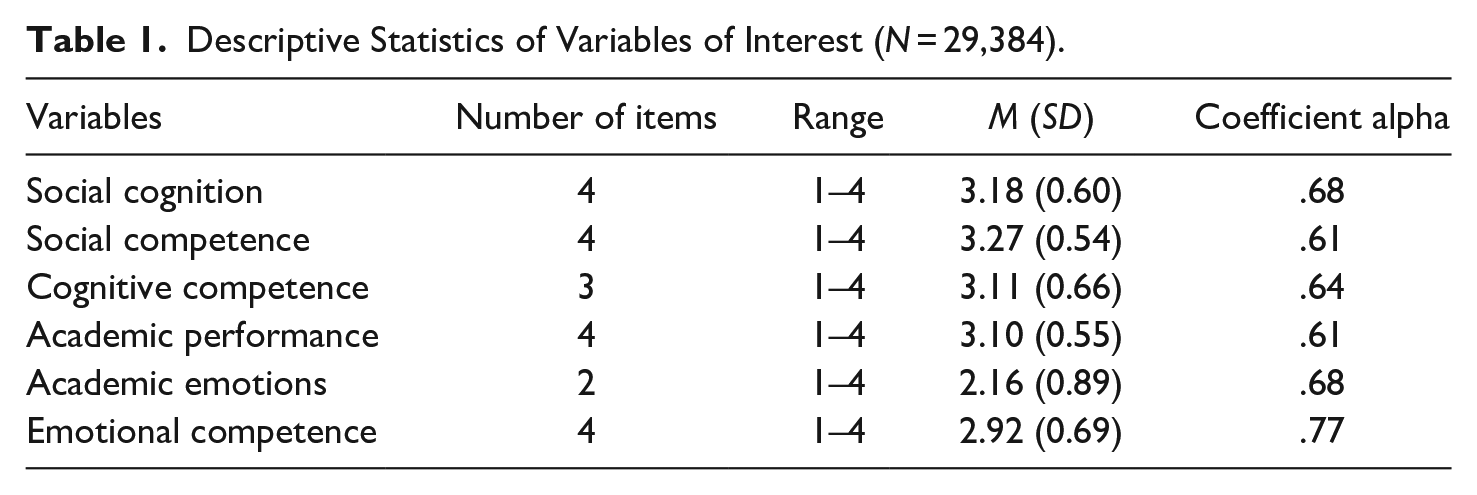
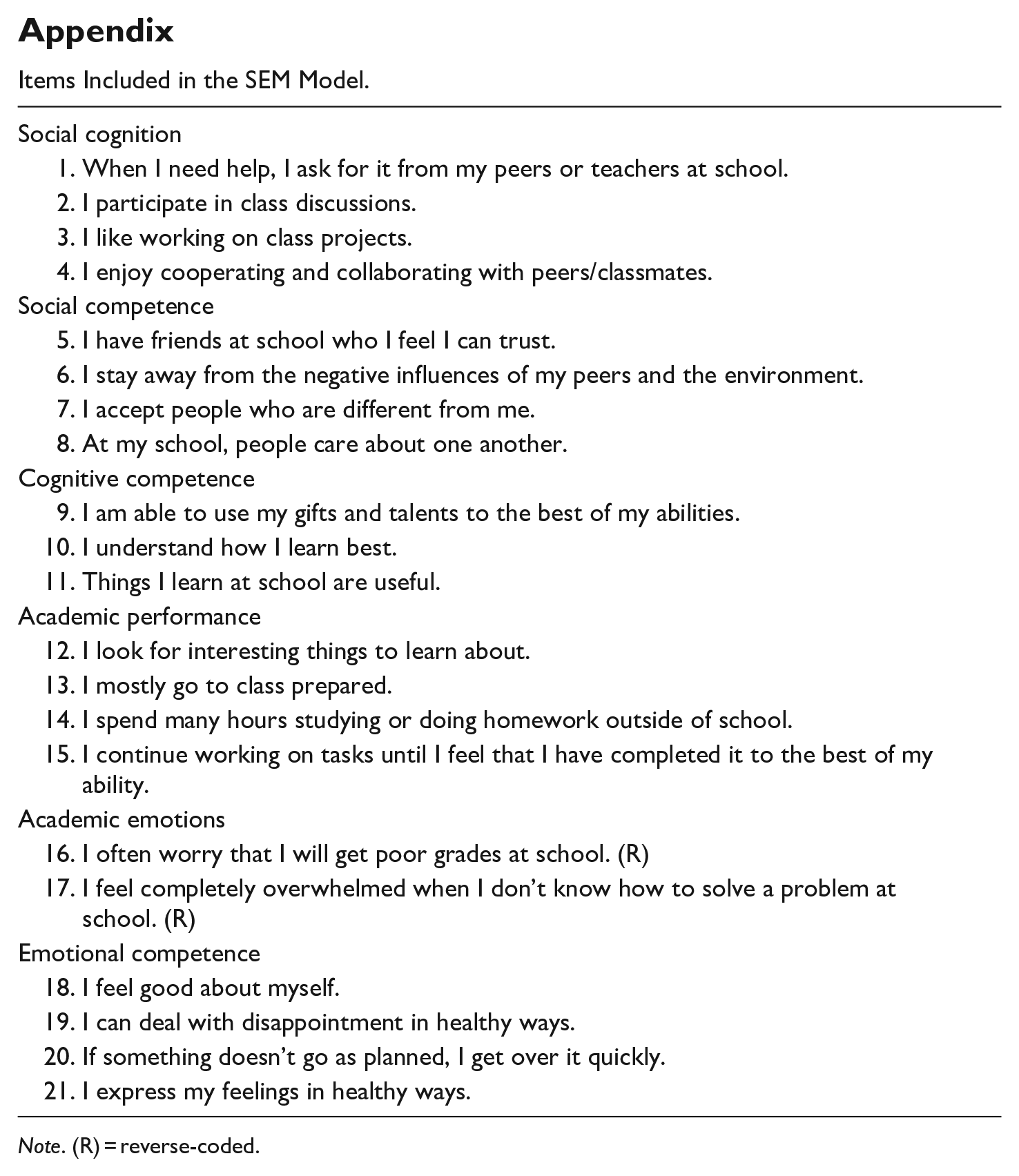
The descriptive statistics of variables of interest are given in Table 1, and the correlations among variables of interest are shown in Table 2. The social-emotional skills scales and items are provided in Appendix. All items followed a 4-point Likert scale ranging from 1 = strongly disagree to 4 = strongly agree. Higher scores indicated students self-declared more of each variable.
Descriptive Statistics of Variables of Interest (N = 29,384).
Correlations Between the Variables of Interest (N = 29,384).
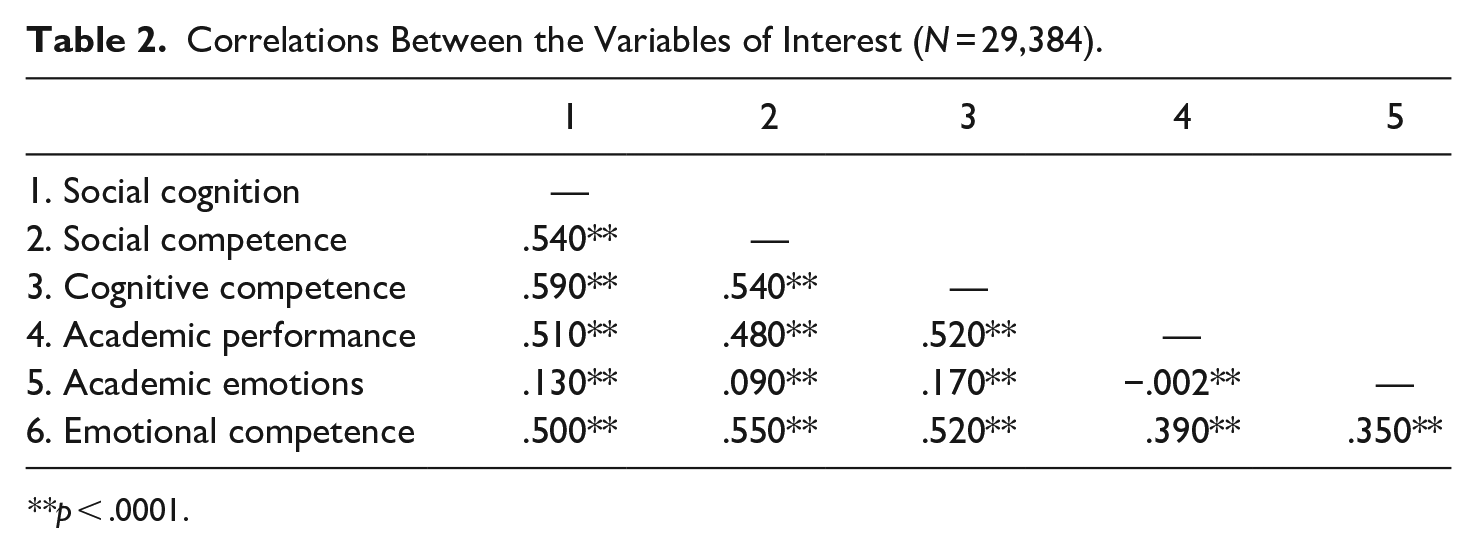
p < .0001.
Social cognition
We define social cognition as the process and knowledge involving social interactions (Flavell & Miller, 1998), in this case, interactions between students in the classroom (e.g., collaboration). This latent variable is represented by items 1 to 4 (α = .68), as shown in Appendix. These items focus on participation, group work and collaboration between students.
Social competence
We define social competence as social adeptness and the ability to handle social interactions effectively (Dirks et al., 2007). This measure included items 5 to 8 (α = .61; Appendix). Through these items, students reflected on their ability to identify and maintain caring and trusting relationships, and to avoid the negative social impacts around them.
Cognitive competence
We define cognitive competence as the ability to use cognitive skills to adapt to particular situations (Salthouse, 1990), in this case, for learning purposes. This measure included items 9 to 11 (α = .64; Appendix). The items here are focused on students’ cognitive abilities in the learning process and their self-awareness.
Academic performance
We define academic performance as a student’s academic-related endeavors that determine academic outcomes and success. The academic performance category included scale items 12 to 15 (α = .61; Appendix). These items focus on engagement in learning, willingness to learn, and the amount of effort put toward academic endeavors (e.g., studying, doing homework, and completing learning tasks).
Academic emotions
We define academic emotions as feelings directly related to academic learning and achievement (Pekrun et al., 2002a). In this study, this scale primarily represented emotions of worry and anxiety and included two items (items 16 and 17; Appendix) that were reversed-scored (α = .68).
Emotional competence
We define emotional competence as understanding, expressing, and regulating emotions effectively (Mayer & Salovey, 1997). While resilience is also viewed as a social variable, resilience is represented in the survey items included within the emotional competence category in this study. This category included items 18 to 21 (Appendix; α = .77) which focus on the healthy expression and regulation of emotions.
Analysis
To determine our final instruments, we randomly divided the final sample into two subsets and ran exploratory factor analysis (EFA) and confirmatory factor analysis (CFA). By EFA and CFA analyses, we evaluated the dimensionality of the scales and the contribution of items to each scale. The items with factor loadings larger than 0.3 were retained in the final scale. The EFA and CFA results are given in Table 3. Based on the EFA and CFA results, we removed one item from the Social Cognition scale and one item from the Emotional Competence scale. The EFA and CFA were conducted in R (R Core Team, 2021).
Standardized Factor Loadings From the EFA and CFA Models for the SEL Measures.
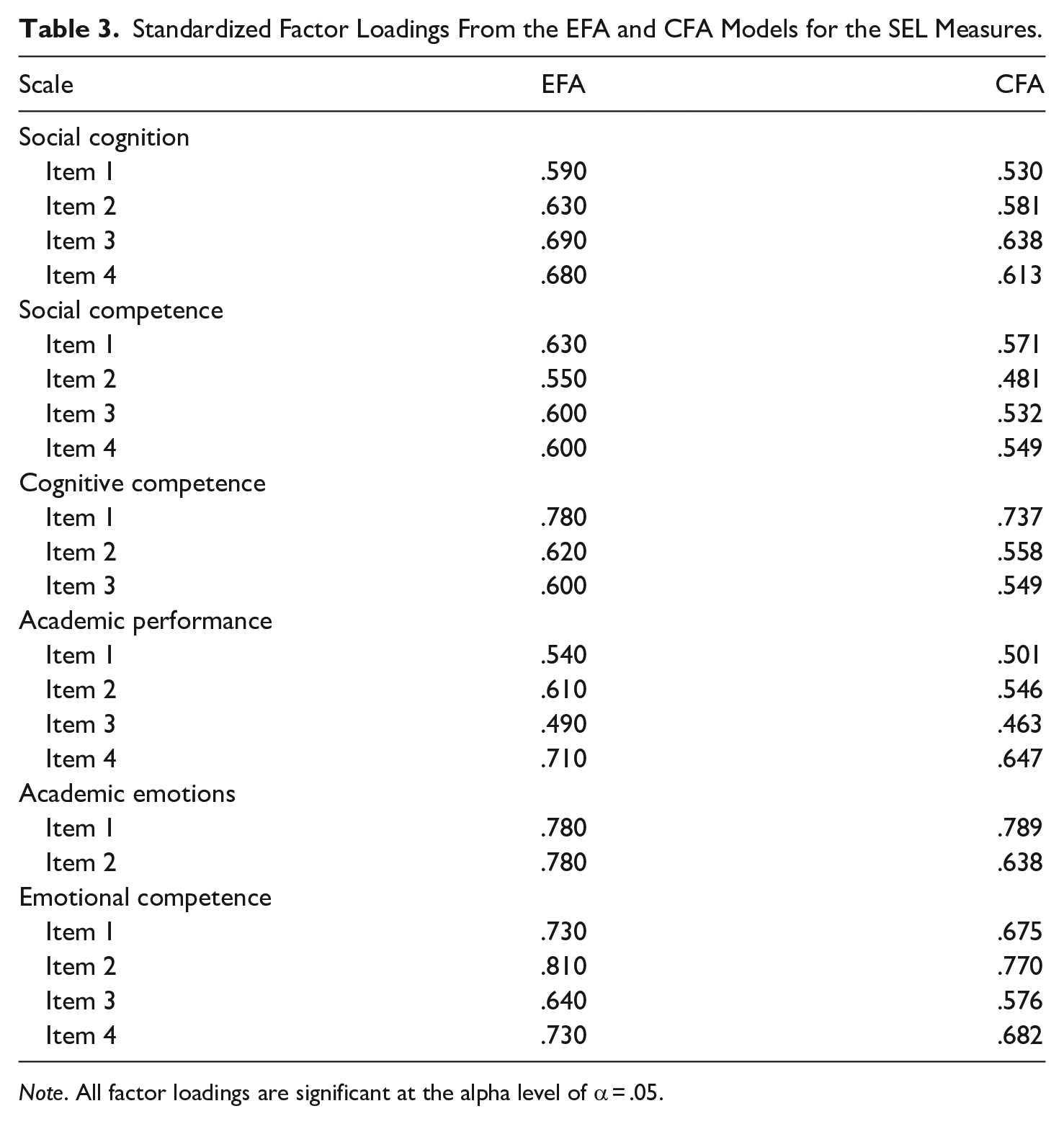
Note. All factor loadings are significant at the alpha level of α = .05.
The hypothesized model was tested using SEM, and the analyses were computed in Mplus 7.2 (Muthén & Muthén, 1998–2012). There was no missing data. The overall fit of the model was evaluated with the chi-square (χ2) test, root-mean-square error of approximation (RMSEA), comparative fit index (CFI), Tucker–Lewis index (TLI), and standardized root-mean-square residual (SRMR). A non-significant chi-square test is considered a good model fit. However, obtaining a non-significant chi-square test was not expected given the study’s large sample size. Also, CFI and TLI values greater than 0.90 and SRMR and RMSEA values smaller than 0.08 indicate good model fit (Kline, 1998). Since our research used newly-developed SEL measures and was exploratory so that the relationships between the variables were hypothesized based on the previous empirical evidence and literature, we also evaluated the fit of the measurement model before running the hypothesized structural model. The measurement model had acceptable fit with χ2 (174) = 6,613.814, CFI = 0.922, TLI = 0.905, and RMSEA = 0.050. The loadings of each item were also acceptable (>0.3). Therefore, we did not make any modifications to the model based on local fit indices or factor loadings.
Results
The overall fit of the model was acceptable with χ2 (174) = 13,073.469, RMSEA = 0.050, 90% confidence interval for RMSEA [0.050, 0.051], CFI = 0.921, TLI = 0.905, and SRMR = 0.036. Figure 2 shows the results for the hypothesized model with standardized path coefficients and correlations. Also, Table 4 provides standardized and unstandardized direct and indirect path coefficients for the variables in the hypothesized SEM model. The indirect effects were found by bootstrapping the mediating effects based on 2,000 resamples, as suggested by Preacher and Hayes (2008).
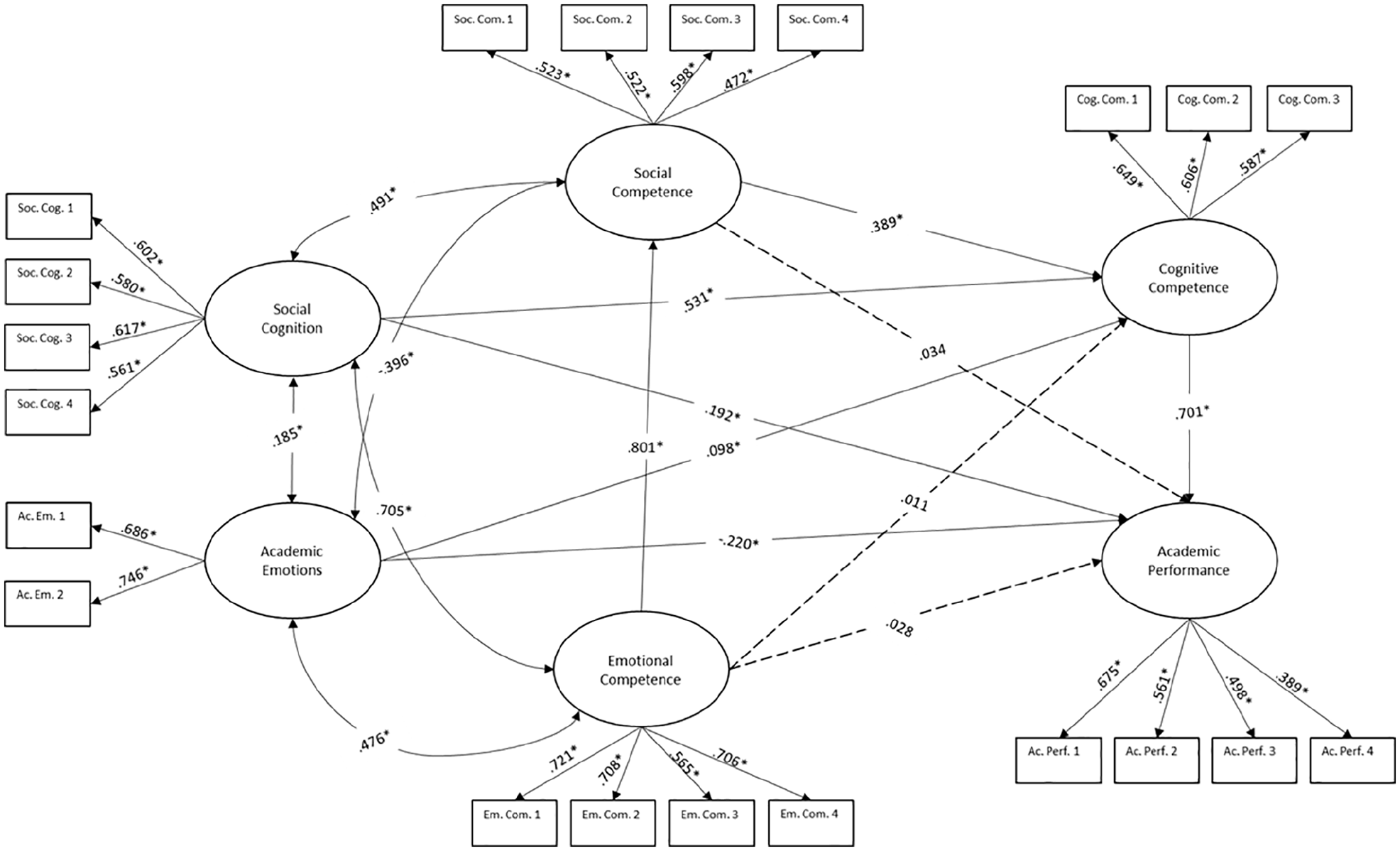
Standardized path coefficients and correlations for socio-emotional and academic well-being scales for primary and secondary school students (N = 29,384).
Standardized and Unstandardized Direct and Indirect Path Coefficients in the SEM.
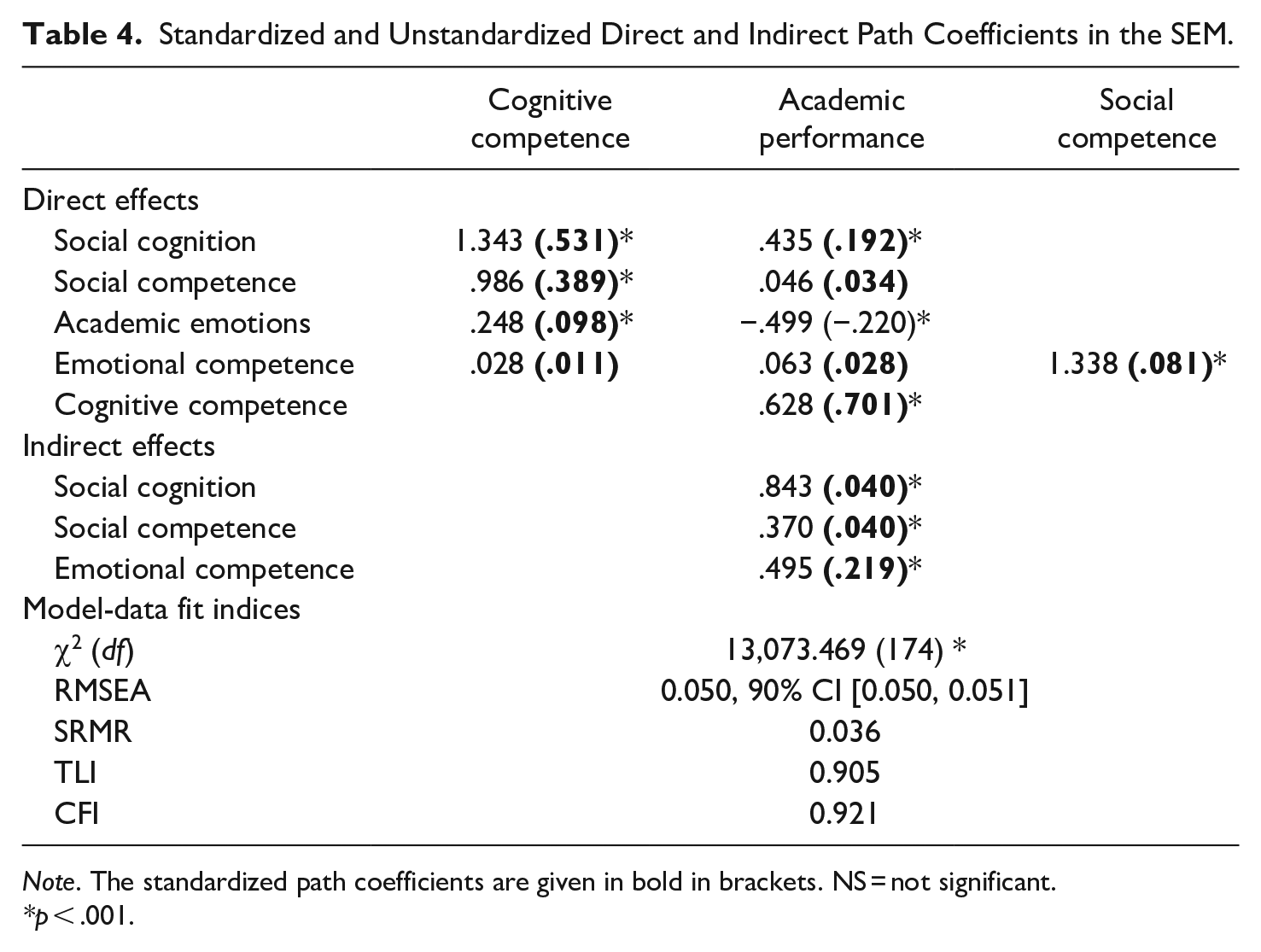
Note. The standardized path coefficients are given in bold in brackets. NS = not significant.
*p < .001.
Positive Effect of Cognitive and Social Cognitive Skills on Academic Performance
Cognitive competence was positively and significantly related to academic performance (b = 0.628, SE = 0.042, β = .701, p < .01). Furthermore, our model showed a positive and significant relationship between social cognition and cognitive competence (b = 1.343, SE = 0.073, β = .530, p < .01), and between social cognition and academic performance (b = 0.435, SE = 0.076, β = .192, p < .01). The indirect effect from social cognition to academic performance through cognitive competence was also significant (b = 0.843, SE = 0.040, β = .372, p < .01).
Cognitive Competence Mediates the Relation Between Social Competence and Academic Performance
Based on previous studies, we hypothesized a direct positive and significant relationship between social competence and cognitive competence, as well as between social competence and academic performance. However, we found that while social competence was positively and significantly related to cognitive competence (b = 0.986, SE = 0.103, β = .389, p < .01), the direct path from social competence to academic performance was not significant. Nevertheless, the indirect effect from social competence to academic performance through the mediating effect of cognitive competence was significant (b = 0.370, SE = 0.040, β = .273, p < .01). Thus, social competence relates to academic performance through a positive relation with cognitive competence.
Negative Relationship Between Academic Emotions and Academic Performance
Pekrun and Linnenbrink-Garcia (2012) defined academic emotions as affective states that can be positive or negative and activating or deactivating based on their effect on academic achievement. They are emotions involved in the classroom and related to academic learning outcomes. Our model showed that the direct effect of academic emotions on cognitive competence was positive and significant (b = 0.248, SE = 0.034, β = .098, p < .01), yet it was negative and significant on academic performance (b = −0.499, SE = 0.038, β = −.220, p < .01).
Social Competence Mediates the Pathway From Emotional Competence to Cognitive Competence and Academic Performance
We hypothesized either a direct association between emotional competence and academic performance or one that is mediated by cognitive competence. Our results indicated that the direct path from emotional competence to cognitive competence and the direct path from emotional competence to academic performance were both not significant. To better explain these results, we further investigated these connections and ran a more detailed analysis. We found that social competence served as a mediator variable between emotional competence and cognitive competence. As shown in our model, the direct path from emotional competence to social competence was significant (b = 1.338, SE = 0.031, β = .801, p < .01). This finding suggests that these social skills are predicted by students’ ability to understand, regulate, and express their own emotions. In addition, the indirect effect from emotional competence to academic performance through cognitive competence and social competence was significant, (b = 0.495, SE = 0.032, β = .219, p < .01). However, the indirect effect from emotional competence to academic performance through cognitive competence and the indirect effect from emotional competence to academic performance through social competence were not significant. So, social competence may be the variable mediating the effects of emotional competence on students’ cognition. Together, social and cognitive competencies appeared to mediate the effects of emotional competence on academic performance.
Discussion
A growing body of research emphasizes the importance of social and emotional skills in students’ cognitive development and academic success. K-12 years are among the most important years for SEL as they involve developmental periods (i.e., childhood and adolescence) when the brain is most actively changing (Immordino-Yang et al., 2019). As students transition from elementary to middle to high school, their social-emotional competencies appear to play a significant role in their brain development, academic performance, behavior, and health (Blum & Libbey, 2004; Immordino-Yang et al., 2019). Researchers also continue to highlight the economic value of social and emotional learning as educational agencies, school districts, and individual schools plan, develop, and implement interventions to improve academic achievement (e.g., Belfield et al., 2015). Schools need evidence-based programs that target students’ key competencies to develop effective interventions. Our study provides evidence for the key categories that need further development in SEL programs.
Consistent with the literature, our model verified the first hypothesis by showing a positive and significant relationship between cognitive competence and academic performance. Previous studies have extensively reported this relationship (Colom & Flores-Mendoza, 2007; Di Fabio & Palazzeschi, 2009; DiPerna et al., 2002; Downey et al., 2014; Nesayan et al., 2019; Peng & Kievit, 2020). Moreover, evidence supporting the second hypothesis about the positive and direct relationships among social cognition, cognitive competencies, and academic performance was found, in accordance with previous studies (Csibra & Gergely, 2006; Powell & Kalina, 2009; Schunk, 1989).
The results support the third hypothesis relating to the positive impact of social competence on cognitive competence and academic performance. The relationship between social competence and cognitive competence means that when students are more socially competent (i.e., are able to maintain positive relationships with others and resolve conflict), they show stronger cognitive skills such as attention, memory, and higher-order thinking. Social competence is essential for efficient learning because these skills are considered the toolkit for building positive relationships with others, which involves students engaging with each other and participating in the classroom activities while maintaining positive behavior and following classroom rules (Del Prette & Del Prette, 2005; Elijah & Madeira, 2013). Interestingly, however, we found that social competence does not directly predict academic performance. This contradicts studies that found that social competence was associated with higher academic achievement (like Dishion, 1990; Ford, 1982; Ford & Tisak, 1983; Rocha, 2016; Wentzel et al.,). On the other hand, some studies have suggested an indirect relationship between social competence and academic achievement and that cognitive competence is the mediator variable that links social skills to academic achievement (Feitosa et al., 2012; Wentzel, 1991a, 1991b). Our study is in line with these findings and suggests that students’ cognitive skills mediate the effect of social competencies on their academic performance.
The positive effect of academic emotions (e.g., happiness, enjoyment, satisfaction, and pride) and the negative effect of academic emotions (e.g., boredom, anger, anxiety, disappointment, and shame) on students’ attention, engagement, motivation, and academic achievement have been extensively reported in the literature (e.g., Bandura, 1982; Olafson & Ferraro, 2001; Pekrun et al., 2002b, 2004; Pekrun & Linnenbrink-Garcia, 2014; Schutz & Pekrun, 2007; Wigfield et al., 2006). Our findings support previous studies showing that positive academic emotions predict a higher rating of students’ cognitive skills.
Surprisingly, we found a negative association between academic emotions and academic performance. While this requires further investigation into how more positive academic emotions may lead to lower academic performance, one takeaway from this is that negative academic emotions may predict improved academic performance. Typically, students prone to negative emotions, such as anger or anxiety, perform poorly on academic tasks due to lower motivation and engagement (Linnenbrink, 2007; Wigfield et al., 2006). However, based on our results, we may speculate that students who tend to feel anxious about academic tasks or worry about getting poor grades may have a stronger desire to succeed or avoid failure and thereby build up stronger adaptive responses over time, which could enable them to perform better academically. When feelings of worry and anxiety are temporary and tolerable, they seem to be helpful to a certain extent, for instance, when completing academic-related tasks (Sadeghi Bahmani et al., 2018). Avoiding failure could be the motivator of students in this case.
The goal orientation theory (Ryan & Deci, 2000b) could also help us explain this negative association between academic emotions and academic performance. Accordingly, students may either develop mastery-related or performance-related goal orientations. Mastery goals are directed toward mastering the task for the sake of self-improvement. With this goal, students are motivated by the actual learning experiences rather than an external outcome. However, with performance-related goals, students are motivated by extrinsic rewards like grades, rankings, school awards, or praise from teachers or parents. They strive to be the best in a class or avoid low ability judgments. When the performance-related goal is further oriented toward avoiding failure and looking incompetent to others, a student is motivated by performance-avoidance goals. This is a type of negative motivation to master a skill or even to receive favorable judgement from others (Ryan & Deci, 2000a, 2000b). Our results suggest that students mostly exhibit performance-avoidance goals, or negative motivation, in which grades are prioritized as a measure of success and students are motivated to avoid receiving low grades. This could explain our model’s negative association between academic emotions and academic performance. This is a finding that SEL evidence-based programs should consider. Educational systems must shift from prioritizing achievement scores, and performance-avoidance goals, toward supporting students’ intrinsic motivation and mastery goals. Our results did not verify the fifth and last hypothesis about the positive relationship between emotional competence, cognitive competence, and academic performance. In some studies, emotional competence was found to positively predict students’ academic performance (Chew et al., 2013; Offermann et al., 2004). In others, like a study by Rhoades et al. (2011), preschool emotion knowledge was a significant predictor of academic achievement, but this relationship was mediated by attention skills, suggesting an indirect relationship through cognition (Rhoades et al., 2011). Instead, we found evidence of a mediating effect of social competence on the pathway from emotional competence to cognitive competence and academic performance. This is consistent with previous studies that found the relationship between emotional competence and academic achievement to be an indirect one that is mediated by social competence (Caprara et al., 2000; Franco et al., 2017; Rocha, 2016). It seems essential that students develop strong social aptitude and the capacity to handle social situations when interacting with peers and other people in their social environment. This is shown to primarily impact their cognition, which strongly predicts their academic outcomes.
Essentially, our results imply that learning is a highly social process and that while having strong emotional skills is necessary for a student’s functioning and well-being, these skills may not be sufficient to contribute to students’ academic success without a positive and supportive social system that promotes the development of strong social skills. This social system includes students, teachers, and other school personnel. For schools that implement SEL programs, we recommend that resources be primarily directed to building students’ social competency skills, which will, in turn, support the development of their emotional competency skills for an optimal impact on students’ cognition and academic performance.
Relevance to the Practice of School Psychology
Our findings are important to advance our theoretical understanding of human development and provide implications for school-based social-emotional learning programs. Our results underscored the complex interplay between the social-emotional skills and emphasized the need for more theoretical and empirical studies that focus on these skills simultaneously in multivariate analyses. For example, we found contradictory evidence to our hypothesized relationship between academic emotions and academic performance. This is evident that the relationship between two social-emotional skills may change when other social-emotional skills are included in the analysis. Since social-emotional skills cannot be isolated from one another and cannot be targeted individually, given that students are embedded in social environments, our results suggest that SEL programs may benefit from targeting these skills in a compound manner.
From our findings, we may infer the importance of building positive, supportive, and empowering communities within classrooms and schools overall. Students’ sense of belonging and agency are fostered within these communities, and opportunities for nurturing inner motivational resources are provided. This is essential for optimal learning and the development of cognitive, social, and emotional capacities. Furthermore, high-quality social interactions and experiences that enable teaching students the social skills that students can practice repeatedly are critical and should be the prime focus of school SEL programs. These are areas of interest for school psychologists and which they could advocate for in their professional practices.
Strengths and Limitations
Although our study employs a cross-sectional design and is exploratory in terms of proposing a hypothesized model and using newly developed SEL measures, we believe several strengths of the study should be acknowledged. Our study incorporated a very large sample size and included students from elementary and secondary school levels. Our study provided preliminary evidence concerning the interwoven relationship among socio-emotional skills, yet future studies are needed for empirical corroboration of findings across different populations and settings. Furthermore, this study involved newly developed SEL measures that targeted students in K-12 education. We piloted our SEL measures, evaluated the psychometric properties, and then retained the items contributing to the latent measures employed in this study. Finally, our study investigated the complex interplay between social-emotional skills using a multivariate approach (i.e., SEM) to unveil the associations among social-emotional skills simultaneously.
On the other hand, some limitations exist. Competencies are very diverse and involve many skills, making studies examining competencies (like cognitive, social, and emotional) very heterogeneous. For example, cognitive competence may include executive functioning, memory, and attention skills, so considering combining all those aspects in one variable would lead to less defined results. Our study did not target a specific cognitive skill, so we used the broader spectrum of cognitive competence as our variable of interest. Similarly, emotional competence includes emotional appraisal, expression, and regulation. The survey items that we used to represent this variable were targeted to different areas of emotional competence. However, a narrowed-down analysis would be required to understand the relationship between academic performance, for example, and a specific dimension of emotional competence.
Moreover, working with social and emotional competencies is particularly challenging as the skills encompassed in these categories highly overlap, making them difficult to extricate and study their relationships in theoretical modeling studies. Furthermore, the Student Voice Survey used in this study aimed to understand students’ social and emotional well-being, not their cognition and academic outcomes. As such, no achievement results were collected. Our academic performance variable was thus represented by students’ ratings on items related to studying and learning strategies. Since these strategies may or may not lead to higher academic outcomes, more specific results might be obtained on the relation between students’ cognitive, social, and emotional competencies and their academic outcomes when using their test scores or final school grades.
Finally, some scales in our model had poor psychometric properties with low reliability and high means. Our scale provides a preliminary survey that researchers can further develop to better distinguish their constructs of interest. The use of cross-sectional data limits the generalizability of the findings yet provides preliminary evidence for the complex interplay among the SEL constructs. Future research utilizing longitudinal data would help us better disentangle the mediating effects and trajectories of SEL constructs. The main aim of this survey is to inform researchers and practitioners about the different underlying constructs of SEL and the preliminary connections and implications that were found while being cognizant of the challenges around developing accurate SEL measures, all of which future studies could benefit from.
Future Directions
This study is a significant step for further in-depth investigations around the role of particular social and/or emotional skills in students’ learning. These skills may pertain to an individual category like social competence or emotional competence or are likely to be skills that overlap with both categories. Exploring these complex relationships would further expand our understanding of the intertwinement of social and emotional skills and their individual or collective impact on learning. Furthermore, future research could include variables for academic performance such as standardized test results or GPA for a direct connection between social and emotional variables and academic outcomes. Personality characteristics could be considered as some studies have suggested personality to be a strong predictor of academic achievement (e.g., Barchard, 2007). More variables could look at teacher-student relationships aside from student-student relationships, which were more heavily focused on in this study. The impact of these relationships on students’ learning and the development of their social and emotional competencies would be essential to explore in detail. Moreover, further investigations explicitly focusing on the relationship between academic emotions and academic performance should test moderation relationships that may be present. Findings in this area are necessary for valid integration of SEL approaches in educational systems and supporting the development of innovative educational policies and practices.
Footnotes
Appendix
Items Included in the SEM Model.
| Social cognition |
| 1. When I need help, I ask for it from my peers or teachers at school. |
| 2. I participate in class discussions. |
| 3. I like working on class projects. |
| 4. I enjoy cooperating and collaborating with peers/classmates. |
| Social competence |
| 5. I have friends at school who I feel I can trust. |
| 6. I stay away from the negative influences of my peers and the environment. |
| 7. I accept people who are different from me. |
| 8. At my school, people care about one another. |
| Cognitive competence |
| 9. I am able to use my gifts and talents to the best of my abilities. |
| 10. I understand how I learn best. |
| 11. Things I learn at school are useful. |
| Academic performance |
| 12. I look for interesting things to learn about. |
| 13. I mostly go to class prepared. |
| 14. I spend many hours studying or doing homework outside of school. |
| 15. I continue working on tasks until I feel that I have completed it to the best of my ability. |
| Academic emotions |
| 16. I often worry that I will get poor grades at school. (R) |
| 17. I feel completely overwhelmed when I don’t know how to solve a problem at school. (R) |
| Emotional competence |
| 18. I feel good about myself. |
| 19. I can deal with disappointment in healthy ways. |
| 20. If something doesn’t go as planned, I get over it quickly. |
| 21. I express my feelings in healthy ways. |
Note. (R) = reverse-coded.
Declaration of Conflicting Interests
The author(s) declared no potential conflicts of interest with respect to the research, authorship, and/or publication of this article.
Funding
The author(s) disclosed receipt of the following financial support for the research, authorship, and/or publication of this article: The research reported here was supported by Alberta Education, grant (2019-0027).
