




Abstract
In March of 2020, COVID-19 forced schools to close across Canada. While school psychologists typically work directly with students, teachers, and families, nearly all services had to be modified to accommodate the new circumstances. The following brief report presents a summary of the survey responses of 214 Canadian school psychology practitioners on their experience of the COVID-19 shutdown. Nearly all respondents indicated their work experiences had significantly changed since the start of the pandemic, notably through decreases in assessments and mental health interventions. Importantly, respondents also indicated significant decreases in their own mental health/well-being as compared to before the pandemic. Implications for professional practice are discussed.
Keywords
Introduction
On March 11, 2020, the World Health Organization (WHO) declared a global pandemic due to the rapid spread of the novel coronavirus-2019 (COVID-19). Provinces and local municipalities across Canada had already begun implementing closures and restrictions, with all schools across the country ultimately closing to mitigate the spread of the virus. By mid-April, globally, over 90% of enrolled learners were affected by school closures with 192 countries issuing nation-wide mandatory closures (UNESCO, 2020).
In Canada, as the school closures were just beginning, school boards and districts were rapidly adjusting to the unprecedented circumstances and the need to stop all in-person schooling, resulting in a varied response to the needs of their students. While some schools shifted to an online curriculum, others labelled any educational instruction as supplemental learning as not all students could access an online curriculum. School psychology practitioners who would typically interact face to face with students, parents, and teachers were transitioning their professional practice to an online or virtual format to accommodate the needs of their clientele during this time. Given the unique context, the current study sought to gain a basic descriptive understanding of how school psychology practitioners were functioning within unprecedented circumstances of the COVID-19 pandemic. The present report provides a summary of the responses from Canadian school psychology practitioners during the early months of the pandemic. The descriptive results of these responses provides an understanding of their professional experiences of the initial COVID-19 shutdown.
School Psychology Practices
Historically, the role of school psychology practitioners primarily focused on the identification of students with disabilities, as well as recommendations for appropriate interventions and/or supports. The primary professional activity of school psychology practitioners being the individual assessment of students who may have difficulties cognitively, academically, emotionally, socially, or behaviourally (Jimerson et al., 2009; Jordan et al., 2009). In the last 20 years the role of school psychology has evolved beyond psychoeducational assessment to include direct service and consultations with parents, teachers, and other school staff regarding interventions for individual students with learning, social, emotional, and behavioral difficulties, and consultation regarding broader classroom-based or school-based prevention and intervention programs (Canadian Psychological Association, 2007; Jimerson et al., 2009; Jordan et al., 2009).
Of note, psychology is a self-regulated profession in Canada, with each provincial regulatory body being responsible for determining what educational requirements are necessary and what professional practices fall within the scope of practice. Although there are similarities across the provinces and territories, there is also significant variation in professional practice, which is largely the result of differences in education requirements and in the structure of the health and education systems whereby they work. For example, some provinces and territories have school psychologist or educational psychologist as a protected title with unique self-governing bodies and licensing requirements. In other provinces, there is only the general registration as a psychologist or psychological associate, many of which practice school psychology. While “psychologist” is a protected term in all jurisdictions across Canada, some provinces reserve that title for those with doctoral credentials, using the term “psychological associate” for those with master’s level credentials. The current study sought to investigate existing school psychology practices during the pandemic, using a sample of practitioners who either currently hold the title of school psychologist or a title of psychologist or psychological associate but work in a school. For simplicity, school psychologists will be used here as an all-encompassing term for the remainder of this article.
In 2009, a Canada-wide survey was distributed to school psychology practitioners to gain a comprehensive picture of the professional practices across the country. While only 69% of the sample had full licensure and registration, the Jordan et al., study can provide some insight into school psychology practices in Canada before the pandemic. In addition, respondents reported that the primary clientele served were students with learning disabilities and behavior problems, with proportionately less time being spent with students who have either physical disabilities, hearing/vision impairment, intellectual disabilities, speech disabilities, emotional problems, or non-referred students (Jordan et al., 2009). At the time of the study, most provinces and territories still identified assessment as the primary professional activity conducted by school psychologists (Jordan et al., 2009). Regarding their services, roles, and functions, psychologists reported spending between 50% and 75% of their time completing assessments, report-writing, and communicating feedback, with 0% to 50% of their time engaging in intervention and prevention services. Respondents also indicated that they wanted more time engaging in primary and secondary prevention rather than just tertiary intervention (Jordan et al., 2009).
For decades scholars have called for school psychology practices to shift away from the medical model which focuses on assessing, diagnosing and treating individual students and move towards a prevention model that uses consultation and broader first and second-tier interventions (Sheridan & Gutkin, 2000). In response, some Canadian provinces have opted to remove school psychologists as the “gate-keepers” of special education programming, while others continue to require a psychoeducational assessment to access special services or accommodations to existing educational programs.
In Yukon, access to special education resources and services are no longer dependent on an assessment or formal diagnosis. Consequently, when appropriate, the school psychologist conducts observational consultations followed by recommendations for programming strategies rather than a formal psycho-educational assessment. This leaves more time for first and second tiered interventions such as implementing positive behavioural interventions and supports and leading critical incident stress debriefing teams (Bradford & Kroeker, 2016). Newfoundland and Labrador utilizes their school psychologists for in-service training of the school staff, such as self-harm awareness training (Joy et al., 2016). In Ontario, some school boards’ psychologists form part of an integral team that supports each school with their provincially mandated mental health strategy (Lean, 2016). These are just a few examples of school psychologists’ activities that extend beyond the traditional assessment model in different parts of Canada. In contrast, some provinces, such as Alberta have a historically “identification-for-coding funding model” which relies on psychologists’ assessments for funding and placement for specialized services. These regions have had a harder time getting the education system to expand school psychologists’ traditional scope of practice (Johnson & Zwiers, 2016). Overall, across Canada, a contemporary and comprehensive model of school psychology service provision utilizes the school psychologists as experts and leaders in the development and evaluation of programs that promote children’s mental wellbeing and prevention of mental illness in schools along with the academic and learning interventions and assessment roles (Montreuil, 2016).
Beyond professional activities and roles, it is important to consider multiple facets of a school psychologist’s work, such as mental well-being, self-efficacy and job satisfaction which are related to productivity and performance (Tituana, 2020; VanVoorhis & Levinson, 2006). Self-efficacy refers to an individual’s belief in their ability to accomplish a given task which will lead to the desired outcome (Bandura, 1986). School psychologists’ self-efficacy is an important but often overlooked area of research. A recent dissertation suggests that the self-efficacy of school psychologists working in the state of California in the United States may be positively related to years of experience and education (Tituana, 2020). Higher levels of self-efficacy were reported regarding assessment activities compared to intervention and consultation activities, followed by counselling activities which had slightly lower reported levels of self-efficacy than intervention and consultation activities (Tituana, 2020). A 2006 meta-analysis examining practicing school psychologists’ job satisfaction (the degree to which people like their jobs) found that that 85% of school psychologists were either satisfied or very satisfied with their jobs (VanVoorhis & Levinson, 2006). Finally, there has been a push in professional standards for psychologists to care for their mental health and well-being through positive self-care practices. As a helping profession, there are often stressors that take a toll on a psychologists’ well-being. Recent research has highlighted the importance of examining how psychologists are coping with the demands of the profession and how to best support their mental health needs (Huhtala et al., 2017).
The purpose of the present study was to gain an initial descriptive snapshot of the impact of COVID-19 on school psychology practices in Canada. While all Canadian’s have been impacted by the pandemic, a greater understanding of the challenges being faced by school psychologists may inform future research and provide a greater understanding of the impact the pandemic is having on the profession as well as the clientele they serve. Specifically, the current study sought to investigate the changes in weekly income, hours worked, and professional activities of Canadian school psychologists. Also, job satisfaction and professional self-efficacy during the early days of COVID-19 were examined with specific attention to changes in mental-health/wellbeing and self-care practices. It was hypothesized that school psychology practices would be impacted by the beginning of the pandemic, however, due to the unprecedented nature of the COVID-19 context, no further specific predictions with regards to the quantity and quality of the impact were drawn.
Method
Participants
Of the 363 surveys completed, 47 respondents indicated they practiced outside of Canada and, therefore, were not included in the current sample. Fifty respondents completed under 20% of the survey and those were also eliminated. Finally, to ensure the analysis only included those who were practicing school psychology, all those who did not report currently holding the title of school psychologist had to have reported holding a title that included either “psychologist” or “psychological associate” and work in a school board/district. Psychologist and psychological associate are the protected terms in Canada in regions that do not have a registered designation of “school psychologist.” The final sample included 214 participants. There is still some variation in the number of respondents to individual questions due to skipped questions, or participants who exited the survey past the 20% mark. See table notes for finalized sample sizes.
Responses were received from nearly every province or territory, except for Prince Edward Island, Nunavut, and Yukon. As the survey was only available in English it is likely that Québec is also underrepresented with only seven responses, along with other school psychologists from across the country who only speak or practice in French.
Procedure
Participants were recruited online between March and June 2020 via various electronic communication methods. Emails were sent on professional listservs (e.g., Canadian Psychological Associated Education and School Psychology Section (CPA ESP section), Canadian Educational and School Psychology Practitioners, Electronic Connections for Developmentalists (DPNet), Trainers of School Psychologists (SPTRAIN) and posted on social media outlets, such as Facebook. Participants were invited to complete the survey anonymously but had the option to provide their email addresses for follow-up research. The survey was hosted using the survey platform Qualtrics and all procedures were approved by the host university’s Research Ethics Board.
Data Analysis
Survey responses were downloaded into Statistical Package for the Social Sciences (SPSS) for further descriptive analysis. Open ended responses were collected within the survey along with the rating scale items. A simple approach to coding was used to highlight themes which aligned with the quantitative data and enhanced or provided contextual information for the survey responses.
Results
The purpose of the current survey was to gain a descriptive snapshot of the initial impact of COVID-19 on the practice of school psychology in Canada. The survey questions were developed for the purpose of the study and are intended to provide preliminary descriptive and frequency information regarding the impact of COVID-19 on school psychology practices in Canada. Beyond professional practice, the survey questions were also created to gain insight into the status of practitioner’s professional self-efficacy, mental health/ well-being and job satisfaction during the pandemic.
Demographics of Respondents
When examining the 214 respondents from across Canada, the majority identified as female (79.9%) and the median grouping age of 45 to 50 years. Forty-three respondents (16.4%) identified as a cultural or ethnic minority. Detailed descriptive results with valid percentages (including only those who responded to the individual questions) are presented in Table 1.
Participant Background.
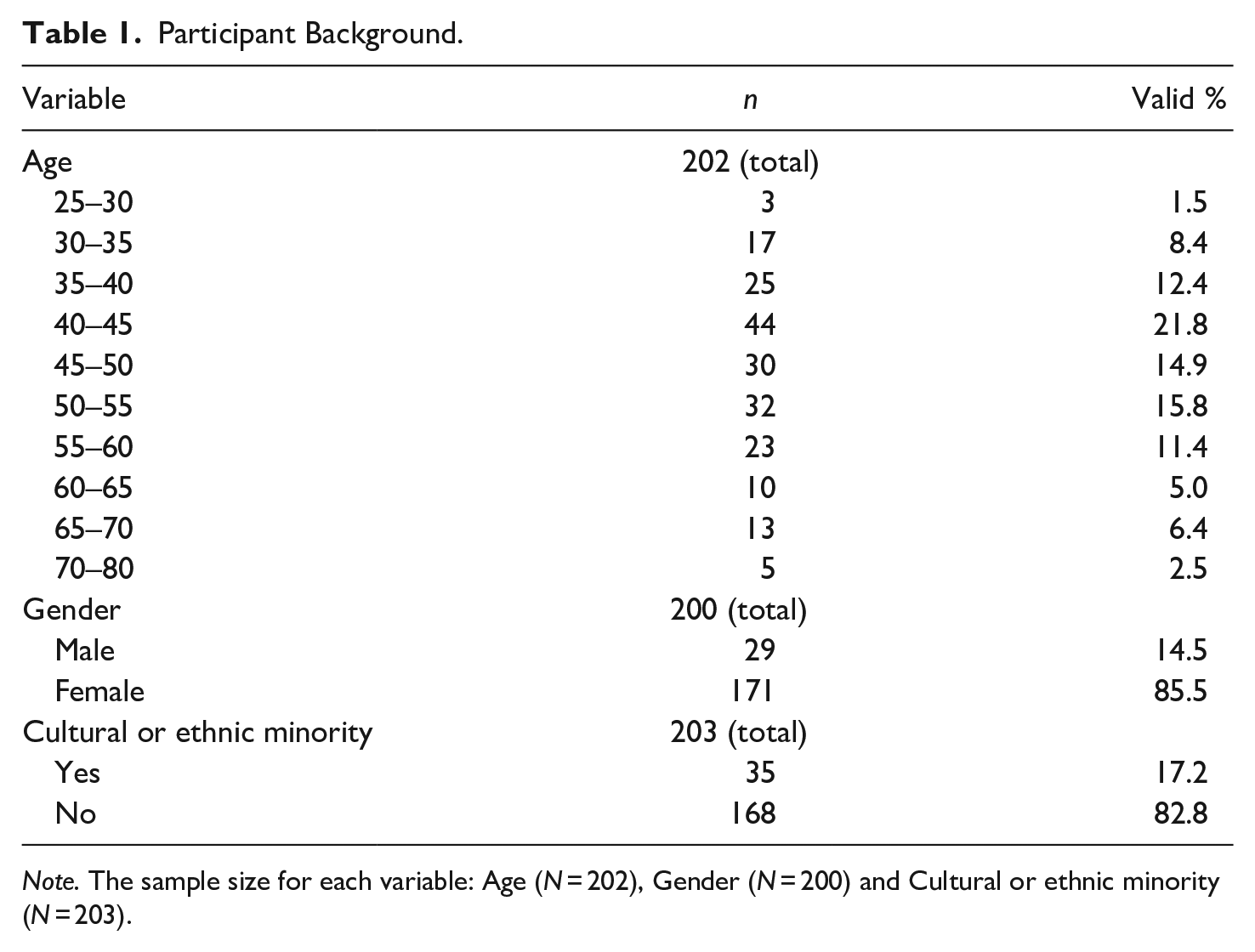
Note. The sample size for each variable: Age (N = 202), Gender (N = 200) and Cultural or ethnic minority (N = 203).
Respondents were asked what is your current title? (select all that apply). The response options are listed in Table 1. Once again, the inclusion criteria for the sample required that either school psychologist was selected or another option that included the terms psychologist or psychological associate. Participants were able to select multiple options, see Table 2 for a total list of titles selected.
Participant Occupation.
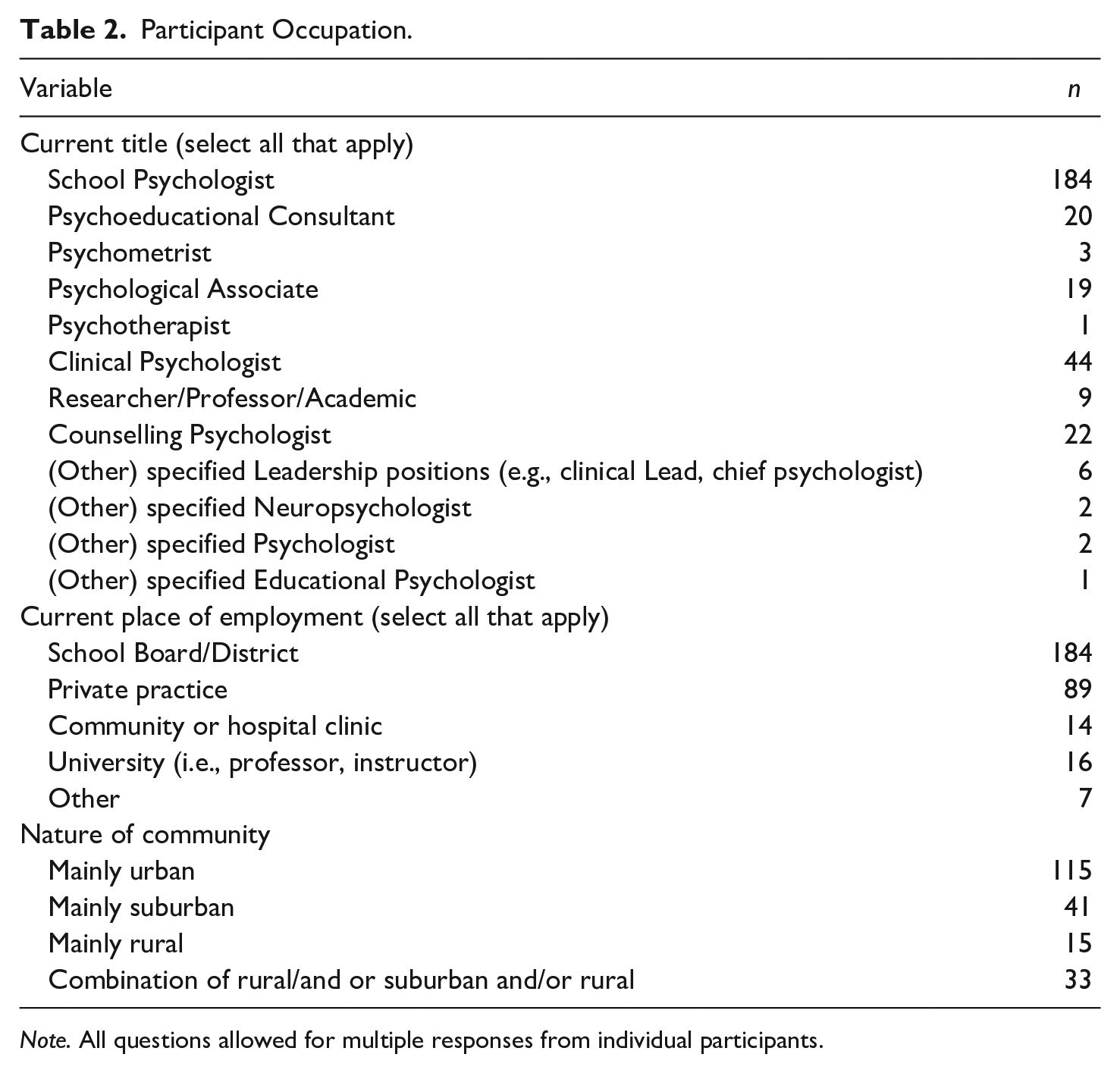
Note. All questions allowed for multiple responses from individual participants.
Respondents were then asked to please indicate your current place(s) of employment (select all that apply). The most common place of employment response option was a school board/district (86.0%), with a large percentage also indicating they work in a private practice (41.6%). Worth noting, many provinces have contracts for school-based psychological services that are distributed to private psychologists in the community. From the 214 surveys included in the analysis, the majority of respondents indicated that they were from Ontario (44.9%) followed by Alberta (23.8%) and British Columbia (10.7%). Ten individuals did not specify their region. When asked what is the nature of the community in which you work? participants could select multiple response options. The most common response was working in an urban community (53.7%) additional information on participant background with all response options are presented in Table 2.
Impact of COVID-19 on Psychologist Practice
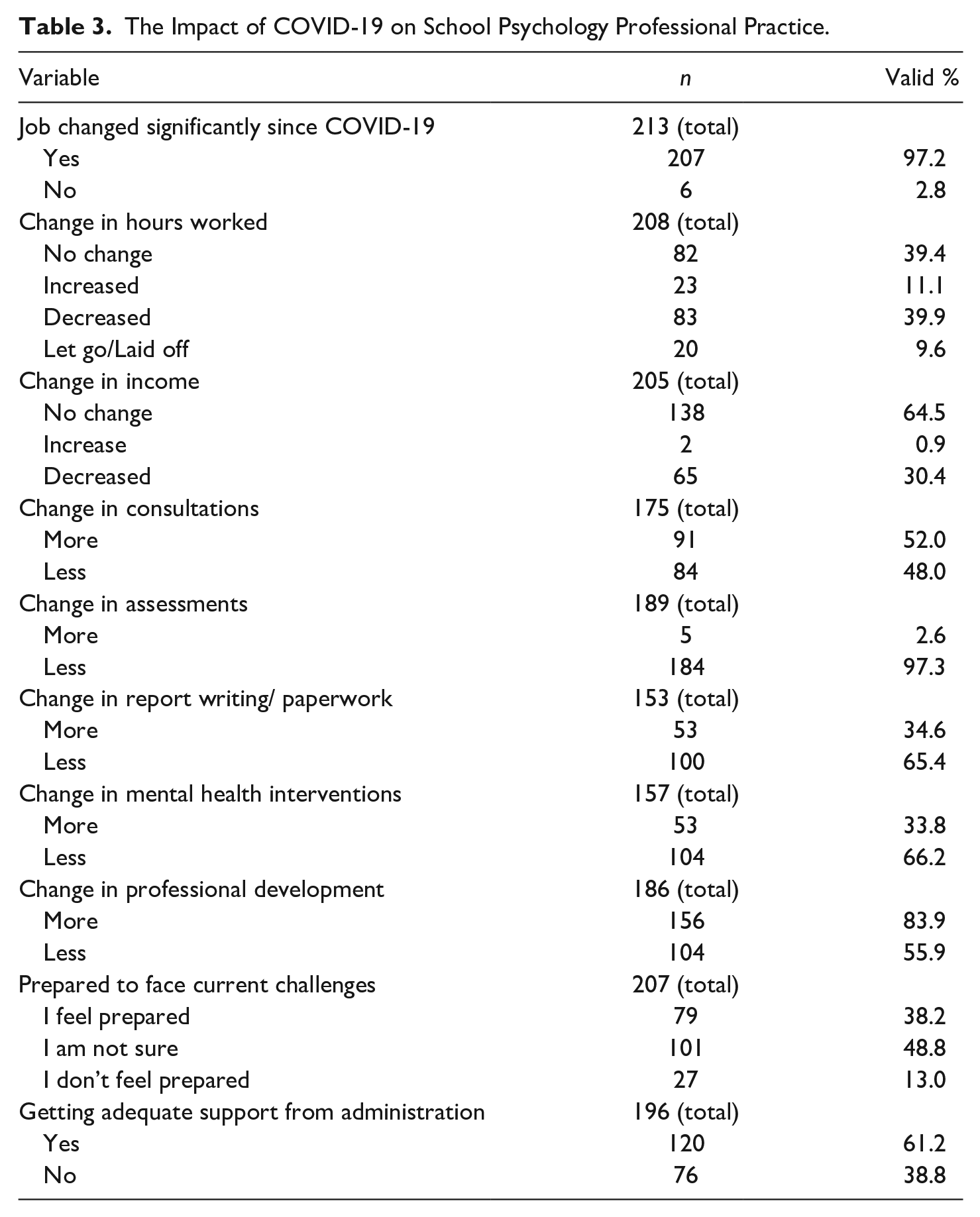
When asked Has your job changed significantly since the COVID-19 Pandemic began? Nearly all respondents indicated their job had significantly changed (yes) since the COVID-19 shutdown began (96.7%). When asked has your number of hours worked per week changed since the COVID-19 pandemic began? Only 39.4% of the 208 who responded selected My work hours have not changed at all. From the 126 participants who indicated a change, the majority selected my work hours have decreased (65.9%) and 20 respondents (15.9%) selected I have been let go/ laid off from my position. Some respondents indicated a change in income (32.7%) with 31.7% having a decrease in income.
Respondents were then asked what aspects of your position have changed, with response options of more or less for specific professional activities. The preponderance of the total respondents selected spending less time (than usual) conducting assessments (86.0% compared to only 2.3% reporting more), with mental health interventions (48.6% compared to 24.8%), and report writing (46.7% compared to 38.3%) and more time on professional development (72.9% compared to 14.0%), and consultations activities (42.5% compared to 39.3%). Other (please specify) activities that were reported to have an increase in designated time during COVID-19 included advocacy, meetings and staff check-ins, and policy/ resource preparation. One participant shared that they were developing PD [professional development] for school staff regarding behaviours and aftermath of COVID.
When asked how prepared do you feel to face the current changes in your professional life, only 36.9% of the total sample selected I feel prepared. Alternative options were I am not sure if I am prepared and I don’t feel prepared. Finally, when asked Do you feel you are getting adequate support from your administration as you transition to new approaches to service provision? 35.5% reported that they were not getting adequate support from their administration and some shared their reasons or dissatisfaction. One respondent wrote “vague direction from manager and school board admin; lots of talk but very little guidance on implementation; we are left to fend for ourselves but warned not to do anything that hasn’t been ‘vetted’.” Descriptive information with valid percentages (only including those who responded to each question) regarding changes in professional practice activities are presented in Table 3.
The Impact of COVID-19 on School Psychology Professional Practice.
Job Satisfaction, Professional Self-Efficacy, Mental Health/Wellbeing
Beyond implications to school psychology practice, the current study used survey questions to examine the implications of COVID on the personal well-being of school psychologists. This included questions about job satisfaction, professional self-efficacy and mental health and well-being.
Job satisfaction
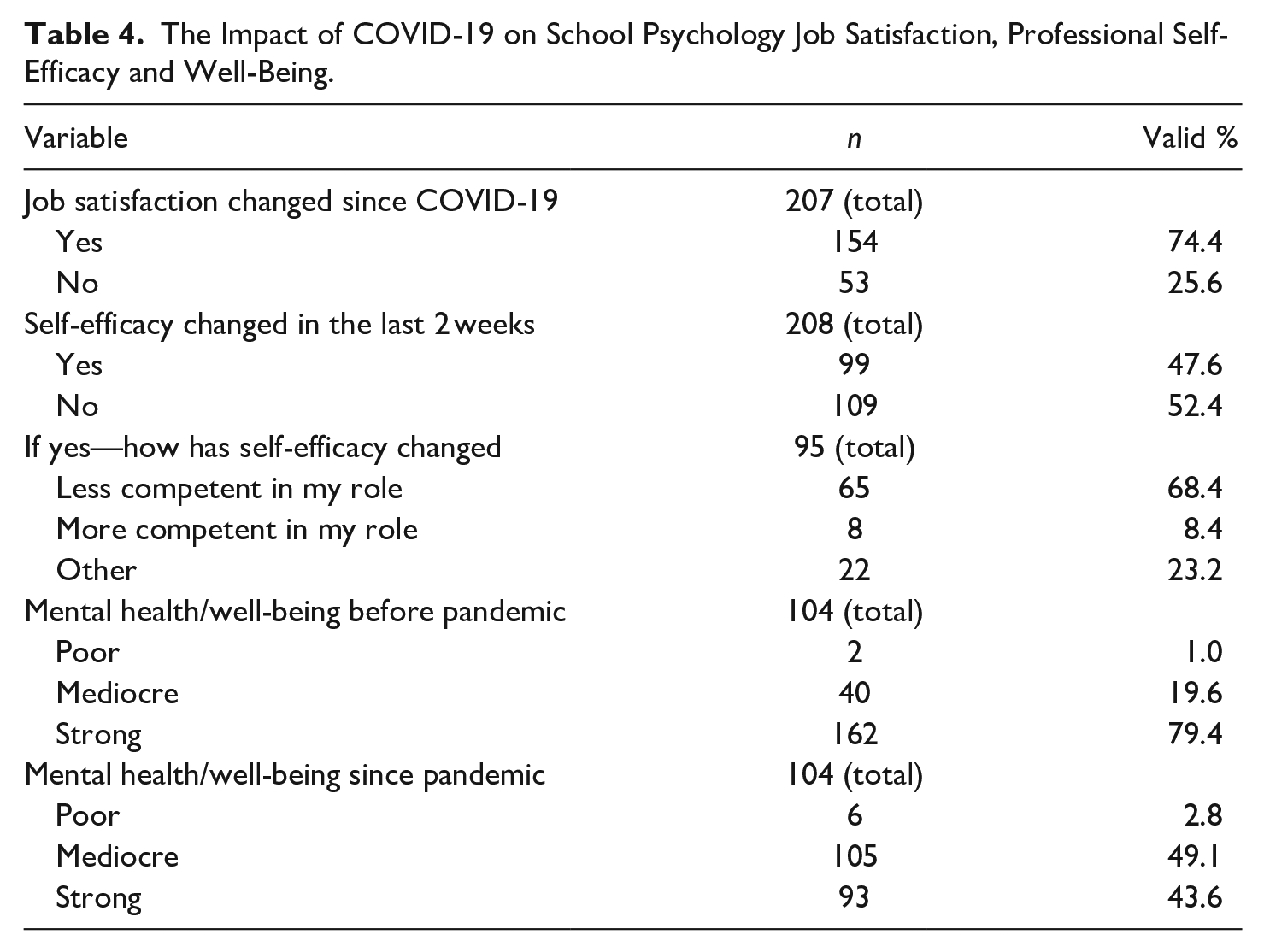
Most respondents (72.0%) reported experiencing a change in job satisfaction since the beginning of the COVID-19 pandemic (Has your job satisfaction changed since the COVID-19 pandemic: yes or no). For those who reported a change, three statements were presented as follow up, and participants were asked to indicate how much they agreed with the statements over the last 2 weeks. Figure 1 presents the response options along with the frequency of each response (with reverse coded responses). Between 11.0% and 16.7% of respondents strongly disagreed with the statements showing dissatisfaction with their jobs. The most common response was the second-lowest option (disagree a little) which ranged from 27.1-31.4%. Between 13.1-19.2% indicated no agreement or disagreement with the statements. The second highest proportions of responses for all three statements were agree a little with the percentage of respondents ranging from 25.5% to 29.2% and only 9.0% to 17.0% selecting the highest option for job satisfaction. In summary, although the findings suggest that the pandemic has changed job satisfaction for most school psychologists, there were still those who indicate varying degrees of job satisfaction during COVID-19.
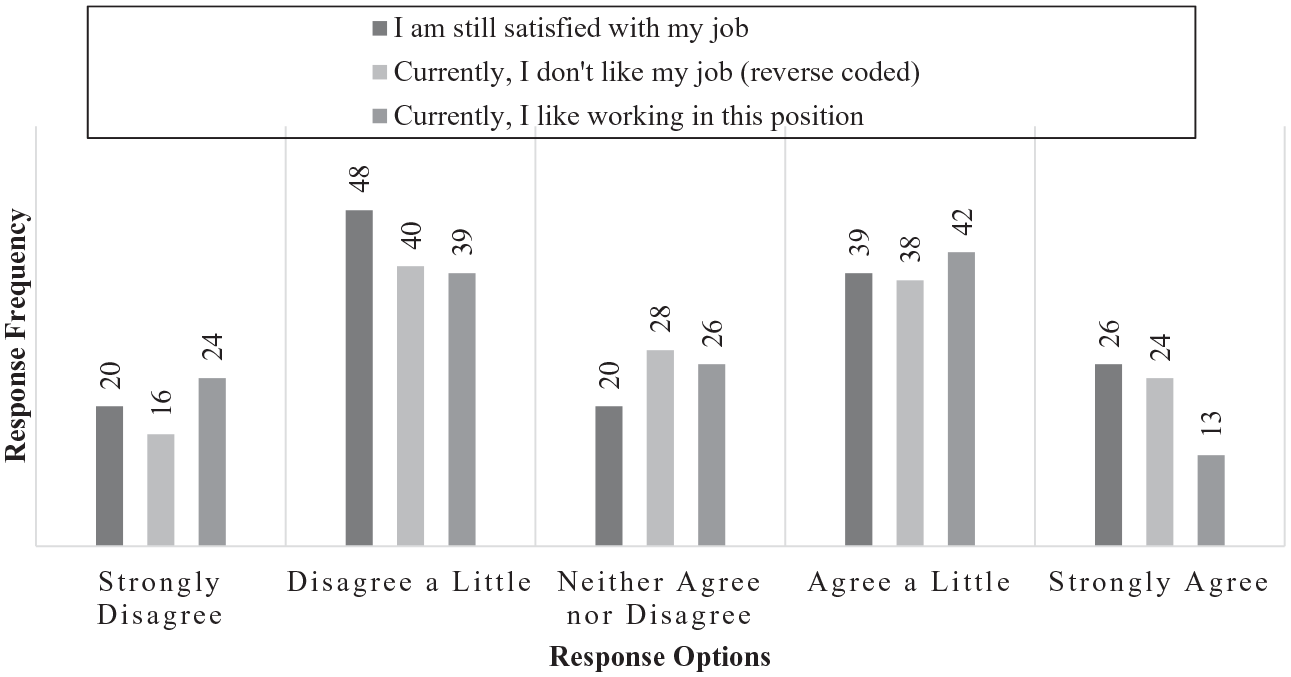
School psychologist job satisfaction during COVID-19.
Professional self-efficacy
Self-efficacy was defined in the survey as “your belief in your own abilities to deal with various situations.” Nearly half of the total respondents (46.3%) indicated that their feelings of self-efficacy in their professional roles had changed over the past 2 weeks (Have your feelings of self-efficacy in your professional role changed in the past 2 weeks: Yes or No). For those who had indicated the change, the majority (68.4%) indicated feeling less competent in their role these days, with only a small proportion reporting that they were more competent (8.4%). Twenty-two respondents described their responses as “other” with many expressing mixed feelings surrounding their perceived self-efficacy. One respondent shared
“I was assigned to work that initially I wasn’t sure I would find fulfilling or be competent but discovered that I’ve been able to offer a perspective that has been beneficial to others. I feel I’ve adapted well to the changes in my role.”
Others indicated that external sources were causing conflicting feelings of self-efficacy “I feel less valued and respected as a professional, and psychology as a profession.”
Mental health/well-being
Survey respondents were asked about their mental health/well-being before and since the pandemic with mental health/ well-being defined in the question as “the ability to enjoy life, to be resilient and flexible when coping with challenges, and feeling a sense of balance in life.” The survey then asked participants to select 1 (poor) 2 (mediocre) or 3 (strong) as a rating of their mental health/well-being before the pandemic and again for since the pandemic. Mental health was rated as strong before the pandemic by the majority (75.7%) of respondents, compared to 43.5% rating their mental health as strong during the pandemic. Only six respondents rated their mental health as poor since the pandemic (2.8%) whereas, before the pandemic, 2 (0.9%) rated their mental health as poor. Table 4 summarizes findings and shows the valid percentages (only those who answered the questions) for the school psychologists’ job satisfaction, professional self-efficacy, and mental health/ well-being. Further, when asked how respondents were engaging in self-care practices, the most frequently endorsed activities were watching television/ Netflix/ films/ Youtube (82.2%), connecting with family and friends (80.8%), exercising (76.2%), engaging in hobbies (66.4%), household chores (67.6%) and spending time with pets (40.2%).
The Impact of COVID-19 on School Psychology Job Satisfaction, Professional Self-Efficacy and Well-Being.
Discussion
Overall, results from the current study illustrate that COVID-19 has impacted most aspects of school psychology practice. More than 95% of the sample said that their job had changed significantly since the pandemic began. Nearly half (48.1%) of the sample had a decrease in hours or were laid off, and almost a third (30.4%) had a decrease in income. Less time was reported being spent conducting assessments, report writing/ paperwork, and mental health interventions, while more time was designated to consultations and professional development. Consequently, all the changes in professional practice were often accompanied by reported changes in job satisfaction, self-efficacy, and mental health/ well-being.
Job loss rates were similar to the rest of Canada for workers with a bachelor’s degree or higher with 7.2% being laid off between March and April 2020 (Statistics Canada, 2020b) which is below the 9.4% seen in the current survey. Of note, follow-up analysis revealed that of the 20 respondents who lost their jobs, 19 were from Alberta and were likely tied in part to an across board education budget rollback to redirect funds to the provincial COVID-19 response. Future inquiries should investigate how this cut to personnel may impact Alberta schools in the long-term.
Not surprisingly, the most notable change in professional activities was the decrease in the number of assessments. Psycho-educational assessments are traditionally conducted in person. Although aspects of cognitive and academic assessments can be completed virtually or online, the reliability and feasibility of such practices are still in the early stages of research (Farmer et al., 2020). In the current study, one respondent highlighted the need for support regarding assessment during the pandemic: “We need as much information and training as possible on telepsychology and the validity on online assessment.”
The large proportion of responses indicating more time spent on professional development and more time spent consulting reported in the current survey may be indicative of the early stages of psychologists developing competencies in new and innovative methods of practice. Given the projected duration of the COVID-19 pandemic, it will be essential to continue to develop alternative ways for psychologists to assess, diagnose, and facilitate access to services. Training and resources on how to conduct valid and secure assessments and other services online will be necessary moving forward in school psychology. Further, ensuring that schools appropriately identify students who would benefit from special education services may require flexibility on what were the “traditional” requirements and means of determining eligibility for services. Given the new restrictions, it may be practical to employ more up-to-date models of school psychology which utilize teacher/ parent consultation, student observation, and informal or curriculum-based procedures to inform the identification of students who require additional services rather than the traditional face-to-face approach to psycho-educational assessments focused on the results of standardized assessments may be practical given the new restrictions (Bradford & Kroeker, 2016; Sheridan & Gutkin, 2000). This not only would help reduce the risk of transmission during COVID-19 but would allow school psychologists more time to apply their full expertise in the broader mental health response to the COVID-19 pandemic.
The professional and personal implications of COVID-19 on school psychologists extends far beyond professional activities. The majority of respondents reported changes in job satisfaction, self-efficacy, and mental health/ well-being. When comparing the rates of job satisfaction to a previous meta-analysis, which reported 85% of school psychologists reporting being very satisfied or satisfied with their jobs (VanVoorhis & Levinson, 2006), the results from the current survey indicate that only 38.2% to 42.5% responded with the two highest ratings of job satisfaction. The different samples and different scales suggest the need to exercise caution with respect to the comparison between the reports. However, the lower incidence of high job satisfaction ratings in the current study in conjunction with over three quarters reporting a change in job satisfaction highlights the extent to which the pandemic has impacted school psychologists in Canada.
Just over half of the respondents reported a change in their professional self-efficacy, nearly three-quarters of which reported perceiving themselves as less competent in their role. The previous self-efficacy research from Tituana (2020) illustrates that experience and education are significant factors when examining self-efficacy in professionals, and as the landscape of school psychology changes in the wake of COVID-19, it will be critical to support psychologists throughout this transition. Additionally, Tituana (2020) reported lower levels of self-efficacy associated with the increase in consultation services, relative to those associated with the more conventional but decreasingly frequent assessment practices. If the changes in school psychology professional activities continue to persist, psychology supervisors and managers may promote greater self-efficacy by providing educational resources and support throughout the transition process. School psychology professionals may also perceive they are more self-efficacious as they become familiar with the “new normal” delivery of services.
Finally, changes in self-reported evaluations from before the pandemic to after its onset reflect a significant decrease in mental health and well-being. Over 75% of respondents had retrospectively reported strong mental health before dropping to 43.5% since the pandemic’s onset. The current survey touched on activities the respondents were doing to care for their mental well-being while physically distancing. Most were completing activities, such as exercise (76.2%) and connecting with friends and family (80.8%). Statistics Canada (2020a) reported over half of Canadians reported that their mental health has worsened during the pandemic and it would appear that school psychologists, like other Canadians, were not immune to personal and professional stressors resulting from the pandemic and lockdown measures. Results from the current study highlight the disruption to professional practices, but also that there may have been additional personal stresses from increased isolation due to the lockdown measures or increased responsibilities from taking care of children or other family members at home. As school psychologists are a helping profession there will continue to be stressors that can take a toll on a psychologist’s well-being in addition to those associated with the pandemic. Positive self-care practices, support, and communication from administration may help support the mental health of school psychologists as they in turn continue to support their clientele (Huhtala et al., 2017).
Relevance to the Practice of School Psychology
The current study has highlighted the initial impact of COVID-19 on school psychology practices. Although the survey was distributed at what is now considered the “beginning” of the pandemic, the depiction of changes in professional practice as well as personal and professional well-being provide valuable insights into the shift in school psychology practices as a result of the pandemic. Further, previous studies in Canada have identified that in most regions there was already a shortage of school psychologists (Lean, 2016; Saklofske et al., 2007). Consequently, the impact of having nearly 50% of respondents working fewer hours or being laid off is indicative of a widening gap between necessary and available services, with an even greater reduction of the essential mental health services that are provided by school psychologists.
Specifically, with fewer children receiving assessments and mental health interventions throughout the pandemic it is expected that wait times for services in schools will increase; this comes at a time when the mental health needs of these same children appear to be increasing, in part because of the pandemic. As administrations prepare for the return to service, understanding the implications of this decrease in service provision as well as the projected increase in mental-health needs as a result of the pandemic (Guessoum et al., 2020) will require directed and intentional plans moving forward. Across Canada, many students have resumed in-person school in September of 2020, although the choice to receive their education fully online or in a hybrid model is available in most areas. The World Health Organization (WHO)’s school COVID-19 response, as global leaders, highlighted the importance of addressing the mental health/ psychosocial needs of students during this time, and the importance of continuing to support vulnerable populations (World Health Organization [WHO], 2020). School psychologists are highly skilled experts in the psychological and educational needs of children, youth and families. Their professional skills provide a unique competence that can be used to inform Canadian schools’ COVID-19 response.
In addition, reports from the current survey suggested that COVID-19 has resulted in changes in self-efficacy, mental health/ well-being, and job satisfaction for the school psychologists themselves. Seeking support from peers and colleagues, through professional consultation, is a suggested approach to help psychologists cope with difficult circumstances. Although there has been a tendency in the profession to address needs and challenges using an isolated practice, encouraging the engagement of a supportive and reciprocal dialogue for problem-solving can help address some of these professional challenges (Hage et al., 2007). Consulting on the ethical and practical challenges moving forward with peers and administrators may be a strategy to help cope with the challenges COVID-19 has and will continue to present to school psychologists across Canada.
Limitations
There are several limitations to the current sample. First, the survey questions did not directly ask about registration status of the participants. While “psychologist” and “psychological associate” are protected titles across Canada, the survey revealed that there is still variation in the other titles participants hold while potentially practicing school psychology. As a result, there may have been registered psychologists or psychological associates who practice school psychology that were removed from the sample as they identified as having a different job title (i.e., psychoeducational consultant). An additional limitation was that the survey questions were not based on validated measures of job-satisfaction, self-efficacy, or mental health and were retrospective in nature. Although they provide valuable descriptive information regarding the unique time of a global pandemic, results should be interpreted with caution, and future studies may want to examine these factors more thoroughly.
While there were responses from school psychologists who practiced in a variety of geographical regions across Canada and a blend of both rural, urban and suburban communities, there should be caution to not over-generalize the findings and practice recommendations. The results provide one snapshot of the impact on school psychology practice in Canada in the early months of the COVID-19 pandemic and should be considered along with other snapshots of school psychology practice in Canada during COVID-19 to gain a more comprehensive perspective on this impact.
The majority came from Alberta and Ontario, and the application of the findings to other regions and education systems should be cautioned. For example, Alberta was disproportionately represented in the current sample (23.8% of respondents), whereas Alberta represents about 11% of the Canadian Population (Statistics Canada, 2017). The high job loss rates for school psychologists in this province may have increased the motivation to participate in a study regarding their professional experience of the pandemic.
Further, the local COVID-19 restrictions and rates of infection could have unevenly impacted professional practice and the impact on individual respondents. School psychologists should tailor their responses based on the unique needs of their communities, schools, and clientele. Fortunately, regardless of jurisdiction, school psychologists are experts in helping students find success academically, socially, emotionally, and behaviourally; and this expertise will continue to be critical as the schools return both online and in person.
Future Directions
As the pandemic continues to evolve, research should continue to monitor not only the shift in professional responsibilities and activities of school psychologists, but the associated changes in mental health, job satisfaction, and professional self-efficacy. Where possible, the use of more comprehensive and validated measures of personal and professional well-being would allow for an accurate assessment of the toll COVID-19 is having on school psychology practices and the schools themselves. Specifically, examining professional self-efficacy from a multi-faceted perspective would allow identification of activities that are more sensitive to low self-efficacy, and in response, targeted professional development and administrative support could be implemented. Also, given the localized layoffs in Alberta future studies examining school psychology practices should investigate the nature of psychologists’ employment contracts (permanent vs. contact positions) in different regions across Canada. Investigating how school psychologists’ training, job security and professional activities relate to their self-efficacy, job satisfaction and mental health and well-being.
Ongoing support from provincial regulatory bodies and the national and provincial professional associations will be essential moving forward. While professional associations are vital in the continued advocacy for how school psychologists’ expertise can be maximized during the COVID-19 response in schools, the provincial bodies will provide the professional guidelines as to how to safely administer services and protect psychologists’ vulnerable clients.
Footnotes
Declaration of Conflicting Interests
The author(s) declared no potential conflicts of interest with respect to the research, authorship, and/or publication of this article.
Funding
The author(s) received no financial support for the research, authorship, and/or publication of this article.
