




Abstract
Young people spend a lot of time in their neighbourhood, yet little is known about the relationship between wellbeing, belonging and place from their own perspective. Our study sought to understand how young people navigate their neighbourhood and perceive various aspects of its health environment in its broadest sense. In this article we reflect on the walking methodology we used as part of a Participatory Photo Mapping (PPM) exercise with 11-year-old girls from a working-class school community who were participants in the PEACH Project. It was through walk-along interviews that students were able to tell us where events that matter to them happen; what these experiences look like (via photos that they took while we walked); and how these experiences unfold (via narratives and stories that they shared with us along the way). We reflect on the use of walking methodologies as both an emplaced approach and dynamic exercise that allowed us to access and generate visual and verbal data that privileged these young girls’ community knowledge. We conclude that this method facilitated the discussion of sensitive and political issues, as well as the emergence of unexpected data on child cultures, family and community life, belonging, wellbeing and futures.
Introduction
Schools have increasingly emerged as central sites of intervention in young people’s lives with the goal of making them healthier. In Ireland, the school curriculum at primary and second level covers the areas of wellbeing, healthy eating and a healthy lifestyle often emphasising individual attributes in the pursuit of health. In this article we seek to present and interrogate the methods adopted in a two-year research project, which began in September 2018 in an all-girls primary school, in a socio-economically disadvantaged neighbourhood of a city in Ireland. This study engages 11-year-old girls, who are at a critical point in their physical, emotional and social development, as they actively and autonomously begin to explore their local environment (Wridt, 2010; De Meester et al., 2014), in discussions about health, school and community issues that go beyond the more traditional focus on individual behaviour and quantitative measures of wellbeing. It explores what students already know and have learned and experienced about wellbeing in their own lives, at school, in their community and wider contexts through a number of creative and participatory research exercises including surveys, group discussions, support balloons, community mapping and participatory photo mapping (PPM), which included walking interviews and photo elicitation focus groups. We do this against a backdrop of literature which points to the social and built environment of many children living in impoverished neighbourhoods which frequently fail to support their healthy development through less access to good quality food and public disinvestment in community spaces, such as parks and playgrounds (Wridt, 2010). Also, health geographies literature on health and wellbeing enabling places and spaces which facilitate access to social, affective and material resources (Duff, 2011; Bell et al. 2018a). The findings indicate that these girls had a nuanced literacy around food and nutrition and were aware of the constraints in their lives, but equally were very positive in their sense of overall wellbeing in their community. The evidence suggests a dissonance between the girls’ local experience and the school curriculum 1 and that they welcomed the opportunity to share their community experience in school and consider its relevance to the school curriculum (Barratt and Barratt Hacking 2009). Based on our findings, we argue that we need more knowledge from children’s perspective and further development of suitable research methods to enable children to talk about wellbeing in their spaces and places (Honkanen et al., 2018). It is in this context that we offer insights into research that uses multi-methods, and in particular the value of walking methods, which prioritise children’s views, and interrogate their contributions to understandings of wellbeing and place.
Peach project overview
The PEACH 2 project came about following an approach by two neighbouring, city-based all-girls’ primary and post-primary DEIS 3 schools in a disadvantaged city neighbourhood in Ireland. The schools asked the researchers to collaborate on a holistic wellbeing project the schools had designed and won state funding for, through a Department of Education and Skills (DES) Excellence award. The project included the implementation of cognitive, emotional and relationship skills programmes as well as the engagement of a nutritionist to teach about healthy food and food consumption. The DES will use findings from the project to inform policy on wellbeing in schools.
The research was subsequently conducted with two classes of students, aged 11–12 at the beginning of the project, in the all-girls primary school. In total, 39 girls participated in the research activities over a two-year period. The participants were primarily white working-class Irish children, with a small number from minority ethnic (white Irish Traveller and mixed race) Irish backgrounds. The school is located in an area with one of the highest deprivation scores in the city using the Trust Haaz Deprivation Index (Haase and Pratschke, 2017; Cork City Council, 2018), indicating an area with higher-than-average social welfare dependency and a higher number of children living in poverty.
New walking studies
We are contextualising this discussion of our child friendly participatory research within new walking studies. ‘New walking studies’ is a term is used by Lorimer (2011, p. 30) to characterise a ‘push to towards a grounded consideration of walking as a social practice’ in multidisciplinary forms of academic research and practice. Such work on the sociology and geographies of walking has been varied and important (Kusenbach, 2003; Jones, 2008; Wridt, 2010; Bates & Rhys-Taylor, 2017). Horton et al. (2014, p. 98) identify four characteristics of walking practices. First, many walking studies foreground the bodily practices and multisensuous experiences of walking; second, often there is an implicit sense of the emotional affective nature of walking. Third, the importance of social interactions, materialities and non-human agencies with/in walking practices is highlighted. Fourth, walking studies highlight the political potential, and politicised context, of many walking practices. Walking studies provides a challenge and an opportunity to ‘move with the social world’ (Bates and Rhys-Taylor, 2017, p.2).
Drawing on Middleton (2011) work on the importance of ‘everyday pedestrian practices’ for social and cultural geographies, Horton et al. (2014) suggest that examination of such practices among children and young people pose an especially stark challenge to existing literature on walking. There has been some focus on children’s independent spatial mobility (Gill, 2010; Karsten, 2011) and we can look to the ground-breaking Clark and Moss (2001) mosaic approach involving very young children giving guided tours of their early years settings and thus offering possibilities for exploring children’s ‘local knowledge’ of their own environment. Still, however, there is an overwhelming absence of children and young people—as participants or objects of enquiry—from ‘new walking studies’.
Methodological approach
This research adopts a social constructivist and holistic understanding of ‘wellbeing’ as socially contingent, i.e., a construct embedded in society and culture and prone to change and redefinition over time (Honkanen et al., 2018). The concept of child wellbeing is a contentious one with much attention coming from a negative or deficit point of view (Bradshaw et al. 2011). For example, using an adult-centred research orientation (Karlsson 2010; Poikolainen 2013; Honkanen et al., 2018) and identifying a set of idealised individual child behaviours around diet and exercise within an increasingly individualised, consumerist and self-responsibilising society (Barnes et al., 2013). However, the child’s perspective in research has increased in recent decades (Karlsson, 2010) with a growing interest in children’s knowledge and subjective accounts of wellbeing (Author et al., 2017). Children’s views and experiences can differ greatly from adults. For example, living in a family in an area with low income or unemployment, as was the case for many of these participants, does not necessarily indicate negative wellbeing, even if the parents might experience their wellbeing as unstable (Swords et al., 2011; Poikolainen, 2014).
The study is firmly rooted in a child rights perspective of wellbeing outlined by Bradshaw et al. (2006, p. 8) as ‘the realisation of children’s rights and the fulfilment of the opportunity for every child to be all she or he can be in the light of a child’s abilities, potential and skills, and as a result of the effective protection and assistance provided by families, community, society and state’. In Ireland, the National Strategy on the Participation of Children and Young People in Decision-making (DCYA, 2015, p. 3) makes a policy commitment to ensure that children and young people ‘will have a voice in their individual and collective everyday lives’. In adopting this approach, the authors relied on appropriate participatory research methodologies, informed consent of all participants and young people’s input into the analysis and use of research results (Chakraborty, 2009). Engaging children in local research can provide children with the skills and opportunities to make a contribution to society through local decision making (Barratt Hacking and Barratt 2009). The children in this research, then, are seen as active citizens, subjects, information providers and local experts, especially on their own lives.
Mapping, mobile and visual methods
Within the methodological approach described above, the PEACH project methods included: wellbeing, nutrition and activity questionnaires, and focus groups where students ‘speak back’ to their questionnaire data. This was followed by participatory photo mapping (PPM) of their local area through community mapping, child-led walking tours and photo elicitation focus groups to investigate material and structural factors, such as availability of good quality food in a low-income area, local amenities, places they enjoy spending time, safety in the area, and support networks in order to demonstrate what matters to children in their own lives and contexts. The methods used acknowledge the many forms of expression, other than spoken language, that children use to describe their perspectives (Karlsson, 2010). Through a combination of visual, verbal and mobile elements children were offered a multi-expressive opportunity to take part in the research process as active participants (see Figure 1). For this article we focus on the walking methods within the broader PPM approach used, where the children in our study told us where experiences happen (via maps); what experiences look and feel like (via photos taken on the walks); and how experiences unfold (via narratives during the walks) (Dennis et al., 2009, p. 468). By using direct and mediated communication such as maps, photos and narratives in an integrated manner, this type of community mapping exercise enhances our learning and understanding of these children’s lived experiences with health, nutrition and place, and it opens up opportunities for the development of children’s living environments (Honkanen et al., 2018).
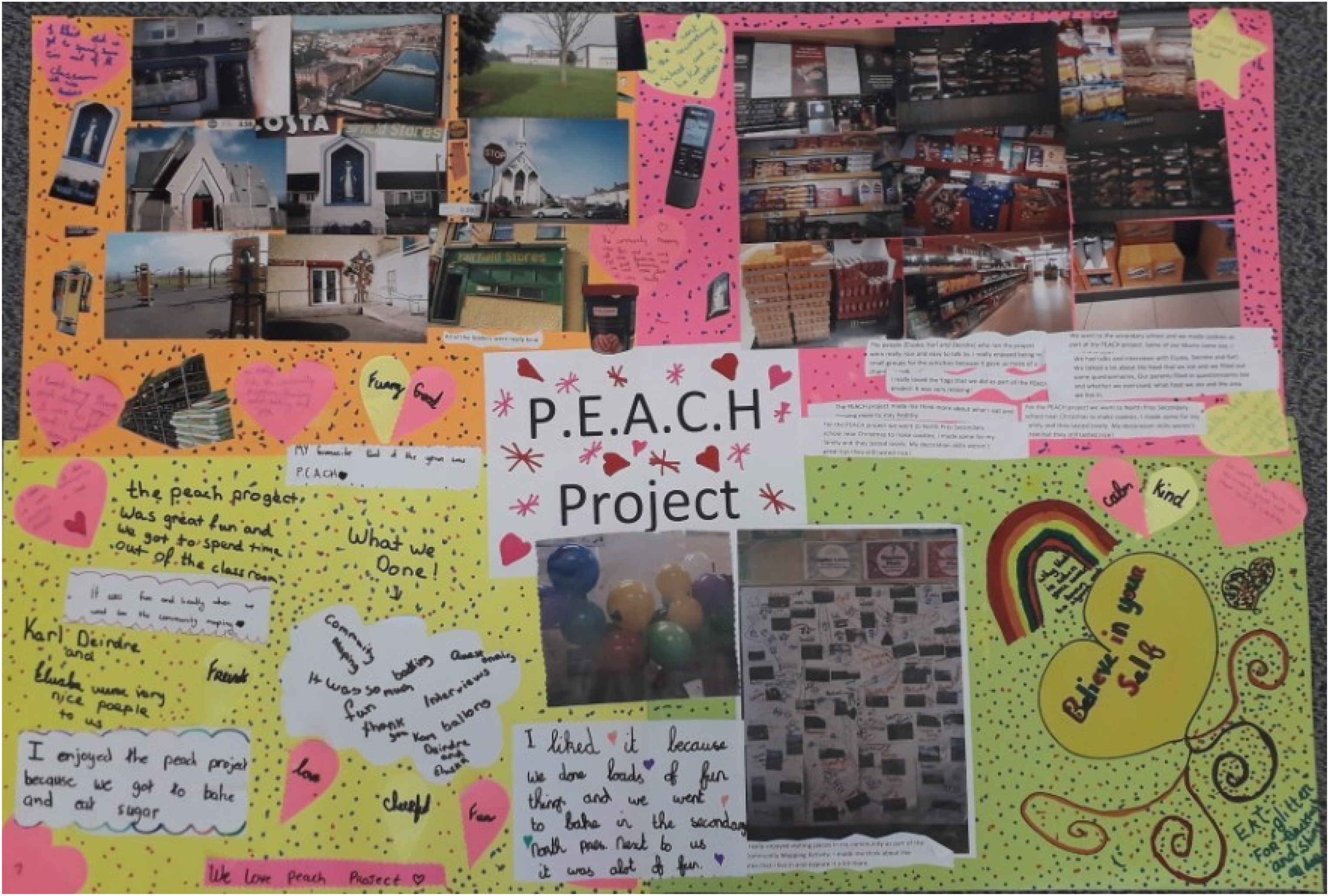
Collage describing the PEACH project.
The research team comprising three researchers (the authors) visited the school 7 times over two years (see Figure 2 Timeline below). The research data generated to date is significant and for the purposes of this article the authors focus on large community maps prepared by the children (N = 6), transcripts of community walking interviews (N = 6), photographs from the walking interviews (N = 432), children’s questionnaires completed at the end of walking interviews (N = 33) and photo elicitation focus group transcripts (N = 6) following the community walks. The 39 participants comprised 5th class students (11-year-olds at the outset of the project) recruited through the school.
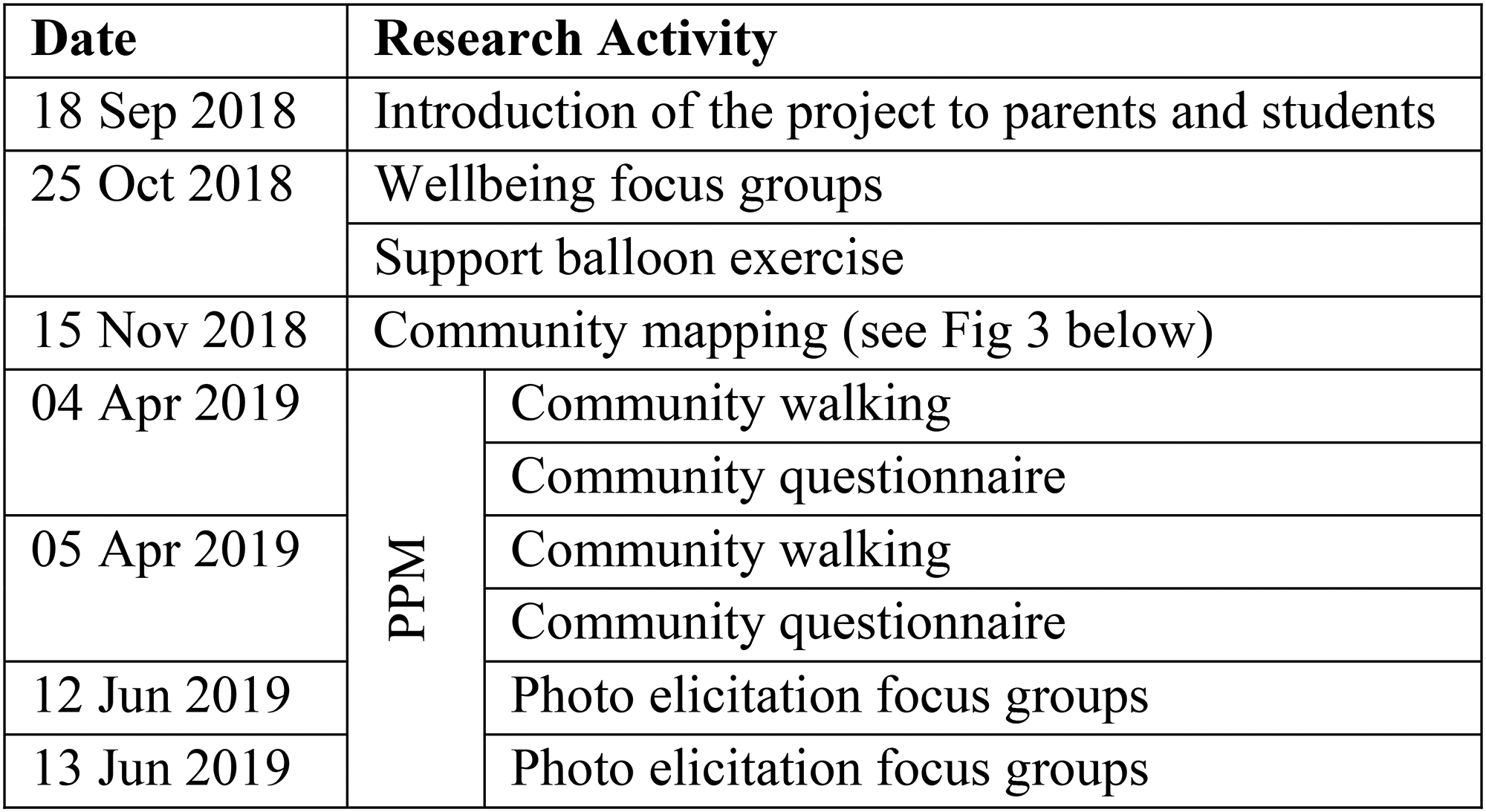
Timeline of PEACH research activities.
Ethical issues
Ethical approval was granted by the Social Research Ethics Committee at the authors’ University. Participation was voluntary and based on the consent of parents and the ongoing consent of children 4 . There is a fine balancing act to be struck in working with schools as research sites. The difficulty of gaining genuine consent in a school setting is well rehearsed in the literature (Barrat Hacking and Barratt, 2009; Author, 2017). The research team emphasised the voluntary, flexible and ongoing nature of children’s consent but this was difficult given the strong messages from the school about the importance of participation by all children. Furthermore, the researchers received contradictory messages from the school for example, teachers accompanied the researchers on the walks, although not in other parts of the research process, making confidentiality difficult. The power dynamics of having a teacher present could also potentially silence or skew the child participants expressions of what constitutes healthy spaces/places/food. The research team made all efforts to minimise teachers’ presence by asking them to attend as observers and it did not appear to limit the girls in their movements and interactions with the research team during the walk. There were some vulnerable children dealing with difficult and traumatic life experiences within the group of participants and the research team were very vigilant in this regard ensuring follow-up supports through the teachers and guidance counsellor in the school.
‘What we did’
Community walking methodologies
The research team developed a relationship with the girls from the outset of the project in September 2018 during which we visited them and conducted some getting to know you exercises followed by focus groups discussions exploring their understandings of wellbeing and their support networks as well as developing community maps (Figure 3).
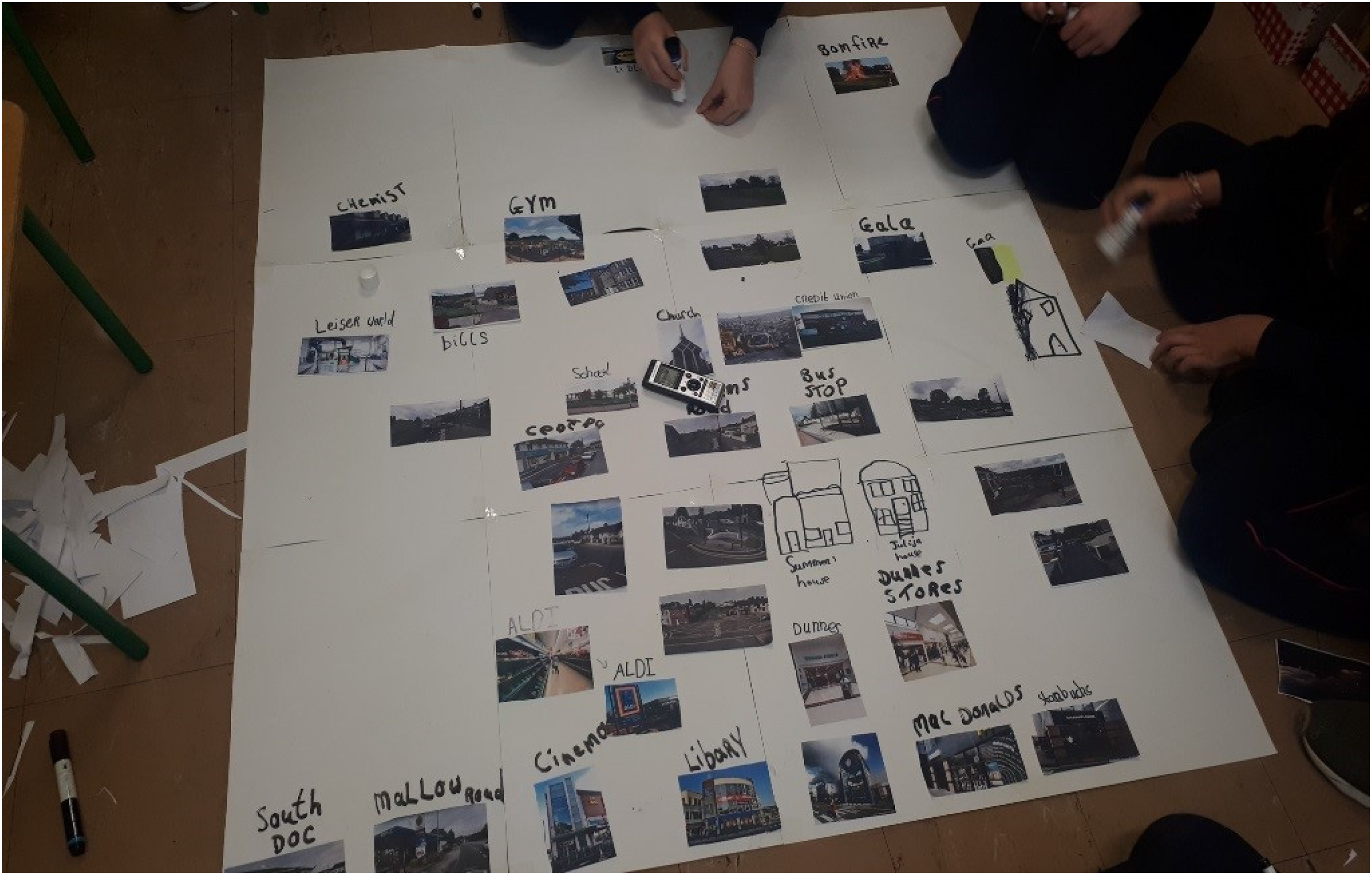
Mapping exercise.
The girls produced community maps on large paper using coloured markers and a large number of photos of the surrounding area downloaded from the internet. During this process of mapping the local community there was a discussion about their understanding of community, how they spend their time, local amenities (parks, playgrounds, shops, cafes), conditions in the local community (housing, public transport, pedestrian routes), peer groups, safety and risk, people in the community, family networks and so on. This method enabled the participants to articulate their use and perception of their neighbourhood (Wridt, 2010) identifying social and spatial, cultural, environmental, and even imaginative factors as indispensable elements of defining and constructing community (Jung, 2015). Such mapping of the broader contextual world and social relationships, emphasising the communicative process is, according to Mitchell and Elwood, (2012), a political act which locates individual politics and agency everywhere.
The child-led community walks took place over two days in April 2019 with each researcher accompanying 3 groups of 5–6 girls going on their walks each day. The purpose of the activity was to engage the 5th class students in reflecting on and assessing the health, child-friendly and food environments of their neighbourhood. To begin with we discussed and agreed the physical limits of the outing and the boundaries of the route to be taken, which can be tricky given the range of children’s backgrounds and interests (see Mitchell & Elwood, 2012), and a map with agreed boundaries was produced. Each group was provided with disposable cameras, a walking interview template designed by the researchers based on their previous engagement with the girls through surveys and focus group discussions, and a physical map of the area. The girls chose the route and decided where they wanted to stop and what they wanted to document. Participants were asked to take photos on their walks prompted by the ideas within the template (see Figure 4) and tick the corresponding box while also marking the places we stopped along the way on their map. Each researcher tracked the walk on a GPS navigation app on their phone (see also Bell et al. 2018b ‘geo-narrative’ approach). Audio recordings were also taken of the discussions that emerged as we walked around these girls’ neighbourhood.
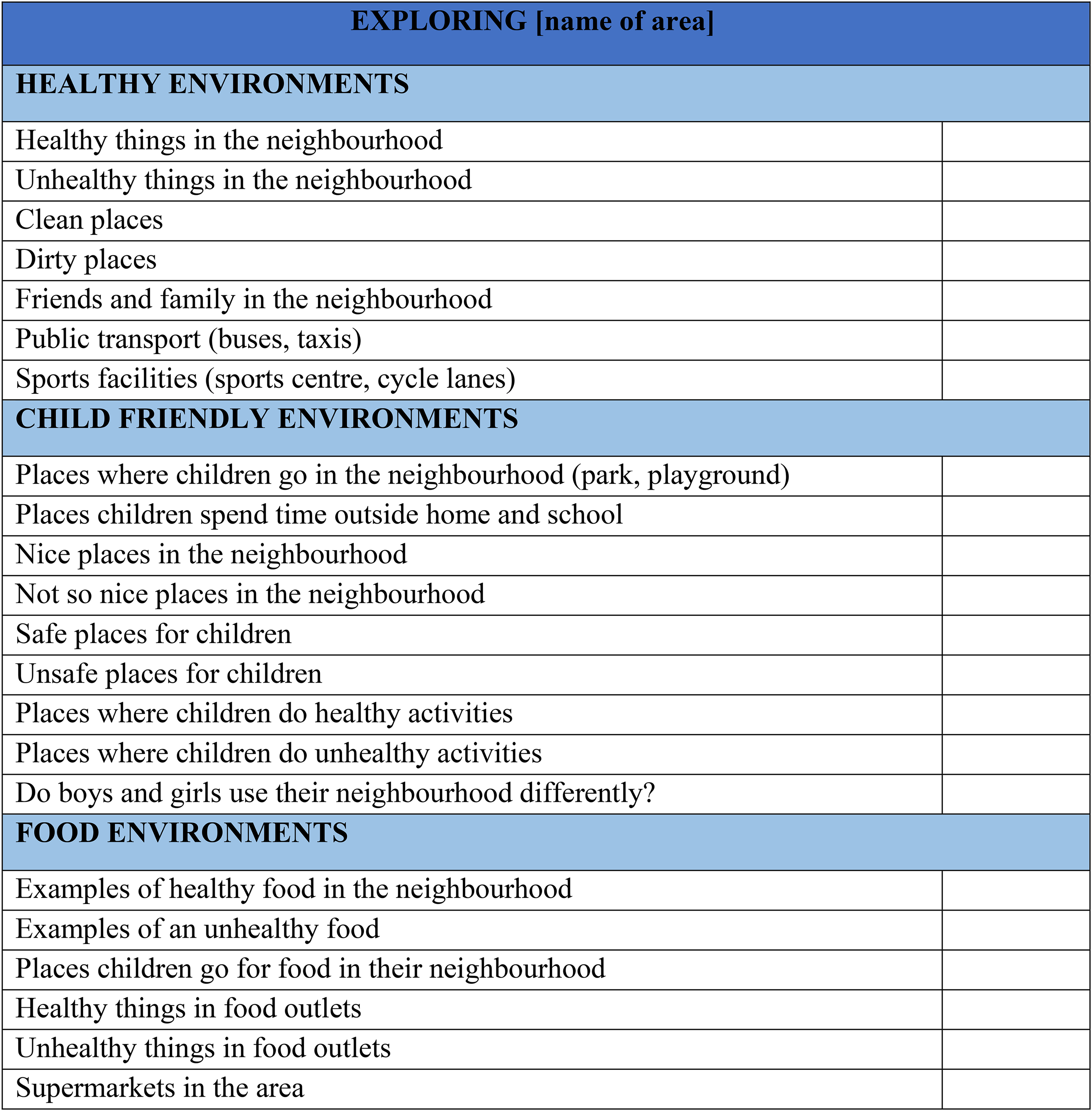
Walking interview template.
Walking interviews are an ideal and increasingly used research technique for exploring issues around people’s relationship with space, as physical mobility takes the research process out of the fixed (safe, controlled) environment of the interview room and allows the environment and the act of walking itself to move the collection of interview data in productive and sometimes entirely unexpected directions (Jones et al., 2008, p.8). Our research drew on Kusenbach’s “go along” walking interview method which empowers the participant to choose the route walked and facilitates an examination of their relationship with the physical and social environment (Kusenbach, 2003, p.463). This was restricted somewhat by the time limit allowed for the walk by the school and the focus on the neighbourhood surrounding the school. Groups did choose different routes within the bounded area, and this approach gave some insights into which spaces they frequent, as with the bounded route, we obtained recurring data about particular locations generating information about key sites from a range of participants. One criticism of this method is that spatial location is often dealt with rather poorly in research, failing to directly connect what people say with where they say it. In this regard, we inserted verbal prompts into the recorded conversation as children began to talk about a specific place. The GPS navigation app and the physical maps and templates produced by the participants also helped to indicate the routes chosen by the girls to walk around (Figure 5).
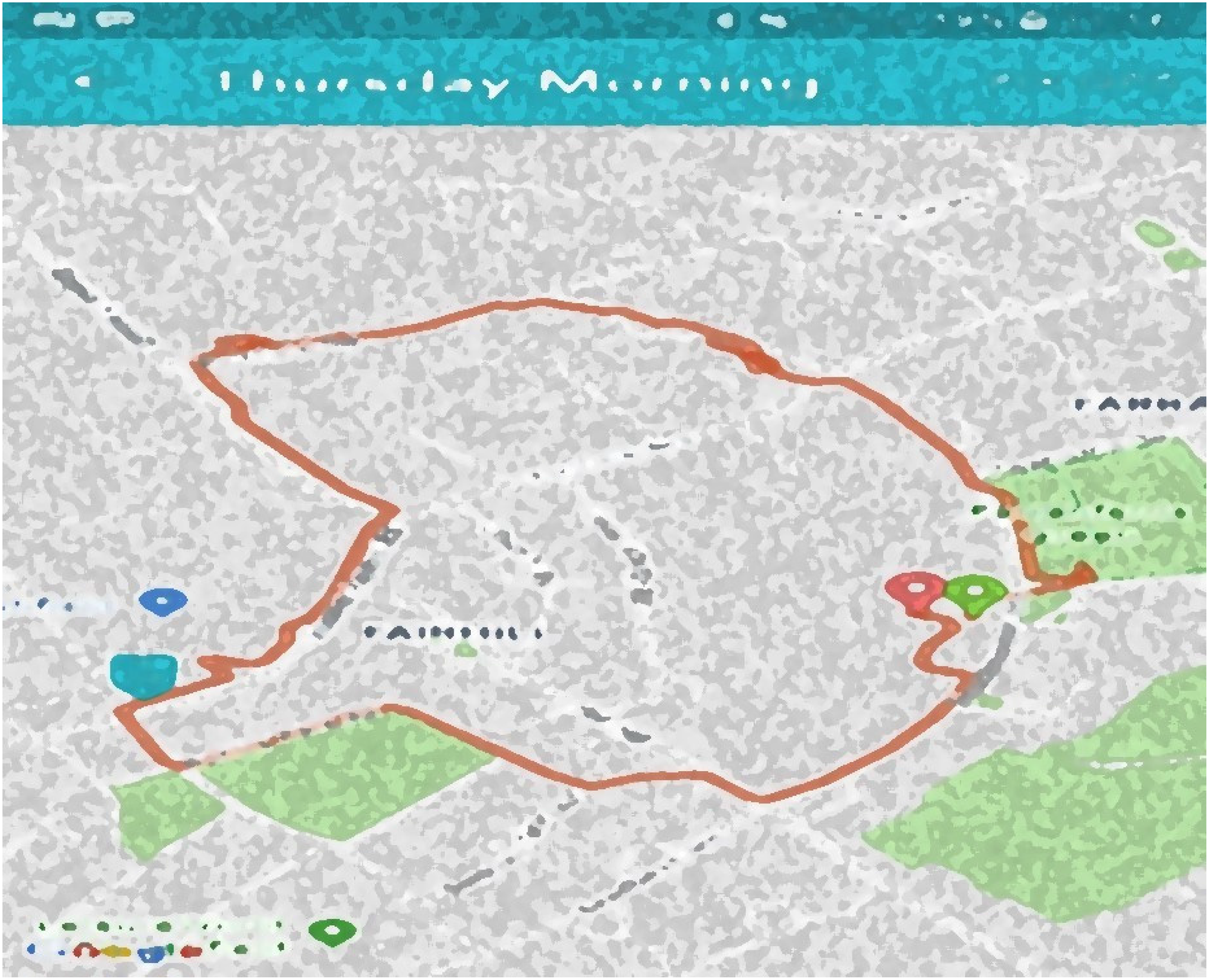
Walk tracked on GPS navigation app.
The community maps produced by the girls covered a much greater geographical area than the subsequent community walk. This was probably partly influenced by the limitations on time for the walking interview and highlights the value of multi-methods approaches. The maps produced showed the community as wide, dynamic and connected to important places and identified routes taken by the girls and spaces/places not typically seen as important in maps of the area. For example, in this instance, the maps produced by the children showed a sense of community which expanded beyond the local area to places quite a distance from their home but of importance in their lives, such as the city centre or a shopping centre, a fast food restaurant and the library in another neighbourhood. In this way the mapping facilitated a way of representing their movement and their often blurred boundaries of ‘community’, with children using the map to identify spaces they utilise outside their local area. On reflection, they were describing their community as not necessarily limited to the local.
We asked the girls to take photographs on the walk to address specific questions that the camera could document. But broadly speaking they were taking photos of ‘life as they see it’ (Chakraborty, 2009). The advantages of using participatory photography are set out by Dennis et al. (2009) and include: a user-friendly technology, fun, child-centred, offering opportunities for participants to feel valued and taken seriously; providing a non-judgemental environment; providing narrative autonomy; and producing a tangible product. It is a useful medium for helping children explore abstract questions and for exploring what they find significant about places. It is a ‘‘silent tool’ ’that helps even very young children find a voice We also used open-ended questions while they were taking the photos such as ‘tell me what/why… ‘, which are less restrictive than in a traditional interview, and can help answer ‘real-time’ questions (Chakraborty, 2009). A total of 432 photographs were taken by the children, although some of the photographs were overexposed and therefore unusable. The walks themselves lasted approximately between one and two hours and on their return the girls completed an individual short open-ended questionnaire focused on friends; places they go and things they like to do in their spare time; what they like about their neighbourhood; and what they don’t like about their neighbourhood. This was an opportunity for the participants to reflect on the walk and to document things which may not have been recorded in the discussions or captured in their photos.
Our experience of using participatory photography during the walking interviews is that this emplaced approach allowed us to access and generate visual and verbal data that privileged children’s community knowledge 5 . Talking, and taking photos while moving between the school, parks, housing states, franchise supermarket, cafes and locally-owned shops, offered interactive opportunities to explore where experiences happen and what such experiences look and feel like (Dennis et al., 2009).
Participatory photo elicitation as part of the walking interview
Follow-up photo elicitation focus groups were conducted in June 2019 6 where the girls had conversations with the researchers about the contents and meanings of the photographs taken during the walks. The girls were presented with the photos and asked to review and sort them into key themes. Photos became the objects of the focus group discussion and each of the themes was explored, discussed and audio recorded. Individual and collective narratives were attached to particular images. Questions to prompt discussion were mainly open such as ‘tell me about this photo’ and ‘why did you take this photo?’ Students were also asked to reflect on whether there was anything they would like to see changed or improved in their neighbourhood. The group discussed what they would like to do with their findings, who they might like to share them with, and how best this might be done.
Many studies have produced research material by taking photographs and then letting children talk about them in interviews (Honkanen et al., 2018). This method is underpinned by the idea that photographs contain meanings, which people have the ability to see, read, interpret or share (Cardellini, 2017). The role of mediated communication, in this case photos, was to create a situation that would trigger/encourage children to talk about things that are important to them (Kondo and Sjoberg, 2012; Mykkänen and Böök 2013) and to jointly explore the subjective meaning of the images (Jorgenson and Sullivan, 2010).
Participants sorted photos into places they spend time or ‘hang out’; food and shops; and places they don’t like in the area. The photos usually prompted more broad ranging discussions about other aspects of their life such as changing relationships with boys and planning a visit to the cemetery with the researchers rather than just the photographs and directly related matters (Honkanen et al., 2018). The meaning of the picture often became evident to the researchers when the child or young person told the story about it either in discussion on the walk or afterwards in the photo elicitation exercise. Consequently, photos taken, the photo-takers’ behaviours such as interaction among peers, and discussions about the photographs during and after the walk were all used as data for analysis. The photos were interpreted from the perspective of the image-makers; visual images are filled with ambiguity and it is only by letting the children talk about their photos that the subjective meanings attached to them were brought to the fore. This connects to our methodological intentions in PEACH – child experienced and child participatory research.
Findings
A thematic analysis, focused on identifying codes in transcripts, fieldnotes and photos, and grouping these under emerging themes was used (Braun and Clarke, 2006). Findings from the walking and photo elicitation methods support the mapping and questionnaire findings and suggest a strong sense of community among participants and indicate that a number of interrelated variables are influential in how children experience and negotiate their local environment and how this supports their wellbeing. These include their use and enjoyment of public spaces for play, access to healthy foods, and the perceived safety in using such spaces.
Spaces and Places of Importance
The community was seen and experienced by these girls as a dynamic and connected space which extended well beyond the boundaries as indicated on their community map. From the questionnaires we can conclude that there was a real sense of community and connection with place. It appears as a well-established community where families have lived for generations, reflected in the fact that so many of the girls have relatives living nearby and enjoy having friends and family in their everyday lives: ‘All my family lives in my neighbourhood’
‘Yes, my nanny, grandad, aunty, cousins, great nan and grandad’
‘Yes, my nans and uncles and dogs etc’
(PPM Questionnaire April 2019).
The children in our study mapped, photographed and discussed everyday concerns such as the location of favourite spaces and the best places to play in their local area. A lot spend their free time playing outside with their friends, including places such as the park, local shops and a recently built outdoor gym located by a big field: ‘The best thing in my neighbourhood is my friends because we can go to the park and have great fun together and make memories’
‘I go to the shop or else i’ll go to [the] park’
‘I hang out in my neighbourhood by going to Costa, Lidl, Spar, park and Fairfield with my friends’ (PPM Questionnaire April 2019).
The girls access and use of public spaces for play and ‘hanging out’ identified local parks as important. In addition, there were a number of photos of a waste plot of land which a group of girls had wanted one researcher to see on the community walk. Although critical of the dirt and broken glass and syringes there, the girls identified it as an important space that they had appropriated for parties:
Does anybody else want to say anything about this place that you said you were going to a birthday party, do you remember? You were going to a birthday party that day.
Oh yeah, we actually done it.
We put a little like cloth there and we put the snacks all there and then we had like sequences on the floor and we had the balloons Blu Tacked up there.
Brilliant, and did lots of you go?
Yeah.
Yeah, we had music (PPM Photo Elicitation June 2019).
Most of the girls responded that boys and girls hang out in the same places sometimes, but answers indicate that girls are more often engaged in socializing with friends or family members and informal active play in their area, while boys are more engaged in sports activities in neighbourhood parks.
Food environments
Access to healthy food options, or a lack thereof, is one way of examining the role of a neighbourhood setting in supporting a healthy lifestyle (Wridt, 2010). Two main themes connected to food environments were identified as part of our research: the performance of knowledge about good and bad foods within the context of the school, home and local food outlets, and; embodied experiences of school food and food guidelines, and everyday food pleasure (for more on this, see Authors, 2021 and Authors, 2021). Overwhelmingly, food was seen as something pleasurable and that contributed to the girls sense of wellbeing.
The girls were overwhelmingly positive in their views of a recently opened large supermarket in the area. It was valued for the range of products, inexpensive prices and its bakery and hot chocolate vending machine. Mike’s shop (Figure 6) emerged as a place of huge significance in the girl’s daily lives not least because of its proximity to the school and their routine of calling there once or twice a day on their way to and from school, but also because of the low cost of the products and the friendly atmosphere. All of the walking groups visited and took photos here. In an extract from one of the walking interviews as the girls approach the shop you can hear them talk about how it has all the basics, newspapers, magazines etc. The girls then chat with the shop owner Mike about the research project. He appears to know all of them and says ‘They are all my customers!’. Afterwards they comment: I think Mike’s shop is a good shop if you just wanna go and get something last minute, and they’re really nice out there.
Mike’s shop is good for like after school, you can just go and get something and then you can just go home. It has healthy stuff and unhealthy stuff and you can get either of those, and unhealthy is the crisps and the Fanta and the chocolate, and the healthy is like the bread and the milk and all the carbohydrate stuff. (PPM Community walk April 2019).
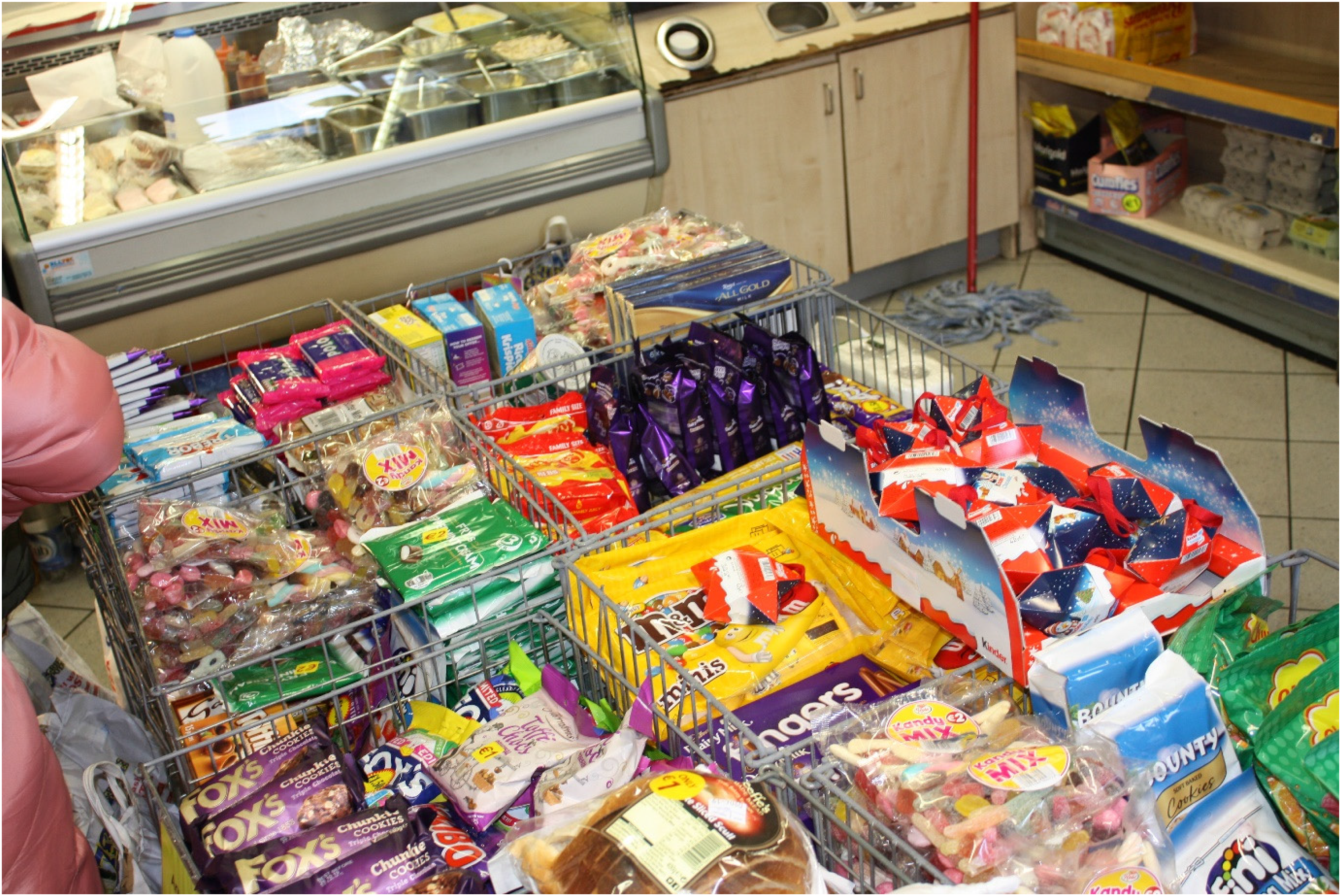
‘Mike’s shop’ community walk group April 4th 2019.
The subsequent photo elicitation focus groups identified Mike’s as a place of central importance to the girl’s everyday lives and routines.
Mike’s is good.
Why is Mike’s so good.
Prices - like you get 2 Mentos for a €1, that’s good like.
So you get good deals?
Yeah (PPM Photo Elicitation June 2019)
Conversely, the following discussion was prompted by photos of another shop: It’s very bad, it’s very expensive.
And they give you gone off food sometimes.
Yeah.
They give you free deli food because it’s gone off. (PPM Photo Elicitation June 2019)
Food is a key source of pleasure for the participants and tastes were key to the ways in which food was enthusiastically discussed. Some defined themselves explicitly as having a relationship with food in these terms, emphasising the ways in which food contributed to their sense of wellbeing.
Why do you like sweets so much?
Cause they taste amazing.
Because they taste, they taste like glory.
They taste like heaven.
So how do you reconcile it with what they teach you at school about sugar?
It’s yummy. It’s my boyfriend. Sweets are my boyfriend. (Community walk, April 2019).
Unhealthy and unsafe spaces and places
The neighbourhood is not without its problems as indicated in the girl’s questionnaire responses about things the participants do not like. By far the most common response was litter: ‘I don’t like the way there is sometimes rubbish in the terrace and my garden’
‘I don’t like people dropping rubbish on the ground and dog poop’
‘I don’t like that there’s a lot of litter in my neighbourhood’
‘I don’t like it because it’s rough, because there is fires everywhere and litter’ (PPM Questionnaire, April 2019).
Similarly, their concern about the aesthetics of the local community was evident in the photos and discussion of litter. As with the walking interview and questionnaire responses, the participants indicated their dislike of litter in the area, their concerns about the impact on the environment with mixed views on the local authority’s intervention: Rubbish bothers me.
Loads of people just throw it everywhere.
There’s no bins.
People should be like, going around like the corporation or something should be going around cleaning up the rubbish.
The corporation came a few weeks ago and wiped all of that (PPM Photo Elicitation June 2019).
There were also a number of references in the questionnaires to perceived risks including anti-social behaviour in the form of joyriders, graffiti, and fires: ‘Joyriders’
‘I don’t like there is drunk people’
‘The thing I don’t like about my neighbourhood is the teenagers that are lighting fires in our parks’
‘Sometimes people spray paint in the walls of our neighbourhood’
‘I don’t like the people living by the green because they call unkind names and are too rough’ (PPM Questionnaire April 2019).
The viewing of photos depicting litter led to a discussion about their potential role in the local community and indicated a sense of agency about local action: We should put like a big sign up on the park.
Signs around the community and saying ‘pick up your litter’
Every now and then like everybody should get a note, we’re doing a clean-up around [name of area] and stuff like that.
Yeah, I think we should do that with like everybody in [name of area] comes together and they pick up all the rubbish. (PPM Photo Elicitation 2019).
The girls spoke on the walk about their sense of being unwelcome or being hurried while at a local franchise cafe. We were there yesterday [cafe], but after two hours someone came and told us to leave.
Sometimes they’re not [nice] because sometimes they tell us that they can’t serve us with hot chocolate because we’re too big they say.
They ask you to get up. (PPM Community Walk April 2019)
However, interestingly, a more positive tone was struck in the subsequent photo elicitation discussion prompted by the photos of the same cafe: We go up there just to get the cookies and something like that.
We went up there in the summer and we got lovely drinks in [franchise café].
In [franchise café], so we’d get like hot chocolate or we’d get like drinks in there, we go in there and sit down and play on our phones or something.
(PPM Photo Elicitation June 2019).
This is perhaps an indicator of the power and embodied nature of walking research, but also highlights the value of mixed-methods research conducted over a longer period of time facilitating a range of views and perspectives. Figure 7.
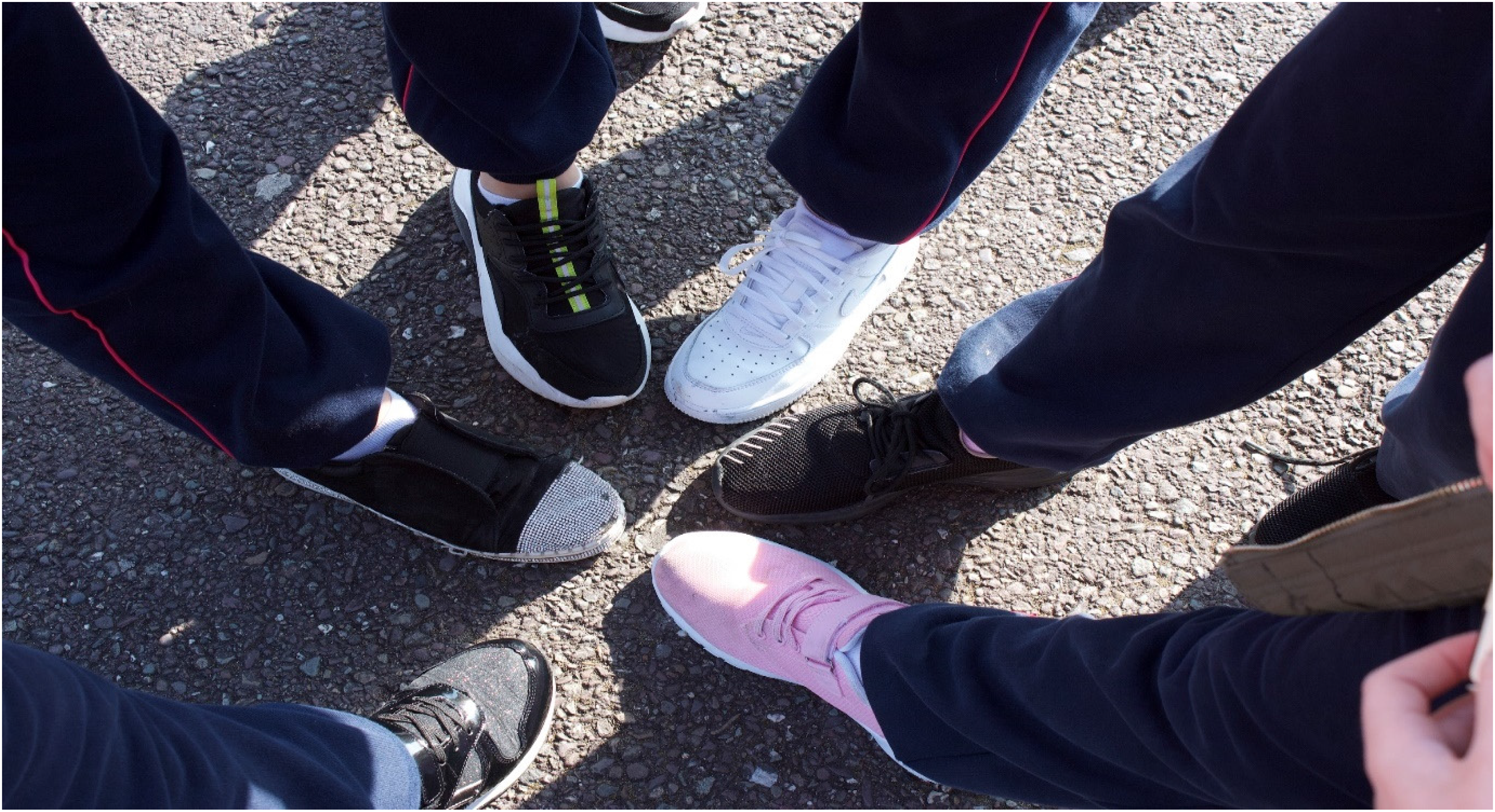
Photo from walking interview: One of the groups decided to mark the end of the walk with this picture (community walk group April 5th 2019).
Reflections on walking interviews
A walking interview is a very different encounter to a traditional interview. It is a dynamic process which there can be unexpected encounters (for example girls saw parents en route) and findings (they displayed a sense of connectedness and ownership of their community). There was more relaxed engagement outside of the school building and changes in how the girls behaved, talked and moved. This was perhaps related to the removal of the institutional ‘adult gaze’ and a disruption of the power balance between the adult and child. As researchers we were moving into their territory – they were the experts and led the walk which gave them confidence. The girls had an opportunity to display very high levels of literacy regarding healthy lifestyles and the area where they live – the amenities and services available to them, its geography and landscape, and knowledge about who lives in the neighbourhood.
The authors contend that the walking interview is an embodied experience where participants use the senses to make sense, it exposes an emotional attachment to spaces and provides a narrative of place. The physical act of walking relaxes the body and mind. Walking methodologies enable discussion of sensitive issues and silences are more comfortable while walking. Girls shared very difficult and sometimes traumatic life experiences including deaths of parents, experiences of bullying and intimidation. These walking encounters generated a lot more intimacy with the girls than any other method and so this alerts us to the importance of follow-up support put in place through the school, in this case through referring particular concerns back to the teachers and guidance counsellor.
Walking is also a political act where the participants could think about structural positioning as girls in a socio-economically deprived area of the city. The authors did not want to perpetuate the narrative of the ‘disadvantaged community’. The walking methodology was political in that it gave the girls a voice and opportunity to provide ‘talk-back’ to the official discourses on health, food and well-being. Their voices were supportive but also challenging of their current situations such as access to and respect within local shops and cafes. They recognised discrimination and marginalisation but equally emerged as social actors with choices. Walking, then, enables us to see a particular topic from a different angle, while photos can help us to capture what the written word often fails to.
The participants themselves spoke about the walking interviews as some of their favourite aspects of the project: Fresh air and not all the time indoors.
I like that we weren’t in school.
And looking at new stuff (PPM Photo Elicitation June 2019)
As such, fun is integral to research with children. It is important to remember that we are encroaching on their time and space. Chakraborty (2009) notes that when quantifying children’s participation, academics are not encouraged to quantify ‘fun’ as a positive outcome of a research study and most ladders that measure participation do not account for the good times participants can experience in research. We argue that there is an obvious need for children’s advocates to seriously take into account ‘enjoyment’ as a relevant outcome of a participatory project.
Difficulties and limitations with walking methodologies
Disposable cameras were used, because we wanted to make the process easy for participants, and for the research team as it would prevent participants from editing or deleting photographs and get around the problems of restricted access to mobile phones in school. In our initial discussions about using the camera as a tool, the participants expressed excitement about having their own disposable camera. However, the girls had some difficulties in using them and the quality of some photos was poor as commented on by the girls, ‘some of the pictures are a bit blurry’ and ‘should we put out the blurry ones?’ (PPM Photo Elicitation, June 2019). Disposable cameras have been used in research (Einarsdottir 2005; Mykkänen and Böök 2013) and while some identify problems associated with them, such as being prone to mechanical malfunction and limited in the number of photos which can be taken (Kondo and Sjoberg, 2012), overall there is little discussion of the practicalities of using them. The poor technical quality of the cameras and photos surprised us then (see also Honkanen et al., 2018).
In any group methods research, there is the challenge of dealing with dominant voices. However, we had the capacity as a team to take more time and speak with a maximum of 5–6 girls at any one time. In particular, walking allowed greater flexibility in engaging with them individually or in pairs. Also, the variety of methods over the course of the project gave all participants opportunities to engage in some activities they were comfortable with. Furthermore, the difficulties of transcribing group interviews, given the number of voices, is exacerbated by the surroundings in a walking interview including the noise of traffic, alarms, dogs barking etc. The researchers held the recorders during the walk, but we did not use a windjammer or have very high-quality equipment. While there is better technology available now to capture audio, professional transcription is difficult for walking interviews and may be best undertaken by the researcher who conducted the interview. Power differentials in research with children are well acknowledged with many authors suggesting ways of limiting this through a less adult role (Mandell, 1988; Author, 2017). As researchers we made attempts to minimise our adult role although this was difficult, at times, given the strictures of the school as a research site. For example, the school insisted that teachers accompany us on our walking tours with the children. We found that developing a ‘friendly role’ and developing relationships with young participants was an important way of minimising our power (Adebe, 2009).
Some unexpected issues emerged during the walking interviews. For example, a small number of participants spoke about their routine of going to the church to say a prayer with their friends. This prompted a discussion among many of the girls who indicated their desire to visit the cemetery, where close family members were buried, as part of the project:
Next time can we walk up to the graveyard?
My dad is buried out there.
And it’s his anniversary around the 26th.
It’s my dad’s anniversary on the 13th.
Is it, ah. And would you like to go there the next time?
Yeah (PPM Photo Elicitation June 2019)
The research team agrees with Chesworth (2018, p.851) who calls for us to embrace such uncertainties as opportunities arguing for ‘a decreased emphasis upon the implementation of method towards an openness to uncertainty and an ethical responsiveness to the researcher’s relations with children and their everyday lives’.
Conclusion
In the PEACH project, children were given an opportunity to describe how they experience wellbeing in their school and local area. Community is often considered in a one-dimensional way as a physical space or ‘container’ in which children exist and which shapes their lives and outcomes, rather than a space co-produced through children’s agencies (Jung, 2015). Our methods, in particular the walking interviews, allowed us an insight into how children saw, engaged with and constructed their community. The development of community maps demonstrated the girls blurred boundaries of community, with a strong sense of the local but an understanding of community as not necessarily limited to that local. The walking interviews, in particular, were an embodied experience which located the young people as experts and facilitated the discussion of more political and sensitive issues. There was evidence of problems ie., challenges, fear and risk in their everyday lives and encounters, but also of significant agency in these children’s experiences of their community.
The project highlights the relevance of gaining the perspectives of children on food, place and wellbeing research through mixed methods i.e. visual, verbal and mobile methods which complement and build on each other. The girls’ stories challenge individualizing narratives of wellbeing which decontextualize behaviour, and encourage the democratic, participatory co-creation of discourses of health and wellbeing as part of the lived school curriculum. The methods forefront what children already know and have learned and experienced about wellbeing in their own lives, highlights the benefits of talking about wellbeing in their local spaces and documents the very positive in their sense of overall wellbeing in their community. It demonstrates the potential for children's participation to facilitate the design of communities that address their needs and desires (Wridt, 2010). This project was interrupted by the arrival of Covid-19, which hampered some of the plans discussed by these girls to present findings to their school and community. Nevertheless, the project has revealed that children as young as eleven years of age know and understand their community - its location of, risks and value, demonstrating that children's local knowledge should be valued and sought in school and community-level interventions to promote overall wellbeing.
Footnotes
Acknowledgements
Special thanks to the participating school and in particular the 39 girls who made the research such a special piece of work.
Declaration of conflicting interests
The author(s) declared no potential conflicts of interest with respect to the research, authorship, and/or publication of this article.
Funding
The author(s) received no financial support for the research, authorship, and/or publication of this article.
