




Abstract
WhatsApp is a popular platform primarily for informal communication. It has 1.5 billion users worldwide. Though there are increasing numbers of studies looking at the use of WhatsApp in various formal settings, its use in social research remains under-studied. We have used WhatsApp in several research projects. In this article, we analyse our use of WhatsApp within two studies conducted in 2019. We analysed the content of messages and counted the messages sent by each member to our WhatsApp groups. We also analysed the feedback received from our research assistants on the use of WhatsApp groups in research. We show in this article that WhatsApp has created new opportunities for better communication and management of fieldwork to meet a tight schedule and that this improved the overall quality of the project. We offer lessons learned for improving the use of WhatsApp in research processes.
Introduction
WhatsApp was launched in 2009. It is a free application that can be used on both smartphones and computers. Users of the app can send text, real-time locations, images, voice recordings, documents, and videos (Dodds, 2019; Mefolere, 2016; Boulos et al., 2016). In 2019, WhatsApp was used by 1.5 billion users in 180 countries (Digital Information World 2019). Research on the use of WhatsApp for different purposes (e.g. personal use, health services, journalism) has been growing (Kumar and Sharma, 2017; Awada, 2016; Mefolere, 2016; Sánchez-Moya and Cruz-Moya, 2015).
However, the application of WhatsApp in the process of social research has not yet been studied. A number of studies have identified that Internet-mediated communication platforms can be useful tools to improve research (Mann and Stewart, 2000; Onwuegbuzie et al., 2011; Clarke, 2000). Skype has attracted the most attention from researchers (Cater, 2011; Clarke, 2000; Hanna, 2012; Quartiroli et al., 2017). Other Internet-mediated communication tools, such as WhatsApp, and their role in the research process remains under-researched (Quartiroli et al., 2017).
In this article we discuss the role that WhatsApp can play in the research, based on our experience of using WhatsApp groups within two studies in two countries. We show that immediacy of communication in WhatsApp groups improves communication within the team and supervision of research assistants, in terms of provision of feedback and support. Immediacy of communication is critical when trying to keep to tight schedules and, thus, can contribute to the quality of research projects. We also state that informality of communication in WhatsApp groups creates a friendly atmosphere and gives team members a sense of belonging. In conclusion, we suggest that WhatsApp groups become an online diary of the research process. Finally, we present a number of lessons learned that need to be taken into account to improve the use of WhatsApp research.
WhatsApp is a free application and can be used across different smartphone operating systems (Apple, Android) as well as on computers (Montag et al., 2015). It is simple, intuitive, and easy to use (Mefolere, 2016). The widespread use of mobile smartphones globally, along with better affordability of mobile data, has made it possible for many people to use WhatsApp throughout the world (Dodds, 2019; Mefolere, 2016). Since its launch in 2009, WhatsApp has become a social network that enables individuals to connect individually and collectively. In 2019, it had 1.5 billion users in 180 countries (Digital Information World, 2019).
WhatsApp allows users to send not only text but also real-time locations, images, voice recordings, documents, and videos. It works using the Internet, enabling the users to be connected anytime and anywhere as long as they have access to the Internet (Kumar and Sharma, 2017; Awada, 2016; Mefolere, 2016; Boulos et al., 2016; Sánchez-Moya and Cruz-Moya, 2015). WhatsApp also facilitates communication within groups, which can have up to 250 members (Dodds, 2019; Awada, 2016). Group members can send messages to all the others in the group instantaneously (Boulos et al., 2016). In 2016 the application introduced end-to-end encryption to protect user privacy (Boulos et al., 2016; Mars and Scott, 2016).
WhatsApp is transforming everyday communication in various realms, such as the professional, the educational and the interpersonal (Sánchez-Moya and Cruz-Moya, 2015). Dodds (2019) states that WhatsApp has become an important tool for journalists. It enables them to create new, more informal relationships with their sources and also promote new levels of mutuality and camaraderie among journalists (Dodds, 2019). Awada (2016) argues that WhatsApp groups enable learners to improve their interactions, foster dialogue, increase sharing, create an enjoyable atmosphere, and promote profound collaboration with peers.
Researchers commonly agree that WhatsApp is making our communication informal; even in the domains of communication such as journalism which were previously formalised. For example, Dodds (2019) states that in the communication of journalists with their sources, formal texts, emails, and phone calls seem out of place and have been replaced by light responses accompanied by emojis on WhatsApp. As she put it, politicians and academics respond as if they were texting a close friend using thumbs-up and praying hands meaning please and thank you.
Studies also suggest that WhatsApp groups have become a platform for connecting people at any point of time, bringing together people across time zones, creating communities of similar-minded/tasked people, and giving a sense of belonging to group members. These features seem to be empowering WhatsApp group users. For example, Mefolere (2016) found that WhatsApp was used for a 7-week long teachers’ strike in 2012 in Swaziland. Abubakar and Dasuki (2018) shared that WhatsApp had given women in Nigeria freedom to exercise their agency by coming together to organise various initiatives. WhatsApp has also been widely used in healthcare, connecting doctors and patients. For example, Nardo et al. (2016) stated that WhatsApp enabled healthcare providers to facilitate clinical communication, enhance learning and improve patient care.
Studies indicate that WhatsApp differs from other social media tools and Internet-based communication platforms in a number of ways. WhatsApp offers more immediacy and spontaneity than other tools, such as Facebook and Skype which do not require an account to be tied to users’ mobile phone numbers (Boulos et al., 2016; Mars and Scott, 2016). Communication over WhatsApp is faster than email as it permits immediate response (Mars and Scott, 2016). In WhatsApp, users can also see if their contacts are online and if the message has been delivered and read. These actions are not possible in other communication tools such as SMS (Church and Oliveira, 2013).
Despite a growing number of studies on WhatsApp, the app is still under-researched (Boulos et al., 2016; Mars and Scott, 2016; Church and Oliveira, 2013). No studies have been found on the use of WhatsApp in the research process, suggesting a need to improve understanding of this app’s role in research. Thus, this article is contributing to filling this gap in knowledge by examining the use of WhatsApp in the research process.
Teamwork in research
Team-based fieldwork can be politically, operationally, and methodologically challenging, as a host of issues can arise. For example, coordination and management of the research team, communication between team members and data handling can become difficult, especially if the team members come from different settings/countries (Guest and MacQueen, 2008). For the research team to work effectively, it is crucial that the team members commit to a common purpose. Teamwork requires a coordination network defined as a dynamic, functional structure of members, tasks, and tools (Quartiroli et al., 2017). Reviewing team functioning, facilitating team learning, and improving performance are important for teamwork (Mathieu et al., 2018).
Team size is another important aspect of teamwork that determines the success of the work. The larger the group is, the more that efforts are needed to support and manage it. Members start forming informal relationships in smaller groups. There is also a risk of power imbalance as some members might struggle to integrate and receive support and acknowledgement of their contributions; while other (more vocal) members tend to dominate during the team’s face-to-face interactions, and this leads to exclusion and biased domination by some team members (Guest and MacQueen, 2008).
These risks are especially pertinent to research assistants. The role of research assistants is not widely discussed in the literature (Anwar and Viqar, 2016; Deane and Stevano, 2016; Weeks et al., 2015; Vukotich and Yearwood, 2014). As Anwar and Viqar (2016: 114) put it ‘research assistants are key partners in the research process but have been rendered invisible’ in the literature. Meanwhile, Weeks and colleagues (2015) noted that research assistants should be considered responsible for knowledge generation along with the principal researchers (investigators), which would curb the existing power imbalance. According to Deane and Stevano (2016), neglecting research assistants and their needs can lead to biased data and misleading results.
Weeks and colleagues (2015) found in their survey, focus groups, and interviews with research assistants that they wanted frequent feedback on their work and the quality of the data they collected for quality assurance. In particular, they noted that the system should provide opportunities for them to ask questions without seeking out key investigators/supervisors, particularly when issues arise during data collection outside office hours. Research assistants wanted to have a platform for peer mentorship to learn from each other and to come together as a team. They also wanted to be welcomed, acknowledged, and offer their contributions to the research by sharing their insights on the collected data (Weeks et al., 2015).
Our use of the Whatsapp groups in research
As independent researchers, five of us have more than 10 years of experience in social research. To be precise, our experience ranges between 10 and 16 years. Normally, we work as a team internationally and hire local research assistants for data collection. We commonly use both qualitative and quantitative methods.
Before 2018 we did not use WhatsApp for research for several reasons. Firstly, we only started using smartphones in the early 2010s. Secondly, WhatsApp was not as popular among the populations in the regions where we work (i.e. low and middle-income countries - LMICs) then as it is now, mostly because not many people could afford smartphones and mobile data. In a span of 6–8 years (2010-2018), the use of smartphones and WhatsApp boomed in LMICs as both smartphones and mobile data became affordable.
Prior to 2018, we used email and Skype for field communication, especially if the team members were in different countries during the research. For example, between 2014 and 2016, we conducted project evaluations in Afghanistan and Vietnam. Our UK-based researchers supported colleagues who were doing fieldwork in those countries via email and Skype when needed only. It was a slow process, as to write an email, one feels a need to follow a certain writing protocol/etiquette. It is almost like writing a letter. For this reason, emails tended to be sent only when required and focused on issues that needed to be addressed rather than daily check-ins. Skype was used only for video calls. Taking into account the time difference between countries and the busy schedules of fieldwork, it was always a challenge to set up a time for calls. Most commonly, calls were conducted on weekends. Limited communication meant that colleagues in the field had to make decisions on a daily basis and without support from and discussion with team members.
In cases where all of us were doing research in the same country, we used phone communication prior to 2018. While phones enabled us to address the urgent issues, there were challenges reaching the person, especially if that person was conducting interviews or focus group discussions (FGDs). Therefore, we were wary to call during the day in order not to disturb the research assistants. Most importantly, not all research assistants felt comfortable to phone their managers or receive phone calls (even just for checking in).
We used WhatsApp in our research for the first time in 2018, on a very ad hoc basis. We had a larger group of research assistants to manage this time. It was becoming a challenge to ensure that all the research assistants received the same information and to coordinate their work. The WhatsApp group was a new feature and just proliferating in use. One of our colleagues created a group with research assistants. This is when we got a glimpse of a different way of team communication and management. We were relieved to find a way to share information equally and enjoy regular communication with the whole team. We understood that some individuals prefer messaging rather than talking by phone. We also learned that not all people check their emails or have Skype on their phones.
With these new discoveries, we decided to use WhatsApp in two studies in 2019, which took place in Kyrgyzstan and Abkhazia (Georgia). In both cases, projects had very tight schedules, and data collection was supposed to take place within three weeks. Our role involved designing the methodology for studies, supervising data collection, analysing data, and writing up the findings. We hired a team of local research assistants for data collection. A detailed overview of the studies is provided below. In Abkhazia (Georgia), communication in the WhatsApp group was only in Russian. In Kyrgyzstan, research assistants used Kyrgyz and Russian languages for communication. The team of lead researchers spoke both Russian and Kyrgyz and thus could engage in the communication fully.
When studies were over, feedback was collected from the local research assistants via the WhatsApp group in Kyrgyzstan and a discussion in Abkhazia, Georgia. Research assistants were asked about their positive and negative experiences of using the WhatsApp groups within the studies. The quotes presented below come from this feedback.
WhatsApp messages were downloaded in Microsoft Excel and the content of the messages was analysed using a thematic approach (Ritchie and Lewis, 2003). We also counted WhatsApp messages (but not videos and pictures) sent by every group member to analyse to what extent the research assistants used the WhatsApp groups. Lastly, our group of lead researchers held several discussions while analysing the WhatsApp data to reflect on our own experience of using the WhatsApp groups and interacting with research assistants.
Study 1 in Abkhazia (Georgia)
The first study was conducted on health care services for children in Abkhazia in April and May 2019. Abkhazia is part of Georgia, a post-Soviet, upper-middle-income country with a population of around four million. The study design used a mixed-method approach. A survey was conducted with caregivers, extended family members, and health workers (n = 1,200) using tablets. Additionally, nine FGDs and 15 key informant interviews (KIIs) were conducted with representatives of the same population groups. The study was conducted in six regions of Abkhazia (44 villages and towns) (Figure 1).
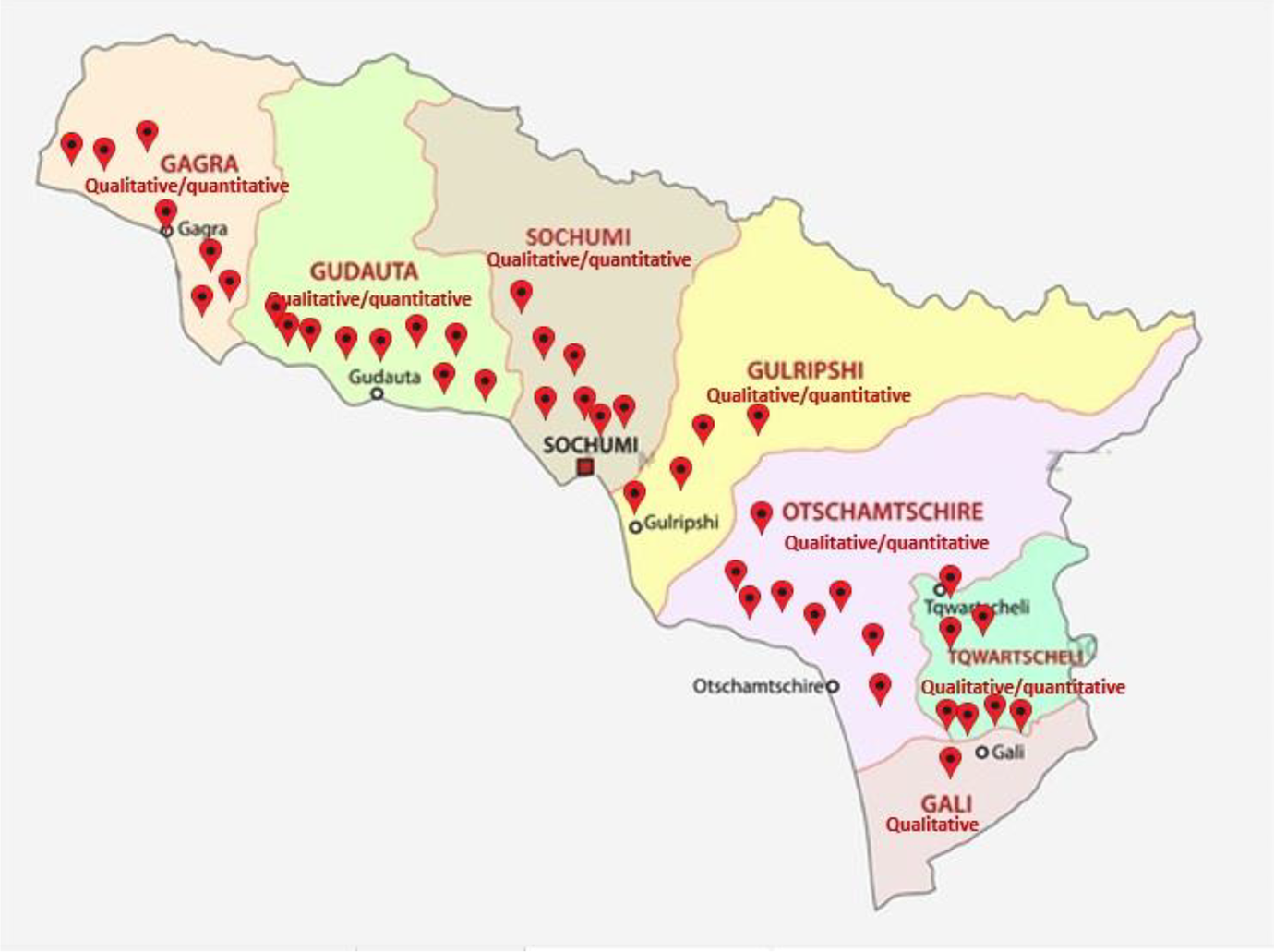
Map of Abkhazia. Study sites are signposted
A team of nine local research assistants was employed to collect only quantitative data. The call for research assistants required candidates to have university degrees in social science, interpersonal skills, and strong communication skills. Two of the research assistants had previous experience of conducting surveys. Seven had experience of working for development projects. Five of the nine research assistants were male; the other four were female. The work schedule of research assistants was flexible. They could work outside of regular office hours and on the weekends. They travelled to the villages sampled for the study throughout the country (Figure 1). The research assistants were trained for two days on the use of tablets for data collection as well as on procedures to maintain respondent confidentiality and anonymity.
Study 2 in Kyrgyzstan
The second study was conducted on poverty reduction in rural parts of Kyrgyzstan in July-September 2019. Kyrgyzstan is also a post-Soviet country. It is categorised as a low-middle income country and has a population of around 6.5 million people.
The study also used a mixed-method approach. A household survey was conducted in rural areas (n = 4,500) using tablets. Forty FGDs and 200 KIIs were conducted. The study was conducted in four of seven regions of Kyrgyzstan (73 local authority areas) (Figure 2).
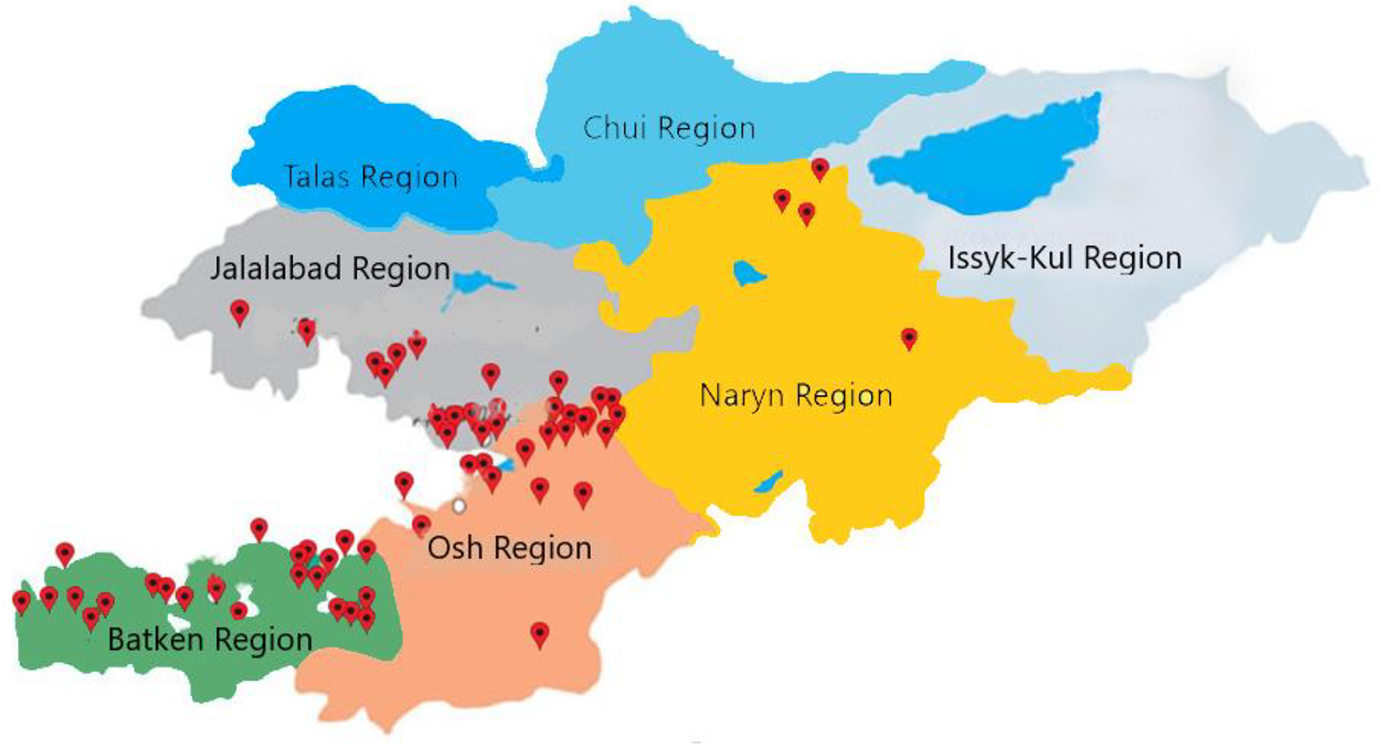
Map of Kyrgyzstan. Study sites are signposted
The team of local research assistants consisted of 31 people. Like for the Abkhazian study, the call for research assistants in Kyrgyzstan also required the research assistants to have university degrees in social science, interpersonal skills, and strong communication skills. All of the selected research assistants met these criteria.
The research assistants worked outside of regular office hours and on the weekends. They travelled to the villages sampled for the study. They were split into two groups: one of which conducted the quantitative part of the study (19 people) and one the qualitative part (12 people). A one-day training event was held for each team on the respective data collection methods. Within this study, we had two WhatsApp groups:
− Group 1 included the lead researchers and the research assistants involved in qualitative data collection. The group was open for all the members. The content of this group was used in analysis presented below.
− Group 2 included the lead researchers and research assistants involved in quantitative data collection. This group was open for all members during the piloting of the survey questionnaires. After that, only a group administrator (supervisor) could send messages. The rationale for this is provided in Section Challenges and Lessons Learned.
Our reflections on the use of WhatsApp groups and analysis of WhatsApp texts sent in the research process showed that WhatsApp can improve communication and supervision and build a sense of community due to informality of the interaction. However, we also learned a number of lessons based on challenges encountered, which we discuss below.
Improved communication and supervision
In both countries, all the research assistants had smartphones and were users of WhatsApp before their involvement in our research projects. Mobile data was also affordable in both countries. Thus, it was easy to create WhatsApp groups that included all the research assistants. Compared to our previous communication within research projects via email, Skype and phone calls, the use of WhatsApp groups in these two projects transformed our communication. As indicated above, we previously did not have daily communication during fieldwork. The tools that we used (phones and Skype) did not have features for easy and chat-like communication among a large team. We only used emails for important and urgent matters. Skype was only used for individual calls.
With WhatsApp, we could send information to all members of the team at the same time. This ensured that everyone in the team received the same information in the same format anywhere they were. As mentioned earlier, research assistants were supposed to travel throughout Abkhazia and Kyrgyzstan respectively.
The WhatsApp groups also enabled team members to easily report what they had done and receive feedback from the supervisors instantly. Importantly, they could send their questions as they emerged and receive answers rapidly to address the challenging situation that they were encountering. Research assistants appreciated that their questions were answered promptly by the lead researchers in the WhatsApp group: The group was useful because we shared our experience, asked questions, and received answers promptly (Female research assistant, Abkhazia, May 2019). The WhatsApp group helped us to solve issues very promptly. If not for the WhatsApp group, we would have used an email, many do not check their emails often, and the work would have been slowed down (Female research assistant, Kyrgyzstan, August 2019).
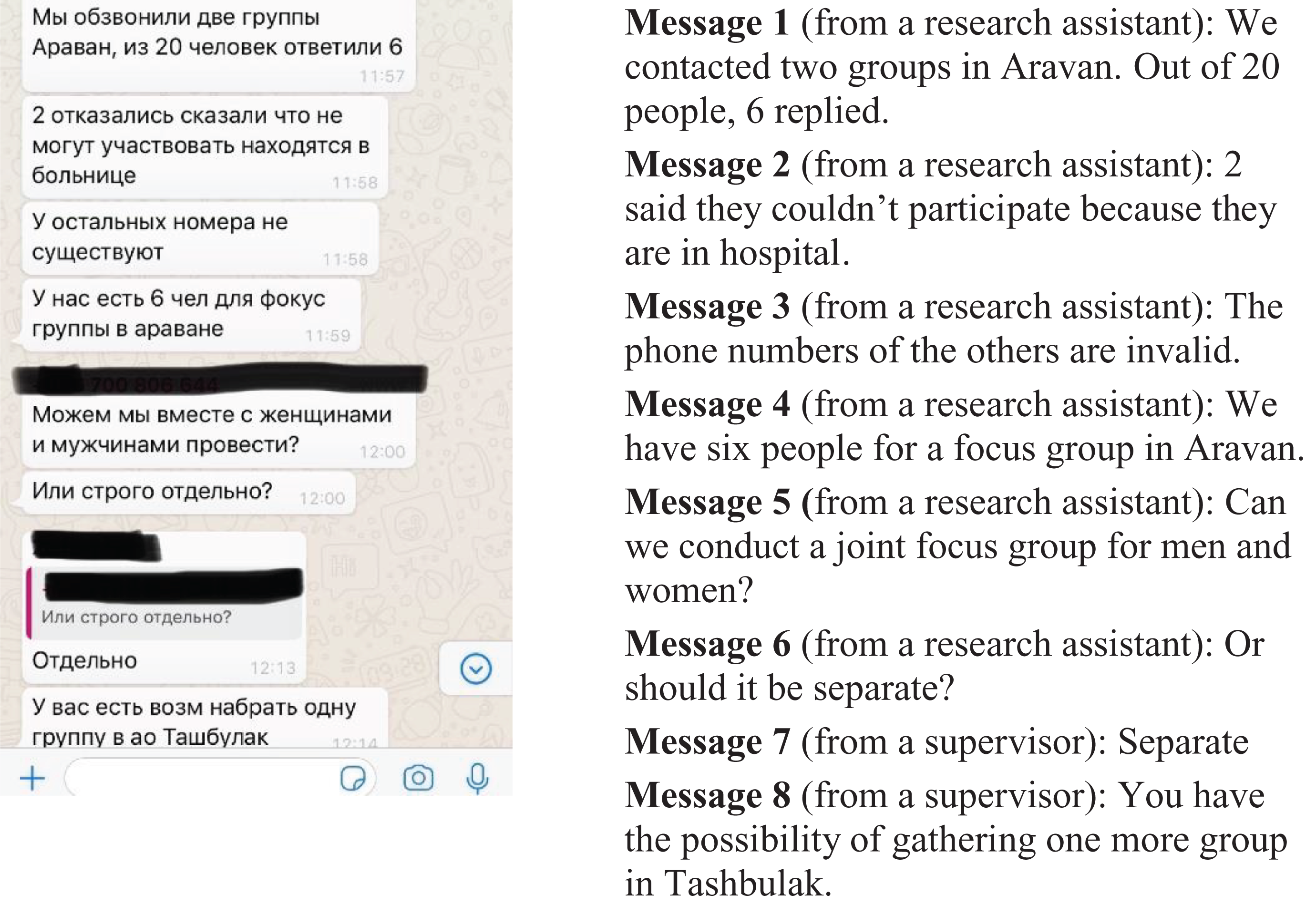
Snapshot of the WhatsApp conversation in Kyrgyzstan
The research assistants particularly appreciated that everyone was getting information in the same way and at the same time. They also stated that instant communication with lead researchers empowered them to be in control of their situation and gave confidence in the field, as they knew that there was online support which they could count on: The WhatsApp group helped us a lot. We controlled what we were doing and where we were going. We were consulting you. We were receiving information without approaching you personally but from the field. It was very convenient (Female research assistant, Abkhazia, May 2019).
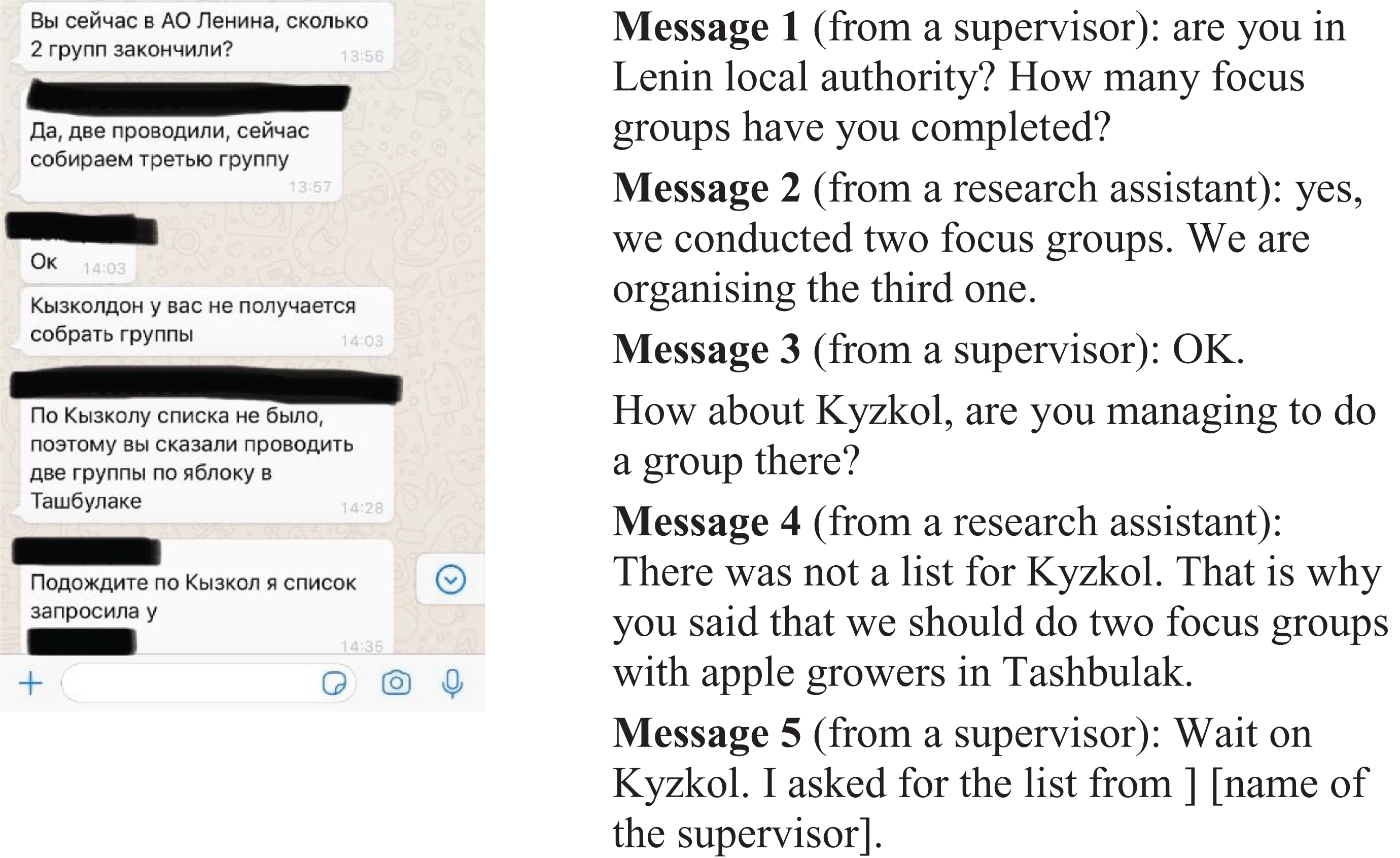
Snapshot of the WhatsApp conversation in Kyrgyzstan
As shown in Figures 5 –8, the research assistants sent pictures, videos and audio messages from the field. These raised a few challenges that are discussed in the later section. However, receiving pictures and, especially, videos was a new experience for us as it gave a glimpse into the field and made the research visual for us. We have taken pictures during fieldwork before. However, these pictures would only be shared with other team members when the fieldwork was completed and the researchers came back to the office and downloaded photos to the computer. WhatsApp enabled the sharing of videos and photos as things happened. Thus, we could see what was happening and get a feel of how the research sites looked. Some of the research assistants sent videos of themselves walking in the new areas and looking for respondents which made the whole process engaging.
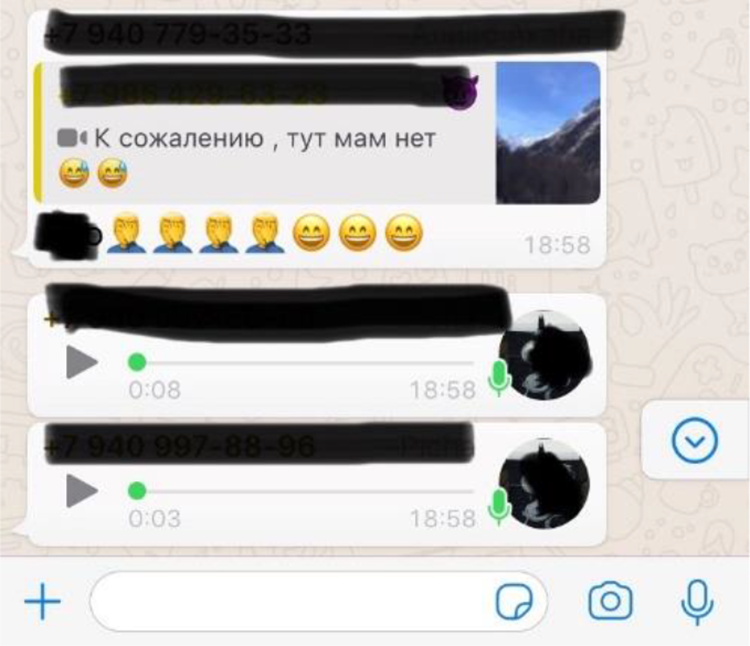
Snapshot of WhatsApp conversation in Abkhazia
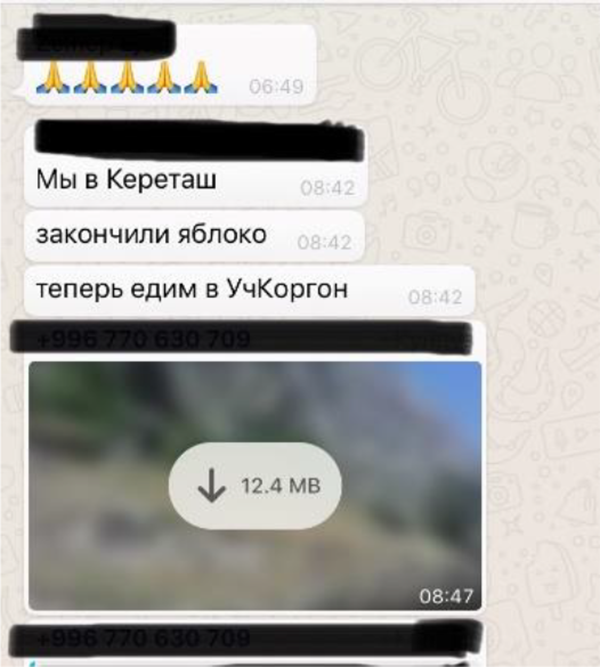
Snapshot of WhatsApp conversation in Kyrgyzstan
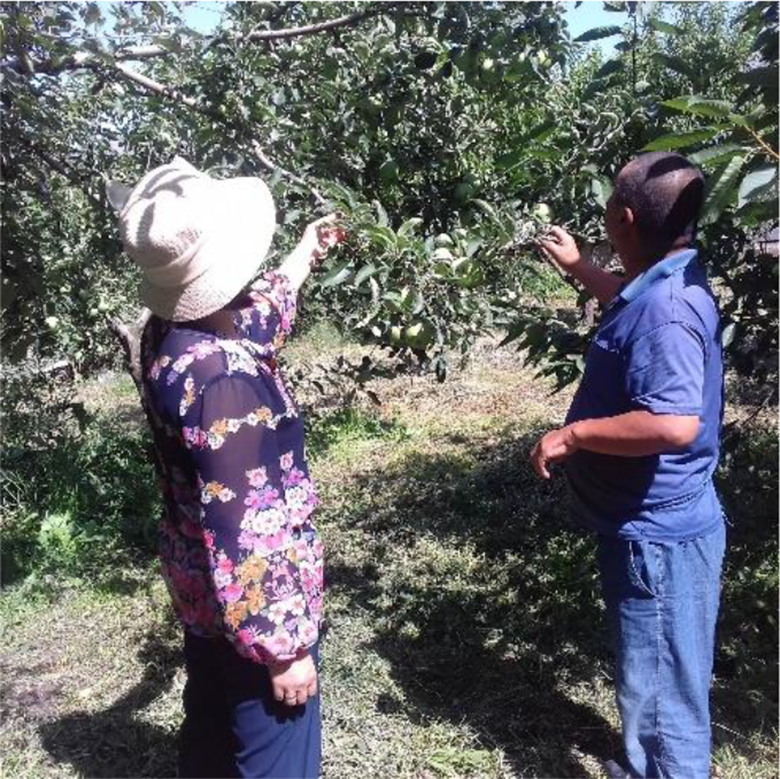
Research assistant talking to a study participant after an interview
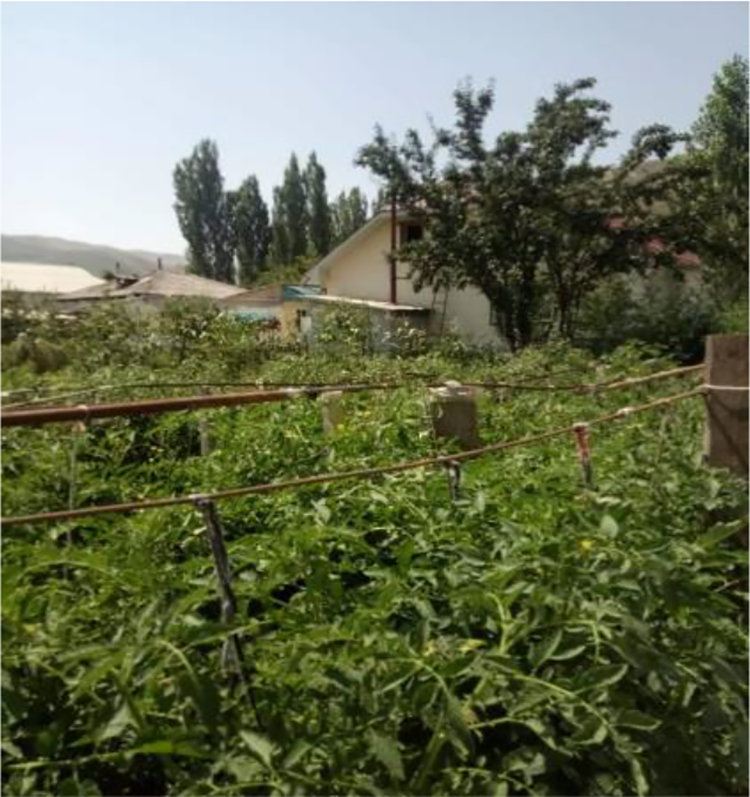
A plot of land owned by a respondent
In some cases, there can also be misunderstanding between lead researchers, who design methodology and require adherence to it, and research assistants, who collect data and encounter different barriers in the field. The former group does not always appreciate what happens in the field as they cannot physically experience it. Such factors as stray dogs in the villages, muddy roads, long distances between houses, and the absence of doorbells making data collectors shout and wait for a response for at least five minutes could not be conveyed to those not engaged in this experience, before. With WhatsApp, it was possible for us to acquire more detailed understanding of data collection through pictures, videos, and audio messages sent by research assistants from the field (Figures 9 and 10). This helped us to take appropriate actions to improve data collection and, importantly, to be more supportive of research assistants and ensure their safety.

Picture of a dog taken by a research assistant doing a survey in Abkhazia and shared over WhatsApp
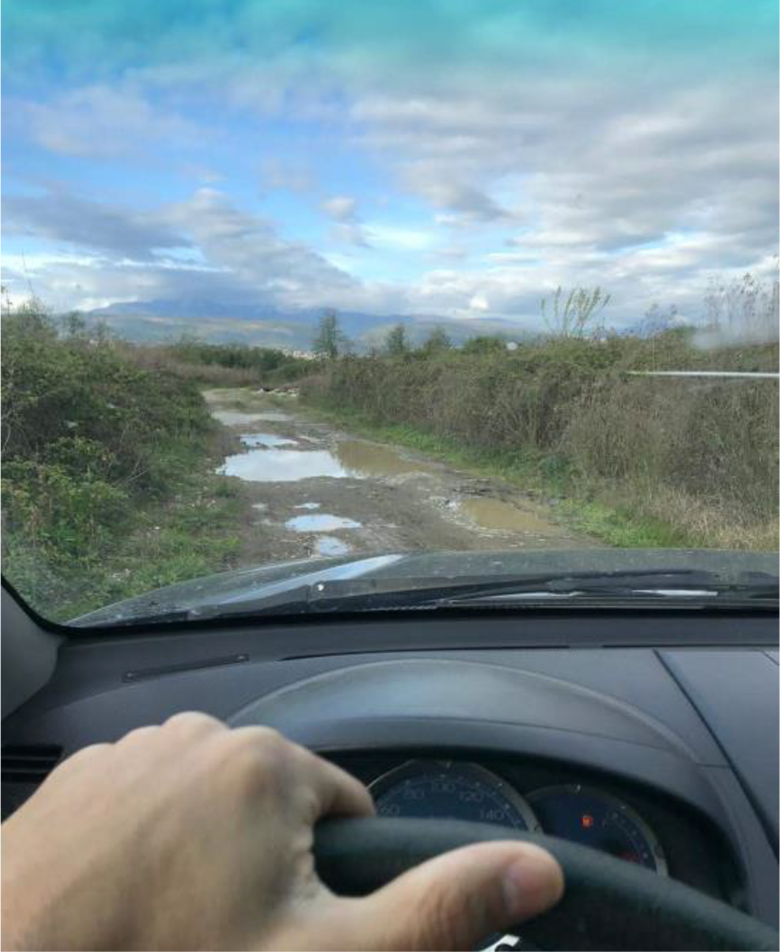
Picture of a road taken by a research assistant doing a survey in Abkhazia and sent over WhatsApp
Informal communication and building a sense of community
WhatsApp groups helped create an informal and friendly atmosphere among team members. The research assistants appreciated that communication was informal, and the atmosphere was positive: Everything was positive and in good humour. We talked about various topics, but this did not impact our work. I cannot say that there were any disadvantages – only advantages (Male research assistant, Abkhazia, May 2019). We also supported each other. The atmosphere in the group was friendly, which is very important (Female research assistant, Abkhazia, May 2019).
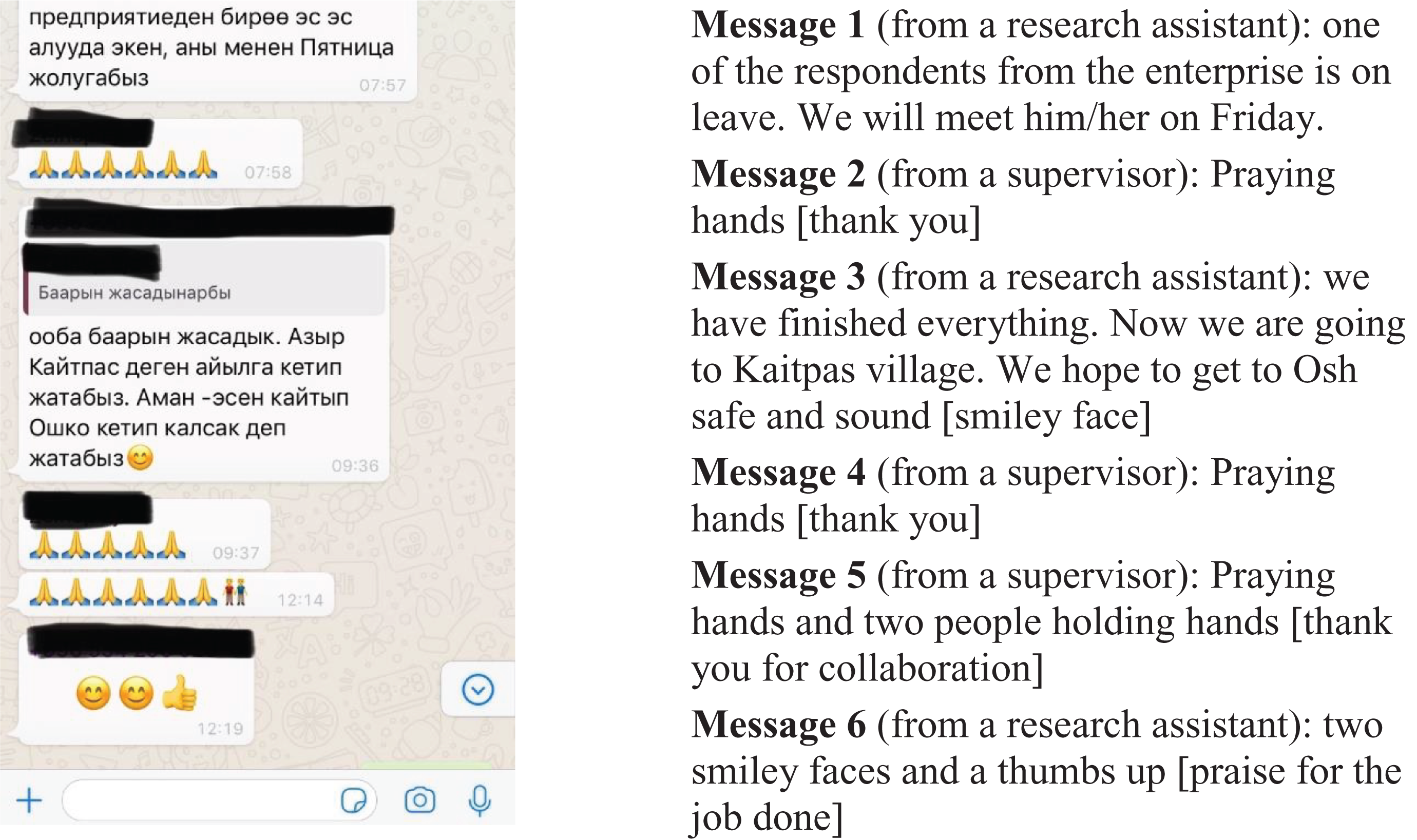
Snapshot of WhatsApp conversation in Kyrgyzstan
In a few instances, group members also shared humorous videos and infographics and made jokes. We did not restrict this type of communication. It seemed that such use of the WhatsApp group created a friendly atmosphere and bonded team members. Figure 12 illustrates an example of such a conversation. Research assistants discussed the release of the Avengers film in cinemas. One of them joked that, after data collection, they could go to see this movie and survey all the visitors when the film was over. As can be seen, this conversation was accompanied by the use of many emojis.
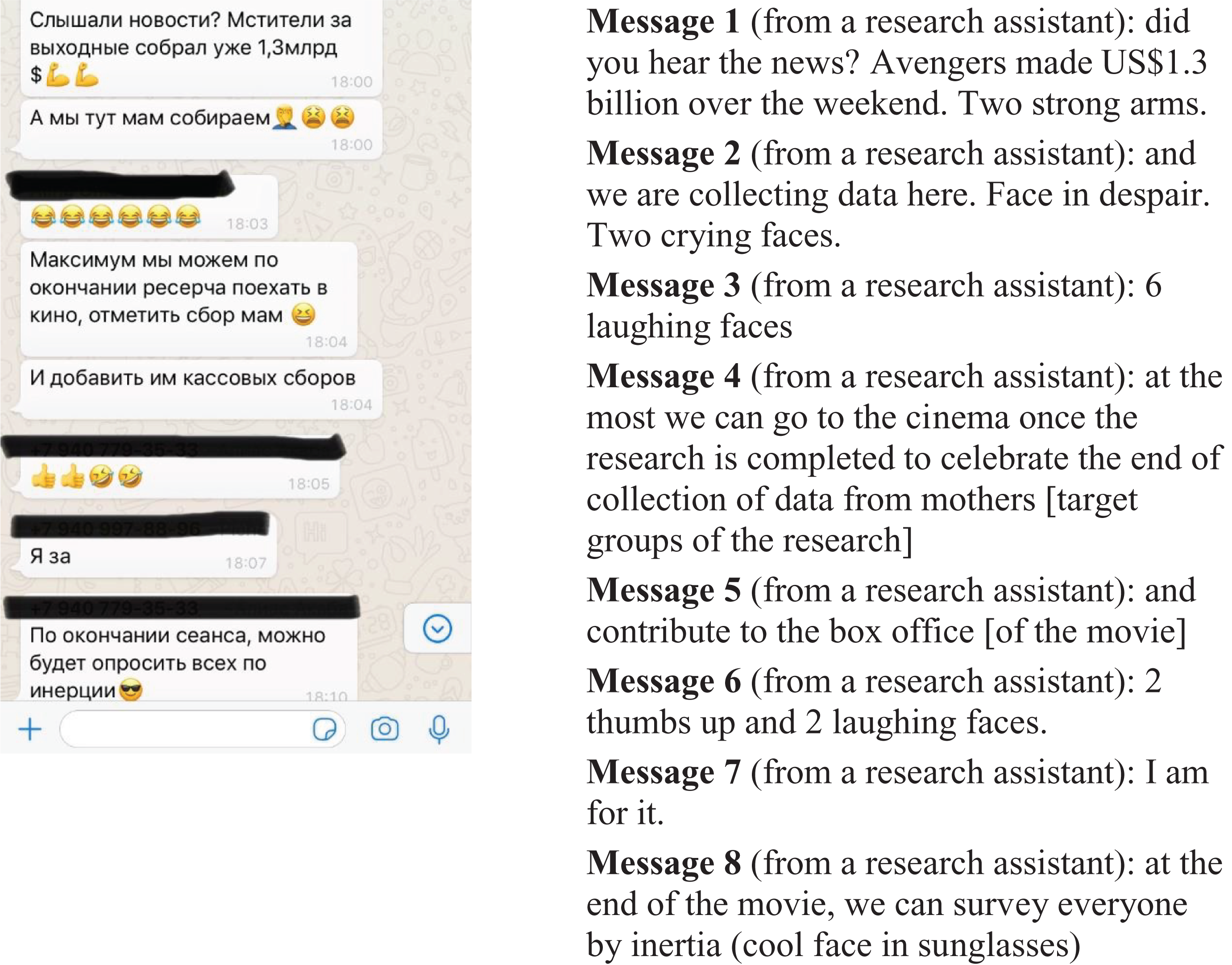
Snapshot from a WhatsApp conversion in Abkhazia
The WhatsApp groups created a sense of community and bonded group members. Team members supported each other with regard to work and also private matters. For example, a WhatsApp snapshot in Figure 13 shows that team members sent wishes for recovery when one of the members said that her child was unwell. Peer support, encouragement, and praise for work done, especially with the use of emojis, was common.
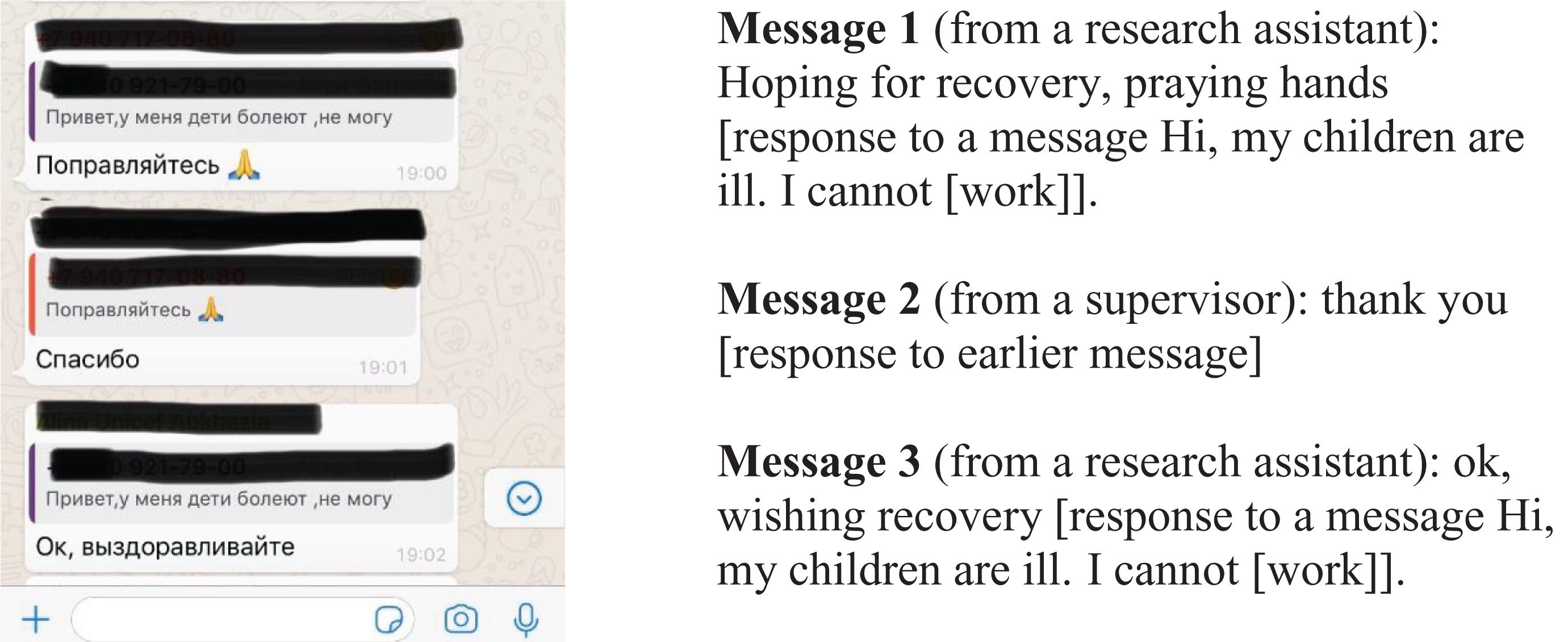
Snapshot of a WhatsApp conversation from Abkhazia
During our analysis and reflections on the use of WhatsApp groups, we came to realise that the groups had served as online diaries that recorded fieldwork activities through our communication. We can track how things unfolded by date. The fact that WhatsApp conversations can be downloaded into Microsoft Excel makes it possible to analyse the content in different ways (e.g. by senders of messages, or looking at issues reported).
Further, WhatsApp also made it possible for research assistants to write any additional information that emerged during fieldwork but could not be captured by the tools in the methodology (e.g. survey or interviews). For example, after the survey, some respondents provided additional information on the study subject. The research assistants shared this information (with no mention of names) in the WhatsApp groups. While this information was not included in data collected via qualitative and quantitative tools envisaged in the methodology, it provided insights to us to better understand the data and context in the study sites.
Challenges and lessons learned
In our use of WhatsApp we encountered such challenges as ethics, the confidentiality of data, roles and responsibilities of group members, and boundaries between work and personal lives. Thus, we learned that a communication strategy needs to be in place that clearly spells out the purpose of the group, the composition of members, and ground rules.
Sharing images and videos
Sharing photos from the field raised concerns with regard to the privacy of respondents. This was rectified by the fact that we sought written consent from participants of interviews and FGDs where pictures came from. Nonetheless, the issue of handling and storage of photos requires more deliberation.
Dynamic in Whatsapp group
The analysis of WhatsApp messages in Abkhazia and Kyrgyzstan showed that WhatsApp can be a platform for egalitarian communication. However, this depends on a number of factors.
In our analysis, all the research assistants in Abkhazia engaged in communication during the three-week data collection at least to some extent, as can be seen from Figure 14. Most of the research assistants had known and worked with each other before, suggesting that the WhatsApp group members already had some bonding. Research assistants were in the same age-range (25–35 years old). It was also a gender-balanced team.
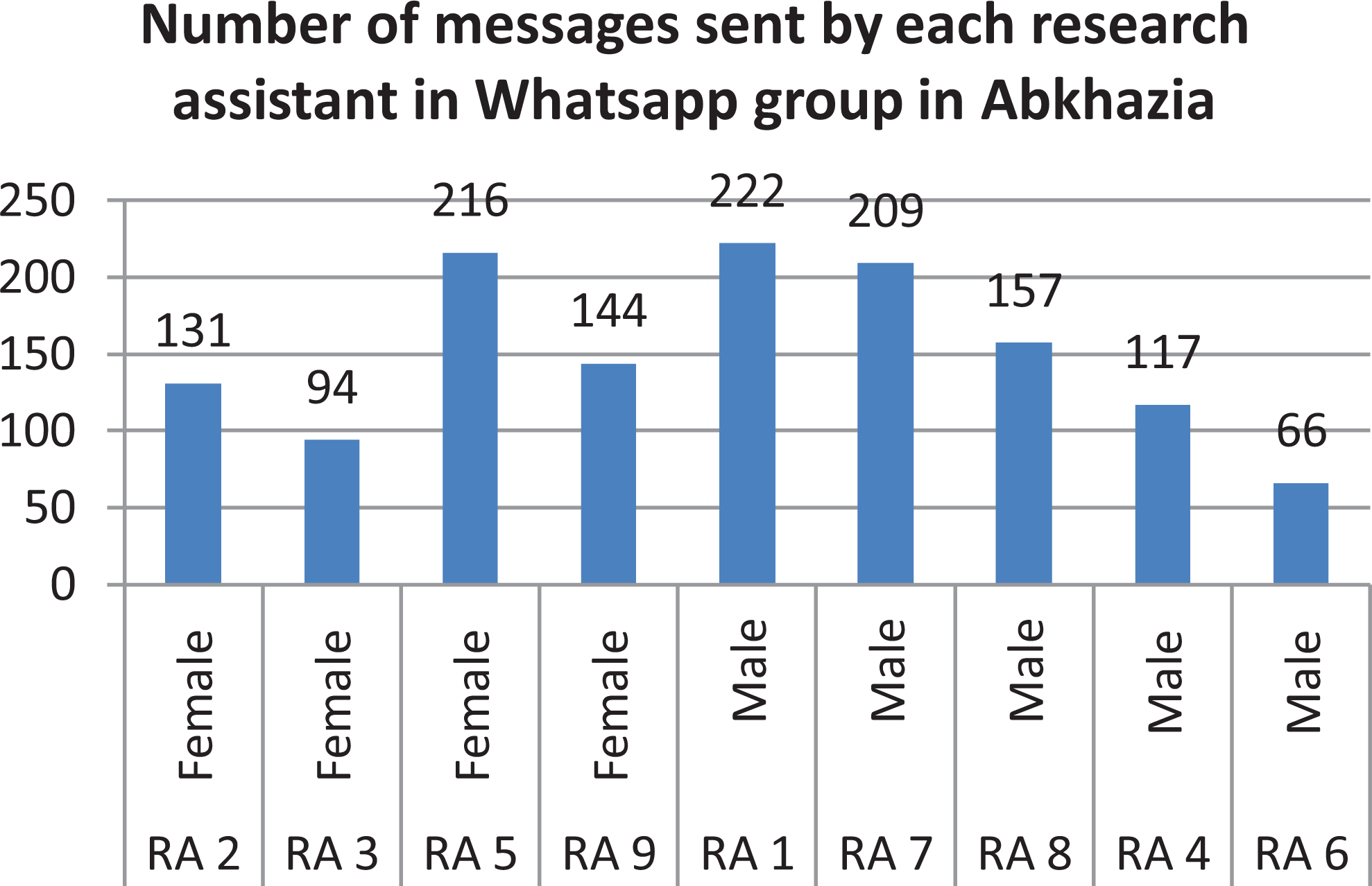
Number of messages sent by each research assistant in WhatsApp group in Abkhazia
In Kyrgyzstan, the situation was different. Firstly, as previously stated, there were two different WhatsApp groups: one for 12 research assistants collecting qualitative data and one for 19 research assistants collecting quantitative data. As Figure 15 shows, two people dominated the conversation in the WhatsApp group on qualitative data collection in Kyrgyzstan. Demographically, the group consisted of mostly women and had a large age range (20s to 60s). In addition, the research assistants in the qualitative group had two different roles: half of them were interviewers/FGD facilitators, and the other half were note-takers. They worked in pairs that included one interviewer/facilitator and one note-taker. The note-takers, who were young (in their 20s) tended to send fewer messages than interviewers/facilitators, who were much older (30-60 years old). This said, however, the note-takers sent many pictures and videos from the field which are not reflected in Figure 15.
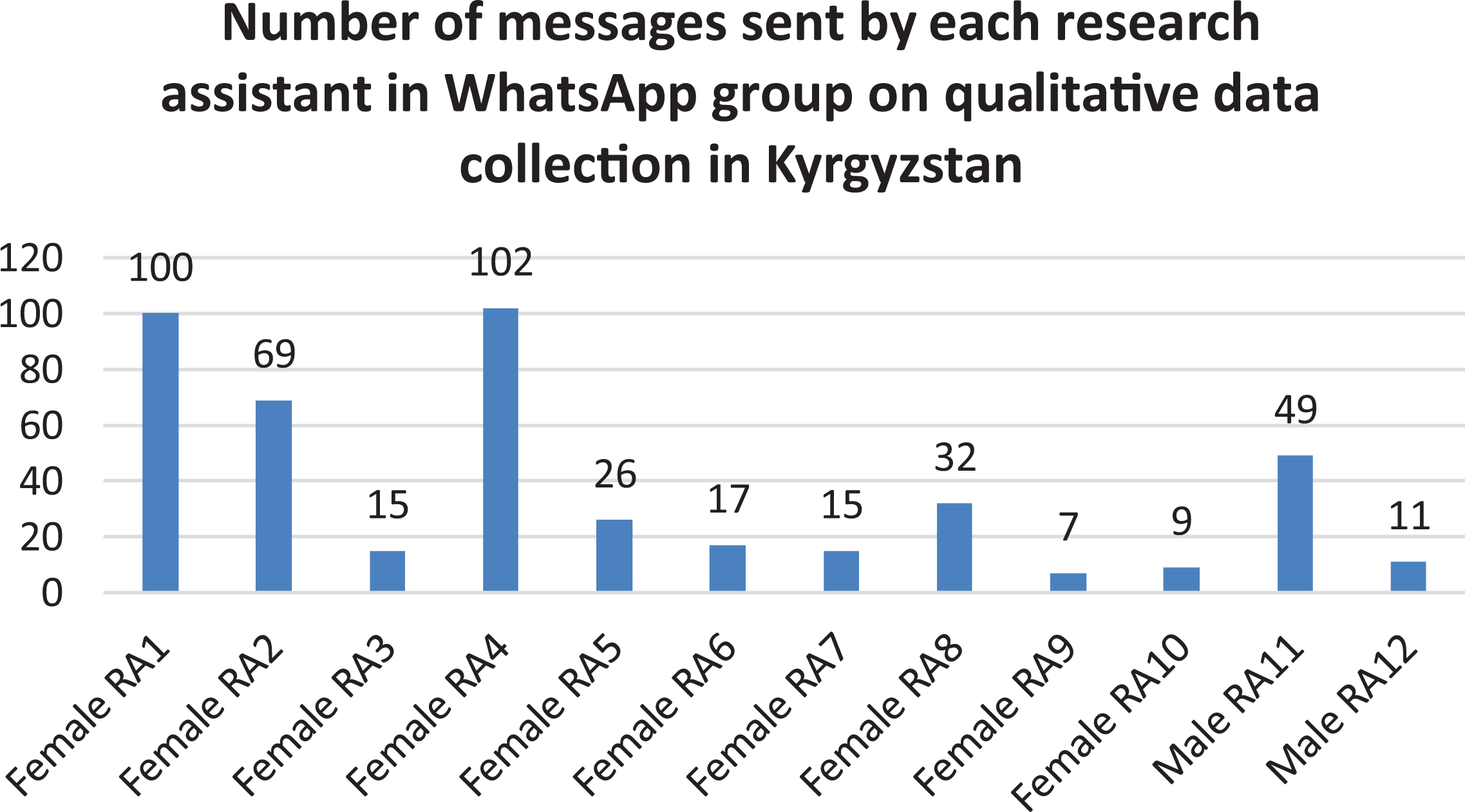
Number of messages sent by each research assistant in WhatsApp group on qualitative data collection in Kyrgyzstan
The quantitative data collection team in Kyrgyzstan was large (19 participants). It consisted of primarily female research assistants. The age range was large (25–55). This was our first experience of working with such a large group within a tight schedule (3 weeks) to collect data from a large sample size (over 4,500). These conditions meant that we had to put in place effective team management and communication. In addition, it was important to maintain a positive and friendly team atmosphere. We recognised from our previous experiences that WhatsApp could enable us to achieve this. However, at the same time, we foresaw that, with relatively large groups especially where people did not know each other well beforehand, it could potentially be overwhelming to manage the constant flow of messages from everyone. We were particularly cautious of using the WhatsApp group for complaints, as they could negatively affect the team spirit and result in unnecessary debates. To mitigate these risks, we decided to use a function of the WhatsApp group that enables restriction of group activity and only allows a group administrator send messages. The group was open for everyone during the piloting of survey questionnaires. Figure 16 shows the number of messages sent by research assistants during this period. Of 19 members, 16 sent at least one message. Five members were more active than the others. When the group was closed, research assistants could still send private messages to the supervisors if support was needed.
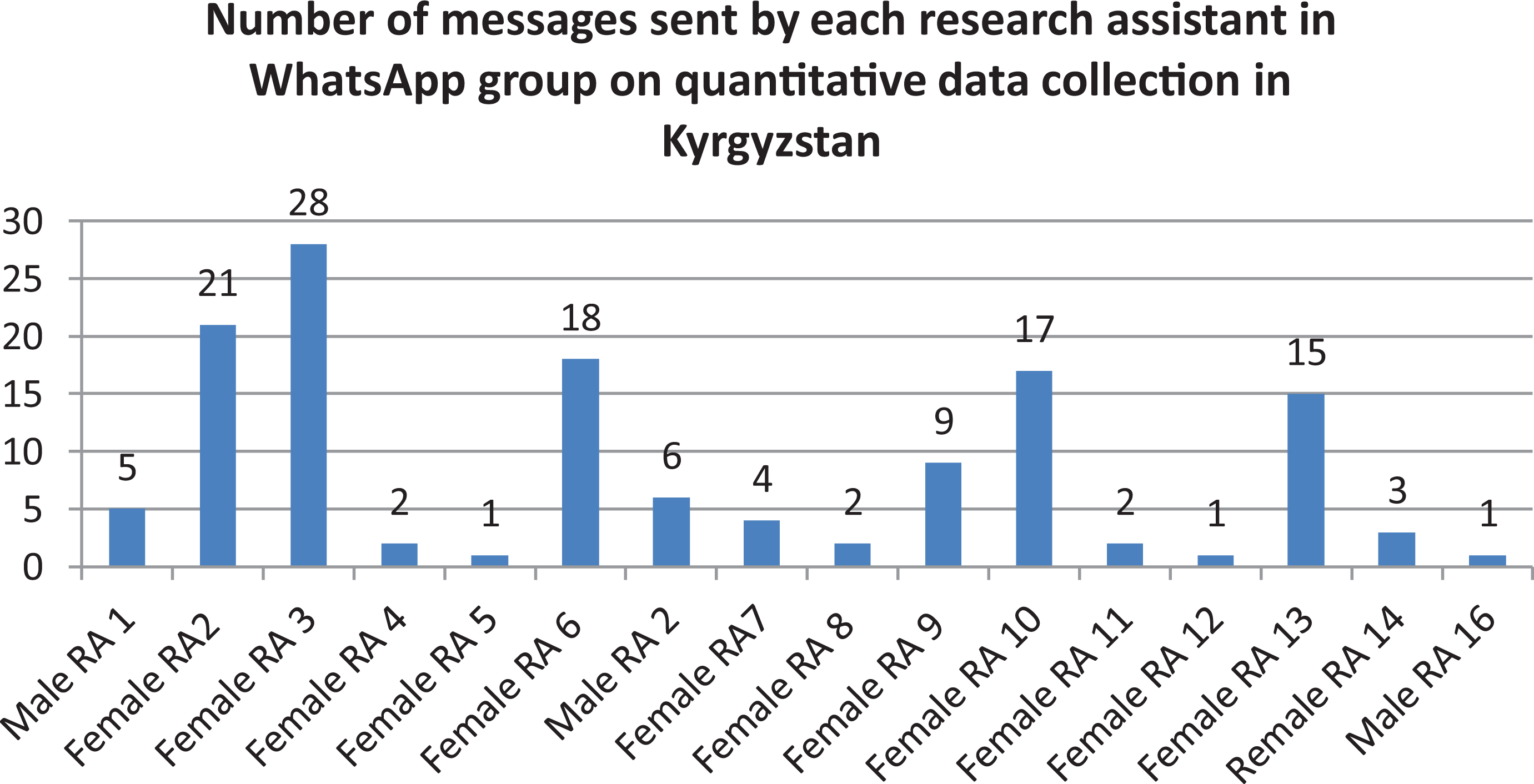
Number of messages sent by each research assistant in WhatsApp group on quantitative data collection in Kyrgyzstan
The above analysis shows that the engagement of research assistants in WhatsApp group communication varied. This was dependent on the approach to communication that we adopted: open or closed. It appears that the dynamic in the WhatsApp group can also depend on the gender and age composition of the team and also if the team members knew each other before. Individuals who have worked together before seemed to be more active than newcomers. In addition, the role of research assistants in the team (interviewer, note-taker) can also shape their engagement.
Nonetheless, the varied engagement of research assistants may also be a result of a problem that we highlighted above – the lack of a communication strategy/plan within the team of core researchers. For example, in retrospect, we believe that the second group in Kyrgyzstan on quantitative data collection could have been open. However, we lacked strategies of group management for cases in which a lot of complaints were voiced by the group.
Work and personal life boundaries
We learned that the WhatsApp group could blur the boundary between work and personal life. Having the app on the phone meant that anyone could message at any time. There were days when messaging on WhatsApp did not stop until 10 pm. Thus, WhatsApp can be intrusive into personal lives to some extent. The supervisors replied to messages while engaged in personal matters. This also suggests that the research assistants also had challenges drawing a line between their work and their personal lives. Taking into account that they were collecting data the whole day, their messaging over WhatsApp after 6 pm indicates that they were still engaged in work-related activity like planning, asking questions, and getting clarifications. However, at the same time, for some members late messaging could be a strategic action to stand out as a hard-working employee in the face of constant competition in the labour market. Both Abkhazia and Kyrgyzstan have widespread unemployment, especially among youth. For example, in the case of Kyrgyzstan youth unemployment (14.6%) is much higher than the general unemployment rate (Pouchkin and Rask, 2014).
Concluding points
Similar to other studies (Dodds, 2019; Mefolere, 2016; Boulos et al., 2016), we conclude from our experience that WhatsApp is an easy-to-use application. Its user-friendly features, including the fact that it is connected to a mobile number of users, makes it convenient to use. WhatsApp makes communication immediate (Kumar and Sharma, 2017; Awada, 2016; Mefolere, 2016; Boulos et al., 2016; Sánchez-Moya and Cruz-Moya, 2015). This feature of immediacy was extremely critical in our research projects. We were able to respond to research assistants’ questions quickly and provide the support that they needed to address challenges that they faced in the field. We believe that this communication helped to ensure the quality of our research projects in the tight schedules that we had. It also appears to have empowered our research assistants to be in control of the situation in the field, as they were aware that online support was available.
Thus, we believe that WhatsApp groups can potentially improve communication, coordination, and management of teams in research which can be challenging (Guest and MacQueen, 2008; Quartiroli et al., 2017). In particular, WhatsApp groups have the potential to meet the needs of research assistants raised in the literature, such as a lack of mechanisms for feedback and support, limited empowerment, and an absence of a sense of team belonging (Anwar and Viqar, 2016; Deane and Stevano, 2016; Weeks et al., 2015; Vukotich and Yearwood, 2014). Our experience shows that WhatsApp can be a platform for supporting research assistants, empowering them, and giving them a sense of team belonging. Our experience was congruent with other studies (Dodds, 2019) that communication in WhatsApp can become informal. The use of emojis is a clear illustration of this. Moreover, humour made the atmosphere informal and friendly. WhatsApp groups facilitated peer support in line with other studies (Boulos et al., 2016). Research assistants expressed support to each other on their work as well as private matters.
In sum, our experience of the WhatsApp group use shows that this tool can transform the research process by making communication and decision-making quicker, especially within tight schedules. Improved communication can enhance the quality of research projects. Sharing audios, pictures, and videos from the field make the process visual for all team members and allow them to acquire a deeper understanding of the data collection process. Communication over WhatsApp groups enables challenges to be addressed in time and also ensures safety to data collectors when necessary. The application enables provision of support to team members to be strengthened, and also promotes peer support and team spirit.
Nonetheless, our analysis highlights a number of important lessons. Overall, we believe that a communication strategy/plan spelling out the purpose and rules of communication in the WhatsApp group would help to address such challenges as the confidentiality of research data including pictures and videos as well as work-private life boundaries.
Further, Quartiroli et al. (2017) argued that Internet-based tools, notably Skype, enabled them to develop a collaborative, egalitarian research environment in which all the members could voice their opinions, ideas, limitations, and disagreement. Our use of WhatsApp (though a different type of Internet-mediated tool) provided us with a different experience. It is possible for WhatsApp to promote equalitarian communication. However, this depends on the size and composition of the group. Smaller groups with members who have worked together before seem to have better bonds, be more open to communication, and have a lesser degree of competition among them.
Larger groups with members who are working together for the first time seem to be less oriented toward a collective success but rather individual success. Some members prefer to be quieter than others; this can be connected to their role, age, and gender, and, in a way, replicates the existing hierarchies in the society. This said, however, WhatsApp still served as an effective means for spreading information and daily communication to address urgent challenges and improve the quality of work.
Effective use of WhatsApp calls for communication rules so that members are aware of the WhatsApp group’s purpose and are mindful of social research ethics, particularly confidentiality of data and privacy of respondents. Having communication rules can also improve the engagement of individuals in group discussions if that is the goal of the WhatsApp group.
Footnotes
Acknowledgement
The authors would like to thank Matthew Naumann for proofreading the manuscript.
Declaration of conflicting interests
The authors declared no potential conflicts of interest with respect to the research, authorship, and/or publication of this article.
Funding
The author(s) received no financial support for the research, authorship, and/or publication of this article.