




Abstract
Study Design:
This review explores the potential applications of artificial intelligence (AI) and deep learning in preservation rhinoplasty. Preservation rhinoplasty is a surgical technique that aims to enhance the aesthetic appearance of the nose while preserving its natural structures and functions. Artificial intelligence and deep learning offer new avenues for improving surgical planning, intraoperative guidance, and postoperative analysis in this specialized field.
Objective:
The objective of this review is to examine how AI and deep learning can enhance preservation rhinoplasty by providing tools for precise surgical planning, real-time guidance during surgery, and comprehensive postoperative analysis.
Methods:
The review synthesizes information from relevant studies and articles in the field of rhinoplasty, AI, and deep learning. It discusses the potential benefits and challenges associated with the integration of AI into preservation rhinoplasty, drawing from the literature and expert insights.
Results:
The review highlights several key findings:
Surgical Planning:
Artificial intelligence can analyze preoperative imaging data to assist surgeons in planning the procedure accurately. It can predict postoperative outcomes and enhance discussions with patients.
Intraoperative Guidance:
Artificial intelligence can provide real-time guidance to surgeons, ensuring the preservation of natural nasal structures during surgery.
Postoperative Analysis:
Artificial intelligence can automate the analysis of postoperative images and patient-reported outcomes, aiding in assessing surgical success and patient satisfaction.
Challenges and Ethical Considerations:
The integration of AI in preservation rhinoplasty should prioritize patient safety, ethical considerations, and validation to ensure its effectiveness.
Conclusions:
Artificial intelligence has the potential to greatly impact the field of preservation rhinoplasty. Using advanced algorithms and machine learning techniques, AI can assist surgeons in analyzing patient data, predicting outcomes, and optimizing surgical techniques. This technology can help improve surgical precision, reduce complications, and enhance patient satisfaction. However, it is important to note that AI should be seen as a tool to support and enhance the surgeon’s expertise rather than replacing human judgment and experience. As AI continues to evolve, it is crucial for surgeons to stay updated with the latest advancements and incorporate them judiciously into their practice to achieve the best possible outcomes for their patients.
Keywords
Introduction
Deep learning and artificial intelligence (AI) have shown great potential in various fields, including medicine and surgery. In the context of preservation rhinoplasty, the application of deep learning and AI can offer several benefits.
One of the key advantages of deep learning and AI in preservation rhinoplasty is their ability to analyze large amounts of medical data quickly and accurately. By training AI algorithms on a vast data set of preoperative and postoperative images, surgeons can leverage this technology to better understand the complex anatomy of the nose and predict surgical outcomes. This can help in planning and decision-making, allowing for more precise and personalized surgical interventions.
Furthermore, deep learning and AI can assist in automating certain tasks involved in preservation rhinoplasty. For example, AI algorithms can be trained to segment and label different anatomical structures of the nose, which can save time for surgeons during the planning and execution of the surgery. This automation can also reduce the risk of human error and improve the overall efficiency of the procedure.
Discussion
Preservation rhinoplasty is a surgical technique that focuses on preserving the natural structures and function of the nose while making aesthetic improvements. It aims to minimize tissue disruption and maintain the integrity of the nasal anatomy. This technique involves techniques such as reshaping existing cartilage, grafting to enhance support, and selective tissue preservation. The goal is to achieve natural-looking results, maintain nasal breathing function, and avoid complications. Preservation rhinoplasty requires a thorough understanding of nasal anatomy and individual patient considerations to achieve successful outcomes. However, it may not be suitable for all cases, and a comprehensive evaluation by a qualified surgeon is necessary.
The integration of AI into preservation rhinoplasty holds promise for improved surgical outcomes and patient satisfaction. This discussion explores the potential applications of AI in preservation rhinoplasty, including preoperative planning, intraoperative guidance, and postoperative analysis. In addition, challenges, concerns, and future directions for incorporating AI into this specialized technique are addressed.
During preservation rhinoplasty, intraoperative guidance plays a crucial role in achieving the desired outcomes while preserving the natural structures of the nose. Here are some key aspects of intraoperative guidance in preservation rhinoplasty:
Proper Visualization: Clear and adequate visualization is essential during the procedure. Surgeons may use various techniques such as endoscopic visualization or open rhinoplasty with meticulous dissection to enhance visualization and minimize tissue disruption.
Strategic Incisions: Incisions should be carefully planned and placed to minimize scarring and preserve the natural contours of the nose. This may involve using hidden or inconspicuous incisions, such as those made inside the nostrils (endonasal approach) or along the natural creases of the nose (external approach).
Preservation of Cartilage: The surgeon focuses on preserving the existing nasal cartilage as much as possible. This may involve reshaping and repositioning the existing cartilage rather than removing it, which helps maintain the structural integrity and function of the nose.
Selective Grafting: In preservation rhinoplasty, the surgeon may use grafts made from the patient’s own cartilage or other materials to provide additional support or enhance specific areas of the nose. These grafts are strategically placed to maintain the natural shape and function of the nose.
Avoiding Over-resection: Over-resection of nasal tissues, including cartilage and bone, should be avoided as it can lead to destabilization and collapse of the nasal structure. The surgeon should carefully plan and execute the procedure to achieve the desired aesthetic improvements while preserving the natural anatomy of the nose.
Nasal Breathing Considerations: Preservation rhinoplasty aims to maintain or improve nasal breathing function. The surgeon should evaluate and address any breathing concerns during the procedure, such as correcting a deviated septum or optimizing nasal airflow.
Customized Approach: Each preservation rhinoplasty procedure is unique, and the surgeon must tailor the techniques and approaches to the individual patient’s needs and goals. This requires a comprehensive understanding of the patient’s nasal anatomy, functional concerns, and desired aesthetic outcomes.1 -5
In summary, intraoperative guidance in preservation rhinoplasty involves careful visualization, strategic incisions, preservation of cartilage, selective grafting, avoidance of over-resection, consideration for nasal breathing, and a customized approach. These factors collectively contribute to the successful preservation of the natural structures and function of the nose while achieving desired aesthetic improvements (Figure 1).
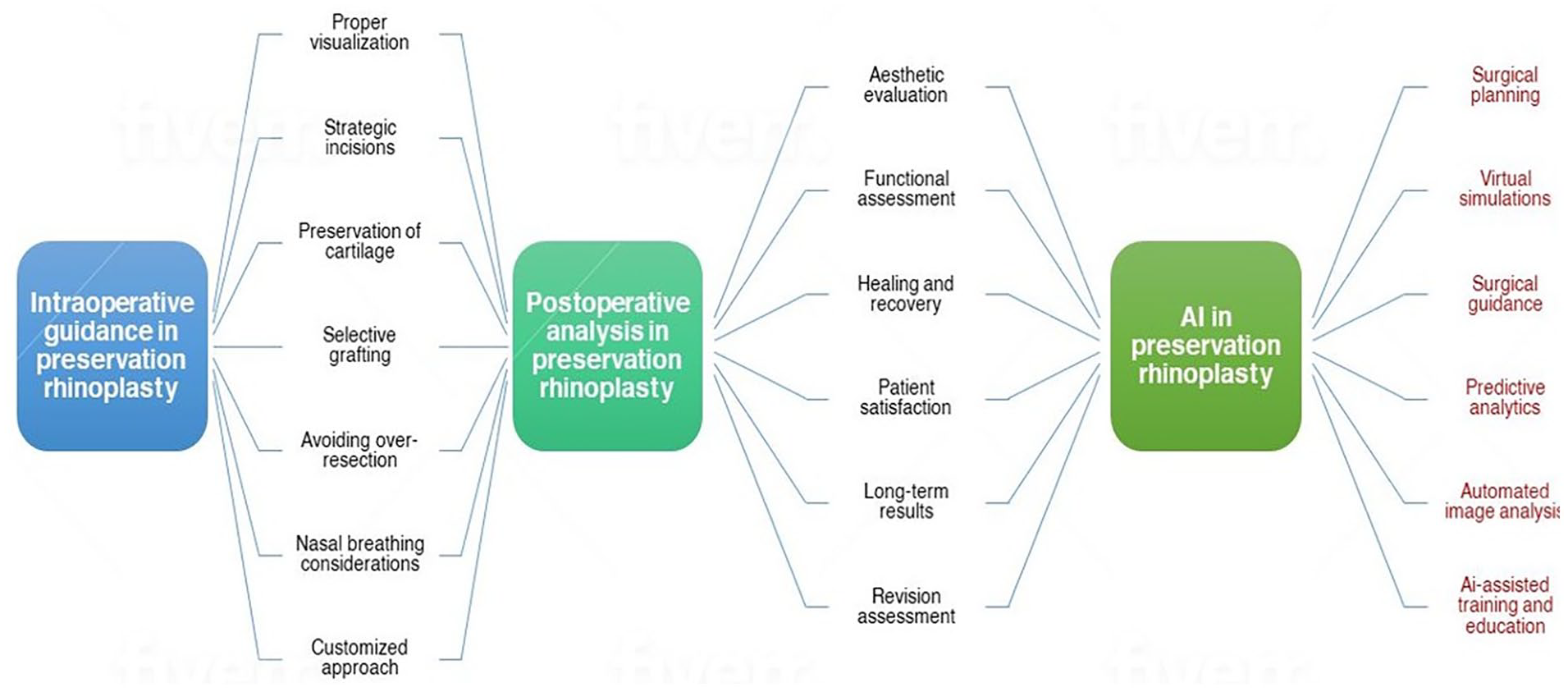
The beneficiary table regarding of artificial intelligence in intraoperative and postoperative in preservation rhinoplasty.
Results
Postoperative analysis in preservation rhinoplasty involves assessing the outcomes of the procedure and evaluating the success of preserving the natural structures of the nose. Here are some key aspects of postoperative analysis in preservation rhinoplasty:
Aesthetic Evaluation: The surgeon will assess the aesthetic outcomes of the rhinoplasty by comparing the postoperative results with the patient’s preoperative goals and expectations. This includes evaluating the overall shape, symmetry, proportion, and contour of the nose.
Functional Assessment: Preservation rhinoplasty aims to maintain or improve nasal breathing function. The surgeon will evaluate the patient’s nasal airflow, congestion, and any breathing concerns to determine whether the functional goals have been achieved.
Healing and Recovery: The postoperative analysis also involves assessing the healing process and recovery of the patient. This includes evaluating the incisions, presence of swelling or bruising, and overall recovery progress. Any complications or issues that arise during the recovery period will also be addressed.
Patient Satisfaction: The patient’s satisfaction with the outcomes of the preservation rhinoplasty is an important aspect of the postoperative analysis. The surgeon will communicate with the patient to understand their level of satisfaction and address any concerns or additional needs.
Long-Term Results: Preservation rhinoplasty is intended to provide long-lasting results. The surgeon may evaluate the long-term outcomes of the procedure by monitoring the stability and durability of the nasal structures and assessing any changes that occur over time.
Revision Assessment: In some cases, revision rhinoplasty may be required to address any residual aesthetic or functional issues. The surgeon will evaluate whether revision surgery is necessary and discuss the options with the patient if further refinement is desired.
Overall, postoperative analysis in preservation rhinoplasty involves assessing the aesthetic outcomes, functional improvements, healing process, patient satisfaction, long-term results, and the need for any revision procedures. This analysis helps to ensure that the preservation goals of the rhinoplasty have been successfully achieved while meeting the patient’s expectations and needs.
The future direction of AI in preservation rhinoplasty holds great potential for improving surgical planning, precision, and outcomes. Here are some possible areas where AI can contribute:
Surgical Planning: Artificial intelligence algorithms can analyze preoperative imaging data, such as computed tomography (CT) scans, to assist surgeons in planning the preservation rhinoplasty procedure. By accurately measuring and mapping the nasal structures, AI can help surgeons determine the optimal surgical approach, predict postoperative outcomes, and enhance preoperative discussions with patients (Figure 2).
Virtual Simulations: Artificial intelligence can enable virtual simulations of preservation rhinoplasty procedures, allowing surgeons to visualize potential surgical results and discuss them with patients. By providing a realistic preview, AI can help in setting realistic expectations and assist in the decision-making process.
Surgical Guidance: During the actual surgery, AI can provide real-time guidance to surgeons. For example, computer vision algorithms can track the surgical progress, ensuring that the preservation techniques are being applied correctly and accurately. This can help maintain the integrity of the natural nasal structures.
Predictive Analytics: Artificial intelligence can analyze large data sets of patient outcomes and surgical techniques to identify patterns and correlations. This can help predict the likelihood of success for different preservation rhinoplasty approaches, allowing surgeons to make more informed decisions and select the most appropriate techniques for individual patients.
Automated Image Analysis: Artificial intelligence algorithms can automate the analysis of postoperative images, providing objective measurements and assessments of the surgical outcomes. This can aid in evaluating the success of the preservation techniques, assessing changes in nasal structure, and monitoring long-term results.
Artificial intelligence–assisted Training and Education: Artificial intelligence can be utilized in training programs for surgeons by providing virtual simulations, interactive learning modules, and real-time feedback. This can help improve surgical skills, enhance understanding of preservation techniques, and ensure standardized training across different surgeons.
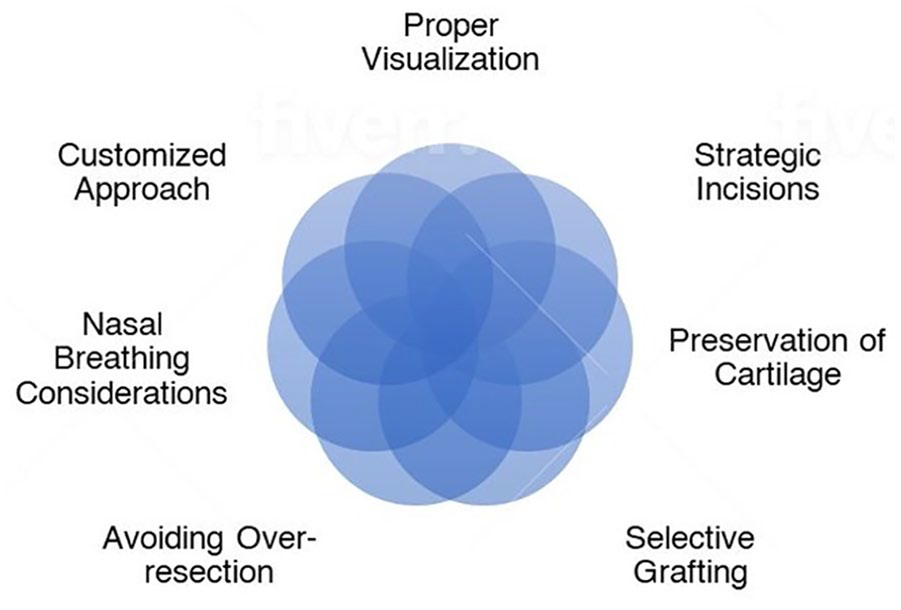
Intraoperative guidance in preservation rhinoplasty.
It is important to note that although AI has great potential, it should always be used as a supportive tool, with the final decision-making and clinical judgment resting with the surgeon. The integration of AI in preservation rhinoplasty should prioritize patient safety, ethical considerations, and the preservation of the individual’s unique nasal features1 -3 (Figure 3).

2D image of prediction of AI technology in operating room for advancements in preservation rhinoplasty.
Conclusions
This article concludes with the summary of the potential benefits and challenges associated with AI in preservation rhinoplasty and emphasis on the need for further research, validation, and ethical guidelines to ensure the safe and effective integration of AI in this specialized technique.
Moreover, AI can aid in the analysis of patient-reported outcomes and satisfaction levels after preservation rhinoplasty. Using natural language processing techniques, AI algorithms can extract and analyze data from patient surveys or reviews, providing valuable insights into the success and impact of the surgery on patients’ lives. This information can help surgeons refine their techniques and optimize patient care.
However, it is important to acknowledge that deep learning and AI in preservation rhinoplasty are still relatively new and evolving. The accuracy and reliability of these technologies depend on the quality and diversity of the training data used. In addition, the integration of AI into clinical practice requires careful validation and verification to ensure patient.1 -3,5
In conclusion, the use of deep learning and AI in preservation rhinoplasty holds promise for improving surgical planning, automation of tasks, and analyzing patient outcomes. By harnessing the power of these technologies, surgeons can enhance their decision-making process and provide more personalized and effective care to patients. However, further research and collaboration between surgeons, data scientists, and technology developers are essential to fully realize the potential of deep learning and AI in this field.
Footnotes
Declaration of Conflicting Interests
The author(s) declared no potential conflicts of interest with respect to the research, authorship, and/or publication of this article.
Funding
The author(s) received no financial support for the research, authorship, and/or publication of this article.
