




Abstract
The origin of experimental chronobiology can be traced to observations made in the 18th and 19th centuries on the sensitive plant Mimosa, which were described in two seminal reports: Jean-Jacques d’Ortous de Mairan’s “Observation Botanique” (A Botanical Observation) and Augustin Pyramus de Candolle’s “Du sommeil des feuilles” (On the sleep of leaves). Both report observations of the striking daily closing and opening of Mimosa leaves in controlled environments. This review presents translations of both texts with the aim of staying as faithful as possible to the original French texts. We also present the historical context in which these texts were written and link them to subsequent experiments that aimed at testing the veracity of their central conclusions. In particular, we definitely establish that Mairan himself presented his work to the French Royal Academy of Sciences, while the published report of his observation was authored by Fontenelle, the Secretary of the Academy. In addition, we offer a translation of Mairan’s own presentation, based on the hand-written minutes of the academy. Finally, we discuss the decades of work on plant rhythms that laid the foundation for modern experimental chronobiology, including translations and discussion of the insightful and prescient reports by Charles François de Cisternay Dufay, Henri Louis Duhamel du Monceau, Johann Gottfried Zinn, and Wilhelm Pfeffer, which describe their efforts to reproduce and extend Mairan’s pioneering observations.
The question of the ghost is simple—either it is an aspect of living organization, or an unknown geophysical variable. My taste in ghosts suggests the latter but, as scientist, I must agree that Dr. Brown may prove right, and as scientist he will doubtless agree he may prove wrong. We both will have some fun in any case.
Jean-Jacques d’ Ortous de Mairan (1678-1771) was one of the most prominent French scientists of the 18th century. He was a member of multiple prestigious scientific academies and institutes in Europe and took part in an influential circle of correspondence and scientific discourse (e.g. The Geneva connection, McNiven Hine, 1996). A firm adherent and promoter of the scientific method, his work touched on an amazingly wide range of fundamental scientific subjects: atmospheric properties, seasonal changes in temperature, the causes of the aurora borealis, the shape of the Earth, the nature of light, the mechanisms of ice formation, the propagation of sounds, among others.


It is remarkable that, in the context of his large and insightful body of work, a simple, unexpected observation, one peripheral to the bulk of his scientific interests, was destined to become his most frequently cited finding, even up to the present time—a feat which can be boasted by very few of his contemporaries. This observation, through which Mairan revealed what we now know to be a circadian rhythm in the genus Mimosa (a.k.a. the sensitive plant), was recorded in the 1729 annual report of the French Royal Academy of Sciences, which was actually not published until 1731 (de Mairan, 1731 [1729]). The Academy’s annual report, entitled “Histoire de l’Académie Royale des Sciences”, was the responsibility of its secretary. At the time of Mairan’s discovery, Bernard Le Bouyer de Fontenelle (1657-1757) had served 30 years as the perpetual secretary and would continue serving for another 12 years, after which he was replaced by none other than Mairan, who until then had been widely considered as his right-hand man. The “Histoire” volumes played the dual functions of disseminating to the public the progress of mostly, but not exclusively, French science and of promoting the scientific policies of the King (Seguin, 2012). Fontenelle was famous for introducing Copernican astronomy to nonscientists (de Fontenelle, 1686) and is now seen as a founding father of popular science. He chose French, rather than Latin as his predecessors did, for the annual Histoires, thereby increasing their accessibility to the public. Each volume was divided into two sections, with the first section presenting digests written by the secretary in (somewhat more) lay terms, often adding some historical perspective and the secretary’s personal insights, and the second section, called Mémoires, consisting of detailed scientific articles, an organization not unlike that seen in today’s preeminent scientific weeklies, Science and Nature. The digests in the Histoires’s first section could be quite sensational. For example, in 1729, Mairan was informed by de la Font, an engineer, of the capture and killing of an “extraordinary” tortoise just north of the Loire river estuary (de Fontenelle, 1731 [1729]). The vivid narration is rather gripping:
Its screams could be heard as far as a quarter of a league, and in addition, from its mouth, fully foaming with rage, came a vapor so putrid that despite being rather rugged, they [the fishermen] thought that they would faint.
What was left of the animal by the time de la Font received it is then described in detail and compared to known tortoises, and it is speculated that the captured, and at the time unknown, tortoise might have come from a distant sea, by following 2 boats returning from China.
During Fontenelle’s tenure as the perpetual secretary, the brief digests comprising the first section of the Histoires were all written by him although he is never identified as the author within the publication itself. Indeed, he saw his role in composing the digests as that of a spokesperson for the academy and its members (Seguin, 2012). The Histoire digests included summaries and commentaries on some but not all the “Mémoires,” in addition to reports that Fontenelle saw as of public interest and deserving of preservation for posterity but not sufficiently important or definitive to warrant inclusion in the full-length Mémoires (de Fontenelle, 1732 [1699]; Seguin, 2012). Mairan’s Botanical Observation was published only as an Histoire digest. The field of chronobiology, therefore, owes Fontenelle a debt of gratitude for his instincts regarding the importance of Mairan’s observations on Mimosa. It also raises the possibility that at least some of the prescient ideas and speculations in this short text might be Fontenelle’s rather than Mairan’s.
However, before proceeding to the translation, we need to address one more interesting question: Who reported Mairan’s discovery? It has been suggested on multiple occasions that it was Jean Marchant, a prominent botanist and member of the academy, who presented Mairan’s observation, perhaps because Mairan was unable to attend the corresponding academy’s meeting (e.g., see Czeisler, 1979; Lewin, 2005; Klarsfeld, 2013; Badow, 2015; Sobel, 2019a, 2019b). This idea may have originated in the book of Ward (1971), who even refers to a discussion between Marchant and Mairan, but without providing factual evidence. Two details of the 1729 publication did lend credence to his account. First, the text describing Mairan’s observation is written in the third person. Second, on the page following the text describing Mairan’s observation is a note stating that Marchant had read descriptions of newly discovered species of plants to the academy. However, as stated above, all Histoire digests were written by Fontenelle in his capacity as the perpetual secretary and were, therefore, written in the third person. They were also not arranged in chronological order. Actually, Marchant’s descriptions were not presented in the same meeting of the academy as Mairan’s “Observation botanique.” According to the minutes of the royal academy, the former were presented on 30 July 1729, and the latter on December 10 of the same year. Furthermore, plant species descriptions were a common feature of the annual reports and were usually simply mentioned at the end of the botany section of the Histoires. Perhaps most importantly, Fontenelle’s digests indicated if an observation was related secondhand by an academy member (as was the case for the tortoise report summarized above). It would be surprising if, in this particular instance, he would have failed to indicate that a second party had presented Mairan’s discovery within the text of the digest or to have identified the secondhand presenter by name. Moreover, it was noted in Mairan’s eulogy that he had lived and worked in Paris since at least 1723 and was remarkably assiduous in attending meetings of the royal academy, even after reaching the age of 90 years (de Fouchy, 1774 [1771]). In fact, as we now describe here, Mairan did indeed present his own observations in person, as attested in the beautifully hand-written minutes of the academy, on Saturday, 10 December 1729 (Figure 1), and Fontenelle chose to include them among the Histoire digests for 1729.
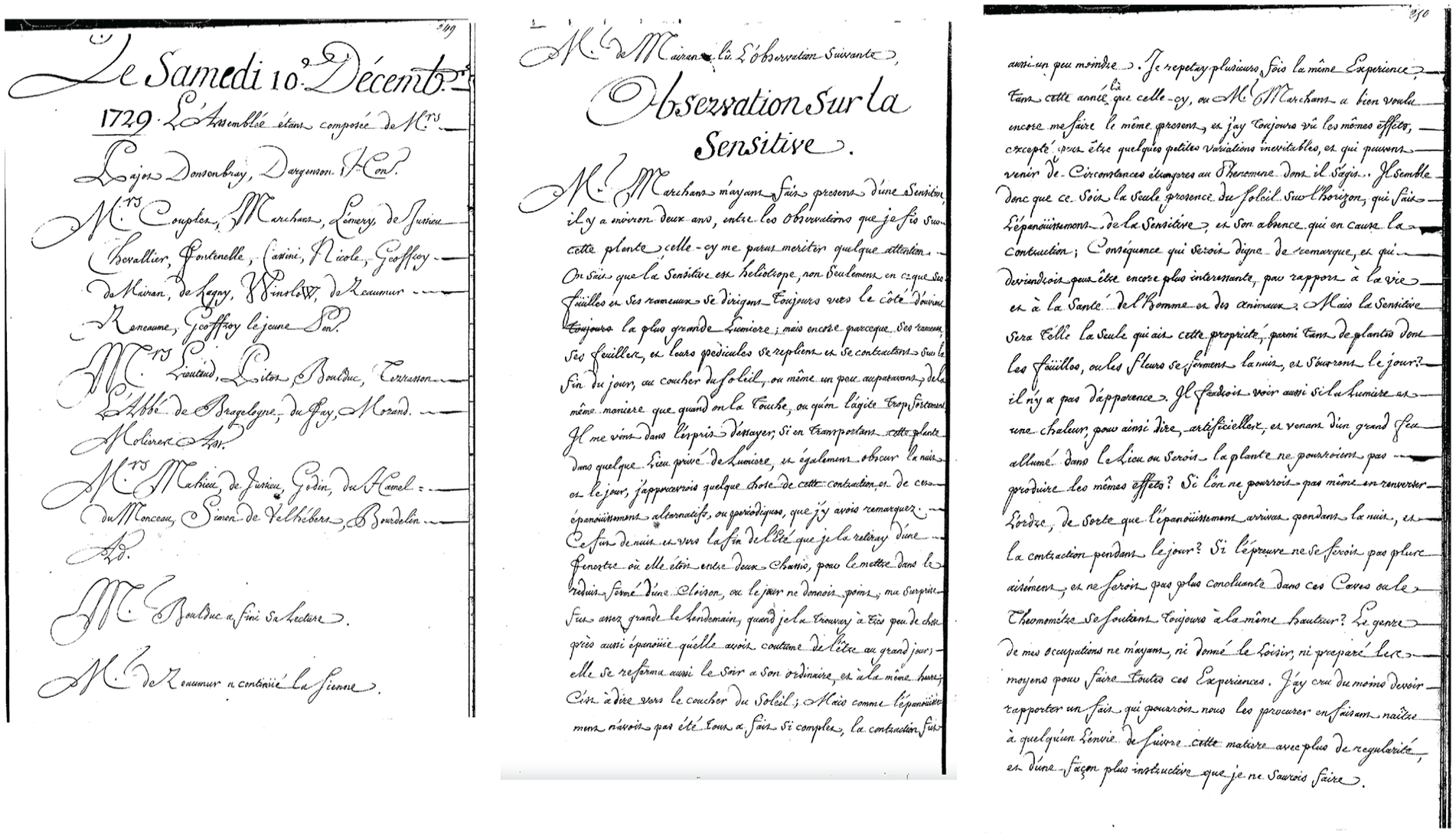
Replica of the minutes of the French Royal Academy of Sciences for the meeting on 10 December 1729. Left panel: members present. Note that in addition to Mairan and Fontenelle, Dufay, Duhamel (du Monceau), and Marchant were also present. Middle and right panels: Transcript of Mairan’s presentation. The minutes can be accessed at https://gallica.bnf.fr/ark:/12148/bpt6k557244/f511.item.
Here are our translations of both Mairan’s original presentation (as transcribed in the minutes) and Fontenelle’s digest. We have tried to preserve Mairan and Fontenelle’s style of writing, very much of the 18th century, as much as possible. We begin with the better known Fontenelle’s version (for other translations of this text, see Czeisler, 1979; Sobel, 2019a; Tomlison’s translation of Klarsfeld, 2013):
One knows that the Sensitive Plant is heliotropic, that is its branches and leaves are always directed towards the side from which comes the greatest light, and one also knows that, associated with this property, which is commonly shared with other plants, is a more particular one, it is sensitive to the Sun or the day, its leaves and their peduncles fold and contract at sunset, in a manner similar to when one touches the Plant, or agitates it (1). However, Mr. de Mairan has observed that, for this phenomenon to occur, it is unnecessary that it be exposed to the Sun or fresh air, it is merely slightly less pronounced when the Plant is always locked in a dark location, it still very clearly flourishes (2) during the day, and regularly folds or contracts in the evening for the entire night. The experiment was conducted at the end of the Summer, and carefully (3) repeated. The Sensitive Plant therefore feels the Sun without seeing it in any fashion, and this might be related to this unfortunate susceptibility (4) of a great number of Patients, who perceive in their Beds the alternation of the day and the night. It would be intriguing to test if other Plants, whose leaves or flowers open during the day and close at night, like the Sensitive Plant maintain this property in dark places; if one could create by artifice, using furnaces of warmer or cooler temperatures, a day and night that they could sense, if one could thereby reverse the order of the phenomena of the real day and real night, etc. However, Mr. de Mairan’s routine pursuits have not allowed him to push the experiments this far and he is content with a simple invitation to Botanists and Physicists, who might themselves have other things to pursue. The progress of the true Physics, which is the Experimental Kind, is bound to be rather slow.
Translation footnotes:
We used the verb “to agitate” to translate “agiter,” which could mean here “to shake,” “to disturb,” or “to irritate.” Most likely, the author means here to shake the plant and, thus, cause the leaves to close.
Fontenelle uses the poetic verb “s’épanouir,” which means “to blossom” or “to flourish,” to refer to the leaves opening. We chose “to flourish” rather than “to open” to remain stylistically closer to the original text.
The author uses “bien,” which would be translated as “well,” but we prefer here “carefully.” “Successfully” would also be a possible translation.
The author uses here the elegant and subtle “malheureuse délicatesse,” which could also be translated as “unfortunate fragility” or “unfortunate sensitivity.”
As the reader can see, the text is remarkably dense and composed of rather long and convoluted sentences. It also uses, in many instances, what is for the modern French reader, unfamiliar spelling (we preserved the capitalization of certain nouns). It is remarkable in both what it says and what it does not say. First is the report that the rhythms of leaves opening and closing daily could be observed indoors and in a dark location reproducibly. However, the text does not give us any indication of how carefully the plants were kept away from environmental influences. How dark were the conditions really? Was the temperature constant? Also, we do not know how frequently Mairan observed the leaves, how he could have done so at night, or the extent to which his observations exposed the plants to light. Could his approach ever have allowed him to detect a deviation of the rhythm from 24 h? Importantly, because Mairan did not or could not detect such a deviation, there was no reason to suspect that the rhythms might be endogenous. Clearly, the author assumed that the plant still sensed the sun, even while indoors. The author also appears to exclude the possibility that light, either through leaks or during observations, influenced the rhythms as it is stated that the plant could not “see the sun in any fashion.” Temperature was, therefore, assumed to be a primary cause as Fontenelle proposed to use furnaces of different temperatures to try to invert the rhythms of the plants, a remarkably insightful idea.
Perhaps the most striking lines in the “Botanical Observation” describing de Mairan’s results are those suggesting that the ability of plants to sense the sun could be somehow linked to the ability of patients to do the same from their beds. A century and a half before Darwin’s publication of his theory of evolution, this statement reveals an astounding intuition regarding the unity of principles underlying daily rhythms. Why the author thought a patient’s sensitivity to day and night amounted to an “unfortunate” affliction is not obvious. Perhaps he thought that convalescents might recover more quickly if they could rest constantly, or perhaps he was aware that some symptoms are felt more acutely at specific times of the day, such as the state of confusion or agitation called sundowning, which is observed in some forms of dementia. Despite these potential medical connections, Mairan did not see this line of research as a priority for his work. This was likely a product of the fact that he was not a botanist and was kept quite busy debating fundamental scientific questions related to the nature of our world with the scientific luminaries of the era. Indeed, the conclusion of the text seems to indicate that Fontenelle thought that even botanists might have better things to do. Fortunately for us, he was sufficiently intrigued by Mairan’s Botanical Observation to include it among the digests he wrote for the Histoire de l’Académie Royale des Sciences. The following translation of the royal academy’s minutes (Figure 1) reveals Mairan’s own remarkable foresight, as well as his critical mind and modesty:
Observation on the Sensitive: Mr. Marchant having gifted me a Sensitive, about two years ago, amidst the observations I made on this plant, the following one seemed to me to deserve some attention. One knows that the Sensitive is heliotropic, not only in that its leaves and its branches are always directed towards the side from which comes the greatest light; but also because its branches, its leaves, and their pedicles fold by contracting at the end of the day, at sunset, or even a little before, in the same way as when one touches it, or when one agitates it too strongly. It occurred to me to test, whether by transporting this plant to some light-deprived location, and equally dark at night and during the day, I would see something of these alternating, or periodic, contraction and flourishes (1), which I had noticed. It was at night and towards the end of the summer that I removed it from a window where it stood between two frames, to install it into the confined space of a cabinet, where there was no daylight; my surprise was quite great the next day, when I found it almost as fully opened as it was in the bright light of day; it also closed again in the evening at the same time as usual; that is to say, approaching sunset. But just as the flourish had not been quite so complete, the contraction was also a little reduced. I repeated the same experiment several times, both that year and this one, when Mr. Marchant was kind enough to offer me the same present, and I always saw the same effects, except perhaps for a few small unavoidable variations, which may come from circumstances unrelated to the phenomenon in question. It seems, therefore, that it is the mere presence of the sun on the horizon which causes the flourishing of the Sensitive Plant, and its absence which causes its contraction; a conclusion which would be worthy of note, and which would perhaps become even more interesting, with regard to the life and health of man and animals. But will the Sensitive Plant be the only one that has this property among so many plants, whose leaves or flowers close at night, and open during the day? It does not appear so (2). It would also be necessary to determine if so-to-speak artificial light and heat, coming from a large fire lit in the place where the plant would be, could not produce the same effects? Might one even reverse the order, so that the opening would occur during the night and the contraction during the day? Would the test not be easier, and more conclusive in such cellars where the thermometer stays always at the same level? My occupations having neither given me the leisure, nor prepared the means to conduct all these experiments, I thought that my duty was at least to report a fact that could provide them [these proposed experiments] to us by igniting in someone the desire to follow this subject with more rigor (3), and in a more informative manner than I would be able to.
Translation footnotes:
Mairan used “épanouissements” for “leaf openings,” but as discussed for Fontenelle’s text, “flourishes” is stylistically closer.
Mairan wrote “Il n’y a pas d’apparence,” which is not used in modern French. An alternative translation could be “it seems unlikely,” as “apparence” could also mean “vraisemblance,” which translates as “likelihood.”
Mairan wrote “régularité” here, which would usually be translated as “regularity.” He might have meant that he hoped someone would follow up his observations more consistently than he could. However, the less common “rigor” meaning (at least for a modern audience) seems more appropriate here.
The minutes clearly show that Fontenelle’s digest accurately summarized Mairan’s presentation to the French Royal Academy of Sciences. Importantly, the minutes reveal that it is Mairan who had the stunning foresight that his “Botanical Observation” might have broad implications not just for plants but also for animal and human life and health. It was also Mairan who had the idea to conduct experiments to determine if one could re-entrain the plant artificially. The minutes also show that Mairan was convinced that the sensitive plant somehow sensed whether the Sun was above or below the horizon, and thus opened or closed its leaves accordingly. Unfortunately, the minutes do not give us any further insight into how Mairan proceeded to observe the plant while in darkness. Interestingly, Mairan is quite aware of the limitation of his work. He acknowledges that the experiments could be conducted more rigorously in cellars because the temperature would be more constant there. Mairan even suggests that he might not be the best person to conduct such experiments, presumably because he was not a botanist. A couple of details, which were not included in Fontenelle’s report, are remarkable. For example, it is noteworthy that Mairan used the word “periodic” to describe the closing and opening of leaves, albeit not with the implications that this term carries in modern chronobiology. Also, it is clear that Marchant had a role in Mairan’s work after all: as the donor of the plant specimens.
A close comparison of the two texts highlights Fontenelle’s extraordinary talent for transforming a rather specialized scientific report into an exciting and succinct communication accessible to the lay public. Fontenelle kept the description of the methodology and results to the bare minimum necessary for the reader to understand what had been done and observed. For example, he does not mention where the plant was kept before the experiment or that there was some variability between experiments. He removed all personal details, such as the name of the donor of the plant or Mairan’s personal thoughts and reactions. However, Fontenelle begins by mentioning that many plants are heliotropic but that the opening and closing of sensitive plant’s leaves is a different matter, thus placing the work in a broader context while getting the reader’s attention: There might be something quite unique going on here. . . . He also deftly introduces the hypothesis that was to be tested and presents the main experimental outcome. Perhaps Fontenelle’s art is best illustrated by his exquisite elliptic comment on the potential medical implications that Mairan proposed. There is no doubt that this sentence must have been quite thought-provoking and even shocking for the public of the early 18th century and is still mind-blowing 3 centuries later for its prescience. Mairan clearly suspected that temperature fluctuations might have been an issue in his experiments, hence the idea of using cellars in addition to trying to invert the day-night cycles with fires that would provide both heat and light. Fontenelle, however, adroitly combined these ideas to produce a succinct proposition: to use furnaces to produce heat (but we presume no light in contrast to the fire suggested by Mairan) so that the plant could feel an artificial day and night. Finally, Fontenelle streamlined Mairan’s wish for further experimentation. Here, his role as the secretary percolates since physics and botany were official disciplines of the royal academy. He adds what was for him a quite typical and very general conclusion about the experimental nature and challenges of the scientific method, reminiscent of the moralizing conclusions of tales and fables: The public needs to be patient with researchers!
One prominent botanist who accepted Mairan’s and Fontenelle’s invitation was Henri Louis Duhamel du Monceau (1700-1782), accompanied by the chemist Charles François de Cisternay Dufay (1698-1739) who is particularly famous for his work on the basic properties of electricity and magnetism. Dufay (1735 [1733]) was the first to propose the existence of two types of electricity, which he named “vitrous” and “resinous” because of the material he used to produce them through friction, which correspond to positive and negative charges, respectively. However, Dufay was also an expert in botany and was the first director of the “Jardin du Roy,” now known as the “Jardin des Plantes,” which focused on medicinal plants. Dufay (1739 [1736]) was the first to report follow-up experiments on de Mairan’s observations, in a “Mémoire” included in the “Histoires” of the year 1736. In addition to extending de Mairan’s work, this Mémoire describes a great number of experiments and observations aimed at characterizing the movement of Mimosa leaves and their direct responses to various stimuli. Touch, humidity, heat, and light are discussed at length, but the chemists in Dufay and Duhamel—who was an adjunct chemist to the academy—could not resist examining, for example, the effects of sulfuric and nitric acids and ammonium. Dufay emphasizes his collaboration with Duhamel and the importance of 2 independent scientists replicating key experiments. In one of his most important books, “La Physique des Arbres” (“The Physics of Trees”), published in 1758, Duhamel largely recapitulates the approximately 50 observations and experiments described in the Mémoires, frequently just changing a few words. For this review, we focus on Duhamel’s writing, as it describes the experiments relevant to the rhythmic movement of the Mimosa leaves with more clarity.
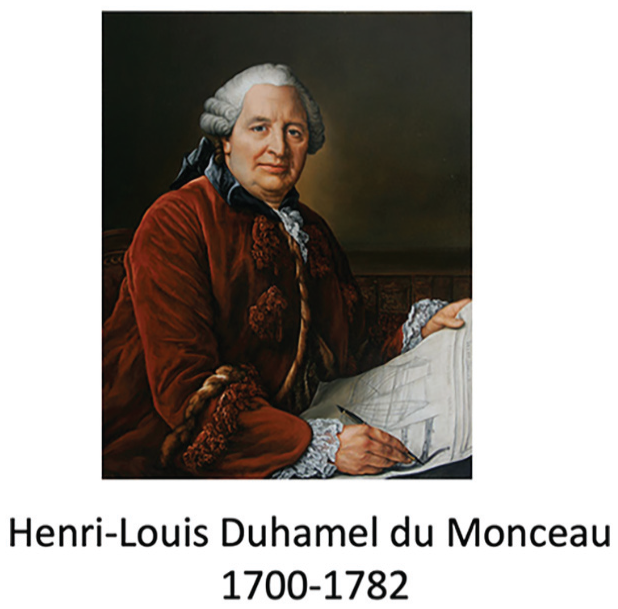
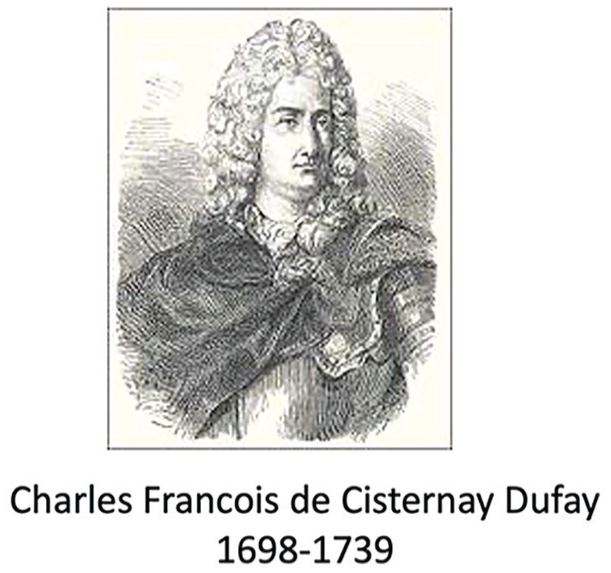
Duhamel and Dufay had joined the academy in 1728 and 1723, respectively. Interestingly, they were both present for Mairan’s presentation, as attested by the hand-written minutes of the session (Figure 1), and would have had ample opportunities to discuss it with him. Indeed, they seemed quite aware of the details of Mairan’s experiments. Duhamel wrote that Mairan had placed the sensitive plants in “a rather dark location and of a temperature that was quite uniform” and later mentioned that this location was a “cabinet”, the same term used by Mairan in his presentation. However, he was clearly not satisfied with the experimental conditions, writing, “This observation [Mairan’s] ignited in me a desire to know what would happen to this plant when placed in an even more perfect darkness.” Duhamel goes on
One morning in the month of August, having moved a sensitive plant into a vault without a cellar window, and preceded by another vault; the tremors of the transport caused the leaves of this sensitive plant to close: the next day at 10 in the morning they were open, but not so much as if they were exposed to fresh air: they remained constantly thus-opened for several days; nevertheless, they closed when one touched their branches, but soon after they opened again: I took the plant out of the vault at 10 in the evening, and I carefully avoided shaking it; the leaves stayed open all night long, and the next day, but in the evening they closed. Since the result of this experiment differed from that of Mr. Mairan’s, I decided to determine if this difference was because the darkness was more perfect in the vault than in the cabinet where M. de Mairan had done his experiment; and, therefore, I locked a sensitive plant in a large leather trunk in a tightly closed cabinet, and I covered that trunk with rather thick woolly blankets. Even though in this way I was able to maintain this plant in perfect darkness, it nevertheless opened in the morning, and closed at night, as in Mr. Mairan’s experiment: thus, this phenomenon surely does not depend entirely on light; because in hot greenhouses one can see that the plant closes in the summer around 7 in the evening, when there is still bright light, and that the temperature is still very high in these greenhouses: furthermore, I have seen sensitive plants in warm greenhouses closing in the evening, even though one had taken care to increase the heat of the stoves. We can therefore conclude from these experiments that the movement of the sensitive plant is strictly dependent neither on light, nor heat.
There is much to admire here in the approach of Duhamel and Dufay. First of all is their close collaboration, which both meant doing experiments together and conducting them independently to establish reproducibility. They even used different vaults, according to Dufay (1739 [1736]). There is also the great length to which they went to avoid light leaks in their experiments, thus trying to address important caveats of Mairan’s experiments. Furthermore, it is highly likely that, within the secluded double vault, there was essentially no temperature cycle. Under these conditions, the plant’s behavior was strikingly different from that observed by Mairan. Within the vault, the leaves remained open at all times; there was no longer a rhythm. Remarkably, Duhamel and Dufay astutely performed 2 key positive controls: They made sure the leaves were still able to move in response to touch in the vault, and at the end of the experiment, they reintroduced the plant to light cycles to verify that it could still exhibit rhythmic leaf movements. Duhamel and Dufay then tried to reproduce de Mairan’s experiment more faithfully by placing a plant in a cabinet rather than in a vault and more rigorously by making absolutely sure that light could not reach the isolated plant by wrapping it up. In this case, the rhythms returned. Light was, therefore, clearly not necessary for the rhythms.
Why would the plant be rhythmic in one condition but not in the other in Dufay’s and Duhamel’s hands? One possibility is that the cooler temperatures in the vault than those in the cabinet inhibited the rhythm (the experiment was done in August, so the air could have been quite warm outside the vault). Alternatively, a temperature cycle within the cabinet could have supported the rhythm. Duhamel also indicates that he had observed leaf movement rhythms in greenhouses kept at reasonably constant temperatures and astutely notes that the closing of leaves did not always occur at dusk. Thus, he concludes that neither temperature nor light cycles are required for rhythms to occur. In a modern scientific context, we can see this as the earliest published evidence that multiple environmental cues can drive diurnal rhythms. Dufay and Duhamel also note that leaf movement rhythms occurred even when branches were isolated from the rest of the plant, thereby taking the first step toward demonstrating the tissue-level autonomy of circadian clocks (Dufay, 1739 [1736]; Duhamel du Monceau, 1758).
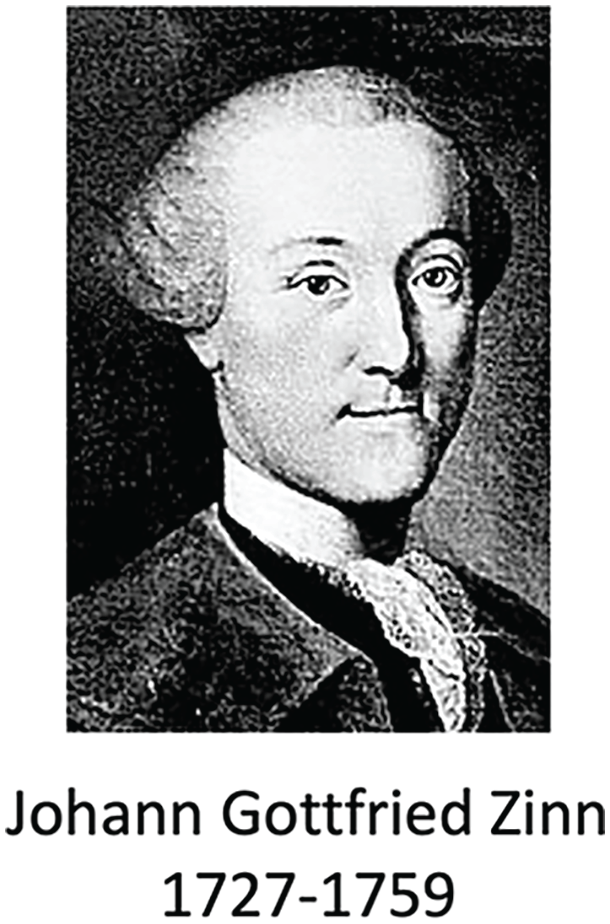
Solid evidence that the plant might have an intrinsic ability to rhythmically move its leaves was first provided by Johann Gottfried Zinn (1727-1759), who made remarkable contributions to science despite his very short life. Although best known for his description of human eye anatomy, he was also interested in the “sleep of leaves” and performed well-controlled experiments that ruled out daily changes in temperature, humidity, or light as the root cause of Mimosa’s daily leaf movements. In his discourse “Von dem Schlafe der Pflanzen” (“About the Sleep of Plants”), published in 1759, the year of his death at 32 years of age, he introduced his experimental work on leaf sleep with a detailed account of the different kinds of daily leaf and stem movements known in various plants. In it, Zinn explains that most people who had previously observed these daily changes attributed them to the presence of cooler and more humid air at night. This daily environmental change was thought to produce a physical contraction of leaves and stems on one side, leading to a daily change in their position. Zinn mentions that naturalists who previously analyzed such plant movements in the controlled environment of the greenhouse, that is, Carl von Linné (1707-1778) and John Hill (1716-1775), had effectively excluded temperature and humidity changes as the explanation for daily leaf movements. This was based on their observation of leaves closing at specific times in the evening despite the presence of temperatures that were similar to or higher than those measured at midday. They had also observed plants opening their leaves in the morning despite the presence of cooler temperatures than those measured when they closed the previous evening. Here, Zinn describes his own experimental work as follows:
In order to gain a certain knowledge on this subject, and to learn more about this trait: I acquired my own experience, mainly using the genus of Mimosa, which Linnaeus named Virgata (1). It can easily be distinguished from other genera by its long, narrow, and smooth pods. This plant [Mimosa virgata] is particularly well-suited for these studies, because the changes in the direction and position of its stems and leaves are rather obvious. At the same time and despite these advantages, it is quite insensitive to other cues, so that closing of the leaves cannot easily be attributed to mechanical vibrations or movements. To begin, I therefore observed the daily changes of the plant and temperature (using a very good thermometer) within a greenhouse. All my observations confirmed that, as long as the sun rises before 4 am in summer, this plant straightens its stems and opens its leaves around 4 am. In the evening, at 6 pm, the plant relaxes its stems and folds in its leaves, so that all leaves contact each other with their upper sides. This change occurs daily, even though the temperature inside the greenhouse in the early morning is 8°C lower compared to midday, and even though the temperature in the evening is the same, or even higher, compared to midday, and, incidentally, the outside weather has no influence whatsoever. In order to vary this experiment (2) in different ways, I moved the plant, which I had previously carefully observed in the greenhouse, into a north-facing (3) cellar, in which the temperature during day and night is almost identical, and on very hot days I found it to be nearly 20°C lower, compared to the greenhouse’s temperature. Despite the cool and humid basement air, the leaf changes described above occurred in the exact same manner and in the same hours as in the greenhouse. In order to leave no doubt that it is not the cool night air that is causing the leaves to close: after several days in the basement, during which the plant opened and closed its leaves at the same times of day, I moved it from the cool basement to the warmer, by several degrees, greenhouse. I did this in the evening, after 5 pm, before the plant had started to close its leaves. If the cooler temperature or more humid [basement] air was the reason the plant slept the leaves should remain open after moving the plant into the greenhouse. Also, if the leaves had already closed before [in the basement], then they should reopen in the greenhouse. Nevertheless, the plant relaxed its stems and closed its leaves at the same time the remaining plants in the greenhouse began to sleep and as it had done before when it had been in the greenhouse day after day: and, vice versa, the leaves remained open when the plant was suddenly moved from the so much warmer greenhouse to the basement. These observations were repeated several times during various weather conditions, and every time with the same result, allowing the overall conclusion that neither the lower temperature, nor the more humid air can be considered the root cause of this leaf sleep. During these experiments (2), I already had the occasion to note that the daily spreading and contraction of these plants could not be a simple effect of light. To completely isolate my plant from the outside air, I locked the basement for several consecutive days, so that absolutely no light could enter. Nevertheless, the usual leaf changes occurred at the same hours as the plants kept in the greenhouse, and therefore exposed to light, were spreading and contracting their leaves. These observations were of such certainty, and appeared so convincing to me that I could not dare believe that someone could easily put forward the withdrawal of light as the root cause for daily plant sleep. Even more so, because earlier reports of Mr. Linnaeus and other naturalists, who also observed these alterations in completely dark surroundings before me, are in agreement with my experiments (2)
Translation footnotes:
Zinn here mistakenly used the word “Gattung,” which translates to “genus.” “virgata” is a Mimosa species name, as correctly indicated in the next sentence.
Zinn here used the word “Erfahrung,” which usually means “experience.” He might be referring to what the plant or perhaps himself experienced, but we believe that a better translation is “experiment.”
Zinn used the words “in einem gegen Mitternacht gelegenen Keller,” which would translate to “in an approximately midnight-located cellar.” In old German, midnight located would indicate that the cellar was on the northern side of the building and thus less likely to show significant temperature changes.
This agreement between different studies and naturalists stood against an earlier report of John Hill who, in an open letter to Linné, claimed that the movement of leaves was driven entirely by environmental light, with the brightest light producing the most expansive opening of the leaves and intermediate intensities of light producing intermediate leaf positions (Hill, 1757). It should be noted that Hill did not make his observations during prolonged exposures to unchanging light conditions, but rather focused on the effects of changes in the light environment. The contrasting results reported by Hill and Zinn were also likely shaped by their choice of plant species. Zinn noted that Hill performed the majority of his studies with Glycine abrus (currently Abrus precatorius), commonly known as jequirity bean or rosary pea. Interestingly, this species folds its leaves as soon as it is placed in darkness, no matter what time of day it is, consistent with Hill’s conclusions. Zinn repeated Hill’s experiments with Glycine Abrus and obtained the same results: The plants folded their leaves when placed in a cupboard during the day but reopened them again when they were taken out before darkness. While Zinn agrees that the withdrawal of light can cause premature leaf sleep in this particular species, he doubts that this explains daily sleep movements in other Mimosa species such as the sensitive plant, as claimed by Hill in his letter to Linné. Zinn argues that he and others observed leaf closing of this plant several hours before sunset on long summer days, at light intensities comparable to those in the early afternoon. Similarly, the same plants do not immediately open their leaves at sunrise, but only at their usual time about 1.5 h later, nor do plants open their leaves acutely after exposure to light at night.
The direct effect of light on plant movements would continue to muddy the interpretation of plant sleep rhythms for at least another century (see below). Such direct effects of the environment on processes controlled by circadian clocks remain a critical consideration in experimental design and interpretation, and Zinn’s work seems to be the first to hint at a distinction between what we would now call masking and circadian processes. Zinn explicitly states that his observations cannot be accounted for by Hill’s conclusion that the transitions to darkness promote the closing of leaves. Zinn finishes by refuting Hill’s hypothesis and states that he is delighted that the observations by Mairan, Duhamel, and Dufay largely agree with his own. As a final blow to Hill’s light-withdrawal hypothesis, Zinn invokes Linné’s flower clock: After all, how can light withdrawal play a role in these rhythmic movements, when, for example, the meadow goat’s beard (Tragopogon pratensis) flower closes in the late morning (hence this plant’s other common name “Jack-go-to-bed-at-noon”)? In his final sentence, Zinn concludes by acknowledging that the cause of leaf sleep is still unknown:
As long as we cannot determine the true cause of the changes in the various flowers, we will also not be able to explain the sleep of the plants, because both appear to have similar causes and to follow similar principles.
This is actually a remarkably insightful statement that anticipates the now-well-established principle that a single mechanism (the circadian clock) controls very diverse outputs (here leaf and flower movements) and can generate rhythms with different phases (while leaves usually open and close around sunset and day break, flowers can open at very different times of the day and night).
While Zinn emphasizes similarities between his own observations and those of his French colleagues regarding light (or its absence) as a trigger for leaf movement, there is a major difference between the observations of Zinn and Dufay/Duhamel: In perfect constant darkness and constant cool temperature, Zinn observed rhythmic leaf movement, whereas the French collaborators did not. The most likely explanation is that Zinn used a different Mimosa species than Duhamel and Dufay (virgata vs pudica). Neither Mairan nor Duhamel and Dufay likely doubted that the sensitive plant’s leaf movements were driven by extrinsic factors, and while Zinn makes a remarkable case for excluding the most obvious environmental inputs that might be driving the closing and opening of leaves, he does not propose that the movement is intrinsic to the plant. This is understandable because he did not observe that the rhythm deviated from 24 h. He actually goes to great lengths to say that the timing of leaf movement was exactly the same as that observed in greenhouses and under different weather conditions. It would take another 76 years for the idea of an intrinsic mechanism driving plant movements to be first enunciated.
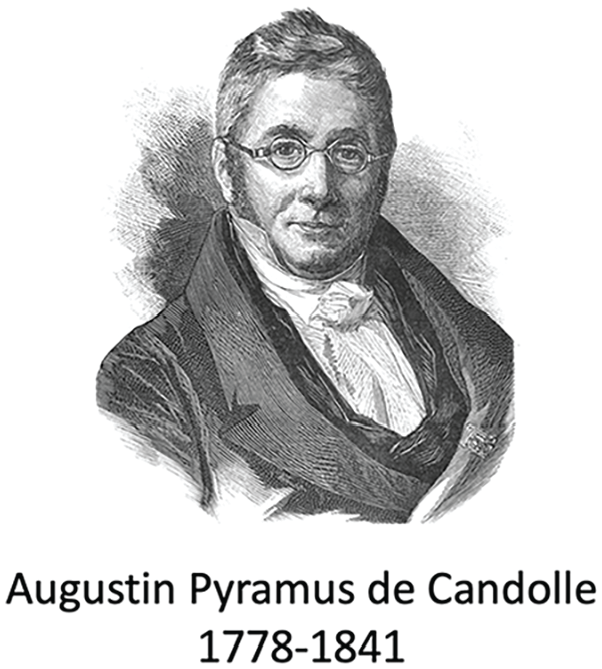
Augustin Pyramus de Candolle (1778-1841) was born and raised in what was then the Republic of Geneva (Geneva became a Swiss canton in 1815). Candolle, whose career took him to Paris and Montpellier during the Napoleonic period before returning to Geneva in 1816 to take the Chair of Botany at the University of Geneva, was one of the most influential botanists of the 19th century, authoring essential textbooks, including his 3-volume “Physiologie Végétale,” in which he described his experiments on the rhythmic movement of leaves (de Candolle, 1832). His ambitious lifelong goal was to reorganize plant taxonomy, improving upon Linné’s original classification and describing every known plant. This massive endeavor, incomplete at the time of his death, was taken over by his son Alphonse-Pyramus and then by his grandson Casimir. Augustin-Pyramus de Candolle influenced Charles Darwin, particularly by his proposal that plants are at war for space and resources. Anticipating Gregor Mendel’s observations with peas while discussing the difference between plant species and varieties, he noted in his most important book, “Théorie élémentaire de la Botanique” (de Candolle, 1813), that some varieties are hereditary: “if one sows the seeds of a purple beech tree, one will see that, of the young seedlings, about half will be born green as the primitive species, one quarter pale purple, and one quarter deep purple”.
Candolle’s “Physiologie Végétale” was published in 1832. In a chapter focused on the movement of plants, Candolle dedicates a 7-page section to the “sleep of leaves.” In it, he makes no indication that he is familiar with the Mimosa experiments of Mairan, Zinn, Dufay, or Duhamel. This is surprising, particularly because he performed the experiments described below in Paris, according to one of his biographers (de la Rive, 1851). Candolle attributes the first reported observations of daily leaf closing to the 16th-century physicians and botanists Valerius Cordus (1515-1544) and Garcia de Orta (1501-1568). Remarkably, after mentioning that Linné had poetically coined the term “sleep of leaves” for the daily leaf closing associated with nightfall, Candolle warns the reader not to seek a link between plant sleep and animal sleep (he even writes “this so-called sleep” near the end of the subchapter). After describing in detail the rhythmic leaf movements in various species, Candolle asks a critical question: What is its mechanism? By which he appeared to ask which environmental variable triggers the movement. He dismisses the idea that variations in humidity during the day result in the daily contraction of one side of the leaf and elongation of the other. Similar to Zinn, Candolle cites, for example, the facts that leaf movements occur at the same time of day regardless of whether the plant is outside or in a greenhouse. Moreover, he mentions that such movements are observed under water, which excludes the mechanism being airborne (Dufay actually first reported these observations, but Candolle does not cite him, nor Duhamel; Dufay, 1739 [1736]; Duhamel, 1758). Candolle then examined the hypothesis of temperature-driven movement, but again dismisses it, citing observations that the timing of leaf sleep is not altered at a relatively high or low temperature, so long as the temperature was not harmful to the plant. Then what possible mechanism are we left with?
These considerations lead us, by way of exclusion, to think that light must be the most direct cause of the leaves’ movements. Indeed, these movements occur with regularity at sunset and sunrise. The leaves do not have in this respect the same diversity as flowers, all close at night and open the morning at the same time; and since this time coincides with the sunrise and sunset, it is impossible not to believe that the two phenomena are linked. To convince myself in a more direct manner, I subjected plants whose leaves are prone to sleep to the effect of artificial light from six lamps equivalent to 5/6th of a pure day without sun. The results were variable; they were most generally as follows: 1. When I exposed several sensitive plants to light during the night, and darkness during the day, I initially saw that these sensitive plants opened and closed their leaves without any fixed rules; but after a few days they submitted themselves to their new relationship [with the light cycle], and opened their leaves in the evening, which was the moment when brightness begun for them, and closed them in the morning, which was the time at which their night started. 2. When I exposed sensitive plants to constant light, they experienced, as usual, the alternation of sleep and wake; but each of these periods was slightly shorter than usual. The acceleration on diverse individual plants was of one and half or two hours per day. 3. When one exposes sensitive plants to constant darkness, they also show alternations of sleep and wake, but these are not very regular.
Candolle then mentions that he tested various Mimosa species, in addition to other unnamed plants. Effects were similar although not as robust, and some plant species did not respond at all to different light regimes although they did sleep. He then writes,
I think we can conclude from these facts that the movements of sleep and wake are linked to a disposition to periodic movement inherent to plants, but that, essential to its activation, is the stimulating action of light, which acts with different intensity on diverse plants, in that the same dose of light produces different outcomes on different species.
Candolle ends with a discussion of the possible physiological purpose of leaf movement, suggesting a possible link with respiratory or evaporatory functions. Surprisingly, the function of leaf movement remains unclear to this day. Candolle also emphasizes that the opening of leaves does not necessarily correlate temporally with the opening of flowers, as illustrated by an Acacia plant that closes its leaves in the evening while opening its flowers.
This report represents an enormous step forward and might arguably be considered to mark the birth of the field of chronobiology. In his constant light experiment, the conditions appear to have been sufficiently constant to allow Candolle to detect a period that was distinct from 24 h, thereby allowing him to recognize that the rhythm was intrinsic to plants like Mimosa. This was a fundamental shift that would ultimately lead to the concept of the circadian clock, nearly 120 years later.
It is interesting to note that the motivation for the experiments of Mairan, Duhamel, and Dufay and that for the experiments of Candolle were quite different. Mairan, Dufay, and Duhamel wanted to know if rhythms could persist indoors, presumably insulated from the most obvious environmental cycles. The idea was brilliant and prescient, but all indications are that none of them observed free-running rhythms in their experiments. However, they made important early progress establishing the complicated relationships between daily rhythms and environmental cues; relationships that we now know include both the entrainment of endogenous clocks and the masking of clock-controlled phenomena. In contrast, Candolle wanted to determine which environmental rhythms were responsible for driving leaf movement rhythms yet ended up revealing a free-running rhythm and concluding that it was intrinsic to the plant itself. Candolle also proposed light to be essential for the activation of the rhythm because (1) it persisted under constant light but not constant darkness, similar to the results of Duhamel’s vault experiment and (2) because he succeeded in inverting leaf movement rhythms by inverting the light-dark cycle. Had he been aware of the works of Mairan and Duhamel, he might have been more careful before dismissing temperature as a potential factor in the leaf movement rhythms. It is also notable that Candolle chose not to discuss his observation that the plants’ adjustment to a 12-h shifted light-dark cycle took several days. This would seem to be the first report of what we now refer to as transients and further early evidence that leaf movement rhythms were not simply driven by light cycles.
As the translations above illustrate, by the 1830s, careful experimentation had already provided strong evidence for what would eventually be recognized as core features of circadian rhythms: persistence under constant conditions, the deviation of endogenous period from the 24-h solar day, and entrainment to environmental cycles. Despite the compelling nature of this evidence, the endogenous nature of leaf movement rhythms would not be recognized for another century. Remarkably, the investigator who would go on to provide the clearest evidence for endogenous plant rhythms was likely at first the most influential proponent of skepticism with regard to the endogenous nature of these rhythms.
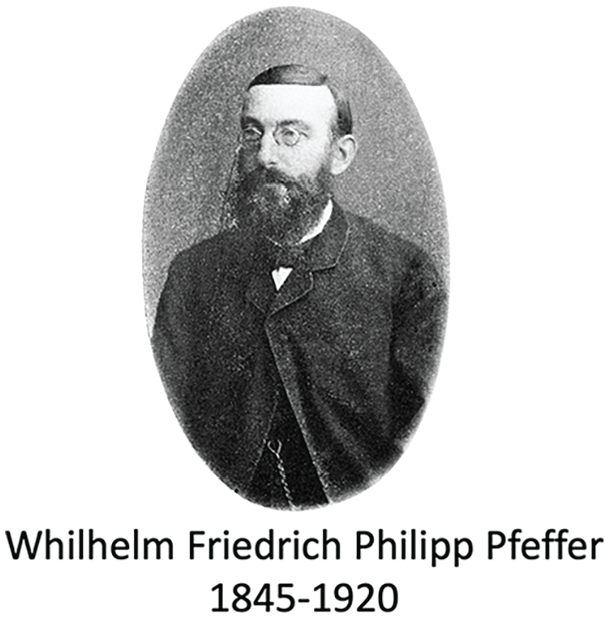
Wilhelm Friedrich Philipp Pfeffer (1845-1920) is now recognized as a foundational figure in the field of plant physiology who made a remarkable number of fundamental discoveries in the areas of metabolism and cell biology. Pfeffer had a long-standing interest in the movement of plants, including the kinds of daily movements that occupied the investigators examining Mimosa leaf movements, and pioneered the use of photography and methods to objectively measure leaf positions across time, using movements of the primary leaves of bean seedlings (Phaseolus) in his experiments. Pfeffer published a comprehensive book on such periodic plant movements in 1875 (Pfeffer, 1875). At this time, his work had led him to the conclusion that there was no endogenous, inherited basis of periodic plant movement, an opinion that stood in opposition to the conclusions of a well-known contemporary with a shared strong interest in plant movement, Charles Darwin (Darwin and Darwin, 1880). This difference of opinion, which Edwin Bünning referred to as the “Darwin-Pfeffer controversy,” was based on Darwin’s opinion that the complex nature of daily plant movement suggested that they represented an adaptive and inherited characteristic of plants (Bünning, 1989). However, it was not at all clear what advantage they actually conferred upon plants, and in the absence of a clear function for such daily plant movements, Pfeffer assumed that they were produced by the influence of daily environmental changes (Bünning, 1989).
Recognizing the direct influence that light and temperature had on bean seedling leaf position and movement, Pfeffer made major technological advances that allowed for the establishment of well-controlled, constant experimental conditions (Bünning, 1964; Sweeney, 1987), controlling for both temperature (Pfeffer, 1895) and light intensity (Pfeffer, 1907). Remarkably, the bean seedlings failed to display persistent rhythms under the “more perfect darkness” Duhamel had attempted to provide, this time controlling very carefully for temperature changes (Pfeffer, 1907). The plant also failed to display persistent rhythms under constant light (Pfeffer, 1875), a free-running condition more amenable to the health of an obligate photosynthesizer than constant darkness. In both constant light and constant darkness, rhythmic leaf movements appeared to gradually wind down, with the amplitudes of leaf movement weakening gradually and eventually stopping altogether.
These negative results from exceedingly well-controlled experiments led Pfeffer to doubt the existence of endogenous leaf movement rhythms, in stark contradiction to Candolle’s striking evidence for a “periodic movement inherent to plants.” Based on his own experiments, Pfeffer suspected that external influences were the most likely explanation for rhythmic plant movement. He interpreted the persistence of such rhythms in plants shielded from light and temperature cycles as something akin to a waning memory of the previously experienced rhythmic environment, considering them “after-swings,” reminiscent of the swinging of a pendulum after being set in motion by an outside force (Bünning, 1989).
It took Pfeffer almost a decade of careful observations under a range of controlled constant light and temperature conditions to observe long-term persistence of daily leaf movement rhythms and to measure a clear deviation of periodicity from the 24-h solar cycle (Pfeffer, 1915). It seems the light used in previous work under constant conditions had been too bright (Bünning, 1989). In addition, constant darkness can rapidly and severely attenuate circadian rhythms in at least some plants (e.g., Hicks et al., 1996; Hazen et al., 2005). The strong, near-24-h rhythms observed under these lower light intensity conditions led Pfeffer not only to cast off his skepticism regarding the endogenous nature of plant rhythms but also to recognize their affinity with the sleep-wake cycles of human beings (Bünning, 1989). Despite the clarity of these results and the admirable capacity of Pfeffer to change his mind in the face of evidence against his own previous conclusions (Bünning, 1989), the recognition of endogenous circadian rhythms was still met with widespread skepticism for quite some time.
Pfeffer’s reconsideration of his conclusion that there was no endogenous or inherited rhythm, but only “after-swings” following exposure to rhythmic environments was strongly influenced by the work of Richard Semon (1859-1918), a German zoologist and evolutionary biologist. Semon was interested in the idea that acquired traits could be inherited (Semon, 1905). Based on Pfeffer’s initial conclusion that external factors drive daily plant rhythms, he set out to change the 24-h plant rhythms by exposing plants to much shorter (6:6) or longer (24:24) light-dark cycles (Semon, 1905). Semon used Acacia lophantha in his experiments because this species thrived under these extreme environmental cycles. To exclude any influence from normal 12:12 light-dark cycles experienced during the development of the plant, Semon used seedlings that were raised in constant darkness and temperature, before being exposed to long and short photoperiods. He noted that the light-dark cycle also caused a temperature cycle (4-5 °C amplitude) within the incubator he used, but he considered this to be advantageous because it would create conditions akin to the natural coincidence of light and temperature changes. Semon expressed his surprise and initial disappointment with the results he obtained: During the short- and long-photoperiod exposure, as well as under subsequent constant light and constant darkness conditions, the Acacia plants exhibited leaf movements with prominent 24-h rhythms. Semon clearly realized the significance of his findings and concluded: “I think my observations on movements of plants never exposed to normal 12 hr:12 hr environmental cycles, is conclusive proof for an endogenous, inherited 24 h periodicity, making any further evidence superfluous” (Semon, 1905).
Later, Anthonia Kleinhoonte’s (1887-1960) skillful work using Pfeffer’s methods provided further strong evidence for the endogenous nature of plant rhythms (Kleinhoonte, 1929, 1932). Her insightful work replicated Semon’s observations that non-24-h light-dark cycles do not alter the near 24-h period of the subsequent endogenous rhythm in constant conditions (thus excluding the notion that rhythmic movements are echos of previous experiences) and that very brief pulses of light are sufficient to entrain it (Kleinhoonte, 1929). Her careful examination of leaf movement rhythms under a variety of light cycles laid the foundation for understanding how environmental light-dark cycles shape the timing of entrained rhythms (Bünning, 1964).
Although the middle of the 20th century saw a revival in skepticism regarding the existence of endogenous circadian rhythms (e.g., Brown et al., 1970), the work conducted in plants by Mairan, Duhamel, Dufay, Zinn, Candolle, Pfeffer, Semon and Kleinhoonte formed the foundation upon which the modern field of chronobiology rests. Pittendrigh, Aschoff, Konopka, Benzer, and so many after them vanquished Brown’s ghost with rigorous behavioral and physiological experimentation and the rising power of genetics and molecular biology. This culminated with the Nobel Prize in Physiology or Medicine awarded to J. Hall, M. Rosbash, and M. Young for elucidating the molecular mechanism of the Drosophila circadian clock. Our current profound understanding of circadian rhythms and their impact on a vast array of behavioral, physiological, and metabolic functions across a wide range of phyla has fundamentally advanced our understanding of life on Earth. Moreover, with the development of chronotherapy and chronomedicine (Cederroth et al., 2019), the fruits of this work now shape the treatment of human patients suffering from a wide range of ailments. In this context, it is remarkable to read Mairan and Fontenelle suggesting, so long ago, that the “unfortunate sensitivity” of the sick to the “alternation of day and night” might be related somehow to the daily leaf movements of the sensitive plant. Three hundred years later, it is astonishing how right they were.
Footnotes
Acknowledgements
We thank  for the portraits we used in this review, as well as the archival repositories we consulted: the Internet Archive, the Biodiversity Heritage Library, the Bibliotheque Nationale de France (BNF)/Gallica, and Google Books. We are particularly grateful to the BNF/Gallica archives for the reproduction of the minutes of the French Royal Academy of Science.
Conflict of Interest Statement
The author(s) have no potential conflicts of interest with respect to the research, authorship, and/or publication of this article.