



Abstract

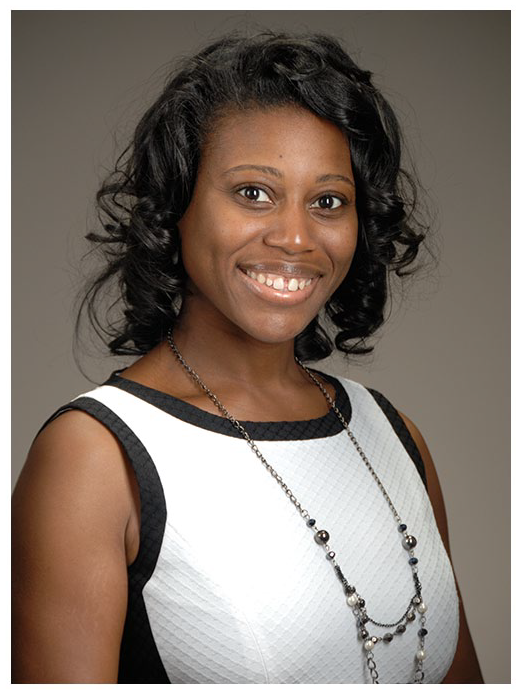

Dr. Marishka Brown is the Director of the National Center on Sleep Disorders Research (as of 23 November 2020). She succeeds Dr. Michael Twery, who served as Director 2006-2020. On 15 July 2021, Dr. India Nichols interviewed Dr. Marishka Brown. Dr. Nichols is currently a postdoctoral fellow working with Dr. Ketema Paul (Integrative Biology and Physiology, University of California Los Angeles [UCLA]). This interview was transcribed by Fatima Diouf, Smith College. The conversation is provided for our readers, edited for clarity.
Well, I’m so excited for this interview.
I’m excited to be here.
I’m happy to meet you. Congratulations on your new role! I look forward to hearing about your path and your plans and everything. So, I’ll just go ahead and start. How would you describe your career path?
From high school to college to graduate school to a postdoctoral fellowship, it was pretty much a linear path. There are many directions or career paths that PhD-educated scientists can take and non-academic career paths can also be exciting and fulfilling.
The need for science is much bigger than just discovery research. Leadership implementing science is needed more than ever today. There is a growing awareness that there are a range of opportunities for someone who has a strong scientific background to contribute to other sectors of society, including industry, government, and nonprofits.
Initially for me, the goal was to go into academia because that’s what I was being trained to do. However, during my postdoctoral fellowship, I also became very interested in policy. Specifically, I can remember during the sequester in 2013 having many conversations about what the NIH (National Institutes of Health) could or should be doing. At some point, another fellow challenged me by asking why didn’t I go to NIH and do something about it? My response was, “Well, I will! Whenever I figure out what that is!” That “what” was crystallized in a chance encounter. NINDS, the National Institute of Neurological Disorders and Stroke, has this amazing program that they fund called Broadening the Representation of Academic Investigators in Neuroscience or BRAINS.
I was in the programs’ first cohort and there were several panels throughout the meeting and one had a representative from the American Association for the Advancement of Science (AAAS) Science and Technology Policy Fellowships discussing how scientists could bring their knowledge to government. so that’s when my path diverged.
That’s awesome, that you are flexible enough to let that conversation move you into a different path. Saying, no, I’m going to do this. And also, I think that shows the importance of mentoring.
Yes, absolutely India. Mentoring is vital to your growth, not only as a researcher but as a person. I’m always asked if I have a mentor who looks like me. Not for my career, per se, but for life, it was my mother. She is a strong Black female who is about forging your path and finding your own way. For my career, it was valuable to my development to have people, whether they looked like me or not, who were invested in my future and who were supportive. But I will freely admit, that the visuals matter—it says, that there is a place for me in that space. My professional mentors were primarily academics; however, they were willing to listen and to support me in exploring my own path.
Yeah. I agree. So, could you speak about the impact of sleep problems on health disparities and overall health?
We have opportunities to work with phenomenal investigators who are working in the field of sleep health disparities. Research has shown that underrepresented groups and underserved groups have worse sleep, which essentially leads to worse health outcomes. Whether that’s cardiovascular, metabolic, dementia, sleep is linked to all of these and leads to or contributes to increased risk in underrepresented groups. My NIH career choice has offered many opportunities to partner and collaborate by developing workshops in emerging areas and in 2018, a workshop focused on sleep and health disparities was organized. A major goal was to build consensus around what were the opportunities, what were the challenges, and to build strategies around the emerging area of sleep and health disparities.
The workshop report was published in the journal Sleep in March of 2020 (Jackson et al., 2020) and one of the major accomplishments was the definition of sleep health disparities, because if you can’t define it, how can you explore it? How can you research it? Now with a definition, strategies to actually address them, or more than address them, to eliminate them can be created.
Right. So how do you define sleep and health disparities?
The workshop discussions led to the recommendation that sleep health disparities be defined as differences in one or more dimensions of sleep health (duration, efficiency, timing, regularity, alertness, and quality)—on a consistent basis—that adversely affect designated disadvantaged populations. This definition encompasses the designated health disparity populations. https://www.nimhd.nih.gov/about/overview/
Okay. Thank you for discussing that, because that’s so important. And part of the reason that I went into research is because of those disparities. It drives my purpose and passion to be in this field. So, I appreciate that.
I’m sorry India, I have a question. You did tell me a little bit about you and I know that you work with Dr. Ketema Paul. Can you talk more about your interest?
Okay. I’m a fifth-year postdoc with Ketema, and I got my PhD from Clark Atlanta University, but I was working with Ketema while he was at Morehouse School of Medicine. Then, when he got an offer at UCLA, it was around the same time I was finishing my PhD program. He offered me a postdoc in his lab. In the work that I do now, I focus a lot on the mechanism of sleep homeostasis or regulating sleep homeostasis. And my specific interests are in sex differences in sleep. We’re looking at how sex chromosomes affect sleep regulation, and I would like to go more into the role of reproductive health and sleep.
That’s amazing. I’m going to seque here slightly, but that was something we discussed in the 2018 conference on sleep and the health of women: https://www.liebertpub.com/doi/10.1089/jwh.2020.8341. that we needed to talk across the lifespan because reproductive health is not the only part of a woman’s health.
There are many conversations about sleep and aging but there is this midlife area where there are significant life changes such as marriage, childbirth, careers, all of these impact sleep. And so research into the reproductive span and how that’s impacting sleep and then health, should maybe consider these other exposures or life events. Further exploration is needed.
Oh, thank you. I feel validated. I definitely agree that it needs more exploration. When surveyed, women tend to report insomnia more than men. I think that it’s those environmental factors that play a big role as to why that is. And I’m really interested in exploring that.
So, you do plan to pursue the academic career path?
Yes, I do.
We need you. Even though it wasn’t my trajectory, my career supports that trajectory. And so, again, our numbers, particularly in the sleep and circadian space’ of underrepresented groups could be strengthened. There are things that can be done to increase those numbers. And I’m sure the community is behind that. The recognition of the value of diverse perspectives, is one thing, but now the research communities are beginning to actively think about ways to embrace inclusion. That’s something that I’m very happy to see and that I’m very supportive of, and I’d like to see the numbers significantly increase in my tenure as director of the NCSDR.
That leads into my next question, which is, what are your current goals as the Director of the National Center on Sleep Disorders Research (NCSDR)?
My vision is to have sleep considered on the level of physical activity and nutrition and whenever a disease or risk reduction program is developed, that sleep and circadian biology are major factors in those conversations. Part of the elevation of sleep is about well-being, but another equally important message that seems to get lost outside of the research community is that sleep is underlying physiology; that sleep is a science. So that’s my “big picture” vision as the director of NCSDR.
The NIH has been actively and vigorously working on the NIH Sleep Research Plan revision. The NCSDR is congressionally mandated. We have legislation that says we must exist, and there are specific activities that the mandate says we must accomplish. One activity, is the development of a comprehensive research plan. The last research plan was published in 2011. Since then, the science has evolved and grown which necessitated the development of a new plan.
We work with the Sleep Disorders Research Advisory Board (SDRAB), which is our federal advisory committee, as well as our NIH Sleep Research Coordinating Committee which is comprised of program officials across NIH that hold sleep and circadian research in their portfolios and NIH leadership. Other stakeholders include, research communities, professional societies, and the public. The SDRAB meetings, which are now three times a year (the first Thursday in April, August, and December) offer a venue to exchange viewpoints and ideas with the Board as well as other stakeholders in the federal government. With that, there are five goals in this revision.
One is to elucidate sleep and circadian mechanisms underlying health and disease. Second, is to improve the treatment of sleep and circadian disorders and to reduce the risk associated with sleep deficiency. Third, is to accelerate the clinical implementation of sleep and circadian research as well as to identify gaps and opportunities to protect the health of the public. The fourth goal is to advance the understanding of sleep and circadian contributions to health disparities, populations, and public safety.The fifth goal is to foster the development of a strong and diverse workforce for sleep and circadian research. This is potentially the most important, because without the workforce, none of those other goals can be accomplished.
Okay, that sounds good. The Workforce piece is so important. I’m a coordinator for a summer program, and it’s a partnership between Historically Black Colleges and Universities (HBCUs) and UCLA. Every summer, we bring HBCU students to come and do neuroscience research and hope that they’ll apply for PhD programs at UCLA. And that is the same goal, to get more diversity in research, because we know with diversity, just different minds answering, asking different questions, approaching problems differently, that is the cornerstone or the basis of moving ahead.
There have been discussions about diversifying the workforce for years and NIH supports many programs to do just that. NIH has also recently launched a new initiative with the express purpose of ending structural racism from every sector of the biomedical enterprise. Everyone wants the best science, and if you are excluding large sectors of the population, it goes to reason that you are probably not getting the best.
Exactly. Well, yes. One of my career goals and one of my passions is to increase representation in science. That’s why I want to go into academia, because I want to mentor students from diverse backgrounds and offer them a place to feel comfortable and do research. And so, my last question is, what advice do you have for minorities and women interested in a career, specifically in sleep and biological rhythm?
Move forward and connect with people. One challenge that underrepresented groups may face is the lack of a professional network, and that support and infrastructure is important. If an individual hasn’t been acculturated in an environment where you call or send emails to people you’ve never met, it can be very uncomfortable—that’s a skill that you build. It’s a common misconception that scientists may not be as open or friendly, but the truth is that scientists are people and are typically happy to discuss their work.
And so, the advice would be to start. Don’t be afraid to send that cold email. Also, be informed. If you’re interested in a program, learn about that program. Learn about the people who are in that program.
Right, yeah. At the end of the day, scientists love science. Once you call and want to talk about science, then they’ll be happy to engage. And I definitely agree with you on that one.
Right. And knowing that there’s support. NIH supports research training programs from the undergraduate level all the way to early career researchers. that have been critical to the development of diverse groups. It’s also a mind-set change for some.There’s a relatively common misconception that if an individual were interested in a lab, they’d reach out; not realizing that there may be societal or cultural barriers where, inexperienced people, even if they were interested and qualified, wouldn’t approach a researcher. And so for researchers to essentially say that their lab is open and this is the work that they’re doing and engaging different communities and not waiting with the expectation that, if people are interested, they’re going to come is really a change.
Exactly. Well, thank you so much. I know that you probably have a bunch of other meetings.
This is a part of the job that I really enjoy! Diversifying the workforce and reaching out to underrepresented communities. That is a passion because I’ve faced some of those barriers. I know how hard it is to take that first step.