




Abstract
While general health and fitness-related self-service technologies, such as health and fitness apps and wearable activity trackers, are steadily increasing in popularity, there are increasing reports of the potential harm they can cause to consumer well-being. An overview and analysis of the “dark side” of general health and fitness-related self-service technologies is therefore timely and appropriate. In the present work, the authors systematically identify and review the existing literature on this topic across various disciplinary backgrounds. They summarize available knowledge concerning the potential adverse consequences for consumer well-being resulting from the use of health and fitness apps and wearable devices and propose a conceptual framework to explain the relationship between using such technologies and these negative outcomes. Based on these insights, the authors identify current research gaps concerning the dark side of general health and fitness-related self-service technologies and propose corresponding directions for future research. They also discuss the implications of these findings for marketers and public policy makers.
Keywords
The rise of self-service technology (SST) has greatly impacted the service industry (Blut, Wang, and Schoefer 2016) and, in the form of general health and fitness-related SSTs (hereinafter referred to as “health and fitness SSTs”), has created an efficient means by which service providers can positively impact consumer well-being. SSTs are “technological interfaces that enable customers to produce a service independent of direct service employee involvement” (Meuter et al. 2000, p. 50). Thus, by offering these high-tech services and products, providers enable consumers to track their own health and well-being independently (Blut, Wang, and Schoefer 2016). Health and fitness-related applications (apps) and wearable activity trackers are examples of such SSTs. Health and fitness apps provide users with training sessions and instructions without the need for personal interaction with trainers. Wearable activity trackers monitor users’ basic physical condition and generate reports on a paired app without the need for observers and analysts. These health and fitness apps and wearable activity trackers enable people to track their physical activity and eating habits while also monitoring their health (Dhiman et al. 2019). Such health and fitness SSTs have been increasing in popularity—for example, global sales of Fitbit fitness trackers rose by 56% in the second quarter of 2019 (Emmanuel 2019)—and sales boomed due to the COVID-19 pandemic (Kelter 2020).
Existing research on SSTs has tended to focus on commercial outcomes. For example, to look at how to attract consumers to use these technologies and maintain long-term use, research has explored consumer adoption and abandonment of SSTs (e.g., Attig and Franke 2020; Kalantari 2018; König et al. 2021). This has provided insights that are useful for improving the design and marketing of these technologies. The transformative consumer research (TCR) 1 and transformative service research (TSR) 2 movements, however, call for consideration of consumer well-being (Mick et al. 2012) as an additional focus of scholarly research within the domains of consumer and service research. TCR is dedicated to finding reliable solutions to social problems in many fields, such as health and maladaptive behavior, to improve consumer well-being (Davis, Ozanne, and Hill 2016; Mick et al. 2012). Early TSR focused on understanding how services in various fields, such as finance, education, and health care, create value for consumers and improve well-being (Anderson and Ostrom 2015).
Following the emergence of TCR and TSR, there has been an increase in research exploring the positive impact of SSTs on consumer well-being. We are interested in the research focusing on health and fitness SSTs (i.e., general health and fitness apps and wearable activity trackers). According to the existing research, using these technologies can provide users with physical, psychological, behavioral, and interpersonal benefits. These technologies help consumers overcome time and space limitations, enabling them to exercise effectively and maintain their health while also making it fun (Padmasekara 2014).
Health and fitness apps can increase user motivation toward fitness and self-management of health (Anderson, Burford, and Emmerton 2016). Wearable activity trackers help users understand their physical condition by making connections between their bodies and their minds (Lupton 2018). Based on the improved understanding of their physical condition, users can choose physical activities that are more suitable for them, thus making it easier to maintain healthy physical conditions. Using health and fitness apps also has a positive impact on healthy eating and weight control behavior (Wharton et al. 2014). Additionally, users of health and fitness SSTs can join online communities, where they can publish their own posts and view the posts of other community members. Some wearable activity trackers also display ranking lists for different activities, so users can see their own performance compared with that of their peers. These social features enable users to communicate with peers and receive social support, which increases happiness (Chiu and Cho 2020).
While these studies constitute important contributions to the body of knowledge on this topic, there has been a tendency to focus only on positive well-being outcomes (i.e., the “bright side”). This led Blocker, Davis, and Anderson (2022) to encourage researchers to explore the potential negative outcomes of such technologies on consumer well-being (i.e., the “dark side”). While this applies to SSTs in general, it is especially relevant to the use of health and fitness apps and wearable activity trackers. For instance, the media have recently reported on cases where health and fitness apps were linked to unintended negative health-related consequences, such as eating disorders (e.g., BBC 2019; Davies 2018). Given the increasing adoption and use of health and fitness SSTs, it is more important than ever to understand the unintended negative consequences of these technologies on consumer well-being. To this end, our work sets out to systematically review the literature on the dark side of these technologies.
Our work was guided by the following research questions: (1) What are the potential negative outcomes for consumer well-being resulting from the use of health and fitness SSTs? (2) What are the mechanisms that link the use of health and fitness SSTs to these potential negative well-being outcomes for their users? To the best of our knowledge, our study is the first to systematically review the literature on the potential negative consequences of these technologies in relation to consumer well-being. In light of the TCR and TSR movements’ growing emphasis on consumer well-being, our work comprehensively identifies the unintended negative impacts of health and fitness SSTs on consumers’ physical, psychological, behavioral, social, and general well-being. Our proposed conceptual framework provides insights to aid in understanding of the mechanisms by which health and fitness SSTs negatively impact different types of consumer well-being, and it also suggests directions for future research to examine and verify these mechanisms. In addition, by understanding the underlying mechanisms by which negative effects occur, our work provides insights useful for the design and marketing of health and fitness SSTs as well as the regulation of these technologies by policy makers and the education of consumers about effective use, thereby contributing to minimizing the potential for negative impact on consumer well-being.
Methodology
To comprehensively analyze the existing literature involving negative health-related outcomes of health and fitness SSTs on consumer well-being, we carried out a systematic literature review. Systematic literature reviews can reduce the impact of bias (Snyder 2019) by providing reliable knowledge through understanding the contributions of prior studies on a specific topic (Higgins et al. 2019). Adopting a systematic literature review (De Menezes and Kelliher 2011) enabled us to identify, select, and critically appraise relevant primary research on the topic, identifying implications, limitations, and gaps. Given the interdisciplinary nature of this topic, we selected the Web of Science, Scopus, and Business Source Complete databases to comprehensively locate relevant articles. In accordance with our research questions, we used search queries based on the negative outcomes of using health and fitness apps and wearable activity trackers on consumer well-being. We broke this down into four concepts: health and fitness apps, wearable activity trackers, negative outcomes, and consumer well-being. We completed a scoping search to identify as many synonyms and related terms as possible for these four concepts in existing studies. A complete list of the search terms used in the formal literature search is given in Table 1.
Terms Used in the Literature Search.
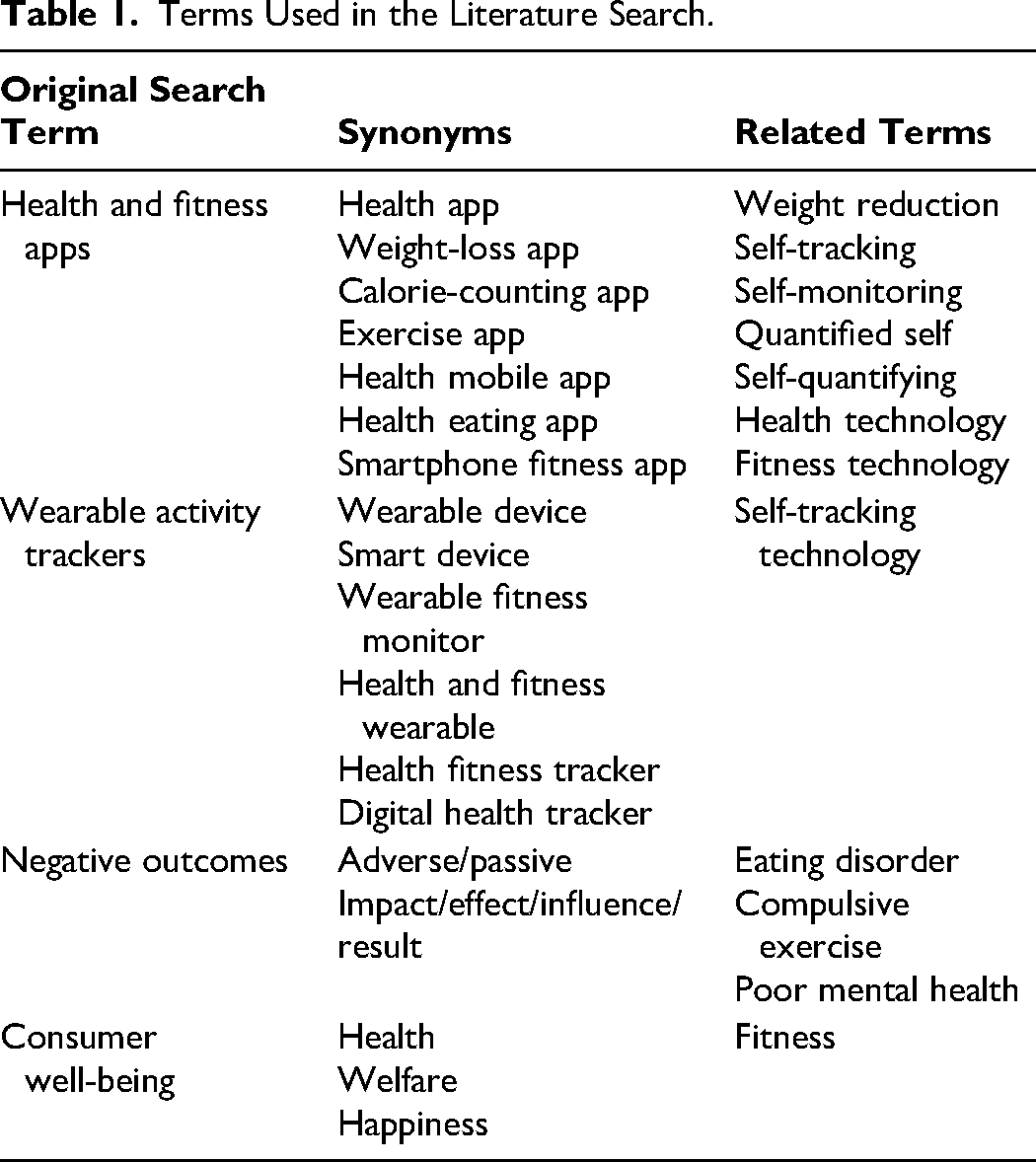
We aimed to identify scholarly peer-reviewed articles published in English without restricting the publication date. During the scoping phase, we identified some specialized apps and wearable devices designed and used to treat specific diseases. For example, Ryan et al. (2017) developed Intelligent Diabetes Management, an app to improve the control of blood glucose levels for diabetics. Researchers have developed wearable devices with companion apps to monitor and diagnose heart disease and aid in treatment and recovery (e.g., Otoom et al. 2015). The use of these technologies normally includes advice and intervention by health care workers to some extent, which gives some authority to the devices and makes users more likely to trust that they are effective. Clinical users, as a vulnerable consumer group, have specific motivations and psychology when it comes to using technologies designed to treat diseases—different from that of consumers of health and fitness SSTs—possibly resulting in SSTs for specific diseases having different impacts than health and fitness SSTs.
Compared with what is known about disease-specific SSTs, less is currently known about the negative impact of health and fitness SSTs on consumer well-being. Therefore, we decided to focus on health and fitness SSTs (e.g., Fitbit and MyFitnessPal) that are generally self-selected by consumers and used for tracking healthy eating and exercise behavior. Though we excluded technologies designed to treat specific diseases, we believe that our study will provide useful insights for future research on the effects of these SSTs as well.
We identified a total of 1,047 articles from an initial search of the selected databases. We manually assessed these articles by reviewing titles and abstracts according to our detailed criteria for inclusion. A total of 1,012 articles were excluded, and 35 were identified as relevant to our analysis. Our detailed exclusion and inclusion criteria are provided in Table 2. We carefully read the selected articles and used their reference lists to carry out a backward citation search. We also browsed other publications by the authors of the selected articles and the reference lists of relevant review articles to identify any eligible articles that were not picked up in our database search. We identified 19 articles in this way. Another eligible article was obtained via a previous unrelated search. We then carried out an updated literature search and identified 10 additional articles. Thus, a total of 65 publications were identified.
Inclusion/Exclusion Criteria for the Literature Search.

Findings
Characteristics of the Selected Articles
The 65 peer-reviewed articles identified were published between 2013 and 2023. Of this total, 54 (83%) were published in 2017 or later, showing increasing research interest in this topic. The articles were published across 50 journals related to health, technology, society, psychology, and consumer behavior. We checked the latest SCImago Journal Rank indicators for these 50 journals as well as their quartile ranking in related fields, through Scopus. We found that the quartile rank of 33 of these journals was Q1 (this relates to 44 of the selected articles), 13 journals were in Q2 (13 selected articles), and 4 were in Q3 (8 selected articles). Therefore, we believe that the 65 studies selected for analysis are reliable.
Overview of Health and Fitness SSTs
Among the 65 selected articles, 12 focus on both wearables and apps for tracking physical activities or diet, 22 look at wearable activity trackers only, and the remaining 31 examine health and fitness-related apps only. In the latter category, 12 studies involve apps tracking both calorie consumption and fitness condition, 7 involve apps that record food intake and calorie consumption, 5 investigate weight-loss apps used specifically to reduce and control weight, and 7 focus on general health and fitness apps. Among the general apps, Fitbit (10 articles) and MyFitnessPal (13 articles) attracted the most attention from researchers.
Negative Health-Related Outcomes
Across the 65 articles, we identified various negative health-related outcomes, which we grouped into eight outcome categories: emotion, cognition, behavior, physical condition, social interaction, motivation, attitude, and general well-being. We then further grouped those eight categories into four outcome groups: psychological, behavioral, social, and other negative outcomes.
Negative psychological outcomes
Here we consider both negative emotional and maladaptive cognitive reactions elicited by health and fitness SSTs. Looking first at negative emotions, we found these in 42 publications (64.6%). Many types of negative emotions are mentioned, with guilt (20 articles), pressure/stress (18 articles), anxiety (11 articles), and frustration (10 articles) being the most commonly reported ones (for a full negative emotion list, see the Web Appendix).
Negative emotions are associated with different features of health and fitness SSTs. For instance, failure to achieve goals (23 articles) triggered guilt, depression, misery, pressure, despair, and other emotions (e.g., Constantiou et al. 2023; Kerner and Goodyear 2017). Also, negative feedback (15 articles) made users feel pressured, desperate, guilty, upset, ashamed, and so forth (e.g., Duus, Cooray, and Page 2018; Morgan-Jones et al. 2022), and reminders and notifications triggered stress and annoyance (e.g., Honary et al. 2019). In addition, the competitive and comparative aspects of SSTs are associated with stress, with users worrying about how well they were performing compared to others (Goodyear, Kerner, and Quennerstedt 2019; Kerner and Goodyear 2017). Posts by online communities of app users (e.g., on the MyFitnessPal forum) that contained negative opinions or judgment about performance also elicited negative emotions in users (McCaig et al. 2020). As well, health and fitness apps can promote the idea of “ideal” bodies—the appearance prescribed by social values, which may change over time, but is currently “predominantly thin-and-muscular” (Berry, Rodgers, and Campagna 2021 p. 3)—and drive users to pursue unrealistic body images that have been enhanced by photo retouching technology (MacCallum and Widdows 2016). These images reinforce the increasingly unrealistic desire to be perfect (MacCallum and Widdows 2016), which can be a psychological burden and cause anxiety (Depper and Howe 2017). In addition to eliciting negative emotions, use of wearable activity trackers can reduce the intensity of positive emotions, such as the enjoyment (Attig and Franke 2020; Etkin 2016) and the sense of subjective well-being (Etkin 2016) that can come from participating in the activity.
It is worth noting the findings that using MyFitnessPal does not affect anxiety and depression of undergraduate women at low risk for eating disorders (Hahn et al. 2021) or exacerbate anxiety and depression of patients participating in obesity treatment interventions (Jospe et al. 2017). We believe that the inconsistent findings on negative emotions of these two studies with the other findings are due to the characteristics of users. In Jospe et al.'s (2017) study, the users undergoing treatment for obesity may have adopted more appropriate coping strategies when faced with negative experiences as a result of using MyFitnessPal, thus reducing the likelihood of worsening emotions. In Hahn et al.'s (2021) study, as participants were at low risk for eating disorders, they may have been less likely to fall into anxiety and depression due to unfavorable diet records. Thus, user characteristics may moderate the relationship between the use of health and fitness SSTs and negative emotions.
These findings suggest that using fitness and health apps and wearable activity trackers may trigger different emotional changes. It is necessary to further explore the potential factors at play in this association, as both the reduction of positive emotions and the elicitation of negative emotions are potentially detrimental to the psychological well-being of consumers.
As well as the studies on emotional consequences, 12 studies look at cognitive consequences of using health and fitness SSTs. Of these, 7 studies consider users’ perception of body image. Many scholars argue that these SSTs can exacerbate body image concerns because they contain information that reflects unrealistic ideals (e.g., Berry, Rodgers, and Campagna 2021). Some users reported being dissatisfied with their body image (e.g., Taylor and Dibb 2022), and some experienced neurosis related to body image (e.g., Sarcona et al. 2017).
Notably, several studies report that using wearables or diet monitoring apps had no significant negative effect on users’ body image (Gittus et al. 2020; Hahn et al. 2021) and may even improve some users’ body satisfaction (Kerner, Burrows, and McGrane 2019). User motivation may play a part in these inconsistent findings. Given that the participants in these studies were required to use Fitbit or MyFitnessPal for the purpose of the research, we believe that, at least to some extent, their motivations were different from those of generally self-selecting users. Also, the participants were more likely to be motivated by health and fitness than appearance (Gittus et al. 2020), which made them more concerned about their physical function than about their appearance and body shape (Kerner, Burrows, and McGrane 2019). We therefore suggest that different motivations for using health and fitness SSTs may moderate the relationship between the use of these SSTs and negative body image perception.
Rumination, a repetitive thinking style in which individuals fail to extricate themselves from negative thoughts (Eikey et al. 2021), is another negative cognitive outcome related to the use of health and fitness SSTs. Rumination traps the individual in a negative cycle so that they fail to solve problems or act in adaptive ways (Eikey et al. 2021). When using these SSTs, negative feedback and unmet goals may trap the user in this cognitive mode, which can be harmful to their well-being (Buckingham et al. 2020; Eikey et al. 2021).
Three other negative cognitive outcomes were identified in the articles. Users reported that the numerical focus of wearable activity trackers could exacerbate symptoms of obsessive-compulsive disorder (Kanstrup, Bertelsen, and Jensen 2018). Wearable activity trackers prompted users to engage in social competition, but this caused a reduction of self-efficacy in users who performed poorly in the competition (Rieder et al. 2021). Fitbit users reported that focusing on goals, especially unmet goals, made them experience a sense of disconnection from their body's internal signals and their real personal objectives (Zimdars 2021).
According to these findings, we suggest that the negative emotional and cognitive outcomes might be due to users’ psychological reactions to specific features of health and fitness SSTs (e.g., feedback). Most of the studies mentioning associations between negative psychological outcomes and technological features of the SSTs use qualitative research methods. The quantitative studies tend to explore the use of SSTs in general, with only a few exploring the negative effects of specific features on psychological outcomes (e.g., Etkin 2016). This leaves a gap in the research. We noticed that several recent quantitative studies examine user psychology in relation to a few features of health and fitness SSTs. However, these studies do not focus on negative outcomes; rather they are concerned with factors such as consumer satisfaction (Kim 2021), continuous usage intention (James, Bélanger, and Lowry 2022; Kim 2021), and manipulation of technology to interfere with user behavior and health (Zahrt et al. 2023). Therefore, we believe that the exploration of relationships between negative psychological outcomes and specific features of the technology remains insufficient.
Since users may encounter negative psychological experiences when interacting with the specific features of health and fitness SSTs, negatively affecting users’ psychological well-being, it is important to test the differential role that these specific technology features play in shaping the psychological experiences of the users. Additionally, as mentioned previously, the inconsistent findings regarding the impact of technology features on negative emotions as well as on body dissatisfaction suggest that potential moderators (e.g., user characteristics and usage motivations) affect the relationships between technology features and negative psychological reactions. Further exploration of potential moderators is needed to contribute to understanding of these relationships. We believe it is necessary to propose a clear mechanism to explain the relationship between technology features and negative psychological outcomes, and to consider what factors are potentially at play in this mechanism.
Negative behavioral outcomes
Of the 65 articles analyzed in this systematic review, 27 examine disordered eating behavior associated with the use of health and fitness SSTs. This included purging, overeating, dieting, and binge eating (e.g., Maturo and Setiffi 2016; Wons et al. 2022). Disordered eating behaviors that are either excessively restrictive or associated with lack of control can result in the development of eating disorders, such as binge-eating disorder (McCuen-Wurst, Ruggieri, and Allison 2018) and anorexia nervosa (e.g., Izquierdo et al. 2019), characterized by purging and pathologically excessive or unhealthy dieting that leads to potentially life-threatening weight loss. The growth of social media and SSTs has exposed many users to harmful content on eating disorders, including information on skinny aesthetics and unhealthy weight-loss techniques (Rouleau and Von Ranson 2011), which may induce or aggravate eating disorders. For example, some participants expressed that if the virtual figures of their body images displayed on the app do not conform to the standard or ideal body image, this would make them obsessed with weight loss and increase their risk of eating disorders (e.g., Taylor and Dibb 2022). In addition, studies of user experiences indicate that negative emotions or rumination resulting from poor performance or failure to achieve goals may trigger disordered eating behaviors (e.g., Eikey et al. 2021; McCaig et al. 2020).
However, the authors of several studies argue that using Fitbit to track physical activity or using MyFitnessPal to monitor diet does not increase the risk of eating disorders (Gittus et al. 2020; Hahn et al. 2021; Jospe et al. 2017, 2018). We note that these studies are the same studies that show using Fitbit or MyFitnessPal has no significant negative impact on emotions and body image. Negative emotions associated with poor body image or poor food intake records and body dissatisfaction are risk factors for eating disorders. Given that the participants in these studies did not show significant negative emotions or body dissatisfaction either, this might be the reason why they did not engage in disordered eating behavior. Additionally, as one of the studies involves a sample of female college students at low risk for eating disorders (i.e., Hahn et al. 2021), we see user characteristics as a potential moderator responsible for these inconsistent findings.
Another negative behavioral consequence of using health and fitness SSTs is compulsive behavior (e.g., Honary et al. 2019), including compulsive exercise (mentioned in more than 20 articles), disordered weight control and disordered muscle-building behaviors (Hahn et al. 2022), and obsession with data logging or getting desired data (Honary et al. 2019). For example, some users engaged in extreme exercise behavior to avoid negative emotions caused by failure in competition against friends (e.g., Goodyear, Kerner, and Quennerstedt 2019). Some users demonstrated obsession with tracking daily activities, such as calorie intake (Honary et al. 2019).
Users of wearable activity trackers (Blackstone and Herrmann 2020; Wons et al. 2022) and calorie-counting and fitness apps (Lieffers et al. 2017) also reported maladaptive or extreme compensatory behaviors. Those were triggered by unmet goals and led to extreme exercise and dieting to avoid negative emotions (Blackstone and Herrmann 2020). Continued compensatory behavior may develop into severe disordered eating and exercise behavior, which negatively affects well-being. Wearable activity tracker users also reported reduced continued engagement in physical activity (Etkin 2016; Fronczek et al. 2023; Ryan, Edney, and Maher 2019).
The qualitative studies analyzed in this systematic review indicate that users of health and fitness SSTs had psychological reactions before engaging in the maladaptive behaviors mentioned here, suggesting that the relationship between these technologies and maladaptive behavior may not be direct, but potentially involves mediating variables. In addition to these potential mediators, the inconsistent findings on eating disorders discussed previously may also indicate the existence of moderating factors in the relationship between technology users’ psychological reactions and eating disorders. Therefore, it is necessary to explore the specific mechanisms that can explain the relationship between features of health and fitness SSTs and negative behavioral outcomes, as well as mediators and moderators that play a role.
Negative social outcomes
There is research evidence to suggest that using health and fitness SSTs to track calorie intake and physical activity may have negative impacts on users’ social relationships. For instance, Honary et al. (2019) find that some users were obsessed with tracking and controlling calorie intake by health apps for weight loss, taking up their time and energy that could be spent on social activities with friends/families, thereby negatively impacting users’ social lives and possibly even leading to social isolation. The personalized nature of health and fitness apps may also serve to isolate individuals, because these apps drive users to engage in fitness activities for their own personal values and goals, weakening the holistic and socially interactional aspects of team sports, such as communication and teamwork (Depper and Howe 2017). Some studies suggest that using these technologies is associated with psychosocial impairment (e.g., Linardon and Messer 2019)—the presence of real or perceived disabilities resulting from a range of psychological experiences (Ringland et al. 2019)—which impairs users’ ability to interact and build relationships with others, thereby harming their social well-being.
There is still a lack of sufficient knowledge of the relationships between health and fitness SST usage and the previously mentioned negative social outcomes. For example, are these relationships direct? Are there any influential factors (e.g., change in consumer psychology) between using these technologies and the generation of negative social outcomes? In addition, the negative social outcomes seem to affect users’ social well-being to differing degrees of severity. Potential moderating variables may explain the differences described here. Therefore, we believe that it is warranted to explore the mechanisms by which using health and fitness SSTs negatively affects consumers’ social well-being, and the potential moderators at play in these mechanisms.
Other negative outcomes
Other negative outcomes of using health and fitness SSTs include negative physical outcomes, such as skin irritation from using wearable activity trackers (e.g., Buckingham et al. 2020); negative motivational outcomes, such as decreased motivation to engage in healthy activity (e.g., Fronczek et al. 2023; Kerner and Goodyear 2017); negative attitudinal outcomes, such as extreme or harmful attitudes toward diet and exercise (e.g., Goodyear, Kerner, and Quennerstedt 2019); and reduced general well-being, such as life burnout, an indicator of negative psychological well-being that has been associated with social features of health and fitness apps (Whelan and Clohessy 2021).
Literature Synthesis and Conceptual Framework Development
As stated in the previous section, it is necessary to explore and understand the mechanism(s) by which health and fitness SSTs are linked to negative well-being outcomes, and the potential mediators and moderators at play in these mechanism(s), which have not been fully analyzed in existing research. To address these gaps in the literature and advance the current body of knowledge, we identified the theories and concepts applied in the 65 articles (see the Web Appendix for the full list of these theories and concepts). Drawing on these theories, and considering the conditions under which various negative outcomes arise, as described previously, we suggest that the impact of the negative outcomes associated with features of health and fitness SSTs ranges from mild to severe. The technology features first trigger or exacerbate emotional and/or cognitive reactions (i.e., adverse psychological outcomes) in users, which then might elicit or intensify adverse effects on their psychology, behavior, and social relationships. The negative psychological reactions are mild adverse outcomes, whereas the further effects on psychological, behavioral, and social well-being are severe adverse outcomes. As well, based on the inconsistent findings discussed previously, we believe some factors play a key role in the relationship between health and fitness SST features and negative health-related outcomes. We therefore propose a general conceptual framework, shown in Figure 1.
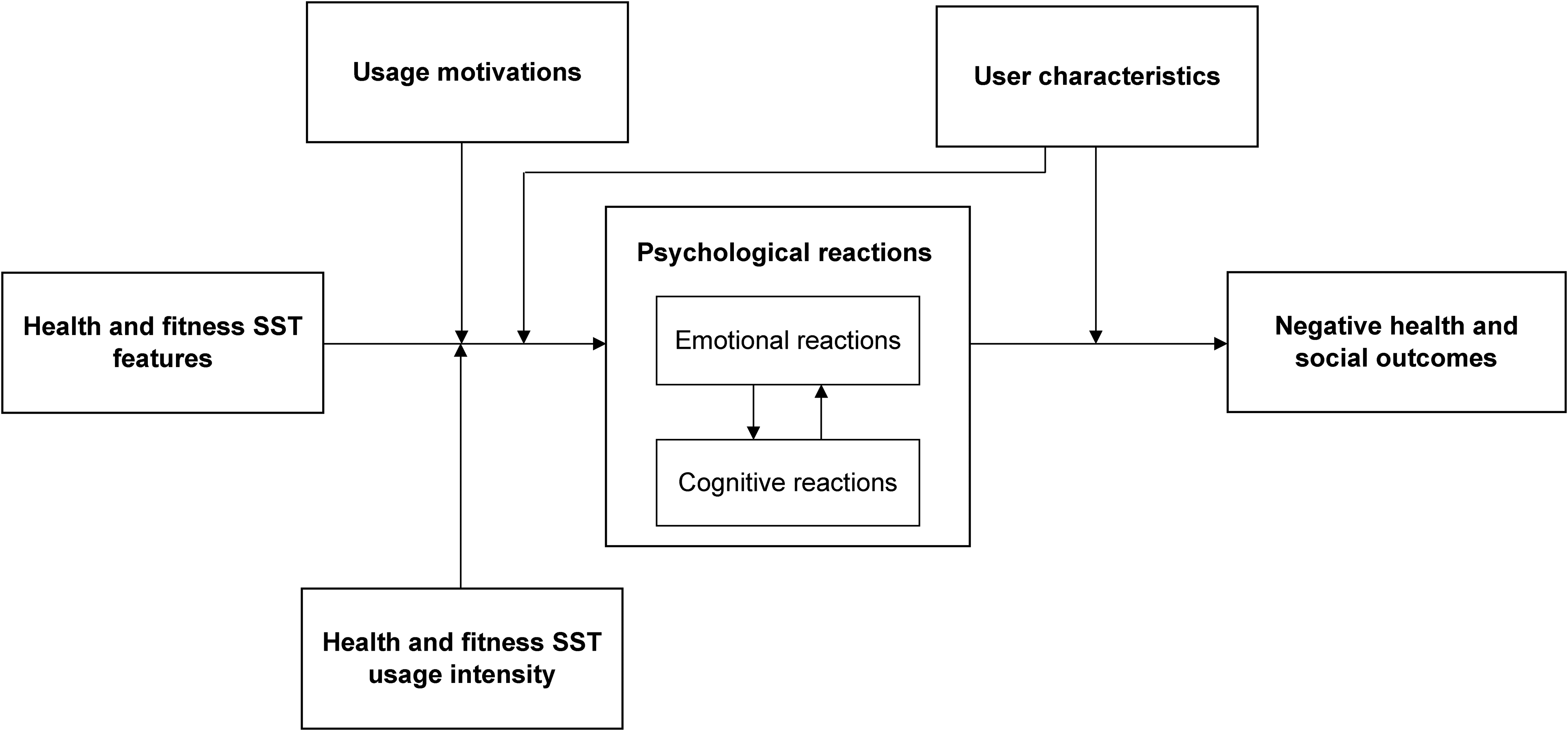
The Proposed Conceptual Framework.
Health and fitness SST features (independent variable) elicit psychological reactions (emotional and cognitive) (mediators), which in turn account for negative health-related outcomes (outcome variables). Usage motivation, user characteristics, and usage intensity are potential moderators that play a role in the relationships discussed here. The mechanisms can be explained by the stimulus-organism-response (S-O-R) model, proposed by Mehrabian and Russell (1974), in which “S” stands for stimulus (or stimuli), “O” for organism (or organisms), and “R” for response (or responses). The S-O-R model reflects the individual's active behavior process. In this process, under the stimulation of different environmental cues (stimuli), the individual experiences a series of psychological (i.e., affective and cognitive) reactions (organisms), followed by internal or external behavioral responses (Benlian 2015; Zhu et al. 2020). In our proposed framework, health and fitness SST features act as external stimuli, users’ psychological reactions act as the organisms, and the negative health and social outcomes are the responses.
The proposed conceptual framework comprehensively demonstrates the relationships between health and fitness SST features and unintended negative outcomes, of varying severity, related to consumer well-being. Notably, caution should be exercised when applying this framework to interpret user interactions with health and fitness SSTs. While unexpected negative outcomes of using these SSTs are not incidental events and require attention, we cannot ignore that these technologies are also likely to bring positive experiences and impacts on consumer well-being. Additionally, not every user who has a negative experience will suffer serious negative consequences. After experiencing minor negative outcomes, such as negative emotions, some users may abandon their devices or adopt more effective ways to deal with their emotions. With caution, we believe that the proposed framework will contribute to a fuller understanding of the conditions by which unintended adverse outcomes occur and, in turn, provide feasible directions for avoiding them. Next, we explain the detailed relationships among the variables outlined in the proposed conceptual framework.
Links Between the Features of Health and Fitness SSTs and Psychological Reactions
People use health and fitness apps and wearable activity trackers—which record daily activities, such as eating and exercise, through relevant indices—for health or weight management (e.g., Gittus et al. 2020). Users are concerned about the data from these technologies because it represents their performance and status. The features of health and fitness SSTs prompt users to keep tracking daily activities, but at the same time they make users aware of the gap between their actual performance and their ideal performance. When the gap does not match users’ expectations, they may react negatively, in both emotional and cognitive terms. After analyzing the findings in the existing literature, we focused on three key features of health and fitness SSTs and five psychological reactions (two emotional reactions and three cognitive reactions) related to these features.
The three key features of health and fitness SSTs are adopted behavior change techniques (BCTs) (Buckingham et al. 2020), “fitspiration” information (Berry, Rodgers, and Campagna 2021), and gamified and social design (Attig and Franke 2019; Maturo and Setiffi 2016), which are common in wearables and apps. Although these features have been shown to be effective in helping individuals achieve positive behavioral changes (e.g., becoming more physically active), they have also been found to sometimes trigger unintended negative psychological experiences (e.g., feelings of guilt) among technology users. The reason might be that many health and fitness SSTs are designed to highlight users’ failures and prompt them to improve their performance (Eikey et al. 2021), which may also elicit negative psychological reactions.
Behavior change techniques
BCTs are interventions that promote behavioral change by manipulating the factors that affect behavior (Carey et al. 2019). Many healthy eating and fitness apps adopt behavior change models and prompt users to form appropriate behavioral habits. BCTs applied in wearable activity trackers and health apps are mainly associated with “goal-setting, self-monitoring, awareness, feedback and self-regulation” (Buckingham et al. 2020, p. 8). While effective for promoting healthy behaviors, goal setting and feedback were also, unexpectedly, the BCTs most frequently mentioned by users who had negative psychological experiences as a result of using health and fitness SSTs. The reminders and notifications that highlight unmet goals and negative feedback may elicit emotional reactions in users. For example, notification of unmet goals triggered disappointment, guilt, and anxiety (Constantiou et al. 2023). Negative comments and poor performance reports triggered negative emotional reactions such as guilt and shame (Berry, Rodgers, and Campagna 2021).
When used as tools to promote biological rights and healthism (Sanders 2017), BCTs in health and fitness SSTs may also trigger negative cognitive reactions. Biopower drives individuals to conform to social norms through invisible social control and individualistic rhetoric (Berry, Rodgers, and Campagna 2021). The discourse of healthism holds that individuals can achieve health by participating in a healthy diet and exercise, advocating that health is an achievement and that the pursuit of health is valuable and positive (Berry, Rodgers, and Campagna 2021). Biopower and healthism encourage users to strive for health and a socially expected body image, but they also increase the risk of triggering or aggravating adverse cognitive reactions in users. For example, negative feedback from wearables or apps may keep users aware of their failure to attain the normative body image, thus triggering or aggravating body dissatisfaction. Especially where users already have poor body image, they may keep blaming themselves and feeling distressed that they have not reached the ideal, increasing the risk of rumination. As noted previously, engaging in rumination may damage users’ psychological well-being.
Fitspiration information
Health and fitness SSTs are also designed to promote fitspiration discourse. Fitspiration promotes idealized thinness and toned muscles with pictures of ideal thin body shapes and encouraging messages, inspiring users to maintain a “healthy” body image and weight (Berry, Rodgers, and Campagna 2021). For example, some health apps use pictures of toned bodybuilders with words of encouragement to illustrate fitness training sessions and entice users to attend. This fitspiration information drives users to pursue the ideal body shape by internalizing the “thin-and-muscular” ideal into the standards that they aspire to. This is referred to as thin-ideal internalization (Berry, Rodgers, and Campagna 2021; Thompson and Stice 2001). Achieving a body image that meets this social ideal is associated with positive outcomes such as success, social acceptance, and happiness (Hesse-Biber et al. 2006).
So, surrounded by fitspiration information, users may constantly compare themselves to ideal physical standards (Berry, Rodgers, and Campagna 2021). However, achieving the so-called ideal body shape is not possible for everyone. When users realize there is a large gap between their actual body image and their ideal body image, fitspiration information may become the psychological burden that makes these users fall into negative emotions such as stress and frustration. For users with strong concerns about their appearance, constant negative thinking and emotions caused by this gap may further trigger or exacerbate adverse cognition, such as rumination.
Gamified and social design
Gamified and social design are other features of health and fitness SSTs. Gamification refers to the application of game elements outside of a game setting (Deterding et al. 2011). Many activity trackers have gamified features, with manufacturers building ranking boards, rewards, and competitions into apps (Attig and Franke 2019). The social features of health and fitness apps enable users to share their data on daily eating and exercise activities, for example, through posting to an online community. Social influence theory points out that other people can influence an individual's attitudes, beliefs, and behaviors (Kelman 1961). While some users may be enthusiastic about sharing and discussing personal data, others may be attracted by gaining a good ranking in their apps and wearable activity trackers so that they do well in social competition. However, users who engage in social comparison or social competition can suffer negative emotions related to underperformance. If users are provided with information showing that they are doing less well than others (Laranjo et al. 2020), this could evoke a sense of failure. Persistent underperformance may trap users in frustration, anxiety, upset, and so forth.
Failure to get a desired ranking or underperformance in competitions with peers may also cause users to think negatively about themselves. Seeing differences between their actual and ideal performance may lead the individual to enter a rumination state (Martin and Tesser 1989, 1996). In addition, the popularity of healthy eating and fitness apps is fueling the pursuit of unrealistic body images (which are influenced by sociocultural factors), further triggering or aggravating body dissatisfaction (Honary et al. 2019). For example, negative comments on a user's body image data may trigger dissatisfaction with body image.
Additionally, health and fitness SST features are also associated with cognition of the quantified self. Using wearable activity trackers to track, record, and analyze daily activities involves self-quantification (e.g., Etkin 2016). Data on goals, feedback, body mass index information, and associated leaderboards are all presented by SSTs. By interacting with these technical features, users increase their self-knowledge based on that data (e.g., Heyen 2020). However, some users report an unhealthy obsession with data (Akdevelioglu, Hansen, and Venkatesh 2022). Data gradually replaces users’ physical intuition (Smith and Vonthethoff 2017), increasing their cognition of the quantified self. The features of these technologies reinforce users’ focus on numbers (the quantitative data on daily activities). When users view undesirable data, they may generate negative cognition of their quantified self. The quantitative feedback obtained from these technologies is also associated with reduced enjoyment and subjective well-being (Etkin 2016).
Notably, some people, before they use health and fitness SSTs, may be concerned about their body image and have experienced negative emotions as a result. Their negative emotions and body image concerns may be aggravated after interacting with features of these technologies. To sum up, health and fitness SST features may trigger or aggravate negative emotional and cognitive reactions in users.
Links Between Psychological Reactions and Negative Health and Social Outcomes
Users who experience negative psychological reactions due to interactions with the features of health and fitness SSTs may then experience triggering or exacerbation of more serious negative well-being outcomes. These outcomes may relate to users’ behavioral, social, and mental health. This may be explained by the health theory of coping, which suggests that strategies for coping with negative emotional and cognitive states fall into healthy and unhealthy categories (Stallman 2020). Once health strategies are ineffective, people may resort to unhealthy strategies to reduce negative states. We believe that after a negative psychological reaction, some users would choose to adopt healthy coping strategies, such as setting more appropriate goals and adjusting their perception of body image and personal abilities. However, other users may be trapped in their negative emotions and cognition and are more likely to adopt unhealthy coping strategies.
Eating disorders and compulsive exercise are strategies for coping with undesired emotions, although they are often ineffective (Heilbrun and Harris 1986; Meyer et al. 2011; Soukup, Beiler, and Terrell 1998). Some users get frustrated and feel guilty for failing to meet ideal calorie expenditure through exercise, and to alleviate these unfavorable feelings, they engage in excessive exercise or extreme reduction of food intake. As cognitive reactions, body dissatisfaction and rumination have also been linked to disordered eating behavior. Body dissatisfaction is one of the characteristics of anorexia nervosa (Garfinkel and Garner 1982), a type of eating disorder. Rumination makes users hold a continuous negative focus on the self and engage in repetitive thinking, which brings discomfort (Eikey et al. 2021), further triggering individuals to take dysfunctional or maladjusted actions (Selby and Joiner 2009) such as disordered eating behavior (Smith, Mason, and Lavender 2018).
Additionally, users who have eating disorders and/or engage in compulsive exercise may intensify their disordered behaviors to alleviate or avoid negative psychological reactions. However, these unhealthy coping strategies only temporarily alleviate undesirable emotional and cognitive states instead of solving the actual problem. Users are therefore likely to fall into a vicious cycle of extreme exercise and diet control behaviors that can have serious adverse effects on their physical and mental health.
Users may also reduce normal social interactions with friends or family members to try to alleviate or change negative emotions and cognitions. This may trigger or aggravate negative social outcomes, such as social isolation (e.g., Honary et al. 2019) or psychosocial impairment (e.g., Linardon and Messer 2019). Users will spend more time and energy on strict diet and exercise activities, affecting their time for social activities. Some users may even limit their social activities (e.g., Honary et al. 2019) as they regard food intake during these activities as problematic. Over time, users’ social relationships and health may be seriously affected.
Although we did not find strong quantitative evidence in the literature that negative psychological reactions elicit or intensify more severe adverse outcomes, such as anxiety disorder and affective disorder (depression), we believe this needs further study. Previous research has proven the link between, on one side, negative emotions and anxiety or depressive disorders, and, on the other, rumination and anxiety or depressive disorders. Anxiety disorders are emotional disorders that, although varied, are associated with excessive negative emotions of fear or anxiety (Amstadter 2008; Thayer and Lane 2000). Depressive disorder is characterized by persistent feelings of depression or a lack of enjoyment in activities that lasts for an extended period (World Health Organization 2023). Rumination is a predictor of both anxiety disorder and depressive disorder, since the cycle of negative emotions in constant self-rumination can cause or worsen depression or anxiety (e.g., Nolen-Hoeksema 2000). Therefore, we consider that negative emotions and rumination generated or aggravated by users interacting with wearable activity trackers or health and fitness apps may be risk factors for depression and anxiety disorder, further adversely affecting users’ mental health.
In summary, negative psychological reactions triggered or exacerbated by health and fitness SST features may further elicit or aggravate adverse behavioral, social, and mental outcomes for users, adversely affecting their well-being and health.
The Mediating Role of Emotional Reactions and Cognitive Reactions
According to the S-O-R framework, people react psychologically to external stimuli before they respond to these stimuli. As discussed previously, we believe health and fitness SST features (stimulus) first trigger or aggravate negative emotional and cognitive reactions (organism). These negative reactions in turn trigger or aggravate negative behavioral, psychological, and social outcomes for consumer well-being and health (response). Therefore, we argue that the relationship between these technology features and negative health and social outcomes is indirect, with the negative psychological outcomes acting as mediating variables.
Additionally, users’ emotional reactions are likely to be correlated with cognitive reactions. For example, the emphasis in health and fitness apps on the gap between the user's real and ideal state may lead to constant negative emotions such as depression, which can further lead to rumination (Eikey et al. 2021). As noted previously, continuous rumination will increase negative emotions (Micanti et al. 2017). Increased negativity in turn maintains the state of rumination. Thus, the relationship between negative emotions and rumination may not be one-way, but mutually reinforcing (e.g., Jose and Weir 2013). The relationships between other emotional and cognitive reactions may be worth exploring in future studies.
Moderators
As noted previously, our review of the literature showed that conflicting findings emerge on negative psychological reactions and negative health and social outcomes resulting from the use of health and fitness SSTs, indicating potential factors that influence the relationships between the features of the technology, users’ psychological reactions, and their negative health and social outcomes. While analyzing findings on negative consequences, we also noted that when users reported negative emotions, in addition to frequent references to wearables and app features, some users also mentioned other relevant factors, such as the financial conditions and social relationships of the user (Owens and Cribb 2019), forgetting to wear the devices (Rieder et al. 2021), and the consideration of potential harm (e.g., Taylor and Dibb 2022). This suggests that there may be a range of other factors that play a role in the relationships discussed here. After considering these factors and the inconsistent findings, we suggest that user characteristics, usage intensity, and usage motivation are factors that potentially moderate the relationships.
User characteristics
The main user characteristics we focus on are personality, coping style, age, and gender. Personality differences affect people's psychological reactions to the environments and situations they face (Wilson and Dishman 2015). For example, wearable activity tracker users with low conscientiousness are more likely to have negative psychological experiences (Ryan, Edney, and Maher 2019). Conversely, users with high levels of conscientiousness have a lower risk of negative psychological experiences. As well, different personality traits may influence users’ responses to their psychological reactions. We therefore propose that user personality is a potential moderator. To better explain the moderating role of user personality, we refer next to three personality traits: perfectionism, intolerance of uncertainty, and external locus of control.
Perfectionism is characterized by a strong aspiration to attain the highest possible level of performance, coupled with excessively critical self-evaluations of one's performance (Frost et al. 1990). Existing research has linked perfectionism to eating disorders, obsessive exercise, anxiety disorders, and depression (e.g., Antony et al. 1998; Sassaroli et al. 2008). Those with perfectionist tendencies are more likely to set unrealistic goals when tracking diet and exercise activity using health and fitness SSTs. Failure to meet these unrealistic goals may trigger negative emotional and cognitive reactions, prompting these users to resort to extreme eating and exercise behaviors to compensate for the failure. Continued failure is likely to further increase the risk of anxiety disorders or depression in users with perfectionism.
Intolerance of uncertainty is a personality trait characterized by negative beliefs about uncertainty and its effects (Dugas and Robichaud 2007). This is related to higher likelihood of anxiety disorder and depression (McEvoy and Mahoney 2011), eating disorders, and compulsive exercise (Scharmer et al. 2020). Users of health and fitness SSTs with this personality trait need to get desirable data to increase a sense of control and reduce uncertainty. Conversely, failing to get desired data from these technologies increases uncertainty. When features of the technologies emphasize this failure, these users are more likely to have a negative psychological reaction. They are less tolerant of increased uncertainty, so they desire more data to compensate for the failure. Thus, the users are more likely to engage in disordered eating and exercise to alleviate their negative beliefs about uncertainty and their concerns with its adverse impacts (e.g., Brown et al. 2017).
Locus of control is a personality dimension divided into internal locus of control and external locus of control (Rotter 1966). Individuals who possess a strong external locus of control tend to believe that they have limited control over their lives and that external factors largely dictate the outcomes, leading to pressure (Hovenkamp-Hermelink et al. 2019). The external locus of control is associated with anxiety disorder and depression (e.g., Barlow 2000; Wiersma et al. 2011). Users of health and fitness SSTs who have a strong external locus of control are more likely to fall into a negative mood if they receive poor data. This is because they believe they lack control over the situation and therefore may not be able to turn it around. Constant negative feedback would trap these users in negative thinking about their inability to achieve “success,” such as a “healthy” body shape, increasing the possibility of triggering psychological reactions, such as upset and rumination. These users, then, are more likely to fall into anxiety or depression.
Coping style is another user characteristic that may act as a moderator. Coping is a process used to address external stressors in order to protect the individual from physical, social, and psychological harm by moderating the effects of the stressors (Billings and Moos 1981; Pearlin and Schooler 1978). Coping styles are stable individual characteristics determining how individuals address stressors (Algorani and Gupta 2023). Common categories of coping are problem-focused coping, emotion-focused coping, meaning-focused coping, and social coping (Algorani and Gupta 2023; Folkman and Moskowitz 2004). Problem-focused coping is a strategy that strives to directly confront and resolve the sources of stress that lead to distress (Algorani and Gupta 2023). Emotion-focused coping is a strategy that aims to alleviate stress by addressing, mitigating, or avoiding the emotional aspects of a stressor (e.g., Schoenmakers, Van Tilburg, and Fokkema 2015). Meaning-focused coping seeks to manage distress by altering the perception of stressors, whereas social coping involves seeking emotional and instrumental support from other people and communities to mitigate the distress (Algorani and Gupta 2023). Different coping styles may produce different effects and outcomes in stressful situations. Some coping strategies, such as problem-focused coping, are more likely to be beneficial, whereas others, such as strategies that tend to be escapist, are consistently associated with poor outcomes (Algorani and Gupta 2023; Folkman and Moskowitz 2004).
In the process of coping, people will first judge the threat level of the external stressor, then make emotional and cognitive reactions to the stressor, and then adopt corresponding coping strategies to deal with it based on their coping styles. When using health and fitness SSTs, feedback on goal achievement and fitspiration information could be external stressors. Users then evaluate these stressors according to the gap between their actual performance and desired performance. If users judge that the gap is within an acceptable range, they may not have a negative psychological reaction. However, if the gap is too large, it will be a threat to users, causing negative emotional reactions, such as self-blame and guilt. Continuous negative emotions may further cause negative cognitive reactions, such as rumination.
After experiencing these negative reactions, users with different coping styles may respond differently (Folkman and Moskowitz 2004). For example, users with problem-focused coping styles are likely to analyze the reasons for poor performance and solve the problem at the source. Users with emotion-focused coping styles are more focused on mitigating their negative psychological reactions. Some users may take an avoidance tactic, like abandoning wearable activity trackers or health and fitness apps. Some other users may engage in maladaptive compensatory behaviors to bridge the gap in order to relieve negative emotions and cognition. Therefore, we propose that coping styles can be a moderator.
Age and gender are other user characteristics that may play a moderating role. Because these characteristics may affect an individual's experience and ability to react to environmental stimulus, people of different age and gender may react differently when using health and fitness SSTs. For example, perceptions of and concerns about body image may vary by age and gender. Women are generally more concerned with their physical appearance than men are (e.g., Berry, Rodgers, and Campagna 2021). Adolescence is an important period for body image formation, and here the impacts of appearance-oriented social culture are especially likely to increase the risk of poor body image perception (e.g., Voelker, Reel, and Greenleaf 2015). Older adults are less likely than other age groups to suffer from rumination, because aging improves an individual's ability to cope with and control emotions and cognition (Sütterlin et al. 2012). Therefore, compared with older male users, young female users may be more likely to experience negative emotions, body dissatisfaction, and rumination due to health and fitness SST features (e.g., fitspiration information).
Age and gender may also influence users’ responses to their negative psychological reactions. For instance, eating disorders are generally more common in people who are concerned about weight and body shape (Hsu 1989), which puts younger age groups and women at higher risk of eating disorders than other groups. Existing research has confirmed that eating disorders are more common in adolescence and early adulthood than in older adults (Volpe et al. 2016) and that disordered eating behaviors are more common in women than in men (Hsu 1989). It is reasonable to believe that younger women are more likely than older women or men of any age to respond to negative emotions or body dissatisfaction through disordered eating behaviors. This can happen when these negative psychological reactions are triggered by poor feedback from wearables or apps on their body image.
To sum up, user characteristics, such as different personality traits and coping styles, may act as moderators in two ways. Firstly, they can influence the association between features of health and fitness SSTs and the psychological reactions exhibited by users. Secondly, they can impact the correlation between psychological reactions and negative behavioral, psychological, and social outcomes.
Usage motivation
Usage motivation is another potential moderator. Individuals’ motivation to use health and fitness SSTs commonly involves health and fitness or appearance and weight management (e.g., Plateau et al. 2018). According to self-determination theory, individual behavior can be driven by intrinsic motivation and/or extrinsic motivation (Ryan and Deci 2000). Individuals who act with intrinsic motivation seek the inherent value of and pleasure in an activity (e.g., health and personal improvement), whereas individuals who act with extrinsic motivation are driven by externally controlled rewards and/or punishments (e.g., wealth, attractive appearance/loss of wealth, poor appearance) (Ryan and Deci 2020; Verstuyf et al. 2012). Using apps and wearables to improve health and fitness can be considered intrinsic motivation, whereas using these technologies to improve appearance is extrinsic motivation.
According to body conceptualization theory (Franzoi 1995), using a wearable activity tracker such as Fitbit may make people pay more attention to the physical movement and function of their body, which enhances their intrinsic motivation, thus reducing the importance of body image (Kerner, Burrows, and McGrane 2019). Then, intrinsically motivated users will pay more attention to the improvement of their health or physical ability than to negative feedback on their weight and appearance, reducing the likelihood of negative emotions or body dissatisfaction. Extrinsically motivated users, in contrast, are stimulated by technology features, like provision of fitspiration information, and are more likely to be dissatisfied with their body image. Additionally, the enhancement of the extrinsic motivation in wearable activity tracker users would drive their attention to external data (negative feedback from these technologies) instead of internal feelings (pleasure or benefit from the activity), which reduces users’ enjoyment of activities (Etkin 2016). In summary, the difference in usage motivation will affect the relationship between health and fitness SST features and users’ emotional and cognitive reactions. We thus propose that usage motivation can moderate the relationships discussed here.
Usage intensity
We believe that health and fitness SSTs’ usage intensity is also a potential moderator. Existing research has shown that high usage intensity of social media is associated with poor psychology (e.g., Marques et al. 2022). The social and gamified design of health and fitness SSTs and their fitspiration information discourse make SSTs a social channel for users to interact with others. High frequency of use and long duration of use expose users to information about the ideal body image, against which they can compare their personal body image, and the same goes for performance. Users with poor performance or body image, then, are more likely to suffer from anxiety, frustration, disappointment, and body dissatisfaction. Conversely, individuals who use these technologies for short durations or with low frequency have a lower risk of negative psychological reactions. For example, studies in which users engaged with the technologies for a short time (e.g., Gittus et al. 2020, where users engaged for 10 days; Hahn et al. 2021, where users engaged for one month) have found that diet self-monitoring apps or wearables have no negative effect on users’ emotions or body image. Therefore, we propose that usage intensity may moderate the relationship between health and fitness SST features and users’ psychological reactions.
In summary, the proposed conceptual framework shows the mechanisms by which health and fitness technology features trigger consumers’ negative psychological reactions, further leading to negative health and social outcomes, and the moderators at play in the mechanisms. The understanding of the mechanisms helps us propose actionable recommendations for future research and managerial practice/policy making.
Academic Implications and Directions for Future Research
Our study is the first to provide a systematic review and synthesis of the literature on the unintended negative consequences of using health and fitness SSTs and, as such, provides several directions for future research, which are summarized in Table 3.
Directions for Future Research.

Overall Accuracy of the Proposed Conceptual Framework
Given the novelty of the proposed conceptual framework and the heavy reliance on qualitative studies in its development, it will be important for further research to empirically assess the overall fit of the framework with real-world quantitative data and to find empirical support for the proposed relationships between the constructs. Given the likely growth of quantitative work on health and fitness SSTs, a meta-analysis may be valuable in this regard. Concerning the overall accuracy of the conceptual framework, we believe that more qualitative work focusing on the lived experiences of users of health and fitness SSTs may also help establish whether the framework matches real-world experiences well and whether there is a need for modification (e.g., inclusion of additional constructs and/or relationships between constructs). Exploring consumers’ lived experience with these technologies will reveal the extent to which these technologies fit into consumers’ everyday world (e.g., Toner, Allen-Collinson, and Jones 2022). This will contribute to a better understanding of the meaning consumers attach to these lived experiences and the psychological and behavioral changes associated with them.
Direct Relationships
Given the complexity of the proposed conceptual framework, we recommend that researchers initially conduct small-scale quantitative work to empirically test facets of the framework, focusing on testing some of the proposed direct relationships. For example, a small-scale randomized controlled trial could be carried out to investigate the relationship between the goal-setting feature in wearable activity trackers and users’ negative emotions, such as anxiety and frustration. This would be especially useful given that much of the available literature concerning negative emotions and rumination is either qualitative or theoretical in nature. This research would also help in the creation of a larger quantitative evidence base necessary for the meta-analysis proposed previously.
Mediating Relationships
Further quantitative research is also warranted to establish the extent to which psychological reactions mediate the impact of health and fitness SST features on negative health-related outcomes. This research would explore whether emotional and cognitive reactions function as full or partial mediators and whether they operate in sequence or simultaneously. Taking unmet goals, negative emotions, and rumination as examples, we consider three potential paths for mediating relationships. In the first path, unmet goals simultaneously trigger negative emotions (e.g., guilt) and rumination, which in turn leads to disordered eating behaviors. In the second path, unmet goals first cause negative emotions, which sequentially trigger rumination and then disordered eating behaviors. In the third path, unmet goals lead first to rumination, which sequentially triggers negative emotions and then disordered eating behaviors. Figuring out the right path(s) for mediating relationships is necessary to fully understand how health and fitness SSTs produce adverse health-related outcomes for consumer well-being.
Moderating Relationships
We also see a need for quantitative work to establish the extent to which usage motivation, user characteristics, and usage intensity of health and fitness SSTs moderate the relationships between the technology features, psychological reactions, and negative health-related outcomes. Are all these moderator groups equally influential, or are some more dominant in shaping adverse psychological, behavioral, and social well-being outcomes for the users of these technologies? For example, does usage motivation play a stronger moderating role than usage intensity in the impact of unmet goals on negative emotions? Given that moderators contribute to understanding the behavioral mechanisms involved in the proposed conceptual framework, it would be worthwhile for future research to explore potential moderators that have not yet been identified in the existing research, which would also help product designers and manufacturers, as well as consumers, avoid potential negative outcomes.
Direction of Causality in the Proposed Relationships
While our framework aims merely to show relationships between constructs, future quantitative work using causal research design is warranted to assess directions of causality for the relationships in the proposed conceptual framework. For instance, is body image dissatisfaction really “only” a mediator of the impact of health and fitness SSTs on negative health-related outcomes, or is it better viewed as a moderator related to user motivation?
Extension of Proposed Conceptual Framework to Include Positive Well-Being Outcomes
While the proposed conceptual framework focuses on the dark side of health and fitness SSTs, these technologies also bring about positive well-being outcomes for their users (e.g., Chiu and Cho 2020). Therefore, to comprehensively understand the impact of using these technologies on consumer well-being, it is necessary to also consider the mechanisms that link their use to positive health and social outcomes. In particular, there is a need to explore the factors that may turn the expected positive outcomes of using these technologies into the unintended adverse well-being outcomes discussed here. This, in turn, may be useful in finding ways to help users of these technologies avoid negative health-related consequences.
Health and Fitness SST Use Among Vulnerable Consumer Groups
General wearable activity trackers and health and fitness apps are self-service products designed for the masses. With the increasing popularity of these technologies, there are few restrictions on access to these service offerings. Given that these technologies are associated with various negative outcomes that are detrimental to consumer well-being, we believe that future research is warranted to explore the experience of individuals in vulnerable groups who are using these technologies. People in these groups may be at greater risk of harm from certain products or services. For example, users who are predisposed to unhealthy mental conditions (e.g., those at high risk of eating disorders) may be more likely to have negative psychological reactions and even engage in maladaptive eating and exercise behaviors when using these technologies. Therefore, it is worth exploring the similarities and differences in adverse outcomes experienced by vulnerable user groups compared with the general population, and the extent to which vulnerability plays a role in this process.
Practical Implications for Marketers and Public Policy Makers
Health and fitness SSTs are growing in popularity and have become available to a wide range of consumers. As our literature review and synthesis show, these devices have the potential to produce unintended negative health-related outcomes for users. It is therefore important that marketers and public policy makers be made aware of the dark side of these technologies and be advised on how to design and regulate them to ensure safe use. Given that the proposed conceptual framework requires further research and improvement, it is also necessary to refine the following recommendations accordingly in the future.
Practical Implications for Marketers
Our conceptual framework proposes that health and fitness SST features are factors that trigger or exacerbate adverse psychological reactions. To avoid negative psychological reactions and the subsequent adverse health consequences for consumer well-being, marketers should provide feedback on consumer experience to designers of these technologies, thereby shaping ongoing improvement of product design. First, marketers could focus on optimizing the adoption of BCTs such as goal setting and feedback. The preceding analysis shows that goal achievement plays an important role in users’ psychological reactions. It is therefore necessary to ensure that users always set appropriate and achievable health goals (Eikey et al. 2021). A second improvement could enhance personalization of wearables or apps to ensure that personal goals set by users are in line with their physical condition and athletic abilities. The improvement of personalized product functions could also take into account individual consumer differences, such as consumer characteristics and usage motivation, as mentioned in the conceptual framework. Third, since the emphasis on negative feedback such as failure is also one of the main reasons for triggering negative emotions and cognition (e.g., Eikey et al. 2021), it might be more appropriate to highlight positive feedback (e.g., encouraging words or pictures) to emphasize user achievement and to weaken negative feedback (e.g., failure or poor performance). Acknowledging achievements (e.g., awarding points or badges) acts as positive reinforcement, which, in turn, motivates consumers to maintain desired behaviors (Groening and Binnewies 2019). Fourth, because fitspiration information (e.g., promotion of perfect body shape) may negatively affect consumers’ perception of their body image (Berry, Rodgers, and Campagna 2021), weakening the emphasis on fitspiration information and achieving the ideal body image in these products might be an effective way to avoid excessive attention to unhealthy pursuits.
In addition to improving device design, marketers should consider pretesting any new digital health technology designs (e.g., UK Government 2021). Before new health and fitness SSTs enter the market, marketers are advised to invite a number of potential users to test these technologies, the aim being to detect any adverse experiences and their causes (e.g., product features) and rectify them. After these technologies enter the market, marketers should regularly investigate the user experience to gather the information necessary to continue to improve the technologies.
Marketers can also make regular posts via apps to provide relevant health knowledge and advice on coping with failure or poor performance. This information can help consumers decrease the generation of negative psychological reactions or help them properly address the negative emotional and cognitive reactions caused by failure, thereby reducing the risk of negative consequences. Finally, marketers should target health and fitness SST products to consumer groups who are more likely to have positive experiences and avoid targeting vulnerable groups. We believe that by helping avoid the potential problems mentioned previously, the preceding recommendations can improve consumer experience and satisfaction, which is also in the interests of marketers and manufacturers of these products.
Practical Implications for Public Policy Makers
The absence of regulations concerning the use of health and fitness SSTs (e.g., Wieczorek et al. 2023) is a pressing concern due to the potential risk to consumer health and well-being. With the increasing prevalence of these technologies, it has become imperative to develop regulations and establish public policies aimed at harnessing the positive potential of these technologies to promote health, and avoiding the potential risk to improve consumer well-being. In this context, three generic public policy strategies—restriction, information, and guidance (Moorman and Price 1989)—might contribute to addressing this issue.
First, public policy makers can protect consumer well-being by imposing restrictions on marketers’ actions regarding development of wearables and apps. Public policy makers should implement comprehensive scrutiny of the design and marketing practices employed by SST manufacturers, including evaluation of the safety of the devices and the transparency of communications about potential health risks (e.g., UK Government 2021). Since some features of health and fitness SSTs are shown to be associated with negative health-related outcomes, policy makers need to pay special attention to whether product developers adjust these features. Policy makers can also establish mechanisms for ongoing monitoring of SSTs once they enter the market. This includes monitoring user experiences, tracking adverse effects, and ensuring that SSTs continue to meet safety and efficacy standards over time (e.g., UK Government 2021). Once health and safety concerns arise, policy makers should demand product rectification or removal from the market, driving manufacturers to prioritize consumer well-being.
Second, public policy makers could provide consumers with information to ensure they are aware of the potential risks and benefits associated with using health and fitness SSTs. They should provide information to educate consumers about any potential threat to health from inappropriate use of these devices and apps (Berthon, Pitt, and Campbell 2019), such as the negative health and social outcomes found in existing research. Policy makers should also educate marketers about the potential health risks associated with using these products and help marketers establish effective product development and marketing strategies that may effectively reduce the risks at the source.
Third, policy makers could offer guidance to help consumers make informed choices and develop healthy values. Guidance and education will help empower consumers to avoid adverse health risks (Hertwig 2017). Public policy should guide consumers to adopt healthy attitudes and values, emphasizing the importance of moderation and balance. Policy makers should provide resources and tools that assist consumers in making informed decisions about which SSTs to use and how to use them effectively for their individual health goals. This will enable consumers to properly cope with the negative psychological reactions to using health and fitness SSTs, thereby avoiding the subsequent negative impact on their well-being.
Conclusions
Given the increased importance of consumer well-being outcomes resulting from the TCR and TSR movements (e.g., Blocker, Davis, and Anderson 2022; Mick et al. 2012), the present article has examined the unintended negative impacts of health and fitness SSTs on consumers’ psychological, behavioral, and social well-being. Based on a systematic review and synthesis of relevant work across multiple academic disciplines, we contribute to the relevant body of knowledge by proposing the first conceptual framework illustrating the mechanism(s) by which health and fitness SSTs may unintentionally lead to negative outcomes among users. We believe that the proposed conceptual framework provides clear directions for future research and that the insights it provides can help in the development of both marketing approaches and public policy interventions that promote beneficial and harm-free use of health and fitness SSTs.
Supplemental Material
sj-pdf-1-ppo-10.1177_07439156231224731 - Supplemental material for The “Dark Side” of General Health and Fitness-Related Self-Service Technologies: A Systematic Review of the Literature and Directions for Future Research
Supplemental material, sj-pdf-1-ppo-10.1177_07439156231224731 for The “Dark Side” of General Health and Fitness-Related Self-Service Technologies: A Systematic Review of the Literature and Directions for Future Research by Haiyan Chen, Klaus Schoefer, Danae Manika and Effy Tzemou in Journal of Public Policy & Marketing
Footnotes
Editor
Maura L. Scott
Associate Editor
Peter Darke
Declaration of Conflicting Interests
The author(s) declared no potential conflicts of interest with respect to the research, authorship, and/or publication of this article.
Funding
The author(s) received no financial support for the research, authorship, and/or publication of this article.

Notes
References
Supplementary Material
Please find the following supplemental material available below.
For Open Access articles published under a Creative Commons License, all supplemental material carries the same license as the article it is associated with.
For non-Open Access articles published, all supplemental material carries a non-exclusive license, and permission requests for re-use of supplemental material or any part of supplemental material shall be sent directly to the copyright owner as specified in the copyright notice associated with the article.
