




Abstract
Although governments and organizations are increasingly addressing the importance of diversity and inclusion policies, LGBTQIA+ consumers still experience instances of discrimination and stigmatization in the market. Research identifying the barriers and struggles that these consumers face is therefore imperative in order to inspire more inclusive marketplace practices. By combining bibliometric and automated text mining methods, this article systematically reviews the existing scholarship on LGBTQIA+ issues at the intersection of marketing and public policy and identifies five thematic clusters: consumer experiences, marginalized consumer identities, imagery creation in advertising, marketplace policies, and minority targeting strategies. Further, this article plots the temporal evolution of this literature domain and identifies three substantive phases: crisis, marketization, and advocacy. The outcome is a phasic framework that unpacks how the LGBTQIA+ consumer market emerged and evolved. This conceptual framework can be used to understand and strategically invigorate research that leads to more inclusive marketing and public policy efforts.
Despite governmental and organizational efforts to address and redress societal inequity in access and representation, the marketplace still systematically marginalizes LGBTQIA+ consumers (Eichert and Luedicke 2022; Mahowald, Gruberg, and Halpin 2020; Oakenfull 2021). 1 These consumers often find themselves targeted with “cliché” products (Cheng, Zhou, and Yao 2022), ignored (Oakenfull 2013), or discriminated against during service encounters (Kates 2002, 2004; Ro and Olson 2020). While many organizations adopt policies to ensure fair treatment of internal stakeholders (e.g., employees) who identify as LGBTQIA+ individuals (Patel and Feng 2021), these policies seldom target external LGBTQIA+ stakeholders, such as consumers. This exclusion can be detrimental to diversity, equity, and inclusion efforts (Arsel, Crockett, and Scott 2022) and can leave organizations exposed to reputational damages from mistargeting or inappropriate messaging (GLAAD and P&G 2021). Against this background, we examine scholarship contributions that focus on a specific set of marginalized market participants, LGBTQIA+ consumers, with the aim of informing impactful research and inspiring more inclusive marketing and policy practices. We specifically leverage bibliometric and automated text mining methods to review academic conversations on LGBTQIA+ issues at the intersection of marketing and public policy. In doing so, we identify areas in which public policy actions are necessary to incentivize LGBTQIA+ inclusive marketing strategies.
Organizations’ attempts to develop marketing strategies aimed at LGBTQIA+ consumers are driven by the substantial growth of this community. Globally, the population that identifies openly as LGBTQIA+ is estimated at 371 million, with a purchasing power of $3.9 trillion (LGBT Capital 2020). While impressive, these numbers are likely to underrepresent the actual size of this community, as generations of LGBTQIA+ individuals across the globe have had limited opportunities to be officially identified due to restrictive census categories (Guyan 2021), stigmatization (Kates 2002, 2004), and legal systems prohibiting homosexuality (Knauer 2012).
While some organizations succeed in connecting with LGBTQIA+ consumers in meaningful ways, many still struggle to effectively embrace diversity and inclusivity in their marketing strategies (Eisend and Hermann 2019; Oakenfull 2021). More than half of advertisers and advertising agencies recognize the importance of representing gender and sexual orientation diversity, yet 78% of advertisers assert that adequate LGBTQIA+ representation is complex and challenging (GLAAD and P&G 2021). Further, 81% fear that featuring inauthentic representations of the LGBTQIA+ community would lead to more backlash than not featuring them at all (GLAAD and P&G 2021). To successfully represent LGBTQIA+ consumers, marketers should aim for normalization, avoiding stereotyping (Campana, Duffy, and Micheli 2022). Examples of well-received normalizing marketing strategies include Campbell Soup's 2015 campaign, featuring a family with two dads cooking in the kitchen without commentary, and Gillette's 2019 advertisement, showing a father teaching his transgender son to shave (Wolny 2019). These strategies increase the visibility of LGBTQIA+ families as consumers of mundane goods, beyond the more hedonic and sensationalized gay cruises or the highly stigmatized fetishwear products (Clift and Forrest 1999). By avoiding stereotyping, these representations promote acceptance of differences and denote important steps toward reflecting LGBTQIA+ individuals as consumers with a breadth and depth of consumption needs (Campana, Duffy, and Micheli 2022; Eichert and Luedicke 2022).
The complexities involved in reaching and serving LGBTQIA+ consumers call for marketing strategies that meaningfully connect with individuals, while addressing wider societal issues that arise when expanding access and representation. This article reflects these challenges and offers three principal contributions: (1) a systematization of the LGBTQIA+ literature in marketing and public policy, (2) a conceptual framework that charts the emergence and evolution of the LGBTQIA+ consumer market, and (3) a comprehensive research agenda to inspire future research.
First, we use bibliometric methods to take stock of the literature on substantive LGBTQIA+ issues in marketing and public policy and identify the most impactful contributions. Whereas previous review articles examine LGBTQIA+ related scholarship in adjacent disciplines and domains, such as human resource management (Byington, Tamm, and Trau 2021), travel and tourism (Kalargyrou and Costen 2017), and advertising (Eisend and Hermann 2019, 2020), our review article systematizes and synthesizes multidisciplinary literature streams that examine both marketing and public policy implications of targeting and serving LGBTQIA+ consumers. In doing so, we delineate the conceptual structure of this literature domain and identify five thematic clusters representing substantive literature subdomains: consumer experiences, identities of marginalized consumers, imagery creation in advertising, marketplace policies, and minority targeting strategies.
Second, we examine the temporal evolution of this literature domain and identify three periods of scientific production, which we name crisis (1988–2003), marketization (2004–2019), and advocacy (2020–2022). Inspired by queer theoretics that view the evolution of gender and sexuality issues as dependent on historical and sociocultural discourses (Kates 1999; Pirani and Daskalopoulou 2022), we delineate these phases in relation to corporate and public policy advancements that affect LGBTQIA+ individuals globally. We consolidate these insights into a conceptual framework that unpacks how the LGBTQIA+ consumer market emerges and evolves.
Third, our framework inspires a research agenda to further academic inquiries on inclusive market access and representation of LGBTQIA+ consumers. We leverage insights from the analysis of the literature combined with queer theory discourses to identify priorities for future research on critical issues that impact LGBTQIA+ consumers during each stage of market emergence and evolution.
We begin with a description of the approach followed to sample the scholarship on LGBTQIA+ issues at the intersection of marketing and public policy. Then, we discuss the results of bibliometric coupling and automated text mining analyses that map key concepts and themes discussed in the five literature clusters identified. Next, we examine the thematic evolution of these clusters and integrate literature insights into a conceptual framework that delineates areas in which public policy actions are recommended.
Review Approach and Article Sample Selection
We adopt a bibliometric approach combined with article full-text mining to map and synthesize the existing scholarship on LGBTQIA+ issues in marketing and public policy. Bibliometric methods allow researchers to examine a body of knowledge quantitatively; identify the most influential journals, articles, and authors; and delineate the conceptual structure of a specific literature domain (Homrich et al. 2018; Merigó et al. 2015). This approach reduces the potential selection and interpretation biases associated with narrative, qualitative reviews (Zupic and Čater 2015). By combining bibliometric methods with text mining, researchers enhance quantitative science mapping by examining key themes discussed in the literature and identifying relationships between the core concepts that form these themes (Kumar et al. 2020).
We used the scholarly database Scopus to extract articles relevant to LGBTQIA+ issues in marketing and public policy. The initial search query included a combination of focal keywords (e.g., “lgbtqia+,” “lesbian,” “gay,” “bisexual,” “transgender,” “queer,” “intersex,” “non-binary,” “sexual orientation,” “sexual identity”) and contextual keywords (e.g., “consumer,” “consumption,” “marketing,” “advertising,” “branding,” “market,” “product” “services,” “policy,” “public policy”). To ensure comprehensiveness and validity, the focal keyword selection was based on a preliminary review of recent contributions on LGBTQIA+ issues in the marketing and public policy domains (e.g., Eisend and Hermann 2019; Patel and Feng 2021) and a review of the research presented at the 2021 LGBTQ+ & Organizations virtual conference. Contextual keywords ensured the articles’ relevance to LGBTQIA+ issues within the specific fields of marketing and public policy (see Web Appendix A for a complete list of the keywords used).
At the conceptual level, this keyword selection is informed by queer theory (Kates 1999; Kirsch 2000; Rumens 2018) that deconstructs gender and sexuality beyond the traditional homosexual and heterosexual dichotomy. Consistent with queer discourses that highlight identity representation and validation (Kirsch 2000, p. 6), this research treats LGBTQIA+ identification as marked attributes or characteristics defined as “socially specialized” and often stigmatized, as opposed to unmarked identity attributes that are “socially generic,” neutral, or default characteristics (Brekhus 2003, p. 14). A marked identity conceptual lens enables this analysis to focus on the onset and evolution of research on LGBTQIA+ consumers as socially specialized, or distinct, consumer identities set apart from operating heteronormative assumptions in marketing and public policy literature (Pirani and Daskalopoulou 2022). As we aim to capture this constant becoming of LGBTQIA+ experiences beyond the homosexual/heterosexual dichotomy, our keywords reflect the evolution, complexity, and diversity embedded into the LGBTQIA+ spectrum.
We restricted our search to articles published in peer-reviewed academic journals to apply an initial quality check and extract a manageable sample. We included journals from a wide range of business and management domains to reflect the interdisciplinary nature of LGBTQIA+ issues in marketing and public policy, and to ensure an appropriate representation of the issues under investigation (see Web Appendix A for a complete list of journals). This initial query resulted in a sample of 381 articles. Three authors independently examined the articles’ titles, abstracts, and keywords for relevancy. Empirical, conceptual, and review articles were retained if LGBTQIA+ issues represented the article's focus within the broader marketing and public policy contexts. This process resulted in a final sample of 156 articles published between 1988 and September 2022 (see Web Appendix B for a descriptive profiling of this literature sample).
In what follows, we combine insights from the analysis of the articles’ bibliographic data and automated text mining of the articles’ full text to map the literature on LGBTQIA+ issues in marketing and public policy. Through this multistage analysis, we identify and profile five article clusters that represent substantive literature subdomains. Next, we examine how the five article clusters contribute to the evolution of the academic conversation on LGBTQIA+ issues in marketing and public policy over the period analyzed (1988–2022).
Mapping the Field: Topical Overview of the Literature on LGBTQIA+ Issues in Marketing and Public Policy
We adopt a two-stage sequential analysis involving (1) coupling analysis of articles’ bibliographic data and (2) automated text mining of articles’ full text. First, we conduct a bibliographic coupling analysis with the science mapping software VOSviewer to examine how articles are conceptually related and delineate article clusters representing literature subdomains (Van Eck et al. 2010). By accounting for the number of references that two articles have in common, bibliographic coupling generates a network map, in which the circles (nodes) represent articles in the sample, and the lines (edges) represent the links between the articles. This method assumes that articles that share references build on similar underpinnings, and, therefore, are conceptually connected (Zupic and Čater 2015). We combine bibliographic coupling with cluster analysis and identify five article clusters that form the conceptual structure of the literature domain analyzed (Figure 1), namely consumer experiences (Cluster 1), marginalized consumer identities (Cluster 2), imagery creation in advertising (Cluster 3), marketplace policies (Cluster 4), and minority targeting strategies (Cluster 5).

Literature Clusters Based on Bibliographic Coupling Analysis.
In the second stage, we use automated text mining to examine the articles’ full text and identify substantive themes in each cluster. We operationalize this stage of our literature analysis with Leximancer, a coding software that employs a Bayesian algorithm to detect key concepts in a document and quantify their importance (Campbell et al. 2011). The software does this by detecting words that tend to co-occur and interpreting these words as the building blocks of ideas present in the text. Then, the software maps relationships between these concepts and clusters them to form higher-order themes (see Web Appendix C for more details on the automated text mining analysis).
For each literature cluster, we report the top six concept terms identified through text mining in Table 1 and list the three most influential contributions ranked by normalized citation number. 2 We examine each cluster's contribution to LGBTQIA+ issues in marketing and public policy in subsequent sections.
LGBTQIA+ Issues in Marketing and Public Policy Literature Clusters.
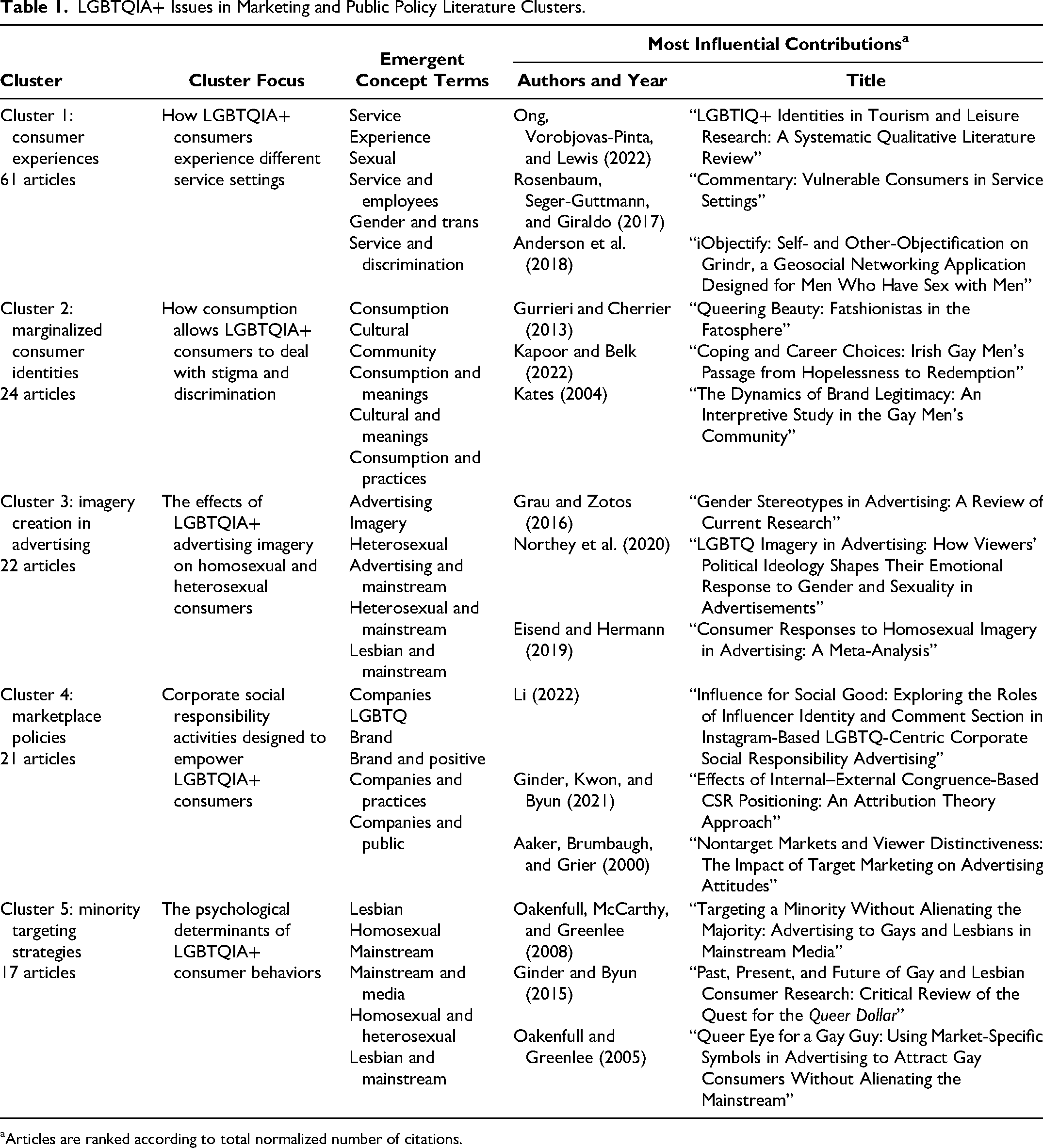
Articles are ranked according to total normalized number of citations.
Cluster 1: Consumer Experiences
Cluster 1 brings together literature from retailing (e.g., Rosenbaum, Seger-Guttmann, and Giraldo 2017), tourism (e.g., Andriotis 2010; Ong, Vorobjovas-Pinta, and Lewis 2022), and information systems (e.g., Kitzie 2019) that investigates how LGBTQIA+ consumers experience different service settings. These consumers are often presented as vulnerable individuals (e.g., Pechmann et al. 2011) who hide their identities during service encounters to avoid discriminatory experiences (e.g., McKenna 2020).
Retailing studies focus on gay and lesbian consumers’ perceptions of interpersonal discrimination (Ro and Olson 2020); distributive, procedural, and interactional justice in service settings (Ro and Olson 2014); and the friendliness of specific spaces for LGBTQIA+ communities (Olson and Park 2019; Rosenbaum and Montoya 2007). Tourism articles examine the emergence of secluded tourist destinations that enable LGBTQIA+ consumers to express their sexual identity freely (Andriotis 2010). Although many LGBTQIA+ consumers use tourism services as a form of escapism, Cluster 1's early contributions examine the relationship between travel and the global spread of HIV/AIDS during the 1980s and 1990s and highlight important health policy implications (Clift and Forrest 1999).
Reflecting the diffusion of digital and social media, this cluster's literature examines how LGBTQIA+ consumers experience virtual worlds and dating websites (e.g., Gaydar) as safer digital spaces that create conviviality, promote LGBTQIA+ rights, and enable uncensored sexual expression (McKenna 2020). In summary, this cluster's research identifies service encounters as potentially stigmatizing experiences for LGBTQIA+ consumers. Taken together, Cluster 1's contributions call for the creation of more inclusive customer journeys that reflect the diversity of LGBTQIA+ consumers’ lived experiences and for the deployment of policies designed to increase consumer diversity protection.
Cluster 2: Marginalized Consumer Identities
Through the conceptual lens of consumer culture theory, Cluster 2's articles investigate how consumption allows LGBTQIA+ consumers to deal with stigma and discrimination (Kapoor and Belk 2022; Kates 2002). Consumption becomes the vehicle that enables LGBTQIA+ consumers’ identity formation (Hsieh and Wu 2011; Kates 2002, 2004) and the emergence of LGBTQIA+ subcultures (Haslop, Hill, and Schmidt 1998; Kates 2002), tribes (Aung and Sha 2016), and communities (Kates 2004). The conscious consumption of brands that openly support LGBTQIA+ issues (i.e., branded allies; Kates 2002) licenses the gradual evolution of the gay market from a hidden, marginalized space to a more visible and mainstream market (Branchik 2007).
Recent contributions in Cluster 2 acknowledge that stigma should be regarded as an outcome of the consumption context rather than a preexisting attribute (Bettany et al. 2022). As such, stigma should not be ascribed solely to specific individuals or social groups (i.e., being stigmatized for being gay); rather, it is the result of a multiplicity of entangled factors, such as gender identification, sexual orientation, the context of stigmatization, income, and ethnicity (Bettany et al. 2022). Understanding how stigma unfolds becomes essential to identify the barriers that prevent consumers from accessing critical services such as sexual or mental health services (Hildebrand et al. 2013). Overall, Cluster 2's research highlights the importance for marketers and policy makers to consult with “insiders” of the LGBTQIA+ community to develop a deeper understanding of the diverse experiences of consumers who experienced discrimination and stigmatization.
Cluster 3: Imagery Creation in Advertising
The effects of LGBTQIA+ imagery in advertising on homosexual and heterosexual consumers represent the core focus of Cluster 3's literature (e.g., Eisend and Hermann 2019; Pounders and Mabry-Flynn 2016). The target audience response to this imagery can vary substantially depending on moral values (El Hazzouri, Main, and Sinclair 2019), political ideology (Northey et al. 2020; Tsai 2012), and attitudes toward homosexuality (Um 2014). To heterosexual audiences, advertisements with homosexual protagonists can stimulate empathy, social connectedness, and understanding of diversity (Åkestam, Rosengren, and Dahlen 2017; Eisend and Hermann 2019). To LGBTQIA+ audiences, LGBTQIA+ advertising imagery and endorsers can increase identification (Flores-Zamora 2023; McDonald, Laverie, and Manis 2021), thus leading to a positive perception of representation and inclusion (Tsai 2012).
While, for the most part, the literature in Cluster 3 highlights the positive effects of LGBTQIA+ advertising imagery, this marketing strategy carries potential risks. For instance, recent studies show how political ideologies can generate negative emotional responses toward LGBTQIA+ imagery. For example, more conservative consumers can experience aversion toward homosexual imagery that can negatively affect product evaluation (Northey et al. 2020). Thus, Cluster 3's research suggests that marketers need to balance short-term gains from traditional targets with a representation and inclusion strategy that can benefit the brand in the long term (Taylor 2022). Overall, this literature highlights the need for policy makers to take proactive measures in facilitating inclusive representation of LGBTQIA+ consumers.
Cluster 4: Marketplace Policies
Articles in Cluster 4 examine a broad range of corporate social responsibility (CSR) activities designed to empower LGBTQIA+ consumers (Ginder, Kwon, and Byun 2021). These include corporate support for same-sex marriages (Zhu and Smieliauskas 2022), work equality policies (Patel and Feng 2021), inclusive product design (Cheng, Zhou, and Yao 2022), and civil rights protests (Zhu and Smieliauskas 2022). Central to this literature is the examination of the differential effect of inclusive strategies on target (i.e., the segment intentionally targeted) and nontarget (i.e., spillover effects on other segments) markets (Aaker, Brumbaugh, and Grier 2000; Grier and Brumbaugh 1999). For instance, at the beginning of the HIV/AIDS crisis, condom manufacturers took a broad approach and failed to reach the homosexual population directly. This mistargeted policy contributed to undermining global efforts to contain the spread of the virus (Krohn and Milner 1989).
While these CSR strategies can help LGBTQIA+ consumers feel more included and enhance the overall performance and value of the organization (Patel and Feng 2021; Shan, Fu, and Zheng 2017), their deployment can be complex. Organizations’ engagement with LGBTQIA+ advocacy initiatives can be interpreted as temporary tactical support for important LGBTQIA+ issues motivated solely by economic gains (e.g., rainbow-washing; Wulf et al. 2022). Organizations can mitigate this risk by working closely with credible LGBTQIA+ influencers who can attest to the authenticity of the support provided to the community (Li 2022). Overall, research in Cluster 4 provides initial evidence of the growing advocacy role played by commercial organizations that act as allies of LGBTQIA+ consumers and become essential supporters of social change. This advocacy role is becoming more critical due to several recent anti-LGBTQIA+ bills affecting the community (Krishnakumar and Cole 2022).
Cluster 5: Minority Targeting Strategies
Cluster 5's research examines the psychological determinants of LGBTQIA+ consumer behaviors (Ginder and Byun 2015), focusing on when and why homosexual and heterosexual consumers behave according to their sexual identities and orientations (Burnett 2000; Eisend and Hermann 2020). Overall, these studies conclude that although there are differences in consumption preferences between homosexual and heterosexual consumers, actual behavioral differences remain limited (Eisend and Hermann 2020).
Furthermore, several articles in Cluster 5 investigate how a brand's advertising message (Oakenfull 2012), corporate policies for LGBTQIA+ employees (Oakenfull 2013), and sponsorship strategies (Gudelunas 2011) affect gay and lesbian consumers differently. Differences between gay and lesbian consumers are more evident compared with differences between homosexual and heterosexual consumers. For example, lesbian women place more importance on corporate engagement with LGBTQIA+ issues compared with gay men (Oakenfull 2013). Interestingly, although these topics received significant attention between 2012 and 2015, this cluster's research seems to halt in the later years, thus signaling a departure from the more traditional segmentation and targeting strategies based on a stereotypical representation of LGBTQIA+ consumers.
Our analyses of the five literature clusters allow us to identify substantive LGBTQIA+ themes at the intersection of marketing and public policy. We next turn our attention to how these clusters have evolved over time. In doing so, we attempt to link the evolution of this literature to the evolution of public policies directed toward LGBTQIA+ individuals, aiming to build a framework that inspires future research avenues.
The Evolution of the Field: A Temporal Analysis of the LGBTQIA+ Scholarship in Marketing and Public Policy
We examine the temporal evolution of this literature domain by mapping peaks in publication trends that represent substantial shifts in the discourse on LGBTQIA+ issues in marketing and public policy (Humphreys 2010). To this end, we conduct a visual analysis of publication trends and inspect changes in average yearly scientific production (i.e., the average number of articles published each year).
Over the time period examined in this review (1988–September 2022), scientific production increases considerably, with a combined annual growth of 10.06% (Figure 2). A closer examination of publication trends reveals that this growth can be deconstructed into three main phases of academic production that can be detected through the visual inspection of yearly publication data. Phase 1 begins in 1988 (the year of the first publication included in our sample) and ends in 2003. We select 2003 as the cutoff year as scientific production becomes more stable from 2004, when Phase 2 begins. Phase 2 ends in 2019 before a noticeable peak in scientific production in 2020, which marks the beginning of Phase 3.

Evolution of Scientific Production (Number of Articles Published Each Year).
Phase 1 (1988 to 2003) encompasses 16 years during which academic contributions on LGBTQIA+ issues in marketing and public policy remain sporadic (average number of articles published per year = 1.2; total articles published = 19). Phase 2 (2004 to 2019) includes the subsequent 16 years that are characterized by a more regular and stable publication trend (average number of articles published per year = 5; total articles published = 80). Phase 3 (2020 to September 2022) witnesses a significant peak in academic production in a short time frame (average number of articles published per year = 19; total articles published = 57).
These three phases differ not only in terms of the quantity of academic production but also in the relative influence of the five thematic clusters identified previously (Figure 3). In the first phase, the academic conversation is shaped primarily by issues related to LGBTQIA+ consumers’ access, or the lack of it, to services (Cluster 1), marginalization experiences (Cluster 2), and initial attempts to curtail discrimination (Cluster 4). This crisis phase reflects the pervasive effect of the HIV/AIDS epidemic on LGBTQIA+ consumers and the emergence of marketplace practices designed to support these consumers. Although Cluster 1 remains dominant throughout, the second phase witnesses an increase in the number of articles focusing on LGBTQIA+ identity formation (Cluster 2), advertising representation (Cluster 3), and targeted marketing strategies (Cluster 5). This shift toward marketization reflects the growing importance of LGBTQIA+ consumers as a viable target market. The third phase is characterized by a growing interest in marketplace policies designed to tackle equality, diversity, and inclusion issues affecting LGBTQIA+ consumers (Cluster 4). This literature highlights the crucial advocacy function that different organizations can play when establishing closer relationships with this consumer community and championing their specific needs. In the following sections, we examine the three temporal phases with reference to the core themes that characterize them.

Literature Clusters’ Contribution to Each Phase Based on the Number of Articles.
Phase 1: Crisis—Reactive Market Formation
We use the label “crisis” for this first phase (1988–2003) as these years are marked by the onset of the HIV/AIDS epidemic and the emergence of market-based solutions to address it. The marketing and public policy literature reveals a persistent market void. Although LGBTQIA+ consumers become visible in the crisis, they are perceived by the mainstream market as stigmatized individuals going through a global health crisis and requiring acceptance (Cluster 1, Cluster 2). Research in this initial phase considers the market as a force that can, in conjunction with policy making, contribute to ending the crisis (Cluster 4). Although the number of studies in this phase is limited, several key themes enter the literature and remain central throughout the phases (e.g., stigmatization, identity formation).
The theme of stigmatization of LGBTQIA+ consumers is prominent. The market fails to address their needs or support a destigmatization process (Krohn and Milner 1989). The core of the theme is the reaction to this market failure. Marketers aim to understand consumer behavior during the crisis and to create a market to stimulate awareness and address their needs. Organizations focus on exploring LGBTQIA+ consumers’ identity (Haslop, Hill, and Schmidt 1998; Kates 2000, 2002) and consumption preference formation (Branchik 2002; Reichert 2001) in different marketspaces. Behaviors are difficult to directly observe in mainstream contexts because consumers are forced to isolate to reduce stigmatization. Instead, marketers observe LGBTQIA+ consumers’ behaviors within secluded offline spaces, where they are not forced to limit their identity expression (Clift and Forrest 1999).
Overall, this literature shows a process of crisis scoping, in which marketers evaluate the nature of the crisis and its potential impact on LGBTQIA+ consumers and propose new offerings in response to the crisis. Crisis scoping is occurring in the market and is reflected in the domain of public policy. Policy makers are facing growing pressure to create specific support policies that address issues affecting the LGBTQIA+ community. In response, many policy makers become more aware of stigmatized groups in the community and begin implementing emergency strategies to address unprecedented situations (Winkle 1991). For instance, to address discrimination in the housing market, several U.S. states have implemented laws to protect LGBTQIA+ individuals from being unfairly evicted or denied housing on the basis of their sexual orientation or gender identity (U.S. Department of Housing and Urban Development 2023).
Phase 2: Marketization—Normalization of LGBTQIA+ Consumer Identities
We name the second phase (2004–2019) marketization, as the literature shows how organizations try to fit the diverse needs of the expanding LGBTQIA+ consumers into the existing mainstream market paradigm. During this phase, representation and inclusion within several marketing domains become more pervasive relative to the previous phase (Cluster 3). Marketing mobilizes to segment the market, with the aim to normalize LGBTQIA+ consumers and develop new policies to address their needs. We observe the coexistence of different themes that evolve with changes in the public sphere. LGBTQIA+ consumers emerge as a well-defined target market (Cluster 1 and Cluster 5), and marketers gradually stop considering them a stigmatized consumer group, normalizing them within the mainstream market. Public policy decreases as a concern within marketing research, especially once the HIV/AIDS crisis finds the support of policy makers. At the same time, different needs emerging from the LGBTQIA+ community are explored and tested (Clusters 2, 3, and 5). Marketers become aware of how sexual identity and orientation influence consumers’ evaluations and purchasing decisions (Cluster 4).
While the mainstream market adapts and attempts to slot LGBTQIA+ consumers into existing structures, it does not create offerings that match the specific and diverse needs of these consumers (Rosenbaum, Russell-Bennett, and Drennan 2015; Walsh 2009). Marketers test different propositions and observe the reactions of target and nontarget markets (Oakenfull, McCarthy, and Greenlee 2008). There are several advances in regulation supporting LGBTQIA+ individuals, such as the termination of the “Don’t Ask, Don’t Tell” policy in the United States in 2011 (Human Rights Campaign 2022) or the legalization of same-sex marriages in the United Kingdom in 2014 (GOV.UK 2013). As in the previous phase, we observe a contamination of the work of policy makers by the market (Carlson and Harrison 2010). Many policy makers leverage market insights to create specific policies for LGBTQIA+ consumers that address the needs identified by the market and adapt to emerging societal and market changes (Adams et al. 2017; Hull et al. 2013; Pechmann et al. 2011).
Phase 3: Advocacy—Proactive Reformation
We term this last phase (2020–2022) advocacy to reflect organizational efforts to take a stance to champion the needs of consumers who are still marginalized (Hoefer 2019). Literature shows that organizations acknowledge that discrimination still exists for specific members of the LGBTQIA+ community and recognize that these minorities are not yet targeted by the policies developed in previous years (Cluster 2). For this reason, many organizations engage in the development of CSR policies that allow them to advocate for LGBTQIA+ consumers (Cluster 4). Although these policies increase consumer satisfaction, some consumers consider these policies mere rainbow-washing. When this happens, the advocacy role of organizations is not recognized, and they are accused of being solely interested in LGBTQIA+ consumers as lucrative consumer segments (Cluster 4).
In this phase, the literature unpacks the diversity of sexualities and gender identities that form the LGBTQIA+ spectrum. Our analysis (Figure 4) reveals that, in Phase 3, the literature attempts to address the conflation of LGBTQIA+ identities into the two main categories of gay and lesbian by investigating the needs of a wider set of LGBTQIA+ individuals (e.g., transgender, Duncan-Shepherd and Hamilton 2022; queer, Pirani and Daskalopoulou 2022). This important shift reflects strategic efforts to better understand and meet LGBTQIA+ consumers’ needs and contribute to their well-being (Cheded and Liu 2022; Hadjisolomou 2021). The advocacy role of organizations is quite evident, as is their contribution to providing LGBTQIA+ consumers with a better life, stimulating the engagement of policy makers and other institutional actors (Parshakov et al. 2022). The proximity to the LGBTQIA+ community allows organizations to collect several insights into LGBTQIA+ consumers’ needs. These insights are leveraged by policy makers to provide solutions in the public sphere and develop shared policy efforts (Batista et al. 2022; Zhu and Smieliauskas 2022). For instance, the 2021 European Union Guidelines for Strategies and Action Plans to Enhance LGBTIQ Equality represent a major step toward safeguarding equality and nondiscrimination of LGBTQIA+ individuals (European Commission 2022).
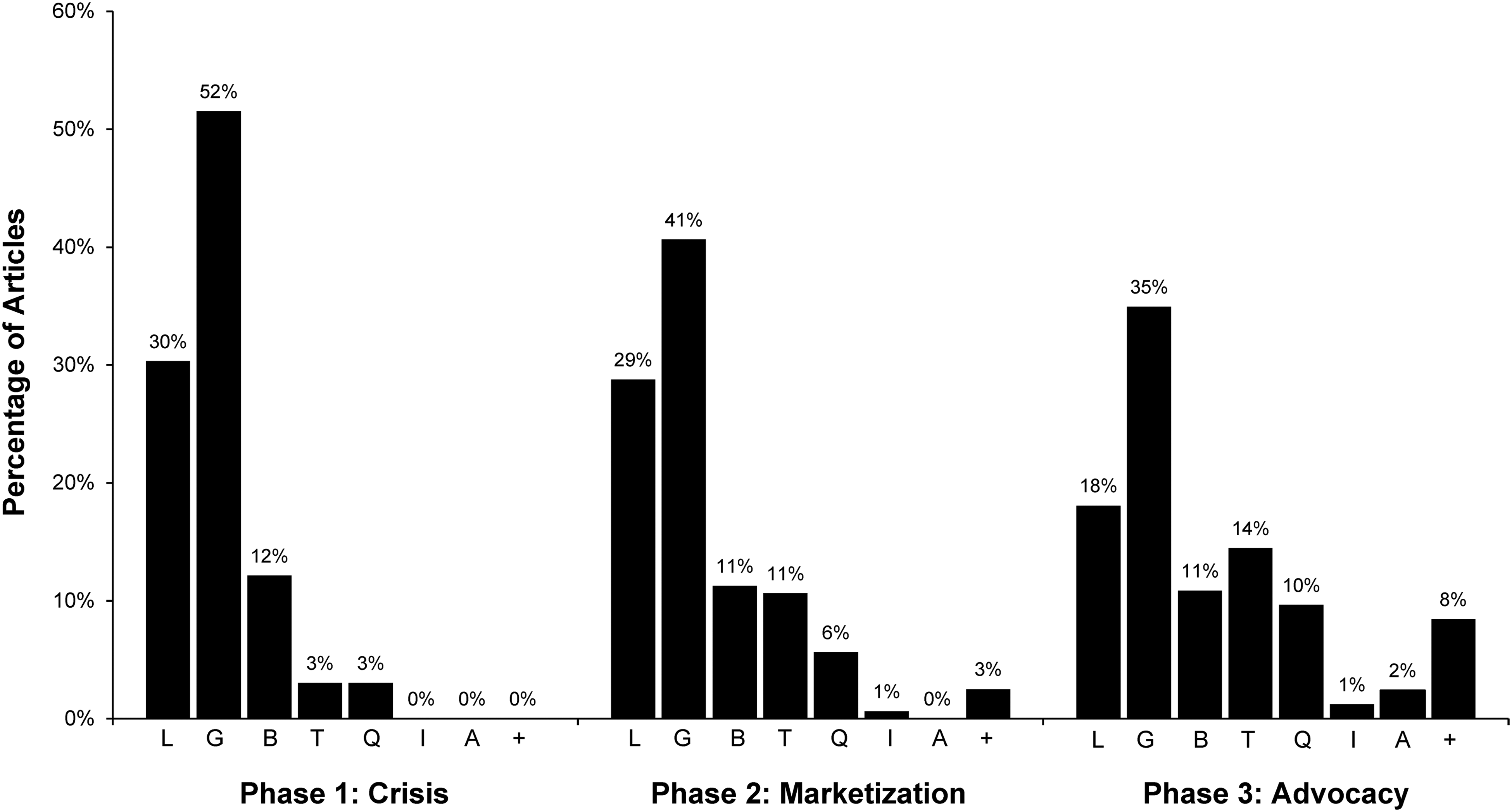
Representation of Different Sexualities and Gender Identities in the Literature Sample.
Based on these phases, in the next section, we offer a framework for how the LGBTQIA+ consumer market emerges and evolves in moments of crisis, is subjected to normalizing practices that fold formerly invisible consumers into existing market structures, and eventually, through advocacy, becomes established.
Moving Forward: A Framework and Research Agenda for the LGBTQIA+ Consumer Market Emergence and Evolution
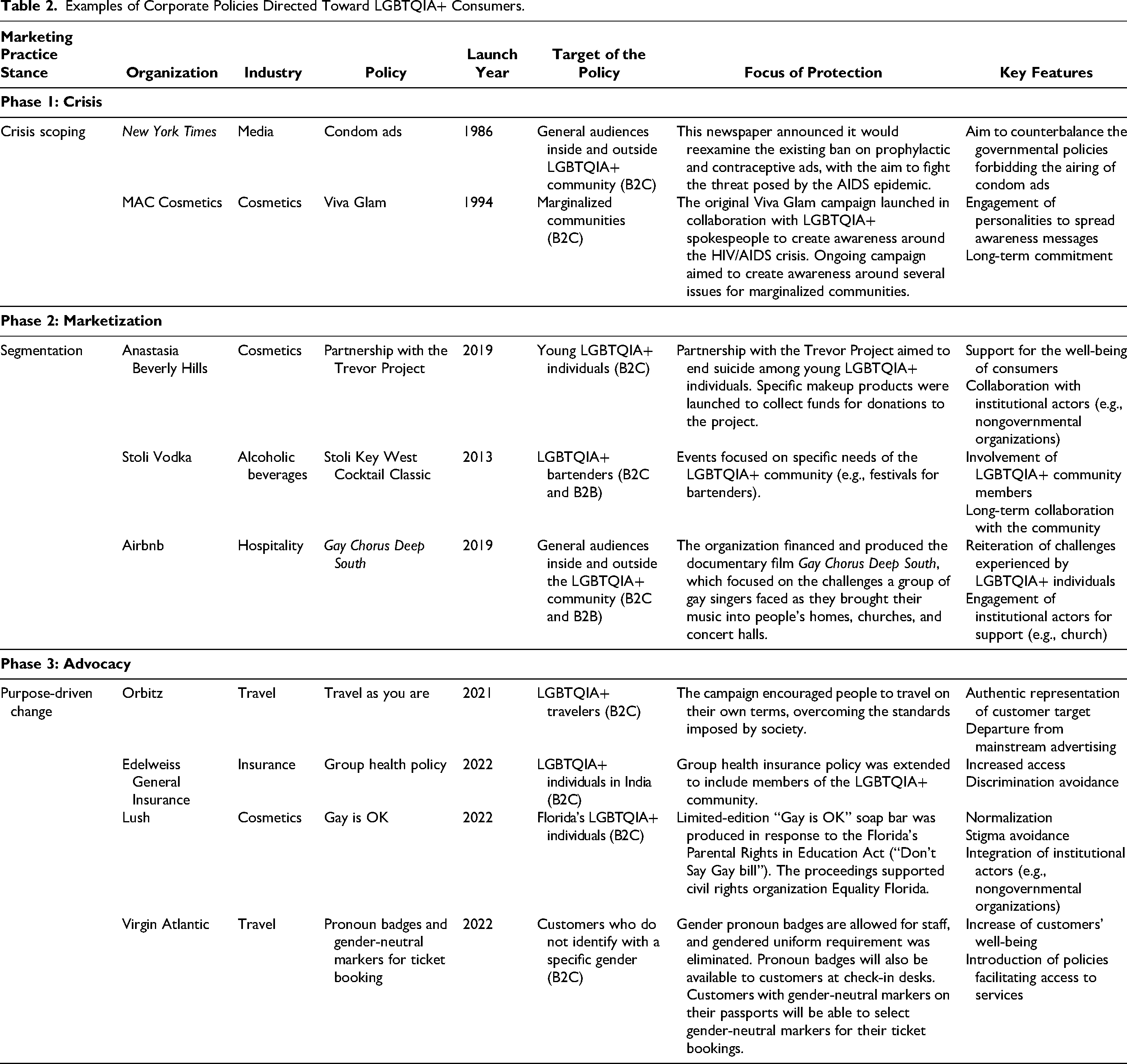
Informed by queer theory discourses that view issues around gender and sexual identities as fundamentally fluid and capable of producing disruptive social changes (Kirsch 2000; Pirani and Daskalopoulou 2022), we integrate insights from our cluster and temporal analyses to propose a conceptual framework (Figure 5) that charts the progression of the LGBTQIA+ consumer market from crisis to marketization to advocacy. We further support our theorizing by mapping substantive changes in marketing practice (Table 2) and public policy (Table 3) stances affecting the LGBTQIA+ communities over the three phases analyzed.

LGBTQIA+ Consumer Market Emergence and Evolution Framework.
Examples of Corporate Policies Directed Toward LGBTQIA+ Consumers.
Examples of Public Policies Targeting LGBTQIA+ Communities.

C = consumers, E = employees, S = wider society.
In the crisis phase, there is a reactive stance in the market. There is also a focus on crisis scoping, in which marketing practice attempts to understand how emerging crises can be addressed within the existing market. Policy makers respond by articulating ad hoc emergency strategies.
In the marketization phase, there is a normalization of marginalized consumer identities, whereby LGBTQIA+ consumers are considered new segments within the existing market structure. The stance of marketing practice consists of conducting an accurate segmentation to target them more effectively. Policy makers try to fit LGBTQIA+ consumers into existing structures, creating policies to address inequalities.
In the advocacy phase, there is proactive reformation, in which organizations rearrange the market to respond promptly to the needs of LGBTQIA+ consumers. The marketing practice stance is to adopt a purpose-driven change, whereby marketing activities are permeated with a social purpose beyond profitability. Public policies champion the inclusion of LGBTQIA+ consumers within mainstream society, advocating for change.
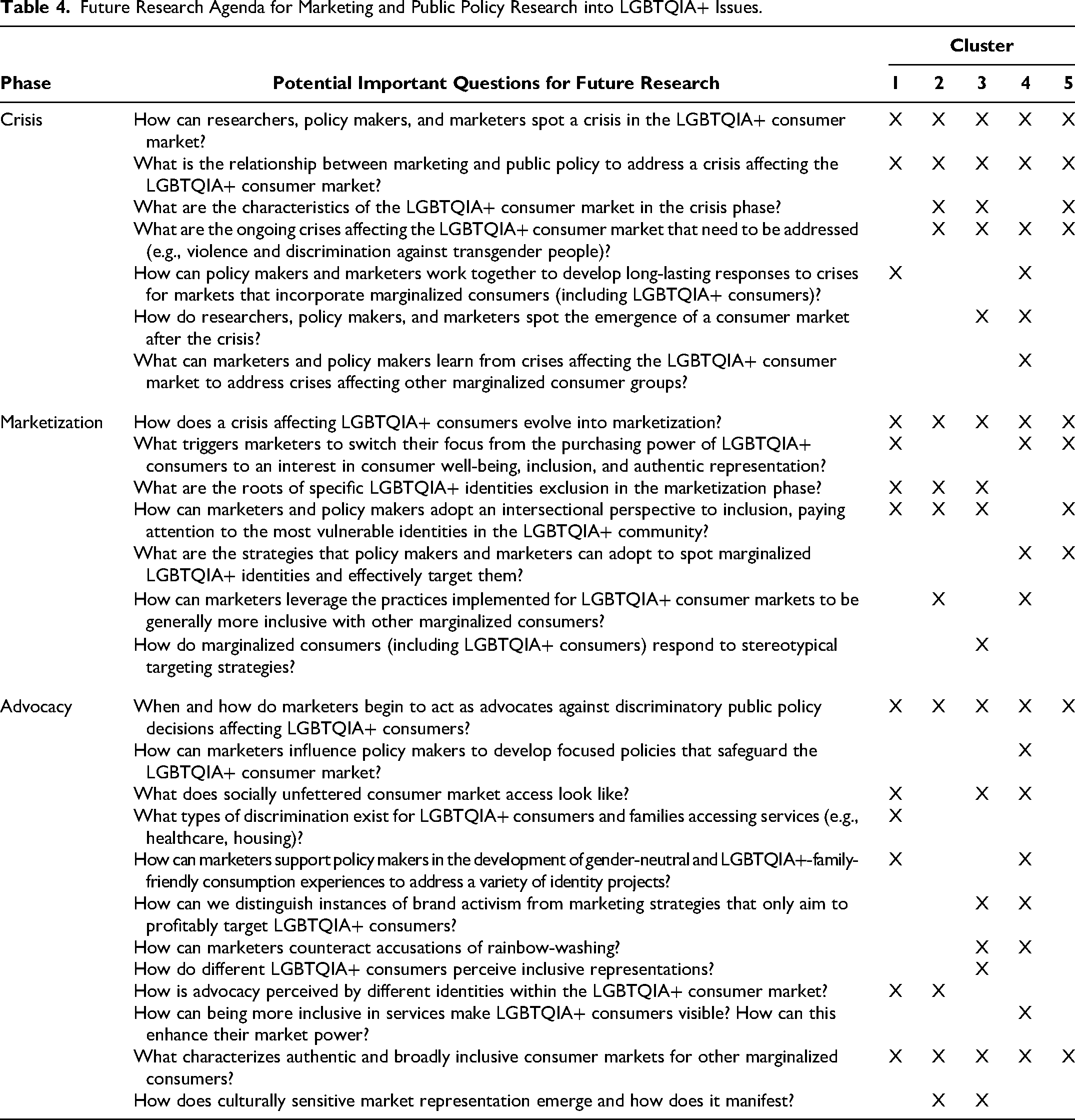
Our framework helps us understand how the LGBTQIA+ consumer market might evolve and identify critical inflection points of this evolution: (1) when the crisis emerges, (2) when the crisis turns toward normalizing through marketization, and (3) when the marketization tips into advocacy and market reformation occurs. By reflecting on how these inflection points might unfold in the three phases identified, we unpack the components of our phasic framework with reference to the evolution of corporate and public policies. For each phase, we propose a research agenda for marketing and public policy scholars interested in furthering academic inquiry into LGBTQIA+ consumers and, potentially, other marginalized consumer groups (Table 4).
Future Research Agenda for Marketing and Public Policy Research into LGBTQIA+ Issues.
Marketing and Public Policies in Times of Crisis
In this review article, we map literature that examines the wider consumer effects of the HIV/AIDS crisis, subsequent ways to address the crisis, and the emergence of the LGBTQIA+ consumer market. Conceptually, our phasic framework allows us to observe when marketing stops focusing on LGBTQIA+ individuals as a marginalized niche consumer segment and switches to consider them a profitable market. Specifically, our framework shows an inflection where the market moves away from looking at LGBTQIA+ consumers as an emergent segment to attempting to find enduring space for them in existing market structures (i.e., moving from crisis to marketization).
These movements are caused by different exogenous factors. For instance, policies that improve the health situation of LGBTQIA+ consumers affected by HIV/AIDS also help destigmatize a community portrayed as a group of individuals affected by a “plague” (Parket and Aggleton 2007). We argue that the presence of policies to help the community allows the market to see LGBTQIA+ individuals as a potential market segment. However, we do not have empirical studies on how public policies designed in this period influenced the perception of marginalized LGBTQIA+ consumers. It is unclear how and when these policies and events influenced marketing research conducted in this period. Future research could articulate the relationships between public policies for LGBTQIA+ consumers and the market in the crisis phase. Further, we observe that studies in this period contribute to changing, bit by bit, the conversation around LGBTQIA+ consumers until the inflection point (or trigger event) is reached: marketing researchers stop associating them with HIV/AIDS stigma, pivoting to consider them a profitable target market, moving from crisis to marketization. Thus, it is useful to map inflection points and triggers that characterize the movement from one phase to another. Future research could examine a broader range of trigger events and policies that could instigate the inflection points in other contexts, beyond the LGBTQIA+ consumer market.
While we recognize that each marginalized consumer group has a unique history in terms of stigmatization based on gender, race, religion, or social class (Arsel, Crockett, and Scott 2022), we offer that our framework might support researchers’ efforts to illuminate evolving issues affecting other marginalized consumer segments. Beyond the specific context of the LGBTQIA+ community, a deeper exploration of how markets address crises helps us spot problems for other marginalized consumers who were formerly invisible. For example, when the COVID-19 pandemic hit, a crisis arose for unhoused people, as they were the most exposed to the virus. Still, these individuals had no place to quarantine and lacked critical resources to survive (Centers for Disease Control and Prevention 2020). By becoming more aware of how crisis inflection points might unfold, marketers and policy makers can develop more inclusive ways of addressing the needs of diverse and underserved consumer groups.
Overall, the crisis period reveals marginalized LGBTQIA+ consumers that have always been present in the market but have remained, for the most part, invisible or problematically visible. Still, it is difficult for researchers, policy makers, and the market to spot when a crisis emerges. Moreover, it is difficult for them to envisage responses to these crises in both an independent and concerted way. Addressing these issues, future research should answer questions such as these: How can researchers, policy makers, and marketers spot a crisis in the LGBTQIA+ consumer market? How do they spot the emergence of a consumer market after the crisis? What are the characteristics of the LGBTQIA+ consumer market in the crisis phase? How can policy makers and marketers work together to develop long-lasting responses to crises for markets that incorporate marginalized consumers (including LGBTQIA+ consumers)?
Marketization and a Paucity of Policies
The marketization phase raises important questions on how marketers and policy makers can work together to develop policies for the better inclusion of marginalized LGBTQIA+ consumers into existing market structures. During this phase, we witness an increasing alignment between legal frameworks to protect LGBTQIA+ consumers and organizations’ interest in this target market. In the United Kingdom, the 2010 Equality Act states that “providers of goods, facilities, and services cannot discriminate on the grounds of sexual orientation or gender identity” (Stonewall Scotland 2015). The U.K. same-sex marriage act of 2013 and the recognition of same-sex marriages by the U.S. Supreme Court in 2015 also opened new opportunities that were precluded to LGBTQIA+ individuals before (Mamali and Stevens 2020). In the United States, a 2019 proposal for a Customer Non-Discrimination Act (reintroduced in the U.S. Congress in 2023) sets out to prohibit “discrimination based on sex, sexual orientation, and gender identity with respect to public accommodations and facilities” (Congress.gov 2021). These legislative and judicial efforts lead to increasing normalization of LGBTQIA+ consumers that become more represented in the media and advertising. For instance, TV shows that normalize stigma through the representation of diverse LGBTQIA+ identities (e.g., RuPaul's Drag Race, Modern Family) are becoming increasingly popular among the general public (Campana, Duffy, and Micheli 2022).
Compared with the previous phase, the marketing literature in this phase is less concerned with understanding and influencing policies around LGBTQIA+ consumers. Additionally, we observe an inflection point where marketers go from being interested only in LGBTQIA+ consumers’ purchasing power toward becoming more concerned about these consumers’ well-being. These concerns lead to a phasic shift toward advocating for LGBTQIA+ consumer inclusion and authentic representation, thus attempting to influence policy making. Thus, we could ask: How does a crisis affecting LGBTQIA+ consumers evolve into marketization? What are the strategies that policy makers and marketers can adopt to spot marginalized LGBTQIA+ identities and effectively target them? How can marketers leverage the practices implemented for LGBTQIA+ consumer markets to be generally more inclusive of other marginalized consumers? The answer to these questions might uncover important dynamics also within other marginalized consumer groups and explain the mechanisms behind the relationship of marketing with policy making that have not been revealed before.
While the marketization phase helps normalize LGBTQIA+ consumer identities, it simultaneously creates further exclusion. This phase still conflates LGBTQIA+ consumers into a “master status” identity consistent with their expected social role (Hunt 2007), rather than addressing the variety of marginalized identities embedded into the LGBTQIA+ spectrum. In fact, 83% of articles in this phase focus on white gay, lesbian, and bisexual consumers with a reasonable disposable income (see Figure 4). We acknowledge there is more understanding of LGBTQIA+ identities today than in 2004. This lack of representation inspires us to consider communities that marketing excludes when it attempts to normalize other marginalized consumers. Fitting marginalized consumers’ experiences into the existing market structure could further perpetuate stigma and discrimination. Future research could ask: What are the roots of specific LGBTQIA+ identities exclusion in the marketization phase? How can marketers and policy makers adopt an intersectional perspective to inclusion, paying attention to the most vulnerable identities in the LGBTQIA+ community?
Advocating for Marginalized Consumers
We argue that we are currently in this phase, with researchers and organizations advocating for LGBTQIA+ consumers, sometimes substituting for policy makers in supporting this marginalized target market. For instance, some organizations extend the policies developed for their employees to their customers. Virgin Atlantic Airways recently revised its gender identity policies, including the possibility for staff to wear gender pronoun badges and eliminating the requirement for gendered uniforms (Topham 2022). In a similar vein, pronoun badges will be available to customers, who will be able to use gender-neutral markers on their ticket booking documents.
Several other organizations have embraced the same path, recognizing that policy makers take a less progressive stance regarding LGBTQIA+ issues. For instance, Florida's Parental Rights in Education Act, commonly known as the “Don’t Say Gay” bill, does not allow education on sexual identity and gender orientation in schools, thus institutionalizing discrimination toward LGBTQIA+ kids, teachers, and families (Johnson 2022). In response to this bill, natural cosmetics brand Lush launched the “Gay is OK” campaign by promoting a bar of soap with the “Gay is OK” message carved on it. The proceeds of the campaign were donated to the civil rights organization Equality Florida to support LGBTQIA+ individuals affected by discrimination (Parsons 2022). Contemporary marketing research is mapping these types of campaigns under the umbrella of brand activism (Vredenburg et al. 2020) and brand purpose (Williams, Escalas, and Morningstar 2022). However, the effects of marketers advocating for responses to discriminatory public policies remain largely unexplored. Future research could ask: When and how do marketers begin to act as advocates against discriminatory public policy decisions affecting LGBTQIA+ consumers? How can marketers influence policy makers to develop focused policies that safeguard the LGBTQIA+ consumer market? How can marketers support policy makers in the development of gender-neutral and LGBTQIA+-family-friendly consumption experiences to address a variety of identity projects?
In this phase, specific LGBTQIA+ minorities are still marginalized within society and experience the stigma in their daily lives. For example, although the UK Equality Act states that transgender people can use restrooms that match their selected gender, transgender women often face discrimination in accessing these settings (McGuire, Anderson, and Michaels 2022). In sports (e.g., the Olympics), transgender and nonbinary people are often prevented from participating in disciplines traditionally restricted to specific gender categories (Winkler and Gilleri 2021). LGBTQIA+ families are also subject to prejudice and experience difficulties when dealing with adoption, the physical custody of children, or fertility treatments (Mimoun, Trujillo-Torres, and Sobande 2022). Reflecting the difficulties of LGBTQIA+ families, Netflix began supporting employees and their partners during fertility, surrogacy, and adoption journeys, regardless of marital status, gender, or sexual orientation (Netflix 2022). These inclusive corporate policies arrived after the U.S. Supreme Court overturned Roe v. Wade, highlighting the need for employers to advocate for their consumers and employees (McGovern 2022).
The studies emerging in this phase can help us identify the hidden issues of stigmatization for specific minorities of the LGBTQIA+ community, acknowledging the need to address existing issues and advocating for the rights of LGBTQIA+ individuals. This literature calls for research that examines consumers’ reactions to more nuanced representations of LGBTQIA+ sexualities and gender identities (Taylor 2022). This could lead to questions such as these: What types of discrimination exist for LGBTQIA+ consumers and families accessing services (e.g., health care, housing)? What does socially unfettered consumer market access look like? How does culturally sensitive market representation emerge and how does it manifest? How do different LGBTQIA+ consumers perceive inclusive representations? In addition, future research should encourage policy makers to develop focused policies for individuals in need, guided by the idea that stigmatization of individuals can only be spotted and addressed through a close connection between market and policy stances.
Research Contributions and Limitations
This article systematically reviews the existing scholarship on LGBTQIA+ issues at the intersection of marketing and public policy and delineates a framework for how the LGBTQIA+ consumer market has emerged and evolved. In doing so, this article offers three contributions that aim to inspire future research on more inclusive marketplace practices.
First, by examining a sample of 156 academic articles, we identify five distinct literature clusters, which represent substantive literature subdomains. We show that the literature on LGBTQIA+ issues in marketing and public policy focuses extensively on consumer experiences (Cluster 1), marginalized consumer identities (Cluster 2), imagery creation in advertising (Cluster 3), marketplace policies (Cluster 4), and minority targeting strategies (Cluster 5). Although these are important aspects that relate to the consumption practices of LGBTQIA+ consumers, our review highlights that organizations need to consider a broader range of aspects, specifically looking at the evolution of the LGBTQIA+ consumer market and the role played by corporate policies in supporting LGBTQIA+ consumers. Second, we examine the thematic evolution of the five clusters over a period of 35 years (1988 to 2022) and identify three phases that reflect the development of the LGBTQIA+ consumer market, namely crisis, marketization, and advocacy. The phasic framework that emerges from our analyses identifies inflection points corresponding to (1) initial crisis emergence, (2) evolution of the crisis toward normalizing through marketization, and (3) transition from marketization into corporate advocacy, leading to market reformation. Third, we leverage insights from this framework to propose a research agenda that aims to inspire scholars to further knowledge of important issues surrounding LGBTQIA+ consumers.
Although this article offers a comprehensive organization of the existing scholarship on LGBTQIA+ issues in marketing and public policy, our work is not immune from limitations. First, the scope of bibliometric methods is limited to the initial keyword selection. To reduce any significant biases that could occur in the selection stage, we examined impactful contributions in this literature domain to identify the keywords commonly used by authors and indexed in scholarly databases. Furthermore, we reviewed the presentations at a recent conference on LGBTQIA+ issues in management and organizations to ensure both the relevancy and currency of our final keyword selection. Our keyword selection is also guided by a critical examination of queer theory discourses (Kates 2002; Pirani and Daskalopoulou 2022; Rumens 2018), which call for a more inclusive awareness and representation of gender and sexual identities that emerge in LGBTQIA+ spectrum. Second, our sample is based on articles indexed in scholarly databases up to September 2022. Some articles might appear in a database sooner than others, and different journals index articles by using different publication codes at different stages (i.e., print and electronic International Standard Serial Numbers), leading to possible omissions. Third, most of the articles we cite and the policies we review focus on the United States, Europe, and the United Kingdom. We acknowledge that a larger sample of countries, policies, and languages could offer invaluable insights to further understand the experiences of marginalized LGBTQIA+ consumers.
Concluding Thoughts
Overall, although this analysis begins with a marked identity attribute lens (Brekhus 2003, p. 14), it highlights how the literature evolves to recognize LGBTQIA+ identification as less marked and less stigmatized. Initially aligned with the sociological construct of master status, where a social characteristic or position dominates an individual's identity (Hunt 2007), the literature moves from considering LGBTQIA+ consumers as defined by their gender or sexuality toward a more holistic understanding of these consumers and their intersectional identity characteristics, such as professional, parent, and suburbanite (Valdez and Golash-Boza 2020). This analysis suggests that this shift is consistent with moving beyond crisis toward marketization and later advocacy.
With this article, we aim to inspire new research avenues that consider the full spectrum of LGBTQIA+ and, possibly, other marginalized consumers’ experiences. At the same time, we hope that policy makers and organizations can leverage our insights and conceptual framework to identify new ways of collaborating to develop more inclusive marketplace policies.
Supplemental Material
sj-pdf-1-ppo-10.1177_07439156231183645 - Supplemental material for From Crisis to Advocacy: Tracing the Emergence and Evolution of the LGBTQIA+ Consumer Market
Supplemental material, sj-pdf-1-ppo-10.1177_07439156231183645 for From Crisis to Advocacy: Tracing the Emergence and Evolution of the LGBTQIA+ Consumer Market by Matteo Montecchi, Maria Rita Micheli, Mario Campana and Hope Jensen Schau in Journal of Public Policy & Marketing
Footnotes
Acknowledgments
The authors would like to express gratitude to the JPP&M review team for their support and guidance during the review process and for their valuable suggestions and comments, which greatly improved the overall contribution of the article. The authors also extend thanks to Kirk Plangger of King’s College London for his helpful comments.
Editor
Maura L. Scott
Associate Editor
Benet DeBerry-Spence
Declaration of Conflicting Interests
The author(s) declared no potential conflicts of interest with respect to the research, authorship, and/or publication of this article.
Funding
The author(s) received no financial support for the research, authorship, and/or publication of this article.

Notes
References
Supplementary Material
Please find the following supplemental material available below.
For Open Access articles published under a Creative Commons License, all supplemental material carries the same license as the article it is associated with.
For non-Open Access articles published, all supplemental material carries a non-exclusive license, and permission requests for re-use of supplemental material or any part of supplemental material shall be sent directly to the copyright owner as specified in the copyright notice associated with the article.
