




Abstract
Youth substance abuse is widespread in India. Data is needed to inform the focus of prevention approaches. Our aim was to understand the perspectives of Indian young people about what protects them from substance (ab)use, and our study followed protocols approved by UK and Indian university research ethics committees. We recruited 15 Indian adolescents from Assam (seven males, eight females) aged 15 to 18 years at elevated risk because they had family/friends who were substance addicts. Participants took part in a photo-led interview in which they represented visually and narratively their experience of resisting substance (ab)use. Data were analyzed by a UK-India team using reflexive thematic analysis. Seven dominant protective factors were expressed by young people, including nurturing and communicative relationships with parents; up close and personal observations around addiction, which left participants fearful of substances; protective mindsets and resolutions emerging from participants’ reflection on drug culture; staying away from “bad” company; being repulsed by substances; having healthy ways to cope at difficult times; and having something that mattered more than using substances. Findings show the resilience of Indian adolescents and suggest that prevention approaches in India should focus on augmenting individual, school and family mechanisms which appear dynamic and cumulative.
Introduction
Globally, psychoactive substance dependence is a leading cause of preventable disease, disability, and death among 10 to 24-year-olds (Castelpietra et al., 2022; Gore et al., 2011). International diagnostic criteria indicate that a substance use disorder (SUD) represents hazardous use, abuse and/or dependence which cause clinically significant impairment to a person’s physical and/or mental health, and/or the welfare of others (Saunders, 2017). SUDs are common in India (22.4% in the adult population) and are linked to severe lifetime consequences, including suicide risk (Goswami, 2015; Government of India Ministry of Health and Family Welfare, 2022). Although not all risky substance use meets the criteria for a SUD, harmful personal, interpersonal, and social consequences can result from risky substance use. Tackling risky substance use, especially among young people, is a form of prevention action on SUDs, and is a health priority for the country (Gururaj et al., 2016).
Substance use is largely a developmental phenomenon (Griffin & Botvin, 2010), with roughly equivalent ages of substance use initiation globally (16–19 years) and in a similar temporal order of use: alcohol and tobacco first, followed by cannabis and then other illicit drugs (Degenhardt et al., 2016). Youth substance use is common in high- and low-income countries (Halladay et al., 2020; Nociar et al., 2016; Peltzer, 2009). In some areas of India, substance use among youth has been described as alarming (Kovilveettil, 2021). Youth exposure and access to substances in many areas of India is easy, normative and early (Agarwal et al., 2013) and cuts across class (Goswami, 2015). Early use of tobacco and alcohol are common, at 12.3 and 13.6 years respectively (Agarwal et al., 2013), and are gateway substances into cannabis (13.4 years), heroin, and cocaine use (14.3–14.9 years), and then substance use via injection (15.1 years) (Degenhardt et al., 2010; Jiloha, 2017).
Indian prevalence data for youth substance use is mixed. ChildLine India reports that 13.1% of Indian people involved in substance abuse are below 20 years of age, with the five most common substances used being alcohol, cannabis, heroin, opium, and propoxyphene (Katoki et al., 2016). Ningombam et al.’s (2011) study of secondary school students in Manipur reported an ever-used prevalence of 54%, with tobacco, alcohol, cannabis, and opiates being the most used substances. In a study of 174 10 to 24-year-olds in urban slums in Assam in northern India, 88% of males and 12% of females reported abusing substances (including alcohol, tobacco, adhesives, and marijuana; Kovilveettil, 2021). Adolescent substance use is a risk factor for developing substance dependence, with early initiation (before 14 years) posing the greatest risk (Jordan & Andersen, 2017).
In India, and globally, solution efforts for substance dependence have focused on treatment and recovery (Baker et al., 2021; Ghosh & Sarkar, 2018). However, treatment alone is insufficient to address the human and economic burden of SUDs (Eriksson, 2015). Investment in prevention approaches is needed (Arango et al., 2018). Prevention science posits that there are empirically identifiable precursors that escalate risk and that reducing modifiable risk factors and enhancing protective factors reduces the probability of negative health behaviors and outcomes (Coie et al., 1993; O'Connell et al., 2009). Prevention strategies for SUDs can operate at the level of populations (e.g., legislation), community and family (e.g., education programs), and/or individuals (e.g., early support to prevent escalation to disorder) (Jiloha, 2017). Prevention approaches to SUDs appear cost-effective in several countries (Miller & Hendrie, 2009). Yet progress in the prevention of SUDs has been limited in India, which does not yet have a national substance abuse policy nor a national anti-drugs program. Indian researchers have called for more investment in prevention targeting children and adolescents as they are most vulnerable to lifetime consequences (Narain et al., 2020; Ningombam et al., 2011; Tsering et al., 2010). The recent first national suicide prevention strategy for India highlights the importance of tackling substance use from a prevention framework (Government of India Ministry of Health and Family Welfare, 2022). Prevention relies on a clear understanding of risk and protective factors (Cleveland et al., 2008). Risk factors for substance dependence have been extensively studied, although mostly in western countries (Gray & Squeglia, 2018).
Risk Factors
SUDs often emerge from multiple, interacting vulnerabilities spanning individual, familial, educational, social, environmental, and cultural/structural domains (Cleveland et al., 2008; Degenhardt et al., 2016). Cultural/structural factors such as laws, taxation, marketing, availability, and norms determine drug availability and attitudes toward substance use (Degenhardt et al., 2016). There are also “fixed markers of risk” (Degenhardt et al., 2016), which globally and in India, include parental psychopathology, familial history of substance use, family/parental conflict, being a racial or ethnic minority, living in a low-income area, being male, and having a genetic risk (Narain et al., 2020). The final risk category is individual/interpersonal, and includes adversity, childhood trauma, abuse and neglect, lack of parental supervision, low educational engagement and attainment, internalizing and externalizing behaviors, and leaving home at a young age (Gray & Squeglia, 2018; Mahanta et al., 2016; Ningombam et al., 2011; Tsering & Pal, 2009). Affiliation with peers who use substances is a consistent predictor of a young person’s substance use, independent of other risk factors (Degenhardt et al., 2016; Jiloha, 2017). Maximum rates of substance use in India are observed among children of substance-abusing parents, siblings, and friends (Ningombam et al., 2011; Tsering et al., 2010).
Individual factors related to developmental changes also influence substance use as adolescence brings new orientations toward autonomy, identity, and sensation/pleasure-seeking as well as challenges in managing strong emotions and foreseeing consequences (Goswami, 2015; Gray & Squeglia, 2018). Curiosity and enjoyment are reported by Indian adolescents as drivers to try substances (Tsering et al., 2010). Risk factors commonly co-occur. For example, substance use commonly co-occurs with, and complicates, common mental health conditions emerging in adolescence, and they share common risk factors (Costello et al., 2011; Degenhardt et al., 2012). In India, adolescent developmental transitions often occur in a context of extreme educational, employment and family pressures (Agarwal et al., 2013) leading to a need, for some, to escape, which is often made possible via substances given cultural norms around use and accessibility (Duara, Hugh-Jones, & Madill, 2022; Duara, Chowdhury et al., 2022).
Protective Factors
Targeting risk factors is not sufficient for prevention of risky substance use or SUDs. Not all risk factors are equal, modifiable, or culturally equivalent (Cleveland et al., 2008). Knowledge about protective factors is growing. Protective factors can be the converse of risk factors (e.g., no history of substance use in the family), although additional factors have been identified, albeit largely in US and European data. These include positive parent modeling and open communication around drug, use as well as critical youth awareness of the risks in their immediate and societal cultures (Kristjansson et al., 2010; Opara et al., 2019). Religiosity, self-esteem, connection to school, and positive peers are all associated with abstinence from substance use (Alhyas et al., 2015; Escobar & Vaughan, 2014; Trucco & Hartmann, 2021). Flourishing, defined as life going well and characterized by feeling good and functioning effectively (Huppert & So, 2013), has been found to be associated with lower cannabis use in Canadian adolescents (Butler et al., 2019), although not in Australian youth, suggesting culturally specific drivers (Sofija et al., 2020). Overall, far less is known about protective compared to risk factors (Hodder et al., 2016). Additionally, stronger correlations are generally reported for risk compared to protective indices, suggesting we have yet to identify all salient protective factors (Cleveland et al., 2008).
Theorizing Causal Pathways
How risk and protective factors operate dynamically in causal pathways toward adolescent substance use outcomes is complex, and efforts have been made to theorize these. One prominent theory about pro-or antisocial behavior outcomes (of which risky substance abuse is one), is the social development model (SDM). It proposes that children and adolescents learn patterns of behavior via the powerful socializing agents of family, school, peers, and community who offer either pro-or antisocial life pathways (Jones et al., 2016). Many risk and protective factors operate via these socializing agents. The adolescent forms an attachment or commitment to one pathway largely depending on: exposure to pro- or anti-social behavior and groups; the perception of rewards for engaging in those; and socio-emotional and cognitive skills that enhance involvement and make reward more likely. Each of these can be positive (protective) or negative (risk). Rewarding involvement in pro-or anti-social activity enhances a “bond” to that pathway, which further drives either pro-or anti-social behavior.
Present Study
Prevention efforts should target protective factors informed by situated, culturally sensitive data (Baker et al., 2021; Hall et al., 2016). However, little data exists on the protective factors operating among Indian young people, particularly in the context of being exposed to known risks such as family substance dependence, local availability, and peer influences (Agarwal et al., 2013; Jiloha, 2017; Ningombam et al., 2011). Our study aimed to understand Indian adolescent perspectives on what factors protected them from use or abuse of substances, despite being at-risk. We excluded tobacco use given its relative ubiquity and social acceptability in India (Grover et al., 2020). We defined “at-risk” as having a family member or close friend who had (ever or at the time of interview) a history of substance dependence, given evidence that these associations elevate one’s own future risk of substance use and dependence, including among Indian youth (Jiloha, 2017; Ningombam et al., 2011; Tsering et al., 2010). Families often share risk factors for substance use and dependence. For example, they often face the same adversities (such as poverty, bereavement, unemployment), can all be affected by family conflict, and live in the same risky neighborhoods. Peers share risk factors via exposure to similar stressors, risky communities and norms around substance use (Jiloha, 2017).
Cross-sectional survey data has dominated the study of substance (ab)use and the direct “voice” of Indian young people is lacking. Knowing more about how they see protective factors emerging and operating “on the ground” in their day-to-day lives could inform prevention approaches. We therefore used a photo-led interview approach to generate first-person accounts of protection from Indian young people. Our work adopted a resilience approach, focusing on young people who were “doing better than expected,” which is a key feature of resilience (Masten et al., 2021). We recruited young people who felt able to adopt healthy behaviors (substance avoidance) despite being tested, as resilience can only emerge under such conditions (Masten & Barnes, 2018). Adolescence is an important period in which to study resilience given increasing independence and exposure to more risk and stress, including risk for psychopathology (Malhi et al., 2019), but also because of the “vast potential” (p. 4) for resilience given neuroplasticity and developmental leaps in cognitive, social, and emotional functioning (Gee et al., 2022).
Method
Study Context
Our study was based in Assam, a north-eastern Indian state, which is poor but improving on the Human Development Index (Government of Assam, 2014). SUDs among young people have been identified as an urgent public health problem in the state (Kovilveettil, 2021; Pathak et al., 2017). Socio-cultural, economic, and geographical factors facilitate drug addiction and alcoholism in Assam; it is close to the “Golden Triangle” and a major hub of drug transport. Opium, ganja, bhang, alcohol, khainim, and bidi are the most abused substances (Kovilveettil, 2021). There is easy accessibility and high levels of parental consumption of substances (Mahanta et al., 2016). Such a high-risk context is well-suited to the aims of our study as evidence indicates that the protective effects for substance use are stronger when risk is high rather than moderate or low, consistent with a conceptualization of resilience (Ostaszewski & Zimmerman, 2006).
The Research Team
As per COREQ guidelines (Tong et al., 2007), we set out here key details about the research team and especially the interviewer (RD). Authors SHJ, AM, and RG are female British nationals, highly experienced in qualitative studies with young people and on sensitive subjects. SHJ and AM had used photo-led interviews before this study. SHJ brought additional expertise in adolescent mental health, AM in qualitative analyses, and RG in resilience research. SHJ and AM had supervised RD’s PhD and, through this, had built some familiarity with the Assamese context and had developed a research partnership with author SG from Assam. SG is an Indian national and is a counseling psychologist experienced in community mental health for adolescents in Assam. All authors valued lived experience narratives and their potential to generate new knowledge about cultural influences that would be difficult to know a priori or via other methods. They all viewed adolescents as having many strengths, including an ability to respond well to risk and challenge.
The interviewer was author RD, who is a female Indian national from Assam, fluent in English and Assamese, and at the time of data collection, was a postdoctoral research fellow RF, employed by a UK university. Her PhD was in Psychology, in which she conducted photo-led interviews with Indian young people on life transitions, and she developed her skills across several other interview studies with young people. Her assumptions vis-a-vis the research topic were that substance use by young people was widespread in Assam, that many young people developed substance dependence from initial peer pressure, and that the availability of substances was a major risk. She had little knowledge of how young people managed to resist substance use, but considered that strict parenting and parental surveillance were likely to be key factors. She had no prior relationship with the Partner Organization for the study or with the participants.
Photo-Led Interviews
Photo-led interviews invite participants to bring photos or images to populate and structure an interview about their experiences. The use of photos in data generation has been articulated under labels such as “photo-elicitation” (e.g., Samuels, 2004) and “photovoice” (e.g., Sutton-Brown, 2014), a formulation of the latter branded “PhotoVoice.” To allow ourselves flexibility in the use of photos and images with our participants, we selected the description “photo-led” interviews, drawing on the most generic aspect of these methods in which the researcher invites participants to bring images to the interview, which will help convey their experiences and support exploration of their meaning in the context of their story. The method is extensively participant led, meaning the young person retains considerable control over what is talked about and what sense should be made of this.
Photo-led interviews are thought to offer a number of benefits over traditional interviews including: giving participants a chance to plan what they want to convey in the interview and thereby foster agency and empowerment to share lived experience (Allen, 2008); the capacity of images to stimulate and sharpen participants’ memories to bring to the interview (Loeffler, 2005); and to support the articulation of often hard-to-express experiences or views (Coffey, 2022; Rapport et al., 2005). Adolescents can engage well in photo-led interviews, and they are acceptable to most adolescents involved in research on personal (e.g., Sofija et al., 2021) and sensitive matters (e.g., Pini et al., 2019). Furthermore, our work with Assamese youth in crisis showed photo-led interviews to be acceptable, culturally sensitive, able to generate new knowledge, and that they are often experienced as empowering by participants (Duara, Hugh-Jones, & Madill, 2022). Photo-led interviewing also appears beneficial for researchers as there is evidence that they can help to “break the frame” (Harper, 2002, p. 20), that is, challenge researcher assumptions about experience and its meaning (e.g., Samuels, 2004).
Ethics and Recruitment
Study approval was granted by the Ethics Committee of Lokopriya Gopinath Bordoloi Regional Institute of Mental Health, Assam, and the Ethics Committee of the University of Leeds, UK. This included safeguarding and referral protocols for support. Participants needed to be: Indian nationals residing in Assam; aged 15 to 18 years; self-identifying as not currently using addictive substances; and at-risk, which we defined as having a family member and/or a close friend with current or past substance dependence. Our three study Partner Organizations, who offer rehabilitation from addiction in Assam, reached out to their networks and families of service users to advertise the study. Participation was voluntary and did not affect the organizational support offered to families. Potential participants were informed (verbally and with a study letter) about our interest in exploring their experiences of resisting substance misuse to inform prevention efforts in India. It was explained that little was known about experiences of young people in the context of widespread availability of substances in Assam, especially how they perceived risks and how they navigated their way safely around these. We stressed that the research team had little knowledge of the reality of young people’s experience around resisting substance use in Assam and that the project sought them as the experts by experience so that we could help more young people to live safely in relation to substances.
Informed consent was a process: (i) interested participants were invited to meet the RF to discuss participation, photo-led interviewing and options for data sharing; (ii) signed parental consent was obtained; (iii) participants gave audio-recorded verbal consent at interview start; (iv) participant consent was reconfirmed at interview end, once young people knew what they had shared; and (v) each participant was provided with contact details should they wish to withdraw their consent for their data to be in the study.
Participants
Fifteen participants took part (seven males and eight females), meaning that we met our maximum anticipated sample size given recommendations for in-depth interview studies (Galvin, 2015). Participants ranged from 15 to 18 years of age (M = 16.8 years). Table 1 shows interviewee and interview details. Four participants considered themselves at-risk because of their brother’s substance dependence, eight considered themselves at-risk because of a close friend’s dependence, and three considered themselves at-risk because of both their brother’s or father’s as well as a friend’s dependence. The question of which substances they were at-risk of using was discussed in our first meeting and also gathered from the interviews; these were mainly alcohol, cannabis/marijuana, cocaine, and opioids.
Participants by Gender, Age, Interview Length, Number of Figures Brought, and Index Risk Person. a

The index person is who the young person had in mind when deciding they met the recruitment criteria for being at-risk.
Data Collection
Interviews were conducted by the RF between April 2019 and October 2020 at our Partner Organizations’ premises. Participants met with the RF before the interview so she could introduce herself, her connection to Assam, her role in the project as interviewer, and give participants an opportunity to ask questions. She explained that she worked in the field of psychology and that her job was to help participants understand the photo task, and to explore the photos and listen carefully to participants’ stories during their interview. This first meeting was typically 1 hour, informal, and an important step in building collaboration with participants. At this meeting, participants were offered a disposable camera, but all opted to use their own (camera or smartphone). They were given guidance on generating or collecting photos/images over a 2-week period in response to the question: “What has it been like for you resisting drugs and/or alcohol?” An information sheet was given about the ethical considerations of taking photos for this study; this included instructions to avoid taking photos of people below the age of 18 and that they must secure verbal consent from anyone over 18 before they took a picture of them. Participants were free to contact the RF before their interview if they had any questions about the photo task or upcoming interview.
Prior to the interview, participants selected the images they wanted to bring to the interview (we advised 7–10, but there was no maximum restriction). Participants emailed these to the RF, who printed them ready for the interview. Interviews were audio-recorded with permission and conducted by the RF in either Assamese or English according to participant preference. The interview commenced with questions about their age and educational situation and then moved to being photo-led, following the participants’ lead in telling their story, using prompts such as: “How does this photo link with your thoughts and feelings about young people’s use of drugs and alcohol?” and “What does this picture express about your ability to stay away from drugs and alcohol?” Toward the end of the interview, the RF asked: “How would you try to help a friend who had started using drugs or alcohol?” and “What advice would you give to those trying to tackle alcohol and drug use in young people?” The interview concluded with the RF requesting feedback on the photo-led method. Interviews were transcribed verbatim in English and translations from Assamese were checked by author SG. Images were tagged in the transcription to be cross-referenced during analysis.
Data Analysis
Analysis was conducted as each transcript became available using reflexive thematic analysis (Braun & Clarke, 2022). This meant our analysis aimed to: (i) generate a rich description of the data set; (ii) be inductive as opposed to theory-driven; (iii) be content-driven with interpretative elements; and (iv) take a critical realist epistemological stance. Each transcript was assigned to two of a three-person analysis team (SHJ, RG, and the RF). Each read the transcript carefully and conducted line-by-line coding using descriptive labels. Participant photos/images were used to enrich data interpretation. Each analyst in the pair wrote an interview summary and suggested phenomena of interest in the form of preliminary themes. Pairs then agreed on themes and created a second, refined interpretative summary of the participant’s story. Once all interviews were coded in this way, the first author sought overarching themes from across the dataset with close attention to the contextualization of themes in each participant’s summary. Proposed overarching themes were discussed and refined with the research team and with Partner Organizations. The first author drafted the analysis, which underwent several iterations with input from the authorship team.
Knowledge Mobilization
Following the interviews, in the ethos of participatory research practices to augment youth voice, participants were invited to engage in knowledge mobilization activities. Such activities acknowledged that implementing evidence into complex systems can be helped by targeted messages (Holmes et al., 2017). Participants could opt to produce an impact poster with a targeted message from their interview data to be exhibited in community settings and in a social media campaign, and/or to produce a short film targeting communities and policymakers (Cooke et al., 2022; Duara, Chowdhury et al., 2022).
Findings
Our analysis generated seven themes, which we present as mechanisms that at-risk young people reported had protected them from (ab)using substances. We recruited at-risk participants on the basis of familial or friend substance dependence, but participants described additional, often traumatic, family histories and stressful contexts, which they felt were the main risks to their potential substance use. These risks are detailed in a separate paper (Madill et al., 2023). Broadly, participants oriented their narratives of protection as being protected from either (i) ever using a substance (i.e., risk for complete abstainers, n = 13 identified as this) or (ii) from recreational progressing to misuse and addiction (i.e., risk for casual users, n = 2 identified as this). Successful protection from these risks was described as manifesting in complete abstinence or being able to stop substance use after brief, casual use. As there did not appear to be separate protective mechanisms for abstainers versus casual users, we present mechanisms as relating to both.
By “mechanisms,” we mean factors, processes or contexts that participants felt had protected them from their risk. Mechanisms did not function in isolation but were synergistic (interacting to augment an effect), which appeared as either a cumulative (each additional factor making the effect greater) or cascading effect (a factor leading to a chain of events). Our analysis also identified critical moments where the young person felt they had encountered immediate and tangible risk of substance use (e.g., parties) or abuse (e.g., using substances to self-medicate). It was the triggering or deployment of mechanisms at critical moments that made them protective. Figure 1 is our organizing framework of themes and their apparent direct, cumulative, or cascading effects (mechanisms). We propose these relationships based on participant accounts, that is, they represent how they were experienced and described by the young people.

Organizing framework of themes and their relatedness.
Family Protects and Must Be Protected
Family was a source of protection in two ways: (i) via nurturing, positive, and communicative parenting and (ii) as something valuable to be protected from potential hurt or shame by any substance use by the participant. With regards to (i), several participants shared how their positive and trusting relationships with their parents were the “pillars” of their protection from substance use. For example, Rohan felt his parents were protective as they could talk openly about drug use (his brother had become dependent on substances). His parents shared their own experiences of peer pressure around substances and encouraged Rohan to surround himself with people who were good for him. He welcomed and internalized their perspective, which he drew upon for protection from peer pressure at critical moments: “actually the major credit goes to my parents. Only because of their sayings and their motivation could I reject the pressure that I used to get from my friends to use substances. . .my parents are my pillars, they used to always help me, so I am fine.” Ajit also relayed how his positive relationship with his mother and his ability to talk to her about his friend’s use of substances helped him to find his own stance about substance use. Samba too felt protected via his positive relationship with his mother. He felt that her proportionate and helpful response to discovering his casual cannabis use was pivotal in his efforts to stop. Compared to many parents who, he felt, reacted badly to discovering use (often beating or even abandoning youth), his mother “played a big role”: “now I think, what would have happened if my mom had never found out”? In these ways, nurturing parenting, with good communication and not overly harsh discipline, appeared protective by developing participants’ self-respect and agentic views about substance use.
With regard to (ii), many participants conveyed how their resistance to substances stemmed from wanting to protect their parents. Sammy brought many photos of his family to depict their constancy and support (Figure 2), and how important it was to him to not hurt them by consuming alcohol. Ishan, Jasmine, and Aastha wanted to shield their parents from having another person in the family dependent on substances: “then what will happen to our parents? They worked so hard to send us to school” (Aastha). Sina, as the only child, felt that she could not “disappoint” her parents by falling into substance use. In these ways, participants demonstrated particular sensitivity to their parents’ hard work and ambitions for them.

Sammy feeling surrounded and loved by family, who he would not hurt by consuming alcohol.
Wanting to safeguard their family became a powerful protective mechanism in critical moments. Ryan recalled a time when he was invited to a party where heroin was available. In that moment, his parents’ sacrifice for his education was a prominent backdrop to his decision, thinking, “if I do that, my family will be hurt the most. So I simply gave an excuse that my mother is not well and I didn’t go.” Protection here stemmed from the synergy between the immediacy of his parents on his mind, wanting to protect them from potential hurt, and having skills and ability to exit a risky situation of “bad company” (explained in Theme 3). Notably, participants from both harmonious and conflictual families talked about protecting their parents, suggesting that family values, or family as a prized entity, could still penetrate to be protective even if there was distance between the parent and the young person. For example, Ryan, even though he was not close to his father, aspired to model his abstinence: “my father also didn’t drink. . .I should walk in my father’s footsteps,” and Anisha, who was not close to her parents, said “I have never seen them [parents] drinking. . .so because of these things maybe I never tried alcohol or anything like that.”
Thus, in both their stance on substances and in critical moments, young people appeared protected by the perception, prominence, and meaning of their parent relationship and how the desire to safeguard this shaped their decision-making.
Up-Close and Personal Experiences
Participants had all seen addiction in people close to them (brother or significant friends). Their up-close and personal experiences of this conferred protection by revealing, and instilling fear about, the consequences of addiction: “I saw right in front of my eyes how he became crazy” (Jasmine). Ishan brought Figure 3 to portray the starting point of his brother’s eventual addiction. Although it had “scared me,” he felt that without this, he would not have known that “these are things bad.” Their experiences were a form of powerful observational learning.
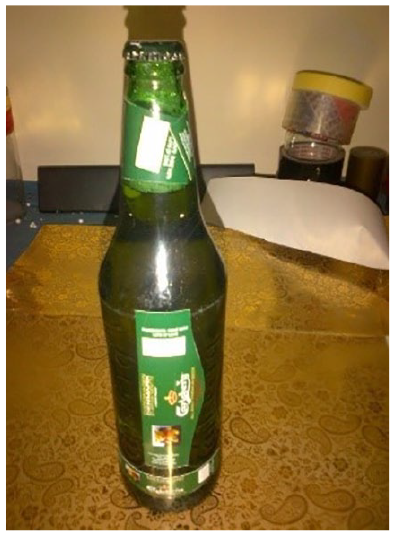
Ishan brought this image to represent his Up Close and Personal Experience of watching his brother become addicted to substances, which began with alcohol use.
At critical moments (usually in the form of peer pressure), participants’ personal knowledge and fear about substances were triggered and worked synergistically with wanting to protect parents, as Ishan relayed: “if someone offers me then. . .I can visualize the situation more around my house, what will happen if I consume.” Vishal described how his father’s stroke, triggered by his heavy drinking, was so impactful for Vishal that, even though he was curious about alcohol, he found it easy to decline constant peer pressure: “that moment [father’s stroke] was so bad for me. I came to know from that incident. . .it becomes dangerous. So, I just declined my friends.” He brought Figure 4 to convey his strong stance on substance use.

Vishal’s brought this image to convey how his Up Close and Personal Experience led to his strong stance and ability to say no to peers pushing substances.
Figures 5 and 6 were brought by Lina to talk about her up close and personal experience of her brother’s “vast” change from being “pure” to being a “hollow addict” (Figure 5), “broken from the inside” (Figure 6). Observing this change had frightened her, which in turn secured her own protection.
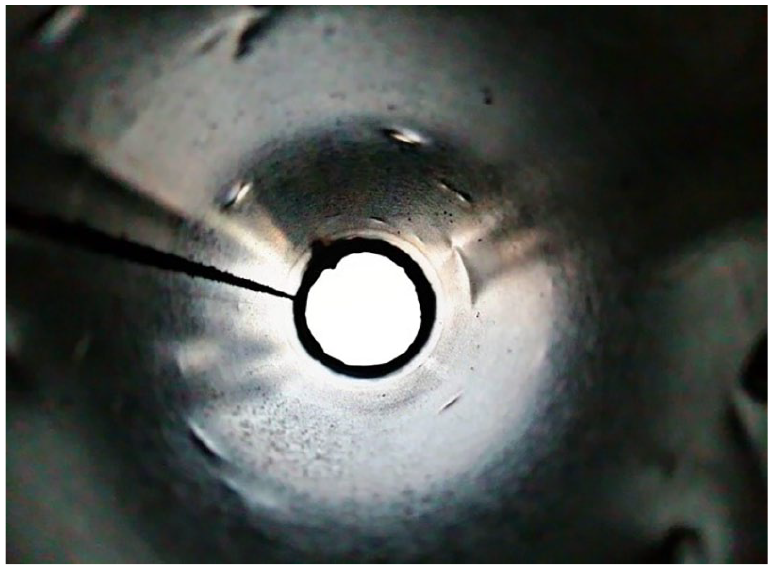
Lina took a picture inside a pipe to capture how hollow she saw her brother become as he became addicted.

Lina brought this picture of smashed tiles to talk about her perception of brokenness in her brother through substance abuse.
Similarly, having seen her brother transition from cannabis to stronger substances, the fear of even one “try” was very protective for Lina at critical moments of curiosity and peer pressure: “they try to influence you, like have a sip or maybe a puff. . .I stopped myself because of what happened to my brother. . .it scared me.” Anisha’s experience was very similar; her brother’s traumatic path into substance dependence meant “fear” that it could happen to her after just one try of a substance. For her, her up close experience meant that, even with peer pressure taunting that “you are becoming a grown up, you should try” and you should “enjoy life more,” she said would never try substances.
Some participants had been affected by seeing friends become dependent on substances, which “gave me more motivation to not use these things” (Hiya), and for Jhanvi, “it was easy for me because I already know the consequences.” Although Sina had tried “a few joints,” her position on drug use toughened as she learned, by seeing at close quarters, the grim and heart-breaking deterioration of her friend from abstinence to curious use to addiction (Figure 7).

Sina brought this image to talk how shocked and affected she was by her friend’s drug addiction.
Protection emerged here for Sina as she was able and inclined to reflect on her up close and personal experience, which worked synergistically with her parents’ influence, and because Sina brought this to bear at critical moments: “I thought it was like, even like. . . seeing him change like that, I felt like what if I change someday? What will happen to my parents? I’m the only daughter.” For some participants, learning by observing the stark effects of substance abuse in their neighborhoods was also protective. Sammy explained how his neighbor became abusive to his wife when intoxicated, and Sammy never wanted to risk changing “my personality” like that. When pressured by peers to “have one shot, what will happen?,” Sammy was able to resist because consequences seemed evident and evocative for him: “That’s what will ruin his life and that person’s life also.”
A small number of participants talked about learning from their own personal experience of briefly trying substances. These became protective against future use as they had been so unpleasant and even destructive. Samba had tried substances for three months to escape, but it “shattered my interests, my creativity, my personality.” He had a sense that “deep in my heart, I knew it was wrong.” One’s agency to make decisions was important to Samba (working synergistically with the later Mind-sets theme), and he brought Figure 8 to convey that “life is in your own hands” and how he realized he could be destroying his. So, he “gathered my strength” to cease substance use and talk to a school counselor.

Samba’s image of a dead flower conveying “life is in your own hands.”
Thus, fear of what substances can do, learned via traumatic up close and personal experiences, and often coupled with a desire to protect family, were powerful deterrents of substance use at critical moments. Importantly, participants conveyed that they were not just educated by their experiences but scared by them.
The centrality of this impact was borne out in many participants’ concluding comments about school education programs. The few who had been exposed to these were highly critical. Lina explained that “a powerpoint presentation is not going to stop anyone doing drugs. . .saying that it is harmful is not enough. . .I’ve seen it. . .it’s quite scary. . .and now I understand the consequences.” Ishan similarly felt there is not enough haunting forewarning of the dangers of substance use. He brought a close-up figure of a snake (not licensed for sharing) to convey that, just as children need to learn that snakes are dangerous, they need to feel afraid of substances, but that this “doesn’t happen in our real life. . .nobody tells us.” Had he not had an up close and personal experience, he felt that he too would have tried substances. He emphasized that just describing to young people that substances are harmful was ineffective, as this will not tally with a young person’s experiences when using casually. Fear is critical to a resolution not to use, according to Ishan, and he felt that graphic accounts of long-term consequences are needed (“show them seizures. . .and what cancer looks like”) so that young people “actually get scared”. Anisha extended the necessity of such impactful awareness raising to parents as “it is really very important to make them understand that drug addiction can also lead to suicide.” Thus, the powerful protection of their own learning experiences convinced many participants that fear-laden awareness was critical to reducing youth substance use.
Mind-Sets and Resolutions
Most participants conveyed Mind-sets and Resolutions that they felt protected them from substance use. Mind-sets represent their particular world view and resolutions refer to their commitments in the world they perceived. Along with the resolution to protect family, many participants conveyed single-mindedness about their own agency and responsibility. Sammy felt a personal “mentality” and “strength” to reject substances, a mind-set largely informed by a film which led him to see drugs as “termites eating up society.” He felt his personal choice and responsibility keenly, which informed his resolutions: “it’s our own mind-set whether we take substances or not. . . we are the only people who can control ourselves.”
Although some participants’ mind-sets around resisting substances were straightforward (“just don’t feel like it, never had any interest in doing such things - that’s it”; Hiya), many participants presented thoughtful, and sometimes earned, perspectives around autonomy and accountability which seemed to protect them from impulsive and risky choices. “Earned” refers to how a particular mind-set was won from difficult up close and personal experiences. Lina brought a figure of a clock (Figure 9) to reflect her harrowing experience of her brother’s substance dependence, which led her to a mind-set and resolution that “time is in your hands – it is limited and it will never come back to you for every wrong decision you make. . .in the end it is your decision.”

Brought by Lina to talk about how “time is in your hands.”
Ryan’s reflective mind-set appeared part of a suite of protective factors; he asked big questions such as “how can you be so careless, that you. . .don’t care for anything?” and he perceived real alternatives: “better that you find happiness in your life, why are you searching for it in a substance?” Jhanvi’s mind-set also reflected perceived autonomy, choice, and maturity as she weighed up her options for coping in a traumatic situation: “but then I thought about that what will happen because of that. Life will be destroyed, nothing will be left. It will get worse, whatever is right now, it will get worse - I thought like that.” Similarly, when her brother encouraged her to try cannabis to relieve her stress, Anisha gave it “a lot of thought,” and reflected on her family upbringing as well as her “many responsibilities”. Such reflective and questioning mind-sets appeared protective because they evoked authentic, personally meaningful worldviews, with sufficiently strong emotions to affect their decisions.
The abstinence resolutions of some participants seemed particularly emboldened by a critical, mature mind-set around youth culture and substance use. For example, Vishal and Hiya felt at ease being on the outside of the dominant youth culture and were not attracted to that life (“why do they do this?”; Vishal). Hiya explained: “I have got no respect for them. They just put stories on Instagram like doing, smoking weed. . .they think that it’s cool. But some people might think that it’s cool, but for me, it’s certainly not cool.” Although it was not always clear how these mind-sets emerged, Hiya’s security in her outsider position may have stemmed from her parents, who she knew “loved her a lot. . .I am very privileged,” suggesting a cascading protection that family can confer in a risky youth culture. Sina was particularly critical of youth culture, “recognizing” how social groups were normalizing drug use as well as implied associations with “cool” youth culture. She found this “stupid. Of course doing such things doesn’t make the person cool. There’s lot of. . . lot of things to do, better than doing this. . . . In Instagram, they put “Smoking is life” {chuckles} I’m like “What nonsense! How can smoking be your life?.” This mind-set around disillusioned youth culture worked synergistically with her up close and personal experience of her friend’s addiction, to the extent that Sina resolved to be a contrasting “brightness” (Figure 10) representing brighter (cleaner) living as well as a light in her friend’s dark times from substance abuse. Wanting to be that light appeared fundamentally protective for Sina. Thus, perceiving oneself, the world, and substances in particular ways, coupled with resolutions of how to be given these, appeared protective for many participants.

Sina brought this figure of a light to talk about her friend’s addiction as a darkness, and how everyone needs a friend (light) in times of trouble.
Finding and Keeping Good Company
Many participants described the importance of their friendship group, and the company they kept, in protecting them from substance use: “the friend circle must be good” (Sammy). Protection was both distal and proximal, and often serendipitous as well as orchestrated, and worked in multiple ways. Vishal explained how his friends were protective because they were a place to release worries, meaning he had less need to escape via substances. Friends were protective for Hiya as, in her extreme loneliness, a new group gave her a sense of belonging, which “was a turning point in my life.” For Samba, after a three-month period of using cannabis, good friends helped him to regain his self-esteem and confidence (“I had friends who helped me realize what I’m good at”), meaning he had a new focus for his time and energy, and a reason to be clean.
That substance abuse and addiction emerge from risky friendships and peer cultures was a view reported by many participants. Hiya felt her friend “got into drugs. . .because wrong people entered into her life,” Sammy said he would “never go with them [peers] because [the substances] are poisonous” and Aastha perceived substance users in her village as “not good people at all,” from whom her parents advised her to stay away. The implied risk was that “bad” company would try to seduce you, or pressure you, into trying substances, as Aastha explained: “they are like, let’s try once how is it. . .let’s do it together.”
In this perceived context of “bad company,” protection was operationalized by an awareness, a decision, and an ability to avoid these groups, both generally and at critical moments. Hiya had been made aware by her brother’s direct guidance. On recovering from his addiction, he advised her to “stay away. . .never go near” the boys in the neighborhood who pushed substances. Others explained how they were willing to be outsiders to popular groups. Even though her peer group labeled her as boring for not trying substances (which were “everywhere” in her social life), Lina was “cool with that. . .let me be boring,” reflecting the importance of a mind-set and resolution in managing risky peer settings. Although being part of the popular group could have been the respite Rohan needed from years of being marginalized, Rohan relayed how he “saw” how certain groups were “dangerous” and was able to refuse peer pressure from popular seniors: “seniors were like, come on bro you can try it, just one shot. . .I was like, aye don’t force me, I don’t want to. Then they used to taunt me: You are such an asshole. You’ve got no guts. Yeah at a certain point I did feel like an outsider.” When Ajit’s friends in their coaching center invited him to join in their substance use, he felt able to walk away, saying “no no, I’m happy, I don’t want to do it, and I just went inside.” Sammy also reported wanting to, and being able to, walk away from risky groups at critical moments: “Yeah, they, they asked me to take alcohol, one shot of it. . .I just refused to take it and went back home.”
Rohan brought Figure 11 to show how his peers would coax him to “get lost in nature” and “get high and enjoy the view”, which “tempted me.” Yet Rohan relayed how his father used to tell him that “Your friends are the ones who will firstly introduce you to all these things. Just stay away. . . try to be a better person.” Critically, Rohan said “That helped me to say no.” He also talked about a critical moment at a party (“Then they said - you try”) in which protection for him emerged from the synergy of parental lessons (“if you hang out with bad company, you will learn bad things only, so you will have to search for good company), being repulsed by the smell of cannabis (“I hated the smell so much”) and a confidence to walk away: “I took two packets of chips and went back to my room. I don’t want this. After that I said to my parents, I will not stay in that hostel. . .I would have become spoiled.” He also brought an image of three teenage boys to represent how two good friends had helped him to value focus and hardwork, and “maybe because of them. . .I am able to stay without using till today.”

Ryan brought this image to talk about how peers had pressured him to go into nature and get high, but his parents’ forewarning of the influence of peers came clearly to mind and prompted him to resist.
Thus, protection here was recognizing the value of good friends and perceiving and avoiding risky company. At critical moments, this perspective worked synergistically with mind-sets and resolutions to make it possible for them to walk away and be “an outsider.”
Repulsed by Substances
Finding the smell of substances repulsive worked synergistically to buttress some participants’ mind-sets and resolutions to avoid substances (“the smell of it [cannabis] is so suffocating,” Lina; “I won’t do such kind of things because I don’t like it”; and Hiya “Why would I do it if I don’t like doing it”?. However, some participants reported critical moments when curiosity fleetingly overrode their mind-set, and it was at these moments that finding substances offensive was especially protective. For example, Ryan’s curiosity around alcohol and cannabis was piqued by English movies, leading him to wonder “what is wrong in this? I feel like trying,” but he hated the smell of smoke: “and fear was like. . . then I came to know that sometimes fear is good.”
For those who did try substances, experiencing strong, visceral, negative reactions to them were critical moments, which powerfully reinvigorated their mind-set to strengthen their protection from future use. Although Sina already had strong views about substances, she tried cannabis “out of curiosity.” A bout of vomiting after immediate use meant an easy commitment to “never try it again in my life.” Ajit’s friend invited him to “just take a sip, just a sip” and his “mind was saying let’s try for one time, just one time.” However, he was repulsed by the smell, it burned his throat, and he vomited after “just one sip”; “Then I came to know, oh this is not good and I’ll not take it in the future, never ever.” This “one sip effect,” coupled with a personal confidence in speaking up, resurfaced on several occasions to protect Ajit, including at a house where friends and family were encouraging him to try alcohol: “And I told them no no don’t do it it’s not good one, and they just told me nothing will happen, we’ll just take only one [glass]. Then I told them that I already had one experience that just taking one sip only I had to go to the bathroom and vomit.”
Seeing Alternative Ways to Cope
That young people around them used substances to manage strong emotions or difficult circumstances was reported by several participants. Rohan relayed how substance use was widespread among youth to manage what was experienced as a mechanical life. Using a figure of a Pink Floyd album cover, he conveyed life as “basically mechanical. You grow up, 12 years of school, four years of college, then you. . .just drag yourself for the rest of the life and you just die.” Peers challenged Rohan about his acceptance of living in this way: “Why are you even living this mechanical life? Leave away your stress, your depression. Try out [substances], try it out once, you will feel relieved.”
Protection from substance use in such circumstances emerged from a synergy of emotional self-awareness, a recognition of the cultural norm of using substances to self-medicate, and an orientation toward healthier coping strategies, which they found successful. For example, Sammy explained that, when he needs escape from strong emotions, “I can easily take drugs or alcohol things. But I never take that. So, I used to all the time listen to music, play games to divert my mind. Relax, also relaxes my mind also, divert my mind.” Jasmine brought Figure 12 to talk about how she seeks out this place when she “feels bad . . . because sitting there means I feel very peaceful means . . . I sit there alone quietly. I think. After thinking, I come back.”

Jasmine brought this image to talk about how she used this place to manage when things felt overwhelming.
Although Vishal saw his peers use alcohol for stress management, “when my mood’s off” he consciously sought out music, gaming or playing cricket with friends to manage his feelings. Seeing her friends use cannabis and alcohol to relax and have fun was a risk for Anisha, but she found emotional expression (“I cry a lot”) and talking with her boyfriend helpful when she was feeling overwhelmed. Sharing worries and difficult times with a positive peer group was also an important strategy for Aastha, and having a trusted relationship with a teacher was helpful for Hiya “sometimes I get upset . . . there is one teacher.” Ajit sought to distract himself during difficult circumstances by listening to music and watching comedy, and also sought out fun with friends.
Having Something That Mattered More
Personally significant interests or ambitions were protective mechanisms for many participants, operating in a number of ways. Two participants felt having a productive focus and use of one’s time was fundamentally protective from substance use. For example, it was important for Vishal to fill his time and mind with worthy things and advised people to “cultivate more interest in something else than that [substance use].” Finding a more productive focus for one’s time was also how Aastha saw the way out of addiction for her brother, and she advised him to “Study well. . .you will have something to do.”
Long-term ambitions were also protective as they were perceived as personally valuable, but vulnerable to ruin from substance use, and therefore in need of safeguarding. Rohan was on an exam track and expressed a clear sense of “forging [his] own life” which he did not want to jeopardize. Sammy brought Figure 13 to reflect his continuing ambition, inspired early in childhood, to be an astrophysicist: “that’s the reason I took science.”

Sammy brought this figure to talk about his valued future in astrophysics.
Anisha, although not yet able to articulate details, also felt she had a worthy future that she wanted to protect: “if I get addicted. . .it might not happen.” Yet having a valued future was not, in itself, the protective factor; rather, it was the coupling of this with perceiving any substance use, which always starts with a “first time” or ‘one try, as having inevitable ruinous potential, reflecting a particular mind-set. Sammy explained: “If we take that stuff, alcohol, drugs, we will never succeed in what we want to become. . .resisting drugs, he may become a person of success. Because many people ruin their lives because of drugs.”
Valued futures were not just predicated on careers, but also on personal change and betterment, which many participants perceived as entirely possible: “if you want to change something about yourself, you can” (Lina). Some participants explained how significant people had instilled in them, or helped them to find, meaningful pursuits. Jasmine’s grandmother told her, “you finish your studies. . .become something” and Jasmine’s determination to do so meant she avoided substances. On seeking support to quit his casual substance use, his school counselor advised him: “You should take a step toward what you want.” This was a turning point for him where finding a future orientation (“something to believe in, a goal, motivation”) and sense of agency (“I realized how resourceful I could be”), invigorated Samba’s perspective to one where “You can make your own world.” Particularly reflecting on the impact of his internet addiction, Ryan expressed how he wanted “to become a better person” and that abstinence was key to realizing this goal. Following harrowing experiences and feeling abandoned, Jhanvi wanted to establish a more secure future for herself. At dark times, she had contemplated substance use but foresaw that “if I go to this track then life will be totally destroyed, totally ruined.” She brought a figure of a bird flying to show her sense of freedom and strength on deciding she would channel her energy into creating a safer life for herself: “I was good in my studies so I will carry out this. . . I can now depend on myself entirely for everything.”
In these ways, many participants, who were in key stages of adolescent development, were demonstrating iterative developments to their mind-sets and resolutions as their futures, and agency within it, became more apparent to them and were something to be protected.
Discussion
Indian researchers have called for culturally sensitive evidence to inform preventative action targeting risky youth substance abuse and SUDs (Gururaj et al., 2016; Jiloha, 2017; Narain et al., 2020). Although risk and protective factors for youth substance use are well researched globally, some findings are inconsistent, vary by context, and rarely elucidate how protective factors operate in the differing lives of young people (Hodder et al., 2016). Our study generated lived-experience data from Assamese youth who were at risk of substance use, given a history of substance dependence in their family or significant friend. Participants mostly referred to alcohol and cannabis and expressed protection as either never trying a substance or quitting after brief use. For the most part, these were not participants for whom resistance to substances was easy. Substances were locally available, accessible, and use was normative. Many participants had difficult, even traumatic, life experiences and home lives, and were encountering challenges around relationships, identity, direction, and academic pressure. Seven themes were discussed by participants, which appear to be protective factors and mechanisms, which we present in an organizing framework (Figure 1). Our data show how distal (evolved over time) and proximal (immediate) mechanisms “kicked in” to be protective at critical moments when substances were seductive and/or being pushed.
A key distal mechanism was establishing a resolution to not use substances. The Mind-sets and Resolutions theme captured how protective mind-sets were earned through participants’ serious personal reflection about substance use, and that this informed their intentions and, importantly, their behavior. Protective Mind-sets and Resolutions appeared to emerge from other protective factors (including family guidance and having a valued future) and seemed to be the opposite of the established high risk factor of youth impulsivity (McArdle et al., 2022; Riggs Romaine, 2019). For many, their resolutions to avoid substances were founded on a neoliberal conceptualization of individual autonomy, responsibility, and accountability for substance use and associated harm (Farrugia, 2014). For some participants, protection was further bolstered by having a critical mind-set about drug youth culture, which they felt was dangerously naïve about substances. Several participants were content to be an outsider to this culture, a finding also reported by a study with Hispanic girls in the US (Opara et al., 2019). Our data concur with other international findings that not seeing drug use as normative is protective (Riva et al., 2018; Trucco & Hartmann, 2021).
Mind-sets and Resolutions were informed, for many, by their view that Family Protects and Must Be Protected. Participants talked about the practical helpfulness of parental guidance (e.g., to avoid risky peers), the respect parents deserved due to their sacrifices and/or because they felt committed to not hurting their parents. As in other studies in India (Mahanta et al., 2016; Narain et al., 2020) and globally (Trucco & Hartmann, 2021), parental modeling of abstinence was protective for some participants. Many of our participants conveyed the protection they experienced from nurturing parent relationships, and especially the productive dialogue they had with parents about substance use. Open family communication about substances also featured in Opara et al. (2019), where Hispanic girls felt positive parent dialogue cascaded into their peer discussions, bolstering their collective critical consciousness around substance use. Furthermore, it may be that, given a positive parental relationship, our participants did not feel a strong need to individuate from parents, or to use substances for this. Indeed, our study identified that, at critical moments, rather than rejecting parental values, the distant “parental voice” was heard loud and clear, steering our participants’ responses in risky situations. Protection worked here because not hurting their parents mattered to these participants. Our findings resonate with US data that a high connection to family is associated with low rates of substance use (Resnick et al., 1997). Notably though, wanting to protect family was evident even among our participants who did not report positive parental relationships, suggesting family, perhaps as an abstract value, can be protective, operating beyond uneasy or conflictual parent-child dyads.
Up Close and Personal Experiences also influenced Mind-sets and Resolutions as well as a desire to Protect Family. We had initially conceived of family/friend substance dependence as a risk, but these often surfaced as protective, although harrowing, forms of learning. These experiences protected them from any, or further, use of substances as their internalized storyline of what follows substance use was evocative, powerful, and deterring. Similar protective effects of witnessing harm from substances in their family and friends are reported in other studies (e.g., in Canadian youth, Jenkins et al., 2017). Such learning seems to counter adolescents’ typical sense of invulnerability to danger, which leads them to minimize perceived risks and to be overly confident of avoiding negative consequences (Riggs Romaine, 2019). At critical moments, when use of substances was tangible, it was the perception and fear of harmful and likely consequences that stopped them. Being repulsed by substances, in and of themselves or because of conditioned learning, also appeared a proximal protective mechanism for some participants at critical moments, which worked with other protective mechanisms, especially Mind-sets and Resolutions to help participants avoid substances.
All participants talked about the influence of other people their age. Conceptualizations of “bad” or “risky” company were widespread in the data. Awareness and avoidance of substance-using groups was a critical form of protection for our participants, often instilled by parents or via Up Close and Personal Experiences. Such avoidance is endorsed as protective by other global and Indian data as affiliation with peer-using groups is the strongest proximal predictor of a young person’s substance use (Degenhardt et al., 2016; Narain et al., 2020). Although global data suggests young people over-estimate the prevalence of peer substance use (Griffin & Botvin, 2010), which can make use appear normative, our participants appeared protected by disillusionment about “cool” youth drug culture and were prepared to be marginalized by peers because of their standpoint.
Conceptually rejecting the normalization of substance use became protective at critical moments because participants felt they had the skills and confidence, however fragile, to exit a risky social situation where substances were being pushed. Our data concur with other international findings that adolescents are able to take a critical perspective on substance use in their communities and that rejecting the inevitable normalization of substance use can be protective (Jenkins et al., 2017; Riva et al., 2018; Trucco & Hartmann, 2021). Positive peer relationships were reported by many, although not all participants, and these appeared protective as they were sources of fun, company, emotional support, esteem and accountability. Having peers with similar Mind-sets and Resolutions appeared protective, in line with global data (Trucco & Hartmann, 2021).
Seeing Alternative Ways to Cope represented participants’ commitment to find healthy ways of managing life challenges, stressors, and strong emotions. This included finding cathartic or distracting activities, or safe spaces to be alone. The importance of solitude for wellbeing, including self-regulation, self-attunement and self-acceptance, is just beginning to be researched (e.g., Nguyen et al., 2018; Sofija et al., 2022). Our participants conveyed how they knew what they needed in order to navigate risks stemming from life pressures and were able to secure these. They positioned their choices in contrast to their dominant peer culture where, via “differentiated normalization” (Shildrick, 2002, p. 44), substance use was described as normative for fun as well as managing academic stress and relationship worries. Differentiated normalization captures the fact that certain substances and forms of use (e.g., to manage academic stress) become variously normalized within different social contexts and locales. It also brings attention to how risk of substance use is differentiated across ages and contexts, and that prevention efforts must be sensitized to these (Jenkins et al., 2017).
Having Something That Mattered More was also protective, as participants did not want to jeopardize their personal values or ambitions through substance use—a factor that interacted with wanting to Protect Family. In India, many teenagers feel pressured to take up subjects preferred by their parents (Duara, Hugh-Jones, & Madill, 2022; Duara, Chowdhury et al., 2022), but in which they themselves have little interest, meaning potentially easy distraction into the “fun” of substances. Our data show that, when participants feel they are executing their own ambitions, it can be protective. This resonates with the concept of eudaimonia, that is, having a personal sense of purpose (Ryff & Singer, 2008), which is a generally accepted component of wellbeing. In studies of youth wellbeing, strong eudaimonic orientation toward a desired future is as important as present life satisfaction to young people’s wellbeing (Sofija et al., 2021). Thus, fostering a positive view of one’s future, and its impact on present wellbeing, may be important targets for building protection against substance dependence.
Finally, our data draw attention to a number of protective factors in our Indian sample that are less well documented in the global literature, including (i) the importance of wanting to protect loved ones from hurt; (ii) that family histories of addiction, or close affiliation with friends who are addicts is not necessarily a risk factor; (iii) having, and being inclined to pursue, healthy ways of managing difficult times in life; (iv) being repulsed by substances; and (v) being supported to pursue self-directed choices in leisure, education, and careers.
Resilience Framework
Our seven themes support the view that resilience is not circumscribed in the body or mind of a young person but emerges from proximal and distal assets and resources spanning key systems and domains of a young person’s life (Graber et al., 2016; Griffin & Botvin, 2010; Masten & Barnes, 2018; Masten et al., 2021; Ostaszewski & Zimmerman, 2006). Our data show that resilience is not just a balance of protective versus risk factors, as per a compensatory model (Fergus & Zimmerman, 2005), but rather rests on the deployment or infiltration of protective mechanisms at critical moments, as per a risk-protective model which buffers or moderates risk (Fergus & Zimmerman, 2005). For example, being raised with positive and warm parenting becomes protective at the moment when risk of substance use is elevated (in line with a definition of resilience in context) and can only be protective if it infiltrates that context, if the participant is sensitized to be impacted by it, and if it is accompanied by effective strategies to avoid or refuse substances in that moment. Our data also show that, from a developmental perspective, increasing youth self-awareness, agency, and a desire for autonomy and accountability can contribute positively to resilience to youth substance use. This aligns with findings that wellbeing in youth is protective against risky lifestyle behaviors, often because young people are more invested in self-care (Sofija et al., 2020).
Collectively, our Indian study data suggests that protection against substance use, despite high risk (i.e., youth resilience), was founded on a mind-set that emerged from family experiences (nurturing parenting and witnessing the effects of substance dependence), which heavily shaped the adolescents’ choices and behaviors. It is common in resilience studies to find that some factors and mechanisms are the building blocks of other protective mechanisms, such as sensitive caregiving, feeling supported, and self-regulation skills (Masten et al., 2021), and we capture this in our organizing model (Figure 1). Using a resilience framework challenges the dominance of risk, vulnerability, and deficit in adolescent research and promotes the capturing and understanding of adolescence as a time of demonstrable learning and strength, including an ability to manage and respond to risk and adversity (Malhi et al., 2019). Not all assets and strengths are equally distributed across young people and the systems and contexts of their lives, meaning universal, primary interventions should seek to boost population protection, informed by what works in the lives of young people who demonstrate resilience against a particular risk. Resilience frameworks advocate optimizing the “windows of opportunity” in adolescence for facilitating resilience through preventive interventions (Masten & Barnes, 2018).
Our data also broadly aligns with the social developmental model (Jones et al., 2016), whereby a pro-social (anti-drugs) life pathways appears to be a commitment by the adolescent based on: the influence positive socializing agents, especially parents and peers (theme 1); avoidance of involvement with antisocial groups (theme 4); and social, emotional, and cognitive skills that enhance involvement with pro-social pathways (themes 3, 6, and 7). However, our data also point to the importance of deterrents in anti-social pathways (themes 2 and 6).
Implications
Our study identified a number of protective factors that could be the target of primary prevention efforts to reduce youth substance abuse in India. Whilst these broadly align with international recommendations for both school and family-based approaches (Griffin & Botvin, 2010), our data offer youth-led, specific, and culturally situated suggestions to shape Indian approaches. It is important to note that our participants were largely substance abstainers and their data is therefore more informative for abstinence-focused rather than harm-reduction approaches.
First and foremost, our participants recommended, perhaps controversially, that school programs should cultivate healthy fear of the consequences of substance use, using lived experience and personal testimonies to ensure that the visceral and embodied reality of negative consequences “hit home.” They felt that young people should be given insight into the typical pathways from casual use into dependence. We have mapped this pathway in our broader study of youth substance dependence and recovery in Assam (Madill et al., 2023). Our participants appeared protected by their Up Close knowledge of these risky pathways. Such lack of knowledge of potential consequences is a well-established risk factor in Indian and global studies (Ningombam et al., 2011; Trucco & Hartmann, 2021). However, there is mixed evidence about fear-based approaches. Tannenbaum et al.’s (2015) meta-analysis showed that fear appeals can have a positive effect on attitudes, intentions, and behaviors (d = 0.29), but Kok et al. (2018) reported that these approaches are rarely effective and that effects are usually only found when accompanied by high self-efficacy. A review of 17 studies from 2005 to 2017 reported mixed findings but slightly in favor of fear-based messages, noting that message tone and content of more recent approaches differ from that found in historical fear-based messages (Esrick et al., 2019). In the present study, it must be remembered that our participants’ recommendation for a fear-based approach stems from their experience of what was protective for them, but that use of such an approach as a universal prevention strategy in India would need to be mindful of the limited evidence for these approaches, would require careful co-design with young people and careful piloting to identify and mitigate any potential adverse effects.
Therefore, as also suggested by our participants, school programs should build protection via developmentally sensitive life skills training, which are already popular approaches to cultivating healthy adolescent behavior in India (e.g., Shinde et al., 2018). Our data suggest three areas of focus for programs to prevent substance use: (i) scenarios of critical moments and skills or strategies to use in those, to escape peer pressure or other vulnerable contexts; (ii) supporting young people to develop mind-sets and resolutions, based on personally meaningful values, coupled with anticipation of where they may be tested and how to navigate those; and (iii) enabling young people to make healthy, effective choices for managing difficult times in their lives. These suggestions resonate with resistance skills training and competence-enhancement approaches used internationally (Botvin, 2000), although they are not typically delivered alongside mental health and emotion regulation strategies as suggested by our participants. As protection can also come from being able to choose a life direction that the young person does not want to jeopardize through substance use, prevention efforts should target curriculum and career choices for young people and their parents, so that both are aware of the likely substantive benefits to well-being and quality of life if the young person is supported in making self-directed choices (Duara, Hugh-Jones, & Madill, 2022; Duara, Chowdhury et al., 2022).
Second, as endorsed by global data, the central importance of positive peer selection and avoiding risky peer groups should inform prevention foci in schools, families, and communities (Henneberger et al., 2021; Trucco & Hartmann, 2021). Young people should be supported to seek friendships that align with their values, and schools should monitor young people who may be drifting toward risky groups. Third, and also in line with global recommendations, prevention should target parents. Our data endorses calls to teach parents how to communicate with their adolescent about substance use and how to establish family expectations around it (Griffin & Botvin, 2010). Parents should be reassured that positive parent modeling and communication, and valuing family, can be protective even in families where relationships are strained. Indian families should be advised about the risks of substance use in the family, and of encouraging young people to “have a sip,” which is a globally recognized risk factor (Mayberry et al., 2009).
Fourth, our data support the international perspective that promoting adolescent wellbeing may be a powerful protective mechanism against risky behaviors (e.g., Schwartz et al., 2011; Sofija et al., 2020). There were protective effects for our participants from having healthy ways to manage stress and to feel positive about their future. School wellbeing approaches appear effective if they foster individual (e.g., self-efficacy and regulation, problem-solving), interpersonal (e.g., peers), and contextual resilience factors (e.g., school connectedness) (Hodder et al., 2017). In India, whole school approaches to wellbeing are rare, but emerging (e.g., Hugh-Jones et al., 2022; Shinde et al., 2018) and could be a key focus for prevention. The recent national suicide prevention strategy in India includes school wellbeing programs as a crucial form of upstream prevention of proximal suicide risk factors, including substance dependence (Government of India Ministry of Health and Family Welfare, 2022).
Strengths and Limitations
Our study provides unique youth-led data that can contribute to understanding and action on risky substance use prevention among Indian youth. Photo-led interviews were an effective way to recruit and learn directly from young people (Duara, Hugh-Jones, & Madill, 2022). We met standards for reporting interview studies and conducting in-depth thematic analysis (Clarke & Braun, 2022; Leonidaki, 2015). We worked as a collaborative India-UK team to capitalize on insider and outsider perspectives to enrich data interpretation (Dwyer & Buckle, 2009). Our study and data also have some limitations. Our conceptualization of “at risk” means our data may not be representative of adolescents in India who are at risk for reasons other than a direct connection to a person dependent on substances, for example, those disengaged from school or with mental health difficulties. We recruited participants via family links with addiction rehabilitation centers, so our data’s focus on Up Close and Personal Experiences may be less prominent in samples recruited via different routes. To respect privacy, we did not ask participants if they identified with a faith/religion or with a particular gender identity. It is possible that our interview data was influenced by biases, including social desirability, given the stigma of substance misuse. We mitigated this through meeting with potential participants prior to the interview to explain the study, answer questions, and discuss reservations. This included explaining our data anonymization, secure storage, and sharing procedures. The success of our careful preparation is suggested in the rich detail and nuance of the accounts provided. Future research should make efforts to learn how individual diversity plays into risk and protective mechanisms. We did not gather objective data to situate the sample (e.g., in terms of their self-esteem, academic engagement), so there may be other protective mechanisms that we have not captured.
Conclusion
Prevention approaches to youth substance abuse in India require understanding of culturally situated protective mechanisms. Our study demonstrated the importance of examining when protective factors become tested, and therefore operationalized and identifiable. Our data and participants suggest that prevention in India should adopt youth-led, school-based programs on both wellbeing and substance use, with a focus on managing difficult times and critical moments of being tested. Parents should receive guidance on how to have effective conversations about substance use, the importance of modeling healthy choices in the home, and the value of supporting positive peer selection and autonomous choices in their young person. International evidence suggests that such approaches can be effective (Agarwal et al., 2013; MacArthur et al., 2016; Suresh Kumar & Thomas, 2007). Harrop and Catalano (2016) provide excellent guidance in evidence-based approaches to designing, implementing, and upscaling youth substance use prevention programs.
Footnotes
Acknowledgments and Credits
We are immensely grateful to the participants for taking part and sharing their stories and to Nirmaan and Hope Rehabilitation Centers and Mind India for supporting recruitment.
Declaration of Conflicting Interests
The author(s) declared no potential conflicts of interest with respect to the research, authorship, and/or publication of this article.
Funding
The author(s) disclosed receipt of the following financial support for the research, authorship, and/or publication of this article: The project was funded by the United Kingdom’s Economic and Social Research Council (ES/S00047X/1).
