



Abstract
Experiences of and exposures to violence impact older adolescents and young adults in a myriad of ways. While typically conceptualized as interpersonal, other forms of violence, namely structural and symbolic, can be harmful to development for this population. This study utilized qualitative methodologies, including ethnographic field notes and interviews, to capture the ways in which 12 young persons aged 16 to 20 from Philadelphia experience and conceptualize multiple forms of violence across neighborhood contexts. In total, 85 interviews and over 100 hours of field observations were conducted and analyzed using thematic analysis. Findings from this study demonstrate that multiple forms of violence are experienced and impact how young adults make meaning of their life experiences. Importantly, our study explores how these forms of violence occur in tandem across contexts. Whereby, aspects of young adult development and well-being are shaped by violence across the micro, meso, and macro systems with which they interact. Implications of this work include adapting Bronfenbrenner’s Ecological Systems Theory to include multiple forms of violence so that practitioners and researchers can better understand how forms of violence are enacted and the associated impacts on young adults.
Introduction
Violence has become a common topic of inquiry, ranging from fields in the social sciences (e.g., sociology, anthropology, and criminology) to applied areas such as social work, public health, and education. As a research topic, the definition of violence is often dependent on the context of the study, the discipline in which the research resides, and the overarching purpose of the inquiry. The dominant paradigm in the United States (US) context has been to define violence as interpersonal, physical acts. The majority of domestic research on violence follows the World Health Organization’s definition of violence as “the intentional use of physical force or power, threatened or actual, against a person or against a group or community that results in or has a high likelihood of resulting in injury, death, psychological harm, maldevelopment, or deprivation” (Dahlberg & Krug, 2006, p. 5). This conceptualization of violence encompasses many forms of interpersonal violence, such as intimate partner violence, child maltreatment, and abuse, assaults, and homicides. However, narrowly framing violence as strictly interpersonal has far-reaching consequences, as doing so dictates that responses and interventions to violence remain focused on the individual level. A key feature of investigations of violence defined at the interpersonal level is that they are typically focused on the collection of quantitatively measured data on individuals. This approach is partially due to the framing of violence as a public health issue such that the behavior of individuals is scrutinized in an effort to understand underlying patterns and reasoning. Alternatively, we argue that defining violence holistically and pushing research to understand the relationship between multiple forms of violence (interpersonal, structural—the social and cultural processes that harm certain groups of people, and symbolic—when some groups maintain access to greater power and resources when compared to others leading to disparities) and the associated impacts in diverse domains has the potential to elicit a different, increasingly sustainable, policy response altogether. Unfortunately, little research to date has attempted to expand the definition of violence to include symbolic and structural forms in tandem.
This paper will discuss violence across interpersonal, structural, and symbolic forms and how they are experienced by older adolescents and youth of color in Philadelphia. Our study will illuminate how multiple forms of violence impact youth development across the microsystem, mesosystem, exosystem, and macrosystem (Figure 1). To our knowledge, scant literature has arrayed multiple forms of violence within a single narrative and through the lens of a person-in-environment model. For example, James et al. (2003) array the various components of structural violence and interpersonal violence impacting poor women across an adapted version of Bronfenbrenner’s ecological systems model but falls short of also incorporating symbolic violence across the systems. Thus, our work adds to the body of research examining the impact of multiple forms of violence on youth development and highlights the importance of considering a multidimensional understanding of violence in relation to context and environment. The ultimate goal of this paper is to present an adapted version of Bronfenbrenner’s Ecological Systems Theory, one that includes interpersonal, structural, and symbolic violence across the various systems, providing a model for understanding how violence impacts people in multiple forms throughout their daily lives.
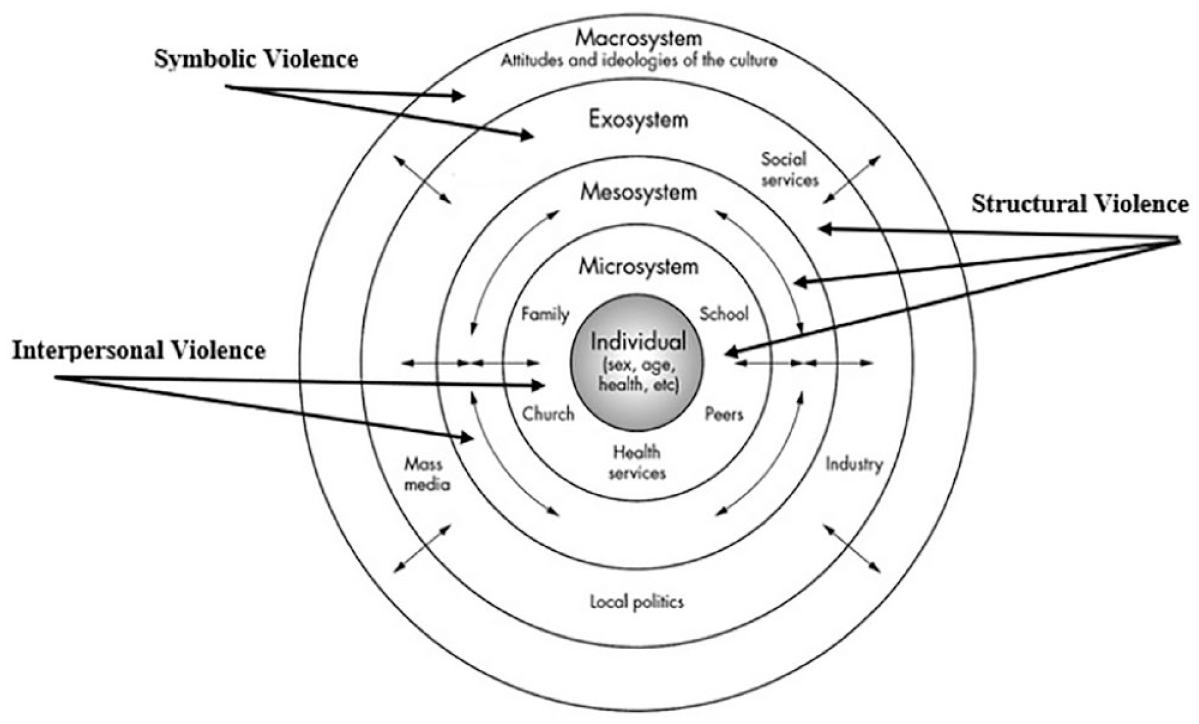
Revised Bronfenbrenner’s ecological systems theory.
Multiple Forms of Violence
Interpersonal Violence
Interpersonal violence is the most common conceptualization of violence and is described as physical acts, observed through physical altercations between persons, though it also encapsulates neglect and emotional abuse (Montesanti & Thurston, 2015; Sumner et al., 2015). Specifically, interpersonal violence is centered on individual or micro-level interactions between individuals which lead to harm, while excluding larger systems level factors which appear across structural and symbolic violence (Montesanti & Thurston, 2015). As noted across the literature, interpersonal violence may appear as physical abuse, including sexual abuse in the form of rape or unconsented sexual advances (Castellví et al., 2017; DeVerteuil, 2015; Montesanti & Thurston, 2015). However, though physical and direct forms of violence are the most commonly cited and easily recognized, violence can also take less tangible forms, such as structural violence enacted by state structures or through symbolic violence embedded in societal norms and expectations. These forms of violence can be just as harmful as interpersonal violence on young adults as they develop.
Structural Violence
Structural violence is defined as “the indirect violence built into repressive social orders creating enormous differences between potential and actual human self-realization” (Galtung, 1975, p. 173), or as “a positionality that imposes physical/emotional suffering on specific population groups and individuals in a patterned way” (Quesada et al., 2011, p. 340). Colloquially, this form of violence is sometimes referred to as the violence of poverty.
Structural violence is a way of thinking about the unequal distribution of resources, such as food, education, housing, and medicine across social, and class strata as actions by the state and associated institutions (James et al., 2003). Whereas interpersonal violence is visible in that the direct impacts it has on bodies can be counted and seen, structural violence is more ambiguous and is experienced collectively through forces such as racism, poverty, and socio-economic inequality, making its impacts more difficult to quantify. Farmer (2004) has connected structural violence to Bourdieu’s concept of habitus: “Bourdieu uses the term ‘habitus’ as a structured and structuring principle. Structural violence is both structured and structuring. It constricts the agency of its victims” (p. 315). Through this lens, the relationship between structural and interpersonal violence becomes clearer. Scheper-Hughes and Bourgois (2004) posit that the limitations and thus frustrations that come out of structural violence can result in interpersonal violence.
Additionally, as structural violence constricts the agency of individuals, its impacts—unequal access to essential resources—can lead to buildups of tension and frustrations, again resulting in interpersonal violence: “Crucially, daily overlaps with violence are suffused with broader structural violence. . .The oppressive structural violence, frustrations, and punishing poverty inevitably spill into and cross over to interpersonal violence in everyday life” (DeVerteuil, 2015, p. 220). Given the embedded nature of structural violence into the fabric of societal structures and guiding policies, observing the impacts of this type of violence can be challenging. However, pervasive and resilient rates of poverty across specific groups, in addition to higher rates of poor life outcomes (such as early mortality, criminal justice involvement, and disease) begin to unveil how structural violence impacts the non-dominant groups in society (James et al., 2003). This relationship can be seen domestically and worldwide; noting that exposures to interpersonal violence are higher in more unequal societies (Blau & Blau, 1982; Wolf et al., 2014).
Symbolic Violence
Symbolic violence can be understood as the power differences that occur between social groups. As articulated by Bourdieu (1977), symbolic violence occurs when members of the less dominant class accept cultural norms dictated by groups with higher levels of power. Eventually, oppressed individuals internalize their role as subordinates, submit to the interests of the powerful, and in turn place blame upon themselves for their status in the social hierarchy. The dominated group internalizes such differences as the natural order of life, whereby power dynamics are taken for granted and considered just (Wiegmann, 2017). Stated differently, less powerful groups experience limited social mobility, unconsciously trapped within inequitable hierarchies constructed and maintained by the elite (Duncan-Shepherd & Hamilton, 2022; Parkin & Coomber, 2009). Comparatively, structural violence reduces agency and power among marginalized groups through the implementation of policies and laws which restrict access to the resources necessary for marginalized individuals and groups to improve their lives (Montesanti & Thurston, 2015). Symbolic violence is unique in that it does not use overt force over the dominated. Rather, cultural norms and social expectations are accepted by the less powerful group, who adapt and shift their behaviors, interests, and feelings to align with those displayed by the powerful majority (Parkin & Coomber, 2009; Richardson, 2011).
Across the literature, symbolic violence has been described as subtle cultural domination, a process which occurs not in overt violent acts, but rather through collective acceptance of dominant power relations, making this form of violence challenging to identify for members of oppressed identities (Cushion & Jones, 2006). The impact of this can be observed within marginalized groups, as members internalize the ideologies of the dominant, accepting these processes and systems as the natural order of life, leading to negative and harmful effects.
Relationships Between Forms of Violence
Interpersonal, symbolic, and structural violence are intertwined and related, with no type occurring in isolation of the others. These forms of violence exist across multiple dimensions of our society (Sharkey, 2018). For example, symbolic violence can be understood as a precursor to structural violence such that limited social mobility results in limited access to resources, often with negative and harmful effects. In a similar way, interpersonal violence can be seen as a result of structural violence such that limited access to resources can result in anger and frustration that is then manifested as interpersonal violence. Regardless, shifting between overt physical violence and less easily observed subtle forms makes it more challenging for victims to identify and name the negative impacts that stem from symbolic and structural violence. Amplifications of these concepts, singularly and together, in the literature follows.
Violence and Development
A large body of interdisciplinary literature has explored the many ways violence impacts youth development. Youth who are victims of violence in any form, have been observed as having poorer mental and physical health, increased aggressive behavior, increased criminal justice involvement, and reduced education outcomes when compared to youth who do not experience violent life events (Fry et al., 2018; Turanovic, 2019; Voisin, 2013).
Interpersonal Violence
Exposure to interpersonal violence during adolescence is associated with an increase in numerous mental health issues including depression, violent and aggressive behavior, antisocial behavior, and anxiety (Voisin, 2013; Zona & Milan, 2011). A study using a longitudinal twin design assessing the impact of violence on early-adult psychopathology found that adolescents who experienced interpersonal violence were more likely to have internalizing mental health disorders (i.e., depression, anxiety, and post-traumatic stress disorder) during young adulthood when compared to those who did not (Schaefer et al., 2018). Regarding education outcomes, youth who experience interpersonal violence are more likely to drop-out of school, have high rates of truancy, and are less likely to have high test scores or grades (Fry et al., 2018; Voisin, 2013). Using panel data from the National Longitudinal Study of Adolescent Health (n = 14,322), Wilczak (2014) conducted a multinomial logistic regression to assess the relationship between violent victimization and education outcome. The author found that youth who experienced this form of interpersonal violence were more likely to drop out of high school and never pursue secondary education when compared to youth who did not. Risky behavior has also been observed as resulting from youth exposure to interpersonal violence (such as sexual assault) including having sex without condoms and drug use (Voisin, 2013).
Structural Violence
Less literature has been generated assessing the impact of structural violence on adolescent outcomes. As noted by Voisin (2013), people experiencing low socioeconomic status, have less access to resources, and in turn are at increased risk of child abuse (a form of interpersonal violence). Additionally, Fry et al. (2018) conducted a systematic review to assess how violence impacts educational outcomes, and in doing so de-aggregated violence into multiple interpersonal types (e.g., sexual violence) and community violence, which included observing violence by the police who represent criminal justice policy implementation on the street. The findings suggest that overwhelmingly, this form of structural violence leads to reductions in education outcomes for youth in ways that are more severe when compared to the impacts of interpersonal violence such as sexual assault. Physical health has also been observed as being impacted by exposure to structural violence among adolescents. A recent meta-analysis provided evidence that youth exposed to community violence (including witnessing police brutality) have poorer respiratory health including increased rates of asthma and higher blood pressure, an indicator of cardiovascular health when compared to those who lived in places where they were not exposed to this form of structural violence (Wright et al., 2017). Lastly, research suggests that young people experiencing low socioeconomic status and who live in low-income neighborhoods (spaces which were shaped in part through inequitable and racist development policy) are more likely to use illicit substances including marijuana and alcohol use, in addition to increased rates of depression and antisocial personality disorder when compared to those living in more advantaged spaces (Buu et al., 2015).
Symbolic Violence
Even fewer studies have sought to assess the impact of symbolic violence on youth outcomes, likely due to the abstract nature of the concept. However, some work has been done exploring the effect of colonization (the forced imposition of a culture) on indigenous populations which may provide some insight to the importance of considering this form of violence in research. For example, the colonial mentality model suggests that people who have experienced colonization (such as those living in India), develop the belief that the colonizer culture is superior to their own. The findings from a recent study provide evidence that exposure to a dominant culture as a member of the less powerful group, significantly increased rates of depressive symptoms among native Indians (Nikalje & Çiftçi, 2021). Additionally, research among Canadian Aboriginal groups has found that colonization has led to increased health problems as severe as epidemics of disease for the groups that sought to assimilate with the dominant culture (MacDonald & Steenbeek, 2015).
Current Study
As can be seen from a review of the literature, exposure to violence regardless of form has significant negative impacts for youth. However, understanding types of violence in isolation from one another may not fully capture the breadth of impact violence has on development. For example, prior research suggests that structural and symbolic violence occurring in the macro and exo systems exacerbates the harm caused through interpersonal violence (Hourani et al., 2021). However, to our knowledge, an integrated analysis of how multiple forms of violence impact urban young adults within the Ecological System’s theory has not been done. Therefore, little work has examined the cumulative impact of violence as it appears in the meso system, insight which could greatly inform violence interventions as well as research approaches for how violence is studied and conceptualized. Our paper responds to this gap by illuminating the lived experiences of urban youth through the use of ethnographic methods to identify (a) the types of violence urban young people are impacted by and (b) the various systems in which each type of violence occurs and overlaps with the others. The research questions of interest for this paper were: (1) How do young adults in Philadelphia conceptualize violence in multiple forms and (2) How can multiple forms of violence be embedded within Bronfenbrenner’s Ecological Systems Theory?
Conceptual Framework: Ecological Systems Theory
First presented by Bronfenbrenner (1977, 1979, 1986, 1999) in the 1970s, the Ecological Systems Theory (EST) argues that development is impacted by multiple systems which surround and interact with an individual. Specifically, EST identifies four subsystems of the environment that influence human development: the microsystem, mesosystem, exosystem, and macrosystem (Figure 1).
The microsystem refers to the people, programs, and organizations which most intimately and directly impact a person. Included in this system are schools, family members, teachers, and peers. At this level, interpersonal violence occurs, which would include intimate partner violence, child maltreatment, bullying, and direct victimization or pursuing acts of violence.
The mesosystem is composed of interactions between individuals from the micro system, as well as between the micro and exo systems. For example, interactions within this system include exchanges between an individual’s friends and family, their family and neighbors, or even their family and social workers. At the meso-level, interpersonal violence could occur through direct conflict and fighting while structural violence occurs if members of the microsystems maintain different levels of power within the societal hierarchy and use that power to harm the individual or members in their microsystem.
The exosystem refers to networks of institutions and social connections in which youth do not regularly or directly engage but still impact their development (Christensen, 2010). Examples include parental distress stemming from the loss of a job. They may, in turn, parent in a less effective way than when experiencing full employment. Thus, the youth is indirectly impacted by the economic systems which affect others in their family unit. Structural violence emerges at the meso-level of the EST. This could include individual fear or violence when navigating the surrounding community, or a lack of essential neighborhood resources such as grocery stores, recreation centers, or gainful places for employment. Within the exosystem structural and symbolic violence collide as adolescents are impacted by policies including local policing, messaging through the media, economics, and popular culture.
The macro-system, where we see symbolic violence occurring, refers to the socio-cultural environment in which the youth is developing. Such contexts include socioeconomic status and belonging to a group with a common identity or heritage. At this level, the adolescent is impacted by discrimination, including racism and sexism.
The focus of the current work was to understand how young people experience multiple forms of violence in their daily lives. Across the violence literature, scholars have used the terms “exposure to” versus “experiences with” violence interchangeably depending on the field of study. We follow this standard and outline the details of how we conceptualized the various forms of violence. For our paper, direct interactions with violence—like having physical violence directed toward you would be considered interpersonal and occur within the micro-level. This aligns with previous work that suggests interpersonal violence, such as victimization (experiencing physical violence) most often occurs in the micro system (Sabri et al., 2013). Comparatively, observing (being exposed to) two members of your microsystem (say for example two friends) fighting each other would be considered interpersonal as well, though occurring in the meso-system as the conflict is between two microsystems but still involving direct violence. Hearing about an incident involving police brutality would be considered structural violence and occurring within the exo or macro systems (James et al., 2003). The internalization of Western beauty standards by youth of color would be considered symbolic violence and would occur at the macro level. Importantly, some of these forms of violence in some circumstances may be intertwined (Sabri et al., 2013). An event defined as interpersonal violence within the microsystem could lead to an individual experiencing structural violence in their exosystem. Given the complexity of both the systems in which any one person exists and the diverse forms in which violence emerges, collecting rich data that illuminate these processes is critically important.
Methods
This study examined how older adolescents and young adults, living in Philadelphia, a large urban center, experienced and conceptualized violence in their neighborhoods. In this article, we draw from interview and ethnographic data to highlight the voices of participants and their experiences with multiple forms of violence.
Study Setting and Participants
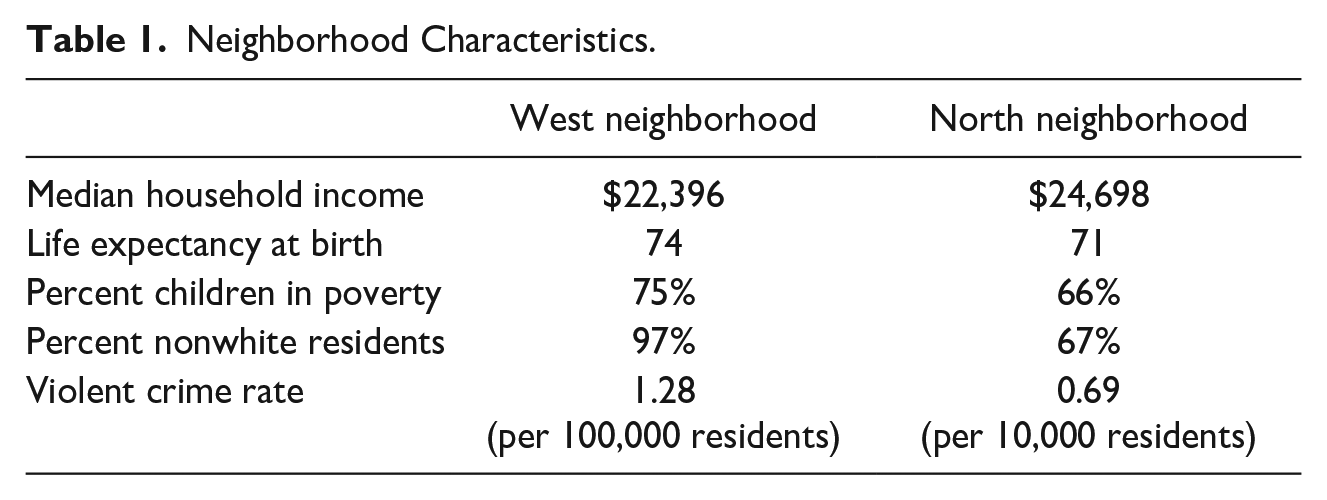
This study was conducted across two neighborhoods in Philadelphia. The neighborhoods for recruitment were selected purposefully, using census and crime rate data to understand the ways in which multiple forms of violence manifested in each space, as shown in Table 1. Recruitment occurred at two youth-serving organizations in different neighborhoods, one on the north side and one on the west side of the city. We built relationships with the organizations and their respective gatekeepers about 1 year before recruitment and data collection began. These organizations were selected based on their neighborhood contexts, described in Table 1, and the ways in which their services and programs addressed aspects of structural violence. The first organization, on the west side of the city, focused on young persons as they were located in a neighborhood where 75% of children lived in poverty. Their programming and services primarily addressed inequities in education, offering tutoring, after school programs, and GED courses. The second organization, on the north side of the city, focused on families with programs and services offered across age ranges. Their neighborhood is located in an area of the city known for drug usage, homeless camps, immigrant communities, and high rates of poverty among white populations. Their programming included community health clinics, family dinners, English as a second language courses, as well as after school and sports programming for children and teens.
Neighborhood Characteristics.
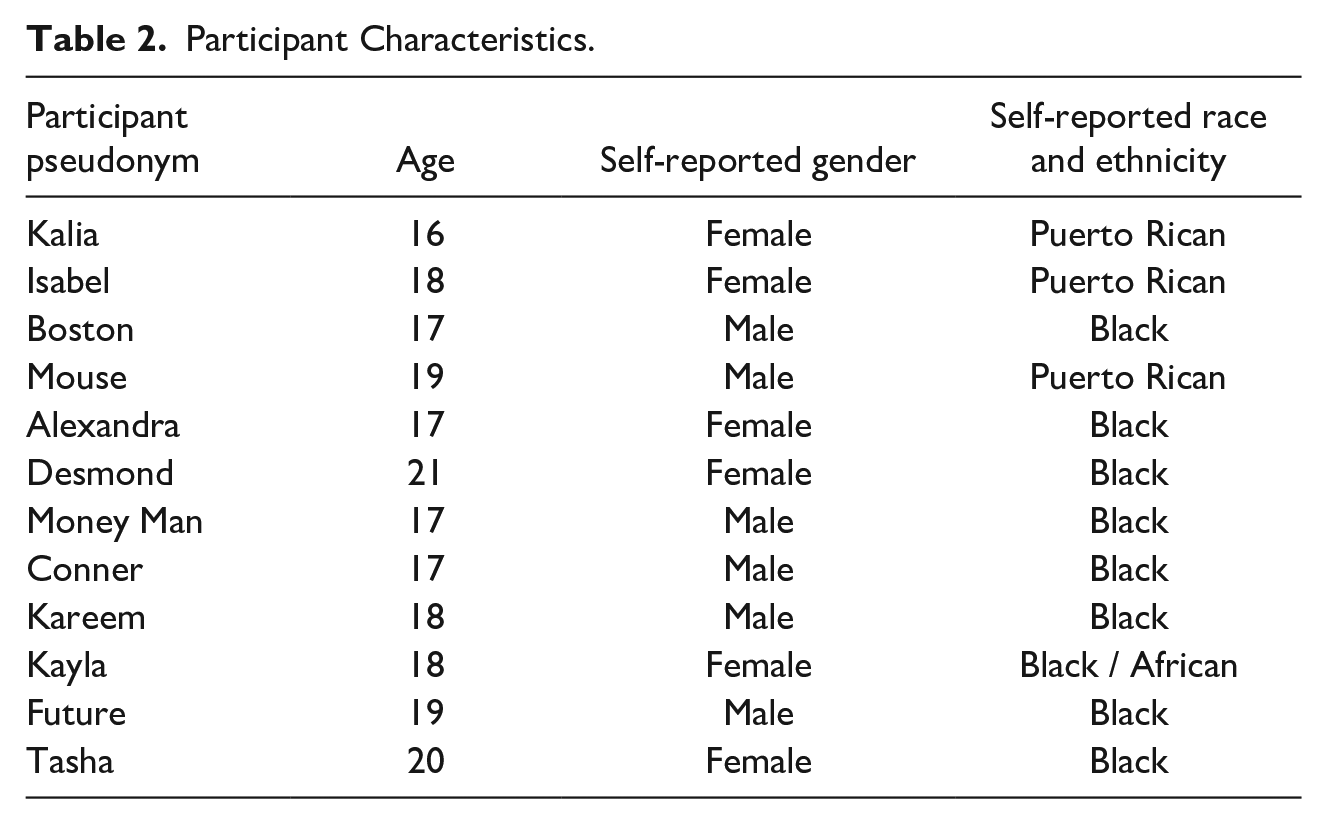
Participants were recruited using a combination of purposive and snowball sampling strategies. Recruitment occurred at both community organization sites. Research staff held information sessions for the study, left flyers at the reception area for both organizations, and provided young people with informational cards that included the project contact information. Eligible young adults were aged 16 to 24 at the time of data collection, resided in Philadelphia, were not under house arrest, and did not have a known pregnancy at the time of the study. In total, twelve young people were recruited for the study; six self-identified as female and six as male, nine identified as Black, and three as Puerto Rican. Five were in traditional education settings while seven were in the process of obtaining their GED. Further, three participants identified as parents. Of the 12 participants, 4 were recruited through snowball sampling where a former participant informed them about the study and gave them the project details and contact information. Table 2 provides more information for each participant, including their self-selected pseudonym and age.
Participant Characteristics.
Data Collection and Analysis
The data collection methods for this study included multiple forms of structured and unstructured interviewing and field observations in neighborhoods and at the recruitment sites. (Note. This work is part of a larger study that included the collection of biometric and geographic data. For a detailed methodology see Flynn et al., 2020). On average, participants were interviewed seven times. This included a semi-structured baseline interview capturing demographic data and their perceptions of their neighborhoods; four unstructured daily overview interviews; a family history interview capturing the ways in which multiple forms of violence impacted their families; walking interviews during which the participant would walk the research staff through a space of import to them; and, when possible, a member check interview. In total, 85 interviews and over 100 hours of fieldwork were conducted over the course of 1 year.
The procedures for this study were approved by an Institutional Review Board (IRB) and adhered to the guidelines for protection of human subjects. Informed consent was provided by participants who were over 18; those under 18 provided assent and consent was given by their parents or state-appointed guardians. To protect confidentiality, all participants selected a pseudonym at the onset of the study. Participants received a total remuneration of US $60 for their participation, dispersed in US $20 amounts incrementally during data collection. This amount was determined through conversations with the Institutional Review Board and discussions with departmental faculty members.
To increase trustworthiness, the research staff utilized various memos throughout the study, including reflexivity memos, where they critically engaged with aspects of identity and the impact on data collection and analysis; analytic memos, processing themes and integrating theory throughout data collection and analysis; and process memos, documenting methodological and analytical decisions. Trustworthiness and rigor were further buttressed through the use of multiple methodologies and integrated data collection.
Reflexivity and Positionality
Reflexivity is central to the qualitative research process, when incorporated throughout the methodology it allows researchers to examine their positionality, biases, and assumptions in relation to the research. The study presented here was a part of the main author’s dissertation work. As a white, cis-gender female and Philadelphia native, the main author built reflexivity into the design of the study from data collection through analysis, through identity and reflexivity memos and worked with community partners to talk through themes. Working with community partners in this way also allowed the findings to be shared in real-time, which in turn resulted in them responding to emerging needs through programming and organizing workshops led by community leaders. Further, as a social work practitioner and scholar, the main author’s knowledge of the impact of environment on development and experience working with adolescents and young adults informed the data collection and analysis process.
Data Analysis
Data analysis was iterative and began at the onset of the project through memoing. Interview data and field notes were analyzed using Braun and Clarke’s (2006) approach to thematic analysis. This approach includes immersion in the data, inductively generating codes, searching for themes, refining themes through thematic mapping, and defining each theme. Table 3 illustrates how each stage of thematic analysis was completed during the study.
Stages of Thematic Analysis.
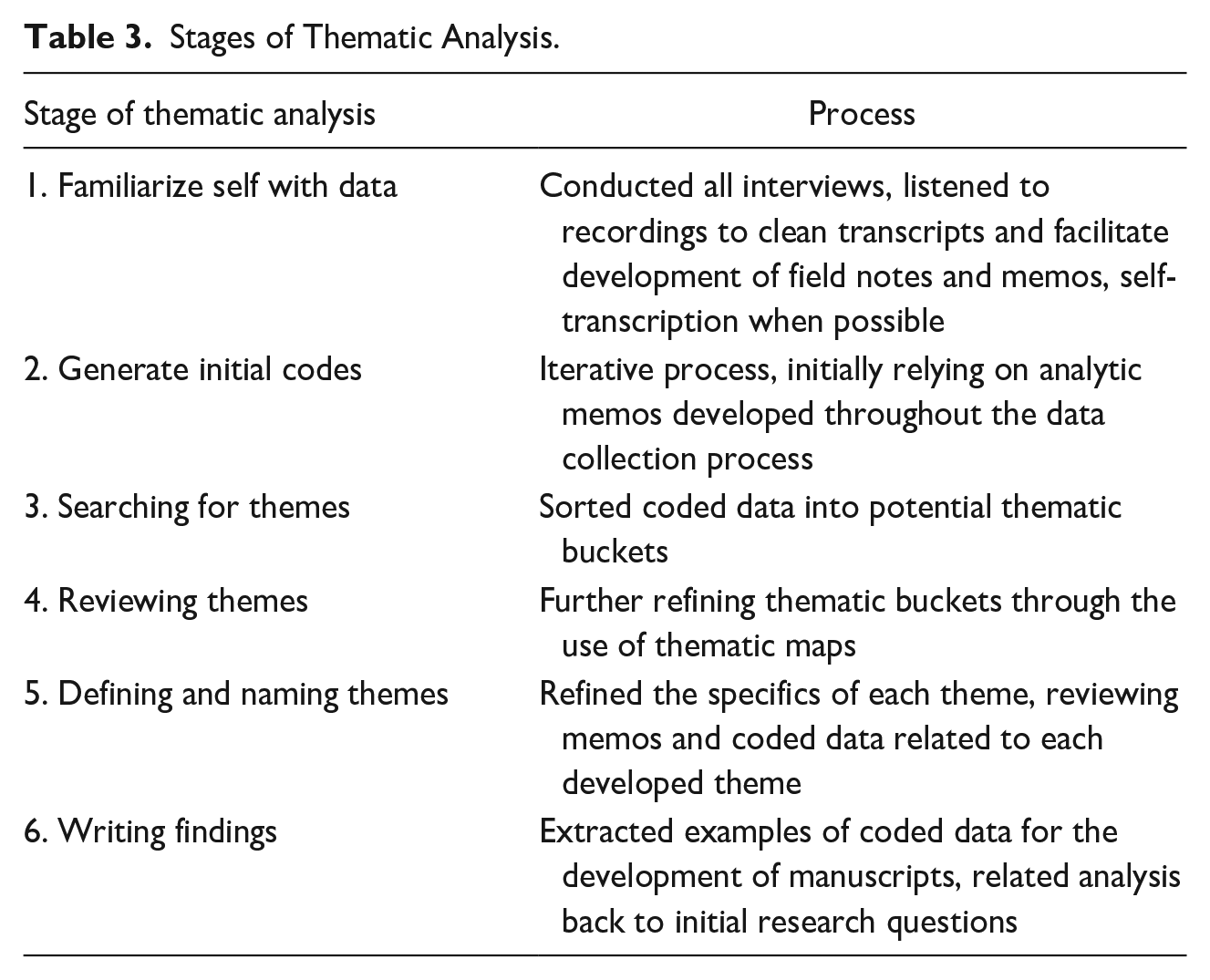
To become familiar with the data, the main author conducted every interview, listened to the recording directly after to facilitate the development of field notes and memos, and, in many cases, transcribed the data herself. When interviews were transcribed by an external transcriptionist, the main author listened to the recording and cleaned the transcript. The main author also kept a field notebook in which they jotted initial thoughts and ideas about interviews and tracked the development of the study as it progressed. Codes were generated through an iterative process, initially relying heavily on analytic memos (Miles et al., 2013; Saldana, 2016). Interview transcripts, field notes, and memos were first analyzed by each participant, then across participants to understand how themes emerged and connected across the data. Codes were then collated into a thematic bucket and were refined through the creation of thematic maps. Violence emerged as a main thematic bucket, under which types of violence—interpersonal, structural, and symbolic—were further refined.
Findings
Through the findings presented below, we will illustrate how urban young adults experience multiple forms of violence. Findings will be presented as quotes from interviews as well as descriptive narrative drawing from field notes and memos. Data from field notes and memos will be more prominent in the sections describing structural and symbolic violence as these forms are less tangible than interpersonal violence. Findings are organized by violence type as well as how they are situated within Bronfenbrenner’s EST (micro, meso, macro, and exo) and each quote denotes the interview from which it is drawn.
Interpersonal Violence
Accounts of young adults experiencing interpersonal violence were present across multiple contexts, including neighborhoods, schools, and in the home. These findings suggest that interpersonal violence was the most pervasive violence type, appearing across the micro and meso systems. Importantly, violence inside the home only came through in an interpersonal form, and only for female participants, emphasizing how prevalent this type of violence is within the micro system.
Interpersonal Violence at the Micro System
At the micro level, youth described interpersonal violence in neighborhoods and at home through firsthand accounts of observing or being the victim of physical or sexual abuse. To illustrate how she felt in her neighborhood, Tasha used a personal account of gun violence to depict the prevalence of such violence in her neighborhood and its impact on the residents: One of my friends, her mom, she got killed through her window. She was sitting. . .. She had her couch facing the window. . . A bullet came through her house and shot her in her head. Yep. That’s the neighborhood I live in. (Baseline Interview)
Tasha used this incident, among others, to illustrate how the commonality of gun violence in her current neighborhood meant that residents did not feel safe, not only while walking in the neighborhood, but also while in their homes. While Tasha had lived in neighborhoods all over the city, the one in which she resided at the time of the study had some of the highest rates of violent crime, including shootings and assaults. She often talked about how unsafe she felt walking in her neighborhood, and as a parent, how this then limited what she could do with her children, “the parks are full of empty needles and bullets.” Other youth similarly described the commonality of interpersonal violence in their neighborhoods: It’s been a lot of shooting, a lot of kids going missing, a lot of fights. I can’t say I don’t feel safe, sometimes I doubt myself like, ‘Do I wanna live here or do I don’t wanna live here?’ The violence needs to stop. Too many people die, sometimes in one day, sometimes the next day. (Desmond, Baseline Interview)
Like Desmond, other participants spoke about the nuances of safety within their neighborhoods and as they traversed the city. Some, like Conner and Future, would only take public transit at certain hours so as to avoid confrontations; choosing instead to walk long distances along routes they deemed safer. Others discussed witnessing interpersonal violence on subways and buses. In thinking about safety and public transit, Boston reflected on the first time he witnessed someone get shot as he discussed his decision to join the armed forces and his worry about the toll of witnessing violence on a larger scale: I didn’t know what was going on. I just remember all I heard was like (hits table repeatedly with hands), my friend was running. (laughs) I saw he was running so I got up and I ran too. And I saw like the shells fly out the gun and all that and seen the flash. And I saw the guy. The guy, he fell, of course he was down. It was random because I’m pretty sure they were just talking at first and everyone thought they were all cool, and then he just started shooting. So, it was the first time. Gotta get used to it though. (Boston, Baseline Interview)
Also at the micro level, within the home, female participants talked about violence occurring in their familial homes and within state-sanctioned placements. Here, interpersonal violence took the form of emotional abuse within families, sexual abuse, and witnessing intimate partner violence. Tasha described witnessing her mother’s experience with abuse from multiple partners throughout her childhood. Here she describes an incident that occurred when she was 9 years old: If I wasn’t there, she would have been out the window. She was pregnant with my little sister, and she had his daughter on her hip. He didn’t care. He was about to knock all of them out the window. I saved my little sister. . .. That’s what I’m saying: I had to defend her. I hit him upside the head with a glass bottle. It broke on his head. That’s why he stopped. It was the last that he ever abused her, the last day he ever came back. I made sure that the police was called and my family was called. I made sure that bottle was in his head, so he wouldn’t be able to get up. (Baseline Interview)
In addition to witnessing intimate partner violence in the home, Tasha, along with Desmond and Kalia, were victims of sexual abuse during their childhood. Each participant handled this in different ways; Tasha did not seek help, feeling like she did not have an adult she could trust and Kalia vowed to never speak of it again, declining to discuss the abuse in our interviews other than alluding to impacts stemming from it. Desmond, who was 4 years old when she was first abused, was placed in the child welfare system and remained in placement until aging out and reuniting with her family. Desmond spoke about the myriad of sexual abuse she experienced throughout her childhood: I got molested three times in my life. One by my brother’s godfather. One by my own uncle. And when I was in placement, some man used to box me in the shower and he used to touch me. It destroyed me when I got older. I used to have flashbacks and stuff. . .He [her brother’s godfather] damaged me the most. He did things that he should never do and that went on for years. I was sick and tired of it and I just screamed at the top of the step one day, I was angry. He did it to so many people. I don’t know why they let him out. He kept doing the same thing. Court system is so f***d up. (Family History Interview)
Desmond then reflected on the overall impact she felt experiencing this abuse had on her: It made me smarter. It made me love myself more and not give myself to a lot of people that don’t deserve me. It made me see the world different. How this world is crazy and crazy people in it. It just humbled me. It just changed my whole life. It inspired me. It did a lot of things to me. So much. (Family History Interview)
Tasha was victimized by her cousin after he was invited by her mother to live with them. Her cousin would use food as a lure for Tasha, as food was scarce in her home growing up. He used guilt and shame to manipulate her, ultimately leading to an unhealthy relationship with food that Tasha continues to battle. Tasha spoke about feeling alone while struggling with the impacts of this abuse: He was, like, 20 something. I was 8 or 7. So yeah, that’s what a lot of things happened from. And I always told her [Tasha’s mother] it was her fault. Seven years old, what could I do? She was outside partying and having fun while I was getting touched. So yeah, I feel like that was her fault. I didn’t tell her until years later. I didn’t want to talk to her about it. I felt like she didn’t care. Why tell somebody something they don’t care about? And my dad was in and out of prison, so there was really nobody I could talk to. . .I had nobody to talk to, really. (Baseline Interview)
Interpersonal Violence at the Meso System
At the meso level within the systems surrounding and interacting with youth, interpersonal violence occurred in school and often took the form of fighting—either participating in fights or witnessing violent fights. Many of the participants were either attending public schools at the time of the study or had dropped out of public schools and were working on their GED. Four of the twelve participants were attending a private or charter school at the time of data collection, mostly due to their parents’ concerns about violence within their schools. Here, Kalia describes the dangerous rivalry between her private school and the local public school: But there is a rivalry with the public school. Every time the public school comes to our let out [dismissal], there are cops. It’s just a whole big thing because like two years back a lot of students from the public school came and jumped students from our school, like randomly. They didn’t even know them and they just jumped them. And so, the public school students aren’t allowed there. Even for sports, when we play them no students can come or nothing. They just play the game, and it be intense too, it be intense because nobody likes each other, they be ready to fight all the time. (Daily Overview 2)
While most participants spoke about witnessing physical altercations in school, two were expelled and arrested for fights, thus entering the justice system through the education system. Here, Money Man describes the incident that caused his expulsion and resulted in adjudication:
I really had a bad day at school already because my teacher already had made me mad, and he just wanna keep playing, so I blacked out and just started punching on him. I ain’t mean for it to go that far, but he just kept playing too much. . .The next day he had ratted on me. Everybody in the school was cool with me so they was tryna touch him, so we had a meeting to squash it and all that, so my whole thing was I was gon’ beat him up again after school, but I said I’m just gonna calm down, chill. . . I had got suspended because someone had showed the principal the video and he kicked me out. (Baseline Interview)
After spending some months in a detention center, Money Man had tried to transfer schools, but he would have had to start in the ninth grade instead of picking up in the eleventh grade. He decided to pursue his GED instead because his probation officer told him it was “the same as” a high school diploma and would be quicker than high school.
From the lived experiences of the study participants, it becomes clear that interpersonal violence is pervasive, and impacts overall well-being through a connectedness to structural forms of violence. For example, fighting in school goes against the policies set forth by the School District. Opportunities are lost for youth who fight in these spaces, as can be seen with Money Man who entered into the justice system (a form of structural violence in and of itself) as a result of his engagement with interpersonal violence at school.
Structural Violence
Structural violence typically appeared in the meso and macro systems surrounding and interacting with youth and their development. Descriptions of structural violence emerged as feelings of hopelessness in response to interpersonal violence, the failure of the city to equitably distribute resources and investments, and through frustration regarding disparate access to opportunities such as education.
Structural Violence at the Meso System
Within the neighborhood context, structural violence was represented by lack of resources, such as recreational programs, and by historical policies that have resulted in racial and class-based segregation throughout the city, such as redlining. Most participants expressed that they could not believe the mayor or other policymakers thought about their neighborhood given the lack of overall resources and the disinvestments they saw daily. On the walking interviews, many youth would direct the main author to bear witness to the abandoned homes lining their streets or, conversely, the construction meant to bring higher income residents to the neighborhood, both serving as signs of disinvestments in them and their neighbors. The examples below highlight participants’ perceptions of power and societal hierarchies, and as such are placed within the mesosystem. During our member check interview, Kalia spoke to feeling as though policymakers did not care about her neighborhood:
There’s still a lot of changes that need to be made, like a lot of stuff is still bad. And a lot of times I feel like certain changes they’re making, they don’t necessarily help us, they’re just trying to. . .like the whole building new houses and making it a white people neighborhood and making it more expensive. That doesn’t help us. Like how does that help anyone? You’re just making everything more expensive. I feel like they’re just trying to make everything look nice but they don’t really care. People need to care.
Participants also described losing friends and family to neighborhood violence, and how this sense of loss has impacted their view of life in their neighborhoods. Some related this to a larger grief linked to the stark loss of Black lives due to gun violence across the city. For example, Conner noted that for his Black friends and neighbors, loss of life was such a prominent occurrence they reacted by either trying to “make it better” through activism, or by feeling powerless against it. The collective experience of this grief and loss, along with historical policies and current disinvestments that keep primarily Black and Brown communities in poverty and at heightened risk of gun violence are indicators of structural violence. Below, Kareem connects this loss of life to structural violence present in his neighborhood, the lack of community resources: Somebody just told me yesterday, this guy that works at the funeral home, he said, ‘Every week he buries a young kid from getting killed.’ Because ain’t nothing for these young kids out here to do. They got to stay doing something. You know what I’m saying? Him telling me that he buried 18 year-old, 17,16-year-olds every week that can be me. Or that can be somebody I know. You know what I mean? (Baseline Interview)
Structural Violence at the Macro System
Structural violence in schools appeared in the ways resources were distributed for public education across the city, and through the language used when referencing General Education Diploma (GED) programs. Our study participants also spoke about structural violence in schools in the ways they felt people in power in the city viewed their neighborhood.
For example, Tasha talked about her decision to stop attending school in the ninth grade as stemming from feeling disillusioned with her teachers and how she felt perceived by those in power with her schools. She described feeling “sad all the time” during her early education and felt like her teachers assumed she was “stupid or didn’t care about school” when she started being truant—she recognized this behavior as a call for help, starting when her cousin began abusing her. She explained that as she got older, she became angrier with the education system, particularly with her teachers, feeling like they did not care about her well-being, not one throughout her education inquired about what was happening at home or how she was feeling. She recalled being cursed at and called stupid by teachers as she reached high school: They cursed at us. They treated us like we was stupid and they knew it. Like, “Y’all stupid. We know y’all stupid. We not going teach y’all. Y’all wasting time, we not gonna waste our time so we gonna talk to you any type of way, we’re going to curse at y’all.” (Walking Interview)
Kareem also stopped traditional schooling early, leaving in the 10th grade due to disruptions from moving. His mother homeschooled him until he was accepted into the Job Corps—a residential job training program designed to provide young people aged 16 to 24 education and career development support. He was dismissed due to fighting and began working on his GED to “get back on track”. Here he describes the incident that led to his dismissal from the Job Corps: I was actually going to Job Corps before I came out here. I got into a little situation and they terminated me. Actually they sent me back to Philadelphia. I was in the south. I was going for welding. Hands on training and stuff like that. . .I was doing forklift driving. I was still studying for my CDL’s but it was the people that was there was getting in my way. I really couldn’t really focus like I really wanted to. I got into a situation. They sent me back the same day. They told me the only way I can come back is next year. . .Everybody that came to the Job Corp Center was basically kids that didn’t have anything or have anything set for their lives. It was everything that they knew in the streets, they brung to Job Corp. It was just like, they was just in the way. It was a lot of them. I got in trouble. (Baseline Interview)
Yet another example of structural violence at the macro level was expressed by Kalia as she was frustrated with the city’s decision to close the neighborhood school. Kalia understood that closing this school meant that other schools would be overcrowded when students were relocated, which would then restart the cycle of violence she saw unfolding: You know they’re trying to close it [the public school] down? And I was like where are all the students going to go? You know how many students go to that school? That’s a neighborhood school for so many people. You can’t just take it. You can’t just like close it, like where are all the students gonna go? They’re gonna be packed into a bunch of different schools. It’s just ridiculous. (Daily Overview 2)
Structural violence emerges as the reduction of access to resources enacted upon the study participants through policies. However, at times such as in Kareem’s case, the policies of Job Corps were put into motion as a result of his engagement in interpersonal violence. Thus, to understand the impact of violence on Kareem’s life, requires one to acknowledge that interpersonal (fighting), symbolic (failing to adhere to rules set forth by the dominant cultural group), and structural violence (Job Corps policy) played a hand in his eventual dismissal from the program. Moreover, structural violence can be enacted by representatives of institutions of power, such as in Tasha’s case, or through policy changes such as in Kalia’s situation. Here, we see how teachers utilized their position of power and institutional privilege, to engage in interpersonal verbal violence against Tasha and how school districts implemented policies which would have a negative impact on the achievement of certain young people and not others in the case of Kalia. Moreover, the negative reactions of teachers to Tasha, provide an example of how a dominant culture utilizes power to maintain control over the less advantaged within a particular society. Similar to Kareem, Tasha’s experience represents the interaction of several forms of violence, which eventually led to her dropping out of school completely.
Symbolic Violence
Our study found that symbolic violence most often occurred in the exo and macro systems surrounding and interacting with youth. Within the exo system, youth described their interactions with state entities, including social services. Whereas at the macro system, symbolic violence emerged through rhetoric (i.e., “good” vs. “bad” schools or neighborhoods) and how this rhetoric was internalized by the participation, and how it then impacted larger decisions around investments and policy.
Symbolic Violence at the Exo System
At the exo system, symbolic violence emerged through interactions with social service agencies. While many participants had interactions with various social service agencies, including the juvenile justice system and probation, local welfare organizations and food banks, and the like, the symbolic violence experienced is best exemplified by Tasha’s experience with Philadelphia’s Department of Human Services (DHS).
Tasha became a mother at 17, after spending a year in a juvenile justice placement. When her son was a year old, Tasha took him to spend the day with his father; when her son came home from this visit, he was acting “. . .off, like something was wrong. He wasn’t playing or cooing”, so Tasha brought him to the nearest emergency room. Her son had a fractured skull and spinal fluid in his brain, a lacerated liver, and broken ribs on both sides. He required treatment from 22 specialists. Child Protective Services (CPS) removed her son from her custody and opened a case against her with the Special Victims Unit, and though Tasha tried to explain that the injuries happened while her son was in his father’s care, no charges were brought against him. Tasha cooperated with the investigation and attended parenting classes (both on her own and a course that was court-mandated), yet her case worker testified against her at every hearing. If Tasha called often to check-in on her son her case worker would testify that she was “crazy” or unstable, thus not a suitable parent. If Tasha then held back, her case worker would testify that she was disengaged and, therefore, unfit.
Each court hearing resulted in a change to Tasha’s visitation status from unsupervised to supervised, and back again. “If I don’t do enough, then I’m the abuser. If I do too much, then something’s wrong with me. How am I supposed to act?” A year later, Tasha regained custody of her son only after another child of the father’s suffered similar injuries to her son. Tasha felt the injustice on behalf of the other mother as well: “It’s like we were suffering because of something he did. Nobody talked to him. He’s not going back and forth to court. He’s not getting threatened to get arrested. None of that”.
Tasha internalized this experience, feeling she was a “horrible mother”—“I should have known better than to let the father see him”. This internalization led her to adopt out her second child, born during this investigation because she did not believe herself able to mother. When I met Tasha, she had just given birth to her third child and was struggling with postpartum anxiety, again related to this incident.
Tasha’s experience illustrates the ways in which dominant narratives about Black motherhood, particularly young Black mothers, are internalized by members of marginalized groups rather than recognition of the inherent genderism and racism which undergirds the child welfare system. CPS never formally investigated the father, even though the injuries her son sustained happened under his care. The constant negative testimony of her case worker illustrates both the power these systems have and the embedded nature of symbolic violence within systems.
Symbolic Violence at the Macro System
Symbolic violence appeared more subtly in the ways in which youth understood their neighborhoods and schools to be “good” or “bad”, as well as how policy decisions and the signals of gentrification reflected these overall attitudes. For example, Kalia spoke to her fear of the impact gentrification, in particular the large influx of white populations moving to her neighborhood, would have on the community in which she lived. She was nervous about her community’s way of life being threatened because it did not fit within a standard of whiteness, a standard that was communicated in subtle ways: “I think it’s sad, cuz it’s like they [White populations] come in and they’re like changing everything and making everything more expensive and they’re just trying to change how we [Puerto Rican Community] are, like how we live. Remember how I was saying that we’re loud, and we’re all like close to each other, we all just hangout and stuff? And they’re not like that. They’re quiet and they have all their money, you know? So I feel like they’re not only trying to change the neighborhood, they’re just trying to change the way people live.” (Walking interview)
Kalia went on to describe how she noticed subtle changes at first, greek yogurt at the bodegas, her and her friends being forced to surrender backpacks before buying snacks, and the subway stop being patrolled by transit police. Later, within the same interview, Kalia talked about how she views whiteness and power as intertwined: “Even if you’re not in a position of power, like just being white, people see your perspective as something that they should follow. Or like, say if you say or think of something in a certain way they think I have to believe that too.” In naming these processes and their impacts on her community, Kalia identified how symbolic violence manifests through gentrification, and at a more macro level, through whiteness.
Youth described symbolic violence in their schools as well as the steps schools took to mitigate this violence. For some, this violence resulted in them entering the justice system: for others, it impacted their understanding of school as a “safe” space. Symbolic violence, typically more nuanced, is apparent in the rhetoric used to denote a “good” school versus a “bad’ school, and through the internalization of these concepts by participants. Some participants talked about the difference they saw between the schools they attended versus other schools in the neighborhood. For example, Kalia described the difference between her charter school and the neighborhood’s public school, describing the neighborhood school as “ratchet” and violent.
Participants shared how the environment of their neighborhoods and schools felt like a reflection of their value to society. Like Desmond and Kayla, many felt like they were trapped in their neighborhoods, trapped in a cycle of poverty that was beyond them or their parent’s control. Others talked about the subtle signals they received, like walking into a school with metal detectors and school police, which made them feel as though they were expected to act offensively. Such feelings were particularly salient for youth who had experiences with schools in multiple neighborhoods and/or with varying resources.
For example, Mouse first attended a public high school in an affluent neighborhood, where his aunt lived, and then transferred to a public high school closer to his mom in an under-resourced neighborhood. While at his first high school, he was greeted everyday by his teachers, who lined the hallways outside their classrooms to welcome students, he took piano lessons and enjoyed their athletic facilities, which included a basketball court and pool. He said this was the first time he felt like he could achieve something through schoolwork, the first time his teachers remembered his name and seemed invested in who he became. When we discussed his current school, he said he did not spend any extra time there and tried to minimize his time in the neighborhood surrounding the school. Each day, he walked through a metal detector, had his bag inspected for weapons, and was patted down by the school police officer. He saw fights in the hallway and around the perimeter of the school. His teachers did not know who he was even though he had been with some of them for 2 years. Here, Mouse describes what signifies “bad” schools:
What makes a school a good school?
Good teachers, a good principal.
What makes a school a bad school?
Bad teachers, because the teachers at my school, all they do is just be on their phones and computers and don’t teach us at all. (Daily Overview 4)
From these narratives, we can see more clearly how symbolic violence permeated many facets of the participants’ lives. Young people had interest in attending better funded school, to increase their access to engage in opportunities available at other schools. Moreover, elements of surveillance in schools such as metal detectors, ensured that they knew as urban youth, that they were always being watched by those in power, and that the opportunities they did have available to them, signaled their societal value as a whole. Thus, structural violence provided the eyes and ears for the dominant class and would be deepened if a young person engaged in either rejected the symbolic violence placed upon them or engaged in interpersonal violence in direct opposition to school policy.
Discussion
This study highlights the ways in which multiple forms of violence across contexts impact the development of older adolescents and young adults. An important and unique contribution of this work is the attention to the multitude of violent experiences youth suffer, providing evidence of how each of these forms of violence manifests throughout their daily interactions and experiences, and how each form of violence exists in connection to others (James et al., 2003).
Intersecting Forms of Violence and Development
Drawing from interview and field note data, the findings from this study illuminate how multiple forms of violence manifest by amplifying youth voice and experiences. Importantly, interpersonal violence stands at odds with what is deemed acceptable behavior within mainstream culture. As such, young people who engage in such activities are increasingly isolated from the rest of society. This can be understood as the interaction of interpersonal and symbolic violence, an outcome only occurring through the implementation of structural violence. As noted above, symbolic violence is more subtle than structural or interpersonal violence as it is enacted through internalized power dynamics such that the ideology of the dominant group is normalized and accepted as reality by marginalized groups. Symbolic violence was evident in the experiences of participants, particularly in how they described concepts of “good” and “bad” spaces (e.g., neighborhoods, schools, etc.) and the ways in which they expressed internalizations of these concepts. For example, while discussing her experience with intimate partner violence and sexual trauma, Tasha expressed feeling like she did not have anyone to talk to as those occurrences were happening—neither her home nor her school were safe spaces for her. When prompted about her experience with education, she reflected on how her teachers seemed to assume she was disinterested in learning, or that she was lazy, and did not investigate whether trauma was impacting her school performance. Ultimately, this led to her dropping out of high school in her freshman year as she felt as though she and her education did not matter to the school system. This is an example of symbolic violence enacted first through her teachers’ assumptions of her intent, as a young Black student attending public school in a lower resourced neighborhood; and then through Tasha’s internalization of this messaging, feeling as though she did not matter.
Symbolic violence is directly related to structural violence and can be understood as a precursor to such violence as the policies and practices that uphold structural violence are often created to reinforce power and privileges that benefit the dominant group (James et al., 2003). Symbolic violence is ever-present for the participants, as racism, classism, meritocracy, and larger American views of deservingness are at the forefront of their interactions with systems, social structures, and underpin the policies that govern their daily lives. Structural violence was clearly present in the lived experiences of the participants, as each participant interacted with systems to some degree (i.e., education, child welfare, juvenile justice, etc.). However, structural violence was also represented in broader policies that impacted their lives, such as housing and residential zoning policies. This finding aligns with previous research that suggests that argues ethnopolitical violence is often implemented through policy in the macrosystem (Boxer et al., 2013). On the walking interviews, youth often directed the main author’s attention to the physical aspects of their neighborhood; abandoned and rundown houses as well as construction and development occurring due to gentrification, that represented these broader policies. Moreover, throughout our interviews participants spoke about the lack of resources in their neighborhoods, referencing their schools, a dearth of green space and safe parks, and a lack of recreational opportunities for young people. As reflected in Kalia’s quote regarding policymakers in the city, all participants felt those in power did not care about them or their neighborhoods. By understanding structural violence, we can appreciate its impact on development—by reinforcing systems and structures of power, it constricts the agency of marginalized persons, minimizing the freedom and choices they are able to make (Boxer et al., 2013; James et al., 2003).
In the presence of unequal distribution of resources, structural violence can lead to anger and resentment which can then manifest as interpersonal violence. Interpersonal violence was present in each participant’s narrative, whether through direct exposures, such as perpetrating violence, witnessing shootings or being victim to violence, or indirect exposures, such as hearing about violence experienced by friends and family; and occurred in all contexts in which the participants’ spent time. All participants articulated the high rates of violence in their neighborhood, schools, and in some cases, home, as a problem that led them to be more alert in their everyday lives. This hypervigilance impacted their well-being in a variety of ways: physiologically, overtime this stress could build to larger cardiovascular and other health issues; and emotionally, most participants spoke about feeling anxious, overwhelmed, and, in some cases, depressed. Previous research supports this finding that both interpersonal and structural violence can have indirect effects on individual health (Schaefer et al., 2018; Wright et al., 2017). For example, individuals who have been victims of racist housing policies regularly have more negative health outcomes than those who live in more wealthy neighborhoods (Leventhal & Brooks-Gunn, 2003).
These multiple forms of violence do not occur in isolation from each other; they are constantly interacting and impacting young persons across many contexts, and the effects are heterogeneous and layered. Our findings align with previous work that has posited an interrelated relationship between multiple forms of violence and EST systems (James et al., 2003). The qualitative design of this study allowed the research team to deepen their understanding of the mechanisms through which multiple forms of violence are enacted on young persons. Though discussed separately above, we can see the integrated impact of all three forms of violence on the participants. For example, Kareem’s recounting of his experience with Job Corps blends symbolic, structural, and interpersonal forms of violence. He describes the Job Corps as being a place for young people who “didn’t have anything set” for their lives. When he first talked about Job Corps, he stated that the entire program took place on an old military base, and that there were branches recruiting youth attending Job Corps. He then depicted the physical altercation that led to his dismissal, eventually leading him to a GED program. Here, the symbolic and structural combine, creating a space where marginalized youth are at once learning hard skills while also being recruited for military service. A growing body of research has identified predatory patterns of recruitment implemented by the U.S. military, with a focus on low-income youth of color. As noted by Furumoto (2005), within the Los Angeles Unified School District (one of the largest urban school systems in the nation), the majority of junior military programs (ex: Junior Reserve Officers’ Training Corps) are located in low-income schools with a majority minority student body. The authors argue that through such programs, youth of color are conditioned to military experience, promised world travel and a stable source of income without exploration of alternative career options (Furumoto, 2005). In our study, interpersonal violence festered, ultimately erupting into physical altercation because other youth perceived Kareem as “acting better than them”.
All of the participants in our study experienced multiple forms of violence across the systems that they engaged in throughout their daily lives. What is clear from our analysis, is that the interaction of different forms of violence across systems is complex. Interpersonal violence can occur as a result of frustration stemming from exposure to structural violence, as in the example of Kareem. The negative effects of interpersonal violence within the home and throughout development can intensify the harm of structural or symbolic violence, as in the case of Kalia, as her internalized value to society was attacked both in her macro and micro systems. Structural violence can impact young people’s development in ways that maintains the perpetuation of symbolic violence, such as in the case of Tasha and Mouse who left school early resulting from negative treatment within these institutions. Finally, structural violence can operate as a tool of oppression to perpetuate the cycle of symbolic violence, as can be seen in Kayla’s case, where gentrification perpetuated the glorified narrative of upper-middle class and often white neighborhoods over lower-income spaces of color.
Adapting Bronfenbrenner’s Ecological Systems Theory
The interrelated nature of symbolic, structural, and interpersonal violence necessitates an adaption of Bronfenbrenner’s (1977, 1979, 1986, 1999) Ecological Systems Theory to incorporate the forms of violence. The figure below offers a version of this adaptation based on the findings of this study including the forms of violence as well as neighborhood conditions within the exosystem. This conceptual framework can serve to aid scholarship investigating the impact of multiple forms of violence on development.
Implications
The application of EST illuminates how violence emerges across the multi-level systems in which young adults engage. Rather than attempting to study violence in singular forms, our modified model of EST acknowledges the interaction of these systems. Framing multiple forms of violence within EST is useful for several reasons. First, doing so helps clinicians, social workers, and policy makers understand how youth are impacted by violence in myriad ways, expanding how society understands and addresses this social problem. This adapted model not only illustrates how multiple forms of violence impact development, but also shows how restricting the definition of violence to interpersonal, physical acts limits the impact of developed interventions and policies. As violence is often defined as interpersonal, preventative measures are reaching the microsystem, and perhaps at times the mesosystem, but are leaving the exosystem (structural), and macrosystem (symbolic) unaddressed. Thus, the knowledge gained from framing violence within a multidimensional perspective, can lead to increasingly holistic and comprehensive interventions, addressing not only individual level factors related to violence and the associated impacts, but also structural (such as policies and socioeconomic opportunities).
The findings from this work highlight the need for policymakers to be more thoughtful about the ways in which policies reinforce symbolic violence through rhetoric and structural violence through patterns of investment (or lack thereof) in neighborhoods. Until social and legislative structures are put into place which eliminate the invisible control of the elite, marginalized groups will continue to fall victim to violence across symbolic, structural, and interpersonal forms. In terms of practice, this study brings attention to the importance of interrogating violence beyond the interpersonal. Although there are times when the immediate threat of interpersonal, physical violence merits immediate intervention, this should not be at the cost of thinking about the impacts of symbolic and structural violence on individuals. Forms of violence are not siloed, and as such policies and programs aimed at violence prevention need to target all forms of violence across contexts and systems. Additionally, the EST provides a lens for understanding the interaction between multiple systems, specifically as they relate to youth development and various forms of violence. For example, youth exposed to violence at the interpersonal level may also be more at risk for experiencing structural and/or symbolic violence within their surrounding community and society as a whole.
Lastly, our EST model encourages the development of interventions with the goal of reducing violence at multiple levels, not just the interpersonal. As such, policies need to be developed which respond to issues such as inequality in access to education, housing, income, and social services if the holistic impact of violence is to be reduced in a sustainable way.
Future Research
Future work is needed to examine the ways in which the landscape of violence (i.e., how violence manifests) may be different, as this may influence how forms of violence manifest. Applying our modified form of EST to empirical research will provide a new lens for understanding young adult development across vastly different contexts, particularly as it relates to the impact of violence. Take, for example, investigating how multiple forms of violence appear and occur in rural versus urban spaces. In some cities, gang-related violence may restrict movement to firm boundaries and have substantial impacts on how youth conceptualize space and neighborhood, in addition to how they experience multiple forms of violence. In rural areas, this type of violence may have significantly different impacts, such as restricting what types of economic opportunities are available to young adults in lieu of geographic mobility. Moreover, considering the importance of racial and gender identities, and positionality overall, for this study, future work should explore these themes more purposefully. For example, recruiting more youth from neighborhoods with a variety of socio-economic and racial demographics would expand the scope of the study and aid in the development of a theory of the impact of multiple forms of violence on young adults. Importantly, future research should continue to consider how multiple forms of violence impact development.
Limitations
Though this study adds to the study of violence and violence theorization, it was not without limitations. While this study presented views from a range of young adults, it lacks generalizability due to a small sample size. However, the authors believe the theoretical framing and themes presented would be transferable to other contexts though the ways in which violence manifests may differ. Additionally, the findings themselves may not represent the full array of youth experience, as the sample was acquired through self-selection procedures. There may be some characteristics of the youth that agreed to participate that set their experiences apart from their peers. Thus, a possible limitation of this work is limited internal validity stemming from selection bias. Future work in this area should seek to diversify the participant sample and, furthermore, engage in increasingly randomized approaches to selection. Doing so will strengthen both the internal and external validity of the current study, while also providing an increasingly representative sample to assess the reliability of the presented findings. Regardless of these limitations, the current study provides a useful starting point for researchers interested in understanding the overlapping and complex experiences of youth and their interactions with various systems of violence.
Conclusion
By examining multiple forms of violence through an Ecological Systems Theory (Bronfenbrenner, 1977, 1979, 1986, 1999) framework, we illustrated how multiple forms of violence integrate across systems to impact urban youth development. We used ethnographic methods to develop a deep understanding of how urban young adults experience violence in their daily lives. Through these narratives, we saw how violence emerges in different forms, and across systems, impacting urban youth in myriad ways. As such, we argue that an adaptation to the Ecological Systems Theory is warranted and present a modified framework which incorporates these complex intersections of space, people, policy, and culture. Importantly, this study adds to the current body of violence research, by complicating the ways in which we understand violence in communities. We are hopeful that the findings from this work can support the efforts of residents, practitioners, and policy makers who work to stem the negative effects of violence in their neighborhoods.
Footnotes
Declaration of Conflicting Interests
The author(s) declared no potential conflicts of interest with respect to the research, authorship, and/or publication of this article.
Funding
The author(s) received no financial support for the research, authorship, and/or publication of this article.
