




Abstract
Interpersonal relationships are central to adolescent well-being. The current research investigates interpersonal goal setting among a general sample of adolescents following a growth mindset intervention. This study qualitatively explores what interpersonal goals adolescents set, outcomes they aim to achieve, obstacles they perceive, and actions to overcome the obstacles during the mental contrasting and the implementation intentions goal setting task (MCII). Participants included 217 grade 9 and 12 students (63.13% White/European). One content and three thematic analyses were conducted on adolescent responses to the MCII. Participants largely set goals related to improving the quantity and quality of their friendships. The ultimate ideal outcome of goal achievement was an improved emotional state. Obstacles were both internal (e.g., characteristics) or external (e.g., others) in nature. Actions identified to overcome the obstacle were either active or passive with passive approaches exhibiting lack of congruence with intervention content. Findings contribute to the empirical understanding of adolescent interpersonal goal setting and provide researchers/practitioners a rich resource of youth experiences to draw on when considering goal setting interventions. A better understanding of adolescents’ lived experiences setting goals also stands to benefit those who seek to aid youth in improving well-being.
Keywords
Introduction
The mental health and well-being of adolescents is of great societal concern (Murphy et al., 2015) and the concern is only growing given rising rates of psychopathology during this phase of development (Marques de Miranda et al., 2020). Even among youth not experiencing psychopathology or distress, a large proportion of youth report low levels of mental health and well-being (Government of Canada, 2019; Statistics Canada, 2020). Adolescence is characterized by numerous important transitions (e.g., in schooling, dating relations, identity exploration). Such transitions can be associated with risk. For example, clinically significant levels of depressive symptoms increased by approximately 39% in adolescents making the transition into high school (Merikangas et al., 2010; Miu & Yeager, 2015). Thus, adolescence is an important developmental stage in which to apply strategies and interventions that can target the reduction of psychopathology (e.g., depressive symptoms) as well as the promotion of well-being (e.g., life satisfaction and happiness).
Interpersonal relationships play a vital role in the welfare of adolescents and are one important domain adolescents may leverage to potentially dampen their ill-being and also potentially bolster well-being (Luo et al., 2017; Ye & Ye, 2020; Zhang et al., 2015). Indeed, evidence suggests that interpersonal relationships have a mitigating effect on depressive symptoms in adolescence with perceived social supports acting as a potential mediating factor (Luo et al., 2017). Adolescents themselves are generally fairly preoccupied with their interpersonal landscape, particularly with respect to peer relationships (Ellis et al., 1981; Harris, 1998, 2000). Yet, the benefits of interpersonal goal setting are often viewed as the tangible outcomes of goal achievement (e.g., formed a new friendship) as opposed to viewing “the goal-setting process itself as a means to enhance cognitive and social development” (Scarborough et al., 2010, p. 276). Qualitative inquiry exploring the interpersonal goal setting process stands to bolster understanding of this crucial domain relevant to well-being with applied implications for prevention and intervention strategies aimed at this important developmental phase.
Adolescent Interpersonal Development
The importance of peer relationships during adolescence cannot be overstated (Harris, 1998, 2000). Across childhood, youth spend more and more time with peers (i.e., social = Ellis et al., 1981) and spend the most time with peers than any other agent of socialization by early adolescence (Larson & Richards, 1991). Marion et al. (2013) concluded that “the correlates of friendship during adolescence vary, depending on the characteristics of the friend, the quality of the relationship, and the outcome domain” (p. 1304). Consequently, merely having interpersonal contact is insufficient; rather, the quality of peer relationships has myriad impacts on positive adolescent development (Shaffer et al., 2013). Further, peer rejection in childhood is strongly associated with psychological difficulties and antisocial behavior later in life (Ladd & Troop-Gordon, 2003; Parker & Asher, 1987). Younger and Daniels (1992) suggest that a child’s beliefs regarding socializing can hamper the development of positive peer relations.
Youth who seek to “shift” their social landscape are implicitly or explicitly engaging in an interpersonal goal setting process (e.g., consideration of aligning with a new social group or making a new friend). The goal setting process can additionally provide an opportunity to develop executive functioning, sociocognitive skills, interpersonal skills, and self-efficacy during adolescence that may have implications for well-being and establish patterns that can be maintained throughout the life span (Scarborough et al., 2010). Consequently, interpersonal strategies and goals are also inherent to many interventions with adolescents (e.g., Social Emotional Learning in school settings, “social skills” modules in Cognitive Behavior Therapy, and Growth Mindset of Personality programs). Given the research indicating that difficulties in socialization may stem from mindset and anxiety (Younger & Daniels, 1992), the potential benefits of aiding adolescent interpersonal relationships (Ladd & Troop-Gordon, 2003; Parker & Asher, 1987; Parker et al., 1995; Ye & Ye, 2020), and recommendations for intervention implementation in the general population of adolescents (Pettit et al., 1988), the current research investigates the interpersonal relationship goal setting process among a general sample of adolescents participating in a growth mindset intervention.
Interpersonal Goal Setting
To date, researchers have sought to examine what goals youth set (Cairns et al., 2015) and social goals during adolescence (Roseth et al., 2008; Trucco et al., 2014). Cairns et al. (2015) found that in a sample of youth seeking mental health treatment, participants most commonly set the goal of improving interpersonal relationships. Previous literature indicates an increased desire for status and intimacy over the course of adolescence (Trucco et al., 2014). As such, there is a need for further research exploring what interpersonal goals are set by adolescents, why they seek to pursue these goals, and what are the perceived barriers to goal achievement. Given that social goals are relevant to all adolescents, there is a need to consider these questions in the general population (vs. those seeking treatment). Qualitative analysis focused on the goal setting process would deepen understanding of how adolescents engage with interpersonal goal setting and thus further inform research on this important aspect of development while also providing knowledge to fuel more tailored and evidence-based goal setting intervention and application.
The process of goal setting: Mental contrasting and implementation intentions
A broader literature on the process of goal setting informs the current investigation. From a theoretical stance, several goal related strategies have been highlighted with respect to their impact on goal attainment more broadly, including indulging, dwelling, mental contrasting, and implementation intentions (Oettingen & Schwörer, 2013). Indulging consists of fantasizing about the outcome of a desired goal, while dwelling refers to a focus on the obstacles preventing goal achievement. While neither of these methods are effective independently, mental contrasting combines indulgence and dwelling by picturing the ideal outcome of goal achievement and considering the obstacles that may get in the way. By setting implementation intentions, an individual creates an “if. . . then. . .” plan for overcoming obstacles. While multiple studies have established the benefits of either mental contrasting or implementation intentions used separately (Gollwitzer, 1999; Gollwitzer & Sheeran, 2006; Oettingen, 2012), more recent research has demonstrated the greatest benefit on goal attainment from using mental contrasting and implementation intentions (MCII) jointly (Adriaanse et al., 2010; Kirk et al., 2013). Benefits of the MCII approach with adolescents have been associated with increased report card grades (Duckworth et al., 2013), goal directed behavior (Duckworth et al., 2011), and benefits in romantic relationships (Houssais et al., 2013). Given the developmental centrality of interpersonal relationships in adolescence, Houssais et al. (2013) discussed the need for future research to utilize the MCII with interpersonal relationships more broadly (vs. romantic relationships in particular). The current study explores adolescents engaging with the MCII interpersonal goal setting process to further illuminate this important developmental domain as well as garner understanding of interpersonal goal setting’s relevance for interventions, including those that focus on growth mindset.
Interpersonal Goal Setting Within an Intervention: Growth Mindset
Goal setting is a key aspect of many growth mindset interventions (Burnette et al., 2018), and thus, such interventions provide an optimal way to examine an interpersonal goal setting process in adolescence. Growth mindset (also referred to as malleable intelligence or incremental theory) is the belief that abilities are changeable and develop with effort (Dweck, 1999). In contrast, a fixed mindset (also referred to as entity theory) is the belief that one’s abilities are set at birth and unable to be changed (Dweck, 1999). Youth who hold a fixed mindset tend to demonstrate more prominent mental health problems than those with a growth mindset (Schleider et al., 2015). Growth mindset interventions have been shown to effectively increase adoption of a growth mindset and related benefits to well-being (Burnette et al., 2020; Miu & Yeager, 2015; Yeager, Miu et al., 2013; Yeager, Trzesniewski et al., 2013).
While the origins of growth mindset research focused on the academic domain and malleability of intelligence, further studies have examined the incremental theory of personality and its impacts on interpersonal outcomes and adolescents’ emotional state (Burnette et al., 2020; Miu & Yeager, 2015; Yeager, Miu et al., 2013; Yeager, Trzesniewski et al., 2013). The incremental theory of personality discusses growth mindset in the context of interpersonally relevant personality characteristics. In samples without any experimental manipulation of mindset, holding an incremental theory of personality predicted decreased hostile attributional biases (Yeager, Miu et al., 2013) as well as decreased psychological distress, increased treatment value (i.e., treatment seeking and adherence behaviors), and increased active coping (Burnette et al., 2020). Interventions in this domain utilize all the same methods of interventions focused on malleable intelligence (i.e., reviewing existing research, showing role models, and providing opportunities for application) to accrue the associated interpersonally relevant benefits. Growth mindset interventions focused on the adoption of an incremental theory of personality have been found to be associated with many benefits for adolescents, including decreased depressive symptoms (Miu & Yeager, 2015), aggression (Yeager, Trzesniewski et al., 2013), and hostile attributions (Yeager, Miu et al., 2013).
Mindset is theorized to crystallize when one is dealing with hardship (Dweck, 1999); consequently, adversity provides an opportunity to apply mindset principles. Given the normative adversity/hardship associated with transitions, transitionary periods (i.e., the transition in and out of secondary school) were considered to provide an ideal window in which to study the impacts of growth mindset interventions. Thus, the current study relies on a sample of 9th and 12th grade students.
Goal setting processes are often employed in growth mindset interventions without a grounding in the existing literature on goal setting, nor consideration for how participants are engaging with the goal setting process. Growth mindset interventions focused on the interpersonal domain may provide a particularly powerful context in which to examine the interpersonally relevant goals youth set, the process of goal setting, and potential relations to youth well-being. Thus, the current study takes a fine-grained approach to considering the interpersonal goal setting process within the context of a growth mindset intervention.
The Present Study
The present study details an intensive supplementary analysis of a previously collected randomized control trial on a growth mindset intervention with adolescents. Rather than the efficacy of the intervention, the current research questions are focused on the goal setting procedure used within a growth mindset of personality intervention. The aim is to gain a nuanced understanding of the process of adolescent interpersonal goal setting within the context of a growth mindset intervention.
While quantitative research has underscored potential value in interpersonal goal setting/MCII in the context of growth mindset interventions, there has been a lack of consideration for (1) the goals youth set, (2) why youth choose to pursue certain goals, (3) perceived obstacles to goal achievement, and (4) identified actions to overcome said obstacles. Qualitative inquiry is ideally suited for capturing this level of variability and nuance pertinent to interpersonally relevant goal setting in adolescence. Determining which interpersonal goals are of the highest priority, why youth value these goals, and identifying common obstacles would contribute to a more nuanced understanding of this important process in adolescent development, as well as contribute valuable knowledge relevant for those engaging in change processes with adolescents (e.g., counselors, teachers, caregivers). Further, the grounding of this work in adolescents’ own experiences may aid developmental researchers and practitioners in circumventing potential misapplication of and failure to internalize intervention content by informing on the existing difficulties adolescents face while engaging with these interventions. The research questions explored in this study are as follows: (RQ1) What interpersonal goals did youth set? (RQ2) Why were these interpersonal goals considered important? (RQ3) What problems did youth identify as a potential obstacle to interpersonal goal achievement? (RQ4) What approaches did youth identify to aid goal achievement?
Methodology
The current paper centers on a secondary aim (i.e., in-depth exploration of adolescent interpersonal goal setting) of a primary growth mindset of personality study that assessed the comparative efficacy of an experimental condition (applying growth mindset to the interpersonal domain) versus control condition (applying growth mindset to athletic ability) in increasing participant well-being and decreasing depressive symptoms (Heaman et al., 2021).
Participants
Purposive sampling for the primary study was used to select participants who were in a transitional period developmentally (i.e., transitioning into and out of secondary school system) and thus were considered most likely to benefit from a growth mindset intervention (Dweck, 1999). As such, the participants were comprised of 9th and 12th graders (58.53% and 41.47% respectively; Mage = 15.18) from three Guelph, Ontario public high schools. Parental/guardian consent was provided via permission slips sent home with all 9th and 12th grade students in the three participating secondary schools, and student assent was provided prior to study initiation. Parental consent forms were provided to 2,153 students and returned by 567 students. Of the students whose parents provided consent, 479 students attended data collection. Two students did not provide consent, five did not complete data collection, and three did not view the intervention and, as such, were removed from analysis (n = 469). Students were allocated either to the experimental condition focused on interpersonal relationships (n = 233) or the control condition focused on athletic ability (n = 236). Analyses herein focused only on those allocated to the personality (experimental) condition, as interpersonal goal setting was the central focus of this component. Of those allocated to the experimental condition, 16 did not engage with the qualitative data collection and could not be included in the analysis. The final sample thus comprised 217 participants.
Measures
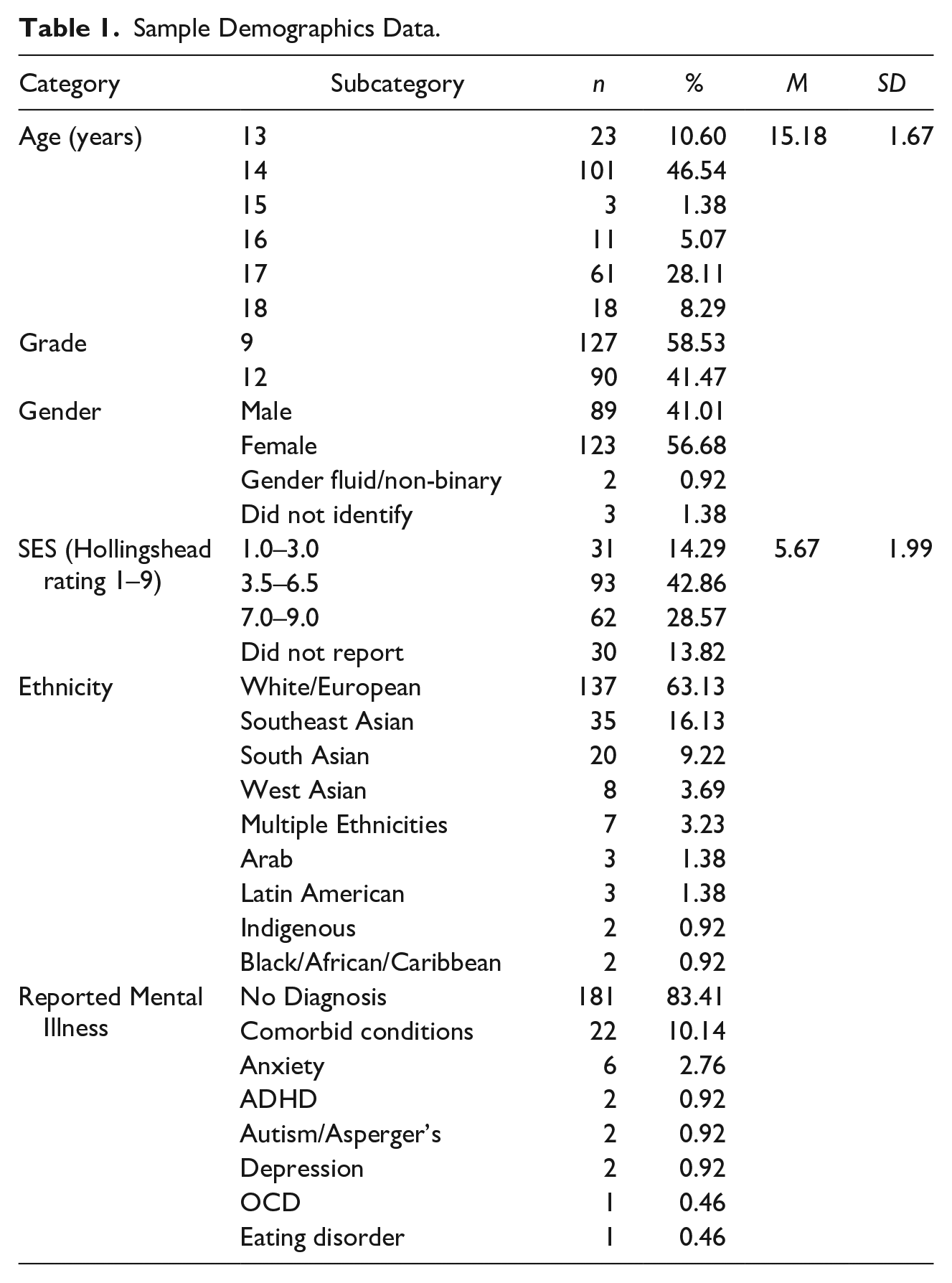
Participants self-reported demographic information, including age, gender identity, ethnicity, familial socioeconomic status, and mental illness history (i.e., screening item only related to diagnosis and treatment history). 1 Descriptive data are reported in Table 1. The primary measure considered in the current paper was the MCII. To refresh, the MCII takes participants through the steps of (1) stating their goal, (2) imagining the ideal outcome of goal achievement, (3) identifying potential obstacles to goal achievement, and (4) actions one can take to overcome said obstacles (Oettingen & Schwörer, 2013). For the full prompts given to participants, see Appendix A.
Sample Demographics Data.
Intervention
The intervention took approximately 20 minutes to complete and included two videos on growth mindset. The first video reviewed the general concept of growth versus fixed mindset, including Dweck’s (1999) original conceptualization and how mindset can impact achievement. The second provided tips on how to apply a growth mindset in the interpersonal domain, such as focusing on the process of improving social skills in the long term and considering difficulties as surmountable. Next, real-world examples of individuals applying a growth mindset to develop their interpersonal skills were included in text, video, and audio formats. The intervention then provided a review of the concepts presented thus far as well as the “saying-is-believing task” developed by Miu and Yeager (2015). This task asks participants to write about an example of applying a growth mindset. Lastly, participants were asked to complete the MCII, which was the source of data regarding adolescent interpersonal goal setting for the current investigation.
Data Collection
Following ethics approval from the University of Guelph (REB #19-03-019), participants were recruited from three public high schools. Online data collection and intervention took place in school libraries or computer labs during the school day and took approximately 1 hour to complete. Participants first completed the battery of quantitative surveys (not utilized in this study) and the online growth mindset intervention, including the MCII. An incentive was offered to participants (i.e., the chance to win $25 gift cards and headphones).
Data Analysis
The goal section of the MCII was analyzed to answer RQ1 (What interpersonal goals did youth set?), the outcome section was analyzed to answer RQ2 (Why were these interpersonal goals considered important?), the obstacle section was analyzed to answer RQ3 (What problems did youth identify as a potential obstacle to interpersonal goal achievement?), and the action section was analyzed to answer RQ4 (What approaches did youth identify to aid goal achievement?).
Two qualitative analysis methods were utilized to address study goals: a content analysis to answer RQ1 and thematic analyses (TA) to answer RQ2, RQ3, and RQ4. The content analysis involved (1) familiarization with data; (2) condensing data into meaning units; (3) deriving codes; (4) categorizing codes; and (5) coding data (Erlingsson & Brysiewicz, 2017). Two researchers completed step 5 (kappa = 0.92) and met to achieve consensus on any discrepancies in coding. Next, three TAs were conducted. TA was an appropriate and effective method for this data set due to its flexibility, the ease of pattern identification given homogeneous sampling, and the pattern-based nature of the method (Braun & Clarke, 2013). Although primarily used to analyze interview data, Braun et al. (2021) discuss the utilization and benefits of TA methodology as applied to online data collection. The process of TA includes these steps: (1) transcription; (2) familiarization of data and initial note taking; (3) complete coding; (4) identifying themes; (5) evaluating themes and producing a thematic map; (6) defining and naming themes; and (7) writing and finalizing analysis (Braun & Clarke, 2013). TA is a recursive process so the researchers would return to previous steps as was necessary. This project was inductive in nature and as such, the themes were derived in a bottom-up process focused on what emerged directly from the data.
The researchers adopted a pragmatic research paradigm by orienting the research focus to solving practical, “real-world” problems, as opposed to engaging in the philosophical debate between post-positivism and constructivism (Yvonne Feilzer, 2010). Regarding subjectivity and reflexivity, the three researchers engaged in this project each their own unique experiences and biases (e.g., their own positionality with respect to race, SES, etc. and a tendency to view development through a positive youth development lens). The research team continually engaged in reflexivity by being aware of their own biases and how they may be impacting research, as well as returning to one another for feedback on if the conclusions made were appropriate and came directly from the data.
Results
Goals Analysis: RQ1—What Interpersonal Goals Did Youth Set?
A content analysis was conducted on participants’ responses to the goals section of the MCII. The codebook with all categories and subcategories derived from the data is presented in Table 2. Consistent with the question posed, goals set by these adolescents largely focused on relationships (n = 154, 70.97%) and primarily focused on friendships, with only a small number looking at family relationships (n = 8, 3.69%) or romantic relationships (n = 7, 3.23%). Goals largely focused on more positive aspects of relationships including gaining (n = 79, 36.41%), improving (n = 31, 14.29%), or maintaining friendship quality (n = 19, 8.76%) as opposed to managing negative or conflictual relationships (n = 4, 1.84%). The most commonly occurring goal across participants was the desire to make new friends (n = 70, 36.41%). Additionally, youth distinguished between making individual friends as opposed to developing a social circle (n = 12, 5.53%), with the latter reflecting the more specific desire to have a group of friends to call upon for support as opposed to separate individual friendships. Less commonly, participants set goals related to sharing intimate details about themselves with others, which included both generally being more open about their thoughts and feelings (n = 4, 1.84%) as well as the specific goal to be open about their sexuality (n = 2, 0.92%).
Goals Codebook.
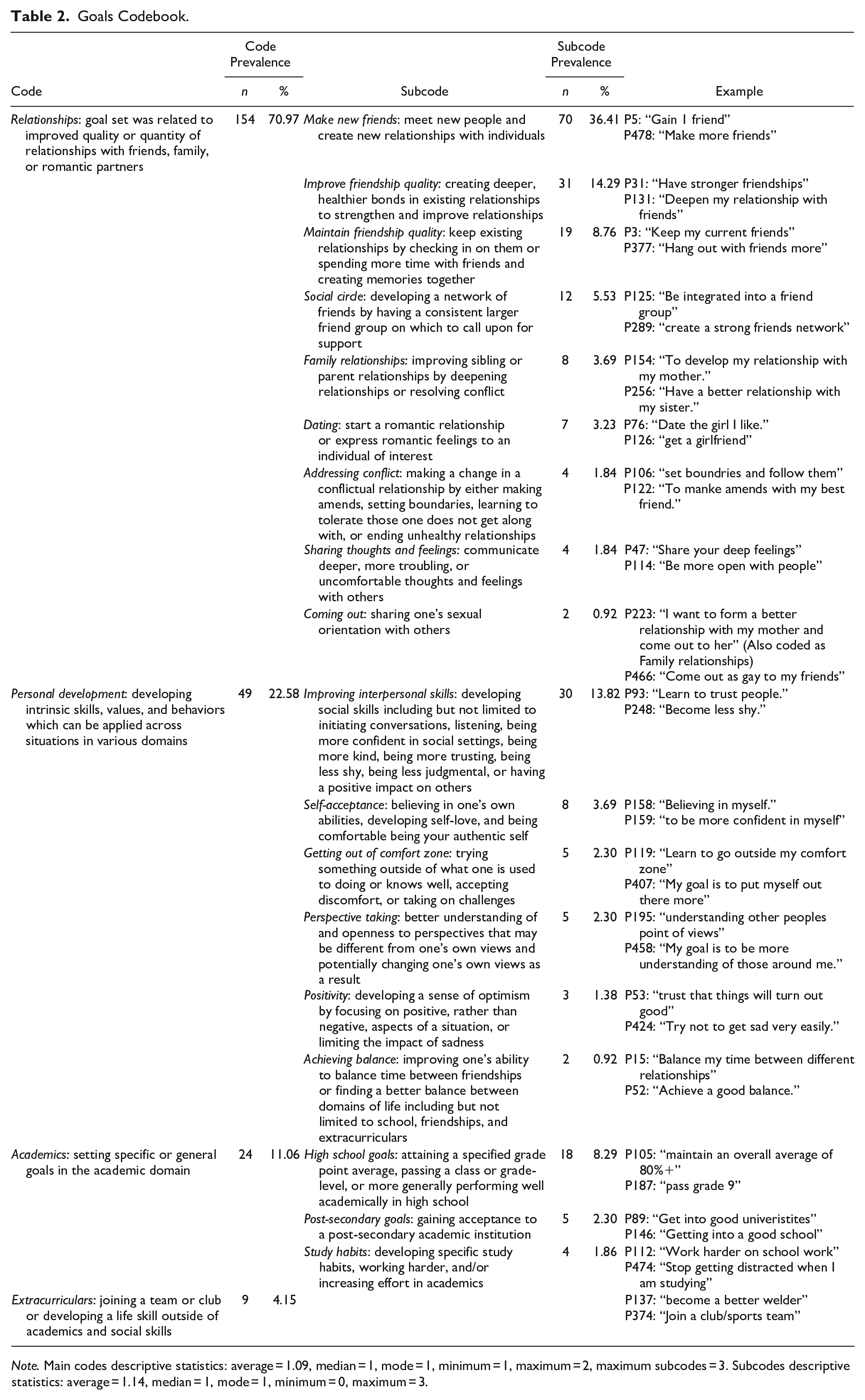
Note. Main codes descriptive statistics: average = 1.09, median = 1, mode = 1, minimum = 1, maximum = 2, maximum subcodes = 3. Subcodes descriptive statistics: average = 1.14, median = 1, mode = 1, minimum = 0, maximum = 3.
Further to the prompt, youth set goals related to personal development (n = 49, 22.58%). As opposed to relationship goals, which were external in nature, the personal development goals were focused on a desire for internal change. Most commonly, youth desired to improve their interpersonal skills (n = 30, 13.82%) which included listening, being less shy, and more. Other personal development goals were focused on self-acceptance (n = 8, 3.69%), getting out of their comfort zone (n = 5, 2.30%), perspective taking (n = 5, 2.30%), positivity (n = 3, 1.38%), and achieving balance (n = 2, 0.92%), all of which could impact one’s interpersonal relationships.
Although participants were directed to set goals within the interpersonal domain, a substantial number still focused on goal setting related to academics (n = 24, 11.06%) and extracurriculars (n = 9, 4.15%). Setting goals beyond the parameters of the interpersonal domain, as instructed, likely reflects the importance of academic achievement and involvement in extracurriculars to participants. In summary, when prompted to set goals related to interpersonal relationships, adolescents focused their goals most frequently on relationships (n = 154, 70.97%), followed by personal development (n = 49, 22.58%), academia (n = 24, 11.06%), and extracurriculars (n = 9, 4.15%).
Outcome Analysis: RQ2—Why Are These Interpersonal Goals Considered Important?
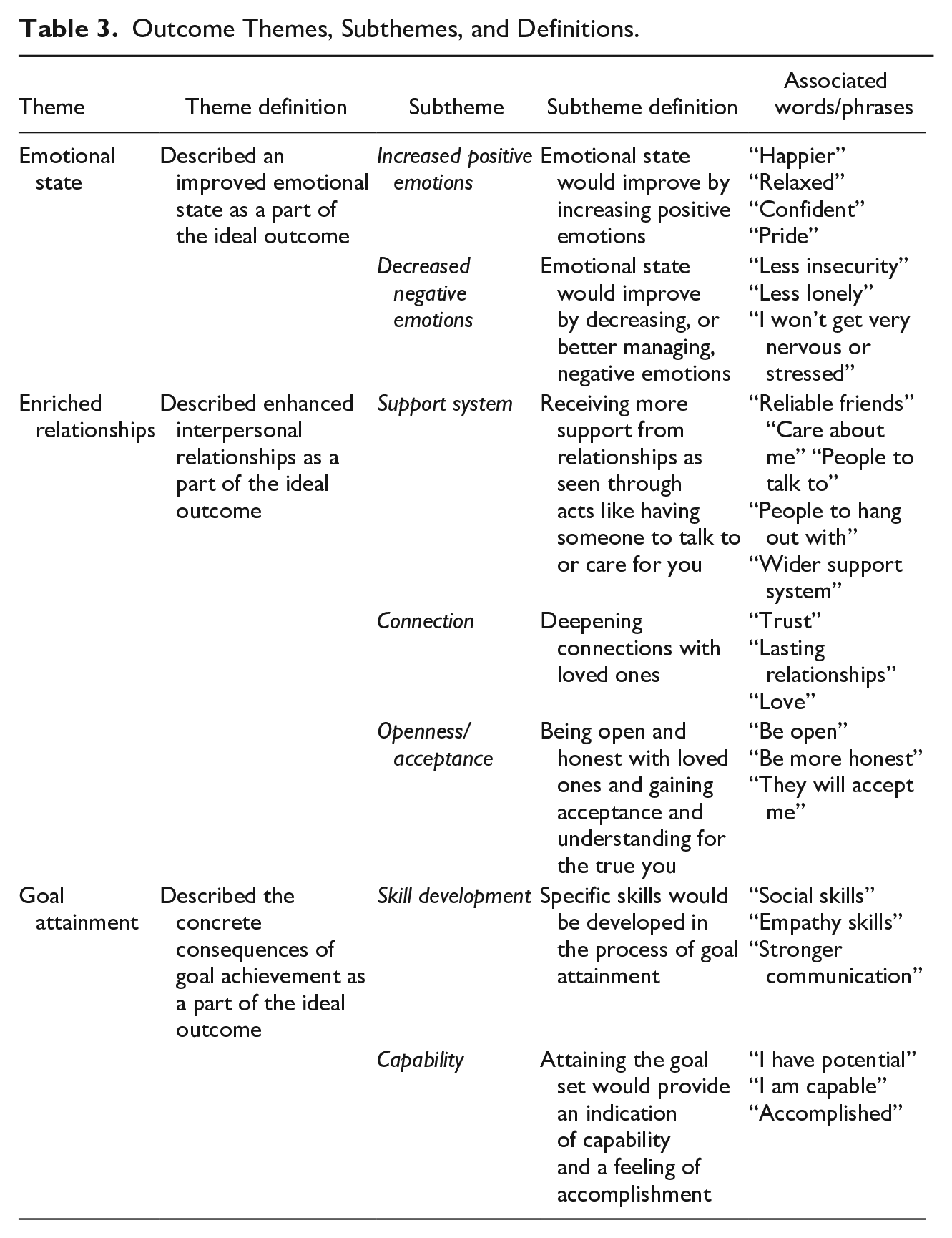
To examine why interpersonal goals were considered important, responses 2 to the outcome section of the MCII were analyzed using an inductive thematic analysis and resulted in three main themes: emotional state, enriched relationships, and goal attainment. Within the theme of emotional state, two subthemes of increased positive emotions and decreased negative emotions were delineated. The theme enriched relationships encompassed subthemes of support system, connection, and openness/acceptance. The goal attainment theme contained the subthemes of skill development and capability. These themes are defined in Table 3.
Outcome Themes, Subthemes, and Definitions.
Emotional state
Improving their emotional state was the overarching concept on which participants consistently centered their responses. This theme consists of both increased positive emotions, such as feeling happier, and decreased negative emotions, such as feeling less stressed. Even when discussing other potential outcomes of goal setting, including enriched relationships and goal attainment, an improved sense of emotional well-being resonated as the crucial change many adolescents strived for.
Increased positive emotions
Notably, a meaningful proportion of participants spoke about happiness or being happy as the central outcome of achieving their goal, with 48 participants (25.26%) mentioning using the word “happy” explicitly in their responses. These youth were seeking happiness, such as P8 (male, grade 12): “It’s something that would make me very happy” and P103 (male, grade 12): “I would feel really really happy if this happened.” Across a wide variety of goals, adolescents hoped that by achieving their goal, they would be happier.
Decreased negative emotions
Decreased negative emotions describes an improved emotional state by decreasing or better managing negative emotions. P287 (male, grade 12) encompassed both these ideas by saying “You will not feel lost and will have a better time dealing with mental pain.” Overall, these responses suggested that participants wished to improve their current emotional state.
Enriched relationships
Participants described an enhanced social life as a part of their ideal outcome; this was to be expected due to the intervention content’s focus on interpersonal relationships and previous research findings that interpersonal relationships were a key aspect of goal motivation (Cairns et al., 2015; Travers et al., 2015). Because many participants set goals related to making more friends or strengthening existing relationships, the associated desired outcomes centered around the benefits of improved interpersonal relationships. These improvements included expanding their support system, deepening connections, and being open/finding acceptance.
Support system
A major component of enriched relationships, as described by participants, included receiving more support from relationships as seen through acts like having someone to talk to or care for them. Some participants sought emotional support from their network, such as P2 (female, grade 12) who stated: “i will feel like there are people who are on my side and want me to do well.” Others simply wanted a friend to talk to or spend time with, such as P92 (male, grade 12): “I make many new friends that I can talk to and hang out with regularily [regularly].” While an indication of the potential strengths of their existing supports was not discussed by participants, they certainly saw advantages to expanding their available support.
Connection
Beyond seeking support from their social network, participants further described a wish to deepen their connections: P102 (female, grade 12): “I will feel more satisfied with my relationships and more connected to the people around me.” P482 (female, grade 9): “The result of accomplishing this goal will be having an even stronger bond with friends, and improved healthy relationships.”
For some, discussion of connection relied on trust, such as P31 (female, grade 12): “Having closer friends to trust and rely on, and this will make me feel that I can trust better, and be more at ease.”
While participants may have discussed the concept of deepening relationships in distinct ways, ultimately, these were mostly connected via a desire for close and meaningful connection. As such, there were clearly desirable benefits in the eyes of participants to deepening their connections.
Openness/Acceptance
The subtheme of openness/acceptance demonstrated the participants’ wishes to be open and honest with loved ones and gain acceptance and understanding of their true selves. Some of the youth described a desire to be more open with their thoughts and achieve acceptance for those aspects of self: P292 (female, grade 10): “I will feel more open wiht [with] people. Less likely that the [they] will judge me or my feelings. I think I would feek [feel] reassured and less likely to second guess myself.”
Moreover, participants discussed seeking acceptance following coming out regarding their sexuality. With a goal of coming out to their mom, P223 (gender not identified, grade 9) imagined the ideal outcome as: “she’ll understand and accept my emotions and sexuality.” For participants such as P223, they not only want to be open and honest about who they are, but they seek acceptance from those closest to them. Participants’ responses within this theme conveyed a sense of longing for deep, trusting relationships with the core desire to share their true selves.
Relationship to emotional state
Participants drew a connection between enriched relationships and their emotional state. For example, P239 (female, grade 9) said: “I will feel happy as I will have made friends that really care about me.” For many, the ideal outcome of deepening connections was sought after to achieve happiness and improve well-being. The same was true of participants who discussed forming stronger connections and being open: P65 (male, grade 12): “I will form better friendships and feel closer to people as I will be able to share more important parts of who I am with more people. I will feel relaxed” P314 (male, grade 12): “I can attempt to explain my thoughts and feelings to them without worry.”
Participants here mentioned feeling more relaxed and less worried, which encompassed the two subthemes under emotional state. Often, improved social relationships were seen as a way to achieve an improved emotional state. As such, it seems that the primary ideal outcome for many participants was not solely enriched relationships but, more broadly, increased well-being.
Goal attainment
The theme of goal attainment captures the idea that the concrete consequences of goal achievement were considered part of the ideal outcome. The skills and accomplishment that logically follow from attaining one’s goal were plainly mentioned as an important aspect in the outcome of goal achievement.
Skill development
Participants saw goal attainment as a means to refine their skill set as specific skills would be developed in the process of achieving their goal. Since the growth mindset intervention focused on malleability of socially relevant characteristics, many participants discussed cultivating interpersonal skills. These skills were referred to in different ways, including “social skills” (P469: female grade 9; P478: male, grade 9), “communication skills” (P382: female, grade 9), or “empathy skills” (P193: female, grade 9). Regardless of the specific skill mentioned, such participants imagined an ideal outcome of goal achievement to be the skills they develop along the way. While skill sets are a less tangible outcome of goal achievement, such skills are a useful by-product of goal attainment and can be applied in many future situations.
Capability
Youth identified that attaining the goal would provide an indication of capability and a feeling of accomplishment. They would, therefore, be providing themselves with evidence that they had the competency to achieve future goals: P194 (male, grade 9): “I’ll feel more capable of things” P414 (female, grade 9): “You can make more friends, in doing this, I will feel like I have potential.” P475 (female, grade 9): “I’ll feel accomplished that I can do it”
Participants viewed achieving their goal as a means to validate a capability within them. By achieving this sense of accomplishment and validation of their potential, participants may feel more confident in future situations requiring the developed skill set.
Relationship to emotional state
Goal attainment was also closely related to participants’ emotional state. Once again, achieving these outcomes was associated with improved well-being. Goal attainment was imagined as provoking strong positive emotions, such as P333 (male, grade 9): “when i accomplish my goal i would probably feel proud of myself and more confident,” as well as negative emotions including fear, such as P158 (female, grade 9): “Not being scared of tough situations and believing that I can succeed.” As with enriched relationships, goal attainment was often seen as a means to increase positive emotions and decrease negative emotions, further indicating that an improved emotional state was often the primary objective.
Summary
Participants spoke in depth about the benefits of both enriched relationships and goal attainment, however, frequently drew their responses back to the ultimate ideal outcome of an improved emotional state. Participants sought to increase positive emotions and decrease negative emotions by developing a support system, building connection, seeking openness/acceptance, increasing their skills, and validating their own capability.
Obstacle Analysis: RQ3—What Problems Do Youth Identify as a Potential Obstacle?
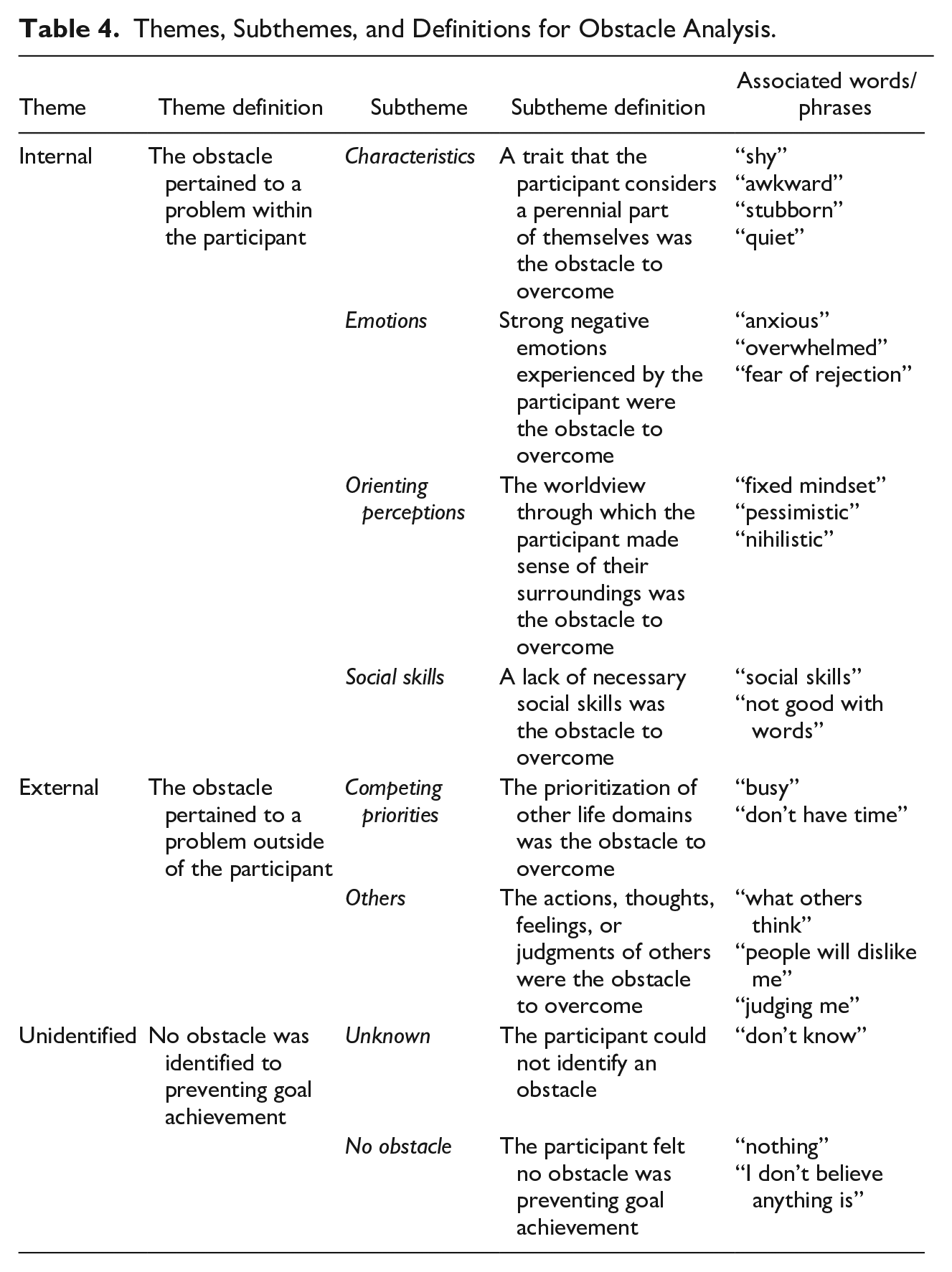
An inductive thematic analysis of the obstacle section of the MCII identified two main themes: internal obstacles and external obstacles. Internal obstacles included characteristics, emotions, orienting perceptions, and skills. Although participants were prompted to identify an obstacle within themselves, some participants identified external obstacles including competing priorities and others. A small number of participants left the obstacle as unidentified. See Table 4 for full theme definitions.
Themes, Subthemes, and Definitions for Obstacle Analysis.
Internal
Consideration of internal obstacles is more fruitful for the application of growth mindset particularly in how such internal traits, perspectives, and abilities are conceptualized. The prompt specified for participants to consider an obstacle pertaining to their “current personality” to encourage such consideration and allow participants to explore a growth mindset. Participants primarily adhered to the original prompt and identified an internal obstacle, including characteristics of their personalities, emotional responses, skill sets, and the orienting perceptions held by the participant.
Characteristics
Most commonly, participants identified a trait that they considered a perennial part of themselves as an obstacle to overcome, including shyness, introversion, being closed off, and lack of motivation. Of all the obstacles identified across all themes, shyness was the most frequently mentioned with the word “shy” being used explicitly in 55 responses (27.64%): P140 (female, grade 12): “Right now, my shyness is preventing me from achieving my goal. I am too shy to ask people to hang out or to go and hang out with them.” P297 (female, grade 12): “When meeting new people I can tend to be a bit shy and more reserved. This can stop me from making those new connections with the people around me.”
Participants felt that their shyness would prevent them from accomplishing their interpersonal related goals. It must be noted that the intervention content specifically provided examples of shyness as an obstacle and participants seemed to identify with this intervention content and apply it to their own experiences.
Participants further identified themselves as introverted. For example, P182 (male, grade 9) said: “I’m very introverted and would prefer to hide in a corner and read a book.” This participant saw their introversion as an innate part of who they are and how they would prefer to spend their time. By contrast, P429 (female, grade 9) considered their introversion to be situationally dependent: “im pretty introverted until i get to know the person perfectly.” These examples provide two different conceptualizations of introversion by participants: an inherent personality trait versus a situational behavior, which seems to reflect a fixed and growth mindset respectively.
Some participants considered themselves “unmotivated” and felt that this characteristic would prevent them from pursuing their goals, including P242 (male, grade 9): “my will to improve” and P317 (male, grade 12): “I don’t end up having the drive to do things that I think I should.” These participants felt their goals were out of reach simply due to a lack of motivation to put in the effort it takes to pursue their stated goal.
Emotions
Beyond characteristics, participants identified their emotions as a potential obstacle to goal achievement: P52 (female, grade 12): “I get overwhelmed easily and let my emotions interfere with my path to success.” P134 (female, grade 12): “fear! fear of judgement or holding back. trying to work on it and release that fear because its irrational.” P471 (female, grade 12): “I procrastinate and often do not take action to my goals if I am stressed or nervous.”
In each of these cases, participants identified negative emotions associated with taking action to move toward their goals as the obstacle to goal achievement. In these scenarios, participants avoid pursuing their goals as a way to avoid negative emotions.
Orienting perceptions
Participants identified several orienting perceptions as potential obstacles to goal achievement, including fixed mindset, pessimism, and perfectionism. Participants, such as P32 (female, grade 12), recognized that they held a fixed mindset which was not conducive to pursuing one’s goals: “I’m aware I have a fixed mindset, I’ve been more strongly aware since I studied it last year, but just being aware of it doesn’t really cure it’s effects.” Even though interventions that teach about growth versus fixed mindset are aimed at teaching how to move toward a growth mindset, P32 felt that even though they had identified that they held a fixed mindset, they were still unable to shift toward a growth mindset.
Though they rarely used the term pessimistic themselves, many participants mentioned thoughts related to pessimistic thinking as the obstacle to goal achievement: P85 (female, grade 12): “I expect the worst, so I’m not very hopeful or optimistic when trying to make new friends.” P350 (female, grade 9): “I think that even if I work hard what if my hardwork doesn’t really pay off? what if I become a failure in life?”
These participants focused on the negative and engaged in catastrophizing by imagining the worst possible outcomes. While dwelling on the negative is less than ideal, P100 (female, grade 12) identified ignoring such negatives as the obstacle to goal achievement: “Sometimes when I think about others, I only focus on the good things which isn’t always great because I overlook situations that hurt me and that I dislike.” Overall, certain participants feel they are operating within a perspective that does not give appropriate credence to both the positives and negatives of a situation.
A small number of participants labeled themselves as perfectionists, citing an inability to accept anything less than perfect as the obstacle to goal achievement: P292 (female, grade 12): “I am a perfectionist. I have a hard time changing my thought process and I often don’t like admitting I am wrong.” P378 (female, grade 9): “Often I strive for perfection, however this is not possible on any level. When someone uses incorrect grammar, I feel the need to correct them, and arguments normally start when I ‘split hairs,’ looking for the smallest issue with something that someone said.”
The first of these participants struggled with expecting perfection from themselves, whereas the second expected perfection from others. Yet, both participants recognized that this expectation often leads to difficulty down the line. The unifying characteristic of responses in the orienting perceptions subtheme is that participants identified their thoughts or their style of thinking as the main obstacle to overcome.
Social Skills
Participants further identified a lack of the necessary skills to achieve their goal as a potential obstacle. Specifically, participants discussed a lack of social skills: P69 (male, grade 12): “Not good with words” P312 (female, grade 12): “I am not good at talking to people I don’t know.” P347 (male, grade 9): “it is hard for me to make new friends and i need to get better at it.”
These social skills are fundamental when pursuing the commonly identified goals of making more friends and improving one’s relationships.
External
Participants also went beyond the bounds of the original prompt and discussed external (vs. internal) obstacles. These obstacles included competing priorities as well as other people engaged with the participant.
Competing priorities
The multitude of expectations placed on youths and the resulting competing priorities was identified as an obstacle to goal achievement: P195 (female, grade 9): “I’m very driven to do well in school. That could effect me as I might care more about school then my peers.” P356 (female, grade 12): “Very busy and don’t have a lot of time to spend with friends.”
Participants acknowledged that while they did desire to achieve the goal set, they did not feel they could make it a priority given the other demands on their time and energy.
Others
Many participants recognized the thoughts, feelings, actions, or judgments of others as the obstacle to overcome. For participants such as P34 (female, grade 12), the obstacle was that goal pursuit: “needs efforts from both parties.” In this case, goal achievement was impeded by the fact that the individual themselves cannot decide to put in the effort to create or deepen a relationship without reciprocal efforts from the other party. Furthermore, P47 (male, grade 9) stated: “I don’t talk to people about my problems because I believe everyone has their own problems and shouldn’t have to deal with mine.” Here, the participant avoids goal pursuit because they do not wish to burden others. For both P34 and P47, the obstacle had to do with the reality of others’ efforts and needs as opposed to the belief that there will be a particular response from others. Conversely, P125 (female, grade 12) stated: “I am a big overthinker and always believe that no one likes me or that they are lying to me/secretly hate me.” It is notable that for this participant and others identifying similar obstacles, they are citing their perception of how others think or feel about them as the obstacle. Whether or not this would be the real-life consequence of pursuing their goals is acknowledged as unknown to the participant, but nevertheless, the belief that others would respond poorly prevents goal pursuit and subsequently, goal achievement.
Unidentified
A notable few participants did not identify an obstacle to overcome. Such responses fell into two categories: unknown and no obstacle.
Unknown
Participants falling in the unknown category were unable to identify any obstacles to goal achievement, including P185 (female, grade 9): “I dont know” and P466 (female, grade 9): “i don’t really know.” Such responses may represent true lack of insight, or lack of knowledge, or be due to the online format in which a researcher is not present to prompt participants further.
No obstacle
An additional subset of participants felt there were no obstacles to goal achievement, such as P274 (male, grade 12): “I don’t believe anything is. I am an open person able to make easy conversation with most people and develop some sort of relationship with them.” In this and similar cases, participants did not feel there were any aspects of their personality that would prevent goal achievement because one can always find something to discuss or simply find other people with similar personalities.
Summary
Participants generally kept to the prompt in discussing internal obstacles preventing goal achievement. These obstacles included characteristics such as shyness, introversion, and being unmotivated; emotions such as fear, stress, and overwhelm; orienting perceptions such as fixed mindset, pessimism, and perfectionism; and a lack of the necessary social skills. These responses provide an opportunity for participants to apply a growth mindset in conceptualizing these obstacles as non-fixed. Beyond the initial prompt, participants also discussed external competing priorities on their time and energy and the impacts of others. Some participants didn’t engage fully with the prompt stating they couldn’t identify an obstacle or that there were no obstacles. Participants who identified external obstacles or failed to identify an obstacle may have difficulty applying a growth mindset in the following section.
Action Analysis: RQ4—What Approaches Did Youth Identify to Aid Goal Achievement?
Participant responses to the action section of the MCII were analyzed using an inductive thematic analysis and responses were found to fall into either active or passive approaches. Active approaches included outlook, persistence, adapt characteristics, and change strategy, whereas passive approaches included waiting, giving up, or an unknown. For full definitions of themes and subthemes, see Table 5.
Themes, Subthemes, and Definitions for Action Analysis.
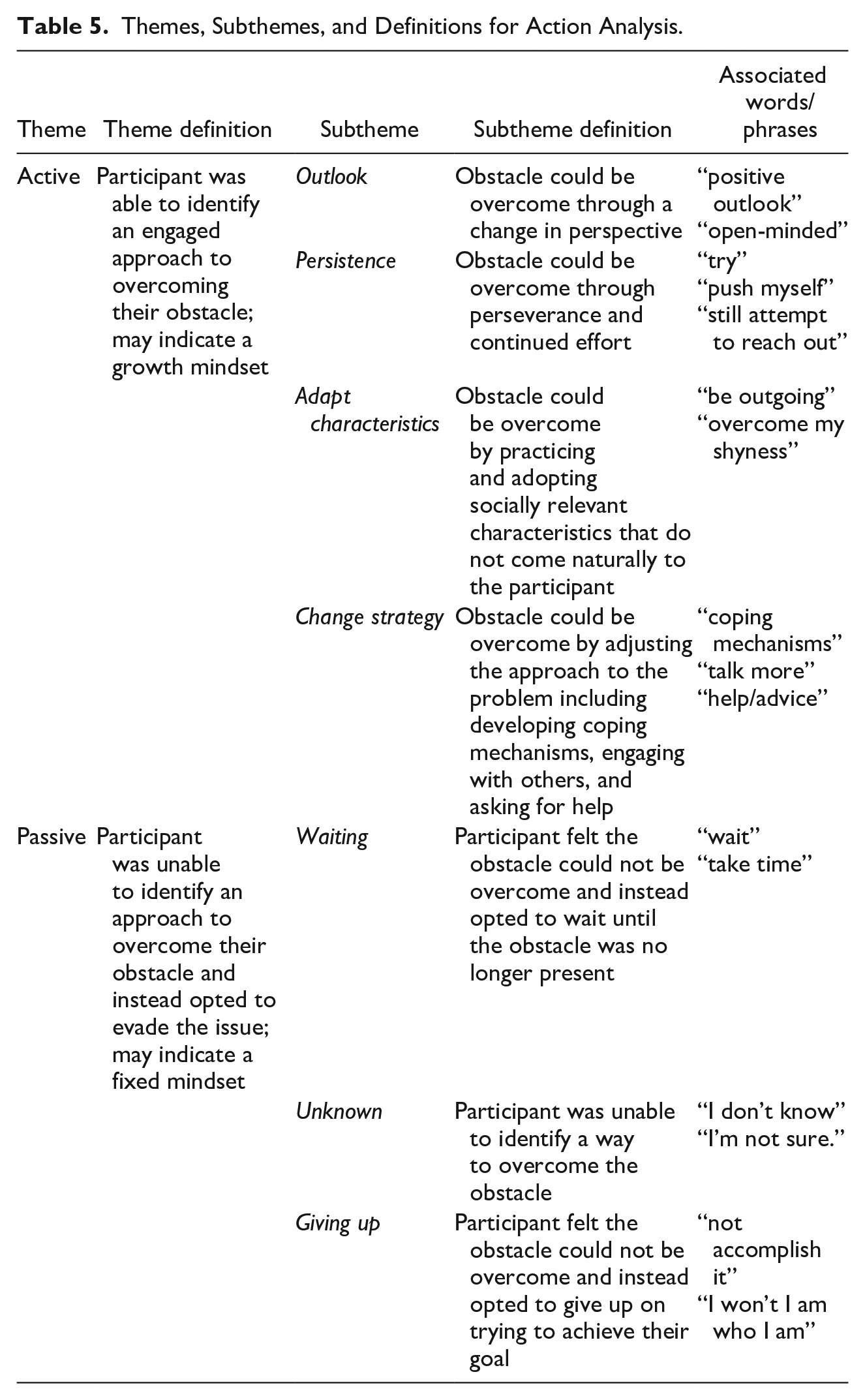
Active
Participants who detailed an active approach were able to find agency in approaching the identified obstacle. Participants with such approaches may be exhibiting an adoption of a growth mindset as they internalized the idea that their own actions could lead to an increased skill set and improved situation.
Outlook
One such active approach was making an adjustment in one’s outlook to overcome the identified obstacle. The necessary change in perspective was often a need for a more positive outlook, such as P8 (male, grade 12): “Just try and have a more positive outlook on everything and just try and be hopeful for the future.” Making an active choice to focus more on the positive aspects of a situation was most common in participants who identified the obstacles of negative emotions and pessimism. Further, participants identified being more open-minded as necessary to overcome obstacles including characteristics and negative emotions, such as P31 (female, grade 12): “Allow myself to be more open-minded, and not close myself off as much to allow people to know me and my personality better.”
Another approach to changing their perspective involved reality checking one’s own beliefs: P259 (female, grade 9): “Remember nothing is set in stone and not everyone is judging me” P411 (female, grade 9): “I should stop caring about what other people think because, if you’re nice and you talk to someone they have no reason to dislike you and you might make a new friend.”
In these cases, participants scrutinized their own negative beliefs, including “everyone is judging me” or they “dislike” me. When considering the evidence, participants found they had no logical reason to believe their own negative thinking and could overcome the associated negative emotions. The uniting concept in the outlook subtheme is that the strategy chosen involves pausing to evaluate one’s thoughts and actively deciding to change one’s original orienting perceptions to be more positive and/or realistic.
Persistence
Many participants felt that continual effort and perseverance was the necessary approach to overcoming the identified obstacle: P26 (male, grade 12): “Try anyways” P151 (female, grade 9): “Just push past it and try” P299 (female, grade 12): “still attempt to reach out to those people and try anyways even if it might not work.”
This strategy was most often applied by participants who identified the characteristic of shyness as the obstacle preventing goal achievement.
Adapt characteristics
Beyond simply trying, some participant responses suggested that for the obstacle of a personal characteristic to be overcome, they needed to practice and adopt socially relevant characteristics that do not come naturally: P204 (female, grade 9): “Put my shyness away” P218 (female, grade 9): “i can meet people and force myself to be outgoing” P369 (male, grade 9): “I’ll get better at not being shy”
In these cases, participants believed their personal characteristics to be changeable, further indicating an adoption of a growth mindset.
Change strategy
Participants could further overcome the identified obstacle by adjusting their approach to the problem. As P467 (male, grade 9) put it: “keep trying in a different way.” One such change in strategy involved finding a way to cope: P63 (female, grade 12): “Push through my anxity [anxiety] and try to find healthy coping mecenisms [mechanisms]” P433 (female, grade 9): “try to find a solution, or a way to cope, (a good way to cope).”
Participants often made a point of stating that they needed to find a “healthy” or “good” coping mechanism. This distinction may be a way to acknowledge that certain coping strategies (e.g., distraction) may help you feel better in the short term but are not beneficial in the long run.
Other changes in strategies included engaging differently with others, such as P13 (female, grade 12): “Trying to find different ways to start a conversation” or P213 (female, grade 12): “Talk and be honest and or do things together (like art for example).” Here, participants are identifying new ways to connect with others (e.g., initiating conversations or engaging in a shared activity).
Another way participants identified engaging with others differently involved managing conflict: P84 (male, grade 12): “I will try not to get into arguments and say sorry if i have hurt someone right away.” P122 (female, grade 12): “If this problem comes up, then I will remember that Conflict is sometimes needed inorder [in order] to progress and that everything doesn’t have to be perfect right away.”
Participants acknowledged specific strategies that are beneficial when dealing with conflictual relationships including apologizing and recognizing that conflict is sometimes necessary.
In addition to engaging differently with others and managing conflicts, participants saw others as a resource for overcoming their obstacles: P37 (male, grade 12): “I can go to them for help/advice when I’m feeling stressed or overwhelmed, or ask them to hang out with me to destress.” P471 (female, grade 12): “I will share this goal with my friends and family to ensure that they can also help me accomplish this goal.”
While there was diversity in the specific strategy, including finding healthy coping mechanisms, engaging differently with others, managing conflict, and seeking others as a resource, the similarity among participants in this category was the adjustment of their strategy moving forward to overcome the obstacle.
Passive
Participants who identified passive approaches to overcoming their obstacles opted to evade the issue instead of retaining agency. For some, these types of responses may be exhibiting a fixed mindset, as participants were unable to identify a change they could make to overcome the identified obstacle. Alternatively, participants who identified external obstacles or did not identify an obstacle would also struggle to identify an active approach as such obstacles are not necessarily under the control of the participant.
Wait
Some participants felt all they could do to overcome the identified obstacle was to wait, such as P4 (gender not identified, grade 12): “I will wait until I’m 18 then I can do what I want” and P93 (female, grade 12): “Take time.” By waiting, the participants are hoping that the situation would resolve over time. Sometimes, this waiting could lead to a substantive difference, such as P4 no longer requiring their parents’ permission, but in other cases, it was unclear whether waiting would lead to changes in one’s situation.
Unknown
Some participants stated that there was no known action to overcome the obstacle, including P206 (female, grade 9): “i dont know” and P248 (female, grade 9): “I’m not sure.” Such participants were simply unable to identify any action to aid in goal achievement.
Give up
Other participants took a more nihilistic view on the prospects of goal attainment and decided to give up on trying to achieve their goals: P320 (male, grade 9): “i dont do anything about it i just accept the fact that all of them are fucking up my life and are complete assholes just because of the amount of followers they have” P410 (male, grade 9): “i wont i am who i am and if they dont like it theyll have to get over it or leave”
In some of these cases, participants seemed so disheartened that they were not only unable to identify an action to overcome the obstacle but also expected they would give up on trying to achieve the goal altogether.
Summary
Most participants were able to find an active approach to overcoming their noted obstacle including changing their outlook, persevering, adapting their characteristics, or changing strategies. These participants may be exhibiting adoption of a growth mindset as they believed their abilities could change and improve. Yet, a notable number of participants were passive in their approaches, some even so disillusioned as to give up on the prospect of goal achievement.
Discussion
Interpersonal relationships play a vital role in the welfare of adolescents and are one important domain adolescents may leverage to potentially dampen their ill-being and potentially bolster well-being (Luo et al., 2017; Ye & Ye, 2020; Zhang et al., 2015). The current study focused on how adolescents engage with interpersonal goal setting to further inform research on this important aspect of development while also providing knowledge relevant for goal setting intervention and application. Through our inductive qualitative approach, we explored how participants engaged with a goal setting process following a growth mindset intervention. This approach provides novel and complementary contributions to developmental research on adolescent interpersonal functioning (e.g., Ladd & Troop-Gordon, 2003; Luo et al., 2017; Marion et al., 2013; Parker & Asher, 1987; Parker et al., 1995; Ye & Ye, 2020; Younger & Daniels, 1992; Zhang et al., 2015) as well as research examining the efficacy of both goal setting and mindset interventions with adolescents (e.g., Burnette et al., 2018; Cairns et al., 2015; Houssais et al., 2013; Scarborough et al., 2010).
Taken together, findings reveal a wide variety of social goals set by youth with a stronger focus on improving the quantity and quality of relationships. The vast majority of responses focused on the peer relationships as opposed to intimate partner or caregiver/family context. This is consistent with the importance of the peer context during this developmental phase (Ellis et al., 1981; Harris, 1998, 2000) and also may have been influenced by the intervention content that proceeded the goal setting procedure. Participants acknowledged the benefit of both the presence as well as quality of relationships, consistent with this dual emphasis in previous literature (Marion et al., 2013; Shaffer et al., 2013). While the social goals set varied, the ideal outcome of said goals was often stated to be an improved emotional state – students hoped to experience greater positive emotions (specifically happiness) and fewer challenging emotions as a result of improving their peer relations.
Participant goals often focused on either increasing positive features of their relationships (e.g., develop friendships) or on decreasing negative features (e.g., addressing conflict). As such, participant responses were consistent with previous research indicating the necessary distinction between positive and negative features of friendships in evaluating friendship quality (Berndt & Murphy, 2002; Berndt & Perry, 1986; Keefe & Berndt, 1996). Further, previous research findings examined the distinctions between same-sex and opposite-sex relationships (Luo et al., 2017; Zhang et al., 2015). Such a distinction was not made by the participants of this study. Future research may seek to qualitatively explore if such a distinction is made in the minds of participants and, if so, how this distinction is conceptualized.
Although the identification and analysis of growth mindset was not the focus of the analysis, some participant responses demonstrated fixed mindset qualities (e.g., P320 [male, grade 9]: “i dont do anything about it i just accept the fact that all of them are fucking up my life” and P410 [male, grade 9]: “i wont i am who i am”). Even with the growth mindset intervention proceeding the goal setting procedure, this fixed mindset mentality seemed to impede participants from pursuing goal achievement.
Integrated View
Taking an integrative view of all four analyses presented herein (including the interpersonal goals youth set, the ideal outcome of the goal, the obstacle identified, and the action plan to overcome the obstacle) several overarching themes emerge.
Emotions
Throughout the goal setting procedure, youth discussed the vital role their emotions played. Participants wanted to be better able to share their feelings, wanted to improve their emotional state, and saw their emotions as a key obstacle to goal achievement. Given that improved well-being emerged as absolutely central for many participants, links between growth mindset, goal setting, and well-being could be made more explicit for participants in future intervention development/delivery. Notwithstanding, it may also be that these adolescent participants are overvaluing happiness. Gentzler et al. (2019) found an association between youth overvaluing happiness with increased depressive symptoms and decreased life satisfaction. Researchers and clinicians may consider balancing the delivery of growth mindset interventions with psychoeducation around the impossibility of constant happiness to mitigate potential difficulties that arise with overvaluing happiness (Harris, 2011). Further research may seek to establish which goals relate most robustly to youth well-being so that future interventions employing goal setting procedures may guide participants in setting the goals found to be most likely to have impacts on this domain that youth seem to highly value.
General mindset
General mindset additionally played a role in participants’ experiences using the goal setting procedure. Some set goals related to having a more positive outlook, identified their current orienting perceptions as an obstacle, and planned to overcome a given obstacle by changing their outlook. This emphasis on aspects of “outlook” across the analysis is consistent with the foundational premise of youth cognitive behavior therapy (CBT), in that cognition and behavior are closely related to affect (Kendall et al., 1988). This metamessage of CBT can be summarized as: what we think impacts what we do and how we feel. Growth mindset interventions may be bolstered by including content explicitly focused on CBT strategies/approaches to modify one’s outlook (e.g., identifying thoughts associated with the negative outlook, identifying the evidence against those thoughts, and providing an alternative thought process/outlook). Such strategies are central to cognitive behavioral therapy approaches that have been utilized successfully with youth facing a variety of difficulties (e.g., Crowe & McKay, 2017; Paternostro & Friedberg, 2019; Scaini et al., 2016).
Skill development
Youth were also seeking concrete skill development in the interpersonal domain. They wanted to improve their interpersonal skills, saw skill development as an ideal outcome, identified their current social skills as an obstacle, and sought to employ different social strategies to achieve their goals. Given youth seem to be actively applying growth mindset in this way and seeking social skill development, future interventions may wish to consider better capitalizing on this need with further strategies to develop adolescent social skills (e.g., incorporating intervention content with peer exemplars applying a growth mindset to achieve this goal).
Disengagement
While the majority of participants’ responses seemed to indicate some level of engagement with the goal setting procedure, some either didn’t respond to the prompts, responded shallowly (e.g., “I don’t know”), or appeared to give up on goal attainment. While some may have disengaged due to fatigue with or disinterest in the research process, it is possible that others may have considered the intervention content that preceded the goal setting procedure to be overly positive and/or unrelatable. Positive psychology interventions have been criticized for being overly positive and decontextualized (Ciarrochi et al., 2016); these criticisms were considered in intervention design for the primary study, yet a portion of student responses to the goal setting task suggest some continued evaluation of this possibility may be warranted. To avoid the pitfalls of potential “toxic positivity,” future researchers may wish to better nuance intervention content (Ciarrochi et al., 2016). For example, this could involve including content highlighting peers who initially struggled to apply the intervention content but were able to maneuver obstacles. Further, more nuanced examples may show peers who tried to apply a growth mindset and were unsuccessful but were able to employ an alternative approach, such as self-compassion (Neff, 2003) or acceptance (Ciarrochi et al., 2016).
Strengths and Limitations
This investigation is characterized by several strengths including the focus on a domain of great importance in adolescence – the interpersonal context, how adolescents navigate change processes within this context, the use of a rigorous qualitative methodology to organize a broad array of adolescent experiences, and the applied knowledge that can be gained from their experiences that may be relevant to future prevention/intervention efforts. Findings reported here must also be considered within the constraints of several limitations. First, data from the current investigation were collected following a growth mindset intervention focused on social skills and participants were prompted to set goals in the interpersonal domain. While this method provided the opportunity for needed research on the importance of adolescent interpersonal goal setting as indicated by previous research (Cairns et al., 2015; Travers et al., 2015), content of participants’ responses was likely impacted by the priming of the intervention. As such, findings may not align with more naturalistic interpersonal goal setting or the use of the MCII goal setting procedure in other domains. Nevertheless, as outlined above, findings here have implications to be considered for future design of goal setting prevention and intervention approaches (e.g., growth mindset intervention) aimed at this important developmental phase.
Second, data were collected as an online survey, which poses unique challenges as online data tends to lack richness and depth (Braun & Clarke, 2013). Participants may have been wary to provide responses considered “unacceptable” due to a social-desirability bias. Consequently, data were limited to what participants were willing to share. Despite these cautions, collecting data in an online survey format may also have provided a feeling of anonymity that may have facilitated comfort in sharing (Braun et al., 2021).
Finally, sample demographics may have impacted the data collected. 63.13% of participants identified as White/European. The Hollingshead scale of socioeconomic status (rating 1–9) had a mean score of 5.67 and a standard deviation of 1.99, with half of participants who responded to this measure falling into the middle range (3.5–6.5). As such, the analysis may have been biased toward White, middle-class experiences as these would be more prominent in the data set. While results should not be considered a perfect representation of all youth experiences engaging in goal setting, the pragmatic qualitative approach adopted by the researchers allowed for real-world conclusions to be drawn directly from the perspectives of participants.
Recommendations for Future Research
The current investigation suggests many avenues of inquiry for future research. First, while our study provides key information regarding adolescent interpersonal goal setting in the context of a growth-mindset of personality intervention, further contributions to the field would include considering goal setting procedures following interventions focused on different domains or outside the context of an intervention entirely. Researchers may also seek to uncover variability in the goals set, desired outcomes, obstacles, and actions taken by age, gender, ethnicity, and reported mental illness as there may be important differences between these groups not examined here due to scope considerations as well as sample size/composition. Furthermore, research utilizing a mixed-methods approach would allow the exploration of a potential relationship between the different ways youth engage with the MCII (e.g., the goal set, imagined outcome, identified obstacle, and/or chosen action) and future outcomes, including goal achievement.
Taken together, findings from this study aim to serve as a repository of lived youth experiences regarding common interpersonal goals and obstacles. Grounded in youths’ own experiences while engaging in an interpersonal goal setting procedure, findings from the current study stand to enrich developmental research by underscoring the importance of the interpersonal context in adolescence through the lens of their own experiences/voices. The youth experiences documented herein can also serve as potentially relevant data for improving potential resonance and engagement in future intervention development efforts in this important domain.
Footnotes
Appendix A
Declaration of Conflicting Interests
The author(s) declared no potential conflicts of interest with respect to the research, authorship, and/or publication of this article.
Funding
The author(s) received no financial support for the research, authorship, and/or publication of this article.
