



Abstract
This qualitative study explored how 249 transgender and non-binary (TNB) adolescents (ages 14–18) described salient supports in their lives, and ways in which key social-ecological contexts could better support TNB adolescents’ wellbeing. Participants were recruited through social media, and completed online surveys; all study procedures were approved by the Boston University Institutional Review Board. Most (84.7%) participants identified as White, and as sexual minorities (96.4%). Modified consensual qualitative research (CQR-M) methods were used to examine TNB adolescents’ responses to two questions: “In your life, which people, if any, would you describe as most supportive, and why?” and “What can individuals/groups within families, schools, and communities do to best support the well-being of transgender and non-binary adolescents?” Results indicated that the most common source of support for TNB participants was peers, followed by family members. Participants also highlighted the centrality of supportive environments that offer access to resources, as well as support derived through policies and practices that reduce stigma. Collectively, results have implications for how individuals and systems can foster wellbeing among TNB adolescents.
Research focused on transgender and non-binary (TNB) individuals in the United States has grown considerably since the Institute of Medicine (2011) released its groundbreaking report on the health and wellbeing of sexual and gender minority populations. Transgender individuals have gender identities (i.e., one’s internal sense of gender as a boy/man, girl/woman, or another gender) that do not align with their sex assignment at birth, and non-binary individuals have gender identities that differ from a male/female gender binary (Sequeira & Dayton, 2021). Gender diverse is another term that is used to highlight the diversity of gender identities, expressions, and behaviors that do not align with societal expectations of individuals’ birth-assigned sex (Rafferty et al., 2018). The language describing TNB identities is evolving as a reflection of changes in how TNB individuals in the US and the media discuss and describe the diversity of gender identities (Mocarski et al., 2019).
A growing body of research has highlighted high rates of mental health concerns, violence victimization, health risk behaviors, and reduced educational attainment among TNB adolescents and young adults (Austin et al., 2022; Connolly et al., 2016; Eisenberg et al., 2017; Newcomb et al., 2020; Veale et al., 2017). Moreover, significant disparities in health, behavioral risks, interpersonal victimization, and educational outcomes between TNB and cisgender youth (i.e., youth whose gender identity and sex assignment match) have also been established (e.g., Becerra-Culqui et al., 2018; Jackman et al., 2019; Stults et al., 2021; Thoma et al., 2019). These disparities are exacerbated by several socio-ecological factors, including healthcare barriers (Pampati et al., 2021) and negative experiences in healthcare and educational settings (White & Fontenot, 2019).
Theoretical Frameworks
This study is situated within two distinct but complementary theoretical frameworks—the minority stress model (Meyer, 2003) and the socio-ecological model (Bronfenbrenner, 1977)—to conceptualize and understand disparities experienced by gender minority individuals. The minority stress model (Meyer, 2003) posits that individuals who hold marginalized, minority identities in society navigate a range of stressors, both distal (e.g., gender-based discrimination) and proximal (e.g., internalized transphobia), which lead to increased rates of physical and mental health conditions. While the model was initially formulated to explain disparities between sexual minorities and their heterosexual counterparts, the minority stress model has been extended to include gender minorities (Hendricks & Testa, 2012). Further, the minority stress model has been used to conceptualize and test the contributions of several minority stressors on TNB health and related outcomes (Delozier et al., 2020).
Research has documented links between risk factors across the social ecology and negative health outcomes among TNB youth. For instance, research has highlighted the negative impact of peer victimization and identity-based microaggressions (Austin et al., 2022; Hatchel et al., 2019) upon transgender youths’ wellbeing. Further, a recent systematic review documented robust evidence linking experiences of victimization, discrimination, and abuse with mental health concerns among young people with diverse gender identities, including TNB identities (Tankersley et al., 2021). Despite this emerging research, important gaps persist. In particular, there is limited research on TNB youth as a distinct subpopulation, given that non-binary identity is not always assessed in studies (Allen et al., 2020; Katz-Wise et al., 2022). Scholars have called for enhanced research on gender identity among adolescents, with attention to the unique identity-related experiences, needs, and resiliency of TNB individuals as they develop over the life course (Espelage, 2016; National Academies of Sciences Engineering and Medicine, 2020). This is particularly salient for non-binary-identified individuals, who have been less frequently included in research than transgender individuals and who are at increased risk for a range of deleterious outcomes (Matsuno & Budge, 2017). In particular, non-binary adolescents navigate a number of distinct minority stressors (e.g., non-affirmation and invalidation of non-binary identities) due to their experiences in multiple systems, such as school, work, and healthcare settings, which are often predicated on gender binary assumptions (Johnson et al., 2020; Matsuno, 2019).
Socio-ecological models of human development have been used in tandem with minority stress theory to conceptualize the multiple, interacting socio-ecological risk and resilience factors that contribute to TNB youth health outcomes and development. In particular, Bronfenbrenner’s (1977) ecological theory describes the multiple nested levels (e.g., microsystem, exosystem, macrosystem) in which individuals live, play, work, and develop. Centered in Bronfenbrenner’s theory is the individual, who not only is influenced by the multiple interconnected systems but who reciprocally influences such systems. Among the levels, three (i.e., the microsystem, mesosystem, and macrosystem) are frequently discussed in studies of adolescents’ wellbeing. The microsystem represents the developing individual’s immediate settings, including relationships with families, peers, and teachers. The mesosystem describes relationships among microsystems (e.g., family and school partnerships), and the macrosystem is the overarching societal beliefs and culture that shape the structure of the system. The systems are not independent, but rather, a dynamic interplay exists among the systems that affects an individual’s wellbeing and functioning over time.
Using socio-ecological theory, studies of youth, including TNB youth, have highlighted the considerable nuance, complexity, and multilevel interactions that shape youths’ experiences and outcomes. For instance, Katz-Wise et al. (2022) used a socio-ecological framework to understand and describe how TNB adolescents experienced their gender identity in several salient socio-ecological contexts. The socio-ecological model has also emphasized the consideration of diverse risk and resilience factors, as well as minority stressors, operating at multiple levels of the social ecology. For instance, stigma has been conceptualized as occurring across multiple socio-ecological levels, including in the microsystem (e.g., internalized stigma, White Hughto et al., 2015), mesosystem (stigma associated with accessing gender-affirming health services based on anticipated family reactions; Goldenberg et al., 2021), and macrosystem (i.e., structural stigma, including the negative beliefs held by a society which are codified into trans-specific laws and policies; Watson et al., 2021). More attention to how TNB minority stressors are not simply embedded in microsystems but are also present in and influenced by multiple levels of an individual’s social ecology are needed.
Understanding Resilience Factors
Two systematic reviews have documented the mental health protection conferred by strong familial and social support (e.g., parental support, feeling connected to an adult in one’s community) among TNB adolescents and young people (Johns et al., 2018; Tankersley et al., 2021). Another study found that school belonging was negatively associated with mental health concerns among TNB youth (Hatchel & Marx, 2018), and school safety and high-quality teacher-student relationships have been identified as protective for TNB young people (Gower et al., 2018). In a recent study, Russell et al. (2018) highlighted how chosen name use (as a marker for the ability to live in one’s affirmed gender identity) across multiple social contexts was associated with lower depressive symptoms, suicidal ideation, and suicidal behavior. Complementary research has highlighted specific coping strategies, including turning to social supports, that transgender youth employ when navigating their gender identity (Budge et al., 2018). Further, Singh (2013) elucidated the coping and resilience strategies transgender youth of color use to navigate experiences of transphobia and racism in their environments. Research has primarily focused, however, on elucidating risk factors relative to resilience factors in this adolescent subpopulation (Johns et al., 2018), thus highlighting a critical gap to address.
Addressing Gaps in Resilience Research
The current study addresses gaps in the limited research to date on resilience factors among TNB youth. While the extant research has provided preliminary knowledge on resilience, research has been primarily quantitative and, aside from a small body of studies (e.g., Budge et al., 2018; Hale et al., 2021; Katz-Wise et al., 2017), has lacked nuanced perspectives of TNB youth on what specific supports are needed and what steps could occur across multiple levels of the social ecology. Elevating the perspectives of transgender adolescents, as well as non-binary youth—who have not been consistently included in qualitative research studies—could aid in improving health outcomes. Of the small body of qualitative or mixed-methods studies that have investigated youth perspectives on supports and/or strategies that would bolster health and related outcomes, most have been geographically constrained to a specific US region (Singh, 2013), used small samples (Budge et al., 2018; Singh et al., 2014), or relied on clinic-based samples (Hale et al., 2021). Additionally, few studies have examined potential resilience factors across multiple socio-ecological levels. Further, TNB youth perspectives on how families, schools, and communities could best support them would provide critical information that would inform tailoring supports to meet their unique needs and identity-related experiences. As such, this qualitative study aims to (1) identify salient supports in TNB adolescents’ lives and (2) describe specific steps, identified by TNB youth participants, that families/schools/communities could take to enhance TNB youth wellbeing and promote healthy development.
Method
Researcher Positionality
Researcher reflexivity is particularly essential to a study that focuses on marginalized populations since researchers are responsible for interpreting and making meaning of the qualitative data (Merriam & Tisdell, 2015). Shah identifies as a South-Asian-Indian, gender-nonconforming woman, bicultural, multilingual, doctoral student in counseling psychology. Parodi identifies as a White, heterosexual, nondisabled, cisgender female, graduate student in counseling psychology. Holt, who is a counseling psychology faculty member, identifies as a White, heterosexual, cisgender, nondisabled, female. Greif Green identifies as a White, heterosexual, nondisabled, cisgender female, who is a special education faculty member. Katz-Wise identifies as a White, queer, bisexual cisgender woman faculty member, trained in developmental psychology, gender and women’s studies, and social epidemiology. Kraus identifies as a White, European American, queer, transgender, gender-nonconforming, nondisabled, doctoral student in counseling and sport psychology. Kim identifies as a 1.5-generation immigrant, Asian American, cisgender, middle-class, heterosexual, nondisabled, bilingual and bicultural woman, mid-career faculty member in counseling psychology. Ji identifies as an East-Asian-Chinese, bi-curious, cisgender female, trilingual, nondisabled, third-year undergraduate student in sociology and international relations.
We acknowledge different experiences of privilege and oppression among the co-authors based on their gender identity. Two co-authors (Shah and Kraus) identify as gender non-confirming, and one (Kraus) also identifies as transgender, while the rest of the authors identify as cisgender. This researcher positionality was named prior to and during the study procedures. In particular, the three co-authors in charge of coding (Shah, Parodi, and Kraus) engaged in series of discussions about their assumptions, potential biases, and areas of growth in light of their gender identity. In addition, they discussed the ways in which researching from within- and outside- of the population being researched may affect their assumptions and perspectives. While all the researchers involved in this research project are invested in researching the social-ecological context of adolescents holding marginalized identities, with a focus on understanding modifiable contextual factors that can enhance TNB youth wellbeing and health equity, there is always the possibility that the data was impacted due to limited representation of TNB individuals on the research team. In order to mitigate this potential limitation, steps were taken (as detailed in the Results section) to include participant responses and direct quotes to represent TNB youth voices as authentically as possible.
Procedure
Study recruitment advertisements (both static and video) with representation of teens from diverse racial/ethnic groups were posted to social media platforms (i.e., Instagram and Facebook). 1 and promoted by a social media influencer. Advertisements directed adolescents to the project’s website [https://www.projectavant.org/], on which there was an overview of the study along with a link to complete a screener survey. The purpose of the screener survey was to ensure that potential participants met inclusion criteria (i.e., identified as transgender and/or nonbinary; were age 14–17 years; lived in the United States) and that equal recruitment occurred across gender identity subgroups, namely—transgender female (TGF), transgender male (TGM), nonbinary assigned female at birth (AFAB), nonbinary assigned male at birth (AMAB). A total of 2,762 respondents entered the online screener survey between December 2020 and January 2021, and 1,731 respondents (62.7%) met the study eligibility criteria. Participant recruitment was monitored to ensure we met study recruitment goals (i.e., to enroll 100 participants from each identity group: TGF, TGM, AFAB, AMAB). Given we had fewer responses from AMAB participants, ads were later tailored to recruit AMAB participants specifically. A total of 314 respondents entered the Wave 1 survey, and 254 adolescents met validation criteria using multiple data checks (e.g., correspondence between self-reported age, sex assigned at birth, state/zip code across screener and Wave 1 survey), as well as not entering a duplicate response or being flagged as a potential bot in survey software. An additional two respondents who reported no TGD identities on the baseline survey were removed from the sample. Among those 252 participants, 249 participants completed one or both of the open-ended questions used for data analysis and comprised the analytic sample for the present study.
Participants
Based on zip codes, participants were classified into the four geographic regions of the United States, with relatively equal representation from the Midwest (29.8%), South (27%), and West (29%), with fewer participants living in Northeast states (14%). Participants self-reported their age, race/ethnicity, sex assigned at birth, gender identity, and sexual orientation. One item assessed race/ethnicity, with adolescents asked to select all that applied from the following list: American Indian/Alaska Native; Asian; Black/African American; Latin American; Native Hawaiian/Other Pacific Islander; White; Hispanic/Latinx; Another race/ethnicity (open-ended). Using a modified version of the recommended question and response options from the Williams Institute (The GenIUSS Group, 2014), youth indicated their gender identity by selecting all that apply from the following response options: female; male; trans female; trans male; non-binary; different identity (open-ended). In addition, youth were asked to report their sex assigned at birth: female versus male. Youth also reported their sexual orientation identity by selecting all that apply from the following response options: asexual; bisexual; gay or lesbian; pansexual; queer; questioning; straight; I am not sure; another term best describes my sexual orientation (open-ended). Participant sociodemographic characteristics were analyzed in R version 4.1.0 (R Core Team, 2021). Details of the participants’ demographic details can be found in Table 1.
Participant Sociodemographic Characteristics (N = 249).
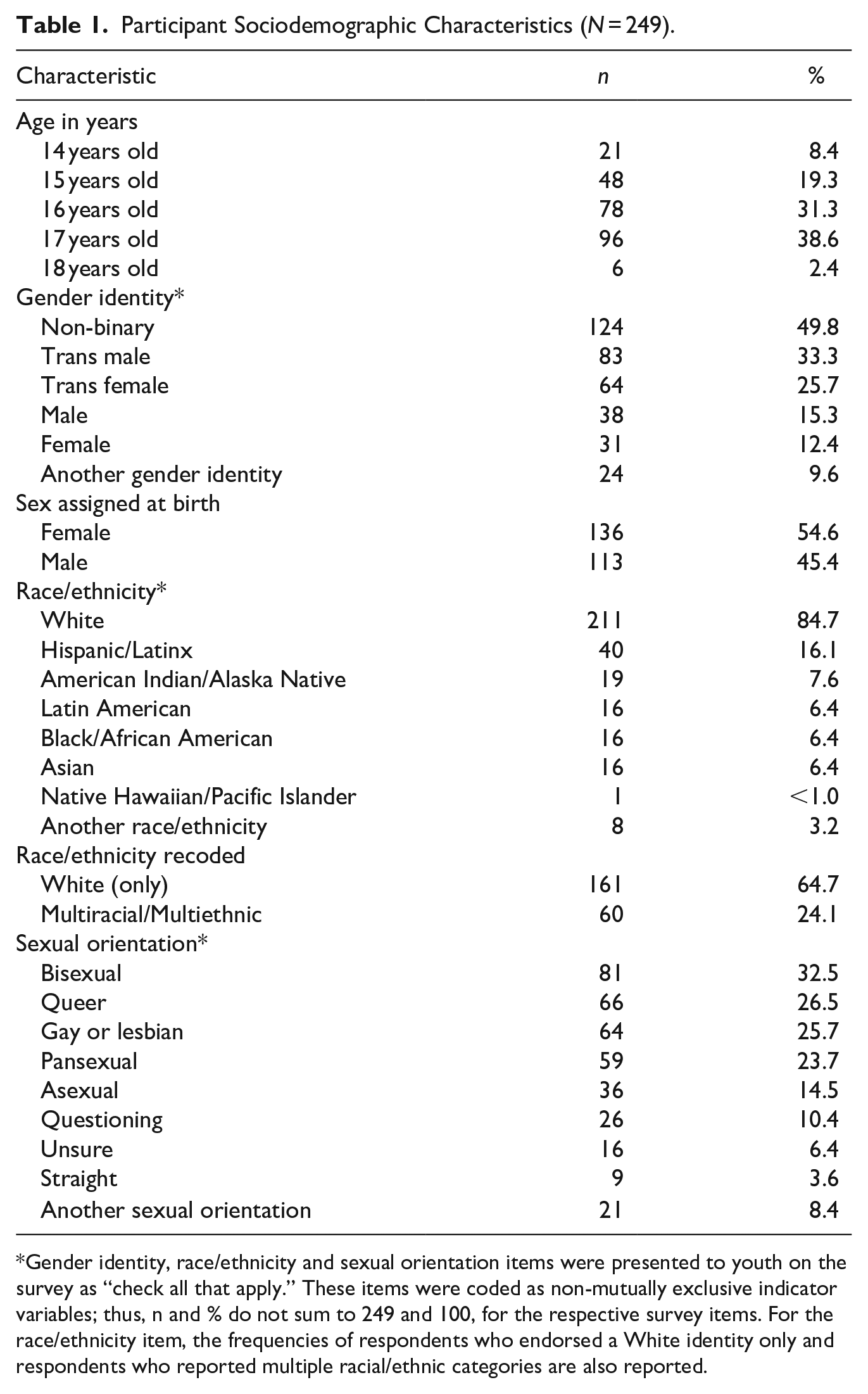
Gender identity, race/ethnicity and sexual orientation items were presented to youth on the survey as “check all that apply.” These items were coded as non-mutually exclusive indicator variables; thus, n and % do not sum to 249 and 100, for the respective survey items. For the race/ethnicity item, the frequencies of respondents who endorsed a White identity only and respondents who reported multiple racial/ethnic categories are also reported.
Coding and Analysis
Open-ended questions
Responses to two open-ended questions served as the sources of qualitative data analysis for this study: (1) In your life, which people, if any, would you describe as most supportive and why? (2) What can individuals/groups within families, schools, and communities do to best support the well-being of transgender and non-binary adolescents? Of the 249 TNB youth participants, 248 responded to the first question and all 249 responded to the second question. The total data set for the first question was 7,962 words, with an average response being around 35 words and ranging from 1 to 177 words. For the second question, the total data set was 8,237 words, with an average response length of around 55 words and a range of 1 to 270 words.
Coding
Open-ended survey responses were examined using modified consensual qualitative research (CQR-M). Unlike traditional consensual qualitative research (CQR), which allows for the analysis of semi-structured interviews of 12 to 15 participants, CQR-M enables researchers to systematically analyze larger samples of qualitative data (Hill, 2012).
Initially, as a way to keep the coding process streamlined, the research team was divided into smaller groups. Co-authors Shah, Parodi, and Kraus were the primary coders. Through weekly meetings and following the best practice guidelines for CQR-M (Hill, 2012), the coders first identified common experiences by creating domains composed of general themes. Next, they developed categories to capture the participants’ narratives with more nuance and detail.
During the coding process, the coders ensured “trustworthiness,” defined as the extent to which the results of a qualitative study are valid (Hill, 2012). This included establishing the integrity of the data, balancing the tension between subjectivity and reflexivity, and, as far as possible, clearly communicating the findings and their applicability to research and practice. As such, the coding team first assessed the data independently, then met to discuss discrepant codes, and finally arrived at a consensus. After the responses for each question were coded and no new domains or categories were identified, the coders established a “stability of findings” and determined that the data had been appropriately analyzed. Frequencies were then assigned to indicate the level of representativeness of the codes given the sample.
Analysis
Once the results were coded, there were group discussions with other co-authors (Holt, Greif Green, and Katz-Wise), to review the results, discuss varying perspectives, and incorporate relevant feedback. Holt and Greif Green acted as auditors for the coding process. Additionally, Shah and Kim met regularly to discuss the data coding and analysis process. This process was central in the iterative process of defining the domains and categories included in this study. Finally, during the data description process, team and individual meetings, including all the authors, were conducted regularly to collate feedback at each stage of the process.
Results
In Your Life, Which People, If Any, Would You Describe as Most Supportive and Why?
The responses were coded into six domains for the first question which identified individuals or contexts that participants found most supportive in their lives: (a) peers, (b) family, (c) communities outside of school, (d) school staff, (e) other, and a final domain to reflect participants who reported a lack of supports (f = no supports). Table 2 includes the list of frequencies for the domains and categories for this research question.
Identified Supports Across the Social Ecology Among Transgender and Non-binary Youth (N = 248).
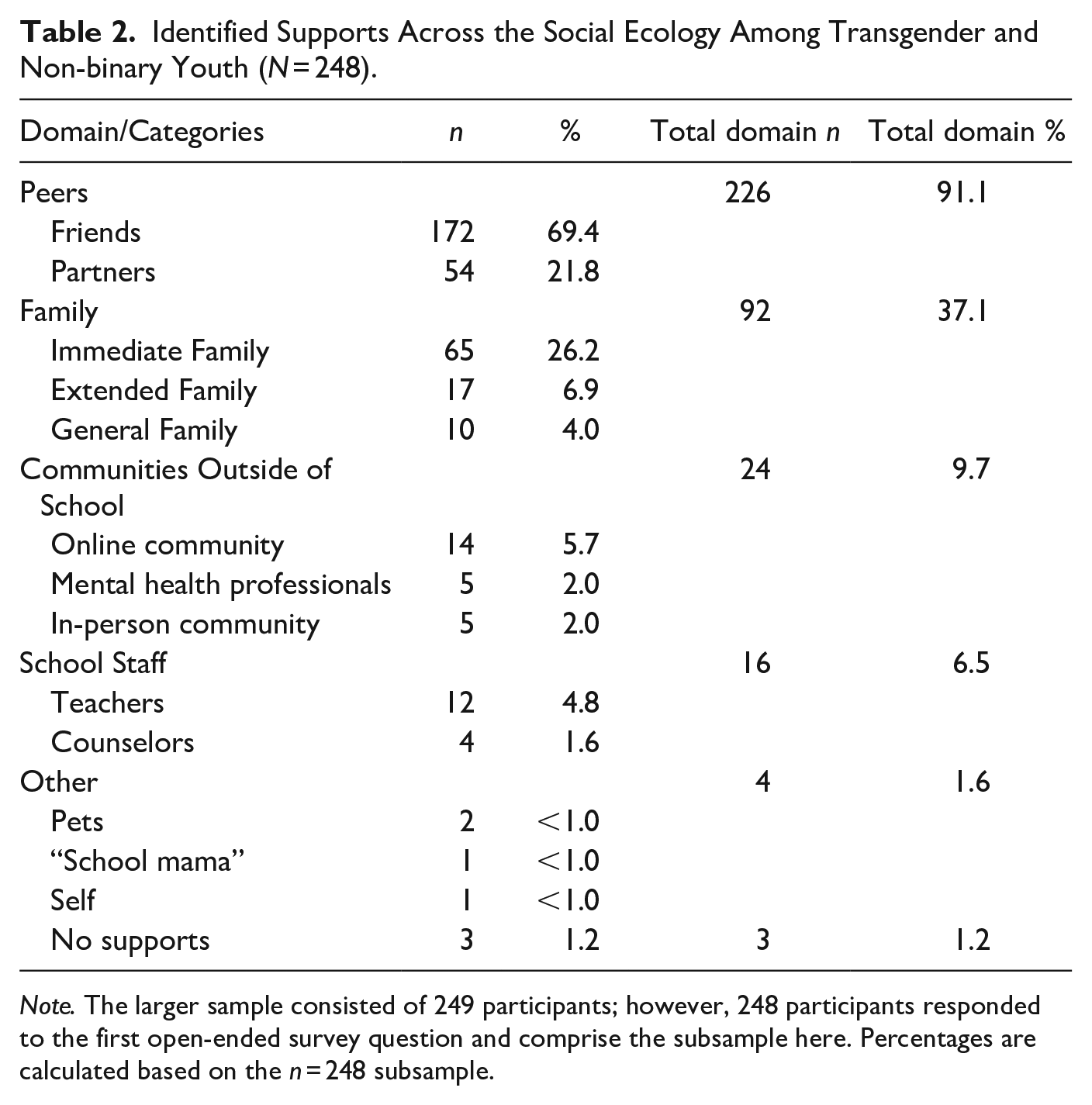
Note. The larger sample consisted of 249 participants; however, 248 participants responded to the first open-ended survey question and comprise the subsample here. Percentages are calculated based on the n = 248 subsample.
Peers
The peer domain includes the categories of friends and partners, both of which a large proportion of the TNB youth participants reported to be their most important support system (“My friends are the most supportive. I am dating my best friend currently and she is very supportive” 16-year-old, non-binary, Hispanic/Latinx). Most TNB youth participants noted friends as the first individuals with whom they discussed their gender identity and more than 3/4 of the participants noted friends as their strongest support system. A specific way in which friends supported TNB youth was by engaging in advocacy efforts with teachers, other friends, and family members, on behalf of the participants. As one participant mentioned, “My friends are the most supportive. I talk to them every day and they are always there if I need them or need advice or any sort of support. I have known them for years and they were so supportive when I came out. I always feel like I can rely on them and be myself around them” (17-year-old, non-binary, Asian+White+Hispanic/Latinx).
While most participants mentioned partners and friends as equally supportive, some reported partners as their most trusted allies, and furthermore, some participants also shared an added layer of intimacy and support. For example, one participant writes, “My fiancé, because he is there for me through everything, comforts me, wants to help pay for my transition and take care of me after top surgery” (18, trans male, White). Additionally, having partners who validated and/or shared experiences with the TNB participants provided a safe space for many of the TNB youth, as they continued to process their evolving gender identities (“My boyfriends are the most supportive people in my life. They are both trans as well so they understand the struggles. They understand when I vent about my dysphoria. And they just see me for who I really am.” 17, non-binary, White).
Family
The next domain that the TNB participants highlighted as key to their safety and well-being was family. This domain included responses that identified parents and siblings under the category of immediate family, while grandmothers, cousins, and aunts were coded under the category of extended family. Additionally, some participants identified family as a whole as a support system. Immediate family members had the largest impact on the well-being of TNB youth, supporting the participants’ gender identity. Immediate family members advocated for TNB youth rights and served as strong allies in the face of transphobia, as illustrated by a 17-year-old, male+trans male, White participant: “My mom does her best with everything and (with my consent) just casually mentions it if it is important to the conversation with people. She talks about it like it is no big deal and it is great.” Given the crucial impact of immediate family, when immediate family members were not supportive, participants felt rejected and unsafe even when other supports were in place.
The support of extended family became more important, especially when the participants’ immediate family support was lacking. Interestingly, participants specifically mentioned the role of female-identified extended family members, such as grandmothers and aunts. For example, one participant wrote: “My grandmother is the most supportive. She buys me skirts and cute tops, whereas my parents force me into jeans and such” (14-year-old, trans female, White). Another participant wrote about their great aunt, “My great aunt, [. . .] knew I was queer before I did when I cried over a girl I liked without realizing it all the way back in second grade. [. . .] She was very supportive and took me shopping to get clothes from the men’s section” (17-year-old, non-binary, White). In this way, extended family members could be key in making TNB feel accepted and welcome in family settings, even when immediate family members might not be accepting of their gender identity, which is important when understanding TNB experiences and planning TNB youth interventions.
Communities outside of school
The domain of communities outside of school included responses that identified various individuals and groups that TNB participants actively sought out when in need of support outside of family and school contexts. Three categories emerged: (a) online communities, (b) mental health professionals, and (c) in-person communities. TNB youth likely have differential access to in-person communities based on their immediate environment (e.g., unsupportive parents may not allow youth to access LGBTQ communities, schools/communities might not have GSAs, etc.).
The TNB youth finding support within online communities is in line with other studies that have noted similar trends for broader LGBTQ+ youth doing the same, especially during the COVID-19 pandemic (Platero & López-Sáez, 2022). While specific online platforms were not identified, some youth found support online, especially when it was not present in their immediate environment: “My online friends are the most supportive. My school friends know I’m trans but don’t respect it. They use my deadname and still treat me the same. My family doesn’t support me being trans and says it’s against my religion. My online friends who I’ve known for about 4 years now are the best. They were super supportive when I came out to them and they support me through everything” 17-year-old. female+trans female, White).
Similarly, another participant identified online communities as a source of support that extended to becoming in-person friends and providing financial support: “My friends who I made online are my biggest supports, they have always been there for me, mentally, sometimes in person physically, and even financially, I have been supported by my friends online” (17-year-old, non-binary, American Indian/Alaskan Native+White+Hispanic/Latinx).
Notably, only a few participants explicitly mentioned mental health professionals outside of school settings. This could highlight the difficulty in accessing mental health support for TNB youth, especially if their immediate family is not supportive of their identity. For those who did, supportive therapists with expertise counseling TNB individuals had a positive impact on the participants’ lives because these professionals provided unconditional support when other people in their lives were not supportive of their gender identities: “I’ve been seeing my therapist since 8th grade and he has been incredible. He specifically works with LGBT people and is even part of the community himself. I had been with other therapists before, but as I was coming out as trans, he was really the only one who fully understood how to support me” 17-year-old, male+trans male, White).
The last category under this domain was in-person community, which included Gay-Straight or Gender-Sexuality Alliances (GSAs) and religious youth groups. While there was a small number of participants who spoke finding support in religion (n = 3), this is a significant finding when expanding on protective factors: “My grandmother and the reverend at my church. I came out to them first and have been going to them to seek guidance about how and when to talk with my mother about my identity” 17-year-old, trans male, White. It is important to underscore that when these larger communities outside of school were available and inclusive, TNB youth reported that it was easier to move toward self-acceptance: “I felt like the community online and the support groups and stuff I found. . . have been the most supportive. Especially in my gender and sexual identity. . . and to kind of figure that out. . . more than anything. Because they have been able to provide inside support and we can have conversations that I am not able to have with people. . . especially with my friends in my life.” (18, non-binary, White).
School staff
Different members within schools were sources of significant support for the TNB youth participants. Specifically, participants mentioned teachers and school counselors as key sources of support. They played a critical role in creating a safer place for TNB participants and helping them feel understood and seen. As one participant wrote, “I have a supportive teacher at my school who is also LGBTQ+ that is really the reason I am somewhat mentally stable” (17-year-old, trans female + non-binary, White). Another participant echoed feeling supported by the school staff, especially when they did not feel fully understood in other socio-ecological contexts: “School was my getaway where I could ‘relax’, since my family really didn’t understand what was going on with my mental health and often made it worse” (17-year-old, male + trans male, White). Similarly, supportive school counselors went a long way in making the TNB youth feel safe by creating inclusive spaces and making room for TNB youth to openly discuss concerns that they might have, as illustrated by one participant’s words: “The most supportive person in my life is my school counselor. She has accepted me from the beginning and helps me with everything I need” (15-year-old, female+non-binary, White+Hispanice/Latinx). Considering the significant amount of time that youth spend in school and the number of challenges TNB youth face in school (as detailed below), having adults who are supportive and attentive to the needs of TNB youth can play a substantial role in supporting their well-being.
Other
Though the other domain included limited responses, they are included here to present the TNB youth voices as authentically as possible. Considering that often these surveys are responded to by TNB youth who often exist in marginalized contexts, it is important not to underestimate the impact of these other supports in the lives of TNB youth. As one example, participants wrote about pets being central to their well-being: “My brother, and my dog if she counts.” (16, demi-male, White). In addition, one participant mentioned having a “school mama,” though did not mention if this was a peer or a school staff member (“My school mama because she is always there for me” 17-year-old, trans male, American Indian/Alaska Native). Finally, one participant mentioned they were their own biggest support, indicative of the isolation that TNB youth could face in their ecological contexts: “I would describe myself as the most supportive because I am not out to my parents” (15-year-old, female+non-binary, Latin American+Hispanic/Latinx.)
No support
A handful of participants mentioned that they did not have access to supportive individuals in any context, as illustrated by a participant: “Nobody. My family is a bunch of White, racist, closed-minded hypocrites and I don’t have any friends.” (17-years-old, non-binary, White). Responses in this domain highlighted that there are TNB youth who live in contexts in which they are not able to identify anyone who supports and accepts their gender identity, which could be detrimental to their safety, mental health, and overall well-being.
What Can Individuals/Groups Within Families, Schools, and Communities Do to Best Support the Well-Being of Transgender and Non-Binary Adolescents?
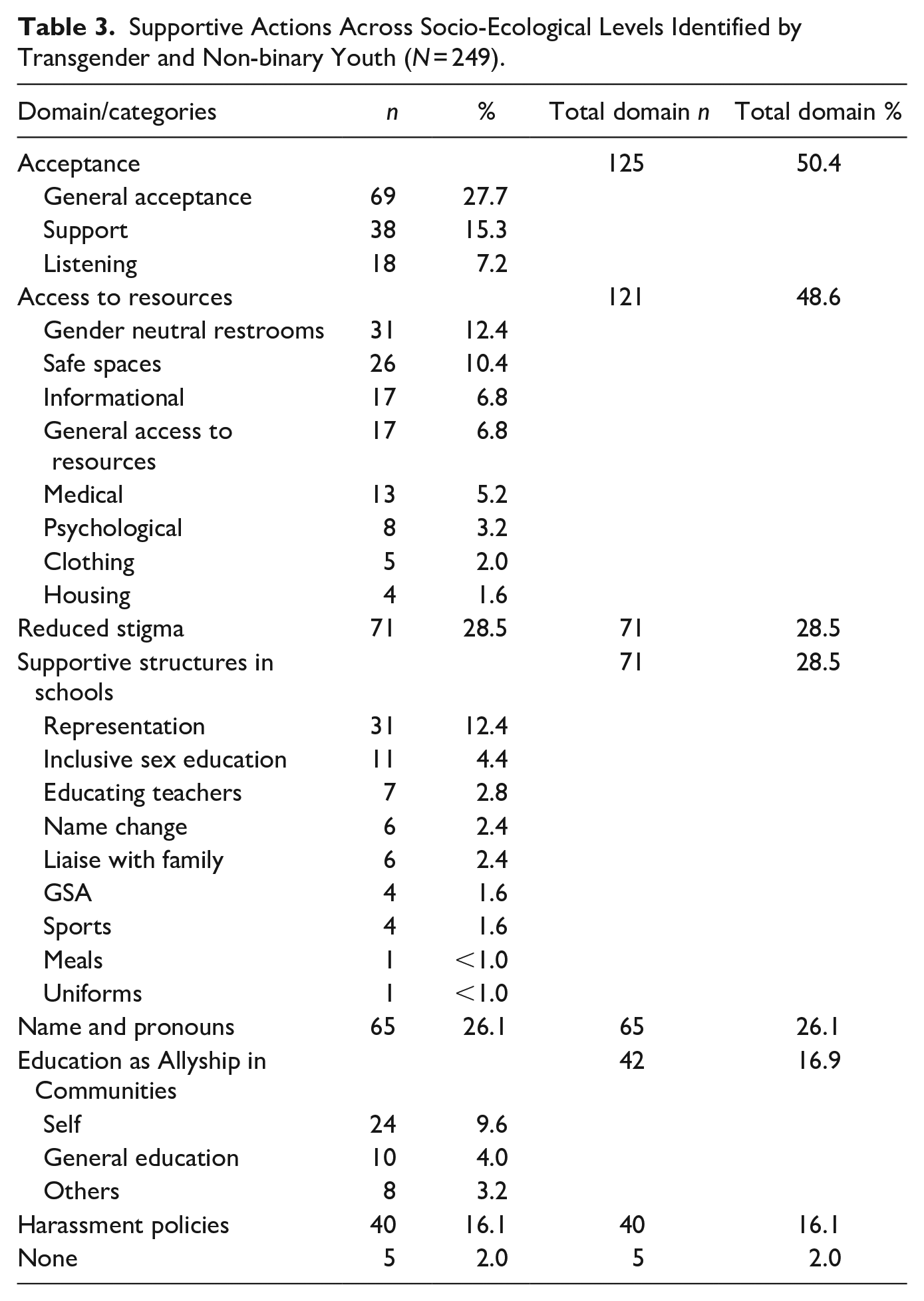
Responses to the second question explored what individuals and groups within families, schools, and communities could do to best support the well-being of TNB adolescents. Participants’ responses were coded into seven domains: (a) acceptance, (b) access to resources, (c) reduced stigma, (d) name and pronouns, (e) education, (f) supportive structures in schools, and (g) a final domain to reflect participants who did not report any suggestions (i.e., no suggestions). Responses with multiple distinct suggestions were double-coded. A list of the domains, categories, and frequencies can be found in Table 3.
Supportive Actions Across Socio-Ecological Levels Identified by Transgender and Non-binary Youth (N = 249).
Acceptance
Almost half of TNB participants reported that they appreciated individuals accepting their stated gender identities through various active and passive ways. As such, this domain included responses that highlighted how others could communicate acceptance in a way that would feel supportive to TNB youth. Three categories emerged: (a) general acceptance, (b) support, and (b) listening.
Responses coded under general acceptance included responses in which participants spoke about the importance of acceptance as essential in and of itself, which includes supporting TNB youth’s gender exploration and stated identities without questioning, doubting, or rejecting. This is exemplified by a 16-year-old, trans female, Hispanic/Latinx participant: “They can just treat them like the gender they are instead of just treating it like a “phase”,” and 16-year-old, trans female, White participant: “Just accept people for who they are and realize that this is not a choice, it is something we are born as.” The TNB youth participants reinforced the idea that for spaces to be safe, support needs to be consistent and not conditional depending on context.
While the subcategory of support could be understood as an extension of acceptance, support was created as a unique category because of the active nature of responses included in this category. In other words, participant responses under this category highlighted steps others could take once TNB youth have shared their gender identity: “As for family, I just want them to be there for me on my bad days and when I need it. I just want a shoulder at home to lean on and not feel so isolated” (16-year-old, trans female, American Indian/Alaska Native+White). As such, the category of support spoke to ways in which individuals, groups, and larger systems could encourage and safeguard the self-expression of TNB youth.
Then, taking it one step further, a specific way of active acceptance, as identified by the participants, was listening. This final subcategory included participant responses that elaborated on how others could listen to the lived experiences of TNB youth as a means of acceptance without feeling the need to intervene, “fix” something, or try to make meaning for the TNB youth. For example, one participant wrote, “Listen to the person. Most likely they know more than you” (15-year-old, trans female, White). Another participant stated, “They just need to listen to those students. Listen to what they have to say and help only when needed” (16-year-old, male+trans male, White). In other words, these responses alluded to the more explicit act of listening without the imposition, rejection, or interventions using other worldviews on TNB youth.
Access to resources
Many TNB youth participants stated a pressing need for resources across settings, which were categorized as (a) gender neutral restrooms, (b) safe spaces to congregate, (c) information on TNB-related topics, (d) general access to resources, (e) access to medical services, (f) access to psychological services, (g) gender affirming clothing, and (h) housing services. Additionally, several participants stated that access to resources was essential but did not name specific resources. While there were several categories within this domain, they shared an explicit and actionable call for communities and larger systems to increase safe access to support and resources for TNB youth.
Access to gender inclusive restrooms was stated by several participants as a supportive resource across settings because restrooms were one of the most common spaces in which their identity was either validated or invalidated. Furthermore, participants underscored the importance of having safe spaces to meet and connect with other TNB identified youth, including in schools, community centers, and homes (“Give us resources, places to meet and talk to each other, places to be safe” 16-year-old, non-binary, Hispanic/Latinx). TNB youth also mentioned the need for accurate information on ways in which to access gender affirming medical and psychological services. For example, one TNB youth wrote, “Schools can provide confidential advice from counselors and link to other community outreach programs that do things to help trans people” (17-year-old, female+trans female, White). Separately, a few participants also spoke about the need for logistical resources like clothing and housing as a way to support TNB youth at risk in their current contexts (“I wish that places like schools could provide resources to assist youth to receive gender-affirming garments if they cannot get them themselves (binders, bras, underwear, etc.)” 17-year-old, trans male, White). Overall, participants described access to resources as essential. As one participant summarized, “They can use preferred pronouns and names, they can make gender neutral bathrooms, they can help these people by getting clothes, binders, and shapewear to help them feel more comfortable in their bodies” (17-year-old, male + non-binary, White).
Reduced stigma
Over one-quarter of TNB participants spoke to the importance of community members proactively working to reduce the stigma with which TNB youth have to contend. Participants conceptualized stigma reduction as a precursor to acceptance and creating access to resources for TNB youth. That is, reducing stigma would function as a preventative measure through the creation of more welcoming communities in which TNB youth had agency over whether to share their gender identities. As one participant stated, “I think the main reason why some people act this way is because they’ve been taught from youth that trans and non-binary people are wrong, essentially their bigotry is preventing them from making us feel welcome and safe” (16-year-old, female+non-binary, Latin American+Hispanic/Latinx). Moreover, reducing stigma was noted as being integral to the participants living more authentic lives: “They can stop turning their backs when we get beaten for who we are, just because they’re too scared, or secretly don’t really care. They can start actually acting like we exist, and we’re alive, and we’re humans just like them” 17-year-old, non-binary+pangender, White.
Supportive structures in schools
The next domain focused specifically on resources in school settings to ensure that schools could be more inclusive and supportive of TNB youth. Given participants’ ages, it is not surprising that a quarter of TNB youth identified schools as an important location for support. Specific subcategories were: (a) representation, (b) inclusive sex education, (c) educating teachers, (d) name change procedures, (e) liaising with family, (f) gay-straight alliances, (g) support around sports, (h) meals, and (i) uniforms.
The most common category related to schools was representation, particularly around the inclusion of TNB-centered curricula as a way to make TNB experiences visible and non-marginalized in classrooms. Inclusive curriculum was noted as setting a consistent tone for support for the participants: “Being inclusive from the get-go, and not making such a big deal (at least in my city’s schooling) to kind of separate it in lessons. Like for Trans Remembrance week, we learned about a lot of cool things in my French class about French trans history. But then after that we acted like it never happened” 15-year-old, male+trans male, American Indian/Alaska Native, White.
In addition to having representation in general education, the inclusive sex education category underscored the importance of sex education in schools being reflective of TNB experiences and not perpetuating gender as a binary construct. One participant articulated the need for inclusive sex education this way: “Educate about identities and queer history as well as LGBTQ sex ed. This may be too personal but I have to find out information about LGBTQ sex ed from strangers on the internet” (14-year-old, non-binary, White). Participants also named educating teachers to help create inclusive classrooms and build supportive relationships with TNB youth as crucial. One participant, who faced the brunt of “a bigoted teacher,” wrote the following about their experience: “The most trouble I’ve had is with an older teacher who said that if my parents didn’t call me by my preferred name then she wouldn’t either” (14-year-old, male+trans male+non-binary, White). Other subcategories involved systems-level items, focusing on easing the daily stress and hassle of TNB students at school. The name change category included a recommendation for establishing procedures that allow students to change the name by which they are identified at schools (“Schools could make it easier for students to change their name in the school system” 15-year-old, male+trans male, White). Liaising with family members was seen as an important measure school staff could employ to engage unsupportive family members on behalf of TNB youth (“Schools should help educate parents on trans and non-binary identities. Many parents stay confused and don’t believe their children and that is what makes a transgender child feel isolated and neglected” 16-year-old, trans male, Black/African American, Latin American). Finally, categories that had a small number of responses highlighted the need for establishing or supporting Gay-Straight alliances, making school sports and locker rooms more inclusive, making meals available for at risk TNB youth, and abolishing the assignment of uniforms based on sex assigned at birth. All these responses were connected by their ultimate goal of making schools spaces where TNB youth could learn about, see representation of, and safely express their chosen or evolving gender identities.
Name and pronoun use
Several participants reported that others could support them by using their chosen name and pronouns. (“Address them the way they ask to be, even if they have changed their mind about what to call them before” 17-year-old, non-binary, White). As noted in this example, the key here is to focus on what the TNB youth want to be called at a given time, acknowledging that the specific names and pronouns may change as they continue to develop their gender identities. TNB youth felt that this act of seeing them as who they are was the minimum that others could do, even if they choose not to engage in other supportive behaviors. A participant stated clearly: “Respect our preferred pronouns and names and not be mean about our decision to be us” (17-year-old, non-binary, White). This category was closely connected to the other categories, as detailed below, and highlights a critical specific step others could take to alleviate some of the challenges faced by TNB youth (“I personally feel like correcting someone on my gender and name becomes exhausting and a pain. But I also feel like I’m being the pain by correcting them. It would be helpful if we could get rid of the stigma of asking someone’s pronouns when first meeting them” 16-year-old, trans male, White).
Education as allyship in communities
While closely connected to the domains of reducing stigma and acceptance, some TNB youth emphasized the importance of community members educating themselves or others about TNB youth-related topics such as the spectrum of gender identities, the importance of self-definition for TNB youth, and the significance of TNB supportive community resources, to build allyship in communities as a whole. Responses indicated that this education as allyship should be self-driven on the part of the community members so as not to burden TNB youth (“I feel like schools and communities can support transgender and non-binary adolescents the most by educating themselves first on the matter at hand. Speaking from personal experience, no kid wants to describe these emotions and how the LGBTQ+ community works all the time” 16-year-old, non-binary, White). The two categories included in this domain are (1) self-education and (2) other-education.
Self-education emphasizes the importance of community members educating themselves so as to build stronger relationships with TNB youth (“They need to actively work. It’s not enough to ask their child/student to tell them what they want because that puts an immense amount of pressure on that person. My parents have failed to do research on their own and as a result I simply don’t talk to them because they have no basis of understanding and I just don’t have the time to explain every little intricacy of my identity” 17-year-old, trans female, Asian+White). Other-education involves community members educating other community members about the needs and experiences of TNB youth, to make communities more inclusive and safer (“Educate people, with real facts instead of stereotypes. Help open minds to be less judgmental” 18-year-old, trans male, White).
Harassment policies
The domain harassment policies included responses that underscored the need for establishing harassment policies specific to protecting TNB youth across all organizations. Some TNB participant responses spoke to the need for harassment policies directly: “It is important to have specific harassment rules against lgbtq+ people so that they know there are workers in the establishment who are looking out for them” (15-year-old, non-binary, White). Other participants elaborated on personal experiences of being harassed, which made the establishment of harassment policies imperative. For example, one TNB youth wrote, “Communities should be trying to not allow and stopping slurs and bullying of trans and non-binary people” (14-year-old, trans female, American Indian/Alaska Native). As such, the participants stated that these policies could be first steps in protecting and addressing incidences of violence against TNB youth.
No suggestions
Finally, a small number of participants stated that they could not think of any ways in which communities could be supportive of TNB youth. As one participant wrote, “They don’t do anything and they don’t care to” (15-year-old, non-binary, White). The responses indicated that the participants did not feel like community members cared enough about TNB issues to put in the time and effort needed to support TNB youth.
Discussion
This study explored how TNB adolescents from across the United States described their existing supports across multiple levels of the social ecology. In addition, this investigation gathered information about TNB adolescents’ recommendations for ways in which families, schools, and communities could more optimally support TNB adolescents so as to reduce the stressors that TNB youth have to contend with in society. The study adds to a limited body of research on resilience factors among TNB adolescents and is unique in its methodological approach, which both centers youth voices and draws from a national sample of adolescents. Key study findings indicated that the most common source of support was peers, followed by families, and that more supportive environments for TNB adolescents offered access to resources and emphasized reducing stigma. Figure 1 provides an overview of study findings, drawing from the minority stress and social-ecological models to highlight both identified supports and supportive actions individuals and contexts could take to create safer spaces for TNB youth. A more comprehensive discussion of key findings and their implications follows, with attention to how they align with social-ecological and minority stress models, and which collectively provide a nuanced understanding of TNB adolescents’ experiences that could inform policy, practice, and future research.
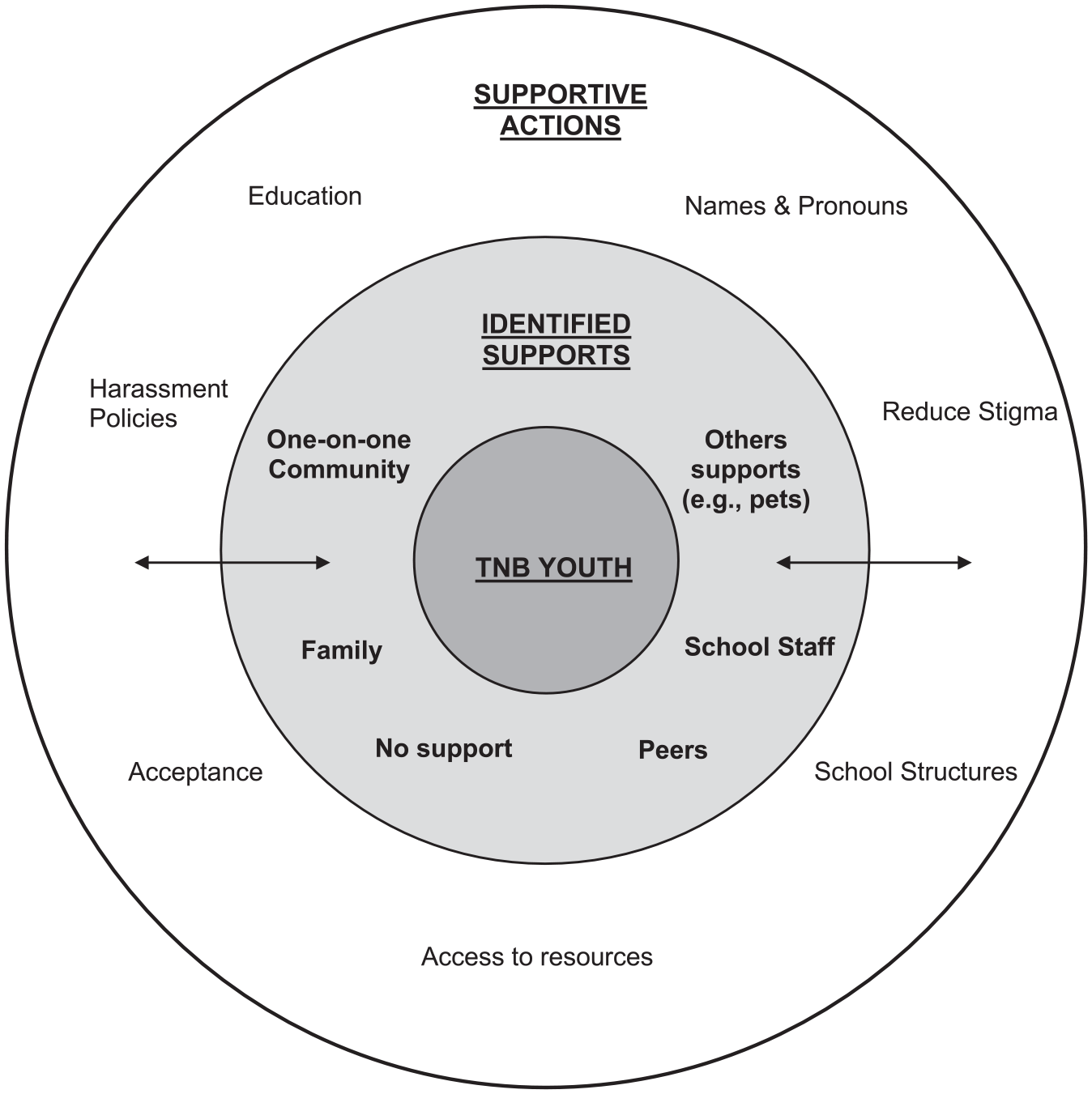
Supports and Recommended action steps identified by TNB participants.
One central finding was that individuals and groups within TNB youths’ microsystems were frequently identified as being important sources of support, which is consistent with the social-ecological model that highlights the salience of the most proximal contexts. Studies have consistently found links between parental support, family functioning, and TNB individuals’ psychological health (Brown, Porta et al., 2020; Westwater et al., 2019). Our qualitative findings echo prior studies by documenting that nearly 40% of participants identified family as a primary source of support. Critically, findings from the present study also highlight the centrality of peer support in TNB youths’ lives, which to date, has been explored less extensively. A small set of studies have found that peers play a significant role in the well-being of TNB adolescents, with one quantitative study finding that having caring friends was related to less psychological distress and substance use in TNB youth (Gower et al., 2018). The results of this study corroborate previous findings, with 91% of participants mentioning peers as among the most supportive individuals in their lives. According to youth participants, peer support was particularly valuable in terms of discussing gender identity and feeling that peers will advocate on their behalf, and also because of a sense of having shared experiences. Interactions with peers might be particularly complex for TNB adolescents, given burgeoning research highlighting the salience of peer support is in tandem with extensive research documenting higher rates of peer victimization for TNB youth. Moreover, peer victimization is significantly correlated with greater mental health problems and diminished school belonging among transgender youth (Hatchel & Marx, 2018; Hatchel et al., 2019). Our results suggest that schools could be a key point of potential intervention, both to foster positive connections among youth and to implement programs and create climates that do not tolerate peer victimization broadly, and specifically based on one’s gender identity.
Findings also extend prior research regarding peer support, with our more nuanced findings emphasizing the importance of partners as a significant peer group. Specifically, almost 22% of participants identified partners as a primary, and at times, the only, source of support. Furthermore, several participants wrote about their partners sharing their TNB identities. Future research could focus on intimate relationships between TNB youth as a way to further understand of the role of TNB youth partnerships in self-identification, resilience, and long-term outcomes.
Beyond peer support, schools more broadly emerged as an especially salient context, which is not surprising given participants’ ages and which parallels research more broadly identifying schools as a key social-ecological context for school-aged TNB youth (Gower et al., 2018; Hatchel & Marx, 2018). While only 6.5% of participants mentioned schools as locations of support, schools were the context in which many participants spoke about being connected to peers. Furthermore, about one in three TNB youth participants elaborated on specific ways that schools could enhance support structures for TNB students, including increasing the representation of TNB identities in the classroom, making sex education inclusive, educating teachers in affirming all gender identities, accepting name changes, and liaising with families. Moreover, in participants’ responses regarding ways in which community settings could be supportive of TNB youth, many of the recommendations could apply to the school setting (e.g., affirming mental health professionals). Participant recommendations for how schools might enhance support structures are set against a current backdrop of U.S. policies and laws that, rather than bolster TNB youth wellbeing, make schools unsafe and unsupportive to them. For instance, in some states (e.g., Florida), there are laws in place that increase risk and reduce safety for gender diverse youth, for instance, by prohibiting school staff from discussing gender identity and by requiring staff to “out” students. Such laws, which constitute the macrosystem in the social-ecological model, and reflect a key minority stress factor, present significant barriers to TNB youth experiencing support in a context in which they spend much of their time.
Finally, specific communities outside of school were identified by a small percentage (9.7%) of participants as key sources of support. Notably, responses for this study were collected during the global COVID-19 pandemic. Thus, in-person or larger communities might have been harder for TNB youth to access and identify as sources of support. For example, if TNB youth were accessing mental health professionals within schools, their access might have changed due to remote schooling related to the COVID-19 pandemic. Interestingly, in-person communities mentioned by TNB youth included religious communities, which the TNB youth stated were safe spaces to explore their gender identities. Additionally, while only 5.7% of respondents identified online communities as sources of support, future research could explore digital resources available to TNB youth with specific questions about online connections.
When asked about other ways in which families, schools, and communities could best support the well-being of TNB adolescents, participants provided a range of recommendations were identified. For instance, most TNB youth participants mentioned the importance of access to resources across various contexts, including gender neutral bathrooms, information about TNB experiences, medical care, psychological care, and clothing. Furthermore, nearly one in six participants specifically underscored the importance of establishing and implementing harassment policies. The need for such policies and practices relates to the chronic daily stressors TNB youth face within the contexts in which they live. For instance, as found by Newcomb et al. (2020), TNB youth are at a disproportionately higher risk of violence victimization, making the need for harassment policies particularly pressing. And, as articulated by participants, enacting policies and practices that alleviate the sense of exclusion many TNB youth face. Further, as discussed earlier, schools were also identified as an important context in which change could be implemented. More broadly, participants highlighted the necessity of community members working to proactively reduce stigma and promote acceptance.
Extrapolating from TNB participants’ responses regarding ways in which families, schools, and communities could best support TNB adolescents’ wellbeing, a list of recommended action steps to create more supportive contexts is provided below. To note, some of which would require significant policy shifts and some of which could be enacted immediately by individuals.
When creating name tags in any context, include preferred/chosen names and pronouns.
Offer family support and process groups to help educate parents, guardians, siblings, and friends on how they can create more affirming environments for TNB youth. Such groups could also support in experiences and provide a space to ask questions, practice using new terminology, and build community with others going through similar experiences.
Encourage teachers to use last names during school attendance so as to not “deadname” an individual.
Assign books and homework that reflect a range of identities to normalize discussions surrounding gender identity and sexual orientation.
Advocate for students to wear the school or sports team uniform that best affirms their identity.
Provide trainings to teachers, doctors, counselors, and other community members that are focused on inclusive and accurate language and terminology, and are offered regularly to ensure familiarity with the most current terminology given it continues to evolve.
Create inclusive access to information and resources that would in turn enhance medical, psychological, and physical well-being.
Normalize trans and non-binary identities, especially within health education classes and within youth development programs.
Establish harassment policies that protect the rights and well-being of TNB youth.
Strengths and Limitations
The study is notable for several conceptual and methodological strengths. First, while maintaining the strengths of a qualitative study, the TNB youth sample was large and geographically diverse, with participants recruited from urban, suburban, and rural areas in the U.S., using social media advertisements. Second, both non-binary and binary transgender adolescents were recruited for participation in an effort to accurately represent a full spectrum of transgender experiences. Third, parent/guardian consent was not required for this study, which allowed for a broader range of TNB youth to participate than in prior studies of gender diverse youth, which required parental consent. Fourth, the study extends the limited literature focusing on identifying challenges that TNB youth face due to their gender identity, as identified by the TNB youth themselves.
This study includes several limitations. It was a U.S.-based study with predominantly White participants. Future studies could focus on TNB youth using an intersectional lens (i.e., including race, ability, gender, socio-economic status, and additional identities salient to youth in the open-ended questions) to expand the existing literature. Additionally, similar studies based on global populations would enhance the literature on TNB youth experiences. Further, researcher bias in the interpretation of findings is possible. Findings were also limited by using open-ended survey questions as the source of qualitative data; semi-structured interviews would provide potentially richer information. For instance, since the TNB youth participants were responding to static open-ended questions without the avenue for follow-up questions about peer relationships, it was not possible to further explore to whom exactly the participants were referring and how they might describe those relationships. While there might be different “levels” of peer relationships that map onto particular benefits, that is an area of future research. Finally, the study is limited by its cross-sectional nature. While this study is a part of a larger longitudinal study, the open-ended questions asked at each wave of the study vary. For this reason, changes over time to the responses to the questions included in this study could not be gauged. Future longitudinal research could evaluate the function of supports across multiple areas of the social ecology over time and simply explore the degree to which any shifts in identity over time are associated with shifts in identified supports.
Taken together, study findings amplify the voices of TNB youth participants, highlight the centrality of support across multiple areas of the social ecology that promote well-being, and illuminate ways in which contextual stressors related to TNB identity serve to reduce support, or at times, create unsafe contexts for TNB youth. Results point to the critical importance of family and peer support and the need for schools and youth-serving agencies to implement policies, provide resources, and create spaces in which TNB youth feel welcome and seen.
Footnotes
Acknowledgements
We thank Karen Morales and Meghan Roe of Marketing Magnet (Boston, MA) for support in participant recruitment.
Declaration of Conflicting Interests
The author(s) declared no potential conflicts of interest with respect to the research, authorship, and/or publication of this article.
Funding
The author(s) disclosed receipt of the following financial support for the research, authorship, and/or publication of this article: This work was supported through a Faculty Large Grant Award (PI: Holt) from Wheelock College of Education and Human Development, Boston University.
