



Abstract
Newcomer adolescents make up a large minority of Canada’s population and their positive integration experiences with education systems across the country are critical for both their development and the country’s long-term success. The current study examined newcomer adolescents’ (n = 4, between 16 and 18 years old) integration experiences using an arts-based engagement ethnography to understand what influences their positive integration into the school system. Artifacts, interview, and focus group data were analyzed systematically using ethnographic research guidelines. Five structures were identified: (1) barriers to advancement at individual, school, and macro levels, (2) fluctuating relationship with cultural identity, (3) limited trust in systems, (4) resilience through independent learning, and (5) facilitating factors to positive integration experiences at the family and school level. In keeping with a relational developmental systems theory framework, each structure accounts for multiple inter- and intra-individual factors at multiple environmental levels. These findings outline considerations for systemic issues in academic institutions and offer suggestions for how institutions can better support newcomer adolescents.
Keywords
According to recent estimates, Canada welcomed over 1.2 million newcomers with permanent residency status between the years of 2011 and 2016, making up 21.9% of the population (Morency et al., 2017). This percentage is close to the highest level recorded, 22.3% in the 1921 Census (Morency et al., 2017). Any individual who has recently migrated can be considered a newcomer (Immigrants, Refugees, and Citizenship Canada, 2018). As a result of immigration reforms of the 1960’s, Canada saw an increase in newcomers from Asia, the Caribbean, Africa, and Latin America (Sinacore et al., 2015). More than 1/3 of all Canadian adolescents are born outside the country (first generation Canadian) or have at least one parent born outside the country (Morency et al., 2017). The integration of these adolescents into Canadian society is critical to the social fabric and long-term successes of the nation (Areepattamannil & Freeman, 2008; Rossiter & Rossiter, 2009).
Literature Review
Understanding Adolescence Through Relational Developmental Systems Theory Framework
Adolescence is a critical developmental stage comprised of both notable biological changes and key social role transitions, both occurring with varied timing dependent upon time and place (Sawyer et al., 2018). Adolescents manage these transitions while simultaneously acting to select, create, and change their contexts (Grolnick et al., 1997). Newcomer adolescents are thus managing biological, social, and contextual challenges as they integrate into a new society. Positive integration experiences are dependent upon multiple individual and contextual factors, including their educational, occupational, and civic opportunities and their commitment and attitudes toward these opportunities (Banks et al., 2016). Relational developmental systems theory (RDST) offers a unique lens through which to explore these multiple levels of the adolescent social ecology, with an eye toward promoting resilience and positive developmental outcomes (Lerner et al., 2005). This theory attempts to explain and optimize development, focusing on intra- and inter-individual differences in outcomes across the lifespan by accounting for multiple attributes of the individual across multiple levels of ecology (Lerner et al., 2013). All levels of these attributes are thought to hold influential power in shaping these positive developmental outcomes, and neither the individual nor their context can be studied in isolation (Lerner, 2015). Adolescents are located within school and family-based contexts, and newcomer students identify their school as the primary context in which their social, emotional, and academic development and integration occurs (Gallucci & Kassan, 2019; Li, 2010; Stermac et al., 2013; Stodolska, 2008; Suárez-Orozco & Marks, 2016).
Factors Influencing Integration: Individual, Family, School, and Macro Level
For newcomer adolescents, integrating into a new school context in Canada is a daunting task (Gallucci & Kassan, 2019). Newcomers may be at a disadvantage when attempting to navigate the new social and academic norms of their new school as a result of inadequate preparation or the absence of a proper orientation; this disadvantage has cascading influences on student motivation and classroom engagement (Stermac et al., 2012). Student disengagement is often further stimulated by situational factors including inaccurate grade placements, positioning students in curricula that are either under- or over-challenging by either repeating material they have already mastered or presenting challenging concepts in a new language (Anisef et al., 2010; Kassan et al., 2019).
Students who are placed in an appropriately stimulating curricula may still encounter linguistic obstacles that effect their integration experience, as attainment of the English proficiency needed for strong academic performance may take as many as 7 years (Rossiter & Rossiter, 2009; Suárez-Orozco et al., 2010). The inability to fully express oneself to peers speaking the language of the new country can be a major barrier to social integration, which is ameliorated by peers who speak the same language (Phinney et al., 2001). Developmentally, positive peer connections become a salient component to one’s self-concept in adolescence as youth spend more time with friends (Harter, 2007). Unfortunately, newcomer adolescents to Canada may not only face the challenge of learning a new language but also racist and anti-immigrant discourses in society and schools themselves often lead to students being excluded, discriminated against, and bullied (Gallucci & Kassan, 2019; Kassan et al., 2019; Stermac et al., 2012). These discourses have the potential for negative cascading influences on developmental outcomes across adolescence, as social isolation and bullying have been identified as primary risk factors for the involvement of immigrant and refugee adolescents in gangs in the Canadian province of Alberta (Ngo, 2012; Rossiter & Rossiter, 2009). Social exclusion due to racism or anti-immigrant discourse is also strongly correlated with depression, which is linked to sub-optimal academic outcomes (Fawzi et al., 2009), including increased risk of not completing schooling (Anisef et al., 2010).
Positive school integration experiences are further shaped by other contextual and individual factors including pre-migration experiences and familial norms and expectations. Exposure to trauma prior to arriving in Canada may result in psychological distress or post-traumatic stress disorder, anxiety, and grief (Stermac et al., 2012). Additionally, for many families, the pursuit of education is a motivating factor behind migrating to Canada (Sinacore et al., 2015; Suárez-Orozco & Marks, 2016). The pressure that accompanies this motivation compounds normative adolescent pressures for academic success, as newcomer adolescents recognize the sacrifices made by their parents and strive to exceed parental expectancies (Li, 2010). Parents may also struggle to be highly involved in their children’s lives, as financial strain results in parents working multiple jobs while children also work part-time to contribute to the household or may not be living with their children due to staggered migration (Rossiter & Rossiter, 2009). Parent-child relationships may be further stressed by potential incongruencies between the cultures and contexts of school and home; each of these challenges may disrupt the constancy needed for newcomer adolescents to meet their academic goals (Suárez-Orozco et al., 2010). Research has found that having parents who are university educated, (Abada & Tenkorang, 2009), have a higher socioeconomic status (Aydemir et al., 2005), and are proficient in the language of instruction (Perreira et al., 2006; Suárez-Orozco et al., 2009), has a positive influence on the educational experience of newcomer children and adolescents.
Despite these challenges, research consistently demonstrates the multitude of benefits of resilience in the face of these risks and potential for adversity (Suárez-Orozco et al., 2018). Resilience refers to the ability to make positive and adaptive changes in the face of threatening contexts (Masten, 2014). Adolescents typically demonstrate resilience through their ability to perform age-salient developmental tasks, many of which are closely tied to the context the individual finds themselves in, and are often paired with the acculturation process (Masten, 2014; Motti-Stefanidi & Masten, 2013). According to Motti-Stefanidi and Masten (2013), demonstrations of resilience also require evidence of past or present trauma, threat, or negative life experiences. As with risk, adolescent resources for resilient outcomes come from individual, familial, peer, and distal contexts (Masten, 2014).
RDST and Adolescent Strengths
Though resiliency is a significant strength in newcomer adolescents, it is important to note additional assets these individuals bring and how they can be conceptualized. Yosso (2005) for example, conceptualized the Model of Community Cultural Wealth (CCW) which shifts the research focus from a traditional deficit view, to instead highlight the knowledge, skills, and abilities brought by marginalized groups. This model encourages researchers to examine the six components of community cultural wealth: aspirational capital (maintaining hopes and dreams for future in the face of barriers), familial capital, social capital, linguistic capital, resistant capital, and navigational capital. This model has been applied at the elementary, high-school, and college level (DeNicolo et al., 2015; Kelly et al., 2021; Liou et al., 2016). Researchers Kelly et al. (2021) applied the model as a framework in their study with newcomer adolescents, who created digital presentations and written stories of their experiences. Data analysis revealed examples of all six components of CCW, which the researchers used to provide examples of how these strengths could support educators in understanding their students and tailoring their instruction methods. For example, the researchers encouraged educators to create spaces which allow for students to share their stories. RDST and CCW models are similar in that they both examine adolescent strengths at the individual and macro level. RDST expands beyond the CCW framework by examining the interrelations between levels, recognizing that none can be studied in isolation.
Applying RDST Framework to an Arts-Based Engagement Ethnography
Canadian newcomers have been a focus of research projects for the past 40 years (Sinacore et al., 2015). Though informative, the existing body of literature is limited in multiple ways. Many of the existing studies are small in scope, investigating only a sub-set of the factors that affect newcomer adolescents, and use cross-sectional, quantitative methods to examine this complex developmental transition. By employing these methods, this research has failed to fully capture the voices and lived experiences of newcomer adolescents themselves. While migration frameworks have guided the existing work (e.g., acculturation (Berry et al., 2006), identity formation (Phinney & Ong, 2007), and cultural transition (Sinacore et al., 2009)), they do not fully capture the varied and nuanced lived experiences of newcomers. The migration frameworks are criticized primarily for neglecting the complexity of the immigration experience (Rudmin, 2009). The process of acculturation in particular is not unidirectional or merely the appropriation of mainstream norms, rather, it is a dynamic response to the established social positioning of the host society (Rudmin, 2003). Critics of migration frameworks state they do not take into account the complex and fluctuating relationships among newcomers who are undergoing the acculturation process (Suárez-Orozco et al., 2010; Ward et al., 2010).
Another issue in previous research centers around the definition of newcomer, in that there are multiple, true definitions of the term. Importantly, this definition may vary depending on how the individual identifies with the term newcomer. In some studies, participants are classified as newcomers whether they are first or second generation (see Suárez-Orozco et al., 2009; Motti-Stefanidi & Masten, 2013). For the purpose of our study, participants who identified with the definition of newcomers proposed by Immigrants, Refugees, and Citizenship Canada (2018) were considered (i.e., any individual who migrated to Canada within the past 10 years is considered to be a newcomer).
With these critiques in mind, our current research aims to gain a nuanced understanding of newcomers’ experiences where the participants’ perspectives are prioritized and understood through an RDST framework which takes into account the complex relationships between the individual, familial, school, and macro level. Thus, creating an integrated approach to address the limitations of previous migration frameworks. Guided by the overarching meta-theory of RDST (Lerner, 2012), we aim to understand: through the experiences of newcomer adolescents, what influences their positive integration into the school system in Canada? To understand their experiences, we applied an arts-based engagement ethnography approach (ABEE; Goopy & Kassan, 2019; Kassan et al., 2020). This approach helps to elicit deep and rich data and empowers participants to share their experiences in a way that is meaningful to them.
Research on school integration offers a novel lens through which to explore the relational-developmental system of newcomer adolescents, as this research captures the adjustment of newcomer adolescents across all aspects of student life—both inside and outside the school context, including ELL, academic performance, classroom behavior, social networking, identity negotiation, emotional and familial well-being, involvement in school life, and understanding of the educational system (Gallucci & Kassan, 2019; Kassan et al., 2019). Prior results of a qualitative inquiry centered on the phenomenon of school integration highlight the ways in which newcomer adolescents view their multifaceted integration process as a developmental system, highlighting the multiple levels of social ecology (school culture and teacher support, language transition and the development of peer groups, experiences with their family and home environment, and the role of community supports) that influence positive outcomes over time (Gallucci & Kassan, 2019; Kassan et al., 2019). The present study builds on the previous arts-based findings of Gallucci and Kassan (2019), and Kassan et al. (2019), by deeply focusing on adolescents’ experience with school integration and identifying the cascading influences on integration experiences, giving voice to the participants directly affected by the migration and integration processes.
Method
We employed a novel art-based engagement ethnography (ABEE; Goopy & Kassan, 2019; Kassan et al., 2020) to better understand the experiences of school integration among newcomer adolescents. Rooted in cultural anthropology, ethnographic research attempts to identify the sociocultural aspects of a particular phenomenon to further our knowledge of the lived experiences of members of a specific group (Goopy & Kassan, 2019). The current study focuses on the central phenomenon of school integration among members of the specific group, newcomer adolescents.
We consider ABEE to be a “quick” or “rapid” ethnography (Beebe, 2001; Kassan et al., 2019), as its goal is to elicit deep, rich data in a relatively brief period of time. As researchers who have a strong partnership with the public board of education in which this study took place, we were invited into a specific high school. Given the length and depth of data analysis involved in ABEE, the research team became progressively more involved in the school over time. ABEE has been successfully invoked by researchers in the fields of business, education, nursing, and public health (see Goopy & Kassan, 2019). The participatory nature of this methodology parallels that of other approaches such as contextual action theory (Young et al., 2016) and mapping (Futch & Fine, 2014). ABEE was a particularly good fit in this instance, as it empowered participants to share their stories in ways that were meaningful to them, within a reasonable period of time. Other methods, such as those involving lengthened periods of field observation, have proven challenging with this phenomenon and group (Creswell & Poth, 2018).
As per ABEE (Goopy & Kassan, 2019; Kassan et al., 2020), we asked participants to share their in-depth experiences of school integration through two interlocking phases: a) cultural probes and associated individual qualitative interviews, and b) focus groups. These two phases serve as a suitable methodology to collect data with newcomer youth by enabling written, verbal, experiential, and artistic self-expression.
Cultural Probes, Associated Qualitative Interviews, and Focus Groups
The use of cultural probes as a research intervention first appeared in an EU-funded project, invoked as a deliberate strategy to help participants share the important aspects of their lives with the research team (Rousseau et al., 2005). The use of cultural probes (e.g., diaries, stationary, postcards, smartphone, and maps), selected to meet participants’ diverse needs and abilities, provides researchers with a supplemental tool for use alongside traditional ethnographic research, particularly in research settings where intrusion and disruption have the potential to arise (Rousseau & Heusch, 2000). Cultural probes are a method of engaging in culturally sensitive and ethical research with newcomer communities (Kassan et al., 2020). These cultural probes are considered developmentally appropriate in that they each offer a different vantage point to describe individual experiences, and allow participants to give their perspectives through multiple mediums (Mayasari et al., 2016). The method allows participants a wide selection of probes, so they can select which medium would work best for them. The use of cultural probes has been used in previous studies with newcomer adolescents and were found to be effective in meeting the diverse needs of participants (Kassan et al., 2019).
We distributed cultural probes (in this case, diary, stationery, post cards, maps, and a smartphone) to participants to provide both written and visual methods to allow for documentation of specific events, feelings, or interactions in their day-to-day environment, both at home and at school. Upon receipt of the box of cultural probes, participants used them to capture their experiences of school integration in Canada through a variety of modalities. That is, each cultural probe came with its own specific set of instructions (e.g., please use the maps and stickers provided to indicate where you typically go in a day, where you would like to go, but cannot, as well as where you never go).
Once participants have completed using their cultural probes, they become their artifacts and serve as a starting point in individual semi-structured interviews. Specifically, the interview protocol was adapted to reflect each person’s artifacts, allowing for a deeper, more personalized discussion on school integration. For example, participants were asked: “We are interested in how you experience being a newcomer youth in Canada. We asked you to take some photos, write, and/or draw about this. When we looked through all of the things that you created for us, we saw [add].” Follow up questions included: “What were some of the creations that you felt most strongly represents your transition here in Canada?”
Subsequently, to gather additional data in a collective setting, participants took part in a series of three focus groups. Building on the data collected through artifacts and interviews, participants were invited to share their experiences as a group, to further unpack some of the common topics discussed in the individual interviews. Specifically, these included education, social connections and self-esteem, and culture and identity. Participants were involved throughout the research process and met with the researchers weekly during data collection. Therefore, participants had many points of contact with the research team and had opportunities to ask questions as the research went on. As a result, debriefing was not deemed necessary.
Participants
Participants were selected based on the following research criteria: (a) being a newcomer to Canada (i.e., immigrant, refugee, international student), (b) who is between 14 and 18 years of age, and (c) has a minimum proficiency in English to be able to participate in qualitative interviews and focus groups. The minimum English proficiency requirement was determined in collaboration with the school, in that all participants were selected from a class that had a Level 5 of English Language Learning (ELL) proficiency. Students who have an English language proficiency between levels three to five are considered to be at the upper immediate level but will require support from classroom teachers with linguistic complexity and cultural references (Alberta Government, 2014). Participants attended a high school in a large western Canadian city, which is located in an area of the city where families hold lower socioeconomic means. This school enrolls a high percentage of newcomer students every year, many of whom are from racialized backgrounds. The school was selected through an established partnership with the PI and school district. It has a population of approximately 1,400 students in grades 10 through 12 and strives to create a community which celebrates their multiculturally diverse student population. The school also offers programs for those who wish to practice or learn new languages.
As depicted in the biographies below, the research participants are considered representative of the larger population within the school. In parallel with demographics of the school, it is equipped with numerous services for newcomer adolescents and their families, including designated English Language Learning (ELL) homeroom classes, culturally-based extra-curricular activities, settlement services offered by community partners, etc. Further, it is typically customary for newcomer families living in this geographical location to seek psycho-social services through community settlement agencies (e.g., orientation to Canadian culture, English language learning, etc.).
Araceli
The drawing depicted in Figure 1 was created by Araceli, an 11th grade Mexican newcomer student. She migrated to Canada with her parents when she was 9 years old to escape the possible violence that threatened their safety and increase their quality of life. She was born in the United States, raised in Mexico, speaks English and Spanish fluently, and identifies with the Catholic faith. In her spare time, she practices traditional Mexican dance and participates in a Technovation group.

Araceli’s artifact.
Nasim
Nasim, an 11th grade South Sudanese newcomer student, created the image presented in Figure 2. She migrated to Canada with her mother and four brothers in order to be with her family and pursue better educational and occupational opportunities. She had lived in Canada for approximately 3 years when the study was conducted. She was born in Canada, raised in Uganda, and identifies with the Christian faith.
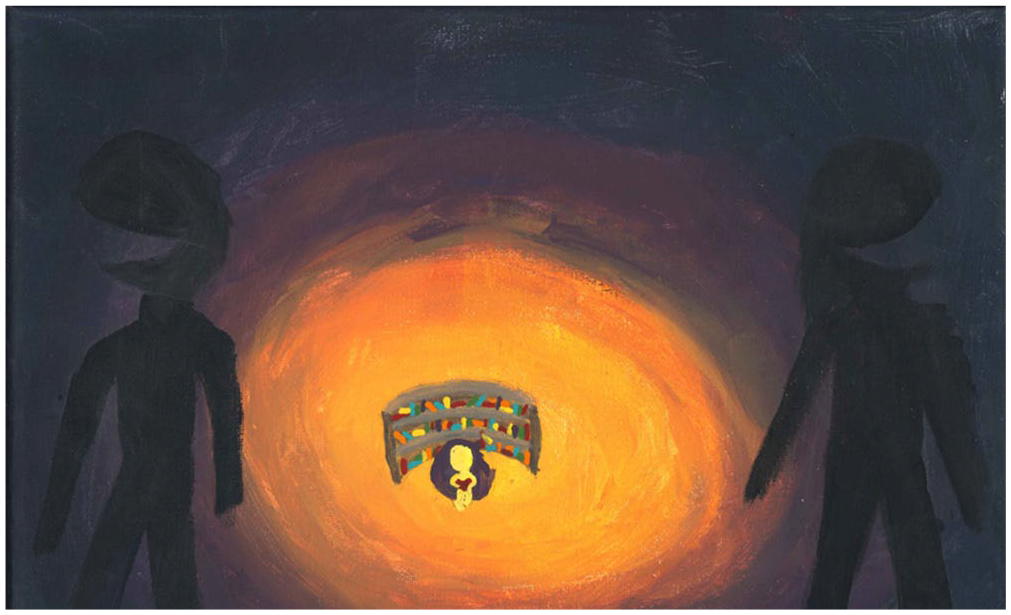
Nasim’s artifact.
Catalina
Figure 3 displays an artifact created by Catalina, a 12th grade Columbian newcomer student. As a refugee, she migrated to Canada at the age of five with her family to escape the potential dangers that were escalating in her home country. She would return to Columbia for long stretches of time throughout her childhood (up to 7 months at a time). Catalina felt she grew up in both Canada and Columbia. She was born in Columbia, speaks English and Spanish fluently, and identifies with the Christian faith.
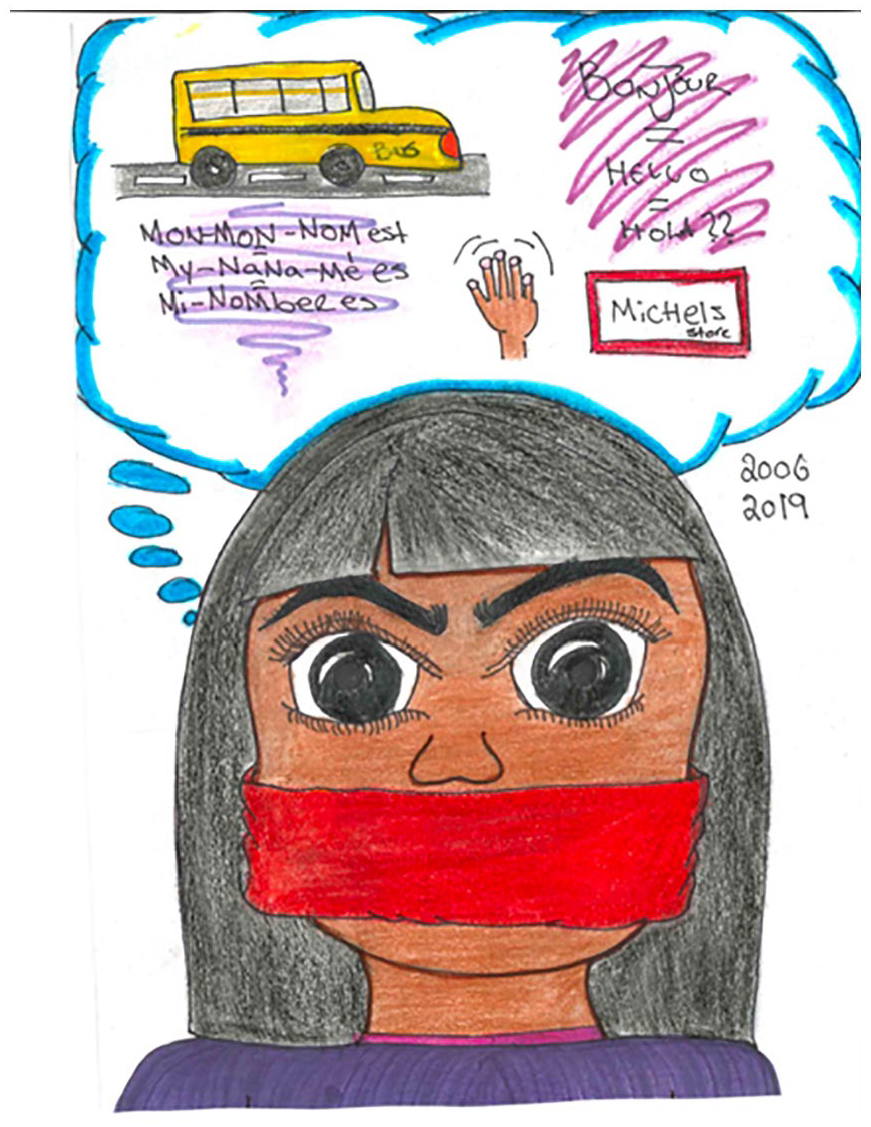
Catalina’s artifact: red tape.
Mahalia
The journal illustrations shown in Figure 4 were created by Mahalia, a 17-year-old Filipina newcomer student. She migrated to Canada with her father and siblings when she was 15 years old in order to pursue better opportunities and established a better life. She was born and raised in the Philippines, baptized Catholic, and speaks Tagalog and English fluently.
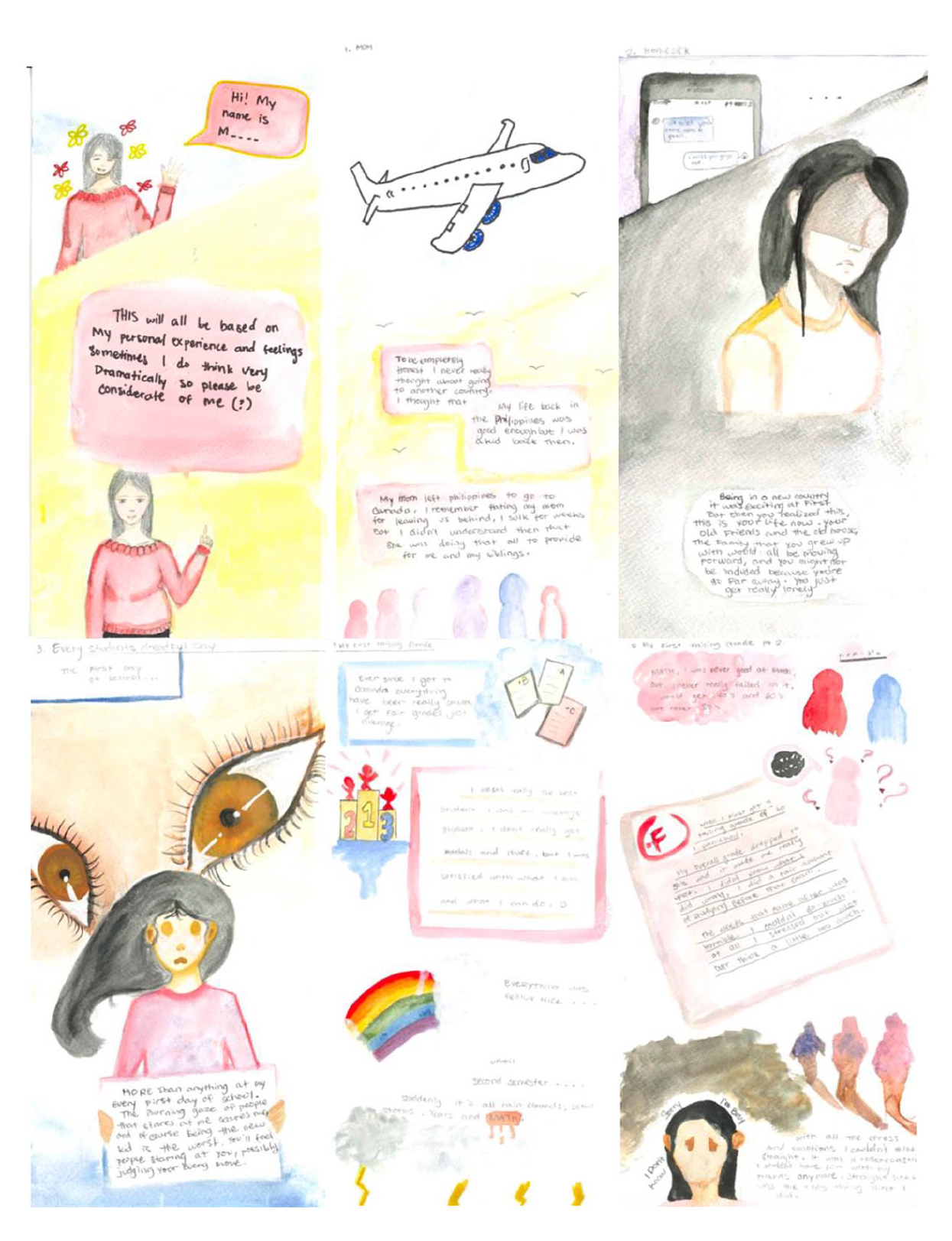
Mahalia’s artifact.
Procedures
The ABEE procedure is outlined below and summarized in Figure 5. Following ethical approval from the university and school boards, recruitment took place in ELL classrooms in a large high school in a western metropolitan city in Canada. Members of the research team gave a brief presentation on the study goals and procedures of the research. Study packages were left in each classroom and interested participants (and their parent) completed them and returned them to the head of the ELL department (a research partner on this project).
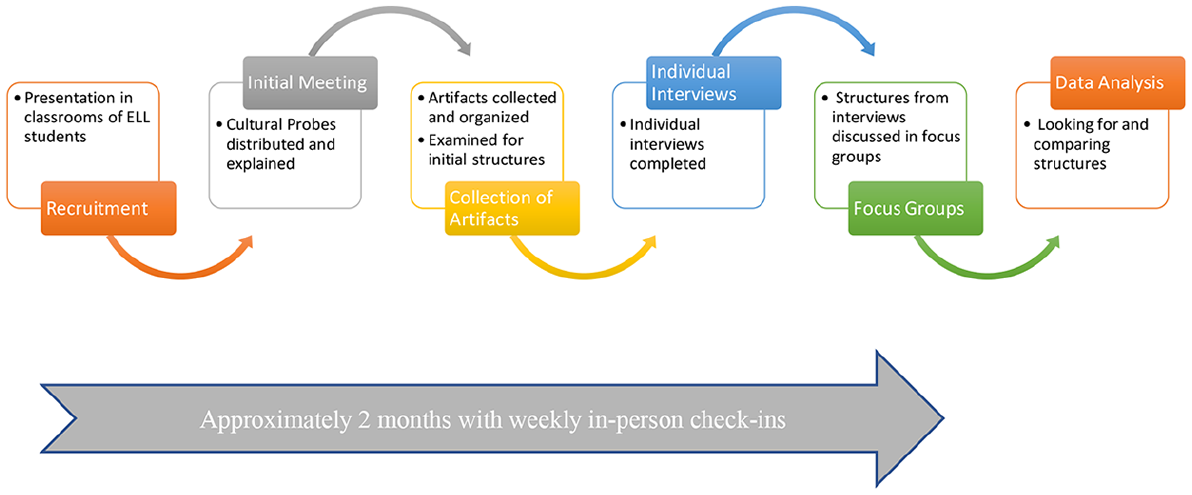
ABEE research design.
For interested participants, a meeting was scheduled with a graduate research assistant, during which participants received the cultural probes and guidelines on how to use them. Germane to these guidelines was the idea that participants were to use the cultural probes to document and help the research team better understand their unique lived experiences of school integration in Canada. Participants had 2 weeks to document their experiences using the cultural probes, after which each participant met with the graduate research assistant a second time to share their cultural probes and partake in a semi-structured qualitative interview. These interviews, which lasted approximately 60 minutes, were conducted in English. They were audio-recorded and later transcribed for data analysis.
After each participant completed the semi-structured interview phase (approximately 2 weeks later), the participants gathered together to partake in a series of three focus groups, held over the course of 6 weeks. The central topic of each focus group was chosen based on the salient topics derived from the individual qualitative interviews about the cultural probes—in this case, education, social connections and self-esteem, and culture and identity. These focus groups (approximately 60 minutes) were video-recorded due to the complexity of accurately transcribing the dialog from a larger group of people, and later transcribed for data analysis (see Methods and Figure 5 for a summary of the ABEE procedure).
To protect the students’ privacy, parents were asked to provide written consent so that their child could participate in the research. However, the parents were not privy to the information shared in the individual interviews, focus groups, nor the artifacts created. Teachers also were not aware of who participated, as all research meetings took place over the school lunch hour in a private room. Additionally, we have intentionally kept the descriptions of participants and the school short so that the students and location where the research took place cannot be identifiable. Despite these precautions, it is possible that some newcomer students and/or their families did not feel comfortable with participation in such an involved research project.
Data Analysis
A professional transcription service transcribed interviews and focus groups, removing all identifying information. We next sorted, de-identified, and grouped the artifacts with their corresponding individual interviews. We analyzed all data (artifacts and both individual and focus group transcripts) using previously outlined systematic steps for analyzing ethnographic research (Kamberelis & Dimitriadis, 2014), while incorporating the RDST lens of examining the bidirectional relationship between the individual and their context. The data was analyzed with the intention of answering our research question: from the perspective of newcomer adolescents, what influences their positive integration into the school system? The systematic approach of ethnographic research incorporates using a social justice framework in its analysis (Kamberelis & Dimitriadis, 2014). In this sense the researchers viewed the data through a lens of social advocacy and change. Through this lens, it is important to highlight both inter and intra individual differences. In other words, we want to understand both common experiences among participants, as well as highlight the unique experiences of the individual. Therefore, the results are written in such a way where it is described which participants, and how many shared an experience, or if it was a unique experience to one individual. Both the unique and shared experiences are critical in understanding newcomer youth’s integration experiences, as both perspectives inform how systems can better support and accommodate both the collective and individual needs of newcomer adolescents.
As outlined in ethnographic research analysis, the following steps were conducted: First, all transcripts (interview and focus group) were each read from beginning to end to gain an initial understanding of each participant’s experience, and of the type and quality of interactions that occurred during the focus groups. During this step, we created both margin notes and initial codes. Second, each transcript was re-read to identify meaningful themes and patterned regularities at multiple levels of ecology. We extracted sentences, paragraphs, or artifacts from the transcript (i.e., meaning units). Third, a member of the research team verified the themes and patterns. Fourth, the agreed upon meaningful themes and patterned regularities were compared and contrasted across all participants’ analysis, thereby performing a cross-case analysis. At this stage we made note of pluralistic narratives, denoting instances of contradiction both between and within individual narratives. Fifth, the research team made assertions and interpretations about participants’ experiences, resulting in an integrated, multi-layered description of the phenomenon of school integration at the individual, relational, and macro levels. The results depict the depth and breadth of each participant’s integration experience, including instances of contradiction within and between participants.
Rigor
The research team received thorough training in qualitative research, particularly with respect to ABEE. Further, each member drew from multiple practices to increase the credibility, transferability, dependability, and confirmability of the study (O’Reilly, 2004; Sandelowski, 1995; Shenton, 2004). For example, to monitor the researchers’ subjective stances, reflexivity and peer debriefing were used (Patton, 2002). To verify the emerging results during data analysis, peer auditing and member checking were employed (Schwandt, 2015). Triangulation was achieved by including multiple data sources, including artifacts, interviews, and focus groups (Denzin & Lincoln, 2011). Further, an audit trail was maintained throughout the entire research process (Morrow, 2005). Finally, when debriefing the qualitative interviews with participants, catalytic validity was established (Stiles, 1993).
Research Team
As shown in Table 1 our research team comprised of six women from various cultural backgrounds. Our multiple and intersecting cultural identities and social locations impacted the individual and collective positionality with which we approached the research process. Specifically, our team brought together psychology scholars at different level of professional development—all of whom had a vested interest in education, adolescent development, immigration issues, social justice, and community advocacy. As indicated above, at the start of the research, team members were asked to identify their subjective stance by engaging in the process of reflexivity and peer debriefing throughout. Careful consideration was given to the ways in which each member’s subjective stance may influence the results (Finlay, 2014; Langdridge, 2007). In this case, as a team we entered the research with an understanding that school systems are not well enough adapted to newcomer students. We were cognizant of our bias to look for areas of improvement within the school system. This bias combined with the scholarly expertise and lived experiences of our team, leads us as researchers to highly value the immigration experience and the need to elicit first-hand knowledge of school integration experiences. Throughout the data collection and analysis stages, a reflective journal was used to keep an ongoing record of the experiences, reactions, and emerging awareness of any assumptions or biases (Morrow, 2005).
Brief Description of Our Research Team, and Their Role in Analyzing Data.
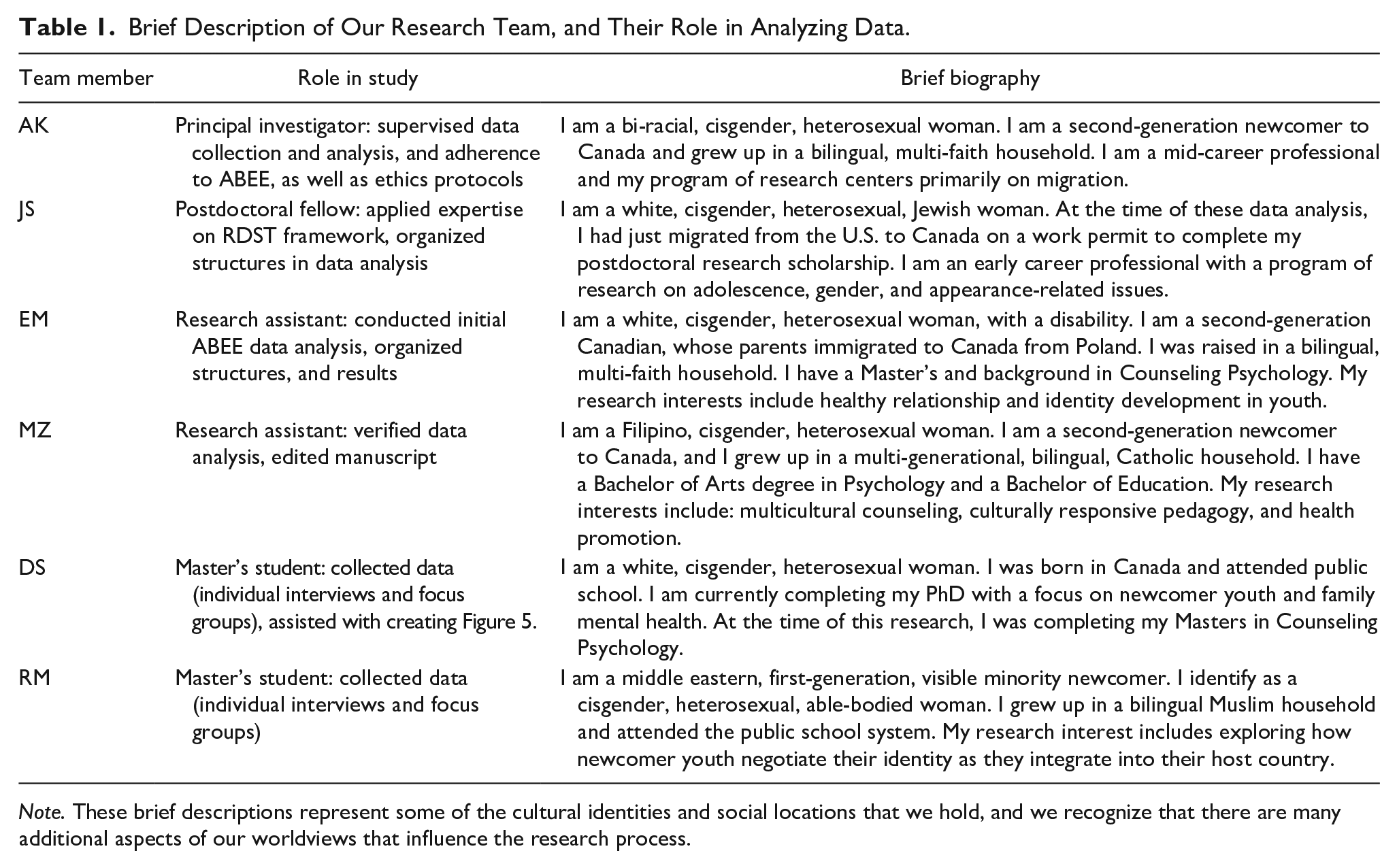
Note. These brief descriptions represent some of the cultural identities and social locations that we hold, and we recognize that there are many additional aspects of our worldviews that influence the research process.
Results
Our study was guided by the following research question: (a) From the perspective of newcomer adolescents, what influences their positive integration into the school system? To answer this question, we use the terminology of ethnographic research as outlined by Saldaña (2014) and Wolcott (1994), structures refer to how data from each participant story has been organized, and patterns refer to the similarities within each structure.
Through analysis of participants’ artifacts, qualitative interviews, and a focus group data, the following major structures were identified: (1) barriers to advancement at individual, school, and macro levels, (2) fluctuating relationship with cultural identity, (3) limited trust in systems, (4) resilience through independent learning, and (5) facilitating factors to positive integration experiences at the family and school levels (see Figure 6). Participants demonstrate through their unique experiences how they adapted and responded to systemic inequities to help foster a positive integration into their school. As detailed below, and in keeping with the RDST framework (Lerner, 2012), each structure accounts for multiple inter- and intra-individual factors at multiple environmental and contextual levels (family, peers, school, society, and systemic and socioeconomic factors).
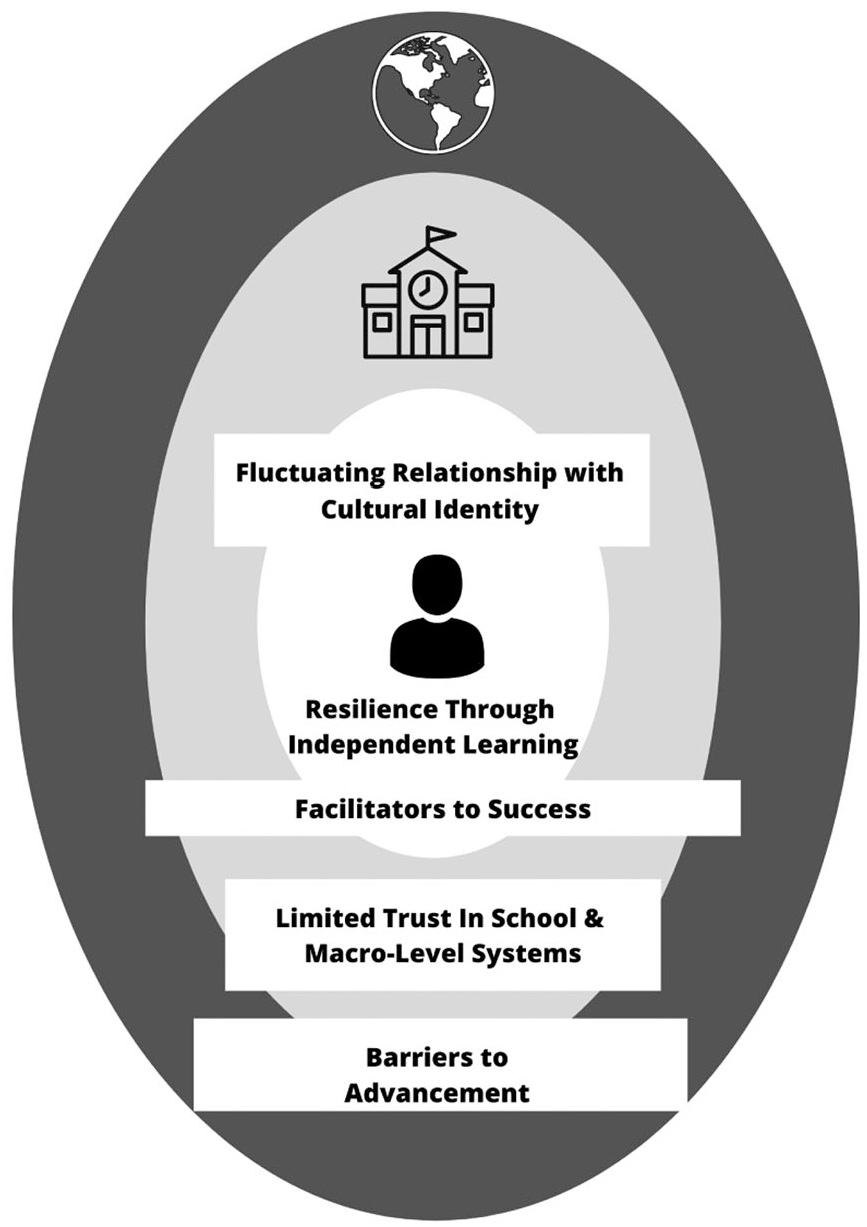
Structures in RDST framework.
These five structures allowed us to identify factors that bidirectionally influence one another while having cascading influences on positive integration experiences. Participants spoke about both the barriers to advancement and facilitating factors to a positive integration experience at multiple levels of ecology (individual, school, and macro), and about how these levels intersect to affect their integration experiences. Similarly, common to the participant narrative was their process of cultural identity negotiation, a process that reflects the dynamic relation between an individual and their context (Meca et al., 2019). Finally, in highlighting the systemic problems that resulted in a lack of trust in authority figures and the need to foster resiliency, each of the five structures underscores the multifaceted interrelations of the factors at play to promote positive integration experiences. These structures and their respective patterns outline considerations for systemic issues in academic institutions can be improved to better support newcomer adolescents.
Barriers to Advancement at Individual, School, and Macro Levels
All participants experienced barriers that impacted their ability to advance within the school system, and their ability to expand and develop their social circles. Advancement in this context centers on adolescent’s opportunities to learn, succeed, and have a positive experience in the school system. This structure includes three notable patterns which describe the primary barriers experienced by all adolescents at multiple levels of ecology within the RDST framework.
Systemic and socioeconomic barriers
Three participants commented on issues regarding accessing school supports at the school and macro levels (tutoring, library services, etc.), the usefulness of newcomer student programs, and having limited access to technology. Mahalia was unable to access tutoring services after school because of the time and distance it would require for her to commute from home. Similarly, Nasim relied on a public library as a safe space for her to complete her work. The library provided a space where she did not feel judged for sitting alone and became a critical place for her to do independent learning. After her family moved to a different area, she was unable to access the space easily and described feeling like she “didn’t really have anywhere to go.”
Araceli felt the services provided by the school to help her improve her English were not adequate. She explained that instead of teaching her English, the services seemed solely focused on evaluating her performance level. She stated: “I don’t remember any people coming into class and try to teach me English. I don’t remember that, any English I learned was by myself or like in class but that was like with the rest of the students.”
The limited services provided by the school system forced Araceli to practice independent learning. As discussed in the previous structure, this required additional efforts outside of schoolwork.
Another barrier experienced by Nasim centered on the impact of schools increasingly relying on technology in the classroom as a primary modality of learning. For Nasim, having limited access to technology made it difficult to succeed. She described how activities and learning in the classroom would depend on students having particular devices (e.g., Chromebooks, smart phones, etc.). She shared: “I didn’t have a phone, so I was just there struggling, looking for a textbook, but they didn’t have the textbooks for it.” She added that the lack of diverse learning modalities made it difficult for her to adjust. Not only did it affect her learning, but it also affected her social life. She shared: “And I guess everybody just thought I was a little bit weird for not having a phone because they were just like, ‘Oh, just let your parents buy one.’ And I was like, ‘It’s not really that simple.’”
Language barriers
All participants explained how experiencing difficulties expressing themselves in English affected their academic performance and integration within their schools. This is an example of a barrier faced at the individual, school, and macro levels. Three of the participants described how it was easier to express and articulate themselves in their first language. For example, Catalina drew a person with red tape around the mouth, which she said was meant to symbolize the inability to express herself (Figure 3). She explained that the tape is red because it represented the anger she felt when others could not understand her. She shared an example where she was having difficulties knowing the correct words to ask to use the bathroom, and thus left the classroom, causing her teachers to be upset as she was breaking norms and rules.
Feeling misunderstood was a common point of discussion among the participants. They shared that language barriers caused gaps in their learning, further limiting their ability to advance and succeed in the school systems. Araceli shared that when she tried to practice using English, she experienced others being rude and impatient. This caused her to feel isolated, fearful, and worried about how she would be able to interact with others. She described her experience of getting assigned to a group project with her classmates: “But definitely in that first day when I found out that I was getting split up, it was very scary because I even told my teachers like, how am I supposed to communicate well with others? I don’t have my translator with me.”
Her feelings also impacted her willingness to make connections at school and invest in relationships with peers, she stated: “You can’t survive if you don’t know English. You can’t do your work if you don’t know English. Now that’s how it was, I struggled.”
For Araceli, her experience with the school system felt like “being thrown into a hole.”
Curriculum rigidity
All participants shared their observations that there was limited flexibility in academic systems to be adaptable with curriculum content and credentials; this is a school, system-level barrier. For example, Mahalia said that a barrier for her success was that the pace of the curriculum did not fit with her needs. She described that sometimes topics would progress very slowly, and other times too fast. This depended on whether she had learned the topics covered before coming to Canada. Nasim echoed this experience, she shared that the curriculum in Canada moves very quickly. She felt unequipped to learn the material at the pace that was expected of her, causing her to feel helpless and worried that she would disappoint others.
Catalina and Araceli also felt that education systems in Canada were limited in how they evaluated academic credentials. They commented on how education does not transfer directly when migrating to Canada. This had a significant impact on their schooling as well as their family’s ability to secure employment that matched their credentials. Catalina described feeling that newcomers have to “start all over again” when coming to Canada. Similarly, Araceli shared feeling that newcomers’ career identities are taken away after migration as they often have to “start from scratch.” As a result, she Araceli described how parents and guardians lost their social status in addition to their professions. In her drawing (Figure 1), she illustrates a person that is half surgeon and half fast-food worker. She states: “In a way they’re very far away from each other education wise and because this is based on your education no longer count here, that’s how I decided to show it, for showing the two drastic sides to it. You can be a surgeon now you’re a fast-food worker because that education did not count.”
Araceli’s comment links the three barriers together, due to rigidity of the accreditation system it had an influence on the participants’ socioeconomic status, their adjustment within the school system, which are compounded by language barriers. These factors pose significant challenges which negatively impacted their school experience.
Fluctuating Relationship With Cultural Identity
This structure examines how each participant’s relationship to their cultural identity changed after migrating to Canada. Participants navigated the tensions that arose as they merged or blended their new Canadian cultural identity into their existing cultural identity, and how their new identity was shaped by multiple levels of their new Canadian context. For example, in the focus groups, participants described various ways their cultural identity was influenced through experiences with peers and the school system. These two intersecting influences can be viewed as individual, school, and macro-level influences within the RDST framework. All participants addressed the challenges of being a new student. Mahalia shared how it is difficult to join a peer group as a new student. One of the reasons it was challenging to join a group is that participants felt they were viewed solely as their cultural stereotypes and not as individuals. Catalina added: “I wonder if it’s the same thing with white people. Because I know for some teachers. . . Most of my teachers are all white, but they all stereotype me. When they do that, we have issues because they think I’m a certain type of person, certain type of color, certain ethnicity, I am a certain type of way.”
Due to the negative stereotyping and racism, a few participants struggled to feel proud of their culture. Catalina described that it was not until she moved to Canada that she felt that being Latino was not something she could be proud of. Mahalia shared that other newcomers from the Philippines forgot about their culture and tried to “be something they shouldn’t be” in order to feel included.
Participants also reflected on factors that contributed to feeling connected to their existing cultural identity. Nasim shared how seeing diversity among students and staff in her school helped her feel included and connected. At her school, many students were newcomers. She described feeling that this removed boundaries: she did not feel as though she was the only person who came from somewhere other than the local neighborhood. Araceli said she often times questions how to be proud of her culture, and whether she knows her culture properly as she is no longer immersed in it. For her, it was traditional dancing that allowed her to connect and become proud of her culture. These participants highlight the importance of the context in navigating a blended cultural identity, both the struggle of staying connected to one’s native identity and in expanding that identity to include Canadian aspects.
Limited Trust in Systems
As a result of the negative stereotypes and racism students were exposed to at the school level, a common point of discussion was the lack of trust participants felt toward authority figures and school systems. This is an important consideration when understanding the school integration experiences of each individual. Though their individual experiences were unique, they shared the common lens of apprehension and limited trust. Along with experiencing racism from authority figures at school, participants also noted the lack of diversity among school staff and administration and how that contributed to their lack of trust. Catalina shared that the only professional people she saw in her life were white and privileged. Mahalia noted that there was limited discussion about other people’s cultures in classes.
A recurring feeling was the sense that as newcomers they could not make mistakes or speak out, especially around white authority figures. Araceli shared how after making one mistake, she was labeled as a “bad kid.” Nasim said she felt fear of going against a white authority figure, and as a result felt her opinions were silenced. Araceli added: “That’s what you think when you come here, you get here, you’re literally in the bottom, you got all this racism, all this society just hitting you down, telling you like you belonged there.”
Due to the limited trust in the academic system at the level of educators and administrators, Catalina shared that she learned to fight for herself and become her own advocate. She felt she was often ignored due to her age and cultural background. All participants could empathize with this feeling, and shared how they are underestimated and not properly supported by staff. All were easily able to recount instances where they were dismissed by staff, guidance counselors, and teachers, where they were not provided with encouragement or support when they sought it out. There were times where some participants felt they were placed in the wrong difficulty level for classes, while others described feeling they were having trouble with the content. Nasim, who felt the latter described an instance where her brother advised her to expect to do everything herself, and not expect help from guidance counselors and teachers. Catalina shared: “It’s like every morning you wake up, and you have to fight a good fight because if you don’t get up and do you, you won’t succeed. It’s like I get up, and I have to work twice as hard as a normal person would work because of who I am, how I am, where I’m from, how I’m stereotyped.”
The fear of making mistakes, or the knowledge that when integrating into a school system one must learn for themselves, ties into the Resilience Through Independent Learning structure below. With the limited trust in the academic system, combined with the barriers to positive school integration, participants identified how to best combat these struggles through independent learning and their resilience.
Resilience Through Independent Learning
All four participants had experiences where they felt they could not fully rely on their educators and school systems to learn effectively, so they made efforts to learn on their own, taking active steps toward shaping their context. Within the RDST framework, this structure and the patterns within it can be viewed as being at the individual level, with influences from the school-level system. This structure includes two patterns (ownership over the learning process and resilience), which highlight the distinct elements that were required for effective independent learning to take place: ownership over the learning process and resilience. These two components were necessary for the participants to overcome academic obstacles to find a means of learning that worked best for them. In this way, resilience in the face of structural inequity came about through taking ownership over the learning process and engaging in independent learning.
Ownership over the learning process
This pattern examines how some participants found a way to make meaning of their experiences by finding safe spaces to foster their independent learning. This process allowed them to take ownership over the learning process and helped them to create a way to make their academic studies work. Specifically, three participants shared how they found a way to make meaning through independent learning, which helped with adjustment to their new school settings. For example, Nasim felt that she could not rely on teachers as a resource and instead had to rely on herself, and identify a way to make the academic system work for her: “I felt like they didn’t want to teach me because I didn’t know as much, so I don’t know. It really affected it because I only relied on myself and I’m clearly not a teacher, so I just turned to the books and if I didn’t get it I’d go home, I’d do all the research I needed, but sometimes I didn’t have enough time to do the research I needed because I needed to move on to other subjects.”
This agency fostered a sense of independence, and eventually reduced feelings of isolation, as it forced her to find places where she felt she belonged outside of school settings. These spaces (a library and café) became places where there were no imposed pressures from school systems; in other words she could learn at her own pace. She explained “I don’t have any expectations so I just sit there and relax.” Furthermore, for this participant it felt more safe to seek academic support from tutors as opposed to teachers, because she felt that they “don’t have to help people, but they still do, which makes it more meaningful.” For her, independently finding safe spaces to make meaning of her experiences was a mechanism for transitioning into her new community and environment. This was highlighted in her artifact (Figure 2), where she drew a lone figure in the distance holding a heart. When describing this artifact, the participant shared: “The reason why the middle is more warm colors is because I felt better when I was reading than when I was out there because then I’d have to struggle.”
Resilience
Additionally, all four individuals shared how participating in academic activities required resilience, as they often would make mistakes in the process of learning a new language. For example, Mahalia, when sharing the advice she would give to newcomers, explained that newcomers should keep trying even when it is difficult, as one’s academic performance will not be perfect at first. She depicts her personal experience with this in Figure 4. She added that when she continued to try after it was difficult to adapt to a particular task, she experienced growth and her performance improved.
Catalina also found that through her persistence and resilience, independent learning assisted with adjusting to new environments. She struggled with English and found difficulties with the language to be a significant barrier in her education, and had people laugh at her English and accent. To overcome this barrier, she independently set her own goals and found ways of learning on her own. She describes using every opportunity she could to practice reading English, and reading road signs on the street. Her determination can be summarized in the following: “The frustrating thing is for me when I don’t understand something. When I don’t understand something it pisses me off. It frustrates me until like right now. If I don’t understand something I’ll go look at it. I will go ask anyone until I get the answer because I want to know. I don’t want to stay behind. I want to speak. If I’m speaking in front of people I’ll go speak in front of people but I want to know what I’m talking about.”
For her, learning to read and communicate with others came from a desire not only to do well in school, but also as a way to empower herself and be her own advocate. Progressively, in her school life, she started to stand up for herself, explaining: “I was like, wow, I spoke up for myself and I got a voice. I got a voice in the other schools. It was just like it's a different persona.”
She described that the reason she participated in our study was that “I wanted a voice. . . I saw it as a way I could have a voice.”
For Araceli, independent learning and resilience was also a key tool for adjustment and positive school integration. In regard to language learning, she disclosed not caring what others thought and being selective as to what to adapt to. In other words, she would focus her efforts on adapting to what was in line with her cultural values, but also what would help her succeed in her new environment. For her, it was focusing on improving her English. All participants described feeling there were not sufficient opportunities to better their English in their schools, which impacted their pace of adjustment. Any language learning came from independent efforts from external creative sources. For one participant it was street signs, for this participant it was TV: “Well I’ll say the most way I learn English was through TV because everywhere you watch TV you hear. So is the whole hearing aspect, you hear about vowels, you hear the pronouns. So definitely by watching TV shows, good ones, you can definitely hear the language. Talk, do not be afraid to talk to people. Your English might be bad, but once you start speaking, you can really improve.”
As all the participants noted, there were not sufficient resources provided in schools to improve their language skills, which had a negative impact on their ability to adjust to their new environments. Though these participants demonstrated their resiliency through their determination to learn independently outside of the school setting, Araceli raised an important issue—being selective about what to adapt to and focus on in a new school setting, while simultaneously not losing core beliefs and values from her culture. When asked how she would advise other newcomers, she said: “I wouldn’t say lose your opinion. I will say just adapt to it. Adapt to the way people here are different, so you’re going to have to change in the way now you do things, I wouldn’t say unless you won’t change that, but if you really believe it’s something I’d say you are definitely, you’ll not hold onto that. You’re definitely going to have to learn to take other people because they’re not going to believe the same thing of you, but you can’t really just go snap at them.”
This statement highlights the dual role newcomers have to take, where they are navigating not only their blended identity but also to the new demands placed upon them in their quest to learn.
This structure has revealed not only are participants navigating the complexities of their dual-identities, but they are independently identifying the gaps and barriers within their school system and its ecology, and finding ways to individually mediate these gaps. The factors and mechanisms of positive school integration are therefore identified, defined, then executed by the individual. These factors are further identified and expanded upon in the following structure, Facilitating Factors to Growth.
Facilitating Factors to Positive Integration Experiences
Participants commented on the key factors, over and above the resilience at the individual level, that helped facilitate what they defined as successful and positive academic integration both academically and socially. The three determinants were located at multiple levels of ecology: the positive role models found in academic leaders, benefit of familial support, and presence of school environments where they could engage with others with similar values.
Academic leaders
Three participants shared that teachers significantly influenced their sense of belonging and trust in academic systems. For one participant it was a positive influence which impacted their school integration experience. For example, Araceli discussed how having bilingual teachers helped her feel included. She described that being able to speak Spanish to a teacher helped her feel heard and understood in a different way than with English only speaking teachers.
However, two participants described challenging experiences with teachers and this resulting in a negative integration experience. Specifically, Nasim felt that apathy, indifference and disregard from teachers impacted her ability to learn and feel included in classroom settings. She described wishing that teachers were more genuine, caring, and empathetic toward her. The lack of visible concern caused her to have limited trust in teachers. Similarly, Catalina initially mistrusted teachers as she experienced racism and stereotyping from academic leaders. She described one teacher as especially disrespectful and inappropriate with his comments. When she tried to report it “the principal said I was crazy, she said that doesn’t happen.” Though Catalina had negative experiences with teachers, she also found a role model who taught her about abuse and how to be resilient and independent. She explained that this relationship was inspirational and allowed her to gain a sense of independence in her life: “And he would sit us down and he would give us books and papers and everything. Studies of how women were abused. And I learned that you can be mentally abused. I didn’t know that was a thing.”
Familial support
Only one participant explicitly mentioned the role of family in supporting academic integration. We include it as a pattern because it played such an important role in Mahalia’s experience. Mahalia found support and motivation in her family; she relied on her relatives to help her adjust. For example, she described being encouraged and supported in times when she struggled with language barriers. Her cousin, who went to school with her, helped familiarize her with the academic system. She also found solidarity with other family members, as they were also adjusting and learning: “My dad is kind of like, he also finds it difficult that he’s like, definitely pushing to be able to adapt with us too, able to live with us and stuff. . .”
Meaningful spaces for school engagement
Having spaces and opportunities in school settings to engage with other adolescents with similar values was important to Nasim and Araceli. Nasim did not enjoy connecting with peers over technology. Instead, she found that attending an in-person homework group was an excellent facilitator for meeting others and expanding social networks. In this group, she was able to make friends that aligned with her interests and values: “. . . It just became a homework club, not just a club where you do fun things, and then it became a place where I could actually make friends, and that’s where I got a lot of my friends today.”
Similarly, Araceli was able to attend Spanish classes that were organized by her school. This helped her to feel included, connected to others, and allowed her to embrace her cultural identity. She described wishing that schools provided more diverse language-based opportunities for all newcomers, as it helped her adjust and “not feel so isolated in my own language.” She explained that many newcomers may not be able to afford the time or money to drive their children to community classes across the city—having such programs within her school made them accessible. This participant also used art and dance as a way of connecting to her culture. When describing her drawing of a skeleton (Figure 1), she stated: “The upper is a Jalisco dress with two performers then definitely represents my whole aspect of me being a dancer here and how it’s kept my culture alive. It helps me not to lose it and to still have respect for it.”
Both Araceli and Nasim’s experiences demonstrate how schools can create spaces of meaning to help facilitate a positive school experience where they feel they can connect with others with similar values, and how that space serves to connect the individual to her context in meaningful ways. For Araceli this space was tied to her culture, but for Nasim it was values based.
Discussion
Through an ABEE approach drawing from participant artifacts, qualitative interviews, and focus groups, we identified five key structures which described newcomer adolescents’ experiences and perspectives on their integration experiences into a school system in Canada. The identified structures provide examples of influential individual, school, and macro level factors in each participant’s positive integration in the school system. In keeping with the RDST framework (Lerner, 2012), we were able to identify structures which accounted for multiple inter- and intra-individual factors at multiple environmental levels. From our findings, we are able to situate each of the identified structures within an RDST framework by expanding on the role of the individual, teachers, peers, school policies, and larger systemic and socioeconomic factors, while acknowledging that each of these levels of ecology influence one another and cannot be examined in isolation (see Figure 6).
Individual Responses to Structural Inequities in her Context
While it is impossible to fully extricate an individual from her context, all participants spoke about the ways in which they responded to structural inequality from within her context. This resilience, a key outcome, both positioned students to overcome obstacles and contributed to positive student experiences. Participants spoke of how the education system was not designed to fully support their educational needs, yet they were determined not to let these deficiencies in the system hold them back. As such, they fully supported their own learning both inside and outside of the classroom. Independent learning has both pedagogical and developmental benefits (Moore, 1973). However, if these participants had not sought out the necessary information and skills on their own, they would have been more likely to face greater linguistic obstacles with cascading effects on their academic and social experiences (Ngo, 2012; Rossiter & Rossiter, 2009; Suárez-Orozco et al., 2010). Participants in the current study did report encountering language barriers that left them feeling misunderstood by teachers and peers. However, each participant demonstrated both agency and resiliency as they sought out sources of English language information on their own to improve their language proficiency and prevent the previously documented negative effects of language barriers to positive classroom experiences. Resiliency is closely linked to academic achievement and peer social competence (Jafari, 2015; Masten et al., 1999). Therefore, it follows that resiliency was a frequently identified as a critical component to the school integration experiences of our participants. Prior research demonstrates that when students recognize and accept their role as key agents to their own academic and social success, they are more likely to report higher school grades and positive affect (Walls & Little, 2005).
Another key component to participants’ individualized experiences integrating into the school system in Canada and adjusting to a new context related to their fluctuating relationship with their cultural identity in both the classroom and social context. Upon moving to Canada and re-starting their schooling, some participants experienced negative stereotyping and racism. We identified tensions within this theme, as other participants reported that attending a culturally and racially diverse school not only made the school integration process a bit easier, but also encouraged connection to one’s own cultural identity. This finding aligns with prior research that demonstrates that Black adolescents experience fewer racial discrimination encounters when they attend a school with no clear racial majority, as compared to Black adolescents attending a predominantly Black or White high school (Seaton & Douglass, 2014).
Teachers and School Staff
Prior research highlights teachers as key role models of resilience (Yancey et al., 2011) and important members of the students’ social ecology. The experiences outlined by our participants demonstrate how teachers can play a critical role in newcomer adolescents’ adaptation and integration into school settings. In some settings teachers were barriers to positive integration experiences, and in others they served as powerful role models and leaders for newcomer students. Teachers also served as valuable allies who increased student sense of belonging and increased newcomer trust in the school as an institution. The role of teachers and administrators in working to ensure successful and positive school integration starts early in the process and can have lasting effects; if students are inadequately prepared or oriented to their new academic program, they are less likely to display motivation and engagement in the classroom (Stermac et al., 2012). Research has also identified teacher empathy and socio-political awareness as key factors that positively influence the student integration process (Rodriguez et al., 2020). Participants in the current study spoke to this point, particularly in discussing the stereotyping and racism they experienced from academic leaders as a barrier to success and the presence of empathy and trust as key facilitators in their integration experiences, and the way that both those barriers and facilitators shaped their daily context.
Parents
Although the current study explored newcomer adolescents’ experiences with school integration, which does not explicitly include family, participants spoke of the role their family had in the process. This highlights how it was not possible to separate their home experience from their school experience, and how both were central to their everyday context. Participants mentioned how knowing their parents were also having to adapt to a new cultural context resulted in feeling less alone and encouraged intergenerational collaboration. This finding aligns with prior work suggesting that newcomer families maintain healthy intergenerational relations due to their shared lived experience, and that those relations bolster the success of everyone in the family ecology (Kwak, 2003). Newcomer parents have been said to be a source of inspiration and support to their children, who often recognize the sacrifices that have been made for them to have better opportunities in Canada (Gallucci & Kassan, 2019; Sinacore et al., 2015). In this way, the role of family in the lives of participants in this study likely represents a contributing factor to their resilience in school.
Education System
The effects of the education system structure and its strengths and limitations were apparent across all of the identified structures, highlighting the critical role the education system has on students’ daily experiences. Participants noted both physical (e.g., spaces to learn) and abstract (e.g., flexibility with curriculum content and credentials) ways in which the education system both facilitated their transition and made the experience more challenging. Participants mentioned the benefit of having physical spaces to master their academic material as well as build relationships with their peers. In doing so, participants emphasized the need for spaces that are inclusive, engaging, and meaningful. Participants were then able to engage fully in their education, and rise up against the inequities they otherwise faced. This likely means that in designing these spaces it is important for the process to be student-led or student driven to ensure continued student engagement (Turner, 2014). Further, the inclusion of participatory student-lead after-school activities and clubs, designed with newcomer adolescents in mind, would help improve the process of school integration, and benefit both the education system and the individuals it serves (Gallucci & Kassan, 2019).
Multiple participants noted that the pace of the curriculum failed to meet their needs, as they had previously engaged with some, but not all, of the course content. Similar results have been found among United States adolescents (Bozick et al., 2016). Though teachers often have to make adjustments to curriculum content, the experiences of these participants suggest that there is potential to make the classroom even more inclusive and adaptive for newcomer adolescents. Teachers may benefit from protocols, or tools, to help them validate and meet the specific needs of newcomer adolescents and help them work through the material at a more individualized pace. This could be a small but critical step to help address the feelings of frustration experienced when credentials are not transferred after migrating. Likewise, our participants highlighted the importance for school systems to incorporate advanced language supports to help newcomer adolescents succeed both socially and academically. Finally, participants also faced multiple socioeconomic and structural barriers to school integration, including difficulty accessing tutoring, obtaining the requisite technology to complete classwork, and parental difficulty in obtaining employment to match their training level and expertise. Such factors are critical to the positive experiences of newcomer students, and can be addressed in some capacity, even if they do not occur directly in the school setting.
Implications
Lived experiences shared in this study reveal that newcomer adolescents often find it difficult to reach out to their teachers when they are struggling in their school environment. Therefore, it highlights the need for school leaders to be more approachable and initiate conversations with newcomer students (Gallucci & Kassan, 2019). Furthermore, teachers and counselors should encourage and set aside classroom time for reflection, so newcomer adolescents have the opportunity to recognize their inner strength and resiliency (Smith, 2020). Equally important, is the need for teachers to consider the design and implementation of individualized learning plans for newcomer students. This will allow each student to progress at a pace and level that will allow them to thrive and adapt to their new school environment. This present research also informs academic literature regarding newcomer adolescents’ integration, school psychology, and adolescent social ecology. It contributes an understanding of how service providers can work with adolescents using different methodologies (e.g., facilitating, coaching, advising, and advocating). Finally, this research can inform school and resettlement policies (e.g., curriculum development, facilities design) across various systems such as school boards and migration services (Kassan et al., 2019). When creating policies and initiatives, policymakers need to consider the newcomer integration process in its entirety (considering social and emotional needs), not simply exploring academic needs (Smith, 2020). For example, though the school tried to meet the students’ needs and there were resources available at the community and school level, participants still reported having these experiences despite being in a system that had a great deal of supports.
Limitations and Future Research
The present study explored the experiences of four participants who settled in one province within Canada, which may be considered a limitation. However, this number is methodologically sound in ABEE (Goopy & Kassan, 2019; Kassan et al., 2020) and the depth and richness of the data can inform service providers to support newcomer adolescents without compromising their diverse and interconnecting identities. Another limit of this study is that it does not fully capture the experiences of adolescents who are refugees, undocumented, or have unknown status. Nevertheless, the findings of this study align with earlier research, which implies that many newcomers share similar experiences when resettling in a new country. As such, future studies should involve students with differing migration statuses and explore the roles of family more directly in the process of school integration. Such research would yield first-hand data on the intergenerational experiences of newcomer families who typically would not have the opportunity to share their migration experiences (Smith, 2020). An additional limitation to consider is that the data gathered in this study was collected in English. Future ABEE studies might consider collecting data in the participants’ first language, and hire translators or research assistants who are able to translate in different languages. This will allow future participants to describe and capture their lived experiences using their own words.
Conclusion
Using relational developmental systems theory along with a novel art-based engagement ethnography methodology, the present study identified individual and contextual factors that influences the positive school integration of newcomer adolescent adolescents in high school systems in Canada, and the ways in which these factors bidirectionally relate to one another. Based on the five structures identified (barriers to advancement at the individual, school, and macro levels; limited trust in systems; resilience through independent learning; and facilitating factors to positive integration experiences at the family and school level), implications and future research directions are offered, which can highlight some of the ways in which school systems can better support the diverse needs of newcomer adolescents. Most importantly, participants’ experience demonstrated how much resilience was required to overcome systemic barriers.
Footnotes
Acknowledgements
We would like to thank the participants who shared their experiences with us. There were many stakeholders that made this research possible including the Calgary Catholic School District and the St. John’s Reception Centre who welcomed us and partnered with us in this research endeavor.
Author’s Note
Jessica F. Saunders is also affiliated with Hiatt School of Psychology at Clark University in Worcester, MA, USA.
Declaration of Conflicting Interests
The author(s) declared no potential conflicts of interest with respect to the research, authorship, and/or publication of this article.
Funding
The author(s) disclosed receipt of the following financial support for the research, authorship, and/or publication of this article: This study was supported by an Insight Development Grant obtained through the Social Sciences and Humanities Research Council [430-2017-00184].
Disclaimer
This article represents the results of an original research study. It has not been previously published elsewhere. Moreover, it has not been submitted simultaneously for publication elsewhere.
Ethical Approval
This study was approved by the University of Calgary’s Conjoint Faculty Research Ethics Board as well as the Calgary Catholic School District.
