




Abstract
Latino/x families experience barriers when navigating and accessing special education (SPED) services. Previous research has identified some of these barriers that Latino/x families encounter and facilitators to provide support for a positive SPED experience (Rios & Burke, 2020). The purpose of this study is to continue the investigation of the barriers Latino/x families face when navigating and accessing SPED services and identify past and current recommended facilitators that ameliorate these barriers. During this investigation, the authors also considered how acculturation might contribute to the obstacles Latino/x families face. This review identified 16 eligible studies highlighting barriers and facilitators to SPED services. Barriers to navigating and acquiring SPED services included limited access to SPED knowledge, communication barriers, lack of resources, and lack of cultural understanding. Facilitators included family/caregiver education, access to resources, communication, support, cultural understanding, and teacher quality training. Implications for research, practice, and policy are discussed.
The number of children identified with disabilities in the United States has increased between 2019 and 2021, from 7.4% to 8.56% (Blumberg et al., 2023). Specifically for Latino/x children with disabilities, there has been a 0.9% increase from 2008 to 2019 (Young, 2021). In attending a United States public school, Latino/x children with disabilities are provided with an individualized education program (IEP). An IEP is a civil rights-based law that is utilized to help protect the rights of children with disabilities and provide any support that would be needed within the school system. As children with disabilities move up grade levels, their IEP document follows them. Suppose any changes are needed to support or help a child with disabilities access the same education as their neurotypical peers, a meeting would be held to determine correct interventions and aids. During this process, the family is the leading advocate for what their child can or cannot access. Family involvement, both inside and outside the school system, is usually one of the primary forms of support that children with disabilities have that can change the trajectory of their educational experiences and opportunities (Burke et al., 2018b; Epstein, 1996; Jeynes, 2003; Trainor, 2010).
The special education (SPED) system is focused on servicing children with disabilities in grades K-12. However, barriers exist when navigating the system. Parents of children receiving these services may take on additional parental responsibilities, including acquiring knowledge of school policy rules and attending meetings (Trainor, 2010). With the added-on responsibilities of having to navigate the SPED system, Latino/x families may face additional barriers that limit the amount of understanding that is needed to advocate and access the appropriate services for their children. Often, barriers within the SPED system are associated with limited language proficiency, immigration status, and ethnic/cultural identity (Burke, 2017; Cohen, 2013). These barriers can make Latino/x families feel less empowered when navigating the SPED system (Burke et al., 2020; Rios & Burke, 2020).
When considering the barriers experienced within the SPED system, research should also take into account the many intersections that are evident when we consider the barriers and facilitators Latino/x families have. Intersectionality, a term coined by Kimberlee Crenshaw, discusses a theoretical framework for understanding how the intersections of various aspects of identity create unique experiences of discrimination and marginalization (Cooke & Few-Demo, 2021; Crenshaw, 1991). An intersectional framework can help us understand the specific barriers that Latino/x families and their children with disabilities face based on their varying identities. An example of this could be seen in the study by Burke (2017) during their assessment of family-to-school partnerships by comparing urbanized versus rural Latino families. Even with geographical differences, the barriers that were experienced differed, with rural-based Latinos witnessing more racism and segregation (Burke, 2017).
Understanding intersectionality is important for providing meaning to the experiences some Latino/x families may entail. One factor that can affect this is the process of acculturation. Acculturation is a multifaceted construct that incorporates interacting variables such as language use and proficiency, nativity status, and cultural identity (Nagayama et al., 2020); it is a unique experience that some Latino/x families face when adapting to a new environment. Benkirane and Doucerain (2022) discussed how it is fundamental to consider the intersections of one’s identity, such as gender, religion, racial identity, living location, and various social categories within acculturation research. Acculturation may have an impact on how Latino/x families perceive the SPED system, such that their prior and post-migration experiences shape their knowledge of the system (Benkirane & Doucerain, 2022; Larios & Zetlin, 2013). In consideration of the unique circumstances that Latino/x families experience when navigating novel environmental contexts, it is important to examine the factors that may impact these experiences. Therefore, the authors incorporated acculturation from an intersectional lens to examine the impacts that barriers have on Latino/x families and the facilitators of those barriers within the SPED system.
Purpose
With the intent of learning how health and a positive SPED system experiences relate, Rios and Burke (2020) showcased the many perspectives, barriers, and facilitators of Latino/x families in the SPED system. However, a systematic review considering intersectionality and acculturation, in addition to the barriers experienced and the recommended facilitators, has yet to be considered. More research is needed to identify the support(s) Latino/x families may need when navigating the U.S. SPED system. Using Rios and Burke’s (2020) systematic review as a guide, this article proposes three questions:
What are the main barriers bilingual Latino/x families with children who have disabilities face when navigating and attaining SPED services?
What are some equivalent facilitators that bilingual Latino/x families who have children with disabilities recommend when helping obtain SPED services?
Did acculturation play a role in the barriers faced by Latino/x families?
Method
The researchers of this study used a systematic analysis that focused on the SPED services that Latino/x families are attempting to access, the barriers to accessing these services, and the recommended facilitators for these barriers. More specifically, the researchers of this article utilized qualitative synthesis methods, a meta-ethnography approach, to interpret and synthesize findings by comparing and analyzing articles and creating new interpretations.
Operational Definitions
In this article, Latino/x is used instead of Latino or Latinx when discussing the population. Although most Latinos prefer the term Latinos, the younger generation increasingly embraces Latinx (Mora et al., 2021), hence both terms are used. Moreover, the authors of this article adopted the Latino/x definition when examining the population. As explained in an article by García (2020), Latino/x is a more comprehensive term than Hispanic, as it considers the geographic diversity of languages and includes individuals native to and or with ancestry from Latin America and the Caribbean who speak languages other than Spanish, such as Portuguese, Indigenous languages, and English.
The term barriers in this article was operationally defined similar to previous studies: factors or occurrences that prevent families from participating and contributing during the SPED process (Durán et al., 2022; Rios & Burke, 2020). For example, if a family has a meeting with their child’s teacher but does not have the means for transportation, then this is a barrier to services and information. In contrast, facilitators were defined and recognized as a component of improving the SPED process for families within this system (Rios & Burke, 2020). For example, if a family has a meeting with their child’s teacher but does not have transportation, the teacher recognizes this and instead provides the option to meet remotely.
Next, prior research has discussed the potential impact and privilege that Latino/x migrants have based on the number of years they have lived in a new country, in this case, the United States. Therefore, acculturation was used to assess these experiences and to determine if their social identities (intersections, social status before migration, and prior language proficiency) also may determine what barriers and facilitators were experienced. Since many articles utilized different ways to determine acculturation, this article defined acculturation as learning and adapting to a new culture or environment (Gonzalez-Guarda et al., 2023; Larios & Zetlin, 2013). Finally, the authors defined disability as any physical or mental impairment that makes it more difficult for a person with the diagnosis to do certain activities or communicate within their communities (Centers for Disease Control and Prevention, 2024).
Inclusion and Exclusion Criteria
The researchers analyzed studies in this synthesis, used qualitative synthesis methods, and aimed to gather firsthand descriptions of SPED services from Latino/x families residing in the United States. This included articles analyzing the Hispanic, Mexican American, Chicano/x, and migrant Latino/x populations within the U.S. primary or secondary public education system. The articles had to be published in peer-reviewed journals in English and include bilingual or multilingual families or families with Spanish as their primary language. During the search process, several studies were excluded. Studies that included telehealth-based dialogue were excluded due to environmental differences and separate barriers that would occur (Luna et al., 2022). Other systematic reviews, like Rios and Burke (2020), were excluded since the authors wanted to determine their own codes and limit bias. Thesis and dissertations were excluded due to not being peer-reviewed, and articles that did not document the firsthand experiences of Latino/x families within the article were excluded since the authors needed to review firsthand personal experiences to determine codes and categories. Figure 1 illustrates the search process, which left us with 16 studies (eight qualitative and eight mixed methods) for evaluation.
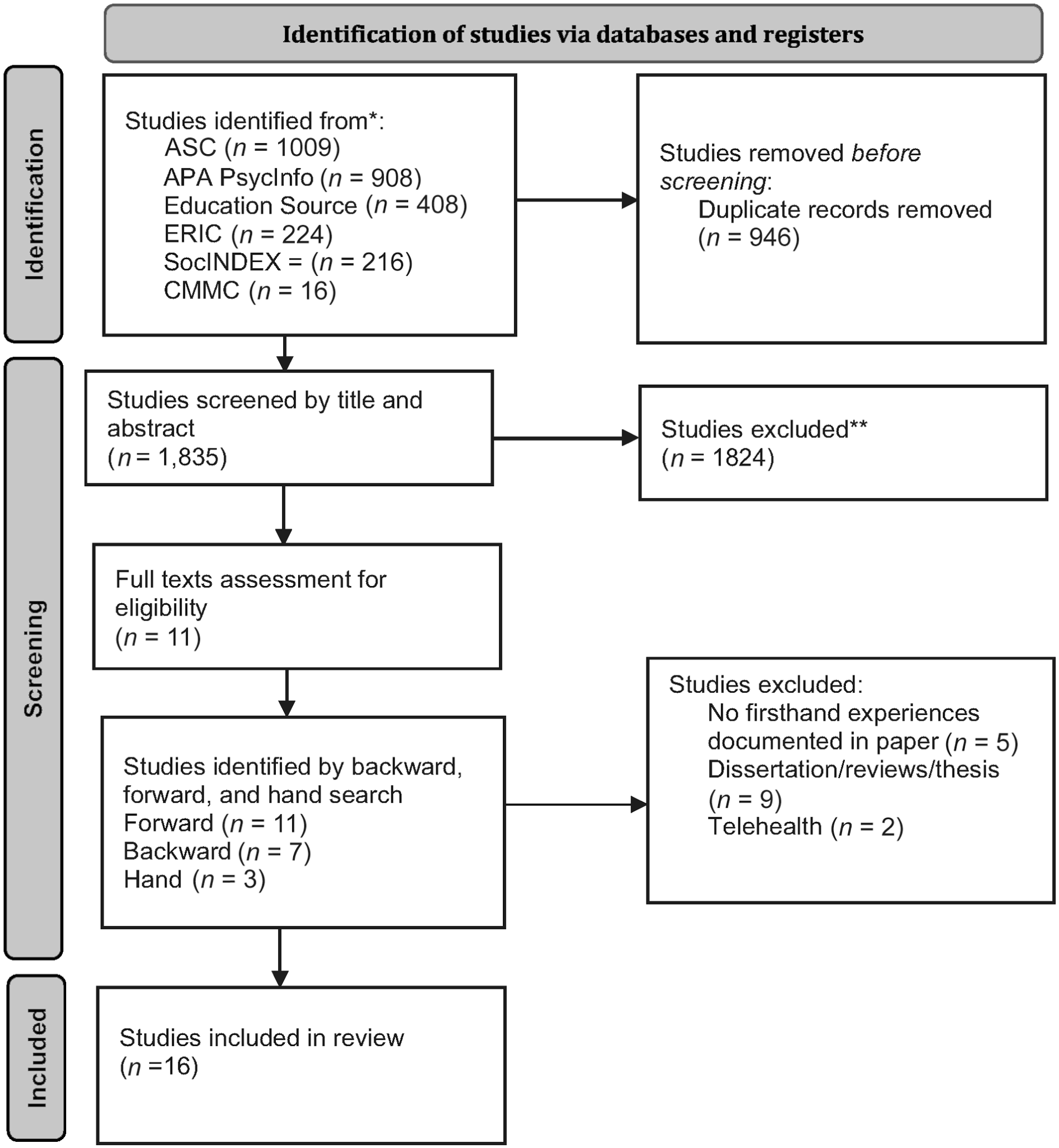
PRISMA Flow Diagram.
Search Procedure
A search for studies that addressed the obtainment of SPED services by Latino/x families and the barriers and facilitators for accessing these services was conducted by using six educational electronic databases: Academic Source Complete (ASC), Education Source, Education Resource Academic Center (ERIC), SocINDEX with Full Text, APA PsycInfo, and Communication & Mass Media Complete (CMMC) in May 2023 and February 2024. Our article search had no date limitations. The abstract and titles were searched using the following key search terms: families, language, disabilities, services/engagement, and barriers/solutions (see Table 1). Sixty-eight combinations of these terms were searched. Combinations included the full term (e.g., caregiver), synonyms of the key terms (e.g., mother, caregiver), and truncated versions (e.g., famil*).
Key Terms Used During Search Algorithm.
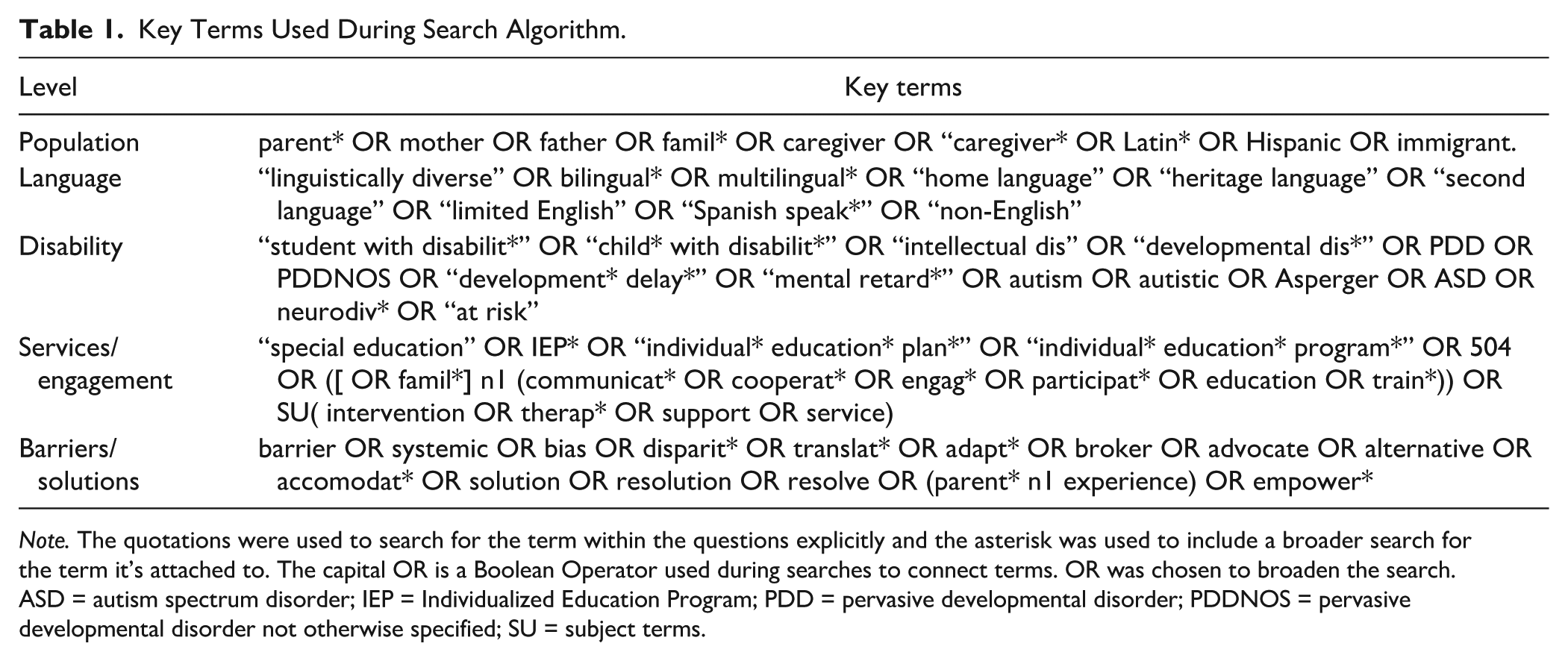
Note. The quotations were used to search for the term within the questions explicitly and the asterisk was used to include a broader search for the term it’s attached to. The capital OR is a Boolean Operator used during searches to connect terms. OR was chosen to broaden the search. ASD = autism spectrum disorder; IEP = Individualized Education Program; PDD = pervasive developmental disorder; PDDNOS = pervasive developmental disorder not otherwise specified; SU = subject terms.
The initial search identified 2,781 articles. The authors eliminated duplicates (946) before reviewing titles/abstracts (1,835). Of the 1,835 titles/abstracts, 1,824 did not meet the initial inclusion criteria (e.g., Latino/x or variations, primary and secondary schooling within the United States). Eleven articles fully met the inclusion criteria. An additional 21 articles were identified through forward, backward, and hand searches. There were 11 articles found during the forward search, seven during the backward search, and three during the hand search. The forward search involved searching eligible articles and reviewing any other research that had previously cited the article. A backward search process used the same original relevant articles and focused on finding any pertinent articles that could be useful through the reference section(s). Finally, the hand search included the investigation of three journals: the Journal of Developmental and Physical Disabilities, the Journal of Autism and Developmental Disorders, and the Journal of Latinos and Education through all available volumes. The authors reviewed the 32 articles and eliminated articles (16) that did not meet the inclusion criteria (e.g., thesis/dissertations/systematic reviews, no experiences). Sixteen articles were identified for inclusion.
Quality Assessment
The quality of the 16 articles identified was assessed using quality checklists devised by various quality frameworks that address some key methodological characteristics (see Table 2). The criteria for the eight qualitative studies were assessed using the Critical Appraisal Skills Programme (2018; CASP) with considerations by Trainor and Graue (2014). The Mixed Methods Appraisal Tool (MMAT; Hong, 2018) was used to determine the quality of mixed-method-based articles found for the eight mixed-method studies.
Quality Appraisal of Studies Found.
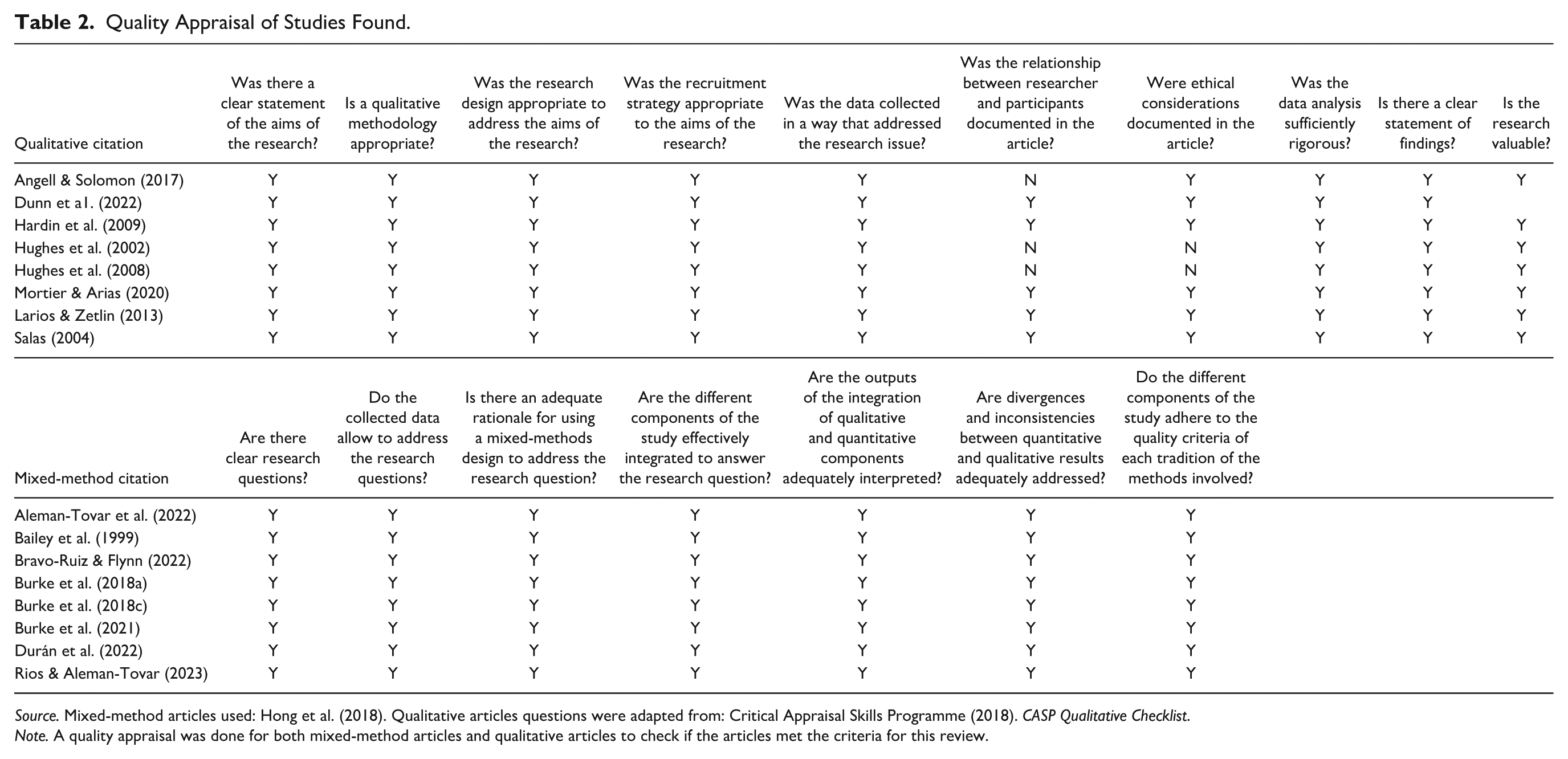
Source. Mixed-method articles used: Hong et al. (2018). Qualitative articles questions were adapted from: Critical Appraisal Skills Programme (2018). CASP Qualitative Checklist.
Note. A quality appraisal was done for both mixed-method articles and qualitative articles to check if the articles met the criteria for this review.
Interrater reliability (IRR) was measured using percentage agreement and organized through Excel. The IRR ranged from 80% to 100%, with a mean of 94%. All quality coding disagreements were resolved among the authors. The mixed-methods articles identified in this study met all quality criteria. However, two articles needed more information on ethical considerations (i.e., obtaining consent or institutional review board process), and three articles needed more information on the positionality of researchers in their studies. This was a recurrence across multiple articles; therefore, researchers concluded that the continued use of these articles was warranted, given the overarching significance of the research topics and data.
Reliability
The Rayyan database was used during the article-screening process because it has a double-blinded feature (i.e., researchers could not see each other’s screening process) that calculates IRR. The researcher’s IRR reached 99.6% for initial and full-text screening. For forward, backward, and hand screening, authors organized articles identified using Excel and calculated IRR by percent agreement, which reached 90%. The authors discussed all disagreements, and 100% IRR was achieved.
Data Extraction and Analysis
From the 16 studies included in this review, the authors extracted the (a) participants, (b) design, (c) acculturation, (d) purpose, (e) barriers, and (f) facilitators information (see Table 3). A purpose section was included in the table to help the reader understand each article. This criterion is referenced in Table 3. Data were extracted into separate coding sheets. Using the works of Hirano et al. (2018), Davis et al. (2021), and Rios and Burke (2020) as references, the authors independently analyzed the article’s result section for the development of codes. Before the analysis, the authors cross-referenced their findings and agreements on the codes developed. Themes, categories, and codes were developed using guidance from Saldaña (2016). Figure 2 shows the process of the codes, the categories (barriers and facilitators), the relation between the categories, and how the categories prohibit or enhance the theme of this article (the access to SPED services for Latino/x families; see Figure 2).
Summary of Studies Focusing on the Barriers and Facilitators Latino/x Families.
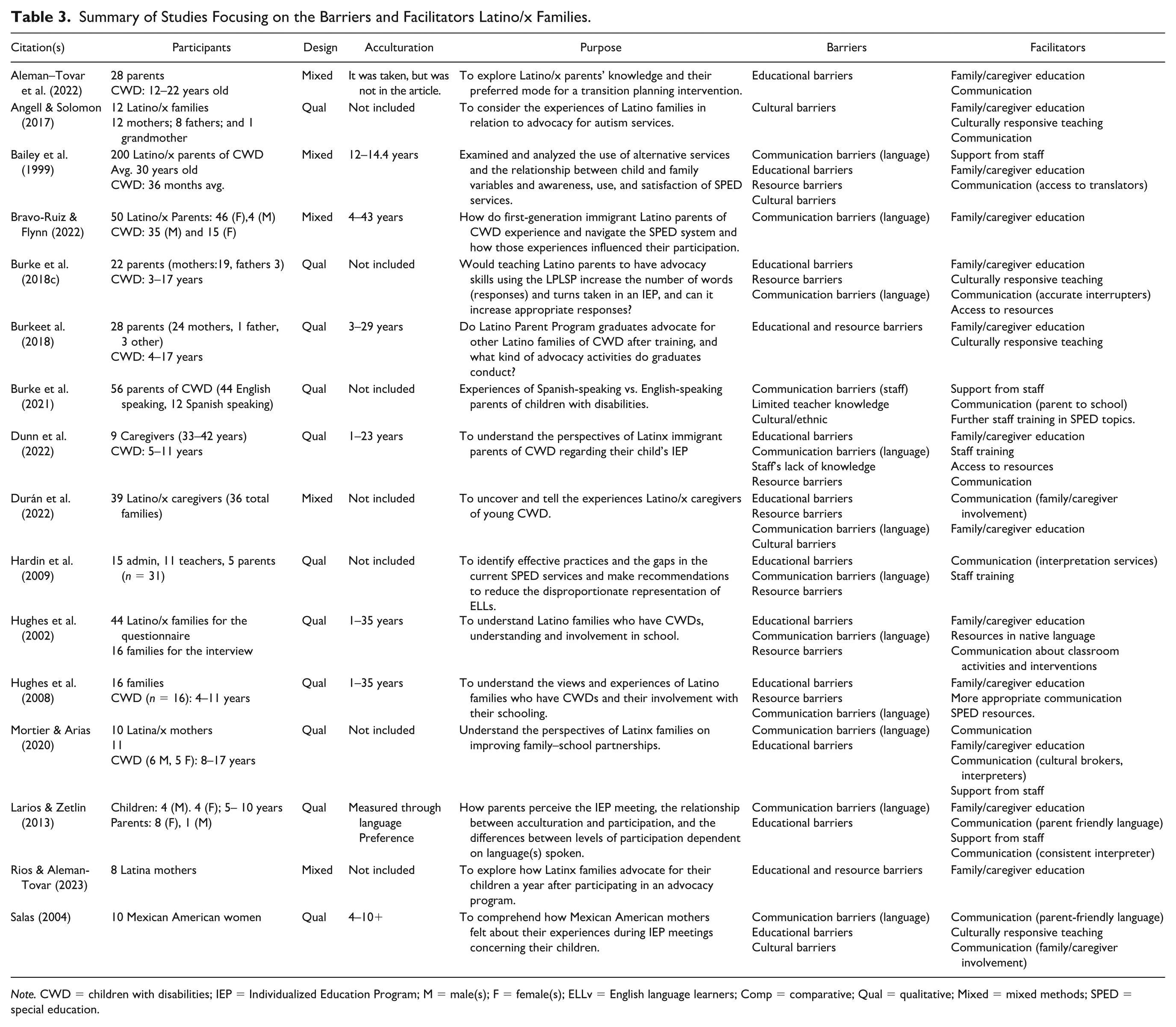
Note. CWD = children with disabilities; IEP = Individualized Education Program; M = male(s); F = female(s); ELLv = English language learners; Comp = comparative; Qual = qualitative; Mixed = mixed methods; SPED = special education.
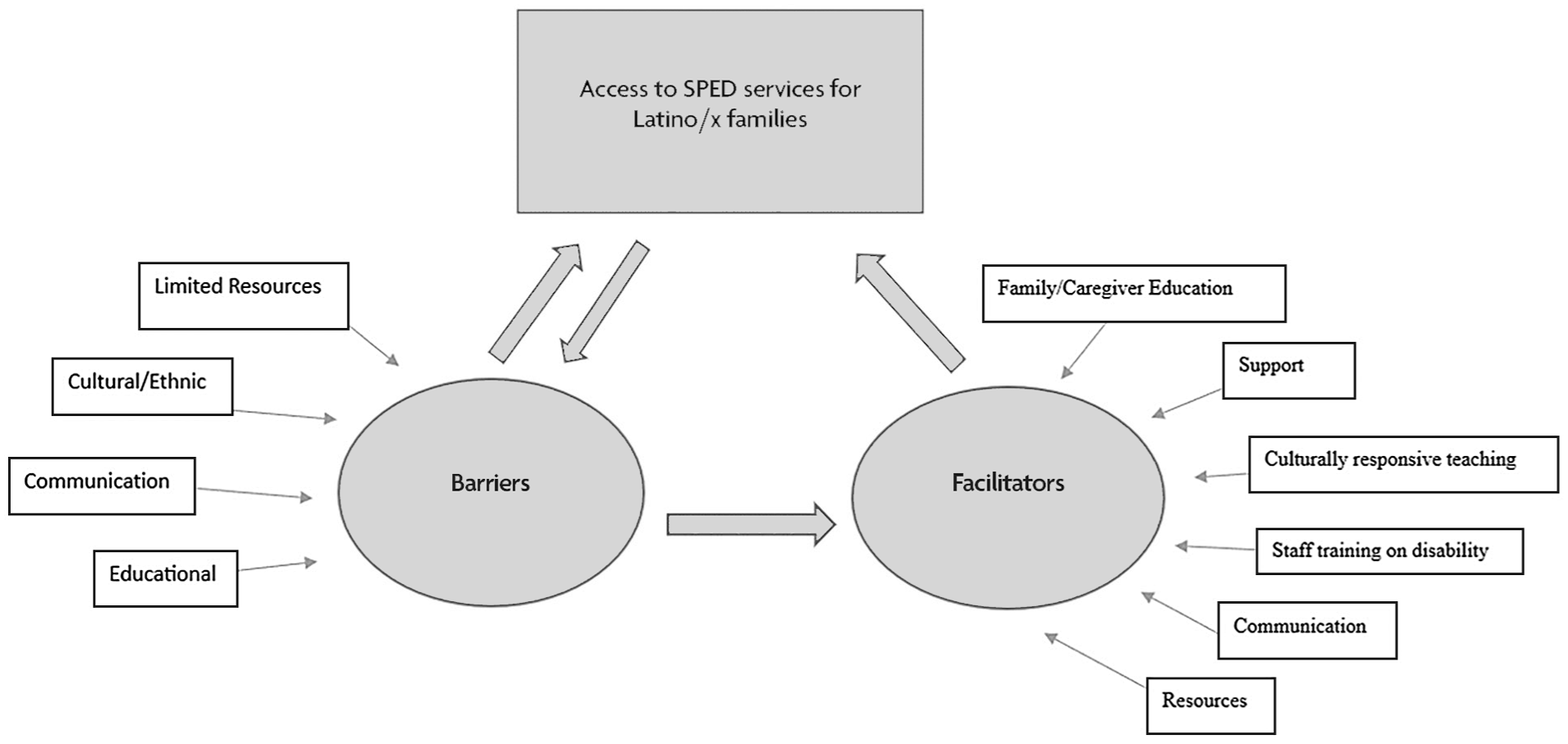
Patterns Across Studies.
Results
For each review, we described the relevant extracted information: (a) participants; (b) design; (d) acculturation; (e) purpose; (f) barriers; and (g) facilitators (see Table 3). Then, we provided a descriptive summary of the facilitators and barriers found within each study.
Characteristics of Participants
There were 581 participants in total: 555 family members (mothers, parents, grandparents, and others) and 26 staff. Of the articles documenting participant(s) characteristics, 137 mothers, 17 fathers, and four others (caregivers or grandparents) participated. A range of 8–200 Latino/x caregivers participated in these studies.
Research Design
Out of the 16 studies, 8 were classified as mixed-method studies (Aleman-Tovar et al., 2022; Bailey et al., 1999; Bravo-Ruiz & Flynn, 2022; Burke et al., 2018a, 2018c, 2021; Durán et al., 2022; Rios & Aleman-Tovar, 2023), and 8 were classified as qualitative studies (Angell & Solomon, 2017; Dunn et al., 2022; Hardin et al., 2009; Hughes et al., 2002, 2008; Larios & Zetlin, 2013; Mortier & Arias, 2020; Salas, 2004). Seven out of the eight mixed-method studies utilized surveys (Aleman-Tovar et al., 2022; Bailey et al., 1999; Bravo-Ruiz & Flynn, 2022; Burke et al., 2018a, 2018c; Durán et al., 2022; Rios & Aleman-Tovar, 2023), with one being comparative (Burke et al., 2021). Of the articles, one utilized a focus group (Durán et al., 2022); one labeled the research an ethnographic study (Angell & Solomon, 2017); two considered the research general inductive (Dunn et al., 2022; Hughes et al., 2008), and finally, although not documented as such, it was concluded that the last few qualitative articles would be considered phenomenological or narrative (Hardin et al., 2009; Hughes et al., 2002; Larios & Zetlin, 2013; Mortier & Arias, 2020; Salas, 2004).
Acculturation
Acculturation data were taken for 9 of the 16 articles (Aleman-Tovar et al., 2022; Bailey et al., 1999; Bravo-Ruiz & Flynn, 2022; Burke et al., 2018c; Dunn et al., 2022; Hughes et al., 2002; Hughes et al., 2008; Larios & Zetlin, 2013; Salas, 2004). Of the nine articles, one did not display their data (Aleman-Tovar et al., 2022), and another used language preference to document acculturation (Larios & Zetlin, 2013). The remaining seven articles documenting acculturation showed the range of participants’ years of living in the United States. One year is the minimum, with the maximum year being 43. In the study by Larios and Zetlin (2013), the authors used language preference to determine acculturation. For their study, four out of the eight participants preferred using Spanish, three preferred English, and one preferred both Spanish and English.
These studies examined how acculturation, as indicated by language preference and duration of residency in the participant’s new host country, influenced the frequency and significance of barriers encountered by Latino/x families. However, many of the studies did not directly ask the participants if they felt like the process of acculturation highlighted the barriers they faced, nor what their prior experiences were regarding SPED before migrating to the United States.
Barriers to Accessing SPED Services
Education barriers
In 12 out of the 16 articles analyzed, the focus was on the challenge of accessing or advocating for specific services within SPED due to inadequate caregiver education (Aleman-Tovar et al., 2022; Bailey et al., 1999; Burke et al., 2018a, 2018c; Dunn et al., 2022; Durán et al., 2022; Hardin et al., 2009; Hughes et al., 2002, 2008; Larios & Zetlin, 2013; Mortier & Arias, 2020; Rios & Aleman-Tovar, 2023; Salas, 2004). In a mixed-method study conducted by Bravo-Ruiz and Flynn (2022), 57% of the variance in Latino/x parent participation in the SPED process was attributed to their understanding of the U.S. education system and their child’s disability emerging as the strongest predictors.
In another study by Salas (2004), a parent named Maria shared her thoughts on attending SPED meetings: I don’t like walking into those special meetings and everybody staring at me. All those people. They pretend to care about us, but they don’t know us. They don’t ask us what we need or want. They always use those big words that I can’t understand. I try to get there as early as possible, so I don’t look stupid. I don’t even know most of those people at the special meeting, only my child’s teacher. I like to sit next to her. It makes me feel better and not so scared. (p. 188)
Maria’s words show that the lack of understanding of the terms used within the SPED meeting, besides other factors, decreases Maria’s desire to participate. In the study by Duran et al. (2022), another parent mentioned that due to the lack of education of SPED services/goals, parents often find themselves saying “yes” to professionals: “[W]e know nothing of what they are talking about so we say, ‘yes.’ They are the professionals; they are the ones who know” (p. 12).
Although the above are just a few snippets, the 11 articles had parents or survey questions expressing similar experiences. Education barriers mean more than just a lack of education in SPED services; they also refer to the terminology professionals use. In many of the articles, a lack of understanding of the terminology used by professionals in the SPED meetings was a common occurrence by many Latino/x families, even when given the information in Spanish.
Communication barriers
For communication barriers, 12 of the 16 studies highlighted communication being an important factor when understanding, accessing, and navigating the SPED process (Bailey et al., 1999; Bravo-Ruiz & Flynn, 2022; Burke et al., 2018c, 2021; Dunn et al., 2022; Durán et al., 2022; Hardin et al., 2009; Hughes et al., 2002, 2008; Larios & Zetlin, 2013; Mortier & Arias, 2020; Salas, 2004). Most studies discussed language differences as the cause of the communication barriers, but some studies also discussed the lack of attempt to communicate or the withholding of information as part of the issue (Burke et al., 2021; Dunn et al., 2022; Durán et al., 2022).
Most participants expressed their concerns about the lack of communication about their children’s progress, interventions, and overall wellness (Bailey et al., 1999; Bravo-Ruiz & Flynn, 2022; Burke et al., 2021; Dunn et al., 2022; Hardin et al., 2009; Larios & Zetlin, 2013; Mortier & Arias, 2020; Salas, 2004). For example, one parent in the study by Burke et al. (2021) expressed her concern, “[school personnel] need to do more communication with the parents about what mainstreaming is, why it’s necessary, what the accommodation means” (p. 124). Within the same article, another concerned parent stated, “A lot of questions I ask, [the teacher] wouldn’t even respond” (p. 125).
In the study by Bravo-Ruiz and Flynn (2022), authors found that knowing or not knowing English predicted parent participation within the SPED process with a medium effect size and a variance of 33% (F = 4.80). Another example by Dunn et al. (2022) shows how one parent (Mary) discusses how not speaking English made her intimidated to talk to the professionals, “If I’m being honest with you, I used to be intimidated because I didn’t know English” (p. 411). Although the circumstances in which a caregiver fails to understand information due to language barriers compared to misunderstandings of terminology differ, the underlying similarity lies in the failure to comprehend terms/language, content, or lack of communication out of an assumption of incapability. Consequently, both instances fall under the same category.
Resource barriers
Of the 16 articles found, 7 emphasized the lack of resources contributing to barriers to understanding, accessing, and/or knowing how to move through the SPED process (Bailey et al., 1999; Burke et al., 2018a, 2018c; Dunn et al., 2022; Durán et al., 2022; Hardin et al., 2009; Hughes et al., 2002, 2008). In the work of Bailey et al. (1999), some participant complaints involved letters or forms being only in English. In the study by Burke et al. (2018c), caregivers expressed their need for applied behavior analysis (ABA) services but were denied by the school.
Dunn et al. (2022) also highlighted the need for additional resources, as evidenced by their categories. They observed that numerous themes pointed toward a need for more resources tailored to the Latino/x community, particularly translation of services from English to Spanish, such as documentation and resources delivered with caregiver-friendly language. One Latino/x parent discussed needing resources in the Dunn et al. (2022) article; “I felt it was my fault, I was very scared. I felt pain because I didn’t expect any of that and I said: one, I don’t know English, two I really didn’t know how to get the special education services” (p. 408).
Following the aforementioned article, in the remaining studies, Duran et al. (2022), Hardin et al. (2009), and Hughes et al. (2002, 2008), all participants shared similar experiences, expressing the need for resources to engage in their child’s education actively. One experience from the Duran et al. (2022) article summarizes this section best: Suddenly, a lady called me and says “Hey,” she says, “Why couldn’t you come to the appointment?” and I said, “Pardon,” I said, “What appointment? What appointment?” No one called me. Nobody sent me anything saying that I had an appointment for this time . . . and I do not have time to go to that appointment . . . and I also do not know where it is . . . They have not helped me. I don’t know how to read, I don’t know how to write, I don’t know how to get there. I need help. (p. 10)
Cultural/ethnic barriers
When considering all the barriers before this section, cultural barriers had the least number of articles. Four of the 16 articles documented and emphasized how culture affects the SPED process (Angell & Solomon, 2017; Bailey et al., 1999; Durán et al., 2022; Salas, 2004). In Salas (2004), Latino caregivers discussed their values of continuing to speak Spanish with their child(ren). One parent expressed the lack of consideration of her cultural language by the principal, stating they should be grateful for even having a teacher: I want my boy to learn both English and Spanish, but this school only teaches bilingual for a little while, then only English. My boy is in special program, but his teacher does not speak Spanish. He doesn’t want to go to school anymore. I ask principal about bringing other teachers who speak Spanish to work with the kids, but he tells me to be grateful that we have teachers in special education program. He tells me that at least there is teacher in classroom, I never ask again (p. 187)
Many other parents would have similar experiences. In the study by Angell and Solomon (2017), participants mentioned that being Mexican or having a Spanish last name would automatically cause teachers to look down on them. The stigma of being Spanish-speaking and of a Latino/x identity was often brought up by parents, with one stating: If I went in there and I was just a different ethnicity, would she have treated me the same? If I was a White woman, fighting for my children, with all the credentials that I have, would you still have treated me the same? Would you have spoken to me the same way? And blocked me from the services that I want? (p. 1152)
Bailey et al. (1999) had similar outcomes, with the majority of participants expressing discrimination due to being Latino/x. Overall, even though only four studies discussed cultural barriers as a reason for being unable to access services, the importance of this matter takes precedence. Cultural barriers could range from language to customs and practices, but most articles identified language and overall ethnicity as a reason for the lack of services.
Recommended Facilitators for Accessing SPED Services
Throughout the 16 articles, the authors noted that the participants also recommended potential facilitators within their interviews and survey responses. Therefore, the authors felt it would provide a better outlook on facilitators to include the participant’s recommendations alongside the authors. The authors developed codes from these recommendations, shown below.
Family/caregiver education
Fourteen out of the 16 articles reviewed had participants recommend some form of family/caregiver education (Aleman-Tovar et al., 2022; Angell & Solomon, 2017; Bailey et al., 1999; Bravo-Ruiz & Flynn, 2022; Burke et al., 2018a, 2018c; Dunn et al., 2022; Durán et al., 2022; Hughes et al., 2002, 2008; Larios & Zetlin, 2013; Mortier & Arias, 2020; Rios & Aleman-Tovar, 2023; Salas, 2004). Family/caregiver education includes the learning and understanding of IEP goals and policies, terminology, and the overall SPED process, which ultimately leads Latino/x families to advocate for their children. In the study by Burke et al. (2018a), the authors taught Latino/x families how to advocate for ABA services for their children. This training was formulated as a response to parents requesting ABA services since schools were not honoring their requests. After completing the training, Burke and colleagues noted that caregivers increased their IEP participation and more frequent advocacy.
With the above in mind, the rest of the 11 articles also had caregivers express the need for further learning (Aleman-Tovar et al., 2022; Angell & Solomon, 2017; Bailey et al., 1999; Bravo-Ruiz & Flynn, 2022; Burke et al., 2018c; Dunn et al., 2022; Durán et al., 2022; Hughes et al., 2002, 2008; Larios & Zetlin, 2013; Mortier & Arias, 2020; Rios & Aleman-Tovar, 2023; Salas, 2004). Aleman-Tovar et al. (2022) utilized a survey and focus group to determine the information the participants wanted to learn. Within both the quantitative and qualitative sections of the article, caregivers hoped to learn more about all topics (natural supports, adult services, and school-based transition planning) to help enhance their understanding of current and future services. One parent stated: “And yes, I would also like to [learn] about the topics that we filled out from the survey, they are very interesting” (p. 136).
Another highlight from these 13 articles is the desire to have the education and background knowledge of SPED policy and IEP terminology to “fight” for their children, their services, and themselves. This was brought up consistently in the article by Angell and Solomon (2017) and can be seen by participant Sofia, who states, “We’re your typical autism parents, you know? We’ve learned how to fight” (p. 1149). This comment, “learning how to fight,” was often associated with having the understanding and information to back parents’/caregivers’ wants and needs when communicating with school staff and administrators. In the study by Mortier and Arias (2020), another parent expressed the importance of knowledge, stating, “I think that when you have the knowledge, it gives you power because then there is no way for them [the school district] to tell you no” (p. 648). Many of the articles that were not directly showcased in this paragraph had a common emphasis when it came to wanting more knowledge or education of SPED services, law, and policies (Bailey et al., 1999; Bravo-Ruiz & Flynn, 2022; Burke et al., 2018c; Dunn et al., 2022; Durán et al., 2022; Hughes et al., 2002, 2008; Larios & Zetlin, 2013; Rios & Aleman-Tovar, 2023; Salas, 2004).
Communication
Thirteen out of 16 articles recommend better communication, whether it be by utilizing cultural brokers and interpreters or increased communication between the teachers and the participants on their children’s overall progress, classroom behaviors, and skills (Aleman-Tovar et al., 2022; Angell & Solomon, 2017; Bailey et al., 1999; Burke et al., 2018a; Burke et al., 2021; Dunn et al., 2022; Durán et al., 2022; Hardin et al., 2009; Hughes et al., 2002, 2008; Larios & Zetlin, 2013; Mortier & Arias, 2020; Salas, 2004). Communication between Latino/x families and school staff is so important that most of these articles’ caregivers expressed their want and need for communication (Mortier & Arias, 2020). In the work of Burke et al. (2021), one parent stated, “My aim is that my school put a bilingual person who could give us support to the parents to help our children because I think communication is very important” (p. 129). In Hughes et al. (2008), one parent stated, “It is important that from the beginning they explain to the families what is an [individualized education program] meeting” (p. 250).
Another recommendation was quality and consistent translators. Translators who showed up took the time to make and provide resources and translated the information accurately, which led to satisfied families (Durán et al., 2022; Hardin et al., 2009; Hughes et al., 2002; Mortier & Arias, 2020). However, even with having a translator, professionals’ use of terminology during meetings may still hinder communication efforts between staff and family. Communicating with families in caregiver-friendly language could better help Latino/x families (Aleman-Tovar et al., 2022; Burke et al., 2018a, 2021; Dunn et al., 2022; Hughes et al., 2002; Larios & Zetlin, 2013; Salas, 2004).
Support
Four out of the 16 articles found also emphasized the importance of obtaining support from staff (Bailey et al., 1999; Burke et al., 2021 Larios & Zetlin, 2013; Mortier & Arias, 2020). Participants who were satisfied with services discussed a key person who helped them navigate and access information on SPED services and policies (Bailey et al., 1999). Having support from staff can empower the caregivers and develop rapport. In a study by Burke et al. (2021), an English-speaking parent who felt empowered discussed how they were the expert. Meanwhile, Spanish-speaking parents had the opposite effect. Similarly, in the study by Mortier & Arias (2020), all families discussed how they enjoyed teachers who also talked positively about their children and who took the time to reach out to the families. Another article also expressed the importance of support by encouraging families to bring a support person to meetings; however, the staff needs to encourage and push for families to bring such support (Larios & Zetlin, 2013).
Culturally responsive teaching
Of the 16 articles analyzed, four proposed that educators and administrators should embrace culturally responsive teaching practices (Angell & Solomon, 2017; Burke et al., 2018a, 2018c; Salas, 2004). Cultural responsiveness involves tailoring instruction, communication, and teaching methods to align with the cultural backgrounds of students and their families rather than expecting them to conform to traditional approaches (Trumbull & Rothstein-Fisch, 2009). A study by Salas (2004) revealed that many participants felt frustrated by the effort required to understand school staff, particularly when Spanish was their only spoken language. The four articles also identified similar cultural barriers faced by families and recommended additional training or education as possible solutions. While not all of the articles included direct quotes from families expressing their desire for culturally responsive teaching, all authors recommended its implementation to address the cultural barriers encountered by their participants.
Staff training on disability/behaviors
Three out of 16 articles also had participants recommend further staff training for their children’s disabilities (Burke et al., 2021; Dunn et al., 2022; Hardin et al., 2009). Many families reported that teachers and other professionals lack knowledge when working with English language learners (ELLs), leading to misdiagnoses and inappropriate services for their children (Hardin et al., 2009). In Hardin et al. (2009), teachers and administrators also were concerned about making judgments on ELL school readiness. In the study by Dunn et al. (2022), their participants discussed their children’s teachers not knowing or understanding their children’s disabilities. One parent stated, “The teachers are not prepared and don’t know the concepts. If you are a parent who goes to parent groups, you realize that you know more than the teacher regardless of your immigration status” (Dunn et al., 2022, p. 412). In the study by Burke et al. (2021), Spanish-speaking Latino/x families also expressed how they felt about both general and SPED teachers instructing their children: “The regular [general education] teachers do not know how to work with a child with a disability . . . . and they do not want to say, “I need help” or “I do not know” ” (p. 123).
Access to resources
Four out of the 16 articles stressed needing more caregiver-friendly resources in a Latino/x family native/primary language (Burke et al., 2018a; Dunn et al., 2022; Hughes et al., 2002, 2008) or having access to resources such as SPED-related therapy and parent training. In the work of Burke et al. (2018a), most participants’ advocacy scripts were geared toward accessing ABA services and questions about what is written on the IEP. Dunn et al. (2022) highlighted that while most parents sought resources from external sources, they preferred the school as the primary resource provider. Schools providing caregivers with resources were also discussed within the works of Hughes et al. (2002) and Hughes et al. (2008). For example, in the study by Hughes et al. (2008), one caregiver stated, “I need more ideas about what is going on in the class and activities that can be done at home” (p. 15). Some of these resources sought by parents would be information about classroom activities, workshops, and seminars (Hughes et al., 2008). As mentioned previously, family/caregiver education was also a recommended facilitator, as resources can be a way for families to advocate and seek out opportunities for their children.
Discussion
This systematic review assessed, summarized, and identified both past and current research to help provide further evidence that Latino/x families were and are currently experiencing barriers when navigating and accessing SPED services. These barriers—cultural/ethnic, communication, limited resources, and educational barriers—were developed into these general codes and placed into the barrier categories. The authors of this article also utilized the same approach when synthesizing current and past recommendations for facilitators. These facilitators—family/caregiver education, support, culturally responsive teaching, staff training on disability/behaviors, communication, and resources—were developed into these general codes and placed into the facilitator categories. Finally, acculturation—a construct that incorporates several intersecting variables that many Latino/x families face when adapting to a new environment—was also examined within these articles to investigate whether this process played a role in the barriers and facilitators that Latino/x families experienced.
This study had several findings that support previous systematic reviews, such as that of Rios and Burke (2020). However, it furthered the discussion by examining barriers and facilitators through an intersectional lens and including the acculturation process that some Latino/x families experience. Of the few extracted studies, several systemic barriers were documented. Such barriers prevented Latino/x families from navigating and accessing SPED services. With the limited amount of articles discussing and showcasing the barriers that impact Latino/x families, more research is needed to identify what currently is hindering access to SPED services and what is also currently working. For Latino/x families, family/caregiver education, access to resources, communication, support, cultural understanding, and quality training for teachers were important. Limited access to SPED knowledge, communication barriers, lack of resources, lack of cultural understanding and quality SPED services from staff led to barriers when navigating the SPED process. Overall, most families reported that communicating with school staff, regardless of whether or not they had a translator, led to greater satisfaction with their children’s SPED program. Next, based on the range of acculturation for the studies that documented this process, no amount of acculturation was shown to increase or decrease the number of barriers experienced when navigating and attempting to access SPED services; however, for the articles that did document acculturation, the researchers did not ask families whether or not they felt acculturation played a role in the number of barriers experienced, nor was the data extracted in a way to determine this. Finally, researchers within the relevant articles have not considered viewing acculturation within an intersectional lens, which would also consider asking if they had any prior knowledge of the U.S. SPED system, if they migrated from the city versus a rural area of their home country, or even the phenotype of their skin (e.g., Black, Brown).
Limitations
A limitation of this study was that the research question, “Did acculturation play a role in the barriers faced by Latino/x families?,” was not directly answered by all relevant articles. Although some authors gathered data from the years that participants lived within the United States from the articles that included acculturation data, a question related to the acculturation of Latino/x families was not directly asked. This brings up the need to ask further questions related to acculturation to understand how intersecting variables, such as the number of years within a host country, determine how one navigates the SPED system. The lack of acculturation data does bring up another limitation related to intersectionality and acculturation. This article intended to use acculturation to understand how the intersection of one’s social/ environmental factors could relate to the barriers and facilitators experienced. However, like the previous sentence, the articles that did not include acculturation and a specific question not being asked about this concept limited the potential for further exploration of how these intersections determine barriers experienced and recommended facilitators.
Next, researchers utilized broad search terms to code for potential emerging themes. With this search, only one article (Aleman-Tovar et al., 2022) discussed limited resources/education for understanding the transition process from adolescence to adulthood within the SPED system. This limitation could be due to the search terms utilized or could be another potential research gap. Finally, the sample size for the articles found is on the low end, meaning that the samples may not reflect the characteristics and diversity of the Latino/x population, and the results may not be generalizable.
Future Implications for Research and Practice
Based on these findings, future implications for practice should include training for teachers within their college programs and as part of their professional development. Learning to listen, advocate, and understand Latino/x family’s cultural values through culturally responsive education could help not only to build rapport with this population but also to develop a connection between the professionals and their Latino/x students (Angell & Solomon, 2017; Burke et al., 2018a, 2018c; Salas, 2004). Next, in the limitation section, we discussed the potential issue with the terms used, which excluded adult or transition services. This topic is important to explore, and future research should consider looking into the barriers and facilitators within Latino/x families when transitioning from adolescence to adulthood for those who have disabilities. Finally, future research should explore how Latino/x families’ various intersections contribute to current and previous research-identified barriers and facilitators.
The researchers of this article attempted to investigate acculturation by considering intersectionality, researching past relevant research, and re-analyzing the barriers and facilitators of Latino/x families’ experience within the SPED system. The understanding of various intersecting identities (e.g., prior social class and familiarity with the host country) could bring forth more information on why some Latino/x families have a harder time navigating and accessing SPED services and give voice to more Latino/x families within the SPED system. Both implications could help with research and practice and inform future policymakers on what to look for when developing future guidelines for working with culturally and linguistically diverse populations; more specifically, what to recommend when working with Latino/x families and students.
It is important to remember that being Latino/x is not a monolith, and every experience is different. Not all Latino/x families within these articles experience the same barriers; some families experience more cultural barriers, while others experience more communication barriers (Hughes et al., 2002; Larios & Zetlin, 2013). Future research and practice should include questions pertaining to acculturation and how this intersects with the Latino/x community’s many intersecting identities through the understanding of intersectionality (Viruell-Fuentes et al., 2012). With the inclusion and understanding of both concepts, authors believe that research and practice will begin to better understand the topics of barriers within the SPED system and what facilitators are needed to revamp new and current solutions to further comprehend and decrease these barriers that Latino/x families are experiencing. In conclusion, understanding these barriers, asking further questions in relation to intersectionality by considering acculturation, and listening to the recommended facilitators expressed within these studies could help provide future solutions for Latino/x families who are preparing or navigating the U.S. SPED system and for the professionals working with them.
Footnotes
Acknowledgements
We want to thank Dr. Mark O’Reilly and Dr. Jennifer Nailos for their support and guidance in developing this article. We also thank our colleague Molly DeMayo for critiquing the manuscript. Finally, this article is dedicated to the loving memory of Neyda’s father, Miguel Angel Sánchez Guzmán.
Declaration of Conflicting Interests
The author(s) declared no potential conflicts of interest with respect to the research, authorship, and/or publication of this article.
Funding
The author(s) received no financial support for the research, authorship, and/or publication of this article.
