




Abstract
There is evidence that data-based decision-making (DBDM) can improve outcomes for a wide range of students. However, less is known about how special education teachers are trained to use data to inform instruction that targets academic progress for students with extensive support needs (ESN). The purpose of this systematic literature review was to describe the intervention literature on the impact of professional development (PD) on teachers’ use of DBDM for students with ESN. Eight studies were identified. The DBDM interventions primarily targeted teachers’ decision-making related to instruction in individualized curricular goals or academics in functional contexts and were driven by data on isolated skills and concrete decision rules. All but one study documented some improvement in teacher or student outcomes after DBDM PD. Suggestions for future research, limitations of this review, and implications for practice—including student progress in the general education curriculum—are discussed.
Keywords
Students with extensive support needs (ESN), sometimes referred to as having significant cognitive disabilities (SCD), are expected to have access to, and make progress in, the general education curriculum (Individuals with Disabilities Education Improvement Act [IDEA] of 2004). For the purposes of this article, students with ESN are defined as having continuing, pervasive support needs across academic and daily living contexts; may be classified with disabilities such as autism, intellectual disability, and multiple disabilities; and typically participate in their state’s alternate assessment (Kurth et al., 2019). Beginning with the No Child Left Behind Act (NCLB, 2002), students with SCD were expected to demonstrate their academic achievement on alternate assessments based on alternate achievement standards. Since 2010, states have adopted more challenging college- and career-readiness standards and implemented alternate assessments with higher achievement expectations (Karvonen et al., 2017). Students are now expected to leave high school ready to pursue postsecondary opportunities, including competitive integrated employment (Workforce Innovation and Opportunity Act of 2014). Yet, teachers may not be adequately prepared to help students with ESN meet these higher expectations. For example, in 2018–2019 alternate assessment results across 17 states, the median proficiency rate in Grades 3 to 8 was 30% in English language arts (ELA) and 17% in mathematics (Dynamic Learning Maps Consortium, 2019a, 2019b). By high school, 27% of students with ESN were proficient based on ELA alternate academic achievement standards and 12% were proficient in mathematics. In contrast, among students with and without disabilities nationwide who took the 2019 National Assessment of Educational Progress assessments in high school, 37% scored at the proficient or advanced levels in reading and 24% were proficient or advanced in mathematics (NAEP, 2019a, 2019b).
One important strategy for helping students meet academic expectations and prepare for postsecondary opportunities is to evaluate and adjust instruction in response to evidence of student learning. This practice is well established in the literature on instruction for students with high-incidence disabilities (Jung et al., 2018) but may not be well established or widely used to support academic instruction for students with ESN. Academic curricular decisions for students with ESN may be influenced by factors unrelated to the notion of students’ academic progress over time, such as special educators’ perceptions of the trade-offs between curricular goals that support long-term functional independence and short-term requirements to teach and assess in academic subjects (Timberlake, 2014). Ruppar et al. (2015) found that teacher assumptions about their students’ capabilities influenced how they made curricular decisions. Instructional decision-making also requires consideration of the content, yet in a multistate survey, Karvonen et al. (2013) found more than 60% of teachers reported they did not consider academic content standards when deciding what to teach next academically to students with ESN. Given the tension between policy-driven increases in academic expectations and evidence about teachers’ curricular decision-making for students with ESN, more research is needed on data-driven instructional models that could help students with ESN make more progress in the general curriculum.
Data-Based Decision-Making Models
The use of data to inform academic instruction has gained traction in recent years as a practice in general education classrooms (Mandinach & Gummer, 2012) as teachers are expected to collect, interpret, and analyze student data to make instructional decisions (Reeves & Chiang, 2017). This practice is also central to Multi-Tiered Systems of Support and Response to Intervention models, often used to identify and serve students who require additional supports, including those with disabilities (McMaster et al., 2020; Tran et al., 2011; Wanzek et al., 2016). DBDM is the general process of collecting ongoing student data and explicitly using the data to modify instruction to improve student performance (Filderman et al., 2018). Also called data-based instruction (Lembke et al., 2018), data-driven decision-making (Datnow & Hubbard, 2016), or data-based individualization (Jung et al., 2018), these models of data collection and analysis vary slightly across approaches but contain the following common steps (Jung et al., 2018; Lembke et al., 2018) that may be repeated as needed:
Establish present levels of performance.
Set an instructional goal.
Deliver instruction.
Use data to monitor student progress toward the goal.
Use decision rules to evaluate student progress and instructional effectiveness.
Hypothesize about the student’s progress and instructional needs.
Implement changes to instruction.
Repeat the cycle.
Recent meta-analyses showed that DBDM has positive effects on the academic performance of struggling readers (Filderman et al., 2018) and students with disabilities (Jung et al., 2018). Data sources teachers use to inform instruction typically include formative assessments, which, as part of progress monitoring, are designed to measure student progress and growth throughout the school year. Progress monitoring is an important tenet in multi-tiered support models and can include formative assessments as well as curriculum-based measures (CBMs), or collecting data on discrete skills (Wakeman et al., 2021).
Collecting instructional data is not new for teachers of students with ESN. However, given the relatively short history of academic curricula for the population, much of the literature is based on the larger body of research in functional curricula. Current recommended DBDM practices for instruction of students with moderate and severe disabilities (e.g., Browder et al., 2020) are grounded in models developed by Browder and colleagues in the 1980s (Browder et al., 1986), when the dominant curricular models focused on functional skills and access to community settings (Browder et al., 2003) rather than attainment of high academic expectations. Since data-based instructional decisions are made in the context of the content being taught (Mandinach & Jimerson, 2016), it is possible that teachers need support for applying methods to more rigorous academic instruction. There is some published literature on the accuracy of teachers’ interpretations of student data (Snell & Loyd, 1991) and descriptive research on educators’ lack of clarity about what instructional decision to make based on data (Farlow & Snell, 1989). In a 2010 literature review on formative assessment for students with ESN (which includes data use for instructional decision-making), Browder et al. noted there was little additional literature on this topic since the 1980s and 1990s. More recent guidance on formative assessment for students with disabilities focuses on practices for students with mild disabilities (Brookhart & Lazarus, 2017).
As students with ESN are to make progress in the general education curriculum, their academic instruction should be guided by data-based decisions. In a current textbook chapter on monitoring and enhancing progress for students with moderate and severe disabilities, Browder et al. (2020) describe various data sources and data displays, followed by a process of analyzing graphed data, making an instructional decision, and deciding how to implement the decision. The decision-making process aligns with the fourth, fifth, and seventh steps common in the broader literature. The chapter provides examples of the decision-making process using graphed data based on common instructional practices that support data collection on repeated trials and task analysis. Guidance is provided on what constitutes sufficient data upon which to base a decision, and there are five potential conclusions that may be reached based on the data trend: mastery, no progress, adequate progress, inadequate progress, or motivation problem. Based on the conclusion, teachers then implement changes in teaching strategies to achieve one of three goals: increase student independence, increase the rate of correct responses, or recover after regression.
This mastery-based approach provides diagnostic information about a specific skill. However, teachers of students with ESN may also need other forms of data to support student progress toward high academic expectations. For example, a teacher may track progress on a cluster of related content standards throughout the year, similar to an interim or benchmark assessment approach; or monitor progress on a curricular goal that is hard to measure with an observational data system (e.g., developing engineering habits of mind; Jimenez et al., 2021). It is not yet clear how current recommended practices meet these needs.
Much of the current literature on DBDM and progress monitoring is based on inclusive settings and tiered support models, both of which are contexts that have historically excluded students with ESN (Kurth et al., 2019; Thurlow et al., 2020). For example, Snyder and Ayres (2020) reviewed the literature on the use of CBMs in reading as formative assessments for students with intellectual disabilities and found no articles about students with moderate to severe intellectual disability. Guidance on other progress monitoring approaches for students with severe disabilities is emerging, especially for use in inclusive contexts, but again the literature base is sparse. For example, Wakeman et al. (2021) highlight ongoing progress monitoring as a key component of the Multi-Tiered Systems of Support (MTSS) framework for the benefit of all students, including students with ESN in inclusive settings.
Professional Development to Build Teacher Capacity for DBDM in Academic Instruction
Preservice general and special education teachers are given few opportunities to learn how to use data to guide their instruction (Mandinach & Jimerson, 2016; Reeves & Chiang, 2017). Once in the classroom, access to student data alone does not mean that teachers will use it to inform their teaching (Huguet et al., 2014; Marsh et al., 2015). Teachers often have little support to implement DBDM and therefore do not use it (Marsh et al., 2015). Special educators, who lack access to DBDM preservice training and the academic content knowledge of their general education colleagues, must rely on professional development (PD) to learn DBDM skills.
Broadly speaking, contemporary DBDM PD designs often include a combination of structural elements—including workshops, coaching support, professional learning committees (PLCs) or data teams (Farrell & Marsh, 2016), and courses (i.e., online modules; Mandinach & Jimerson, 2016). These approaches are prerequisites for building teacher capacity for data use (Hoogland et al., 2016). Coaches and PLCs helped teachers go beyond simply modifying instructional materials and topics (what they are teaching) and instead changed their instruction (how they are teaching) as needed based on student data (Marsh et al., 2015).
Regardless of the content or format of PD, researchers have identified several components of effective PD (Garet et al., 2001; Hochberg & Desimone, 2010; Yoon et al., 2007) including (a) a content focus (e.g., PD is grounded in content knowledge), (b) active learning (e.g., opportunities to practice new skills in teaching), (c) reflects daily life and local and state instructional goals (coherence), (d) sustained duration (e.g., PD takes place over extended time), (e) groups or multiple teachers participating together, and (f) responding to school contextual factors. There are also studies examining effective practices within PD modalities—for example, coaching to support the adoption of evidence-based practices (Kretlow & Bartholomew, 2010).
As much of the literature on DBDM for the instruction of students with ESN occurred before Browder et al.’s (2010) literature review and much of the literature on effective DBDM PD models came after 2010, earlier studies may not have included evidence-based PD models. The purpose of this study was to systematically review the literature on PD related to DBDM, specifically applied to teacher decision-making about academic instruction for students with ESN. Specific research questions were:
Method
Search Procedures
Initial search
To cast the widest possible net and identify all current research on this topic, peer-reviewed journal articles and dissertations were eligible for inclusion in this study. We used electronic and manual search procedures. For the electronic procedure, we searched Academic Search Complete, Psych Info, ERIC, and ProQuest Dissertations databases for articles and dissertations published from 1981 through April 2020. We used a variety of search terms and keyword combinations to describe the DBDM technique (e.g., data-based instruction, data-based decision-making, data-based individualization, data-driven, data literacy), including progress monitoring (e.g., progress monitoring, formative assessment), and various terms used to describe the student population during the 40-year time period (e.g., cognitive disability, intellectual disability, mental retardation, mental handicap, and severe disability). We used wildcards (e.g., disabilit* for disability and disabilities) to ensure that all variations of the search terms were included. The searches were limited to school-age students and education contexts (e.g., articles on DBDM for school-age children in health care settings were excluded). Results for each search were saved to a database. Duplicate returns were identified and eliminated, leaving a total of 1,636 sources for screening.
For the manual search procedure, we evaluated the studies cited in two recent DBDM meta-analyses (Filderman et al., 2018; Jung et al., 2018) and four systematic literature reviews or meta-analyses on school- or district-wide DBDM interventions. The manual search yielded three studies not identified through the electronic search, so a total of 1,639 records were identified for screening.
Screening and inclusion criteria
Given a large number of initial records, we conducted the screening in phases. Each subsequent phase was based on the results that met the criteria in the previous phase. Screening phases included (a) teacher use of DBDM in K–12 classrooms, (b) the content of students’ instruction, (c) the presence of a PD intervention, (d) empirical study, and (e) student population. We used titles and abstracts to identify sources that met the inclusion criteria and used the full text when the title and abstract were unclear. Both authors independently screened records on all criteria and resolved discrepancies through consensus.
DBDM was operationally defined as the process of collecting student data and using data to modify instruction to improve student performance (Filderman et al., 2018). Articles that included one or more steps of the DBDM cycle for the purpose of informing instruction were included. There were 417 articles that met the criterion for DBDM use in K–12 settings. Within that set, we screened for the content of students’ instruction. We included articles with explicit reference to academic instruction, defined as curriculum- or standards-based instruction in an academic content area such as English language arts, reading, writing, math, science, or social studies. As the time span for this review (1981–2020) extended prior to the 1997 IDEA requirement for general curriculum access, we also included articles that described academic skills applied in functional contexts or generic, individualized instructional goals that could have included academics. We excluded articles in which the student-level intervention was explicitly nonacademic (e.g., behavior management). We defined PD intervention as any kind of training or support targeting teachers’ use of DBDM. Thirty-nine sources included academic instruction and a DBDM PD intervention. All but two were empirical.
The final inclusion criterion was based on student population. Our goal was to include articles about instructional decisions for students who are eligible for alternate assessments. While often referred to as having ESN, the label that partially describes alternate assessment eligibility is “significant cognitive disability” (SCD). States intentionally do not equate the SCD term with certain IDEA disability categories. Many states use a holistic approach to describe this population, focusing on impairments with cognitive and adaptive functioning, the need for extensive support during instruction, and receiving instruction in extended academic content standards (Thurlow et al., 2019). Based on studies about the population of students who take alternate assessments based on alternate achievement standards (Burnes & Clark, 2020; Towles-Reeves et al., 2009), the most common IDEA disability categories of students with SCD include intellectual disability, autism, and multiple disabilities. Therefore, we included articles in which students had one of those three disability labels or their historic antecedents (e.g., mental handicap); or who had moderate, severe, or profound disabilities; or were described as having other characteristics common in states’ alternate assessment participation criteria (e.g., having extensive support needs). We excluded articles in which the student sample primarily comprised high-incidence disabilities. There were four articles and three dissertations that met all the inclusion criteria.
As a final step, we examined references from the included studies to ensure no relevant sources were missing and conducted an electronic search for articles based on the two unpublished dissertations. One new article was identified through the reference list search and one published article replaced an unpublished dissertation. Eight studies (six articles and two dissertations) met the criteria for this systematic review (see Figure 1).
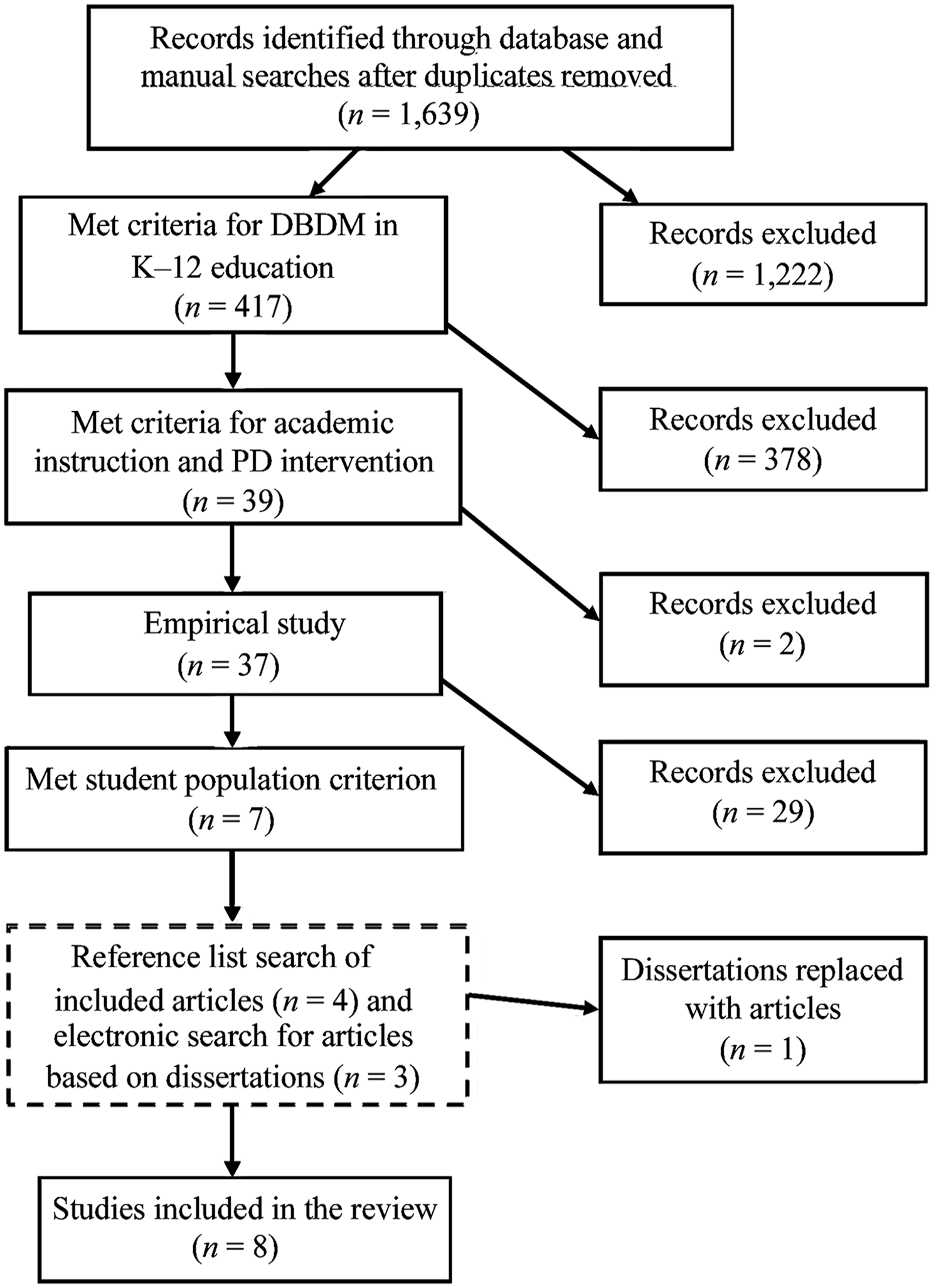
Overview of search and screening procedures.
Coding Manual
We developed a coding manual (available from first author upon request) following procedures described by Forbes et al. (2020). The manual included a worksheet to record ratings and a codebook to define constructs and guide coding decisions. We coded each study for descriptive characteristics related to (a) study design and participant information, (b) DBDM components included in the intervention (Jung et al., 2018; Lembke et al., 2018), (c) elements of PD design (Garet et al., 2001), and (d) dependent variables using Guskey’s (2016) taxonomy for PD outcomes. We applied the codebook to one article and refined definitions as needed before coding additional articles. When we made minor, subsequent clarifications to code definitions, we applied them to previously coded articles to ensure consistency.
To start, we identified the study design and site characteristics (e.g., setting, size, and number of sites). We described participants’ demographics, teaching assignments, and teaching experience. For DBDM components, we coded for the presence of each of eight steps of a DBDM model using Jung et al.’s (2018) and Lembke et al.’s (2018) operational definitions supplemented with researcher-defined examples: (a) determine the present level of performance, (b) set an instructional goal, (c) deliver instruction, (d) use data to record and monitor progress, (e) use decision rules to evaluate student progress and instructional effectiveness, (f) hypothesize student needs (e.g., determining next steps in instruction), (g) implement changes to instruction, and (h) repeat cycle. We recorded the name of the DBDM method as described by the study authors and a brief description of the process. To describe the context for teachers’ DBDM, we also listed the constructs targeted in the students’ instruction.
For PD design, we recorded the structure and format of the PD intervention, the modality, frequency of training, and duration. We coded for the presence of each of five components of effective PD (Garet et al., 2001) operationalized for this study. Components of effective PD were (a) content focus (DBDM training grounded in the context of academic instruction); (b) opportunities for active learning, defined as actively engaging in the analysis of their teaching and student learning through the application of DBDM steps; (c) coherence with other internal or external priorities or teachers’ own identified priorities (Lindvall & Ryve, 2019); (d) sustained duration, defined as at least 14 hours in a PD activity (a threshold associated with significant impact on student achievement; Yoon et al., 2007) or overall span of time for training, monitoring, and data collection on DBDM implementation spanning several months; and (e) multiple participants from the same context, defined as more than one participant from the same site participating together.
Finally, we categorized study outcomes using Guskey’s (2016) PD evaluation framework. Categories included participant reactions, participant learning, organizational support, participant use of new knowledge and skills, and student outcomes. We listed the constructs measured and also listed any additional research questions or measures that did not align with one of Guskey’s categories. For studies with student outcome data, we recorded the number of students, their disabilities and demographic characteristics, and student selection criteria, when reported. Finally, we summarized the study outcomes.
Coding Procedures and Reliability
Two researchers independently coded all articles. Codes included the direct recording of some study information (e.g., number of participants); binary ratings for the presence or absence of DBDM, PD design, and PD evaluation levels; and descriptive summaries for some characteristics (e.g., outcome measures). Direct recordings and binary ratings were evaluated for exact agreement. Descriptive summaries were evaluated for consistency of the substantive content recorded, not for identical wording. Intercoder reliability, calculated using a point-by-point method to calculate the number of agreements divided by the total number of codes across all coding categories and all articles, was 80%. The median agreement per coding category was 88% (range = 25%–100%). All discrepancies were resolved through consensus.
Results
The purpose of this systematic review was to examine the literature on PD related to DBDM. The eight studies were published between 1986 and 2016 and had a median of 14 participating teachers (see Table 1). The studies used single-case (n = 3), quasi-experimental (n = 4), or experimental design (n = 1). The interventions targeted teachers’ decision-making related to instruction in general or unspecified academic content (n = 3), reading or literacy (n = 2), academics applied in a functional context (n = 2), or academic subjects including English language arts, mathematics, and science (n = 1).
Summary of the Eight Studies Included in the Review.
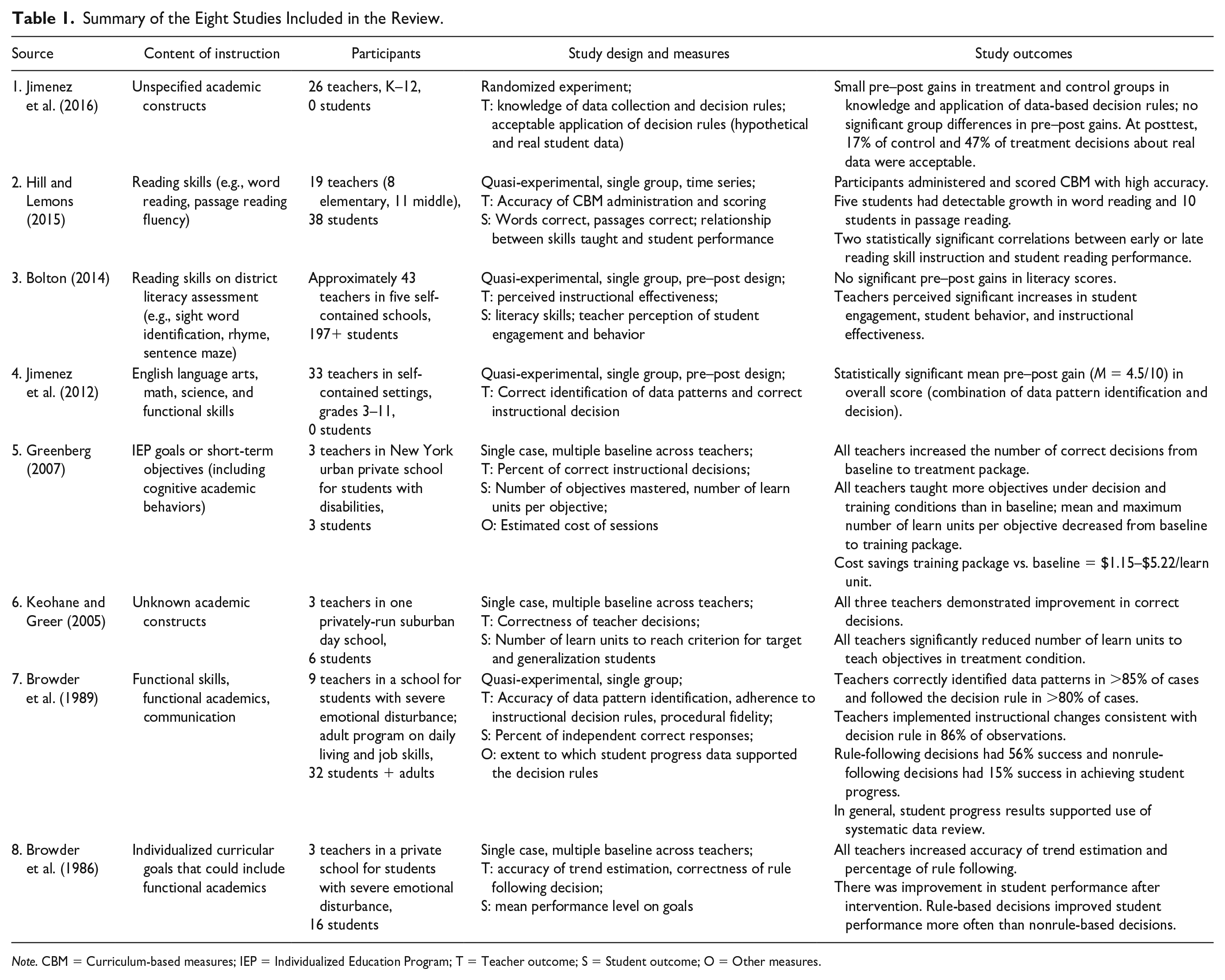
Note. CBM = Curriculum-based measures; IEP = Individualized Education Program; T = Teacher outcome; S = Student outcome; O = Other measures.
DBDM Models
Table 2 summarizes the DBDM steps evident in each study. All eight studies implemented the step of using data to monitor student progress. Seven studies included the next step for using decision rules to evaluate student progress and the effectiveness of the instructional strategy implemented. Six studies implemented data use to hypothesize student needs and determine next steps in instruction. The steps prior to data collection were not implemented as consistently, with only one study implementing all steps before data collection (Hill & Lemons, 2015). Steps after data collection were implemented more consistently, with the exception of the two studies reporting the use of CBM with their DBDM model. Hill and Lemons (2015) did not report an explicit step to hypothesize progress and student needs or implement changes to instruction. Bolton (2014) incorporated just two steps: one at the center of the DBDM cycle (use data to monitor student progress) and one at the end (repeat the cycle).
Studies With Features of DBDM Models.
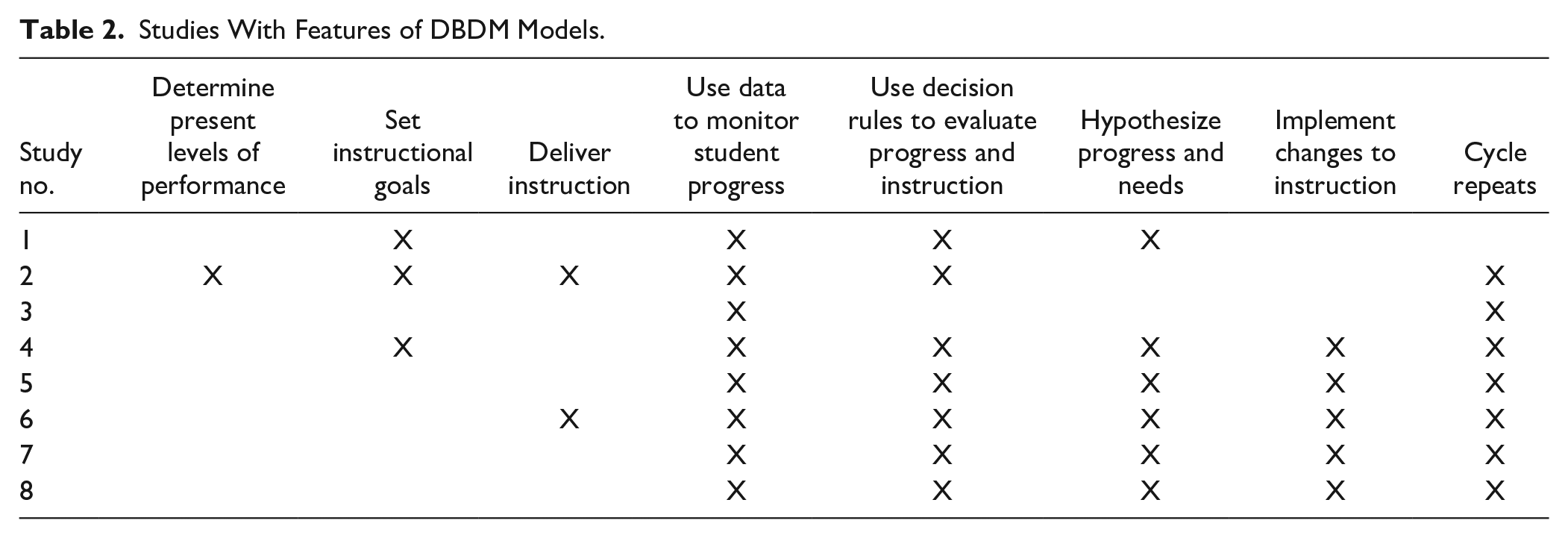
Most studies (n = 6) involved collecting data on repeated trials of discrete skills, following prescribed decision guidelines, and applying a researcher-designed instructional hypothesis given the data pattern. There were three clusters of studies that shared commonalities of the DBDM process. Four studies used the Browder et al. (1986) data-based decision system: collecting data at least three times per week, graphing data, analyzing data to identify one of five or six data patterns, and following decision guidelines based on the pattern. Decision guidelines were similar within this cluster of studies. Browder et al. (1986, 1989) listed six possible decision rules (i.e., mastery, no progress, adequate progress, acquisition problem, motivation problem, or plateau). Jimenez et al. (2012, 2016) used five possible decisions that differed slightly from Browder et al. Hypothesized instructional decisions based on the data pattern included next steps such as continue instruction, task analyze the response, or remediate difficult steps. In the second cluster (Greenberg, 2007; Keohane & Greer, 2005), the DBDM model focused on instructional “learn units” (e.g., instructional session) and applying instructional tactics based on the Comprehensive Application of Behavior Analysis (CABAS®; Greer, 1997) model that includes a scripted curriculum modified for each student and delivered using applied behavior analysis. Teachers applied one of three or four decision rules after analyzing three data points and three possible instructional hypotheses (e.g., continue instruction, change instructional tactics, move to a new objective). The remaining two studies (Bolton, 2014; Hill & Lemons, 2015) used CBM to collect and analyze data on students’ reading skills. Hill and Lemons collected CBM data weekly, while Bolton collected data monthly. Hypothesizing in the Hill and Lemons (2015) model consisted of moving a student to a higher grade-level CBM after reaching the 50th percentile. Decision rules and instructional hypotheses were not prescribed in the Bolton (2014) DBDM model.
PD Interventions
Table 3 summarizes the PD interventions and components of effective PD in each study. The duration of PD interventions ranged from one session (Hill & Lemons, 2015; Jimenez et al., 2012) to monthly meetings throughout the entire school year (Bolton, 2014). Two studies did not report the PD duration. Workshops were the most common method for delivering PD (n = 6). Three studies incorporated a coaching component and three included self-directed online modules. Coaching included weekly or monthly meetings to review student graphed data and discuss student progress (Browder et al., 1986; Keohane & Greer, 2005). Greenberg (2007) described his role as a consultant, meeting with teachers approximately once per week to observe, check graphed data, and discuss the implementation of tactics. Only one study (Bolton, 2014) incorporated PLCs. The use of effective PD components varied. The majority of PD interventions (n = 7) included opportunities for active learning. However, very few studies incorporated the remaining features of effective PD. Only two studies included DBDM PD grounded in the context of academic instruction. Two met the criteria for sustained duration, and three implemented PD that allowed participants to collaborate with one another. Only one study (Bolton, 2014) described PD that had all of the characteristics of effective PD.
PD Design and Components of Effective PD.
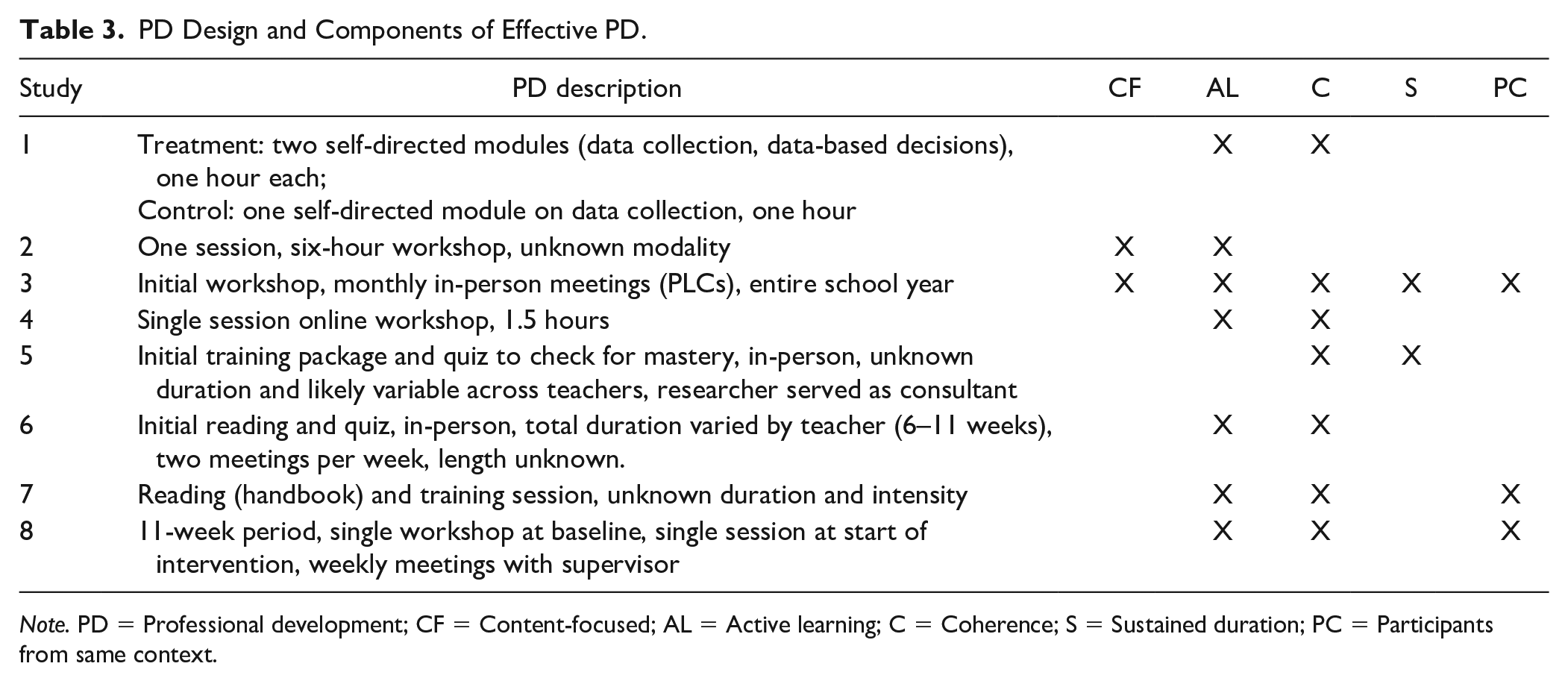
Note. PD = Professional development; CF = Content-focused; AL = Active learning; C = Coherence; S = Sustained duration; PC = Participants from same context.
Study Outcomes
Most studies evaluated teacher change in practice (n = 6) or student learning (n = 6), or change in teacher knowledge (n = 3; see Table 1). The primary teacher outcomes measured included the accuracy of teacher decisions and instructional hypotheses, whether measured through knowledge tests or in practice. Jimenez et al. (2012) reported pre–post gains in overall scores, based on a combination of data pattern identification and decision. Browder et al. (1989) reported that teachers correctly identified data patterns in more than 85% of cases. In the only randomized group experiment (Jimenez et al., 2016), both treatment and control groups demonstrated pre–post gains that were not significantly different, and fewer than half of the posttest decisions were acceptable.
Five studies evaluated teacher use of skills including accuracy of decisions and application of decision and hypothesis rules. Browder et al. (1986) reported that all three participants increased the accuracy of data trend estimation and increased the percentage of correct rule-following instructional decisions. Greenberg (2007) described an increase in the percentage of correct instructional decisions, and Keohane and Greer (2005) found that all three teachers demonstrated improvement in making correct instructional decisions, although the results varied during a probe 1 month later. Browder et al. (1989) also reported an increase in adherence to instructional decision rules. Jimenez et al. (2016) noted gains in the percentage of acceptable instructional decisions when applying decision rules to student data. After the intervention, 17% of control group and 47% of the treatment group decisions were acceptable. Hill and Lemons (2015) found participants administered and scored CBM with high accuracy after training.
Six studies measured student outcomes and four of those explicitly linked accuracy of teacher decisions and hypotheses to student outcomes. For example, Keohane and Greer (2005) reported a significant increase in students’ acquisition of instructional objectives when teachers made accurate decisions. Browder et al. (1989) found that students more often made progress when teachers followed the decision rules, although the relationship was not as strong for the decision rule based on perceived poor motivation. Rule-following decisions had 56% success and nonrule-following decisions had 15% success in achieving student progress. The two studies using CBMs reported mixed results. Hill and Lemons (2015) reported wide variability in student growth on both CBM measures. Thirteen percent of students had detectable growth on words correct and 26% showed growth on passages correct. Bolton (2014) found no significant gains in student literacy scores postintervention.
Discussion
The purpose of this systematic review was to examine the literature on PD related to DBDM, specifically applied to teacher decision-making about academic instruction for students with ESN. Our included studies used between two and six steps in the eight-step DBDM model, mostly focusing on later steps in the cycle. The PD interventions tended to have two markers of quality: active learning, as teachers applied new skills and internal coherence within the PD activities and materials. Interventions tended to produce some gains in teacher knowledge or implementation of the DBDM model. Almost all of the studies that measured student outcomes found that DBDM implementation was associated with the amount of student progress or efficiency of progress (i.e., goal attainment with fewer instructional sessions).
This study produced findings about the DBDM models used, the PD interventions to support their use, and the contexts in which they were applied. The included studies share some common features of the DBDM model, particularly using data to inform instruction and using decision rules to evaluate student progress. No studies incorporated all eight steps found in recent meta-analyses on academic instruction for students with disabilities (Filderman et al., 2018; Jung et al., 2018). It is possible that some steps did occur but were not described explicitly in the article. It is also possible that the researchers assumed teachers were already proficient with the other steps, and the intervention was limited to new skills. For example, the first two steps may have been implicit, as teachers often set goals based on an analysis of present levels of performance as a part of the Individualized Education Program process. References to procedures that involve data collection during instruction also imply instruction (Step 3) occurred. However, if the early steps are not included as part of a complete data-based instructional cycle, there is a risk that the later steps are not implemented with fidelity. For instance, what if the data collected do not completely align with the instructional goal? Without an explicit plan to design, deliver, and monitor instruction, will the teacher be able to self-evaluate how instruction might have influenced student progress and use that information when hypothesizing about next steps? If certain DBDM steps are omitted or de-emphasized in PD, there is no guarantee teachers will know how to effectively implement the steps in a coherent DBDM cycle.
The eight studies varied in the extent to which they incorporated effective components of teacher PD (Hochberg & Desimone, 2010; Yoon et al., 2007). The majority relied heavily on workshops, which would have been a typical PD model in the years when at least half of the studies took place. However, the workshop model is inconsistent with contemporary DBDM PD interventions that often include coaching and PLCs (Farrell & Marsh, 2016; Mandinach & Jimerson, 2016) to support the adoption of new strategies over time. It is possible that PD using longer-term strategies could produce stronger effects on teacher and student outcomes. Four studies (Browder et al., 1986, 1989; Greenberg, 2007; Keohane & Greer, 2005) that reported gains in both teacher skills and student outcomes included longitudinal data collection and regular contact with the researchers who also served as participants’ supervisor or consultant. These longer study periods, ranging from 11 weeks to 2 years, and periodic contact with researchers may have provided a support mechanism even if it was not designed as coaching.
Most studies’ PD interventions and DBDM models were applicable regardless of the content of instruction, rather than grounded in a specific content area. This is not a surprise, given the individualized nature of curricular priorities for students with ESN. It is possible that DBDM skills, once learned, may apply equally to progress monitoring on any skills in any context. However, it is also possible that PD on decision-making within specific academic contexts could lead to greater gains. In academic subjects, establishing present levels of performance, delivering instruction, and hypothesizing about student progress and instructional needs all require content knowledge and pedagogical content knowledge (Gummer & Mandinach, 2015; Mandinach & Gummer, 2016). Without PD that helps teachers use those forms of knowledge in a DBDM process, teachers might understand how to graph and analyze data but may not be prepared to reason about the data or make decisions that will change student progress.
Finally, this study provided evidence of the impact of DBDM on student outcomes. The six studies that evaluated student outcomes reported a range of findings, from no significant effect on literacy (Bolton, 2014) to an 82% success rate (i.e., change in student progress after a correct decision; Browder et al., 1986). However, it is worth noting that the expectations for student learning also varied across studies. Progress on discrete skills that require rote recall, such as correctly identifying a letter when presented (e.g., Browder et al., 1986), may be detectable in small increments. In contrast, expectations for growth in higher order understandings and procedural knowledge such as passage reading fluency (Hill & Lemons, 2015) or comprehensive literacy (Bolton, 2014) may take longer to detect and will require using assessments that go beyond repeated trials or task analytic data collection.
A few limitations are noted. First, many search results were removed after the first screening for DBDM interventions, leading to a chance an article that should have been included was excluded. However, both researchers independently screened each article to reduce this possibility. In addition, certain constructs were more difficult to operationally define (e.g., coherence of PD), and, with few articles included, there was not much opportunity to iterate definitions before all coding was complete. Reliability ratings were lower when descriptions of DBDM interventions or study methods were vague. Finally, while we controlled for ambiguous definitions and concepts through multiple coders and consensus discussions, other researchers may define some concepts differently.
Implications for Research
The studies in this review were published between 1986 and 2016 and only four were published since Browder et al.’s (2010) systematic literature review. Compared with the large body of research in other contexts on DBDM and related topics such as progress monitoring for students with high-incidence disabilities, it appears that substantive research in DBDM for students with ESN is trailing behind. More research is needed on the design and efficacy of DBDM models, approaches to DBDM PD, and application of the evidence base from adjacent literature to academic progress monitoring for students with ESN.
In some ways, the DBDM models in these eight studies are more constrained than the models described in the broader DBDM literature. At the decision-making stage, the included studies trained teachers to follow rules or to make “correct” decisions where correctness was defined by accurately interpreting a data pattern and selecting a researcher-defined decision. These constrained models are a contrast to richer decision-making processes used in instruction for students without ESN, which may involve multiple data sources, peer conversations, reasoning and sense-making, and error analysis that goes beyond behavioral interpretations of correct/incorrect performance to include hypotheses about students’ cognitive misconceptions or conceptual gaps (e.g., Datnow et al., 2012, 2021; NCII, 2018). It is possible these models were applied in more fluid or dynamic ways, but we could not find evidence of this flexibility in the way DBDM models were described in these articles. More research is needed on DBDM models for students with ESN that draw from the literature on progress monitoring, data-based instruction for students with high-incidence disabilities, and other uses of CBM. In the context of comprehensive academic instruction, researchers might develop and test a model for how teachers can collect and use multiple sources of assessment data on multiple content standards and think diagnostically before implementing a change when the student’s learning goal requires conceptual understanding and use of the content standards together rather than as multiple discrete skills. Research is needed to identify which types of instructional change are most effective, in response to various hypothesized learning barriers and under certain conditions. How do expert teachers think about data and instruction for students with ESN (Roehrig et al., 2008)? What kind of supports do teachers need to implement a more flexible DBDM model with fidelity? Which of the eight DBDM steps from the high-incidence literature are necessary or powerful for changing the trajectory of learning for students with ESN? Regardless of the focus of these studies, rich descriptions of the data use and decision-making processes will help other researchers build a stronger knowledge base in this area.
Researchers and practitioners would benefit from a greater understanding of DBDM models in various instructional settings. For example, DBDM with progress monitoring may be more prevalent in inclusive settings (Wakeman et al., 2021), if a student with ESN is taught in a classroom where progress monitoring is the norm. Are there differences in inclusive versus self-contained settings in the scope of academic content being monitored, the frequency of data review, the types of decisions made, or the rate of student progress? As more schools move to fully inclusive multi-tiered system models, researchers should examine outcomes in sites that include students with ESN to learn more about the decision-making processes that lead to positive academic outcomes.
Research is also needed to further evaluate DBDM PD practices and examine the links between teacher learning or practice and student outcomes (Guskey, 2016). A greater understanding of PD models that support teachers’ adoption and proficient use of complex DBDM processes is of particular interest. For example, research is needed on content-focused DBDM PD so teachers learn to make decisions informed by academic content knowledge and pedagogical content knowledge (Mandinach & Jimerson, 2016) and not just knowledge about data. More understanding is also needed on whether PD that targets all steps in a DBDM cycle is more effective than PD that targets data collection and analysis and subsequent decisions. Given the small numbers of special education teachers in a district or building, especially in rural settings (Lang & Fox, 2003), more research is needed on effective DBDM PD that supports broad reach and sustained duration (e.g., online formats, coaching) regardless of teacher location. Finally, this review found no studies that evaluated organizational support for DBDM PD. This gap is worth addressing as organizational characteristics influence data use in schools (Schildkamp et al., 2017).
Last, research is needed to apply innovations from adjacent literature such as decision-making in multi-tiered support models and CBMs to students with ESN. For example, our literature search identified more articles on CBMs, but they were not included because they did not meet the criteria for use of a DBDM cycle or PD. More research is needed that builds on the work of Snyder and Ayres (2020) and Hosp et al. (2014) to identify the types of CBMs or other assessments that are sensitive to change and can guide instruction for students with ESN.
Implications for Practice
This study has some practical implications for DBDM PD and DBDM for students with ESN more broadly. As preservice general and special education teachers are given few opportunities to learn how to use data to guide instruction (Reeves & Chiang, 2017), designing effective PD on complex decision-making skills is critical for in-service teachers. Our findings indicate coherence and active learning appear to be important for effective PD, as does some form of long-term support for the application of new learning. A content focus may also be important (Lai & McNaughton, 2016). Designing relevant DBDM PD for teachers of students with ESN comes with additional challenges. The number of teachers of students with ESN can vary across buildings and districts, making it challenging for teachers to collaborate or join PLCs. There is a risk of expecting special educators to join school- or district-wide PD if it is designed for general educators and does not support inclusive and collaborative models. Inclusive PD models will need to build coherence (Lindvall & Ryve, 2019) by ensuring the PD is relevant and special educators see the connection between district goals and priorities and their own practice.
Research continues to support the general education classroom as the optimal environment for all students to receive rigorous instruction and access the general education curriculum (Bacon et al., 2016; Kurth & Mastergeorge, 2010) so they have options to meet high expectations (Kurth et al., 2019). Studies like Hill and Lemons (2015) provide some support for the use of CBM-type approaches for progress monitoring students with ESN in academic subjects. A next logical step would be collaborative DBDM between general and special educators, such as in a coteaching model (Kurth et al., 2015). Inclusive multi-tiered system models could support a shift toward including students with ESN in the general education setting first before assuming placement in a segregated setting (Agran et al., 2020). These schoolwide approaches represent a change from the studies in this review, which were conducted primarily in self-contained settings. School and district leaders would need to set clear expectations and provide support for a shift in curricular decision-making. Such models might hold promise for helping students with ESN meet the goal of making progress in, rather than only having access to, the general education curriculum.
Footnotes
Declaration of Conflicting Interests
The author(s) declared no potential conflicts of interest with respect to the research, authorship, and/or publication of this article.
Funding
The author(s) received no financial support for the research, authorship, and/or publication of this article.
