




Abstract
In today's world, lifelong learning (LLL) is a key element of individual and societal success. However, despite knowing potential determinants of LLL, we do not yet understand how they interact to facilitate LLL. Therefore, the present study aims to verify the usefulness of the Theory of Planned Behavior (TPB) in predicting LLL. We applied a survey data-based approach by building proxies of TPB components for LLL based on the German PIAAC dataset. Our TPB-based path models explained both participation in non-formal LLL and engagement in informal LLL in a large heterogeneous sample of the German working population, also when controlling for influential socio-demographic determinants of LLL. Thereby, our results provide first evidence that TPB lends itself as core of a LLL process model that can serve as a basis to integrate further well-studied determinants of LLL participation and then can be tested in longitudinal multi-level studies.
Keywords
Introduction
The European Union emphasizes the need for lifelong learning (LLL) to fuel employment, innovation, and entrepreneurship among its member states (Volles, 2016). Many countries, however, show a gap between EU target values and actual LLL participation (Boeren et al., 2010), suggesting that malleable determinants of LLL are not sufficiently fostered. This is mirrored in LLL participation then being strongly determined by peoples’ rather immutable social background, as Offerhaus et al. (2010) have shown for Germany.
To effectively foster LLL, we need to understand how malleable determinants of LLL interact. We therefore examine the Theory of Planned Behavior (TPB; e.g., Ajzen, 2019b; Fishbein & Ajzen, 2009) in the context of LLL that models the interplay of several psychological determinants (e.g., subjective norm, attitude, perceived behavioral control, and behavioral intention) to predict behavior. Previous research that applied TPB to explain or predict LLL mainly considered small or specific samples, specific learning forms or contents, only included the intention to engage in LLL and not at actual LLL participation as model outcome, and has not yet considered recent revisions in TPB (Ajzen, 2019b; Barbera & Ajzen, 2020). Accordingly, our aim was to examine if TPB in its latest version explained general forms of actual LLL behavior in a large and more heterogeneous sample—even when controlling for influential sociodemographic factors. Thereby, we aimed to explore TPB's suitability as core of a LLL process model that can serve as a basis to integrate previous research. That is, the TPB model can be expanded by further well-studied individual and structural determinants of LLL, such as learner identity (Landberg & Porsch, 2022) and scope of public policy measures (Desjardins & Rubenson, 2013), that likely interact with or predict TPB determinants of LLL. Researchers can apply such an integrated LLL process model in longitudinal multi-level studies to test causal (intervention) effects of various determinants on LLL behavior, allowing us to more reliably evaluate—and eventually implement—different means to foster LLL (see also Boeren, 2017).
Definition and Relevance of LLL
Lifelong learning encompasses “all learning activities undertaken throughout life, with the aim of improving knowledge, skills and competences, within a personal, civic, social and/or employment-related perspective” (Eurostat, 2016, p. 9). In the literature, LLL is used interchangeably with adult education, adult learning, and similar other terms (see Laal et al., 2014). Lifelong learning includes learning activities that are a) purposeful and intentional, b) ongoing and organized, c) funded by either the individual, the public sector, or the private sector, d) delivered in either in-person or virtual sessions (Eurostat, 2016). Furthermore, LLL is either formal, non-formal, or informal. Measures of formal education or LLL are “institutionalised, intentional and planned through public organisations and recognised private bodies, and—in their totality—constitute the formal education system of a country […]”, non-formal LLL or education is “institutionalised, intentional and planned by an education provider. The defining characteristic of non-formal education is that it is an addition, alternative and/or complement to formal education within the process of lifelong learning of individuals […]”, and informal learning or LLL is “intentional, but […] less organised and less structured … and may include for example learning events (activities) that occur in the family, in the workplace, and in the daily life of every person, on a self-directed, family-directed or socially-directed basis” (Eurostat, 2016, pp. 14–15, emphasis in original). 1 In addition to these LLL activities, skill practice is also a form of LLL that is positively related to skill proficiency (e.g., Desjardins, 2003; Scandurra & Calero, 2020).
Learning in all stages of life (early years, school education, higher education, and adult education) was associated with positive outcomes regarding the individual (e.g., in the areas of health, law-abiding behavior, parenting, and work), the employer (e.g., regarding productivity), and the society (e.g., regarding social cohesion and citizenship). See Vorhaus et al. (2008) and Schuller (2017) for a compilation of findings. To sum up, in a knowledge-based society ongoing learning is essential (Scandurra & Calero, 2017).
Determinants of LLL Participation
Based on their review of different theoretically constructed participation models, Boeren et al. (2010) introduced a comprehensive integrated model that located determinants of LLL participation on the micro, meso, and macro level. The micro level contained individual socio-economic (e.g., income), socio-demographic (e.g., educational attainment), socio-cultural (e.g., social participation), psychological (e.g., attitudes), and socio-environmental (e.g., family) factors. The meso level contained organizational factors of educational institutions (e.g., are they well-staffed and located at an accessible place) and the programs they offer (e.g., group size, didactical methods, and teachers’ attitude). The macro level included societal and regulatory factors (e.g., labor market system and welfare policy).
Commensurably, Desjardins and Rubenson (2013) distinguished different types of individual and structural barriers to LLL, with individual barriers encompassing dispositional, information, and liquidity constraints, and structural barriers encompassing situational (family and job), institutional, information, and liquidity constraints. Studies examining how countries differ in targeting these constraints suggested that strong state involvement and economy-wide efforts in addition to stakeholder-based sector-wide efforts and specific policy measures are important determinants to achieve both a high level and a (relatively) equal distribution of LLL participation. While the Nordic countries master this holistic approach in mitigating constraints to LLL, many countries, including Germany, foster LLL less efficiently (Desjardins, 2013; Desjardins & Rubenson, 2013; Rubenson & Desjardins, 2009).
These previous approaches are mainly of descriptive nature as they insufficiently specify how exactly relevant determinants of LLL interact or function together. To understand the process leading to LLL, we need to transfer descriptive models, such as the one by Boeren et al. (2010), into a process model that specifies the direct and indirect influences between factors of the different levels. Such a model then can be tested with (multi-level) path models or structural equation models based on longitudinal data (see also Boeren, 2017).
Core of a LLL Process Model Based on the Theory of Planned Behavior
Transferring Boeren et al.'s (2010) descriptive model into a process model and integrating it with other research on determinants of LLL (e.g., Desjardins & Rubenson, 2013) is a complex endeavor as it requires to derive and ground several hypotheses. Therefore, it is reasonable to proceed gradually. As a first step, we suggest building the core of the process model based on a well-established theory to predict behavior: the Theory of Planned Behavior (Ajzen, 2019b; Fishbein & Ajzen, 2009), which has already been translated into a testable statistical model in numerous studies, including educational and LLL research (see below). The TPB qualifies particularly as core of a LLL process model because it includes malleable micro-level factors of a behavior that can be comparably easily addressed with interventions (see also Boeren et al., 2010). Other, especially structural LLL determinants from the meso or macro level likely determine LLL indirectly via TPB determinants from the micro level. They can be added around the core of the model in subsequent steps to obtain a comprehensive LLL process model.
The TPB, including its latest revisions, is shown in Figure 1. According to Ajzen (2019b, who provided detailed definitions of each model component), TPB postulates that three different kinds of beliefs mark the starting point of a specific behavior: First, normative beliefs (i.e., the subjectively perceived likelihood that relevant others, such as spouses or coworkers, will either encourage or perform the behavior) that, weighted by the significance of each relevant other to the individual, result in their subjective norm. Second, the accessible behavioral beliefs (i.e., the subjectively perceived likelihood that the behavior will indeed result in certain outcomes or experiences) that, weighted by the personal value of each expected outcome/experience, result in an individual's attitude toward the behavior. Third, control beliefs (i.e., the subjectively perceived presence of circumstances or factors that will facilitate or complicate the behavior), that, weighted by the perceived influence of each relevant factor, result in an individual's perceived behavioral control.
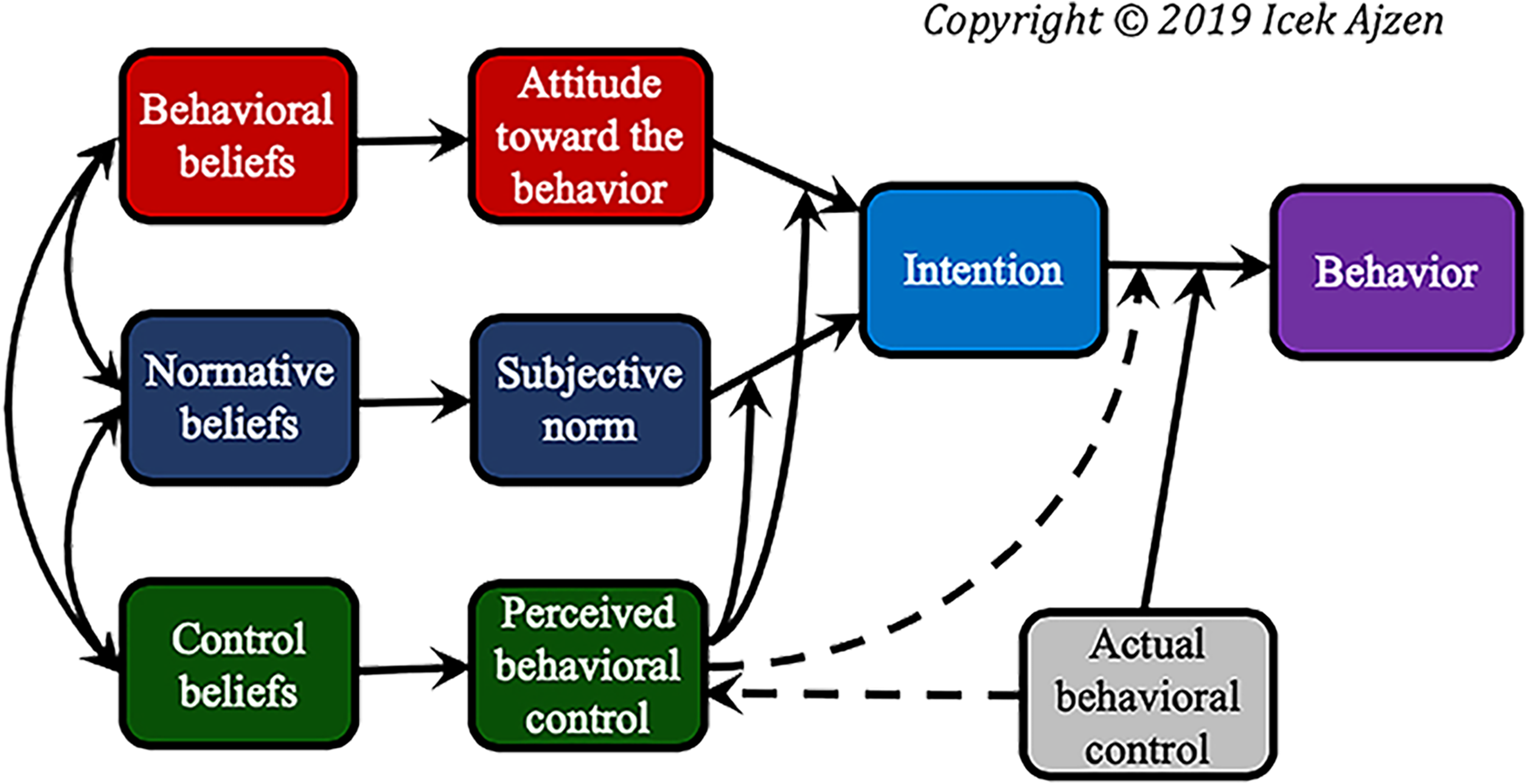
Revised TPB model. Reprinted from Theory of Planned Behavior Diagram, by I. Ajzen, 2019b, Theory of Planned Behavior Diagram (umass.edu). Copyright 2019 by Icek Ajzen. Reprinted with permission.
Subjective norm and attitude toward the behavior both determine an individual's intention or readiness to perform the behavior. Perceived behavioral control moderates these relationships, thereby attenuating the former and strengthening the latter (Barbera & Ajzen, 2020). Intention then determines the actual performance of the behavior. Actual behavioral control, which describes that one is equipped with required resources and skills to perform the behavior, moderates this relationship. In a previous TPB version (Fishbein & Ajzen, 2009, fig. 1.1), perceived behavioral control was not a moderator but a third predictor of intention.
TPB has often been applied in educational research (Bosnjak et al., 2020) and in some studies also in the specific context of LLL. However, these studies were usually based on relatively small, highly specific samples (e.g., 152 teachers of a Californian urban school district in Dunn et al., 2018; 146 general practitioners in Iran in Hadadgar et al., 2016) or school or university student samples (e.g., Anthony Jnr et al., 2020; Chai et al., 2020; Cheon et al., 2012; Liao et al., 2011). Furthermore, these studies considered participants’ intention but not the actual performance of the behavior, and focused on specific courses or forms of learning instead of general formal, non-formal, or informal LLL (e.g., intention to participate in blended learning in Anthony Jnr et al., 2020; intention to learn Artificial Intelligence in Chai et al., 2020; intention to participate in mobile learning in Cheon et al., 2012; intention to participate in math workshops for teacher professional learning in Dunn et al., 2018; intention to use e-learning to participate in continuing medical education in Hadadgar et al., 2016; intention to continue using an e-learning website in Liao et al., 2011). Beyond that, there are initial results by Van Nieuwenhove and De Wever (2021) who applied TPB to predict more general LLL intentions in the next 12 months based on a sample of 23–65-year-old adults (N = 335). None of these studies used the revised TPB by modeling perceived behavioral control as moderator.
The Present Study
To better understand and foster LLL behavior, various LLL determinants identified by, for example, Boeren et al. (2010) or Desjardins and Rubenson (2013) need to be transferred into a joint LLL process model that can be applied in longitudinal studies allowing for causal inferences. The purpose of our study was to verify the usefulness of TPB in predicting LLL behavior, examining if it qualifies as core model of such a larger LLL process model. Previous studies being insufficient, we formulated these research questions (RQs):
We addressed these RQs using data from a large-scale population survey from educational research—in particular, the German dataset of PIAAC (Programme for the International Assessment of Adult Competencies). This dataset was of particular interest because of the influential role of socio-demographic factors on LLL participation in Germany. The German tracked education system in particular is responsible for a high educational stratification, which is again reflected in unequal LLL participation (e.g., Kosyakova & Bills, 2021). Moreover, because most public policy measures to promote LLL are effective at the sectorial level in Germany, they overlook many adults (Desjardins & Rubenson, 2013), giving further significance to socio-demographic factors of LLL participation.
While the PIAAC dataset did not contain specific measures of TPB determinants for LLL and informal LLL, it allowed us to derive proxies for these variables. Specifically, the PIAAC dataset assessed or allowed us to derive (a) actual formal LLL, non-formal LLL, and informal LLL at the workplace (however, we did not consider participation in formal LLL because the n was too small), (b) proxies for TPB determinants of LLL (subjective norm, perceived behavioral control at the workplace, and intention, not, however, attitude toward LLL), and (c) relevant socio-demographic variables (gender, age, migration background, educational attainment). To test TPB models based on these variables, we selected a subsample containing the full-time (self-)employed respondents. Thereby, we ensured that (a) respondents usually had data available on work-related variables, and (b) confounding factors, that were not included in the models, such as varying time and financial resources to participate in LLL, were held fairly constant. Figure 2 depicts our TPB-based modeling of LLL determinants and behavior by which we approached the RQs.
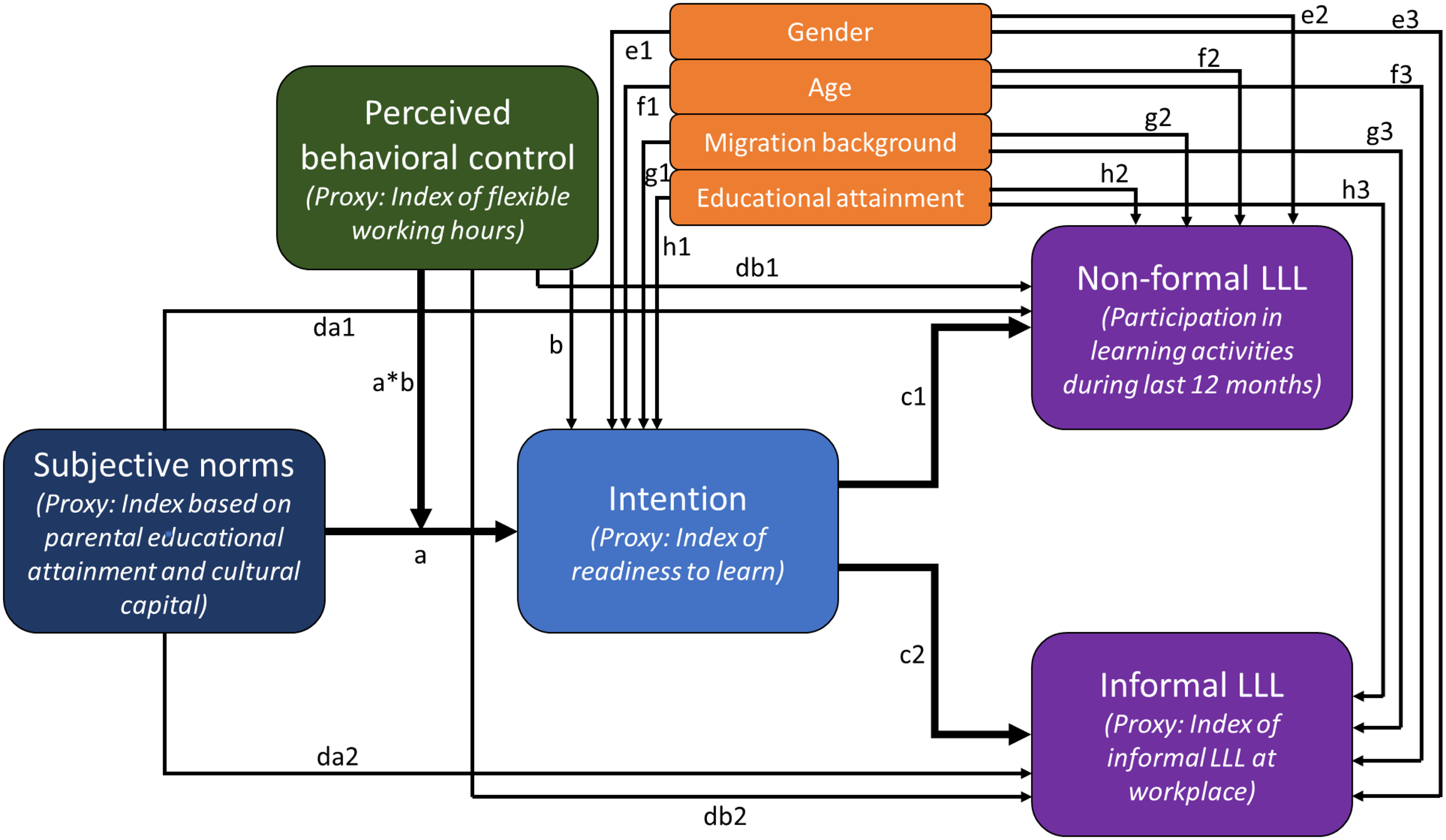
First-stage moderated mediation model including socio-demographic variables (i.e., step-3-model, whereby step-1-model and step-2-model are nested into step-3-model). Thick arrows represent theoretical TPB model. Thin arrows represent (additional) paths estimated within models.
Method
Open Data & Material
We used the Public Use File of the German PIAAC data set available from the website of the Organization for Economic Co-operation and Development (OECD, n.d.). Furthermore, we provide the R code of our analyses on the project website on Open Science Framework (OSF): https://osf.io/hqzmj/.
Data
PIAAC is an international survey on adult skills coordinated by the OECD. Data collection of the first cycle took place in 2011–2012 in 39 countries based on probability samples of about N = 5,000 per country from the 16–65 year old population. Data collection of the second cycle is currently taking place (2022–23). In the present study, we used the German data set (N = 5,465) from the first cycle, and included variables from the background questionnaire (OECD, 2016). In the analysis sample containing the full-time (self-)employed respondents (n = 2,563), age was distributed as follows: 7.92% of the sample were 16–24 years old, 21.69% were 25–34 years old, 24.11% were 35–44 years old, 31.10% were 45–54 years old, and 15.18% were 55–65 years old. 33.36% of the sample were female and 11.28% were not born in Germany. The educational attainment was low of 5.70% of the sample (no formal qualification or below ISCED 1, ISCED 1, and ISCED 2, i.e., less than high school diploma), medium of 44.48% of the sample (ISCED 3A–B, i.e., high school diploma), and high of 48.85% of the sample (ISCED 4A–B, ISCED 4 without distinction A–B–C, ISCED 5B, ISCED 5A/bachelor degree, ISCED 5A/master degree, and ISCED 6, i.e., above high school diploma).
Measures
Proxy of Subjective Norm
According to the definition by Ajzen (2019b), a person's subjective norm regarding LLL represents the social pressure they perceive to (not) engage in LLL and depends on how likely they consider it that relevant others would either encourage their LLL (i.e., injunctive norm) or perform LLL themselves (i.e., descriptive norm). We used a proxy variable that, we argue, has a strong causal relationship with the subjective norm regarding LLL. To build this proxy, we considered the family home as relevant others and drew on respondents’ (past) cultural capital (see Sieben & Lechner, 2019) and their parents’ or legal guardians’ educational attainment. These factors express the respondents’ social stratum. In line with the primary effect of social stratification (Boudon, 1974), we argue that these factors encourage (or discourage) a person to engage in LLL because they convey the importance of education and learning of one's role models and authority figures during early life.
Concretely, we built an index based on the following three variables: First, the number of books at home at the age of 16 (variable J_Q08 of the data set) assessed on a six-point response scale from “10 books or less” to “more than 500 books.” Second, the highest level of education of the mother or female guardian (J_Q06b) aggregated to a three-point scale encompassing low (ISCED 1, 2, and 3C short, i.e., less than high school diploma), medium (ISCED 3 - excluding 3C short - and 4, i.e., high school diploma/some college but no degree), and high (ISCED 5 and 6, i.e., college degree or higher - Associates, Bachelors, Doctorate, etc.) education. Third, the highest level of education of the father or male guardian (J_Q07b; also aggregated to a three-point scale). As index we used the component scores of a principal component analysis based on a polychoric correlation matrix where we extracted one component (KMO = .66, component retained 66% of the variables’ variance, .80 ≤ λ ≤ .83).
Proxy of Perceived Behavioral Control
According to the definition by Ajzen (2019b), a person's perceived behavioral control regarding LLL refers to their perceived ability to perform LLL and results from their perception of circumstances or factors that facilitate or complicate the performance of LLL. To build its proxy, we considered flexible working hours as a crucial factor facilitating the participation in LLL in the perception of full-time working people. We built an index capturing the flexibility of the respondents’ work schedules based on two variables: The first variable assessed flexibility at the current workplace regarding one's working hours (D_Q11d: “To what extent can you choose or change your working hours”) on a five-point rating scale from “not at all” to “to a very high extent”. The second variable assessed the use of organization and planning skills at work regarding organizing one's own time (F_Q03c: “How often does your current job usually involve organizing your own time?”) on a five-point rating scale from “never” to “every day.” As index we used the component scores of a principal component analysis where we extracted one component (component retained 73% of the variables’ variance, both λs = .86).
Proxy of Intention
According to the definition by Ajzen (2019b), a person's behavioral intention regarding LLL refers to their readiness (i.e., willingness, behavioral expectation, and trying; Fishbein & Ajzen, 2009) to perform LLL. The PIAAC dataset provided a suitable proxy thereof: an IRT-derived index capturing respondents’ readiness to learn (READYTOLEARN) based on six variables all assessed on a five-point rating scale from “not at all” to “to a very high extent” (I_Q04b: “When I hear or read about new ideas, I try to relate them to real life situations to which they might apply”; I_Q04d: “I like learning new things”; I_Q04h: “When I come across something new, I try to relate it to what I already know”; I_Q04j: “I like to get to the bottom of difficult things”; I_Q04l: “I like to figure out how different ideas fit together”; I_Q04m: “If I don't understand something, I look for additional information to make it clearer”).
Non-Formal LLL
We operationalized non-formal LLL based on the derived dichotomous variable NFE12 provided in the PIAAC dataset with the manifestations 0 = “respondent reported no learning activities during the last 12 months” and 1 = “respondent reported one or more than one learning activity during the last 12 months.”
Proxy of Informal LLL
We built a proxy capturing informal LLL at the workplace based on two variables both assessed on a five-point rating scale from “never” to “every day”: The first variable assessed learning at the current workplace regarding keeping oneself up-to-date (D_Q13c: “How often does your job involve keeping up-to-date with new products or services?”). The second variable assessed the use of ICT skills at work regarding using the internet to gather work-related information (G_Q05c: “In your current job, how often do you usually use the internet in order to better understand issues related to your work?”). As index we used the component scores of a principal component analysis where we extracted one component (component retained 61% of the variables’ variance, both λs = .78).
Control Variables
As control variables, we included gender (GENDER_R), a derived age variable grouping age in ten 5-year intervals (AGEG5LFS), a dichotomous (yes/no) migration background variable (J_Q04a: “Were you born in the present territory of the Federal Republic of Germany?”), and a derived educational attainment variable (i.e., low, medium, high; see sample description; B_Q01a_T). We provide zero-order correlations and number of cases of each measure in Table S1 on OSF.
Statistical Analyses
We conducted all analyses in R (version 4.2.0; R Core Team, 2019) and used the lavaan package (version 0.6–11; Rosseel, 2012) to test our models. We specified TPB-inspired path models to predict 2 non-formal and informal LLL, respectively, based on the proxies for subjective norm, perceived behavioral control, and intention regarding LLL in three consecutive steps (see Figure 2). In the first step, following La Barbera and Ajzen's (2020) TPB modeling approach, we included both subjective norm and perceived behavioral control as predictors. Thereby, we specified a mediation model, in which the relationship between both subjective norm and perceived behavioral control and non-formal and informal LLL was mediated by intention to perform LLL. In a second step, we expanded the model to a first-stage moderated mediation model, in which we included perceived behavioral control as moderator of the relationship between subjective norm and intention (i.e., we included an interaction term of subjective norm and perceived behavioral control) to model the LLL determinants according to the revised TPB (Figure 1; Ajzen, 2019b). In a third step, we additionally included the socio-demographic control variables gender, age, migration background, and educational attainment (i.e., we included each control variable as predictor of (a) intention regarding LLL, (b) non-formal LLL, and (c) informal LLL based on the approach demonstrated by Toffanin, 2017) to test if the malleable TPB determinants still predict LLL when controlling for (largely) immutable socio-demographic determinants.
As suggested by Hallquist (2017), we centered (and scaled) the scores of subjective norm and perceived behavioral control to prevent non-essential collinearity between the predictors. To take the binary nature of non-formal LLL into account, we declared it as “ordered” endogenous variable and estimated the models with the diagonally weighted least squares (DWLS) estimator. We used non-parametric bootstrap resampling (k = 1,000) to estimate standard errors and conducted pairwise deletion of missing data. With these settings, lavaan conducted linear regression for the continuous mediator and outcome (i.e., intention and informal LLL) and probit regression for the binary outcome (i.e., non-formal LLL). Within probit regression, lavaan estimated a standard-normal latent response variable underlying the observed binary non-formal LLL variable (i.e., we interpret effects of the predictors in terms of changes in the continuous latent response variable) (Jorgensen, 2018). We interpreted the results based on the standardized regression coefficients β as follows: a change of one standard deviation in the predictor resulted in a change of β*SD in the mediator or outcomes.
Results
We present the standardized parameter estimates (i.e., the βs), the (conditional) indirect effects, and the explained variance in the mediator and outcome variables (i.e., the R2s) of the three hierarchical path models (i.e., step 1–3) in Table 1 (paths are visualized in Figure 2). In the mediation model of step 1, all paths and indirect effects were significant, and the direction of all effects was in line with theoretical expectations: Subjective norm (path a) and perceived behavioral control (b) were both positively associated with intention to perform LLL, the former about 1.5 times stronger than the latter. Likewise, the positive direct effect of subjective norm on non-formal LLL (da1) was about 1.4 times stronger than that of perceived behavioral control (db1). Intention had a relatively small positive effect on non-formal LLL (c1), resulting in relatively small indirect effects of both subjective norm (.018) and perceived behavioral control (.012) on non-formal learning mediated by intention to perform LLL. Conversely, the positive direct effect of perceived behavioral control on informal LLL (db2) was about twice as strong as that of subjective norm (da2). Also, the positive effect of intention to perform LLL on informal LLL (c2) was stronger than that on non-formal LLL (c1), resulting in somewhat stronger indirect effects of both subjective norm (.036) and perceived behavioral control (.024).
Standardized Parameter Estimates of the Three Hierarchical Path Models and (Conditional) Indirect Effects.
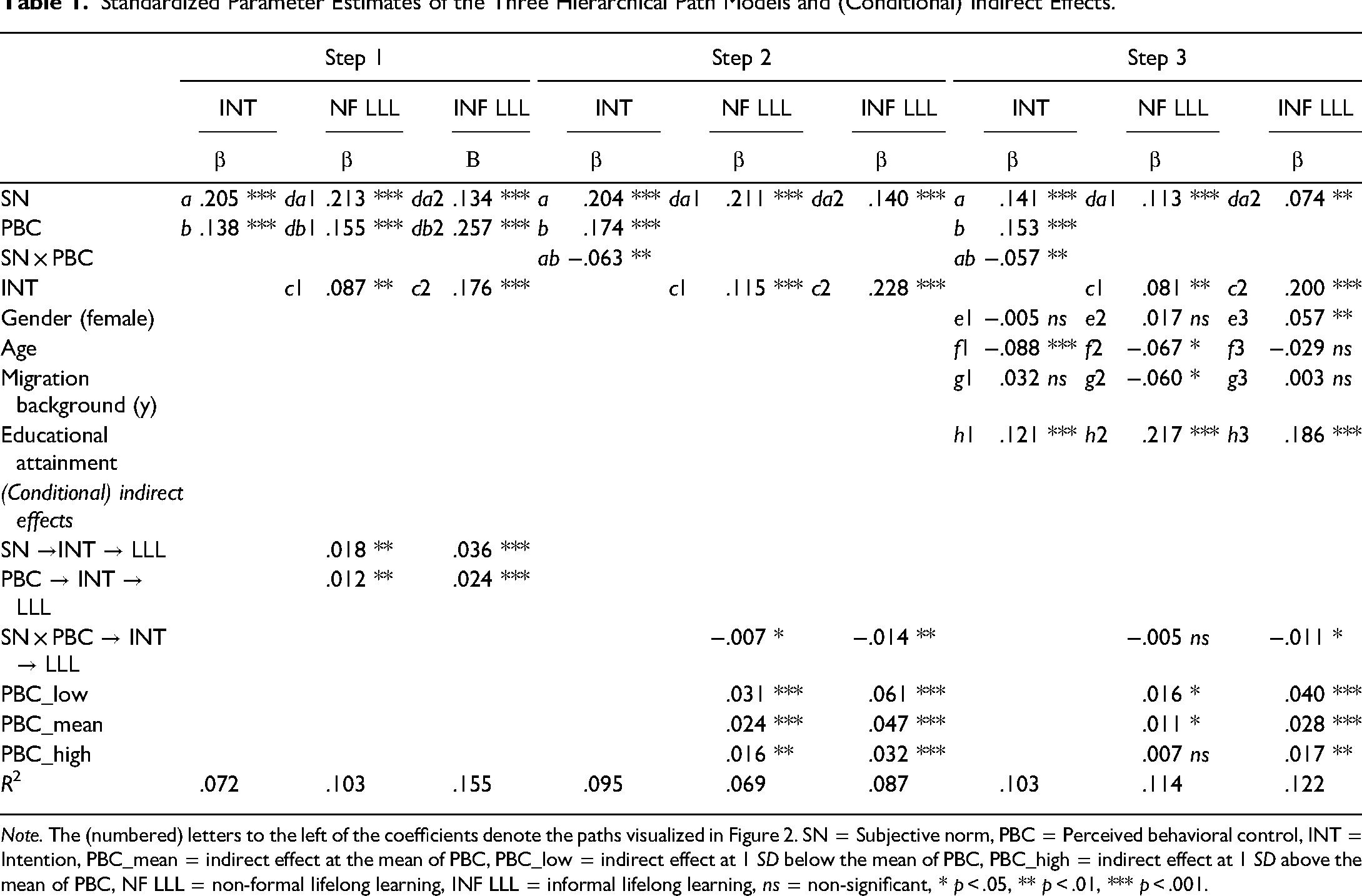
Note. The (numbered) letters to the left of the coefficients denote the paths visualized in Figure 2. SN = Subjective norm, PBC = Perceived behavioral control, INT = Intention, PBC_mean = indirect effect at the mean of PBC, PBC_low = indirect effect at 1 SD below the mean of PBC, PBC_high = indirect effect at 1 SD above the mean of PBC, NF LLL = non-formal lifelong learning, INF LLL = informal lifelong learning, ns = non-significant, * p < .05, ** p < .01, *** p < .001.
Notably, subjective norm and perceived behavioral control showed much stronger direct effects than indirect effects on both non-formal and informal LLL: About 89% of the total effect of the mediation model were attributable to the direct effects (i.e., paths da1, da2, db1, and db2), while only 11% were attributable to indirect effects (i.e., a*c1, a*c2, b*c1, and b*c2). Overall, subjective norm and perceived behavioral control explained a relatively small amount of variance in the mediator (7.2%). Likewise, subjective norm, perceived behavioral control, and intention explained a relatively small amount of variance in both outcome variables (10.3% in non-formal LLL, 15.5% in informal LLL). Regarding RQ1, these results suggest that TPB determinants are meaningful, even if their explanatory power for differences in non-formal and informal LLL was limited in our large-scale, proxy-based approach.
In the first-stage moderated mediation model of step 2 representing the revised TPB model, all paths and conditional indirect effects were significant as well, and the direction of all effects was in line with theoretical expectations: The effects of subjective norm (a) and perceived behavioral control (b) on intention to perform LLL were similar in size and pattern like in the mediation model of step 1 as were the direct effects of subjective norm on both non-formal LLL (da1) and informal LLL (da2). However, modeling perceived behavioral control as moderator instead of as predictor yielded relatively larger effects of intention on both non-formal LLL (c1) and informal LLL (c2). The interaction term of subjective norm and perceived behavioral control itself (ab) showed, as expected, a negative (albeit relatively small) effect on intention, showing that the indirect effect of subjective norm on both non-formal and informal LLL was conditional on perceived behavioral control.
The index of the moderated mediation was small but significant for both non-formal LLL ( − .007, p < .05) and informal LLL ( − .014, p < .01). Looking at the indirect effect of subjective norm on non-formal LLL mediated by intention to perform LLL at different manifestation levels of perceived behavioral control (i.e., at the mean, one SD below the mean, and one SD above the mean), revealed that the indirect effect was significant at all three manifestation levels ranging between .031 at one SD below-average perceived behavioral control to .016 at one SD above-average perceived behavioral control. That is, with increasing behavioral control the indirect effect from subjective norm on non-formal LLL via intention decreases. We found the same pattern for informal LLL with generally stronger indirect effects ranging between .061 at one SD below-average perceived behavioral control to .032 at one SD above-average perceived behavioral control.
Figure 3 visualizes the moderation effect of perceived behavioral control on the relationship between subjective norm and intention to perform LLL (ab), showing that the stronger positive association between subjective norm and intention at low perceived behavioral control represents a compensatory effect—at high perceived behavioral control, the behavioral intention is relatively high at both the low and high manifestation level of subjective norm.
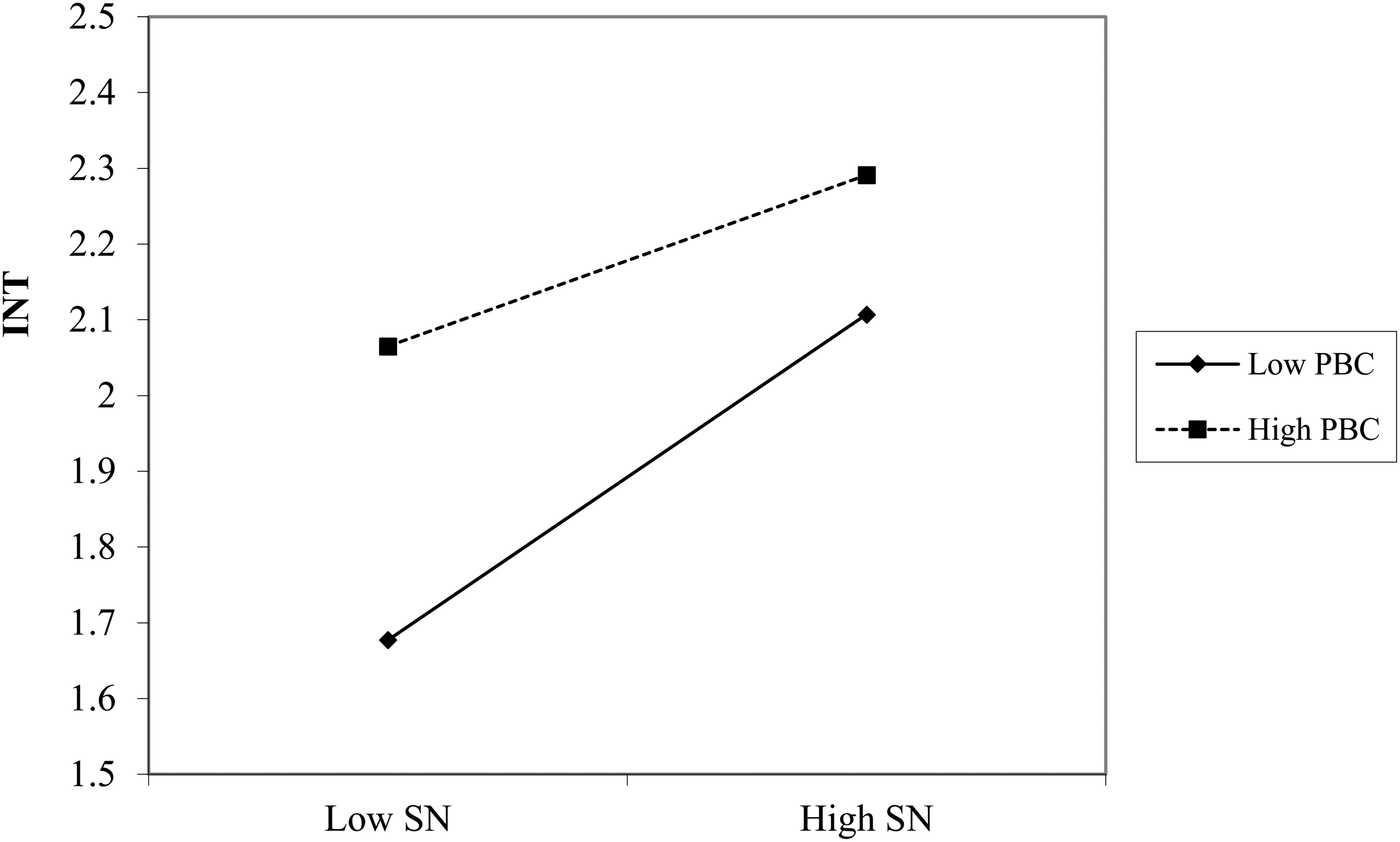
Moderation effect from the first-stage moderated mediation model of step 2. SN = Subjective norm (standardized), PBC = Perceived behavioral control (standardized), INT = Intention (unstandardized), Low = 1 SD below the mean, High = 1 SD above the mean.
As in step 1, the explanatory power of the predictor variables was limited for intention (9.5% explained variance), non-formal LLL (6.9%), and informal LLL (8.7%). Regarding RQ1 and RQ2, these results suggest that TPB in its recently revised version is useful to predict both non-formal and informal LLL, albeit its explanatory power was limited in our large-scale, proxy-based study.
In the first-stage moderated mediation model including the socio-demographic determinants (or control variables) of step 3, most TPB model paths and conditional indirect effects were still significant, and the direction of all TPB model effects was in line with theoretical expectations. As might be reasonably expected, all TPB model effects decreased in step 3 compared to step 2. Thereby, the direct paths from subjective norm to both non-formal LLL (da1) and informal LLL (da2) nearly halved themselves, whereas the interaction effect of subjective norm and perceived behavioral control on intention to perform LLL (ab) was affected the least. Consequently, both the indices of moderated mediation and the indirect effects at low, average, and high manifestations of perceived behavioral control also decreased, with the result that the index of moderated mediation for non-formal LLL ( − .005, p = .071) as well as the indirect effect of subjective norm on non-formal LLL at high perceived behavioral control (.007, p = .052) were not significant anymore.
From the four socio-demographic determinants, educational attainment proved to be a relevant predictor for intention to perform LLL (h1), non-formal LLL (h2), and informal LLL (h3). For non-formal LLL and informal LLL, the positive effect of educational attainment was sometimes even larger than those of the TPB model components (i.e., da1 < h2, c1 < h2, and da2 < h3). In addition to that, age was negatively associated with intention to perform LLL (f1), age (f2) and migration background (g2) were both negatively associated with non-formal LLL, and gender was positively associated with informal LLL (e3) meaning that females perform more informal LLL than males.
Including the socio-demographic determinants in addition to the TPB determinants resulted in slightly higher R2s, although the explanatory power of the model remained rather low: The respective predictors jointly explained 10.3% of the variance in intention to perform LLL, 11.4% in non-formal LLL, and 12.2% in informal LLL. Regarding RQ3, these results suggest that TPB is useful to predict both non-formal and informal LLL also beyond socio-demographic determinants, with the TPB determinants not being outperformed by socio-demographic determinants.
Discussion
Despite politics emphasizing the importance of LLL and research providing empirical evidence for its positive outcomes on the individual and societal level, we do not yet understand how different factors described by, for example, Boeren et al. (2010) and Desjardins and Rubenson (2013) interact to facilitate LLL. Consequently, even several industrial nations—such as Germany—struggle to effectively introduce public policy measures to overcome inequality in LLL (see Desjardins & Rubenson, 2013; Volles, 2016).
In the present study, we examined if TPB as a well-established psychological theory to predict and change behavior lends itself as core of a LLL process model. If so, future research can expand the core model of malleable micro-level TPB determinants by further previously studied determinants of LLL, such as type of schooling, teacher/instructor mindset, and scope of public policy measures (Boeren et al., 2010; Desjardins & Rubenson, 2013; Landberg & Partsch, 2023). They arguably represent more peripheral determinants affecting LLL participation indirectly via TPB determinants. Thus, a TPB process model of LLL can serve as a basis to integrate previous findings on LLL determinants in a testable predictive model.
Previous studies, that applied TPB in the context of LLL, resided on a small scale and have not considered the recent revision of TPB. Therefore, we opted for a large-scale approach to examine if TPB is suitable to predict the actual performance of different general forms of LLL based on large heterogeneous samples (RQ1). Thereby, we focused on a heterogeneous sample of the full-time working German population, because in Germany socio-demographic determinants still play an important role in LLL participation (Offerhaus et al., 2010) and we were particularly interested in testing if (malleable) psychological determinants from TPB uphold explanatory power when controlling for (mainly immutable) socio-demographic determinants (RQ3). For the first time, we applied the revised TPB model in the context of LLL (RQ2).
Based on the proxies provided by or derived from the PIAAC dataset, we found confirming evidence for the three RQs we sought to answer. Providing (first) confirming evidence regarding RQ1, the mediation model from step 1 showed that subjective norm and perceived behavioral control were not only—as shown by previous studies—positively associated with the intention to perform LLL but also with the actual performance of both non-formal and informal LLL. Interestingly, the two predictors showed a differentiated pattern across the two different forms of LLL under consideration. While subjective norm was relatively more predictive for the better observable non-formal LLL (i.e., relevant others are likely to witness and judge one's participation in a workshop or further education course), perceived behavioral control (including autonomous time management at the workplace) was relatively more predictive for the less observable informal LLL at work. Likewise, intention to perform LLL was more predictive for low-threshold informal LLL than it was for non-formal LLL that, especially among full-time working people, requires higher commitment to invest their scarce free time. These results underscore that it is meaningful to examine determinants and consequences of the three general forms of LLL, namely formal, non-formal, and informal LLL, separately (i.e., unlike other studies that examined LLL based on the PIAAC data like, for example, Cincinnato et al., 2016; Tikkanen & Nissinen, 2016).
Furthermore, path c1 from intention to perform LLL to actual participation in non-formal LLL showed the smallest effect size in the model of step 1, corroborating that intention or readiness to perform a behavior does not equal the actual performance of the behavior. This underscores the importance of including both intention and actual LLL behavior when examining LLL within the TPB framework.
Providing confirming evidence regarding both RQ1 and RQ2, we showed in step 2 that also after implementing the recent revision of the TPB, that is, expanding the mediation model to a first-stage moderated mediation model, all effects were in line with theoretical expectations. In particular, we replicated La Barbera and Ajzen's (2020) negative moderator effect of perceived behavioral control on the positive relationship between subjective norm and intention to perform LLL.
Providing confirming evidence regarding RQ3, all the malleable TPB determinants continued to show a significant effect on LLL in the theoretically expected direction, even after controlling for the rather immutable socio-demographic determinants of LLL. However, due to shrinking effect sizes, the statistical test did not confirm the moderated mediation for non-formal LLL any longer. Future research that tests TPB in the context of LLL using tailored measures of the TPB model components instead of proxies, should examine if this finding generalizes or—as we would expect—is due to the proxy approach of the present study.
Regarding the effects of the socio-demographic determinants, we replicated the well-established “Matthew effect” by showing that the higher peoples’ educational attainment, the more often they engage in both non-formal LLL (bh2 = .389) and informal LLL (bh3 = .299). The effects of gender, age, and migration background only emerged for either non-formal or informal LLL, with their direction corresponding to previous findings by Offerhaus et al. (2010), that is, higher engagement in informal LLL among females (be3 = .115), lower participation rate in non-formal LLL among people with migration background (bg2 = −.210), and decreasing participation rate in non-formal LLL with age (bf2 = −.030). Even though most emerging effects of the socio-demographic determinants on LLL can be considered substantial in size, it is remarkable that, overall, effects of TPB determinants emerged more stable and consistently across non-formal and informal LLL.
Limitations and Directions for Future Research
Although our survey data based large-scale approach was suitable to examine our three RQs, the present study is not free of limitations. First, the PIAAC data set contains variables that lend themselves as (building blocks to create) proxies of components of a TPB model for LLL. However, proxies are neither as content-valid nor as distinct operationalizations of concepts as rigorously developed tailored measures would be. Our proxy of subjective norm is an example for constrained content validity: It only considers parents or legal guardians as relevant others presuming that they were equally and highly significant for all respondents in the context of LLL, while disregarding other, probably even more important relevant others such as spouses, friends, or colleagues. Additionally, the subjective norm coined by the parents is limited in malleability. Furthermore, our proxy of intention to perform LLL is not fully distinct from attitude toward LLL and our proxy of informal LLL. In general, our proxy-based approach necessitated the selection of a subsample (i.e., the full-time (self-) employed persons) that forfeited some desirable heterogeneity.
A second limitation likely inherent in our survey data- and proxy-based approach are the relatively small effect sizes (i.e., βs) and the limited explanatory power of the three models (i.e., small R2s). This phenomenon is also reported in comparable studies based on large-scale surveys (e.g., Cincinnato et al., 2016; Nießen et al., 2020). Thanks to their large sample sizes, datasets from large-scale surveys are suitable to show even small (significant) effects. At the same time, we would expect stronger effects in TPB models for LLL when tailored measures instead of proxies are used. Furthermore, patterns of effect sizes might also change somewhat when using tailored and thus more reliable and valid measures.
Third, the PIAAC dataset only allowed for an incomplete test of the TPB model for LLL, because it was not feasible to include attitude toward LLL and formal LLL in our models. Furthermore, there were only two variables in the dataset suitable for the measurement of intentional informal LLL. Of these, G_Q05c required that respondents had computer and internet access at work, which applied to only 77.29% of our sample. Consequently, our measure of informal LLL was subject to (further) range restriction.
Fourth, due to the cross-sectional design, our results must not be interpreted causally. This limitation we share with other studies using the PIAAC data (e.g., Scandurra & Calero, 2017).
Fifth, our results are based on a sample of the (full-time working) German population and must not be generalized across other countries.
Sixth, we could not use the survey weights provided in the PIAAC dataset (i.e., the full sample weight and its replicate weights) because full-time employment had not been considered as a criterion in the calibration and poststratification step. Consequently, for our subsample of the full-time (self-)employed, standard errors of the point estimates would not have been estimated correctly despite the use of survey weights. Conclusions on the population of the full-time (self)-employed in Germany would therefore not have been permissible anyway.
To address these limitations, future research needs to corroborate and expand the encouraging findings of the present study regarding the potential of TPB to predict LLL, among others, based on samples of the general adult population of different countries and a TPB questionnaire tailored for LLL in longitudinal studies. Here, we refer to Ajzen (2019a) who provides a detailed instruction on how to construct a tailored TPB questionnaire for the prediction of any behavior.
Conclusion
To effectively foster LLL, we need to represent the interaction of its various individual and structural determinants on the micro, meso, and macro level in a process model. The present study provides first evidence that the TPB as a well-established theory to predict and change behavior lends itself as core of a LLL process model. As such, it can serve as a basis to integrate other well-studied, arguably more peripheral determinants, resulting in a powerful testable model to predict LLL behavior.
Footnotes
Data Availability Statement
We provide links to the data and analysis script in the Open Data & Material section above.
Declaration of Conflicting Interests
The authors declared no potential conflicts of interest with respect to the research, authorship, and/or publication of this article.
Funding
The authors received no financial support for the research, authorship, and/or publication of this article.
