




Abstract
The Research Excellence Framework (REF) is the U.K. government’s means of allocating funding to universities based on assessments of the research they produce. Conducted every five years, this exercise now includes not only the ‘quality’ of research but also its real-world ‘impact’. This helps determine the £7.16 billion distributed annually to universities and influences the reputations of institutions and academics. Writers are therefore keen to make the most persuasive argument for their work they can in these submissions through the narrative case studies that the submission requires. In this article, we examine all 6,361 case studies from the last exercise in 2021 to explore the rhetorical presentation of impact through an analysis of authorial stance. We found considerable use of self-mention, hedges, and boosters, with the hard science fields containing statistically significantly more markers and applied disciplines being particularly strong users. The study contributes to our understanding of stance in academic writing and the role of rhetorical persuasion in high-stakes assessment genres.
Introduction
The Research Excellence Framework (REF) plays a pivotal role in assessing the quality of research conducted in higher education institutions across the United Kingdom. Each submission to the panel represents a specific project by an individual or research group and assessment is based on the project’s output and the institution rewarded accordingly. As a retrospective system of performance-based funding, the REF not only impacts funding allocations to universities, but also significantly influences institutional reputations and the career trajectories of individual academics. Central to this assessment process is the REF impact case study, and particularly the impact statement that is embedded within it. This is a brief yet extremely consequential genre in which applicants must demonstrate how their research has generated real-world benefits. As the REF states, universities are now required to show that their work has an effect on, change or benefit to the economy, society, culture, public policy or services, health, the environment or quality of life, beyond academia. (UK Research and Innovation [UKRI], 2025)
These texts are therefore not merely descriptive but evaluative, promotional, and often collaboratively authored by academics, communications professionals, and institutional strategists. Written for panels of heterogeneous membership that include non-academic stakeholders, REF case studies constitute a hybrid narrative situated at the intersection of academic discourse, self-representation, and funding application.
Clearly, REF impact statements are complex texts. First, they require writers to provide causal links between research and real-world outcomes. These are often necessarily tentative, which frequently prompts the use of hedging and conditional expressions to temper claims. Second, they are evaluated under indicative ‘impact type’ categories, such as health, technological, or societal, and this can impose disciplinary shape on what counts as evidence and the language seen as persuasive. Third, their often-collaborative creation among academics, admin staff and communications professionals, leads to stylistic heterogeneity, with stance features functioning not only to persuade but also to negotiate institutional voice (Watermeyer, 2019). Finally, the REF itself is dynamic. Research on the 2014 cycle (Hyland & Jiang, 2024) identified a prevalence of ‘hype’ and emotionally charged language, especially in fields where impact was difficult to quantify, but over time, institutions may have learnt to better balance promotion and restraint.
Such assessments as the REF are not only a British phenomenon, with similar systems operating in Australia, Italy, Norway, Portugal, Hong Kong, and elsewhere, and it has therefore drawn sustained international attention (Marques et al., 2017; Sivertsen, 2017). Its impact agenda, in particular, has reshaped academic communication by elevating the importance of real-world outcomes and by compelling researchers to craft persuasive accounts of use, relevance, and influence. Studying these impact narratives provides valuable insight into how institutions discursively construct the credibility, legitimacy, and value of their research for accountability regimes.
These narratives therefore represent a critical discursive interface between research and policy, making writers’ expressions of attitudes, judgements, alignment, and presence central. In this high-stakes assessment context, then, funding and prestige are directly tied to textual performance, so that stance-taking practices becomes a crucial rhetorical strategy. However, little is known about how authors manage the tension between promotional ambition and evidentiary caution in this genre.
In this study, we explore how authors respond to this challenge by examining stance-taking practices in the U.K. REF impact submissions for 2021. Following Hyland’s (2005) model, we see stance as the rhetorical means of constructing evaluation, alignment, and authorial presence, realised through linguistic markers of hedges, boosters, self-mentions, and attitude markers. By examining these practices, we seek to uncover the strategies used to establish credibility, communicate authority, and promote impact in research narratives. Our analysis will show how language is strategically deployed to position research and institutional contributions within the REF’s evaluative framework. It employs a corpus analysis of stance markers across various disciplines and what the REF calls ‘impact types’: eight categories which include cultural, economic, health, and technological impacts. Specifically, we seek to answer the following questions:
How do stance-taking practices, as reflected in the frequency and distribution of key linguistic markers, vary across REF submissions?
To what extent do authors of REF impact case studies adjust their stance-taking strategies to reflect different types of intended real-world impact (e.g., health, societal, technological), and what patterns emerge from these variations?
Which types of stance markers (hedges, boosters, self-mentions, attitude markers) exhibit the most variation across disciplines and impact types?
By identifying patterns of stance across disciplinary domains and impact types, this study shows how rhetorical strategies are adapted to communicate research excellence to an evaluative audience with varying degrees of expertise. In doing so, we contribute to broader discussions on academic persuasion and the discourse of research evaluation by accountability regimes. More broadly, the study enhances our understanding of how language functions not only to report impact but to construct it—positioning authors, institutions, and their research within a competitive landscape of value claims.
The REF and Impact Case Reports
The 2021 Research Excellence Framework is the latest iteration of attempts to both assess the quality of research undertaken in U.K. higher education institutions and to ensure that government funding bodies are getting value for money (UKRI, 2023a). Beginning in the 1980s as a way of trying to hold funded institutions accountable for the public money they received, the REF is now one of the largest and most comprehensive peer-reviewed assessments of research excellence globally (Jonkers & Zacharewicz, 2016; Sivertsen, 2017). The process takes place roughly every 7 years, and panels of experts read and assess thousands of submissions from universities in specific subject areas or ‘units of assessment’. These panels comprise a range of stakeholders from academics, funders, commercial representatives, and end-users, forming a heterogeneous audience with different understandings and needs that authors must address. This process generates an assessment profile for each submission, with judgements across five grades from four* (world-leading research), through three* (internationally excellent), two* (recognised internationally), one* (recognised nationally) to unclassified (does not meet the definition of research for REF purposes). A higher set of grades translates into more financial support and enhanced reputational recognition for a university.
This process is a massive undertaking, with the 2021 exercise examining 1,878 submissions comprising 185,594 research outputs from over 76,000 academic staff working in 157 universities. A total of 34 sub-panels of 900 academics and 220 ‘external users’ reviewed the submissions and judged 41% to be ‘world leading’ and another 43% to be ‘internationally excellent’ (UKRI, 2023a).
Over time, the assessments have become more rigorous, costly, and time consuming (Chiang, 2019; Pedersen et al., 2020), with the pressures to do well demanding greater levels of effort by both submitting departments and assessment panels. The 2014 exercise, for example, together with changing the name from the Research Assessment Exercise, introduced a new dimension of assessment. This extended the evaluation of scientific ‘quality’ beyond published research to include its real-world ‘impact’. This added criterion meant that what Watermeyer (2019) calls ‘the noose of competitive accountability’ grew tighter.
The 2021 exercise continued the requirement to demonstrate ‘impact’ through submission, along with research outputs, case study narratives supporting claims for the practical impact of the research. The impact case studies are limited to five pages and guided by a set of structured headings comprising both descriptive and argumentative elements. Each case study typically includes a 100-word summary of impact, a 500-word description of underpinning research, six references, a 750-word section detailing the impact, and up to 10 corroborating sources (REF 2021, 2020). These indicative word limits, however, were not enforced as long as submissions complied with overall page and formatting constraints. This is the genre we focus on in this article, specifically analysing the ‘Details of the impact’ section where the core rhetorical work of demonstrating real-world significance occurs.
There were 6,781 impact case studies submitted in 2021, much higher than the research submissions as it was based on the number of full-time staff within the submitting unit, with a minimum of two case studies from the smallest units. Each case was assessed in terms of ‘reach and significance’, with 50% judged ‘outstanding’ (four-star) and 38% judged ‘very considerable’ (three-star). These impact assessments constituted 25% of the overall result awarded to institutions (up from 20% in 2014) and helped to determine the annual distribution of £7.16 billion allocated to universities through funding councils (UKRI, 2023b). The REF assigns each submission to one of eight ‘impact types’: health, societal, economic, technological, and cultural, environment, legal and political. These categories, while overlapping, impose particular framing expectations consequential for rhetorical strategy.
With these new arrangements, researchers must now consider the impact outcomes of their research at an early stage of each project in order to collect evidence to demonstrate change. While this brings positives to research, by promoting transparency and accountability through benchmarking quality, helping institutions to plan, encouraging academics to think beyond theoretical goals, and providing a structured way to demonstrate these benefits, it also brings additional costs. The imperative to showcase real-world impact has resulted in the creation of ‘impact officers’ to assist with case study development, and ‘impact champions’ to mentor colleagues in developing research proposals (Sutton, 2020). This apparatus brings additional costs to institutions in preparing for the assessment (Reed & Kerridge, 2017). Equally importantly, it also indicates that most submissions represent hybrid authorship and that academic conventions are blended with professional promotional writing, creating distinctive rhetorical outcomes.
The explicit evaluation of ‘impact’, however, has not been uncontroversial. This is a hard concept to pin down as disciplines, research groups, and perhaps individual researchers have their own interpretations. Assessment panels have some flexibility to draw on disciplinary understandings of impact, but the difficulties of defining and capturing impact in a principled and consistent way across all fields of inquiry and over 150 universities pose serious problems for those who write, support, and evaluate the cases. The evaluation of impact, it has been argued, can only be partial, indirect, and long-term (e.g., Chubb & Reed, 2018; Pedersen et al., 2020). Indeed, the inclusion of impact for assessment is viewed by many academics as infringing scholarship and symptomatic of the marketisation of higher education (e.g., Watermeyer & Hedgecoe, 2016) while failing to capture impactful research undertaken outside the strict REF criteria (Sutton, 2020).
Writers therefore approach these case studies supporting claims for impact with some trepidation. The case study is an extremely competitive and high stakes genre, in which institutions invest considerable time and resources to ensure that impact is appropriately highlighted. This process is, moreover, one that seems to reward ‘extraordinary’ impact while downplaying the importance of ‘normal’ everyday impacts (Sivertsen & Meijer, 2020). Indeed, Hyland and Jiang’s (2024) study of the 2014 exercise found considerable use of hype in impact cases to ‘glamorise, publicize, embroider and/or exaggerate aspects of their research’ (p. 686). A key element of rhetorical effect is the author’s ability to weave a persuasive narrative for the research by taking a clear and positive stance towards their research and the influence it has had outside of academia.
Stance and Academic Persuasion
The concept of stance has attracted considerable attention among those studying academic discourse in the last 25 years. Hunston and Thompson (2000) see it as ‘the values ascribed to the entities and propositions’ evaluated by the writer (p. 5), while Hyland (2005) and Biber (2006), following a corpus-based approach, refer to it as the ways writers project themselves into their texts to convey their integrity, credibility, involvement, and a relationship to their topic and audiences. Several models of stance have been proposed although this study adopts Hyland’s (2005) interactional framework, which has been widely applied in the analysis of academic and professional genres. Here stance encompasses all ‘writer-oriented features of interaction’, and thus refers to the ways academics annotate their texts to comment on the possible accuracy or credibility of a claim, the extent they want to commit themselves to it, or the attitude they want to convey to an entity, a proposition, or the reader. (Hyland, 2005, p. 178)
More specifically, this framework encompasses three primary components: evidentiality, affect, and presence, each contributing to the overall rhetorical positioning of the writer within academic discourse.
Evidentiality concerns the writer’s stated commitment to the reliability and potential impact of statements, through the use of hedges or boosters.
Affect encompasses a broad spectrum of personal and professional attitudes towards the subject matter, primarily conveyed through attitude markers.
Presence refers to the extent to which writers choose to intrude into a text, largely through the use of first-person pronouns and possessive determiners.
Stance is therefore how writers rhetorically mark their personal authority and assessments. It is the ‘created personality put forth in the act of communicating’ (Campbell, 1975, p. 394).
Prior research shows that stance varies systematically across disciplines (McGrath & Kuteeva, 2012; Yang, 2016), genres (Gross & Chesley, 2012; Hyland & Zou, 2022b), and time periods (Hyland & Jiang, 2016). In traditional academic genres such as research articles, stance markers tend to number between 8 and 15 per 1,000 words, with hard sciences such as chemistry and engineering displaying fewer markers than soft fields like sociology and business studies (Hyland, 2005; Hyland & Jiang, 2016). Genres geared towards persuasion, such as book reviews and blogs, show significantly higher frequencies (15–25 per 1,000 words), often with elevated use of boosters and attitude markers (Hyland & Zou, 2021; Zou & Hyland, 2022a, 2022b). This relationship between stance intensity and genre function is especially relevant to REF impact narratives. These texts must simultaneously demonstrate scholarly credibility and persuade a diverse readership of societal benefit, tempering promotion with evidentiary caution and maintaining a semblance of academic, rather than merely marketing, discourse.
By applying Hyland’s stance framework to all impact case study submissions in REF 2021, this study seeks to uncover how stance resources construct credibility, promote value, and perform institutional accountability. In doing so, it also contributes to our understanding of how academic discourse changes under evaluative regimes, and how language mediates the relationship between knowledge creation and public value in contemporary research assessment.
Methods and Procedures
The Impact Corpus
We built a corpus using the ‘impact case study database’ provided on the REF website (REF 2021, 2022). From this we extracted all 6,361 ‘details of impact’ sections available from the case reports submitted for assessment to the 2021 REF. (Some research cases were embargoed and so not accessible from the database.) Details of Impact sections are where writers are required to provide a narrative, with supporting evidence, to explain: how the research underpinned (made a distinct and material contribution to) the impact; the nature and extent of the impact. (REF 2021, 2023)
This section, then, is the heart of the claim for impact: what the study contributed, who benefitted, and evidence of its extent.
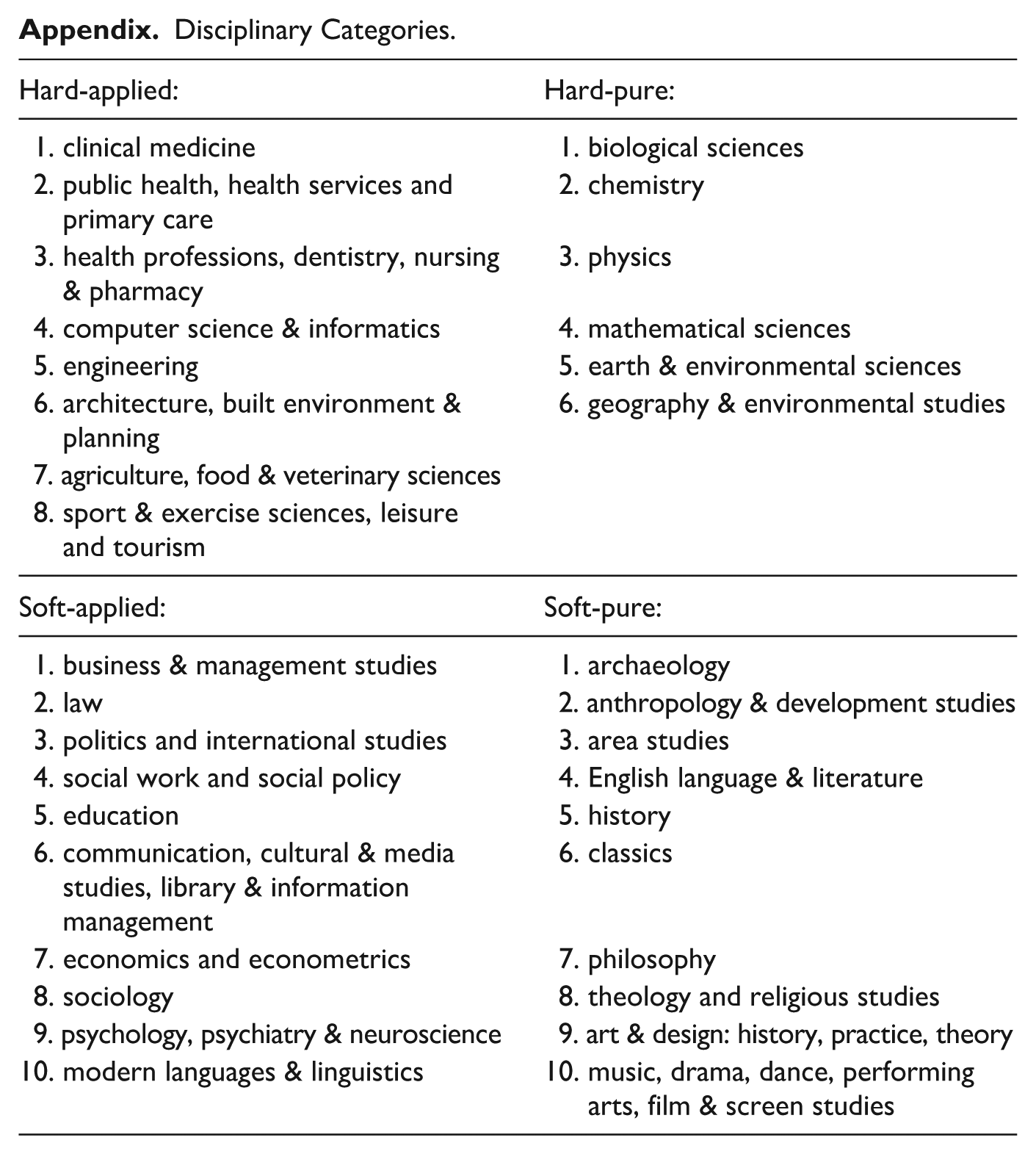
The database allows users to download cases according to the ‘unit of assessment’, or discipline, and by the ‘type of impact’ stated by the submitting institution. The 6,361 cases contained 8.644 million words and comprised 34 disciplines (see Appendix). We mapped these disciplines according to Biglan’s (1973) taxonomy, which provides a broad categorisation of hard and soft sciences with either a pure or applied orientation. While there are disagreements concerning how best to categorize disciplines, this model has the value of being both established and robust (e.g., Becher & Trowler, 2001; Shapin, 2020) and continues to inform research (Shaw, 2022). Hard sciences refers to fields which mainly employ objective measurements of controlled variables, and soft sciences to those which use more interpretive methods to study less tangible subjects. These social and epistemological structures seem to influence discursive practices and continue to inform research in linguistics (Hyland & Jiang, 2024), education (Söderlind & Geschwind, 2020), and technology (Fathema & Akanda, 2020). Table 1 shows the characteristics of the corpus, using these categories.
Disciplinary Characteristics of the Corpus.
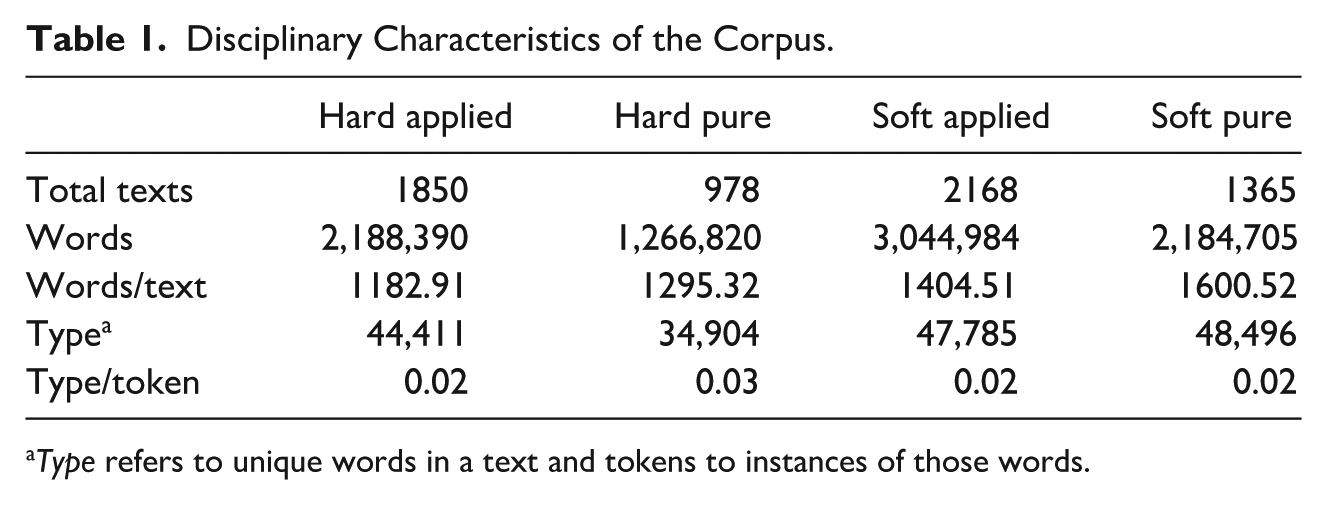
Type refers to unique words in a text and tokens to instances of those words.
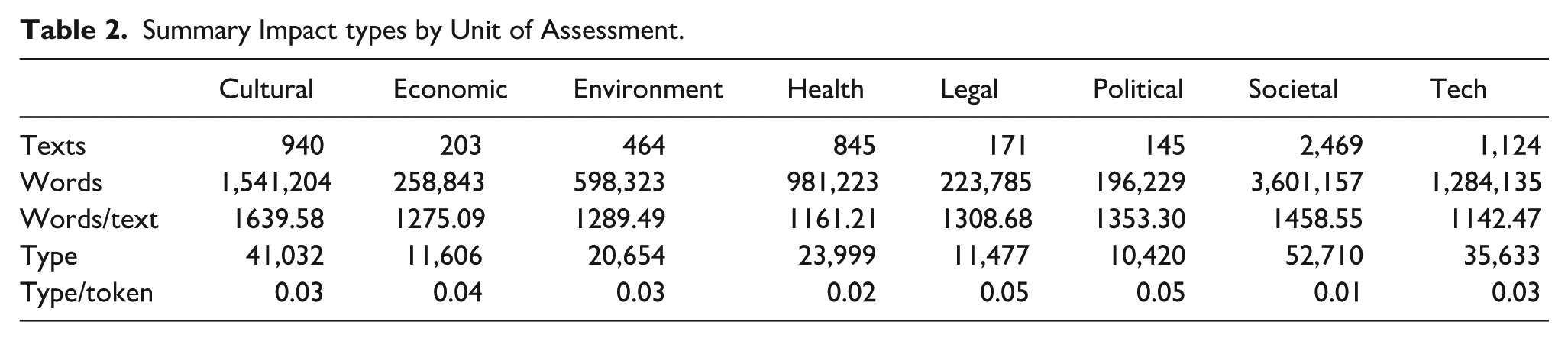
We also searched the database using the REF’s summary impact typology which classifies each case according to its area of real-world benefit: cultural, economic, environmental, health, legal, political, societal, and technological. As the website states, these areas are indicative rather than definitive because, in practice, impact can cross boundaries between areas or go beyond them. Because submitters opt for a category, they represent user choices in how to frame impact and, as a consequence, are meaningful indicators of rhetorical variation. Table 2 profiles the corpus according to the principal impact type. Claims for societal impact dominated the submissions with 39% of all cases.
Summary Impact types by Unit of Assessment.
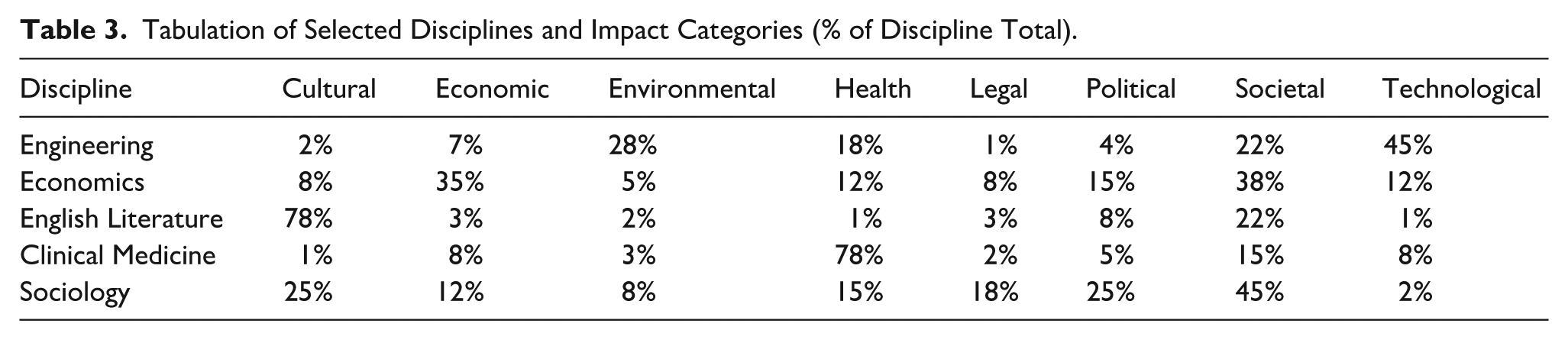
The use of disciplinary and impact categories offer a more nuanced way of understanding how different disciplines articulate and frame their research outcomes in terms of societal benefit and real-world application. Importantly, these categories are not synonymous as individual disciplines spread across multiple impact categories, and each impact category draws from multiple disciplines. Table 3 shows this overlap. Engineers, for example, submit their work to technological (45%), environmental (28%), health (18%), and other categories (9%), each potentially requiring different rhetorical emphases to address distinct evaluation panels.
Tabulation of Selected Disciplines and Impact Categories (% of Discipline Total).
Analytical Approach
We searched each disciplinary and impact type corpus for around 140 different stance markers suggested by Hyland (2005), using the concordance software AntConc (Anthony, 2022). Both U.S. and British spellings were examined, and each concordance line was examined to verify that the identified feature was performing a stance function (e.g., only cases of exclusive we). To ensure methodological reliability, both authors independently coded a 10% sample of the corpus, achieving a high inter-rater agreement of 96% before resolving discrepancies through discussion. We then normalized raw stance frequencies per 1,000 words to facilitate comparison across corpora of differing lengths.
Since this study analyzes all ‘details of impact’ sections rather than a sample, we use log-likelihood (LL) values as indicators of effect size and import rather than statistical significance. Statistical significance is inappropriate when studying complete populations as no sample-to-population inferences are necessary (Rayson, 2016). We use established LL thresholds to identify meaningful practical differences: LL values above 3.84 indicate noteworthy differences, above 6.63 indicate substantial differences, and those above 15.13 indicate very large differences. These thresholds, then, serve as measures of practical significance rather than statistical probability, helping to identify patterns that show both substantial magnitude and meaningful theoretical importance for understanding rhetorical variation. This approach enables comprehensive analysis of the complete REF 2021 impact narrative population while providing principled criteria for identifying rhetorically meaningful variations across disciplinary and impact contexts.
Stance-Taking in Impact Cases: An Overview
Overall, we found 123,628 instances of stance taking in the corpora, or around 12.8 per 1,000 words. This frequency is between traditional academic research articles and explicitly promotional genres like academic blogs (Zou & Hyland, 2022b), reflecting the hybrid nature of REF impact narratives. It is, however, comparable to the frequencies of items used to hype impact submissions in REF 2014 (Hyland & Jiang, 2024), suggesting consistency in rhetorical intensification across REF cycles. By focusing on the entire corpus of impact sections rather than a targeted subset, we can see that stance-taking has become a pervasive feature of impact narratives rather than confined to only promotional passages. Table 4 shows the extent of stance marking in these texts.
Distribution of Stance Markers in Fields and Impact Types (per 1,000 Words).
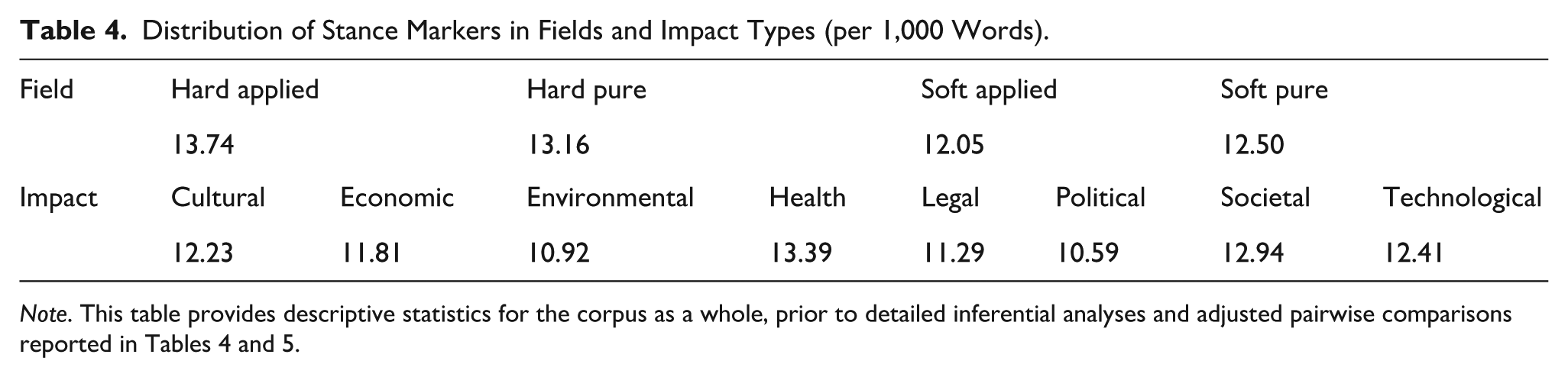
Overall, frequencies differed significantly among disciplinary categories (global LL = 307.91), with hard applied fields employing stance markers most intensively. This pattern challenges conventional expectations where hard sciences typically show more restrained rhetorical positioning. These results show that authors in clinical medicine and engineering face particular challenges in demonstrating real-world impact that require greater rhetorical work. Several factors may explain this. First, audiences for hard-applied research tend to be more diverse, including practitioners, policymakers, and industry stakeholders, encouraging rhetorical strategies that work across different knowledge communities. Second, the transition from controlled research environments to real-world implementation may require more extensive hedging to acknowledge the complexity of causal relationships. Third, hard applied fields may face greater competition for impact recognition, given the volume of submissions and the high stakes involved in areas like medical research and engineering innovation.
Analysis of the impact categories reveals equally substantive patterns (LL = 348.44). Health impacts show the highest frequency (13.39 per 1,000 words), while environmental (10.92) and political (10.59) show the lowest. This 2.8-point spread represents considerable rhetorical variation, suggesting that authors adapt their stance-taking strategies to match the evidential challenges and audience expectations associated with different impact types.
The heavy use of stance in health likely reflects several factors: the effort needed to demonstrate causal research-patient outcome relationships across complex healthcare systems; the requirement to address diverse stakeholder groups including patients, practitioners, policymakers, and the public; and the risks of overstating health benefits which could have serious consequences. In contrast, environmental and political impacts are likely to be more familiar and more easily recognized and so require less rhetorical positioning.
These patterns establish that stance-taking in REF impact narratives is far from uniform across academic fields. Instead, authors appear to calibrate their rhetorical strategies in response to disciplinary conventions, audience expectations, and the specific challenges of demonstrating different types of real-world impact. The substantial effect sizes across both analytical frameworks indicate that these variations represent meaningful rhetorical adaptations rather than random fluctuations. Comparison with stance frequencies in the REF 2014 suggests that these impact narratives have rhetorically stabilized over time. It has evolved into a hybrid genre with its own rhetorical conventions that enable authors to maintain scholarly credibility while meeting the promotional demands of competitive evaluation. There seems to have been institutional learning across the REF cycles, with universities and researchers developing increasingly sophisticated approaches to demonstrating impact. The collaborative efforts of specialized impact officers working with academics have, in other words, refined a rhetorical approach to meet the exigencies of this new context.
Taken together with the disciplinary results, these findings confirm that stance-taking is a prominent rhetorical feature of REF impact cases. These texts are strategically constructed, which balance assertion and caution, as well as presence and detachment, in pursuit of funding. In the following sections, we unpack these patterns by examining disciplinary and impact-type variation in stance-taking.
Results of Stance Taking by Academic Field
To explore how stance-taking practices vary across academic fields, we analysed the distribution of stance markers using Biglan’s (1973) typology described earlier. Table 5 shows the normed frequencies for all stance features by broad disciplinary category, revealing substantial effect sizes based on log-likelihood analysis.
Distribution of Stance Types Across Disciplinary Categories (per 1,000 Words).
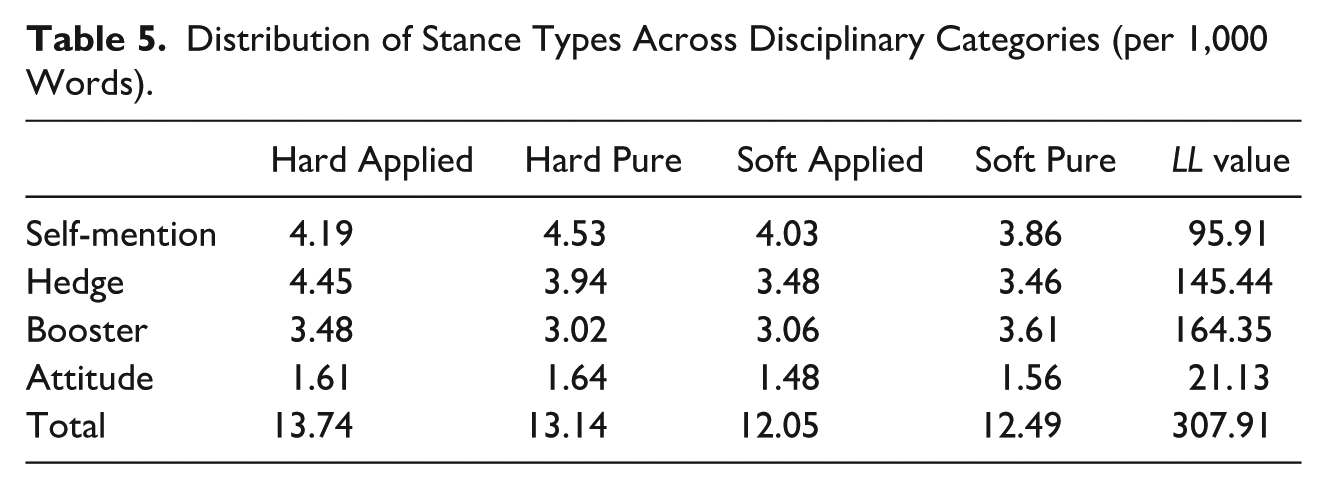
Overall stance marker density was highest in hard-applied disciplines (e.g., engineering, clinical medicine), followed by hard-pure. This finding contrasts with patterns in academic writing more generally, where stance is more prevalent in soft fields because of greater interpretive flexibility (Hyland, 2005). This reversal underscores the distinct rhetorical pressures of REF case writing. In disciplines accustomed to evidential proof and experimental precision, authors adopt a more visible personal stance when demonstrating social relevance. In such cases, the demand to narrativize ‘real-world outcomes’ for external evaluators seems to encourage writers to underline their textual presence to amplify claims.
There is, however, relative uniformity in the frequency rankings across fields. Self-mention and hedges were the most frequent categories overall, closely followed by boosters at 26%, while attitude markers accounted for 11%. This pattern is broadly consistent with previous studies of promotional academic discourse (e.g., Hyland & Jiang, 2024). This distribution points to a dual strategy: writers assert their presence and contribution (via self-mention), but temper their claims (via hedging), thereby navigating what Hyland (2005) terms the ‘delicate balance between assertiveness and modesty’. The relatively lower use of attitude markers may reflect a general tendency in academic genres to foreground propositional rather than affective stance—though, as we show later, attitude varies considerably by impact type.
Self-mention
Self-mention was the most frequent marker across all disciplines, with the highest frequencies observed in the hard applied and pure fields, creating a very large effect size (LL = 95.91). This finding is noteworthy given that self-mention is relatively rare in research articles in hard sciences (Hyland, 2001).
The submitting authors appear to be leaving nothing to chance in their efforts to ensure that assessors recognize the role they had played in creating the impact claimed for the research. The choice of strong authorial presence can be decisive when seeking to persuade assessors of one’s achievements in contexts where demonstrating impact may be challenging. In the REF context, explicit self-positioning helps to strengthen claims of agency and responsibility. Such claims for recognition can be seen in these examples:
(1) After we added some data augmentation and preprocessing techniques, we made a recognition effect far superior to traditional methods. (Hard applied)
(2) Our approach to pangolin conservation is now widely acclaimed. (Hard pure)
(3) Our work has also contributed to the UK government’s proposed ban on the sale of sugar and caffeine energy drinks to Under-16s. (Hard applied)
Hedges
Equally noteworthy, when considering the highly competitive nature of these submissions, was that hedges varied considerably across disciplines (LL = 145.44), with hard applied fields using them considerably more. Hedges express epistemological caution, conveying the writer’s reservations about the veracity or reliability of reported claims, and one might think that this is not the venue to raise uncertainties in promotional contexts. However, the prevalence of hedges in hard applied fields seems less to do with any limitations but may reflect the challenge of translating research findings into claims about real-world outcomes. Hedges acknowledge the multiple intervening variables and challenges in drawing direct causation between research and outcomes. They work here to adjust readers’ expectations of exactitude and involve the audience in the judgement being made:
(4) One implication may be that central banks would observe higher inflation if nominal policy rates were raised and kept higher for some time. (Soft applied)
(5) We demonstrate that it is possible to evaluate a country’s progress towards achieving the UN’s Sustainable Development Goals. (Hard applied)
Clearly, hedges are a ubiquitous feature of research writing (e.g., Hyland, 1998), downplaying an author’s commitment to a proposition by modifying its scope, relevance, or certainty. However, they also carry the implication that the impact case study is something of a hybrid genre, carrying traces of the reporting which formed the basis of the original research. More than this, though, they represent an intervention which briefly shifts the focus to the writer. Hedges are an explicit intrusion into the talk by an author to offer a personal assessment of a claim. The reader not only gains a clearer understanding of the speaker’s position and the epistemic confidence they are being asked to place on a statement, but also to acknowledge the presence of a real person behind the words, weighing evidence and making judgements about the claims made.
Writers in the hard applied fields were the heaviest users of hedges, presumably because these are disciplines which are most vulnerable to empirical challenge in demonstrating causal relationships between research outcomes and real-world implementation. Where results may be subject to replication and verification, and particularly where they are not only being implemented in real-world contexts, prudent acknowledgement of uncertainty may strengthen rather than weaken credibility:
(6) Cardiff’s investigation indicated that the cause was likely a mix of pollutants on insulator surfaces and early morning condensation. (Hard applied)
(7) It can be estimated that these identifications translate into a significant increase in convictions with around a 50% conversion rate. (Hard applied)
Boosters
More understandable was the prevalence of boosters in these texts; after all, this is a genre which explicitly sets out to solicit funding on the basis of research impact, so encouraging reader recognition of the value of the outcome is imperative. Boosters showed substantial variations across disciplines (LL = 164.35), with hard applied and soft pure fields employing boosters more frequently than the hard pure and soft applied categories. This finding suggests that disciplines facing intense practical challenges such as health sciences in the hard applied category (examples 8 and 9) or difficulties in quantifying contributions like business studies in soft pure fields (10) strategically utilize boosters to strengthen the persuasive impact of their claims:
(8) Certainly, their work has helped reduce diagnostic delay and other unnecessary investigations. (Hard applied)
(9) These outcomes clearly demonstrate the impact of UoH research on patients, through the adoption into guidelines and thus clinical practice. (Hard applied)
(10) Indeed, a delegate survey revealed that 94% of participants found the programme to be a valuable opportunity to network and share practice . . . (Soft pure)
Boosters here play a particular role in academic discourse. Unlike their use in traditional research articles, however, writers used them here not to convince the judges of the certainty of research results, but the certainty of their real-world outcomes, as here:
(11) Building a community of future experts is obviously essential in creating critical mass in lobbying for more concentrated efforts to protect material culture of global significance. (Cultural impact)
(12) These comments also demonstrate that the exhibition, including the integration of scientific data from CT scans with study of the iconography, was very successful in enhancing understanding of Egyptian burial practice. (Cultural impact)
Hyland and Zou (2021) identified three broad functions of boosters depending on whether they conveyed intensity by strengthening the emotive force of a statement (extremely, amazing), extremity stressing the upper point of a scale (highest, greatest, most), or certainty signalling the writer’s epistemic conviction (definite, prove, show). Virtually all boosters in our impact corpus were of the third type: certainty. Authors introduced boosters at points in the text where they could best focus on removing any doubt about impact. These boosters serve to amplify the significance or consequence of the claims with a commitment that almost compels assent. Authors in both the hard applied and soft pure fields appear to feel the need to underline these effects, reflecting the distinct challenges each faces in impact demonstration.
Attitude Markers
Finally, attitude markers comprise a comparatively smaller proportion of stance markers in these cases, though they still showed noteworthy disciplinary differences (LL = 21.13), indicating consistent adaptations to highlight research significance and novelty. Attitude markers convey an affective, rather than epistemic, appraisal of what is being discussed and, once again, help authors to promote the significance of impact:
(13) This has led to a dramatic and sustained improvement in care for patients with CDI on a local and national level. (Hard applied)
(14) The striking visual impact of the images played a key role in generating pivotal policy changes banning microplastics in cosmetics . . . (Hard pure)
(15) What is really important about the study is the noted ways in which creative and archival practices interrelate. (Soft applied)
(16) All these really caught people’s attention and they are factors which have undoubtedly contributed to its significant impact. (Soft pure)
Interestingly, Hyland and Jiang’s (2024) study of impact cases from the 2014 exercise found that attitude markers exceeded boosters, but it focused on just 800 ‘details of impact’ sections rather than the 6,300 in the present study and on eight disciplines rather than the entire 36 subject areas in the database. This difference may have influenced the results, or it may be that institutions have developed more sophisticated rhetorical strategies since 2014 and found more effective ways to deploy epistemic positioning devices (hedges and boosters) rather than relying primarily on affective appeals (attitude markers). It is likely that universities have developed greater expertise in constructing impact cases over the two evaluation cycles (Chiang, 2019; Marques et al., 2017). The comparatively low frequencies of attitude markers may reflect a maturing understanding of how to more effectively construct credible impact narratives.
Taken together, these patterns suggest that stance-taking in REF narratives is not simply a reflection of disciplinary convention but a response to the rhetorical demands of institutional accountability. The need to make a compelling case for impact to multidisciplinary panels appears to reconfigure stance practices, encouraging self-promotion in traditionally impersonal disciplines and modulating promotional intensity in more discursive ones. REF narratives thus represent a rhetorical recalibration of disciplinary voice, shaped as much by genre expectations as by epistemological norms.
Results of Stance Taking by Type of Impact
In addition to categorising submissions by broad ‘unit of assessments’, the REF database also enables searches to be made according to the principal ‘type of impact’. As described above, the REF uses eight ‘Summary Impact Types’ that follow the PESTLE convention (Political, Economic, Societal, Technological, Legal, and Environmental) used in Government policy while separating out Health and Cultural impact from the Societal category. These are broad-stroke ‘types’, and the REF website reminds us that most case studies relate to more than one. They are, however, useful indicators of the predominant impact focus, providing insights into how rhetorical strategies may shift in response to domain expectations and evidentiary challenges. Table 6 shows stance features across impact types.
Distribution of Stance Across Types of Impact (per 1,000 Words).
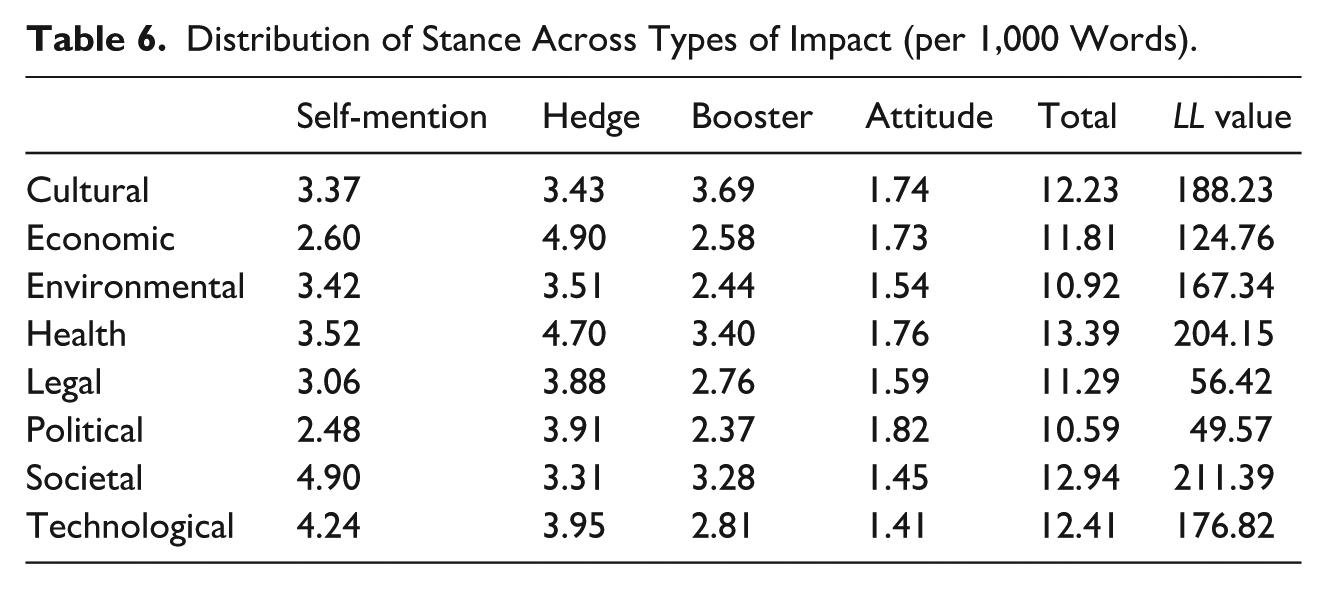
Table 6 shows substantial variation across REF-defined impact types (LL = 348.44), indicating meaningful differences in how authors construct narratives for different impact contexts. However, the magnitude of difference varies considerably across impact categories. Impacts in health (13.39 per 1,000 words) and societal (12.94 per 1,000) impacts show substantial differences from the corpus average, while environmental (10.92) and political (10.59) impacts show notably lower frequencies.
These variations appear to reflect differences in the burden of persuasion associated with different impact domains. Health, societal, and cultural claims often target diffuse audiences and so must articulate impact in ways that are both accessible and verifiable. In contrast, political and environmental impacts often involve policy or regulatory processes, which may demand a more procedural tone. Where the link between research and impact is indirect, authors may lean more heavily on hedging and testimonials.
Self-mention
The frequencies for self-mention varied considerably across impact types, with societal (4.90 per 1,000 words) and technological impacts (4.24) using this strategy substantially more heavily than political (2.48) and economic (2.60) types. A writer can present a more or less visible stance by choosing to step into a text through self-mention or to use impersonal forms, and the decision to be present in these texts appears to be directly related to the desire to both strongly identify oneself with a particular argument and to gain credit for the impact achieved.
The higher frequencies in societal and technological impact types may reflect the nature of contexts where research teams can more legitimately claim direct agency in producing outcomes. Societal impacts often involve community engagement, public education, or social interventions where researchers play visible roles. Technological impacts frequently result from specific innovations or technical developments attributable to specific labs or teams.
As we can see from these examples below, intruding into a case report using first person can not only reinforce the strength of claim, but also show this as individual, and uniquely interesting:
(17) Our approach therefore provides additional protection for the alcohol and obesity groups for example . . . (Societal impact)
(18) Our algorithms are providing an important contribution to this technology. (Technological impact)
We also found that first person often correlated with boosters, creating strongly assertive combinations:
(19) We are certain it has helped local Councils set their priorities and make the case for spending on prevention . . . (Societal impact)
(20) We have no doubt that incorporating processing for pure shift and DOSY methods has contributed to establishing a market-leading position for our Mnova software. (Technological impact)
Authors submitting work to technological panels also used self-mention to promote their case for impact. Here we found two main uses of self-mention. Many examples were related to the researchers themselves and the institution behind projects:
(21) Our research materially contributed to the development of a cohesive national strategy for agri-robotics resulting in (1) changes to policy . . . and (2) benefits to agricultural business. (Technological impact)
(22) . . . underpinned by our body of research, we have created multiple strategic opportunities for European and UK businesses of various sizes. (Technological impact)
Equally, however, self-mention referred to quotes taken from end-users’ testimonials on the impact which the intervention had had in their companies and beyond:
(23) Together we have identified opportunities earlier than our competitors, set out clear USP’s and then worked in conjunction with you and your team to bring suitable products to market earlier than our competitors and in so doing have grown our business—a true partnership. (Economic impact)
(24) Using Liverpool’s tool to evaluate and optimize new product design has become an essential step in our R&D activities. (Technological impact)
(25) I have definitely been persuaded and have already looked at careers in operational research. I also believe that education facilities everywhere should hold events such as this to help teens to realise that a career like maths has hundreds of opportunities. (Societal impact)
Endorsements from the European Union, NASA, Big Pharma, and such like expressed as direct quotes from senior industry figures, or even the general public as end users, can have a powerful influence on how submissions are judged.
Hedges
Following self-mention, hedges were the next most frequent stance markers in the submissions and ranked second highest in all impact types except cultural. As we have observed, the high frequency of hedges may seem counter-intuitive given the explicitly promotional nature of these texts. What they offer writers, however, is a rhetorically strategic option to balance the significance of their claims with readers’ expectations for reporting accuracy. Unremitting positivity and boosterism can jar on assessors, and claims can be more persuasive if tempered with reasonableness and the recognition that precision can trump unwarranted conviction (Hyland, 1998). Writers thus seek to gain acceptance for the most significant claims possible while placing those claims appropriately within what readers are most likely to accept. Commendable caution can therefore be a persuasive strategy, while at the same time ensuring the reader is aware of the author’s individual contribution.
Hedges are most frequently found in narratives addressing economic impact (4.90 per 1,000 words), seeking to show how a research intervention positively influenced some aspect of fiscal activity or people’s behaviour. This finding represents the highest frequency among all impact types and shows considerable difference from the corpus average (3.66 per 1,000 words). Economic impact narratives may require more hedging because of the complex causal pathways between research and economic outcomes, and the difficulty of isolating research effects from other economic factors:
(26) It is estimated that approximately 1,700 claimants will be eligible to share in the settlement, resulting in an average of GBP78,500 each. (Economic impact)
(27) In general, the volatility has the tendency to increase during the recent years, underlining the importance of risk management at a country level as an area of policy. (Economic impact)
Hedges here assist writers to convey judgements about the scale of measurement (26) or the likely effects of an intervention (27), but in both instances the text is made more persuasive by recognising that these are predictions or estimates based on economic modelling. Hyland (1998) refers to these as ‘accuracy based’ hedges which specify the state of knowledge on a topic, rather than indicate the writer’s confidence in its truth or reliability. The principal motivation here is a desire to clarify the state of knowledge, a hedge against complete accuracy, rather than protection against overstatement. Hedges therefore help negotiate the perspective from which claims for impact can be accepted.
There was broad similarity in the most frequent hedging forms across the different impact categories (Table 7). As with research articles (Hyland, 1998), the modals would and could dominate these lists and appear in the top three of all eight impact types.
Most Frequent Hedges Across Impact Types (% of Total).
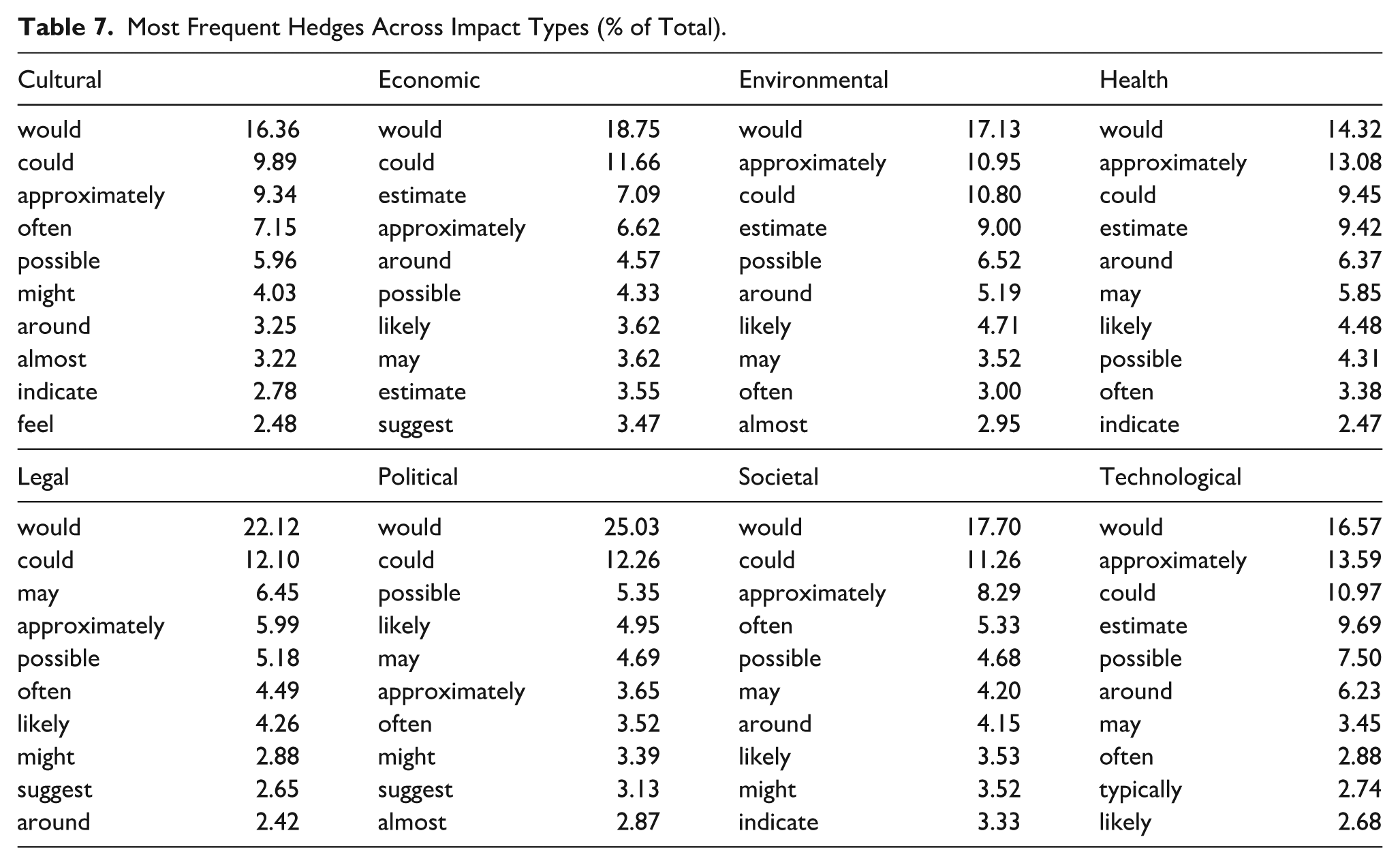
Modals are notoriously polysemous, so we have been careful to distinguish epistemic could, expressing truth assessments, from its meaning expressing the role of enabling conditions. Would, on the other hand, is a marker of hypotheticality, generally suggesting prior premises and expressing the conditions required to fulfil a hypothesis. In these examples, for instance, we see authors specifying contingent conditions for the successful outcome of interventions:
(28) One implication may be that central banks would observe higher inflation if nominal policy rates were raised and kept higher for some time. (Economic impact)
(29) Without ERCs, remaining unprotected forest and its biodiversity would likely be lost through unregulated anthropogenic activities. (Environmental impact)
In addition to these modals conveying the degree of certainty and the accuracy-based uses of words like approximately, around, about, and estimate (see examples 26 and 27), hedges conveying the reliability of statements, such as likely, suggest, might, and possible also occur frequently in the corpus. These specify the actual state of knowledge about something and are often concerned with making a statement more precise:
(30) Perhaps for the first time for many of the participants, police analysts have been exposed to a series of modules that expanded their knowledge and tested their existing skill sets . . . (Societal impact)
(31) It is possible to make a very crude estimate of the direct effect of the increase in bequests on charity income. (Economic impacts)
Here we see authors rhetorically enhancing the credibility of their submissions by specifying the conditions under which claims might be accepted. Authors are, then, claiming benefits beyond the evidence they have for it.
Boosters
Boosters are most frequent (per 1,000 words) in cases deemed as making a cultural impact (LL = 404.97), reflecting the substantial rhetorical challenge these submissions face. There were 3.69 boosters per 1,000 words in cultural impacts, for example, compared to Economic (2.58) and environmental categories (2.44).
Cultural impacts are perhaps a hard sell to assessors as they address positive change in aspects of life which may be nebulous and hard to determine with any precision or certainty, so encouraging greater rhetorical effort (examples 32 and 33). Thus, authors often place their trust in public understanding, community engagement, and preservation of heritage—that is, outcomes which resist quantification and may require more assertive promotion. Societal change may similarly require considerable finessing to demonstrate a relationship between a research project and its effect in a context which is subject to constant change without the intervention of academics (examples 34 and 35). We can see that boosters often accompany strong attitude markers to emphasise the claims.
(32) The Women Amateur Filmmaker project has been a really amazing resource for us as curators. (Cultural impact)
(33) This surely is the main goal for any organization involved in drawing attention to the riches housed in the world’s archives. (Cultural impact)
(34) Cancer and its treatment generate considerable public interest, and we firmly believe we should introduce our work and its eventual benefit to patients and the wider public. (Societal impact)
(35) This will certainly contribute to the long-term sustainability of the centres and will guarantee commercial opportunities for the entrepreneurial ideas of the students. (Societal impact)
Health impacts also showed substantial booster use (3.40 per 1,000 words). This use is similar to frequencies in the other human-centred impact types of cultural and societal categories, despite health outcomes being more readily quantifiable than cultural effects. The similarity may reflect authors’ attempts to address the complex causal connections between research and health outcomes, or the need to address diverse stakeholder communities including patients, practitioners, and policymakers:
(36) The survey results clearly showed that more than half of all patients agree that ICT-aided healthcare is useful and acceptable for patient health engagement. (Health impact)
(37) We are certain it has helped local Councils set their priorities and make the case for spending on prevention. (Health impact)
The health category also has a similar stance profile to cultural and societal impacts in terms of relatively high proportions of self-mention and boosters, which contribute to the strong stance they display. As we have noted, these are forms that convey a strong authorial presence and invest statements with the author’s personal commitments of the researcher.
The most common boosters in the study concerned with cultural impact include those making strong assertions for the truth of the impact claimed, with show, demonstrate, establish, and know in the top 5. These were, in fact, the most frequent boosters in every type of impact category, assuring assessors that they could be confident in the claims made and the importance of the statements. Table 8 shows the most common boosters in each impact category.
Most Frequent Boosters Across Impact Types (% of Total).
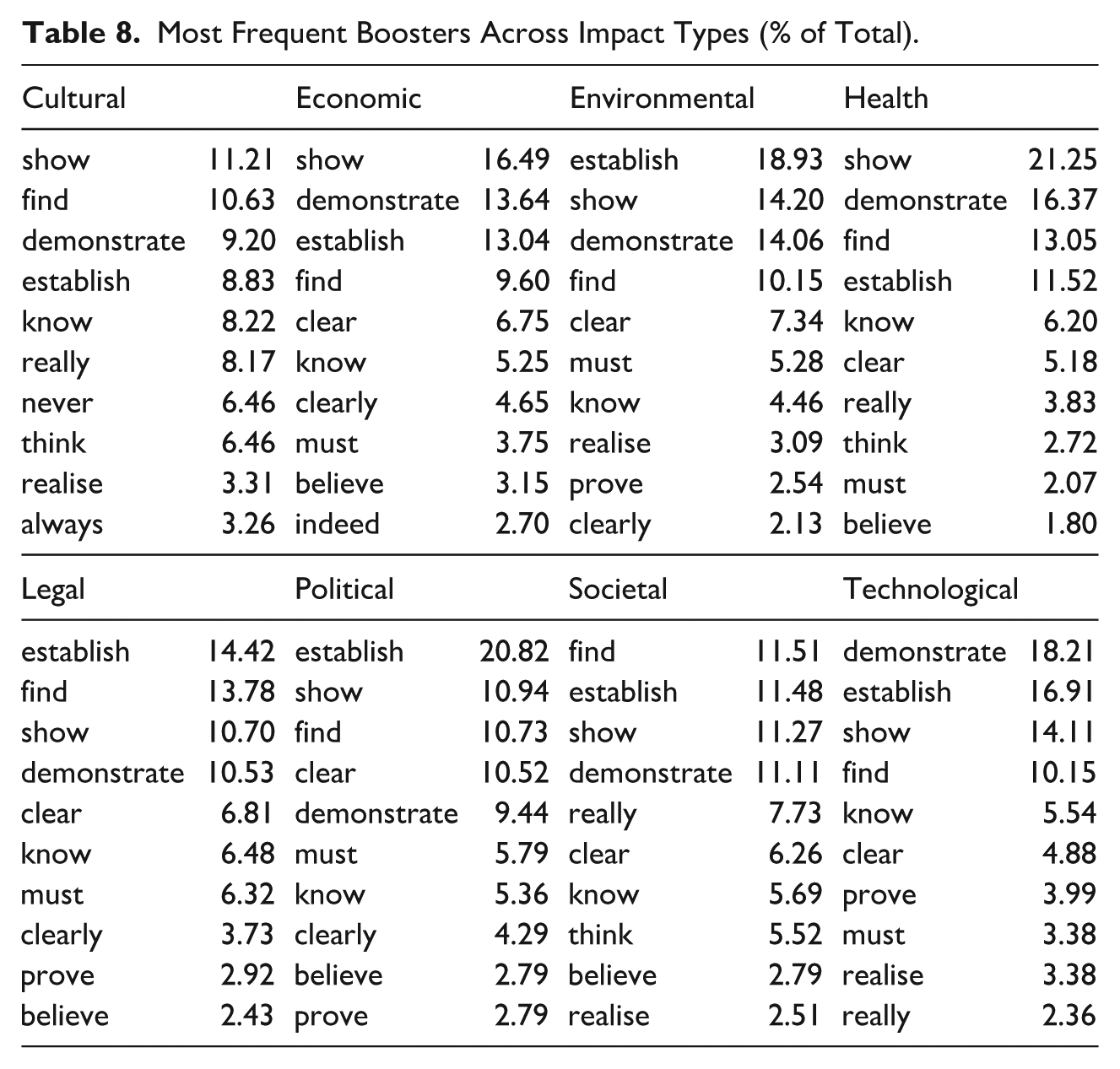
The top items show a very restricted range of items across the eight impact categories, with only 14 types filling the 80 slots in the top 10 of each. Virtually all boosters convey the certainty of the statements made, with a heavy use of epistemic verbs, a handful of adjectives, and just one modal: must. All these boosters stress indisputable confidence in the claims for impact, but items always and never seem to play a slightly different role. Always strengthens the claims for impact by alluding to the continuing, and timelessly enduring, importance of an issue, stressing the practical value of the research outcomes (38) or the project itself (39):
(38) Multilingual migrants have always enabled the BBCWS to broadcast in many languages, creating a cultural bridge to global audiences. (Cultural impact)
(39) Impact beyond the academy was always at the conceptual heart of the project. (Cultural impact)
Never, in contrast, by intimating that something has not occurred at any time in the past or future, stresses the uniqueness and novelty of the study, making the impact a rare benefit:
(40) I could never accept the contradictory description of Byzantium as a thoroughly corrupt, morally bereft, and decayed civilization that, nevertheless, lasted for more than 1,100 years! (Cultural impact)
(41) Before the appearance of Parker's edition, Donizetti's Le Duc d'Albe has never (even in the composer's lifetime) been performed, or indeed been made available in score. (Cultural impact)
Attitude Markers
Attitude markers, as we have stated, are less about expressing writers’ certainty regarding the claims they make and the effect of these on readers than promoting impact through more personal and affective positions. The emphatic expression of affect is relatively infrequent, but not completely absent, in published academic writing (Hunston & Thompson, 2000) and shown to be prevalent in REF impact reports (Hyland & Jiang, 2024). By giving prominence to the writer’s personal and professional stance, they help to reveal a committed researcher invested in the subject and committed to the claims being made for impact.
While attitude markers are the least frequent stance features in these texts, they comprise a noteworthy component of authorial stance at 11% of all features across the texts. Attitude markers indicate the writer’s personal evaluations concerning the strength or value of the impact (significant, strong, clear), its immediate contribution (useful, necessary), or novelty (timely, first, unique). Some examples from the corpus demonstrate the effect of these:
(42) This is an amazing opportunity for those applications which need to have true randomness . . . (Technological impact)
(43) The striking visual impact of the images played a key role in generating pivotal policy changes banning microplastics in cosmetics . . . (Environmental impact)
Once again, analysis of the eight impact types indicated the repeated occurrence of a few high frequency items across the texts, with important dominating every list with 38% of all forms (Table 9).
Most Frequent Attitude Markers Across Impact Types (% of Total).
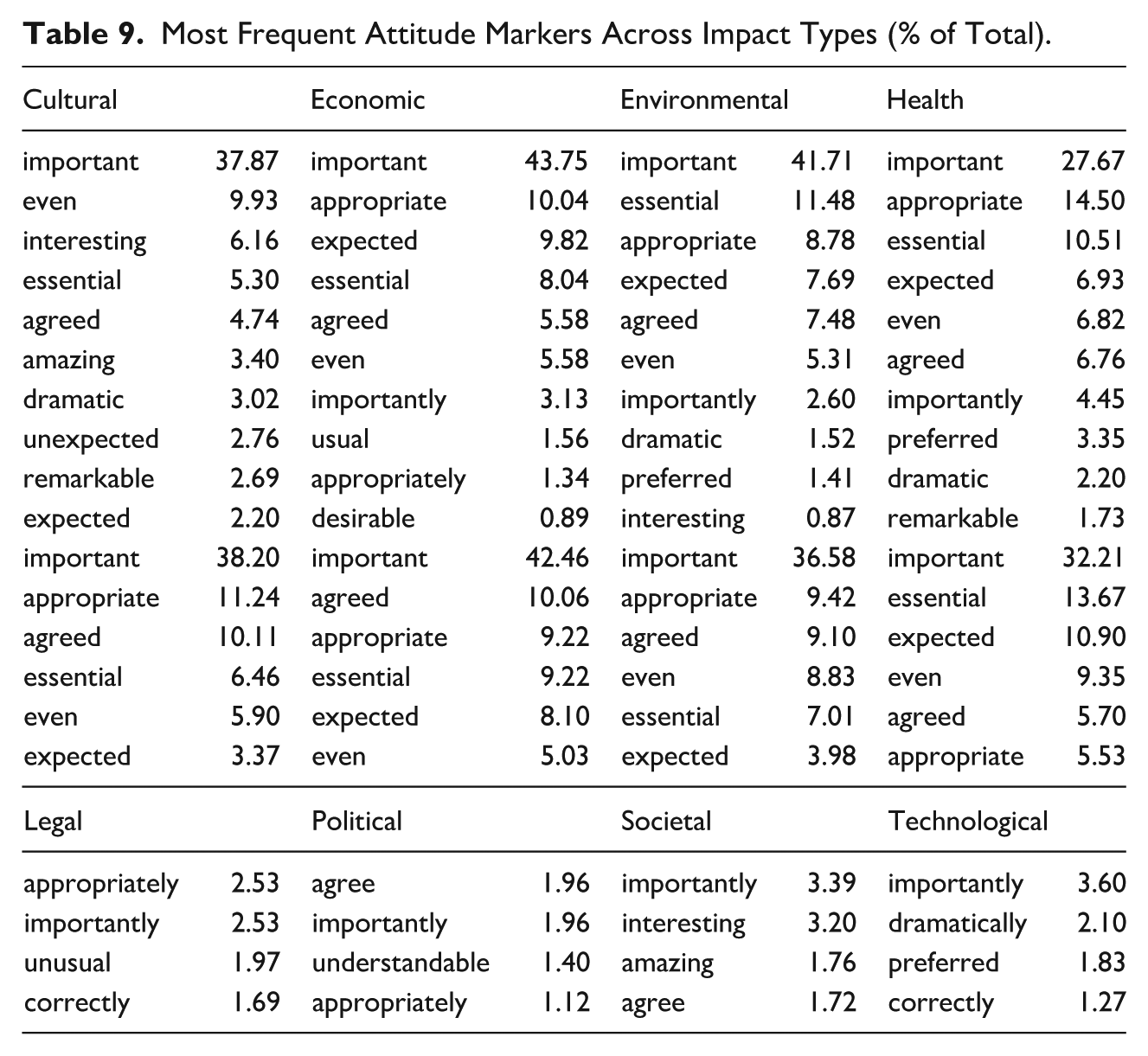
The attitude markers important, appropriate, and essential occur in the top 10 markers in all categories (except cultural) and always in the positive form, with no instances of not important, non-essential, etc. These forms are, once again, used to enhance the possibility of gaining a favourable impact score from the REF assessors, as evidenced by the frequency of highly charged adjectives such as remarkable, dramatic, and amazing. In addition, the items interesting and even crop up frequently, less demonstrative than the forms discussed in the previous sentence, but used to convey surprise or emphasis:
(44) This exceptionally interesting and beautiful London exhibition merits attention as a model worthy of emulation. (Cultural impact)
(45) Even very experienced nurses have found that TC’s findings have changed their perspectives. (Societal impact)
Attitude markers were spread across all impact types but were notably more common in the political category (1.82 per 1,000 words). Political science impact statements, dealing with complex social phenomena and multiple causation, may rely more heavily on attitude markers to signal the significance of contributions that resist simple quantification. Political impact statements often address changes in policy processes, institutional practices, or public discourse, outcomes that require evaluative language to establish their importance. We find, then, a range of strongly positive attitude markers in these submissions to help shift assessors’ judgements in a favourable direction:
(46) Importantly, our research highlights environmental AMR is everywhere, but the primary driver of AMR spread differs from place to place. (Political impact)
(47) The changes that took place to make the Commons more diversity sensitive represent truly remarkable progress in a very small conservative institution. (Political impact)
(48) The initial attitudinal research to support the pilots has revealed interesting insights into the opposition to development. (Political impact)
Conclusions
The REF impact case studies are a challenging and high-stakes genre for authors and institutions. They not only involve the summarization and recontextualization of highly specialized knowledge into forms accessible to non-specialists, but also the detailed description of its impact on real-word contexts. Authors must, therefore, navigate the transition from a traditional authoritative academic discourse to a more inclusive model which spells out the benefits of their research in particular domains of use. This study has investigated the role that authorial stance plays in this process by examining the ‘details of impact’ section for features listed in Hyland’s inventory.
Our results show that submissions in all fields of study and all ‘impact types’ were heavily stance-laden, with nearly 13 cases per 1,000 words. Disciplines we placed in Biglan’s hard science fields contained the most markers by a statistically significant margin with the applied disciplines being particularly strong users. While perhaps easier to demonstrate a direct impact than the soft fields, this is rarely a simple and instantaneous causal effect in the hard sciences. Scientists also have to present sometimes complex impacts in ways which are comprehensible and appealing to assessment panels composed not only of academics, but also funders, commercial representatives, and other end-users. The diversity of these panels is likely to encourage writers to make more concerted rhetorical efforts to influence them of the value of their studies.
The distribution of stance across types of impacts showed that submissions identified as addressing health and societal impacts contained the most stance markers. The REF recognises that there is considerable overlap in these types, and separated health from social types in using the government policy categories, but we can see both areas of submission addressing broad social concerns regarding quality of life and making a heavier rhetorical investment.
In terms of the expression of stance, self-mention comprised 32% of features and dominated the frequencies in all fields and almost all impact types. Writers here sought to position themselves as reflective agents whose ideas and diligent research had significant real-world effects, believing their explicit presence in the text might help to underline their personal role in producing impactful research. This personal marking of claims can also be seen in the use of affective comments on the value of the impact, its contribution or its novelty, intensifying assertions with the personal views of the researcher. Boosters also are explicit markers of authorial intervention, tagging claims with endorsement of their reliability and veracity, typically with words such as show, demonstrate, establish, and know. Finally, and second only to self-mention in terms of frequency, were hedges, tempering these often heavily promoted assertions to suggest an honest admission of the state of knowledge on a topic.
While our study suggests something of the extent of authorial intervention to promote their work and seek credit for its impact, we recognise its limitations. This is an exclusively text analytic study which has only explored one section of the impact cases submitted to the 2021 REF. Further research might investigate the perspectives of submitting researchers or members of assessment panels to more clearly understand the motivations for using these features and their effects on readers. We are also aware that while academics are responsible for these texts, the larger, and better resourced, universities often have teams of people devoted to polishing and embellishing cases for submission. The interventions of these actors on stance decisions are likely to be revealing of the workings of rhetoric in the contemporary academy. It may be, for example, that the prestige and wealth of the submitting university may play a decisive part in the writing of impact cases.
We have, however, sought to offer empirical evidence for a particular rhetorical practice which seems prevalent in these submissions. Given the high stakes in terms of funding as well as institutional and personal reputation riding on these texts, it would be surprising if authors did not assert a personal stance in creating them. Claims for real-world impact have real-world consequences for submitting researchers and taking a stance towards the relevance, scope, and effects of their work might play a contributing role in their success. This, then, is an explicitly promotional genre and carries the imprint of those who produce them.
Footnotes
Appendix
Disciplinary Categories.
| Hard-applied: | Hard-pure: |
|---|---|
| 1. clinical medicine | 1. biological sciences |
| 2. public health, health services and primary care | 2. chemistry |
| 3. health professions, dentistry, nursing & pharmacy | 3. physics |
| 4. computer science & informatics | 4. mathematical sciences |
| 5. engineering | 5. earth & environmental sciences |
| 6. architecture, built environment & planning | 6. geography & environmental studies |
| 7. agriculture, food & veterinary sciences | |
| 8. sport & exercise sciences, leisure and tourism | |
| Soft-applied: | Soft-pure: |
| 1. business & management studies | 1. archaeology |
| 2. law | 2. anthropology & development studies |
| 3. politics and international studies | 3. area studies |
| 4. social work and social policy | 4. English language & literature |
| 5. education | 5. history |
| 6. communication, cultural & media studies, library & information management | 6. classics |
| 7. economics and econometrics | 7. philosophy |
| 8. sociology | 8. theology and religious studies |
| 9. psychology, psychiatry & neuroscience | 9. art & design: history, practice, theory |
| 10. modern languages & linguistics | 10. music, drama, dance, performing arts, film & screen studies |

Funding
The authors received no financial support for the research, authorship, and/or publication of this article.
Declaration of Conflicting Interests
The authors declared no potential conflicts of interest with respect to the research, authorship, and/or publication of this article.