



Abstract
Digital technologies have dramatically changed the way scientists produce, circulate, and disseminate scientific knowledge. Here we investigate women scientists’ writing activity and digitally mediated discursive practices in their professions. Using survey techniques, we identify patterns of professional and public science communication online across the disciplines. We also explore the potentially interrelated genres—“genre systems”—that routinely enact typified rhetorical actions in their professional contexts. The findings show that their socioliterate activity fully reflects the importance that their professional contexts attach to certain “privileged” genres of professional communication (e.g., journal articles), despite the fact that the respondents value highly genres of socially responsible research (e.g., blogs, infographics). Statistical analyses further confirm that “disciplinary culture” is a determining factor in the extent to which respondents engage with collaborative genres and participatory science genres. We report significant differences in the use of digital mediation tools to communicate science online to both expert and lay audiences. Finally, we discuss several implications for writing pedagogy and the development of digital skills to support scientists, especially women, who want or need to promote and disseminate their research widely.
Keywords
Over the past decades, genre studies, activity theory, studies of communicative practices in organizations, and literacy studies have all provided valuable insights into how individuals work at a particular time and place and how they engage in communicative action to accomplish their tasks (Spinuzzi, 2023, p. 1028). This research has been particularly useful in comprehending writing genres in organizations (Orlikowski & Yates, 1994; Yates & Orlikowski, 1992), situated discourse practices (Kjellberg, 2009), and aspects of social interaction through genres, that is, typified texts that respond to recurring rhetorical situations (Bazerman, 2004). In the context of professional and public science communication, the advent of digital technologies (i.e., personal computers, software and applications, and the Internet) has transformed scientists’ socioliterate activity, leading to significant changes in the processes of production, circulation, and dissemination of scientific knowledge, as reported elsewhere (Pérez-Llantada, 2021). Technological affordances have facilitated open science practices that aim to increase the reproducibility, rigor, and trustworthiness of scientific research (Bartling & Friesike, 2014). These practices are reflected in the emergence of digital genres of professional communication such as registered reports (Mehlenbacher, 2019), online data articles (Pérez-Llantada, 2022), and open peer reviews (Breeze, 2019), to mention a few. Technologies also support collaborative practices between large research teams (Thibault et al., 2023) and enable data interoperability in the conduct of scientific processes through the use of electronic laboratory notebooks (Kwok, 2018; Trachtenberg et al., 2016). Email communication can enable a fluid social interaction at work, and web platforms can support digital networking and collaboration. Sharing data and results is also possible today thanks to electronic repositories, such as ArXiv, Zenodo, GitHub, and, PubMed Central, where scientists can make their data protocols and their article preprints available online.
The use of digital technologies in public science communication has also impacted genre-based socioliterate activity that supports what Loroño-Leturiondo and Davies (2018) define as socially responsible research, that is, science communication aimed at broad publics. Rhetorical genre studies argue that scientific and social-responsibility rationales have posed new rhetorical exigences such as the need to democratize science by communicating it to wider audiences (Kelly & Maddalena, 2016). Blogs (Kwok, 2018), microblogs such as Facebook, Instagram, Twitter/X (Orpin, 2019), and online citizen science projects (Mehlenbacher, 2019), among other discursive practices, exemplify science communication aimed at reaching broad publics. Albeit in different ways, these genres require the adaptation of scientific content to “accommodate” science to Internet audiences, as Wickman and Fitzgerald (2019) put it. This involves the use of plain language and the deployment of interpersonal language resources to convey authoritativeness and build credibility and trust while also creating proximity with the audiences (e.g., Mauranen, 2013, on science blogs). Communicating scientific content to diverse audiences also involves the use of carefully articulated narratives to make a persuasive appeal and trigger the audience’s participation and collaboration in scientific processes, for example, in science crowdfunding projects online (Mehlenbacher, 2017).
Taken together, these studies provide substantial evidence that digital transformation is driving an increasing reliance on digital affordances in scientists’ socioliterate activity. However, this transformation has also led to a number of unanticipated consequences, including disparities in scientific productivity and international collaborative networking, as well as cultural and gender disparities in citational impact and first-authorship recognition. For example, Santoro Lamelas and Belli (2018) raise concerns about the effects of the unequal distribution of information and communication technologies. Taking the case of Latin American universities, they explain that limited opportunities to engage in the dominant scientific communication practice of publishing online in paywall journals could be remedied through scientific collaboration and networking, which increases competitiveness and “democratize[s] scientific practice in precarious territories” (p. 317). Thelwall, Bailey, Tobin, and Bradshaw (2019) report on imbalances in scientific productivity within the STEM fields. In their analysis of complex networks across disciplinary areas, Clemente-Gallardo et al. (2019, p. 76) conclude that, unlike the life sciences, humanities and social sciences researchers are less likely to have international collaborations because their collaborations are mainly domestically oriented. Larivière et al. (2013) report global gender differences in international collaboration, resulting in citation disadvantages for female scientists. Comparing men and women top- and non-top scientists in Italian universities, Abramo et al. (2019) conclude that, while there are no differences in terms of collaborative behavior, there exist disciplinary differences in productivity according to quantitative performance indicators. The fact that women scientists tend to engage more in national rather than in international collaborations, as their male counterparts do, is partly associated with lower research productivity and hence lower scores on performance indicators. Examining altmetric indicators of research productivity in political sciences, Meibauer et al. (2023) find that publications authored by men receive higher altmetric attention compared to those authored by women. Overall, this diversity of studies captures the multiple and significant impacts of digital technologies on socioliterate activity, particularly in relation to scientific productivity and collaborative behavior.
Approaching the Study of Digitally Mediated Genre Activity
In this article, we draw on seminal genre theory (Bhatia, 2004) to map patterns of professional and public science communication in the context of digital transformation. We understand writing activity, genres, and discursive processes as taking place within a “disciplinary culture.” A disciplinary culture is characterized in terms of “‘professional goals and objectives,’ ‘generic norms and conventions’ and professional and organizational identity’” (p. 130). In line with Bhatia (2004), we would argue that digital transformation may affect disciplinary cultures in different ways. Russell’s (1997) conceptualization of an “activity system” is also instructive because it invites a focused examination of the types of interaction that take place within and outside a particular activity system, the mediating tools (objects and artifacts) that members of the system draw upon in genre-based interactions and, more broadly, the contextual effects or rationales that motivate change in the activity system. Genre systems theory (Bazerman, 1994, 2004) also offers important insights into how individuals in a social system create and convey meaning and value through the performance of interdependent, intertextually linked genres. Studies of genres, writing, and text production are also a relevant area of inquiry for understanding the ways in which genres are influenced and shaped by community norms and media affordances. As Andersen et al. (2014) note, the various forms of genre collectivities conceptualized in the literature (e.g., sets, systems, ecologies, suites, colonies) are valuable for tracing common trends and possible differences across disciplinary practices as well as available resources and contextual impacts on socioliterate activity. We also want to acknowledge the value of situated writing studies and studies of writing and science (e.g., Prior & Hengst, 2010; Wickman & Fitzgerald, 2019) for understanding scientists’ digitally mediated practices. These areas of inquiry highlight the significance of material-semiotic artifacts, such as computers and technological tools. They also provide theoretically grounded insights into current online scientific writing practices in the professional and public spheres.
To the best of our knowledge, little research has been done to understand the extent to which genre-mediated activity is reliant upon the range of technological tools and resources that support social interaction and communicative practices today. In this article, we aim to explore this activity in relation to discipline-specific forms of interaction. As Becher and Trowler (2001) explain, each disciplinary culture has a distinct epistemological frame, which makes the variable of “discipline” worth investigating. In addition, the gender differences reported in the literature invite inquiry into the ways in which women scientists, in particular, use digital technologies to produce, share, and communicate science. Our research was guided by the following research questions:
Research Question 1: What socioliterate activity do women scientists across disciplines engage in to produce, circulate and disseminate scientific knowledge?
Research Question 2: What sets of interdependent genres or genre systems support this activity?
Research Question 3: What digital mediational tools facilitate the production, circulation, and dissemination of scientific knowledge to expert and nonexpert publics?
Methods
In this study we adopted a nonexperimental research design based on survey techniques, which has the advantages of economy of design and rapid data collection (Creswell, 2014, p. 203), allowing us to formulate hypotheses and validate them based on the respondents’ perceptions and opinions. For this research, we used an open list of a Spanish association of women scientists 1 to conduct a cross-sectional survey (i.e., with data collected at a specific point in time) (n = 3,558). We chose this sample because the views of women scientists alone are not typically represented in studies of scientific research, especially in studies of digitally mediated activity. Thus, although we do not discuss the findings in this chapter as representative of all scientists or even all women scientists, our study does provide evidence of how subgroups (in this case, women) in national organizations (in this case, Spain) view disciplinary practices, genres, and digital tools for scientific communication as well as their personal values regarding those practices, genres, and digital tools.
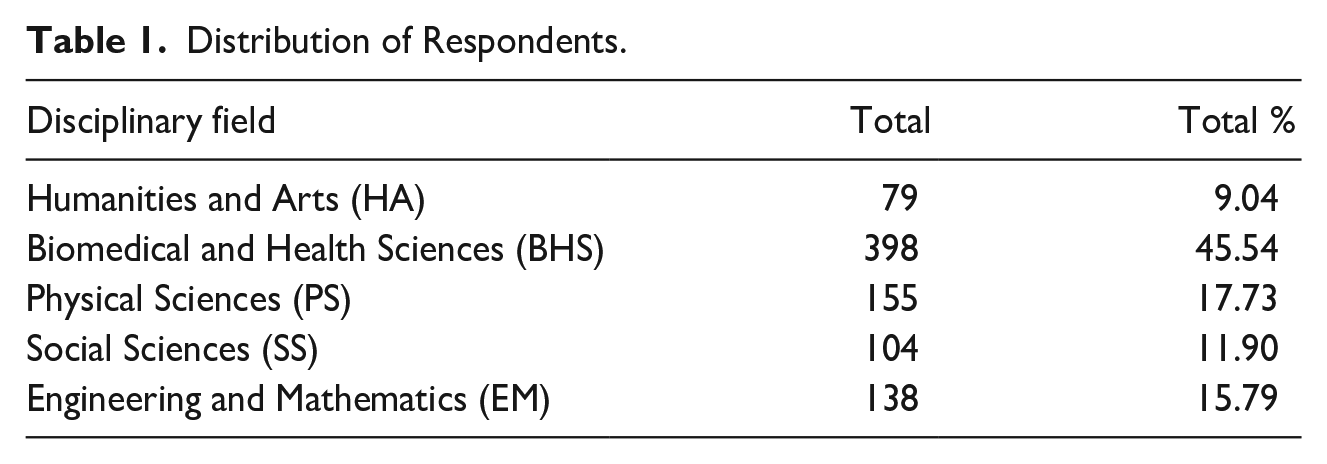
Given the differences in disciplinary ethos reported earlier, we chose “discipline” (i.e., professional culture) as the main variable for stratifying the population. Accordingly, we grouped the participants into 5 broad disciplinary fields: Humanities and Arts (HA), Social Sciences (SS), Engineering and Mathematics (EM), Physical Sciences (PS), and Biomedical and Health Sciences (BHS) in order to identify common trends as well as differences in our target population. Table 1 shows the distribution of respondents by disciplinary field.
Distribution of Respondents.
The survey design was based on theoretical constructs drawn mainly from genre theory, with additional insights from activity theory, genre, and socioliteracy and situated literacy studies. The survey consisted of three sections that we cross-referenced with the research questions. The first section aimed to inquire about digitally mediated literate activity and also included items to identify possible contextual influences or contextual impacts. The second section sought to map the genres the respondents relied on to carry out this activity. The third section aimed to identify what digital mediational tools (computers, software, apps, and Internet resources) supported the production, distribution, and dissemination of genred texts. The survey included a total of 58 behavioral and attitudinal items that were specifically related to socioliterate activity. Orality and multimodality practices, which we also surveyed, fall outside the scope of this study and will be addressed in future research. The survey received approval from an ethics committee (Nª refª.: RAT 2023-183).
Responses were collected using an online Google form. The link to the survey was sent via email to each individual scientist. Their contact emails were available in the open database of AMIT’s website. The questionnaire remained open for 3 weeks. The response rate, 874 responses (24.56% of the total population contacted), was considered representative with an acceptable margin of error of ±3%. We ran descriptive and inferential statistics (with SPSS 13.0.0) for answering the research questions and for assessing the practical implications of the findings. For the questions that took qualitative values, the Pearson’s chi-square test and Yates’s correction or Fisher’s exact test were applied when chi-square tests were not applicable. Those with ordinal quantitative variables, that is, with values ranging from 1 to 5 (1 being not important and 5 being extremely important), were compared across the disciplinary fields. For the quantitative values, we used the nonparametric Kruskal-Wallis test, which does not rely on any assumptions about the distribution of the data. In those cases in which the test was significant, we conducted multiple comparisons between groups to determine which were significantly different from each other. The statistics were tested at a significance level of ≤0.05 (95% confidence level).
For the interpretation of the findings we used genre theory and we also borrowed insights from activity theory, studies of communicative practices in organizations, and writing and socioliteracy studies. Genre theory, particularly Bhatia’s (2004) work, helped to find structure in the data and to frame the interpretation of patterns of difference, absence, and similarity in the range of genres deployed by the respondents in their professional community. The interpretation of collaborative patterns was based on Yates and Orlikowski’s (1992) claim that with new electronic media, “key dimensions of collaborative work have all shifted . . . encouraging different types of social interaction” (p. 14). Genre systems theory enabled us both to gain insight into how texts and textual practices are organized (Bazerman, 1994, 2004, 2015) and to develop a more nuanced interpretation of “the sequence and timeliness of text production within the context of the distributed work of the entire activity system” (Andersen et al., 2014, p. 307). As the study was concerned with digital transformation, it seemed appropriate to consider Finnemann’s (2016) framework, which characterizes digital materials according to “their particular configurations of hypertext features” (p. 6). This framework facilitated the discussion of the digital genres that underpin emerging forms of science communication online. In particular, it enabled us to understand the role of networked digital media in discourse practices and, ensuing from this, to assess the pedagogical implications of these genres, which are harnessed by their multiple source knowledge system configurations.
Results
In this section, we use descriptive and inferential statistical findings to explain the respondents’ varying levels of engagement in different digitally mediated activities and the predominant supporting socioliterate activity identified in the survey. Furthermore, we report on discrepancies between the respondents’ perceptions of dominant discursive practices in their current workplace research policies and their own interests and values for particular digitally mediated discursive practices. We also present findings on the extent to which respondents utilize specific digital mediational tools and resources when engaging in digitally mediated activity.
Technology-Mediated Activities
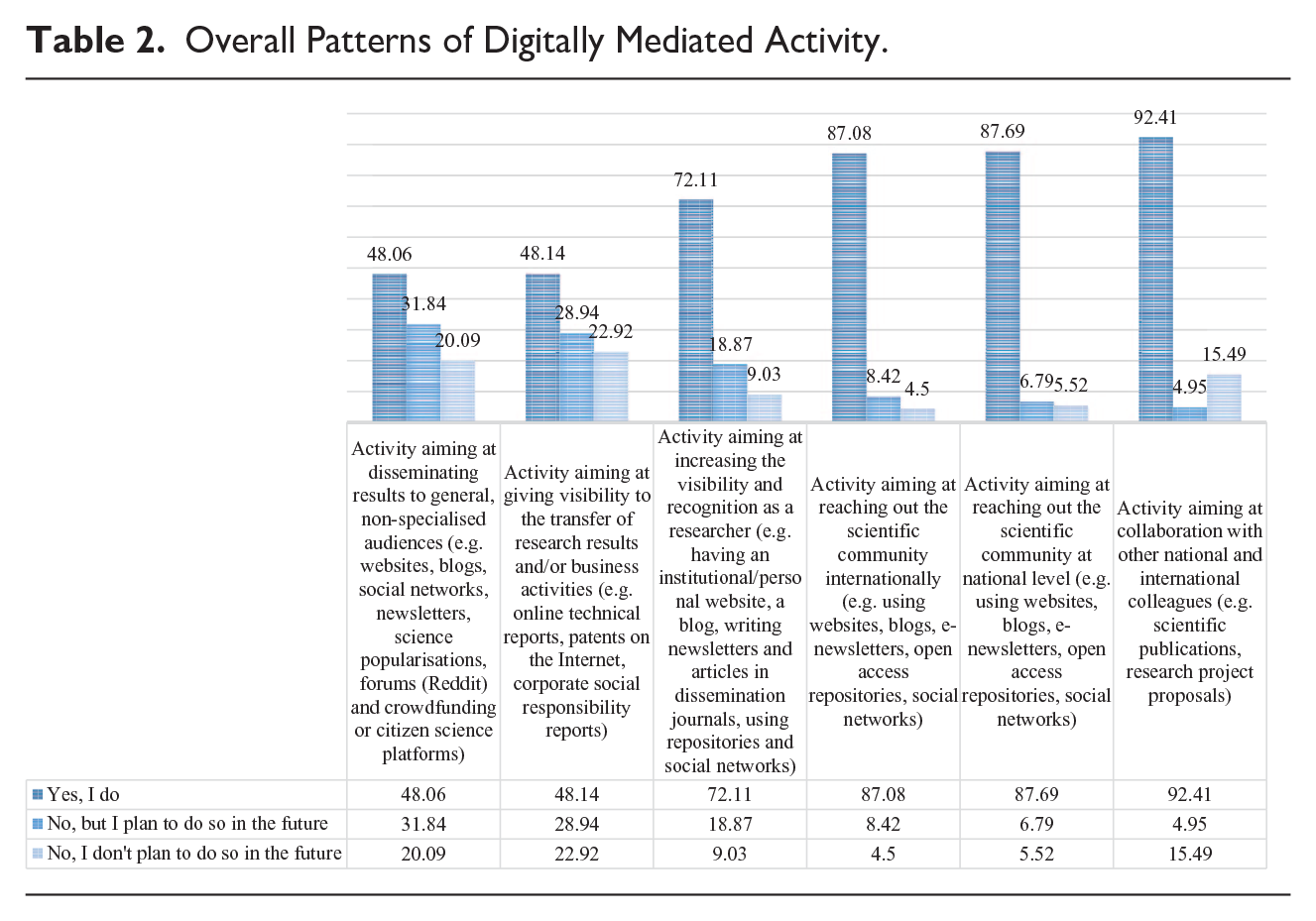
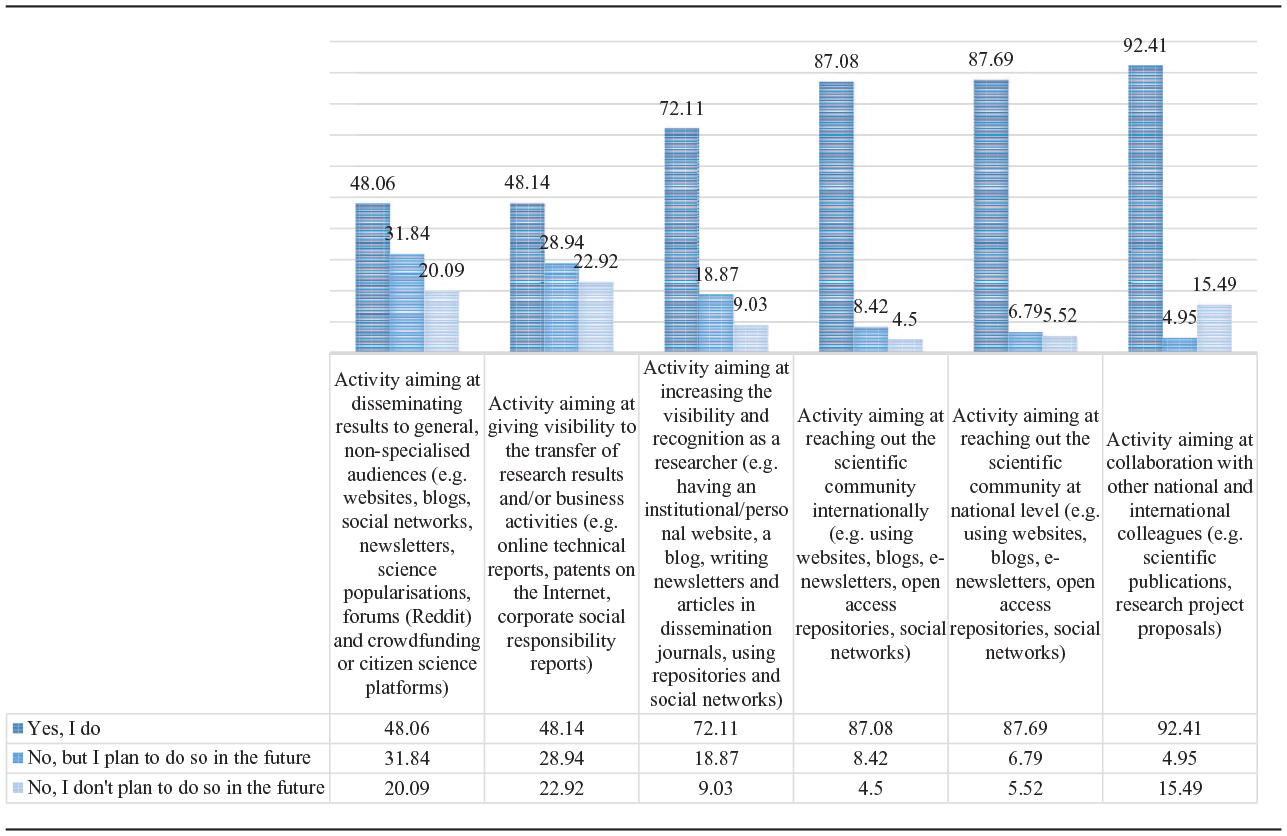
The survey responses showed that written practices primarily rely on the Internet and digital media, yet some activities are more common than others. As shown in Table 2, almost all the respondents (92.41%) are involved in digitally mediated collaborative activity with national and international colleagues (e.g., scientific publications, research project proposals) and in activities aimed at reaching out to the national and international community (e.g., personal/institutional/group websites, blogs, e-newsletters). Activity related to knowledge dissemination involves the use of academic social networking sites (e.g., Academia.edu, ResearchGate) and online data-sharing repositories (e.g., GitHub) (87.69% and 87.08% of the respondents, respectively) (Table 2). Approximately 75% of the respondents also use social media microblogs to increase their visibility as researchers and for research outreach. However, activity aimed at giving visibility to research results (e.g., social responsibility reports), as well as activity related to reaching broad audiences (e.g., use of research group websites), were (much) less prevalent.
Overall Patterns of Digitally Mediated Activity.
Discipline-specific differences were found in activities aimed at gaining visibility and recognition as a researcher and in communicative practices aimed at reaching the international scientific community (Supplementary Table S1). While the HA group shows a high level of engagement in activities aimed at gaining visibility and recognition, the EM group is associated with planning to do so in the future and the BHS group with not planning to do so in the future (p = 0.035). It was also statistically significant that the SS group plans to participate in activities to reach out to the international scientific community in the future (p = 0.002).
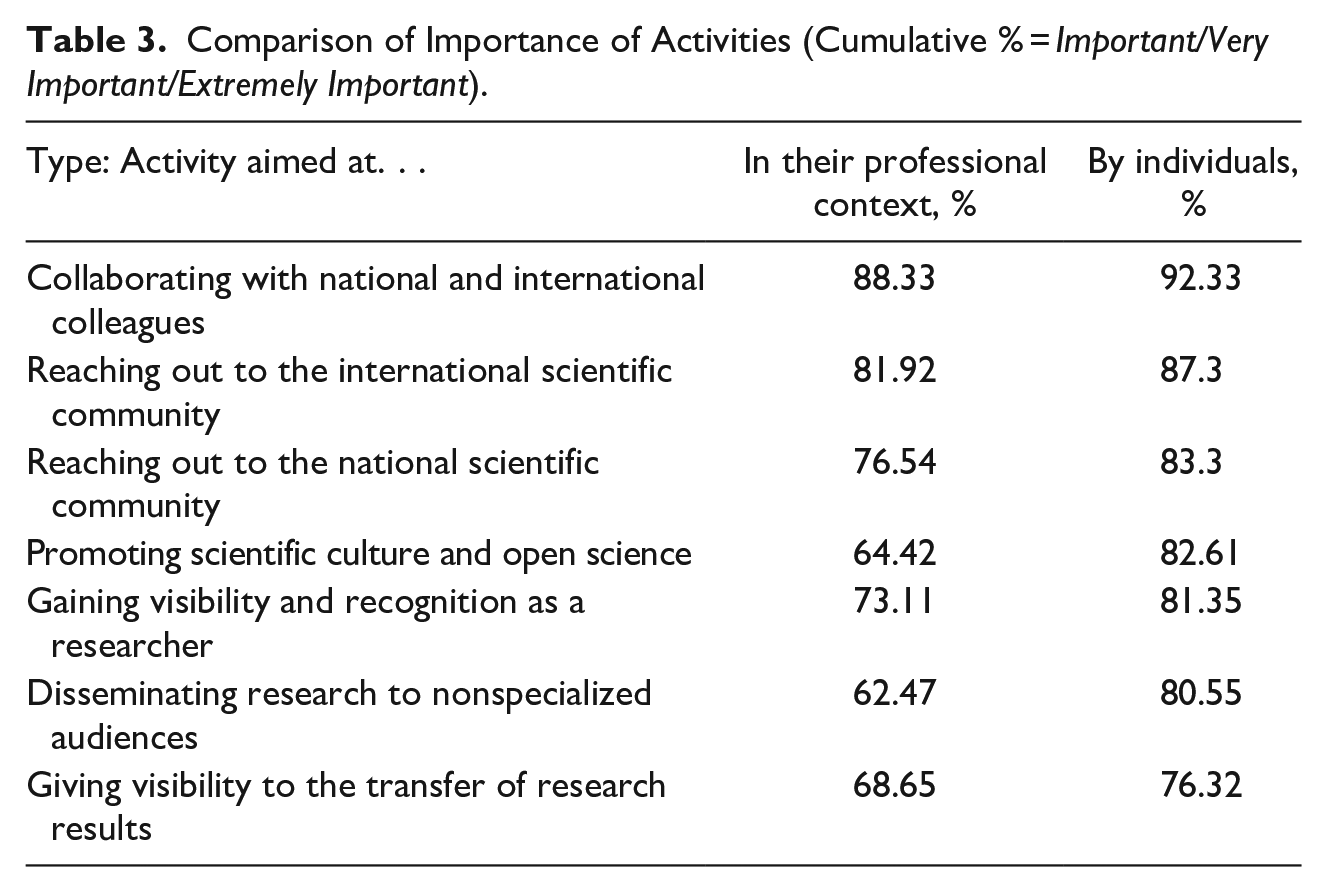
Interestingly, the data showed that the respondents’ involvement in the aforementioned actions appears to be influenced by the level of importance attached to them in the scientists’ professional contexts. According to respondents, two activity types are particularly highly valued (rated important/very important/extremely important) (Table 3). First are those activities associated with traditional genres that are now remediated or moved to online environments (e.g., online scientific publications, technical reports, and research proposals). Second are those activities aimed at sharing and promoting research and at reaching out to the national and international scientific community (e.g., having personal/research websites, blogs, e-newsletters, academic social networks, and data-sharing repositories). Noticeably, while these two activities are particularly highly valued, the respondents reported that other activities related to science dissemination that aims to reach non-specialized audiences were also relatively important in their professional contexts. While these activities scored low in terms of level of involvement, they were perceived as generally valuable within the discipline and even more valuable by the respondents themselves.
Comparison of Importance of Activities (Cumulative % = Important/Very Important/Extremely Important).
The marked disciplinary differences found indicate that the importance given to the above activities may influence the extent to which respondents participate in certain digitally mediated activities. Biomedical and Health Sciences (BHS) were most distinct in this respect (Supplementary Table S2). Specifically, socioliterate activity aimed at reaching out to the scientific community and activity aimed at collaborating with national and international colleagues were perceived as more highly valued in the BHS group’s professional context than in the Social Sciences (SS) group (with p values of 0.014 and 0.005, respectively). Activity for disseminating research results to a broad audience, and activities for promoting scientific culture and open science were also considered of greater importance in the BHS group’s professional context compared to the Engineering and Mathematics (EM) group (p values of 0.001 and 0.012, respectively). Furthermore, activity aimed at giving visibility to the transfer of research results were perceived as more important in the BHS group than in that of the Humanities and Arts (HA) group (p = 0.002). The comparison of the SS and Physical Sciences (PS) groups showed significance at the level of 0.005 for the same activity type.
Statistical significance was also found in the perceived importance that the individuals of each disciplinary group attach to digitally mediated activity aimed at reaching the national scientific community and activity aimed at collaborating with national and international colleagues (Supplementary Table S3). While both communication processes were considered to be important by approximately 90% of all respondents, the p values showed that, compared to the other disciplinary groups, the HA group attached greater importance to activity aimed at reaching out the national scientific community and that the PS group attached greater importance to activity aimed at collaborating with national/international colleagues than the SS group.
Centrality of Genres
Figure 1 shows that the most central genre for the survey respondents was the research article. The majority (95.33%) of respondents reported writing research articles for open access journals and 75.86% reported writing science popularization for online journals. Less common genres were press releases for e-bulletins and e-newsletters (62.59%), and research transfer–related documentation (62.01%), personal/group/institutional websites and research-related blogs (56.06%), infographics (44.62%), and social media posts (41.08%). Similarly, as also shown in Figure 1, online crowdfunding proposals and citizen science projects were, by far, the least common genres (i.e., rated as unimportant), suggesting very little contextual impact of the kind of participatory science activity advocated by the open science movement.
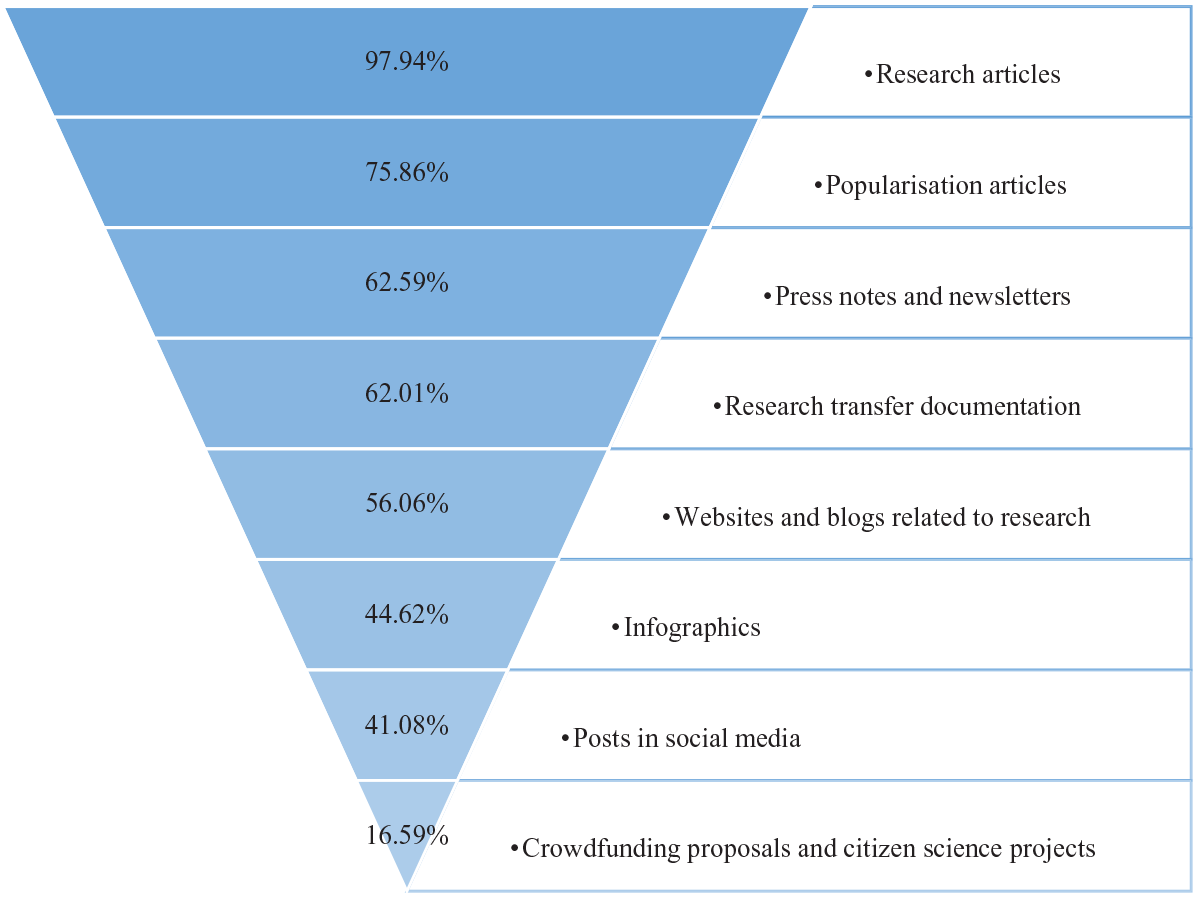
Centrality of written genres.
Interestingly, the findings seem to reflect the divide between the STEM and non-STEM fields in terms of collaborative behavior, with each group approaching communicative practices in a distinct manner—either collaboratively, individually, or both (Supplementary Table S4). While the EM, PS, and BHS groups collectively author articles for open access journals and science popularization articles, the SS group does this both individually and in collaboration (p < 0.001). Furthermore, the three groups’ responses showed that they create content for websites/blogs collaboratively, whereas the HA group does this individually or collaboratively (p = 0.034). It was also statistically significant that the EM and PS groups engage in microblogging collaboratively, while the HA and BHS groups do so individually and the SS group both individually and collectively (p = 0.024). The BHS group was statistically more likely to write press releases individually (p = 0.015). However, there were also statistical differences in writing documentation, with the EM group writing collaboratively, the HA group writing individually and the BHS group writing in both manners (p < 0.001).
Table 4 compares the respondents’ perceived importance of these genres in their professional context with their own perceptions of them. Not unexpectedly, articles in open access journals receive the highest level of importance (95.19%, of which 87.07% are very or extremely important responses). In contrast, other written genres are considered less important, for example, transfer-related documents (67.39%), microblogs (62.93%), e-bulletins and e-newsletters (61.90%), science popularization articles (61.30%), and websites and blogs (51.26%). As also seen in Table 4, regardless of their disciplinary group, the respondents personally very highly value the same core group of academic genres, namely, articles in open access journals, articles in science popularization journals, e-press releases, and research transfer–related documents. However, there appears to be a slight discrepancy between the importance placed on genres that enable research outreach (e.g., infographics, Twitter threads, and online crowdfunding and citizen science projects) in their professional context and the importance the respondents attached to them.
Comparison of Level of Importance of Genres (Cumulative %=Important/Very Important/Extremely Important).
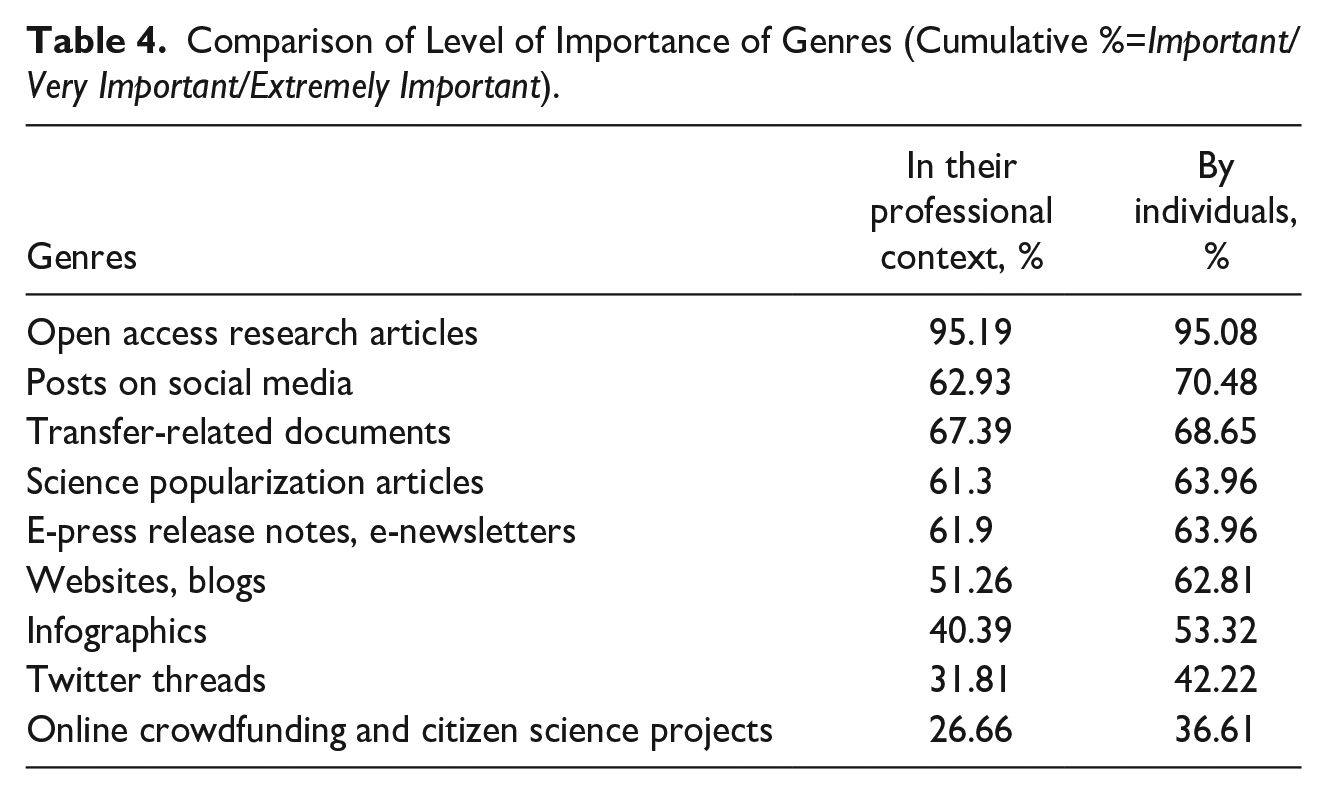
The statistical analyses confirmed that disciplinary culture is a factor in determining the importance of professional genres. According to the multiple comparisons, the professional context of the BHS group placed greater importance on open access journal articles than the EM and SS groups (with p values of 0.045 and 0.019, respectively) and greater value to e-press release notes and newsletters than the HA, EM, and SS groups (with p values of 0.004, 0.001, and <0.001, respectively) (Supplementary Table S5). Moreover, the BHS respondents place more importance on crowdfunding and CS projects online when compared to the HA, EM, and PS respondents (p values of 0.006, 0.005, and <0.001, respectively). Infographics are also more important in the professional context of the BHS group when compared to that of the PS group (p = 0.012), and blogging is significantly more important than in the PS context (p = 0.001). There was also statistical significance when comparing the HA and EM professional context, the former giving more importance to science popularization journals (p = 0.042).
Finally, “discipline” was once again a key factor in determining the importance the respondents attached to the genres mentioned above (Supplementary Table S6). Compared with the HA, EM, and PS groups, the BHS group showed greater interest in crowdfunding and citizen science projects (the difference being significant at the p levels of 0.005, 0.004, and <0.001, respectively). This group also placed more importance on microblogging than the EM group (p = 0.010) and on infographics compared with the PS group (p = 0.010). On the other hand, the HA group gave more importance to microblogging and to research webpages and blogs than the EM group (as shown by p values of 0.022 and 0.016, respectively).
Digital Mediational Tools
As shown in Table 5, it was clear that digital tools and Internet resources support socioliterate activity related to professional (expert-to-expert) scientific communication in several ways: 82.3% of the respondents use online writing tools, dictionaries, and translation tools; 77.63% use collaborative spaces; and 73.74% use data collection tools. All these tools are in line with their main socioliterate activity: namely publishing, promoting and giving visibility to their research, as well as maintaining research collaboration with national and international peers. Moreover, the cumulative percentages, when grouping Yes and No, but I am considering it in the future responses, further indicate their current use and expected future use of platforms for open peer review platforms (75.13%) and content editing tools (61.45%). Finally, while 35% of them are already using AI tools for content generation, 40.97% are considering using them in the future.
Digital Tools Mediating Professional (Expert-to-Expert) Science Communication.
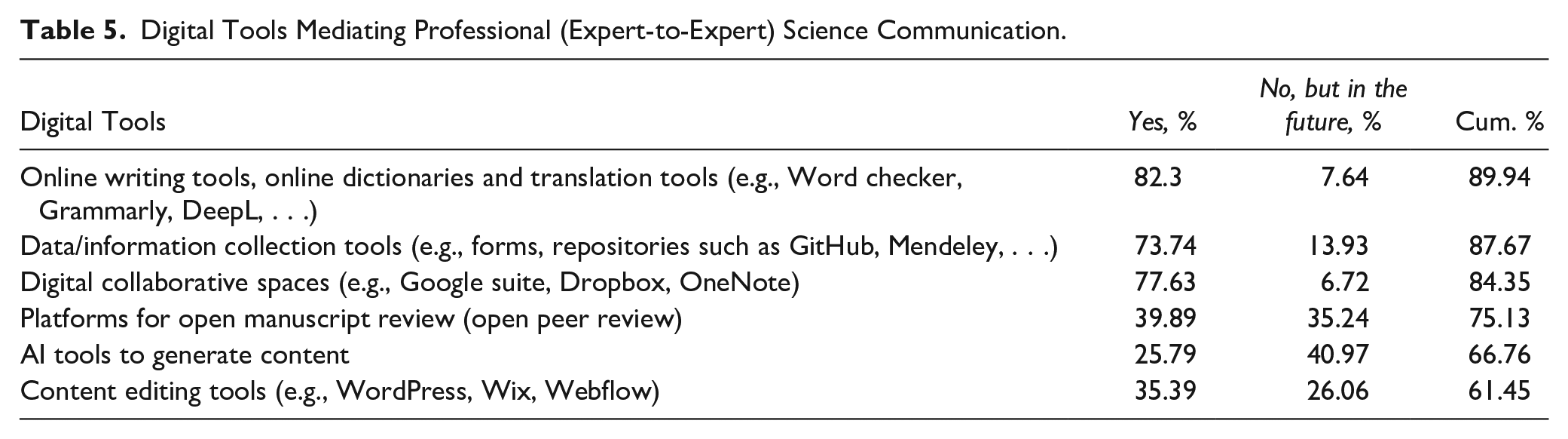
When comparing the disciplinary groups, no significant differences were found in the use of online writing tools, collaborative spaces, and open manuscript review platforms (Supplementary Table S7). However, there were differences in the use of data/information collection tools (p = 0.031), with the EM group using them, the BHS planning to use them in the future, and the HA group showing mixed responses (associated with both the item No, but I plan to use them in the future and the item I don’t plan to use them in the future). The use of content editing tools was also significantly different (p < 0.001). The HA group uses them, the PS group plans to use them in the future and the SS group shows mixed responses (showing significant associations with the items Yes and No, but I plan to use them in the future). The EM, PS, and BHS groups are significantly associated with not planning to use them in the future. The use of AI tools for content creation also differed significantly between the EM and SS groups. Additionally, AI tools for content creation also showed significance differences with a p value of 0.002. Only the EM and SS groups were significantly associated with the use of AI, in contrast to the HA group, which showed significance in the item I do not plan to do so in the future. The PS, BHS, and SS groups showed a significant association with planning to use them in the future.
Turning to the use of digital tools for producing, distributing, and disseminating science to broad audiences, consistent with the centrality of activity types and genres reported previously, the overall percentages of use of these tools were lower. Table 6 shows that nearly 70% use online writing tools (67.03%), yet not even half of them use digital collaborative spaces (42.28%), data/information collection tools (41.14%), and content editing tools (37.93%). Clearly, AI content-generating tools and e-platforms are rarely used to compose crowdfunding proposals and citizen science projects, nor are digital tools much used to adapt scientific content for lay audiences, which has important implications for researchers’ training in participatory science.
Digital Tools Mediating Public Science Communication.
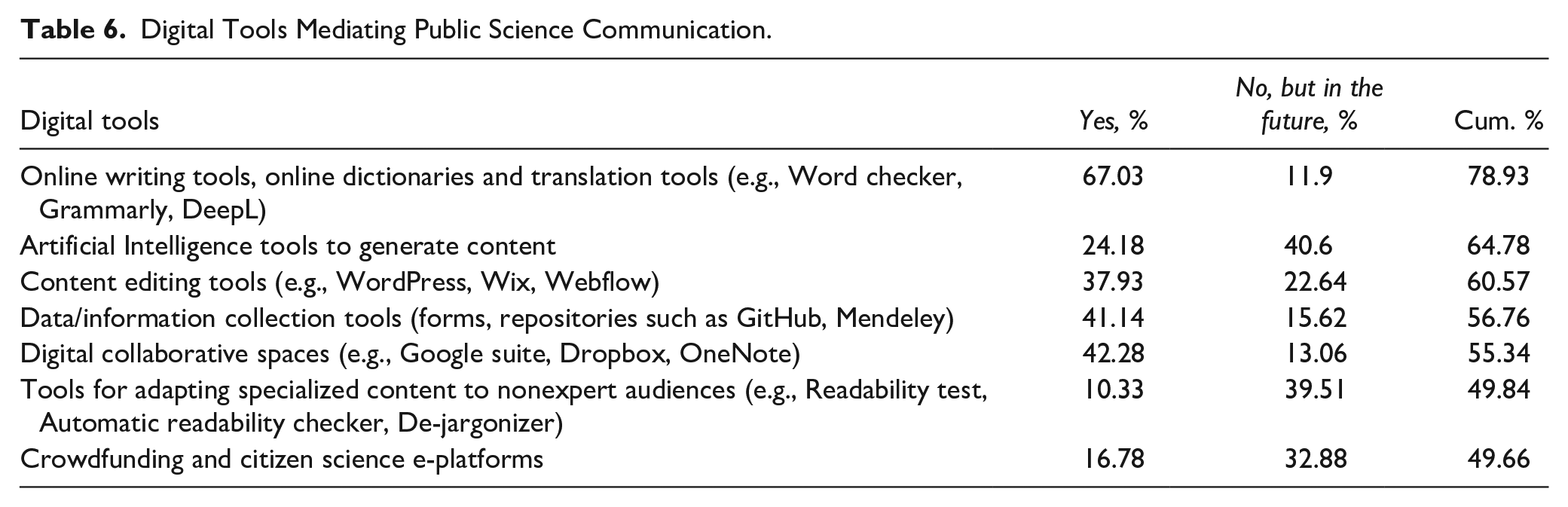
While no statistical differences were found in the use of collaborative spaces, online writing tools, and tools for adapting specialized content to nonexpert audiences, the disciplinary groups differed significantly regarding some other digital tools (Supplementary Table S8). The EM group was associated with using data/information collection tools unlike the PS and BHS groups, which reported having no plans to use them in the future. And, like the SS group, the HA group showed a significant association with planning to use data/information collection tools in the future. Content editing tools also showed significant associations (p = 0.037). The use of these tools was associated with the HA, SS, and PS groups, but not with the EM and BHS groups, which were significantly associated with the item Not planning to use them in the future. The BHS group showed significance in the item I’m planning to use them in the future, suggesting different dynamics in this particular group. Finally, only the BHS group was associated with the use of crowdfunding and citizen science e-platforms, and this group and the SS group showed an association with using them in the future. AI tools to generate content were significantly associated with the EM and SS groups. In contrast, the HA was associated with not planning to use them in the future responses while the PS group showed mixed behavior (associated with both not planning to use them in the future and planning to use them in the future).
Discussion
The aim of this article was to examine women scientists’ socioliterate activity across disciplines in order to learn about their digitally mediated discourse practices and to better understand the processes of production, circulation, and dissemination of scientific knowledge in relation to digital technologies. Thus far, we have argued that digital transformation has influenced socioliterate activity, that writing traditional genres (now moved to web environments) is the dominant discourse practice compared to other forms of science communication on the Internet, and that digital mediational tools mainly support professional (expert-to-expert) over public communication of science online. Below we discuss these three points as well as implications for writing instruction.
Digitally Based Socioliterate Activity
Genre theory and activity theory claim that texts are tools for carrying out an activity, and that genres, as semiotic tools, vary according to the communicative goals they are intended to achieve (Bhatia, 2004; Russell, 1997). Activity theory also claims that change results from historically situated human interactions (Russell, 1997). In this article, we provide evidence to support these claims. Findings from our cross-sectional study have shown that the main activity the respondents engaged in irrespective of their disciplinary fields was publishing articles in open access journals. Additionally, we found that almost all the respondents used academic social networking sites and social media for online networking, from which we can assume that by sharing their research results with other peers they aim to ensure their visibility as researchers and increase their research impact.
Although the findings indicated that the respondents’ socioliterate activity was digitally supported, our statistical analysis showed this finding was not equally so in all the disciplinary groups. The data, in fact, showed a range of disciplinary differences in interactions, publication strategies, data sharing practices, and communication approaches, including those that extend beyond the scientific community. Following Becher and Trowler (2001, p. 36), the disciplinary ethos of the “hard sciences” (here, the PS group) is concerned with universals and seeking consensus over the questions addressed, which may explain its involvement in international collaboration. Knowledge of the “soft sciences” (here, the SS group), concerned with situated knowledge and enhancing professional practice, may account for the more locally focused activity found in this group. Humanities knowledge, personal, value-laden and concerned with details, may be the reason why the HA respondents were more likely to engage in activity aimed at gaining visibility and recognition, in contrast to the EM respondents, whose disciplinary ethos is said to be more purposeful and pragmatic. The fact that the BHS group had the highest percentages of participation in activities with direct social impact and showed interest in engaging in them in the future may be due to their distinct object of enquiry.
Bhatia (2004) argues that investigating the particular goals and objectives of a professional culture offers insights on the genres and discursive processes deployed in such culture. In this study, genre-mediated socioliterate activity proves to be influenced by the goals and objectives of the scientists’ professional cultures. In all the disciplinary groups, activity related to international collaboration was ranked at the top of the list, along with activity related to research productivity and research outreach, both of them valuable bibliometric indicators (Thelwall, Bailey, Makita, et al., 2019; Thelwall, Bailey, Tobin, & Bradshaw, 2019). Activities aiming at research dissemination, as well as activity aiming to increase researchers’ recognition, were also highly valued, from which we can infer that engagement with productivity-related genres, namely journal articles, aligns with the goals and objectives of the respondents’ professional context. The only exception to our finding was the BHS field, which also valued highly genre-based activity supporting science dissemination to broad audiences and participatory science genres, all of them aligned with the social exigence of democratizing science (Mehlenbacher, 2019).
A clear mismatch was found between the social interactions or types of activities that the respondents actually engage in and the value they place on them. They engaged in those digitally mediated writing activities that were highly valued in their professional context, namely, activities that were centered on national and international networking and underpinned various professional goals such as knowledge sharing and citational impact. In addition, they also valued highly certain activities in which they participated much less frequently, specifically research outreach activities to give visibility to their work and to promote scientific literacy. It can then be inferred that while the scientists may be aligning with the open access organizational requirements, they are also sensitive to socially responsible research advocated by the open science agenda (Bartling & Friesike, 2014). One point should be made here, though. While the majority of the BHS scientists participated in these activities or expressed willingness to do so in the future, the respondents representing the other disciplinary fields did not. As this was a discipline-specific statistically significant difference, future research needs to explore scientists’ perceptions and attitudes toward socially responsible research activities, paying particular attention to the variable “professional culture.”
An important limitation of this study is that we do not know from the data the extent to which these patterns of activity are gendered as the population that we surveyed was not stratified accordingly (i.e., men/women). In future research, it would be important to address gendered differences by statistically controlling this demographic variable. It is also important to acknowledge that the information available in the AMIT database does not allow us to determine whether the individuals have lower expectations because of gender discrimination. The scope of their responses is also somewhat limited as they reflect the respondents’ perceptions, values, personal backgrounds and life experiences, which may affect the survey results. Notwithstanding these limitations, the findings are generalizable insofar as the AMIT database includes women scientists from a range of professional contexts, both geographically and organizationally. These women scientists belong to a variety of organizations, including public and private universities, industry, and the R&D sector. In order to enhance the generalizability of the findings, we propose qualitative follow-up interviews with the scientists. These interviews could provide more in-depth insights into the value of the activities and the writing practices they engage in within their disciplinary contexts.
Genre Dynamics
In this article we support the view of activity systems as complex dynamic systems influenced by historical changes (Russell, 1997, p. 512). Specifically, we have shown that the women scientists that responded to the survey were increasingly engaging in digitally mediated activity enacted by a system of genres. Typified texts (Bazerman, 1994) support organizational processes within and outside the workplace, in this case activity aiming at national/international collaboration and research dissemination. Journal articles, science popularization articles and blogs, among others, written collaboratively in some disciplines (e.g., the EM and PS groups), represent what Yates et al. (1997) conceptualize as collaborative genres of writing. They require social interaction between individuals and the use of digital technological tools mediating such interaction. This study unveiled that they write and publish in open access, share research data and results online and disseminate science through e-newsletters, press releases, blogs and microblogs. In addition, online collaborative spaces, data-sharing repositories, content editors, and social networking sites were the main mediational tools. These digitally mediated communication practices could ecologically connect genres to other genres online, allowing us to further map genre systems and “the sequence and timeliness of text production within the accomplishment of the distributed work of the entire activity system” (Andersen et al., 2014, p. 307). For instance, online articles could be connected to electronic laboratory notebooks (Kwok, 2018), registered reports (Mehlenbacher, 2019), data articles (Pérez-Llantada, 2022), and open peer reviews (Breeze, 2019), as these genres are of growing interest to the scientific community in order to align with the required transparency of scientific processes and science reproducibility principles of open science.
It is worth noting out that the genres requiring collaborative writing were discipline-specific. It was statistically significant that professional cultures, as conceptualized by Bhatia (2004), influence communication practices in a number of ways. Although the genre repertoires identified in each disciplinary context did not show much variation across the disciplinary groups, collaborative behavior in the production of articles and popularizations, research group blogging and microblogging, and research transfer documentation was mainly associated with the STEM fields, specifically the EM and PS groups. In contrast, there was a significant association with the BHS group for single-authored practices, such as writing press releases and commenting on microblogs. These differences, supported by the statistical analyses, have important implications for understanding the communicative purposes these collaborative genres serve and the audiences they intend to reach. These genres promote research internationally and give researchers visibility and recognition (Hyland, 2018; Luzón, 2017). Compared with collaborative practices, individual practices and, perhaps, more national/domestic collaborations in the BHS and especially in the HA and SE groups explain the interest in activities aimed at gaining visibility and international recognition. They could lead to differences in productivity and lower citation impact (Clemente-Gallardo et al., 2019). Other variants (e.g., publishing articles in paywall journals vs open access publishing) or even access to technologies may also negatively affect researchers’ productivity and citation count, as Santoro Lamelas and Belli (2018) point out.
Thibault et al. (2023) argue that open science practices necessitate a reorganization of scientific work. Given the hierarchy of genres found in this study, it can be inferred that the scientists are aligning their work with open access mandates, supported by digital tools and Internet resources. The fact that they attached great importance to activities related to socially responsible research, which is fundamental in open science (Bartling & Friesike, 2014), needs to be further explored in future research. The strong associations with traditional (now remediated) written genres (articles and abstracts to be published in open access journals) suggest that these key genres create systems of intertextually linked documents, as argued by Bazerman (1994) in the case of patents. Here, then, it can be argued that a journal article can be intertextually linked to other texts such as a research project proposal or a grant application, whether they are written sequentially or concurrently. The content of an article can also be repurposed in the form of a popularization article, a blog/microblog post, or a research transfer-related document. Our respondents used these latter genres relatively frequently.
Andersen et al. (2014, p. 319) explain that mapping patterns of genre systems allows us to better understand genres as part of the larger social and communicative systems that distribute the work of a given activity system. In light of the findings, it is unsurprising that our women respondents’ main discourse practices were inextricably linked to journal article writing, which they held to be very/extremely important both professionally and personally. In other words, the larger social system establishes a hierarchy of genred texts that is aligned with social motives: specifically, the existing agendas mostly centered on research productivity, promotion, and impact. Then, as Loroño-Leturiondo and Davies (2018) argue, the very occasional production of genred texts related to public communication of science would require pedagogical intervention. Online participatory science genres are worth discussing here in relation to socially responsible research, as they have important pedagogical potential insofar as they involve multiple source knowledge systems. Finnemann (2016) posits that genres involving complex configurations of hypertext features act as multiple source knowledge systems that enable interaction and interactivity. The hypertext configurations of online crowdfunding proposals and citizen science projects include multimodal affordances (e.g., images, embedded videos, tables, graphs), an online discussion board and interactivity tools for citizens. They also integrate hyperlinks to social media for wider dissemination and outreach, widely used in participatory science. The survey results showed that these genres, both of which are multiple source knowledge systems genres, were not very popular, a trend that was consistent across the disciplines. With a few exceptions, the survey consistently showed low participation in genres that target broad publics. Future research would need to explore these findings further, as they may echo claims made by webometric studies reporting lower engagement with these types of genres. Following Meibauer et al. (2023), further investigation of these issues is also important as it may help to clarify why women scientists in certain fields have lower social media visibility and why their published work has lower altmetric impact.
Writing Development
This study provides empirical evidence that today’s digital transformation introduces new discourse practices based on digitally mediated genres and digital tools and resources. The survey results confirmed that these scientists’ primary socioliterate activity, and the one that was most highly valued both personally and institutionally, was writing scientific articles. Hence, the tools and resources assisting the process of writing scientific articles were consistently related to aspects of text production (language and style correction tools) for greater efficiency. They also revealed that other valued activities were those that served to promote and disseminate their published articles widely, namely, resources such as open access repositories and academic social networking sites for greater visibility and impact. Promoting and disseminating research was also strongly reflected in other key activity types and forms of writing that our women respondents engaged in, such as science popularization articles for online journals, e-newsletters, blogs, and microblogs. We then believe that a realistic pedagogical intervention to support writing development should put the focus on those discursive practices and writing resources and tools that can enhance the promotion of research while also encouraging writing beyond expert audiences. This is an important intervention given that the survey revealed that contextual impacts determined the importance of certain communicative practices over others across disciplinary cultures. Using the survey as a needs-analysis tool, we propose below a pedagogical approach that focuses on writing across genres and writing metagenres, in both cases integrating writing development opportunities along with digital skills development.
Instruction focusing on writing across genres can take traditional genres (e.g., articles, abstracts) as a starting point for writing intertextually linked digital genres such as e-newsletters, science popularization articles, blogs or microblogs. Microblogging is a key discursive practice in public science communication (Kjellberg, 2009), yet only half of the respondents in our study engaged in this practice. Input and awareness-raising of processes of content uptake and repurposing (say, using content from an abstract to compose a research blog entry or a post) could elicit greater involvement in this practice. In this article we only looked at writing practices, but writing across digital genres could further familiarize the trainees with processes of semiotic remediation, which are also fundamental to online science communication (Prior & Hengst, 2010). Therefore, it seems appropriate to suggest composing tasks on simple digital genres that combine visual and verbal elements, for example, an infographic based on a previously published work. Although infographics were considered important/very important by half of the respondents, they were significantly important only in the BHS field. Composing tasks could easily integrate collaborative tools, content editing software, and tools and resources for assessing whether the scientific content used in these digital texts is accessible to nonexpert audiences. Significantly, only 10% of the respondents used these digital tools and resources. In this study, the vast majority of the scientists relied on online dictionaries and grammar checkers in the writing processes, with 24% using AI tools. As 40.60% of the respondents would consider using them in the future to communicate science online both to expert audiences and broad publics, writing instruction can provide guidance on the ethical use of AI in the writing process.
Given the institutional demands on research productivity, it was unsurprising that emerging digital genres had only a relative impact on these female scientists’ socioliterate activity. On the other hand, it was not unexpected that, apart from the BHS group, the respondents very rarely engaged in participatory science online (only 15%), despite its potential to enhance citizens’ scientific literacy (Bartling & Friesike, 2014). Writing instruction can then raise awareness of the rhetorical exigences and the standardized discourse features of these genres, paying attention to the adaptation of scientific content to Internet audiences (Orpin, 2019; Wickman & Fitzgerald, 2019). This rhetorical practice is fundamental to public understanding of scientific issues. Learning about tools for self-assessment of plain language use can help scientists to ensure that the science that they communicate is accessible to nonexpert or lay audiences. In addition, the ability to compose participatory genres can raise awareness of digital writing as a form of communication that encompasses not only verbal and multimodal communication but also the deployment of the interactivity and hypertextual affordances of the Internet.
The survey findings accord with earlier views of learning to write across domains by making connections between genres (Lindenman, 2015; Wickman, 2023). Our respondents write for professional and, though to a much lesser extent, for lay audiences. They also engage in a broad spectrum of parascientific genres that lie in between these two domains of language use. We therefore propose that instruction provides input and text-production practice on ways of making metageneric connections. Using Finnemann’s (2016) framework, we would argue that metageneric knowledge of various types of discourses (informational, promotional, and educational), and different forms of communication online (monologic and dialogic) may help scientists learn how to transfer prior genre knowledge to compose genres of different domains, either informational, promotional, or educational (e.g., online lab notes instructions, science blog entries, registered reports, data articles, or social media posts, to name a few). This could widen their discursive skills, allowing for greater versatility in their writing. Wickman (2023) highlights that developing knowledge of metagenres is pedagogically beneficial because it raises awareness of genre stability and flexibility. Lindenman (2015) also underlines that establishing connections between genres enables writers to effectively respond to new rhetorical exigences across language domains. We would further add that instruction focused on metageneric texts enables writers to communicate science online across subdomains, not only professional, expert-to-expert science communication, as was the case for the scientists in this study, but also public communication of science.
The findings revealed significant disparities in the use of digital tools and resources across STEM and non-STEM fields. Digital connectivity is crucial for international scientific collaboration and networking with national and international peers, as noted by Santoro Lamelas and Belli (2018). It leads to increased productivity, an issue in which women scientists appear to be at a disadvantage, according to Abramo et al. (2019). Based on the findings, we recommend instruction focused on the disciplines to better meet the needs of each professional culture. We also advocate for instruction that is inclusive of non-STEM scientists who, as shown in this article, also have a clear role to play in digitally mediated production, circulation, and dissemination of scientific knowledge.
Conclusion
Communicating science to expert and broad audiences using the Internet and social media has become a key societal priority for scientists’ professional development. This is a priority driven by the current agendas of open science and the democratization of science, albeit with varying levels of impact and implementation across academia and the R&D sector in Europe and elsewhere. To support this priority, there is still much to be explored in relation to the complex dynamics of professional communication in the workplace, and how digital technologies serve as mediating tools in writing activities aimed at the expert scientific community to share and exchange scientific knowledge, and at nonspecialist publics with different interests, motivations, and levels of curiosity about science. In this study, we have found evidence of emerging digitally mediated communication dynamics that invite us to critically evaluate contemporary written communication practices and to find solutions to support the development of digital writing, in this particular case to meet the language and communication needs of scientists. These needs are not dissimilar to those of other writing communities, which today also need to develop writing and communication skills across modes and media. Addressing the digital transformation through the development of literacy, along with digital readiness, resilience, and capacity, should trigger our ongoing efforts to find appropriate ways to increase writers’ awareness of digitally mediated writing and, on the practical side, to enhance their experiences of learning to write across genres and digital media.
Supplemental Material
sj-docx-1-wcx-10.1177_07410883251328307 – Supplemental material for Women Scientists’ Digitally Mediated Activity, Genres and Digital Tools: A Cross-sectional Survey Across the Disciplines
Supplemental material, sj-docx-1-wcx-10.1177_07410883251328307 for Women Scientists’ Digitally Mediated Activity, Genres and Digital Tools: A Cross-sectional Survey Across the Disciplines by Carmen Pérez-Llantada, Oana Maria Carciu and Rosana Villares in Written Communication
Footnotes
Data Availability Statement
The research data collected from human subjects are in accordance with the standards and guidelines of the human subjects review board (or equivalent body) at the authors’ home institution (University of Zaragoza) (Nª refª.: RAT 2023-183) and approved by CEIC Aragon on September 6, 2023.
Declaration of Conflicting Interests
The authors declared no potential conflicts of interest with respect to the research, authorship, and/or publication of this article.
Funding
The authors disclosed receipt of the following financial support for the research, authorship, and/or publication of this article: This study was supported by the project Digital Genres and Open Science (PID2019-105655RB-I00 MCIN/AEI 10.13039/501100011033) funded by the Spanish Ministry of Science and Innovation and the Spanish Agency for Research. It is also a contribution to the Erasmus + project Digital Language and Communication Training for EU Scientists (DILAN), co-funded by the European Commission (2022-1-ES01-KA220-HED-000086749). This publication reflects the views only of the authors, and the Commission cannot be held responsible for any use which may be made of the information contained therein.

Supplemental Material
Supplemental material for this article is available online.
Notes
Author Biographies
References
Supplementary Material
Please find the following supplemental material available below.
For Open Access articles published under a Creative Commons License, all supplemental material carries the same license as the article it is associated with.
For non-Open Access articles published, all supplemental material carries a non-exclusive license, and permission requests for re-use of supplemental material or any part of supplemental material shall be sent directly to the copyright owner as specified in the copyright notice associated with the article.
