




Abstract
Social support has a well-documented impact on adolescent educational success. Nonetheless, there has been less focus on the relationship between social supports and educational attainment for Latinas. Using a sample of 138 Hispanic females (ages 25–31) from an ongoing longitudinal National Science Foundation (NSF)-funded study (2004–present), we identified key sources of social support (family, teachers, and peers) and types of social support (emotional, informational, and instrumental) in the educational pipeline of Hispanic females. We also examined the associations between social supports and their educational attainment. Through descriptive analyses, we found that family was perceived to provide the most support followed by peers and teachers in adolescence. Through regression analyses, we found that family support positively predicted their educational attainment. Our findings highlight the importance of family-rendered support for educational attainment while also expanding our understanding of the social support mechanisms for Hispanic females.
Social support, whether it is sources from parents, teachers, or peers, is associated with a variety of psychological and educational outcomes for adolescents (Sapp et al., 2016; Tennant et al., 2015). Empirically supported links between parents’ support and educational and occupational aspirations (Ceja, 2004; Demaray et al., 2005; Flores & O’brien, 2002; Suizzo et al., 2012), teachers’ support and students’ academic emotions, motivation, and achievements (Dicke et al., 2021; Lei et al., 2018), and peer support and psychological well-being and academic engagement (Demaray et al., 2005; Wentzel & Muenks, 2016) are just a few examples.
There is also a growing body of research suggesting that social support might function differentially for different populations (e.g., Jia et al., 2009; Lei et al., 2018) and particularly for girls over time (Lei et al., 2018; Tennant et al., 2015). There is a void, however, in the literature with regard to understanding social support among Hispanic/Latinx 1 populations and Hispanic females, in particular (Gushue, 2006). Hispanic females represent a sizable and growing proportion of the U.S. population with nearly one-quarter of the adolescent female population in the United States (ages 10–24 years) being Hispanic (Jones et al., 2020). Even so, it is estimated that nearly 80% of Hispanic females will not earn a 4-year (Bachelor’s) college degree by the age of 25 (U.S. Bureau of Labor Statistics, Current Population Survey 2020, n.d.). Many of these women will not be able to benefit from the positive economic, social, and health outcomes associated with college completion as they enter adulthood.
Understanding the sources and types of support received is critical to better understanding the factors in Hispanic females’ support systems that facilitate their educational attainment. We must first understand what support is available to them, who provides it, and in what areas in order to advance support-driven initiatives aimed at promoting their educational attainment into adulthood. The purpose of this study is thereby to examine the sources of social support and types of support that Hispanic females reported receiving for their academic plans and how these various supports are related to their educational attainment over time.
Social Support: A Multifaceted Construct
This research is guided by Malecki and Demaray’s (2002) multifaceted social support framework as it pertains to adolescents’ perceptions of the availability of support from others within their immediate social network (e.g., parents, teachers, friends, etc.). Malecki and Demaray’s (2002) framework captures various dimensions of support within an adolescents’ social environment by focusing on four typologies of support: emotional, informational, instrumental, and appraisal. Each type of support reflects a unique set of behaviors that can influence youth’s attitudes and actions. Amongst them, the three supports most frequently examined are: emotional (e.g., caring, trust, empathy, emotional closeness, encouragement), informational (e.g., advice, answering questions, providing information), and instrumental (e.g., the provision of material resources, such as money, or time).
Recent research suggests that social support is particularly meaningful for girls over time (Lei et al., 2018; Tennant et al., 2015). Lei et al.’s (2018) meta-analytic work, for instance, found teacher support and negative emotions to be more strongly correlated for girls than boys. In another study, Helsen et al. (2000) found that girls particularly benefited from perceived parental support when faced with emotional problems such as stress. Tennant et al. (2015) also found that emotional and informational support was correlated to academic achievement (i.e., reading and math scores) only for girls. These findings suggest that different types of support and supportive relationships, such as feeling cared for and valued by friends and family, receiving advice on college applications or money for tuition and books, might differentially matter for females.
Importance of Social Support for Hispanic Females
The educational advantage achieved by Hispanic women in comparison to their male counterparts is well documented and scholars suggest that their interpersonal interaction with significant others may be a key to their success (Feliciano, 2012; Feliciano & Rumbaut, 2005; Riegle-Crumb, 2010). While research indicates that support from family, teachers, and peers all play a role in the educational and career outcomes of Hispanic youth, research is less clear about how different sources and types of support may be especially important for females and these outcomes. We briefly review some of the literature on the links between sources of support, types of support, and Hispanic youths’ academic and career development next.
Family
Scholars have been interested in the family unit as a source of support for Hispanic youth for some time and examples of family-rendered support vary by type and source. For instance, interviews with adolescent females yield anecdotes of parents’ encouragement, discussing and searching for colleges, and securing resources such as reading materials (Sapp et al., 2016). Ceja’s (2004) interview work documented how adolescent females’ academic performance and educational aspirations were influenced by their parents’ communication about the importance of academics, going to college, and having a good career. In another case study, parental and family encouragements, as well as material support from parents, were found to be important factors in adolescent female persistence (Koch et al., 2019). C. R. Martinez et al.’s (2004) survey study documented a positive link between parents’ encouragement of academic skills (e.g., rewarding good grades) and students’ (grades 6–12) homework completion, as well as an indirect link with academic performance. Academic aspirations of adolescents (ages 14–20) have also been linked to their parents’ emotional and informational support (Plunkett & Bamaca-Gomez, 2003). Parents’ encouragement was found to be a key determinant of undergraduate academic success in a qualitative study with undergraduates, with parents supporting their educational aspirations and school attendance, as well as providing emotional and informational support in major selection and career planning (Sánchez et al., 2006). Their older siblings supported them in completing their coursework and enrolling in and graduating from college (Sánchez et al., 2006).
Teachers
Another significant source of social support for students’ academic development is teacher-provided social support, which has been found to influence a number of important outcomes for Hispanic youths (e.g., achievement and achievement motivation). Teachers, for example, are identified as important sources of informational, instrumental, and emotional supports in interviews and case studies with Hispanic youths (Koch et al., 2019; E. Martinez & Castellanos, 2018; Sapp et al., 2016). Teacher support was consistently regarded as significant for college preparation amongst middle school males (E. Martinez & Castellanos, 2018).
In terms of youths’ academic development, a number of studies using ethnically diverse samples, including Hispanic students, found positive associations between teacher emotional support and students’ grades and standardized achievement scores (Crosnoe et al., 2004; Muller, 2001; Murray, 2009; M. R. Reyes et al., 2012; Riconscente, 2014). Interestingly, Crosnoe et al. (2004) observed that the association of teacher emotional support with students’ grades was stronger for Hispanic females than for White females. Tennant et al. (2015) found important gender differences of the impact of teacher social support on student achievement in an ethnically diverse sample (20% Hispanic): Teacher emotional support predicted males’ and females’ grades, but only for females did teacher emotional, informational, and instrumental support predict their standardized achievement scores. A positive link between teachers’ emotional support and Hispanic students’ engagement in middle (Brewster & Bowen, 2004; Garcia-Reid et al., 2005; Kiefer et al., 2015; Murray, 2009) and high school (Brewster & Bowen, 2004; Riconscente, 2014) is also supported. Hispanic youths’ achievement motivations, which predict academic performance and persistence and college eligibility (e.g., Safavian, 2019), have also been linked to teacher-rendered support. For example, students who perceive their teacher to be emotionally supportive (a sample of mostly Hispanic youth in grades 7–10) report higher levels of achievement motivation (Umarji et al., 2021). In another study with a similar sample, teachers’ provision of instructional support, which includes both informational and instrumental components, was linked to students’ motivation to succeed (Dicke et al., 2021).
Peers
The links between peer support and correlates of academic engagement have often been studied through the lens of peer acceptance, friendships, and group membership (e.g., see Wentzel & Muenks, 2016 for review). E. Martinez and Castellanos (2018) observed that Hispanic youth who interacted with their peers had a better understanding of the requirements for college admissions and perceived them as a valuable source of academic and career encouragement. Peer support was also found to be essential in interviews with Hispanic youth for communicating the importance of school and providing educational advice (Castillo et al., 2010). Similar findings about peer groups serving as a positive resource for academic success have been reported (Conchas, 2001). Adolescents who perceived academic support from their peers were more likely to value learning, which was linked with higher academic achievement (Hayes et al., 2015). Hispanic females who have more academically-focused friends are also more likely to attend college (Riegle-Crumb, 2010). Peer emotional and instrumental support were identified as important factors in Hispanic students’ college persistence by Sánchez et al. (2006) in an interview study. Peer support was also associated with college adjustments and academic performance among Hispanic undergraduates (Dennis et al., 2005). The long-term implications of peer supports are less clear.
The Current Study
There is a clear indication that different types of social support from a variety of sources (family, teacher, peers) can bear impact on young peoples’ academic development (e.g., Rosenfeld et al., 2000). The emerging research broadly suggests that different social supporters render different types of supports and in different areas. E. Martinez and Castellanos (2018), for example, supported the aforementioned review of the literature with an ethnographic study of early adolescent Hispanic males’ educational and career aspirations: parents, teachers, and peers were all supportive of the youths’ educational and career plans in different ways. However, less is known about the quality of support and the contexts in which social supports are most beneficial for Hispanic females’ educational outcomes over time.
Much of the current research on social support among Hispanic youth has focused on global measures of support, with an emphasis on the role of emotional support (Malecki & Demaray, 2003). Less research has been conducted on the social support systems in place for Hispanic females, specifically in relation to their educational development, such as the types and targets of supports, and how supports link to educational attainment over time. We want to know who the key sources of support are, what kinds of supports they provide, and how the areas that the supports target, whether schoolwork or educational plans, differ for Hispanic females’ educational development. Thus, the goal of this retrospective study is twofold: first, to disentangle the sources and multiple types of support (i.e., what types of supports, and from whom) that Hispanic females identify receiving with regard to their academic plans, and second, to determine how these multiple sources and types of supports for each domain are related to their educational attainment later on. With these objectives in mind, we investigated the following research questions:
RQ1: What are the perceived sources (i.e., parents, teachers, and peers) and types (i.e., emotional, material, informational) of social support for their academic development (i.e., during high school studies, educational planning) for Hispanic females?
RQ2: Are there associations between perceived support systems (types, sources, and areas of support) in adolescence and their educational attainment?
Method
Participants
Data stems from an on-going longitudinal National Science Foundation-funded study (2004–present) investigating Hispanic youth’s motivational beliefs and educational and occupational choices over time. Demographics and achievement data were obtained from the school districts between 2004 and 2008, when the participants were in grades 6 to 12. Participating schools came from four urban districts in one metropolitan county in Southern California. In 2018, the most recent wave of the study, participants were emailed a follow-up questionnaire and were compensated monetarily. The online questionnaire included retrospective measures of participants’ high school experience and social influences on their educational and occupational plans, current education and occupational status, as well as general demographics.
The 2018 wave included 246 participants (67% female, ages 25–32 in 2018), 89% of whom had some college experience or more in adulthood, and 54% reported that their parents had a high school diploma or less in adolescence. Given the focus of the current study, we used a subsample of 138 Hispanic females (ages 25–31 in 2018) who completed the survey in 2018. 2 For the analytic sample of Hispanic females, 38% had obtained Bachelor’s degree or higher in adulthood, 65% indicated that their parents had a high school diploma or less in adolescence, and 58% indicated that they were eligible for free and reduced lunch in adolescence.
Measures
Participants’ educational and occupational outcomes, and their perceived support systems were measured using self-report items from the online questionnaire administered in 2018. The covariate measures were derived from both school district data (assessed during adolescence between 2004 and 2008) and self-reported data (assessed during adulthood in 2018).
High School and Future Plan-Related Support System in Adolescence
Participants’ support system in adolescence was measured using the following item: “During and after high school, were there people in your life that strongly influenced your plans for the future?” (0 = No; 1 = Yes). If they answered yes, they were prompted to identify the three people who were most influential (“Drag and drop up to three of the listed people that were most influential for your future plans.”). The response options included mother, father, siblings, other relatives, teachers (coach, or counselor), other adults, friends, boyfriend/girlfriend. For each selected supportive figure, participants were then asked to check the areas for which the selected supportive figure was influential (“Please check all that apply”: “my studies during high school,” “my educational plans after high school,” “my occupational plans”). For each selected area of support, participants were asked to indicate the amount of perceived informational support (e.g., providing advice, sharing information), emotional support (e.g., encouragement), and instrumental support (e.g., providing financial assistance or material goods) (Response scale: 1 = Rarely/Never, 3 = Always/Very often). Similar categorizations of support have been used in other studies (e.g., Hombrados-Mendieta et al., 2012). In accordance with the scholarship on sources of social support and the limited sample size for analyses, participants’ response options for influential people were aggregated into three primary sources of social support: family (mother, father, and siblings), teachers, and peers (friends and boyfriend/girlfriend). Given the importance of both immediate family and close friends in adolescence (Smetana et al., 2015), we defined family support as support from parents and siblings and peer support as support from close non-family members in a similar age group, such as friends and boyfriend/girlfriend. We created the support variables by averaging the scores of selected supportive figures for each category (e.g., support score for family was composed of the mean score combining reports for mother, father, and siblings). Thus, the implementation of these variables enabled us to investigate three types of perceived support (informational, emotional, and instrumental) from three sources of social support (family, teachers, and peers) in two areas of support (during high school, educational plans after high school).
Educational Attainment
Participants were asked to self-report their level of education thus far (“What kind of education have you received?”; 1 = 12th grade or less, 10 = Doctorate degree). The variable was aggregated for the analyses (1 = 12th grade or less, 2 = Graduated high school, 3 = Have some college experience, but no degree, 4 = Have an associate college degree, 5 = Have a Bachelor’s degree, 6 = Have a Master’s degree or higher). Similar single item measures have previously been used to measure educational attainment (e.g., Lleras, 2008; Simpkins et al., 2020).
Covariates
We took into account individual and family characteristics that have been established as correlates of educational and occupational success for Hispanic females throughout our analyses (Aguayo et al., 2011; O. Reyes et al., 1999). Low socioeconomic status, teen parenthood, a low grade point average, and primary language status, for example, have all been identified as factors that can disrupt Hispanic students’ academic progress (Parker et al., 2016).
Adolescence Covariates
The English language status of participants during adolescence (0 = Non-English Learner, 1 = English Learner) was included as a covariate. The English Language Learner status (based on home language) serves as a proxy for generational status, distinguishing first-generation students from those who are second-generation or later. It is frequently used in acculturation research and is associated with upward mobility (Parker et al., 2016; Plunkett & Bamaca-Gomez, 2003). Also, we controlled for students’ academic achievement in adolescence (i.e., an average score of students’ performances on California Standards Tests 3 in Math and English; 1 = Far Below Basic, 5 = Advanced). Students’ National School Lunch Program eligibility (0 = No, 1 = Yes) and parents’ education level (1 = Less than High School, 5 = Graduate school or higher) served as proxy indicators for students’ socioeconomic status during adolescence (Parker et al., 2016; Swail et al., 2004).
Adulthood Covariates
We controlled for parental status to reflect early parenthood (i.e., “Do you have any children?”; 0 = No, 1 = Yes) because parenthood has been shown to impede Hispanic females’ opportunity to further their education or enter the labor force (Behnke et al., 2010; Swail et al., 2004). Current school enrollment status was also included since their status as a student may interfere with an accurate representation of their educational or occupational attainment (“Are you currently enrolled in a degree or certification program?”; 0 = No, 1 = Yes).
Data Analyses
We conducted descriptive analyses to better understand the areas of influence and types of support participants received during their adolescence. The associations between educational attainment and perceived support (high school studies and educational planning) for each of the identified sources of support (family, teachers, peers) were investigated using a series of linear regression analyses that took into account English language status, prior achievement, status as a parent and student, and socioeconomic status.
Descriptive statistics and correlations were conducted using Stata 15. Regression analyses were conducted in Mplus 8 (Muthén & Muthén, 1998/2017). We used Full Information Maximum Likelihood estimation (FIML) to handle the missing data to improve our estimation (Enders, 2010). The missingness in the parenthood variable was the highest at 7%, which was within the acceptable level of missingness (below 10%) for running FIML (Dong & Peng, 2013).
Results
Descriptive results addressing RQ1 are presented in Tables 1 and 2. About 100 participants (from a total of 138) indicated they had people in their life that strongly influenced their plans for the future. Among them (n = 100), 87% identified a family member, 45% identified teachers, and 52% identified a peer as sources of support during adolescence.
Sample Descriptive Statistics.
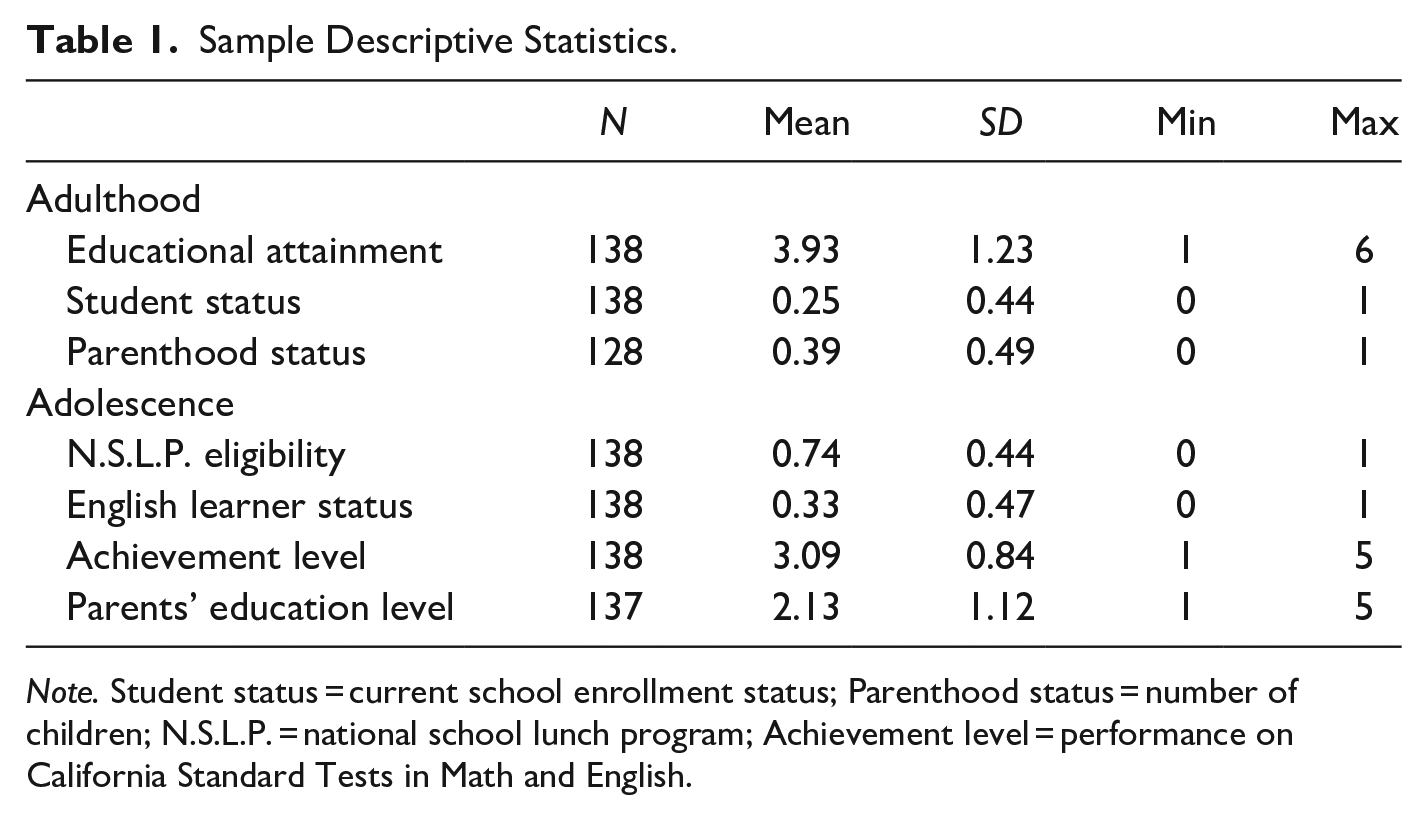
Note. Student status = current school enrollment status; Parenthood status = number of children; N.S.L.P. = national school lunch program; Achievement level = performance on California Standard Tests in Math and English.
Descriptive Statistics of the Areas of Influence and Types of Support by Different Social Agents in Adolescence.
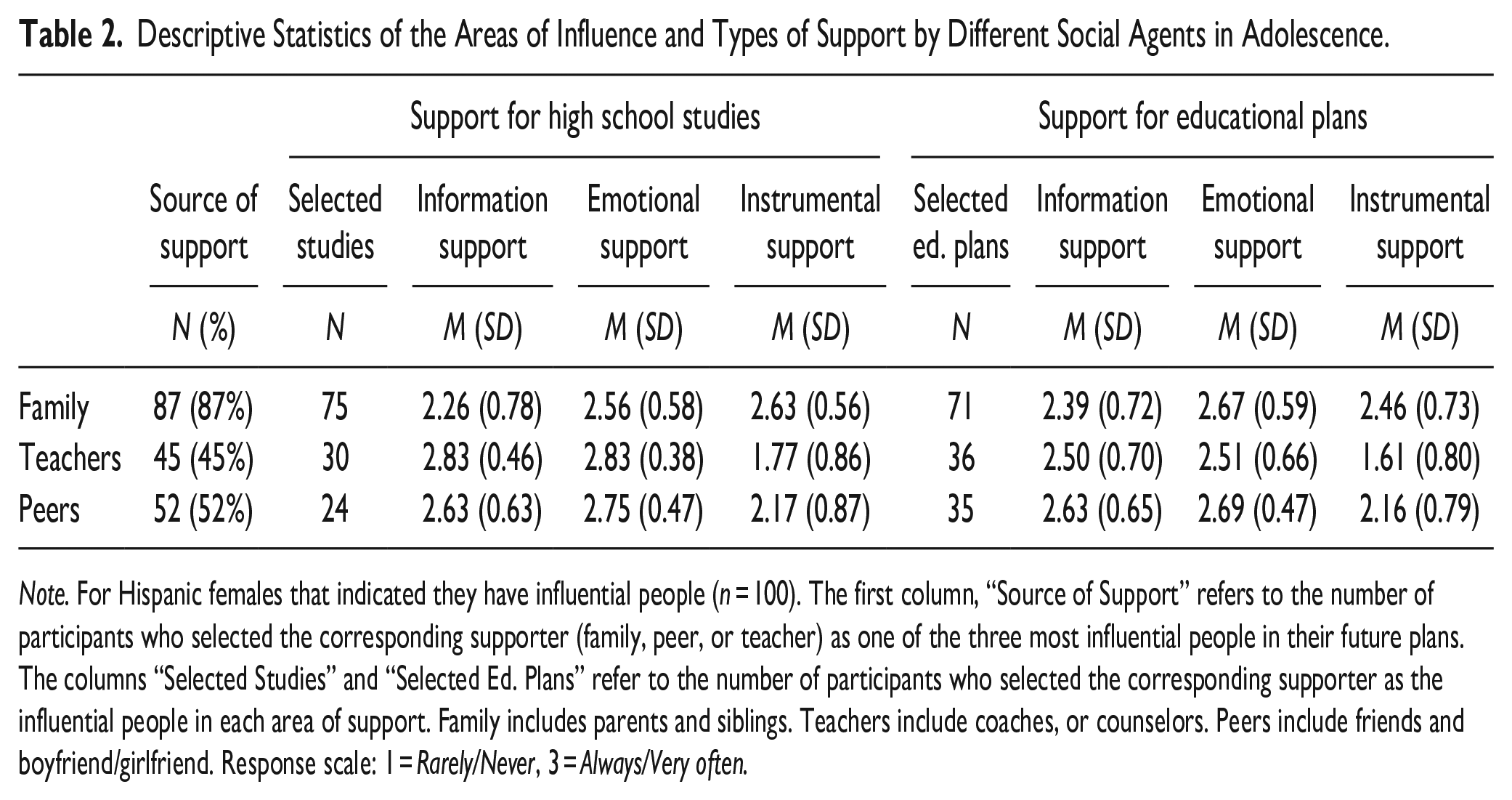
Note. For Hispanic females that indicated they have influential people (n = 100). The first column, “Source of Support” refers to the number of participants who selected the corresponding supporter (family, peer, or teacher) as one of the three most influential people in their future plans. The columns “Selected Studies” and “Selected Ed. Plans” refer to the number of participants who selected the corresponding supporter as the influential people in each area of support. Family includes parents and siblings. Teachers include coaches, or counselors. Peers include friends and boyfriend/girlfriend. Response scale: 1 = Rarely/Never, 3 = Always/Very often.
Means and standard deviations of the areas of influence and types of support provided by the three sources of support (family, peers, teachers) are presented in Table 2. We report frequency trends within each grouping, but due to the nature of the support measure, examining mean-level differences was not feasible.
For high school studies, the most common sources of support reported were instrumental and emotional support from family, while teachers and peers provided the most informational and emotional support. For educational planning, emotional support from families was most prominently identified, along with informational and emotional support from peers and teachers.
Correlations among types and areas of support with educational attainment and covariates were examined separately for family (Table 3), teacher (Table 4), and peer indicators (Table 5). The results of the linear regression analyses testing associations with educational attainment (RQ2) are presented in Table 6. With regards to receiving support with high school studies, educational attainment was positively associated with family rendered informational (
Correlations of Family-Rendered Supports for High School Studies and Educational Planning During Adolescence, Educational Attainment in Adulthood, and Covariates.
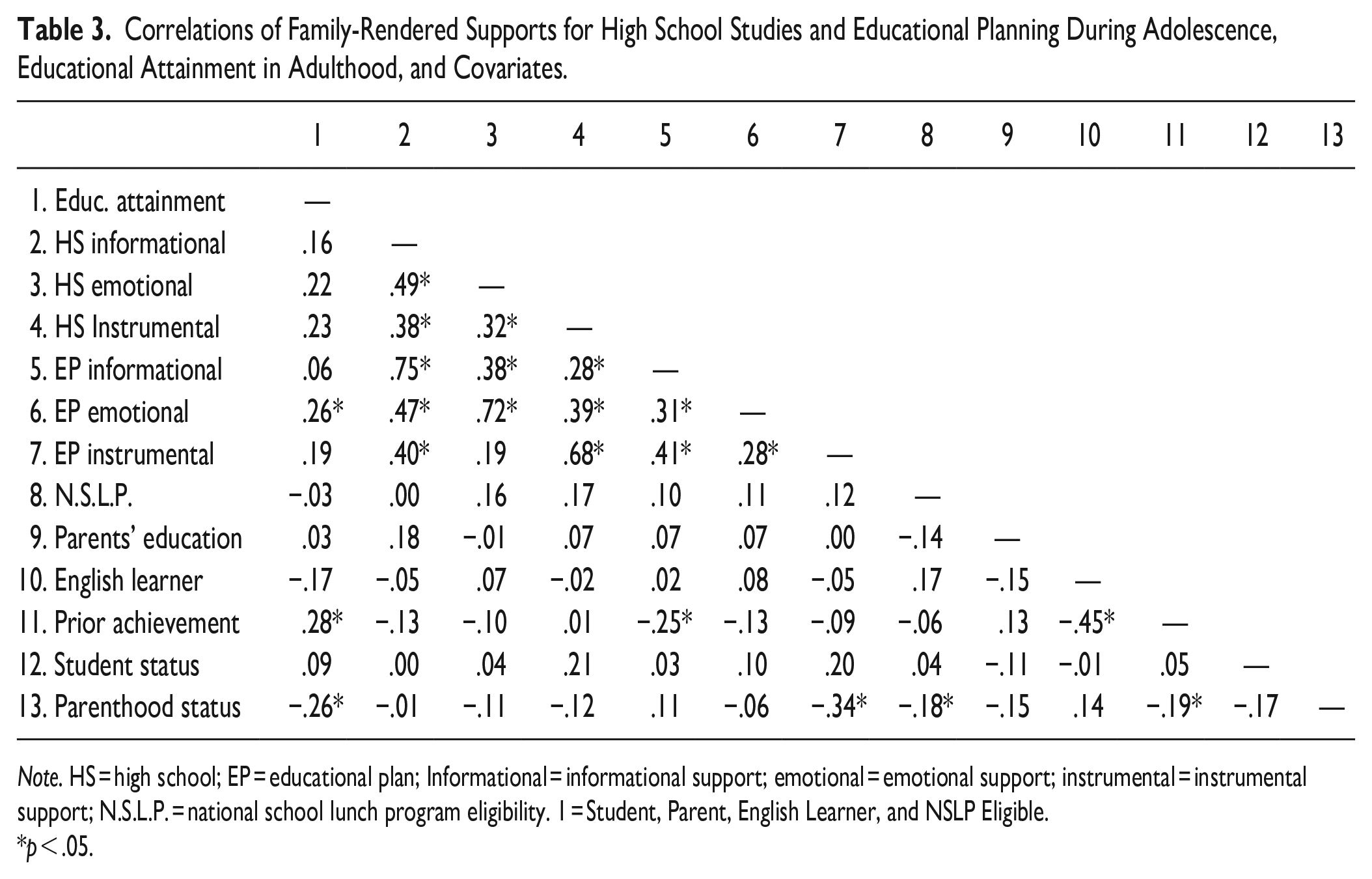
Note. HS = high school; EP = educational plan; Informational = informational support; emotional = emotional support; instrumental = instrumental support; N.S.L.P. = national school lunch program eligibility. 1 = Student, Parent, English Learner, and NSLP Eligible.
p < .05.
Correlations of Teacher-Rendered Supports for High School Studies and Educational Planning During Adolescence, Educational Attainment in Adulthood, and Covariates.
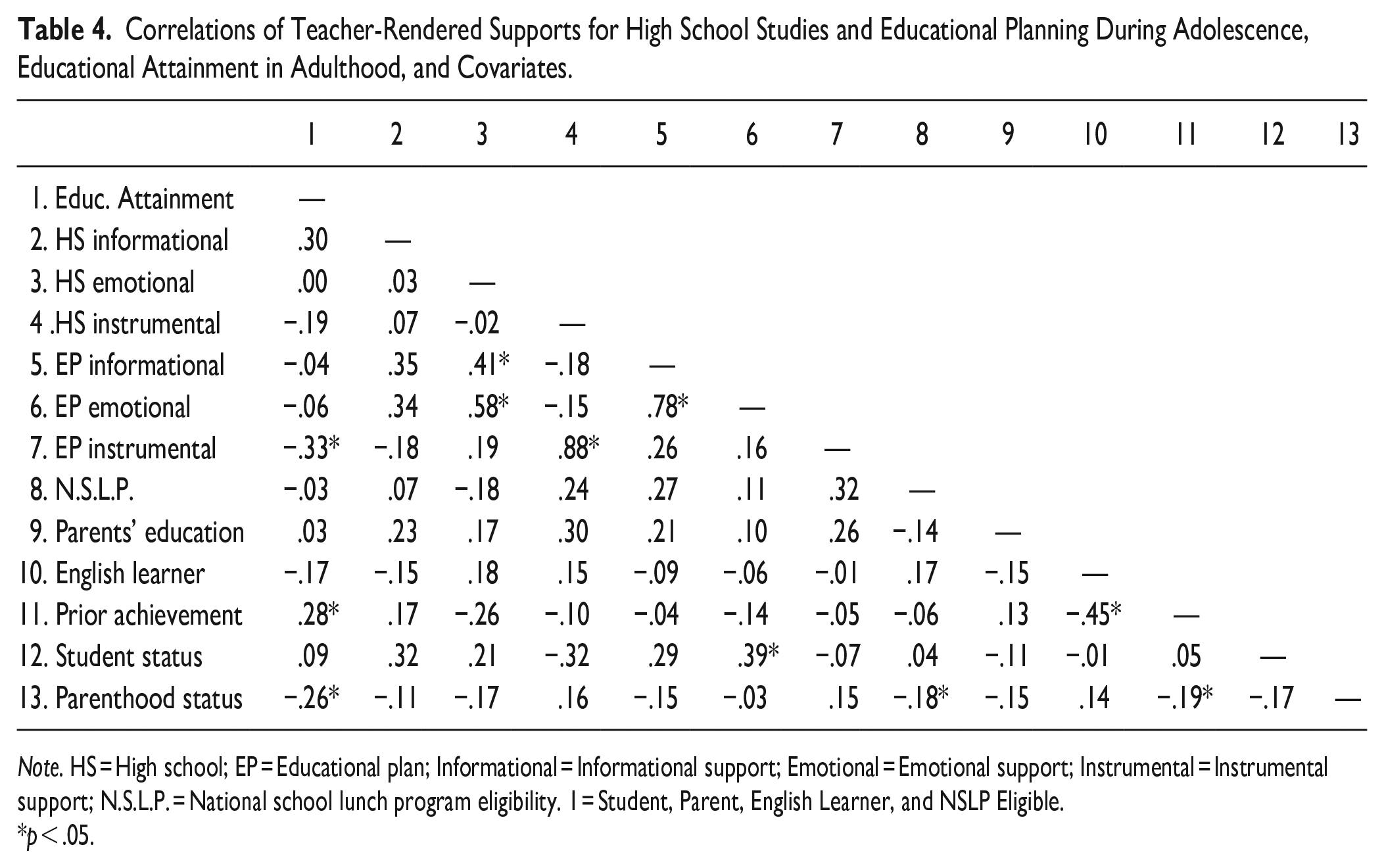
Note. HS = High school; EP = Educational plan; Informational = Informational support; Emotional = Emotional support; Instrumental = Instrumental support; N.S.L.P. = National school lunch program eligibility. 1 = Student, Parent, English Learner, and NSLP Eligible.
p < .05.
Correlations of Peer-Rendered Supports for High School Studies and Educational Planning During Adolescence, Educational Attainment in Adulthood, and Covariates.
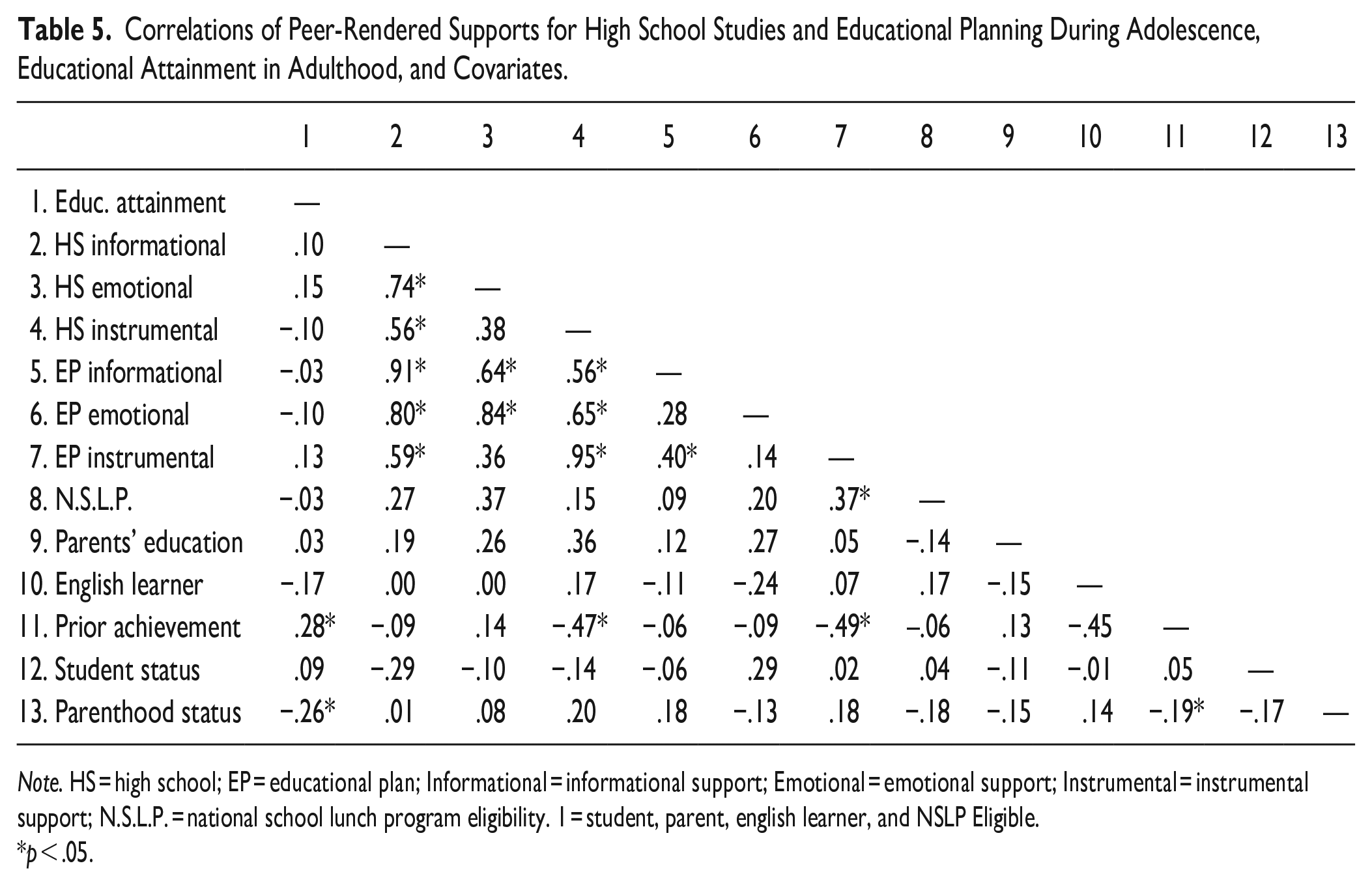
Note. HS = high school; EP = educational plan; Informational = informational support; Emotional = emotional support; Instrumental = instrumental support; N.S.L.P. = national school lunch program eligibility. 1 = student, parent, english learner, and NSLP Eligible.
p < .05.
Results of the Linear Regression Analyses With Educational Outcome and Perceived Support in Adolescence.
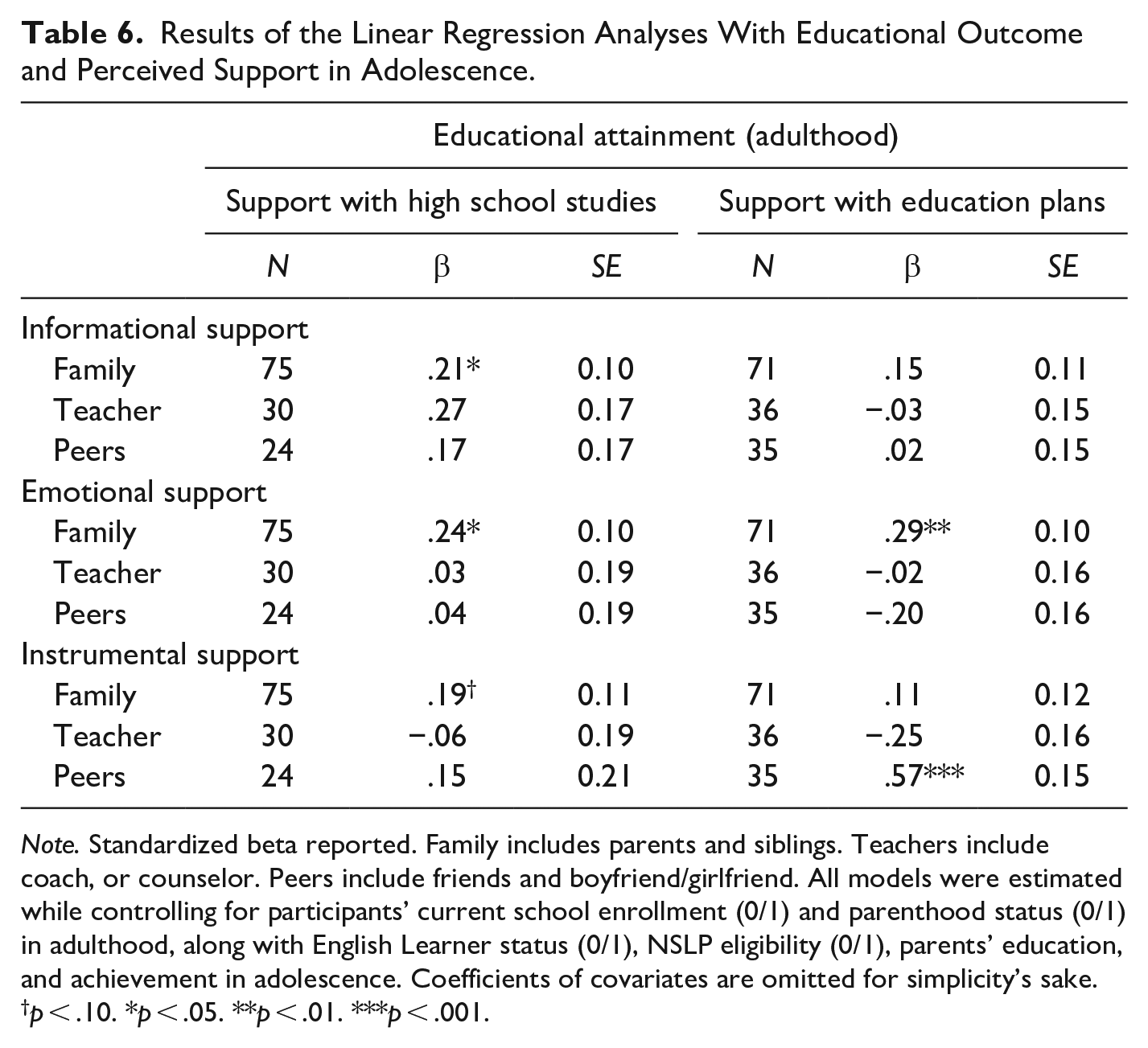
Note. Standardized beta reported. Family includes parents and siblings. Teachers include coach, or counselor. Peers include friends and boyfriend/girlfriend. All models were estimated while controlling for participants’ current school enrollment (0/1) and parenthood status (0/1) in adulthood, along with English Learner status (0/1), NSLP eligibility (0/1), parents’ education, and achievement in adolescence. Coefficients of covariates are omitted for simplicity’s sake.
p < .10. *p < .05. **p < .01. ***p < .001.
Discussion
Understanding the primary sources and types of support is an important step toward developing a greater understanding of the factors that promote Hispanic females’ educational attainment. Despite the evidence that suggests social supports are particularly important for girls (Lei et al., 2018; Tennant et al., 2015), research with Hispanic females has been sparse (Gushue, 2006). Moreover, the affective nature of supports has been a focus of the limited research conducted with Hispanic communities. Our findings provide a fuller understanding of Hispanic females’ perceptions of the sources, types, and areas of support that influenced their academic development.
In line with the literature (e.g., Ceja, 2004; Sánchez et al., 2006), we found that family was a significant source of emotional, informational, and instrumental supports for Hispanic females, and that these supports were positively related to their educational attainment in adulthood. In particular, all three types of perceived family for high school studies were a significant and positive correlate of educational attainment. These associations attest to the robustness of the findings because they occurred after controlling for student achievement, social and demographic background during adolescence, and educational and parental status in adulthood. These findings supplement the largely qualitative research in this space echoing the importance of perceived family support for academic aspirations and educational attainment for Hispanic females (e.g., Ceja, 2004; E. Martinez & Castellanos, 2018; Sapp et al., 2016).
Teachers were identified as sources of informational and emotional support to a greater extent (nearly a one-point difference on a three-point scale) than instrumental support in both investigated areas, corroborating the findings of Sapp et al. (2016) and Koch et al. (2019), which demonstrated the importance of emotional and informational support from teachers for Hispanic youths.
For Hispanic females, higher levels of educational attainment in adulthood were also associated with higher ratings of peer-rendered instrumental support during adolescence, after controlling for achievement and socio-demographic background during adolescence, as well as educational and parental status in adulthood. This finding suggests that instrumental support from peers is associated with factors that could facilitate educational advancement. Friends and peers, for example, share material resources such as books or notes involved in completing academic tasks (Wentzel et al., 2018). Instrumental support can also include the exchange of college outreach materials or online resources such as websites, among other things. While more research is required, these findings contribute to the body of knowledge on college-going behaviors and the function of peer supports (Conchas, 2001; E. Martinez & Castellanos, 2018).
While teachers were identified as a source of informational and instrumental support, we found no link between teacher-provided support and female educational attainment in school studies and educational plans. Some of the null results regarding the associations between supports and educational attainment, as well as the large magnitude of the effect of instrumental support from peers, may be explained by the small sample size, which likely underpowers the study and increases the likelihood of false negatives (Button et al., 2013). Larger dataset analyses are required to investigate these findings further.
Limitations and Future Directions
Despite the significant findings about the importance of perceived support structures for Hispanic female educational attainment, there are some limitations that should be mentioned. For example, selection bias in the sample that took part in our follow-up survey is a factor to consider. Our analytic sample retrospectively reported high GPA during high school (60% reported a “B” or higher GPA).
Future research should investigate whether supports differ in significance for males and females, as well as the intersections of the supporter, recipient, forms, and areas of support. Because of the small sample size, we were limited in the scope of our analyses and unable to separately examining the supportive roles of mothers, fathers, and siblings (e.g., Plunkett & Bamaca-Gomez, 2003). Investigating less-studied sources of support (such as family friends, coaches, and YMCA tutors) can provide useful information that warrants further study. We were unable to conduct these types of analyses due to the structure of the survey questionnaire, and the space allotted for comments on sources of support.
Future research will benefit from expanding research on informational and instrumental supports and the contexts in which they are delivered by key supporters, as well as how this promotes educational development–something that previous studies did not investigate as thoroughly. Many authors have written about different elements of teacher support (e.g., Tvedt et al., 2021; Wentzel, 2015). When it comes to researching teacher-student relationships, however, the field lacks a clear and operational definition of teacher support (Tvedt et al., 2021), making it difficult to evaluate, interpret, and compare findings. What we consider to be support can vary depending on cultural norms or gendered support delivery standards (e.g., how a female student can interpret support from a mother as opposed to a father, or a female teacher as opposed to a male teacher) (Umarji et al., 2021). These interpretations will presumably vary by domain (e.g., support for learning math vs. planning for college). More in-depth case studies and interviews may shed further light on the mechanisms by which supports are internalized.
Despite the limitations of the data collection process mentioned above, we are confident in our findings because they are supported by evidence. Retrospective surveys are still used in psychology, education, sociology, and marketing research. Collecting measures of support from youth, as well as their parents, teachers, and peers, would be an alternative method for reducing self-report bias in future studies. In addition, the data collection strategy had the benefit of allowing for a more thorough investigation while reducing survey fatigue. Methodological approaches such as the Experience Sampling Method may offer more nuanced approaches to measuring the types of support, the supporter, and where the support is being directed, such as academics or career planning. Experience Sampling Methods can provide richer data for analysis by measuring supports more frequently while also gathering information about the context, the provider, and the topic of the targeted support.
We are filling a gap in the literature on educational supports for Hispanic females by examining who the primary sources of support are, what types of supports are received in different areas, and whether these supports are linked to educational attainment over time. We looked at associations between informational, emotional, and instrumental supports from family, teachers, and peers for high school studies and educational planning using a multifaceted approach rather than using blanket measures of support. The majority of available research is qualitative, such as interviews and ethnographies, and correlational studies with Hispanic youths have only explored the links between general measures of social support and achievement (e.g., course grades; Tennant et al., 2015), as well as engagement and educational aspirations (e.g., Kiefer et al., 2015). We documented associations of social supports and educational attainment 10 years later, while also accounting for factors that are documented to influence educational attainment.
Implications for Practice
This study provides a basis for future studies into the nuances of social supports during adolescence with educational studies and planning, as well as their associations with educational attainment in adulthood for Hispanic females. School professionals (e.g., teachers, administrators, etc.) might keep in mind the links between family support and educational attainment over time, as well as the robustness of these positive associations above and beyond the effects of social background on academic achievement, in their efforts to support their students’ long-term academic pursuits. Educators can continue to emphasize the importance of providing emotional support for Hispanic females’ educational efforts and aspirations, such as encouraging positive educational messages (Ceja, 2004) and academic encouragement (E. Martinez & Castellanos, 2018). Educators and administrators can continue supporting parents in becoming familiar with the high school educational system (Plunkett & Bamaca-Gomez, 2003). Providing parents with information about graduation and college requirements and financial aid are example of such supportive efforts. Parents could also be provided reference guides by school personnel, which would show them how to find resources that would be beneficial to their adolescent (e.g., sourcing supplies, books, etc.).
Given the numerous factors involved and the variations in how support is defined and delivered, determining what support looks like and under what conditions it exerts influence is complex. Given that Hispanics are the nations’ most populous and fastest-growing demographic group (Jones et al., 2020), our study fills a gap in the literature by focusing Hispanic females adolescents in particular, and it builds on previous research by emphasizing the multifaceted nature of supports. Our findings are only the “tip of the iceberg” in terms of the vast amount of scholarship that can be generated to help us better understand how we can support young Hispanic females and their academic success.
Footnotes
Appendix A
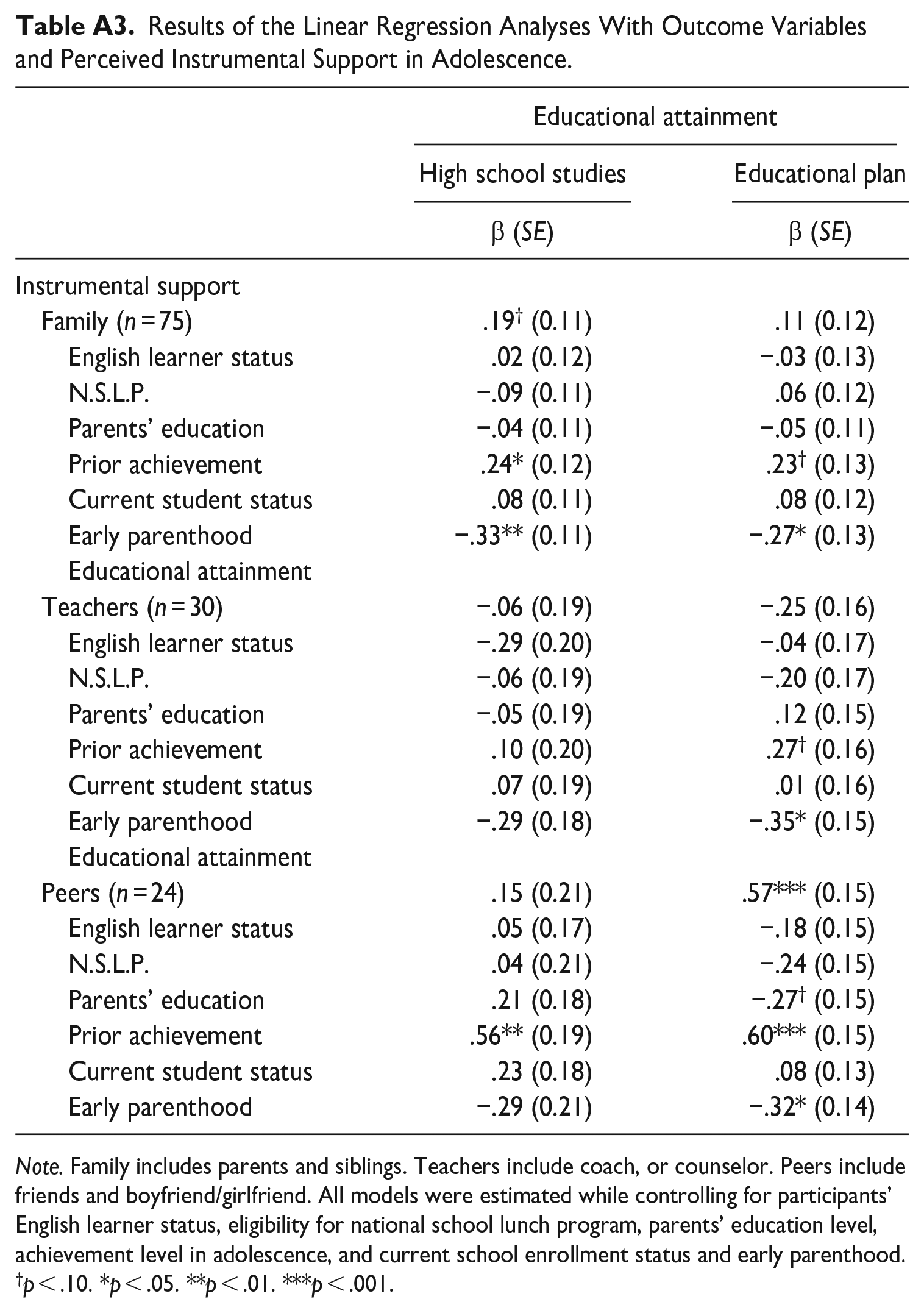
Results of the Linear Regression Analyses With Outcome Variables and Perceived Instrumental Support in Adolescence.
| Educational attainment | ||
|---|---|---|
| High school studies | Educational plan | |
| b (SE) | b (SE) | |
| Instrumental support | ||
| Family (n = 75) | .19 † (0.11) | .11 (0.12) |
| English learner status | .02 (0.12) | −.03 (0.13) |
| N.S.L.P. | −.09 (0.11) | .06 (0.12) |
| Parents’ education | −.04 (0.11) | −.05 (0.11) |
| Prior achievement | .24* (0.12) | .23 † (0.13) |
| Current student status | .08 (0.11) | .08 (0.12) |
| Early parenthood | −.33** (0.11) | −.27* (0.13) |
| Educational attainment | ||
| Teachers (n = 30) | −.06 (0.19) | −.25 (0.16) |
| English learner status | −.29 (0.20) | −.04 (0.17) |
| N.S.L.P. | −.06 (0.19) | −.20 (0.17) |
| Parents’ education | −.05 (0.19) | .12 (0.15) |
| Prior achievement | .10 (0.20) | .27 † (0.16) |
| Current student status | .07 (0.19) | .01 (0.16) |
| Early parenthood | −.29 (0.18) | −.35* (0.15) |
| Educational attainment | ||
| Peers (n = 24) | .15 (0.21) | .57*** (0.15) |
| English learner status | .05 (0.17) | −.18 (0.15) |
| N.S.L.P. | .04 (0.21) | −.24 (0.15) |
| Parents’ education | .21 (0.18) | −.27 † (0.15) |
| Prior achievement | .56** (0.19) | .60*** (0.15) |
| Current student status | .23 (0.18) | .08 (0.13) |
| Early parenthood | −.29 (0.21) | −.32* (0.14) |
Note. Family includes parents and siblings. Teachers include coach, or counselor. Peers include friends and boyfriend/girlfriend. All models were estimated while controlling for participants’ English learner status, eligibility for national school lunch program, parents’ education level, achievement level in adolescence, and current school enrollment status and early parenthood.
p < .10. *p < .05. **p < .01. ***p < .001.
Declaration of Conflicting Interests
The author(s) declared no potential conflicts of interest with respect to the research, authorship, and/or publication of this article.
Funding
The author(s) disclosed receipt of the following financial support for the research, authorship, and/or publication of this article: This research was supported by grants from the National Science Foundation to Jacquelynne S. Eccles, Nayssan Safavian, and Stuart Karabenick (Award No. 1535273) and Martin Maehr and Stuart Karabenick (Award No. 0335369).
