




Abstract
This study explores how the COVID-19 pandemic—with its college closures, business shutdowns, and student enrollment declines—impacted the independence of college media during the pandemic, and how those impacts will continue after the pandemic is over. Using a mixed-methods approach based on the Hierarchical Influences Model framework (Shoemaker & Reese, 2013), this study integrates the results of a survey of 126 student media news outlets with interviews from 15 well-known news organizations from universities with established independent practices, to establish a relationship between revenue sources and student participation with independence measures. Results confirmed a stronger push toward digital products and the use of a wider variety of revenue-generating techniques during the pandemic.
Keywords
As nationwide attention focused on college campuses as potential epicenters of COVID-19 transmission, student-run media became a go-to information lifeline for audiences near and far. In October 2020, The New York Times detailed its process of tracking coronavirus cases at universities throughout the United States, specifically noting its call to student journalists to do much of the heavy lifting on the project.
In some parts of the country, as local journalism has withered, college publications have had to step in to fill the void. And many campus journalists have done a terrific job holding their administrators and peers accountable during the pandemic (Dodd, 2020).
However, just as the pandemic accelerated the decline of advertising in professional media, as businesses shut down or sought out cheaper alternatives (Doctor, 2020), the ad revenue that once powered high-quality student media also suffered. Many universities saw sharp enrollment declines as the pandemic set in and students hesitated to pay full tuition for online courses (Sedmak, 2020). The decline resulted in a diminished audience for campus-distributed media, and a hit to student activity fees that rise and fall with student enrollment.
Cutbacks in student media can affect the student populations on campuses as well as the larger communities that depend on student publications for information they cannot get elsewhere. Student media outlets are still one of the few entities that pay full attention to university actions (West et al., 2009). Student media closures and censorship result in communities losing that hyper-focused watchdog on these institutions.
The current study uses data collected from a survey sent to active student media news outlets in the United States at more than 520 universities with more than 5,000 student enrollment, as well as information gathered from interviews with a group of publications known for their independent status, to explore the state of student media in the United States.
Literature Review
Threats to Campus News Independence
The Supreme Court has recognized broad free-speech protections for students at public universities, rejecting claims that campuses should operate as “enclaves immune from the sweep of the First Amendment” (Healy v. James, 1972). But protection against being punished for speech does not necessarily guarantee a stream of no-strings-attached financial support to disseminate speech. Accepting financial support and faculty oversight exposes student media to editorial control by administrators. As Trego (2017) describes, this was made most clear in Hosty v. Carter (2005), when the Seventh Circuit said a higher education institution could “discipline” college media that are not designated as public forums with actions such as removing editors and restricting funding.
Friction between student news publications and their host institutions over editorial control is long-standing and well-documented. For example, an outcry erupted among journalism students and alumni at Texas A&M University in 2022 when the university president announced plans to cease printing the school’s award-winning, 129-year-old newspaper, The Battalion (McGee, 2022). In another case from 2010, an advisory board suggested that Virginia Tech University cut funding to the student newspaper until it banned anonymous comments on its website (Johnson, 2010). Several other cases have been documented in the past 20 years (“Threats to the Independence of Student Media,” 2017).
Historically, threats to student journalism originated with image-conscious administrators, who replaced editors, withdrew financial support, or otherwise used their authority to retaliate for unflattering coverage. But more recently, demands to de-fund or censor student media have emanated from fellow students affronted by coverage decisions (Hogan, 2018; New, 2015; Petillo, 2022). The COVID-19 crisis intensified financial pressures (Liang & Donovan, 2021; #SaveStudentNewsrooms, 2021). In addition, school papers have continued to have to fight administrators for openness and transparency (Parks, 2021) as well as fight back against efforts of censorship (Gluckman, 2021) and general funding cuts (Rhone, 2021).
The First Amendment is understood to protect free expression rights in college student publications. Despite the continual rejection of such practices in the courts, university administrators still attempt to control student press messages by cutting funding to news outlets, hiring advisors who are motivated to align with administrative perspectives, and leveraging advisory committees for heavy-handed organizational oversight (Kasior & Darrah, 1996). Administrative hostility promotes self-censorship (Bickham & Shin, 2013). Student newsroom leaders sometimes make editorial decisions based on fear of adverse action (Farquhar & Carey, 2019) or the discomfort of faculty advisers (Filak, 2012). Other influences could affect college media autonomy, specifically considerations tertiary to core editorial decisions, such as office space or using a university-hosted website (Gutsche & Salkin, 2011). As Etheridge and Rank (2020) show in their study of external pressure on college newspapers, editors and advisers at college student newspapers felt influence pressure from external forces including advertisers, but also from administrators and faculty who are considered higher “authority” to newspaper staff members.
For the present study, college media outlets were asked a series of questions to identify their level of independence from administrators and interference by the university. In his seminal work on the matter, Ingelhart (1993) identified 26 factors that could be used to measure the independence of student media. These factors included financial matters such as a requirement that the publication did not receive funding from the college or university, even indirectly, or organizational matters including a complete separation from the student government and university.
As previous research (Etheridge & Rank, 2020) has shown, when advertising dollars decrease, as they did through the pandemic, student outlets were more willing to lean on university funds to make up the difference so they could still operate; however, that use of university funds could jeopardize the level of independence outlets could maintain. Therefore, the first hypothesis of this study suggests that advertising decreases were related to increased use of institutional funding:
Based on Ingelhart (1993) and Bodle’s (1996) works, it is expected that institutions that derive direct or indirect financial support from the higher education institution will be objectively less independent.
Hierarchy of Influences on Student Media
Shoemaker and Reese (2013) argue there are several levels of influence on professional news outlets’ systems of production that affect their decisions on coverage and content. Their Hierarchical Influences Model (HIM) suggests that forces from a multitude of influential factors and relationships can impact content from news outlets. The HIM specifically defines five levels of analysis of influences: individual, routine, organizational, institutional, and societal. The individual level constitutes traits of people involved in the news process, such as education level or racial identity. The routine practices level refers to general professional norms practiced within the industry, such as the use of deadlines. Organizational influences invoke the power of ownership bias or organizational culture. At the social institution, or extra-media, level, analysis of “the media” in its entirety might include relationships between the industry and the government. Finally, at the broadest level, social systems analysis considers cultural or political aspects that span beyond the industry or a single factor, such as framing an opinion or airing a story that society as a whole would deem wholly inappropriate.
While HIM is rarely applied in the context of college media, the current study argues student journalists are often bound to similar influences as professional outlets, especially in independent environments. At the professional level of journalism, ownership and advertising pressures have been connected to news coverage (Hedding et al., 2019; Picard, 2004; Picard & van Weezel, 2008; Wagner & Collins, 2014), news quality (An & Bergen, 2007; Colistra, 2014; Hanusch et al., 2020; Picard, 2004), and general autonomy (Deuze, 2005; McDevitt et al., 2002). In the realm of college media, previous research has shown an organizational structure in terms of hiring practices, editorial control, revenue, and ownership can influence media content (Bockino, 2018; Bodle, 1996). However, the student press also presents a challenge of balance for campus journalists who attempt the watchdog role at their schools without administrative restraint but also depend on institutional funding to operate (Hapney & Russo, 2013).
While some research has focused on the indistinguishable traits of college newspapers and local newspapers (Armstrong & Collins, 2009), we argue that college media differentiates itself from professional media in specific ways. First, its content is generally hyper-focused on the institution it is associated with, making it uniquely important for members of that community through the publication of news, opinion pieces, and advertisements directly targeting students, faculty, and staff (Hapney & Russo, 2013). In addition, the pursuit to fulfill these needs creates a sense of civic engagement for the broad community of students (Collins, 2003; Davidson & Cotter, 1997). Beyond providing news and information to the community as a public service (Deuze, 2005), the editorial staff of college media is usually in pursuit of building skills for the purpose of educational and trade progression. In general, the educational aim of these outlets has provided positive results for students in journalism classrooms. Student newsroom experience provides students with more confidence in their skills for careers in the industry (Bockino, 2018), willingness to participate in political processes (Bobkowski & Rosenthal, 2021), and better job applications (Thomson & Sternberg, 2021).
The educational role of the campus news outlet often creates tension for students and administrators (Hapney & Russo, 2013). Most studies on editorial control and structure of student news outlets focus on censorship of these outlets. Unlike traditional ownership structures found in corporate news outlets, the relationship between the administration of a public university (that may or may not fund the outlet) and its student journalists is unique. For this reason, the structure of each outlet will affect its autonomy as both a practical and a legal matter. This distinction between pedagogical tool and public service is important for student news outlets, as it can be the determining factor of the amount of independence students are allotted (Culver & LoMonte, 2021). Thus, in addition to content choices being influenced by general society and campus culture (societal influences), extant research has indicated that student media content and production is also impacted by the way organizations are structured (organizational), advertising pressures (organizational), audience pressures (organizational), and the individual goals of the journalists (individual), suggesting that the HIM also applies in the realm of college media.
Influences on Independence in Student Media
In a study of civic journalism and autonomy, findings suggested that the professional values of journalists for autonomy in making editorial content decisions overtake support for civic journalism (which places more importance on solving community problems than detached information dissemination) and that these values were most likely linked to individual identity and professional culture within newsrooms (McDevitt et al., 2002). The study also found that participation in student media had an effect on individual identity, in which people who worked for campus media placed greater emphasis on autonomy and held diminished support for civic journalism practices (McDevitt et al., 2002). Deuze (2005) took the norm of autonomy further when he suggested it was part of journalism as an ideology, defining the concept as “a system of beliefs characteristic of a particular group, including—but not limited to—the general process of the production of meanings and ideas (within that group)” (parentheses in original, p. 445).
News outlet ownership has also been shown to affect news coverage and autonomy (Picard & van Weezel, 2008). For example, Hedding and colleagues (2019) found evidence of a “Sinclair Effect” on television stations that were owned by the media conglomerate. Their study found that Sinclair ownership correlated with an increased propensity to use commentary, partisan sources, and “dramatic elements” such as focusing on interpolitician drama (Hedding et al., 2019).
The economic factor that comes in the form of advertising can impact the quality of news and coverage in professional outlets, as well (Colistra, 2014; Picard, 2004). In An and Bergen’s (2007) study of advertiser pressure on newspapers, survey results revealed a tendency for small newspapers to yield to advertiser needs at the expense of editorial values, including detachment. A more recent study suggested that younger journalists might feel more pressure from advertising and public relations interests than more experienced workers in the field of lifestyle journalism (Hanusch et al., 2020). As news advertising has suffered major losses in the past couple of decades, journalism organizations have sought foundational funding to counter these economic declines. Foundational support, however, comes at a cost for autonomy, as most structures of these nonprofit newsrooms are based on distinct goals of the foundations (Ferrucci & Nelson, 2019). Advertising has also been shown to affect student media decisions. Bockino (2018) found that college news outlets that reported a higher reliance on advertising were more likely to report higher levels of student autonomy and instances of coupling between editorial teams and marketing teams at the outlet.
In general, the educational aim of college outlets has been proven to provide positive results for students studying journalism. Pedagogical theories suggest that models of experiential learning provide students with more confidence in their skills for a career in the industry (Bockino, 2018). Students who participated in student newsrooms have found more value in the hands-on environment than in traditional classroom experiences or off-campus workshops (Francesco, 2013).
Despite many similarities, most recognize the distinctive relationship student outlets have with institutional administrators, as administrators do not operate the newspaper for profit and generally are governmental employees, which adds more necessity for separation than for-profit newsrooms (Hapney & Russo, 2013, pp. 116–117).
For this reason, the definitions of the mission and purpose of each outlet are instrumental in determining how it is treated by administrators and courts. When the exercise of journalism is conducted within a class for academic credit, a prior review could be used for the purpose of teaching. However, the distinction between pedagogical tool and public service is incredibly important for student news outlets, as it can be the determining factor for the amount of independence students are allotted in these environments (Culver & LoMonte, 2021).
At the onset of the pandemic, most universities closed their doors and pushed all classes to an online environment. With fewer students on campus and declines in advertising funding, most student media outlets published content online, in an app, on social media, or found other ways such as e-newsletters and podcasts to disseminate information beyond the traditional format. Print publication is still much more costly than other forms of publication, and when funding is declining and the future is uncertain, it makes sense that these external considerations and influences would affect whether and how often student news outlets publish printed products. As schools reopened to in-person classes, many of these outlets chose to continue these nontraditional forms of distribution of content; therefore, we propose the following hypothesis and its secondary hypothesis, which focuses on independence:
According to HIM (Shoemaker & Reese, 2013), content is affected by influences of routines, which include how often the publication disseminates content and in what form that information is produced. In this way, it is expected that diminishing publication dates have a direct impact on what is published and which stories to pursue. A publication that publishes infrequently will logically be less inclined to cover “hard news” that would provoke a confrontation with administrators and more inclined to publish timeless, feature-style editorial content. The frequency of publication can also act as a proxy for outlet stability (Burns & Matthews, 2017). Based on these factors, we argue that publication frequency, in general, is correlated with independence and autonomy. When outlets do not publish as frequently, they are forced to select fewer areas of coverage because of time, space, and resource allocation. Fewer publications can give the impression of less stability, which manifests itself in the diminished audience and participant interest, and potentially, a sense that administrators can exert their will over a newsroom of depleted vigor. In this way, independence is at the mercy of the organization’s ability to remain strong against administrative pressures even in the face of less money and less product.
When local businesses are forced to shut down and lose large groups of customers (such as students who are sent away from the campus), they are less likely to pay for advertising, as it no longer fits their business goals. With access to fewer advertising dollars directed toward the student media outlets, it is expected that fewer students would participate as reporters, editors, designers, photographers, and other positions at their news outlet because they would no longer receive financial compensation for their work. For this reason, we posit the following hypothesis:
With fewer journalists working in the newsroom, the ability of reporters and others to do their jobs effectively diminishes (Bockino, 2018), which could increase reliance on class-based work, faculty support, use of press releases, or other strategies for content that are less student-driven than a completely independent news operation would have previously allowed. For this reason, we also suggest that publications with lower student involvement will have lower independence scores:
Finally, this study aimed to identify how the disruption of the COVID-19 pandemic affected independent student media outlets, both in the short term and in the long term. Given all the previously mentioned changes required to adjust to life during the pandemic, we expect that the move to remote schooling, with all of the accompanying fallout, will have inflicted great disruption in the college media industry, so large that it will have a lasting impact on the way college media operates long term. Therefore, we offer a research question to better explore how all of these changes might be a reflection of COVID-19’s larger influence on college media.
Method
Using a convergent parallel mixed-methods design, this study aimed to not only examine levels of independence and change from a quantitative standpoint but also to better understand the context of those measures for student newsroom in the midst of a pandemic. Integrating quantitative results from a survey with interviews from the qualitative phase allows researchers to provide a more comprehensive look at this topic than could be possible with solely one method (Creswell & Clark, 2017; Tashakkori & Teddlie, 1998).
Participants
To conduct this research, a survey was administered to all student media outlets identified as active at 522 universities in the United States. To identify the universities solicited for information, a list of all universities with 5,000 or more students enrolled was collected using the Integrated Postsecondary Education Data System from the National Center for Education Statistics. Data were filtered to include all universities with 5,000 or more undergraduate students at 4-year institutions that were either public or private nonprofit status. The list, which was generated in January 2021, included a total of 625 schools.
A group of students and faculty then researched each institution to identify information about a primary student news outlet. The information collected included the name of the outlet, a website address, and current contact information for the student editor, faculty adviser, business manager, or another person who would have information about the structure of the outlet’s staffing, publication, and financial statuses. Out of 625 universities identified, 83.5% had active student media websites as of May 2021.
After review from the institutional review board, the project was given exempt status, and an online survey was prepared through Qualtrics and sent to the identified outlets starting in March 2021. Follow-up emails were sent through the rest of the Spring 2021 semester. At the end of the Spring semester, the survey had garnered 115 responses. In an effort to better generalize information, the same survey was re-sent to the remaining outlets again in Fall 2021 from September to November.
In total, there were 183 total responses from a total of 131 identified schools (and several anonymous responses). For analysis, 57 responses were removed from the dataset for failure to complete the survey for a total of 126 responses for analysis (N = 126, 95% confidence level [CI] = 7.6). Out of the 126 responses, 36.5% of those who filled out the survey were faculty advisers, 20.6% were professional staff of the university, 17.5% were professional staff of the publication, 18.3% were student editors, and 7.1% selected “Other.”
For a deeper context of the results, the research team contacted a total of 33 student publications best known for their independent structures and high-level journalism practices. Out of the 33 publications, 15 underwent semi-structured interviews on Zoom to go more in-depth into the state of independent student media during pandemic school closures and after schools returned to in-person classes. The three people on the research team used the interview protocol (see Appendix) to lead interviews through the series of questions most relevant to the research question and hypotheses of this study. Each interview was recorded and transcribed in real-time and then checked for accuracy after transcription. Two members of the research team then analyzed and coded interview transcripts using NVivo for thematic analysis. Members of the research team discussed and reconciled any disagreements about analysis and concepts. In total, about 10 major themes were identified in the interviews including financial concerns and new ways to increase revenue, new ways of encouraging student participation, diversity within the newsroom, outreach efforts to new audiences, changes in the way journalists gather information, shifts in storytelling technique, more focus on health and science news, discussions of processes and priorities, ethical dilemmas regarding interviewing techniques, and reliance on officials. The summaries included in this study attempt to coalesce major themes into five groups of ideas focused on independence, diversity, finances, digital technology, and changes within the process of conducting journalism.
Measures Used in the Survey
Funding
Three items on the survey referred to funding mechanisms. One question specifically asked for the estimated annual operating budget at the time the survey was taken. To identify funding channels, publications were asked to self-report a breakdown of their revenue streams by estimating percentages from advertising, subscriptions, sponsorships, direct university funding, student allocations, donations, and other avenues for funding. They were asked to do this for both “two years ago (before Covid)” and “now” so as to identify any changes that occurred in the pandemic gap. To assess change, the reported percentages for each revenue stream from “now” were subtracted from the reported percentages for each revenue stream before Covid.
Independence Measure
The independence scale created was a consolidated version of Bodle’s (1996) scale of 26 questions, with the consult of Ingelhart’s (1993) scale of 49 questions. Sixteen Likert-type items (1 = strongly agree, 5 = strongly disagree) adapted from the previous research were used to measure student media independence. Items included concepts such as student leadership, financial choices, and equipment maintenance. The items were averaged to form an index, which was reliable (M = 3.27, SD = .64, Cronbach’s α = .73). The higher score on the scale, the more independent the outlet would be expected to be.
Publication Frequency
To calculate publication frequency, outlets were asked to identify their primary product 2 years ago and to report how often they published content with the primary product 2 years ago and now. One item also asked about the change in frequency between February 2020 and the current status of the primary publication. Respondents were given three choices for reporting: more frequent than before February 2020, same amount as before February 2020, or less frequently than before February 2020.
Student Participation
To identify changes in student participation, publications were asked to report estimated numbers of frequent and infrequent contributors “two years ago” and “now.” To help differentiate between students who started after the school shutdowns and those who stopped participating because of them, survey respondents were asked to estimate the percentages of students who started participating in student media this year, those who started prior to the 2019-2020 school year and maintained participation, and those who started in the 2019-2020 school year then stopped and returned when schools returned to in-person classes. They were also asked to agree or disagree with the statement “Our publication has fewer student participants compared to five years ago” on a Likert-type scale (1 = strongly agree, 5 = strongly disagree).
Quantitative Results
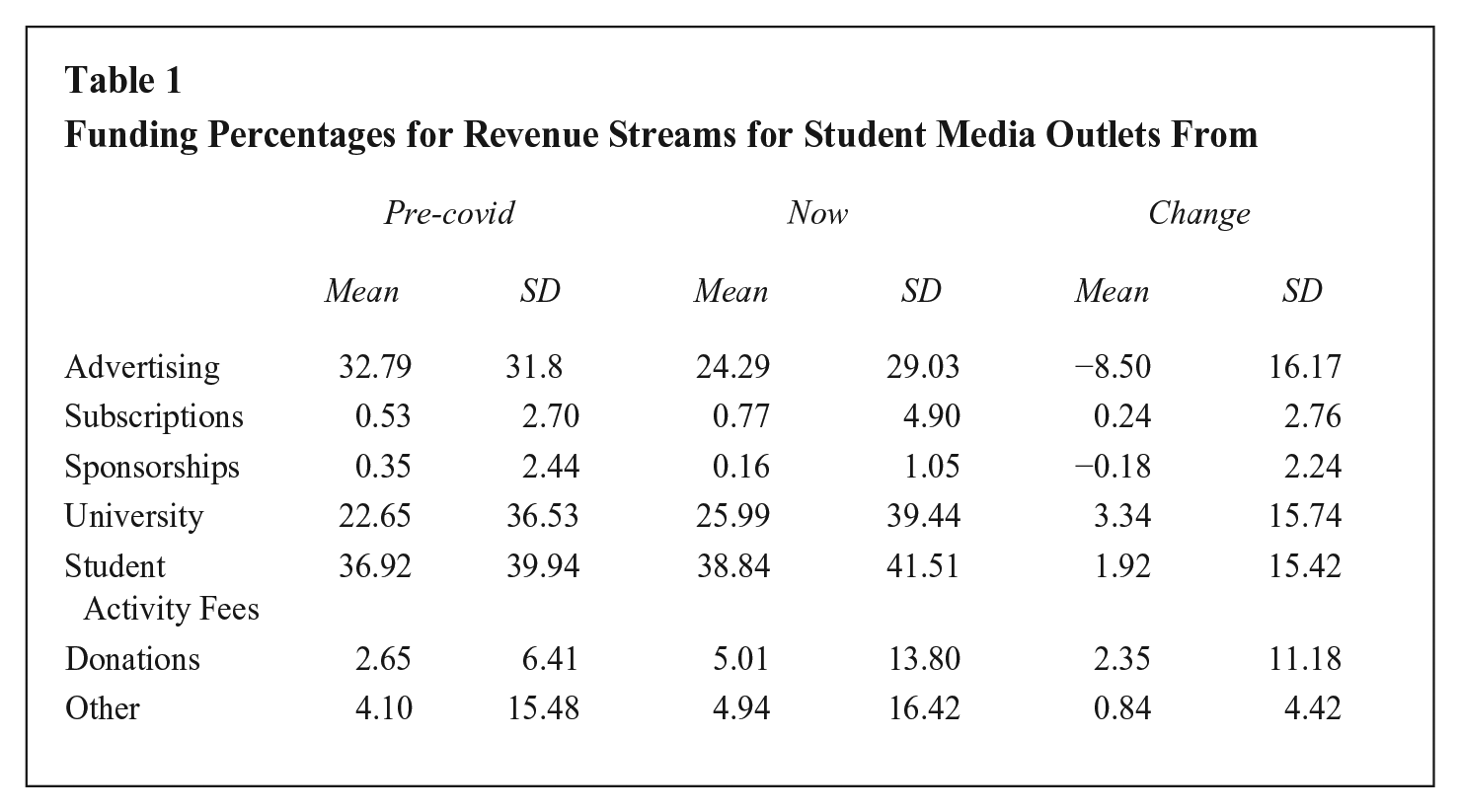
H1 posited that declines in advertising funds have taken place at the same time as increased reliance on direct and indirect financial support from universities. To test this hypothesis, subjects were asked to report the percentage of budget from sources including advertising, direct university support, and student activity fees from before the pandemic and now. (For the full survey, see the Appendix.) The responses of percentages after the pandemic were subtracted from the pre-pandemic percentages to calculate change. A paired-sample t test was performed to compare the change in percentages from advertisements, direct university funding, and indirect university funding (such as student activity fees that are allocated to the publication through the Student Government Association).
As shown in Table 1, there were significant differences between reported percentages of budget from different revenue sources between pre-Covid dates and the present. Advertising revenue declined an average of 8.5% among respondents from prior to the pandemic to Spring 2021. At the same time, the average revenue provided by direct university funds (M = 3.34) and indirect university funds (M = 1.92) both increased. Using a paired-sample t test to analyze the relationship between the decline in advertising and the increase in direct university funding, a significant correlation was found (M = −11.84, t (125) = −5.17, p < .001, d = 25.71). In addition, a significant correlation was found between the decline in advertising and the increase in indirect university funding (M = −10.42, t (125) = −4.74, p < .001, d = 24.70). These results suggest robust support for H1.
Funding Percentages for Revenue Streams for Student Media Outlets From
To test whether funding streams correlated with independence measures, a simple linear regression analysis was performed using the independence index as the dependent variable and the percentage of each stream of revenue as the independent variables. Each stream of revenue was run separately. As shown in Table 2, results suggest that some of the variation in independence is predicted by revenue source. Specifically, use of advertising, F(1,124) = 16.60, p < .001, R2 = .12, β = .34, t(124) = 4.08, p < .001, and direct university funds, F(1,124) = 16.60, p < .001, R2 = .14, β = −.38, t(124) = −4.57, p < .001, were significant predictors in independence.
Linear Regression of Independence and Current Revenue Streams for Student Media Outlets
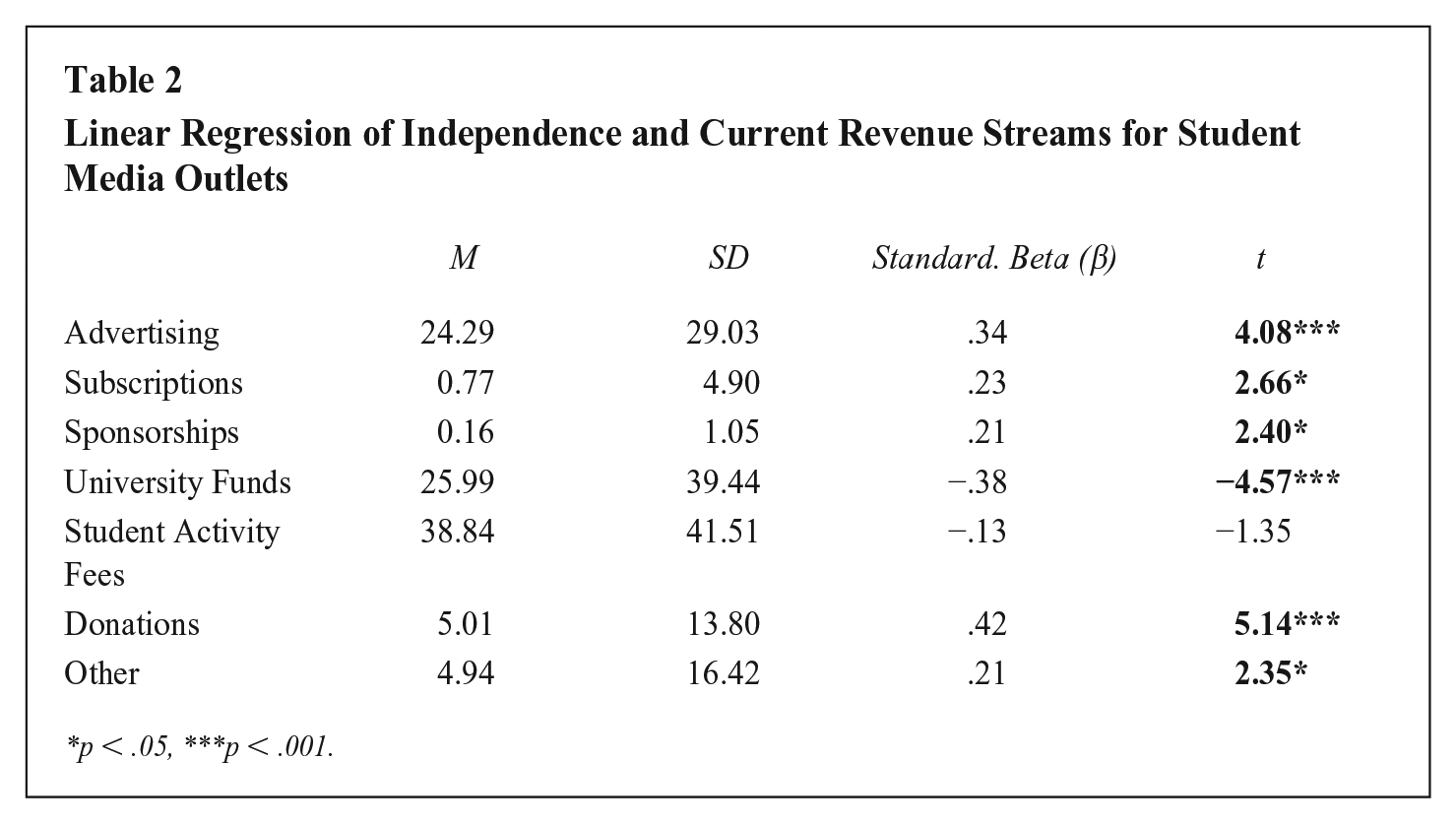
p < .05, ***p < .001.
Use of subscriptions, β = .23, t(125) = 2.66, p = .01, sponsorships, β = .21, t(110) = 2.40, p = .02, donations, β = .42, t(125) = 5.14, p < .001, and other, β = .21, t(125) = 2.35, p = .02, streams of revenue also had some correlational significance with independence. The use of allocated funds from student activity fees (usually allocated by a student governing body) did not have a significant relationship with independence measures, β = −.13, t(125) = −1.50, p = .14. Based on this information, H1a is partially supported, as direct funding from the university does have a significant negative impact on predicted independence, but indirect funding through fees does not have a significant effect. Participants were given the opportunity to describe other revenue streams than those listed. Some of the ways student media outlets are adding to their budget beyond these standard practices include grants, commercial enterprises such as printing or content management services, investment incomes, and government aid (specifically the PPP loan from the federal government offered during the pandemic).
H2 suggested that student media outlets have reduced the number of print editions they produced since before the pandemic, even after returning to in-person classes. During the time before Covid, 87 (69%) publications reported their print publication as their primary outlet, 34 reported their website as the primary product, 5 reported email as the primary product, and 1 reported “other.” For that time period, 34.9% of publications (n = 44) reported publishing their primary product weekly (See Table 3 for platform breakdown). When asked how publication frequency differed between February 2020 and now, 52 (46%) publications reported publishing less frequently than they did before the pandemic; 47 (41.6%) publications reported publishing the same amount they did before February 2020; and 12.4% reported publishing their primary product more frequently than before the pandemic. In interviews and open responses to the survey, several outlets said they had ceased print publications or paused them for the pandemic and had not returned to publishing print again by the time they did the survey. Others said they had moved to a primarily online format and printed less often, supporting H2.
Student Media Outlet Frequency of “Primary” Platform Publication
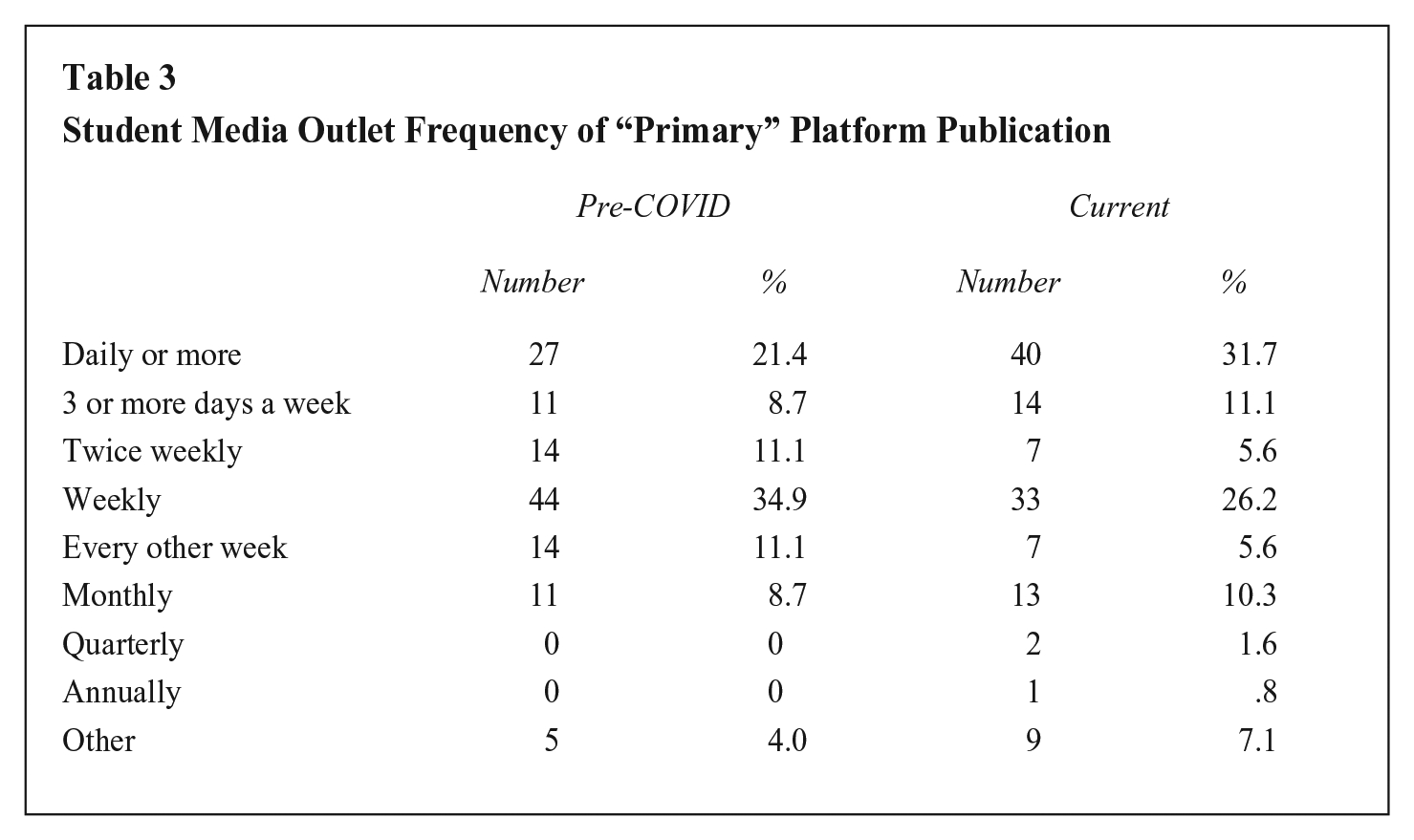
While fewer publications are primarily in print, they are currently publishing more frequently than before the pandemic, as Table 3 indicated. H2a posited that student outlets that had published less frequently than they did before the pandemic would score lower on the independence scale than those who published at the same rate or more frequently than they did before the pandemic. To analyze this, an analysis of variance (ANOVA) was conducted to compare publications’ reported change in frequency of publishing and their levels of independence. Upon analysis, no significant differences were found among the three groups of comparison (less than, same as, and more than) on the independence scale; therefore, H2a was not supported.
H3 suggested that a decline in advertising dollars for student media was positively correlated with declines in student participation in the production of the news. To analyze this, a paired-samples t test was used to compare publications’ current reported percentage of advertising dollars and their reported change in student participation, which was measured on a Likert-type (1 = strongly agree, 5 = strongly disagree) item, “Our publication has fewer student participants than 5 years ago.” Results suggest that lower percentages of advertising dollars in budgets was significantly connected to the belief that the publication had fewer student participants after schools reopened (M = −21.46, SD = 28.99, t (124) = −8.28, p < .001). These results suggest support for H3.
Finally, H3a suggested a connection between lower numbers of student participation and independence scores, such that independence scores would be positively associated with participation rates. To test this hypothesis, a one-way ANOVA compared the level of agreement with the aforementioned measure for participation rate as the independent variable and scores on the independence scale as the dependent variable. Results indicated that there was not a significant relationship between the two variables. Therefore, H3a is not supported.
Interviews
Between the spring 2021 and spring 2022 semesters, three members of the research team interviewed representatives from 15 college media publications on Zoom. Representatives included student editors, staff financial officers, and faculty advisers, depending on the nature and organizational structures of each publication. Because these interviews relied on knowledge of institutional historical practices, we aimed to identify representatives or groups of people who could work together to answer questions completely while also presenting information from the key decision makers’ points of view. Out of 15 interviews, 8 included more than one person as speaking on behalf of the outlets. One had multiple student editors, and the rest included a student editor and a professional staff member, faculty member, or adviser. Seven of the interviews were conducted with single representatives, and five of those were with professionals while only two were with student editors or managers.
Through this process, several key themes arose from the interviews: more meaningful push to digital products than in the past, financial creativity and uncertainty, higher levels of student involvement, greater emphasis on internal and external diversity efforts, and modifications to beats and storytelling techniques. A word cloud from the interviews, shown in Figure 1, reveals these themes were common and often used a majority of time in outlet interviews.
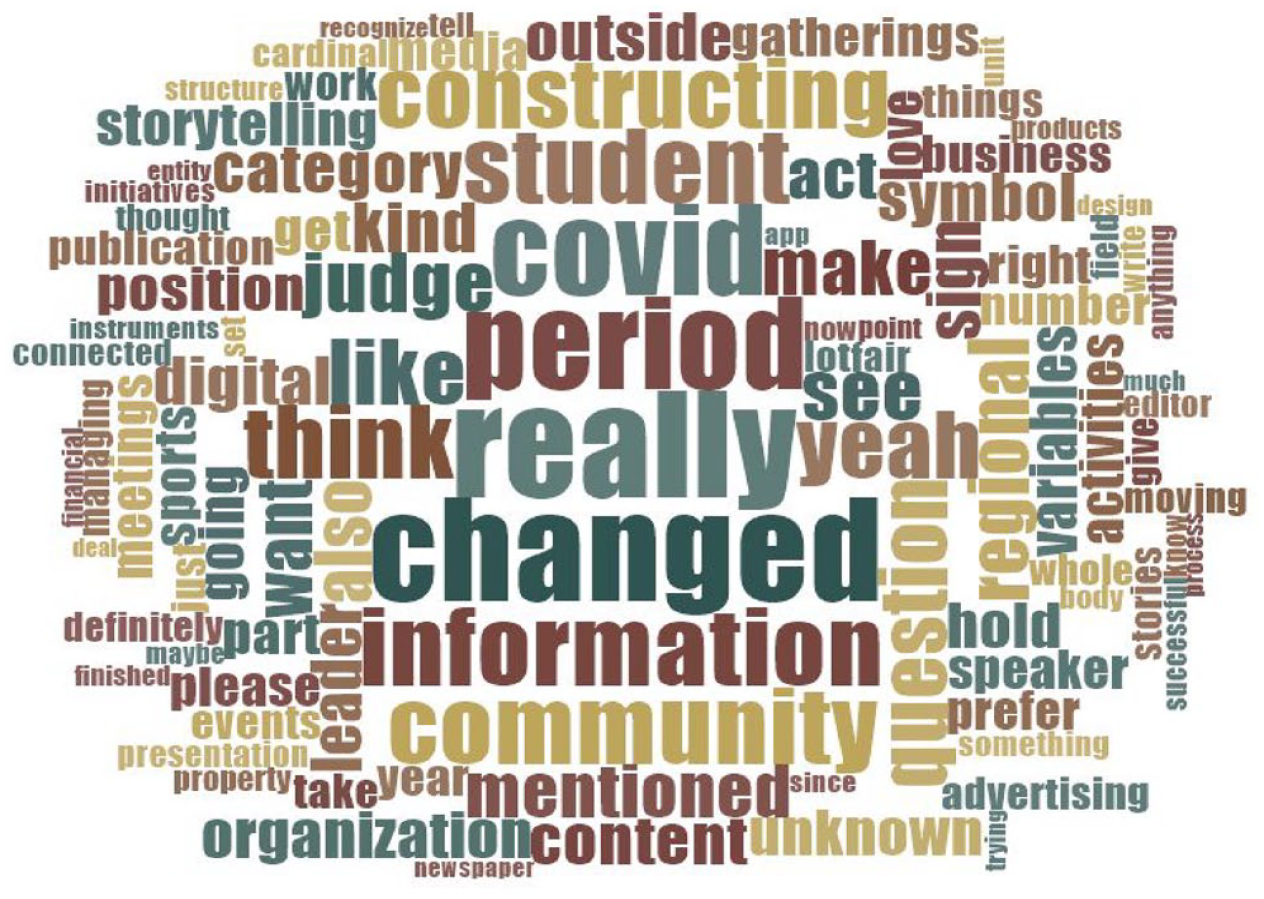
Word Cloud From Analysis of 1000 Most Frequent Words With Generalizations
Fast-Tracking Digital Initiatives
Going into this project, the researchers were aware that most news outlets had been forced to use online communications more heavily to serve their audiences at the beginning of the pandemic in the United States, when schools stopped holding in-person classes and students were sent home for the duration of the semester (or longer). One major theme in interviews with these outlets was that the move to digital products was already in the works, but the pandemic engendered a faster integration of online products. Publication D temporarily halted printing its newspaper in Spring 2020 and started a student-centric email newsletter to take its place, but the staff determined that the newsletter served students who did not return to campus by Spring 2021, so the publication continued production of the newsletter and a print edition. Publication C has stopped its weekly print publication entirely and now produces only some printed special sections each semester, while it disseminates daily news online. The representative from Publication C said this move was probably going to happen without a pandemic.
One thing that we had to kind of navigate because I do manage the distribution. . .our readership was not great with a weekly print paper, and so while it’s unfortunate that COVID kind of forced us to stop printing, I think it was eventually going to happen anyway. Or it was going to change and look differently.
Publication A described a similar situation in which it planned to cut back print production and the pandemic hastened that.
We would lose money on print pretty consistently from week to week. We’ve just realized that we have other forms like through the newsletter and on our website and social media in which we make revenue without losing some of that money from print.
Publication E said it cut down to one print paper per week, but would be moving to zero print papers the following year. Without COVID, the paper’s representative said they would have stayed at one print publication for longer. However, cutting the physical newspaper due to printing costs is negated when the largest revenue stems from the printed publication, as was the case in most newsrooms.
Publication D began to use texting to connect with the campus audience. They sent out weekly news quizzes through a survey platform and breaking news alerts to reach their readers in a space they were already using: their text messages. The outlet reported that traffic was high from this method. Most newsrooms interviewed shared that they didn’t think phone applications were suitable for their audiences, instead opting for newsletters and increased social media campaigns, which were methods they knew were already being used by readers. Publication O started the process of a website transition several semesters prior to the pandemic, but this process was finalized during COVID-19.
These descriptions help researchers to better understand the relationships between primary publication mediums and frequency and their impact on the way journalism is conducted within the context of college newsrooms (as proposed in H2).
Identifying New Strategies to Balance Budgets
As within the greater journalism industry, finances were among the most strained parts of the newsroom during the COVID-19 pandemic. There was no shortage of news, but advertisements dropped as companies lost business and it became less feasible for them to put out a print ad. While online strategies were at an all time high for publications, digital ads did not generate as much revenue as print. Existing financial problems were spread thinner, most publications said, causing some to come up with new ways to generate income. Publication A said while advertisements in general decreased, it got more advertisers from the university itself than previously. This was echoed in several interviews.
Several publications mentioned in interviews that they received a Payment Protection Loan from the government, which was one of the novel strategies for raising funds. Publication O received two rounds of the PPP loan, which allowed the publication to be solvent for 2 years, but was expecting a deficit in the 2022 fiscal year. Publication L, which received a PPP loan, felt uncertain about its financial stability moving forward: I’ve been fortunate to build up a pretty good savings of six to eight months worth of operating expenses, so we have a bit of a buffer there, but I’m just not sure we’re going to be able to maintain. When that money runs out, when the PPP runs out, and we eat a little bit into our savings to the point where we’re no longer eating into that, I’m not sure even with some of these new media forms that we’re selling, we’re going to be able to maintain this big of a staff, both on the professional and the student side. That really does worry me.
The later half of 2020 was an important time for politics, which meant that political advertisements increased during that time. Publication K, which is located in a state that had a contested election, received political sponsorship in newsletters. The publication said it would look toward doing the same in following elections.
Some publications used non-traditional models to bring in revenue. Many of these started before the pandemic, but became more reliable than advertisements starting in March 2020. Publication J already pivoted away from relying on mostly advertisers within the past 5 years as it bought a building that it is renting out to other businesses. Publication D, a nonprofit, has an in-house creative marketing services agency, which brought in close to $100,000 in 2021.
Publication K already had to pivot away from relying on print advertisers about 3 years prior to the pandemic. Local housing vendors used to buy the most ads, but those stopped when they were bought by national companies with no print policies. The outlet started a housing fair prior to COVID, which became virtual during the pandemic, where complexes paid to join. They also explored models of relying more on donor funding and investment accounts.
These new models of revenue are important for the outlets but also present a problem for journalism, as they do not rely on journalists practicing journalism. Instead, the functions of public relations, strategic communications, advertising, and marketing are being used to make up for the lack of revenue produced by the news product. This imbalance of revenue generation is concerning for the integrity of the public service these outlets aim to provide their audiences.
Creating Avenues for More Student Involvement
The pandemic pivoted staff engagement with the newsroom and coverage to remote and off-site involvement. Instead of attending press conferences and staff meetings, they were over Zoom. Event coverage shifted to COVID-19 updates. The nature of news changed, but it also made the barrier to entry into the news organization more accessible. Publication D said it hoped that moving forward, it could retain more of the accessibility features developed during the pandemic. Without needing to carve out time or plan for transportation to attend news events or go to an office, people could participate on their own time from a place that was comfortable to them. Some newsrooms interviewed saw an increase in participation and attributed it to better accessibility—as well as students having fewer options for social engagement due to quarantines and virtual classes.
A worry among multiple student outlets was what a post-pandemic newsroom would look like. Having worked remotely from 2020 to 2022, many students involved in these publications never worked in an in-person, pre-pandemic newsroom. And as they look toward transitioning back to in-person production, Publication F’s leaders worried about institutional knowledge getting lost due to the remote nature of the job. To help with the transition back to in-person, Publication K added two new positions: a recruitment manager to teach AP style and handle training, and a student outreach manager who attempt to engage students from groups that have not traditionally been involved with the publication in an effort to increase diversity and inclusion at the paper.
Organizations also do not hold to any single structure for compensating student journalists across the board. This affects who can participate in the newsroom, as students who have to work to support themselves in college are often excluded by necessity from being able to write for their newspapers, as positions pay little to nothing. Publication M suggested that this was a primary reason that its newsroom struggles with diversity. If it were to pay every student a minimum wage salary, it would lose money. But without being able to pay students enough, it could successfully recruit only people of higher socioeconomic status.
Beats and Storytelling Changes
In response to pertinent news and societal changes, student newsrooms changed the focus of their stories. Many created a health or COVID-19 beat to specifically cover the pandemic’s effect on their campus and city. This also became accountability reporting in many cases, as students became watchdogs for how their administrations and campuses dealt with COVID-19. Publication F said its pandemic-related stories would get more views than others, and the newsroom saw success with its COVID-specific newsletter.
Publication J said its newsroom produced more long-form stories during the pandemic, mostly as a result of daily stories being more limited in their scope. Events that would have gone on previously were largely canceled, and meetings became easier to cover as they were remote—leaving more time to focus on enterprise content. Explainers became more common in these newsrooms as audiences also looked for explanations and guides on how to navigate their universities and communities during the unprecedented time.
The pandemic was an issue that transcended age or situation, meaning COVID-19 news was pertinent to both the campus community and those surrounding it. Publication K created a city desk to focus on outreach to the city, connecting with local leaders, and appealing to residents. Others, like Publication D, already were the only newspaper of record in the community, so it continued to be important to cater their news beyond the university.
Multimedia changed as a result of the pandemic, too. With photography posing a health risk and fewer in-person events, newsrooms got creative with the art that went along with their stories. Some hired graphic designers who created graphics to go along with the stories. Publication F also increased its number of data visualizations, flexing a different muscle of journalism.
Given all of these changes, most publications said they expected many of these efforts to be long-term shifts in content focus and storytelling techniques at their outlets. As these publications seek to serve their audiences most effectively, they have found niches and styles of reporting that appeal to specific needs that have changed over time. This might be one of the most prevalent impacts the pandemic had on college media outlets—a reorientation to experimentation in storytelling, coverage, medium, and audience reaction.
Adding Diversity Initiatives
In interviews, outlets were also asked about diversification strategies. Initially, this question was supposed to reference ways outlets were finding new audiences for their products, but some respondents used the prompt to discuss changes to internal and external processes to better serve audiences of minority communities including BIPOC people, the LGBTQ community, and people with disabilities. While this was not one of the main objects of study for this project, researchers decided to keep the question in the interviews as it directly spoke to national events that coincided with COVID-19. In particular, the Black Lives Matter movement and protests against police brutality were ever present during the course of this study. Publication L published special editions when they seemed timely, with two notable ones being about transgender students and the Black Lives Matter movement.
When asked about diversification, some outlets referred to internal changes to welcome more diversity in people in the newsroom. Publication C said the students had made intentional efforts to recruit people of diverse backgrounds to work in the newsroom and have more discussions about diversity in sourcing and content. “As far as diversifying audience, that’s not really something that we’ve gotten to yet. I think it’s more of an inward kind of conversation of what we need to do, you know, as a staff.” Publication B discussed efforts to create more trust among community members and existing audiences beyond the university as part of its efforts to provide more inclusive content. “I think the biggest thing for us, which has been a continual effort that I don’t think Covid necessarily changed too much, was recognizing the diversity within our audience, as opposed to trying to aim to actively reach out.” Some new coverage they focused on related to activism in the community. Publication K also said it made an intentional effort to cover more of the community beyond campus by dedicating time and resources to a city section. This outlet also started a mentorship program for BIPOC students to try to ensure retention and a solid transition.
Some outlets said the pandemic made existing gaps of newsroom diversity worse. Publication D said, “Like in all areas, the pandemic has exacerbated existing inequalities and existing problems, and everything out there right it just puts a magnifying glass on things that were already there.” That publication referred specifically to a leadership program it had started to recruit more people of color in editor roles as well as the implementation of source audits to ensure diversity is part of the discussion on all editorial ranks.
Out of 15 publications, 12 addressed efforts to include more voices from a variety of backgrounds in their teams of journalists as well as include more sources from diverse perspectives. Two specifically addressed audience diversification in relation to advertising and revenue streams, but not diversity in the sense of inclusive practices.
While the quantitative data from the survey suggested that student participation would decline at the same time that advertising revenue declined (H3), the numbers alone do not fully explain why that occurred. These discussions of outreach, recruitment, and engagement among diverse populations offer a glimpse into why student participation is connected to revenue. Importantly, while the independence measure did not show a statistically significant relationship with student participation at these publications, the qualitative data suggest that the content has a high potential for missing the mark on the needs of minority populations within the audience, which directly impacts the perception of independence held by these readers (Robinson & Culver, 2019).
Integration and Discussion
Taken together, the quantitative and qualitative portions of this study show that modifications made to maintain publications and serve communities during the pandemic will likely serve as reconditioning events for these outlets. Based on the results of the survey and the interviews, discussions of revenue at student media outlets can no longer focus primarily on the industrial-based advertising model. The pandemic forced many outlets to find more streams of income, and generally those new streams were expected to be used beyond the pandemic. The PPP loan, which will not be available to these organizations again, is one exception. Many outlets reported that the PPP loan kept the lights on during the worst of the lockdowns, but without another surge of money to depend on, some outlets are worried about future cuts. Most outlets that took the survey reported losses in advertising support, but many had seen growth in subscriptions and sponsorships, which could be helpful for maintaining financial independence from host universities. These changes also affected newsrooms to varying degrees based on size and budget (see Table 4 for a breakdown of revenue source change rates by outlet budget size). As described in H1, the researchers expected advertising declines to be directly related to publication independence. Both the quantitative and the qualitative information collected in this study reflect that. While advertising revenue declined, many publications were forced to ask for and accept money from their primary institution, which changes the dynamics of autonomy within the newsroom. Some of these costs might have been offset by the reduction and/or elimination of print publication, but it is unclear whether the cost–benefit balance has tipped in favor of the longevity and stability of these outlets both in terms of independence and journalistic norms.
Budget Percent Change by Budget Size and Revenue Source
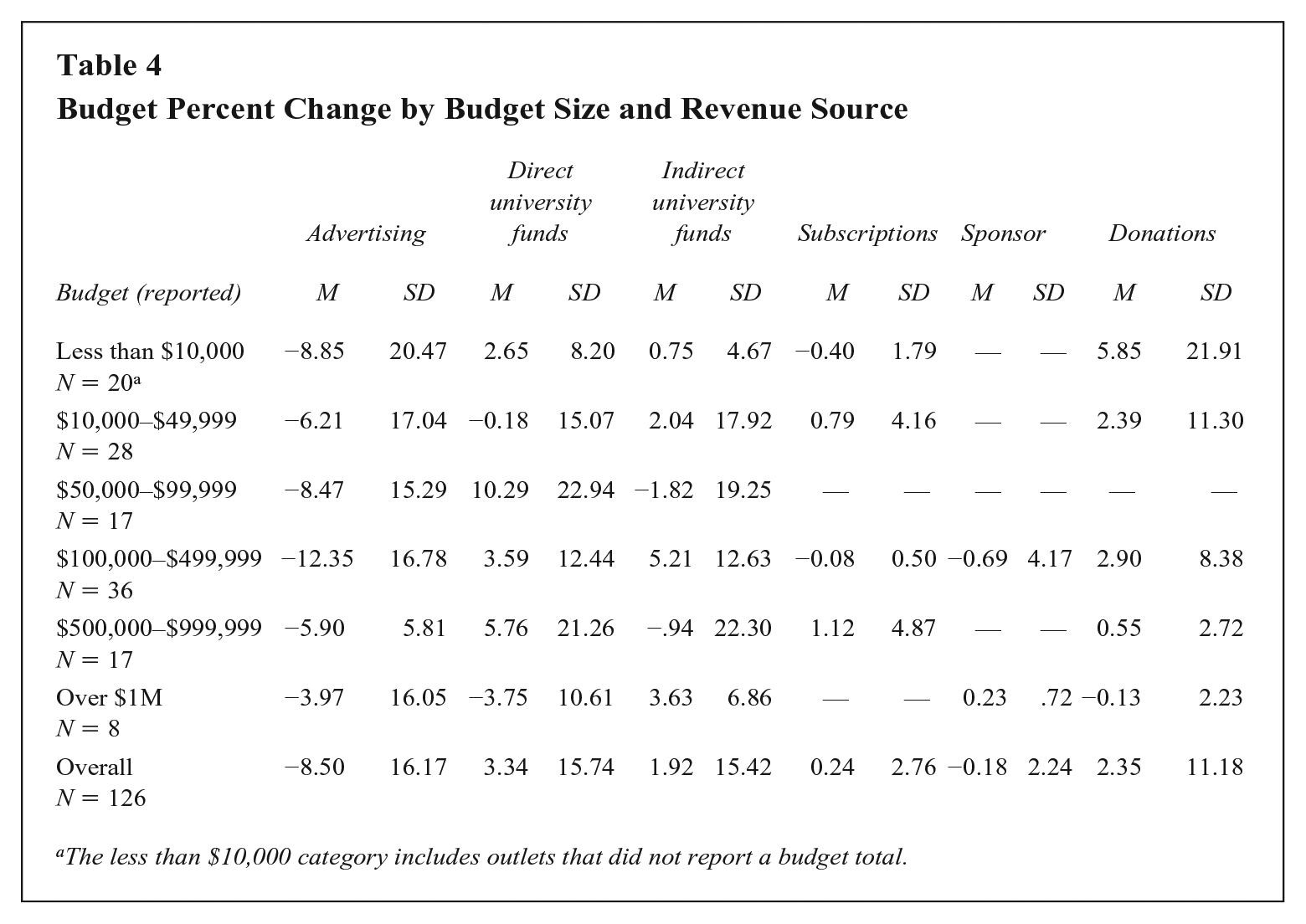
The less than $10,000 category includes outlets that did not report a budget total.
Regarding revenue, overarching themes also show that when publications are not seeking funds from their host institutions, they are making up the budget deficits with creative services provided to commercial entities such as social media management, advertising creation, and event planning. However, uncertainty looms over whether this structure is sustainable in the long run and how it could potentially interfere with the autonomy and independence of the journalistic arm of each organization. What happens if an investigative reporter angers one of the largest creative services clients? How will decisions about publication content and pressures from clients be made? This is a shift in the age-old problem that plagues for-profit news media, but it stems from the same issues of independence for the journalist and their content. In this, we find that more exploration into this shift is needed beyond the quantitative analysis used for the first hypothesis. The question of advertiser influence must move beyond straightforward measures of advertising revenue and should include profits derived from services rendered by the organization at large.
The main goal of this article was to detail changes within the college media industry during the pandemic. In doing so, researchers found that the portion of budgets made up of advertising dollars among the respondents was down about 8.5% and reliance on direct university financial support had increased about 3.3%. This reliance was negatively correlated with independence. In addition, outlets started using other revenue avenues such as donations, sponsorships, and loans. This study also examined the effect of advertising revenue on student participation and found that outlets that reported fewer student participants were also more likely to report fewer advertising dollars. This could be explained by efforts to pay student workers within college newsrooms (which is not always the case). However, the qualitative data suggested that several outlets added editorial roles, which might be indicative of fewer outlets offering pay to leaders.
All of these factors have the potential to impact the content pursued and published in these media outlets, as they represent aspects of societal, institutional, organizational, routine, and individual influences (Shoemaker & Reese, 2013) on publications. In this aspect, the current study helps to expand the Hierarchical Influences Model into the college media realm by arguing that student media outlets are often at the behest of several layers of pressures when they are choosing content, sources, and publication strategies, just as professional outlets. Measures of independence previously used in the literature might serve as the basis for explaining where influences might occur for student outlets, but they do not translate to the inherent meaning of independence within the newsrooms that ascribe to independence mindsets. Publications that relied on print might not be publishing tactile products as often, but that does not necessarily mean their audience is suffering for it. This suggests that aspects of the hierarchical influence model (Shoemaker & Reese, 2013) are highly relevant in the college media setting. Future work might consider measures of organizational stability as related to publication frequency and the mediation of funding sources as an aspect of that. How the university has set up its relationship with the news outlet, how the outlet hires staff, and the attributes of those staff are all inherently relevant to the content of the newspaper. In addition, advertisers and potential funding sources do play a role in the way editors, reporters, and advisers at college newspapers decide on the stories they select and publish. This study finds valid reasons for expanding HIM into research on college media.
Limitations and Call for Future Research
As with all research, this study had limitations. This study focused on the “newspaper of record” on each college campus, the established news organ that has historically provided community watchdog coverage comparable to that provided by professional newspapers in the off-campus world. But, as with the larger off-campus world, news media is not monolithic, and the ability to publish inexpensively online is empowering startups that cater to niche interests. Broadcast entities on college campuses also help communities in their daily news consumption, although these outlets are most often incapable of true independence from the university due to facility costs and FCC licenses. Curriculum-based publications can also impact participation in student media. These publications, too, can contribute to the community’s information ecosystem, and they are worthy of more attention than this paper is able to provide.
It is possible that some of the diminution in revenue and readership associated with the sudden abandonment of campuses during the onset of COVID-19 beginning in March 2020 will prove to be temporary and short-lived. Future research should focus on the extent to which the pandemic hastened a perhaps-overdue “cord-cutting” between student media and the printed page, necessitating better digital delivery systems that may prove lastingly beneficial.
Efforts to investigate diversity in student newsrooms, especially in leadership of student newsrooms, will be imperative to ensure true changes are being considered. As with professional media, the lack of diverse voices from the ranks of the outlet exposes its inherent disconnection with its audience. As discussed, outlets are attempting to fix these historically problematic issues, but past iterations of diversifying efforts were not maintained or, more probably, less than sincere. Optimistically, researchers hope this round of efforts is a turning point for student newsrooms and professional outlets, as well. These findings are similar to past work (Smith, 2008) and recent work focused on diversity at college outlets (Finneman et al., 2022). However, the progress toward true diversity in newsrooms should persist as a point of research continually to ensure the industry makes sincere progress toward improvement.
Finally, nonprofit journalism is having a “moment in the sun” in the professional realm. In recent years, major metropolitan newspapers in Philadelphia and Salt Lake City have restructured into not-for-profit corporations to rebuild their broken economic model around tax-advantaged donations instead of sales. Vast philanthropic support has poured into nonprofit news outlets either directly or through donor challenge campaigns such as NewsMatch, which boasts $150 million in support for nonprofit newsrooms since 2016 through a consortium of foundation underwriters. There is no outward indication, however, that any of this largesse has benefited the original nonprofit newsrooms—student newspapers—although they can serve as cost-efficient laboratories for experimentation benefiting the entire news industry. Further study is needed to gauge why the outpouring of institutional support for nonprofit news has almost entirely overlooked student-run media, and whether the omission can be remedied through more effective donor cultivation strategies, before it is too late to save what is left of independent student-led newsrooms.
Footnotes
Appendix
Funding
The author(s) disclosed receipt of the following financial support for the research, authorship, and/or publication of this article: The Brechner Center for Freedom of Information at the University of Florida received a grant from the Lumina Foundation to capture a snapshot of the financial state of college media, identify challenges facing student media amid the pandemic, and posit solutions to the industry’s challenges. The current study was paid for through this financial support.
