




Abstract
With Canada becoming the first G20 country to legalize the recreational use of cannabis, there has been increasing interest in the emergence of this new marketplace. Newspaper framing helps to shape public opinion on legalization and news sources play a role in determining how the public perceives the use of cannabis. This research analyzes how mainstream newspapers reported on the legalization of recreational cannabis in Canada in the years before and after legalization (between 2016 and 2019). Using a content analysis of 1,390 cannabis-related articles, 11 dominant reporting themes are identified. Over time, there was a shift from negative and sensationalist cannabis news coverage toward more balanced and progressive framing. The findings identify the influence of editorial political stance on thematic coverage.
The recreational use of cannabis in Canada became legal on October 17, 2018, making it the first G20 country to legalize the recreational use of cannabis at the national level. For over a century, the media have framed the public’s perceptions of cannabis (Stryker, 2003; Sznitman & Bretteville-Jensen, 2015). At different times, “cannabis use has been alternately promoted and demonized forming shifting, contingent, and contested islands of morality situated between competing discourses of legitimacy and illegitimacy” (Warf, 2014, p. 418). It has been argued that the supply and consumption of cannabis have straddled moral boundaries of inclusion and exclusion (Wilton & Moreno, 2012). Taylor (2008) argued that a critical outcome of the media’s influence on cannabis perceptions is the decision to frame illicit drug use primarily as an individual’s choice and as criminal—instead of being a public health concern. Therefore, understanding how cannabis legalization is framed is necessary for understanding changing social mores—or how they are likely to change based on how the media portray the industry.
Research has examined the effect of media framing on the public’s perspectives on cannabis consumption and legalization. In the 1920s, anticannabis rhetoric in the United States emerged as an offshoot of efforts by the cotton industry to outlaw the production and sale of hemp-based products (Baum, 1996; Warf, 2014). Speaker (2001) notes that high-circulation newspapers (e.g., the San Francisco Examiner, Los Angeles Examiner, and The New York Times) framed cannabis from a perspective of public safety and crime. Similarly, Haines-Saah et al. (2014) drew a direct link between media framing, public perception, and political action in a Canadian context, arguing that marijuana was first criminalized in Canada in 1923 following the publication of the book The Black Candle (1922) by Emily Murphy (1973) (a magistrate and activist), which described marijuana as the “new [drug] menace” (p. 48).
The prevailing framing of cannabis in contemporary coverage has continued to be classified as negative and sensationalist (Haines-Saah et al., 2014), with an emphasis on crime (Bright et al., 2008) and describing undesirable users. Stryker (2003) provides further evidence of the media’s ability to shape public perception through this negative framing, identifying how the media focuses on the punishments for using cannabis products (e.g., suspensions, arrests, and job loss) resulted in adolescents abstaining and ultimately disapproving of cannabis consumption. However, research on cannabis reporting in the media has also highlighted positive or nonsensationalist coverage (Lynch, 2021). Lenton (2004) identified a balance in the coverage of cannabis reform in Western Australia, while Sznitman and Bretteville-Jensen (2015) examined the framing of medicinal cannabis in Israel and found that many news stories framed cannabis as a medicine. Block (2017) examined the framing of cannabis legalization based on the source/s of information used within the newspaper articles. While Block (2017) analyzed 2 months of news coverage in the State of Colorado, the research highlighted the impact of the sources used on the positive or negative framing of cannabis.
This study builds on research that has analyzed how the media covers the liberalization of cannabis laws. While some research has investigated the print media’s response to cannabis legalization (Block, 2017; Sznitman & Lewis, 2015), there is limited understanding of cannabis-related media reporting in Canada. Building on research that has analyzed the media coverage of cannabis legalization (Aversa et al., 2021; Block, 2017), this study further explores the nature of traditional media reporting and the role that this might have on influencing public perceptions around cannabis consumption. This research identifies significant differences in the framing strategies of different news sources across the country. Much of these differences occur temporally, geographically, and based on the political stance of the news source.
Research Context and Theoretical Framework
Cannabis Legalization
The legalization of cannabis has been a nexus of policy and public debate in Canada for decades, mirroring broader debates and legislative efforts in the United States and elsewhere (Abalo, 2019; D’Amico et al., 2017; Lynch, 2021). In Canada, cannabis was made illegal in 1923 (Haines-Saah et al., 2014), and it was not until 1999 that the first use and possession exemptions were permitted (Controlled Drug and Substances Act). The purchase of cannabis for medical use was formalized in 2001 (Marihuana Medical Access Regulations) and expanded in 2013 (Marijuana for Medical Purposes Regulations) to legalize the online sale of cannabis products under strict medical prescription and pharmaceutical control. The legalization of medical cannabis marked the emergence of a burgeoning cannabis retail industry with the licensing of the sale of cannabis by private companies and producers. While broader legislative efforts to decriminalize the recreational use of cannabis in 2003 and 2004 failed, the legislative momentum to legalize possession and promote the recreational use of cannabis was a prominent commitment of the Liberal Party of Canada’s political platform in the run-up to their successful 2015 election bid. Introduced to the Canadian government in 2016, the Cannabis Act (Bill C-45) was formally passed by the Canadian Senate on June 19, 2018. Bill C-45 provided the rules and regulations around the production, distribution, sale, and possession of cannabis in Canada.
Cannabis policies in Canada have received significant media coverage (Abalo, 2019; Asquith, 2021a, 2021b; Aversa et al., 2021; Gagnon et al., 2020; Sorensen et al., 2022). Historically, mainstream journalistic print media have focused coverage on essential issues in the zeitgeist; the media can raise awareness and educate the general public through the amount, tone, and tenor of the news reported (Islam & Fitzgerald, 2016). Media framing can also shape public opinion, influencing how the public perceives and participates in the consumption of recreational cannabis (Block, 2017; Stryker, 2003; Sznitman & Bretteville-Jensen, 2015).
Framing Theory
Agenda-setting theory conceptualizes public perceptions as being strongly influenced by the amount of media attention given to a topic (McCombs, 2005; McCombs & Shaw, 1972; McLaren et al., 2018; Wackowski et al., 2020). This process occurs at two levels: (i) transferring prominent issues from the media’s agenda to the public and (ii) the framing element that focuses on the selected attributes deemed important by the news source. The issues on the agenda—or those ignored—shape the focus and form of policy. While agenda-setting theory is concerned with the amount of repeated exposure to a reported topic, media framing focuses on the media’s influence on its audiences. Specifically, media framing investigates how audiences understand or evaluate specific topics because of how it is presented (Demsar et al., 2022; Gounder & Ameer, 2018; Tuchman, 2002). As a result, the way that people frame their understanding, opinions, and actions on topics is, in part, shaped by the media they consume (Arora et al., 2019; Demsar et al., 2022). The seminal work by Goffman (1974) identifies that the value of frames is rooted in their ability to help individuals better understand societal complexities (Ardèvol-Abreu, 2015). Goffman refers to frames as a “schemata of interpretation, a framework that helps in making an otherwise meaningless succession of events into something meaningful” (Borah, 2011, p. 2). Gitlin (1980) and Entman (1993) focus on selection and salience, that is—news sources emphasize certain aspects while actively excluding others (Chyi & McCombs, 2004; De Vreese, 2004; Madden et al., 2021). With many newsworthy topics having competing frames (e.g., pro-cannabis legalization vs. anti-cannabis legalization), journalists are often mindful of the slant various news framing can provide their readers (Reese, 2017).
Much of the framing literature identifies that newspapers and news media can evoke strong emotional responses from their audiences while reinforcing stereotypes and guiding the perceptions and understandings of an issue (Islam & Fitzgerald, 2016). Popular media—newspapers, television, websites, and social media—act as critical sources of information and play essential roles in shaping opinion (Kim & Kim, 2018; Wilner et al., 2021). These forms of media often reach a much wider audience and communicate in a more appropriate language than academic research, policy briefs, or legislation (Hallin & Mellado, 2018; Kim & Kim, 2018; McGinty et al., 2016).
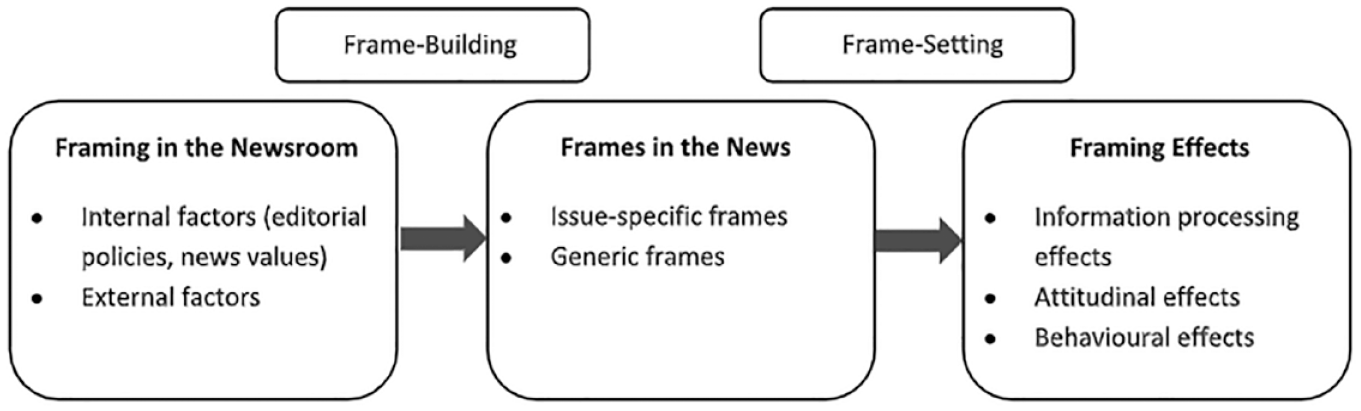
News framing theory is often viewed as a dynamic process that has two main components: frame building and frame-setting (see Figure 1). Frame-building refers to internal or external factors that define how frames are built. Internal factors include editorial policies and editorial position and views (De Vreese, 2005), while external factors include influences from social and political movements (e.g., cannabis legalization). On the contrary, frame setting refers to the interaction between the media frames presented by the news source and the public’s (individual or collective) prior knowledge, predispositions, and biases (De Vreese, 2005). The main goal of research related to frame settings is to investigate the situations where the readership of a news source begins to adopt the frames presented to them. The news frame settings have been reported to change individuals’ attitudes and beliefs around certain reported topics.
Media Framing Model
As a result of the complexities around some political issues (e.g., cannabis legalization), they are often subject to a wide variety of interpretations. Public debates and the subsequent understanding and interpretation of public issues that are dominated by news sources provide more digestible content that is easier to understand for the general public (De Vreese, 2005; Goffman, 1974; Reese, 2017). By deciding whether to publish news stories on specific topics, certain issues are selected to be more important, while others are less salient. Decisions to drive a story by bringing “the background into the foreground” (Durrant et al., 2003, p. 76) are often influenced by pressures from advocacy groups (see Pardal & Tieberghien, 2017) as they deliberately use media to advance specific causes and concerns (Kim & Kim, 2018). Alternatively, it can be an effort by the publisher to capture the broader sentiment within society (Druckman & Parkin, 2005). The decision-making around prioritizing specific stories is a balance (and often a feedback loop) between media efforts to drive and reflect public opinion on issues (Gamson & Modigliani, 1989; Gonçalves, 2018). By framing issues in specific ways, the media play a vital role in influencing what issues are presented to mass audiences, how these issues should be perceived, and what importance the public should attach to the issues (Gamson & Modigliani, 1989).
With news coverage being able to influence the attitudes and behaviors of its readers (Islam & Fitzgerald, 2016), research has analyzed the role that newspapers play in disseminating and promoting government policies (Lynch, 2021). While many news sources claim to be objective and impartial, news outlets are influenced by underlying social, political, and economic ideologies. As a result of this media bias, especially the political/editorial leaning of the news source, readers’ decision-making and opinions around political issues can be affected (Druckman & Parkin, 2005). There is a growing body of literature that has analyzed how societal norms influence news framing (De Vreese, 2005; Durrant et al., 2003) and organizational constraints (i.e., editorial position) (Druckman & Parkin, 2005; Kahn & Kenney, 2002; Marques et al., 2019; Patterson & Donsbagh, 1996). Research has demonstrated that news media has a direct influence on both changing public opinion and driving changes in policy in a wide range of areas, including smoking (Siegel et al., 2020; Smith et al., 2005), drug use (de Vries et al., 2020; Montané et al., 2005), alcohol (Azar et al., 2014), vaping (Chen et al., 2023), and cannabis (Stryker, 2003).
Newspapers contain stories of local and national importance and can convey differing perspectives. With newspapers servicing different audiences in different places, comparisons can also be made regarding how discourse and debate are presented in other areas (Corbett & Lindgren, 2019). Examples of this can be seen in public views on e-cigarettes (Wackowski et al., 2020) and alcohol (Fergie et al., 2019). Several studies have also used media analysis to evaluate differences in news coverage based on different geographies (Wackowski et al., 2020).
Research Questions
Despite the increased focus on cannabis-based research, there are currently several gaps in the literature, including (a) media coverage of federal-level cannabis legalization, (b) Canadian-focused research at a national level, and (c) variation in coverage based on time and editorial stance. Given the significance of Canada’s cannabis legislation, this research analyzes newspaper articles preceding and immediately following legalization to answer the following research questions:
How prevalent was cannabis reporting, and does this vary by news source and time?
What themes were most prevalent in the cannabis newspaper coverage, and do these vary by news source?
How did the coverage vary by the editorial stance of the newspaper?
How has the coverage of themes varied over time?
Methods
Newspapers provide a valuable data source to analyze media discourse for several reasons. First, newspapers are predominantly local and reflect relevant local issues and perspectives, albeit with a smaller number of major national newspapers. Second, a broad readership consumes newspapers regularly (i.e., daily or weekly), which speaks to everyday concerns. Third, newspapers are analytically “manageable because they contain abundant material that is readily sampled” (Harris & Hendershott, 2018, p. 976). Finally, despite the emergence of new media (i.e., social media platforms and websites), the discourse occurring there “takes their lead” from traditional print media—with the evidence showing this pattern, including discussions on cannabis (Månsson, 2016).
The research uses a comprehensive content analysis of 1,390 articles published in 11 Canadian newspapers between January 2016 and November 2019. The study period is selected because it represents a transformative period in policy development and the emergence of a legalized recreational cannabis sector. The study period bridges the introduction of legislation in 2016 and the formal approval of Bill C-45 in the House of Commons (November 27, 2017) and Senate (June 19, 2018). The study period also includes the first full year of legalized retail operations in Canada. The research covers media framing during the early formation of the recreational cannabis sector.
The research sample includes two national newspapers and nine local newspapers from seven cities across Canada (see Table 1). Following Haines-Saah et al. (2014), newspapers were selected using a purposive sampling method using both a maximum variation sample (i.e., different political and editorial leaning) and homogeneous sampling (i.e., readership size). To effectively analyze how mainstream newspapers reported on the legalization of recreational cannabis, readership size and geographic coverage were prioritized when selecting newspapers. The two most circulated national newspapers were selected as well as the largest news sources from each of the major regions in Canada: Western Canada, the Prairies, Ontario and Quebec, and the Maritimes. It is important to note that Quebec newspapers with large readership were excluded due to the authors of this study not being fluent in the French language.
Newspaper Sample
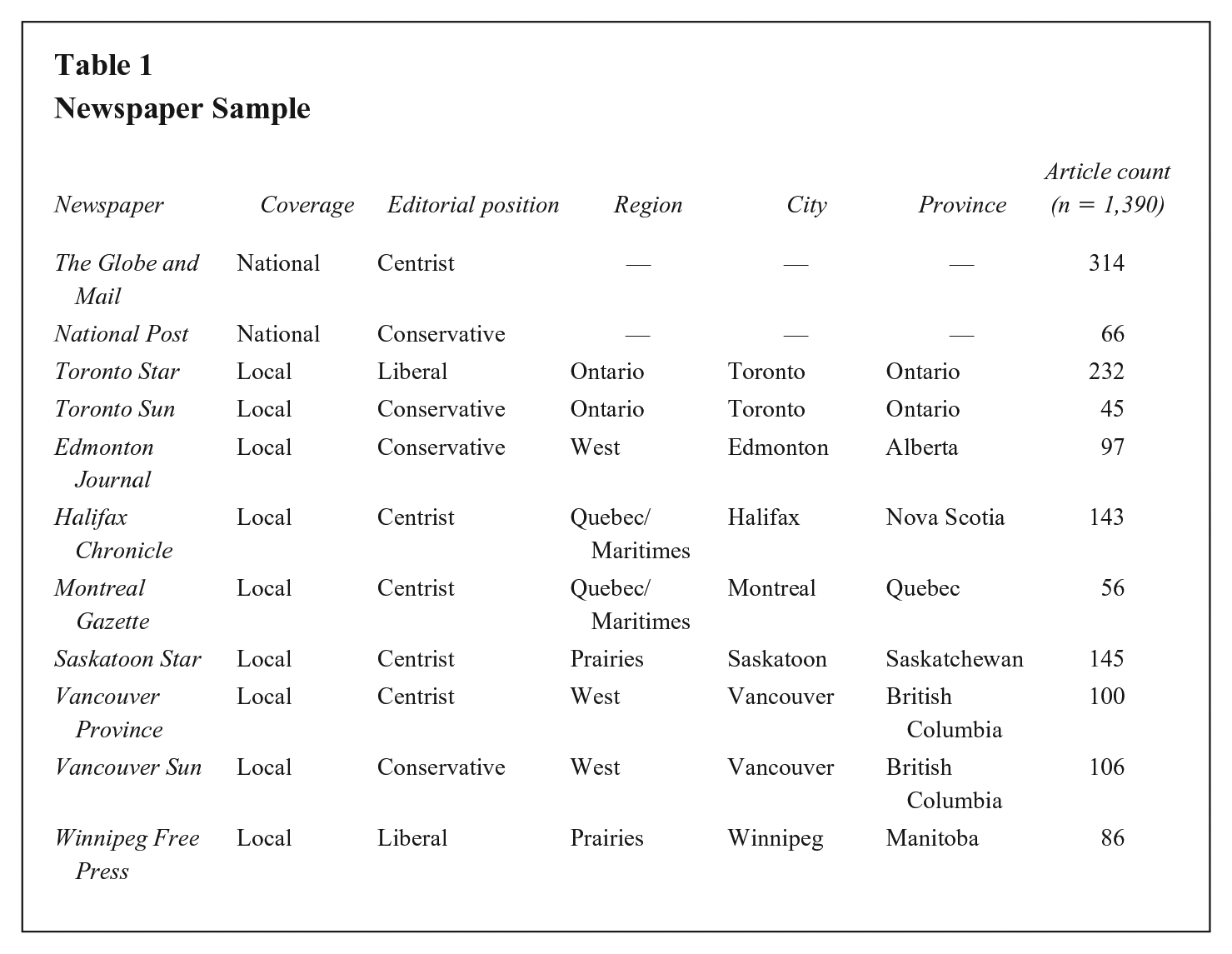
To investigate whether the political and editorial leaning of the newspaper influenced the type of cannabis reporting, it was important to have a sample of newspapers that was reflective of different political views. In some cases, the political and editorial leaning of the newspaper was explicitly stated on the news source’s website. In the absence of an explicitly stated leaning, the newspaper’s historical support for political candidates was used as a proxy. Specifically, the editorial leaning was determined based on federal-level political endorsements by the newspapers in the 2015 and 2019 Canadian elections. Therefore, if the newspaper offered support for conservative candidates, the political and editorial leaning would be categorized as conservative and vice versa.
Similar to Block (2017) and Haines-Saah et al. (2014), articles were identified through a systematic search of online databases. This research drew articles from the LexisNexis University database using specific search strings. These included marijuana, pot, cannabis, and weed; stores, business, shop, and retail; and Canada.
This search initially identified 3,436 articles. Around 2,046 articles were removed due to duplication, nonrelevance, and type, resulting in a final data set of 1,390 articles, which is much larger than similar research (e.g., 202 articles by Block, 2017). While the overall approach of this research follows the method laid out by Haines-Saah et al. (2014), the content analysis followed a similar analytical process developed by Hsieh and Shannon (2005) and Ritchie and Spencer (1994). Emphasis was placed on gaining familiarization with the data by reading, re-reading, and confirming that each article within the data set had thematic content relevant to the research questions.
The resulting valid articles (n = 1,390) were analyzed in three sequential stages: (a) the use of a computer-assisted unsupervised classification in NVivo to identify articles that made explicit reference to cannabis legalization and to identify initial nodes of discourse; (b) a manual content analysis to cluster similar nodes into broad themes; and (c) mixed-methods analysis (quantitative and thematic) to identify the dominant themes framing the stories and analyze differences in this framing within the sample of articles.
The manual content analysis was conducted by two researchers who independently assigned nodes generated during the unsupervised classification into broader themes. This coding was analyzed for both coding accuracy and inter-coder agreement. Overall, there was strong agreement within the coding, with a Cohen Kappa of 0.799 (Cohen, 1968). Across the final themes that emerged from this research, Retail had the weakest agreement at 0.710, while Product had the greatest agreement at 0.903.
The coding was conducted at the sentence level, and as such, each article could include multiple codes. The codes were then organized hierarchically into more narrow groupings of common content, which formed the themes. This process was independently completed by two coders and then combined through an iterative process whereby coders reviewed and validated the work of each other at each step of data organization (as outlined by Hsieh & Shannon, 2005). This process continued until there was agreement on the coding hierarchy. In total, 11 final themes were identified and enumerated.
Three analysis techniques were used to investigate variation in coverage. First, a series of Kruskal–Wallis H was used to identify if variance occurred in both overall coverage (between papers and over time) and thematic content (between themes and over time). The nonparametric Kruskal–Wallis H was used as Levene’s Test for Equality of Variance indicated that variance was not equal across different groups (i.e., papers, months). In total, 12 one-way tests were run for overall coverage (one for analyzing differences between papers, one for analyzing total coverage over time, and 10 for analyzing each individual paper over time), and 12 one-way tests were conducted for themes (one for comparing variations in theme prevalence, 11 for comparing themes over time). Second, Pearson’s chi-square test for independence was undertaken to examine whether the news coverage was homogeneous across the studied newspapers. Finally, a one-sample test for proportions using the z-statistic was applied with the null hypothesis that the prevalence of coverage in different newspapers (based on editorial leaning) does not differ from the overall tone of coverage in the entire sample.
Findings
How prevalent was cannabis reporting, and does this vary by news source and time?
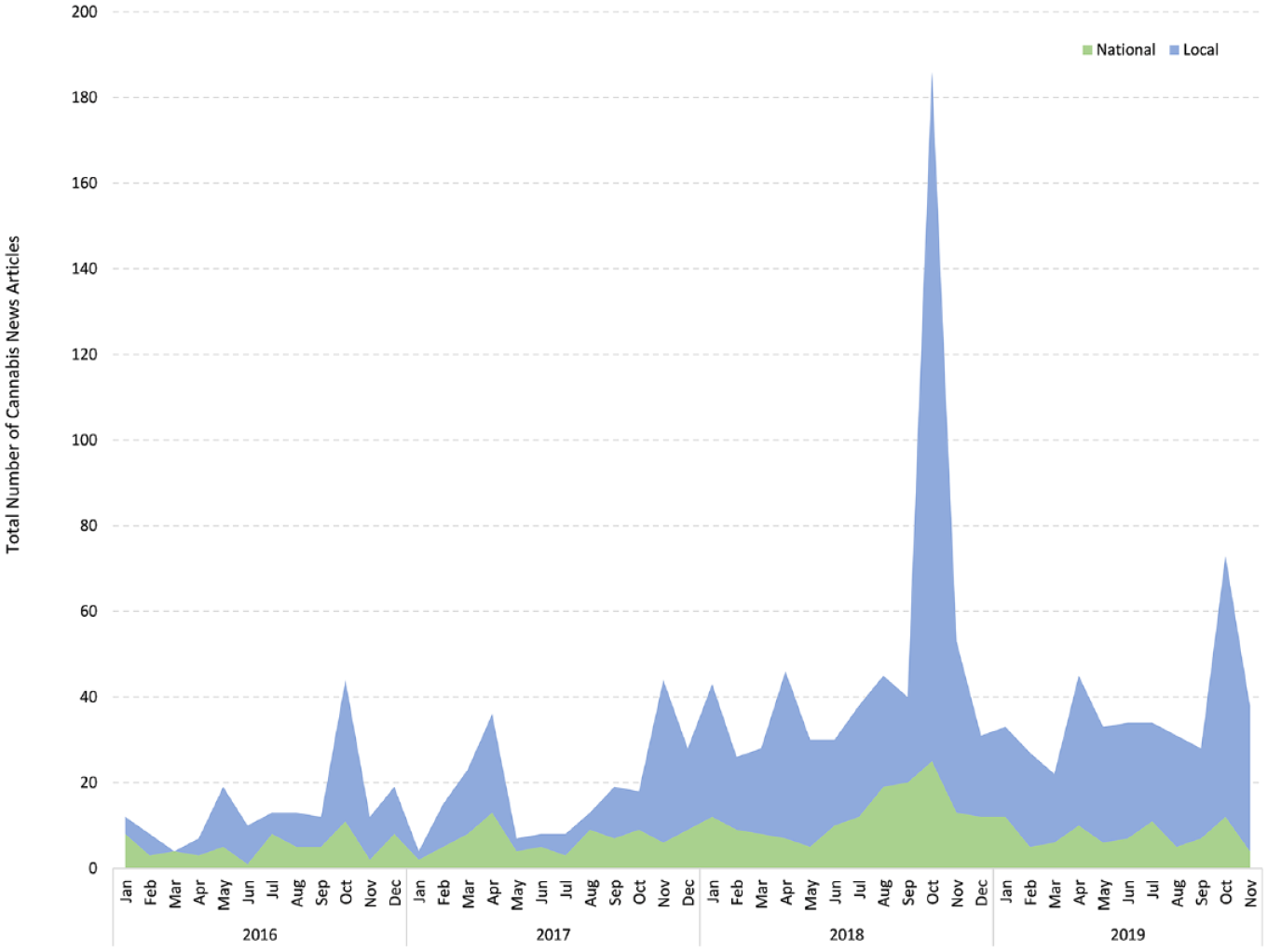
The prevalence of cannabis reporting varied considerably by the newspaper and over time. The Globe & Mail (314 articles) and the Toronto Star (232 articles) had the most prolific coverage. The Toronto Sun (45 articles) and the Vancouver Province (56 articles) had the least coverage. The national newspapers—particularly the Globe & Mail—created nearly 70% more content than local newspapers (4.0 vs. 2.4 articles/newspaper/month [APM]). Liberal-leaning newspapers (3.5 APM) published 25% more articles than centrist newspapers (2.8 APM) and 65% more articles than conservative newspapers (2.1 APM). Several newspapers had no coverage in a given month—particularly in the early stages of the study period (see Figure 2) indicating that cannabis reporting was not prominent during the entire study period.
Cannabis Coverage Timeline
There was an upward trend in the amount of coverage in the lead-up to legalization across all 11 newspapers. There were 173 articles identified in 2016, 223 in 2017, 596 in 2018, and 398 in 2019 (11 months, excluding December)—indicating greater attention on the topic when recreational cannabis was made legal in 2018. Second, there are four key waves of coverage: a primary peak in October 2018, with smaller secondary peaks in October 2016, November 2017, and October 2019. Third, the pattern of overall coverage was different across time and newspapers. The Kruskal–Wallis test found that differences between newspapers (H = 19.574; 9 df; p = .034) and between months (H = 60.78; 45 df; p = .047) were both significant, answering RQ1, which sought to identify cannabis reporting prevalence by news source and time. In addition, all papers except the National Post, Toronto Sun, and Vancouver Sun were found to have statistically significant variation in coverage over the study period. The lack of variation for these three papers is due to the low level of total coverage.
What themes were most prevalent in the cannabis newspaper coverage, and do these vary by news source?
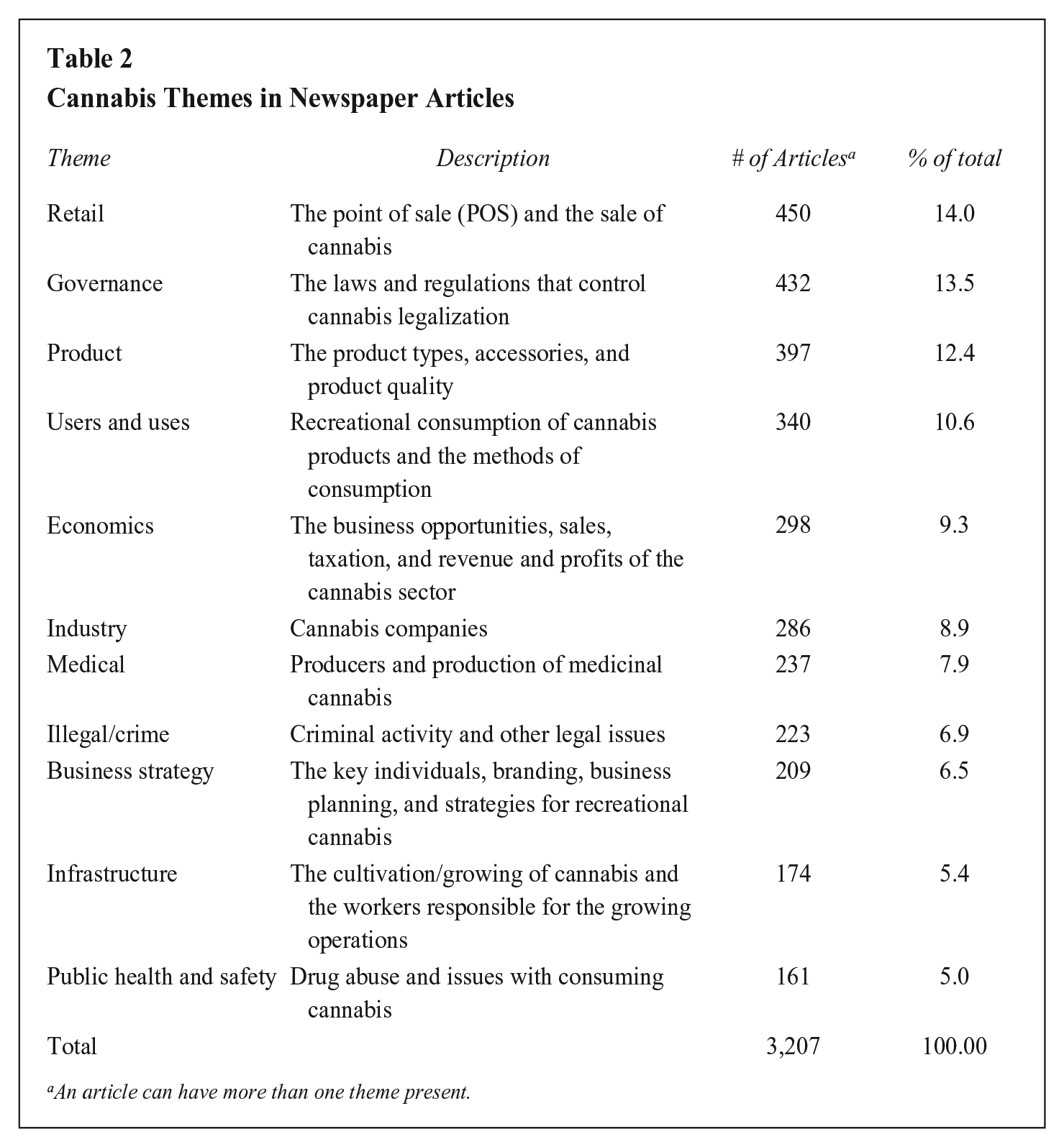
Eleven themes were identified (see Table 2) in the cannabis newspaper coverage. The top four themes were Retail (14.0%), Governance (13.5%), Product (12.4%), and Users and Uses (10.6%), which accounted for approximately 52% of all the newspaper coverage. In comparison, the least prevalent themes were Infrastructure (5.4%) and Public Health and Safety (5.0%). The Kruskal–Wallis test showed that there was a statistically significant difference across the themes (H = 17.862; 10 df; p = .046), which answers RQ2 and evidences that the themes in the newspaper coverage vary significantly by news source.
Cannabis Themes in Newspaper Articles
An article can have more than one theme present.
Retail (14.0%) was the most dominant theme present in the news coverage and focused on the point of sale (POS) for recreational cannabis and the locations of cannabis dispensaries. Emphasis was often on tenant–landlord relationships and where the physical stores would likely open. Consumer displeasure around the limited number of physical store openings was also frequently reported. This was often discussed in terms of municipalities opting out of permitting physical stores or issues with the licensing protocols.
The Governance theme (13.5%) focused on details surrounding the laws and regulations that controlled legalization, commonly discussing the different provincial legalization rules. These articles provided details on key dates related to the supply of cannabis, restrictions on production, and the sale of cannabis products. These news articles also discussed societal approvals for cannabis legalization—often providing statistics indicating approval rates for legalizing recreational use and the sale of cannabis products.
Similarly, the Product theme (12.4%) focused on product types (e.g., dried cannabis, oils, and edibles) and accessories available for purchase across the country. Furthermore, these articles reported on consumer issues with product quality.
The Users and Uses theme (10.6%) discussed the recreational consumption of cannabis products, explicitly covering topics such as the effects related to different forms and frequency of consumption, along with the age of users and reasons for consumption.
The Economics theme (9.3%) discussed the business opportunities, sales, taxation, revenue, and profits of the cannabis sector. Much of this coverage focused on the sales generated by the legal cannabis market. These data were presented at various levels of geography (i.e., municipal, provincial, and federal). Other coverage included topics on taxation, market issues, and market strengths. Cannabis sales not meeting initial sales projections were also well documented, often attributed to the high cost of legal cannabis products, a lack of store advertising and packaging, poor product quality, and supply issues.
The Industry theme (8.9%) focused on cannabis producers. These articles provided information on the companies in Canada that emerged as the sector was legalized, often focusing on information about them and their motivations, plans, goals, and actions. Specific attention was also given to how the industry quickly emerged and consolidated. This theme also focused on heavy public investment in cannabis stocks by discussing the amount of activity and growth in cannabis stock prices.
The Illegal/Crime theme (6.9%) was dominated by coverage of the black market and nonlicensed dispensaries. These articles often reported concerns over the rules put forward by government officials on legalization protocols and their ability to eliminate the black market and nonlicensed dispensaries. This was often linked to potential concerns around supply issues and limited retail choice during the initial rollout of cannabis stores.
The Business Strategy theme (6.5%) focused on key individuals responsible for the sale and production of recreational cannabis. This included people working for media and marketing firms, nongovernmental organizations (NGOs) (e.g., Mothers Against Drunk Drivers (MADD)), consultants, lobbyists, professors, and investors discussing the approaches and tactics of the cannabis industry. The articles reported what the recreational cannabis retail landscape should look like or what the critical business strategies should be to help shape the cannabis industry. These articles also highlighted issues with the promotion of cannabis products, with articles on the uncertainty regarding the rules and regulations that would dictate cannabis product advertising and packaging.
The Medical theme (7.4%) focused on the producers and production of medicinal cannabis. These articles reported on medical cannabis producers wanting to expand their operations to include recreational cannabis, the high cost of medical cannabis, and the potential for recreational cannabis to offer some cost relief to patients. Notably, there was also coverage of Canada’s largest pharmacy chain, Shoppers Drug Mart, applying for a license to provide medicinal cannabis.
The least prevalent themes were Infrastructure (5.4%) and Public Health and Safety (5.0%). The Infrastructure articles discussed the cultivation/growing of cannabis and the workers responsible for the growing operations. These articles reported on the location of the production sites and site restrictions. The articles also highlighted the government and public concerns around product shortages experienced during the initial retail rollout. This was often associated with the strict policies governing growers, producers, and retailers. The Public Health and Safety theme had news coverage dealing with drug abuse concerns and the subsequent issues from consuming cannabis. This covered health concerns with smoking (including secondhand smoke), over-ingestion, and youth ingestion. These articles also had a strong focus on youth consumption and driving impairment.
How does the coverage vary by the editorial stance of the newspaper?
Figure 3 summarizes the prevalence of each theme within each newspaper’s coverage of cannabis retail. There is a statistically significant difference in the coverage of the 11 newspapers (χ = 153.20; p = .00037). Specifically, there was a significant relationship between Business Strategy, Users and Uses, Illegal/Crime, Industry, Product, and Public Health and Safety and the different newspapers. However, there did not appear to be any statistically significant relationship between Economics, Governance, Infrastructure, Medical, and Retail and the different newspapers.
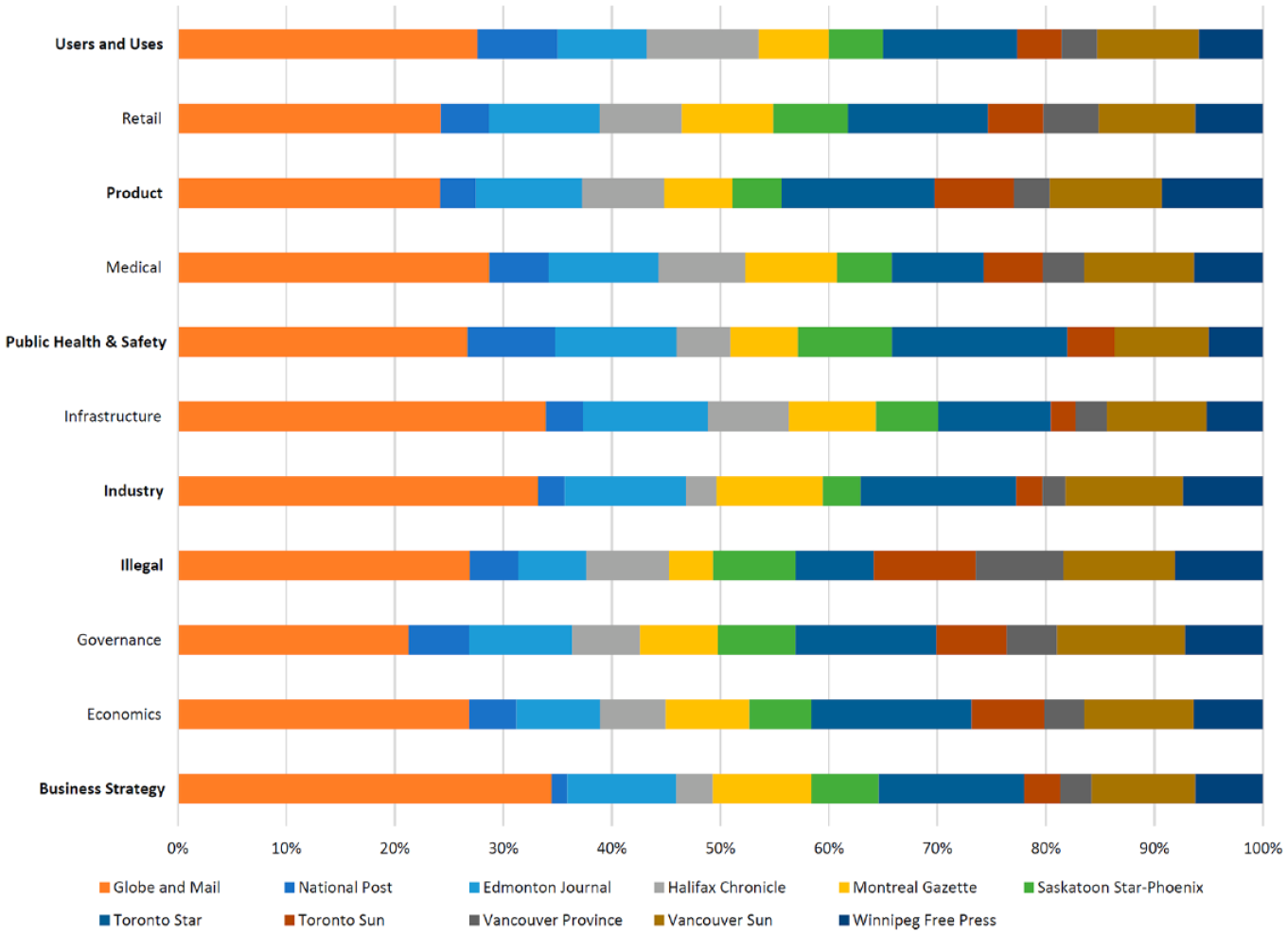
Theme Coverage by Newspaper
The Globe and Mail had the least-focused reporting as they had the widest variation in their cannabis coverage. Conversely, the Halifax Chronicle and the Vancouver Province were the most concentrated in their news coverage; almost 60% of their reporting related to Retail, Product, Users and Uses, and Governance. When comparing national-level coverage (The Globe and Mail and National Post) versus local coverage, cannabis reporting was not homogeneous and there tended to be a diametric pattern of coverage. Nationally, a statistically significant amount of attention was given to content related to Business Strategy (z = 2.9), Industry (z = 2.8), Infrastructure (z = 3.9), and Public Health and Safety (z = 2.2) compared to the average coverage across all newspapers included in the study. The local newspaper coverage was significantly less prevalent in these areas (i.e., z-scores of −4.3, −4.0, −5.7, and −3.2, respectively). A similar pattern was found when contrasting the most common coverage at the local level against its national prevalence. Among the local newspapers, reporting on Retail, Product, and Governance were significantly more common, while the themes were considerably less frequent within national coverage.
The chi-square results identify that the newspapers’ editorial position influenced the news coverage (see Table 3) answering RQ3, which asked how the coverage varied by the editorial stance of the newspaper. A statistically significant difference can be seen within the Business Strategy (z = 6.3), Industry (z = 5.9), and Infrastructure (z = 5.2) themes, as centrist newspapers accounted for a higher proportion of coverage on these themes when compared to both the liberal and conservative newspapers. On the contrary, conservative newspapers focused greater attention on the Governance and Illegal/Crime themes, while liberal newspapers had a stronger focus on Product and Public Health and Safety.
Theme by Editorial Position
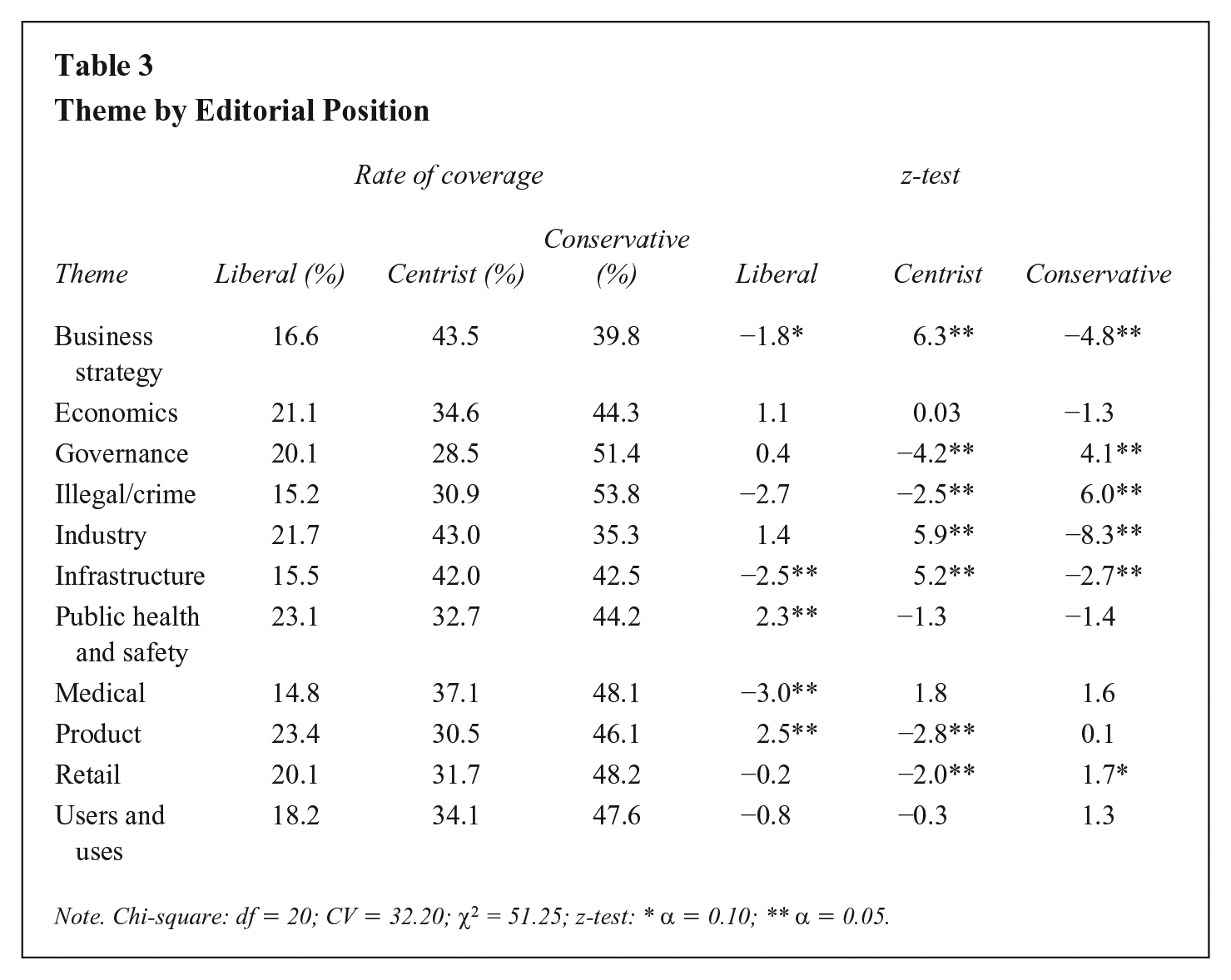
Note. Chi-square: df = 20; CV = 32.20; χ 2 = 51.25; z-test: * α = 0.10; ** α = 0.05.
How has the coverage of themes varied over time?
There was significant variation month to month in what issues received media attention. Several key trends emerge within the coverage. First, Business Strategy (3.4% in 2016 to 8.0% in 2019), Economics (7.5% to 10.6%), and Industry (4.6% to 9.5%) all grew in their share of coverage over the 4 years—and saw incremental increases each year. Conversely, Governance (14.1% to 12.3%), Medical (11.7% to 3.6%), and Illegal/Crime (9.5% to 6.4%) saw declines in their share of coverage. The remaining themes remained stable (i.e., less than a 1% change over the 4 years), except Product that had a U-shaped pattern (i.e., 13.6% in 2016, 9.6% in 2017, 11.8% in 2018, 14.3% in 2019). These patterns were reflected in the one Kruskal–Wallis tests conducted for each themes showed that the themes of Economics (H = 64.78), Governance (H = 60.89), Industry (H = 63.15), and Products (H = 61.11) were all statistically significant (at p = .05), therefore answering RQ4, which asked how the coverage varied over time. Despite the year-over-year stability, Retail (H = 61.56) and Users and Uses (H = 62.54) also were found to have variability in the month-over-month comparisons. In terms of raw totals, the magnitude of themes follows a similar pattern to the overall coverage. In October 2018, the highest counts of every theme were observed. Again, like the overall coverage, there are smaller peaks where raw counts of themes were higher in October 2016, November and December 2017, and October 2018.
Conclusion
The research identifies the prevalence of news coverage focusing on cannabis: 1,390 articles focusing on cannabis retail during a transformative period in terms of policy development for cannabis legislation. The sheer volume of cannabis coverage can play a role in shaping public opinion (de Vries et al., 2020; Siegel et al., 2020). The newspaper coverage of cannabis was focused mainly on Retail, Product, and Governance. The volume of articles reporting on issues of retail supply can be attributed to the federal guidelines for cannabis legalization allowing for provincial flexibility in selecting their retail framework, which resulted in uncertainty around the supply of recreational cannabis. This was further highlighted in the variation in coverage between national and local news sources. Local newspapers paid significantly more attention to Retail-, Governance-, and Product-related content—perhaps due to the localized flexibility in retail model adoption, laws around purchases, and product availability.
While media coverage of cannabis has historically been negative and sensationalist—often focusing on crime and public safety (Haines-Saah et al., 2014; Sznitman & Bretteville-Jensen, 2015)—the research evidences a move toward a more balanced progressive framing strategy by Canadian news sources. In the wake of legalization, the news coverage shifted to retail supply, focusing on the details of legalization and less on crime and other negative externalities. While Illegal/Crime still appeared in the coverage, the reporting largely shifted away from the representation of undesirable users who face arrests and job loss toward a focus on removing the black market (i.e., illegal dispensaries).
The substantive shift in cannabis reporting can profoundly affect the public’s approval of cannabis legalization. With publishers often attempt to capture a broader sentiment in society (Druckman & Parkin, 2005), it is unsurprising that favorable societal approval ratings for both cannabis legalization and the rollout protocols adopted by individual provinces were frequently reported. Furthermore, the prominence of the Governance theme is consistent with research that identifies that cannabis legalization is primarily viewed through a legal or policy-related lens (Kim & Kim, 2018; McGinty et al., 2016). With media framing investigating how audiences understand or evaluate specific topics because of how its presented (Demsar et al., 2022; Gounder & Ameer, 2018; Tuchman, 2002), the way the public will understand the opinions and actions on cannabis legalization is no longer focused on the negative effects of cannabis consumptions. With frame settings being reported to shift the attitudes and beliefs that individuals have around certain reported topics, there is a strong movement toward greater acceptance of more liberal views on cannabis.
There were notable temporal variations in the content. With Business Strategy, Economics, and Industry content increasing in coverage over the study period, it is clear that the establishment of the cannabis business sector became a growing area of importance in the zeitgeist (Islam & Fitzgerald, 2016). Once legalization was declared, reporting shifted away from Medical (11.7% to 3.6%) and Illegal/Crime (9.5% to 6.4%) as these issues were seen to be more critical leading up to the passing of Bill C-45. Therefore, the Canadian news media went through a highly transformative period moving away from focusing on whether cannabis should be legal to reporting on how cannabis legalization should take place and evaluations of the success of the cannabis retail frameworks adopted across Canada. With media framing focusing on selection and salience, there is a movement toward greater societal approval as news sources emphasize certain aspects while actively excluding others (Entman, 1993; Gitlin, 1980).
Internal factors affecting how news sources frame their content still influenced how cannabis-related topics were reported (Reese, 2017). This was evident as there were distinctly different framing strategies based on the editorial position of the newspapers. Newspapers with more conservative editorial positions appeared to be more likely to focus the public’s attention on the negative elements of recreational cannabis legalization and its expansion across the country. This can perhaps be attributed to the social and political philosophies associated with conservatism, historically opposing the liberalization of recreational cannabis. With the decision-making around prioritizing specific news frames, the media play a vital role in influencing how these issues should be perceived and what importance the public should attach to the issues (Gamson & Modigliani, 1989; Reese, 2017). While there were differences in reporting, there is a clear movement away from the more biased, often sensationalist, reporting that has historically been common.
With Canada becoming the first G20 country to legalize the recreational use of cannabis, there has been increasing interest in the emergence of this new retail market. With newspaper framing helping to shape public opinion on legalization, news sources play a role in determining how the public perceives recreational cannabis. Variations in media coverage, both geographically and politically, highlight divergent perspectives on cannabis legalization. With different cannabis framing perspectives affecting the public views on recreational cannabis consumption (Stryker, 2003; Sznitman & Bretteville-Jensen, 2015), attention must be given to these differences in order for the retail rollout to be successful. From a managerial perspective, the ability to understand a consumer’s exposure to this newly emerging retail market can help retailers understand the opportunities and challenges that can affect shopping behavior. Depending on a person’s preferred news outlet, their exposure to cannabis news will vary, thus potentially affecting their views and opinions on the cannabis retail sector (Gamson & Modigliani, 1989; Reese, 2017).
Limitations and Further Research
There are several limitations to this study that provide the opportunity for further research. As noted by Block (2017), studies that solely focus on newspaper articles do not capture the many forms of other media that provide vehicles to frame and provide coverage of public policy issues. The analysis focused on 11 newspapers, with the nine local newspapers only capturing reporting in major Canadian cities. Future research has an opportunity to analyze newspaper reporting at the provincial level (i.e., to capture differences in the rollout of provincial cannabis legislation) and across other Canadian markets (e.g., smaller cities and rural markets). There is also the opportunity to extend this study to other countries/regions at various stages of legalization. Furthermore, this research focuses on the media framing from the news source’s perspective rather than the reader’s perspective. Therefore, future studies should investigate the role that ethnicity, gender, and class affect perceptions around cannabis legalization.
In addition, while English and French are both official languages in Canada, French-language reporting was not included in the analysis. Further research of French-language newspapers, particularly in the Province of Quebec, Canada’s second-largest province, would be appropriate (the Montreal Gazette, included in the analysis, is an English-language newspaper in Quebec). The research does not provide insights into the impact of the framing and coverage of cannabis legalization in terms of Canadian public opinion about cannabis (apart from noting that newspapers increasingly published articles based on consumer surveys). There is a need for further research to evaluate the role of newspapers in shaping public opinion about the cannabis marketplace and related government policies.
Footnotes
Aversa and Jacobson are assistant professor, and Hernandez is a professor in the School of Retail Management at Toronto Metropolitan University. Cleave is an assistant professor and Macdonald is an instructor. Both are in the Department of Geography and Environmental Studies at Toronto Metropolitan University. Dizonno is in the School of Retail Management at Toronto Metropolitan University.