



Abstract
Communities face time and funding constraints in plan-making. To understand which plan types are preferred and how those preferences relate to local politics, implementation action, and equity, this research assembled the first comprehensive state-wide database of General Plans and Climate Action Plans (CAPs). Through plan scoring, term counts, siting of electric vehicle (EV) charging ports, and Community-Based Organization (CBO)–led climate readiness workshops hosted across the state, we find that addressing EV policy in both CAPs and General Plans statistically increases the likelihood that the jurisdiction sites EV charging ports. Underlying community characteristics impact plan choice. For every increase in the percentage of Democrat voters, a jurisdiction is 4 percent more likely to create a CAP. At the same time, neither CAPs nor General Plans included a fulsome focus on equity, indicating room for additional planning focus. To ensure climate readiness planning, we recommend that state and federal agencies support a flexible local planning approach while increasing opportunities for local jurisdictions to learn from and celebrate advances.
Introduction
In the absence of a national climate policy in the United States, local jurisdictions have piloted diverse planning approaches. Nearly two-decades ago, Lutsey and Sperling (2008) argued that the realization of these local policy initiatives alone could stabilize U.S. emissions at 2010 levels by the year 2020—thus removing the need for federal mandates. This prediction has fallen flat (EPA 2024). Greater local commitments and implementation actions are needed even in California, a state with strong enabling legislation and bold goal-setting to reduce anthropogenic emissions by at least 85 percent below 1990 levels, thereby achieving carbon neutrality by 2045 (California Air Resources Board [CARB] 2021). To encourage more local effort, California has released unprecedented financial and technical support with a large portion focused on electrifying the transportation sector according to the 2022 California Air Resources Board scoping plan.
Even with broad consensus that local jurisdictions should engage in climate planning, state policymakers remain agnostic about the policy approach most likely to spur implementation. Should local justifications embed policies in their state mandated comprehensive plans? Called General Plans in California, these plans are legally required documents that undergo California Environmental Quality Act (CEQA) review. Should local jurisdictions also adopt voluntary Climate Action Plans (CAPs) to address climate readiness? Or should they avoid both and focus on implementation through other means, like the adoption of municipal reach codes that go beyond baseline state requirements?
To answer these questions, this research explores where and how local jurisdictions in California address climate readiness. The mode of planning is important to consider given the limited time, resources, and capacity that local jurisdictions have to engage in the planning process. Expediency is also a concern in the face of urgency as the planet approaches a catastrophic tipping point. The International Panel on Climate Change (IPCC 2022) warns that there is a brief window of time, about five years (Moynihan 2020), where committed action can avoid the very worst effects of climate change. The time crunch is compounded in lower income communities that face planning capacity challenges as well as a lack of ready investment capital. These same communities are on the front lines for the worst climate events, including heat waves, flooding, and drought (Frosch et al. 2018; Levy and Patz 2015; London et al. 2013). Local planning priorities in vulnerable communities are often focused on other pressing challenges like housing affordability and economic security. The cost of diverting planning personnel may prohibit additional or optional planning such as a CAP. Similarly, engaging community members on mitigation efforts, such as promoting Zero Emission Vehicles (ZEVs), may prove difficult as the topic is more tangential.
On the other hand, there is evidence from Brinkley and Wagner (2024) that jurisdictions containing a majority community of color are more likely to address Environmental Justice (EJ). These early adopter EJ jurisdictions have spurred state legislators to mandate that all California jurisdictions address EJ in their General Plans (Sze et al. 2009; Cal. Gov. Code, § 65302[h]). Plan updates after 2018 trigger the mandate to identify “disadvantaged communities” (Gov. Code § 39711) and create policies that will (1) “reduce the unique or compounded health risks in disadvantaged communities by means that include, but are not limited to, the reduction of pollution exposure, including the improvement of air quality, and the promotion of public facilities, food access, safe and sanitary homes, and physical activity,”(2) “promote civil engagement in the public decision-making process,” and (3) “prioritize improvements and programs that address the needs of disadvantaged communities” (Gov. Code Sec. 65302[h]). Such bottom-up policymaking has instilled the California climate planning process with a mandate to focus on equity while running climate policy through the General Plan update process and CEQA review (California Department of Justice 2023). In comparison, the CAP process can be undertaken voluntarily and more quickly with fewer public meetings and debate. The more nimble-footed CAP can also be readily referred to in the required General Plan, thereby speeding up the plan-making and implementation process. Which plan type do various communities lean toward? And are there consequences for implementation or equity as a result?
These questions are at the heart of a perennial planning debate about whether plans causally impact outcomes (Knaap, Ding, and Hopkins 2001; Liao, Warner, and Homsy 2020; Millard-Ball 2013; Steelman and Hess 2009; Talen 1996). In an analysis of forty-four local CAPs, Woodruff and Stults (2016) note a rich array of approaches and policies, but very little implementation. In the context of California, Millard-Ball (2013) suggests that the CAPs are the result of community conversations that long precede the plan, and that the plan serves primarily to codify action that was likely to happen anyway. Whether plans help raise the profile of policies or lead to implementation, the largest climate plan evaluation to date shows that planned actions are not enough to reach state, national, or international targets. Internationally, Reckien et al. (2018) led a team of thirty authors in qualitatively coding CAPs from 885 European cities, finding that if the planned actions were nationally representative, the eleven countries investigated would achieve only a 37 percent reduction in greenhouse gas (GHG) emissions by 2050 (Reckien et al. 2018), falling well short of the 80 percent reduction recommended. With aggressive state-level ZEV targets, how do California’s local efforts rise to meet the challenge?
In contextualizing findings, we start by exploring the geographic and socioeconomic differences between communities that create CAPs and those that do not. While General Plans often refer to CAPs, the ability to produce a CAP may require a group of dedicated and knowledgeable volunteers or a jurisdiction with enough funding to support additional, nonrequired planning efforts. Given the voluntary outlay of public funding required, we hypothesize that wealthier and more Democratic-leaning jurisdictions will be more likely to adopt CAPs.
Next, we review climate readiness planning in CAPs and General Plans by focusing on a discrete policy: ZEV Readiness. We hypothesize that the more a plan addresses this particular sustainability topic, the more likely the jurisdiction will be to see implementation related to that topic. California’s ZEV regulation was first adopted in 1990 as part of the Low Emission Vehicle Program. One measure of ZEV implementation is the siting of Electric Vehicle supply equipment (EVse) charging ports, allowing spatial correlation between various plans, planning policies, and implementation. The California Air Resources Board (CARB 2022) further defines a “ZEV-ready” jurisdiction and provides a list of actions that can be tailored to each community’s needs—without referencing a preference for using the General Plan, CAP, or municipal code.
We emphasize that the adoption of a ZEV policy does not connote a wholistic sustainability approach—but rather is an approach that is widely favored in sustainability planning. To explain the popularity of ZEV policy, we note that ZEVs produce no tailpipe emissions, significantly reducing local GHG emissions compared with conventional internal combustion engine vehicles. In recognition of the improvement to local air quality, many governments are implementing policies and incentives to promote the adoption of ZEVs. These include subsidies, tax credits, and investments in charging infrastructure. Yet, because ZEV adoption emphasizes purchasing a new technological advancement, ZEV policies are often labeled as “weak” approaches to sustainability as they promote continued reliance on resource extraction—particularly for battery components. Furthermore, ensuring that all communities, especially disadvantaged ones, have access to the benefits of ZEVs and related infrastructure is a significant challenge. For these reasons, this study also controls for socioeconomic conditions in relation to ZEV policy adoption.
Methods
To address climate readiness planning concerns, this research analyzes (1) where CAPs have been created in relation to socioeconomics and geography to understand community characteristics, (2) where CAPs and General Plans address ZEV readiness, and (3) where plan policies relate to implementation of EVse charging stations. To answer these questions, we created the first comprehensive databases of California CAPs and General Plans. We used these databases to score plans and note term mentions for use in spatial regression analysis. Findings were ground truthed through open-ended interviews and surveys with five community-based organizations (CBOs) that collaborated on climate planning workshops in 2023, drawing representatives from 155 organizations across the state. The qualitative component of this study enabled a greater understanding for the reasons that undergirded the quantitative results.
Plan Data
To create a comprehensive database of General Plans and CAPs, researchers spent over five years visiting jurisdictional websites to collect adopted plans, review database contents, and assess database completeness with state agencies, CBOs, and the public. The methods of creating and verifying the General Plan Database (Banginwar et al. 2023; Brinkley and Stahmer 2024; Poirier et al. 2024) and the CAP portal (Boswell and Greve 2025) are elaborated upon in additional publications. Assembling each database included web searches by teams of students supervised by planning scholars. Multiple database managers reviewed and verified plan PDFs to ensure that only complete and adopted plans were included in the database. The resulting data used for this study includes General Plan and CAPs adopted as of October 1, 2023. Both databases are public and can be accessed (California Climate Action Plan Database (CCAP Database): https://climate.calpoly.edu/CCAP; General Plans: https://plansearch.caes.ucdavis.edu/).
Plan Scoring
To understand plan quality, we scored all county-level plans and a subset of city plans with the most term mentions. ZEV term counts included the following: “ZEV,” “EV,” “Zero Emission Vehicle,” and “electric vehicle.” Scoring used standard post hoc methods (Baer 1997; Berke and Godschalk 2009), and was conducted on all fifty-eight county plans and a sample of the ten cities with the top term mentions in either their General Plan or CAP. Coders evaluated the General Plans jointly to achieve an intercoder reliability score of 94 percent. Author b evaluated CAPs. Each ZEV policy was given one point for meeting each of the following criteria: identified funding, timeline for implementation, and dedicated staff (Berke 1996; Berke and French 1994). A plan’s total composite score is thus determined both by the number of policies as well as the strength of each policy. To score, the policy needed to include committed language like “shall” and “will,” as opposed to calls to “explore” or “consider.” We also noted where policies addressed equity. To score equity, we used the State of California definition of “Environmental Justice” (described in the introduction) and “disadvantaged communities.” The CalEPA defines disadvantaged communities as areas that experience disproportionate amounts of economic, health, and environmental burdens. These communities can include those with low incomes, communities of color, and communities with high levels of pollution. Policies that sought to serve low-income people or ensure equitable access to all were tagged as including an “equity” component.
Regression Analysis
Because California is a geographically, socioeconomically, and politically varied state, we sought to control for these influences on each jurisdiction. To address whether or not jurisdictional socioeconomic status and geography influence the adoption of a CAP, we used multivariate logistic regression to assess associations between CAPs, total population, percent white population, median household income, and registered Democratic and Republican voters. These categories drew from the CalEPA definition of a disadvantaged community, with emphasis on income-level and communities or color. Socioeconomic data were collected from the 2020 Census and aggregated with data from the 2014-2019 American Community Survey. In addition, we used 2022 data from the California Redistricting Database for voting patterns (University of California Berkeley n.d.). Census tracts were aggregated to the city level. We constructed adjusted logistic regression models to assess associations between CAPs and registered voter data controlling for total population, median household income, and percentage of white population. Next, to determine where charging stations are located in relation to CAPs, ZEV mentions in CAPs, and ZEV mentions in GPs, we used ordinary least squares (OLS) multivariate regression models. Because California cities are spatially clustered around two metropolitan regions (The Bay Area and the Los Angeles region), we employed Moran’s I to assess if the errors were spatially correlated as a post-estimation test for each of our adjusted regression models. Where spatial autocorrelation was present, we fit generalized spatial two-stage least-squares autoregressive (GS2SLS) models with spatial lags on the dependent variables to account for the influences from neighboring jurisdictions. Last, we constructed nonlinear two-stage least squares (N2SLS) spatial autoregressive models to estimate spatial effects for our binary response variables with spatial lags on the dependent variables (Spinelli 2022). Our data analyses were conducted using the logistic, regress, estat moran, spregress, spatbinary, spatbinary_impact, and estat impact commands in STATA/BE version 18 (StataCorp 2023).
To understand plan contents in relation to implementation, we compared city-level term mentions with the prevalence of EVse charging ports. The federal Alternative Fueling Station Locator database lists 15,688 station locations and 45,891 EVse charging ports for California. An EVse charging port provides power to charge one vehicle at a time, giving a better indicator of per capita servicing than charging station location where each charging station can contain multiple charging ports. Data were downloaded on November 13, 2023 (United States Department of Energy [USDE] 2023), showing 14,200 charging stations within California cities, and 1,964 charging stations outside of city jurisdictions on county land. To understand the influence jurisdictions have on neighboring jurisdictions’ likelihood of having a CAP and on the number of EVse charging ports, we used the spectral normalization weighting matrix.
Qualitative Data
To understand ZEV policy adoption and barriers to success, we ground-truthed findings with CBOs leading community workshops focused on ZEV readiness. As trusted community conveners, CBOs are able to bring together vulnerable populations for policy work that enters their needs and priorities, helping identify motivations for ZEV adoption. CBOs can also gather community feedback on why particular ZEV policies or planning pathways are not a priority.
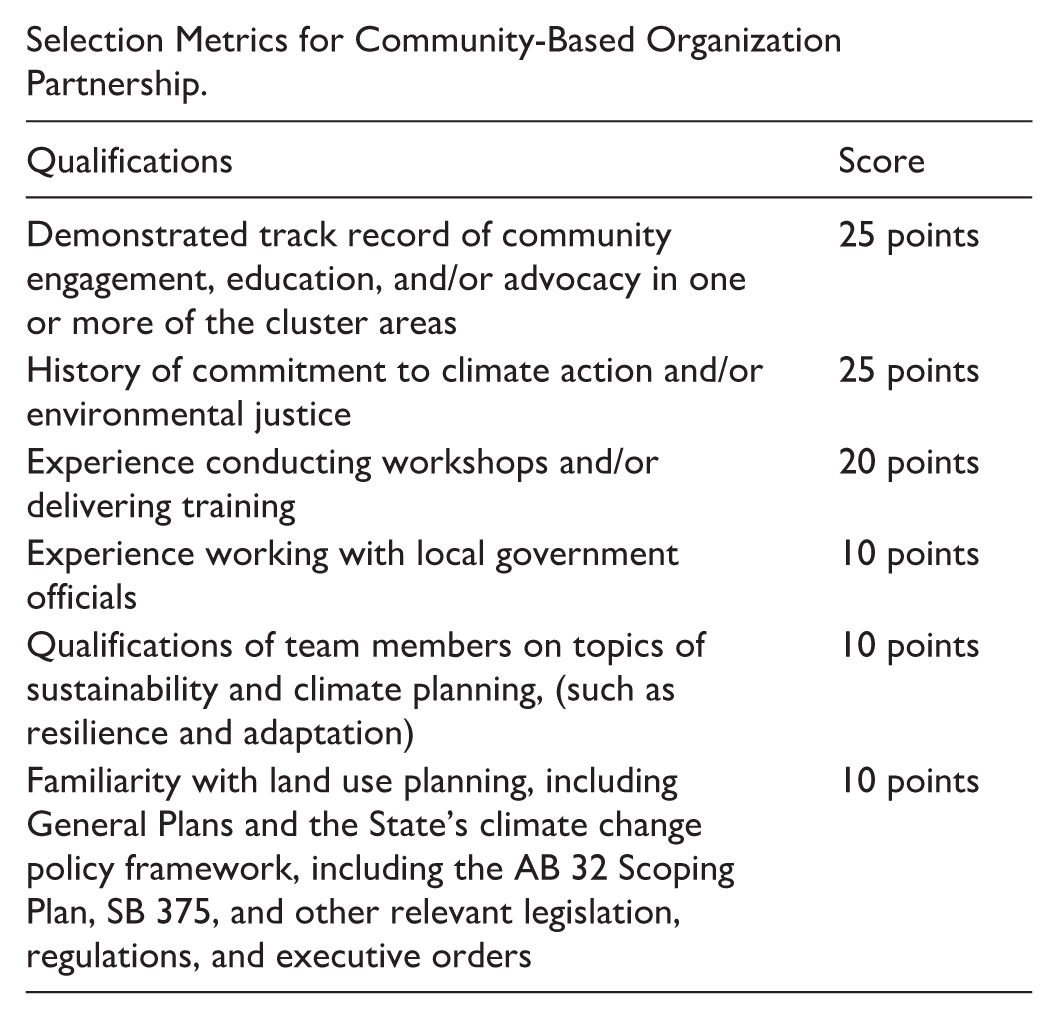
The research team opened a grant call for CBOs already working on ZEV policy, using the following solicitation (Brinkley and Wagner 2024) and selection criteria (Appendix). CBO applications were selected by the research team based on a Brinkley and Wagner 2024 and ranking using the selection scoring criteria. CBOs were financially compensated for their time and effort. After orientation to the research project and findings, workshop material was co-produced with five CBOs (Brinkley and Wagner 2024, California Climate Action Plan Database (CCAP Database): https://climate.calpoly.edu/CCAP; General Plans: https://plansearch.caes.ucdavis.edu/). CBOs conducted thirteen workshops between October 2023 and April 2024 with the focus of organizing marginalized and vulnerable communities for climate planning for every region in California. Across the thirteen workshops, there was a combined attendance of 367 attendees representing 155 organizations, representing local governments (42%), nonprofits (44%), industry (13%), and tribes (1%) (Brinkley and Wagner 2024, California Climate Action Plan Database (CCAP Database): https://climate.calpoly.edu/CCAP; General Plans: https://plansearch.caes.ucdavis.edu/). Each workshop reviewed the General Plan and CAP databases, and participants verified the number and content of adopted plans. During workshops, CBOs led discussions about the barriers and successes for ZEV climate ready planning. Researchers participated in workshops, answering questions, and observing to better explore barriers and successes for ZEV readiness planning, including questions about plan type preference, plan quality variation, and implementation. At the conclusion of each workshop, researchers conducted open-ended interviews with CBO leaders to clarify points of confusion. CBO leaders also submitted meeting notes and a written reflection from each workshop that answered the following questions:
How has your community implemented ZEV goals? Describe each ZEV goal and extent of implementation.
Which ZEV goals does your community hope to implement?
Identify feasible next steps for goals with identified benchmarks, timelines for action, dedicated staff, and aligned funding opportunities.
Identify barriers that local governments face in implementing climate action policies.
Identify ways for various state agencies to support local governments and CBOs in tackling climate actions at the local level.
These written submissions with CBO leaders were used as qualitative data to further frame and explain findings in the broader local and state contexts. Because of the small sample size, qualitative data were not considered representative of all vulnerable communities, nor were interviews blinded or coded. Rather, grounded theory methodology (Charmaz and Thornberg 2021) generated bottom-up explanatory theories directly from data. The emerging core concepts from CBO surveys and field notes in workshops provided insights into the interactions between social phenomena (e.g., rural, vulnerable) that created policy contexts. Findings were presented back to CBOs to verify understandings. All quotes were verified with CBOs for use in publication and framing of findings, further ensuring that the study is responsive to policy framing used by vulnerable communities and faithful to key motivating rationalities identified by vulnerable communities.
Limitations
More recent plans are more likely to mention ZEVs and contain ZEV-related policies. Furthermore, a county may have strong ZEV policies that benefit a city without such policies, leading to temporal and spatial mismatch.
Findings
Insert here: Figure 1. Map of California counties (58) with Climate Action Plans (CAP), with CAPs that address Zero Emission Vehicle policies (CAP + ZEV), with CAPs and General Plans that both address ZEV policies (CAP + ZEV, GP + ZEV), and without CAPs or General Plans that address ZEV (0).
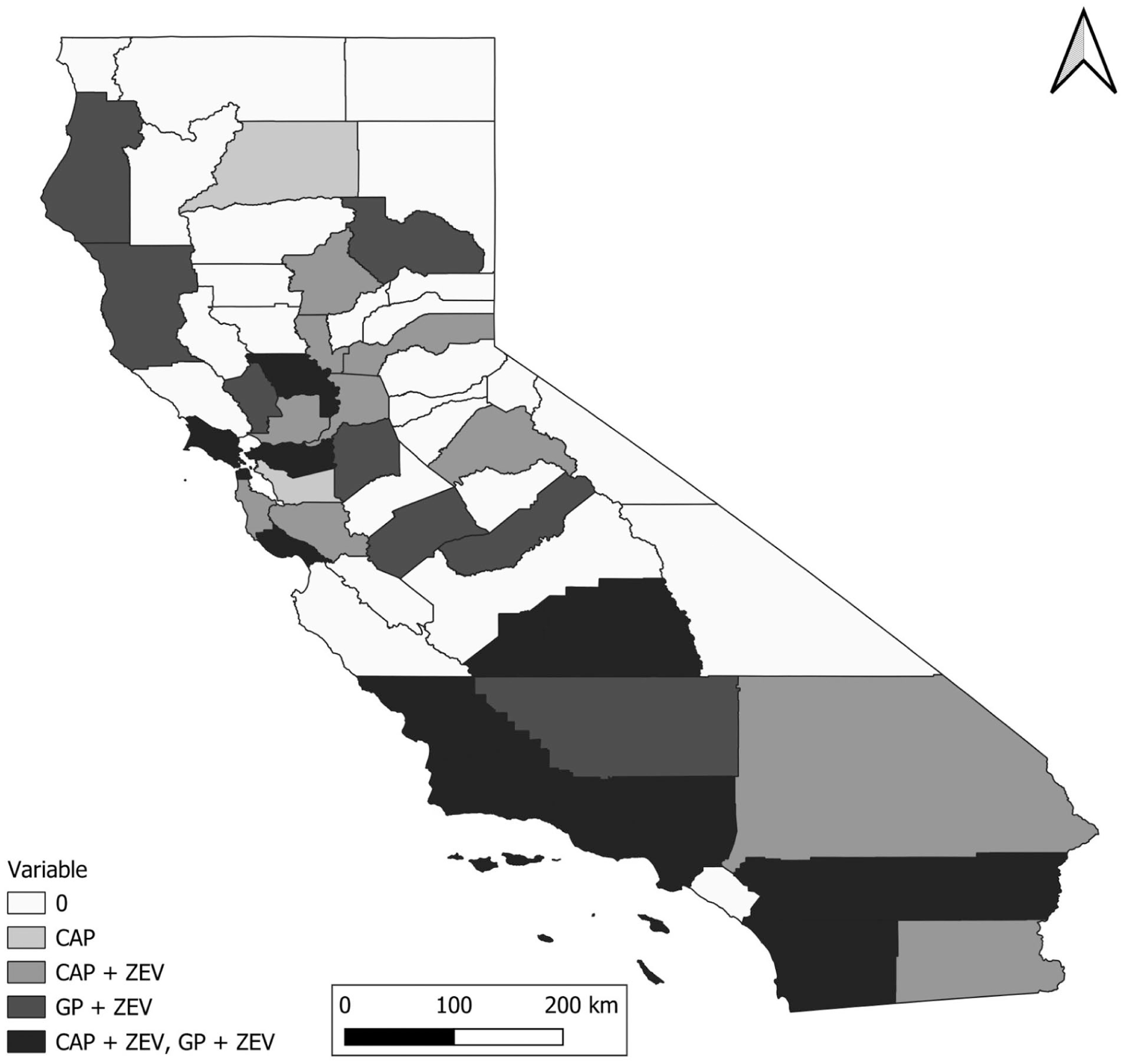
Map of California counties (58) with Climate Action Plans (CAP), with CAPs that address Zero Emission Vehicle policies (CAP + ZEV), with CAPs and General Plans that both address ZEV policies (CAP + ZEV, GP + ZEV), and without CAPs or General Plans that address ZEV (0).
Which Communities Are Up-to-Date in Planning Efforts?
While every city and county in California is required to have a General Plan, there is no mandated update timeframe except for the required housing element and safety element (which must be updated every eight years). We found that more than half of the adopted and public-facing city General Plans available online are more than ten years old. Even where the housing or transportation elements of plans may be more up-to-date, other, older elements can present policies crafted in the 1970s and 1980s.
Which Communities Undertake CAPs?
Overall, CAPs are more up-to-date than General Plans, and they cover 73 percent of the population (Figure 1). Of the 482 chartered cities in California, more than half (230) adopted a CAP. Of the fifty-eight counties, twenty-six counties have a CAP. The median year of adoption for city CAPs is 2016, and for county CAPs is 2018, yielding plans that are more recently updated than the median update year for General Plans (2012). We also find that most CAPs are referred to in General Plans, indicating cross-referencing of planning types. For example, 181 out of 482 cities mention “Climate Action Plan” in their General Plan, and twenty-five out of fifty-eight counties also reference their CAPs in their General Plan.
To explore the variance in CAP adoption, we compared jurisdictional demographics, socioeconomics, and geography. We find that CAP adoption is weakly correlated with median household income (Pearson Product: 0.25), but not percent white (Pearson Product: –0.078) nor total population size (Pearson Product: 0.15). After controlling for total population, median household income, and percent white, we found the percentage of Democrat registered voters was significantly positively associated with a city adopting a CAP (odds ratio [OR] = 1.04; 95% confidence interval [CI] = [1.02, 1.06]; p < .001). For every increase in the percentage of Democrat voters, we can expect a 4 percent increase in the odds of a city creating a CAP (Table 1). Similarly, the percentage of Republican registered voters is significantly negatively associated with a jurisdiction creating a CAP (OR = 0.96; 95% CI = [0.94, 0.98]).
Variables Influencing City Climate Action Plan Adoption.
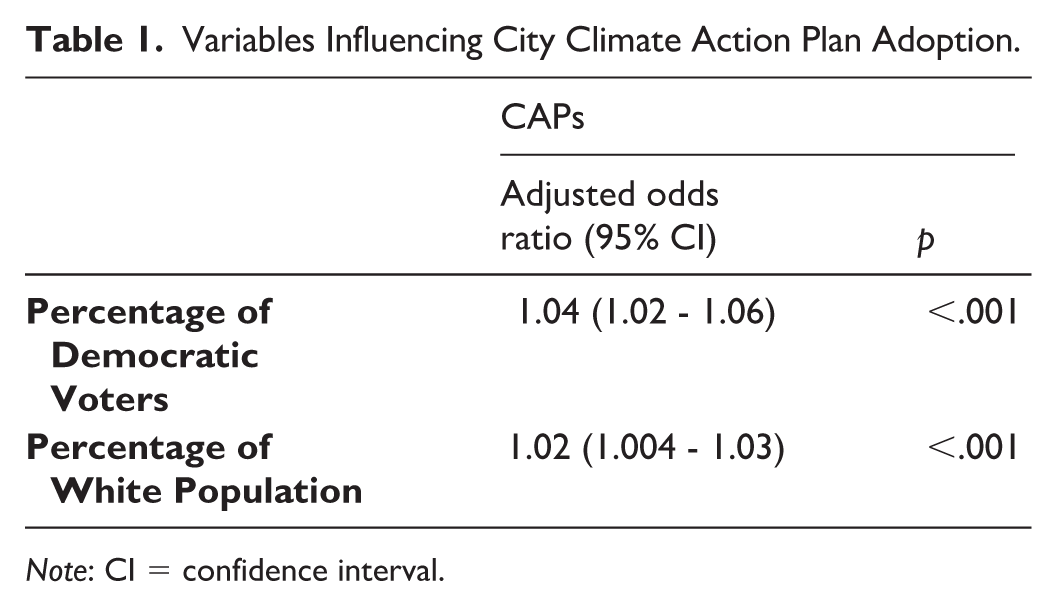
Note: CI = confidence interval.
Do Communities Address ZEV Policy in CAPs, GPs, or Both?
Next, we focus on a discrete climate planning policy priority to understand where General Plans and CAPs differ in focus. We found that 212 city-level and twenty-three county-level CAPs address ZEV readiness compared with 124 city-level and twenty-one county-level General Plans based on term mentions (Figure 1). In CAPs, ZEV terms were mentioned more often and policies scored higher in comparison with General Plans (Tables 2–4). About half the counties (n = 26) did not address ZEV in their General Plans nor CAPs, with the majority of these found in more rural and northern parts of California (Figure 1). Of the remaining counties that do address ZEV policy, 22 percent (n = 13) of counties use both their General Plan and their CAP. Nearly 20 percent (n = 11) use only their CAP, and 14 percent (n = 8) use only their General Plan (Table 1).
County-Level ZEV Term Mentions and Plan Scores for General Plans and CAPs.
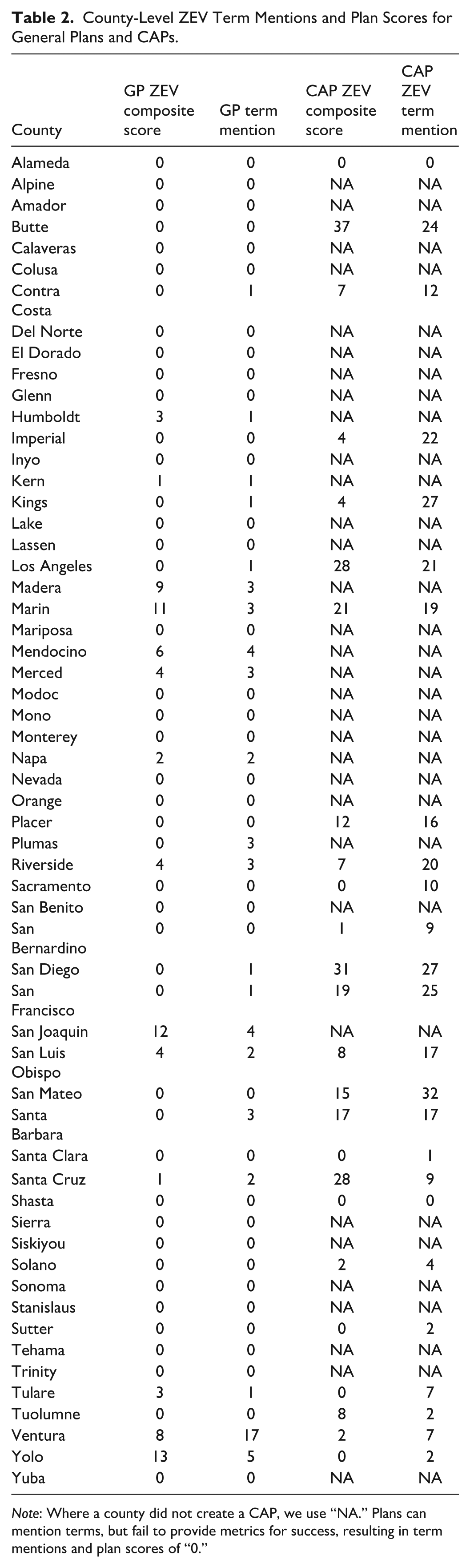
Note: Where a county did not create a CAP, we use “NA.” Plans can mention terms, but fail to provide metrics for success, resulting in term mentions and plan scores of “0.”
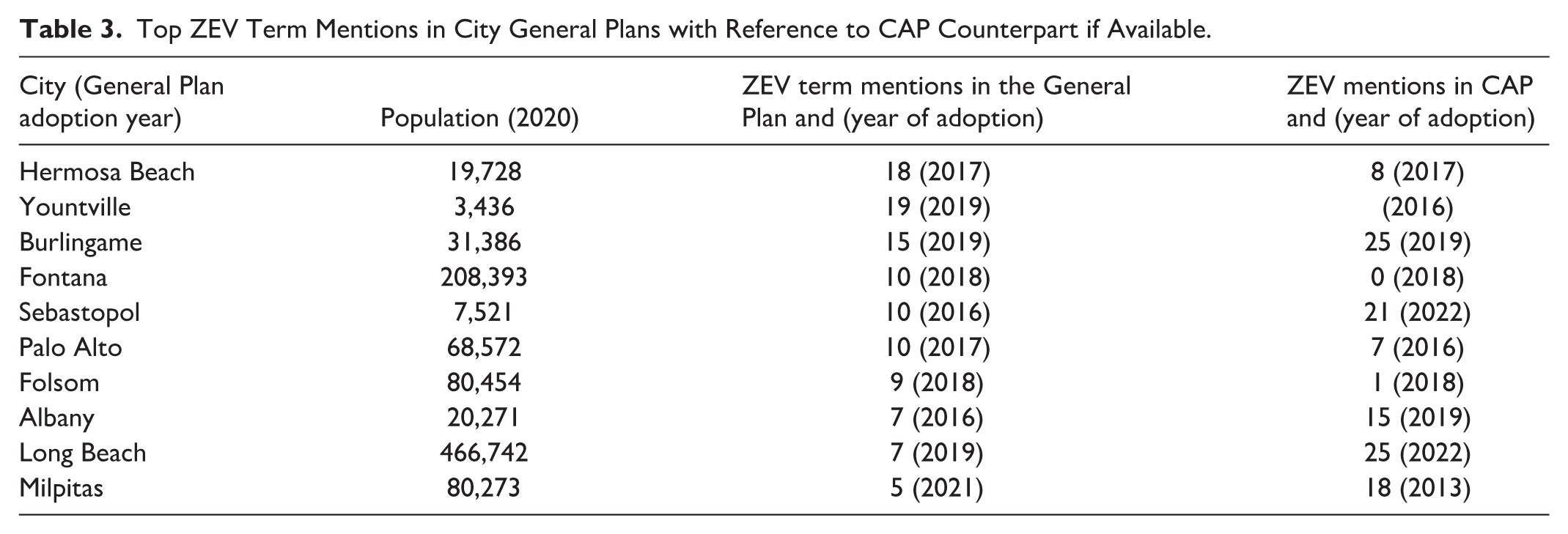
Top ZEV Term Mentions in City General Plans with Reference to CAP Counterpart if Available.
Top ZEV Term Mentions in CAPs with General Plan Counterpart Reference.
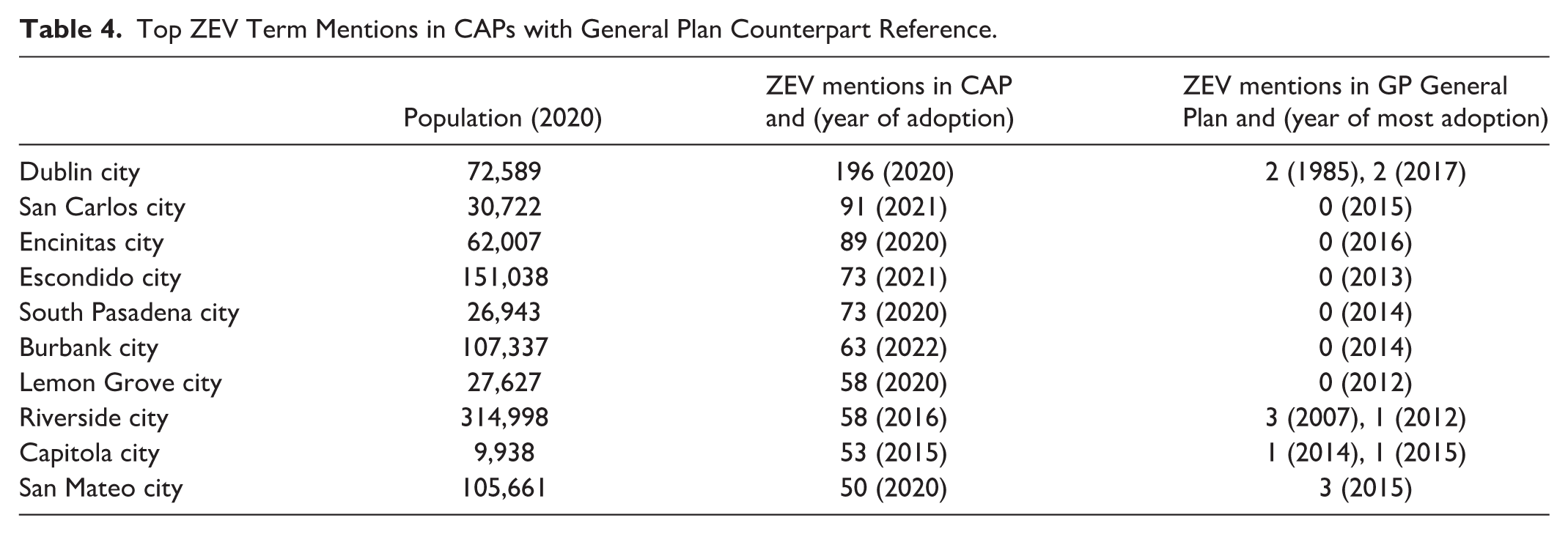
Confirming county-level results, the top ten mentions for ZEV terms for adopted city-level General Plans are not the same top ten cities with the most term mentions for CAPs and vice versa (Tables 3 and 4), indicating that jurisdictions use different planning modalities and a combination of plans to advance state goals. The interaction between General Plans and CAPs is also supported in regression analysis of city-level plans and ZEV term mentions. We find that ZEV mentions in city-level CAPs are significantly associated with ZEV mentions in city-level General Plans (B = 1.19; 95% CI = [0.37, 2.02]; p = .005) when controlling for democratic registered voters, total population, percent white population, and median household income. For cities with ZEV mentions in their General Plans, we can expect an increase of one ZEV mention in the CAP. Spatial lag regression results are similar to the linear regression results, significant and positive (B = 1.17; 95% CI = [0.35, 1.99]; p = .005). Furthermore, we find that an increase of one ZEV mention in a General Plan increases ZEV mentions in the CAP by 1.17 in that same city, a direct effect.
How Robust Is the Implementation Program for the ZEV Policies?
To understand the relationship between plan term mentions and the strength of policies, we compare term mentions and policy scores in the fifty-eight counties. We find that the county CAPs that mention ZEV terms the most also tend to have the strongest policies (Pearson Product Correlation: 0.62). This finding is similar for county General Plans (Pearson Product Correlation: 0.65, Table 1). Such a finding underscores that where terminology is repeated more often, plans are more likely to score higher by virtue of detailing staffing, funding, equity concerns, implementation, and metrics of success. This finding helps rationalize the use of term counts for further regression analysis below.
We compared General Plans with CAPs and found that the strongest scoring CAPs are not the same as the strongest scoring General Plans, indicating the variance in which plan-making approach local jurisdictions emphasize. In addition, all three of the strongest scoring CAP jurisdictions include municipal ZEV reach codes that go beyond state requirements. Of the strongest scoring General Plans, only Agoura Hills has a ZEV reach code. This finding may be due to the relative ease and speed of one planning vehicle over the other. Municipal codes are shorter policy prescriptions, and more likely to be passed and updated more quickly than a General Plan, which can take several years of community input to revise and update a single chapter.
Looking at the specific components of the scores that indicate potential for successful implementation, 62 percent of the policies used strong language such as “shall” or “will.” San Mateo and San Carlos had the highest number of strong policies. In addition, 78 percent had a timeline or prioritization for implementation and just over 74 percent of ZEV policies included an assignment to a specific department or agency for implementation, such as community development or public works. Yet only nine of the twenty CAP cities scored included funding sources for their policies. This compares to none of the county CAPs listing funding sources for ZEV policy.
Even so, we note that for General Plans and county CAPs most ZEV policies lack committed staff, identified funding, a timeline for benchmarked action, and a focus on equity. For city CAPs, most identify committed staff and a timeline and about half identify potential funding sources. Issues of equity are not well addressed in the CAPs. Only two of the twenty city CAPs have policies that address equity and only four of the twenty-one county CAPs. General Plans are similar, with less than 10 percent ZEV policies within plans explicitly addressing equity concerns, such as siting charging stations in low-income communities.
Does ZEV Policy Coverage in CAPs or General Plans Predict Where EVse Charging Stations Are Located?
Next, we compare EVse charging ports with planning vehicles. Only fifty-five (11%) of cities did not have EVse charging ports. Of these, forty cities did not mention ZEV terms in their CAP nor General Plan, showing a lack of both planning and implementation. Conversely, 190 cities (39%) had EVse charging ports but did not address ZEV terms in their CAP nor General Plan, indicating implementation without planning–especially where private EVse ports are sited where local plans are not explicitly welcoming. To understand the interplay between plan types, municipal reach codes, and implementation, we turn to regression analysis.
EVse ports and CAPs
We find that the number of EVse charging ports is significantly associated with whether or not a city adopted a CAP (B = 32.6; 95% CI = [13.40, 51.78]; p = .001). With a CAP, we can expect an increase of nearly thirty-three EVse ports within a jurisdiction. Moran’s I revealed significant spatial autocorrelation in number of EVse ports per jurisdiction (p < .001). Thus, we reject the null hypothesis that EVse charging ports are randomly distributed across cities in California. Spatial lag regression results were similar to the linear regression results, indicating a significant positive correlation (B = 29.40; 95% CI = [10.70, 48.08]; p = .002). Regarding the own city direct effect, we find that a city with a CAP increases the number of EVse charging ports by thirty within that city. We also find a spillover effect in neighboring cities (Table 5). Cities with a CAP increase the number of EVse charging ports in neighboring jurisdictions three total EVse ports. This effect disappears when controlling for population, MHHI, and percent white, indicating that underlying community characteristics are better predictors of siting EVse ports than the adoption of a CAP.
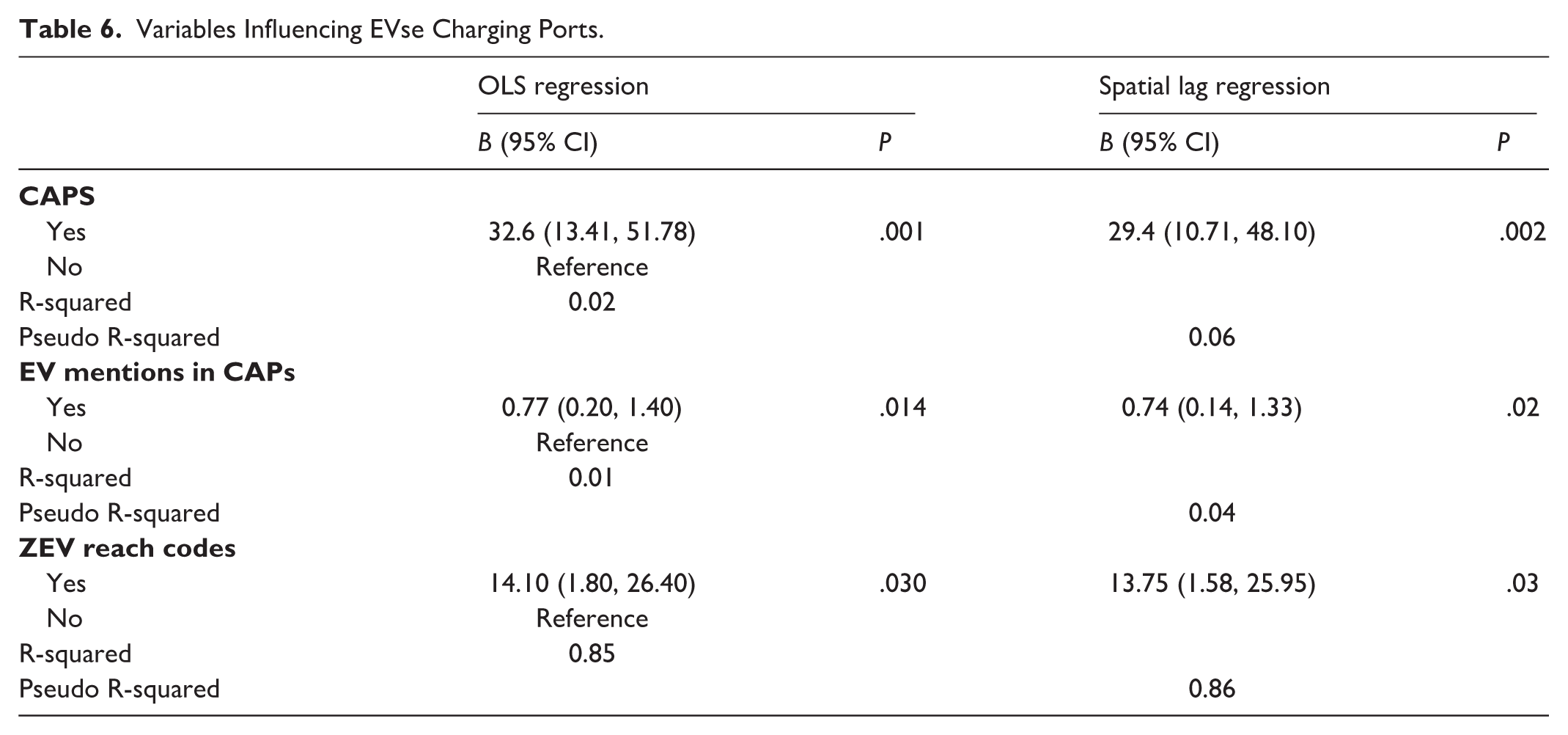
Variables Influencing ZEV Reach Codes.
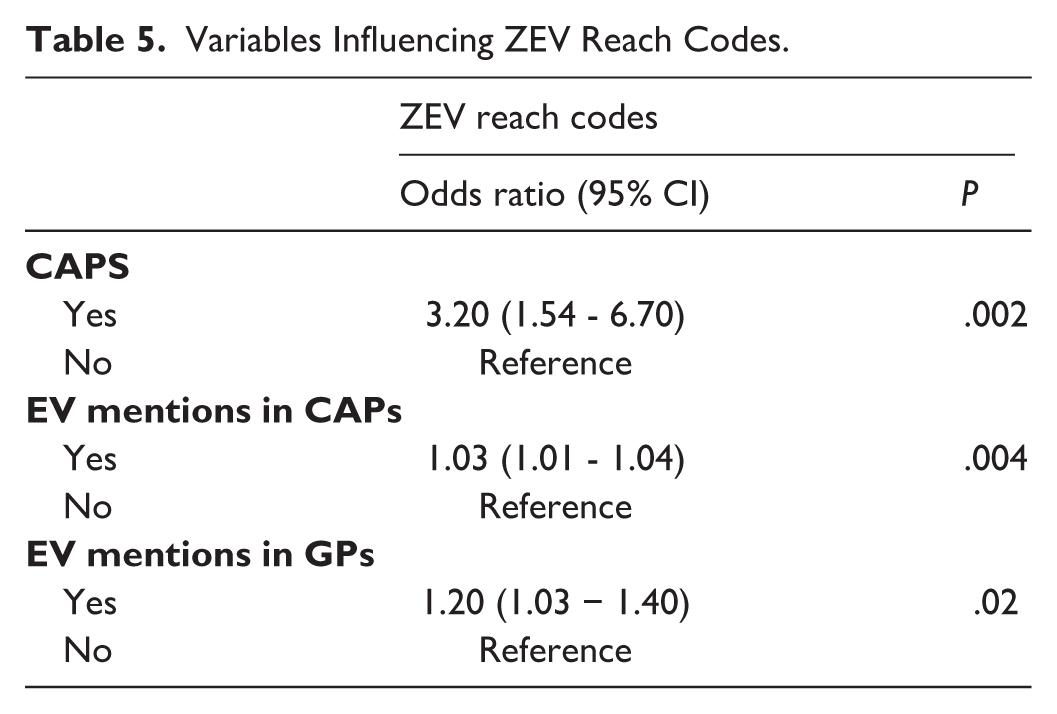
EVse ports and EV mentions in CAPS
We also found a significant positive association between EVse charging ports and ZEV mentions in CAPs (B = 0.77; 95% CI = [0.20, 1.40]; p = .014). For every ZEV mention in a CAP, we can expect an increase of nearly one EVse port within the jurisdiction. Once again, Moran’s I revealed significant evidence of spatial autocorrelation on the number of EVse ports per jurisdiction (p < .001). Spatial lag regression results (B = 0.74; 95% CI = [0.14, 1.33]; p = .015) were similar to the linear regression results for direct effect. Regarding the own city direct effect, we find that every ZEV term mention within a CAP increases the number of EVse charging ports in the jurisdiction by 1, but there are no effects on neighboring jurisdictions (Table 5). Again, these effects disappear in spatial lag models when controlling for population, MHHI, and percent white.
ESVE ports and ZEV reach codes
We find that EVse charging ports are significantly associated with adoption of ZEV reach codes (B = 14.10; 95% CI = [1.80, 26.40]; p = .030) even when controlling for democratic registered voters, total population, percent white population, and median household income. For cities with ZEV reach code ordinances, we can expect an increase of nearly fourteen EVse charging ports (Table 6). Spatial lag regression results are similar to the linear regression results, significant and positive (B = 13.75; 95% CI = [1.58, 25.95]; p = .030). We find that a city with a ZEV reach code increases the number of EVse charging ports by nearly fourteen within that jurisdiction with no spillover effects on neighboring jurisdictions. Thus, the creation of a ZEV reach code is a strong predictor of ZEV readiness implementation.
Variables Influencing EVse Charging Ports.
ZEV reach codes and CAPs
We find a significant positive association (OR = 3.20; 95% CI = [1.54, 6.66]; p = .002) between cities with CAPs and the creation of ZEV reach codes after controlling for democratic voters, total population, median household income, and percent white. Cities with a CAP are nearly three times more likely to have created municipal ZEV reach code. We do not find spatial dependence between ZEV reach codes and CAPs.
We also find a significant positive association between ZEV reach codes and ZEV mentions in CAPs (OR = 1.03; 95% CI = [1.01, 1.04]; p = .004) after controlling for democratic voters, total population, median household income, and percent white. For every ZEV term mentioned in a CAP, we can expect a 3 percent increase in the odds of a city adopting a ZEV reach code (Table 5). The coefficient associated with ZEV mentions in CAPS is positive and significant (B = 0.02; 95% CI = [0.01, 0.04]; p = .006). Furthermore, we find a direct effect of .002 suggesting that an own-city increase of one ZEV term mention in a CAP increases the probability of adopting a ZEV reach code by .002.
EV reach codes and EV mentions in General Plans
The relationship is similar for General Plans. For every ZEV mention in a city General Plan, we can expect a 20 percent increase in the odds that the city adopted a ZEV reach code after controlling for democratic voters, total population, median household income, and percent white (OR = 1.20; 95% CI = [1.03, 1.40]; p = .020; Table 5). We do not find significant spatial dependence.
In summary, we find that underlying socioeconomic characteristics predict whether a jurisdiction creates a CAP or addresses ZEV policy in their CAP or General Plan. CAP adoption is more likely in communities with a greater portion of Democratic voters. While both plan types are not directly associated with ZEV implementation, they are both associated with adopting municipal ZEV reach codes that are in turn significantly, positively associated with implementing EVse charging ports. We also find that the adoption of a CAP influences ZEV implementation neighboring jurisdictions.
Barriers to Implementation
Interviews with CBOs working on climate planning across the state note broad support for climate readiness approaches in both plan types. They reported that General Plans are commonly more used in rural areas for climate planning, while CAPs are high-visibility documents that help “plant a flag” for implementation. For jurisdictions that do not adopt a CAP or connect policies to climate readiness, one CBO noted, “there are other needs of greater importance in many communities right now (health care access, poverty, wildfire threat).” These needs may not require the banner of “climate readiness” or a CAP—and policymakers may be able to garner greater public buy-in where policies are not attached to “climate concerns.” CBOs also attribute pushback to state-level climate policy to an overarching policy effort that overlooks rural climate planning priorities, such as preserving working lands. One CBO noted that the 280-page California Air Resources Board 2022 Scoping Plan to meet climate objectives only references “rural” nine times, and without offering specific actions for these areas. These findings underscore the spatial bias in siting more EVse charging ports per capita in more urban areas.
When asked about the lack of policy benchmarks and equity focus within plans of both types, CBOs explained a lack of support for doing EJ planning. One CBO leader noted, “oftentimes communities don’t know about the options available to them—it is the responsibility of the state/local government to provide these options, make technical info more accessible, and take the communities input and interpret it into policy actions.” In short, local teams that are setting policy agendas, need greater guidance on how to craft equitable policies that will lead to implementation. While the California Governor’s Office of Planning and Research encourages local jurisdictions to adopt metrics for each policy (Office of Planning Research (OPR) 2020, 35), it was not until late 2023 when the California Attorney General’s Office created guidelines for plan policies, noting that local governments should include metrics to help assess the effectiveness of their engagement efforts and evaluate their progress towards implementing their environmental justice policies. Metrics, such as timelines for implementation or measures of success, should allow for the community to be able to track and assess progress. (p. 8)
The term “should” is not as legally binding as “shall” or “will.” CBOs also note that tracking equitable climate planning is difficult for advocates and policymakers alike without planning data tools that allow easy term searches across plans. The lack of a search engine for adopted planning policy leaves local communities “in the dark” and “reinventing the wheel.”
Discussion
Do Plans Matter?
We demonstrate that both CAPs and General Plans are correlated with siting EVse charging infrastructure by working in tandem with ZEV municipal reach codes. Importantly, underlying community characteristics are strong predictors for how a community will plan. Wealthier and more Democratic-leaning jurisdictions are more likely to create CAPs.
These diverse policy pathways have led some planning scholars to question whether the plan, community, or the creation of a plan matters (Millard-Ball 2013). In building from such studies, we demonstrate how underlying community socioeconomic and demographic characteristics influence whether a jurisdiction pursues a CAP or the creation of ZEV policies. We also caution that adopting a CAP or ZEV policies within a General Plan are not necessarily strong predictors of successful implementation. Rather, underlying community characteristics and the adoption of municipal code are better predictors of implementation. Yet, our findings also show that communities use both CAPs and General Plans to address ZEV readiness. Rather than concluding that communities dispense with plans, we demonstrate how both plan types work in tandem. The General Plan may be the preferred vehicle for jurisdictions that are lower income or more conservative, shying away from terminology like “climate planning” while engaging in ZEV policy creation under the banner of “economic development” or to “improve air quality.” The CAP has the potential to spur implementation in more Democratic-leaning jurisdictions. These findings move research questions away from “do plans matter” to “how many plans are enough?”
Why Adopt a Nonmandated Plan?
Nested within this line of inquiry, readers may wonder why jurisdictions embark on a voluntary plan, like a CAP? In response, we underscore that CAP adoption is a function of political preference, not population size. With a CAP, a jurisdiction makes a statement. Our findings counter several studies. For example, An, Butz, and Mitchell (2022) asserted that larger cities are more likely to adopt CAPs than smaller cities, noting that forty-nine cities among 190 cities within the five county Southern California Region adopted climate action plans (CAPs) from 2000 to 2018. In comparison, our database shows ninety-eight total city-level CAPs, with sixty-six adopted in the same region between the same period, from 2000 to 2018. The discrepancies in data used for analysis are likely the result of An, Butz, and Mitchell (2022) drawing from a state-level CAP-Map portal that is out of date and labels some jurisdictions as having a CAP though the reference policies are found in municipal code or the General Plan. Similarly, Barbour and Deakin (2012) drew from an on-line survey of city planning directors in the state’s four largest metropolitan regions and the eight county San Joaquin Valley, and interviews with planners in twenty cities with adopted or in-progress CAPs in 2010 and 2011. By targeting larger cities for analysis and receiving a 57 percent survey response rate that skewed toward respondents from larger cities, Barbour and Deakin (2012) concluded that policy innovation occurred in larger cities while suburban municipalities lagged in action. To overcome this selection bias, our study created and analyzed the most comprehensive database of CAPs and General Plans, demonstrating the broad need for planning research to assemble comprehensive databases of plans and municipal codes to ensure robust results. The distinction in findings is important because emphasizing CAPs as appropriate for large jurisdictions to coordinate complex actions indicates that CAPs are not necessary nor useful for smaller jurisdictions. We find that this is not the case.
Adopting a voluntary CAP sends a loud and clear planning signal of support for climate policy, thereby inspiring state-level coordination by demonstrating local desire and capacity. Small and large jurisdictions alike are sending this signal of support for climate planning. Furthermore, our findings emphasize how cities with a CAP increase the number of EVse charging ports in neighboring jurisdictions, showing policy spillover. In short, adopting a CAP spurs regional change.
This finding is supported by previous studies. For example, Bery and Haddad (2023) found two significant factors (paid, dedicated staff and the jurisdiction housing a university) explain why 37 percent of the sixty-three cities that signed the Global Covenant of Mayors for Climate & Energy have adopted CAPs. College towns tend to host more registered Democratic voters. In support, Dierwechter (2010) found from a national scan that “climate action” forward communities have a substantially higher job/population ratio than “non-climate action” communities, noting that suburbs around major cities may be more likely to take action than the larger cities. Our database also shows that numerous small and large cities use CAPs to state climate values. For example, some of the earliest CAPs adopted in California are from Chula Vista (2000), San Francisco (2004), and Arcata (2006); cities with populations of 275,487, 873,965, and 18,857 respectively. Unlike the mandated and time-intensive General Plan, the CAP is a nimble planning vehicle for jurisdictions to signal their climate readiness intentions.
How Best to Move Climate Readiness Policy Forward with Haste?
Given the political divide in California and the nation, how should a state that has promoted ZEV adoption for over two decades move to full implementation–and at speed? Our finding that more CAPs than General Plans address ZEV readiness might prompt some policymakers to mandate the adoption of CAPs for every jurisdiction. Yet we caution that not every CAP addresses ZEV policy. About 8 percent of both city and county CAPs do not mention ZEV policy. Interviews with CBOs also caution against a mandated climate planning approach given the many nuanced local priorities across a highly geographically, politically, and demographically varied state. Their caution is echoed in our regression results noting a Democratic bent to CAP adoption. Instead, CBOs recommended additional state-level planning support tools, funding, and ready-made templates, like jurisdiction-specific GHG inventories to help inform advocates, nonprofits, and civic engagement toward plan-making. These supports can spur goal setting through General Plans while also emphasizing rapid implementation through adopting municipal reach codes. The advice from CBOs echoes the original premise of this research in noting that local plan-making matters to the long-term realization of state and federal goals. Local plans send signals of eagerness, and there is far more that states and the federal governments can do to listen to such signals and support informed local approaches with additional financing and staffing.
Future Research
Our research opens opportunities for other state-level plan evaluations. Perhaps in a state with strong enabling legislation and planning data infrastructure, CAPs are more likely to be produced and spur action in neighboring jurisdictions. Similarly, in a state where General Plans are required to be regularly updated, they are more likely to emphasize newer technologies and pathways to climate planning. As an important precursor to such future research and state-to-state validating of results, planning scholars will first need to create comprehensive databases of plans. Practically, such an effort in itself will likely put more eyes on planning and policies, tightening feedback loops between popular policies and their eventual implementation.
Conclusion
We find that communities are effectively addressing ZEV readiness using General Plans, CAPs, and municipal ordinances. This research moves the conversation away from “do plans matter?” or even “which plans matter?” to ask: “how many plans matter?” and “for whom?” While municipal ordinances “matter” for local implementation within the jurisdiction, adopting a CAP makes a policy statement that influences actions in neighboring jurisdictions.
We advise jurisdictions to move quickly in updating municipal building, energy, and parking codes to include ZEV requirements, while they are engaging in long-term, comprehensive ZEV planning through their General Plans and CAPs. Our biggest concern arising from this research is the lack of equity considerations within the policies of General Plans and CAPs. In the scope of this study, we were not able to measure equity outcomes, but the lack of policy consideration suggests this could be an issue. We recommend that all ZEV policies include equity analysis and considerations. Better access to a comprehensive set of plans will allow the public to benchmark progress, inform studies such as this, and support informed state- and federal-level policymaking.
Footnotes
Appendix
Selection Metrics for Community-Based Organization Partnership.
| Qualifications | Score |
|---|---|
| Demonstrated track record of community engagement, education, and/or advocacy in one or more of the cluster areas | 25 points |
| History of commitment to climate action and/or environmental justice | 25 points |
| Experience conducting workshops and/or delivering training | 20 points |
| Experience working with local government officials | 10 points |
| Qualifications of team members on topics of sustainability and climate planning, (such as resilience and adaptation) | 10 points |
| Familiarity with land use planning, including General Plans and the State’s climate change policy framework, including the AB 32 Scoping Plan, SB 375, and other relevant legislation, regulations, and executive orders | 10 points |
Acknowledgements
The research team thanks the hundreds of community partners across the state of California who attended workshops, provided feedback on early findings, and helped shape policy analysis. We also thank the nonprofit partners who, as trusted conveners, facilitated productive policymaking conversations between state, research, and local agencies and organizations. The research team benefited from enthusiastic and detail-oriented graduate student researchers: Kamryn Kubose and Aniket Banginwar. Additional Center for Regional Change staff helped support this project and partners: Ahna Suleiman, Bernadette Austin, and Mirthala Lopez. Last, this research would not have been possible without California Air Resources Board funding for a related ZEV implementation project and the grace, advice, and persistence of project guidance from Ilonka Zlatar, Leslie Baroody, Pedro Peterson, and Cynthia Armour.
Declaration of Conflicting Interests
The authors declared no potential conflicts of interest with respect to the research, authorship, and/or publication of this article.
Funding
The authors received no financial support for the research, authorship, and/or publication of this article.
