



Abstract
Social acceptance is required for identification, delineation, and protection of Natural Heritage Systems (NHS) within municipal plans. Integration of ecosystem services into NHS planning is investigated to increase social license for NHS planning. An NHS planning case study within the Greater Toronto Area is examined. Surveys and interviews gauge perspectives of NHS planning, ecosystem services and integration of the two. Negative perceptions from industry suggest the process has not yet achieved social license. The study includes that integrating ecosystem services into NHS planning could increase social license, if framed as a response to a common concern like climate change.
Introduction
When planning for protected areas there is tension between different groups in society including developers, conservationists, government, industry and planners. Creating a common language to help these groups understand each other, and the issue at hand, can help to address these conflicts and improve the chance of achieving social license. The act of bringing local populations to the point where they actively support an undertaking can be described as achieving social license. The term has been applied to a variety of sectors (Moffat et al. 2016; Nelson, Scoble, and Ostry 2010; Thomson and Boutilier 2011) and is now commonly seen as part of corporate strategy in product development and operational management (Nelson, Scoble, and Ostry 2010). In the planning world, the concept of social license can be seen as a direct descendent of Arnstein’s (1969) famous “ladder” of citizen participation as true social license requires partnership across multiple stakeholders. In land use planning, social license is a critical part of achieving success as it is difficult to make decisions on critical issues, such as protected areas planning, without substantive support from multiple stakeholder groups. Achieving social license for protected areas planning would require active support, participation, and even ownership on behalf of all stakeholder groups.
Protected areas planning involves identifying natural areas on the landscape that can be set aside and protected from urban development to ensure continued ecosystem function. In the province of Ontario, Canada, Natural Heritage Systems (NHS) are used to identify, delineate and protect natural areas through a system of core areas and connected corridors (North-South Environmental Inc. 2009; Ontario Ministry of Natural Resources [MNR] 2006). Cores are relatively large natural areas (usually > 1 ha) such as forests and wetlands, while corridors are watercourses or other areas that connect cores and act as linkages through which animals and plants can travel (Whitelaw, Hamilton, and Dunkley 2000). NHS include a variety of different landcover types, such as woodlands, wetlands, waterways, fields, and even pervious components of built-up areas. The inclusion of NHS has been mandated by the Government of Ontario since 2005 (Ontario Ministry of Municipal Affairs Housing [OMMAH] 2005) and carried out under the auspices of the highest-ranking land use document within a municipality in the province known as an Official Plan (OP). Other systems, such as Natural Asset Management as employed in the province of British Columbia (Municipal Natural Assets Initiative 2017), the Florida Wildlife Corridor, Mexico’s Lower Rio Grande Valley National Wildlife Refuge, and the Yellowstone to Yukon Wildlife Corridor, incorporate similar approaches to that of NHS.
In Ontario, one of the primary challenges identified with protected areas planning is the lack of transparency in how land for protection is identified (Puric-Mladenovic and Strobl 2012). In part, this is because different land types are ascribed different values by various stakeholder groups, leading to a variety of perspectives on what areas need to be protected. As a result, protected areas planning is a challenging process that can often result in disputes between various stakeholder groups.
This paper proposes the use of ecosystem services as a means to create common language around landcover types and ultimately increase social license for protected areas planning. Ecosystem services have been classified according to the Millennium Ecosystem Assessment into Provisioning, Regulating, Cultural, and Supporting Services (MEA 2003). Provisioning services include fresh water, food and fuel. Regulating services include air and water quality improvements and flood control. Cultural services include sense of place and recreation. Supporting services include nutrient cycling. Identifying and quantifying the values and benefits that come from natural areas through the use of ecosystem services provides decision-makers and planners a way to understand the best use of specific landscape areas (Iverson et al. 2014; Infield, Abunnasr, and Ryan 2019). This study tests the idea that knowledge, perception and integration of ecosystem services might improve social license for protected areas planning.
Literature Review
Increased human wellbeing is directly linked to the benefits people receive from ecosystems (McGillivray 2007; Nellemann and Corcoran 2010). For example, a global initiative examining the economics of ecosystems and biodiversity reports that tropical forest ecosystem services include climate regulation valued at US$1,965/ha, water flow regulation valued at US$1,360/ha, and soil erosion valued at US$694/ha; in addition to this, a range of other services are provided by the tropical forest ecosystem including timber and nontimber forest products, food and water provision, genetic information, and pharmaceuticals valued at US$1,313/ha, suggesting cumulative values of over US$5,300/ha (The Economics of Ecosystems and Biodiversity 2009). Landcover types or classes are used to describe the general vegetation or water features on the landscape (woodlands, grasslands, etc.); different landcover types provide a range of ecological functions and deliver ecosystem services such as air and water quality regulation, carbon sequestration, and flood attenuation. Ecosystem services can be valued for different landcover types depending on the values and needs of those describing the service (Benra and Nahuelhual 2019). For example, mangrove forests have an estimated annual value of US$300,000 per kilometer as coastal defenses in Malaysia (Finlayson and D’Cruz 2005), while in the Gulf of Mexico similar mangrove forests are valued at US$37,500/ha/year for their role in supporting local fisheries (Aburto-Oropeza et al. 2008). Flood control services provided by Sri Lanka’s Muthurajawela marsh (a coastal peat bog covering some 3,100 ha) were valued at US$1,750/ha/year (Emerson and Kekulandala 2003), while the values of similar landcover types in the Philippines were estimated at US$223-455/ha/year (Paris and Ruzicka 1991).
Attributing localized values to specific ecosystem services, or to the land cover types associated with specific ranges of ecosystem services, can help inform decision-makers regarding the best use of different components of the landscape (Iverson et al. 2014; Infield, Abunnasr, and Ryan 2019; van Hardeveld et al. 2018). In 2016, Woodruff and BenDor examined how ecosystem services can be a tool for land use and environmental planning, concluding that “plans that integrate ecosystem services may better link diverse community goals and protect natural resources” (Woodruff and BenDor 2016, 90). Windhager et al. (2010) concluded that “ecosystem services provide an organizing concept around which to make a wide array of environmental and, to some extent, social design goals explicit” (Windhager et al. 2010, 107). Examination of the development process to design a built environment which retains and enhances critical ecosystem services, concluded that incorporating ecosystem services into design guidelines contributes to the development of sustainable communities (Windhager et al. 2010). Several other examples where ecosystem services have been integrated into land use planning and the decision-making process within high growth urban areas can be found in recent literature (de Groot et al. 2010; McHale et al. 2018; Plieninger et al. 2013; Schäffler and Swilling 2013; Sherrouse, Clement, and Semmens 2011). It should be noted that Indigenous peoples in Canada have long included an intrinsic understanding of ecosystem services in their approach to governance, and that these practices are being revived in today’s context (Artelle et al. 2019; Witter and Satterfield 2018).
The inclusion and valorization of ecosystem services into protected area planning, including NHS planning, could provide all stakeholder groups with a transparent means of understanding the magnitude of different ecosystem services on the landscape, which in turn creates a common context for dialogue and planning. An international study of stakeholder perceptions of ecosystem services (see Dick et al. 2018) across twenty-seven diverse case studies, concluded that the use of the ecosystem services concept “opened constructive dialogue among different parties, supporting an important rationalization of common problems” (Dick et al. 2018, 563). Some planning tools currently in use in Canada do incorporate measures of ecosystem services, such as Natural Asset Management (currently used in British Columbia) (Municipal Natural Assets Initiative 2017) which explicitly note the delivery of specific ecosystem services (such as flood mitigation or improved air and water quality) within the process. Natural Asset Management does not address a holistic list of ecosystem services but instead focuses primarily on regulating services.
Achieving social license for NHS planning in Ontario would require active support, participation, and even ownership on behalf of all interested parties. Following this tenet, various stakeholder groups involved in the NHS planning process—including planners, government (officials and politicians), industry, nongovernment organizations, and residents—should feel ownership over the plan as it evolves. Note that this study did not break down respondents by ethnicity; however, it is important to note that in Canada, as in other parts of the world, Indigenous peoples are rights-holders on the land and thus must be engaged in land use decisions. Engaged in this case, means everything up to and including partnership.
In the planning world, the concept of social license has strong linkages to Arnstein’s (1969) famous “ladder” of citizen participation, which describes best practices as those that include democratic approaches to urban planning. Arnstein’s famous “ladder” model (as shown in Figure 1), dating back to 1969, maps very closely to more modern “pyramid” models of social license (Thomson and Boutilier 2011). Essentially, planners—particularly at the municipal level—have worked to achieve social license in their practice long before the term became popularized in the late 1990s. Social license to operate has been used regarding the introduction of new technologies (Mann et al. 2020), transportation, infrastructure, development (Mottee et al. 2020), and even new aquaculture projects (Billing 2018).
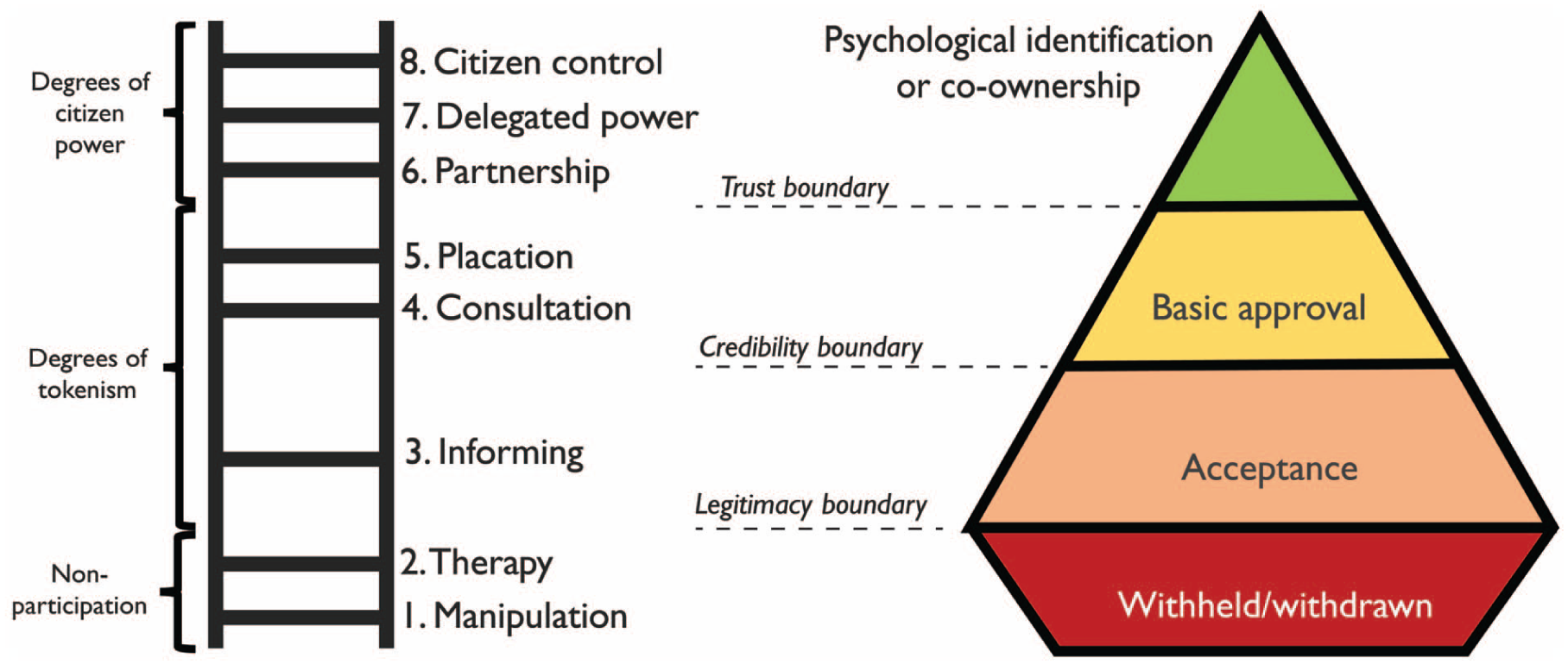
Levels of social license, using “ladder” (left) and “pyramid” models (right) adapted by the author; ladder of citizen participation from Arnstein (1969); pyramid model and boundaries from Thomson and Boutilier (2011).
Social license also requires trust between the participants. This may take the form of true partnership or co-ownership and sometimes includes the “dominant” party (whether this is government or industry) ceding control to other stakeholders (usually residents, but potentially workers or subsets of the population) (Thomson and Boutilier 2011). It is important to note, that within the pyramid model of the social license to operate (SLO) according to Thomson and Boutilier (2011), “trust” is seen as a significantly higher threshold than “credibility” or ‘legitimacy’; it is possible to approve projects after consultation, but this may not achieve social license if no trust is established between the parties.
The engagement of stakeholders as part of the planning for conservation-related initiatives is a fundamental requirement that has global recognition (Spang, Lemieux, and Strobl 2012). In any location, there are a number of stakeholders that need to be part of the process, as the mandates of many different entities may overlap with conservation needs. In Ontario, these entities include Conservation Authorities (CAs), nongovernmental organizations (NGOs), and land trusts, as well as the municipalities themselves; all undertake conservation efforts but may lack formal coordination mechanisms to achieve a common conservation agenda and a natural heritage plan (Spang, Lemieux, and Strobl 2012). In addition, stakeholders such as industry, residents, and community groups must be consulted and should feel some ownership over the values that are being identified as well as developing partnerships for planning with Indigenous people. In the context of ecosystem services, engaging with stakeholders to achieve some common sense of the valuation and the overall list of services is important if one is to achieve a sense of ownership among all interested parties—an essential part of building social license associated with the application of ecosystem services in NHS planning.
While there is a recognized need to systematically include these values in making planning decisions, a number of critical issues need to be addressed. One issue regularly raised is the need to engage a wide variety of voices, ensuring that all interested parties are heard in the process; in particular, there is a need to build in cultural sensitivity in engaging with stakeholders, to allow diverse perspectives to be incorporated into planning (Cooper et al. 2016). These perspectives may lead to changes in perceived value for ecosystem services within different areas, which in turn can lead to different outcomes of the overall evaluation. Importantly, these perspectives may in fact challenge preexisting power dynamics within a system (McHale et al. 2018; Raymond et al. 2009). McHale et al. further suggest an iterative approach of engagement to better incorporate different perspectives in the valuation of ecosystem services.
It is widely recognized that conservation and development can coexist, and that sustainable use of ecosystems can lead to multiple social and environmental benefits (de Groot et al. 2010). Assessing tradeoffs between different services, or between environmental benefits and development revenues, remains a challenge (Shoemaker, BenDor, and Meentemeyer 2019). In particular, cultural ecosystem services (such as recreation and tourism) can be difficult to quantify due to the complexity of assessing individual enjoyment and experiences (Plieninger et al. 2013). Scholars have recognized the importance of effectively incorporating social values into the context of ecosystem assessments; methods of uniting ecosystem service assessment and social values mapping have yielded results that consider both the physical and social context of values associated with ecosystem services (Sherrouse, Clement, and Semmens 2011).
A key challenge identified in the literature is that of relative value (Poppy et al. 2014). In addition, it is very difficult to value services when their definition is unclear, and it is possible to completely miss important services (Boerema et al. 2017). For these reasons, it is important to include many perspectives in defining the lists of ecosystem services being considered.
Related to this challenge is the importance of geographic specificity when it comes to ecosystem service valuation. Schägner et al. (2013) have pointed out the range of values in ecosystem services that can exist across different geographies; this is related to perceptions of values (McHale et al. 2018; van Hardeveld et al. 2018). For planners working on NHS, this highlights the importance of using values for ecosystem services that reflect local ecological and social perceptions. Note that this paper focuses on economic valuation, but this is not the only approach to this issue. Recent work highlights alternatives that may better address Indigenous perspectives on the intrinsic values of the landscape (Moola and Roth 2019); however, this paper is designed to inform the existing process, rather than to propose a new process altogether.
Spang, Lemieux, and Strobl (2012) identified that there is a lack of data available to help municipalities develop and implement comprehensive and coordinated NHS and suggest that stakeholder engagement is a critical step in amassing the right data to support these efforts (Spang, Lemieux, and Strobl 2012). Collecting this type of data is particularly important given the rapidly growing population in the Greater Toronto Area (OMMAH 2019), and the need to develop integrated strategies to respond to changing climatic conditions (Gray et al. 2011). It is important to note that building the data required to inform discussions must be done in a collaborative fashion, to ensure that each stakeholder group feels engaged in the process and so that a degree of social license can be achieved. According to Boutilier and Thomson (2011), “. . . social license [to operate], is the perception of a community’s acceptability [of a company and its local operations] with the lowest level having social license withheld or withdrawn” (as shown in Figure 1). For NHS planning, this lowest level of social license can be equated to those stakeholders who do not believe in the legitimacy of the NHS. To move toward social license for NHS planning therefore it is recognized that “. . . legitimacy and trust are the most important things to be considered [by companies] to create shared value to get social license . . .” (Saenz 2021, 95). This research therefore examines social license-ecosystem interactions through various stakeholders perceptions and identifies where stakeholders exist within the categories of social license.
Method
Data Collection
The case study employed in this research is the Region of Halton, Ontario, Canada, an “upper-tier” municipality which contains four “lower tier” local municipalities (City of Burlington, Town of Oakville, Town of Milton and Town of Halton Hills). A two-phase data collection method was employed by the researcher, including (1) a survey and (2) semi-structured interviews to gauge stakeholders’ perspectives of NHS planning, ecosystem services and integration of the two to understand the familiarity that different groups have with natural heritage planning and ecosystem services, and to explore how the two could be used together to increase social license. General Research Ethics Board (GREB) approval was granted for the research by Queen’s University.
The on-line survey (phase 1) was sent out by the researcher to curated lists of contacts developed by the researcher and was conducted between July 2018 and June 2019. A curated list of 110 potential survey participants was created by the author and designed to cover diverse groups and perspectives desired for this study. The list was in part derived from the researcher’s extensive contacts within the Regional Municipality of Halton as well as publicly accessible on-line employee directories and was developed to include participation from across the four lower tier municipalities of Halton. The initial participants list was augmented through a snowball method. Participants were asked to identify as one of five stakeholder groups: residents, government workers, planners, industry (including farmers and the development industry), and NGO workers (primarily conservation groups). The survey had a primary response rate of 36 percent, a completion rate of 97.5 percent, and garnered a total of 201 complete responses from across the five stakeholder groups, as shown in Figure 2. Note that these groups could be overlapping (a planner might also be resident in the municipality). These groups represent a diverse range of stakeholder perspectives and also reflect the perspectives from each of the four lower tier municipalities within Halton.
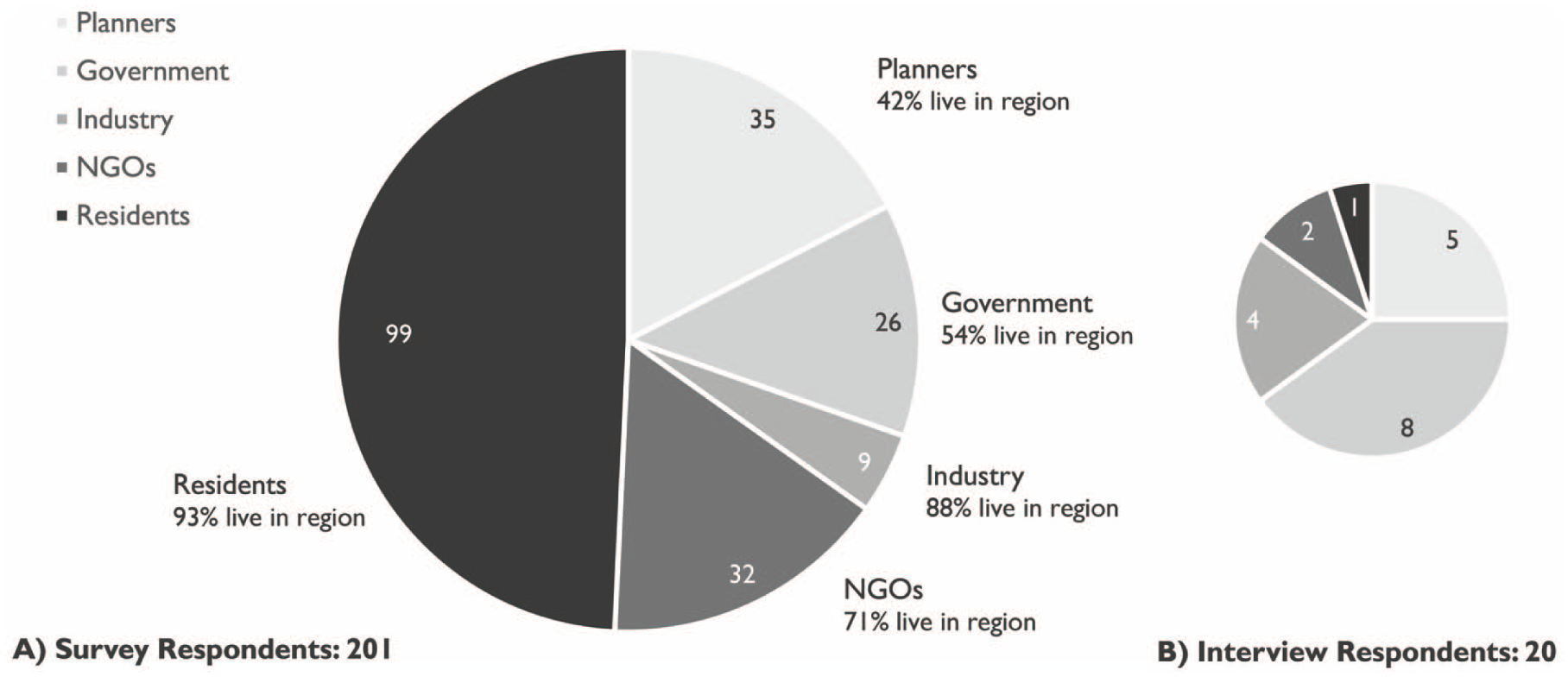
Research participants by stakeholder group across two research phases.
In the second phase, twenty semi-structured interviews were conducted by the researcher with key informants between August 2018 and February 2019 selected from the initial survey respondents and representing each of the stakeholder groups. Key informants were selected by the researcher to ensure a range of perspectives from various stakeholder groups across the study area. See Figure 2 for a breakdown of these participants.
Data gleaned from each phase of the research were treated confidentially and assessed through a pattern-matching approach, comparing an empirically based pattern (based on the findings of this case study) with a predicted one made before data were collected (Yin 2018) and linking responses back to the key research question and objectives. Coding of transcripts was carried out to highlight key themes. This case study draws on Yin’s (2018) design to test for construct validity, using multiple sources of evidence and the establishment of a chain of evidence. Using this approach, tests for internal validity are constructed through pattern matching and explanation building during the data analysis phase. Reliability was enhanced by applying Yin’s case study protocol and through the development of a case study database using the responses from the survey and semi-structured interviews (Yin 2018).
Survey and Interview Administration
The survey was administered using an online tool (SurveyMonkey). Questions in the survey were used to determine levels of awareness around NHS planning and the delivery of ecosystem services from NHS. The survey also provided insight into stakeholder preferences around several issues related to NHS planning and explored opportunities to incorporate ecosystem services into future NHS planning. The survey was developed by the researcher and included twenty-four questions in a variety of formats (open-ended, slider, ranking, and checkbox). The survey questions were informed by the author’s experiences as a Registered Professional Planner and as a participant in NHS planning in Halton Region during the OP Review process launched in 2006. The survey also provided participants an opportunity to sign up for further phases of the research. Data derived from the surveys were used to quantify knowledge levels around specific themes.
Semi-structured interviews were conducted in-person, by phone and by Skype. Twenty stakeholders were chosen from the database of contact information generated from Phase 1 using the interview questions found in Table 1. The length of time used to conduct each interview ranged from thirty minutes to three hours in length. The audio portion of all interviews was recorded with the knowledge and permission of the participant, and transcripts of the interviews were developed through the use of voice to word transcription software for thematic analysis through the use of coding. The thematic analysis carried out in the research allowed for development of a conceptual framework of stakeholder’s involvement in NHS, identifying the themes of knowledge of NHS planning and familiarity with ecosystem services, following similar analysis carried out by Naeem et al. (2023). The interviewees were assigned labels of R1 (Respondent Number 1) to R20 (Respondent Number 20) for use in reporting research results. Interview findings complemented the quantitative data collected through the survey instrument.
Interview Questions.
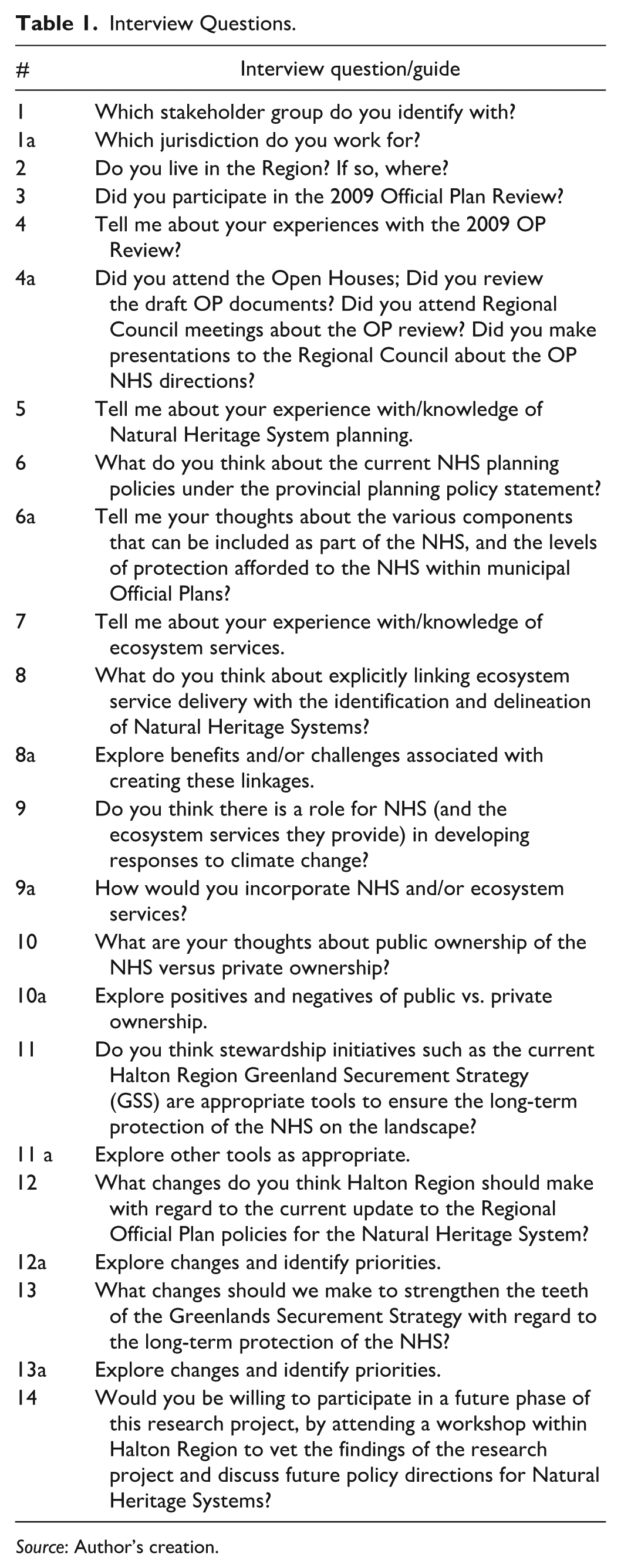
Source: Author’s creation.
Results
The thematic analysis of survey and interview transcripts was carried out as shown in Figure 3.
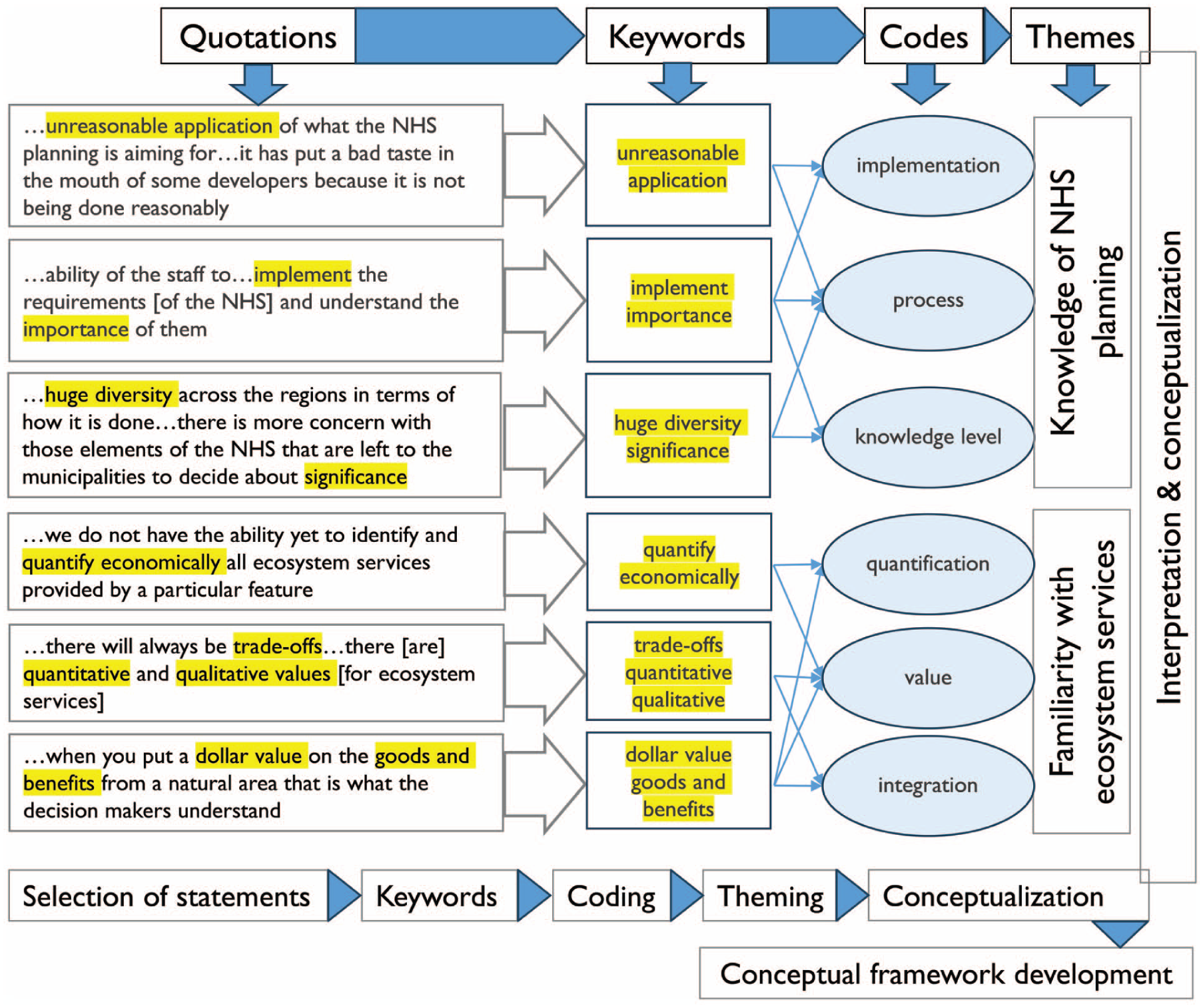
Thematic analysis.
These results suggest that a shift toward increased social license for protected areas planning may be achieved by increasing knowledge of the protected area planning processes, by increasing awareness of the ecosystem services that protected areas can provide, and by identifying common areas of concern across stakeholder groups. Survey participants were asked to indicate their knowledge of NHS planning by moving a slider along a scale from “not familiar at all” (0) to “familiar” (50) to “expert knowledge” (100). None of the respondents selected 0 in their response; every stakeholder group except for industry had at least one respondent who indicated “expert knowledge” and selected 100. Average (mean) selections ranged from thirty-one (Residents) to fifty-six (NGOs), sixty-six (Government), and seventy-one (Planners and Industry). Both Industry and Planners indicated very high levels of knowledge around the NHS process and familiarity with the system. The results shown in Figure 4 indicate the very wide range of responses from different individuals within stakeholder groups. While Residents clearly have the least knowledge around the NHS process (generally speaking), there are large groups of respondents within Government and NGOs who only report some familiarity with the process.
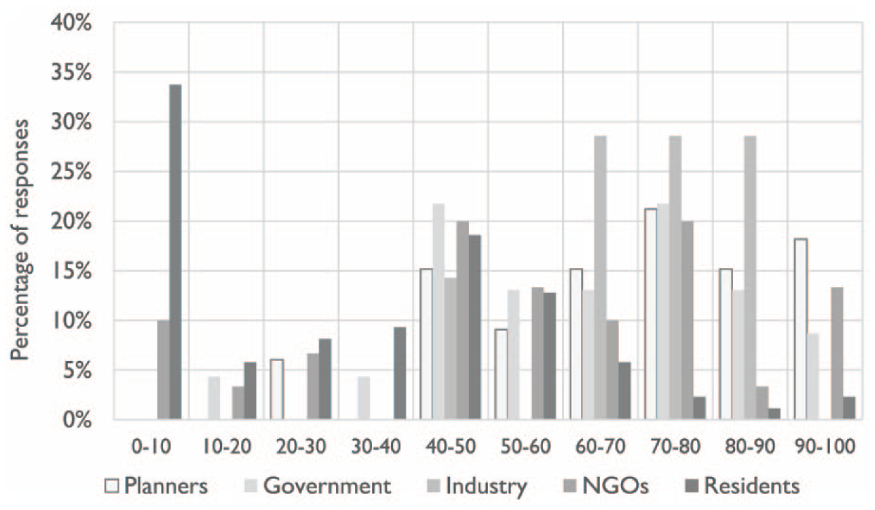
Knowledge of Natural Heritage Systems planning by stakeholder group.
The interviews provided additional insight into some of these perspectives. There is a sense among some respondents that the concept of NHS is not well developed to begin with: . . . the ability of the staff to . . . implement the requirements [of the NHS] and understand the importance of them . . . I think there is a huge diversity across [the] regions in terms of how it’s done. (R17) . . . there is more concern with those elements of the NHS that are left to the municipalities to decide about significance . . . it may be important at a local level, but it may not have any provincial protections, so you are into negotiating to protect that feature. (R18)
The quote from R18 is particularly interesting, as it suggests that some stakeholders take issue with the features or areas that are identified as “significant” under provincial policy, and particularly the role of municipalities in determining significance, as this can vary from place to place. This disagreement sets the stage for future disputes as the definition can be opaque.
The findings shown in Figure 4 show significant variation among almost all groups in terms of their level of knowledge around NHS meaning that planning decisions can be questioned, as the following statements make clear: . . . so focused on rules and regulations that [they] don’t look at the big picture . . . [planners interpret] drainage along a ditch line . . . as a wetland . . . aggravating a lot of the developers as that is an unreasonable application of what the NHS planning is aiming for . . . it has put a bad taste in the mouth of some developers because it is not being done reasonably. (R11) . . . when you look at drainage systems that are 600 feet wide [that] started out as streams on farmer’s fields that were 6 inches wide . . . I think the natural heritage system is one of the most artificially developed Natural Heritage Systems in Canada. (R20)
If stakeholders in one group (e.g., Residents, Industry) are not confident in the ability of another group (e.g., Planners, Government) to conduct the NHS planning process fairly, it destroys trust in the process and leads to contentious decisions.
Ecosystem services are a fairly well-established concept and were familiar to many of the participants in this study. As shown in Figure 5, members of the NGO group were most likely (>50%) to express strong familiarity with ecosystem services, followed by Planners (50%) and Government (almost 40%). About half of Industry respondents indicated some familiarity with the concept, while Residents showed the least familiarity; very few (<10%) of Residents identify as being fully familiar with ecosystem services, while 7 percent report having no idea about the concept.
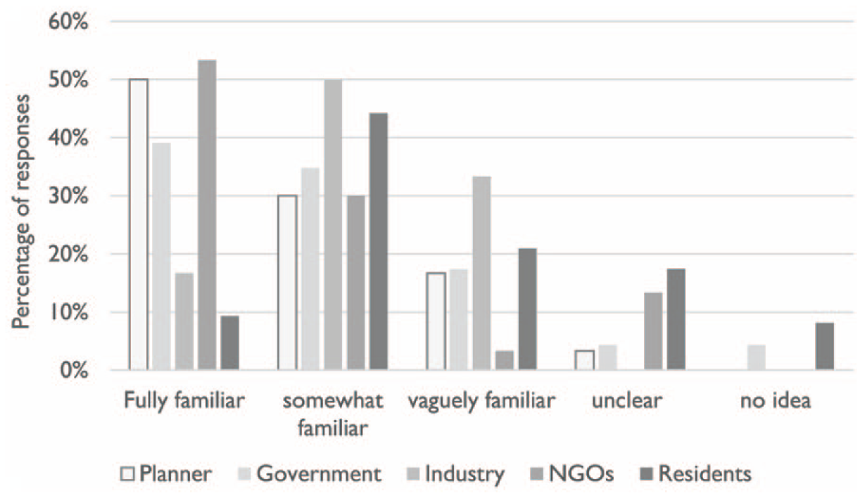
Familiarity with the concept of ecosystem services by stakeholder group.
Most interview respondents recognized that the land areas making up NHS carry out various ecological functions and that humans are the recipient of benefits coming from ecological functions. There were differing opinions and perspectives with regard to potential ways in which ecosystem services could be incorporated into planning. Interviewees stressed that quantifying ecosystem services was essential to convey the importance of these services to all stakeholders: . . . natural features are important because they are important and you shouldn’t have to place a value on them to make people understand that they are important, but . . . certain people that is how they think . . . that is how they wrap their minds around the importance of certain things but if you put a monetary value or a human health benefit on it they may be more likely to put policies in place to protect those [ecosystems]. (R17) . . . when you put a dollar value on the goods and benefits from a natural area that is what the decision makers understand. (R12)
Some feel that defining ecosystem service values early “. . . would be a fundamental improvement in the process” (R7) and suggested that clearly defining ecosystem values would lead to more collaboration between groups: “. . . I think you would get a lot of buy in” (R7).
Cultural ecosystem services were particularly contentious. One respondent expressed concerns about the tradeoffs involved in assessing these types of services against other ecosystem services, particularly regulating and supporting services; while recreational service value of a woodland may increase if there is a trail through the woodland, the ecological value may be reduced (R14). Other participants see the establishment of recreational use in a natural area as a means of protecting the feature: . . . the development of recreational trails encourages just one route and discourages going through sensitive areas of endangered species from being eradicated because of irregular usage of the land . . . it minimizes people wandering around in the greenspaces and not being careful about what damage they may be doing. (R2)
There is also acknowledgment among the interviewees that ecosystem services are undervalued or difficult to value. In the words of one interviewee, “. . . I don’t think the average person has a clue about how important an open field is . . . to people who know better it is a filter—a sponge” (R2). Another pointed out that . . . some people just see an old field and may not be aware of how important it may be . . . some important prairie areas are very important on the landscape but you would not know to look at it . . . to some people it just looks like an unkempt grassy area without realizing how unique that feature is. (R18)
In considering the value of a shady tree, one respondent was emphatic that people would prefer a shady place to sit but struggled to place a value on that service (R19).
Multiple interviewees mentioned that the full list of ecosystem services is not necessarily known and thus difficult to value appropriately. One pointed out that “. . . ecosystem services attempt to be science based but like all science it is constantly evolving and tough to define scientifically . . .” (R15); another stated that “. . . we do not have the ability yet to identify and quantify economically all ecosystem services provided by a particular feature” (R14). It was pointed out that “there will always be trade-offs . . . there [are] quantitative and qualitative values [for ecosystem services]” (R20). This concern may be allayed by the fact that planners are responsible to consider not only social issues, but also nonhuman components of the environment. Ecosystem services should therefore be seen as a mechanism to promote dialogue and discussion as part of making planning decisions.
Some respondents were concerned about the ability of tools to capture realistic values of some services, particularly cultural services; one stated that it “. . . may be difficult to quantify in that some groups would consider some woodlots priceless for the experience of being in the woodlot and these softer services may be very challenging to quantify” (R6). Similarly, others expressed concern that placing dollar values on ecosystem services could not represent the intrinsic value of certain features: in speaking about woodlands, one respondent commented that “. . . once its gone its gone” (R1), while another stated that “. . . they are irreplaceable . . . those ancient cedars . . . if they disappear we can’t replace them . . . not in our life time” (R5).
Many respondents suspected that ecosystem service values would not be used to protect the landscape, but in fact would be used to assess compensation values to justify the loss of natural landscapes. One interviewee sums it up as follows: . . . my fear is with putting a monetary value on a feature is someone will say fine—I will cut you a check for that and you can go and create that somewhere else and let me cut this down and develop it. (R17)
Not only would that reduce the benefit of quantifying ecosystem services, but given an incomplete list of services, there is a very real danger that “compensation” for the loss of ecological services will not actually pay for the full range of services that are lost: . . . there are dollar values that have been assigned to woodlands and wetlands and look at all the dollars we are saving . . . some people may need that dollar amount to know how valuable they are but it may help the general public buy into it a little bit more—that makes good sense make people understand better why it is so crucial to protect the NHS. The fact that the NHS is providing ecosystem services should be enough—the actual dollar amount may not be of importance. Focusing on the services but not putting a dollar on it may be an approach to consider protection of the NHS. (R9) . . . people view environmental features as a negative on their property . . . like if a wetland is on your property people are thinking if I have to protect these features from development look at the money that I could be making if I developed it but now you can get people thinking . . . oh it is filtering my well water and this is preventing flooding downstream . . . its contributing to the water quality, to the air quality . . . those things were not really being thought of before. (R11)
These sentiments suggest that the best way forward may be to eliminate economic valuation of ecosystem services and focus on the actual services being provided by the Natural Heritage System.
Based on the survey results, the majority of respondents across all stakeholder groups agreed with the statement that “the identification and delineation of Natural Heritage Systems should explicitly recognize the ecosystem services they provide and the role that NHS plays in delivering them.” Planners, Government, NGOs and Residents were particularly strong in their support for this statement, while Industry, although slightly less enthusiastic, still indicated support, as the following statements demonstrate, . . . this [linking of NHS planning and ecosystem services] is absolutely needed . . . I think if we don’t show all the values of the NHS, I think it is really hard for people to understand the importance . . . (R10) . . . cities need to integrate with nature . . . however you need to communicate a message about the importance of NHS in the broadest sense through the lens of ecosystem services or to a particular stakeholder group in order to capture their attention and maybe get them thinking differently and perhaps behaving differently then I think the linkage of ecosystem services to the NHS would be valuable to do. (R6)
The survey also asked if the NHS planning process should be modified to recognize ecosystem services. The responses from Industry were starkly different from the four other stakeholder groups; while Planners, Government, NGOs and Residents expressed support, the majority of Industry stakeholders are not amenable to modifying NHS planning to incorporate ecosystem service values which represents a major challenge moving forward.
The interview responses cast additional light on the challenges with bringing ecosystem services into the NHS planning process and may in fact help to explain the divergence in responses between the Industry group and other stakeholders. Some pointed to the challenges of working at the regional scale, particularly if other jurisdictions do not also incorporate ecosystem services into their NHS (R7, R8). Others argued for provincial-level (or greater) uptake of this approach: . . . ecosystem services are useless on a regional basis—the ecosystem services that we are providing by our NHS are [made] completely null and void by the pollution coming in from everywhere else and the urban activities to the south and north of the major portion of our NHS . . . unless it is done on a province-wide approach or international basis I really don’t see the homegrown benefits. (R7)
The most likely explanation for Industry’s lack of enthusiasm for the incorporation of ecosystem services is the perceived impact that this might have on development. In the words of one interviewee, “. . . if you were to develop a Natural Heritage System that includes all [ecosystem services]—a gold-plated Natural Heritage System—you would have nothing left to develop” (R20). Other studies in the literature, however, highlight the importance of using ecosystem services to assess tradeoffs between development and the intrinsic value of the environment, and in fact suggest that ecosystem services may be a way to address colonial planning issues (Benra and Nahuelhual 2019). Industry’s lack of willingness to engage with the incorporation of ecosystem services into NHS planning limits the use of a tool for fostering dialogue and achieving consensus, essential parts of getting social license for NHS planning. It indicates that Industry respondents have concerns which have not been addressed.
When asked what data would make it easier to incorporate ecosystem services into NHS planning, the four “supportive” stakeholder groups (Planners, Government, NGOs, Residents) indicated a wide range of data, including more information about types of ecosystem services, their delivery and value, the scale of these services, their interconnections and the overall impacts of these services. These results are shown in Figure 6. Industry representatives already uncomfortable with the concept of adding ecosystem services into NHS—were reluctant to indicate options and few responses were logged from this stakeholder group.
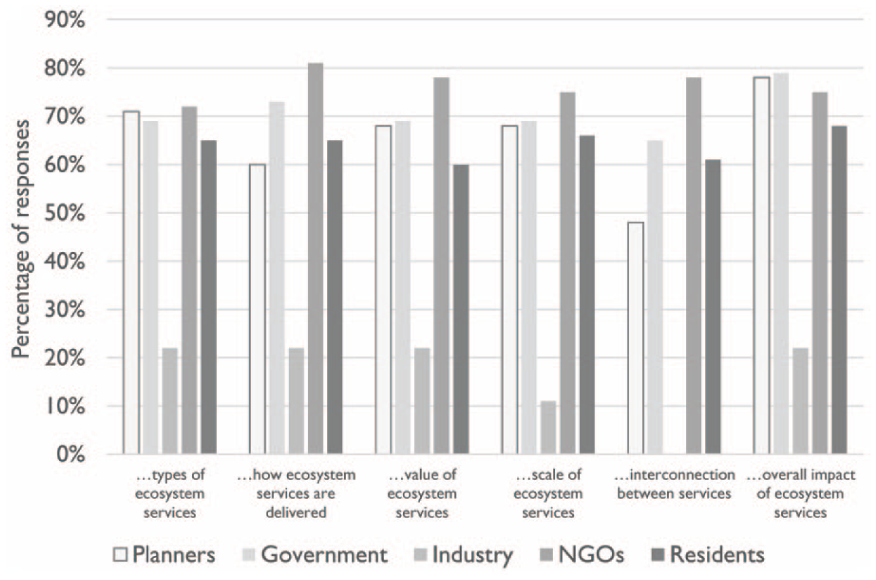
Knowledge requirements for ecosystem services—preferences by stakeholder group.
Data shown in Figure 6 highlight two findings. First, there is not enough information about ecosystem services to make incorporating them into NHS an easy task. The question posed in the survey was linked to answers that categorized the full range of data that might describe ecosystem services; four of the five stakeholder groups overwhelmingly suggested that data were required in each category. In addition, this figure re-emphasizes the caution that Industry stakeholders show when considering integration of ecosystem services into NHS.
One issue raised in the interviews is that not all stakeholders agree on the importance of various ecosystem services. For example, respondents questioned whether cultural services should be considered “real”; “. . . I don’t see the value of adding cultural services to the NHS . . . I don’t see the benefit of adding ones that are not real and beyond environmental” (R7). This perception, that only “environmental” services (such as regulating or provisioning services) should be included in NHS, is a common refrain (R6, R8); this view does not reflect the importance of connecting all ecosystem services (e.g., Pueyo-Ros 2018). Other stakeholders highlighted the need for data to move forward. In the words of one respondent, . . . it has only been in the past year that I have only come across the term, I don’t think it is well used across municipal staff . . . I think it is a term we need to become familiar with . . . (R5)
A perspective that should not be lost is that some stakeholders were very clear that they saw ecosystem services as being “bigger” than NHS planning, and that perhaps the two should be kept separate: . . . ecological services planning is much broader than NHS planning . . . you could almost say that ecosystem services are a societal benefit and that is different from NHS planning in my mind. (R4)
The survey and interviews strongly highlighted the tension that development pressures have placed on different stakeholders. This was clear in the comments from individual stakeholder groups: . . . the NHS wasn’t necessarily met with open arms; the agricultural community was very concerned that the NHS would put further restrictions on agricultural practices and farming operations themselves. (R4)
Developers had similar feelings; “. . . the development industry views the NHS as a burden” (R1). In 2011, the agriculture community appealed the Regional Official Plan Amendment ROPA 38 (i.e., the implementation of Halton’s NHS), indicating their lack of acceptance of the process. While this appeal was unsuccessful in the end, the research indicates that any modification to NHS would be similarly fought by industrial stakeholders: . . . the NHS and the agricultural community . . . just how contentious it was when all those rural agricultural lands were designated NHS . . . when the agricultural community opens up that document and sees that swath of green across their lands there is a perception that their land use is not a legitimate land use and they don’t want to invest in their land and the perception becomes a reality . . . they are still unhappy . . . they are farmers . . . don’t have time to read through land use planning documents . . . some are getting it right some are getting it wrong. (R8) . . . there will be difficulties with that if it affects how people can use their land because landowners are already pretty constrained with the current policy regime so adding to that . . . its right to look at it . . . to look at that linkage [between NHS and ecosystem services] but how it gets implemented I think it is probably going to be the more difficult challenge. (R13)
At the same time, a number of groups are likely to support further inclusion of ecosystem services within NHS planning. Interviewees made it clear that “ . . . green groups in the Region applauded the NHS” (R4), which they found “. . . very progressive and forward thinking” (R4). Another highlighted a common sentiment when they said, “. . . I don’t think we went far enough [with the NHS] but I understand why . . . the first time is always difficult” (R7).
NHS are already a key part of climate change mitigation and adaptation. As reported by various interviewees, . . . NHS planning . . . supports the whole concept of climate change [response] . . . it means more of the landscape is left undeveloped and allows more of the landscape to absorb the climate change events. (R4) . . . some municipalities already consider the NHS part of their tools to address climate change . . . things like flood mitigation and erosion and municipalities are finally understanding that it costs a heck of a lot more money to have to go in and retrofit things down the road than it does to just address it proactively by protecting upstream wetlands or putting in proper storm water controls, low impact development as part of their NHS to mitigate long term problems downstream. (R17)
When asked if NHS planning should be incorporated into Official Plans, Industry respondents were largely negative. However, when asked if NHS or ecosystem services could be used to assist municipalities in their response to climate change, they expressed more support. In responding to these questions, respondents were asked to move a slider along a scale with 0 representing disagreement and 100 representing agreement. A large majority (>80%) of Planners, Government, NGOs and Residents agreed with all three statements with average scores within the standard deviation of responses. The only statistically different average scores are found within the Industry group. Industry scores progressed from an average of 36.4 when asked about the legitimacy of the NHS, to an average of 56.8 when asked about using NHS as part of a response to climate change, to an average of 68.3 when asked about using ecosystem services in the climate change response. In terms of the number of respondents, 55 percent thought that NHS should be a part of the climate change response, and 48 percent felt that ecosystem services should play a role. These results are displayed in Figure 7. Information from the interviews describing sentiments of acceptance, approval and trust was used to inform the approximate position of stakeholder responses relative to the social license pyramid. These findings suggest that identifying a common goal could be a powerful tool in uniting different sides and achieving consensus and moving closer toward social license.
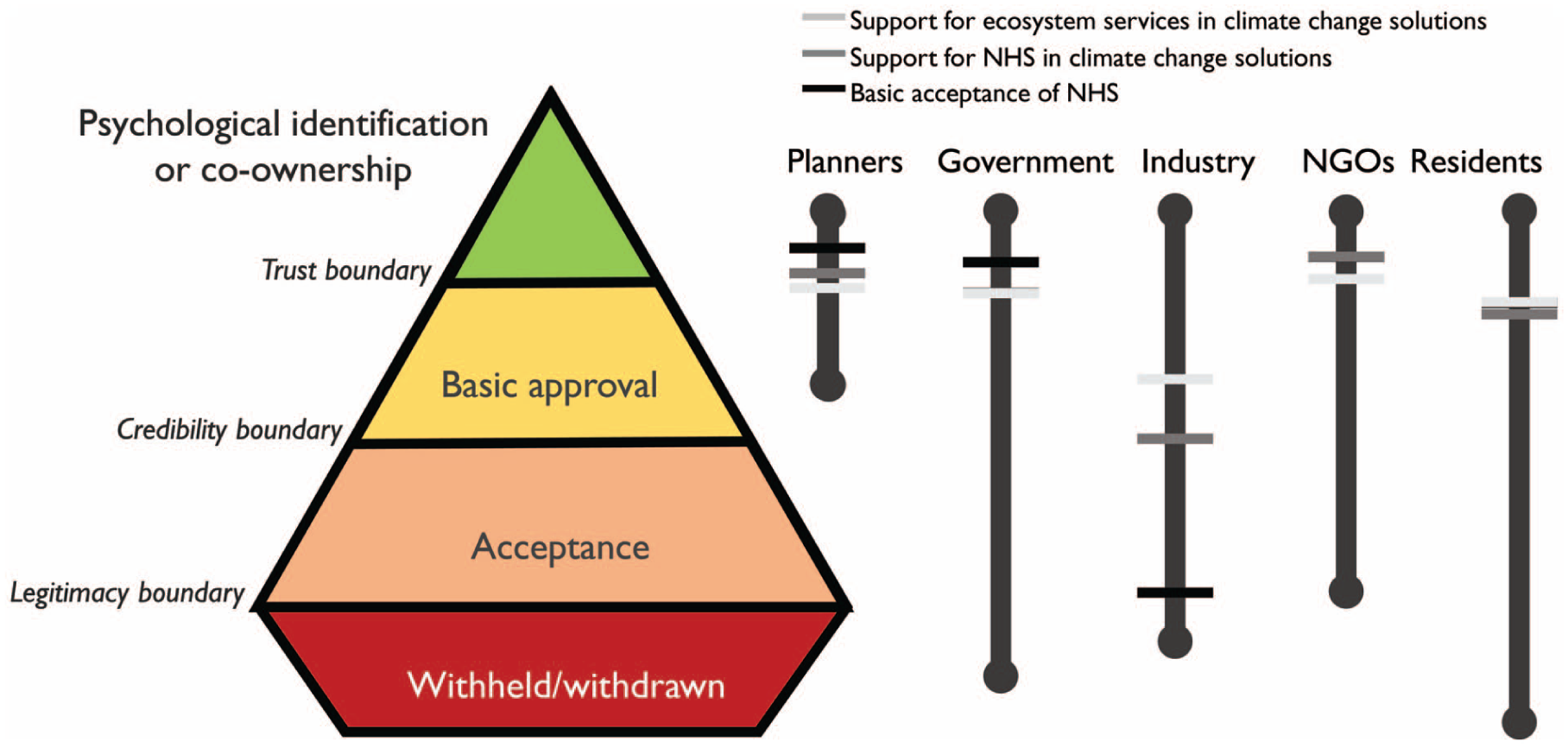
Pyramid model and boundaries from Thomson and Boutilier (2011).
In the interviews, participants across the stakeholder groups all agreed that ecosystem services could be a useful tool to help with localized responses to climate change, or to support municipal policy goals; there was a fair degree of consensus that “. . . NHS is one of the big tools to deal with climate change” (R9) and that “. . . linking [ecosystem] services to climate change and how they can help adapt to climate change will be extremely valuable . . .” (R14). Respondents praised the use of green space and trees “. . . in terms of dealing with the heat island effect and helping the public with some of those issues” (R18), implicitly recognizing the ecosystem service that these lands provide. Other research participants indicated, . . . most people at the municipality already know that the NHS is a contributor to climate change mitigation and through some of our program’s adaptation but there is always room to expand what people know and understand . . . and it might change the outcome of some decisions if it was framed from these different perspectives. (R6) . . . you have the flood control provided by wetlands . . . the climate change prediction for Ontario is that we may have some wetter weather overall precipitation increases and warmer temperatures wetlands and valleylands for maintaining and holding water and releasing it at the right times as well as for mini droughts we are seeing on the landscape already just regulating that flow of water will become more important. (R14)
These results indicate the key role that landscape-level NHS planning can play in climate change mitigation.
Discussion
Increasing support for the development of NHS can be viewed as a means of responding to climate change, particularly as research has noted the importance of protected areas in urban areas to create adaptive capacity and meet the challenges of climate change (Rosenzweig 2011). Intact natural ecosystems, particularly in the context of the urban environment, can help regulate air and water quality and improve wellbeing for all (Turner, Wilcove, and Oppenheimer 2009). Ecosystems (such as those comprising the NHS) need to be of sufficient size to deliver required services to the population at hand, emphasizing the importance of ascribing local values for individual ecosystem services (Warren 2011). Responding to the impacts of climate change can be aided by enhancing and maintaining ecosystem services on the landscape (Costanza et al. 1997; Mooney et al. 2009; Pedrono et al. 2016; Daily 1997). A key question in this study was whether the use of ecosystem services could increase trust, improve transparency, and ultimately move stakeholders closer to the threshold for social license for planning NHS. The results from the survey and interviews clearly indicate that, while there may be acceptance of NHS in Halton and awareness of the legislative requirement to have NHS, there is not a sense of true partnership or ownership over NHS among all stakeholder groups. Put simply, NHS planning at the present time has not achieved the threshold conditions to obtain social license, particularly from Industry representatives.
Industrial participants indicated strong knowledge about NHS planning process; statements from the interviews, however, indicated that there is little trust between industrial (farmer and developer) respondents and planners with regard to implementation of NHS on the landscape. This lack of trust manifests as a lack of consensus showing that the various stakeholder groups do not agree on these points. This raises interesting questions regarding trust and consensus to address common concerns (Foroughi et al. 2023). It is important to note that there is no indication that the Industry stakeholder group does not want to see the protection of lands across Halton. These respondents were most likely to be characterized by a wide range of perspectives in terms of their vision for how land could be protected. There was a sense from some respondents that the current iteration of NHS is working in a counter-intuitive fashion, and that there are better ways to protect the land. Some Industrial respondents clearly view themselves as stewards of the landscape and feel that they can do a better job than Government, or Planners. This view was strongly rejected by respondents in other stakeholder groups; many interviewees expressed a clear preference for public ownership over protected areas. Again, this disconnect—agreement on the goal of conservation, but lack of common ground in terms of how to get there—does not create the necessary conditions for social license around NHS implementation.
Another finding was concern over integration between NHS planning at different levels or between different jurisdictions. Respondents expressed frustration over the challenges of managing landscape-level problems and reported disconnects between NHS planning at the local level (e.g., North Oakville) and the regional scale (e.g., Halton Region). An issue that was identified was lack of transparency in how decisions were made at these levels, and the barriers to communication between planners at these levels that this lack of transparency creates.
The stakeholders involved in this research were less aware of the concept of ecosystem services than they were of NHS planning. Of the stakeholder groups considered, NGOs were most likely to be familiar with the use of ecosystem services, followed by Planners and Industry, while Government and Residents were much less likely to have prior knowledge of the concept.
There was a great deal of consensus among the interviewees that ecosystem services are a useful tool for communications, particularly when expressed in dollar values, which allowed tradeoffs to be assessed between different choices in a way that was both clear and understandable. The use of ecosystem services could thus address some of the issues identified around NHS planning, particularly around the need for transparency in why decisions are being made in various places. A concern about valuing ecosystem services was achieving consensus on the values that are used. Many respondents pointed out that intrinsic value is difficult to assess, and it may be difficult to get agreement on the values that are used. Not all respondents agree that all ecosystem services are valid; in particular, cultural ecosystem services engendered a significant amount of contentious comments from participants in various phases of the research. A concern that was raised was the idea that placing value on ecosystem services might be used to justify development—in other words, that the values would simply be seen as required compensation levels, and that this would create additional pressure on the landscape. This is a concern that would need to be addressed through policy—either through an adaption to NHS, or through additional levels of policy protection.
At the present time, NHS are identified and delineated based on ecological assessments (carried out by ecologists) of natural areas. Current approaches to NHS planning do not include the explicit identification and quantification of ecosystem services as planners and others are unaware of how to include ecosystem services into NHS planning. Development pressure in high growth urban areas necessitates that the identification, delineation and protection of NHS take place prior to the principle of development (i.e., as part of the land use designation process) being established especially within the urban boundary.
Through the survey, the Planner stakeholder group indicated that they required a tool to be able to quantify ecosystem services to implement these services into NHS planning. Planners (and others) also indicated that at the present time they do not possess enough knowledge of ecosystem services to utilize them well. There are complex data requirements that still need to be met, including a better understanding of services themselves—the types of services, their value, their scale, delivery mechanisms, and overall impact. Thus, greater use of ecosystem services within NHS planning requires training, but this could increase transparency and a sense of ownership over the process.
Conclusion
It is clear that the identification, delineation and protection of NHS remain a challenging process. After a decade, NHS evoke strong views from various stakeholder groups, and there are differing opinions regarding the effectiveness of NHS planning as a tool to protect natural areas and the services they provide.
The findings of the survey and interviews strongly indicate emerging consensus for the importance of ecosystem services but highlight differing opinions about NHS planning and ecosystem services, suggesting a significant disconnect between Industrial stakeholders and other stakeholders across the Region. The results of the study indicate that Industry stakeholders do not feel ownership or partnership over the NHS planning process. Some Industry stakeholders are landowners who identify as stewards of the landscape and feel that they are up to the job of protecting the land without the need for NHS. Because of this, the study concluded that NHS planning has not yet achieved the threshold conditions to obtain social license. The feelings of the Industrial stakeholder group were related in part to a lack of transparency in how decisions were made; this lack of transparency created barriers to communication between Planners and other stakeholders.
The use of ecosystem services as a means of augmenting NHS planning holds potential, but the challenging nature of NHS planning remains a barrier. Social license has not been achieved with respect to Industrial participants; Industry respondents showed little willingness to go back and change the NHS planning process. From their perspective, concerns they expressed with the initial development of NHS would not be addressed by simply incorporating ecosystem services into the NHS planning framework. A more constructive way of approaching this issue and thus moving toward greater social license for the NHS planning process, would be to re-frame the NHS discussion as a means of addressing a common concern. In this research, the issue of climate change was offered as a unifying concern that could be a focus for planning efforts. When placed into this context, Industry stakeholders were much more likely to provide some agreement. In this scenario, the use of ecosystem services as part of the NHS planning process becomes a more palatable option and could be used to address other critical concerns identified by stakeholders regarding NHS planning and increase the likelihood of true social license for this process.
Quantifying the benefits of protected areas by introducing and quantifying ecosystem services could help change perception around protected areas planning. By quantifying the benefits of better conservation planning using ecosystem services and positioning protected areas as a response to a pressing common concern such as climate change, it is possible to improve transparency and communication throughout the process, moving all participants closer to granting social license for planning around protected areas. Policy requiring the integration of local ecosystem services data into protected areas planning could expand the support for these areas through the identification of the benefits accruing to society from their retention. The implications of identifying and including local ecosystem services into protected areas planning include the addition of another layer of analysis, requiring additional clarity as to why various landcover types are included, and detailing the ecosystem services that they deliver. Framing the development of protected areas as a response to climate change may increase social acceptance and support for these initiatives.
Future Research
The survey and interviews were not designed to capture Indigenous perspectives as a separate group. A limitation of this study therefore is that Indigenous perspectives on ecosystem services could not be fully explored; however, it should be stressed that Indigenous peoples place high value on the spiritual and ceremonial services that the landscape provides (e.g., Smith et al. 2019), and that work should be done to better capture these perspectives.
Footnotes
Acknowledgements
I would like to thank the editors and anonymous reviewers for their insights on the manuscript and the Department of Geography and Planning at Queen’s University.
Declaration of Conflicting Interests
The authors declared no potential conflicts of interest with respect to the research, authorship, and/or publication of this article.
Funding
The authors received no financial support for the research, authorship, and/or publication of this article.
