




Abstract
Scenario planning is a valuable tool for dealing with uncertainty, but little is known about its consideration of social equity. We investigated if and how studies of scenario planning in the peer-reviewed literature address issues of social equity. After reviewing 157 peer-reviewed articles on scenario planning, we find that social equity is either ignored or underemphasized in scenario processes. Integrating social equity principles into the scenario planning method promises to help planners prepare for different social equity outcomes in the future. We suggest ways to incorporate social equity principles, such as recognition, representation, and redistribution, into the scenario planning method.
Introduction
The future is always uncertain, but in recent years, many have argued that the degree of uncertainty has intensified (Di Berardo, Di Zio, and Fontanella 2023; Leach et al. 2021). The intersections of the COVID-19 pandemic, climate change, global unrest, and rising social and environmental injustices are contributing to growing unease about what the future may hold. Whether the future is more uncertain or not can be debated. But of particular concern is the amplification of existing inequities in a post-pandemic context (Lennon 2021). Negative impacts of disasters are often most strongly felt by those already marginalized, and the pandemic has been no exception (Booth and Barr 2020; Mensah and Williams 2022).
In this context of growing uncertainty and concerns over continued marginalization, scenario planning appears to be gaining popularity, and its value has become particularly evident in how it allows communities to anticipate needs and challenges under different types of plausible futures (Abou Jaoude, Mumm, and Carlow 2022; Stojanovic, Mitkovic, and Mitkovic 2014; Zapata 2021). Yet, it appears that many of the traditional scenario planning approaches surfacing and resurfacing in this context pay little explicit attention to social equity considerations. While there is growing scholarship and practical applications of more inclusive and participatory planning processes that use scenarios in their approach (e.g., Berbés-Blázquez et al. 2021; Iwaniec et al. 2020), it is less clear whether and how scenario planning as a more general method used in various disciplines and across fields of study is driven by or integrates equity considerations at all.
Planning for social equity is both a process and an outcome that emphasizes participation, addresses issues of recognition, and pursues redistribution in ways that transform underlying structures of power and privilege. Therefore, planning for social equity in times of increasing marginalization and uncertainty invites planners to critically examine whose vision of the future they are planning for (Zapata 2021), or as Barry and Agyeman put it, we need to ask whose “notions of becoming provides the basis for urban planning” (Barry and Agyeman 2020, 36). This implies working closely with marginalized groups to co-produce and implement inclusive visions of cities. In this regard, the scenario planning method (Stojanovic, Mitkovic, and Mitkovic 2014; Xiang and Clarke 2003) could, in theory, help implement aspirations of “co-production” (Barry and Agyeman 2020) by considering multiple plausible futures with different social equity outcomes. Without explicit consideration of equity, planning will likely continue to reinforce existing inequities and be complicit in producing newly emerging forms of marginalization. As a profession and field of study with explicit public interest goals, equity must be at the forefront for the discipline to remain to be seen as relevant to the very stakeholders it purports to serve.
However, it is unclear to what extent current scenario planning—a method that involves creating and exploring multiple plausible scenarios of alternative futures, based on different assumptions, drivers, and uncertainties (Goodspeed 2017; Xiang and Clarke 2003)—is driven by a participatory process that would directly instill equity considerations into future city building. Instead, our hypothesis is that scenario planning has been a largely technical and data-driven process that renders the task of scenario building predominantly within the domain of experts with specific technocratic skills. With the increasing use of scenario planning, it is essential that planning, as a profession and field of study, gains further appreciation of the ways in which equity has been and could be engrained in this method. This is particularly important in that the use of increasingly sophisticated computing tools that can process ever larger volumes of historical data to predict trends also tends to result in policy decisions that reproduce the past and the status quo (Rojas et al. 2022).
Scenario planning is conducted in a range of fields and geographic contexts with varying goals. In our analysis, we consider all scenario planning in the context of cities and urban development. This means that not all studies will have been conducted by planning scholars. Yet a comprehensive overview of how scenario planning takes place in relation to equity is important since planners often draw on a range of fields for insights, especially engineering and economics, where scenario planning is prevalent. However, planners and planning scholars ought to be familiar with the assumptions and goals behind the scenario planning outputs they may rely on for decision-making.
This study, therefore, systematically examines how the scenario planning method has addressed social equity considerations. We also build a conceptual framework that considers how a future approach to planning influences social equity and examine the potential for scenario planning as a tool to help work toward greater social equity. Planning, of course, can include a wide variety of activities and occurs at a wide variety of scales. We use the term here in its broadest sense to describe the coordinated use of resources to anticipate and prepare for future conditions from the perspective of a wide variety and plurality of public interests. The ways in which equity can be operationalized within this broad context of planning will differ across scales and geography and require further investigation in future work.
We conduct a systematic literature review to address the question: in what ways does scenario planning address social equity? We specifically investigate (1) whether existing scenario approaches address equity proactively, (2) the dimensions of equity that are addressed, and (3) the approaches used to operationalize equity. We scope our study to only include scenario planning approaches published in academic outlets and recognize the need to further examine scenario planning in studies conducted, for instance, by private consultants and the public sector. The literature search yielded 1,416 articles based on searches in SCOPUS and the Web of Science (WoS) core collection. Post-screening, 157 peer-reviewed articles were included in the analysis. The articles were published between 1996 and 2021 across various fields, including transportation engineering, energy engineering, and urban planning. Also, the scenario planning approaches reported in these articles were applied in different geographic and social contexts as well as for different purposes. These may have implications for if and how they address equity, but the reasons for such differences are difficult to analyze based on the articles alone and are thus left to future research. We frame social equity broadly, allowing us to look for equity in scenario planning in the ways that it corrects or exacerbates past injustices, addresses different types and depths of participatory processes, and serves the creation of more equitable futures for historically marginalized populations.
Overall, the review reveals that social equity in scenario planning is generally ignored completely or underemphasized in scenario processes. As more planners and policymakers, in general, turn to scenario planning for insight during uncertain times, it is not only essential to gain a better understanding if and how equity is being addressed in these approaches but also to develop guides for meaningful equity consideration in the scenario-building process. Thus, this review has also identified various approaches for integrating equity considerations into scenario planning, offering a starting point for progress in this area.
The rest of the paper is structured as follows. We first discuss what it means to plan for social equity with a central focus on the future. We argue that future methods such as scenario planning provide opportunities for directly instilling social equity considerations into future city building. We then describe the methods used before presenting the results of the systematic review. The paper ends with a discussion on how an equity-informed scenario planning method can help implement aspirations of co-production that consider multiple plausible futures with different social equity implications and outcomes.
Conceptual Framework: What a Futures Approach to Planning Means for Social Equity
Rethinking Conceptions of the Future in Planning
Planning’s inherent orientation to the future appears to be obvious (Connell 2009; Freestone 2012); perhaps too obvious that planning scholars and practitioners often fail to ask what the future is and how they can effectively influence it. This critique of planning is, however, not new. Writing toward the end of the twentieth century, when the communicative planning paradigm was already in force, Isserman (1985, 483) argued that planning has “. . . lost sight of the future” and abandoned its role as a “. . . source of inspiration and ideas about what might be and what ought to be.” Isserman (1985) argued strongly that while planning can rightly celebrate its problem-solving and pragmatic orientations, it is important to not lose focus of the future. Abdul Khakee and others wrote extensively about the relationship between planning and future studies and how planners can bring the future back into planning (Khakee 1988; Khakee and Strömberg 1993). At the turn of the twenty-first century, the future infusion advocated by these planning scholars had not yet taken full shape (Cole 2001). Still, there was evidence of increasing use of futures approaches in planning scholarship and practice, thanks, in part, to advancement in computing that facilitated more complex spatial data visualization and interactive analysis associated with futures-oriented planning (Klosterman 1997, 2013) and the rise of policy interest in scenario analysis (Chakraborty and McMillan 2015).
More recently, many planners’ toolboxes contain tools that enable the application of future approaches in planning, including scenario planning, forecasting, storytelling, and visioning, among others (Freestone 2012; Myers and Kitsuse 2000). Unfortunately, most applications of future approaches in planning have been limited to the “futile” attempt to predict the future or what the future will be rather than considering “. . . what the future may be” (Klosterman 2013, 164) and “. . . what the future ought to be” (Isserman 1985, 56:483). For example, most forecasting done by planners is nothing more than demographic projections that use past trends to predict future demographic dynamics (Wachs 2001). These forecasts assume that “demography is destiny” 1 while ignoring the power of planning in shaping the futures of communities and cities and the uncertain environment within which forecasts are made (Moos 2020). Similarly, while scenario planning has been accepted among planners as a tool for examining multiple plausible futures, they are most often focused on selecting a preferred future (Avin and Goodspeed 2020; Klosterman 2013). Many scenario planning exercises, like forecasts, also fail to take advantage of the power of planning to create futures. Thus, planning today, to a large extent, operates under the implicit notion that the future merely unfolds and what planners do is adapt and react to it.
This limited operationalization of future approaches stems partly from underlying conceptions of the future embedded in planning theory and practice. Traditionally, planners’ conception of the future has been expressed in at least three different forms, including the “future as utopia” (Wachs 2001), the future as a continuity of the past (Meyer and Oranje 2005), and the “future as the unknown” (Connell 2009). The future as utopia characterizes the grand visions of early city builders such as Ebenezer Howard, Le Corbusier, Frederick Law Olmsted, and Clarence Stein. These city builders viewed the future as different and better than the present (Meyerson 1961; Wachs 2001). They aimed to create alternative cities that were devoid of the problems of the prevailing city conditions. Thus, the future is inspired by urban problems of the past and present without necessarily assuming that the past problems will repeat themselves (i.e., Utopian visions did not follow trends but were shaped by certain moralistic criteria [Meyerson 1961]). Utopian futures either assumed limited obstacles or provided enough “inspiration” for planners to continue the path toward “a brighter future” regardless of the obstacles along the way (Wachs 2001).
In the 1960s, led by staunch critics such as Jane Jacobs, planning retreated from its utopian roots and became more pragmatic partly due to the failures of the utopian visions. Pragmatic planning became concerned with avoiding the problems of yesterday and aligning the planning profession with mainstream politics to, among other things, gain “. . . increased political efficacy, sanction and financial support from the federal government” (Brooks 1988, 241). Eventually, as Graham May argued, planning had become perceived as being about “tinkering with yesterday’s problems, today—and venturing only into the future by extrapolating existing trends” (Freestone 2012; May 1982, 313).
This idea of planning was informed by the notion that the future is a continuity of the past and that existing trends could predict future occurrences. Thus, planners relied on population projections and forecasts based on past trends as a basis for planning. While still in wide use today, projections and forecasts have come under strong criticism for failing to adequately account for the growing uncertainty and complexity of the city (Moos 2020). Advocates of complexity argue that the future is unknown or an “undefined becoming” (Boelens and de Roo 2016).
. . . “planning of undefined becoming,” . . . is understood to be not so much the pursuit of an end-state plan—be that technocratic, process-oriented, or procedural—but a situational planning of undefined becoming which is focussed essentially on communal and co-operative valorizations of dynamic intentions and needs, without necessarily knowing the ultimate goal beforehand (Boelens and de Roo 2016, 43).
Because of the lack of an end goal, planning for undefined becoming tends to be rooted in the past, focusing on addressing everyday problems as they arise—it is situational and toward addressing “real communal matters of concern” (Boelens and de Roo 2016, 52). While utopian futures remain common in public discourse, and in planning practice, the future as a continuity of the past and unknown futures remain the dominant approaches to planning today. As such, planning appears to be operating under the notion that the future is some predetermined state, largely outside of our control, or that it is completely unpredictable (because, in part, it is determined by events that unfold in unexpected ways).
We argue that this noninterventionist notion has allowed the future to be determined by those with the power and resources to shape it while underplaying the role of collective human agency in constructing futures (Urry 2016). For example, forecasts and projections are mostly made for clients (e.g., politicians, businesses, and technocrats) with vested interests in the outcomes of the forecasts. Politicians expect, and sometimes demand, that planners produce forecasts that justify their policy intentions or benefit their political fortunes (Klosterman 2013). Also, forecasts are based on incomplete data and assumptions about what the future might be. Therefore, the choices made by forecasters and their benefactors implicitly predict the future, which becomes accepted and pursued by all, making the predicted future almost a self-fulfilling prophecy (Moos 2020).
But the future does not just unfold (Myers and Kitsuse 2000), and neither is it the manifestation of one single grand vision (Wachs 2001). The future is also not a vacuum where planning actions “bobs and floats” like pontoons leading to nowhere (Isserman 1985) or to an unknown destination. The future is “. . . an object of manipulation, discussion, debate, and eventually, perhaps, even consensus” (Wachs 2001, 372). It is socially constructed but within certain social and environmental constraints—complexities (Urry 2016). Or for Indigenous Peoples, it is sometimes an embodiment of ancestral desires that must be brought to life today (Harjo 2021). Planning “. . . has fundamental structuring power in terms of who can move into, or perhaps who is forced out of, our communities” (Moos 2020, 8). This is why we are still experiencing the long-lasting effects of past planning actions, including redlining and exclusionary zoning, in our cities today (Davidoff 1965; Krumholz 1982; Zapata and Bates 2015).
In this context, planning methods that can both anticipate future possibilities and enable the co-creation of urban futures with and for diverse stakeholders and interests are needed in our quest to construct urban futures that are representative of the public interest. Scenario planning is a promising method in this respect, as it can foster participation and collaboration among multiple stakeholders, and also allows them to explore multiple plausible and desirable futures that reflect their values and aspirations (Zapata and Kaza 2015). Scenario pl-anning involves creating and exploring multiple plausible scenarios of alternative futures, based on different assumptions, drivers, and uncertainties (Xiang and Clarke 2003). The method originated from the corporate sector, where it is used as a strategic tool for decision-making and risk manage-ment under uncertainty and complexity (Goodspeed 2017). However, scenario planning has also been adopted and adapted by planners and researchers as a way of engaging with the complexity and uncertainty of urban systems and involving diverse stakeholders in co-creating and evaluating urban futures (Chakraborty and McMillan 2015; Stojanovic, Mitkovic, and Mitkovic 2014).
Scenario planning in urban contexts differs from scenario planning in corporate contexts in several ways, such as the purpose, the process, and the participants (Avin and Goodspeed 2020; Xiang and Clarke 2003). The purpose of scenario planning in urban contexts is not only to inform strategic decisions, but also to stimulate public dialogue, foster social learning, and generate alternative visions of the future. The process of scenario planning in urban contexts is more participatory and collaborative, sometimes involving a variety of stakeholders, such as public officials, experts, community organizations, and residents, who have different perspectives, values, and interests. Ideally, the participants of scenario planning in urban contexts are not only the users of the scenarios, but also the co-creators and the co-owners of the scenarios, who have a stake and a voice in the future of their cities. These attributes of the scenario planning method, as applied in urban planning, provide opportunities for directly instilling social equity considerations into its process and outcomes.
Co-produced Futures with and by Marginalized Groups: Planning for Social Equity Using Scenario Planning Methods
The recognition that planning in and of itself has creative potential, and arguably ought to be utilized in this manner, is particularly important in the context of equity. A future left on its own path or one predicated on historic systems is not likely to move the needle on equity issues. Instead, if the goal is to address equity, planning needs to leverage its creative potential in ways that foster participatory decision-making, address issues of recognition and redistribution, and ultimately help transform the underlying structures of power and privilege that sustain inequities. Fortunately, the use of the scenario planning method in urban planning contexts shows promise as a participatory, collaborative, and pluralistic planning method. When designed and implemented through an equity lens, scenario planning can foster participation and collaboration among different stakeholders, allowing them to explore multiple plausible futures that reflect their diverse values and aspirations. This helps ensure planning does not merely reproduce past inequities but instead facilitates the co-production of socially transformative visions co-created with and for marginalized communities (Barry and Agyeman 2020, 36).
However, there remain questions as to what degree planning applications of scenario planning have capitalized on its equity-building potential. The heterogeneous nature of scenario planning projects, varying in scales, scope, goals, and contextual drivers (Chakraborty and McMillan 2015), means equity may not always be a primary or relevant consideration given the purpose and framing of a given initiative. This may partly explain the limited focus on equity in the study and practice of scenario planning. Moreover, its roots in strategic risk assessment suggest process facilitation and scenario outputs have not always prioritized recognition of diverse lived experiences, redistribution of decision-making power, or structural change (Zapata and Kaza 2015).
This variability suggests a need to clearly define how equity could and should be addressed through scenario planning. We conceptualize planning for social equity as both a process and an outcome that emphasizes participation, addresses issues of recognition, and pursues redistribution in ways that transform underlying structures of power and privilege. Recognition refers to ensuring the needs, interests, and worldviews of marginalized groups are acknowledged in planning processes and outcomes (Nesbitt et al. 2018). Redistribution involves the fair distribution of resources, burdens, and benefits across society (Fraser 2013). This transformative notion of equity aims to dismantle systems that marginalize certain social identities and instead empower disadvantaged communities in shaping their own futures (Harjo 2021). These dimensions are interrelated and mutually reinforcing, as recognition of diverse identities and perspectives can enable a more equitable distribution of resources and opportunities, and redistribution can create the conditions for transformative change in power structures and institutions.
We use this conceptual framework to analyze how scenario planning studies do or do not address equity proactively along three dimensions: (1) whether marginalized voices such as from low-income residents, racialized minorities, Indigenous Peoples, women, LGBTQ+ populations, and people with disabilities are involved in collaborative futures-building; (2) the breadth of social identities such as class, race, ethnicity, gender, sexuality, and ability, and equity issues such as housing affordability, environmental justice, food security, health equity, and social inclusion considered; and (3) the degree to which scenarios envision structural changes versus incremental fixes. Structural changes refer to scenarios that challenge and transform the underlying assumptions, norms, values, and institutions that produce and reproduce inequities in urban systems. Incremental fixes refer to scenarios that propose minor adjustments or reforms within the existing system without addressing its root causes or consequences. Defining equity in this way provides an analytical lens for systematically examining scenario planning’s potential for—and limitations in—advancing socially just, inclusive, and transformative visions of urban futures.
In addition to these dimensions of equity as an outcome, we also consider how scenario planning can foster equity as a process. Equity as a process refers to how scenario planning can facilitate participatory and deliberative processes that involve marginalized voices in co-creating urban futures, and how these processes can foster mutual learning, trust, and empowerment among diverse stakeholders. We examine how scenario planning studies have engaged with different types of stakeholders (such as public officials, experts, community organizations, and residents), how they have ensured their meaningful involvement (such as through representation, consultation, and collaboration), and how they have addressed potential conflicts or trade-offs among different interests or values (such as through negotiation, consensus-building, compromise).
Method
This systematic review was informed by the Collaboration for Environmental Evidence (2013) Guidelines and Standards for Evidence Synthesis in Environmental Management and conforms with the RepOrting standards for Systematic Evidence Syntheses (ROSES) framework (Haddaway et al. 2018). The ROSES framework was developed as an alternative to the widely used Preferred Reporting Items for Systematic Reviews and Meta-Analyses (PRISMA) framework and is tailored toward systematic reviews and systematic maps in environmental management and conservation. Unlike PRISMA, which emphasizes quantitative research and meta-analysis, ROSES provides guidance for narrative, qualitative, and mixed synthesis (Haddaway et al. 2018). This flexibility makes ROSES appropriate for synthesizing topics that require a review of a wide range of studies across different disciplines and methodological approaches, as we do here.
Search Strategy
We searched for evidence from SCOPUS and WoS core collection. These databases were chosen because they cover a wide range of topics from different disciplines, which conforms with the interdisciplinary nature of our review. Searches were conducted in March 2022. The search was done using English language search terms, and thus, all the studies reported in this review are written in the English language. We did not add any time limitation to the search. The following two search strings were used for the search. The search strings were chosen based on a survey of the literature to identify common terms used to describe scenario planning in the urban planning literature.
(“scenario planning” OR “scenario building” OR “scenario prediction” OR “scenario method” OR “scenario approach” OR “scenario analysis” OR “scenario thinking”) AND (“urban planning” OR “city planning” OR “town planning” OR “urban futures” OR “urban sustainability” OR “urban resilience”)
(“scenario planning” OR “scenario building” OR “scenario prediction” OR “scenario method” OR “scenario approach” OR “scenario analysis” OR “scenario thinking”) AND (disaster OR transport* OR housing OR “climate change”) AND (urban OR cities OR city OR town)
Article Screening and Study Inclusion Criteria
The search results were imported into the “EPPI reviewer” review management software for screening. The screening was conducted in two stages: title and abstract and then full-text screening. The screening at both stages was in accordance with the following criteria: (1) the study must be empirical (i.e., it must involve the collection and analysis of data and not a review article); (2) it must be written in the English language; (3) it must be peer-reviewed (this excludes organizational reports and other gray literature); and (4) must apply scenario planning to address urban futures broadly (i.e., either cities or urban areas broadly or a specific aspect of the urban, including transportation, housing, environment, or waste management). Following the full-text screening, 157 articles were included in the final review (Figure 1). A complete list of all the papers included in the final analysis is attached as Supplemental Material (S1). While we recognize that many examples of scenario planning are reported in organizational reports and other gray sources, we limited the review to only peer-reviewed empirical papers to allow us to focus on the “academic application” of the scenario planning approach for now. This is important because it allows us to broadly contribute to the theory of scenario planning, future building, and social equity planning while also providing guidance for planning practice. Thus, the papers included in our analysis are studies of scenario planning exercises that included or did not include equity concerns.
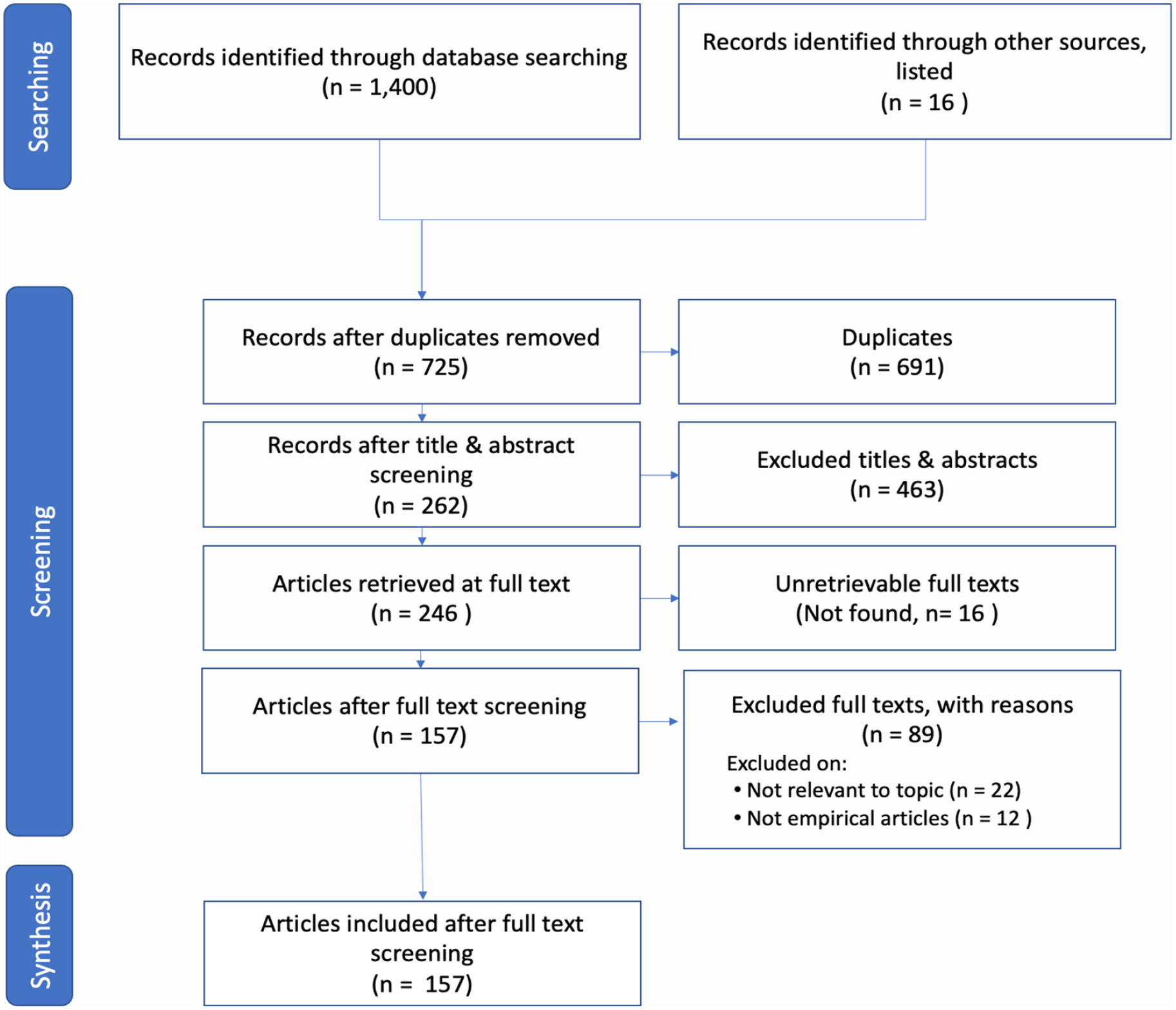
Article screening.
Data Coding and Extraction Strategy
Data from included studies were extracted and recorded into a spreadsheet with a predefined coding criterion. Data were extracted for (1) study characteristics (e.g., study location, study methods, and study objectives) and (2) study findings (e.g., if and how the scenario planning approach addresses social equity issues).
Data Synthesis and Presentation
We employed two data synthesis techniques in the review: narrative and thematic synthesis. Narrative synthesis, also referred to as textual narrative synthesis, organizes studies “into more homogenous groups” (Barnett-Page and Thomas 2009, 3) using a structured format. It is often used to report study characteristics, assess study quality, explain study context, and examine the differences and similarities among studies (Lucas et al. 2007). In the current study, we used narrative synthesis to report on the publication year of studies, location, types of methods, and the presence of equity in scenarios. The narrative synthesis was used to analyze all 157 articles included in the final review. During the narrative synthesis, we segregated the articles under those that explicitly or did not address equity to enable us to apply the thematic synthesis to examine in-depth the equity issues in those articles that addressed equity explicitly.
Thematic synthesis is similar to narrative synthesis in that both approaches present the results in text format and, in practice, may lead to similar findings (Lucas et al. 2007). However, while narrative synthesis can reveal “. . . the scope of existing research and account for the strength of evidence” (Lucas et al. 2007, 1) and “. . . make transparent heterogeneity between studies” (Barnett-Page and Thomas 2009, 3), thematic synthesis is good for identifying commonality across studies leading to hypothesis generation (Barnett-Page and Thomas 2009). The strengths of the two methods complemented each other and allowed us to examine the study contexts and heterogeneity in scenario approaches while identifying the commonalities in how they address (or not) social equity issues.
We used the thematic synthesis to analyze the ten articles that were found to have addressed equity issues explicitly to enable us to identify the approaches used. The thematic synthesis was in line with the approach developed by (Thomas and Harden 2008, 4) and followed three steps: (1) “the free line-by-line coding of the findings of primary studies; (2) the organization of these ‘free codes’ into related areas to construct ‘descriptive’ themes; and (3) the development of ‘analytical’ themes.” The first step involved reading each line within the articles to identify texts and quotations relevant to the review questions. Once a relevant text was identified, it was copied into a matrix for the second stage of the analysis, assigning descriptive codes. In all, we identified six analytical codes or themes emerging from several quotations (S2). Four of the themes relate to the approaches used to integrate equity into scenario planning, whereas two themes relate to the drivers and hindrances to integrating equity in scenario planning.
Results of the Review
Overview of Evidence
The review analyzed 157 peer-reviewed journal articles published between 1996 and 2021 to examine if and how existing scenario planning approaches address social equity proactively. The number of publications per year increased steadily, beginning at just one article in 1996 and peaking at twenty articles in 2017 (Figure 2). The most common case study locations were in Asia (39.1%) and Europe (31.3%), with the remaining 29.6 percent of the articles shared among North America (12.5%), Africa (6.3%), South America (6.3%), and Oceania (4.7%). The geographic pattern of scenario-based planning research is in itself an interesting finding. It is possible that the high share of studies from Europe and Asia are linked to funding structures and/or disciplinary differences in approaches that facilitate more research on scenario planning in those contexts. However, without further information that would not be available from the articles examined, reasons for these geographic differences remain purely speculative, warranting further research.
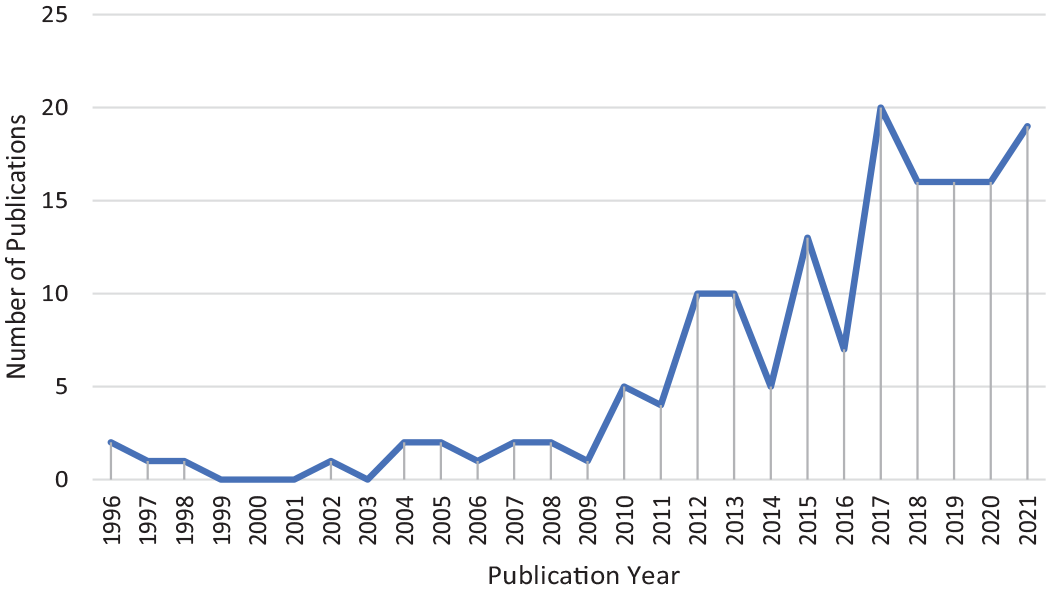
Number of scenario planning-related publications per year.
Although the authors applied a wide variety of methods, they mostly used quantitative data (64%), with only 13 and 23 percent using only qualitative data and mixed methods, respectively. Although both quantitative and qualitative methods can include equity considerations, there is a risk that quantitative approaches consider equity as an input into a model, as opposed to a fundamental question of process design and participant involvement in shaping scenario parameters. In our analysis, we certainly find that quantitative approaches are mostly concerned with building “accurate” forecasts under different assumptions, whereas qualitative approaches are more likely to treat equity as a core parameter of scenario design and scenario planning process. In our view, based in part on strategic positivism (Wyly 2009), there is nothing inherently preventing quantitative approaches from including equity dimensions. Rather, it is the sophistication of quantitative models that inherently adds an element of complexity that is of concern. Although technical expertise is useful and necessary in many ways, its sole use in scenario planning has the potential to restrict thinking about the future to the domain of technical experts, which in itself has implications for participatory processes, as an element of equity.
Out of the 157 articles included in the final review, only 6.4 percent explicitly addressed equity considerations (n = 10). Considering this limited number of articles addressing equity in scenario planning, conducting an in-depth analysis of how the characteristics of the papers correlate with their treatment of social equity becomes challenging and not necessarily representative of “best practice.” Despite this constraint, a few patterns are worth noting. First, eight out of the ten papers that explicitly addressed social equity were published on or after the year 2017, and five of them were published in 2021 alone, suggesting that more recent papers were more likely to integrate equity into scenario planning. Second, while most of the cases analyzed in the papers were in Asia, only one of them explicitly addressed equity, whereas the cases that did focus on equity were predominantly situated in Europe (n = 4) and North America (n = 3). Finally, while only 23 percent of the papers reviewed employed mixed methods, about 50 percent of those that addressed equity used mixed methods (n = 5), suggesting a relatively high prevalence of papers integrating equity considerations in scenario planning among the subset of papers employing mixed methods.
Presence of Social Equity in Scenarios
Research articles that address social equity do so by treating equity as (1) an input variable or a driver of change for scenario development, (2) a potential future outcome of scenarios, and (3) a fundamental question of process design and participant involvement in shaping scenario parameters. Overall, social equity was viewed among these limited number of publications as both an important input for scenario development and scenario selection and a likely future outcome of scenarios. Regarding the dimensions of equity addressed, all ten articles that explicitly addressed equity focused primarily on either distributional equity (20%), procedural equity (19.4%), or both (60%). Only one article (Daniels, Grim, and Morgan 2021) addressed equity-as-recognition—i.e., acknowledging the existence of historically marginalized groups, accepting the validity of their decision-making processes, and addressing the inherent power and resource imbalances (Nesbitt et al. 2018). This suggests that very few studies in our sample consider the unique circumstances of historically marginalized groups in scenario processes and in analyzing the potential impacts of scenario outcomes.
Furthermore, the papers predominantly focused on specific concerns such as housing affordability, transport equity, and access to green spaces (Bills and Walker 2017; Cox et al. 2017; Stessens et al. 2021), which directly address social disparities and promote equal access to resources. However, a few papers also addressed broader concerns, such as income disparities or poverty and racism (Daniels, Grim, and Morgan 2021), which can have an impact on other equity issues. These observations underscore a critical issue when integrating equity in scenario planning: the need to determine the scope of equity considerations and decide “equity in what.” This implies defining what equity issues to consider (e.g., issue-specific concerns, governance, power imbalance, or broader and historical marginalization concerns), identifying vulnerable or marginalized groups (e.g., historically marginalized groups and/or concerns of potential discrimination), and determining the approaches to use in integrating equity issues in the scenario planning process.
How Equity Issues Are Addressed in Scenario Planning
The thematic analysis uncovered four distinct themes that encapsulate how the ten articles addressed issues of social equity in scenario planning. Readers are reminded to interpret these findings with caution, given the small sample. The emergent themes are as follows: “equity impact assessment,” which explores how various scenarios would potentially influence different aspects of social equity; “compatibility of stakeholder interests,” which focuses on the alignment of various stakeholder interests as a measure of equity; “participatory scenario development,” emphasizing the involvement of diverse stakeholders in the planning process; and “equity-focused scenarios,” which highlights the intentional incorporation of equity considerations into the development of alternative scenarios (see Supplemental Material S2, for details about the themes).
Equity impact assessment
This theme describes attempts to address equity issues by gauging the differential impacts of scenarios on various aspects of equity. That is examining how proposed interventions within certain scenarios might intensify or alleviate pre-existing social inequities and disparities. It could also mean assessing how scenarios might create novel forms of inequities, although this was not done in any of the papers reviewed. This approach to addressing equity was the most common among the papers reviewed, and authors typically employed varied techniques to operationalize the impact assessment, depending on the purpose of the scenario planning.
Stessens et al. (2021), Giuffrida et al. (2021), and Cox et al. (2017) are examples of how equity impact assessment can be operationalized. Stessens et al. (2021) conducted a scenario analysis to explore different options for public green space development in Brussels and to evaluate their impact on urban environmental quality and justice. To conduct the equity impact assessment, they evaluated how different scenarios would differentially impact various socio-demographic groups (the disadvantaged bottom 25% and the top 75% of income distribution) using accessibility levels to green spaces as an equity indicator. Cox et al. (2017) conducted a scenario analysis to quantitatively explore the outcomes of different land use and transportation options in Durham and Orange counties in North Carolina, United States, and to provide insights into the dynamics of complex urban systems. The evolution of an affordability index over time under different scenarios provided crucial insights into how different scenarios distinctly affected lower income groups. A similar approach is adopted by Giuffrida et al. (2021, 15), who used a Lorenz curve and Gini coefficient to assess “. . . changes in distribution of accessibility (and accordingly of equity) over time and also to compare social exclusion in different regions.”
These examples demonstrate the potential for equity impact assessment to help reveal the potential differential impacts of alternative scenarios on marginalized groups. This approach has a long history in planning studies, more generally, outside of the scenario planning literature assessed here. Such insights can inform the selection of a preferred scenario or the institution of mitigation measures to ensure that planning interventions are not only reactive, addressing existing inequities, but also proactive, helping avoid the creation of new ones.
Compatibility of stakeholder interests
Another theme that emerged from the thematic analysis is the compatibility of stakeholder interests. This theme is rooted in the principle that the degree of alignment among different stakeholder perspectives on an issue can serve as an indicator of equity. In this regard, the closer the alignment of stakeholder interests, the greater the potential for equity within a given scenario. This theme shares a common thread with participatory scenario development as both emphasize the importance of recognizing and addressing the varying interests of different stakeholders pertaining to specific issues.
However, a key distinction between the two themes is that while participatory scenario development focuses on the equity of the scenario process itself, compatibility of stakeholder interest shifts its focus toward leveraging equity insights to understand the likelihood of stakeholders to accept and implement specific scenarios. Essentially, it seeks to gauge the feasibility of a scenario’s implementation based on the alignment of stakeholder interests. This approach not only aids in anticipating scenario success but also ensures the consideration of diverse perspectives, fostering more equitable outcomes. However, its utility for addressing inequities can be limited, especially in contexts laden with power disparities. Unless concerted efforts are made to specifically target and prioritize marginalized groups (which was not the case in most of the papers reviewed), the approach may fail to fully address inequities. This is because the alignment of interests may often skew toward dominant or majority stakeholders, risking the potential marginalization of minority or disadvantaged voices (Krupa, Cunfer, and Clark 2020).
The operationalization of this theme involves analyzing the positions and interests of different stakeholder groups in relation to the scenarios presented. For example, Pearson et al. (2010) demonstrated the use of this approach by summarizing the views of six key local actor groups for each scenario in an “equity matrix.” This matrix served as a tool for identifying points of agreement or incompatible positions among the actors, thereby offering insights into shared interests or potential conflicts in achieving the presented scenarios.
Participatory scenario development
By incorporating a diverse range of perspectives, participatory scenario development seeks to ensure that the scenarios developed reflect the needs and interests of all groups involved (Moore et al. 2022). Participatory scenario development is not strictly an equity-based approach but can be useful for addressing multiple dimensions of equity, including procedural equity, distributional equity, and equity as recognition if marginalized stakeholders are targeted for inclusion and measures implemented to address power imbalances in the process. Although several articles alluded to some form of stakeholder or community participation in the scenario development, they did not provide explicit evidence of deliberately including marginalized groups in the process.
Pearson et al. (2010) is one example of how participatory scenario development can be used as a tool to address equity. After acknowledging the existence of “social tensions” among various groups in the scenario context, the authors identified various interest groups, adopted a range of processes to widen the participatory process, and implemented an equity matrix to assess if the scenarios were equitable.
Equity-focused scenarios
This theme encompasses alternative scenarios specifically designed as part of a suite of scenarios to address and alleviate specific equity concerns. These scenarios not only acknowledge the existence of social inequities but also actively integrate strategies to mitigate these disparities into their planning and development process. The scenarios have a clear focus on promoting equity, often employing specific equity interventions during alternative scenario development. While these types of scenario exercises primarily aim to achieve equity, they can also be applied in any scenario analysis to foster equity.
In a study conducted by Giuffrida et al. (2021) in Acireale, Italy, two alternatives of public transport planning were compared, and their impacts on accessibility and equity were evaluated. The base scenario, or business-as-usual, was compared with a “project scenario” that aimed to reorganize public transport in Acireale to improve equitable access. They then used the Lorenz curve and Gini index to evaluate if, indeed, the “project scenario” increases equity. Similarly, Daniels, Grim, and Morgan (2021) analyzed alternative scenarios for Houston, United States, aimed at reducing the impacts of flooding on health, poverty, and equity. By deliberately focusing on equity, the authors were able to develop alternative scenarios that had the potential to minimize the impact of flooding on marginalized communities such as blacks, Latinos, and low-income immigrant residents. These are examples of equity-focused scenario approaches that set out to increase equity and hence integrated strategies to do so.
Although the theme of equity-focused scenarios is not widely prevalent in the papers reviewed, their potential is vast, as they provide an opportunity to address social inequities proactively rather than retroactively (Berbés-Blázquez et al. 2021; Iwaniec et al. 2020).
Drivers and Hindrances to Integrating Equity in Scenario Planning
The integration of equity considerations into scenario planning is influenced by various drivers and hindrances. The review indicates that the decision to incorporate social equity into scenario planning depends on the specific objectives of the planning process, the presence of social tensions within the scenario context, and the availability of resources. Clearly, studies that begin with the aim of addressing social equity are more likely to succeed in addressing this dimension, reiterating the importance of making equity an explicit consideration at the outset.
For instance, Giuffrida et al. (2021) and Daniels, Grim, and Morgan (2021) conducted scenario planning exercises to tackle inequities related to transport access and flood impacts, respectively, which led to the integration of equity considerations directly. In scenarios where noticeable social tensions exist and are likely to impede the implementation of preferred outcomes, the inclusion of equity considerations also becomes crucial. Pearson et al. (2010) argue that in the Rocky Point region, social cohesion is a significant factor influencing decision-making. Therefore, addressing the already established social tensions required a robust participatory process to engage stakeholders effectively.
On the contrary, resource constraints can hinder the extent and inclusiveness of participatory processes in scenario planning. Pearson et al. (2010) suggest that due to limitations in project resources, direct engagement with key stakeholders could not be undertaken (e.g., non-residential users), except through interactions with governmental bodies responsible for overseeing or managing the area.
Discussion: Toward Equity-Informed Scenario Planning
Bringing Social Equity into Scenario Planning
Our argument in this paper is that scenario planning can support the aspirations of co-production by envisioning multiple plausible futures with different social equity outcomes. Co-production is often defined as the collaborative process of creating and implementing plans that involve diverse stakeholders and reflect their values and interests (Durose, Perry, and Richardson 2022). Co-production has an inherent tendency to advance social equity by engaging diverse stakeholders, their values, and interests in “delivering a shared outcome” and “a commitment to foreground unheard voices to produce egalitarian outcomes” (Broto et al. 2022, 2). This potential can be enhanced by the creative potential of scenario planning to imagine city futures that address social inequities proactively. This implies that scenario planning should actively incorporate social equity considerations and promote inclusivity throughout its process. By doing so, it can likely support the principles of co-production, including embracing other ways of being, acknowledging and valuing diverse knowledge systems, and avoiding the creation of urban futures that reflect the most powerful segment of society (Barry and Agyeman 2020). However, it was not within the scope of this study to directly evaluate how scenario planning links with co-production, and further research is required on this front. As of now, scenario planning and processes involving co-production appear to be largely separate endeavors, with some notable and valuable exceptions (Berbés-Blázquez et al. 2021; Iwaniec et al. 2020).
Our review does reveal that, currently, social equity considerations are rarely integrated into academic studies documenting scenario planning. This, we posit, is in part because many urban and planning scholars have not yet fully adapted the scenario planning technique to fit their purpose but instead continue to draw heavily from its application in corporate strategic planning (Stojanovic, Mitkovic, and Mitkovic 2014). Or, as Avin, Goodspeed, and Murnen (2022) suggest, planners are yet to adequately utilize scenarios to inform plans or to outline specific actions to guide future city development. In the corporate application of scenario planning, more emphasis is placed on reducing uncertainty and helping corporate bodies to adapt to changing circumstances and less on attempting to influence future outcomes. Also, corporate bodies are usually single entities and diversity [and social equity] may not be critical concerns (Zapata and Kaza 2015). However, planning is about taking actions today to influence future outcomes, which usually affect the interests of multiple publics 2 (Zapata and Kaza 2015). Although this may involve reducing uncertainty and adapting to unforeseen events, it also requires taking action to create desired outcomes while considering multiple values and interests in a power-laden environment. This act of using scenario planning to proactively influence change within the context of varying interests and power dynamics, we believe, has not been fully leveraged in planning and, hence, the limited utility of scenarios for changing equity outcomes in the future.
Ensuring social equity inherently involves enhancing the participation of diverse stakeholders in decision-making, and planners have increasingly sought to incorporate public participation in scenario planning to address multiple values and interests (Avin and Goodspeed 2020; Chakraborty and McMillan 2015; Stojanovic, Mitkovic, and Mitkovic 2014). However, improving public participation will not necessarily improve social equity outcomes. Power imbalances can sometimes lead participatory processes to be manipulated, consciously or unconsciously, to the detriment of historically marginalized groups (Brown and Chin 2013; Innes and Booher 2005). Thus, participatory scenario planning that does not carefully incorporate social equity issues risks reinforcing and exacerbating existing inequalities. As a result, if scenario planning is to truly address inequities, it must deliberately engrain the tenets of social equity into its practice. For urban planners, this involves leveraging the already existing scholarship and approaches to planning for social equity and “. . . bring[ing] intentionality towards its social justice agenda” (Reece 2018: 307–308). In the next section, we provide some suggestions for attaining this integration.
Implications for the Practice of Scenario Planning in Pursuit of Equity
Equity planning in North America has a long history dating back to the late nineteenth and early twentieth centuries when the social progressive movement emerged in response to the growing inequality in the industrial city (Reece 2018). This movement laid the groundwork for contemporary social equity planning efforts, which have been predominantly shaped by the advocacy planning movement of the 1960s and 1970s (Davidoff 1965, 1975; Krumholz 1982, 2015), class structures, and the operation of circuits of capital in shaping uneven development and undermining a fundamental “right to the city” (Harvey 2010; Smith 2010), and more specific application of the just city concept to twenty-first-century planning (Fainstein 2010). The insights derived from this literature, some of which are highlighted below, are relevant for shaping the integration of equity concerns into the scenario planning approach.
Scenario planning as a platform for debating values and interests
Scenario planning has the potential to serve as a dynamic platform for debating values and interests, which is in line with the perspectives of advocacy planners such as Paul Davidoff and Norman Krumholz (Davidoff 1965; Krumholz 2015). Their critique of the planning profession highlights the overemphasis on technical skills and the need for planning to become more value-based. Davidoff asserts that planning should openly invite the examination and debate of “political and social values,” rejecting the notion of planners acting “solely as technicians” (Davidoff 1965, 331).
They stress that “values are inescapable elements of any rational decision-making process,” and planners should not only declare their values but defend them, especially relating to addressing the needs of the marginalized and multiple publics. Drawing on the plural planning traditions of advocacy planning, communicative planners further contribute to this perspective by questioning the predominance of expert knowledge, suggesting that certain truths can be found through dialogue and discourse (Perera 2021). Additionally, dialogue will only result in equitable outcomes if it respects the validity of the local knowledge of marginalized groups (Córdova 1994; McGuirk 2001). This brings to question the predominance of expert-based knowledge in scenario generation, as revealed in this review and discussed elsewhere (Zapata and Kaza 2015). We are not against using expert knowledge in scenario planning; in fact, we would argue that it is essential in many, if not most, cases. However, from an equity standpoint, it is at least necessary to debate when and how to use expert knowledge to reflect the values and interests of marginalized groups.
These perspectives still hold true today, we would argue, and if considered within the context of scenario planning, there needs to be a paradigm shift from pursuing scenarios as technical exercises that lie within the remit of only experts and professionals (and even the notion of expertise and professional knowledge require further problematizing). Rather, scenario planning could be used as a platform to bring together diverse groups to debate values and interests concerning alternative futures of cities. This implies that equity-sensitive scenario planning is inherently a participatory and deliberative process aimed at constructing futures of cities that reflect the visions of all, including those who have been marginalized, and actively seeks to rectify power imbalances in participatory processes.
This shift requires diversifying the types of data used in scenario development. While quantitative data often dominates, this review suggests that utilizing qualitative data or integrating it with quantitative data can help capture the lived experiences, perspectives, and local knowledge of marginalized communities. Moreover, emphasizing the concept of equity-as-recognition in scenario planning is crucial. This entails acknowledging and valuing the unique knowledge, histories, and aspirations of marginalized communities. It also requires recognizing the power imbalances among stakeholders and the varying capabilities of different groups to pursue their preferred visions of the future. However, it is important to acknowledge that integrating qualitative data and local knowledge and addressing the unique vulnerabilities of marginalized groups can be time-consuming and resource-intensive, as revealed in this review (Pearson et al. 2010). Despite these challenges, the investment of time and resources is necessary to ensure a more inclusive future for all. The cost, in various forms, of not addressing equity is tremendous and usually accrues to those already most marginalized.
Diverse approaches to integrating equity in scenario planning
Equity is not a one-size-fits-all concept but is deeply rooted in the unique historical and contemporary realities of communities. Therefore, to effectively integrate social equity into scenario planning, planners need to understand the specific opportunities and challenges that exist in the local context, and how they affect different people and groups. This entails acknowledging historical injustices that have shaped the current landscape, understanding the existing power dynamics and their implications for decision-making, and appreciating the diverse needs and aspirations of community members and their visions for the future. These considerations should be at the forefront of planners’ minds and integrated throughout all stages of the scenario planning process.
In recognizing the embeddedness of equity in local contexts, it becomes evident that diverse approaches are required to integrate equity into scenario planning. This review has identified multiple approaches to integrating equity in scenario planning, including the following: conducting an equity impact assessment, employing participatory scenario development, assessing the compatibility of stakeholder interests, and developing alternative equity-focused scenarios. Each of these approaches offers a distinct pathway to incorporating equity considerations into the scenario planning process, and it is outside the scope of this review to determine which approaches are inherently more effective or desirable than others.
Instead, our analysis revealed that the preference for a particular approach might vary depending on the specific circumstances and objectives of the scenario planning endeavor. For example, the development of equity-focused scenarios may be particularly valuable when the purpose of the scenarios is to inform policies targeting specific equity concerns, such as addressing racial discrimination in transit access and use. On the contrary, an equity impact assessment may be more suitable when the aim is to comprehensively understand the equity implications of “general purpose” scenarios that aim to explore a wide range of future possibilities.
Furthermore, certain conditions are important for ensuring the efficacy of the various approaches. For example, participatory scenario development might work better for including marginalized voices when there is trust and collaboration between planners and community members, and when the participants are representative of the diversity of the community. Similarly, equity impact assessment might work better for considering a wider breadth of identities and equity issues when there is a clear and comprehensive framework for evaluating the potential impacts of different scenarios on various dimensions of equity, such as income, education, health, environment, and social inclusion. Alternative equity-focused scenarios might work better for envisioning structural changes when there is a willingness and openness to challenge the dominant paradigms and narratives that underpin the current system and to explore radical and transformative alternatives that address the root causes of inequity.
Conclusion
We began this paper by noting the gap between the increasing use of scenario planning methods in planning and adjacent disciplines to deal with uncertainty and the lack of attention to social equity issues. We argued that scenario planning has the potential to enhance participation and collaboration among diverse stakeholders and enable them to envision multiple plausible and desirable futures that reflect their values and aspirations (Zapata and Kaza 2015), thus addressing inequities. This research contributes to the literature by exploring how social equity can be incorporated into the scenario-planning process.
The evidence from our systematic review shows that while only a limited number of studies explicitly address social equity in scenario planning, there is potential for more clearly integrating the social equity dimensions into the scenario planning method. For example, scenario planning, with its anticipatory and collaborative tendencies, offers a unique pathway for bringing together multiple stakeholders to debate values and interests. If well-facilitated, these sessions can surface hidden inequities and allow for the selection of urban futures that are reflective of the collective interest of all stakeholders, especially historically marginalized people. The evidence provided in this review points to the emergence of a variety of methods for doing this. However, their effectiveness is currently not well established and hence warrants further research. Nonetheless, planning scholars have an important role to play and should draw on the long history of social equity planning and integrate social equity principles and planning processes for social equity (e.g., co-production) into the scenario planning method to allow cities to work toward greater equity by considering multiple plausible futures with different social equity outcomes. This applies not only to planning scholarship and practice but, importantly, also to other fields of study that planning practice commonly draws on for scenario building, such as transportation engineering, construction management, and economics. This suggests the need for planning academics to look outside their immediate research areas and publication circles to speak more directly to how scenario planning can consider social equity across disciplines and fields of study.
To some extent, scenario planning has similarity with earlier utopian approaches to planning in that it emphasizes the development of concrete ways of being in the future and is inherently forward-looking. Many of these utopian visions arguably failed in implementation, but what might set scenario planning apart is its inherent interest in determining the likelihood of occurrence and feasibility much more proactively. Ultimately, it may well be that the more collaborative approach to scenario planning could hold more promise for success than earlier utopian views, regularly put forth by singular or groups of individuals (often white males). This is an important area for future research. Further research could also look at how geographic context, field of study of authors, study objectives, and other dimensions that shape scenario planning influence whether equity is addressed. Geographic differences in how and whether equity is addressed in scenario planning are particularly important to understand better because of the different capacities and governance structures in different parts of the world to actually address equity in the first place.
Additionally, we note that analytic rigor appears to be traded off for equity in our sample of papers. However, this is, in our view, not an inevitable trade-off but more an outcome of a long history of separating quantitative approaches from context and participatory processes that are required to address equity in a meaningful way. Future studies should consider carefully how the balance of technical sophistication, which must be conducted by technical experts, with other types of qualitative methods that facilitate broader inclusion of stakeholders in all aspects of scenario development and execution. We point to strategic positivism (Wyly 2009) as a potential element of more equity-based and quantitative scenario planning, so that “co-production” is possible in a more foundational way in quantitative work that all too often has remained the purview of technical experts. In general, greater methodological pluralism is likely going to facilitate the inclusion of equity as different methods do come with different histories and different researchers/planners with varying underlying philosophies and positionalities. Further research is required to determine how methodological pluralism, strategic positivism, and co-production can be linked more directly with an equity agenda in scenario planning.
As we applaud planning scholars for recently embracing future approaches to tackle uncertainty, we also want to highlight that there is still more to be done in preparing planning professionals to apply future approaches like scenario planning in planning work. In this regard, we agree with Freestone (2012) and others that there is a crass absence of any form of future discourse in most planning pedagogy. Although planning professional bodies such as the American Planning Association and the Canadian Institute of Planning outline elements such as visioning as part of their key competencies, there appears to be a lack of urgency regarding their implementation in planning schools. There is much to be examined here in future research and change is drastically needed.
Supplemental Material
sj-docx-2-jpe-10.1177_0739456X241238684 – Supplemental material for Inclusive Futures? A Systematic Review of Social Equity in Scenario Planning
Supplemental material, sj-docx-2-jpe-10.1177_0739456X241238684 for Inclusive Futures? A Systematic Review of Social Equity in Scenario Planning by Raphael Anammasiya Ayambire and Markus Moos in Journal of Planning Education and Research
Supplemental Material
sj-xlsx-1-jpe-10.1177_0739456X241238684 – Supplemental material for Inclusive Futures? A Systematic Review of Social Equity in Scenario Planning
Supplemental material, sj-xlsx-1-jpe-10.1177_0739456X241238684 for Inclusive Futures? A Systematic Review of Social Equity in Scenario Planning by Raphael Anammasiya Ayambire and Markus Moos in Journal of Planning Education and Research
Footnotes
Acknowledgements
We wish to acknowledge the financial support provided through the Caivan Future Cities Postdoctoral Fellowship Program at the University of Waterloo’s Faculty of Environment, without which this research would not have been possible. Also, we thank Dr. Marta Berbes from the University of Waterloo’s School of Planning for her insightful feedback during the conceptual development of this project. Finally, we thank the anonymous reviewers and editors at the Journal of Planning Education and Research for their constructive feedback, which helped strengthen the paper.
Declaration of Conflicting Interests
The author(s) declared no potential conflicts of interest with respect to the research, authorship, and/or publication of this article.
Funding
The author(s) received no financial support for the research, authorship, and/or publication of this article.

Supplemental Material
Supplemental material for this article is available online.
Notes
Author Biographies
References
Supplementary Material
Please find the following supplemental material available below.
For Open Access articles published under a Creative Commons License, all supplemental material carries the same license as the article it is associated with.
For non-Open Access articles published, all supplemental material carries a non-exclusive license, and permission requests for re-use of supplemental material or any part of supplemental material shall be sent directly to the copyright owner as specified in the copyright notice associated with the article.
