




Abstract
Food asset mapping conducted by planners and policymakers usually consists of an online map identifying the locations of food-related sites in cities. However, food asset mapping may be limited in its consideration for ecological and cultural assets critical for community food security. Furthermore, what are considered “assets” may not reflect the everyday lived experiences of marginalized communities. This study applied a “citizen science” photovoice food asset mapping involving diverse participants in the City of Vancouver. In applying a citizen science photovoice approach, this study surfaced “hidden” contexts, food assets, and stories to integrate diverse community perspectives in food system planning.
Introduction
In Canada, scholars have identified systemic racism as one of the contributing factors to the disproportionate amount of food insecurity among Indigenous and black communities (Tarasuk, Fafard St-Germain, and Mitchell 2019). Disparities in food access (e.g., retail vs. growing, gathering, or hunting), income, housing tenure, and geographical location also contribute to food insecurity (Tarasuk, Fafard St-Germain, and Mitchell 2019). Food insecurity negatively impacts a community’s health outcomes due to a lack of sufficient quantity and quality of food (Slade, Baldwin, and Budge 2016). In Vancouver (the context of this study), the high cost of housing has also contributed to food insecurity, particularly among the homeless population (Parpouchi, Moniruzzaman, and Somers 2018). Participants who rely on food banks in Vancouver reported severe household food insecurity (66%) and noted that food banks do not adequately address the root causes of hunger, which is tied to insufficient income (Holmes et al. 2019).
To support the development of resilient urban food systems, scholars and international institutions have emphasized the importance of investing in localized food systems to safeguard against global food disruptions (Blay-Palmer et al. 2013). While some have noted that there are limits to urban agriculture’s ability to improve food security (Badami and Ramankutty 2015), Lal (2020) notes that urban agriculture, which includes community gardens and home gardens, has proven to be more resilient to global shocks and has provided supplementary nutritious foods for the urban poor. However, the siting of urban farms could be controversial due to competing land-use interests (see the case of Detroit in Foster and Newell 2019). Food system planning is the field of land-use and community planning that focuses on highlighting the importance of food systems in community health and well-being (Pothukuchi 2004). Within food system planning, planners have studied issues around community food access (Cummins et al. 2005), assessed the role of retail markets in influencing food consumption (Battersby 2017), promoted farmland preservation (Koontz 2003), and mobilized the planning profession to play a role in contributing to a more sustainable food system (American Planning Association [APA] 2007). There are many tools that planners can use to improve the food system. Planners can use zoning to encourage the development and designation of spaces that will be used to grow food, and to provide healthy, affordable, and sustainable foods for the community (Cohen 2018). Foodshed assessment is another tool to trace the movement of food from the farm to the consumer (Freedgood, Pierce-Quiñonez, and Meter 2011). Food asset mapping and community food assessment are tools that can be used to set the baseline and identify food-related resources in a city, region, or neighborhood (Pothukuchi 2004). Increasingly, food asset mapping has been identified as an important tool to better assess and identify important food infrastructures that are key to food system resiliency (Baker 2018).
Food asset maps have been developed by municipalities, public health departments, and municipal food policy councils (Vancouver Coastal Health [VCH], n.d.) to identify resources, facilities, and spaces that can be used to support community’s food security. These assets include community kitchens, retailers, community food centers, community gardens, food banks, and more (Baker 2018). However, the process and method of determining what constitutes a “food asset” is not always clear and might not include input or contexts from diverse community members (Soma et al. 2021). While there are studies addressing cultural asset mapping (Jeannotte 2016), or community asset mapping in general (Mosavel, Gough, and Ferrell 2018), there is a gap in the literature on food asset mapping (Baker 2018). In the colonial context of Canada and the City of Vancouver (Vancouver), which is located on the unceded, ancestral, and traditional territories of the Musqueam, Squamish, and Tsleil-Waututh First Nations, it is important that food asset maps include food spaces that reflect the needs, aspirations, and usage of diverse community members, particularly of urban Indigenous peoples. Duncan (2006) has identified issues around “map tyranny,” whereby the maps developed may reflect the unequal power structures of those of the map makers. In a settler-colonial context, where Indigenous peoples are more vulnerable to violence, incarceration, and policing (Dorries and Harjo 2020), a participatory citizen science approach to food asset mapping may act as form of resistance. This study contributes to the unsettling of colonial underpinnings of the planning profession (Barry et al. 2019). Vancouver has been heralded as an example of a progressive, socially responsible, award-winning city to be emulated by planning practitioners (Grant 2009). However, the narrative of “success” misses the colonial context of the city, nor has the paper considered Indigenous perspectives and challenges in Vancouver (Soma et al. 2021).
To offer an alternative narrative, this photovoice study engaged a group of diverse community members (n = 10) belonging to racialized and often disadvantaged groups including Indigenous peoples, racialized peoples, former youth in care, seniors, people of diverse gender identities, low-income community members, and community members with disabilities in Vancouver. The study was informed by an earlier process to engage community members (n = 20) through a community food asset mapping charrette in Vancouver (Soma et al. 2021). Photovoice research combines photography and interviews, and is recognized for its ability to empower participants and foster social change (Wang 1999).
The study aimed to answer the following research questions:
The study explored food assets through the framework of everyday food practices as outlined in social practice theory (Shove, Pantzar, and Watson 2012). We also identified community members’ hopes and aspirations pertaining to food security.
The meaning of food assets may differ depending on culture, economic background, spirituality, physical ability, and gender. Moving beyond planners, academics, and policymakers, diverse representation through citizen science research can decentralize and democratize the identification of food assets. Findings from the study challenged the reliance of urban food security initiatives based on a two-tiered food system approach (i.e., food banking), identified the importance of natural food assets and associated traditional knowledge (particularly Indigenous knowledge), highlighted key urban Indigenous focused food assets, and celebrated inclusive food assets that promote “food as commons” (e.g., communal food trees, Sikh Langars) (Purcell 2020; Vivero-Pol 2017). This study seeks to contribute to new approaches in food system planning that recognizes and challenges the settler-colonial context of planning and food injustice.
Asset Mapping and Participatory Citizen Science in Food System Planning
Asset mapping and asset-based assessments reflect a range of approaches to identify key resources whether they be social, cultural, environmental, and/or health and well-being. In contrast to approaches that are focused on deficits or are needs-based, asset mapping is seen as valuable and transformative for harnessing community resources. The core principle of asset mapping is that when communities have the ability to identify assets around them that are valuable, this will then increase engagement and a sense of ownership, and inspire community members to take on leadership positions (Jakes et al. 2015).
Food asset mapping is an emerging tool that applies the element of asset mapping to highlight key food resources (Baker 2018), but community perspectives on “food assets” must also be taken into consideration. There are vast differences in the ways in which participants prioritize or use assets. For example, when comparing the perspectives of representatives from various non-profit organizations/agencies and community members, organizational representatives prioritized identifying places that provide healthy food, whereas community members focused more on the actual services and resources that are provided (Jakes et al. 2015). Ledoux et al. (2017) found that even though healthy food assets may exist within a community, residents might not be able to access the assets due to a multitude of factors, such as not having adequate income to afford such foods. This highlights the importance of lived experience for identifying assets.
Kramer et al. (2012) also found several issues that might influence the content and process around asset mapping, including the assumption that “community” entails shared values, norms, and languages, while failing to consider the potential conflicts, struggles for space, representation, and scarce resources. There is often a lack of clear methodology over the process of identifying what should be included as food assets and who should be involved in food asset mapping (Soma et al. 2021). The lack of citizen engagement is a clear gap in current food asset maps. Local citizens are the experts within their communities as they are embedded in their neighborhoods. This is particularly important in places with vulnerable populations that are often underrepresented or ignored by professionals (Corburn 2003). The Environmental Protection Agency’s (EPA) work on estimating exposure to dietary hazards in New York demonstrates the importance of citizen scientists (Corburn 2003). The EPA found that subsistence fishers had a much higher exposure to cancer risk, a finding that would have been missed had they not engaged the citizen scientists who were mostly non-English speakers and immigrants (Corburn 2003). The participation of diverse citizen scientists results in a better process for achieving food security and achieving a just food system.
Photovoice is a participatory method that merges photography with interviews or the outcomes from focus groups that discuss the meaning behind the photos taken by the participants (Wang 1999). Photovoice is a useful methodology that allows for the creative photography of participants’ everyday realities, including tangible (built environment, places/sites) and intangible assets (knowledge, spirituality), both formal and informal. In one study, Wang, Cash, and Powers (2000) found that photovoice can be used to conduct participatory needs assessments and evaluations that improve community health. Photography provides a tool to counter stereotypes, to empower participants, to provide dissemination strategies to influence policymakers and key stakeholders, and for storytelling (Doucet 2018; Palibroda et al. 2009).
Photovoice methodology is particularly useful and appropriate when working with marginalized community members, as it shifts the power from academics to citizen scientists, thereby defining and shaping the conversation and concerns from the ground up. However, there are also potential safety and privacy risks, such as revealing the photographer’s place of residence, identities of the people in the photos, or details of their private lives that they do not want to be made public. It is therefore critical to avoid photos that might harm the photographer or create ill will (Wang, Cash, and Powers 2000). These types of photos can be avoided by instructing photographers to take photos without peoples’ faces or creatively framing photos to avoid identifying features.
Food (In)Security in Vancouver
The narrative around food in Vancouver is replete with success stories. For example, Vancouver is an early adopter of the systems approach to food systems planning as well as a signatory of the Milan Urban Food Policy Pact. This pact, signed by 133 cities globally, commits to the coordination of international policies addressing food security and sustainable development (Valley and Wittman 2019). Vancouver has also succeeded in their Greenest City Action Plan goal of increasing citywide neighborhood food assets by a minimum of 50 percent beyond 2010 levels (City of Vancouver 2014b). From community gardens to urban apiaries, commercial farms, and food-related organizations, Vancouver has thousands of local food assets (VCH, n.d.). Without considering process and accessibility, these types of “local” food assets might reinforce neoliberal regimes that support the commoditization of food instead of supporting food justice (Agyeman and McEntee 2014). Certain food assets (e.g., food banks) may also continue to promote a two-tiered food system (Riches and Tarasuk 2014).
It is critical to note that Vancouver is located on the unceded, traditional, and ancestral territories of the Musqueam, Squamish, and Tsleil-Waututh First Nations (host Nations). In 2014, Vancouver was designated as a City of Reconciliation (City of Vancouver 2014a), which recognizes the commitment to a sustained relationship of mutual respect and understanding with host Nations and the urban Indigenous community. Despite the designation, the Vancouver Park Board identified challenges around adequate allocation of resources to support decolonization and infrastructure for traditional Indigenous food practices, noting that Indigenous-led food gardens only account for 0.002 percent of park space (Vancouver Board of Parks and Recreation 2021). Therefore, a key point to consider is whether food assets and food system planning initiatives truly benefit the urban Indigenous communities, particularly host Nations. This is particularly important considering that food insecurity and poverty in Vancouver disproportionately impact immigrant, racialized, and Indigenous communities (Carolsfeld and Erikson 2013).
Household food insecurity is another important issue in Vancouver. A study of food bank users in the Greater Vancouver area (n = 77) found widespread household food insecurity (97%) with 66 percent of the participants in the study identifying as severely food insecure (Holmes et al. 2019). Furthermore, 62 percent of the participants noted that food banks were not enough to meet their household food needs (Holmes et al. 2019). While food banks in Canada were originally established as an emergency response, food banks are being used long term and do not buffer severe food insecurity, nor provide sufficient food or change their circumstances (Riches and Tarasuk 2014). However, food banks are usually included or identified as food assets within food asset maps (see VCH, n.d.). It is worth understanding the experience of food bank clients to consider long-term solutions for community food security.
Vancouver is a city of great income disparity (see Figure 1), with most of the wealth concentrated in affluent neighborhoods on the west side. Lower income neighborhoods tend to be on the east side of the city. One neighborhood in particular, the Downtown Eastside, where several of the participants in our study reside, has the lowest household median income in the city and is known for being the “poorest postal code in Canada” (Linden et al. 2013, 1). With respect to poverty, health issues, and food insecurity, the Downtown Eastside of Vancouver has been the focus of many studies as it has the highest concentration of vulnerable peoples (Linden et al. 2013; Miewald and McCann 2014). Most of the research has focused on drug use (both intravenous and non-intravenous), health care, and infectious diseases linked to drug use (Linden et al. 2013) as well as homelessness (Liu and Blomley 2013). However, research on underlying determinants of long-term health, such as food, is lacking in the scholarship on the Downtown Eastside (Miewald and McCann 2014). An asset-based approach applying citizen science to identify key food assets would offer important insights that have thus far not been considered in food security research in Vancouver.
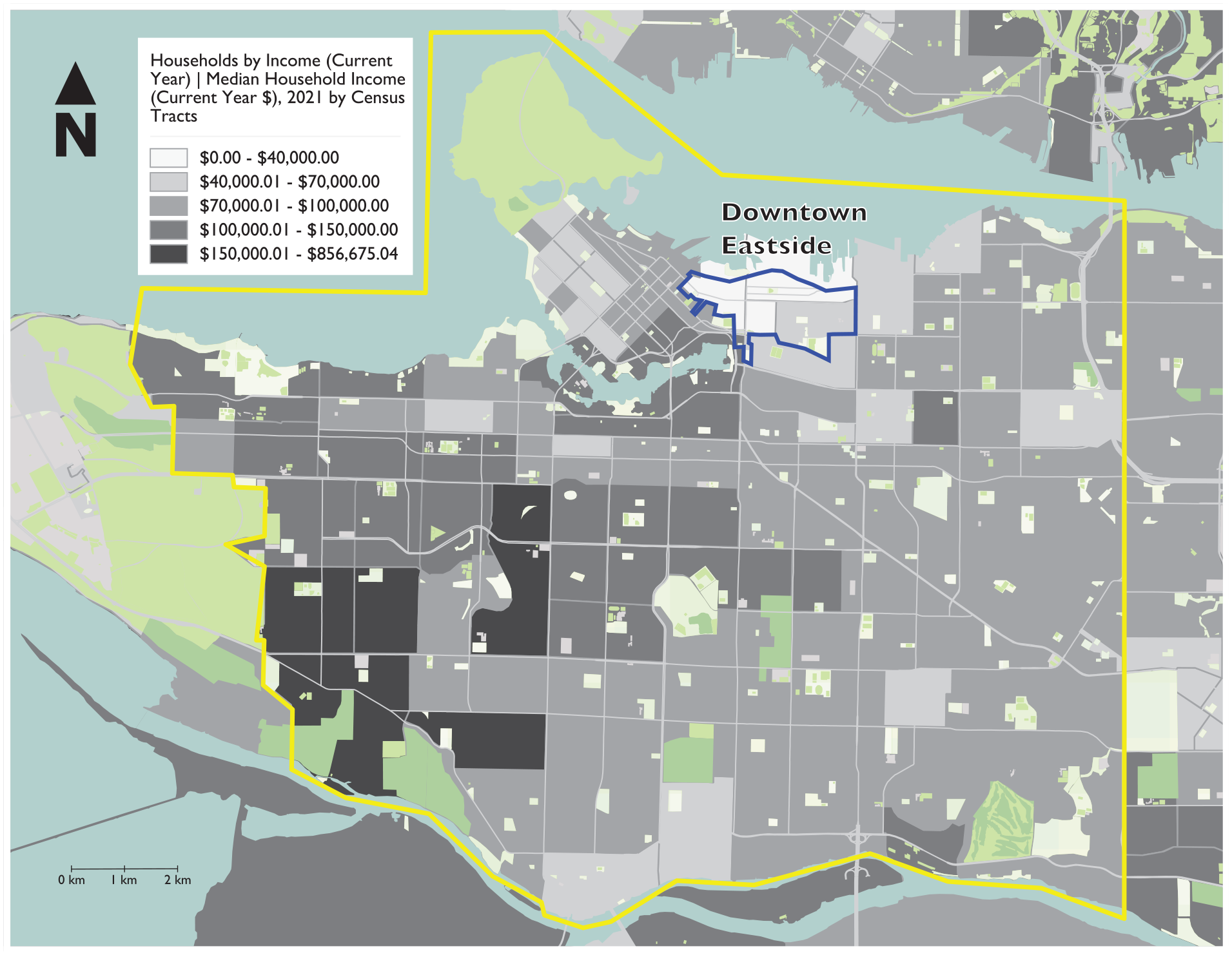
Median household income in Vancouver, Canada, and location of the Downtown Eastside (SimplyAnalytics 2021).
In a study by Miewald et al. (2019), which mapped food resources and unsafe spaces for people living with HIV in Vancouver, spaces identified as unsafe and risky by some participants were viewed as spaces of care by other participants. This issue highlights the need for more context in defining and identifying food assets and conducting food asset mapping in Vancouver, which we sought to do in this paper.
Method
This study was approved by the Simon Fraser University Research Ethics Board and was conducted from October 2019 to February 2020. Note that the Ethics Board approval included permission to disclose the names of citizen scientists as long as the citizen scientists gave express permission to do so on the informed consent form. We invited diverse participants from across the city to engage in a citizen science and food asset mapping photovoice project. Participants must live within the boundaries of the City of Vancouver to capture the experience of residents living in the area who also rely on food assets within the official city boundaries. The recruitment posters were shared through numerous online platforms and listservs including community groups and food hubs, networks, and associations with a focus on urban Indigenous communities, disability networks, seniors’ groups, as well as purposive sampling to ensure representation from former youth in care. In addition to dissemination on listservs and in-person drop-off, we also shared the recruitment postcards broadly through social media.
We recruited 10 participants, which was based on budget and researcher time constraints with a desire to capture a diversity of experiences. The number of photovoice participants also matched the ideal number of participants (between 7 and 10) highlighted by Wang (1999) and Palibroda et al. (2009). The selected participants were comprised of residents in Vancouver who are members of equity-deserving groups (e.g., disability, low income, racialized, seniors, Indigenous, former youth in care). To reduce the barrier to participation, each citizen scientist was paid a living hourly wage (Can$26.58 per hour) to participate in the photovoice project and was provided with a digital camera for taking photos. The citizen scientists first attended a photography training session to meet with the research team, learn about the project, and receive tips on how to take photos. Participants were divided into two groups for the training session. We then provided themes to help the participants frame the food assets: (1) Important food places, (2) Emotions and identity around food, (3) Food knowledge and sites of learning, and (4) Hope and aspirations for food in Vancouver.
Citizen scientists then took photos over a period of two to three weeks. After this period, they selected their top ten photos. Each citizen scientist met with one of the research team members for a one-on-one photovoice interview session of 1.5 to 2 hours to discuss their top ten photos. While some photovoice methods apply focus groups, photovoice can also be done through in-depth one-on-one interviews (Castleden, Garvin, and Huu-ay-aht First Nation 2008). Individual semi-structured interviews were used in a photovoice study with the Huu-ay-aht First Nation to provide participants more flexibility and ability to offer in-depth perspective (Castleden, Garvin, and Huu-ay-aht First Nation 2008). At the interview session, the citizen scientists shared their reflections about each of the photos which were grouped into the factors identified in practice theory as impacting everyday food practices. If they felt comfortable with disclosing the location of the photo, then the citizen scientist indicated on a map where the photo was taken, and this information was used for the creation of the web-based food asset map. This process (photo taking and photovoice interview session) was then repeated over a second period of two to three weeks. In total, each citizen scientist selected and discussed twenty photos with a research team member. The interviews were recorded and transcribed verbatim, and the photos were matched with the stories shared. All photos included in this article were taken and chosen by the citizen scientists. We applied an inductive approach to establish clear links between the research objectives and the findings from the data (Thomas 2006). Interviews were coded and analyzed using NVivo 12 with a codebook developed by the authors. The photos and location information (where applicable) were then inputted into a mapme.com interactive online map platform (see Figure 2).
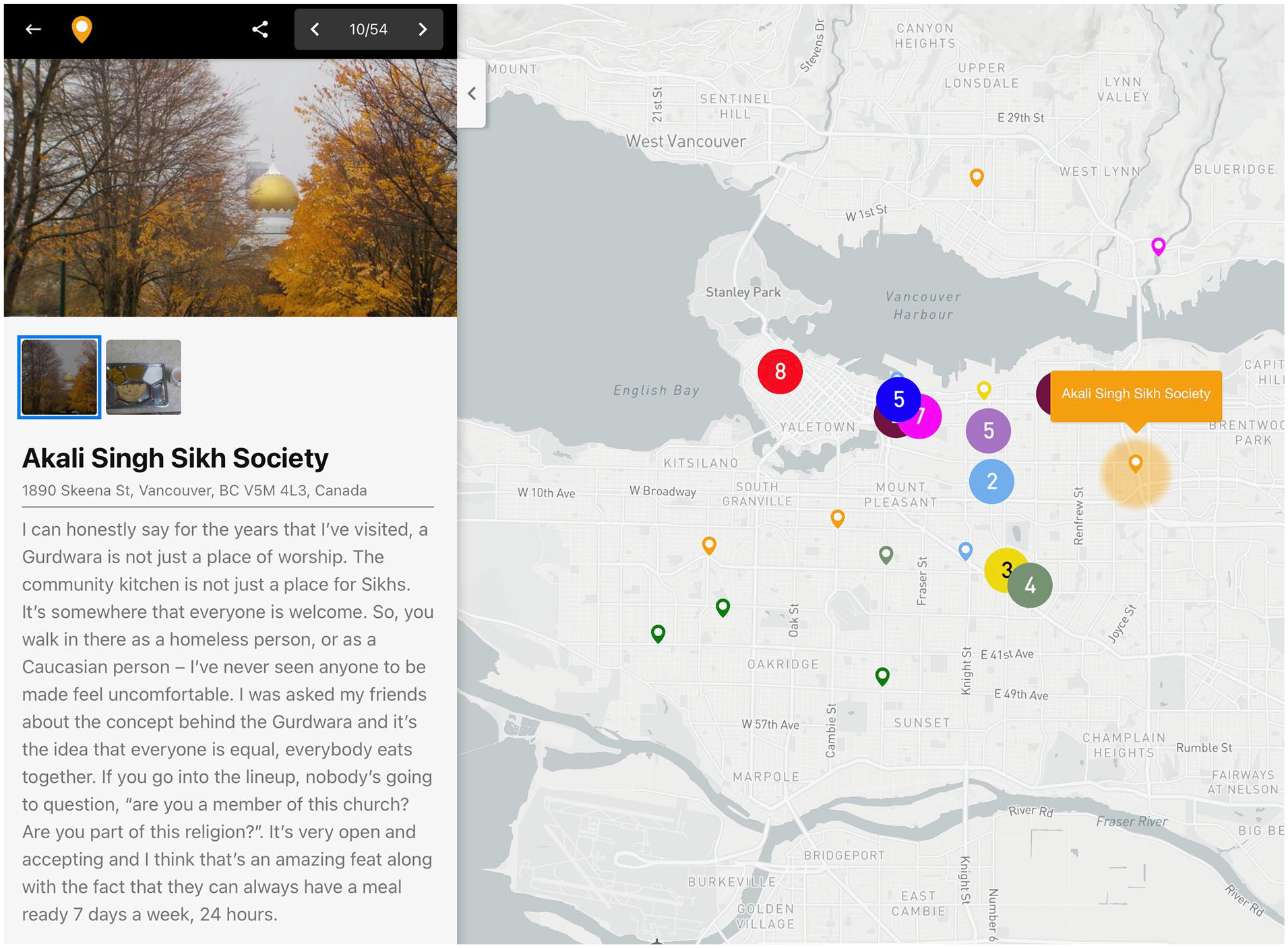
Example of mapme.com citizen science food asset map.
Hidden Meanings, Hidden Barriers, and Hidden Food Assets
This study sought to understand how a citizen science-led process could identify “hidden” food assets, which have thus far been relatively overlooked in a two-tiered settler-colonial food security framework. The three factors of social practice theory (material, meaning, and competence) associated with everyday food practices were analyzed (Shove, Pantzar, and Watson 2012). In addition to identifying “hidden food assets” (i.e., food assets that may not be considered by planners/policymakers or relatively overlooked in community food security efforts) through the stories and perspectives behind the photos, the study found “hidden” context (i.e., meaning) and barriers behind food assets that were not previously analyzed together. We identify these barriers as “hidden” as the stigma and challenges that communities face when using these food assets are not necessarily considered when identifying a place as an “asset” in a map. The citizen scientists acknowledged that there are a multitude of “food assets” in Vancouver, particularly for individuals who face financial hardship. However, participants discussed very long lineups to access low-cost prepared food, conflicts occurring while lining up, situations where donation centers run out of food, or the poor quality of the food offered. There are many barriers and often a stigmatization with respect to accessing food in these so-called “food assets.” In general, our findings confirmed the study conducted by Miewald et al. (2019), which found that obtaining food in Vancouver can be an arduous, risky, and sometimes dangerous activity for drug users and people living with HIV in the Downtown Eastside. One of the citizen scientists, Elwood (male, binner [recovers beverage containers for their deposit], and single room occupancy [SRO] resident) highlighted the constant long lineups he must endure to obtain food (see Figure 3). The lineup usually gets worse during special holidays, and he also noted that despite hours of lining up, sometimes food runs out: About 12:30 pm it’s on the Monday, Thanksgiving Monday, and this is the line up to get into Union Gospel Thanksgiving Dinner and yes, it starts at 10 o’clock in the morning and goes ’til 4 in the afternoon. And this is about 12:30/1 o’clock. And you can see it goes all the way, this is the end of the line, and there’s about . . . so there’s about 900 people. And it takes about an hour . . . That’s the only place that holds a Thanksgiving Dinner . . . Sometimes you have to wait a while to get a good meal, especially like certain times, like Christmas, Thanksgiving, New Years . . . it shows all the people that don’t have any place to go for Thanksgiving dinner . . . (Elwood)
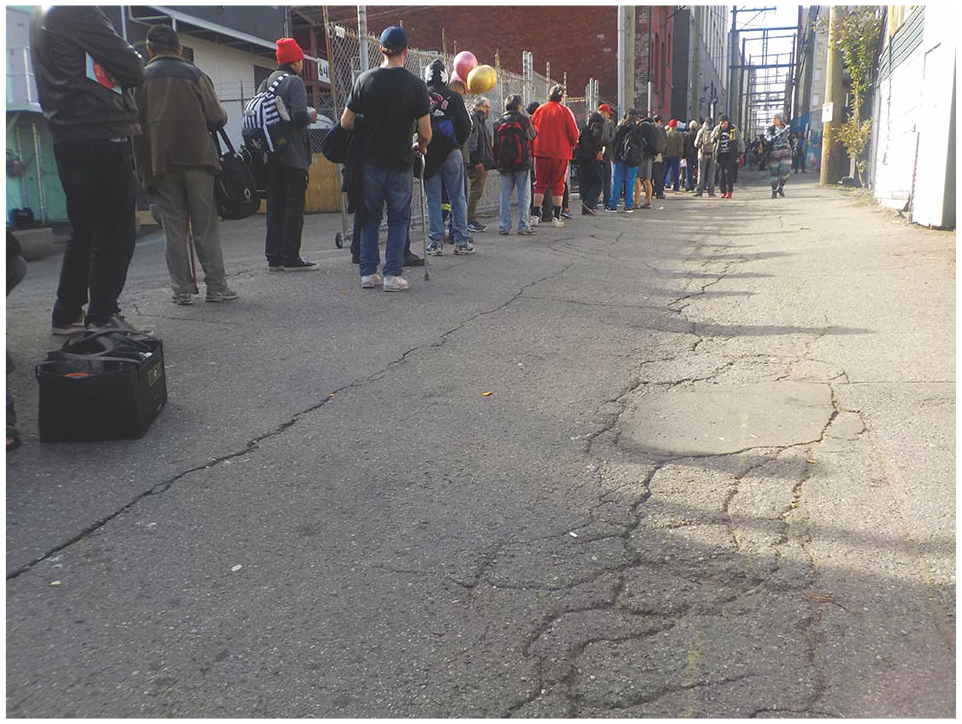
Union Gospel thanksgiving dinner (Photo: Elwood).
Elwood’s experience highlights the accessibility issues and the stigma associated with certain types of food assets, and more specifically, charities (Riches and Tarasuk 2014). As a senior and someone with a disability, long lineups can be problematic for him and those with mobility issues. A study of community members in Vancouver (n = 84) who access food from non-profit food hubs highlighted issues such as long lineups, limited scheduling, and transportation cost when accessing food (Rajasooriar and Soma 2022). Elwood’s experience highlights that quantitatively identifying food assets as a baseline is not sufficient, and there is a qualitative element that is “hidden” in food asset maps that is made evident through photovoice. According to Diana (Indigenous woman), while “food assets” such as food banks have played an important role in helping her family survive, especially during her childhood, she noted that there is simply not enough food to last a week and she wished there were healthier options offered instead of “Kraft Dinner” and other heavily processed foods. Another barrier to eating healthy food that several participants mentioned was that many SROs in Vancouver have no access to cooking spaces. In fact, cooking is not allowed. The lack of material infrastructure to cook food means that community members need access to places that can offer them healthy affordable cooked foods. However, as noted by Meilang (senior and forager), these important affordable food assets where communities can purchase ready-to-eat nourishing affordable meals (many located in Vancouver’s Chinatown) are declining because the area is being gentrified and communities are being displaced. This is also the case with many independent grocers offering affordable fruits and vegetables. New developments for condominium towers in Vancouver tend to prefer large chains and franchise retailers (Cheung 2021). Smaller food shops providing key services for immigrant/diaspora communities are under threat of closure due to redevelopment and gentrification (Cheung 2021).
Displacement is also impacting small independent grocers. Small grocers face steep rent increases due to intense gentrification in the urban core (Burnett 2014), and a loss of these independent stores will have negative repercussions for the community’s ability to access fruits and vegetables. Almost unanimously, the citizen scientists in this study highlighted the important role of small independent immigrant-owned grocers, also known as “ethnic grocers” for providing affordable fresh produce. Surindra (former refugee) who came to Canada with his family shared, “if it weren’t for these ethnic grocery markets, I don’t know what we would have done.” These stores (see Figure 4) are key food assets in Vancouver, usually located near transit, and they offer produce that would be considered off-grade or non-standard (i.e., “ugly fruits and veggies”). As Meilang noted, stringent aesthetic standards that result in food waste in larger supermarkets are not applied by some of the independent grocers.
. . . the boss goes to the produce markets, gets the last sellable, the things that can turn into cash quick, they are there. So, Sunrise Market’s food is always very cheap. I mean, if you stay for few days, they all need to go to compost. That kind of situation. But I love it . . . (Meilang)
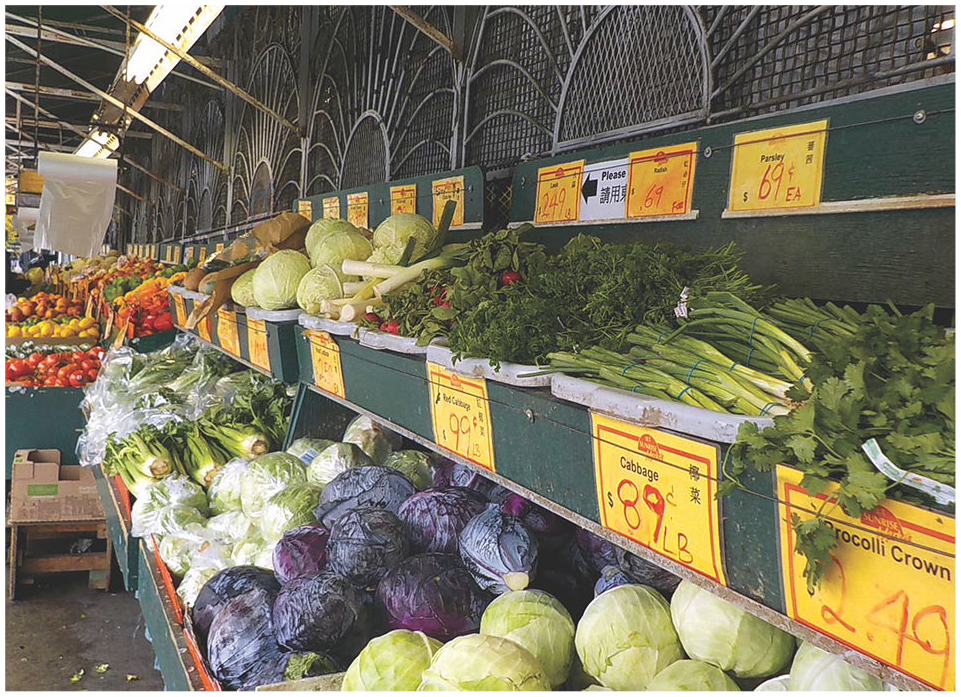
Sunrise market (Photo: Meilang).
The important role of independent grocers for citizen scientists confirms De Master and Daniels’ (2019) work, which critiqued food deserts literature and food deserts maps for the tendency to focus on increasing the number of supermarkets to improve access without looking deeper into structural inequality around economic access, or culture. Independent “ethnic grocers” offer more options and flexibility for lower income communities. Access to fresh vegetables can also be provided through community gardens. Several citizen scientists had access to community gardens. However, while there are approximately hundred community gardens (VCH, n.d.), most community gardens have long wait lists, indicating that demand for community garden access exceeds available space.
The multitude of barriers to access food assets means that citizen scientists need to navigate the complexities of everyday food practices amid high living costs, poor wages, and other concerns. This requires competencies in seeking “hidden” food assets, including “dumpster diving,” foraging, and even learning how to grow food where access to space is available. Carolsfeld and Erikson (2013) found that for some individuals in Vancouver who use food assistance programs like food banks, the addition of dumpster diving and foraging can contribute to more fresh foods than the typical canned foods offered by food banks. Dumpster diving, the practice of recovering or consuming food that has been discarded, is common in Vancouver (Miewald 2009), although it is not necessarily a practice that is always done by the poor (Carolsfeld and Erikson 2013).There is also no single “typical” urban forager as foragers are motivated by diverse factors (need, environmentalism, etc.), coming from diverse classes, genders, incomes, and ethnicities (Nyman 2019). Practices such as foraging and dumpster diving are also a way to avoid long lineups, food running out at soup kitchens, or, in some cases, mandatory religious services to obtain food in Vancouver (Miewald and McCann 2014). In a global city, including one like Vancouver, Giles (2015, 81) noted, “the more an economy grows, the more it must discard.” Accordingly, waste is definitive within the cultural logic of capitalist production (Giles 2015). Within this context, the commodification of food is another barrier for the community as surplus and edible foods are often discarded and access to food is not treated as a human right. Several citizen scientists dumpster dive and forage to supplement their diets. One citizen scientist, Sky (non-binary, low-income artist), noted how some grocers are better than others when it comes to allowing dumpster divers to access surplus unmarketable food. At the back of an independent grocers’ dumpster, Sky took a photo of a man inside a bin retrieving food. In front of the bin, a box of edible corn was purposely left out by a retail staff for dumpster divers.
Hidden Opportunities: Food Assets for Decolonization and Food Justice
When food system planners consider the importance of increasing access to supermarkets, grocers, or gardens, they might not consider the hidden context embedded in some of these food assets. There are values around food that extend beyond food as nutrition and calories. These values promote food justice and encompass belonging, culture, decolonization, knowledge sharing, and spirituality. In addition to providing affordable fresh produce, many of the participants, particularly those coming from diaspora communities, credit independent small immigrant-owned grocery stores for giving them more than just food. These stores bring them closer to “home” and enable them to practice their culture, cook their cuisines, and maintain their identity. Raja, Ma, and Yadav (2008) highlighted the importance of supporting small grocers as a more efficient strategy to ensuring food access in minority neighborhoods rather than soliciting large supermarkets. This study also concurs. Beyond Vancouver, community members in this study also identified First Nations territories, Taiwan, Guyana, India (Punjab), Singapore, and other provinces in Canada as home. For Manjit (senior resident, Punjabi), the foods offered by these small immigrant-owned grocers remind her of good memories from home as “it takes me back to my childhood . . .” However, for Harri, the concept of home is more complicated. He spoke about his challenges in obtaining food as a former youth in care (foster child). Autonomy and the ability to choose is something that he speaks passionately about, particularly because choices were limited when he was growing up in a group home in the foster care system. This ability to choose is limited in a two-tiered food system.
The concept of home can also be complicated as an urban Indigenous person in Vancouver. Despite coming from many different Nations, urban Indigenous peoples in Vancouver might be treated as one culture and might not necessarily have targeted services that are tailored to their particular Nations. Thistle (2017, 6), a Métis scholar, argued that compared with a colonial definition of homelessness as “lacking a structure of habitation,” the Indigenous definition of homelessness is more comprehensive and includes being isolated from land, animals, cultures, spirituality, languages, kin, and more. In identifying food assets, planners might focus specifically on food without looking at the comprehensive systems, competencies, and values that feed into food. Robin (2019) wrote that supporting Indigenous food sovereignty requires critically interrogating Indigenous relationships to food, particularly, the ability to be self-determinant and practice their cultural traditions on the land.
Within the context of colonial Vancouver, decolonized food assets are key to the well-being of urban Indigenous populations. The need for spaces that serve the urban Indigenous communities was also emphasized by many of the citizen scientists. One of the Indigenous citizen scientists, Leona, reflected on her circumstances as an urban Indigenous woman in Vancouver with her Nation’s reserve located far from the city. What brings her joy and connection to her roots is her involvement with the Vancouver Aboriginal Friendship Centre Society (see Figure 5): This space actually made me happy, it was a table event where I’m showcasing the plants that I’ve harvested, that our group had harvested, and were showing it off and were also knowledge sharing with anybody who comes to the table who want to know more about it. This event was a community event at the Aboriginal Friendship Centre. It was about, the idea was around homelessness, but they had many tables around the medicine, they had tax tables, they had a table in the front where they were giving free haircuts, and a massage table . . . It was awesome to see . . . and then they provided lunch. (Leona)
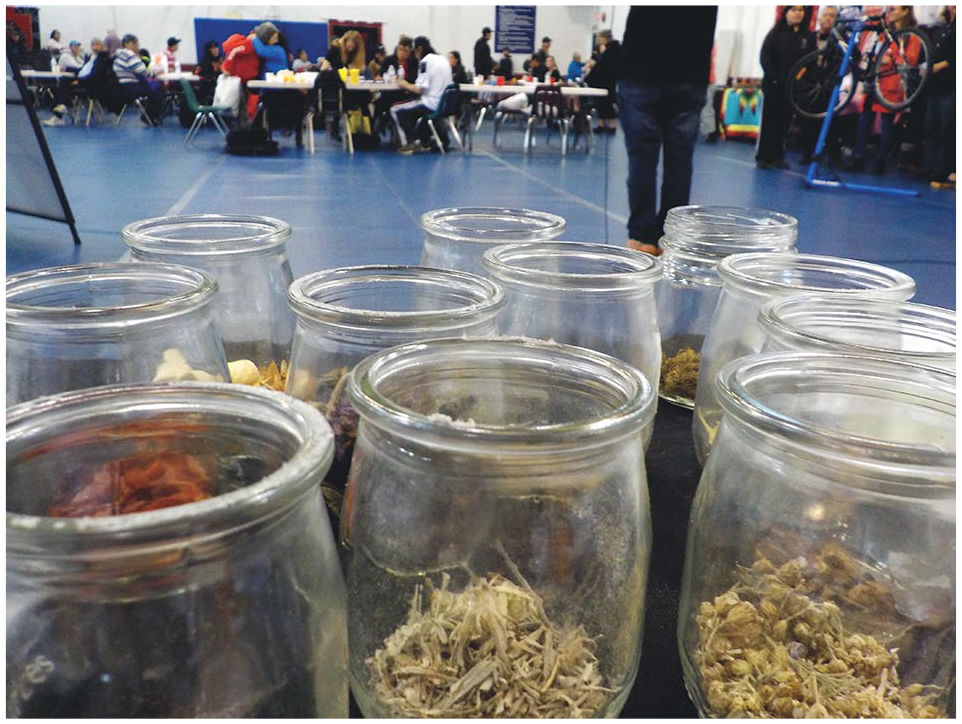
Vancouver Aboriginal Friendship Centre society (Photo: Leona).
The Vancouver Aboriginal Friendship Centre Society is a critical food asset for decolonization and serves the urban Indigenous community (estimated to number 40,000). In addition to food, the center provides support and programs to help community members connect to their culture. Decolonizing the food system also includes the ability for Indigenous communities in Vancouver to connect with the land. Kepkiewicz and Dale (2019) argue that food sovereignty activism in Canada has yet to substantially grapple with the implications of private property ownership and ongoing settler colonialism.
To connect to the land, Leona also teaches Indigenous food and medicine workshops. Part of her efforts in reclaiming her culture from colonialization and residential schools is the intergenerational teaching of food and medicine that she does for her children and others. She grows calendula at Cedar Cottage Neighbourhood House (for medicine, tea, and food), and teaches her kids how to harvest the plant and how to make salves. She sees this as a way to practice her cultural identity. For many of the non-Indigenous citizen scientists, there is a strong recognition that there is tension that needs to be addressed with respect to land and resource redistribution for Indigenous peoples, particularly as food assets in Vancouver are situated on unceded lands, and these assets do not always benefit Indigenous communities. Kara, a white Vancouverite with a disability, noted that actions are needed to repair the harm done, something that goes beyond the typical “land acknowledgement” statement offered by most municipalities. As Kara noted, “. . . part of our action has to be that we have to do better . . . I can’t apologize to you and say I’m sorry and then not change my behavior.” Porter et al. (2017) argue that planning’s accountability to Indigenous peoples need to go beyond mere inclusion and apologies, and move towards actually creating space for Indigenous self-determination.
It is recognized that there is an abundance of food assets in both the built environment and natural environment in Vancouver, but they are not always made available to those who need them most. The importance of communal natural urban food spaces (e.g., urban orchard) was highlighted by Harri (see Figure 6): Yeah, this one’s a picture of a fig tree . . . But why I also took this photo is because there was a point in my life where I was homeless and sometimes I had to rely on walking around the neighborhoods and gleaning from the different trees that had fruit . . . (Harri)
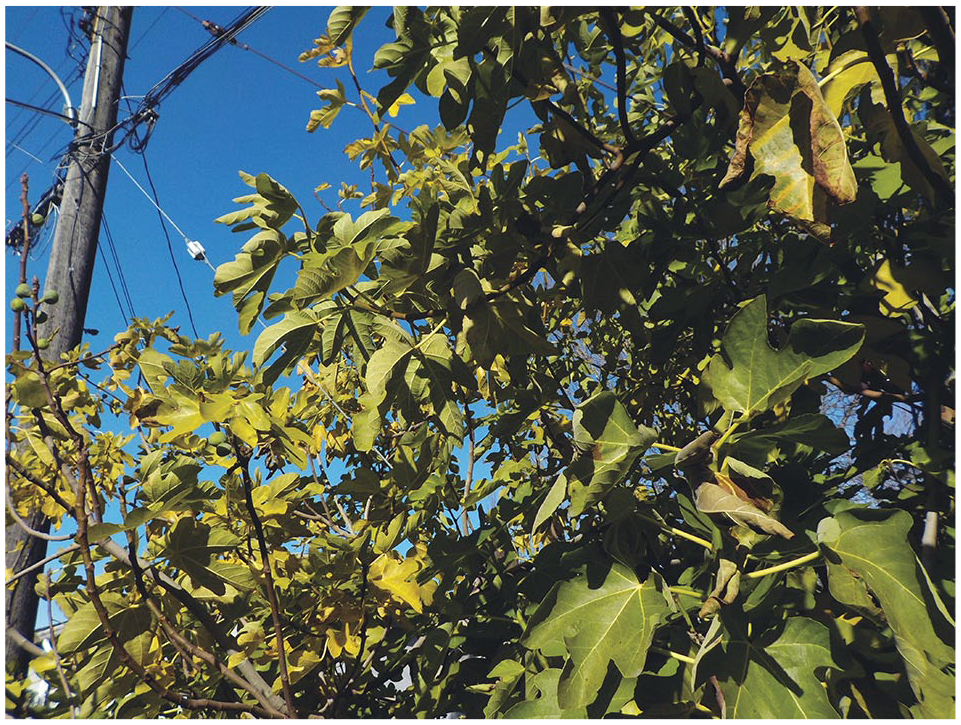
Fig tree (Photo: Harri).
To secure food justice, citizen scientists noted the importance of food sharing, a space to eat, grow, and obtain food free of stigma, and the concept of food as a commons (Vivero-Pol 2017). These spaces are critical for the survival of those contesting displacement and gentrification in the city, as gentrification acts as a form of enclosure to the commons (Blomley 2008).
There are other food assets that offer food without stigma. Surindra highlights the important role of the Sikh Gurdwara (temple) and its Langar (community kitchen): The community kitchen [referring to Langar] is not just a place for Sikhs. It’s a place that everyone is welcome . . . I’ve never seen anyone to be made to feel uncomfortable . . .
The spaces identified above highlight hidden opportunities for food assets. From a social practice framework, these food assets provide a sense of belonging, spirituality, and agency. They also provide opportunities to reconnect with Indigenous cultures, knowledge, and the land. The fig trees provide food as a commons and challenge the neoliberal commodification of the food system (Agyeman and McEntee 2014). These opportunities to promote food justice might not be reflected upon when identifying food assets using more conventional approaches.
Citizen Scientist Food Asset Photovoice Research: Lessons for Food System Planning
This study sought to understand how integrating photovoice in a citizen-led food asset project could support the development of a more just/equitable urban food policy and contribute to a decolonial approach to food system planning. It also sought to understand “hidden food assets” that have been relatively overlooked. Although identifying and mapping food assets has the potential to highlight important community food resources, without a clear process around engaging diverse, equity-deserving communities, this planning tool might miss important sites and contexts that could either benefit or harm community food security and well-being. Through photovoice and the application of social practice theory, this study found numerous “hidden barriers” (material, meaning, competence) faced by citizen scientists when accessing food assets for their everyday food practices. For example, certain spaces identified as food assets might be difficult to access and have a stigma associated with their use.
In their frustration with the two-tiered food system, citizen scientists unanimously highlighted the importance of autonomy in obtaining food. This means supplementing food from charities with dumpster diving, foraging, and gardening. The study found that many critical food assets for communities are under threat of gentrification, particularly small independent grocery stores that provide affordable healthy foods and small businesses offering affordable prepared foods. Zoning policies and development should account for these food assets, and SRO buildings should provide kitchen spaces for individuals or communally.
While zoning may support an increase in the number of food assets and infrastructures (Clark, Conley, and Raja 2021), decolonizing food system planning in Vancouver requires more than increasing the number of food assets. Consideration is needed on how food assets impact communities as a whole, especially in the context of unceded land. Planning policies should identify tools to support critical food assets for communities and empower community ownership of the planning process. The study found that the quest to obtain food encompasses more than just aiming for nutrition and calories, and the definition of food assets should include considerations of culture, identity, spirituality, the land, and nature. Decolonizing food assets also entails land/resource redistribution or co-governance opportunities to support traditional Indigenous knowledge and intergenerational learning. The photos gave a glimpse of the citizen scientists’ food aspirations, which stand in contrast to conventional neoliberal approaches of addressing hunger through charity. Photovoice offers a qualitative understanding of food assets that are of value to the community. These food assets enable agency, treat food as a commons, bring diverse communities together without stigma, and honor the Indigenous teachings that food is medicine.
Footnotes
Acknowledgements
We are grateful to the citizen scientists and peer reviewers for their thoughtful feedback. We thank research assistants: Florencia Comesana, Larry So, Dina Sadeghi, Dominika Naliwajko, Samantha Jung, and Maria Beskromnova.
Authors’ Note
An earlier draft of the manuscript was presented at the 2020 Association of Collegiate School of Planning Conference.
Declaration of Conflicting Interests
The author(s) declared no potential conflicts of interest with respect to the research, authorship, and/or publication of this article.
Funding
The author(s) disclosed receipt of the following financial support for the research, authorship, and/or publication of this article: This work was supported by the New Frontiers in Research Fund (NFRF) within the Social Sciences and Humanities Research Council (SSHRC) under Application ID NFRFE-2018-00517.
