



Abstract
The paper evaluates different teaching aids used in an introductory in-class course that focuses on planning theories. We examine the perceptions of students regarding specific teaching tools and how helpful they were in making the course more approachable and providing a better learning experience. The analysis covers 133 student responses over a period of four consecutive years. Findings show that certain instructional tools are regarded as more helpful in making the course material more intelligible. This suggests educators in planning theory courses should review and continuously monitor the didactic tools they use in class.
Introduction
Planning theories help define planning as an academic discipline. They explain what planning is and how it is administered, why it is needed, and whether it is feasible or can be improved (Brooks 2002; De Beer 2017). The broad range of theories that exist present two difficult tasks for planning educators to confront (Olesen 2018; Schön 1983): namely, the need to educate planners in the practice of planning (“knowing-in-action”) as well as about the sensitivities of planning (“reflection in action”). These endeavors allow future planners to reflect on how they plan, address problems, and exploit opportunities (Beauregard 2020). But theorists and educators are in a tough spot; it is hard to address (let alone teach) the relevance of theories to practice (Friedmann 2008), and to demonstrate their ability to explain the world, to future practitioners (Harrison 2014). Accordingly, theorists debate whether the relevance of planning theories is something that can be demonstrated in class (Whittemore 2015). They tend to ask what should be taught to prepare students to become professional planners (Bolan 1981; Denoon-Stevens et al. 2020; Taşan-Kok and Oranje 2017). This includes the required skillset and how planning pedagogy can help students acquire said skills (Brooks 2002; Cushing, Bates, and van Vliet 2013) as well as political awareness (Campbell 2014). Overall, these difficulties, combined with student disinterest and faculty frustration with student disinterest (Alterman 2017), raise serious concerns about the pedagogical tools used to teach planning theories.
Therefore, it becomes evident that planning educators are tasked with many challenges when teaching an introduction to planning and planning theories course. What do students find most helpful and engaging in a planning theories class? What methods foster an understanding of the material and concepts discussed in an introductory planning theory course? When the mode of delivery is frontal and theoretical classroom lectures, what teaching aids and techniques can enhance student learning? These are the key questions addressed in this paper. Its goal is to spur others to study the pedagogical methods used to teach planning theory, and to also improve future studies by these researchers into new and existing tools that assist students in contending with the material.
In an attempt to answer these questions, this paper used a questionnaire to examine the perceptions of students regarding specific teaching tools and how helpful they were in making the course more approachable and providing a better learning experience. The analysis is comprised of 133 student responses over a period of four consecutive academic years, from 2014 to 2017. The analysis findings demonstrate that certain instructional tools are regarded by students as being more helpful in making the course material more accessible and intelligible. As such, this paper recommends that educators in planning theory courses should review and continuously monitor the didactic tools they use in class.
The body of literature relevant to our study is comprised of teaching methods, planning pedagogy, and urban planning education. In particular, we focus on the effectiveness of different methods used in class to disseminate ideas and knowledge to students in their first year of graduate studies toward a master’s degree in urban and regional planning. Before we begin, some words of clarification are in order. First, this analysis deals with the perceptions of students. We do not intend to evaluate the causal relationship between various teaching methods and students’ success in a given course, nor determine the best universal “objective” method to use as educators. Surely, teaching and learning is context-specific. Having said that, students’ subjective perspectives can nevertheless help identify certain teaching aids that hold their attention and promote overall learning effectively. It is based on these perspectives that we feel confident in making recommendations about methods for teaching general introductory planning courses.
Second, the data we gathered from our respondents apply to courses taught before the COVID-19 pandemic. Thus, the information is based on in-class, face-to-face lectures. We did not use videoconferencing or distance learning. Having said that, the lessons of our study are even more relevant post-COVID-19. The pandemic will surely affect the way we teach and learn about planning. In the age of videoconferencing, traditional learning methods that were often frowned upon as being outdated have become more important and relevant than ever. When students can neither travel nor conduct site visits, conventional, old-school, and even passive learning may be called upon to replace what is missing. With a gradual shift to distance learning through Zoom and other ICT tools, it becomes evident that the ability to capture students’ attention, in light of videoconferencing fatigue, becomes extremely important. Thus, the examination of delivery mechanisms and various teaching components in a planning theories class can help educators prepare for the future by adapting online lectures, adjusting instructional tools, and optimizing their delivery mechanisms.
Literature Review
The Challenges of Teaching an Introductory Course in Planning Theories
The challenges of teaching an introductory planning theories course are rooted in planning as an academic field and as a profession. There are several characteristics of planning as a field that help explain why it is hard to acquaint students with its many ideologies and viewpoints. First, planning is by its very nature interdisciplinary, drawing on theories and practices from the fields of economics, sociology, law, political sciences, architecture, and geography, to name a few. Planning, as a discipline, involves both processes and outcomes (Christensen 2015) and relies on modern ideas as well as postmodern variants (Rydin 2007). Its underlying theories have gradually disengaged from the materiality of cities, spaces, and real-life policies and problems (Yiftachel 2006). As a result, they have become generally harder to grasp (Harrison 2014). As such, the intellectual underpinning of planning has remained ill-defined, and there is much ambiguity about its mandate, relevance, knowledge-base (Davoudi and Pendlebury 2010), and the ideas on which it is predicated (Beauregard 2020, 6). Likewise, the gap between theory and practice, and the lack of “a good fit between planning theory and contextualized planning practice” (Allmedinger 2017, 29) make it harder to communicate planning theories to first-year students and difficult for them to follow the ongoing intellectual debates conducted by theorists (Klosterman 2011, 326). Planning theory courses can thus be diverse and varied in content, each with its own emphasis on ethical, professional, or philosophical debates with which students must contend (Bolan 1981; N. Frank 2002).
There are also a broad range of theories, including variations within them. They explain what planning is, how it is administered, why there is a need for planning, and whether it is feasible, important, or can be improved (Brooks 2002; De Beer 2017). These issues correspond with two complex tasks of planning educators (Olesen 2018; Schön 1983): the need to educate planners in the practice of planning (knowing-in-action) and the sensitivities of planning (“reflection in action”; Beauregard 2020). As a result, planning educators debate whether the relevance of planning theories can be demonstrated in class. They also tend to ask how planning schools should teach planning (Denoon-Stevens et al. 2020; Taşan-Kok and Oranje 2017).
The complexity and variety of planning theories raises questions about the most useful teaching methods for classroom instructors (Boyer 2020). Alas, it also remains somewhat ambiguous as to how planning theories should be taught, let alone in the traditional setting of in-class lectures. The techniques and tools for teaching remain under-studied, compared with substantive issues concerning what should be taught in introductory theoretical courses.
The Challenges of Teaching Generation Y
It is possible to add yet another challenge to the aforementioned difficulties that planning educators face: today’s graduate students are mostly Millennials, born in between the years 1980 and 2001 (Alsop 2008). This cohort is sometimes referred to as “Generation Y,” “Y-Gens,” “Nexters,” “Echo Boomers,” or “the Nintendo Generation” (Delorey 2010). While it is risky to generalize or attribute a set of behaviors to this generation as a whole, the literature identifies key attributes of Y-Gens that could affect their receptiveness to a variety of teaching techniques. In this regard, the literature points out several characteristics that can affect the way in-class teaching is conducted (Eckelberry-Hunt and Tucciarone 2011). Specifically, Y-Gens are considered to be “civic-minded, team-oriented . . . technologically savvy, multi-taskers, and impatient” (Delorey 2010, 477). They tend to value participatory, hands-on, experiential learning (Portman and Teff-Seker 2017). At times, they are considered to be “stimulus junkies” (Pendergast 2015, 17): a generation that multi-tasks, becomes easily bored, seeks constant stimulation even in the classroom, and does not “highly value reading and listening to lectures” (Eckleberry-Hunt and Tucciarone 2011, 458). Likewise, Y-Gens are equipped with a high degree of visual literacy and are more receptive to targeted graphical messages and pictographic language in place of written language (Dobson and Dobson 2016; Mazor 2018). They often tend to value creative and interactive learning as well as mentoring by parent-like figures of authority (Lipkin and Perrymore 2009). Although this broad characterization of Millennials might be regarded as somewhat negative and stereotypical, it does underscore the idea that the majority of the students in today’s higher education classes value stimulation and mentoring and are accustomed to clear messages and visual cues (McHaney 2011). Given these attributes, what teaching methods would be most applicable to this generation of students?
Delivery Methods and Teaching Strategies: Existing Studies in the Field of Planning and Beyond
Another challenge in conveying planning theories relates to delivery methods. Y-Gens are more inclined toward team-based courses and experiential learning (Senbel 2012) that shifts pedagogy away from traditional delivery methods such as static, face-to-face formal lectures. Thus, in line with constructivist learning theories in the sciences (Eckleberry-Hunt and Tucciarone 2011) and social sciences (Senbel 2012), educators are increasingly using teamwork, peer-based learning, free expression, active learning, and reflection (Cushing, Bates, and van Vliet 2013). They are also seeking to invent and integrate creative, flexible methods that abandon lectures (Auster and Wylie 2006) in favor of empowering students to be more responsible for their own learning process and success (Humer 2020) by enabling them to understand contextual matters and solve problems on their own (Teff-Seker, Portman, and Kaplan-Mintz 2019).
As a result, planning educators need to reconsider their toolkit of delivery methods. Indeed, on one hand, existing studies in the field of planning attempt to evaluate a variety of delivery methods. These include studios (Alizadeh, Tomerini, and Colbran 2017; Long 2012), study-abroad programs (Macedo 2017), field courses in planning (Abramson 2005), distance learning (Lawhon 2003; Shapira and Youtie 2001), service-learning and community engagement courses (Cushing, Bates, and van Vliet 2013), project-based learning (Portman and Teff-Seker 2017), flipped teaching (Buckman et al. 2019), case-based learning (Hoey, Rumbach, and Shake 2017), as well as courses that generally encourage hands-on learning (Hoey, Rumbach, and Shake 2017) and engagement with supporting technologies (e.g., GIS) in planning curricula (Minner, Evans-Cowley, and Afzalan 2019).
On the other hand, beyond these, studies that evaluate the response of students to particular techniques and delivery methods in in-class lectures are largely missing. This lacuna is detrimental to the teaching of planning theories whereby questions about delivery become acute in light of the large cadre of ideas and polemical and philosophical texts (Allmedinger 2017, 50), as well as the interdisciplinary nature of the theories themselves (Ferreira et al. 2015).
Conventional In-Class Courses: Their Importance and Existing Knowledge Gaps
However, we must still engage Y-Gens in conventional, face-to-face, lecture-based courses, especially theoretical ones that introduce a range of ideas, concepts, and planning paradigms. Critics have maintained that such approaches are outdated and overly dependent on “readings and lectures about theory” (Hoey, Rumbach, and Shake 2017, 225) that suit academia but are “less than optimal for learning to become a professional planner” (Friedmann 1996, 101). Such allegations are not new. Rodriguez-Bachiller (1988, 31) noted that while lectures may boost the acquisition and understanding of knowledge, they do not promote the application of that knowledge effectively.
On a practical level, lecture-based courses are often regarded as inferior by those who agree that “[t]here is no clear substitute for the learning-by-doing, problem-solving experience . . . ” (Lang 1982, 76). More specifically, such methods are criticized because, by design, they make students passive participants who simply memorize material in preparation for an exam (Bateson 1972), rather than engaging with the course content to apply it later on as practitioners.
Given that in-class lectures remain unpopular among students, there are few studies that examine them, let alone analyze the teaching aids and instructional tools they use. One possible reason for this gap in knowledge is that these “outdated” methods are not suitable for the twenty-first century (and Y-Gen) learning, and therefore do not draw the academia’s attention.
Having said that, face-to-face seminars and lectures still have definite benefits. They are certainly still a key feature in many urban planning programs of academic study (Forester 2020; Symes 1982). Specifically, there is evidence that traditional delivery methods such as lectures are not obsolete, because “there are some aspects in the planning curriculum where it is hard to see why studio-based projects can be the (only) teaching method adopted” (Sturzaker 2014, 469).
In this regard, Worthen (2015) noted that traditional, less-active modes of learning are still important because good lectures stimulate debate, and teach students to analyze information, make logical connections, and concentrate. When comparing in-class discussions with computer-mediated discussions, Willson (2000) found that in-class deliberations ranked higher for legitimacy, sincerity, and comprehensibility. Likewise, Shapira and Youtie (2001) established that in-class courses can provide access to planning professionals and to speakers and presentation materials. Although the COVID-19 pandemic and other processes have made online learning increasingly dominant, face-to-face teaching—even through video conferencing—remains relevant and important, although it requires adaptation to a digital format.
Teaching Aids in Face-to-Face, In-Class Courses
In-class lectures therefore remain a relevant feature in planning curricula. Nevertheless, they present several additional challenges to educators. The diversity among any group of learners (Corley 2005)—be it socio-economic, ethnic, or educational—makes it harder to tailor a range of subjects and teaching techniques to suit all students equally. It therefore becomes important to identify the teaching techniques that a majority of students regard as more suitable to their settings and circumstances.
Several studies have assessed different teaching techniques in face-to-face classes (not specific to planning). For example, Apperson et al. (2004) studied the impact of presentation graphics on students’ classroom experience and found that PowerPoint presentations enhanced the organization and clarity of the material, held the students’ interest, and provided added value as entertainment. Likewise, Szabo and Hastings (2000) reported that the majority of students agreed that presentation graphics held their attention better than lectures without presentations. Atkins-Sayre et al. (1998) also noted that students believed they were better able to understand the material when presentations were used in class.
Within the field of planning, few studies analyze—let alone compare—in-class teaching techniques. In a 2001 essay, Shapira and Youtie examined for the first time how in-class courses could be delivered via the Internet in a video conference setting. This innovative article was one of the first papers to assess online learning in planning, and its relevance post-COVID-19 should not be understated. The authors determined that students considered guest lectures by expert planners as very useful in the teaching of a face-to-face planning course (Shapira and Youtie 2001). The students most often mentioned the course content, interactive discussions, and question-and-answer sessions as the most beneficial teaching components.
These findings were echoed by Tunström (2018, 52) who considered in-class discussions on planning issues as quite helpful, especially when accompanied by site visits. Buckman et al. (2019) assessed whether presentations by practitioners and conversations with them could provide students with important insights into environmental planning; they found that students were indeed very satisfied with these sessions. Watson (2002), Sandercock (2003), and Forester (2020) pointed to the benefits of integrating stories from the world of planning practice in class. Specifically, through hearing stories related by practitioners (Forester 2012; Watson 2002) and students (Sykes 2017), the class participants could explore difficult issues of identity and difference, as well as an array of planning challenges.
The literature also mentions other in-class teaching methods suitable for planning courses. Wolf-Powers (2013) observed that in-class simulations can help students think about the political dynamics of development, introduce them to the practitioner’s experience, and develop a variety of skills. Olesen’s (2018) study linked in-class discussions and role-play to successful teaching experiences; he also noted the importance of providing real-life examples to anchor theory in practice.
Yet these accounts, however important, do not compare a range of delivery methods in in-class courses. They are also confined to a limited number of specific techniques. To address this gap, we examine the preferences of students with respect to a range of teaching aids in an introductory planning theories course.
The Context of Our Study
This paper focuses on an introductory planning theories course, developed in the Faculty of Architecture and Town Planning at the Technion—Israel Institute of Technology. The course is required for the graduate program in urban and regional planning. It is part of a two-year program intended for students of diverse academic backgrounds such as law, politics, statistics, geography, architecture, and public administration. The course is taught in the first semester of the program and is designed to acquaint students with basic ideas, ideologies, theories, and well-trodden debates with respect to planning as a discipline and a profession. It adopts a chronological approach to introducing and discussing planning theories and begins with a historical account of the roots of modern planning, its proposed utopian ideals, modern antecedents, and postmodern variants. Planning thought is examined as it gradually shifted from being utopian to rational comprehensive and then to progressive; as well, radical viewpoints are explored. Another goal of this classroom-style course is to equip students with knowledge about different planning styles, models, dilemmas, and critiques of these approaches. The attributes of this course, together with the interdisciplinary background of the students, add to the challenges of in-class teaching. Aside from the general challenges associated with Y-Gens and planning pedagogy, the variety of their academic backgrounds means that first-year graduate students might not share the same learning habits or ways of knowing, nor be similarly familiar with textual content.
Consistent with many introductory courses in planning, the examined course uses conventional in-class modules that are structured around different evolutionary stages, schools, and paradigms in planning theory (see Olesen 2018). The course also deals with select challenges in planning practice. Foregrounding these modules are two introductory lectures on the history of planning, its underlying rationales, and the meaning of theories in and of planning. A variety of topics are covered in the course curriculum, as depicted in Table 1:
Course Modules.
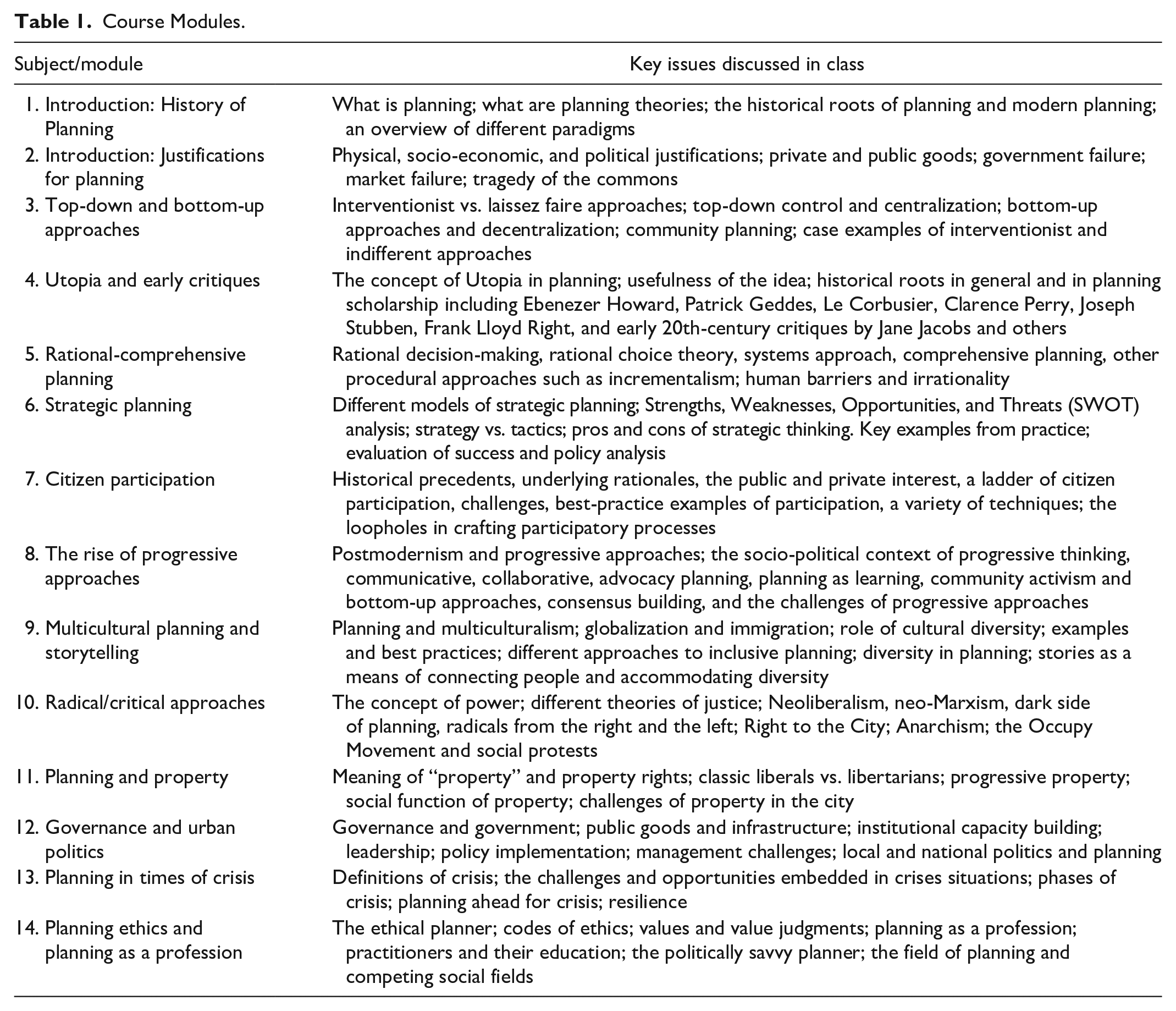
Overall, the delivery mode of the course is face-to-face lectures. Class time consists of a weekly lecture of three hours (including a thirty-minute break). This model of teaching is quite challenging and requires professors to prepare a presentation and discussion materials. The length of each weekly lecture also intensifies the importance of examining and assessing a range of teaching aids used during these interactions. Before each class, students were assigned, on average, approximately fifty pages of background material to read. In each module, we applied similar teaching aids.
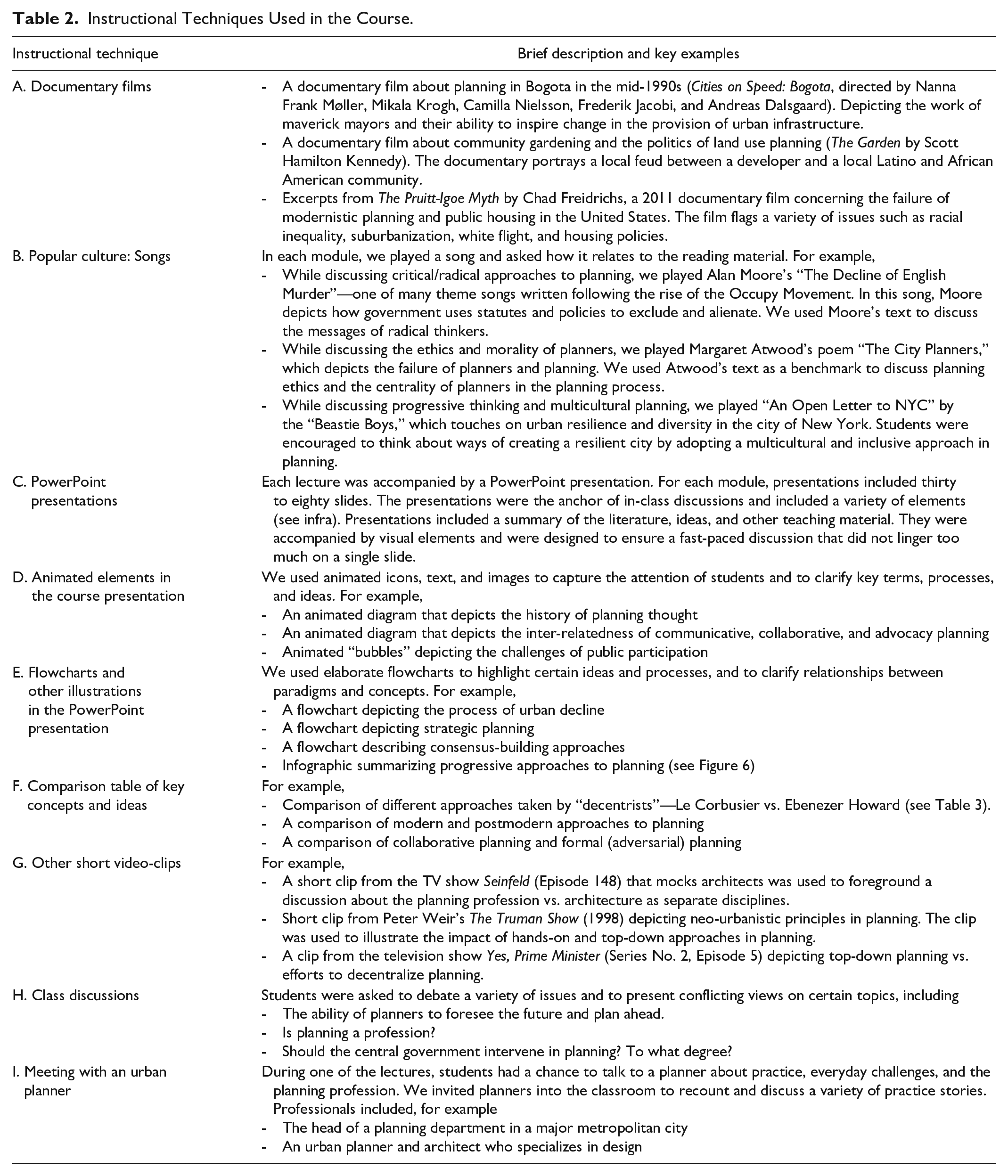
We used a range of teaching aids in class to convey messages, spur discussion, and acquaint students with the course topics and materials. Table 2 lists nine major teaching aids (techniques) used in class and explains them briefly. The study refers to these teaching aids and inquires as to which ones the students considered helpful.
Instructional Techniques Used in the Course.
Methodology
There are various ways of assessing students’ responses to different teaching techniques (Garner 2005). Examples include classroom observations, recall interviews, and video documentation of classrooms. In this research, we used a different approach: we collected data through anonymous and structured questionnaires over the course of four consecutive academic years. 1 Pedagogical evaluation using students’ surveys is a common tool for assessing teaching in a range of academic disciplines (Deaconu, Olah, and Haj 2020; Gaebel et al. 2018). Although it is not the only way to assess the quality of teaching, it is nevertheless key in evaluating students’ satisfaction with the course, and thus, to help improve the self-awareness of the instructor and the delivery of lectures. In fact, students’ surveys provide more accurate information about teaching and learning (Harvey 1995).
The questionnaire featured open-ended questions as well as a request that students grade and rank the nine classroom techniques in Table 2. We asked the students which components of the in-class lectures helped them understand and digest the material. This question was designed to help determine how the material could be made more accessible to the students.
We asked the students to rank the techniques from one to nine, where one indicated techniques that were unhelpful and did not make the material understandable, and nine indicated measures that were extremely helpful and made the material more intelligible. As a result, each measure received a unique ranking, which indicated its value as a learning tool relative to the others. Questionnaires were anonymous, and students were left unsupervised by the instructor while filling them out. In addition, students were asked to answer an open-ended question regarding the course’s instructional tools and their experience during class hours. Doing so allowed the students to write their own evaluation of the course and its teaching aids, although it did not relate to any activity outside of class hours, such as independent reading or homework.
Of the 200 students enrolled in the classes of 2014–2017, 133 (66.5%) took the survey (responses are therefore significant at the 95% level). The students taking the course were mostly in their mid-to-late twenties or early thirties, that is, Y-Gens. Each class was relatively large in size (consisting of fifty students per year on average) and therefore much bigger than more intimate seminars. Class attendance was mandatory throughout the semester.
Findings and Discussion
We began the survey by requiring students to answer general questions about their perceptions of the course. Overall, in all cohorts surveyed, most (at least eight out of ten) students agreed that planning theories are hard to learn (Figure 1). To better contextualize the students’ impressions, we asked whether they found planning theory boring. A majority (60%) said no (see Figure 2). This result implies that, although students may have struggled with the course content, it nonetheless interested them.
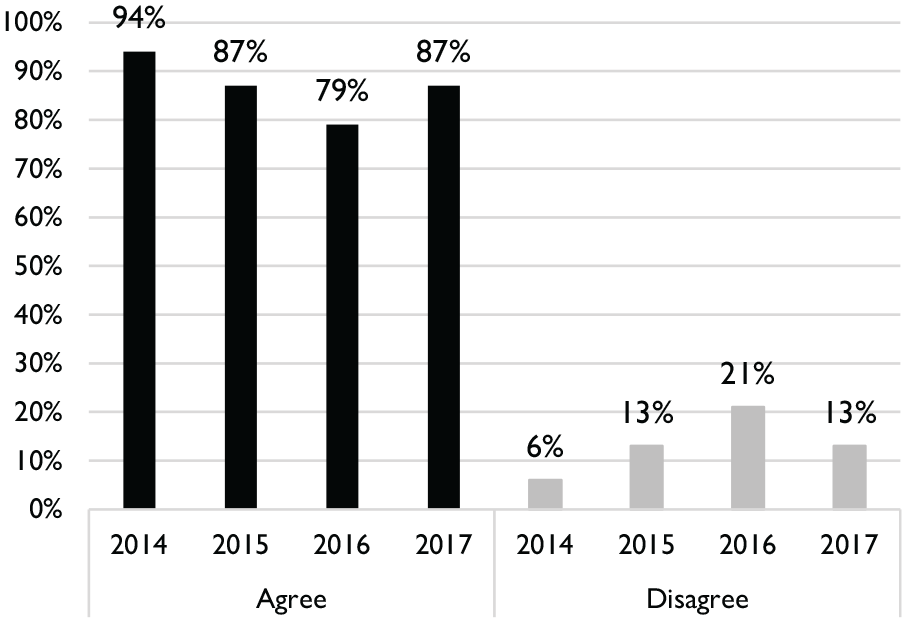
Planning theories are hard to learn (N = 133).
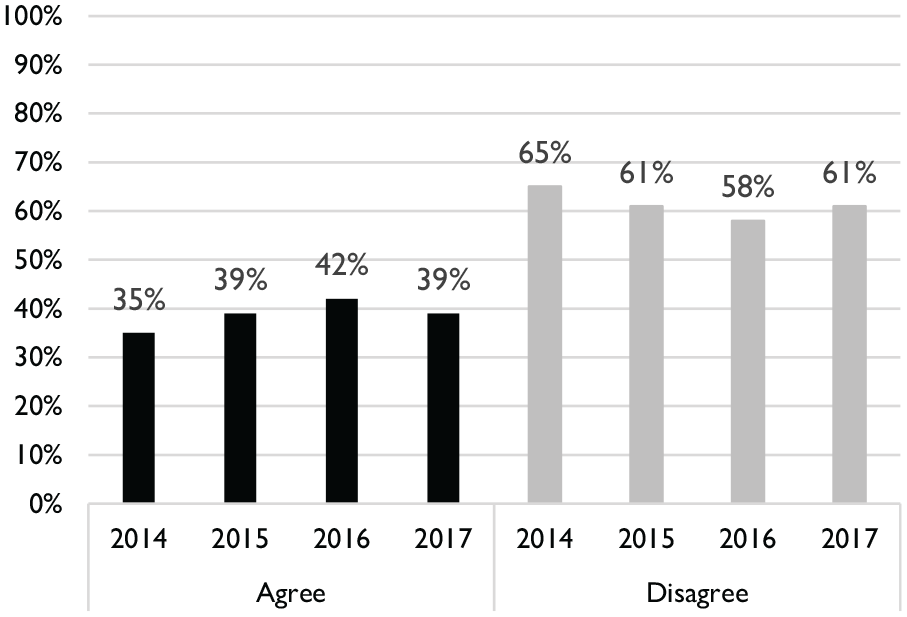
Planning theory is boring (N = 133).
When asked directly about the modules taught throughout the semester, an average of 93 percent of students opined that the majority of them were interesting (see Figure 3). Given that 40 percent of students thought planning theory was generally boring, the fact that 93 percent thought the modules were interesting suggests that the way in which these modules were taught improved the students’ satisfaction with them.
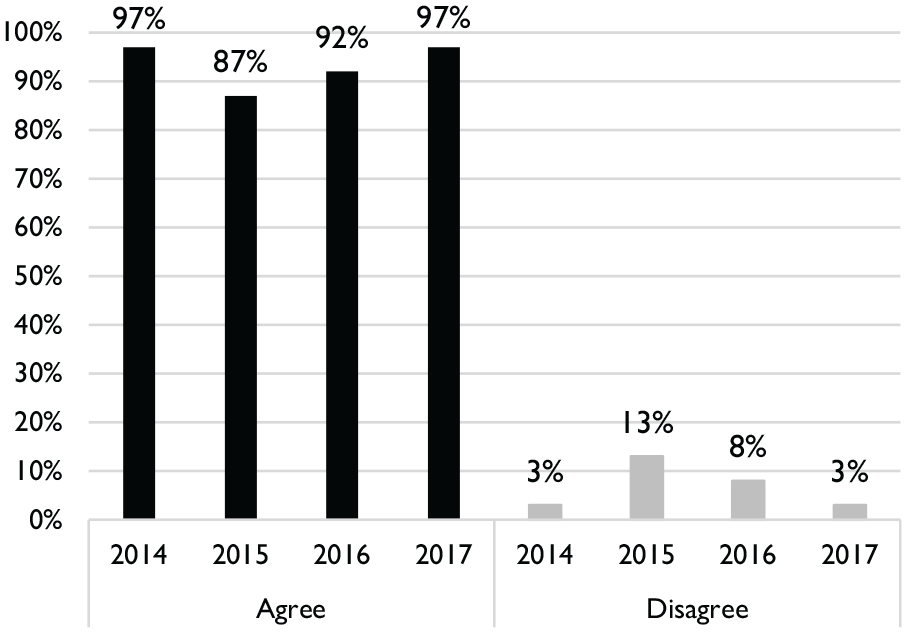
The majority of the course modules were interesting (N = 133).
With this information in mind, we addressed the core research question concerning the different teaching aids used in class. Which of them captivated the students’ attention and held it? What techniques made the course modules interesting to the students who, in general, found planning theory boring?
Figure 4 presents the students’ perceptions about each measure, sorted by year. In general, columns dominated by dark gray (C, E, F, G, H, I) indicated a consistent pattern with certain measures being considered more helpful across all cohorts. The tools that fell into this category were the course presentation, flowcharts, movie clips, comparative tables, in-class discussions, and a meeting with an urban planner. In addition, looking at the color schemes in Figure 4, it becomes quite evident that some tools were ranked lower in all years, implying that students did not regard them as being particularly valuable to their learning. The tools that fell into this category were the use of songs and animated elements in the course’s slideshow presentation. In addition, the documentary movies used during class were not considered to be as helpful as other tools.
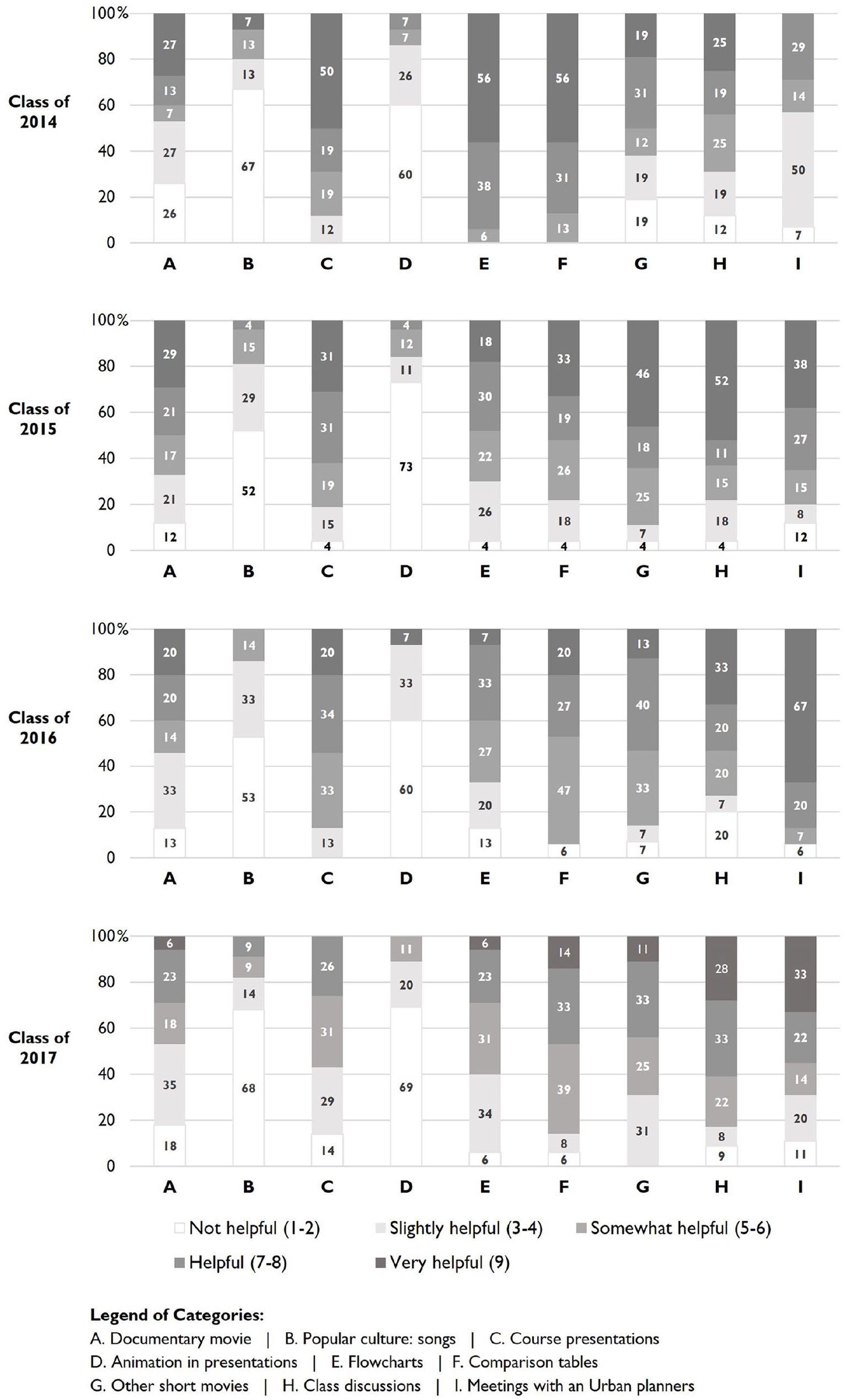
How helpful were the various teaching methods? sorted by year and instructional tool.
With respect to the instructional tools considered helpful, we found some variation in the students’ responses. For example, whereas the 2014 class did not consider meeting with a planner helpful, the 2015–2017 classes did regard such a meeting as quite helpful. With the exception of the class of 2015, most students ranked short movie clips as helpful. In addition, a breakdown of answers shows that all classes ranked comparison tables of the material rather high; most students thought this tool was helpful in digesting the material and making it intelligible. This perception was consistent throughout the period we examined.
Taken together, the data therefore imply that students prefer tools that convey information through mentor-like figures (practicing urban planners) or in a focused manner that makes data more accessible. The high rankings they gave to short clips, comparative tables, and flowcharts that convey information imply that more focused messages can achieve better effects than longer, more complex messages. In addition, the students’ preference for class discussions implies that Y-Gens indeed value experiential and group learning.
All of these results are not surprising. They mirror certain generalized attributes of Y-Gens already described in the literature. In particular, the preferences of the students are in line with the characteristics of Y-Gens as a generation which responds positively to participatory learning and mentoring, as well as to pictographic and visual cues. These results could help improve the in-class teaching of a theoretical course, as they demonstrate how we can address the preferred teaching styles of Y-Gens to better convey information and make theories of planning more meaningful and engaging.
In reviewing the average grade given to the various instructional tools, the picture becomes clearer. Figure 5 shows the average grades and ranks them accordingly (the top four measures are presented in black). The findings indicate that, while the top four preferred tools vary across cohorts, there are nonetheless consistent preferences. On one hand, this finding suggests that in-class dynamics, the students’ backgrounds, and other factors that vary among cohorts may affect the reception and perception of these teaching aids. On the other hand, the data point out certain tools that do constantly dominate in the ranking. On average, tools such as comparison tables, meeting with an urban planner, and course presentation and discussions in class were ranked high, and quite consistently so, in four out of five cases (Figure 5). In addition, short movies were ranked high in three out of five cases.
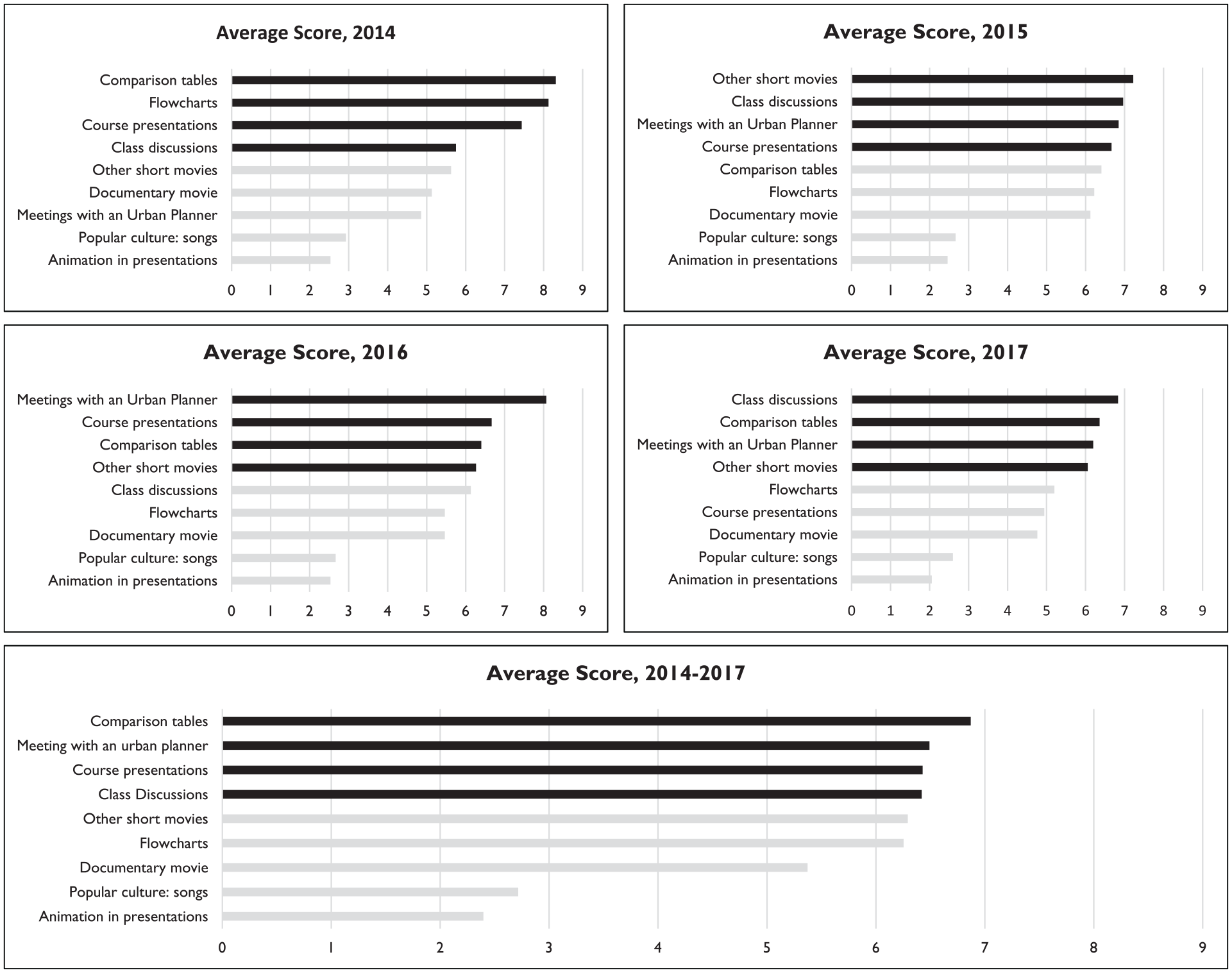
Average scores of various instructional tools, sorted by class and tool.
It is important to note that the average grade given to each tool may not indicate its contribution entirely. Indeed, Figure 4, with its breakdown of responses, suggests that although certain measures do not rank high on average, they are in fact quite helpful to students. One of them is flowcharts, a format that students indicated was moderately-to-very effective.
The results also confirm the value of in-class discussions, which ranked high in almost every cohort. This finding supports those of previous studies that emphasize the instrumentality of face-to-face discussions in the classroom (Willson 2000).
The course presentation is yet another tool that students preferred and frequently ranked highly. This is no surprise, given the findings in previous studies that visual elements can make the material presented more understandable. The presentation acts as an anchor or a focal point during class. If used effectively, it can help students visualize ideas and spur discussion. Nevertheless, presentations have potential drawbacks as well. Students might be distracted because their focus is drawn to the presentation’s text and content instead of the discussions taking place in class. This distraction might explain why, on average, in-class presentations, albeit important, did not rank as high as other measures.
In a manner similar to that of course presentations, discussions in class, and short movies, the findings show that students appreciate meeting with urban planners in class (four of five ranked cases). Although the contribution of this tool to learning depends on the invited guest and his or her preparation by the instructor, the data suggest that students regard these events as educational and useful. This finding is consistent with the existing literature (Forester 2012; Watson 2002), which accentuates the importance of learning from the stories of those working in practice. Invited guests can bridge the gap between theory and practice and can ground academic knowledge in real-life situations.
The students’ answers to the open-ended questions of the questionnaire shed additional light on how the various teaching aids engaged them and helped them absorb the material. Their responses also indicated that, while ranking and identifying specific classroom tools are helpful, the combination of these tools has its own importance of a higher order. One student observed, “We are lucky that the material is presented logically, clearly, and legibly. The combination of presentation, songs, and movies is extremely helpful.” Another stated, “The course was innovative and used a range of methods that piqued my interest,” emphasizing the combination of techniques. Regarding specific delivery methods, one student wrote, “The diversity of movies, stories and presentations makes the learning experience much more pleasant.” However, another student recommended “ . . . [adding] more discussion on case studies to allow us to better comprehend the material.”
The critiques of the course presentation focused on the length of the classes, the length of the presentations, the inability to engage students (especially those who did not read the material), as well as the course’s workload, which some students complained made participation in in-class discussions more difficult. Taken together, these critiques suggest that certain instructional tools can prove more or less helpful depending on background issues, such as the teaching ability of the instructor, the receptiveness of the students, and the conditions that evolve over the course of in-class meetings. They also validate, at least to a certain degree, the preferred learning styles of Y-Gens as outlined earlier.
The longitudinal analysis of the students’ perceptions across the years studied showed a clear preference for some instructional tools over others. Students found visual presentations, tools that used graphics to compare theories, flowcharts, and summary tables helpful in understanding the material. These techniques present opportunities for instructors to communicate abstract ideas in planning courses. They help students understand how things work and how they can be categorized, and assist in summarizing key ideas and serving as quick points of reference to the vast literature on the topic. Using these results, teachers can develop instructor-centered teaching that engages students in building a knowledge-base which they can eventually apply on their own in practice (Blumberg 2009, 86). Notably, the literature flags certain attributes of Y-Gens, including visual literacy, their impatience, reluctance to read, their multi-tasking abilities, and their inclination toward pictographic and focused messages in place of written language. These characteristics, in our view, are reflected clearly by the findings.
Moreover, the dependence of Y-Gens on mentoring reported in previous research sheds light on the high ranking they gave to meeting in class with a practicing urban planner. In fact, visiting practitioners appear to fill the role of professional mentors that graduate students strongly favor. Similarly, the preference of Y-Gens for participatory experiential learning helps explain the high rank they gave to in-class, content-rich discussions.
Note that these formats of instruction should not be viewed as an attempt to water down the teaching of planning theory. They are simply formats that conform with the preferred learning styles of our first-year graduate students. Their content can remain rich and comprehensive, and their use can make classes more approachable and intelligible. Indeed, the students gave lower scores to instructional tools with high entertainment value (songs, documentary movies) than to more content-rich, participatory tools such as in-class discussion and meeting professional planners (who act as mentors). Students also highly ranked tools that summarize data and make class material more easily digestible. These findings suggest that although Y-Gens are a very socially and technologically connected generation that values popular culture and entertainment, the use of these elements as an instructional tool does not necessarily achieve the desired effect of familiarizing students with the material. Furthermore, it does not evoke the same response as other measures. Therefore, these preferences suggest that instructors should use entertainment in class carefully and selectively rather than as a major method of delivery.
Our finding that planning students are most responsive to focused and visual messages, as well as tools that simplify information, is a lesson that all teachers should take to heart. Take, for example, an image presented to students in a module that focused on the rise of progressive thinking in planning (Module No. 8, in Table 1). The image was created by the instructors to depict the different branches of progressive scholarship in planning and their inter-relatedness (Figure 6). The infographic clearly delineates several theories within the framework of progressive planning. For instance, it shows that communicative emphases correspond with and assume collaboration between parties. Likewise, it shows that storytelling in planning, as a technique and as a theory of its own, presupposes collaboration and can also employ communicative approaches. This image may be somewhat simplistic, but it presents a variety of important terms in an easily digestible visual form and can thus help explain why students ranked presentations rather high.
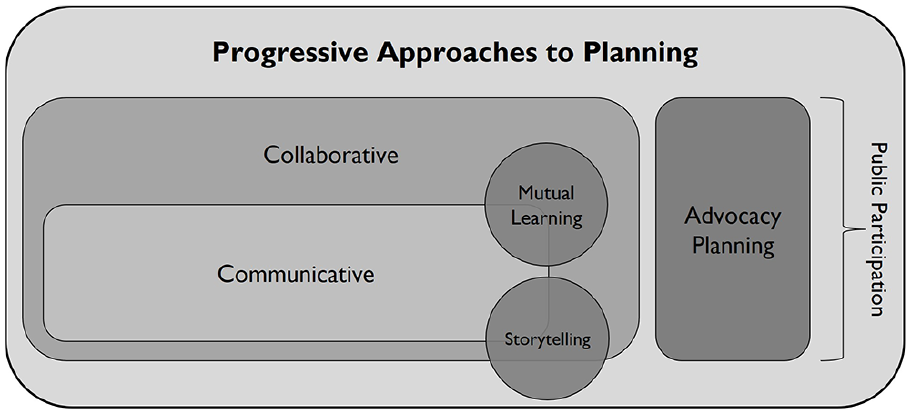
Example of infographics depicting progressive approaches to planning.
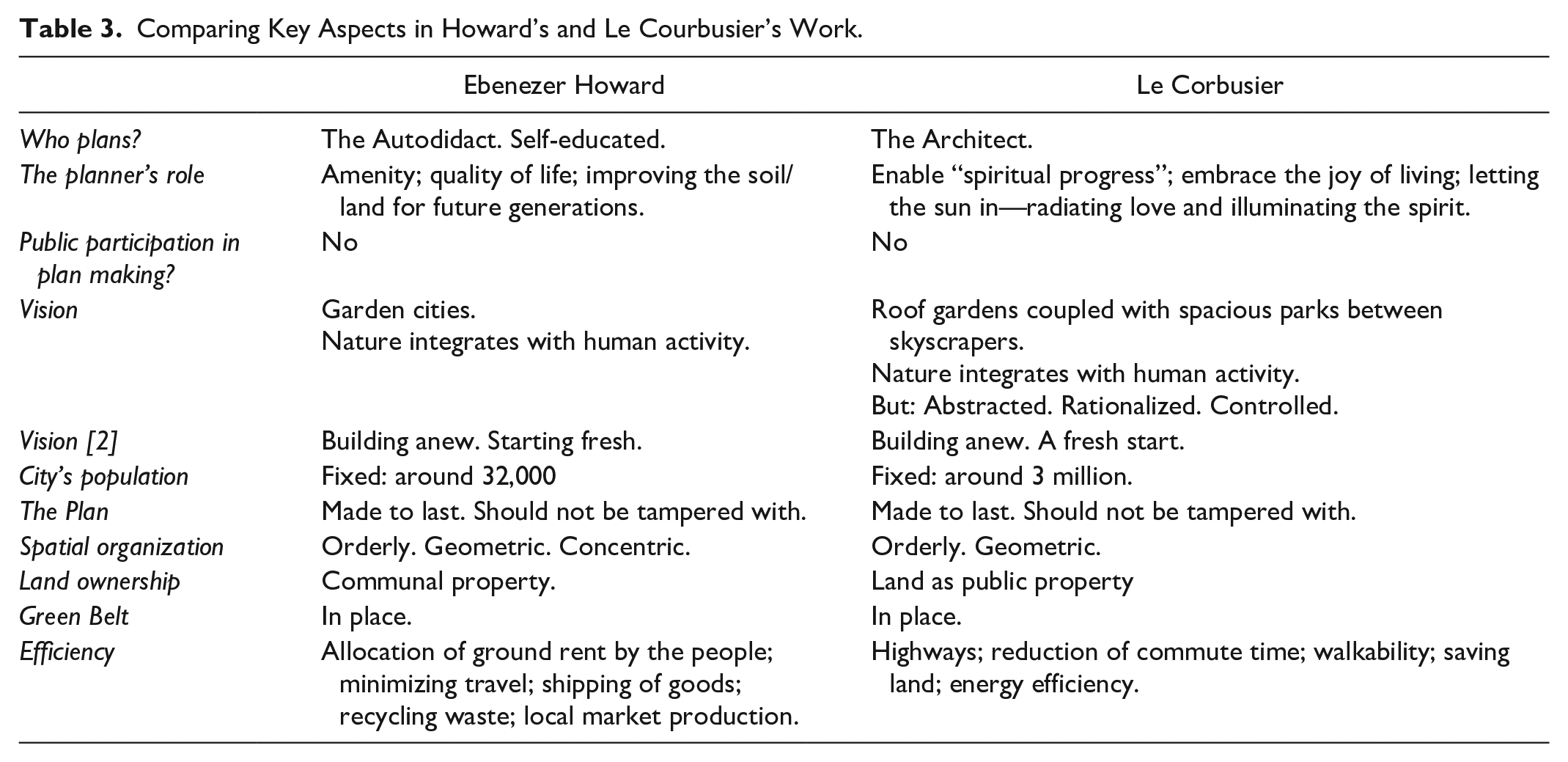
In three out of four consecutive years, students reported that comparative tables were very helpful in making the material comprehensible; in fact, comparative tables ranked first, on average, among all the tools. We developed several tables that illustrated the similarities and differences between important people, places, and concepts. In one module, used for a discussion of the origins of modern planning and early-nineteenth to twentieth-century examples, we presented the works of Ebenezer Howard, Patrick Geddes, Le Corbusier, and Frank Lloyd Wright, among others. To help students differentiate between the approaches of several planners, we presented them with Table 3 that compares the major ideas and approaches to planning, embodied by two thinkers, based on their texts. Although it does not capture all of the facets of Howard’s and Le Corbusier’s philosophies, it highlights major issues that were later discussed in class. The table served as an anchor and a point of reference in these ensuing discussions.
Comparing Key Aspects in Howard’s and Le Courbusier’s Work.
Finally, it is not surprising that the students rated meetings with planners in class as helpful. These guests can most effectively link theory to practice and demonstrate how complex ethical and professional problems can be dealt with. They can also provide first-year planning students with some assurances about the profession out in the working world and its mandate. Similar to tables, flowcharts, short movies, and in-class discussions, such meetings with professionals can provide lucid information and concrete and candid answers to students’ queries. They also align with the preferences of Y-Gens for real-life examples and mentorship.
Conclusion
Planning educators often recommend that colleagues practice self-reflection, equip their students with different skillsets, and familiarize them with a range of ideologies and models of and about planning (Taşan-Kok and Oranje 2017). Planning educators are called on to encourage students to think and explore through teaching styles that are “sensitizing, humbling, intriguing, motivating, even inspiring” (Forester 2020, 452). Beyond these recommendations, we need to ask ourselves whether we are reconsidering modes of communication and styles of teaching. Specifically, in classroom-style lectures, are we aware of the impact of different delivery mechanisms and teaching tools? In classroom lectures, planning educators face the challenge of creating a thought-provoking environment; to do so, they require an attractive set of instructional tools that help students understand, internalize, and eventually apply course material in practice.
The findings of this paper suggest that planning educators should use a variety of teaching aids in class. It is possible to rethink teaching strategies by identifying better delivery methods that help students grasp a large amount of complex information. We found that instructor-focused learning can become more student-oriented, and apply a range of effective tools students consider more helpful than others in making the material comprehensible.
Teachers should be aware of the various tools that cater to the preferred learning styles of Y-Gens. However, one should be cautious in making sweeping generalizations about teaching techniques for Y-Gens, based on the preferences garnered from a single course. In addition, it is possible that the results point out known preferences of certain Y-Gens, and not of others. Thus, we encourage instructors who use similar pedagogical tools in other universities to conduct their own assessments so that a measure of comparison can be obtained.
Although contextual matters can render our findings less relevant in other contexts and countries, we believe that educators leading courses that focus on philosophies, theories, and modes of planning can glean important lessons from our findings. Future studies can replicate the method we used to identify the instructional tools that work best with students in other fields and other countries. They can also consider additional instructional tools not covered here. Moreover, in future research, it is possible to examine the differences between students of different generations (when that occurs) within cohorts as to ascertain possible generational differences.
In addition, as we used a snapshot analysis of one point in time (at the end of the semester), we advise future studies to also include surveying at the beginning of the course to measure improvement, if any, in perceptions about planning theory over time. This could show what the class methods achieved throughout a semester. On a related note, any subsequent studies should include pedagogical methods that are even more associated with advancement (and perhaps better suited to younger generations) such as the use of interactive tests like “Kahoots” (and similar), board or electronic games.
Another limitation of our study is that we did not consider issues such as the impact of race, class, gender, and inequality among students on their learning styles. Future studies should investigate the effect of these issues on Y-Gen students’ preferred learning styles.
Footnotes
Acknowledgements
We thank the editorial team for its support throughout the review process. In addition, we would like to express our gratitude to David Max and Yael Bar-Erez for their research assistance.
Declaration of Conflicting Interests
The author(s) declared no potential conflicts of interest with respect to the research, authorship, and/or publication of this article.
Funding
The author(s) received no financial support for the research, authorship, and/or publication of this article.
