




Abstract
This study explores the integration of photovoice with Facebook to demonstrate diverse dimensions of vulnerability through the lens of twenty-six informal settlers in metropolitan Manila and Cebu City. Through this mixed-methods approach, the article adds to the growing literature on vulnerability as an intrinsic and dynamic outcome of unjust social structures in the context of community resilience. Findings demonstrate the richness of vulnerability through a participant-driven approach, enhancing planners’ understanding of current resilience studies. Such a nonlinear exploration also presents place-based concerns and capabilities, which potentially inform planners for more inclusive resilience building across scales.
Introduction
In the face of precarity, the concept of resilience has drawn increasing attention from planners and policymakers in the past decade. There is a noticeable tendency for resilience planning and policy to improve our understanding of how communities can be secured against hazards—a notion yet dominated by the state’s macro-level foci (Coaffee 2013; Rapaport et al. 2018). To enrich theoretical and practical perceptions of community resilience, this research visualizes the alternative knowledge-making of vulnerability through the lens of disadvantaged populations in the Philippines.
Although community-based resilience planning has become increasingly prevalent, local knowledge and experiences are often excluded from discussions of resilience in socially sensitive circumstances (Béné et al. 2018; Forsyth 2018). Specifically, the lack of information from the affected communities, insufficient socioeconomic resources, and institutional restrictions from local municipal planning make it challenging to understand the complexity of vulnerability and cultivate effective community-based resilience planning (Measham et al. 2011, 904–907).
Therefore, scholars progressively advocate for integrating different types of knowledge as well as developing a multidisciplinary collaborative network for inclusive learning and decision-making that involves affected communities, policymakers, practitioners, and scholars (Berkes 2007; Chu, Anguelovski, and Carmin 2016; Thomalla et al. 2006; Weichselgartner and Kelman 2015). Despite growing recognition of the inclusion of local perspectives and knowledge, participatory principles are called for but seldom applied in vulnerability assessment and community resilience research (McDowell, Ford, and Jones 2016). Thus, studies filling in such gaps are urgently needed.
To bring local perspectives into resilience research, social scientists have applied alternative participatory approaches, such as photovoice, in various fields for a more inclusive exploration (Annang et al. 2016; Gorman-Murray et al. 2017; Peek et al. 2016). A participatory action research (PAR) method, photovoice enables community members to serve as photographers and co-researchers: they take photographs of their lived experiences, create place-based narratives, develop action strategies, and possibly connect with policymakers to enact social changes (Bukowski and Buetow 2011; Wang 2006).
In post-disaster or disaster-prone contexts, using photovoice provides theoretical and practical insights related to extreme events, substantially contributing to more inclusive, participant-driven, and place-based resilience-building efforts (Scheib and Lykes 2013; Schumann, Binder, and Greer 2019). However, the conventional photovoice method using traditional, disposable, and digital cameras limits the forms and impacts of interaction and slows the pace of potential changes that this PAR method can bring, especially facing the rapidly changing hazards. Meanwhile, social media has played a significant role in resilience planning and disaster management through new communication forms and structures, including citizen engagement and research enhancement (Alexander 2014; Houston et al. 2015).
Thus, this research transforms the conventional photovoice method through the inclusion of Facebook, aiming to achieve the theoretical and practical contributions, respectively. For one thing, this research demonstrates the richness of vulnerability through a participant-driven approach, enhancing our theoretical understanding of community resilience. For another thing, such a nonlinear exploration of vulnerability presents place-based concerns and capabilities, which potentially inform and connect with planners and policymakers for more inclusive resilience building across scales.
The rest of this article is structured as follows. First, in reviewing relevant literature, it critically engages with prevalent conceptual arguments pertaining to vulnerability and community resilience and, in doing so, emphasizes vulnerability as an intrinsic and dynamic outcome of unjust social structures. Next, the article empirically addresses the efficacy of the methodological integration of photovoice and Facebook in this research, which has seldom been used by planning scholars and practitioners. Furthermore, this action-oriented study illuminates the diverse dimensions of vulnerability, which emerge directly from the perspectives of affected populations in metropolitan Manila and Cebu City. Finally, it discusses the merits of engaging with disadvantaged populations for community resilience through participatory strategies. An action-oriented approach, such as the one suggested by this inquiry, may not transform inert planning structures in the short run. Nevertheless, decentralizing knowledge generation and mobilizing multiscalar actors indicate a path forward for attaining more inclusive resilience planning research and practice.
Vulnerability and Community Resilience
Vulnerability: Concepts and Debates
In the past decade, resilience has pervaded planning discourses, even as the usefulness of a resilience framework has been challenged (Davoudi 2012; O’Hare and White 2013; Pizzo 2015). Although largely absent in practice, findings suggest that the ideal of resilience should be integrated with the core progressive values of planning, such as inclusiveness and justice (Fainstein 2018; Meerow and Newell 2016).
Thus, planners should co-create more inclusive processes and solutions with cross-scale multiple stakeholders to achieve resilience (Anguelovski et al. 2016; Elmqvist et al. 2019). Buoyed by these exhortations, new-generation resilience planning is expected to incorporate diverse approaches of place-based planning, as “part of a more integrated urban management nexus” (Coaffee 2013, 335–36).
Among discourses of resilience, vulnerability is a crucial but complex concept, involving multilevel and multidimensional actors in various fields to define, measure, and assess (Adger 2006; Ford et al. 2018). Scholars engender critical reflections on conventional approaches that perceive vulnerability as “signifying weakness, dependency, and victimhood” in the face of climate hazards; more and more vulnerability studies emphasize the positive capabilities of people for adaptation and even transformation (Wisner 2016, 7). The overwhelming attention on vulnerability versus capability is problematic: local knowledge and potentials can be overlooked; exclusive focus on vulnerability against capability may misleadingly strengthen the construction of affected populations, solely, as victims (Wisner 2016).
Therefore, scholars increasingly acknowledge the negative and positive dimensions of vulnerability; both the capability and incapability of using the socioeconomic conditions (Krellenberg et al. 2017; Nussbaum 2011). Kelly and Adger (2000, 328) adopt the definition of Blaikie et al. (1994) and frame vulnerability as “the ability or inability of individuals and social groupings to respond to, in the sense of cope with, recover from or adapt to, any external stress placed on their livelihoods and well-being,” refusing to connect only weakness with vulnerability. Specifically, facing hazards, some populations can be more exposed to risks while also more capable of anticipating, coping, and adapting than other groups (Berke et al. 2019).
Transformative Vulnerability Assessment: Toward Inclusive Community Resilience
Increasing attention is being paid to community-level vulnerability assessment, which is expected to play a crucial role in informing and impacting durable and effective resilience building, linking to the larger economic-social-political systems (Bergstrand et al. 2015; Kelly and Adger 2000; McDowell, Ford, and Jones 2016; Usamah et al. 2014).
For instance, the hazards-of-place model, called the Social Vulnerability Index (SoVI), quantifies the diversity of vulnerability at the community level by identifying dimensions of social vulnerability (Cutter, Boruff, and Shirley 2003, 242, 258). However, like other quantitative models, this widely used framework has largely relied on the availability of statistical data, which can be challenging to acquire in practice for numerous countries, especially low-income areas; the descriptive approach also overstates the homogeneity of communities, fails to apply critical resilience thinking to emphasize inequality and marginalization, and pays little attention to the role of power in vulnerability studies (Weichselgartner and Kelman 2015).
Meanwhile, more studies have critically framed vulnerability under multilevel nonlinear socioeconomic dynamics, including political economy and biophysical conditions (Wisner 2016). Birkmann et al. (2013, 193–94) conceptualize the multifaceted nature of vulnerability: the authors systemize the operation of vulnerability, disaster risk, adaptation, and governance in proposing the Methods for the Improvement of Vulnerability Assessment in Europe Framework (MOVE). MOVE identifies the core dimensions of vulnerability, which include social, economic, physical, cultural, environmental, and institutional vulnerabilities (Birkmann et al. 2013, 199–200).
This coherent framework provides a pathway to emphasizing nonlinearity, complexity, and the emergence of climate hazards at multilevel spatial and temporal scales. In particular, vulnerability, risk, adaptation, and governance are inherently linked to the multifaceted social system, including the planning processes, embedded in the changing dynamics of socionatural conditions (Birkmann et al. 2013, 199–202). However, this holistic thinking tool has not been supported by evidence-based planning research and practice.
Different methodological approaches, including ones incorporating participatory principles, are needed to examine in-depth layers of vulnerability and promote inclusive resilience planning and policy (Broto, Boyd, and Ensor 2015; Chu, Anguelovski, and Carmin 2016; McDowell, Ford, and Jones 2016). Specifically, some scholars argue that action-oriented approaches can be used for vulnerability assessment to connect alternative knowledge generation with decision-making and cultivate potential positive changes (Wisner 2016).
Among them, Tschakert et al. (2013) propose the Inequality and Transformation Analyses, an interactive and multiscalar framework involving affected populations, professionals, and decision-makers, to understand vulnerability and enhance capacity for anticipatory learning and transformative change (340). This alternative framework of vulnerability assessment perceives vulnerability as the beginning and the end point (and beginning again) for reflection, action, and decision-making, linked to structural and relational drivers of inequality and marginalization (Tschakert et al. 2013). Thus, the notion of vulnerability is considered to be intrinsically embedded in the changing dynamics of unjust social orders, becoming the everyday experience of affected populations.
Facing disasters, scholars and practitioners have primarily focused on risk reduction based on various assessments and quantifications of vulnerability in the past five decades, which can be misleading (Wisner 2016). Without addressing the social injustice, the rooted disaster risk creation in the existing socioeconomic orders, it is impossible to reduce risks effectively and thoroughly (Hewitt 2013; Lavell and Maskrey 2014). The negative dimension of vulnerability has been unequally distributed or redistributed among disadvantaged populations, as a result of global and regional uneven development.
Under this light, it is not useful to mainly address reducing disaster risks to achieve true resilience. Instead, understanding vulnerability as an intrinsic feature embedded in the changing dynamic of unjust social systems is the foundation to develop effective resilience planning to respond, adapt, and transform in the face of precarity.
Globally, more considerable efforts are being expended in assisting low-income countries as they tackle climate hazards despite limited socioeconomic resources (Broto, Boyd, and Ensor 2015; Forsyth 2018; Reed et al. 2015). In the Philippines, community-based strategies have been applied to discover opportunities of and barriers to risk reduction and climate adaptation (Acosta-Michlik and Espaldon 2008; Allen 2006; Combest-Friedman, Christie, and Miles 2012). Nevertheless, such investigations often fail to demonstrate insights directly derived from the affected populations, leading to the potential misunderstanding of vulnerability and ineffectiveness of resilience planning. Moreover, in numerous at-risk communities in Southeast Asia, external experts, including planners, usually overlook the strategies of being not governed that the disadvantaged populations have applied to passively resist the rooted unjust maldevelopment (Scott 2009).
Research Design, Data, and Method: Photovoice Meets Social Media
Research Design
In this project, I adopted the dimensions of vulnerability proposed by the MOVE framework, applying it in the disadvantaged communities in the Philippines through an action-oriented approach that further contributes to the alternative vulnerability assessment proposed by Tschakert et al. (2013). I used photovoice evidence to illustrate various dimensions of vulnerability, which are crucial to understanding the complex dynamics of the concept.
The participatory research design does not intend to conventionally assess vulnerability through quantifying indicators but enables disadvantaged communities to showcase their knowledge-making of vulnerability and further inform researchers and practitioners for more inclusive community resilience facing climate injustice. Meanwhile, the integrated approach with Facebook aims to connect the place-based discourse with broader socioeconomic discussion, suggesting the possibility for linking multilevel resilience planning through emerging technologies.
Photovoice and Facebook
Distinct from most quantitative and qualitative methods, photovoice, a PAR approach, invites local participants to document the lived experiences through visual storytelling to explore critical issues and act on potential changes (Bukowski and Buetow 2011; Wang 2006). Photovoice has been applied in various fields to address locality, participation, and even transformation albeit not being widely used in planning research and practice (Cai 2017; Harris 2017). However, many photovoice projects can be limited by their specific geographical contexts and scales, failing to address the possible impacts of sharing visual narratives and enacting positive changes with a broader range of audiences.
In the context of informal settlements, photovoice can be applied effectively in inclusive planning: it identifies essential issues about disadvantaged communities, thus addressing unmet needs and priorities and helping planners develop more inclusive and responsive solutions (Harris 2017). To explore the disaster context, sociologists, psychologists, and public health scholars use photovoice to discover place-based knowledge and to enhance awareness, participation, and capacity of disadvantaged populations (Annang et al. 2016; Madsen and O’Mullan 2016; Peek et al. 2016).
Meanwhile, social media platforms, such as Facebook, have attracted billions of users from all over the world to embed it in one’s daily life, allowing the characteristics of actions to be established and exchanged within and between these communication networks through the technological design (Boyd and Ellison 2007). In the face of hazards, social media tools have been used to collect essential information, monitor situations, integrate with emergency planning, promote collaboration, mobilize resources, and cultivate research (Alexander 2014; Houston et al. 2015). For instance, during the flood, Facebook is used for timely information dissemination and informal communication network review (Bird, Ling, and Haynes 2012).
Incorporating Facebook into the conventional photovoice practice, little explored by photovoice researchers and practitioners, develops the pedagogy of empowerment and collaboration for education scholars; the Facebook–photovoice interface promotes convenient and engaging learning with instant communication access in the technology-driven instructional design (Rubrico and Hashim 2014).
Under this light, the integrated approach of photovoice and Facebook in this research emphasizes the nontraditional participation directly shaped by the affected populations, not the external experts. This participant-driven design aims to demonstrate the place-based knowledge-making of vulnerability and possibly challenge the current system of understanding resilience, which is hardly achieved by mainstream planning practices.
Research Setting and Sample
Based on the criteria of exposure, susceptibility, coping capacity, and adaptive strategies, the 2018 World Risk Index, developed by the United Nations University Institute for Environment and Human Security, ranked the Philippines as the third-highest disaster risk country among 172 nations. 1 In informal settlements in the larger cities of the Philippines, residents who are occupying land without formal tenancy or ownership status face various dimensions of vulnerability related to socioeconomic limitations, geographical exposure, environmental conditions, and insufficient governmental support (Acosta-Michlik and Espaldon 2008; Combest-Friedman, Christie, and Miles 2012). For many informal settlers in the country, “disasters are a part of their life” (Usamah et al. 2014).
This study investigates three disadvantaged communities in the Philippines. After Typhoon Haiyan (Yolanda), 2 in December 2013, I visited dozens of informal settlement communities affected by the deadliest disaster experienced by this country. Evaluating these settlements in terms of diversity, vulnerability, and accessibility, I finalized collaboration with Fresh Wind, Buklod Tao, Inc., and Cebu Gualandi Association of the Deaf, Inc. in metropolitan Manila and Cebu City (see Figure 1):
Fresh Wind was a faith-based group, a small home church based in a gated community in Quezon City, metropolitan Manila;
Buklod Tao, Inc. was a neighborhood-based nongovernmental organization (NGO) located in Banaba in the municipality of San Mateo, considered as part of metropolitan Manila;
Cebu Gualandi Association of the Deaf, Inc. was a deaf leadership group with participants of different demographic backgrounds in Cebu City.
All three communities were located in at-risk urban areas with various experiences with hazards, governance structures, and types of interorganizational engagement.
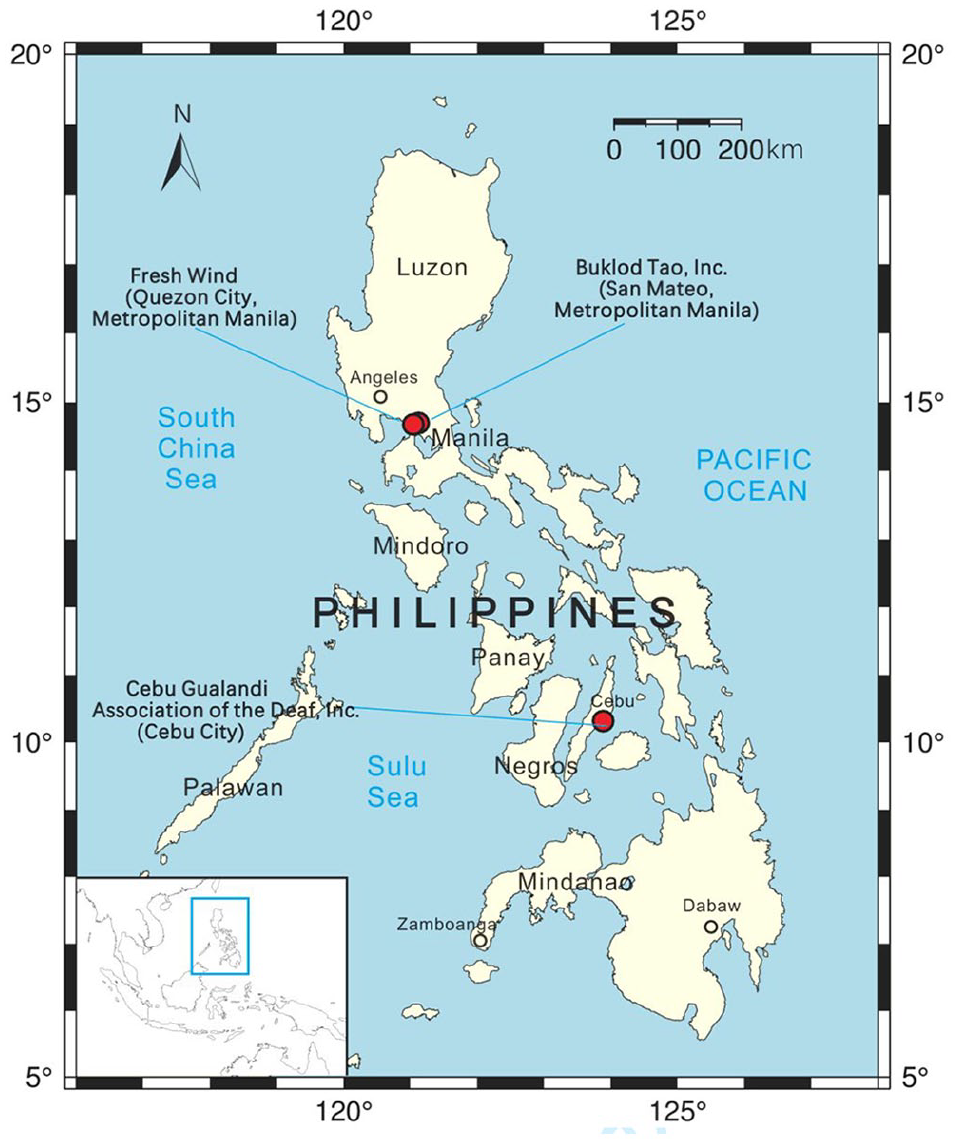
Research sites in the Philippines.
Purposive sampling, a nonprobability sampling method, was used to select twenty-six participants. Specifically, I informed relevant community leaders and announced project briefings and participant recruitment through posters and meetings in the collaborative communities. Volunteers signed up to participate. All participants were residents in the informal settlements; none of them were government officials. Among them, twenty were female, ten were youth, 3 and five were deaf.
The participants’ selection reflects the project’s emphasis on disadvantaged populations to achieve representativeness and comparability (Etikan, Musa, and Alkassim 2016). With their long history of exposure to various hazards in the region, affected individuals developed local knowledge and strategies to tackle uncertain challenges with limited resources. The usage of purposive sampling ensured that the selected participants would have substantial knowledge to explore vulnerability and resilience from the perspective of their respective disadvantaged communities.
Study Procedures
The fieldwork for this project began in December 2013 and ended in February 2015. The major phases included site visits to potential partners, finalizing the collaborating communities, recruitment of participants, methodological and photography training, regular sharing and discussions, action planning and implementation, and commencement (see Table 1).
Sequencing of Project Phases and Activities.
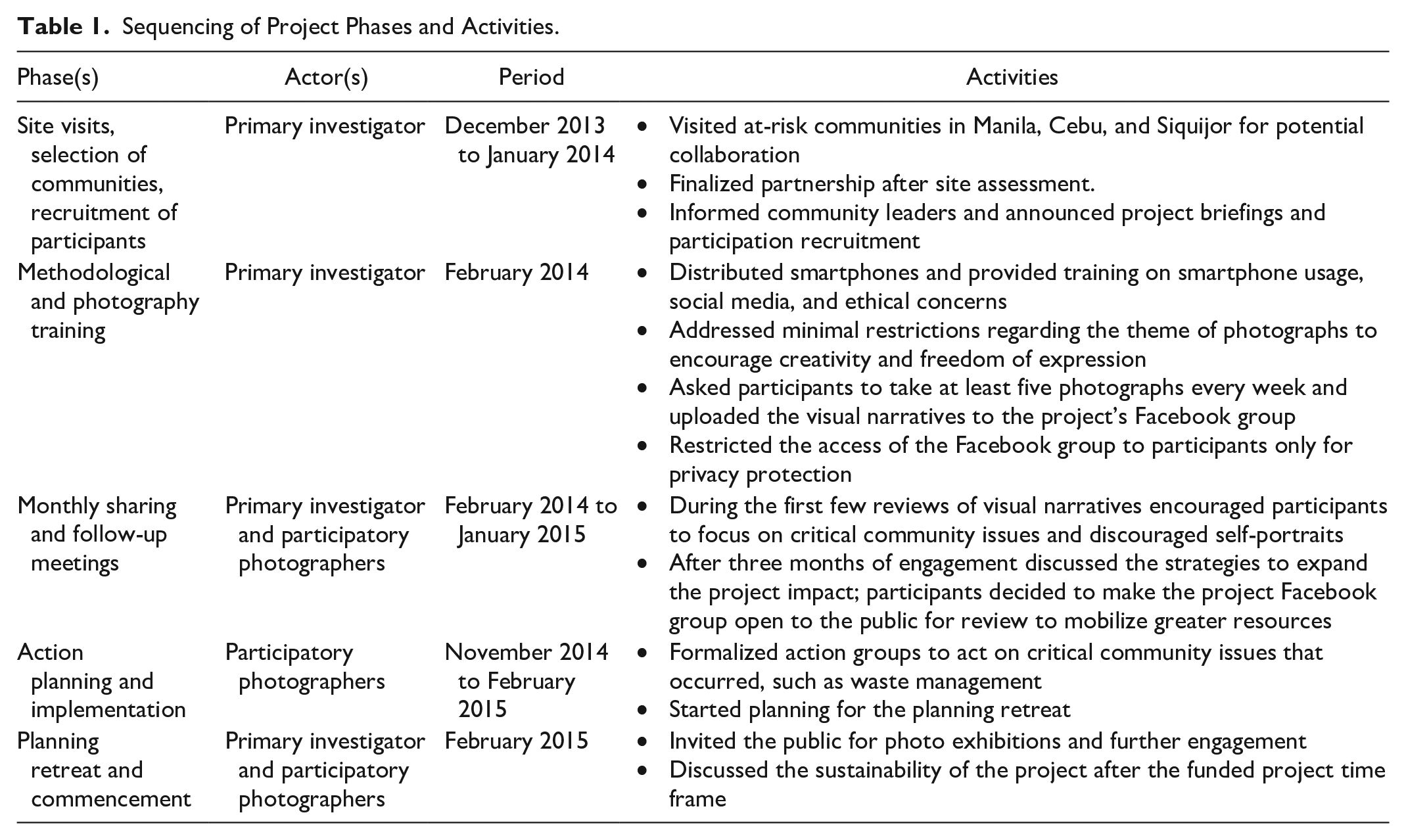
During the fieldwork period, as the primary investigator, I led site visits, community selection, participant recruitment, and project training, as well as facilitated sharing meetings and planning retreat. As in other photovoice projects, participatory photographers produced visual narratives, created place-based knowledge, and interacted with decision-makers for potential changes. Unlike other photovoice projects, participatory photographers in this research used Facebook to share their concerns, knowledge, and actions for changes to diversify the forms of interaction and connect with multiscalar actors.
Data Analysis and Limitations
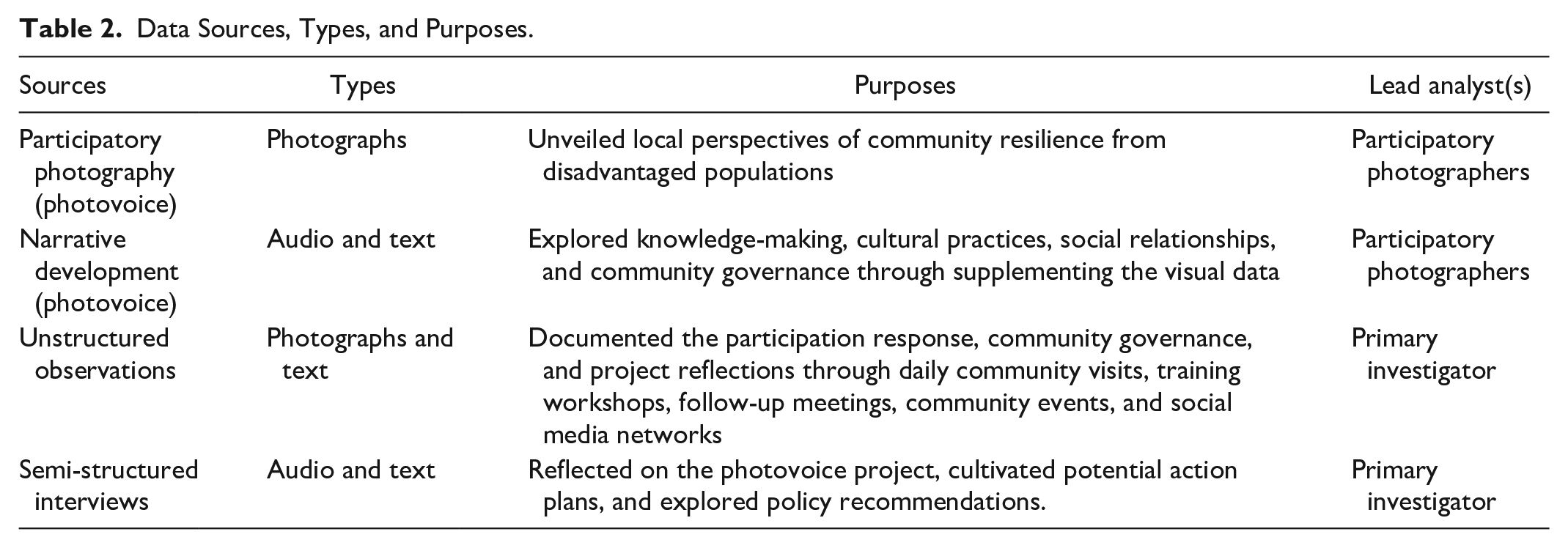
To reveal what is witnessed through the local lens, this research used different data sources for various data types (see Table 2). There were two levels (participant-generated and external researcher–generated) of data analyses, coordinated to explore vulnerability and resilience:
The participant-generated data analysis was mostly done at monthly offline meetings. During these meetings, participatory photographers reflected on the visual narratives to develop place-based themes, categories, and concepts of vulnerability and resilience.
As the primary investigator, I conducted the external researcher–generated analysis based on field notes, journals, and audio from observations and interviews, which were gathered and categorized by myself.
The study is limited by its small sample size of twenty-six participants. That said, producing a representative sample is not the goal of this work. The integrated approach of photovoice and Facebook addresses the depth of vulnerability and resilience through the lens of affected communities. Additional attention was paid to the potential negative impacts, such as privacy invasion of using social media. Participants and I discussed the potential risks and developed tools to respond to disputes throughout the research involvement.
Data Sources, Types, and Purposes.
This research serves as a pioneering example of the usefulness of marrying photovoice with social media for future planning and disaster research at larger scales. Moreover, it is not realistic to assume that this research is reflective of all the disadvantaged communities in the Philippines since the results are contextually specific. With appropriate adjustments, however, planning researchers and practitioners can apply this positivist research design to explore vulnerability and community resilience in other parts of the world, especially in the communities that are often invisible in academia and policymaking.
Results: Illuminating Nuances of Vulnerability
Vulnerability Assessment: Derived from Participant-Generated Data Analysis
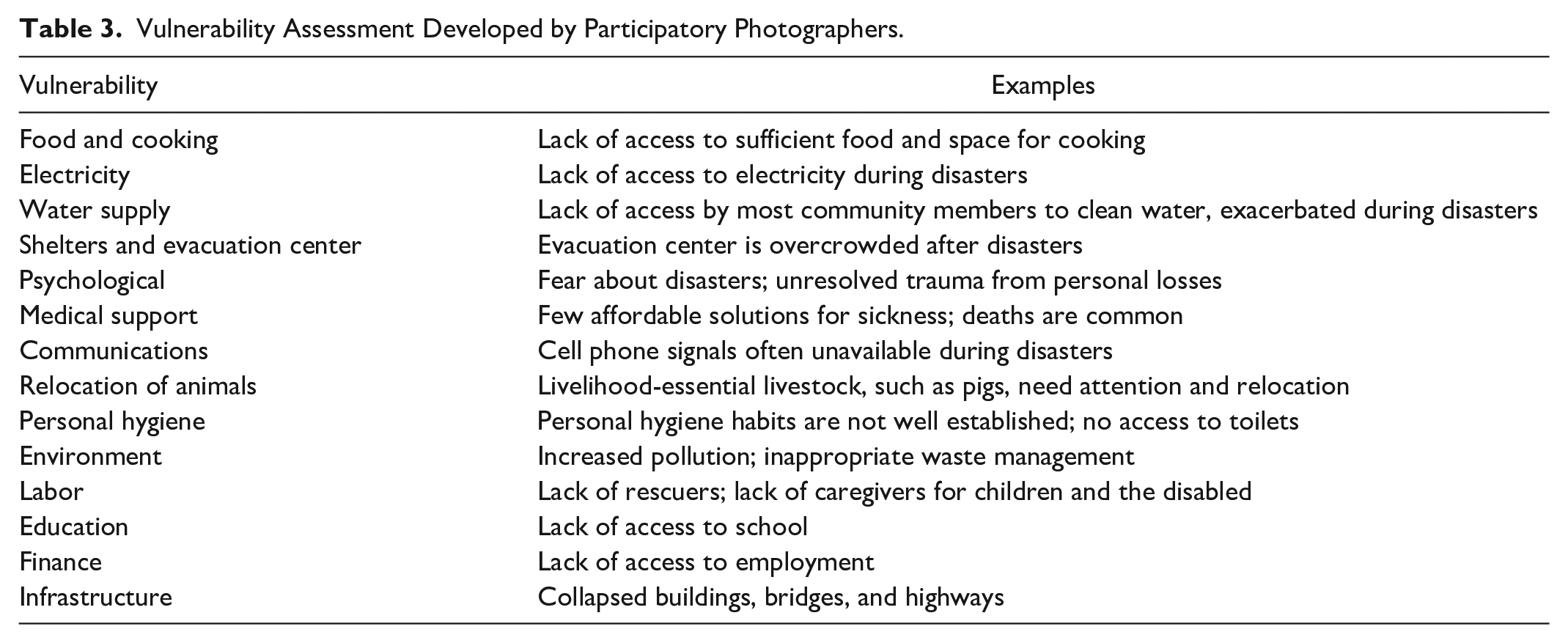
In this project, more than 4,400 photo stories were shared on the project Facebook group. 4 Based on the visual narratives and monthly meetings, participatory photographers conducted the vulnerability assessment during the planning retreat as part of the concluding section of the project; fourteen themes of vulnerability were identified and supported with examples given by the participatory photographers (Table 3).
Vulnerability Assessment Developed by Participatory Photographers.
With limited socioeconomic resources in the face of hazards, it was crucial for disadvantaged populations to use any available resources for effective response, adaptation, and potential transformation. Demonstrated by the photovoice evidence, vulnerability does not merely relate to the negative features, including both the capability and incapability. In addition to identifying incapability, participatory photographers conducted a capability assessment based on visual narratives presented during the final planning retreat. Nine different aspects of capability were categorized by participatory photographers (see Table 4).
Capabilities/Resources Identified by Participatory Photographers.
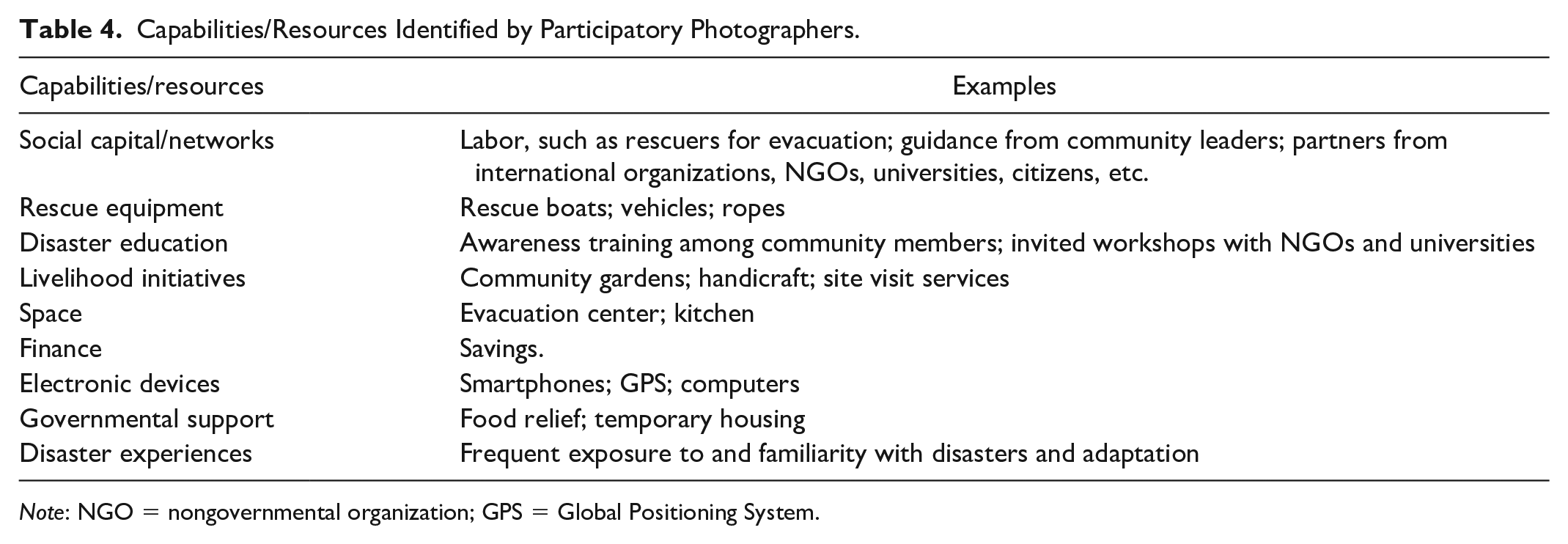
Note: NGO = nongovernmental organization; GPS = Global Positioning System.
Based on the participant-generated analysis, I further sorted visual narratives derived from social, economic, physical, cultural, environmental, and institutional dimensions of vulnerability (see Table 5). Different dimensions of vulnerability are defined by Birkmann et al. (2013) but reflected and supported through the photovoice data generated by participants. The text-based academic definitions regarding dimensions of vulnerability can be abstract and challenging to understand, especially for those disadvantaged populations who are significantly affected by the hazards, often leading to generalization. The text bias of community research creates barriers to critically reflecting on the everyday life of disadvantaged communities (Beebeejaun et al. 2014).
Dimensions of Vulnerability Supported by Community Reflections and Photovoice Evidence.
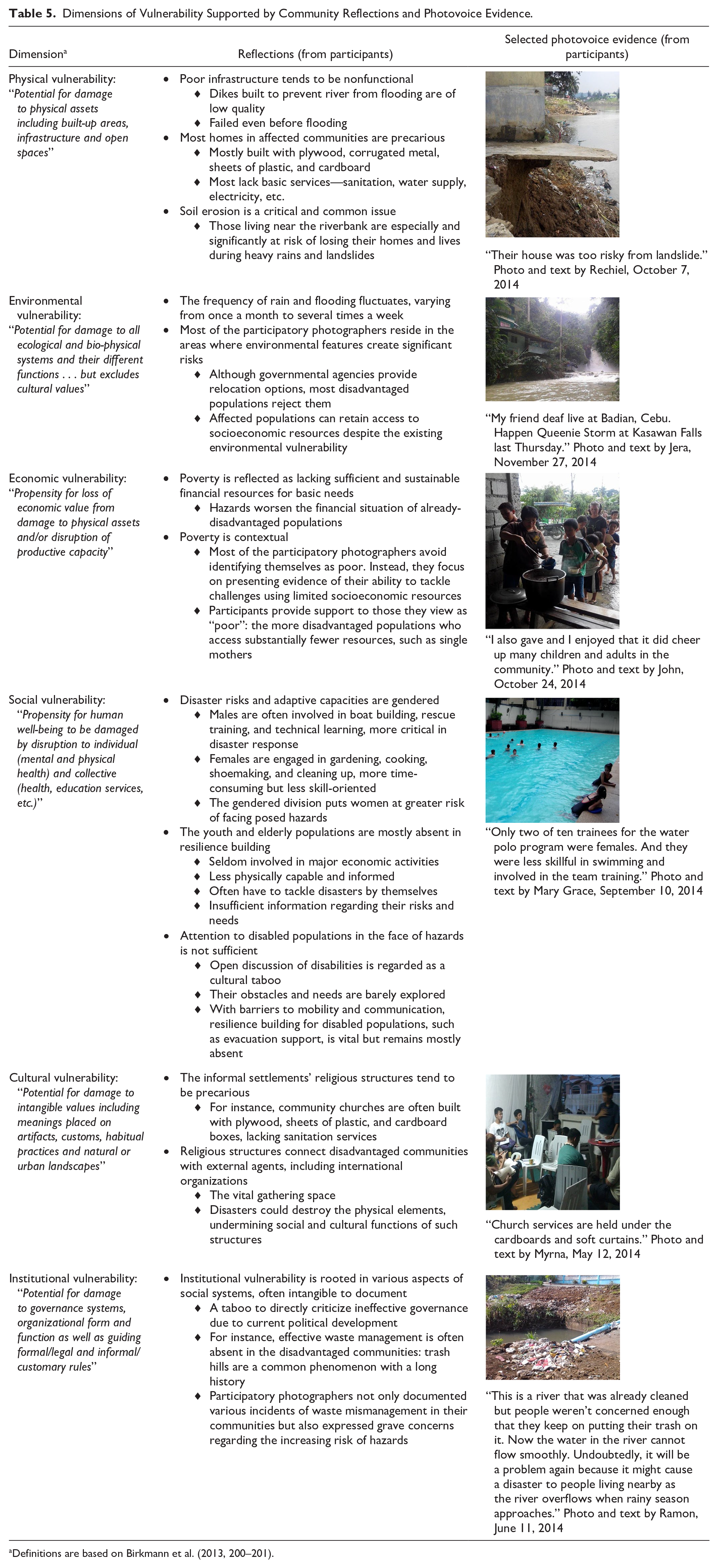
Definitions are based on Birkmann et al. (2013, 200–201).
The integrated approach of photovoice and Facebook, on the contrary, empowers participants as knowledge-makers to produce rich reflections and evidence, essential for understanding place-based needs and solutions. The presentation of such collaboratively developed results reveals the co-researching process between participants and myself, including the dimensions that are challenging to be quantified.
The combined presentation of academic definitions and photovoice reflections illustrates how vulnerability has been intensively and intrinsically embedded into one’s everyday life-worlds, enriching the current text-based theory of vulnerability and resilience.
First, lacking critical infrastructure and ineffective governance facing frequent climate hazards have become the new normal for disadvantaged populations. The standard division of disaster circle phases (e.g. Schumann, Binder, and Greer 2019) is not applicable in this context. Instead, living with hazards is an ongoing everyday experience, confirming the notion proposed by Tschakert et al. (2013). One participant indicated, “I am afraid to higher level of water because my house is besides a river. Then always comes the typhoon or disaster . . . always flashflood.”
Second, dimensions of vulnerability reflect and intensify the long-standing interlocking layers of societal inequalities. For example, swimming training, technical response, and economic activities have been gendered, exposing women to greater risks of facing hazards. A female participant reflected, “My three sons . . . want me to go to the evacuation center first. Because when water is here . . . I don’t know how to swim.” The physical vulnerability of frequent hazards engenders additional obstacles for the socioeconomically disadvantaged populations. A participant argued that hazards had brought additional financial burdens: “If there is no disaster, ordinary days, I will save money. I need to have money (to prepare) if there is a disaster.”
Third, the visual demonstrations make the perhaps-challenging concepts easier to understand for all, potentially create locally tailored solutions, and possibly link with external actors for positive changes. A participant stated how one’s church community connected with external supporters beyond the geographical boundaries to demonstrate needs and capacities: We have activities here in church, we write (to) our supporters, we just update them what we are doing, what are happening here in the church with pictures and they are so touched . . . We’re updating them because this is what’s happening in our church and they are so blessed.
Another participant proposed solutions for tackling the overwhelming waste mismanagement: Actually, all the Filipinos are not organized because we don’t discipline throwing trash. I organize my trash first then follow the people around me, our community. I want to help people learn how to segregate trash, garbage. Just approach the barangay
5
officer and to have a training in segregating the garbage. So not the children only, but the people around the community to be trained in a big venue.
Fourth, how an affected individual reflects on vulnerability can subtly differ from how it is constructed through current prevailing studies. For instance, poverty is contextual and often not identified by most low-income participants, who instead emphasize to provide support for the more disadvantaged. A participant, who did not have sufficient and sustainable income, stated her response to disaster: “That is the way that I respond to the flooded area. I help to cook, bring some cooked food to the evacuees, like the children.”
Identifying Disadvantaged Population Subgroups: Vulnerability and Capability
As indicated by participant-generated data analysis in the project, various dimensions of vulnerability are presented by the diverse affected populations. Specific disadvantaged population subgroups with different indicators demonstrate various unfavorable characteristics as well as adaptive capabilities, rooted in the socioeconomic conditions and processes. Such indicators include gender, age, economic status, family cohesion, education, and physical ability. Therefore, the complexity of the vulnerability framework requires different policy approaches even in the same community to effectively reduce potential destruction for advancing resilience (see Table 6).
Summary of Vulnerabilities for Specific Community Subgroups.
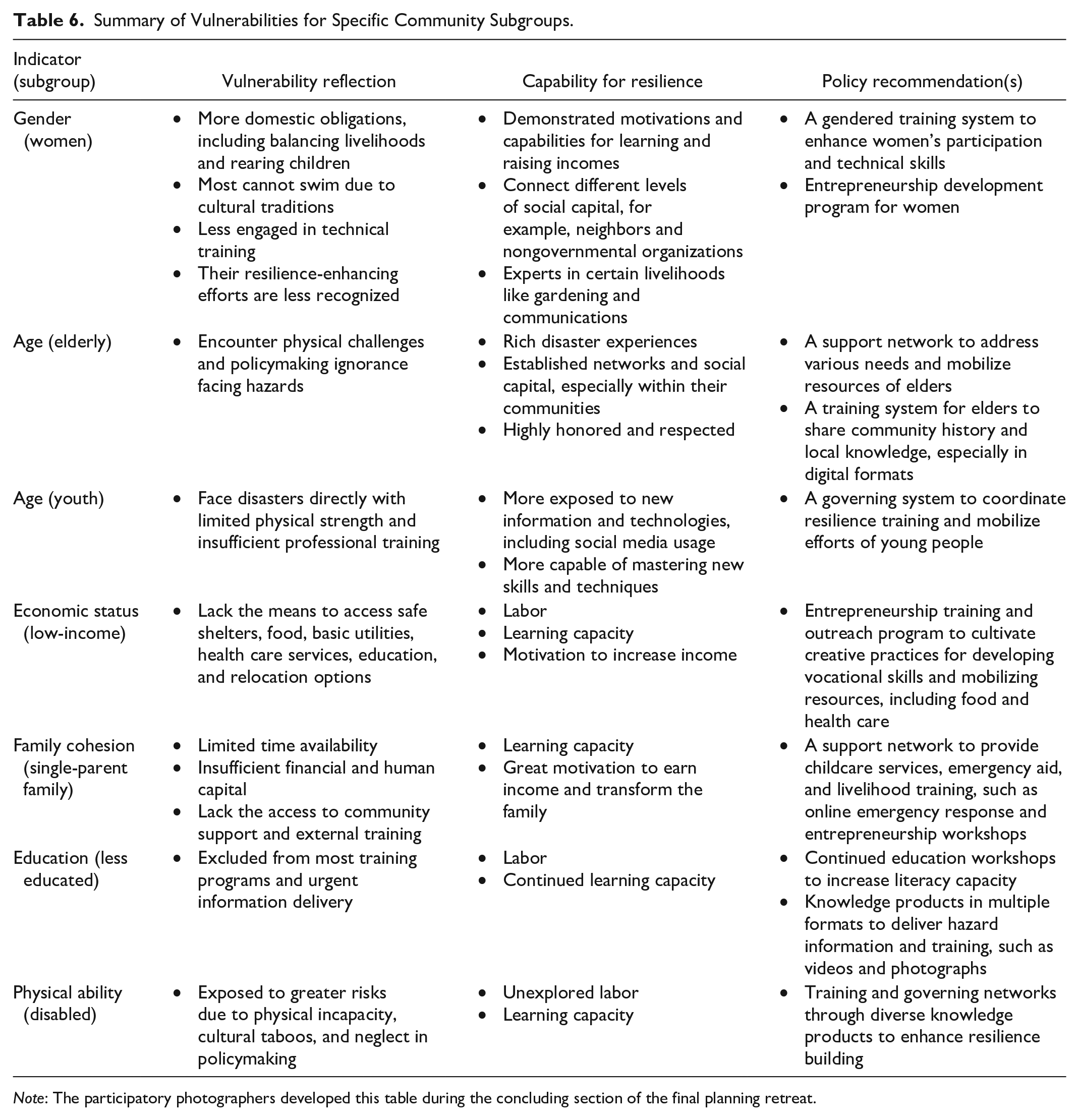
Note: The participatory photographers developed this table during the concluding section of the final planning retreat.
The impacts of vulnerability vary among different segments within the same community. An individual community member can reside in multiple subgroups of populations with interlocking dimensions of vulnerability. For example, a low-income single mother attempting to tackle hazards can face increased disadvantages by virtues of gender, economic, and family cohesion status of vulnerability. She is in urgent need of distinct socioeconomic support to overcome unique barriers, whereas her learning capacity and motivation to earn extra income may be ignored. As a mother stated, Because you know, as a mom, I don’t really go out. I only go to the grocery, to the market, to pay the bills, and that’s all. I really don’t go around . . . I educate the children, oh that’s a cow, oh that’s the Cagayan River . . . When the flood came, where were you? Did you eat? Because in the Ondoy flood, it was already 2 o’clock and the children had not eaten.
Meanwhile, this participant-oriented assessment not only identifies who and what can be less disadvantaged but also indicates that vulnerability and capability are inextricably linked, embedded in the social system. Vulnerability does not mean weakness only. Oversimplifying vulnerability is problematic; it is necessary to recognize the complexity and diversity to propose inclusive resilience building.
Conclusion
This study is perhaps the first research to integrate photovoice with Facebook to examine vulnerability, exploring community resilience directly from the affected populations. The participant-driven photovoice data illustrate nuances of vulnerability from the disadvantaged communities, visually investigating the social, economic, physical, cultural, environmental, and institutional dimensions of vulnerability. Vulnerability is intrinsic to social systems. Thus, it is likely that tokenism to work on risk reduction remains without addressing the structural inequalities that compound vulnerability.
Vulnerability can be viewed as a multifaceted concept at various degrees of complexity as well as spatial and temporal scales (Birkmann et al. 2013). Current resilience research often oversimplifies the homogeneity of a community, neglecting the complexity that exists within and among the various households of which it is comprised. In this research, findings suggest that vulnerability noticeably varies within and across households and communities: different dimensions of vulnerability and capability are presented by various disadvantaged population subgroups. Moreover, although this study has a limited sample size, it implies the value of managing participatory data and developing inclusive planning strategies on a much larger scale through social media.
The integrated approach of photovoice and Facebook visually demonstrates the intensity and viscerality of vulnerability faced by the disadvantaged populations, which significantly enhances one’s understanding of community resilience beyond the text-based concepts. Such an integrated approach makes it possible to present the voice from each participant who may be voiceless in academia and decision-making, elevating participants to be a co-creator of knowledge for multisector learning and multistakeholder instant engagement. In addition, it helps researchers and practitioners to see how disadvantaged populations perceive their challenges in the face of hazards and how that might subtly differ from current prevailing theories. In this way, planners and policymakers can understand the real needs of affected populations and create inclusive resilience-building strategies.
Emerging technological tools have transformed the landscape of urban planning, with the potential to intensify existing inequalities among the disadvantaged populations, and planners are facing the challenge of integrating evolving technologies with the core values of planning, such as inclusiveness and justice. Meanwhile, it is more likely for planners to collect participant-generated data of different sources in diverse communities and cities through using new technologies. The decentralized approach—opening up alternative avenues for affected populations to construct and share knowledge—demonstrated by this research of marrying photovoice and Facebook intends to extend planners’ understandings of concepts and theories as well as promote engagement across multiple scales that might not be accessible via other conventional methods.
In the future, researchers and practitioners may systematically integrate various action research methods with technological tools, such as using machine learning techniques for large-scale photovoice data analysis based on social media, to develop inclusive and participant-driven resilience building. Therefore, PAR studies that are often constrained by certain size and scale can cultivate multiscalar planning research and practice without generalization. Furthermore, future studies can recruit more diverse participants, including planners and policymakers, to incorporate their unique and situated perspectives as well as potentially foster collaborative governance.
Resilience plans without addressing inclusiveness and justice remain prevalent but ineffective. The evolving process of reflection, action, and decision-making on vulnerability and resilience should continuously emphasize inclusiveness and cultivate transformation even in the communities without sufficient socioeconomic resources.
Footnotes
Acknowledgements
The author would like to thank JPER’s reviewers and editors for their constructive feedback. Moreover, this research would not have been feasible without the generous support of every participant involved. They are the co-researchers of this academic journey who create the visual narratives and act on the transformation. Also, the author is more than grateful for the guidance from Drs. Ashok Das, Karl Kim, and Amrita Daniere. In addition, the author would like to acknowledge the work of Hao Bi, Scott Drinkall, and Song Han for the revision.
Declaration of Conflicting Interests
The author(s) declared no potential conflicts of interest with respect to the research, authorship, and/or publication of this article.
Funding
The author(s) disclosed receipt of the following financial support for the research, authorship, and/or publication of this article: This work was supported by the Toyota Foundation (grant number D13-R-420, 2013–2015).
