




Abstract
How do target states react to third-party sponsorship of rebel groups? In this article, we provide a typology of responses from target states based on their severity and comprehensiveness level. We argue that the external support level and existing strategic interaction between targets and sponsors are crucial to explain the variation in target responses toward state sponsors since they affect the target states’ level of perceived threat. We test our theoretical claims using an original dataset featuring target responses between 1991 and 2010. Our findings show that strategic rivalry is the most crucial factor in increasing the severity and comprehensiveness of responses. Higher levels of support for rebel groups increase only coercive responses and do not impact comprehensiveness, whereas formal alliances decrease the adoption of mixed responses. Our study contributes to the literature on the external support of rebels and conflict management with implications for predicting target states’ responses to sponsorship.
Introduction
Since World War II, 75% of states having internal wars have fought rebel groups receiving foreign state support (San-Akca, 2019). Regardless of the different names attributed to the relationship between states and rebel groups, from tactical alliances (Karlén, 2017) to rebels as proxies, auxiliaries, affiliates, and surrogates (Rauta et al., 2019), or from clandestine affairs (Cormac and Aldrich, 2018) to transnational balancing (Tamm, 2016), in the end, state support for rebel groups is a threat to the interests of target states and might cause interstate crises and conflicts between target and supporter states. Certain drawbacks of external support for target states include the strengthening of rebels (Sawyer et al., 2017), making rebels more likely to achieve their goals (Qiu, 2022), increasing the fatalities and costs of civil wars (Khan, 2021), and escalating if not directly causing interstate disputes and conflicts (Schultz, 2010; Martin, 2024). Facing these threats associated with external support, target states have responded in various ways to the state support of rebels as their threat perception increases (Khan, 2021). While the study of external support 1 to rebels has focused on motives for support and its outcomes from the vantage points of rebel groups and supporter states (Byman, 2005; Salehyan, 2010; San-Akca, 2016; Petrova, 2019; Tokdemir, 2021a; Kalin et al., 2022), target state responses to sponsorship have remained the least researched area in the previous literature (Carter and Pant, 2019).
Scholars have mostly looked at the responses to states that are designated by the US government as sponsors of terrorism, especially through the lens of the “war on terror” after the 9/11 attacks (Cohan, 2002; Collins, 2004; Wang et al., 2022; Outzen, 2024). On the other hand, external state support for rebels has been a widespread phenomenon that has made many target states feel threatened and led them to subsequently respond to supporter states. The study of target responses has typically analyzed a small number of cases, and has done so usually by case study designs with a focus on the use of force and sanctions as coercive measures against the state sponsors (Gleditsch et al., 2008; Waisberg, 2009; Lubell, 2010; Henderson, 2018; Thomas, 2024). To our knowledge, there is no study investigating which factors are influential in determining when and in what ways a target state will react against external state support of rebels. Our study aims to fill this gap by answering how target states respond to the sponsorship of rebel groups and why some target states use coercive responses while others use non-coercive ones.
We argue that the threat perception of target states plays a crucial role in determining their responses to sponsorship, while also considering the role of domestic and group-level factors. The reason why we focus on support level, rivalry, and formal alliance is that these factors shape the level of target states’ perceived threat and, as a result, the ways in which target states counterbalance against the sponsors through their foreign policies (Lobell, 2009). We offer three sets of hypotheses. Firstly, we hypothesize that target states will increase the severity of responses when the rebels receive higher levels of support. Additionally, we think that the target states will respond more comprehensively, i.e. diversify the type of responses, when the support level is higher. Secondly, we hypothesize that target states are more likely to increase the severity of responses when supporter states are strategic rivals. Similarly, we believe that target states will respond comprehensively when sponsors are rivals. Thirdly, we posit that target states are more likely to decrease the severity of responses if sponsors are formal allies.
We test these hypotheses using an original dataset, the Response to Sponsorship Dataset (RSD), which codes target responses to state supporters of rebel groups between 1991 and 2010. We analyze 455 triadic cases containing 58 different target states, 150 different rebel groups, and 102 different supporter states. We treat responses as foreign policy instruments to counterbalance sponsorship behavior (San-Akca, 2009; Tamm, 2016). By controlling for other explanations such as domestic politics or group-level factors, we aim to see the varying impact of the support level and existing strategic interactions between target and sponsoring states on the former's responses to the latter. Based on the RSD, we show that target states used non-coercive, coercive, and mixed responses broadly, and diplomatic, militarized, economic, domestic, covert, and no response types, specifically. We find that target states are more likely to increase the adoption of only coercive responses if sponsors provide higher levels of support, but the level of support does not impact the response comprehensiveness. Target states are more likely to increase the response severity and comprehensiveness if they confront a rival sponsor. Interestingly, formal alliances solely reduce the likelihood of mixed responses.
This is the first study to provide a generalizable account of target state responses to external state support of rebel groups by analyzing a large number of cases with original data. We contribute to the existing knowledge on target responses by systematically analyzing their determinants through dynamics concerning supporter–rebel and target–supporter relations. Exploring various responses, this study takes the first step towards developing more effective and comprehensive strategies for support termination. Hence, the implications of this study could yield policy prescriptions to explore how target states can deal with state sponsorship and predict the escalation of international disputes arising from external backing of rebel groups. We add to the literature on external support to rebel groups and conflict management by adopting a more comprehensive framework that considers the severity and comprehensiveness of responses to external support.
Previous studies on target state responses
Existing studies on target responses have commonly been concerned with cases of intentional support to rebels. Responses to intentional supporters have included the use of force, sanctions, legal prosecution of citizens of sponsoring states, negotiations with treaties and conventions, defensive measures like deployment of troops overseas, preemptive measures like threatening the sponsors, diplomatic and covert initiatives, and condemnations (Tucker, 1998; Collins, 2004; Bapat et al., 2015, Wilner, 2018; Outzen, 2024). Probably because it has focused on intentional backers of rebels, the literature has ended up looking mostly at coercive responses, i.e. threat to use force, actual use of force, or economic sanctions to end sponsorship.
Studies offering recommendations on how to end external state support 2 or on response effectiveness 3 in terms of termination of the support, have usually remained prescriptive and in need of testing, or they lack a comprehensive account of responses to reach more reliable results. Empirical studies and data in the existing scholarship have centered on the motivation to sponsor rebel groups 4 and have ignored target state reactions to sponsorship. A notable exception is Wilkenfeld et al. (2022), where the authors look at gray zone conflicts in which target states respond to proxies with violence. They find that the use of proxies (i.e. violent non-state actors) by challenger states limits escalation management since the presence of proxies almost guarantees a violent response from target states. Another large-N study by Gleditsch et al. (2008) investigates the link between civil wars and interstate conflicts, and finds that civil wars increase the probability of interstate militarized disputes. However, unlike our study, they neither focus on the immediate responses of target states to the challenger in regard to their support for violent non-state actors, nor account for and investigate the type of response (i.e. coercive and/or non-coercive via diplomatic, economic, militarized, domestic, and covert measures).
Lastly, Andersen-Rodgers (2015) distinguishes between inaction, violent military acts, non-violent military acts, verbal acts, economic acts, and political acts as the behavior of states in foreign policy crises. However, this study does not specifically engage with state sponsorship, and the proposed acts occur following a foreign policy crisis with another state rather than when attempting to prevent an interstate crisis. Target states can respond to state support of rebels before it escalates into an intestate crisis through non-coercive responses and cooperative efforts to counteract state sponsorship. As for the coerciveness of responses, Andersen-Rodgers (2015) suggests that when rebel groups instigate foreign policy crises, they are more likely to end in violent crisis management techniques compared with crises instigated by states, which is also supported by Wilkenfeld et al. (2022). On the contrary, Carter (2015) shows that target states face a compellence dilemma and thus hesitate to use coercive measures that would incapacitate a supporter to terminate the rebel presence in the long term. In this study, we argue that the coerciveness of responses depends on the level of threat perceived by target states.
Threat perception of target states
Threat perception is key for understanding interstate relations, particularly when responses are concerned during international crises, conflicts, and disputes (Cohen, 1978; Stein, 2013). As Kirchner puts it “as targeted states perceive domestic terrorism as a major threat and those who assist it as harboring aggressive intentions, they are likely to balance against any state that they identify as a sponsor of terrorism” (2014: 526). The threat perception of target states increases primarily for five reasons. First, for target–rebel relations, external support increases rebel capabilities through material, ideological, and political assistance (Carter et al., 2020) and this changes the power balance between a target and a rebel group in favor of the latter. Second, for target–sponsor relations, target states feel threatened by the transnational alliance between sponsors and rebels when external support provision occurs, similar to the heightened threat perceived by target states stemming from arms races and alliance formations between states (Khan, 2021). A study by Rousseau and Garcia-Retamero (2007: 764) empirically confirms that “a weak position in terms of military power increases threat perception”. Third, external support threatens the targets internally by inflicting heavy losses and costs, hurting their citizens and jeopardizing the control of territories (Khan and Zhaoying, 2020). Fourth, in the realm of international politics, the provision of support to rebels may result in a decrease in the reputation of target states while elevating the legitimacy of the rebels. In return, such increased legitimacy and reputation may also attract additional external support for the rebels. 5 Studies show that rebels that acquired external support could boost their image as legitimate partners in the eyes of other states, international organizations, and communities, which is a threat to target states internationally (Kaplan, 2016; Sienknecht, 2019; Yetim, 2023). In such cases, target states might adopt counter-diplomacy to lobby for their side (Huang, 2016) as they perceive the progress made by rebels via external support as a threat to their interests. Lastly, considering the conflict dynamics and outcomes, external support threatens the national security of target states by causing the outbreak of civil conflicts (Gurr, 1968; Anderson, 2002), and by prolonging (Regan, 2002; Salehyan et al., 2011) and internationalizing the existing conflicts (Edry et al., 2021). Therefore, external support provision threatens target states domestically and internationally, causing the target states to adopt coercive and non-coercive measures against the sponsoring states to end the sponsorship.
We argue that threat perception provides a link between the various reactions of target states and state sponsorship of rebels. This argument rests on the theory of balancing. States balance against their threatening counterparts (Walt, 1985). The foreign policy interactions of target states could be seen as moves to counterbalance the sponsor states, as their threat assessment would dictate that target states respond to the changes in relative power as a result of transnational balancing (Lobell, 2009; Tamm, 2016). Similarly, target states bargain over the end of sponsorship and when their threat perception increases, the likelihood of coercive bargaining in the forms of militarized disputes, lethality and repeated uses of violence in those disputes increases as well (Schultz, 2010).
Furthermore, given the intricate foreign policy challenges that target states face owing to externally assisted rebel groups, responses to their state supporters may necessitate multidimensional, dynamic, and scaled measures depending on the target's threat assessments. When the level of perceived threat is high, target states may be prone to using more comprehensive responses by considering every possible measure available to them (i.e. diplomatic, economic, militarized, domestic, and covert). For instance, rival states might be more inclined to resort to militarized measures responding to sponsors. However, they may also employ diplomatic, economic, or covert responses to manage the disputes in a way that is less direct or less severe, thereby avoiding the intractability of conflicts. Focusing solely on the coerciveness of responses may hinder understanding of the multidimensional faces of target responses. Hence, some sponsorship cases may require more diversified responses as the target state's threat perception changes.
We suggest that the level of perceived threat determines the severity and comprehensiveness of responses depending on (a) the level of support and (b) the existing strategic interactions between target and supporter states.
Support level
State sponsorship of rebels could take many specific forms including safe havens to members and leaders, financial aid, providing headquarters and offices, training and training camps, arms, logistics, transportation, and troops from states (San-Akca, 2016: 51). The level of perceived threat may vary depending on the level/type of support provided. Some forms of support may contribute more to rebel capabilities than others and hence are regarded as high levels of support. By taking a closer look at the different support types to determine the support level, we can gain a better understanding of their effects on the responses of target states. Indeed, San-Akca (2016) shows that different support types correspond to different support levels (Table 1), which, we contend, correspond to varying threat perceptions, accordingly. 6
Threat Perception of target states and support level (San-Akca, 2016: 83).
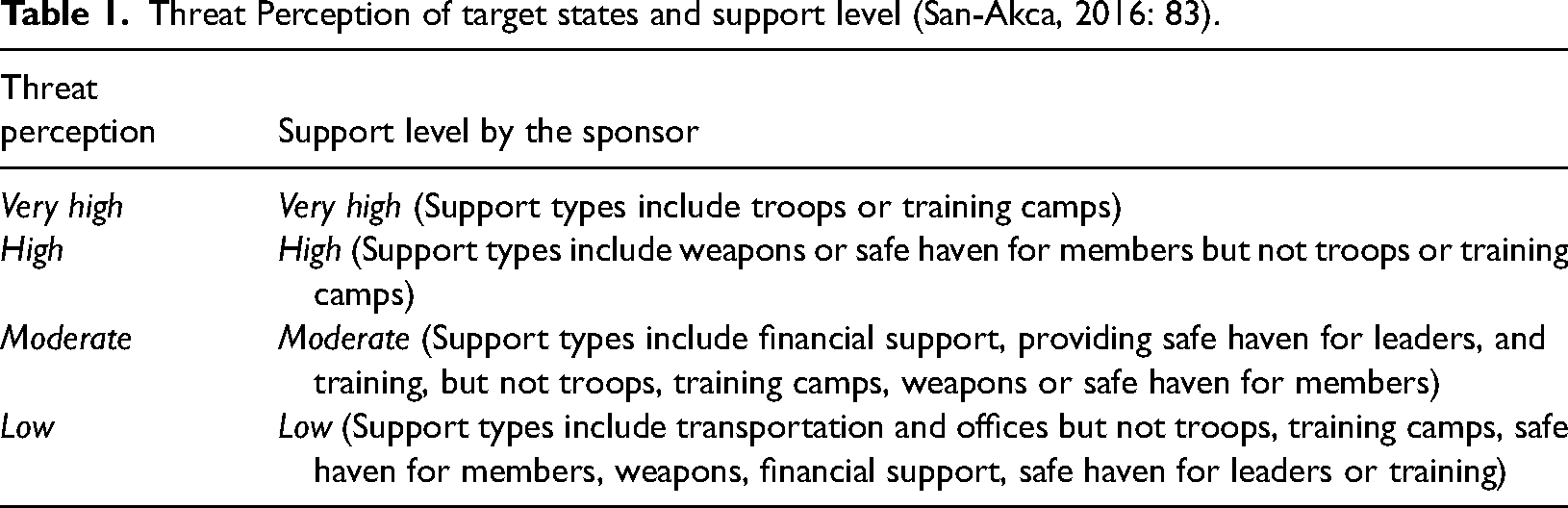
While there is no research to date on how different support types affect target responses, several studies have examined the impact of various support types on conflict outcomes (Byman et al., 2001; Balch-Lindsay et al., 2008; Sullivan and Karreth, 2015; Carter, 2012; Sawyer et al., 2017; Keels et al., 2021). Since we use the NAGs dataset, we rely on San-Akca's coding, which provides a more nuanced and exhaustive categorization for support types, offering a clear hierarchy for different support levels.
We argue that the level of support shapes the level of perceived threat by target states, and targets will react differently to state supporters that provide very high or high levels of support compared with those that provide low or moderate levels of support. Target states may respond less severely/coercively to lower levels of support, as they would be viewed as less significant forms of sponsorship. For instance, in 2004–2006, Nepal responded to India with only a few non-coercive, diplomatic measures as they believed that the Communist Party of Nepal-Maoist's use of India as a weapons transport point was a lower level of support (San-Akca, 2016). However, when higher levels of support are involved, target states may resort to more coercive responses. In 1997, Angola intervened militarily in the Democratic Republic of Congo (DRC), knowing that the DRC was providing training camps (San-Akca, 2016) to the Front for the Liberation of the Enclave of Cabinda–Armed Forces of Cabinda (Agence France Presse, 1997). Similarly, in 1996, Ethiopia attacked Somalia to target the strongholds of al-Ittihad al-Islamiya, which was seeking independence for the Ogaden region of Ethiopia (Al Ittihad Al Islamiya, 2019). This response could be considered expected, as al-Ittihad al-Islamiya was receiving high levels of support from Somalia, controlled territories inside Somalia as a safe haven, and was receiving training (McKinley Jr, 1996; San-Akca, 2016).
Moreover, if the perceived threat level is high, target states may consider incorporating multiple tools at their disposal against sponsorship simultaneously. That is, target states can use a variety of responses, including diplomatic, economic, militarized, domestic, and covert responses. Higher risks and costs associated with the sponsorship for target states may impact the comprehensiveness of the responses. In these cases, target states may want to pursue an all-encompassing approach to conflict management and multi-dimensional foreign policy to press all the available buttons to end the sponsorship.
Existing strategic interactions
The nature of the existing interstate relations may impact how target states approach state sponsorship of rebels. The longitudinal relationship among states informs the strategic interactions, 7 shaping target states’ foreign policy approaches when an interstate dispute arises. Target states in an openly rivalrous relationship with sponsor states may react differently than the target of a sponsor with which they are allied. Strategic rivalry is a relationship in which the parties perceive their adversaries as competitors and actual or potential military threats to each other (Colaresi et al., 2008).
Interstate rivalry is an important motive for the external support of rebels (Salehyan et al., 2011; Maoz and San-Akca, 2012). According to the NAGs dataset (version 2015), within intentional support cases, 65% of them occurred between rival states (San-Akca, 2016). Khan and Zhaoying (2020) argue that state sponsorship of rebel groups is a byproduct of rivalries rather than a distinct form of dispute. Rivalries can cause the onset of intentional external support by rival sponsors as a foreign policy strategy to substitute for direct confrontation (Maoz and San-Akca, 2012). Syria's support of Hezbollah and Palestinian groups against Israel is a prime example of such a transnational balancing act (Aydınlı, 2022) aimed at challenging, weakening, and delegitimizing Israeli military actions (Berkowitz, 2018). Moreover, rebel groups may prefer operating within typically powerful rival states (Maoz and San-Akca, 2012) to minimize retaliation from target states. Furthermore, rival states aim to impede the strategic progress of their adversaries by externally helping rebel groups fighting against their adversaries (Maoz and San-Akca, 2012). This leads to the destabilization of the region, which may adversely affect the target states’ economic growth, industrial development, and tourism industry. Rebel attacks can weaken the target states in both economic and military terms, tipping the balance of power in favor of the rival states (Khan and Zhaoying, 2020). In consequence, the perceived threat level of the target states increases, often prompting them to adopt countermeasures such as power projection strategies, including cross-border attacks or pre-emptive strikes, to maintain the balance of power (Khan and Zhaoying, 2020).
However, little is known about the impact of rivalry on target responses to sponsorship. Khan and Zhaoying (2020) suggest that target states may use retaliation when rivalry is involved, which can escalate existing crises into militarized disputes. States react to their rival's behavior by provocation and may respond in kind to supporters of rebel groups that are causing human and material losses and inflicting pain (Khan, 2021). The uncertainty and distrust that come with rivalries can further intensify the conflict when a new problem or crisis arises (Thompson, 2001). Therefore, the likelihood of war between a target and sponsor state increases if rival sponsors support rebel groups (Khan, 2021). As a prominent illustration, the animosity between Pakistan and India has led both states to support rebels that threaten the other. Consequently, both countries have given coercive responses to one another in the form of threats and instances of border clashes, assassination attempts with covert action, and even troop deployment along the borders (The Economist, 2001; Agence France Presse 1995, 2001; BBC, 2002). Overall, strategic rivalries may provoke target states into employing more severe and comprehensive responses to terminate the sponsorship.
Unlike rival states, target states may refrain from escalatory behavior when confronted with a formally allied sponsor, as their formal alliance denotes the commitment to aid a partner, maintain neutrality in the face of conflict, abstain from engaging in military hostilities with others, and engage in consultation/cooperation during international crises (Gibler, 2009). While previously scholars found that external support to rebels is more likely to happen if target governments have allies during a civil war (Salehyan et al., 2011), we argue that formal alliances between the target and supporter states themselves could also matter when targets decide on their responses. Moreover, it could be misleading to assume that formal alliances point to solely positive relations among states. Formally allied states are not necessarily friendly toward each other and might even be hostile states that pledge to remain neutral or to refrain from military conflict. Notably, in the RSD, Turkey as the target and Greece as the intentional supporter in 1995, India as the target and Pakistan as the intentional supporter in 1996, and Colombia as the target and Venezuela as the intentional supporter in 1998, are coded as formal allies even though these states are also rivals.
We argue, however, that formal alliances between states mitigate the severity of target responses to sponsors by reducing the level of perceived threat. We contend that formal alliances provide mechanisms to peacefully resolve differences and manage conflicts, thwarting the possible escalation of disputes owing to the sponsorship. This mitigation effect is provided by a tradition of formal and bilateral institutional practices between the allied states that enables keeping the necessary channels open for crisis management. Moreover, formal alliances may provide internal provision of information regarding the material capabilities of member states and reduce the uncertainty about who would prevail if a military conflict occurred, given that conflict usually arises when this information is not available to the parties (Bearce et al., 2006).
Furthermore, formal alliances between states can lead to cooperation in eliminating rebel activities. The US government and Germany as formal allies cooperated against the al-Qaeda presence on German soil. The rebels were using Germany as a safe haven for their members and conducting fundraising activities (The Bulletin's Frontrunner, 2001). Also, illustrative of this possibility, between 2002 and 2010, the US and Pakistan collaborated to address al-Qaeda's presence inside Pakistan. The US mainly responded with non-coercive measures against the Pakistani sponsorship except for a mixed response in 2008 (see the RSD) despite the high levels of support (i.e. training camps, safe haven for leaders and members) being given to al-Qaeda. The more frequent use of non-coercive responses in this case may reflect the impact of the formal alliance between these states, which might have mitigated the sponsorship dispute. In general, alliances may decrease the level of perceived threat by a target when the benefactor of rebels is a formally allied sponsor and hence may reduce the observation of severe responses by target states.
Research design
We define a response as a foreign policy instrument employed by target states in reaction to a supporter state, with the objective of terminating the sponsorship of rebel groups. To identify target responses, we use an original dataset, the RSD, that captures various yearly responses of target states to state sponsors from 1991 to 2010. We use the NAGs dataset (San-Akca, 2016) to identify triads within the RSD, and code target responses using the NAGs dataset codes for various forms of support, i.e. intentional and de facto, to account for more variation in target responses. Intentional support refers to deliberately created channels by a supporter state to assist rebel groups, whereas de facto support describes the cases in which rebel groups acquire resources from a state without “the government and/or its organs’ intentionally acting to create channels to aid the group” (San-Akca, 2016: 56). This paper analyzes the target responses regardless of the cause of support being intentional or de facto, as target states would have the right to respond to sponsors by their foreign policies, including using force for considerations of self-defense (e.g. Article 51—UN Charter and Resolution 748 in 1992), even in the cases of de facto support. However, the distinction between the two may affect the severity and comprehensiveness of responses. Therefore, we provide separate analyses for intentional and de facto support in Online Appendices J–M. We focus on the period after the Cold War until 2010, when the NAGs dataset ends its coding.
To code our response data, we extract the cases when (a) a rebel group received intentional and/or de facto support from a state supporter, (b) for at least one year, (c) in conflicts when at least 25 battle-deaths per year are observed. The first criterion is adopted because the NAGs dataset codes potential supporters as well, but we only include those rebel groups that actually receive help in order to analyze the corresponding state response. The following two criteria are introduced because we assume that target states would be compelled to respond to sponsorship if its duration shows some longevity and if the rebels have inflicted significant losses on the targets, thus requiring their attention. Overall, the RSD comprises 3719 observations coming from 58 different target countries, 150 different rebel groups, and 102 different supporter states, spanning 20 years (1991–2010). Our data contain 455 distinct triadic cases, wherein a triad denotes the target state, the rebel group operating against the target state, and the state supporter of the rebel group (e.g. The triad of Turkey–the PKK–Syria in 1991 refers to Turkey's responses to Syria regarding Syria's support of the PKK during 1991).
When identifying target responses, our focus is on the direct relationship between supporter states and rebel groups. However, recent research has shown that there might also be conduit states that channel external support to rebels (Karlén and Rauta, 2023). Sponsor states may use such intermediary states when they want to gain informational advantage, when the intermediaries are closer to the rebel group, or if they want to be able to plausibly deny their involvement (Karlén and Rauta, 2023: 121). In this way, intermediary states might actually be more visible in sponsoring the rebel groups, thereby attracting target states’ attention more than the principal sponsor. Even though the NAGs dataset includes the cases of conduit states as well, supporter states are not specified as conduit or principal states. Thus, we leave any engagement with dual/complex delegations to future research concerning target responses.
To code the target responses, we relied on Nexis Uni to extract information from diverse sources, including newswires and press releases, country reports, newspapers, news transcripts, web-based publications, news, and aggregate news sources. Gathering relevant information occasionally proved difficult owing to the different names that rebel groups assume. For example, the Taliban is also spelled as Taleban; Jundallah is alternatively spelled as Jondullah; CPI-Maoist may be referred to as Naxalite insurrection; and KLA is also called by its local acronym, UCK. Our search was thus expanded to include alternative names of rebel groups to prevent the possibility of omitting pertinent information. Furthermore, secondary sources were utilized, along with web searches to verify the availability of the information.
The dependent variables
The RSD coded the responses of target states to external state supporters of rebel groups as diplomatic, economic, militarized, domestic, covert, and no response as shown in Table 2, and each of them is coded in a binary manner. The responses of target states are measured in the same year as the sponsorship exists. These response types do not necessarily indicate the severity of responses, and therefore, we also code if those support types refer to coercive or non-coercive measures, as demonstrated in Table 2. Coercive responses refer to situations in which target states resorted to the threat to use force, actual use of force, the threat or imposition of economic sanctions, or legal proofs of the sponsor's engagement with the rebel groups. 8 Coercive responses involve a threat of punishment and can be used as bargaining chips to convince sponsors to withdraw their support for rebels. Other responses are considered to be non-coercive, as they do not include statements of threat.
Typology of responses and examples in the Response to Sponsorship Dataset (RSD).
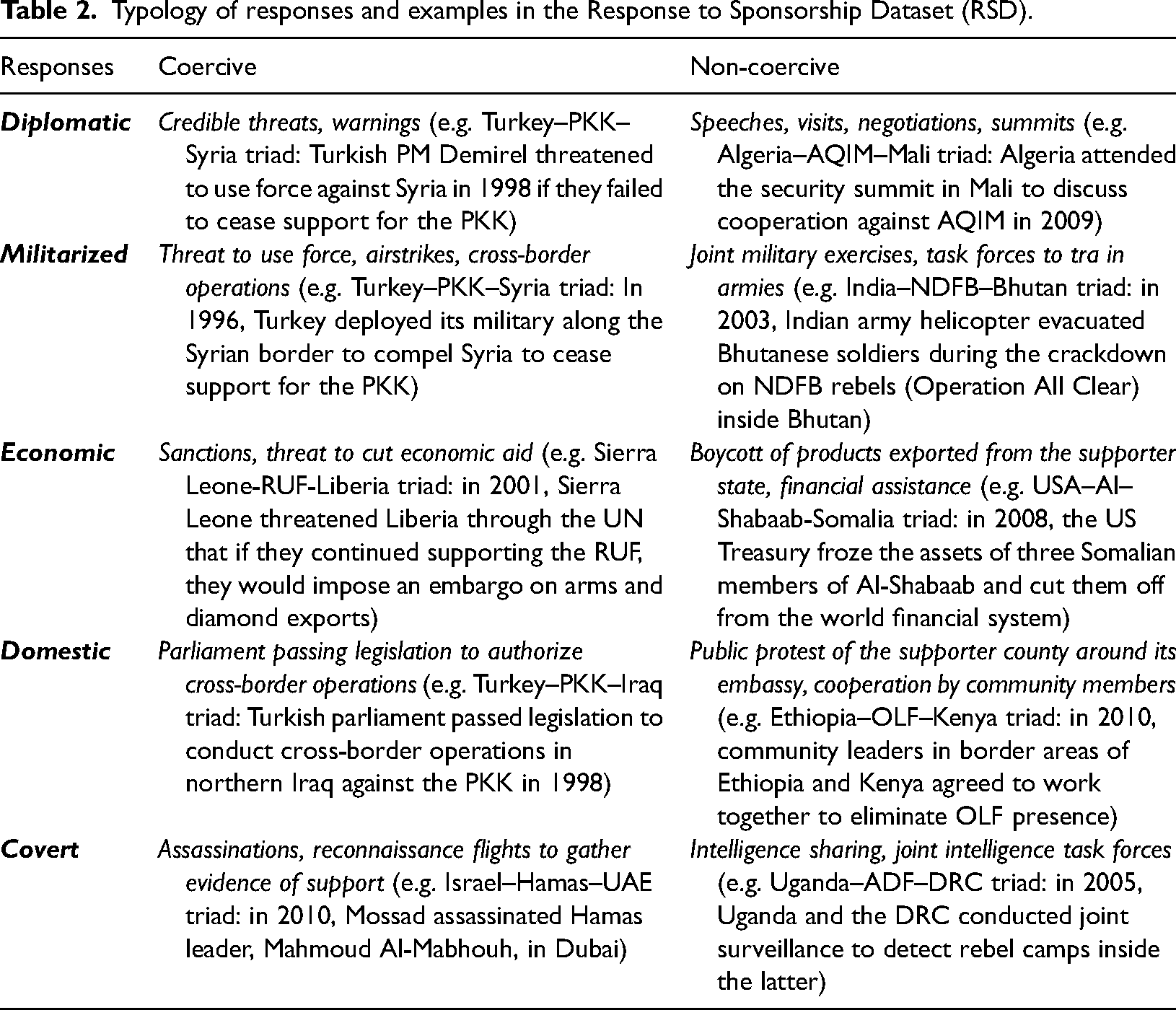
Militarized responses were generally coded as coercive; however, there are rare cases in which the target and the sponsor cooperate against rebel groups militarily. We regarded these observations as non-coercive even though the category of the response is militarized response. Economic responses are coded as non-coercive if they include inducements to persuade sponsors to cease external support. Diplomatic and domestic responses are usually regarded as non-coercive. As for covert responses, they are coded as coercive if they are accompanied by violent incidents such as targeted killings and assassinations, because such events signal the costly consequences of external support for the sponsor states.
Since some response categories could be both coercive and non-coercive at different times, we decided to code the severity of response for this study as our first dependent variable allowing us to explore target responses based on their severity (i.e. coercive, non-coercive or mixed). The severity of response is a categorical variable that receives 0 if the target did not respond to state supporters (inaction); 1 if the response is exclusively non-coercive; 2 if the response is exclusively coercive; and 3 if the responses in a year are composed of both coercive and non-coercive ones (hence, mixed). In 51% of the cases, the target states’ response is inaction. This is followed by 40% of exclusively non-coercive responses, which lack threats. Exclusively coercive responses correspond to 1.3% of target responses, and finally, mixed responses that include both coercive and non-coercive responses are 8% of all responses. Overall, the RSD shows that in any given year, target states employed ‘only non-coercive’ responses more frequently than ‘only coercive’ or mixed responses.
We use severity of response to test Hypotheses 1a, 2a and 3. As for Hypotheses 1b and 2b, we use comprehensive response as the dependent variable. Comprehensive response is an additive index counting the number of different response dimensions employed in a single year by target states towards the sponsors. Hence, the variable takes values in a range from 0 to 5, with higher values indicating a more comprehensive response strategy embraced by the target state. For example, if a state uses diplomatic, and economic responses in a year, the comprehensive response variable receives 2. At this point, we should underline the fact that higher scores do not necessarily indicate a harsher response, which is measured by our first dependent variable, namely severity of the response. Rather, in this variable, our goal is to account for the dimensionality of the responses, therefore, an additive index measure of comprehensiveness, a measure driven from our theoretical need to account for the comprehensiveness of the response. 9
The independent and control variables
We used support level as an independent variable for Hypotheses 1a and 1b. Support level as an ordinal variable is coded as 0, 1, 2, and 3 sequentially representing low, moderate, high, and very high levels of support as suggested by San-Akca (2016). For Hypotheses 2a and 2b, we use Thompson and Dreyer's strategic rivalry data (2011). Rivalry is measured by analyzing diplomatic engagements to detect if the states treat one another as a threat. There are four types of rivalry: spatial; positional; ideological; and interventionary. 10 If target and supporter states had at least one type of rivalry, we coded the rivalry variable as 1. Otherwise, we coded it as 0. Thompson and Dreyer's diplomatic history approach to rivalries accentuates the diplomatic interactions between states and hence is suitable for our study 11 since we see responses as foreign policy instruments by target states.
To test Hypothesis 3, we use Gibler's (2009) Formal Interstate Alliance Dataset (Correlates of War Project, ver. 4.1) to determine whether the target and supporter states have formal alliances. The dataset identifies four types of formal alliances: defense (pacts to protect one another); neutrality (promising to stay neutral); non-aggression (promising not to attack); and entente (agreeing to consult if a crisis occurs). Each type of alliance is coded as a binary variable. We created the formal alliance variable and assigned a value of 1 if one or more types of formal alliances existed between the states; and a value of 0 if no such alliance existed.
As for control variables, we accounted for multiple factors that may impact target responses and the independent variables. The first control variable is the relative material power of target states. We recognize that target responses can vary based on the relative material capabilities when dissuading supporters from helping rebel groups. The relative power of the target state vis-à-vis the supporter state (power ratio) is coded as a continuous variable using Singer's (1987) Composite Index of National Capabilities from the National Material Capabilities Data (Correlates of War Project, ver. 6.0).
Approximately one-fifth of the civil wars that occurred between 1946 and 2004 had a foreign state involved with troops, and those states are more likely to be the neighboring states (Harbom and Wallensteen, 2005). Therefore, we also control for contiguity between target and supporter states using Stinnet et al.'s (2002) Direct Contiguity data (Correlates of War Project, ver. 3.2). Furthermore, we control for regime type and political stability of both target and sponsor countries. We use Polity V (Marshall and Gurr, 2020) for combined polity score, and Political Instability Task Force (Marshall et al., 2018) for a dummy variable of domestic instability that receives a value of 1 if there is at least one type of instability episode (ethnic wars, revolutionary wars, adverse regime changes, and genocide/politicide).
With regard to group-level factors, we control for rebel identity, the presence of rebels’ political party inside the target state, and rebel objectives. We specifically control for religiously oriented rebel groups because religious rebel groups are found to be more lethal and more likely to cause civilian casualties, which might in turn provoke the target state to give more coercive responses (Carter, 2022). To identify religious rebel groups, we relied on the NAGs dataset, which coded religious rebels as a binary variable. Rebel political organizations such as political parties may enhance the legitimacy of rebel groups internationally, which might impact the severity and comprehensiveness of responses as well as the level of support received from sponsoring states. To account for this, we included a political party dummy variable from the NAGs dataset. Lastly, rebel objectives might matter especially if the rebels aim for secession or autonomy since these goals refer to a threat to the territorial integrity and control of target states. Target states’ threat perception may become more elevated when secessionist or autonomy-seeking rebels receive external help and hence they may increase the severity of responses to end the sponsorship. We aggregated the rebel objective variables of secession and autonomy from the NAGs dataset (San-Akca, 2016) and generated the binary rebel objective variable, which is coded as 1 if the rebels strive for secession or autonomy. 12
Analyses and results
We use multinomial logistic regression to test Hypotheses 1a, 2a and 3, as our dependent variables take four different categorical values, namely, inaction, non-coercive, coercive, and both. In Table 3, we take inaction as a reference group in reporting our results. Then, to test Hypotheses 1b and 2b, we use a count model, namely negative binomial regression. This choice is made because post-estimation analyses following ordered logistic regression reveal violations of parallel regression line assumption across various models. Given the nature of the measure, i.e. additive index, we employ count models to account for comprehensiveness of responses. As Poisson estimators are not a good fit owing to an overdispersion detected in the postestimation analyses, we turn to negative binomial regression (see Online Appendices C and D). Across all models, we use triad clustered robust standard errors to account for possible heteroskedasticity resulting from rebel group, target state, and sponsor state features, and cubic polynomials to account for a possible temporal dependence.
The impact of support level, rivalry and formal alliance on response severity.
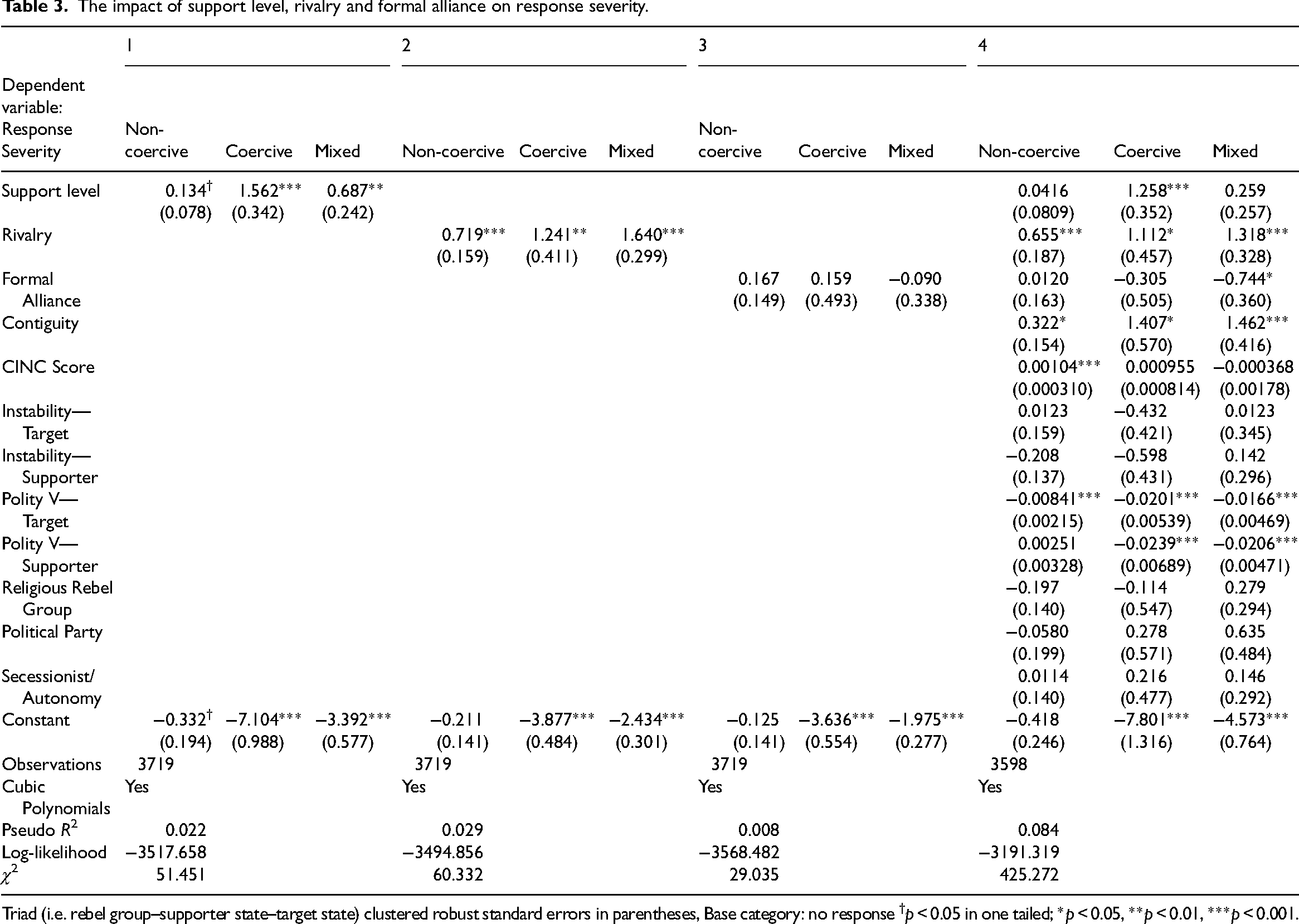
Triad (i.e. rebel group–supporter state–target state) clustered robust standard errors in parentheses, Base category: no response †p < 0.05 in one tailed; *p < 0.05, **p < 0.01, ***p < 0.001.
For Hypothesis 1a, Table 3 indicates that compared with inaction, target states are more likely to respond to a sponsor state with ‘only coercive’ responses when the support level provided by sponsors increases from low to very high levels. However, an increase in support level for rebel groups does not impact non-coercive or mixed responses relative to inaction. With these results, H1a is partly supported. Thus, target states differentiate between different support types when they formulate their responses to the sponsors to end the sponsorship, as they entail different levels of assistance provided for rebels. Target states perceive troop support, the provision of training camps, and safe haven to leaders as more threatening than the provision of offices or headquarters or financial support to rebel groups. This finding supports earlier studies emphasizing the significance of troop support (Balch-Lindsay et al., 2008; Sullivan and Karreth, 2015). The results also contribute to the literature by providing a hierarchical framework to support types based on their impact on the threat perception of target states.
Figure 1 illustrates the substantive effects of support level on the severity of responses. From moderate to high and from high to very high levels of support, there is a significant increase in coercive responses from target states. The predicted probability of observing coercive target responses increases in the former, from 0.2 to 0.7%, and in the latter, from 0.7 to 2%. Additionally, observing mixed responses increases as well from 5 to 9% as the support level increases, while observing non-coercive responses decreases from 40.5 to 40.1%.
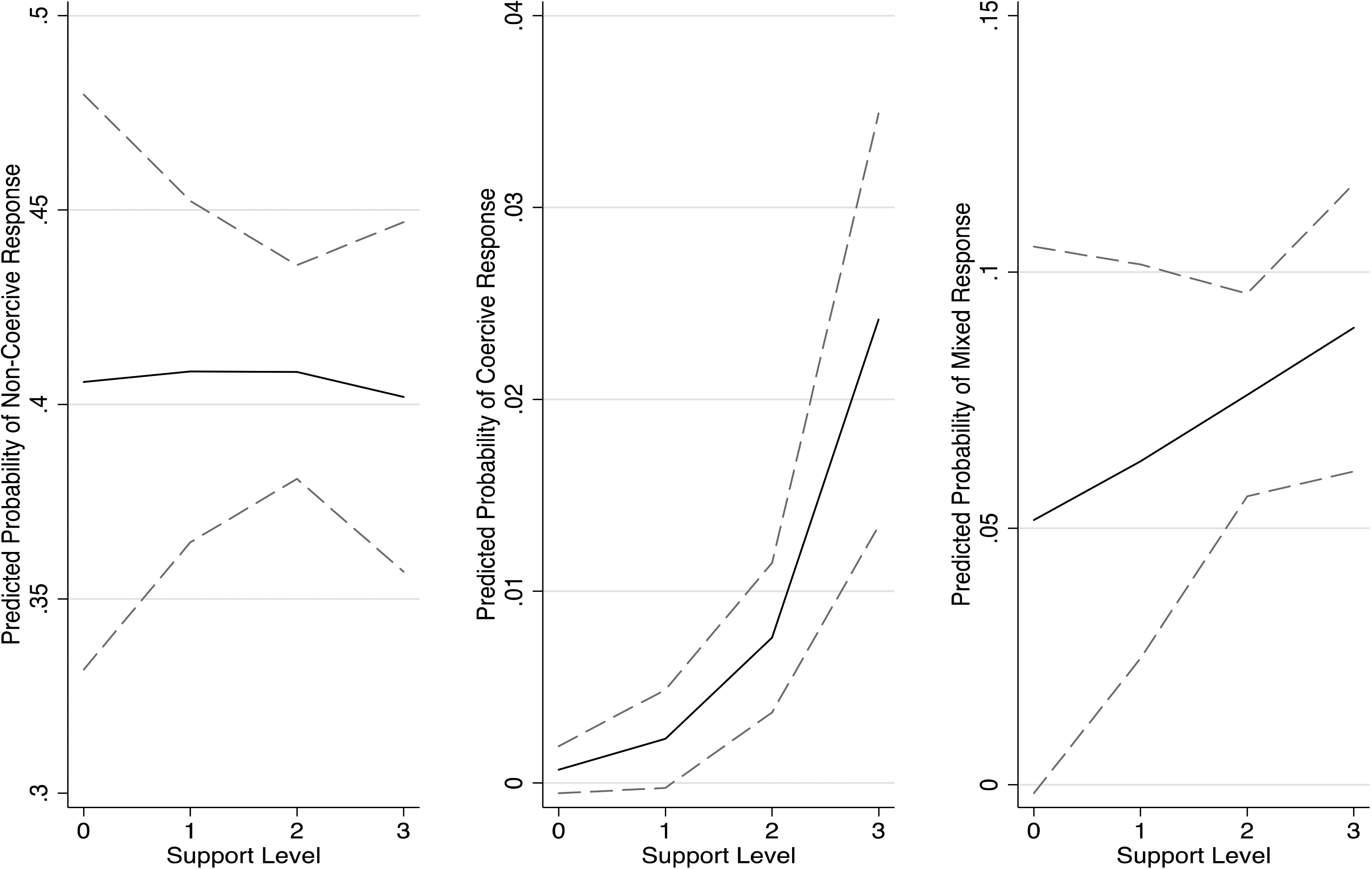
Support level and response severity.
Hypothesis 2a also receives support. Table 3 demonstrates that target states are more likely to respond coercively toward rival sponsors. As earlier accounts of the external support literature showed, strategic rivalries among states cannot be overlooked, and they impact how target states respond to sponsors as well. Strategic rivalries also increase the likelihood of observing non-coercive and mixed responses. Figure 2 shows that when sponsors are rivals, the predicted probability of inaction decreases from nearly 54 to 36%. Rivalry increases the predicted probabilities of observing non-coercive responses from 38 to 48%; coercive responses increases from 1.1 to 1.9% and mixed responses from 6 to 13%.
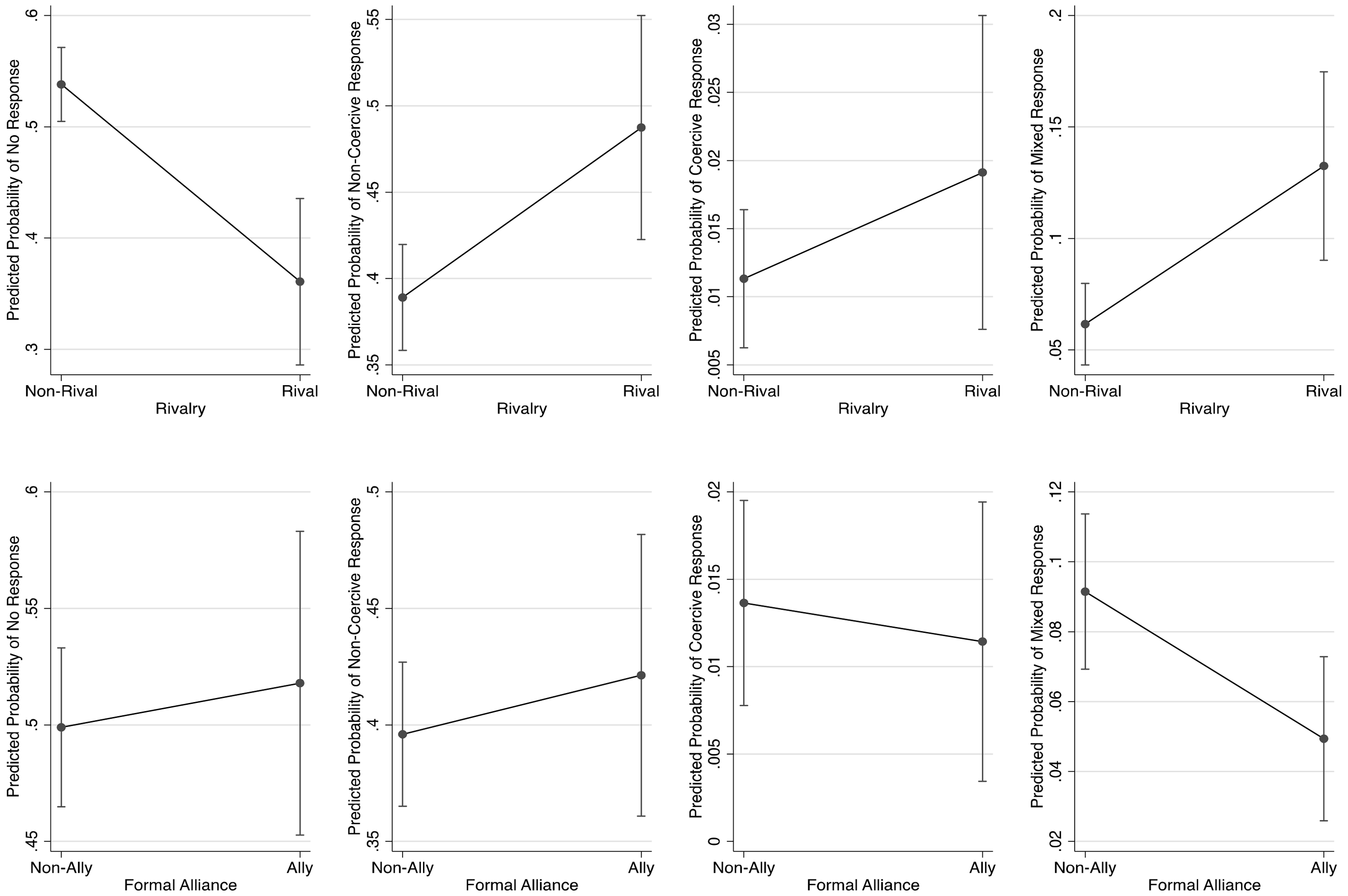
Strategic interaction and response severity.
For Hypothesis 3, Table 3 displays that formal alliance is significant only for mixed responses. This means that target states are less likely to adopt mixed responses compared with inaction when sponsors are formal allies. Figure 2 shows that the predicted probability of mixed responses decreases from 9% to nearly 5% when a formal alliance exists between states. Alternatively, one could argue that de facto supporters, who are also formal allies of target states, may exhibit different behavior compared with formal allies providing intentional support. 13 Nevertheless, the presence of de facto support diminishes the significance of formal alliances for mixed responses while only a weak significance is observed for ‘only coercive’ responses (Online Appendices E and F). Another alternative is to look at specifically defense alliances rather than alliances such as neutrality or non-aggression, since defensive ones refer to the highest level of military commitment to aid one another if an attack occurs against an ally (Gibler, 2009). Given that formal alliances could be forged even between rival states such as Turkey and Greece, analyzing the impact of defense alliances may yield more nuanced results. We tested the impact of defense alliances and found that target states are less likely to employ mixed responses toward allied sponsors when they provide de facto support to rebel groups (from 7 to 2%). We report the robustness checks in Online Appendices G and H.
Regarding Hypothesis 1b, Table 4 reveals that support level does not significantly impact the comprehensiveness of target responses. Therefore, we cannot support Hypothesis 1b. This means that contrary to Hypothesis 1b, target states do not increase the comprehensiveness of their responses as the support level provided for rebel groups increases.
response comprehensiveness, support level and rivalry.
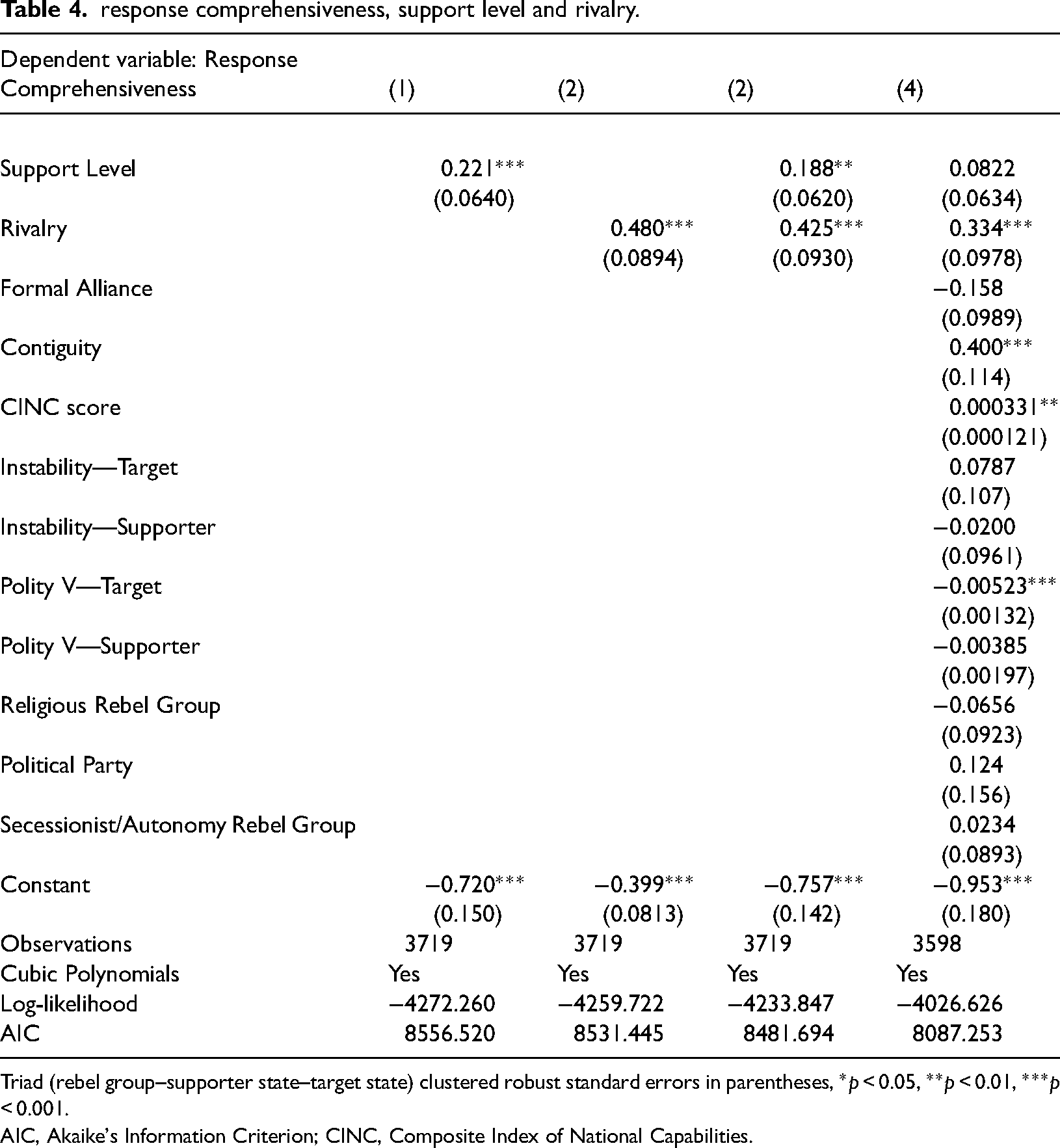
Triad (rebel group–supporter state–target state) clustered robust standard errors in parentheses, *p < 0.05, **p < 0.01, ***p < 0.001.
AIC, Akaike's Information Criterion; CINC, Composite Index of National Capabilities.
As for Hypothesis 2b, Table 4 show that the coefficients for rivalry are positive and significant. Target states are indeed more likely to respond comprehensively when rivalry is present. Target states, by diversifying the types of responses, may want to diminish the threat posed by rival sponsors through various sanctioning types, ranging from diplomatic, economic, militarized, and domestic to covert responses. Figure 3 demonstrates the substantive impact of rivalry on inaction as decreasing from about 84 to 75%. The probability of observing one standard deviation higher comprehensive responses increases from almost 16 to 25%.
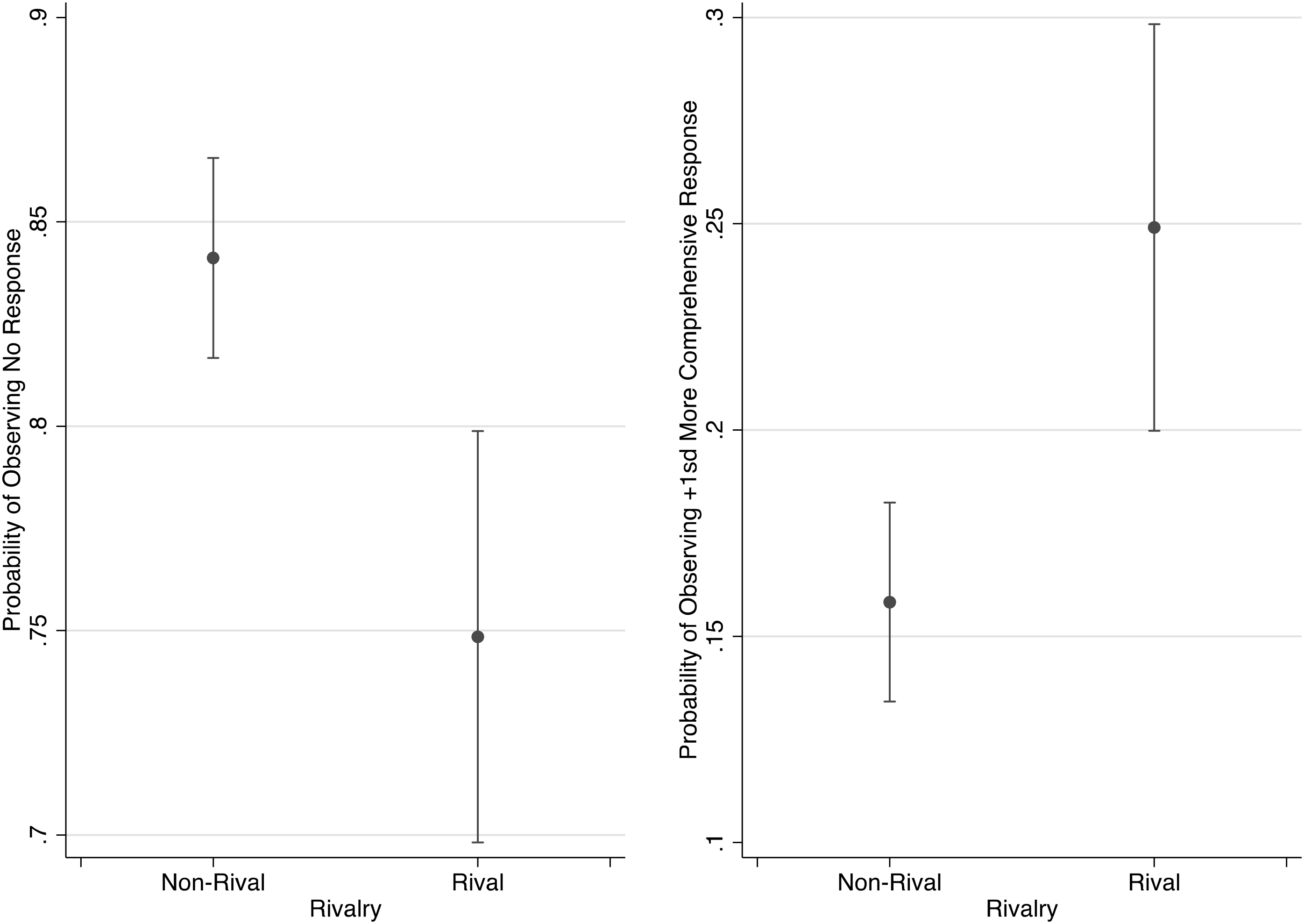
The impact of rivalry and formal alliance on response comprehensiveness.
The disaggregated results in Online Appendices J–M compared with the main results in Tables 3 and 4 remain the same for the effects of support level on response severity. Higher levels of support for rebel groups increase the adoption of exclusively coercive responses by target states compared with inaction irrespective of whether the support is intentional or de facto. Similarly, the impact of support level on response comprehensiveness remaina unchanged regardless of the nature of support provision and overall, support level does not affect the comprehensiveness. As for rivalry, it increases the use of mere non-coercive responses compared with inaction when de facto support is provided for rebels and it elevates the use of only coercive and mixed responses compared with inaction when rebel support is intentionally provided. The effect of rivalry on response comprehensiveness remains consistent when separate analyses are made for intentional and de facto support, with rivalry leading to an increase in the comprehensiveness of responses from target states. Lastly, the presence of formal alliances does not influence the severity of responses when comparing intentional and de facto support scenarios (see Online Appendix N to compare the main and disaggregated results).
Conclusion
The examination of target states’ responses aiming to terminate state sponsorship of rebel groups shows that there are various paths followed by target states. In addition to inaction, non-coercive, coercive, and mixed responses denoting the severity of responses, this study also identifies comprehensive responses that are composed of different types of measures that target states take to eliminate sponsorship. Differentiating between different support types, our study finds that sponsors providing higher levels of support will be more likely to face coercive responses from target states. Target states perceive different levels of threat depending on the distinct support type provided by sponsors. The provision of offices and headquarters is not regarded as being as alarming as training camps or troop support. Drawing on this distinction, this study unpacks the relationship between target responses and different support levels. In line with the previous literature, the statistical analyses show that target states are more likely to increase the severity of responses if the sponsor is a rival. The results also indicate that target states are more likely to diversify their toolkit when responding if the sponsors are strategic rivals, while the support level does not affect the comprehensiveness of responses. It seems that when formal alliances exist, target states are less likely to give mixed responses.
This article makes several contributions to the existing literature on external support of rebels and conflict management. Firstly, the results from the empirical investigations reveal the importance of a broadened definition of sponsorship that does not dismiss the agency of rebels and de facto state support. Target states react even if external states are just being neutral toward rebel groups, as was the case after the 9/11 attacks when President Bush said, “You are either with us, or you are with the terrorists” (The White House, 2001). A broader definition of sponsorship enhances the study of identifying the responses towards external support by increasing the variation in target state reactions. This allowed a better typology of responses in terms of types (diplomatic, covert, etc.), severity (coercive, mixed, etc.), and comprehensiveness of the responses in the RSD as the first dataset to collect information on target responses towards foreign states.
Secondly, we provide a useful framework of analysis to analyze target state responses aiming to end sponsorship. As the first study to empirically analyze the responses of target states against sponsors, we explain the general patterns in target state behavior while accounting for both state and group-level variables through the use of a new dataset (RSD). Contrary to the existing literature that usually focuses on coercive responses to deal with sponsorship, the RSD identifies ‘only non-coercive’ forms of responses as forming 40% of all responses, ‘only coercive’ responses amounting to 1.32%, and mixed responses comprising almost 8% of all responses. This reveals that target states utilize non-coercive responses more than coercive ones to end the state sponsorship of rebel groups. More frequent adoption of non-coercive responses may constitute indirect ways of dealing with state sponsorship as a matching behavior toward the sponsors who initiate an indirect confrontation with target states through rebel groups by lending them support. Thirdly, with the RSD showing how target states have responded, we point out the costs of state–rebel group partnerships, by explicating how target states take the sponsorship seriously and react against it with various measures depending on the level of support rebels receive and the strategic interaction between states.
Interestingly, we see that inaction is a big part of the observations (51%), necessitating further research. Recent studies find that there might be intermediary states between a principal and an agent when conflict delegation is concerned (Karlén and Rauta, 2023). This may complicate how and to whom target states respond and may cause inaction toward principal sponsors if target states respond to the intermediary states instead of the principal. Future studies could investigate how target responses might be affected by the existence of complex delegation in external support provision. Studies could also examine response effectiveness by analyzing the relationship between responses and support termination. Lastly, the effects of group-level variables on target responses such as rebel diplomacy could be studied, as previous literature (Huang, 2016) has shown the importance of rebel diplomacy in acquiring external support.
Supplemental Material
sj-docx-1-cmp-10.1177_07388942241276340 - Supplemental material for Target state responses to external support of rebel groups: Revealing the impact of support level and interstate strategic interaction
Supplemental material, sj-docx-1-cmp-10.1177_07388942241276340 for Target state responses to external support of rebel groups: Revealing the impact of support level and interstate strategic interaction by Latife Kınay-Kılıç, Ersel Aydınlı and Efe Tokdemir in Conflict Management and Peace Science
Supplemental Material
sj-dta-2-cmp-10.1177_07388942241276340 - Supplemental material for Target state responses to external support of rebel groups: Revealing the impact of support level and interstate strategic interaction
Supplemental material, sj-dta-2-cmp-10.1177_07388942241276340 for Target state responses to external support of rebel groups: Revealing the impact of support level and interstate strategic interaction by Latife Kınay-Kılıç, Ersel Aydınlı and Efe Tokdemir in Conflict Management and Peace Science
Supplemental Material
sj-do-3-cmp-10.1177_07388942241276340 - Supplemental material for Target state responses to external support of rebel groups: Revealing the impact of support level and interstate strategic interaction
Supplemental material, sj-do-3-cmp-10.1177_07388942241276340 for Target state responses to external support of rebel groups: Revealing the impact of support level and interstate strategic interaction by Latife Kınay-Kılıç, Ersel Aydınlı and Efe Tokdemir in Conflict Management and Peace Science
Supplemental Material
sj-docx-4-cmp-10.1177_07388942241276340 - Supplemental material for Target state responses to external support of rebel groups: Revealing the impact of support level and interstate strategic interaction
Supplemental material, sj-docx-4-cmp-10.1177_07388942241276340 for Target state responses to external support of rebel groups: Revealing the impact of support level and interstate strategic interaction by Latife Kınay-Kılıç, Ersel Aydınlı and Efe Tokdemir in Conflict Management and Peace Science
Footnotes
Acknowledgment
We thank the editors and anonymous reviewers of Conflict Management and Peace Science for their contributions and helpful comments. Latife Kınay-Kılıç acknowledges the support of TUBITAK-BIDEB Scholarship during her PhD. Efe Tokdemir acknowledges the support of TUBITAK grant no. 121C209 and TUBITAK Incentive Award to facilitate the conduct of this research. All errors are our own.
Funding
The authors received no financial support for the research, authorship, and/or publication of this article.

Supplemental material
Supplemental material for this article is available online.
Notes
References
Supplementary Material
Please find the following supplemental material available below.
For Open Access articles published under a Creative Commons License, all supplemental material carries the same license as the article it is associated with.
For non-Open Access articles published, all supplemental material carries a non-exclusive license, and permission requests for re-use of supplemental material or any part of supplemental material shall be sent directly to the copyright owner as specified in the copyright notice associated with the article.
