




Abstract
Do nuclear weapons deter aggression or make states more likely to engage in conflict? I argue that we can explain whether and when nuclear capabilities increase state belligerence by examining the role of domestic institutions that shape state security policy. This study provides evidence that nuclear weapons have an emboldening effect on conflict initiation by elevating state capacity but that whether this emboldening translates into higher levels of belligerence depends on the extent to which civilians (relative to the military) control the state, an important dimension of state decision-making. Results provide suggestive evidence in support of my argument. I illustrate this mechanism using the case of Pakistan (1972–2010).
Introduction
How do nuclear weapons affect states’ likelihood of initiating low-level conflicts against their rivals? Kenneth Waltz argues that global peace and stability can best be promoted through “the gradual spread of nuclear weapons” (Waltz, 1981). There is compelling theoretical evidence from the realist tradition to suggest that nuclear weapons have played a key role in preventing the outbreak of another world war since 1945 (Krieger and Roth, 2007). However, other scholars assert that nuclear weapons constitute a threat to world peace, as they embolden states to adopt more aggressive foreign policy behaviors (Bell, 2019). The empirical literature also offers divergent answers to this question (e.g. Bell and Miller, 2015; Rauchhaus, 2009). What explains these radically different perspectives? Do nuclear weapons deter conflicts by making states feel more secure? Or do they trigger more conflicts by enabling states to take greater risks in interstate disputes?
To understand how access to nuclear weapons affects states’ behavior in the international system, we must first look at the institutions that shape state security policy. I argue that variation in civilian control of the military can drive differences in how nuclear capacities affect state belligerence. Nuclear weapons have an emboldening effect on conflict initiation by elevating states’ capacity to engage in conflict, although the extent of this effect varies alongside civilian control of the military. The effect is more substantial in states featuring weak civilian control of the military, as they are more hawkish and, thus, more likely to use nuclear capabilities as a shield to more aggressively pursue their foreign policy interests. However, I propose that nuclear weapons have little to no emboldening effect on the foreign policy behavior of states with strong civilian control of the military.
I develop my argument along three steps. First, I argue that nuclear weapons increase the likelihood of conflict initiation by providing states with a nuclear shield behind which they can adopt more aggressive foreign policy behavior. Second, I argue that weak civilian control of the military increases the likelihood of conflict initiation because military leaders are more hawkish and inclined toward the use of force than civilian leaders. Third, I argue that nuclear weapons elevate the capacity of states with weak civilian control to initiate more conflicts by providing them with a nuclear shield behind which they can adopt a more aggressive foreign policy behavior. On the other hand, nuclear weapons would have no emboldening effect on conflict behavior of states with strong civilian control because their governments will be less likely to use the nuclear shield.
I test this argument using Kenwick's (2020) data on civilian control from 1946 to 2010. Using multiple statistical models, this paper provides suggestive evidence in support of my argument: nuclear weapons substantially increase the belligerence of states—but only when the states have weak civilian control of the military. In states with strong civilian control of the military, nuclear capacity appears to have no relationship with belligerence. These results are robust against a variety of model specifications and strategies to address endogeneity concerns. To properly illustrate the causal mechanism behind my argument, I provide an analysis of the case of Pakistan, a nuclear state with a long history of weak civilian control of the military.
This paper makes an important theoretical and empirical contribution to the literature on the effects of nuclear weapons on conflict initiation by highlighting the role of civilian control of the military as a moderating variable. To the best of my knowledge, it constitutes the first study to examine the impact of domestic institutional arrangements on the relationship between nuclear weapons and interstate conflict behavior.
The debate over nuclear deterrence
There has been a longstanding debate in the literature regarding whether nuclear weapons increase or reduce the likelihood of conflicts, with scholars coming to radically different conclusions about the exact nature of the relationship (e.g. Danilovic, 2002; Huth and Russett, 1984). Optimists argue that nuclear weapons minimize the potential for conflict by limiting the space available to aggressive foreign policy behaviors and false optimism (Jervis, 1989; Mearsheimer, 1984). In their view, nuclear weapons prevent aggression at all levels, as nuclear states act with caution, avoiding engagement in disputes even at the sub-conventional level owing to a fear of inadvertent escalation (Mearsheimer, 2001). This perspective indicates that nuclear weapons make states less aggressive even against non-nuclear states: states have little incentive to be aggressive because nuclear weapons have already ensured their security (Waltz, 1981).
However, such arguments ignore the possibility of unauthorized use leading to escalation or preventive wars (Feaver, 1992; Kapur, 2007). In one of the earliest attempts to gain an empirical understanding of this relationship, a scholar found evidence indicating that crises involving states with nuclear weapons are more likely to escalate to dangerous levels owing to concerns about potential preventive wars (Geller, 1990). Another reason for concern stems from the fact that nuclear weapons have been shown to have played a coercive role in many crisis situations during the Cold War (Betts, 1988); however, it remains unclear whether their presence necessarily led to more militarized disputes. Some scholars argue that nuclear weapons make conventional conflict more likely because nuclear powers may act as bullies, using their nuclear capabilities to intimidate other countries (Lavoy, 1995). The argument that nuclear weapons make states more aggressive can help us to understand global concerns about the development of nuclear programs by North Korea and Iran. 1
The “stability-instability paradox” also supports the views that nuclear weapons encourage conflicts at sub-conventional levels (Jervis, 1984; Snyder, 1965) and that the military balance between nuclear states is less stable at lower levels of conflict. This stems from the fact that the possession of nuclear capabilities allows a state to be more hawkish during interstate conflicts. Empirical evidence in support of the stability–instability paradox shows that nuclear states are more likely to be involved in sub-conventional disputes (Rauchhaus, 2009), suggesting that nuclear states cannot be expected to show significant restraint in lower-level conflicts. However, this evidence is contradicted to an extent by Bell and Miller (2015), who show that if both states in a dyad possess nuclear weapons, they are neither less nor more likely to be engaged in conflict. Importantly though, dyads in which only one state has nuclear capability, while not prone to fighting conventional wars, are more likely to get involved in low-level conflicts, as the nuclear power aims to leverage the factor in pursuit of its interests.
Gartzke and Jo (2009) provide empirical support for the view that states, after acquiring nuclear capabilities, are not more or less likely to engage in or initiate military conflicts, but they do achieve an inherent boost in diplomatic status. This may be due to the fact that nuclear weapons constitute “uniquely poor instruments of compellence” (Sechser and Fuhrmann, 2013: 179). According to scholars focused on states’ experiences with nuclear weapons, the length of time for which a state has nuclear weapons can also affect its conflict behavior (Horowitz, 2009). However, Bell and Miller (2022) challenge the “nuclear learning” hypothesis, arguing that nuclear learning is rare because nuclear states are often bad at learning lessons on account of the fact that their power affords them the ability to make mistakes and survive—and the kinds of lessons that they do learn may not necessarily lead to stability. Furthermore, Suh (2022; 2023) questions the existing evidence for nuclear emboldenment and argues for a nuanced approach that considers the role of nuclear operational capabilities in examining the effect of nuclear weapons.
This overview of the relevant literature indicates that existing scholarship on the relationship between nuclear weapons and interstate conflict offers divergent answers regarding whether nuclear capabilities make states more or less belligerent. To answer this question, I assert that we must unpack how states formulate their security policy as well as the role of domestic institutions in associated decision-making processes. More specifically, I argue that the effect of nuclear weapons on state belligerence depends on the quality of prevailing civil–military relations. Nuclear arsenals have a particularly “emboldening” effect in states with weak civilian control of the military owing to the latter's generally hawkish foreign policy preferences.
Theory development and hypothesis
Over the past few decades, domestic politics has emerged as a major explanatory mechanism behind interstate conflicts in the study of international relations. Many scholars have shown how various domestic factors influence/constrain the choices made by national leaders when it comes to initiating conflicts (Bueno de Mesquita et al., 2003; Fearon, 1994; Lai and Slater, 2006; Weeks, 2012). However, as shown in the previous section, existing research has paid scant attention to the impact of domestic factors on the effect of states’ nuclear capabilities on their likelihood of initiating conflict. This paper addresses this gap in the literature by exploring how variation in a particularly salient domestic factor—civil–military relations—affects the relationship between nuclear weapons and the likelihood of interstate conflict. I focus on civil–military relations because they play a critical role in shaping states’ strategic assessments during international conflicts (Brooks, 2008) and, in turn, their conflict behavior.
The starting point for my argument is that the decision of a national leader to initiate conflict is often dependent on the preferences and inputs of other actors in the regime. This process of internal discussion inevitably affects policy substance, as leaders need to make concessions to other key policy actors on the nature, strategy, and timing of military operations (Saunders, 2019). Choi and James (2008) show that leaders’ decisions are heavily influenced by civil–military structure and that the military often wields significant influence in the policy-making process. The role of civil–military structure is particularly important because the conditions under which nuclear weapons are more or less likely to affect the likelihood of conflict initiation can be heavily influenced by the nature of states’ civil–military relations. My argument suggests that nuclear weapons elevate the capacity of states to initiate more conflicts but that this effect is more likely in states with weak civilian control of the military, as military leaders are generally more hawkish than civilian leaders.
One could argue that any effect that a country's civil–military relations have on its belligerence is simply the result of that country's overall security environment. However, I suggest that civil–military relations can have an independent effect on state belligerence for two reasons: (a) states with similar security environments can feature distinct civil–military dynamics, resulting in civil–military relations boasting an independent effect; and (b) even if certain civil–military structures initially stem from the external security environment, they can still have an independent effect on states’ security policies once they become institutionalized (Narang, 2014).
How do nuclear weapons increase the likelihood of conflict?
In this section, I argue that nuclear weapons have a positive effect on states’ likelihood of initiating interstate disputes because nuclear weapons provide them with a “shield” behind which they can pursue aggressive policies. Nuclear weapons function as a shield because they make the aggressive behavior of those who possess them less costly (Beardsley and Asal, 2009). Nuclear weapons enable states that possess them to more aggressively pursue their previously defined objectives and interests in relation to other states (Bell, 2019), 2 as they increase the cost of any possible action against them. Put succinctly by Bell (2015), “the threat of nuclear escalation can act as a shield behind which aggression can be undertaken.”
This argument explains how different states have used their nuclear capabilities to engage in more aggressive foreign policy behavior, two prime examples being South Africa's decision to escalate the conflict in Angola after acquiring nuclear capabilities and North Korea's increasingly frequent acts of aggression against South Korea. Countries with greater military capabilities are more likely to rely on military means and choose strategies that lead to the initiation of conflict. Countries facing severe external security threats are particularly likely to engage in acts of aggression through the acquisition of nuclear capabilities, which will enable them to try to capture territories with a higher likelihood of success. Historical evidence demonstrates that Pakistan has used nuclear weapons as a shield to pursue its foreign policy goals more aggressively against India, particularly during the 1999 Kargil War (Kapur, 2007).
However, not all states that acquire a nuclear shield use the opportunity to behave more aggressively. To understand when a nuclear shield promotes aggression, we must consider the domestic factors that shape interstate behavior. The next section explains how variation in civilian control of the military shapes states’ behavior following the acquisition of nuclear capabilities.
How does weak civilian control of the military increase the likelihood of conflict initiation?
I argue that weak civilian control of the military increases the risk of state belligerence. When civilian control is weak, military officers can act with greater independence, and such officials tend to have more hawkish foreign policy preferences than civilian leaders. There are at least three factors that contribute to military officers’ hawkish attitudes. First, owing to their professional training and socialization, military officers develop certain perceptual and decision-making biases that make them more likely than civilians to overestimate the appropriateness and utility of the use of force (Sechser, 2004). In his work on the beliefs of military officers, Huntington (1957) highlights the role of a “military ethic” that “views conflict as a universal pattern throughout nature and sees violence rooted in the permanent biological and psychological nature of men” (64). Building on this, many scholars have asserted that this dynamic leads military officers to prefer the use of military force in dealing with opponents. As Brecher (1996) argues, “Violence is normal behavior for the military in power, for the military generally achieves and sustains power through violence and tends to use this technique in all situations of stress, internal or external. They also see violence as legitimate and effective” (220). Weeks (2014) attributes Argentina's decision to initiate the Falklands War to the country's military regime making an exaggerated assessment of the external threat posed by Great Britain.
Second, military officers’ institutional and financial interests encourage their pro-force beliefs and policy preferences toward offensive wars. Most notably, the use of offensive strategies helps military organizations preserve their autonomy and justifies their receipt of larger budgets (Posen, 1984; Snyder, 1984). An ongoing state of war significantly increases the resources provided to the military (Nordhaus et al., 2012). This desire for more autonomy and financial prowess explains the “cult of the offensive” and conflict-prone behavior of armed forces throughout history in countries like Germany and France, which led to the onset of the First World War (Van Evera, 1984). Even though military technologies should have theoretically stabilized the European strategic balance in 1914, offensive military strategies were glorified by the involved countries’ armed forces and allowed them more financial resources, making war an almost inevitable choice (Snyder, 1984).
Third, military leaders are also more likely to support the use of force because they are routinely punished for making peaceful concessions (Debs and Goemans, 2010). The domestic audience that military leaders face—an audience that largely consists of other military officers—tends to exhibit relatively high levels of dissatisfaction with the status quo, making the use of force a more favorable and effective strategy at the individual level. In the same way, the use of force raises the net benefits of pursuing a policy of military force.
One potential counterargument is that the military is actually less likely to support the use of force, as military officers are directly exposed to violence during war. Although Huntington (1957) views the military as likely to exaggerate threats, he argues that armed forces constitute “the strongest voice against immediate involvement in war” owing to their increased exposure to the costs of war. Some contemporary policymakers have echoed a similar view. As US Secretary of State Michael Pompeo argued during his appointment hearing, “there is no one like someone who's served in uniform who understands the value of diplomacy and the terror and tragedy that is war” (Gordon and Youssef, 2018). Analyzing American decision-making and the role of domestic military influences during the Cold War, Betts (1977) shows that military advice plays a critical role in decisions regarding the initiation of conflict; however, he argues that military officers are less aggressive than their civilian counterparts. Several other scholars have come to similar conclusions based on their qualitative case studies of countries such as Great Britain and India, among others (e.g. Petraeus, 1989).
However, all of this supporting evidence comes from countries that exhibit very strong civilian control of the military. In addition, although Betts’ (1977) study is often cited to support the argument that military leaders often oppose the use of force, Betts’ data show that military officers were more likely than civilian leaders to adopt hawkish policy positions 21% of the time and equally hawkish 65% of the time (Betts, 1977: 216). Similarly, recent evidence from a survey of American civilian and military elites shows that military officers may be more conservative about the use of force only in pursuit of “interventionist” strategies; on security matters related to realpolitik, their behavior remains consistent with my argument about hawkish preferences among military leaders (Gelpi and Feaver, 2004). In other words, when it comes to dealing with external security challenges, military officers are far more likely than civilian leaders to view the use of force as a preferable instrument of foreign policy (Weeks, 2012).
Even if it were true that military officers in the US are less hawkish when it comes to the use of force, their preferences would not necessarily reflect those of military officers elsewhere in the world who can easily defy their civilian leaders. Empirical evidence from observational studies supports this view that military officers’ predilections for the use of force are muted in cases where civilian supremacy can punish the military for misadventures (Lai and Slater, 2006; Sechser, 2004). Thus, the cautious nature of military institutions in certain countries is not due to them simply being less conflict-prone; rather, it could very well be a consequence of strong civilian control—a degree of control that is absent in many countries where the civilian government has limited effective control over national security policymaking process or military matters in general.
For example, in Pakistan's hybrid regime where elements of electoral democracy coexist with overbearing military influence (Talbot 2021), the military has often prevented its civilian bosses from playing a significant role in conflict-related decisions. Civilian prime ministers who have attempted to assert their authority have been removed either through a direct military takeover or as the result of secret political maneuvers by military and intelligence agencies. Similar types of hybrid regimes exist in countries like Egypt that also have a strong desire to acquire nuclear capabilities. Thus, the behavior of military officers in such countries cannot be explained through evidence from countries with a long tradition of strong civilian control. More alarmingly, military regimes tend to actively prefer officers with more hawkish views when it comes to decisions regarding the use of force in political disputes (Weeks, 2012). The “military conservatism” hypothesis is clearly lacking in terms of global generalizability.
Recent work also suggests that all military experiences may not be equivalent and that only leaders with prior military experience but no exposure to combat are more likely to initiate militarized disputes (Horowitz, Stam and Ellis, 2015). While this work represents a significant contribution to the literature, my argument does not distinguish between those with a military background and exposure to combat and those with a military background but no exposure to combat. It lacks this distinction for two main reasons: (a) even when military leaders do have direct exposure to combat, they may show the same proclivity towards violence because nuclear weapons afford them a shield and, in turn, a sense of safety; and (b) my argument about the hawkish nature of the military partially depends on the military's institutional interests—leaders previously associated with the military continue to promote the military's interests after entering politics because of their ongoing relationships with military officers.
As a result, the hawkish tendencies of the military prevent governments from negotiating with their adversaries, making them more likely to initiate interstate conflict. Such governments may prefer to fight over engaging in any serious bargaining with their opponents. This suggests that a country is more likely to initiate low-level interstate conflicts when certain key actors within the government—owing to their professional training and institutional interests—view war as a rational and cost-effective option.
How does weak civilian control of the military interact with nuclear weapons to affect the likelihood of conflict initiation?
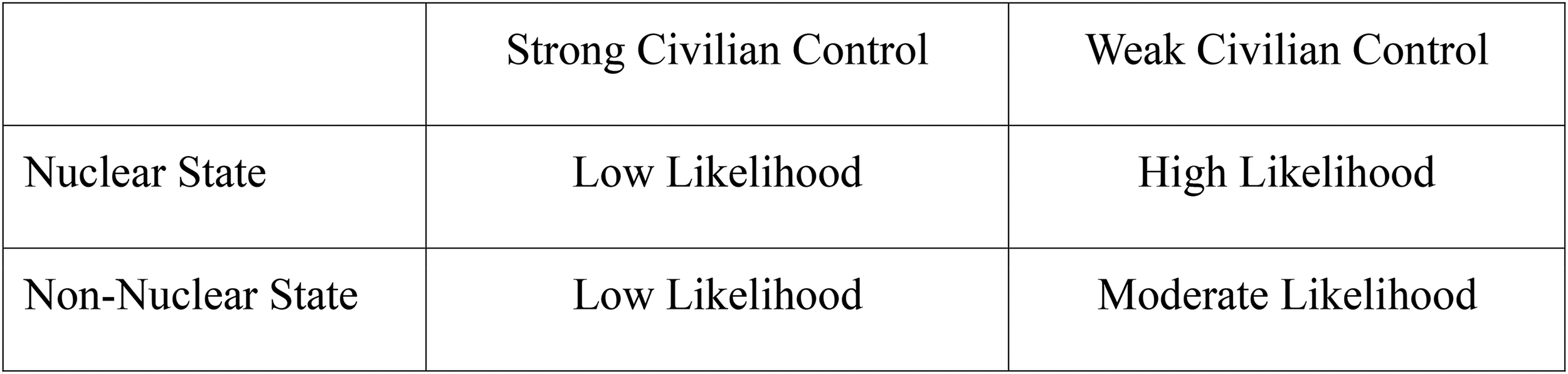
In this section, I argue that there is an interactive effect between nuclear capabilities and civilian control of the military in determining conflict behavior. Nuclear weapons elevate a state's capacity to initiate conflicts by providing them with a nuclear shield (Beardsley and Asal, 2009). However, the extent of this effect is contingent on the state's hawkishness, and a state's level of hawkishness is dependent on its degree of civilian control of the military. Thus, states with nuclear capabilities and weak civilian control of the military are able to raise the ante with far greater confidence. They are more likely to be aggressive and expand their pursuit of strategic interests because they are already conflict-prone and, hence, more likely to take steps that significantly increase the likelihood of militarized interstate dispute (MID) initiation. In this way, as shown in Figure 1, weak civilian control of the military functions as a positive moderator for the relationship between nuclear weapons and states’ likelihood of initiating conflict.
Effect of Nuclear Weapons × Civilian Control on the likelihood of lower-level military conflicts.
On the other hand, nuclear weapons are less likely to have an emboldening effect in states with strong civilian control of the military, as such control dampens the conflict-prone behavior of military leaders. As a result, such states are less likely to use nuclear weapons as a shield, meaning that their likelihood of initiating conflict is low (see Figure 1). In view of this, the testable implications of my argument here are that (a) when civilian control is weak, nuclear states are more likely to initiate conflicts than non-nuclear states, and (b) when civilian control is strong, there is no difference in the likelihood of conflict initiation between nuclear and non-nuclear states.
Hymans’ (2010) view that military-run nuclear programs may be more likely to induct nuclear weapons without testing them beforehand complements my argument. As the induction of nuclear weapons without prior testing constitutes an offensive strategy, professional military organizations—driven by an inherent bias in favor of offensive strategies—would be more likely to take this step and employ their “unannounced nuclear arsenal” in pursuit of strategies based on compellence. This reality also negates the alternative view that nuclear weapons represent “defensive weapons par excellence,” as the militaries in multiple states have shown a clear preference for nuclear war-fighting doctrines (Lieber, 2005). This discussion leads to the view that countries with weak civilian control of the military are more likely to have military-run nuclear programs and, thus, induct nuclear weapons without prior testing for the advantage of enhanced strategic surprise (Hymans, 2010) in their pursuit of an aggressive foreign policy agenda.
It could certainly be argued that more parsimonious explanations may explain some of the cases of state aggression that my argument aims to address. For example, Pakistan and North Korea may have adopted more aggressive behavior after acquiring nuclear capabilities owing to their hostile external security environments (Bell, 2021; Kapur, 2007). Similarly, Narang (2014) argues that states’ external security environments constitute the primary motivation behind the adoption of aggressive nuclear postures. Thus, incorporating civil–military relations into our models would not provide us with any additional insights. While these explanations significantly enhance our understanding of nuclear states’ behavior, I argue that accounting for variation in civil–military relations in our models would help us to explain the variation over time in conflict behavior among states with hostile external security environments. In other words, we should expect such states to adopt aggressive behaviors only when their leaders have hawkish preferences. Explanations that rely only on the presence of external security environments cannot adequately explain why Pakistan initiated more conflicts when civilian control of the military was weaker, while the rate of conflict initiation remained relatively low when civilian leaders wielded greater control. After acquiring nuclear capabilities, Pakistan initiated most conflicts only after Pervez Musharraf took control of the government. The rate of conflict initiation was lower during the early 1990s despite a nearly identical security environment.
It is important to note here that my argument applies only to states’ likelihood of initiating low-level military conflicts, as the emboldening effect of nuclear weapons should mostly manifest itself at the level of low-intensity conflicts; by initiating such low-intensity conflicts, nuclear bullies may be able to compel other states and achieve their foreign policy objectives at a lower cost. Nuclear weapons may not have an emboldening effect at the level of large-scale conventional conflicts—even among states with weak civilian control of the military—owing to the unimaginably high costs associated with the possibility of nuclear use.
This discussion leads to my hypothesis about the moderating effect of weak civilian control: The relationship between nuclear weapons and states’ likelihood of initiating conflict is intensified by weak civilian control of the military.
Research design
With cross-section time-series data, this paper uses country-year as the primary unit of analysis to test my hypothesis regarding the effect of interaction between nuclear capabilities and civilian control of the military on states’ likelihood of initiating conflict. The data range from 1946 to 2010, as the data for one of my key variables (civilian control of the military) are available only until 2010. Since my dependent variable is a count variable indicating the total number of MIDs initiated during a year, I test my hypotheses using negative binomial regression with standard errors clustered on country.
The monodic unit of analysis is appropriate in my setting because my main hypothesis centers on the moderating effect of civilian control of the military, which operates only within the initiating state and does not depend on the nuclear status or any other characteristics of the target state. In a similar fashion, Haynes (2021) argues that “despite the prevalence of dyadic research designs in prior work on interstate conflict, a monadic approach is consistent with the majority of research on mechanisms through which domestic politics affects conflict initiation” (Clare, 2010; Ireland and Gartner, 2001; Kaarbo and Beasley, 2008; Palmer et al., 2004).
Variables and measures
Dependent variable
My main dependent variable is the initiation of militarized disputes, drawn from the Correlates of War Militarized Interstate Disputes dataset, version 5 (Palmer et al., 2020). This dataset features all cases in which one state has threatened, displayed, or used force against another state or multiple other states. The Correlates of War project defines MIDs as “historical cases of conflict in which the threat, display or use of military force short of war by one member state is explicitly directed towards the government, official representatives, official forces, property, or territory of another state. Disputes are composed of incidents that range in intensity from threats of the use of force to actual combat short of war.” MID initiation is a count variable indicating the total number of MIDs that a state has engaged in during a given year. My dependent variable includes only cases of low-level military conflicts (i.e. cases involving threats to use force, displays of force, or uses of force); I exclude cases that ultimately escalated to wars.
Independent variables
Measuring civilian control of the military
Existing studies of civil–military relations have struggled with a serious lack of good cross-national measures of this concept, hindering efforts to produce generalizable findings. One of the most common measures—recent coup incidence (Biddle and Long, 2004)—is problematic, as the lack of coups in a country may stem from strong democratic norms against military interventions in politics (e.g. the US) or from systematic purges of potential threats to the regime (e.g. Iraq under Saddam Hussein), two wildly different situations. Evidently, there can be a variety of different civil–military dynamics in the absence of coups (Belkin and Schofer, 2003), and appropriate measures should be capable of capturing this potential range.
Weeks’s (2014) work makes significant progress in this direction, coding each state according to (1) whether the national leader is a current or former high-ranking officer, (b) whether cabinet positions not related to armed forces are held by military officers, and (c) whether military leadership is consulted when it comes to taking decisions on security issues. However, Weeks only codes authoritarian regimes, and almost all nuclear states have never had military authoritarian regimes. More importantly, democracies are not immune from dysfunction in civil–military relations (Avant, 1994; Posen, 1984; Snyder, 1984).
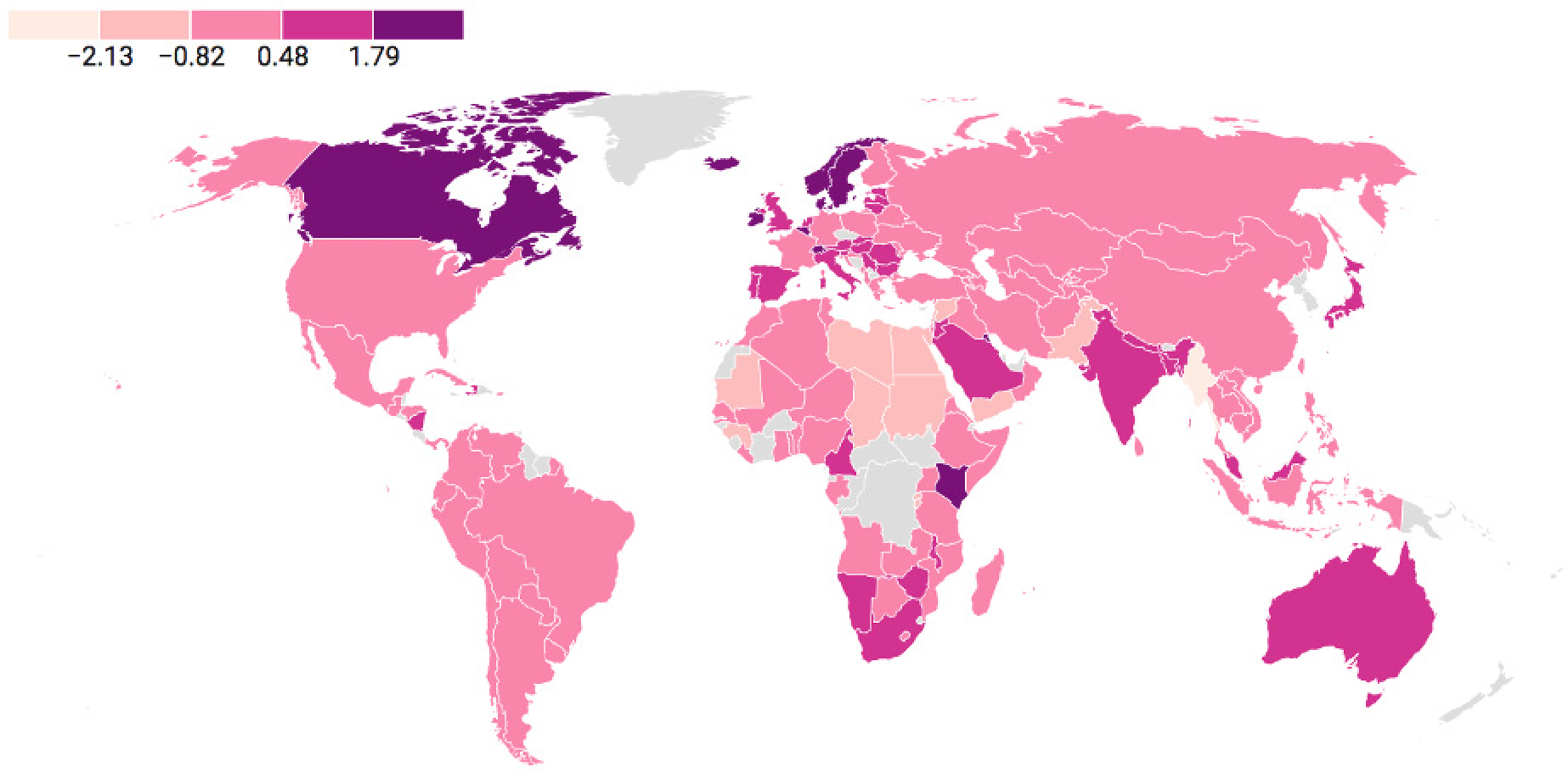
With these problems in mind, I rely on Kenwick's Civilian Control Scores dataset to gage the influence of civilian–military relations. Kenwick (2020) employs a latent variable to measure a state's level of civilian control of the military. His measure is based on three observable indicators of military involvement in politics: (a) whether the political elites of the country have served in or maintained ties with the military; (b) whether the regime was preceded by a military regime or whether the current leader came to power with the support of the military; and (c) the extent to which executive political authority in a state is concentrated in the institution of the military. Notably, his data have two different measures of civilian control: static and dynamic. While the static measure is based purely on the political institutions of a country at the beginning of a given year, the dynamic measure considers the role of history. In this paper, I use the dynamic measure of civilian control of the military, which has the advantage of helping us to integrate institutional and historical information and balance their relative importance (Kenwick, 2020).
As suggested by the recent literature on multiplicative interaction models, I break my continuous moderating variable into different bins to improve interpretability (Hainmueller et al., 2019). The overall measure captures civilian control of the military on a scale ranging from −3 to 3, but I break this continuous measure into three bins: low (less than the 25th percentile of the sample value), medium (25–75th percentile of the sample value) and high (greater than the 75th percentile of the sample value). As Hainmueller et al. (2019) argue, the benefit of using this approach is that it fits the interaction component to each bin separately, relaxing the linear interaction effect assumption. To test the robustness of my results, I also define these bins slightly differently and use a continuous measure of civilian control alongside them—but my results do not change.
Existing research on the relationship between regime type and conflict distinguishes between democracies and non-democracies. However, as scholars of civil–military relations have previously argued, the important distinction between different regimes is not their type but their institutional strength, in terms of which both democratic and non-democratic countries can be strong. States with strong institutional capacity tend to have effective bureaucracies and strong political parties, keeping the risk of military intervention low. However, states with weak institutional capacity tend to have a higher risk of military intervention in policymaking processes (Talmadge, 2015). Notably, this distinction cannot be captured by simply categorizing a state by regime type.
Nuclear capability
My independent variable, nuclear capability, is a dichotomous variable that indicates a country's possession of nuclear weapons in a given year. For information on this variable, I draw from Gartzke and Jo (2009) (Figure 2).
Civilian control scores in 2010 (Source: Kenwick, 2020).
Control variables
I control for several variables identified by existing theories as those that could affect the likelihood of conflict. I control for the material power of the state by including the Gross Domestic Product (GDP) Per Capita of each state, which helps to account for the influence of a state's economic capabilities on the likelihood of conflict. I also include the ALLIES variable, which indicates a state's total number of allies, as measured by the Correlates of War project. Countries that are part of the same alliance are less likely to fight one another. I also include the dichotomous Major Power variable to indicate a state's major power status in the international system, as coded by the Correlates of War project. Since major powers have greater interests, they are more likely to get involved in conflictual situations. To capture the effect of a state's geographic conditions, I include the Contiguity variable, which indicates the total number of contiguous territorial borders with other countries (separated by a land or river border), once again as coded by the Correlates of War project. Neighboring states are generally considered to be more likely to fight one another and face a higher risk of conflict.
Trade Openness measures a country's total exports plus imports as a share of its GDP. This variable indicates the extent to which a country is economically integrated into the global economy, which can affect its motivation to engage in conflict. I control for Regime Type using Polity V data, as democracies are typically considered to be less likely to fight one another. To account for selection effects—notably, the fact that countries that choose to develop nuclear capabilities have a higher likelihood of having been engaged in conflicts owing to hostile external security environments—I also include the Past Conflict variable, which represents a moving average of MIDs over the past 5 years. Many previous studies do not adequately consider this selection effect, resulting in biased conclusions. Lastly, to control for temporal dependence, in line with Carter and Signorino (2010), I control for peace years, peace years squared, and peace years cubed.
Results
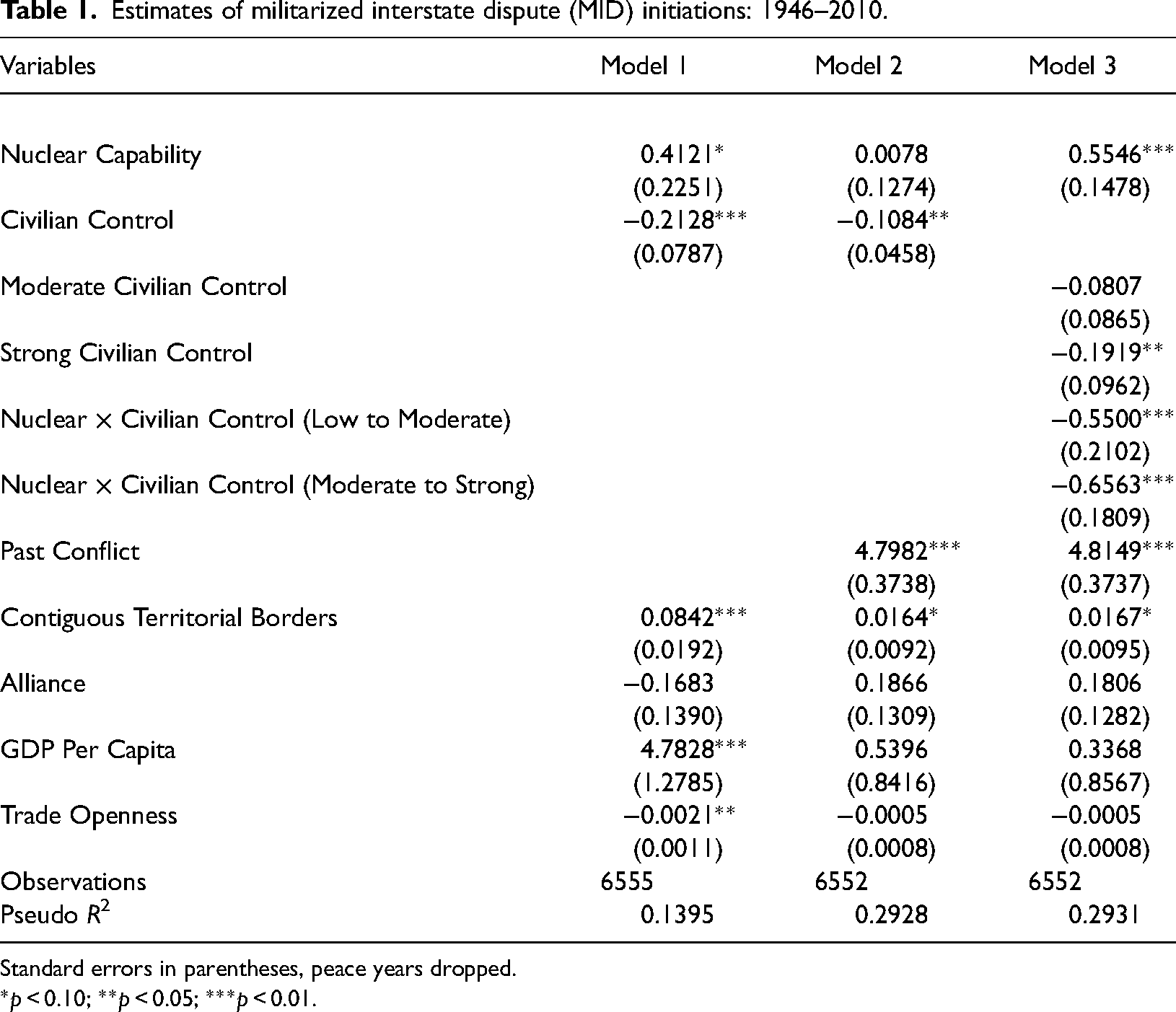
This study examines the effect of civilian control of the military on the relationship between nuclear capability and likelihood of initiating conflict from 1946 to 2010. Table 1 shows the coefficient estimates of negative binomial regression models. In addition to my independent and moderating variables indicating nuclear capability and civilian control, respectively, these models also include multiple control variables used by existing studies to understand the relationship between nuclear weapons and interstate conflict behavior. In the first model, nuclear capability has a statistically significant effect on the likelihood of MID initiation at the 90% confidence level (Table 1, Model 1), suggesting that nuclear weapons have a significant effect on states’ likelihood of initiating conflict. However, this effect is no longer significant once we control for past conflicts.
Estimates of militarized interstate dispute (MID) initiations: 1946–2010.
Standard errors in parentheses, peace years dropped.
*p < 0.10; **p < 0.05; ***p < 0.01.
In the third model, the interaction coefficients between nuclear capability and civilian control of the military are significant even after controlling for past conflict (Table 1, Model 3). The negative sign on coefficients suggests that the probability of conflict is lower in nuclear states with strong civilian control of the military.
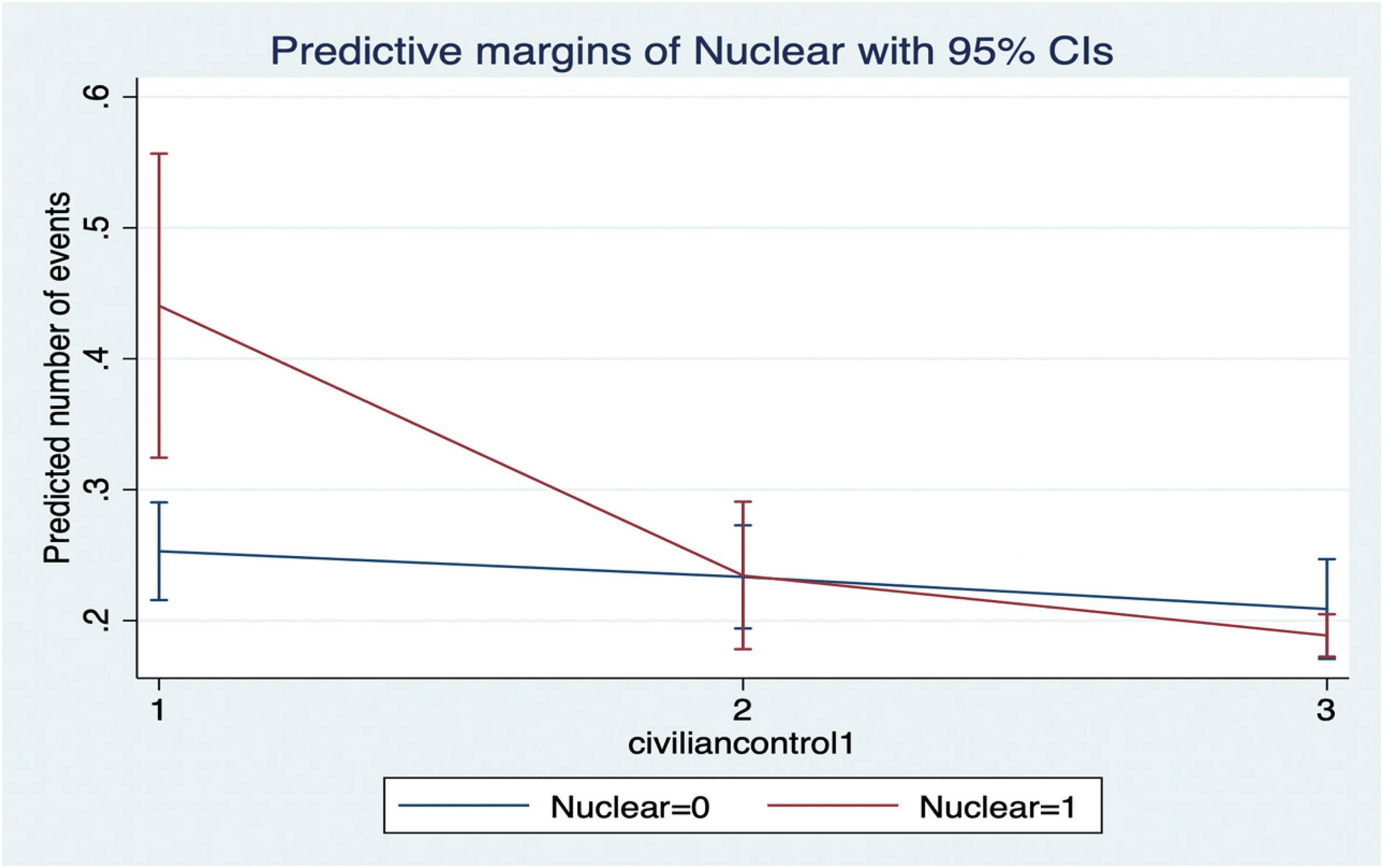
Figure 3 shows the substantive variation in the probability of MID initiation from the negative binomial regression model. Among states with weak civilian control of the military, nuclear states have a much higher likelihood of initiating MIDs than non-nuclear states. Additionally, as predicted by my hypothesis, there is no significant difference among states with strong civilian control of the military between nuclear states and non-nuclear states in terms of their likelihood of initiating low-level military conflicts. These findings provide suggestive evidence in support of my argument that the effect of nuclear weapons on a state's likelihood of initiating MIDs depends on the level of civilian control of the military in that state and that only states with weak civilian control of the military become more likely to initiate conflict after acquiring nuclear capabilities.
Nuclear capability and militarized interstate dispute (MID) initiations (Table 1, Model 3).
Following Hunermund and Louw's (2023) advice, I do not discuss the results pertaining to my control variables, as they are unlikely to have a causal interpretation. The models in Table 1 do not include two control variables—Major Power and Regime Type—owing to concerns that they may be driven by nuclear capability and civilian control of the military, respectively. While cognizant of these views, the obtained results after including and excluding these variables are highly similar. My results remain significant after the inclusion of additional variables, unit-fixed effects, and decade-fixed effects. These results are available in the Appendix section.
My results remain robust after controlling for additional factors including Constraints on Executive Authority and GDP Per Capita. To address concerns about omitted variable bias and unobserved heterogeneity, I also use fixed effects estimation. Once again, these results are available in the Appendix. While my results are robust to different specifications, it is difficult to establish causality or identify precise mechanisms in this paper. In order to properly address this challenge and illustrate how nuclear capabilities and civil–military relations interact to determine belligerence, I analyze the case of Pakistan below.
Despite the limited number of cases driving its results, this paper constitutes a significant contribution to the literature. It suggests that nuclear weapons may not embolden states to adopt aggressive foreign policy behavior in a blanket sense. Rather, there are specific conditions (e.g. weak civilian control of the military) under which nuclear capabilities are more likely to translate into aggressive behavior. These conditions have been historically rare in nuclear states. However, as many nuclear aspirants (e.g. Iran, Egypt) exhibit weak civilian control of the military, the likelihood of these conditions becoming more common could very well increase in the future. More importantly, norms of civilian supremacy have weakened significantly in some advanced democracies (e.g. the US) over the last decade. Some scholars have argued that US military commanders acquired more operational autonomy under President Trump, leading to a reduction in transparency regarding how the US deals with external armed conflicts (Brooks, 2020). Surveys also suggest that US military personnel are more likely to identify themselves as partisans (Lythgoe, 2023). In essence, contrary to what Suh (2022) may argue, nuclear weapons can embolden states under certain circumstances, and those circumstances may very well become more common in decades to come.
This paper offers a concrete policy recommendation: efforts to prevent horizontal nuclear proliferation should focus on discouraging potential proliferator states with weak civilian control of the military. The fact that the Pakistani military, in opposition to the country's civilian leaders, was against the 1999 ceasefire agreement (Montgomery and Sagan, 2009) demonstrates that nuclear emboldenment is more likely to translate into belligerence when the military has limited to no civilian oversight. Thus, the international community can more effectively deal with the problem of nuclear proliferation by focusing on countries with weak civilian control of the military.
Limitations
In recent years, the use of statistical methods in the study of nuclear proliferation has come under increased scrutiny owing to rising doubts about its ability to provide robust explanations (e.g. Bell, 2016). As one scholar suggests, “statistical analysis does not strike me as the best method for understanding complex, interactive political decision-making about issues of life and death” (Gavin, 2014). They argue instead that the effects of nuclear weapons can be better examined through qualitative methods and the analysis of archival material. Similarly, Montgomery and Sagan (2009) lament studies reliant on statistical methods for their apparent inability to produce counterintuitive findings.
While there is some merit to these arguments, I argue that the use of quantitative analysis provides numerous advantages. First, it facilitates the comparison of a large number of observations, thereby enabling a systematic analysis of whether observed patterns are representative of broader trends. This approach stands in stark contrast to Gavin's (2014) approach, which relies exclusively on in-depth case studies. While such an approach may be optimal for examining individual cases, it cannot tell us much about the long-term consequences of nuclear weapons. Notably, quantitative analysis eliminates the need to make subjective judgments about the relative significance of individual cases. Second, quantitative analysis offers enhanced transparency regarding employed methodologies and derived conclusions. By establishing clear guidelines about the coding of each variable, the extent to which a study's findings depend on individual coding decisions can be reviewed and evaluated. This transparency also facilitates the identification of cases upon which the study's inferences depend (Fuhrmann, Kroenig and Sechser, 2014). Third, quantitative analysis is specifically designed to deal with probabilistic events. As the causal relationships that we observe in the social world are probabilistic (King, Keohane and Verba, 1984), quantitative analysis allows us to understand the likelihood of particular outcomes by observing patterns across multiple cases. Conversely, a single-case approach yields little insight into the general impact of nuclear weapons. Instead of Gavin's (2014) method, which predominantly relies on primary documents, researchers employing quantitative approaches can longitudinally measure variables of interest and explore correlations within large datasets (Fuhrmann, Kroenig and Sechser, 2014).
Still, following Gavin's (2014) suggestion that the effects of nuclear weapons can be better studied through the examination of individual cases, I also analyze the case of Pakistan in detail below to demonstrate on a smaller scale how the degree of civilian control of the military can practically explain the effect of nuclear capabilities on state belligerence. This offers me the additional advantage of providing detailed evidence about context and causal inference in complex relationships, assuaging concerns about the aforementioned limitations of statistical analysis. Since my paper employs a mixed-method approach, combining elements of both quantitative and qualitative research, it effectively balances out the potential limitations of each method. In short, the findings of my paper are less susceptible to the critiques offered by Montgomery and Sagan (2009), Bell (2016), and others thanks to my use of nuanced data on civil–military relations, consideration of endogeneity concerns, and inclusion of a case study that provides practical evidence of the study's key mechanisms alongside detailed contextual knowledge.
Case study: Pakistan
In this section, I examine the case of Pakistan in the pre-nuclear and post-nuclear eras to trace the causal mechanism in my argument. I employ Pakistan as my case study because the country has a long history of military hegemony in its national security decision-making processes. Even during periods of strong civilian rule, the military has maintained significant control over national security matters (The Economist, 2021). 3 Pakistan is thus a case where we can observe what happens to a country with low civilian control of the military's interstate conflict behavior after it acquires a nuclear shield. The objective of this case study is to provide evidence supporting three key claims: (a) the Pakistani military, in contrast to the country's civilian leaders, prefers a more aggressive foreign policy; (b) the “emboldening” effect of Pakistani nuclear weapons was translated into aggressive foreign policy behavior when military generals exerted dominance in decision-making processes; and (c) civilian leaders have consistently pursued a conciliatory approach to resolving external conflicts, even after the acquisition of nuclear capabilities.
In the decades leading up to the country's acquisition of nuclear weapons, the tensions between Pakistan and India never escalated to the level of a major conflict. This is because, despite Pakistan's status as a revisionist state with weak civilian control of the military, it lacked the emboldening effect of nuclear capabilities. The majority of this period lacked any kind of militarized confrontation between the two countries. The Brasstacks crisis, the only significant crisis of that period, is attributed more to the lack of communication rather than deliberate acts of aggression. As Kapur (2007) shows, the incidence of militarized disputes between Pakistan and India during the non-nuclear period was less than one-fifth the rate of disputes observed since the nuclearization of the region. In the absence of nuclear weapons, Pakistani leaders were well aware of India's superiority in conventional warfare and believed that they could not sustain a war with the latter for more than a few weeks. This explains Pakistan's reluctance to initiate a conflict with India even during its period of direct military rule with hawkish preferences from 1979 to 1988.
From 1987 to 1997, Pakistan developed its nuclear capabilities, but it had yet to overtly demonstrate its new weapons to the world. During this period, there were reports of military generals formulating plans for operations similar to Kargil. Ultimately, however, no major war came to pass. However, following Pakistan's overt demonstration of its nuclear capability in 1998, there was an upsurge in conflict and increased regional instability. As Mazari (1999) argues, “while this scenario was prevalent even when there was only a covert nuclear deterrence […] overt nuclear capabilities […] further accentuated this situation.”
After acquiring nuclear capabilities, Pakistan chose to adopt a low-level conflict strategy, as military officers believed that nuclear weapons would provide them with a shield behind which they could more aggressively pursue their foreign policy objectives (Bell, 2015). Nuclear weapons came to be viewed as a “security cover” from which Pakistan could support Kashmir's struggle for independence from the cruel tyranny of Indian rule (Kamal, 1999). This resulted in a heightened state of tension, the likes of which had not been seen, in the view of one scholar, since the early 1970s (Kapur, 2007).
Maintaining this strategy, the military leadership in Pakistan initiated the 1999 Kargil conflict against India, which brought the two countries to the brink of a nuclear war. Nuclear weapons emboldened Pakistan's military officers to challenge India in Kashmir without (in their view) needing to worry about the possibility of a catastrophic retaliation. India did not launch a full-scale conventional war in response to the Pakistani infiltration in Kargil, as Pakistan's acquisition of nuclear capabilities had made full-scale confrontation between the two countries a highly risky prospect. A reported conversation between the Indian Prime Minister and Army Chief in 1999 further supports my argument. When the latter suggested the possibility of India escalating the conflict to a full-scale conventional war, the former offered a warning: “but General Sahib, they have a nuclear bomb” (Zeb, 2021). In contrast, in 1965 (when Pakistan did not have nuclear capabilities), India responded to Pakistan's Operation Gibraltar—an effort to incite insurgency against the Indian occupation of Kashmir—by willingly escalating the conflict.
The simultaneous planning of the Kargil operation by Pakistani military officers while the country's civilian leaders were busy preparing for the Pakistan–India summit in Lahore serves as an example of the contrasting attitudes between civilian and military leaders following the state's acquisition of nuclear capabilities. While civilian leaders were inclined toward fostering cooperative and friendly relations with India, the military generals opted to initiate a conflict with India, using nuclear weapons as a shield. Notably, this happened under the civilian government of Nawaz Sharif, who had already decided to discontinue any type of armed support to Kashmiris (Zehra, 2018). This shows that the emboldening effect of nuclear weapons would not have translated into aggressive foreign policy had civilian leaders been capable of exerting stronger control over the military to prevent the military officers from engaging in misadventures.
According to some accounts, the idea of a Kargil-like operation was first conceived in 1985, when General Ziaul Haq was serving as the country's president (Zehra, 2018). A proposal along these lines was also presented in 1990 to Prime Minister Benazir Bhutto, who rejected it immediately for being dangerous and escalatory. However, in 1998, the military decided to execute the Kargil plan without obtaining consent from Prime Minister Nawaz Sharif (Zehra, 2018). This helps to illustrate my argument that, despite Pakistan always being in a hostile external security environment, it resorted to aggressive actions like the Kargil operation only once two conditions were met: (a) the acquisition of nuclear capabilities; and (b) the prevalence of hawkish preferences among military officers. Explanations that exclusively point to the external security environment cannot adequately explain why the Kargil operation occurred in 1999 and not earlier in 1984 or 1990.
As previously mentioned, Benazir Bhutto strongly opposed the idea of such an operation, and Nawaz Sharif has repeatedly claimed that he was not informed of the operation, insisting instead that the action “sabotaged” the agreement that he had reached with the Indian government to diplomatically resolve all disputes, including the Kashmir issue. Civilian leaders have long sought to end the arms race between the two countries and resolve their mutual disputes, while military generals have perceived the role of nuclear weapons in a different light. In the words of Nasim Zehra (2018), a national security specialist and prominent journalist, “these generals believed [that the] nuclear card could be exploited […] It was in the intoxicating yet unconstitutional autonomy in security matters that men in khaki [uniforms] […] lay the undoing of a policy that Pakistan's political leadership sought to pursue with regard to India.” Of course, a country with weak civilian control of the military like Pakistan, were it not protected by a nuclear shield, would have felt more constrained and, in turn, would have abstained from initiating the Kargil operation owing to the risk of escalation.
The Pakistani military's strategic calculations were in direct opposition to the détente policy pursued by the country's civilian leadership after 1998 (Kapur, 2007). However, owing to the state's weak civilian control of the military, military officers were able to undermine civilian leaders’ efforts to re-orient Pakistan's Kashmir policy. A long history of weak civilian control not only decreased the diplomatic policy space available to Pakistan's civilian leaders but also weakened their ability to hold the military accountable for its misadventures, including the one in Kargil. Additionally, Pakistan's military had no interest in curbing the operations of non-state actors in Kashmir, who used Pakistan's soil to launch attacks against India, as the risk of escalation with India was reduced by the presence of Pakistan's nuclear capabilities (Kapur, 2008).
This case study demonstrates how the Pakistani military was able to translate its hawkish preferences into policy outcomes only after the country's acquisition of nuclear capabilities. This likely would not have been possible had there been strong civilian control of the military, as civilian governments in Pakistan have generally pursued the policy of détente since the acquisition of nuclear capabilities.
Discussion and conclusion
This study represents an effort to understand the effects of variation in civil–military relations on the relationship between nuclear capabilities and interstate conflict behaviors. I argue that the effect of nuclear weapons on states’ likelihood of initiating MIDs depends on prevailing civil–military relations and that nuclear weapons elevate the capacity of states with low civilian control over the military to adopt aggressive foreign policy behaviors, leading to the initiation of more conflicts. The findings of this paper provide support for my argument that variation in civilian control of the military has a significant effect on the relationship between nuclear capabilities and states’ likelihood of initiating MIDs. If the findings of this research hold true, scholars studying the effects of nuclear capabilities should pay more attention to the domestic institutional arrangements that shape states’ security policies. My research supports the assertion by Montgomery and Sagan (2009) that the extent of the military's influence on policymaking processes may have a critical effect on the consequences of nuclear proliferation for international security.
This analysis suggests that an effective nuclear non-proliferation policy requires targeted measures aimed at restricting the supply of nuclear materials to potential proliferators whose military has an oversized influence on their domestic politics, as such states may be unable to maintain stable deterrence. Aspiring nuclear states that lack mechanisms to ensure strong civilian control are more likely to experience the emboldening effect of nuclear weapons and, in turn, adopt aggressive foreign policy behaviors while using nuclear weapons as a shield. In other words, the conflict behavior of such states may be influenced more by the hawkish tendencies of their powerful military organizations than their actual national interests would dictate. This view is consistent with Sagan's (1994) worry that military organizations, owing to their parochial interests or biases, may adopt behaviors that lead to the failure of nuclear deterrence.
Supplemental Material
sj-dta-1-cmp-10.1177_07388942241238649 - Supplemental material for Nuclear weapons and interstate conflict behavior: The moderating influence of civil–military relations
Supplemental material, sj-dta-1-cmp-10.1177_07388942241238649 for Nuclear weapons and interstate conflict behavior: The moderating influence of civil–military relations by Rizwan Asghar in Conflict Management and Peace Science
Supplemental Material
sj-do-2-cmp-10.1177_07388942241238649 - Supplemental material for Nuclear weapons and interstate conflict behavior: The moderating influence of civil–military relations
Supplemental material, sj-do-2-cmp-10.1177_07388942241238649 for Nuclear weapons and interstate conflict behavior: The moderating influence of civil–military relations by Rizwan Asghar in Conflict Management and Peace Science
Footnotes
Acknowledgments
I thank Juan Tellez, Josephine Andrews, David Cunningham, Lauren Young, Lauren Peritz, Matthew Fuhrmann, Mark Bell, Jeannette Money, Heather Elko, Zeev Maoz, and Brandon Kinne for providing me with valuable comments and suggestions. I would also like to thank the editor, Scott Wolford, and two anonymous reviewers for their feedback on an earlier version of this paper.
Funding
The author received no financial support for the research, authorship, and/or publication of this article.
Supplemental material

Notes
Appendix
References
Supplementary Material
Please find the following supplemental material available below.
For Open Access articles published under a Creative Commons License, all supplemental material carries the same license as the article it is associated with.
For non-Open Access articles published, all supplemental material carries a non-exclusive license, and permission requests for re-use of supplemental material or any part of supplemental material shall be sent directly to the copyright owner as specified in the copyright notice associated with the article.
