



Abstract
Transitional justice practices frequently involve public apologies where former combatants confess their wrongdoings and ask for forgiveness, with the underlying assumption that such displays facilitate the reintegration of ex-combatants into society. However, little is known about the public response to ex-combatant apologies. In this article, we investigate the causal effect of an armed group apology on attitudes toward ex-combatant reintegration in Colombia. Our study builds on a novel experiment implemented in Meta, a conflict-ridden department of Colombia. The experiment entailed exposing a subset of participants to a video in which a former rebel group leader apologizes for violent acts committed by their armed group during the civil war. To examine the extent to which external actors influence the effectiveness of apologies, we incorporated third-party ‘encouragements to forgive’ (endorsements) in two additional treatment conditions. Our analysis demonstrates that, on average, participants do not exhibit higher reintegration attitudes when exposed to the apology, regardless of third-party endorsements. However, the absence of a treatment effect is not due to an indifference to the apology. In an exploratory heterogeneity analysis, we show that the apology induces negative effects on some indicators of reintegration attitudes among participants that did not support the peace agreement. This finding aligns with qualitative data gathered in a follow-up survey, which indicates that opponents of the peace agreement generally describe negative emotional responses to the FARC-EP apology. The results call for a reconsideration of unchallenged prescriptions of public apologies after conflict.
Introduction
During the 21st century, peace agreements formally ending civil wars have abounded (Bell and Badanjak, 2019). Previous research has, however, demonstrated that subsequent peace tends to be fragile (Mac Ginty, 2008; Westendorf, 2022). A case in point is Colombia, where the national authorities and the largest insurgent group, the FARC-EP (the Revolutionary Armed Forces of Colombia-People’s Army), signed a peace agreement in 2016, which entailed the demobilization of the FARC-EP and thereby the end of a protracted civil war. But while the peace agreement formally ended the war, it also ‘became a major fault line in Colombian politics, dividing those who felt the accord represented a reasonable basis for peace and those who felt it was too forgiving of the FARC’ (Rettberg, 2021: 18). Contrary to what some expected, the reintegration of former FARC-EP members into Colombian society may have exacerbated political polarization (Gluecker et al., 2022).
To lessen the polarizing influence of ex-combatant reintegration, the Colombian Transitional Justice Mechanisms (TJM) – like many other TJMs in recent decades – involved public ceremonies where representatives of armed groups apologized for the victimization of civilians. These public displays of regret and remorse build on the premise that the public demands official apologies in order to move on (Cárdenas et al., 2015). Yet, despite the widespread use of apologies in current transitional justice mechanisms (Zoodsma and Schaafsma, 2022), little is known about whether or not they achieve their intended purposes.
In this article, we investigate the impact of an armed group apology on reintegration attitudes, i.e., the public’s attitudes toward reintegrating ex-combatants into society. To this end, we conducted a video experiment in Meta, Colombia, a region marked by multiple waves of violence over the course of the civil war. The experiment entailed exposing a random subset of survey participants to an authentic video recording in which Timochenko, the former leader of the FARC-EP, apologizes for the thousands of kidnappings committed by the guerrilla group. We deduce the causal impact of the apology by comparing reintegration attitudes – measured through three survey questions and a separate endorsement experiment – among participants exposed to the apology and a control group that was not exposed to the apology. In addition, in two separate treatment arms, we coupled the apology video with statements from the Pope as well as victims of the conflict endorsing reconciliation (encouragements to forgive). The underlying rationale was that influential third-party actors might shape the effectiveness of apologies.
We find no support for the pre-registered baseline hypothesis, which held that exposure to the apology should increase reintegration attitudes on average. 1 Across three different indicators of reintegration attitudes, the average effects of the apology are not statistically distinguishable from zero, even when the apology is coupled with third-party encouragement to forgive. In a corresponding fashion, exposure to the apology does not influence reintegration attitudes when measured through an endorsement experiment.
The average null effect, however, does not imply that participants are indifferent to the apology offered by the FARC-EP. On the contrary, in an open-ended question embedded in a follow-up survey, participants describe strong emotional reactions to FARC-EP apologizing. While many describe positive reactions to FARC-EP apologizing, the majority express negative emotional reactions. The nature of reactions strongly aligns with participants’ pre-existing views of the peace agreement between the Colombian state and the FARC-EP: those who supported the peace deal are generally more positive toward FARC-EP apologizing, while those who opposed the deal overwhelmingly react negatively. In light of the stark contrasts in preferences for armed actor apologies revealed by the qualitative analysis, we embark on an exploratory heterogeneity analysis of the video treatment based on participants’ views on the peace agreement. The findings suggest that participants who are disillusioned with the peace agreement react negatively to the apology according to two out of three indicators of reintegration attitudes; at the same time, among participants with more positive views regarding the peace agreement, exposure to the apology increased the primary indicator of reintegration attitudes, whereas the other two indicators of reintegration attitudes remain unaffected. While inconclusive, the results indicate substantial variation in participants’ perception as well as reception of armed group apologies.
The present study adds to a growing body of research concerned with public attitudes toward the reintegration of former combatants (Cárdenas et al., 2015; Godefroidt and Langer, 2021; Knight and Özerdem, 2004; Tellez, 2019a, b). Specifically, we provide novel evidence of how civilians respond to an armed group apology after a protracted war, a matter that has attracted surprisingly scarce empirical research. While theoretical (e.g. Tavuchis, 1993) and normative (e.g. Andrieu, 2009) motivations for public apologies are plentiful, there is no consensus as to how the supposed beneficiaries, namely the general public and especially conflict victims, react to these public displays of regret and remorse. As noted by Brounéus (2008: 292), ‘practitioners and academics alike make claims of the relation between, for example, truth, justice, peace, and reconciliation that are in need of empirical backing’. Against this backdrop, our study makes a timely and imperative contribution.
While previous research in social psychology and political psychology has considered reactions to apologies, our study differs from this line of work in several ways. First, the experimental design underpinning our results implies a stronger case for causality compared to studies that rely on observational data (see, e.g. Moeschberger et al., 2005; Shamir and Shikaki, 2002; Wohl et al., 2013). Second, in contrast to earlier experimental studies that typically expose participants to text-based treatments, where information about apologies (and their provisions) is varied (see, e.g. Shnabel et al., 2015), our experiment exposes participants to video recordings of an authentic apology. 2 Third, as opposed to lab-based studies with student populations (see, e.g. Philpot and Hornsey, 2008), we collect field data from a group of participants for whom the matter apologized for is both highly relevant and salient today. 3 Finally, by investigating heterogeneous treatment effects based on participants’ pre-existing stances on the peace agreement, we go beyond average treatment effects. Since the results show that participants who opposed the peace agreement in the first place react to the apology by decreasing their reintegration attitudes, this analysis highlights the need to consider the potential adverse consequences of public apologies.
The article proceeds as follows. First, we build upon previous research to theorize public apologies and derive our hypotheses. Next, we outline the experiment design and thereafter present the findings. The final section discusses the main takeaways as well as potential limitations of our approach.
Background
Theory
The reintegration of former combatants into society is a fundamental challenge for countries that have experienced civil war (Gilligan et al., 2013; Godefroidt and Langer, 2021; Lobato et al., 2022). However, civilians tend to be skeptical of such reintegration processes because of long-standing animosity (Roe, 2007; Strömbom, 2014), and public reluctance may thus work against successful reintegration (Knight and Özerdem, 2004) and increase the risk of conflict recurrence (Kaplan and Nussio, 2018). Reintegration attitudes – public attitudes that are conducive to the reintegration of former combatants – are thus a first-order concern for policymakers in post-conflict settings.
To promote reintegration attitudes and facilitate the transition from adversarial to peaceful relationships with former combatants, governments in post-war societies often establish Truth and Reconciliation Commissions (TRCs) (Binningsbø et al., 2012). Truth and Reconciliation Commissions typically prescribe official apologies, in which perpetrator groups publicly acknowledge their past wrongdoings and express remorse, as a tool for promoting reintegration attitudes. The literature has proposed a range of underlying mechanisms: apologies allegedly ‘undo’ collective psychological trauma, restore a sense of power and dignity of the victims, and potentially build trust between former adversaries (Blatz and Philpot, 2010; Blatz et al., 2009; Cárdenas et al., 2015; Cehajic et al., 2008; De Greiff, 2008; Lazare, 2005; Millar, 2012; Nadler et al., 2008; Nagy, 2002; Rosoux, 2007; Tavuchis, 1993; Verdeja, 2010).
According to research on scope conditions, however, apologies must meet several criteria in order to significantly shift attitudes. First, the representative delivering the apology must have a strong mandate to speak on behalf of the group (Borinca et al., 2021; Verdeja, 2010). Second, apologies must be viewed as genuine expressions of responsibility and remorse rather than mere excuses (David and Choi, 2006; Philpot and Hornsey, 2008). Third, an apology’s perceived worth depends on context-specific attributes such as the timing (Blatz and Philpot, 2010) and the presence (or not) of concrete reparations (Rigney, 2012).
In this study, we conduct an experiment to investigate whether a specific apology achieves its intended purpose. To this end, we engage participants in an original video experiment conducted in Meta, Colombia, in which a subset of participants are exposed to an authentic apology delivered by a former FARC-EP leader. As we discuss in more detail in the subsequent section, the content of the speech as well as contextual factors appear to meet the necessary criteria for an effective apology. Hence, the experimental design, in conjunction with a rich scholarship theorizing positive effects of apologies in post-war settings (see, e.g. Andrieu, 2009), support the following baseline conjecture:
Hypothesis 1: Exposure to FARC-EP’s apology increases average levels of reintegration attitudes.
Although the literature has made some progress in explaining when apologies work, much variation remains unaccounted for. In order to advance our understanding in this domain, we identify key properties of peace processes that may mitigate the effectiveness of apologies, namely the abundance and polarized nature of information. Below, we discuss each channel in turn and derive two additional hypotheses.
During peace processes, people are exposed to vast amounts of information that they cannot process in its entirety (assuming bounded rationality (Stadelmann and Torgler, 2013)). Under such circumstances, rather than relying solely on internal analysis, people typically base their positions on external cues. For instance, previous work has shown that cues from elites, moral authorities, and group leaders exert a causal influence on people’s political attitudes and preferences (Druckman and Lupia, 2000; Lenz, 2013). 4 In line with this conjecture, Blair et al. (2021) found that religious leaders’ radio messages advocating for peace and reconciliation increased reintegration attitudes in Nigeria. 5 Aside from religious leaders, victims of the conflict are typically seen as key actors in peace processes (Verdeja, 2010). Victims are the supposed beneficiaries of armed actor apologies and, hence, the ultimate arbiters of their worth. As such, victims’ statements may influence how the general public views apologies and, in turn, their potential impact. In line with the theory on authority cues and private preferences, we expect the FARC-EP apology to be more effective when coupled with encouragements to forgive (endorsements) by third-party actors, specifically the Pope and victims of the armed conflict. We propose the following hypothesis:
Hypothesis 2: Third-party endorsements enhance the impact of apologies on reintegration attitudes.
Furthermore, significant political events, such as peace agreements, give rise to new and salient identities (Canetti et al., 2019; Hobolt et al., 2021). In turn, these identities influence how people interpret subsequent events through a range of mechanisms, including confirmation bias (Knobloch-Westerwick et al., 2020) and the avoidance of cognitive dissonance (Mullainathan and Washington, 2009). For instance, Hobolt et al. (2021) demonstrated that the Brexit referendum upended and reshaped political identities in Britain and that the new identities predicted political preferences even to a greater degree than partisan identities. The authors argue that opinion-based identities emerge from highly salient and polarized events, such as referendums on peace agreements. 6
In societies transitioning from war to peace, peace negotiations with ex-combatants tend to polarize communities that had widely different experiences of the conflict (Laengle et al., 2020; Tellez, 2019b). In the event of a peace agreement, support and opposition for the deal give rise to opinion-based identities, which may shape how subsequent events, such as public apologies, are interpreted. 7 In line with this argument, actors of opposing camps have been shown to react in markedly different ways to past apologies, such as Pope Benedict’s apology for offensive comments about Islam (Cooperman, 2006) and the Irish Republican Army’s apology in 2002 (Ferguson et al., 2007). In the case of Colombia, previous research has suggested that the demand for apologies is low among opponents of the peace agreement (Tellez, 2019a). 8 Accordingly, we formulate a third hypothesis as follows:
Hypothesis 3: Participants’ views on the peace agreement moderate the impact of the apology on reintegration attitudes.
Empirical setting
In this study, we design an experiment to test whether, when, and for whom apologies work in the Colombian context. From the early 1960s onward, Colombia went through a civil war that resulted in the victimization of more than nine million people and the deaths of over 450,000 Colombians (La Comisión de la Verdad de Colombia, 2022). The main conflicting parties – the Colombian state and the FARC-EP – signed a peace agreement in 2016, formally ending the conflict (Rettberg, 2020). Yet, when the peace agreement was put to a popular referendum in October 2016, the share of voters that opposed the deal was in a slight majority, and the deal was hence rejected (Tellez, 2019a). Later that same year, a renegotiated deal was nevertheless passed in Congress, but the referendum revealed a sharp divide in Colombian society: those who were for and those who were against the peace agreement (Rettberg, 2020). The opponents to the treaty were mainly concerned with the transitional justice provisions embedded in the peace agreement. The vast majority of rebel fighters were granted impunity, and the FARC-EP was guaranteed ten seats in Congress (for two consecutive legislative periods) (Long, 2021). In short, the opponents held that the peace agreement was too soft on the former guerrilla group (Rettberg, 2020). Those who favored the peace agreement, on the other hand, generally held that the concessions were necessary. More than six years after its signature, the peace agreement remains a salient and polarizing feature of Colombian society.
In order to promote reintegration attitudes in Colombia, a Truth Commission was established in conjunction with the peace agreement in 2016. In its final report released on 28 June 2022, the Commission highlighted acknowledgments of responsibility (i.e., public apologies) as an ‘ideal mechanism to de-escalate violence and lay the foundations for transformation’ (La Comisión de la Verdad de Colombia, 2022: 614). 9 An example of such acknowledgments was the apology issued by Timochenko, the former FARC-EP rebel commander and then Secretary General of the Partido Comunes (the demobilized FARC-EP’s political party), during a ceremony organized by the Truth Commission in Bogotá on 19 June 2021. Timochenko pleaded for forgiveness from Colombians in general and from the victims of the conflict in particular for the ‘abhorrent practice we exercised for decades’. The statement entailed essential elements of effective apologies identified in the previous section such as an admission of guilt, an expression of regret, and a request for pardon. 10 The circumstances also met other important criteria: FARC-EP was disarmed and hence power relations altered (Baez et al., 2019); FARC-EP had engaged in post-war reconstruction projects, e.g. through demining operations (UNMAS Colombia, 2021); and Timochenko spoke with a strong mandate on behalf of the former guerrilla group (Quintero, 2019). Moreover, both the Pope and victims of the armed conflict had pleaded with the Colombian people to be open to forgiveness and to reconcile with former members of the armed group (Reuters, 2016). Yet, whether the apology changed reintegration attitudes is an empirical question that remains to be tested.
Data and experimental design
Sampling
We collected data through a door-to-door survey in Meta, a conflict-ridden region of Colombia. In order to obtain a sample of varying experiences with respect to the armed conflict, we purposefully selected 15 municipalities following a set of pre-defined criteria (see the Online Appendix Section A2). During the field work, we had to relocate from one municipality due to safety concerns and instead finalize the remaining quota in another municipality. 11 We discuss aspects of Meta in more detail in the Online Appendix Section A and map the covered municipalities in Figure 1.
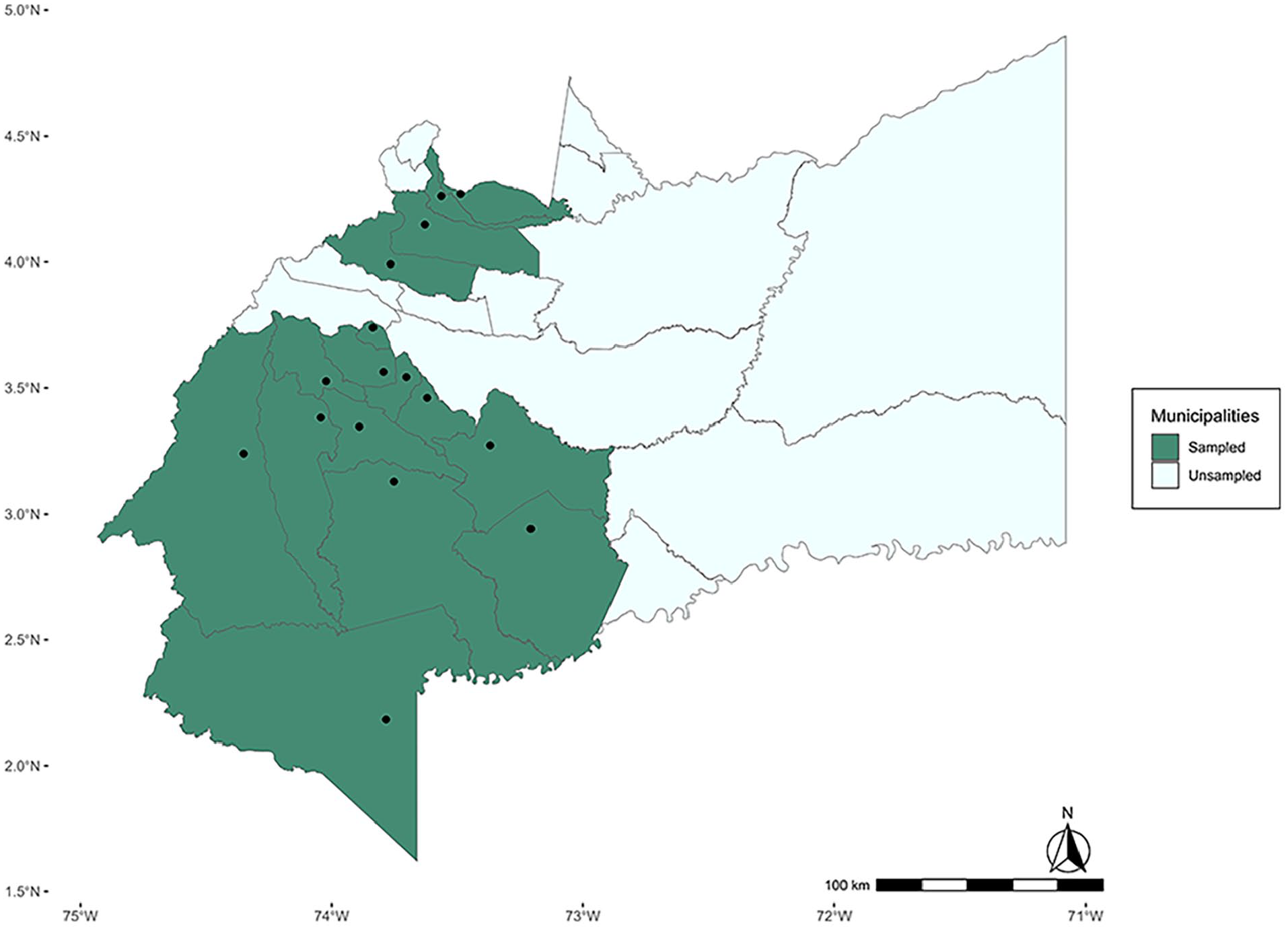
Meta
In each municipality, we surveyed randomly chosen blocks in both rural and urban areas of the municipalities’ capitals. The enumerators were instructed to recruit participants following a set of rules stated in the Online Appendix Section A2. The final sample covered 16 of Meta’s 27 municipalities and comprised 902 participants who responded to at least one of the questions about reintegration attitudes.
The video experiment
During the civil war, the FARC-EP committed thousands of kidnappings, and this practice was particularly widespread in Meta (Centro de Estudios sobre Desarrollo Económico (CEDE), 2021). In June 2021, as part of a session called ‘Truths that Liberate’ [Verdades que Liberan], Timochenko, the former FARC-EP rebel commander and then Secretary General of the Partido Comunes, apologized for these kidnappings at a ceremony organized by the Truth Commission in Bogotá. In his speech, Timochenko pleaded for forgiveness from Colombians in general, and from victims of the conflict in particular, for the ‘abhorrent practice we exercised for decades’.
We exposed a random subset of participants in the survey to a video recording of the apology, which they viewed in private on the enumerators’ tablets before proceeding with answering the survey. 12 The video (LINK) lasted for 1 minute and 45 seconds; the transcript of the speech is included in the Online Appendix Section B. The experiment contained four treatment arms: Control group, Apology, Apology+Pope, and Apology+Victims. The full experimental design is summarized in Figure 2.
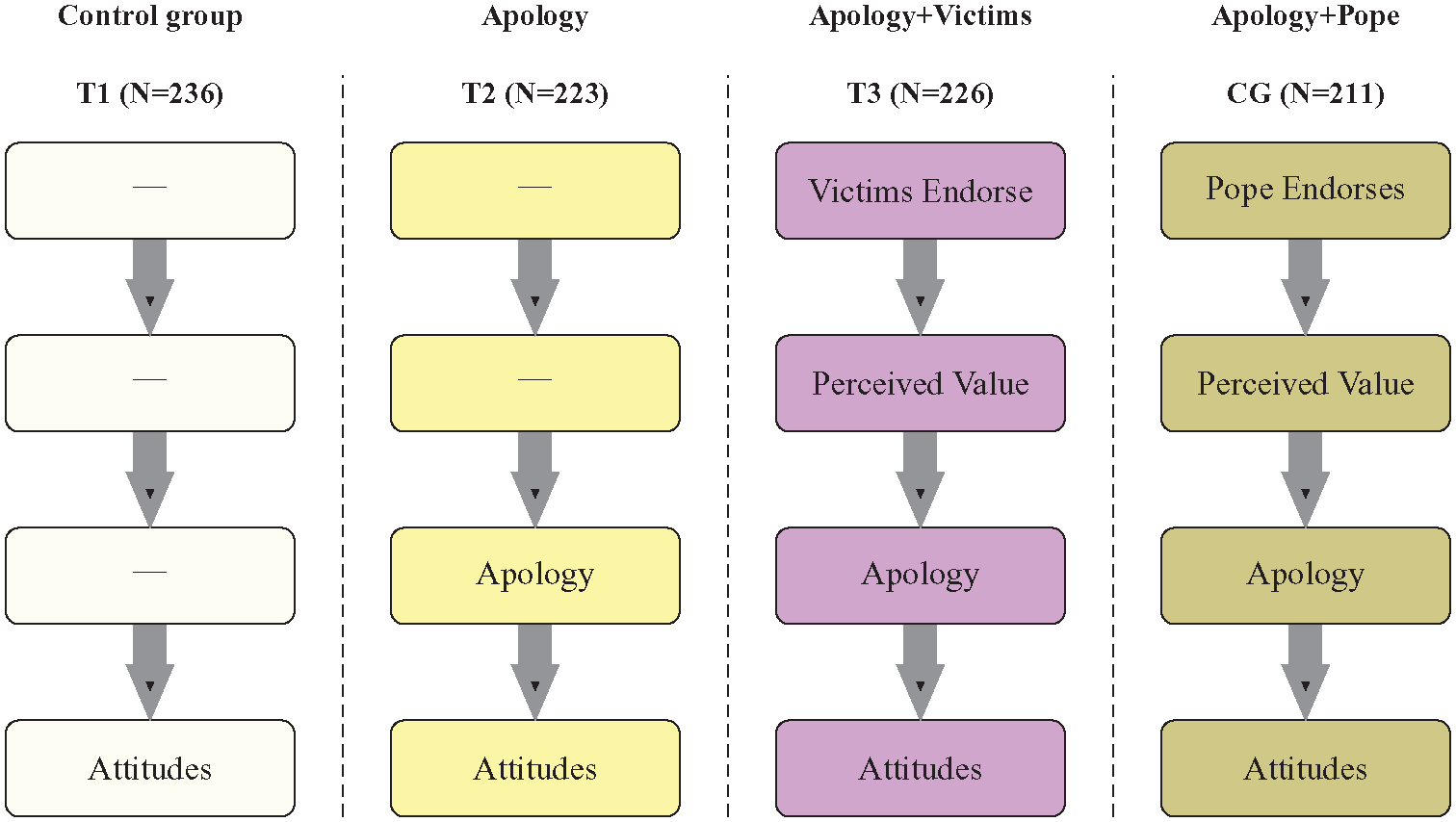
Flowchart depicting the timing of experimental conditions.
The Control Group, which constitutes the baseline, was not exposed to the apology at any point. Participants in the Apology treatment arm were exposed to the video where Timochenko apologizes before indicating their attitudes towards ex-combatant reintegration. The Apology+Pope treatment arm first read an encouragement to forgive by Pope Francis and answered a follow-up question probing their agreement, then viewed the apology video, and lastly responded to reintegration attitudes-questions. Finally, the Apology+Victims treatment arm read an encouragement to forgive by victims of the civil war and responded to a follow-up question regarding their agreement, before watching the video and answering questions about reintegration attitudes. The two latter treatment conditions enable the investigation of how third-party endorsements influence the effectiveness of the apology. The encouragements to forgive are as follows:
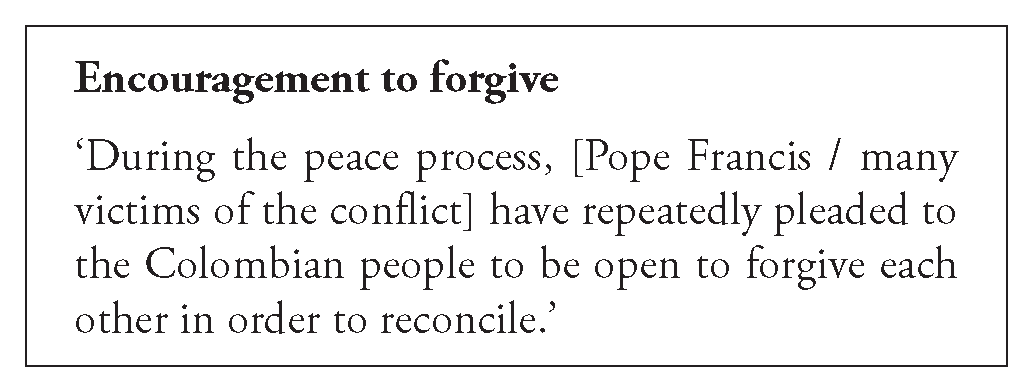
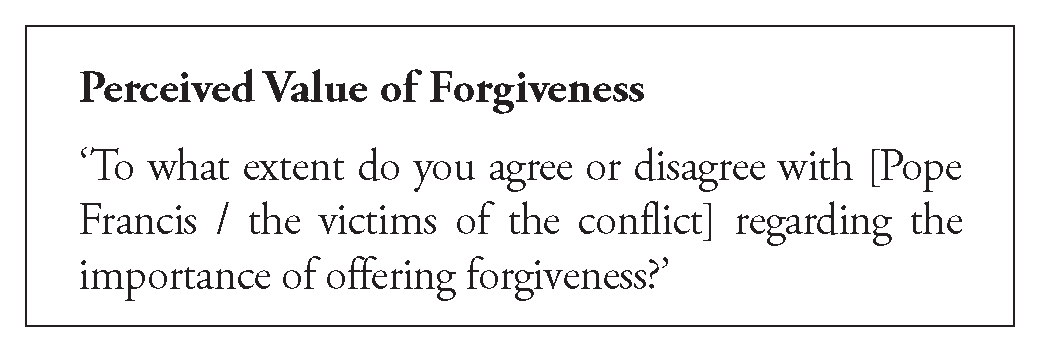
Since both Pope Francis and conflict victims have indeed argued for the importance of forgiveness as a means to promote reconciliation (Reuters, 2016), the endorsement experiment entailed no deception. The fact that the wordings were identical in the two treatment conditions, but for the identity of the third party, enables us to establish a causal effect of third-party identity on participants’ perceived value of forgiveness, which we measure through the following question:
Reintegration attitudes
Reintegration attitudes are an inherently hard-to-measure concept, not least since reintegration spans multiple dimensions of life (e.g. social and political) (Humphreys and Weinstein, 2007; Özerdem, 2012). Moreover, the malleability of reintegration attitudes likely varies for different types of indicators. Accordingly, to comprehensively study the effects of the FARC-EP apology, we measure four different indicators that jointly indicate participants’ reintegration attitudes. We capture reintegration attitudes through standard survey questions as well as through an endorsement experiment instead of indirectly measuring reintegration attitudes, e.g. by means of conjoint experiments (see, e.g. Godefroidt and Langer, 2021; Tellez, 2019a). The design allows us to employ a video recording of an authentic apology, which ensures construct validity and, in turn, improves both internal and external validity (Highhouse, 2009).
We hypothesized that exposure to the apology would improve reintegration attitudes, which we measured through three survey questions and a separate endorsement experiment. The first question probes participants’ views on ex-combatant participation in the peace process; the second captures participants’ willingness to forgive former combatants; and the third measures participants’ views on ex-combatant integration into politics. 13
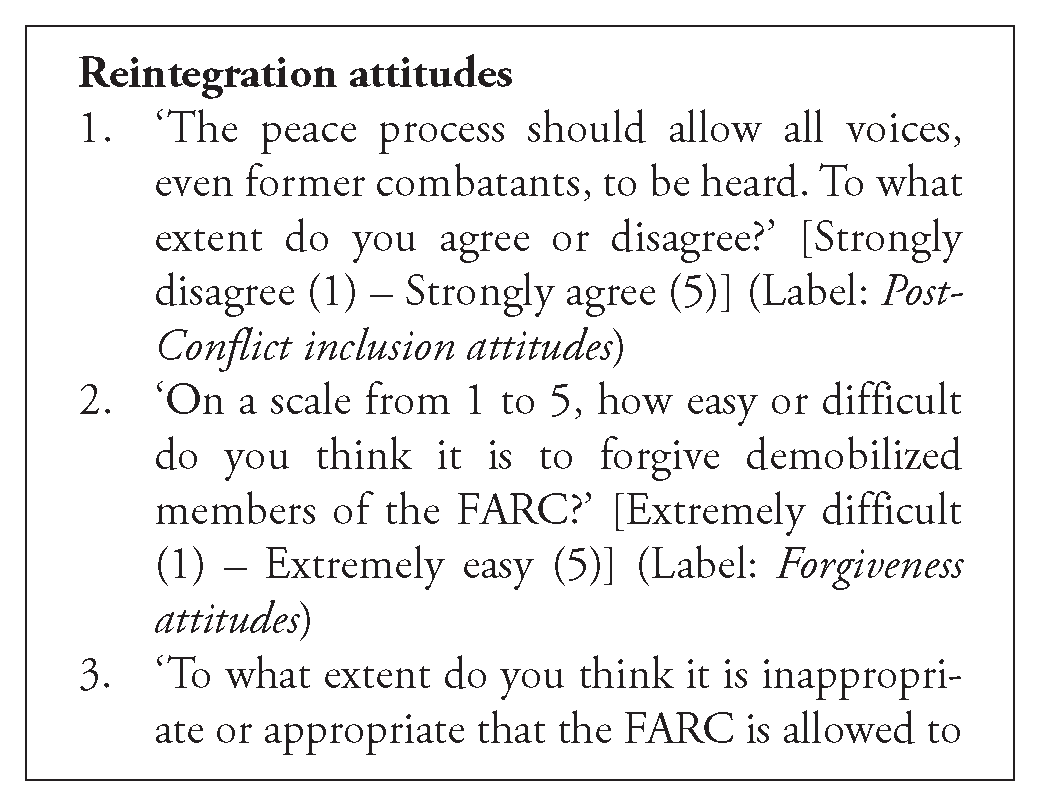
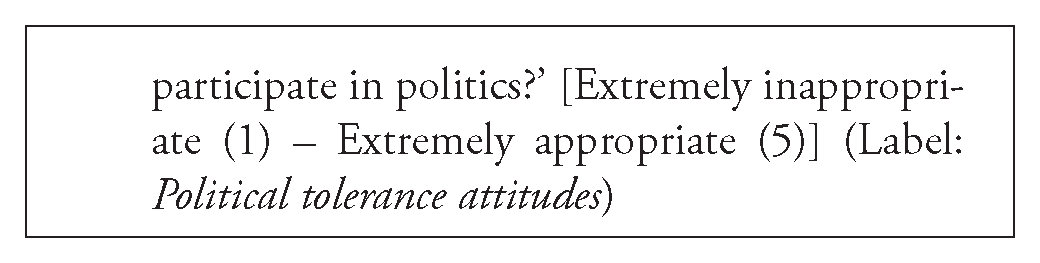
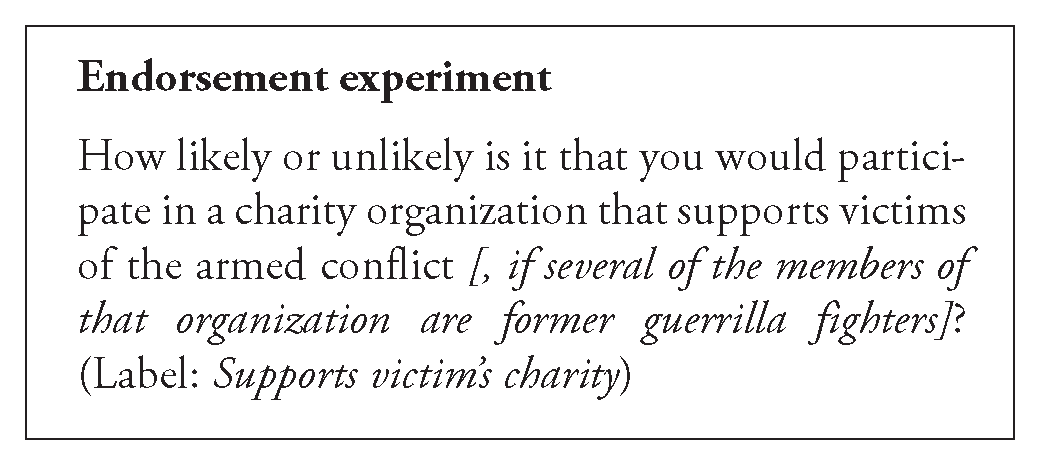
The endorsement experiment probes participants’ willingness to support a victim’s charity. By randomly including or excluding a reference to participation by former guerrilla fighters (the bracketed text in italics), we are able to infer participants’ willingness to reintegrate with ex-combatants through a between-subject design conducted separately for each treatment arm of the apology experiment.
Qualitative indicator of emotional responses to apologies
In a follow-up survey that was conducted over the phone (N = 317), we asked participants to describe their emotional reactions to public apologies made by the FARC-EP. These qualitative responses allow us to understand, in more detail, participants’ receptiveness to apologies. Through a single-blind coding procedure, a research assistant was instructed to classify responses as ‘negative’, ‘neutral’, or ‘positive’ to FARC-EP apologies. 14
Disillusionment over the peace agreement
In order to capture heterogeneity in participants’ views about the peace agreement, we leverage information from two survey questions asked prior to the apology treatment. The first question asked participants how they would vote if there was another peace referendum today (Yes; No; Would not vote; Prefer not to say). 15 Due to the ambiguity of responses in the categories ‘Would not vote’ and ‘Prefer not to say’, we keep only participants who answered ‘Yes’ (N = 593) or ‘No’ (N = 100). The second question asked to what extent participants thought that the FARC-EP had lived up to their commitment to build lasting peace (1 (Not at all) – 5 (To a large extent)). With about six out of ten participants indicating that the FARC-EP has ‘not at all’ lived up to its commitments, we operationalize this variable as a dummy indicator with the median value as the cutoff. We integrate information from the two questions to create a categorical variable that indicates how many of the following two statements are true for a given participant: 16
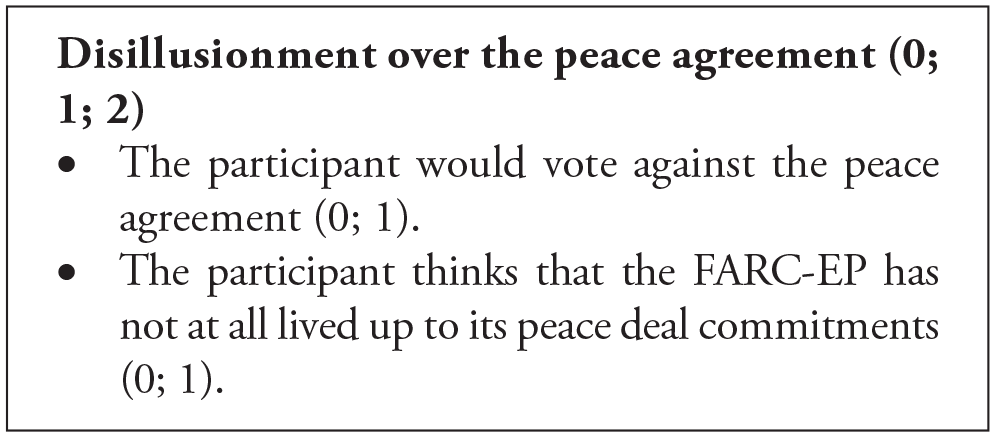
A value of 0 indicates low levels of disillusionment over the peace agreement; 1 intermediate levels; and 2 high levels of disillusionment over the peace agreement. Participants who are more disillusioned with the peace agreement are more likely to be male, have lower levels of education, and be religious. To account for the potential confounder bias this could result in, we include a parsimonious set of control variables in the main specifications.
Control variables
We consider a number of variables that are exogenous with respect to the apology treatment, namely gender, education, salary, and religiosity (see the Online Appendix Table E1), as controls. Although randomization implies that participants in the different treatment conditions are identical in expectation, random deviations may occur. In balance tests reported in the Online Appendix Table E2, we show that participants in the different treatment conditions are similar across all but one characteristic (participants in the Apology+Victims condition are shown to be less religious compared to participants in the Control Group). Random imbalances, thus, do not seem to be a problem, but since participants’ views of the peace agreement are endogenous to other participant characteristics, the heterogeneity analysis could capture influence from omitted factors. To mitigate such concerns and ensure a transparent as well as robust presentation of the results, we consistently estimate the main regressions both with and without fixed effects for all control variables.
Ethical considerations
Since the experiment involved sensitive material, namely a video recording of a former rebel commander talking about past atrocities, we took a number of precautionary measures to ensure the well-being of participants as well as enumerators. First, through the consent form, all participants were informed that they could terminate their participation at any point. Second, we designed the experiment using only authentic material and thus presented no false information or deceptive messages. Third, we incorporated generous and context-specific advice from the Ethical Review Board at the University of Los Andes in Colombia (which also granted the study ethical approval) to ensure that the survey design was sensitive to local norms and practices. In the Online Appendix Section C, we discuss ethical considerations in more detail.
Results
In what follows, we analyze each hypothesis in turn through standard OLS regressions.
H1: Does the apology increase reintegration attitudes?
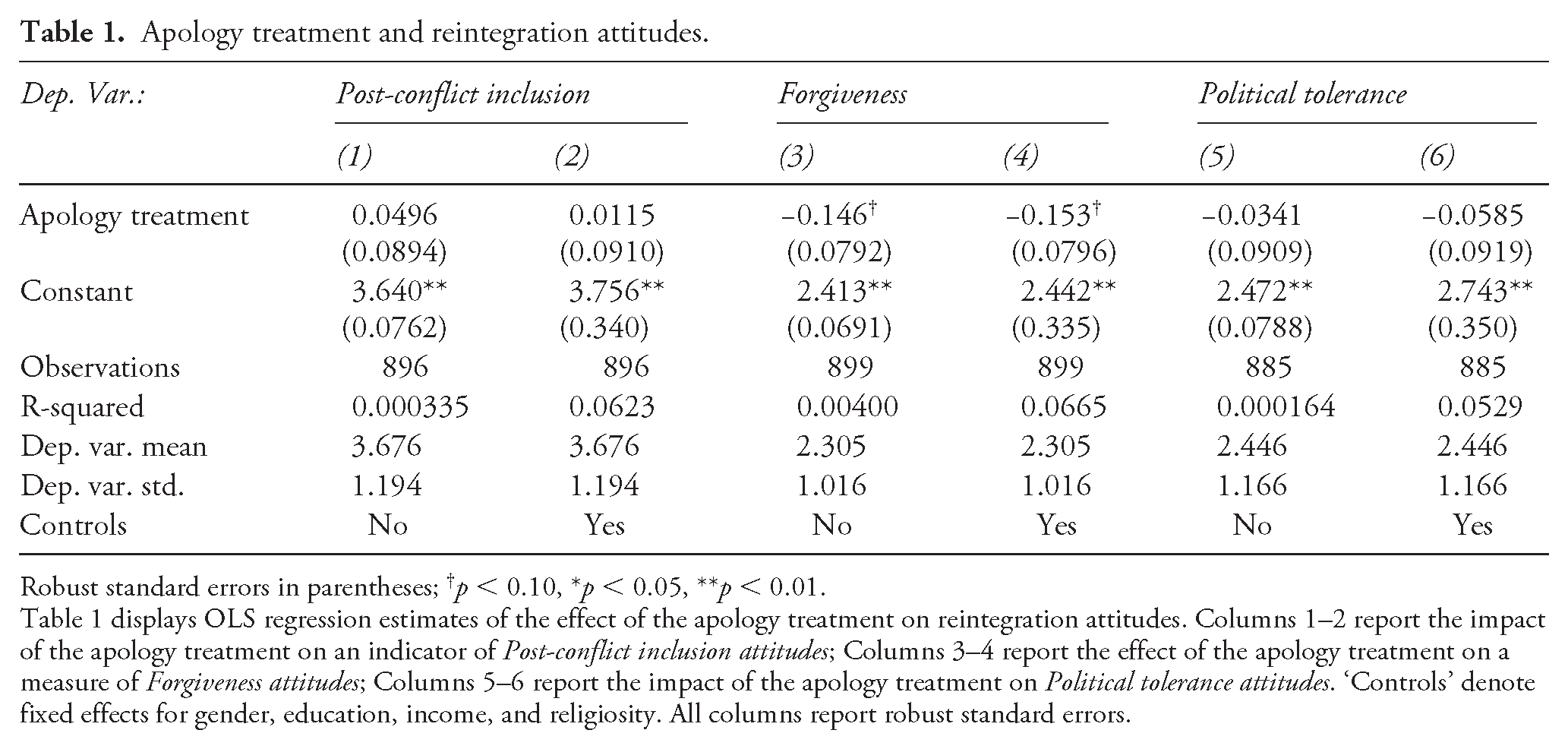
We begin by investigating the average causal effect of the apology. The first hypothesis held that exposure to the apology should increase reintegration attitudes, a prediction that is motivated both by the theoretical literature on apologies and by the case-specific features of the apology used in the present experiment (see the background section). In order to evaluate this proposition, we compare reintegration attitudes among participants who were exposed to the apology (‘Apology treatment’, which indicates assignment to the Apology, the Apology+Pope, or the Apology+Victims treatment arms) with reintegration attitudes among those who were not (Control group). The results are displayed in Table 1.
Apology treatment and reintegration attitudes.
Robust standard errors in parentheses; †p < 0.10, *p < 0.05, **p < 0.01.
Table 1 displays OLS regression estimates of the effect of the apology treatment on reintegration attitudes. Columns 1–2 report the impact of the apology treatment on an indicator of Post-conflict inclusion attitudes; Columns 3–4 report the effect of the apology treatment on a measure of Forgiveness attitudes; Columns 5–6 report the impact of the apology treatment on Political tolerance attitudes. ‘Controls’ denote fixed effects for gender, education, income, and religiosity. All columns report robust standard errors.
As is clear from Table 1, the apology did not improve reintegration attitudes across any of the three indicators. The impact on forgiveness attitudes, presented in Columns 3 and 4, even appears to be weakly negative, although the estimated coefficients are significant only at the 10% level. In the Online Appendix Table F1, we split the sample into non-victims and victims, where victims are defined as participants whose families have lost a member, or lost land, or been displaced as a consequence of the conflict (see exact definition in the Online Appendix Table E1). The results show that the apology is ineffective also for participants who were victimized during the conflict. In fact, the negative impact of apology-exposure on forgiveness attitudes is more pronounced and statistically significant among victims in our sample.
In short, the data do not support Hypothesis 1, since exposure to Timochenko’s apology did not increase reintegration attitudes, at least not on average. In what follows, we disaggregate the treatment arms to study whether third-party endorsements enhanced the impact of the apology.
H2: Do third-party endorsements enhance the effectiveness of the apology?
We now turn to an investigation of the influence that third parties may have on the effectiveness of apologies. First, we leverage the fact that the information in the Apology+Pope and Apology+Victims treatment arms were identical but for the identity of the third party. Participants in both treatment conditions were exposed to brief statements on the importance of offering forgiveness attributed either to (1) Pope Francis or (2) victims of the conflict, stating that respective actor ‘repeatedly pleaded to the Colombian people to be open to forgive’. Since the allocation of treatments was random, we can evaluate the influence of the respective authority by comparing how agreements with the statement (perceived value of forgiveness) differ between the two groups. In Figure 3, we display the results.
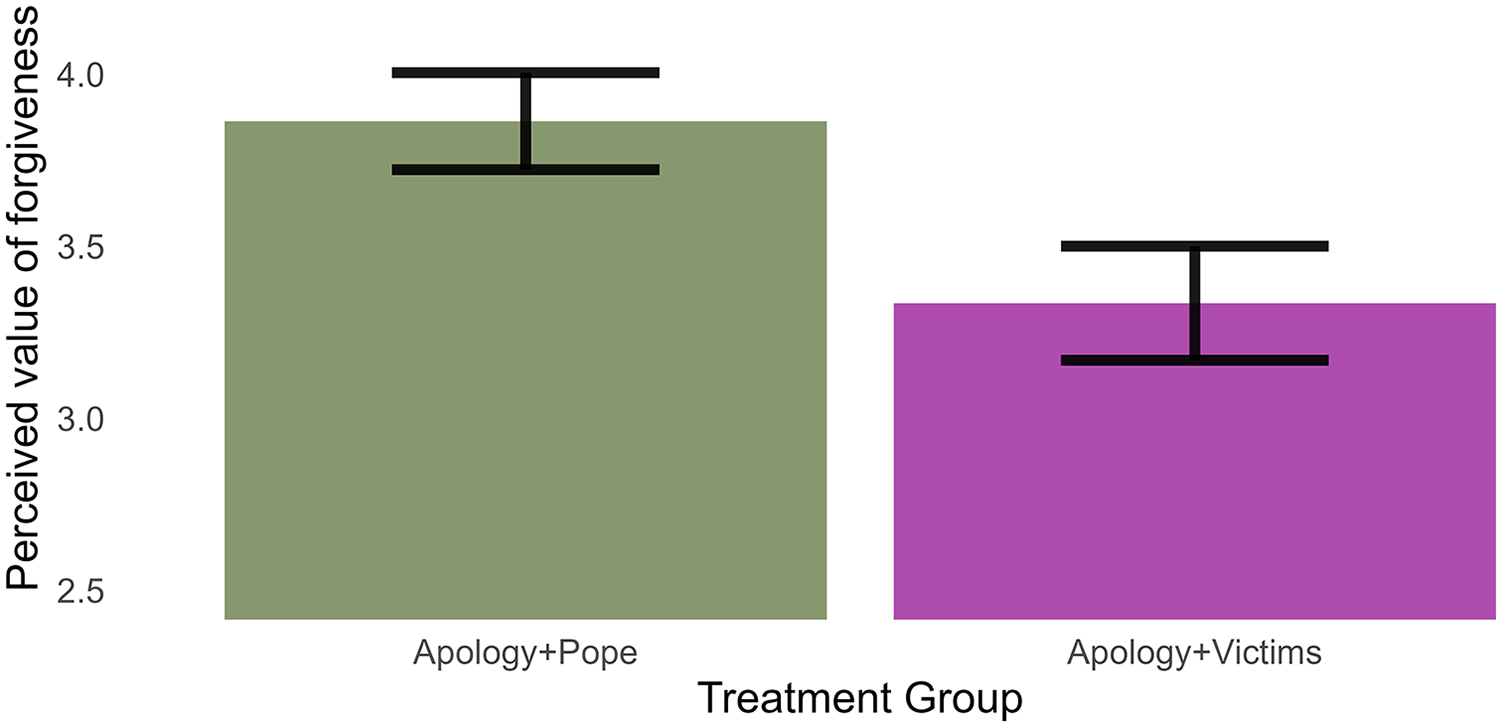
Third party matters for perceived value of forgiveness.
Despite the fact that the statements were identical except for the identity of the third party, Figure 3 shows that participants were significantly more likely to agree with the Pope regarding the value of offering forgiveness than they were to agree with ordinary Colombians who had been victimized during the conflict. Accordingly, these results underscore the potentially conciliatory influence of a celebrity – in this case the ultimate religious authority of the Catholic Church. Next, we test whether the apology coupled with the statement by the Pope also yields a more positive experimental impact on reintegration attitudes.
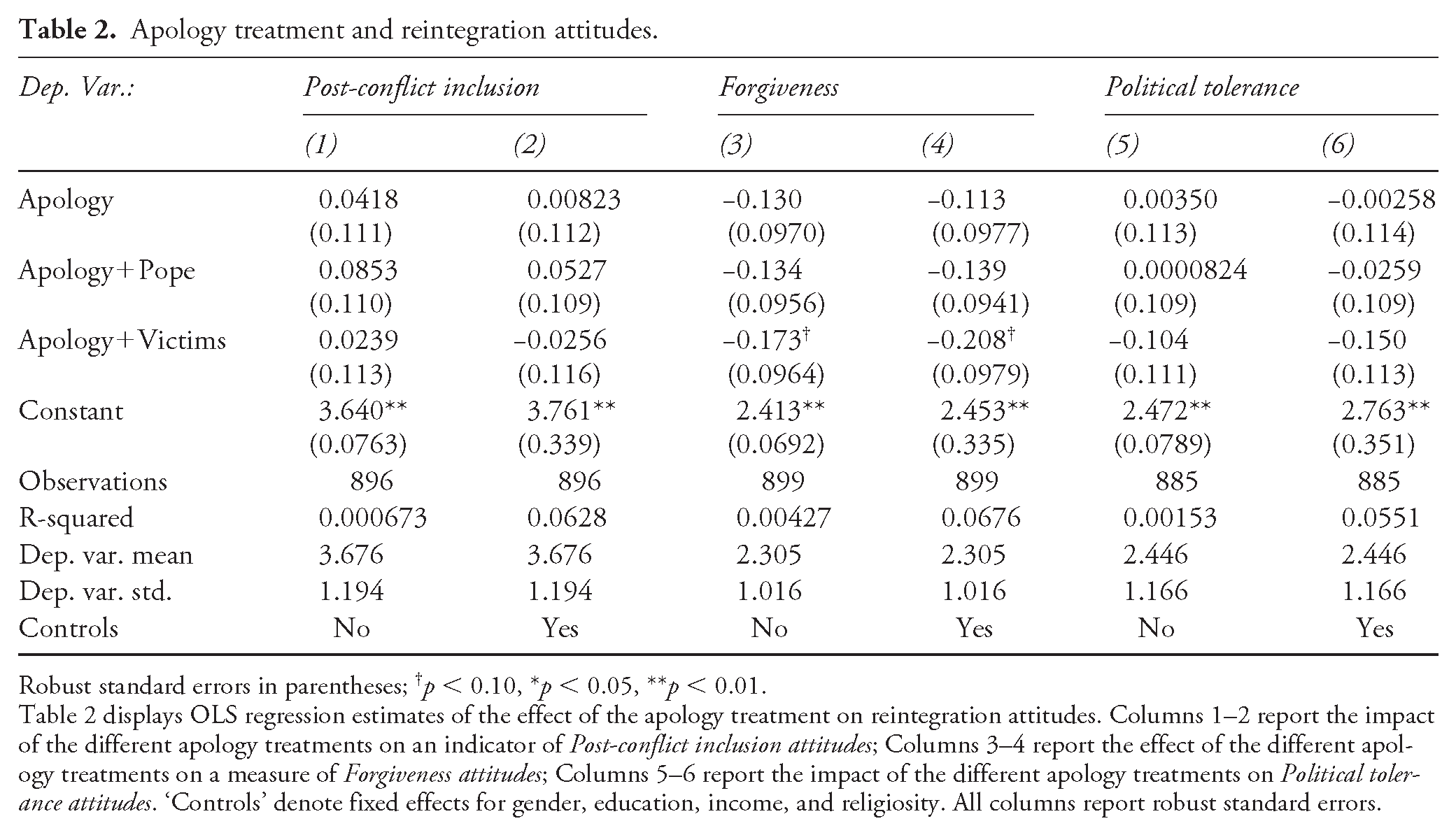
Since the experimental design entailed the random allocation of participants into the different treatment conditions, we can infer the causal impact by comparing the mean reintegration attitudes in each apology condition with the mean reintegration attitudes in the control group (which was not exposed to the apology video). The results are presented in Table 2.
Apology treatment and reintegration attitudes.
Robust standard errors in parentheses; †p < 0.10, *p < 0.05, **p < 0.01.
Table 2 displays OLS regression estimates of the effect of the apology treatment on reintegration attitudes. Columns 1–2 report the impact of the different apology treatments on an indicator of Post-conflict inclusion attitudes; Columns 3–4 report the effect of the different apology treatments on a measure of Forgiveness attitudes; Columns 5–6 report the impact of the different apology treatments on Political tolerance attitudes. ‘Controls’ denote fixed effects for gender, education, income, and religiosity. All columns report robust standard errors.
Table 2 demonstrates that endorsements from third parties do not boost reintegration attitudes. In fact, the negative effect of the apology on forgiveness attitudes is most pronounced among participants in the Apology+Victims treatment arm. In general, however, the influence of the different apology treatments is found to be statistically indistinguishable from zero.
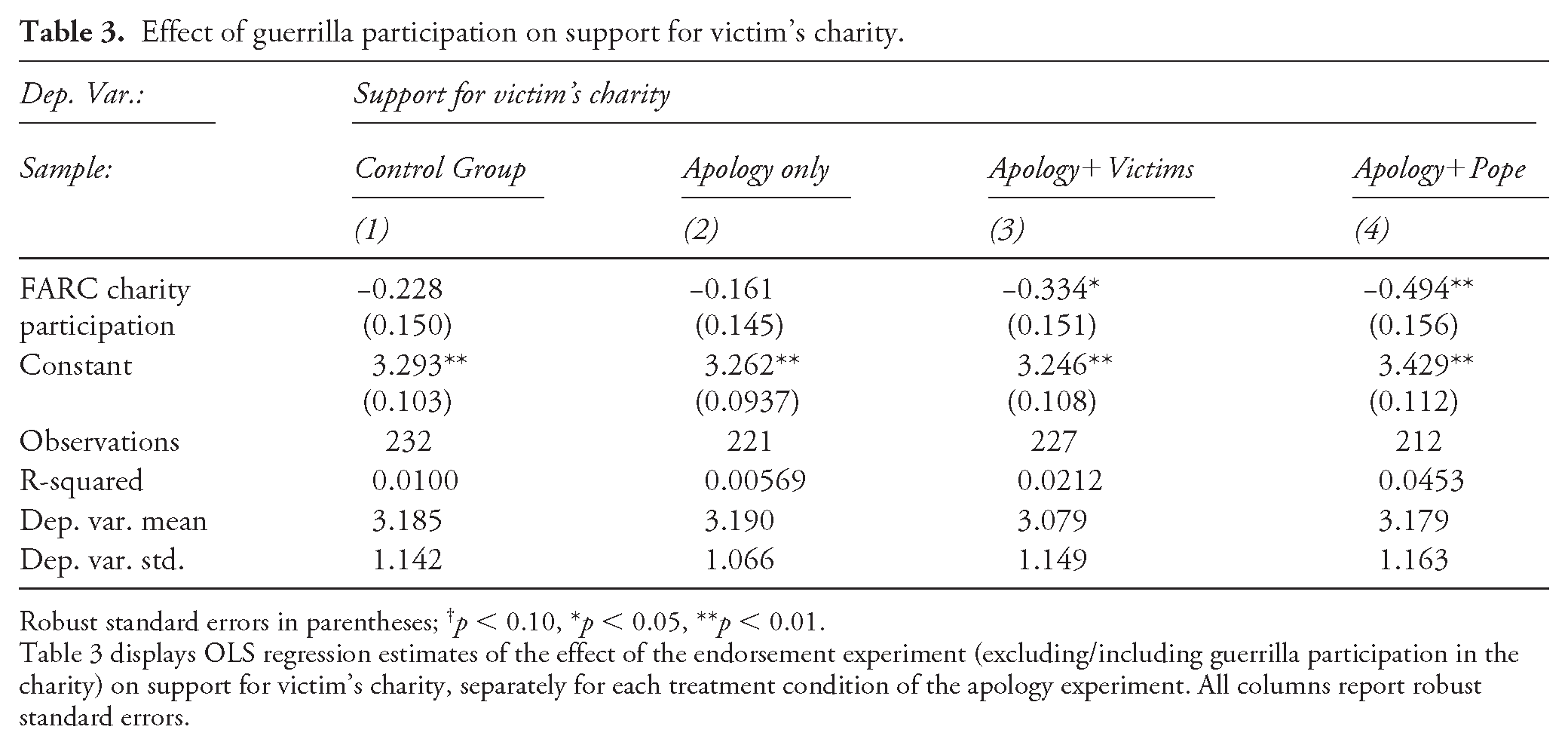
Next, we examine the influence of the different apology treatments on behavior in the endorsement experiment. Specifically, we investigate how ex-guerrilla involvement in a victim’s charity affects participants’ willingness to support that organization. Table 3 displays the results. In line with the other outcomes, we do not find any evidence indicating that exposure to the apology video enhances reintegration attitudes as measured by the endorsement experiment. On the contrary, the negative effects of guerrilla participation on reintegration attitudes are larger (and statistically significant) among participants in the Apology+Victims and the Apology+Pope treatment arms.
Effect of guerrilla participation on support for victim’s charity.
Robust standard errors in parentheses; †p < 0.10, *p < 0.05, **p < 0.01.
Table 3 displays OLS regression estimates of the effect of the endorsement experiment (excluding/including guerrilla participation in the charity) on support for victim’s charity, separately for each treatment condition of the apology experiment. All columns report robust standard errors.
To understand the lack of positive influence of the FARC-EP apology on reintegration attitudes, we next turn to an exploratory investigation of emotional reactions to apologies and a subsequent heterogeneity analysis.
H3: Does disillusionment over the peace agreement moderate the impact of the apology?
We conducted a follow-up survey to map and understand people’s reactions to the FARC-EP apology. In the survey, we asked participants to describe their emotional reactions when hearing the FARC-EP apologizing and coded their responses as either ‘negative’, ‘neutral’, or ‘positive’ (the measure is described in more detail in the qualitative indicator section). In Figure 4, we show the frequency of responses in each code along with word clouds depicting the most common words in the responses of respective codes.
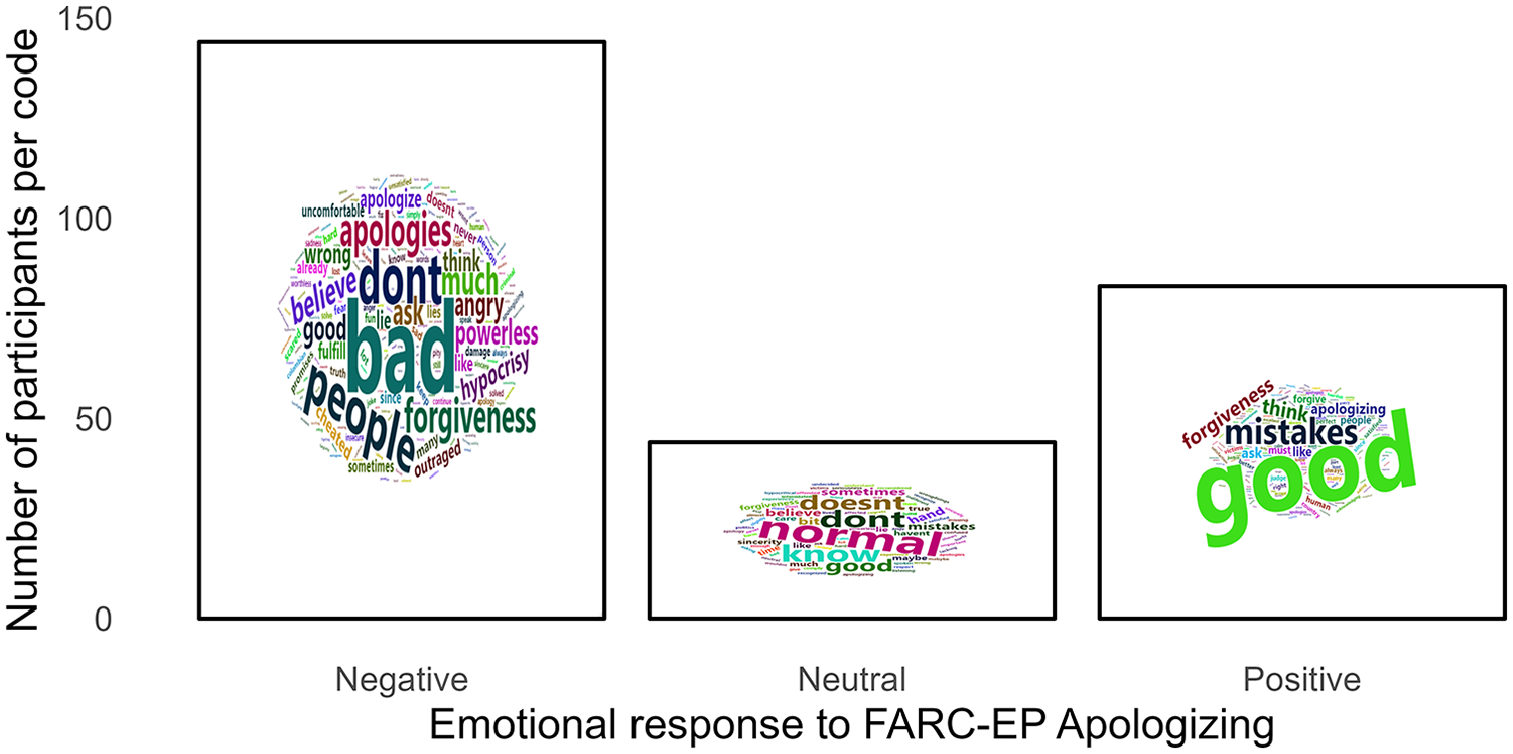
Emotional reactions to FARC-EP apologies.
As is clear from Figure 4, a substantial share of participants report negative emotional reactions to hearing the FARC-EP apologizing. A number of participants responded with strong words such as ‘lies’, ‘hypocrisy’, and ‘cheated’. This qualitative evidence can partly explain why the apology treatments were unable to increase the average levels of reintegration attitudes.
However, not all participants were equally negative toward the prospect of the FARC-EP apologizing. In the Online Appendix Table F2, we show that positive emotional reactions were more common among participants who are not disillusioned with the peace agreement between the FARC-EP and the Colombian state, compared with participants reporting intermediate levels of disillusionment, and particularly compared with participants who are highly disillusioned with the peace agreement. The different peace agreement camps display emotional reactions in line with their opinion-based identities, according to which opponents of the peace agreement should exhibit more skeptical attitudes toward public apologies by the FARC-EP (Tellez, 2019a).
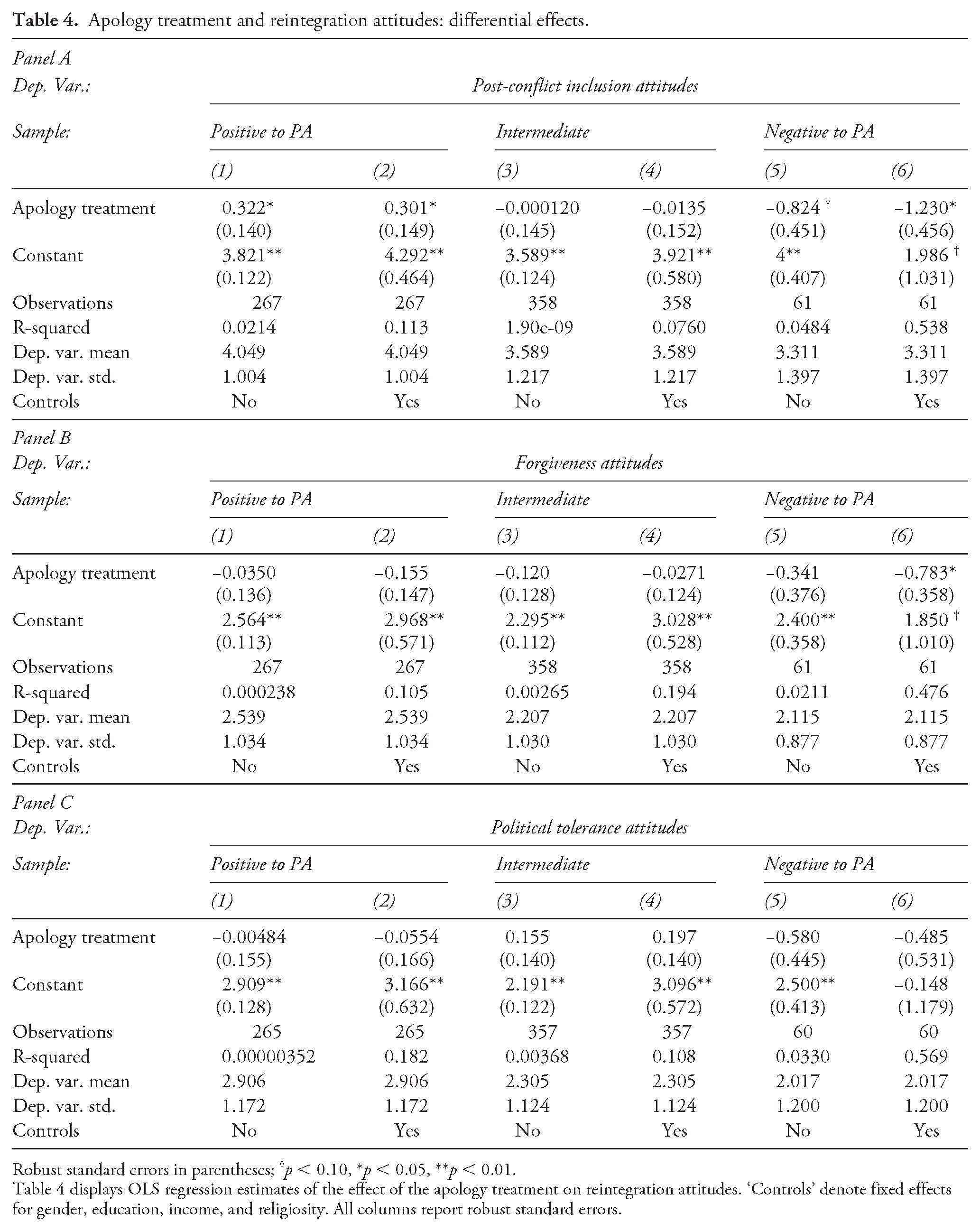
Finally, we investigate whether this heterogeneity implies that participants’ reintegration attitudes are differentially affected by Timochenko’s apology. In Table 4, we report the effects of the apology video on post-conflict inclusion attitudes (Panel A), forgiveness attitudes (Panel B), and political tolerance attitudes (Panel C), separately for participants reporting low (Columns 1–2), intermediate (Columns 3–4), and high (Columns 5–6) levels of disillusionment over the peace agreement. First, we show that the apology impacts post-conflict inclusion attitudes in opposite directions depending on participants’ predetermined levels of disillusionment over the peace agreement (Panel A): those who hold low levels of disillusionment display higher levels of post-conflict inclusion attitudes when exposed to the apology, whereas those who are highly disillusioned with the peace agreement display lower post-conflict inclusion attitudes when exposed to the apology. Second, we find similar but less pronounced patterns for attitudes concerning forgiving former members of the FARC-EP (Panel B). While participants who report low or intermediate levels of disillusionment over the peace agreement display small and statistically insignificant effects of the apology, those with high levels of disillusionment exhibit a statistically significant drop in forgiveness attitudes when subject to the apology treatment (conditional on controls). Third, we do not find the same tendencies for political tolerance attitudes (Panel C); although participants with high levels of disillusionment over the peace agreement display negative reactions to apology exposure, the effects are statistically insignificant. In sum, while the findings are not conclusive, they suggest that exposure to the FARC-EP’s apology may have adverse consequences for participants who already are disillusioned with the peace agreement, in the sense that apology exposure appears to reduce their post-conflict inclusion and forgiveness attitudes. In the Online Appendix Table F3, we operationalize the indicator of peace agreement disillusionment as a count variable and demonstrate interactions with the apology treatment. The results largely align with those presented in Table 4, with peace agreement disillusionment significantly moderating the impact of apology exposure on post-conflict inclusion attitudes, but not on the other indicators of reintegration attitudes.
Apology treatment and reintegration attitudes: differential effects.
Robust standard errors in parentheses; †p < 0.10, *p < 0.05, **p < 0.01.
Table 4 displays OLS regression estimates of the effect of the apology treatment on reintegration attitudes. ‘Controls’ denote fixed effects for gender, education, income, and religiosity. All columns report robust standard errors.
Studying baseline attitudes (Dep. var. mean) in Table 4, we expectedly find that participants with negative views toward the peace agreement display lower reintegration attitudes across all indicators. This pattern, in conjunction with our findings that the apology reduces reintegration attitudes among participants with pre-determined high levels of disillusionment over the peace agreement, implies that public apologies may have a polarizing effect on public attitudes toward reintegrating ex-combatants.
Discussion and conclusion
Public apologies have become an increasingly common instrument for building conciliatory sentiments in nations transitioning from war to peace. In Colombia, civil society groups, Christian congregations, international organizations, and state institutions have converged on the imperative to demand apologies from former armed groups. However, the influence of apologies on people’s attitudes and willingness to reintegrate ex-combatants is not theoretically straightforward, nor have the effects been sufficiently scrutinized in an empirical sense. In the present study, we analyze a large-scale video experiment in which a random subset of participants were exposed to a video recording featuring an authentic apology by the former insurgent group FARC-EP. The investigation shows that participants who were exposed to the apology do not exhibit a stronger willingness to reintegrate former members of the FARC-EP compared with participants in a control group who were not exposed to the apology. In an open-ended question embedded in a follow-up survey, a substantial share of the participants express negative emotional reactions to (the prospect of) the FARC-EP apologizing. Accordingly, it should come as no surprise that participants are, on average, unaffected by the apology. In an exploratory heterogeneity analysis, we show that participants who are highly disillusioned with the peace agreement describe more negative emotional reactions to the FARC-EP apologizing and report lower levels of reintegration attitudes when exposed to the apology.
Our experimental approach, using an authentic video recording in which the leader of the FARC-EP apologizes for crimes committed in the specific region we study along with third-party encouragements to forgive, provides an ideal design for the causal identification of the attitudinal effects of public apologies. 17 The absence of a positive impact in the present experiment should not, however, be taken as a blanket rejection of all apologies. First, apology-specific features arguably matter. In particular, the fact that the apology studied in the present study is mass communicated rather than delivered in person may limit its effectiveness (Kampf, 2013; Saito, 2016; Tavuchis, 1991). Second, contextual circumstances may have moderated the effectiveness of the apology treatment. Meta, our empirical setting, was particularly hard-hit by the Colombian armed conflict and has struggled economically in the post-agreement period (Nilsson and Marín, 2021). Slow recovery – coupled with popular beliefs about former members of the FARC-EP enjoying generous concessions as a result of the peace agreement – may have reduced receptiveness to the apology (Tellez, 2019a).
Yet, the fact that exposure to a public apology appears to reduce reintegration attitudes among a subset of participants in one setting is sufficient to warrant caution in the roll-out of mass-communicated apologies. In order to avoid attitudinal polarization, we ought to better understand how transitional justice practices affect the most negatively inclined participants. To this end, more research on the framing, timing, and differential impacts of apologies is needed. Furthermore, practitioners should consider context-specific elements before implementing transitional justice mechanisms at scale to ensure desired effects. As demonstrated in the present study, ex-combatant apologies might not always live up to their promise of healing past wounds.
Footnotes
Acknowledgements
We are grateful to the editor and three anonymous reviewers, as well as participants of the Workshop on Toolkits, Norms and Standards in Transitional Justice at the University of Los Andes (2023) and the annual conferences organized by the Conflict Research Society (2022) and Peace Research in Sweden (2022), for their generous feedback. Finally, we are indebted to the enumerators for their immense effort during the data collection and for excellent research assistance provided by Maria del Mar Morales Burkle.
Replication data
The data and code necessary for the replication of the main findings, along with the Online Appendix, are available at https://www.prio.org/jpr/datasets/ as well as at Zenodo ( ).
).
Funding
The research was funded by the Bank of Sweden Tercentenary Foundation through the project Pushing the Boundaries of Peace Research: Reconceptualizing and Measuring Agonistic Peace, grant number RIK18-14416.
Pre-registration
Notes
GUSTAV AGNEMAN, b. 1989, PhD in Economics (Copenhagen University, 2020); Associate Professor in Economics, Norwegian University of Science and Technology (2023–present); main research areas: behavioral development economics, political behavior, armed conflict.
LISA STRÖMBOM, b. 1975, PhD in Political Science (Lund University, 2010); Associate Professor in Political Science, Lund University (2017–present); current research interests: recognition in intrastate conflict, grassroots peacebuilding and conflict transformation.
ANGELIKA RETTBERG, b. 1969, PhD in Political Science (Boston University, 2000); Professor, Universidad de los Andes (Bogotá - Colombia) (2002–present); main research interests: armed conflict, peacebuilding, gender, transitional justice, political economy, private sector.