




Abstract
The European Union, the United Nations, and the United States frequently use economic sanctions. This article introduces the EUSANCT Dataset—which amends, merges, and updates some of the most widely used sanctions databases—to trace the evolution of sanctions after the Cold War. The dataset contains case-level and dyadic information on 326 threatened and imposed sanctions by the EU, the UN, and the US. We show that the usage and overall success of sanctions have not grown from 1989 to 2015 and that while the US is the most active sanctioner, the EU and the UN appear more successful.
Keywords
Introduction
The literature on economic sanctions has evolved considerably in the past few decades. Early case-study research (Galtung, 1967; Lindsay, 1986) established the conventional wisdom that sanctions do not work. Hufbauer et al. (1990) qualified this pessimism through the first large-N dataset (HSE) in which they identified around one-third of the 115 collected sanction cases as (at least partially) successful. Still, scholars remained skeptical about the effectiveness of sanctions and challenged the challenges to this view (e.g. Pape, 1997, 1998).
A number of theoretical advances and methodological innovations have, however, led to a more nuanced evaluation of sanctions. Marinov (2005) shows in a landmark study that sanctions destabilize targeted leaders. Based on this finding, he argues that research focusing on imposed sanction cases is “a classic case of selecting on the dependent variable. To find out how effective sanctions truly are, sound methodology requires that we compare policy outcomes with and without foreign pressure” (Marinov 2005: 574). While the substantive result was called into question (e.g. Peksen, 2009; Peksen and Drury, 2010), the publication of this and some other studies of the early 2000s marked a turning point at which systematic studies started to examine the effects of sanctions on certain outcomes rather than evaluating solely the effectiveness of the coercive measures. McLean and Radtke (2018), for example, show in this vein that senders are more likely to target stable (vulnerable) governments with whom they entertained friendly (unfriendly) relations prior to the sanction episode. Based on a new dataset, von Soest and Wahman (2015a) also find that democratic sanctions (i.e. measures that have specific democratization-related demands) increase the level of democracy in authoritarian regimes and make both leadership and regime change more likely.
The literature on sanctions further advanced significantly through the introduction of the Threat and Imposition of Economic Sanctions (TIES) dataset by Morgan et al. (2009, 2014), which covers a greater universe of cases and a broader set of variables, and even more importantly, systematically includes sanction threats and not only impositions. This database thus enabled researchers to account for the selection effect that target countries, which would potentially be willing to acquiesce to imposed sanctions, may have already given in to a threat. In this regard, imposed sanctions are a negative selection of cases (Drezner, 2003). By using TIES, scholars were able to establish a variety of determinants of sanctions effectiveness, such as costs to the target, the use of smart sanctions or multilateral cooperation (see the analysis of Bapat et al., 2013). Other studies examine the impact on domestic political institutions of the target countries (e.g. Jeong and Peksen, 2019; Lektzian and Souva, 2007) and reactions of target states facing sanctions (e.g. Escribà-Folch, 2012; Escribà-Folch and Wright, 2010).
Despite this progress, there is still a lack of research on, first, the sanctioning behavior of individual sender states. While several scholars consider the imposition of US sanctions (e.g. Drury, 2001, 2005; Kustra, 2018; Whang, 2011), we know relatively little about why some states are sanctioned by certain senders with particular measures and others are not. Some scholars link the imposition of sanctions to the literature on the Democratic Peace. Lektzian and Souva (2003) and Cox and Drury (2006) as well as Drury et al. (2014) argue that democratic institutions as well as shared values and interests between democracies make sanctions less likely. However, given ever-closer economic interdependencies in a globalized world and thus growing opportunity costs of economic coercion, policymakers in the sender countries also need to worry more about the negative effects of sanctions on their own economies. The sanctioning process thus becomes more strategic: sanctions may be diluted or not even imposed in the first place. The careful screening of potential targets makes it mandatory in our view that the research community carefully examines the strategic imposition of sanctions.
Second, although the European Union has increasingly relied on this coercive foreign policy instrument since the end of the Cold War, few studies (e.g. Eriksson, 2011; Giumelli, 2011; Portela, 2010) have evaluated the sanctions imposed by this supranational organization. This explains why the literature still largely focuses on measures initiated or supported by the US.
One reason for the lack of research on the EU’s sanction policy and the strategic imposition of sanctions is that none of the previous datasets controls for the sanctioning behavior of individual senders, in particular with respect to the supranational actor. One notable exception is the research by von Soest and Wahman (2015b), who collected data to analyze the selective use of sanctions by the EU, the UN, and the US against authoritarian regimes. They show that military coups and electoral fraud rather than a lack of sound democratic institutions trigger sanctions because political leaders are most likely to gain domestic and international political support for responding to current events. Moreover, they establish “that senders are more likely to sanction vulnerable states where the chance of success is high and that sanctions are more likely when the expected economic and political costs are low” (von Soest and Wahman, 2015b: 26). Going beyond democratic sanctions against autocracies, our newly created EUSANCT Dataset, which comes in a case-level and a dyadic version, serves as a valuable tool for such sender-focused analyses and related examinations for the era after the breakdown of the Berlin Wall and thus a period during which economic bonds have reached an unprecedented intensity.
The EUSANCT Dataset covers all threatened and imposed sanctions by the EU, the UN, and the US between 1989 and 2015. It amends, merges, and updates some of the most widely used sanction data resources that have been developed in recent years: the TIES dataset (Morgan et al., 2009, 2014), the HSE dataset by Hufbauer et al. (1990, 2007), and the GIGA Sanctions Dataset (Portela and von Soest, 2012). EUSANCT combines the different advantages of extant data sources and allows scholars to comprehensively study how economic statecraft has evolved during the first quarter of a century in the post-Cold War era. Besides focusing on the imposition of sanctions by different senders and covering more recent cases, our main contribution is the systematic coding of EU sanctions.
The literature on economic sanctions is a nice example of how the availability of new data sources leads to new understandings of political processes. We believe that the sender-focused EUSANCT Dataset can complement existing data sources by offering new possibilities to analyze economic coercion.
The data
Case-level EUSANCT Dataset
EU, UN, and US sanctions in the Post-Cold War period
Sanctions are, generally speaking, a measure of economic coercion through which senders try to force a target to change a behavior that they deem unacceptable. Economic statecraft, to use Baldwin’s (1985) shorthand for this foreign policy instrument, has been defined operationally as the “withdrawal, or threat of withdrawal of customary trade or financial relations” (Hufbauer et al., 2007: 3). The announcement to cut economic ties serves in Schelling’s (1966, 1967) perspective as a commitment device. Sanctions follow accordingly the same logic as deterrence measures as their senders impose, when unleashing the punishment or threatening to do so, costs on the target and on themselves. Following this logic, sanctions induce the target to divert its attention to policies that the sender considers less harmful than the sanctionable offense. The sender or, in a deterrence context, the defender might “want to lower the price of a force that we prefer him [i.e. the adversary] not to have, to induce him to draw resources from other parts of his budget that we like even less” (Schelling, 1967: 120). Although signaling one’s resolve to impose sanctions is less costly than the equivalent measure during an interstate crisis (Whang and Kim, 2015), not following up on an explicit threat still amounts to a considerable loss of face. 1 Audience costs also accrue if the senders water down imposed sanctions without obtaining major concessions from the target.
The EUSANCT Dataset focuses on the sanctioning activities of the three most important senders of sanctions—the European Union (EU), the United Nations (UN), and the United States (US)—and conceives the supranational EU as an actor in its own right. The case-level dataset therefore covers all threatened and imposed sanctions by the EU, the UN, and the US during the entire post-Cold War era (1989–2015) that, arguably, ended with two key events of 2016: the Brexit vote and the election of the 45th US President. It should be noted that, even though we only consider the period from 1989–2015, the dataset covers 16 cases that started prior to 1989 but went on during our period of interest. Since we would like to have a full account of all ongoing sanctions from 1989–2015, we need to include cases that started earlier but were still in place at the start of our period of interest. 2 EUSANCT focuses on this temporal domain for two reasons. First, many of the sanctions that were concluded before 1989 follow a Cold War logic and are thus dictated by other mechanisms than the economic coercion exerted in the multipolar setting after the fall of the Berlin Wall. Second, at the beginning of this time period, the EU established itself as the second most important sender of economic sanctions after the US and before the UN. The Maastricht Treaty, which entered into force in 1993, laid down the legal basis for what the supranational organization calls restrictive measures. All prior EU sanctions were based on informal agreements and on the formal imposition by individual member states, even though the foreign policy framework of the organization, the so-called European Political Cooperation regime founded in 1970, was already codified in 1986 with the Single European Act, the predecessor agreement to the Maastricht Treaty.
Moreover, we only consider cases in which at least one of the major senders was involved: the EU, the UN, or the US. First, we think that it is correct to focus on these senders because these are simply the actors that most commonly employ this foreign policy instrument. Second, coercive efforts by other senders are frequently less codified or accompanied by limited political clout. Sanctions by China or Russia are, for instance, often more implicit. The Russian countersanctions against the EU, the US, and their allies in the aftermath of the annexation of Crimea illustrate this difference: while Russian authorities justified the measures with security considerations, the main ambition was to drive a wedge into the Western alliance and to increase the costs of the coercive measures by the other side. Moreover, Russia also used these coercive measures to justify attempts to protect its own agricultural industry (Pospieszna et al., 2020). Third, we do not primarily focus on senders such as Australia and Canada because they rarely employ sanctions unilaterally. 3 These states typically join sanctioning efforts, but do not frequently take the lead in unilateral or multilateral efforts. To account for secondary senders, we code the involvement of up to four additional sender countries (and three additional sender institutions) for sanctions by our three main senders of interest. Finally, and more technically, we figured that sanctions imposed by other senders (e.g. China, Russia, the African Union, the Economic Community of West African States, the League of Arab States and many more) are not consistently reported in English language news. Even without language barriers, one would need to have access to the original documents—and this would still not suffice as the sanctioning process of other senders is often less formalized and not necessarily codified in official laws or administrative acts.
It goes without saying that the sanctioning processes of the EU, the UN, and the US are very distinct. Sanctions by the US, a single sovereign state, follow another logic to sanctions by international organizations such as the EU and the UN that have many veto players and a much more complex decision-making process. Even EU and UN sanctions are very different, not least because the EU is a regional organization. However, we believe that there is a lack of research on the causes and consequences of these differences, especially with regard to the EU for which there is no comprehensive dataset yet. However, to investigate the impact of different decision-making processes and to avoid analyzing a single sender such as the EU in a vacuum, one needs to have a dataset that covers at least the most frequent senders.
Coding and data sources
Since the time until 2005 is comprehensively covered by all existing sanction datasets, we used these sources for the identification of relevant cases. However, it is important to note that we did not use these databases as a source of information. EUSANCT relies on an independent coding of all included variables. In other words, we did not copy the coding of previously identified sanction cases for variables that we borrowed from other datasets. By researching each individual case, we tried to minimize the dangers of inconsistently coding and duplicating cases that are reported in several datasets. If our assessment differed from one of the other sources, we discussed our coding decision extensively in our research team and, in some instances, also with the investigators of other data gathering efforts.
After combining all existing datasets, we updated the joint dataset for the remaining period from 2006 until 2015. For identifying new sanction threats and imposed sanction cases, we have created a set of sanction-related keywords (see our Online Appendix). We employed these keywords with the help of student assistants for a systematic keyword search using the Nexis news database and other online sources. Therefore, we assigned each sender to a research assistant. Identified sanctions were further investigated and coded, when applicable. Each case was coded by an assistant and one of the authors to ensure an internal consistency in the final coding decision.
Figure 1 displays the number of all 326 EUSANCT cases according to the different data sources in which they are mentioned. We have identified 58 cases for the period from 2006 to 2015. In the process of researching cases from the existing datasets, we came across 49 additional sanction cases before 2006 that have not been identified before. In sum, the EUSANCT Dataset includes 107 cases, which have not been covered in any of the three most commonly used sanction datasets (i.e. GIGA, HSE, and TIES). 4 The low level of overlap between existing datasets might be a cause of concern, but other data collection efforts in conflict research have uncovered similar inconsistencies across datasets purported to measure the same phenomenon (e.g. Sambanis, 2004). Moreover, two reasons for the low overlap stand out. First, the time periods vary: while we consider the post-Cold War era from 1989 to 2015, TIES covers the period 1945–2005, HSE 1914–2012, and GIGA 1990–2010. Second, the spotlights of the datasets differ: TIES provides the most comprehensive dataset including threats and imposed sanctions but ends in 2005. In contrast, GIGA focuses on imposed democracy-related sanctions by the EU, the UN, and the US only, and HSE “records only a rather modest part of all historically occurring sanctions” (Morgan et al., 2009: 93).
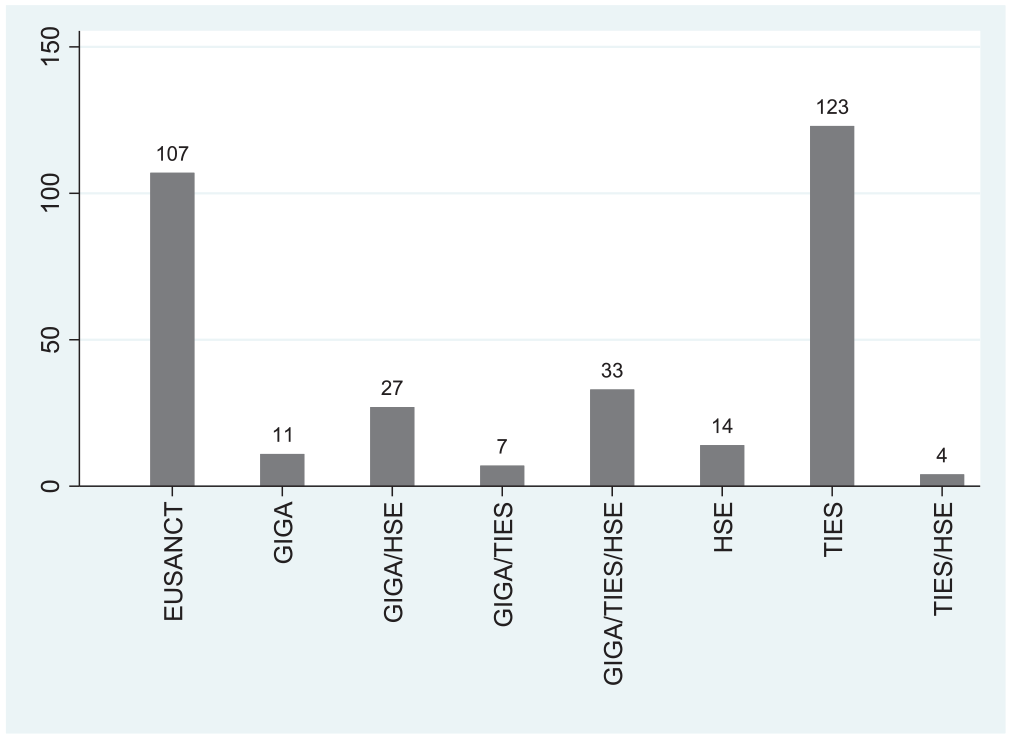
Number of exclusive EUSANCT sanction cases in comparison with EUSANCT cases that were already included in existing datasets (GIGA, HSE, and TIES).
Sanction cases as the unit of analysis
A sanction case begins when one or several of the three main senders that we consider issue a threat or impose a sanction with regard to a perceived political misbehavior by a target state. The sanctions should target the (de facto) government of the country and thus those actors who hold power over (the majority) of a country’s territory. EUSANCT consequently not does cover any measures against non-state actors. Since there needs to be some behavior by a target state (referred to as the “issue”) to which one or more senders react with the threat or the imposition of a sanction, we code up to three issues. Sanctions can involve issues that directly affect the international community, such as exercising political influence over a third state, militarized actions, territorial disputes, alignment choices, weapons production and proliferation, illegal nuclear enrichment, support of terrorist groups, and drug trafficking. Other issues concern domestic policies of the target state, i.e. human rights violations, electoral frauds, violations of the constitutional order, and enhancing leadership change. 5
When the same sender imposes additional sanctions or another sender threatens or imposes sanctions because of the same issue, these measures belong to the same case. In contrast, when the sanctions are de facto lifted, the target state changes such that the sanctions are no longer applicable, or a single threat is not repeated for more than a year, the case is considered as terminated. However, if the same or another sender threatens or imposes an additional sanction against the target, but is referring to a new, separate issue, then an extra case starts.
The EUSANCT Dataset covers 326 sanction cases. Table 1 displays the distribution of imposed and threatened sanctions. There are 209 imposed sanctions of which 148 cases were preceded by a threat of at least one of the senders. Moreover, the dataset includes 117 threats that did not result in sanctions.
Distribution of sanction threats and imposed sanctions.
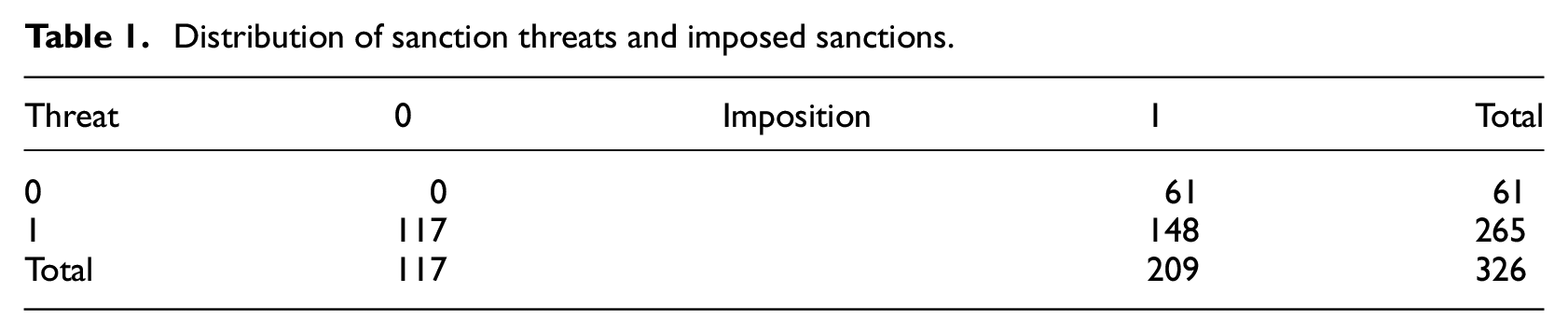
Figure 2 displays the distribution of threats and imposed sanctions for each sender and the combinations in which the different senders act in these cases because many sanctions were threatened and imposed in a joint effort by different combinations of the three senders. In sum there are 90 cases in which different combinations of senders were involved. We further disentangle the distribution of individual and collective sanction threats and impositions for each sender in Table 2.
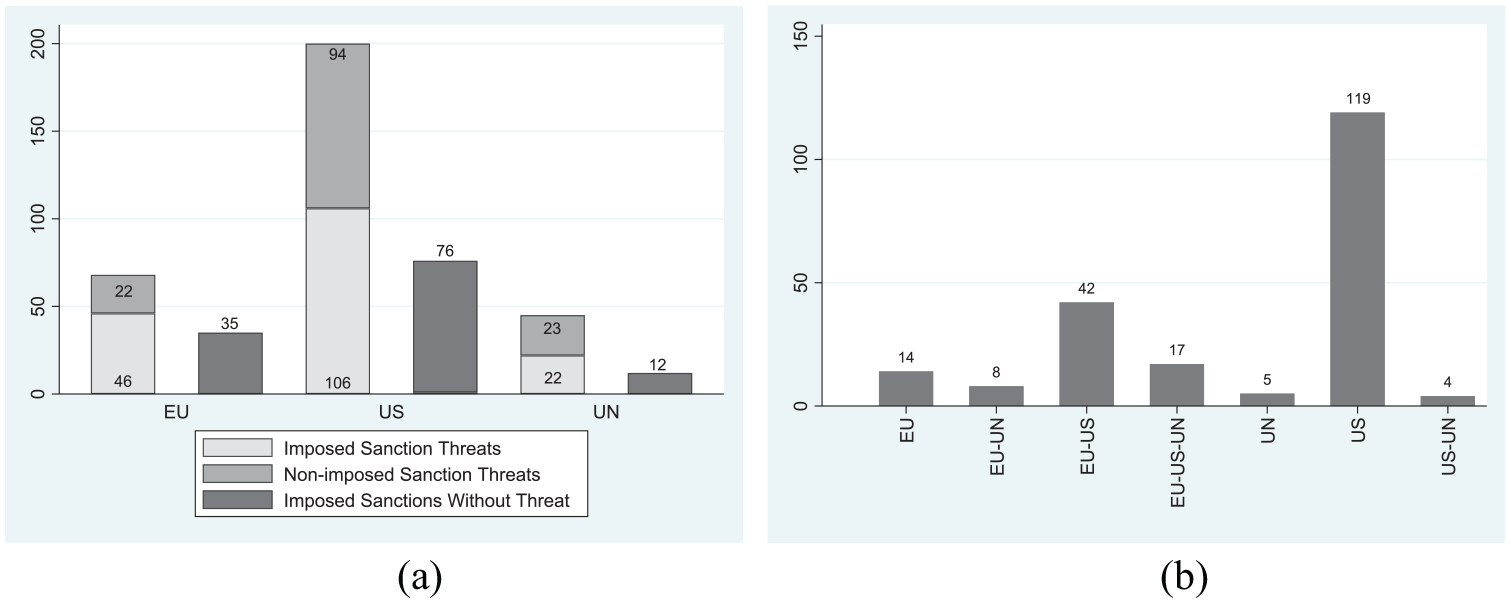
Threat and imposition cases by a sanction status (a) and sender composition (b).
Distribution of sanction threats, imposed sanctions by individual and joint sanctioning efforts.
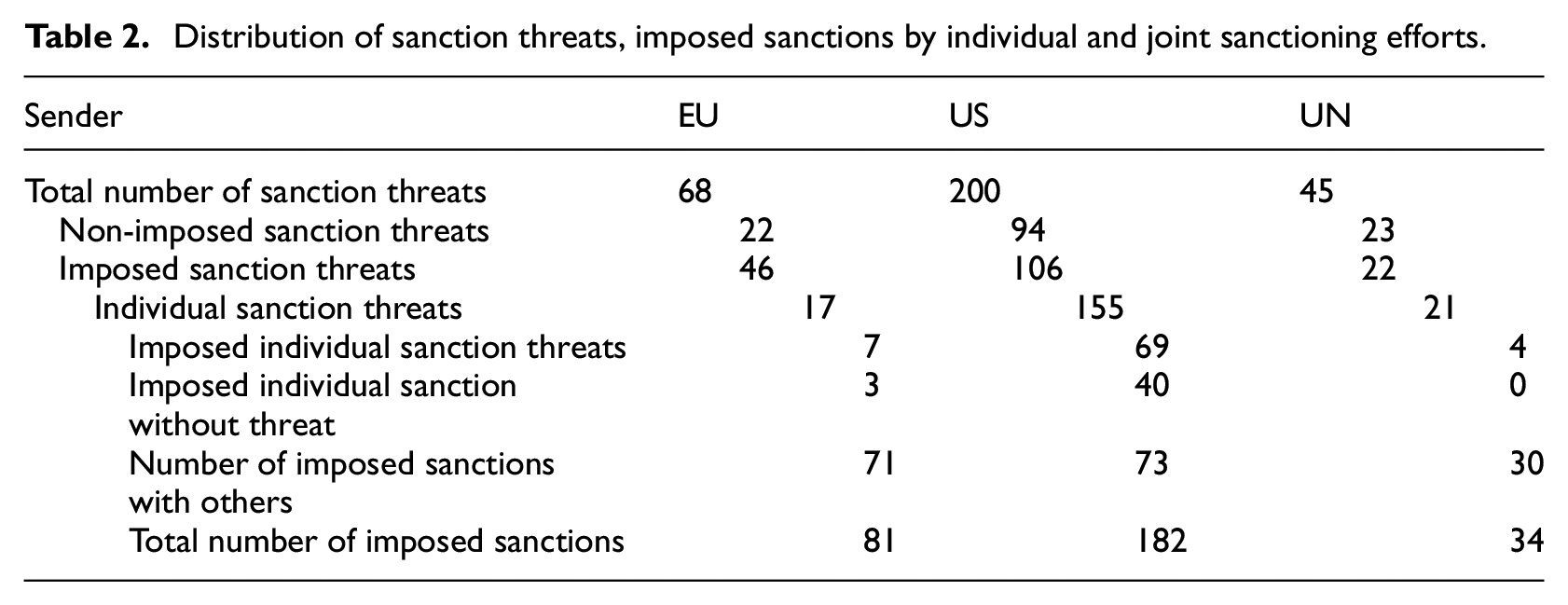
One can see that while the European Union issued 68 sanction threats in total, only 17 sanctions were threatened individually without one of the two other senders. The EU followed up with the imposition of sanctions in seven of these cases. Moreover, the EU individually imposed three additional sanctions without a prior threat. So out of 81 EU sanctions, the EU imposed 10 sanctions individually and 71 sanctions together with the US and/or the UN. In contrast, the US threatened sanctions in 155 instances without the EU or the UN and imposed 69 of these sanctions plus an additional 40 sanction cases without a prior threat. There were 21 individual sanction threats by the United Nations of which four sanctions were actually imposed. The UN did not impose an individual sanction without a prior threat. Thus, the way in which the three senders threaten and impose sanctions alone or in collaboration with others varies greatly and demands further investigation.
When one or several senders threaten or impose sanctions, we code individual start and end dates as well as individual threats, imposed sanction types and identities of those who threatened and imposed sanctions for each sender. The comprehensive coding of information on sanction threats and imposed sanctions for each individual sender is the most distinctive feature of EUSANCT. So we indicate the specific involvement of every sender in every case, which is later reflected in the dyadic version of the dataset. Figure 3 depicts the number of imposed sanctions by the three senders over time.
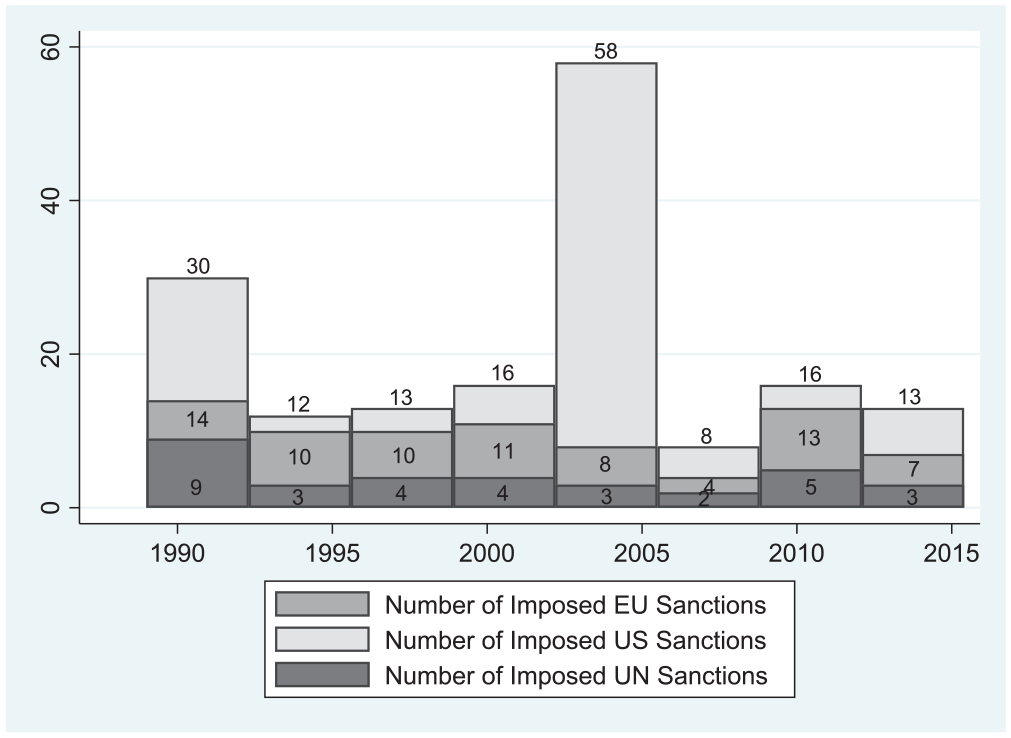
Number of imposed sanctions over time.
Additional variables
Regarding the variables that we code for each case, the TIES codebook (Morgan et al., 2013) served as a baseline for our dataset. However, we introduced new categories and altered some of the extant variable descriptions. Our codebook details these changes. 6 For example, we added the following potential issues: “Leadership Change”, “Violation of Constitutional Order”, and “Fraud Elections”. Irrespective of the issue, there can be several senders that impose several types of sanctions for each case. For every sender, we code respective sanction types that range from complete economic embargoes and trade restrictions to aid cuts and targeted sanctions. In addition to TIES, we also code “Major Financial Sanction”, “Targeted Financial Sanction”, and “Arms Embargo” as distinct types of sanctions. Embargoes, the classic form of economic sanctions, raise potentially the highest hurdles, but also have undesirable side-effects including the increased solidarity of the population with their leaders (Galtung, 1967) or massive humanitarian fallout (e.g. Ali and Shah, 2000; Allen and Lektzian, 2013; Mueller and Mueller, 1999). Cutting foreign aid and the suspension of international agreements have similar side-effects. Senders therefore often employ measures that are aimed at the responsible political elites and core industries or firms instead of the entire economy and population. These targeted instruments include travel restrictions, the freezing of bank accounts, or restrictions on the access of firms or industries to financial markets. Based on all sanction types that we consider, we create a six-point scale for both the costs to the sender and the target.
Note that EUSANCT also includes and adopts variables used in other datasets. For example, to account for the frequent adjustments of sanctions over time, we indicate with a variable adopted from the GIGA dataset whether sanctions are gradually relaxed or tightened during the course of a sanction case.
Evaluating sanctions effectiveness
EUSANCT serves as a source to establish new determinants for sanctions success but also as a tool to re-evaluate established relationships for the EU, the UN, and the US after the Cold War—in particular for the European Union, which has not yet been systematically analyzed. EUSANCT includes both the TIES outcome variable and the HSE measures of sanctions success. Both of these indicators rely on assessments of whether the goals of the sanctions have been met. To construct their effectiveness scale, Hufbauer et al. (1990, 2007) multiply two four-point scales measuring the policy result and the sanction contribution. When the case is included in the latest version of the HSE dataset, we use the original values of these variables. The categorical TIES outcome variable “conveys whether the target or sender partially or completely acquiesced at either the threat or imposition stage, whether there was a stalemate at either stage, or whether there was a negotiated settlement at either stage” (Morgan et al., 2009: 98).
In contrast to the other variables, we only code one outcome per case, irrespective of the involvement of the different senders. Since we do not code this outcome variable separately for every sender, we are automatically in one of the categories following sanction imposition when at least one sender imposed sanctions because measures have been imposed (even if not by all senders) and the target did not give in to a mere threat of sanctions. Obviously, this is not a perfect solution, but it is in our view impossible to clearly disentangle the contribution to the final outcome by each sender. It is therefore not surprising that both HSE and TIES provide also only one evaluation per case, irrespective of the number of senders that are involved. The advantage of EUSANCT is that all of these related issues that might be problematic (e.g. the number of senders, whether a sender threatened a sanction, imposed restrictive measures, or did both, the length of the time during which each sender was involved, and which kind of sanctions which senders imposed) can be controlled for in a quantitative analysis because we have coded all of this information.
Although we cannot evaluate the exact individual contribution of every single sender across a broad range of sanction cases, we can code a final outcome because we can see a reaction by the target (i.e. acquiescence after a threat or a sanction) or by the senders (i.e. if all senders give up, we have a capitulation after a threat or a sanction), a negotiated settlement among the involved parties, or simply a stalemate. Thus, EUSANCT provides both effectiveness measures that are well established in the literature and additional information that might be useful for the interested researcher.
Table 3 shows the distribution of the two outcome variables for imposed sanctions (the Online Appendix displays the results for both threat and sanction cases). We note at least partial acquiescence in around 51% of the imposed sanction cases (a case is successful when there is partial or total acquiescence by the target). In contrast to the TIES dataset, we code the outcome variable also for ongoing sanctions. For example, when sanctions have not yet been lifted but the target partially gave in, we code this case as partial acquiescence. This is why our coding naturally needs to be compared with the success scores of the TIES dataset when they remove cases with missing final outcomes (instead of automatically coding them as failures), for which they establish success rates of 37.5–56.3—a range that includes our reported number.
Distribution of cases for two sanction success measures (imposed sanctions only).
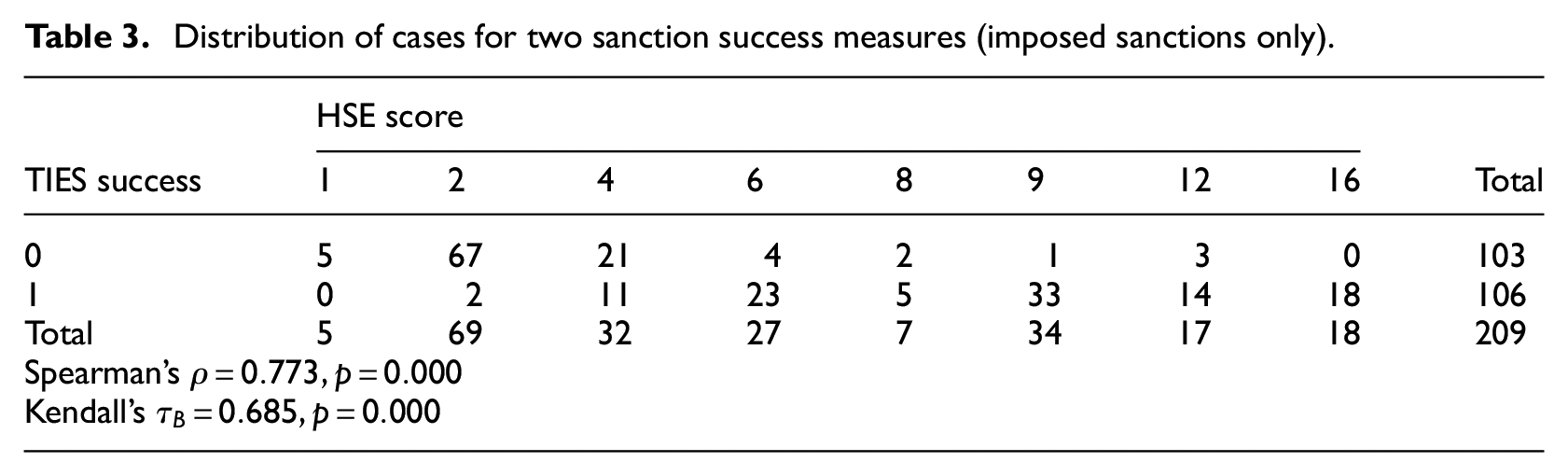
Several reasons can explain why our assessment of sanction success is at the upper end of the reported TIES success scores. First, the temporal domain matters. In the economically interdependent world after the Cold War, sanctions are likely to be more successful because of the increased opportunity costs. Second, the three senders that we consider could be more successful than other senders included in the TIES dataset—either because the three selected senders are more powerful or because they select easier targets. In comparison with the relatively high scores in the TIES outcome variable, our results are in line with previous findings when it comes to the HSE score. Hufbauer et al. (2007) find that sanctions are (partially) successful in a third of the cases. We classify, in line with Hufbauer et al. (1990, 2007), cases as successful when they have an HSE score of 9 or higher (in order to have at least a positive outcome and a substantial sanction contribution). According to this benchmark, 69 out of 209 imposed sanction cases are successful (33%). Standard measures of association indicate that both outcome variables are highly correlated.
Since the subjective coding of an outcome variable is often highly disputed, we compare our coding with more objective measures. Our Online Appendix offers detailed regression results of the effect of the subset of democracy-related sanctions on changes in the V-Dem Electoral Democracy Score. The results show that the categorical outcome variable of the TIES dataset is very useful to describe at which stage (after a sanction threat or after the imposition of sanctions) the cases ended, whether the sender made concessions or capitulated, and whether the target made no, partial, or full concessions. However, combining all of these different categories in a binary success variable for statistical analyses is not appropriate. For evaluating whether a case ended successfully, we rather recommend employing the HSE score, which is more nuanced in measuring success and which enables the researcher to distinguish between the policy outcome and the sanction contribution.
Comparing the effectiveness of sanctions among the different senders, we find that EU sanctions are more successful than sanctions by the US. The EU imposed sanctions in 81 cases of which almost two-thirds were successful (with a mean HSE score of 6.9). A t-test indicates that sanction cases in which the EU is involved are thus significantly more successful than other cases (at the level of 5%). Since there are only four cases where the UN imposed sanctions individually, US sanctions are essentially the control group. Similarly, cases in which the UN is involved are significantly more successful (at the 5% level): they are also successful in nearly two-thirds of the cases (with a mean HSE score of 6.4). Again, the control group consists basically of unilateral US sanction cases since the EU only imposed individual sanctions in 10 instances. Unilateral sanctions imposed by the US are only successful in 41% of the cases with 5.7 as the mean HSE score. Our data shows that the power of the European Union as a sender of sanctions is often underestimated. Weber and Schneider (2020) provide a study explaining the systematic differences in the imposition and effectiveness of EU and US sanctions. 7 Figure 4 plots the mean HSE score for EU, UN, and US sanctions over time. The pattern that EU and UN sanctions are more successful than US sanctions is also visible here, but there is no time trend for sanction effectiveness.
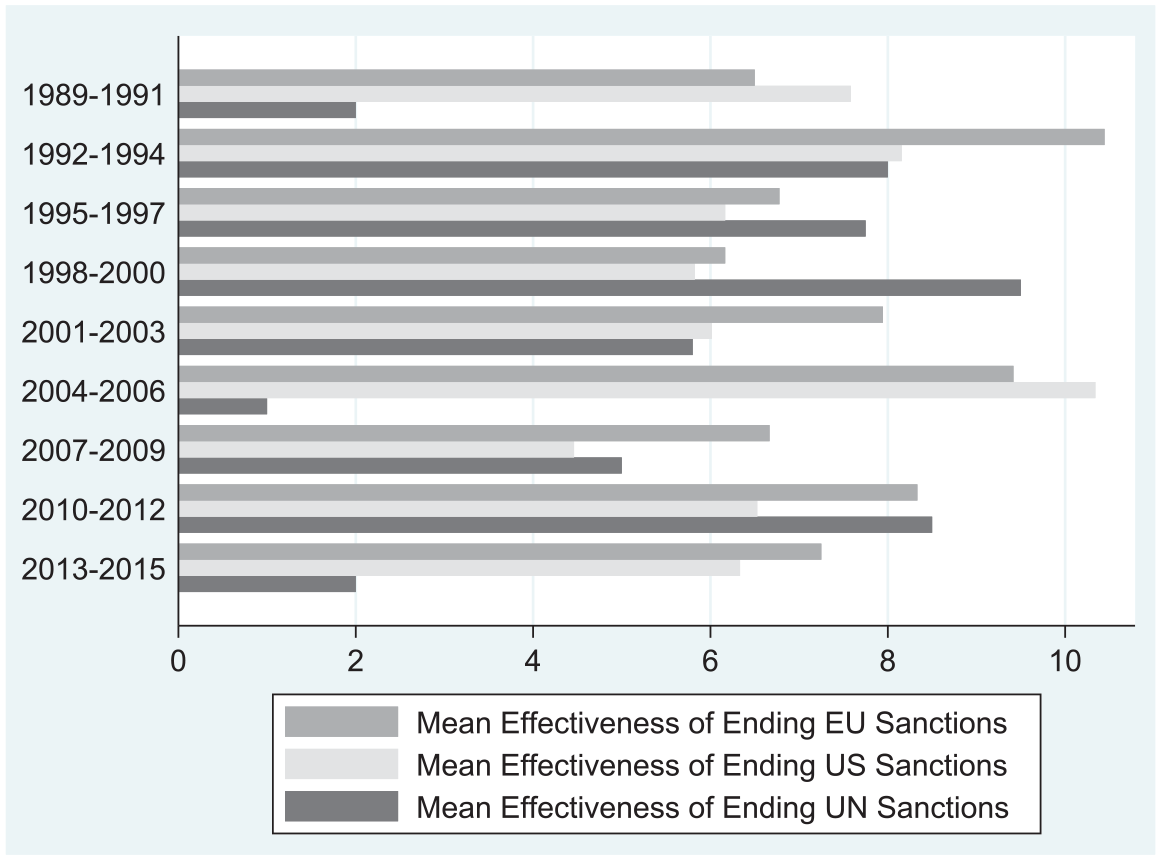
Mean effectiveness of ending EU, US and UN sanctions by HSE score.
Dyadic EUSANCT Dataset
The individual sanction cases with unique case IDs as the unit of observation form the case-level dataset. In order to analyze the strategic imposition of sanctions or the effect of sanctions on certain outcomes, we also provide a dyadic dataset. This second EUSANCT Dataset covers 193 members of the United Nations (some of them are not included for all years as they joined the United Nations Organization later than 1989) as well as Taiwan for the entire period and former UN members during the period of their membership (i.e. West Germany, German Democratic Republic, Czechoslovakia, Yemen Arab Republic, People’s Democratic Republic of Yemen). The dyadic dataset thus comprises 199 countries for the period from 1989 to 2015 and 5,077 country-years. Since we consider three senders, the dataset contains 15,231 dyad-years, which is the unit of analysis in this version of EUSANCT. We further added several political and economic variables that help the researcher to identify the control group of non-sanctioned countries.
Finally, we included the sanction cases from the EUSANCT case-level dataset. We have therefore extended the case-level dataset such that there is one observation for each sanction case in every year from the start (when the sender issues a threat or immediately imposes sanctions against the target) until the year in which the case is considered to be terminated. We created two dummy variables indicating whether a threat or a sanction occurred in a given year (for years in which threatened sanctions were imposed, both dummies are equal to 1). The sanction cases thus had a sender–target–year structure, which could be merged with our dyadic dataset with all its control variables. Owing to overlapping sanction cases, the observations of the extended case-level dataset did not in some cases uniquely identify observations in the dyadic dataset. We thus dropped target-year duplicates by choosing and keeping the more severe case. A threat was therefore ruled out through imposed sanctions and multiple senders and stronger measures beat sanctions by a single sender and weaker measures. Where one sanction is related to a domestic issue and a simultaneous sanction case is related to issues of international security or vice versa, we indicate this with an additional binary variable.
In 1,908 dyad-years, the respective sender threatened or imposed sanctions against the target. The remaining 13,323 dyad-years consist of the universe of all possible sanction cases. The dyadic version of the EUSANCT Dataset thus allows researchers to examine the onset of sanctions and to match sanction cases against comparable target countries (Schneider et al., 2020). However, many of these dyads are not reasonable to consider as a potential sanction dyad. One solution is to focus therefore on threat cases in which sanctions were not imposed. In addition, we identify sender–target pairs that could potentially have experienced a sanction or a threat by one of the three senders (we explain the construction of this potential sanction variable in the Online Appendix). Based on the whole universe of potential sanction dyads and the respective information on actually imposed sanctions from the case-level dataset, researchers also have the possibility to analyze how far sanctions are biased (Schneider et al., 2020). However, please note that while we indicate whether senders have gradually tightened or relaxed the imposed measures, the case-level data is constant for each case that is included in the dyadic version and ongoing over several dyads. It is therefore, for example, not advisable to employ the effectiveness scores in the dyadic version of the dataset.
Analyzing sanctions onset
Previous research on economic sanctions focuses mostly on the effectiveness of these coercive measures and often neglects the strategic imposition of sanctions. Nooruddin (2002) reconsiders existing studies on sanctions success and controls for a possible selection bias. Since then, several authors have addressed the onset of sanctions. Lektzian and Souva (2003) as well as Cox and Drury (2006) apply the logic of the democratic peace to the imposition of sanctions. Peksen and Peterson (2016) extend this argument and regard the imposition of sanctions with respect to third actors. Besides economic factors, trigger events (von Soest and Wahman, 2015b) and political relations with the target (McLean and Radtke, 2018) also matter for the imposition of sanctions. However, there is less research on the choice of the respective sanction type, which may also have an impact on the effectiveness of sanctions. McLean and Whang (2014) show that policymakers rather employ targeted instead of actual trade sanctions when the target is important for the sender’s export sector. Bapat and Kwon (2015) demonstrate in this vein that sanctions are less likely to be enforced when trade interlinkages are high. It is therefore crucial to consider the reasons for sanctions imposition and the choice of the respective instruments because this kind of selection probably affects the outcome of a sanction case (Jing et al., 2003).
The EUSANCT Dataset shows that the US remains by far the most active sender of sanctions: the Western superpower threatened or imposed sanctions in 1,193 of 5,077 country-years, targeting 132 of 199 countries. In comparison, there are sanction threats and imposed sanctions by the European Union in 488 country-years, comprising 67 countries, as well as by the United Nations in 227 country-years, targeting 41 countries. There are 103 countries against which the US actually imposed sanctions. In comparison, the European Union imposed sanctions against 60 different countries and the United Nations only sanctioned 29 countries.
Figure 5 plots the number of ongoing imposed sanctions per year. The number of EU, UN, and US sanctions does not add up to the total number of ongoing sanctions because many sanctions are imposed by a combination of senders. The large number of US sanctions in the early 2000s is driven by the attempts of the US to pressure other states to sign a non-surrender agreement for their citizens in response to the formation of the International Criminal Court. Excluding these cases shows that the number of ongoing sanctions remains rather stable over time (see the Online Appendix).
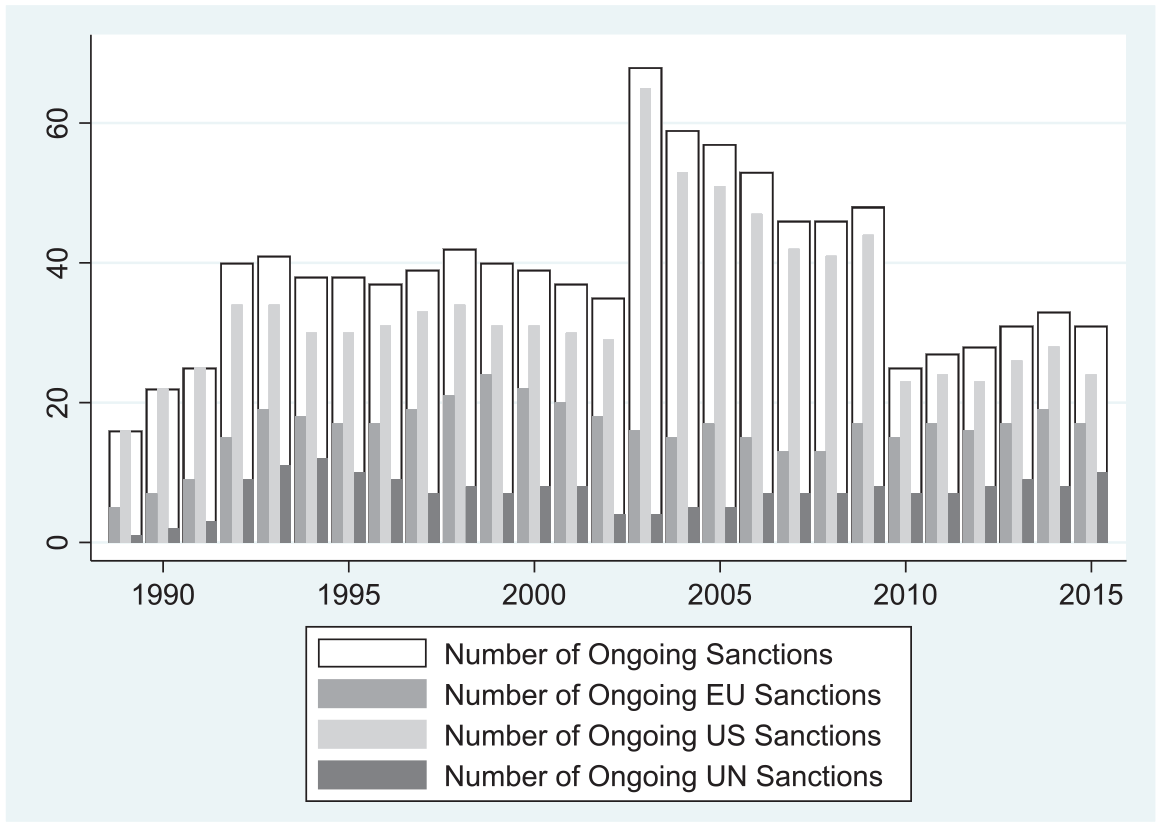
Number of ongoing sanctions differentiated by sender.
In order to visualize the respective target countries, the Online Appendix displays all actual targets for each sender on a map. Since some countries were only sanctioned for a short period, we additionally list all targets for every sender that were subject to sanctions of the respective sender for at least one-third of the period from 1989 to 2015. There is a common regional focus: all three senders imposed sanctions against targets in the Middle East and in sub-Saharan Africa. Targets of the European Union and the US highly overlap. The US additionally focuses on countries in South and Central America. The main difference between the EU and the US in comparison with the United Nations is that there are no UN sanctions against large and powerful states. Obviously, there are no UN sanctions against China and Russia as these two countries are permanent members of the UN Security Council. Simple t-tests show that sanction targets of the EU and US generally have a significantly larger population and GDP per capita than countries targeted by UN sanctions.
Conclusion
Sanctions have enjoyed a considerable popularity in the post-Cold War era: economic coercion has become a standard tool through which senders try to change the course of action of varying targets. Once derided as a largely ineffective instrument, the literature on sanctions also became more optimistic about the positive effects of this foreign policy instrument.
This article has introduced the newly created EUSANCT Dataset to trace the evolution of the EU, UN, and US sanctions regime from 1989 to 2015. We provide a new and comprehensive data source for analyzing the conditions under which the three senders have employed economic measures. In particular, EUSANCT allows the research community to analyze standard questions about the imposition, side-effects, and effectiveness of economic coercion in the entire post-Cold War era. Moreover, EUSANCT allows systematic research to be conducted on the sanctioning process by the EU (see, for example, Weber and Schneider, 2020), which has established itself as the second leading sender of economic sanctions in international politics. Our initial descriptive statistics show that imposed EU sanctions seem to be more effective than coercive measures by the US, which is still by far the most active sender of sanctions.
While the frequency with which the three senders employ sanctions has not increased throughout the post-Cold War period, the ways in which sanctions have been used has changed: owing to the greater leverage in times of increasing economic bonds, the sanctioning process became more strategic. This is visible in the substantial differences in the onset by the EU, the UN, and the US—and might be a reason for differences in the effectiveness of their sanctions. Aware of the backlash that overly hurtful sanctions create, political leaders have often carefully chosen cases for the imposition of sanctions in which economic statecraft has the potential to reach its goals (Schneider et al., 2020). The EUSANCT Dataset will help the research community to assess the extent to which economic sanctions have been strategically designed and imposed after the fall of the Berlin Wall. The strategic decision to choose cases and particular measures creates the need to further analyze the decisions of individual senders. Future data collection efforts should therefore further disentangle the imposed measures for each sender–target–year combination in the dyadic dataset such that the particular tightening or relaxing of sanctions by the three senders in every case becomes traceable. Moreover, it remains to be seen how far the recent trends towards authoritarianism and populism are going to affect the frequency, design, and effectiveness of economic sanctions in the future.
Research Data
EUSANCT_Dataset_Dyadic – Supplemental material for Post-Cold War sanctioning by the EU, the UN, and the US: Introducing the EUSANCT Dataset
Supplemental material, EUSANCT_Dataset_Dyadic for Post-Cold War sanctioning by the EU, the UN, and the US: Introducing the EUSANCT Dataset by Patrick M Weber and Gerald Schneider in Conflict Management and Peace Science
Research Data
EUSANCT_Dataset_Case-level – Supplemental material for Post-Cold War sanctioning by the EU, the UN, and the US: Introducing the EUSANCT Dataset
Supplemental material, EUSANCT_Dataset_Case-level for Post-Cold War sanctioning by the EU, the UN, and the US: Introducing the EUSANCT Dataset by Patrick M Weber and Gerald Schneider in Conflict Management and Peace Science
Supplemental Material
Case-Summaries_EUSANCT – Supplemental material for Post-Cold War sanctioning by the EU, the UN, and the US: Introducing the EUSANCT Dataset
Supplemental material, Case-Summaries_EUSANCT for Post-Cold War sanctioning by the EU, the UN, and the US: Introducing the EUSANCT Dataset by Patrick M Weber and Gerald Schneider in Conflict Management and Peace Science
Supplemental Material
Codebook_EUSANCT_Dyadic-Dataset – Supplemental material for Post-Cold War sanctioning by the EU, the UN, and the US: Introducing the EUSANCT Dataset
Supplemental material, Codebook_EUSANCT_Dyadic-Dataset for Post-Cold War sanctioning by the EU, the UN, and the US: Introducing the EUSANCT Dataset by Patrick M Weber and Gerald Schneider in Conflict Management and Peace Science
Supplemental Material
Codebook_EUSANCT_Case-level-Dataset – Supplemental material for Post-Cold War sanctioning by the EU, the UN, and the US: Introducing the EUSANCT Dataset
Supplemental material, Codebook_EUSANCT_Case-level-Dataset for Post-Cold War sanctioning by the EU, the UN, and the US: Introducing the EUSANCT Dataset by Patrick M Weber and Gerald Schneider in Conflict Management and Peace Science
Supplemental Material
20200715_CMPS_Online_appendix – Supplemental material for Post-Cold War sanctioning by the EU, the UN, and the US: Introducing the EUSANCT Dataset
Supplemental material, 20200715_CMPS_Online_appendix for Post-Cold War sanctioning by the EU, the UN, and the US: Introducing the EUSANCT Dataset by Patrick M Weber and Gerald Schneider in Conflict Management and Peace Science
Footnotes
Acknowledgements
A previous version of this article was presented at the annual conference of the European Political Science Association in Vienna, 21–23 June 2018, and at the University of Konstanz, the University of Maryland, the University of Pittsburgh, the University of Richmond, as well as the University of Uppsala. Since the EUSANCT Dataset builds upon several predecessors, we would like to thank the authors of these resources for their support and recommendations: T. Clifton Morgan, Clara Portela, and Christian von Soest. We have received superb research assistance from Pavlina Boyanova, Ulrik Pershagen, Mario-Konstantin Pless, Otto Meyer zu Schwabedissen, and Oleksandr Shevchuk—as well as from the EUSANCT coders Julia Habich, Franziska Hohlstein, Elisa Kollenda, Lise Moawad, Pattamon Poonsiri, Katharina Potinius, and Lynnae Sauer. In addition, we would like to thank three anonymous reviewers as well as the past and current CMPS editors for their extensive and valuable feedback.
Funding
The authors disclosed receipt of the following financial support for the research, authorship, and/or publication of this article: we gratefully acknowledge financial support through the Beethoven scheme of the German Research Foundation and the Polish National Science Center (Project UMO-2014/15/G/HS5/04845, DFG code: 749/15). The second author would also like to thank the Zeit-Stiftung Ebelin und Gerd Bucerius and the German Marshall Fund for their support through the 2018 Helmut Schmidt Fellowship.

Supplemental material
Notes
References
Supplementary Material
Please find the following supplemental material available below.
For Open Access articles published under a Creative Commons License, all supplemental material carries the same license as the article it is associated with.
For non-Open Access articles published, all supplemental material carries a non-exclusive license, and permission requests for re-use of supplemental material or any part of supplemental material shall be sent directly to the copyright owner as specified in the copyright notice associated with the article.
