



Abstract
Virtual reality (VR) in teacher education offers an immersive environment for microteaching which, when coupled with peer-feedback can enhance pre-service teachers’ competence. This study employed a mixed-method quasi-experimental design to compare VR-based microteaching with real-world microteaching among 150 pre-service teachers (n = 73 feedback providers, n = 77 feedback receivers). Quantitative analyses revealed similar perceptions of feedback across both conditions, but minor differences in feedback quality, particularly in the specificity of comments. Qualitative findings highlighted VR’s potential for safe, standardized practice and guided reflection, while also pointing to limitations in simulating complex classroom interactions. The study highlights VR’s potential for feedback-oriented teacher training and its potential to support the development of professional teaching competencies.
Introduction
Research shows that feedback can have a positive motivational, cognitive, and meta-cognitive impact on learners (e.g., Hattie & Timperley, 2007; Narciss, 2013). Within teacher education, feedback is typically provided by peers and serves for developing core competencies (Prilop & Weber, 2023). It consists of a peer observing a fellow pre-service teacher’s classroom interactions and, subsequently, providing them with feedback. Studies show that the effectiveness of peer feedback is influenced by the recipient’s feedback perception and the quality of the feedback (Huisman et al., 2018; Prilop et al., 2021; Strijbos et al., 2010). High-quality peer feedback addresses agreed-upon goals, references observable classroom behavior, and includes clear criteria such as specificity, suggestions, questions, positive and negative comments, and first-person formulation (Gielen & De Wever, 2015; Narciss, 2013; Nicol & Macfarlane-Dick, 2006; Prins et al., 2006; Sluijsman et al., 2002). Feedback perception is the recipient’s cognitive and motivational evaluation of the feedback. This includes the feedback’s perceived fairness, usefulness, and acceptance, as well as the recipient’s willingness to improve their instructional practice (Ilgen et al., 1979; Strijbos et al., 2021). However, expert-novice comparisons reveal a disparity in feedback quality between novices and experts, highlighting the need for targeted practice opportunities within teacher education programs to refine this essential skill (Jacobsen & Weber, 2025; Prilop et al., 2021).
Microteaching sessions have been identified as effective approaches for practicing feedback skills in an authentic context, emphasizing the rehearsal of specific teaching competencies (Benton-Kupper, 2001; Grossman et al., 2009; Klinzing, 2002). The implementation of and technological support for microteaching have significantly evolved, transitioning from traditional methodologies of just acting out a scenario to incorporating videography and digital video annotation (Cavanaugh, 2022).
In recent years, VR has emerged as an innovative option among various tools for microteaching, offering a promising solution to these challenges (Huang et al., 2023a). Comparative studies suggest VR can induce reflections of a quality akin to those derived from real classroom scenarios, with pre-service teachers valuing VR as a tool for critical examination of their teaching approaches (Richter et al., 2022; Seufert et al., 2022; Stavroulia & Lanitis, 2019).
Despite these promising findings, the capacity of VR to enable high-quality peer feedback sessions remains underexplored (Snelson & Hsu, 2020). Determining the comparability between VR-based and real-world microteaching in terms of quality and perception requires additional, comprehensive research efforts. Addressing this research gap, the current study employs a quasi-experimental mixed-methods approach to investigate the fidelity with which VR-based microteaching simulations replicate the complexities of real-world microteaching and their effectiveness in promoting effective feedback sessions.
Theoretical Background
Peer Feedback
In a teaching context, peer feedback competence can be characterized as the ability to provide constructive criticism of a colleague’s teaching practice, thereby encouraging reflection and fostering professional development (Sluijsmans, 2003; Tripp & Rich, 2012). Research indicates that implementing peer feedback in higher education enhances student learning (Gielen et al., 2010), boosts critical thinking abilities (Lynch et al., 2012), and elevates engagement (Fan & Xu, 2020), motivation (Hsia et al., 2016; Zhang et al., 2014), and satisfaction (Donia et al., 2021; Zhang et al., 2014). However, peer feedback has to be of high quality to be fruitful. In a recent study, Kerman et al. (2024) found that students categorized as unsuccessful, less successful, and successful exhibited differences in the average quality scores of the peer feedback they received. Moreover, studies have shown that experts’ and peers’ feedback quality differ (i.e. Prilop et al., 2019, 2021). These expert-novice comparisons clearly indicate a need for practice opportunities for pre-service teachers in order to improve their feedback quality.
Peer Feedback Quality
To define high-quality peer feedback in teacher education, Sluijsman et al. (2002) extracted characteristics of constructive feedback from expert feedback. Building on these findings, subsequent research (e.g., Gielen & De Wever, 2015; Prilop & Weber, 2023; Prins et al., 2006) assessed peer feedback quality according to the presence of a set of necessary characteristics concerning feedback content and presentation. According to these characteristics, high-quality peer feedback takes the assessment criteria into account, is specific, provides suggestions, poses reflective questions, uses a combination of positive and negative comments, and is formulated in the first person.
Concerning assessment criteria, feedback to a peer needs to relate to previously agreed-upon observation goals. The peer feedback must comment on the actual classroom behavior of the teacher and refer to a specific focus of evaluation (Prins et al., 2006). Regarding specificity, peer feedback needs to specify the teacher’s classroom behavior that was successful or could be improved upon (Gielen et al., 2010). Potential areas of improvement need to be elaborated on with constructive suggestions that enable the teacher to work on their skills. Constructive suggestions can consist of knowledge about task constraints, concepts, mistakes, strategies, or knowledge on how to proceed (Narciss, 2013). To actively engage peers in the feedback process, peer feedback should include reflective questions (Gielen et al., 2010; Nicol & Macfarlane-Dick, 2006). Furthermore, peer feedback should combine positive and negative comments, as teachers require critical comments for improvement. Finally, high-quality peer feedback should be formulated in the first person to indicate that the feedback is a personal opinion up for discussion rather than objective truth (Prins et al., 2006). In alignment with these findings, Wisniewski et al. (2020) underscore that the efficacy of feedback is optimized when it encompasses a substantial amount of information, guiding learners through task-specific, process-oriented, and self-regulatory levels of feedback to enhance their comprehension and performance.
Peer Feedback Perceptions
To ensure the effectiveness of feedback, it is essential not only to provide high-quality peer feedback but also to actively engage pre-service teachers in the feedback process. Feedback intervention theory postulates that individual characteristics such as perceptions have a greater influence on the impact of feedback on learning and achievement than the specific attributes of the feedback message itself (Alqassab, 2017). Peer feedback perceptions refer to how individuals experience the content of feedback given by a peer and can be broadly categorized into two dimensions: those related to the cognitive function of feedback, which include perceived fairness, usefulness, and acceptance, and those related to the motivational function of feedback, which include affective reactions such as willingness to improve and overall emotional impact (Strijbos et al., 2021). Ilgen et al. (1979) reviewed the processes by which feedback influences behavior. They argued that feedback needs to be perceived as useful and accepted by the recipient and that recipients need to be willing to respond to the feedback and to change their actual behavior. If pre-service teachers do not perceive their peers’ feedback as valuable and helpful, there is a probability that they may not engage completely in the feedback process (Altstaedter & Doolittle, 2014). Similar findings were made by Tsui and Ng (2000). They found that students incorporated feedback only if it was perceived as helpful. Research indicates that more detailed and specific feedback including advice or explanations is generally favored by students and considered more useful (Shute, 2008; Straub, 1997). Also, a predominance of critical comments could lead to a negative perception of the peer feedback and a lack of uptake (Prilop et al., 2021). In general, the perceptions of pre-service teachers toward peer feedback are complex and multifaceted, influencing both the reception and uptake of the feedback provided.
Classroom Simulations
Microteaching in Teacher Education
The necessity for practice opportunities aligns well with the implementation of classroom simulations, such as microteaching, which can provide a platform for pre-service teachers to apply and train their feedback skills in a controlled, yet authentic, educational environment (Benton-Kupper, 2001; Calonge et al., 2013). In microteaching, learners plan a teaching episode, which they then carry out and, if necessary, record on video (Karlström & Hamza, 2019). Thus, microteaching enables pre-service teachers to acquire complex competencies in authentic situations by practicing specific skills during classroom simulations (Grossman et al., 2009). This method is particularly well suited to teach situation-specific skills and to practice both social and didactic competencies, as well as to promote the transfer of these competencies into later professional life (Klinzing, 2002; Kramer et al., 2017; Remesh, 2013). While acquiring such complex competencies the learning process can be divided into several stages: (a) introducing and learning about the activity; (b) preparing for and rehearsing the activity; (c) enacting the activity with students; (d) analyzing enactment and moving forward (Kavanagh & Rainey, 2017; McDonald, 2020; McDonald et al., 2013). Microteaching is particularly valuable for the enactment phase and for structured feedback and reflection in later phases (Benton-Kupper, 2001; Remesh, 2013).
Overall, there is consensus among researchers and teacher educators that microteaching can be a valuable tool for teacher education (Blomberg et al., 2014; Klinzing, 2002; Kramer et al., 2017; Remesh, 2013). Nevertheless, implementation challenges persist, including (a) lesson design and execution time, (b) resource constraints, (c) student motivation, and (d) effective feedback strategies (Calonge et al., 2013; Dayanindhi & Hegde, 2018). This study addresses several of these issues by developing an intervention that systematically trains pre-service teachers in evidence-based feedback strategies and applies them in a VR-based teaching simulation. This setting provides authentic, standardized opportunities for deliberate feedback practice while reducing the logistical demands typically associated with real-world simulations. In addition, VR-based instruction may foster task-related interest and engagement (see Huang et al., 2023b; Richter et al., 2022).
Virtual Reality in Teacher Education
The above-mentioned restrictions of the physical world are no longer the limit for microteaching experiences. In recent years, teachers and pre-service teachers have been enabled to engage in authentic classroom experiences within VR-based environments (Huang et al., 2023a). VR is a collection of technologies that create “synthetic and highly interactive three-dimensional (3D) spatial environments” (Mikropoulos & Natsis, 2011, p. 769). These virtual environments can effectively simulate both real and non-real classroom scenarios. Widely employed across various professional fields to train procedural and situational knowledge, VR provides two significant advantages for learning: presence and agency (Jensen & Konradsen, 2018; Makransky & Petersen, 2021; Slater, 2018). Presence refers to the immersive experience of “being there”, while agency encompasses the sense of initiating and controlling actions according to one’s own volition (Moore & Fletcher, 2012).
VR not only offers authentic training opportunities but also provides a practical solution to common challenges associated with microteaching. By leveraging VR technology, the environment, situation, and personnel involved in microteaching can be freely and adaptively customized. For instance, the class size can be configured (Huang et al., 2022) student actions and speech can be controlled (Seufert et al., 2022), and the high personnel costs associated with employing and training actors can be circumvented. Hence, VR offers a cost-effective alternative to real-world microteaching that enables users to engage in realistic teaching scenarios without compromising on the quality of the learning experience. However, Makransky and Lilleholt (2018) found that although students felt more present in immersive VR environments, they experienced a higher cognitive load.
Professional training programs in various occupations have embraced the implementation of VR environments, as highlighted in a comprehensive review by Jensen and Konradsen (2018). However, the use of VR-based microteaching specifically for teacher education is a relatively recent development, emerging within the last decade (Huang et al., 2023a). Several companies and research groups have contributed to the development of software for VR-based microteaching, for instance, simSchool (Deale & Pastore, 2014), TLE TeachLivE™ (Dieker et al., 2014), Mursion (Kaufman & Ireland, 2016), Breaking Bad Behaviors (Lugrin et al., 2016; Seufert et al., 2022), and Teach-R (Wiepke et al., 2019, 2021). These VR-based software environments offer pre-service and in-service teachers opportunities to engage in authentic teaching practice within a simulated and safe setting (Huang et al., 2023b). Such environments facilitate the development of skills through customizable training programs, which can be standardized or tailored to individual needs (for a review, see Huang et al., 2023a). Furthermore, their efficacy in providing cost-effective, repeatable, and consistent training is well documented and may allow for immediate and realistic feedback (Dieker et al., 2014; Pottle, 2019).
While the potential of VR for microteaching, reflection, and feedback in teacher education is frequently emphasized, empirical evidence supporting these claims remains limited. Recent reviews by Snelson and Hsu (2020) as well as Huang et al. (2023a) highlighted the scarcity of studies focusing on reflection or feedback in VR-based teacher education. Previous research by Huang et al. (2022, 2023b) examined the effects of VR-based microteaching on pre-service teachers’ stress responses and classroom management strategies, demonstrating VR’s potential to provide an immersive training environment that encourages active engagement and skill application. These findings underscored the need to further examine how VR-based microteaching supports complex teaching skills, such as reflective practice and peer feedback, which the current study seeks to address.
Similarly, Richter et al. (2022) compared pre-service teachers who reflected on recordings of VR-based microteaching with those who reflected on recordings of real-world classroom teaching and found that VR-based videos elicited a comparable quality of reflection. This finding aligns with the results of Seufert et al. (2022), who discovered that pre-service teachers perceive VR as a valuable tool for reflecting on their teaching practices and evaluating their strengths and weaknesses. Furthermore, Stavroulia and Lanitis (2019) examined self-reported attitudes toward reflection among pre-service teachers, comparing those trained in a real classroom environment to those trained in a VR classroom. The study revealed that pre-service teachers in the VR environment demonstrated a higher inclination toward engaging in reflective practices.
By immersing themselves in a realistic virtual environment, pre-service teachers can actively observe, analyze, and critically reflect on their teaching practices, thereby enhancing their pedagogical skills and decision-making abilities. Although VR experiences hold great promise, compared with traditional methods they often demand more of users’ cognitive resources, leaving less room for in-depth thinking and reflection (Albus et al., 2021; Poupard et al., 2024). Thus, it remains uncertain whether VR-based microteaching experiences can effectively enable high-quality feedback sessions. Further research is required to determine whether feedback provided by observers in VR-based microteaching experiences carries the same level of quality and is perceived as equally useful, fair, and thus, acceptable, and whether it leads to a willingness to improve, compared with feedback from colleagues who observed real-world microteaching sessions.
The structured nature of VR-based microteaching also offers a unique opportunity to address resource limitations and provides consistent conditions for practicing critical teaching skills, such as classroom management and reflective practice (Jensen & Konradsen, 2018; Makransky & Petersen, 2021; Pottle, 2019). By controlling student interactions and enabling adaptable settings, VR allows pre-service teachers to safely experiment and improve skills that are often challenging to replicate in real-world settings. The current study aims to fill this research gap by systematically analyzing the quality, perception, and impact of feedback in VR-based microteaching, contributing to a deeper understanding of VR’s role in supporting high-quality peer feedback in teacher training (Seufert et al., 2022; Snelson & Hsu, 2020; Stavroulia & Lanitis, 2019).
Research Questions and Aims of the Study
In the current study, we investigated whether peer feedback sessions based on VR-based microteaching can be compared to peer feedback sessions based on real-world microteaching in terms of peer feedback quality and pre-service teachers’ perceptions of peer feedback. Furthermore, we analyzed the extent to which pre-service teachers perceive VR as an effective tool for feedback sessions.
Hence, the following research questions were investigated: (1) How does VR-based microteaching influence the quality of pre-service teachers’ peer feedback compared to real-world microteaching? (2) How does VR-based microteaching affect pre-service teachers’ peer feedback perceptions in comparison with real-world microteaching? (3) How do pre-service teachers perceive the effectiveness of VR in facilitating high-quality feedback sessions?
Method
Study Context and Participants
This study was conducted within the framework of the project My Virtual Reality Teaching Partner (My VRTP), funded by the Stiftung Innovation in der Hochschullehre (Innovation in University Teaching Foundation). The project aims to strengthen digitally supported practice elements in teacher education by introducing a train-the-trainer approach. Specifically, pre-service teachers are trained as “VR Teaching Partners” who, in the first phase, participate in a seminar to acquire competencies in criteria-based classroom observation, the design of constructive and supportive feedback conversations, and the independent implementation of VR-based microteaching. In the second phase, the VR Teaching Partners independently organize and deliver VR-based microteaching for other pre-service teachers outside the formal seminar setting and jointly reflect with them on the quality of the lessons taught. In this way, the project contributes to expanding digital practice formats in teacher education and creates meaningful moments of peer-to-peer learning.
The sample of this study was generated from the participants involved in the project. It comprised two subgroups: (1) feedback providers and (2) feedback receivers. The feedback providers were all pre-service teachers enrolled in the My VRTP seminar, which is designed to develop competencies in professional classroom observation and the delivery of high-quality, teaching-related feedback. As part of the seminar, these students received targeted training on how to observe classroom instruction, identify key aspects of classroom management, lesson structure, and student engagement, and formulate constructive and actionable feedback.
After completing the preparatory training, the feedback providers were assigned the task of applying their newly acquired skills in practice: they independently organized microteaching sessions with other pre-service teachers, observed their teaching performance (conducted either in VR or real-world settings), and provided structured peer feedback. Importantly, the feedback providers did not conduct microteaching lessons themselves within the scope of this study. Their role was limited to observing the feedback receivers’ teaching and providing structured feedback, as part of their practical application of the competencies acquired in the My VRTP course.
The feedback receivers were pre-service teachers who participated in these microteaching sessions by conducting simulated lessons. They did not receive any specific preparatory training or instruction for these sessions; their role was solely to teach a prepared lesson within the microteaching simulation. While most feedback receivers were external students not enrolled in the My VRTP course, some were concurrently enrolled in the course but took on the receiver role for the purpose of the study. Thus, although the roles of feedback provider and feedback receiver were clearly separated within each microteaching session, there were few participants who took both roles in different sessions.
Feedback Providers
In total, 73 pre-service teachers (MAge = 23.7 SDAge = 3.4) participated as feedback providers. The group included 42 individuals who identified as female (NVR-Sim = 32, Nreal Sim = 10), 30 identifying as male (NVR-Sim = 17, Nreal Sim = 13), and one individual who chose not to specify their gender. Most pre-service teachers were enrolled in a bachelor’s degree program in teacher education (NVR-Sim = 25, Nreal Sim = 24) at 67.2%, while 32.8% were enrolled in a master’s degree program in teacher education (NVR-Sim = 21, Nreal Sim = 3). On average, pre-service teachers were in their sixth semester of teacher education (M = 6.1, SD = 2.4). Concerning teaching experience, most participants reported 1–10 independently taught hours (40.8%), followed by no teaching experience (25.4%), over 30 independently taught hours (21.1%), and 11–30 independently taught hours (9.9%).
Feedback Receivers
The group of feedback receivers included a total of 77 participants (MAge = 23.8, SDAge = 3.4). The group included 40 individuals who identified as female (NVR-Sim = 31, Nreal Sim = 9) and 37 as male (NVR-Sim = 21, Nreal Sim = 16). The majority of participants, 70.1%, were completing a bachelor’s degree program in teacher education (NVR-Sim = 32, Nreal Sim = 22), 28.6%, were completing a master’s degree program in teacher education (NVR-Sim = 20, Nreal Sim = 2), and one person (1.3%) was completing a master’s degree in educational science (Nreal Sim = 1). On average, pre-service teachers were in their sixth semester of teacher education (M = 6.3, SD = 3.5). Regarding teaching experience, most participants reported 1–10 independently taught hours (42.9%), followed by no teaching experience (23.4%), over 30 independently taught hours (19.5%), and 11–30 independently taught hours (14.3%).
Intervention Design
Using a mixed-method quasi-experimental design, we investigated whether the quality and perceived comprehensibility and usefulness of peer feedback differed depending on whether the microteaching was conducted in the real world or in a VR classroom (Figure 1). Overview of Study Design. Feedback Providers (My VRTP Participants) Organized Microteaching Sessions for Feedback Receivers. Cohorts 1 and 2 (VR Condition) Offered VR-Based Sessions; Cohort 3 (Real-World Condition) Offered Real-World Sessions. In all Groups, Feedback Providers Observed Lessons, Conducted Structured Feedback, and Feedback Receivers Completed a Post-Session Questionnaire. All Simulations Used Identical Lesson Plans and Scripted Student Behaviors to Ensure Comparability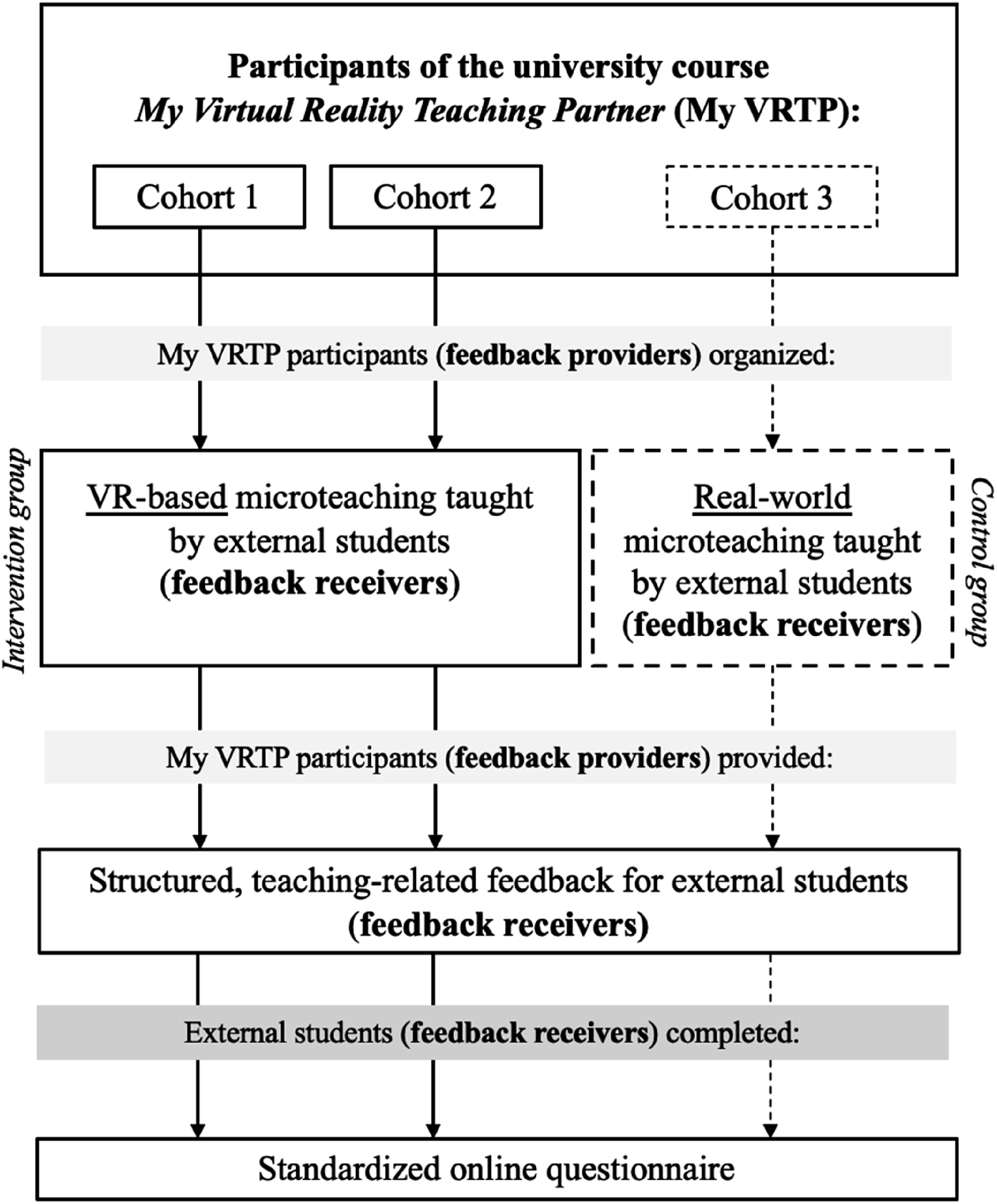
The study involved three groups of pre-service teachers, all of whom had completed the university course My Virtual Reality Teaching Partner (My VRTP). In this course, participants (feedback providers) acquired competencies in professional classroom observation and in delivering high-quality, teaching-related feedback. After completing the course, they were assigned the task of applying these competencies in practice by independently organizing microteaching sessions for other pre-service teachers (feedback receivers), observing their teaching performance, and providing structured peer feedback.
Group 1 and Group 2 (intervention groups, VR condition; Figure 2) organized VR-based microteaching sessions. The division into Group 1 and Group 2 within the VR condition resulted solely from the course’s organizational structure (separate cohorts) and did not reflect any difference in intervention procedure. Group 3 (control group, real-world condition; Figure 3) organized real-world microteaching sessions. VR-Based Microteaching Real-World Microteaching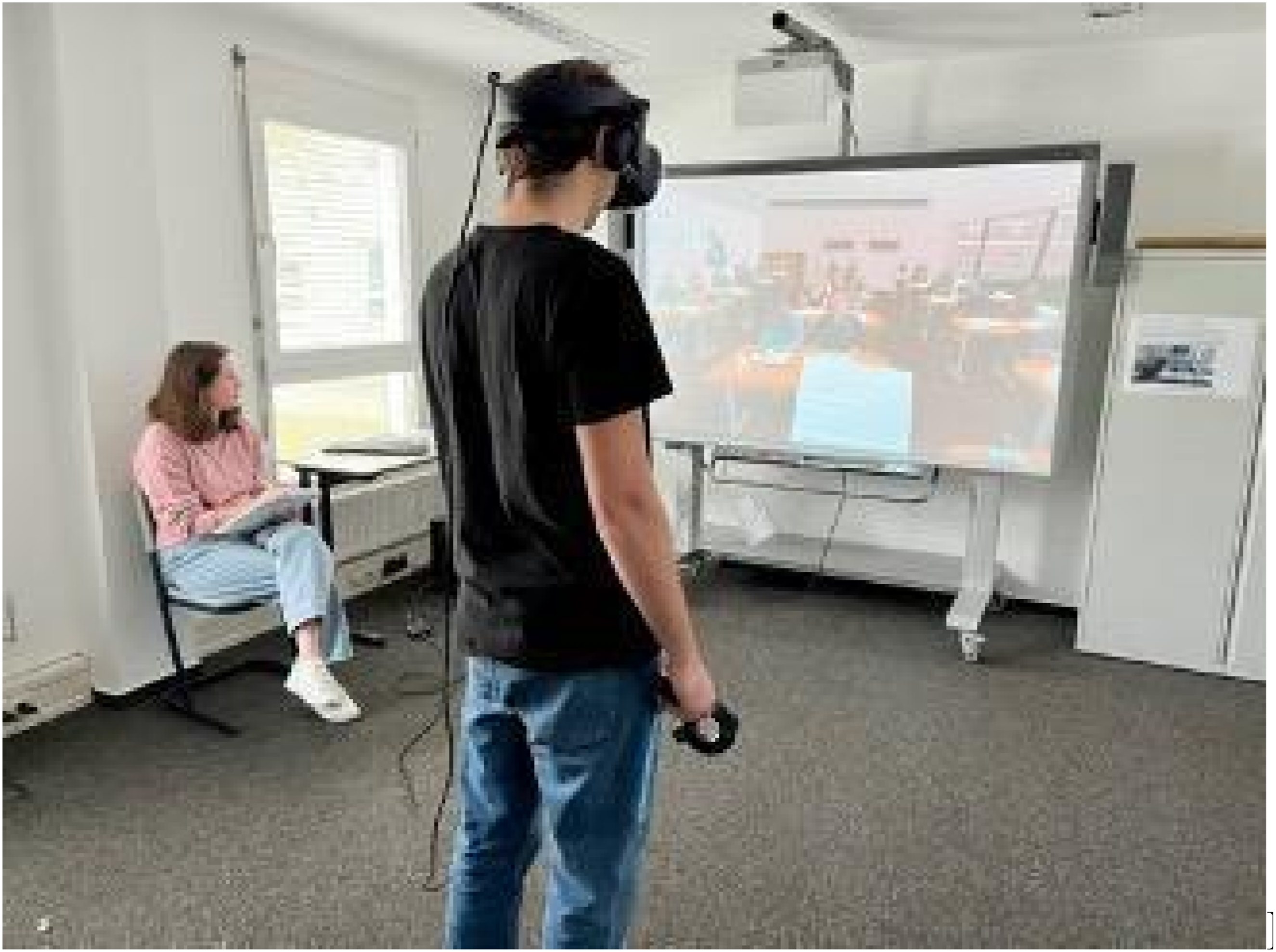
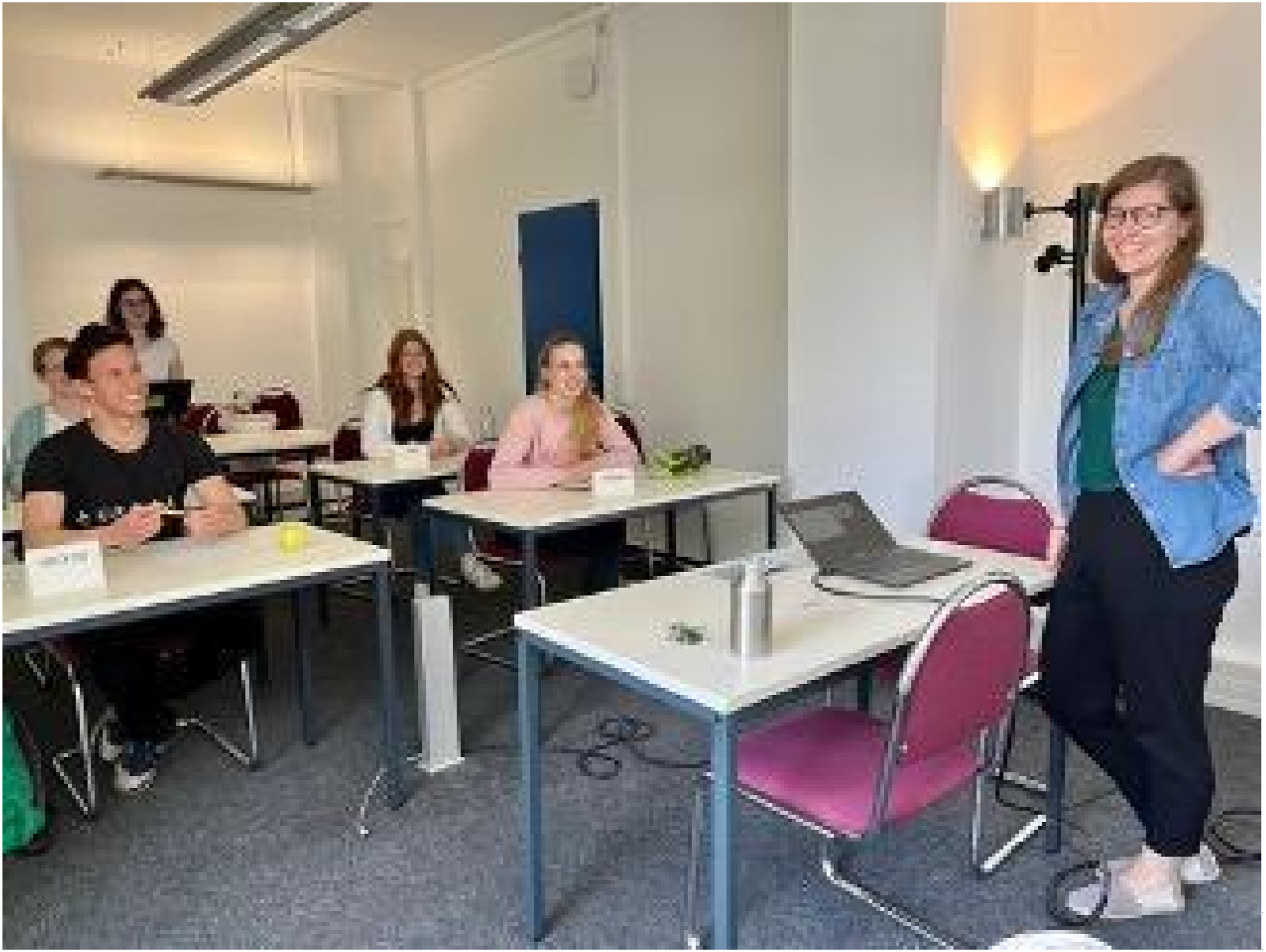
In all sessions, the feedback receivers – pre-service teachers with no specific preparatory training – received the same standardized lesson plan and presentation slides (on the topic of note-taking) in advance and conducted the same lesson using these materials. To ensure a high degree of standardization across conditions, the virtual students in the VR classroom behaved according to a predefined script, and in the real-world microteaching sessions, trained actors portrayed the students, following the exact same script as programmed for the virtual students. Both microteaching sessions lasted approximately 10 minutes. This ensured not only within-condition consistency but also comparability between the VR and real-world conditions.
During each teaching simulation, the feedback providers observed the lessons with the specific task of identifying relevant aspects of classroom management, instructional delivery, and student engagement, as practiced in the course. After the simulation, they conducted a structured, teaching-related feedback conversation with the feedback receivers, following the principles and guidelines emphasized in the My VRTP course. All feedback conversations were audio-recorded for subsequent analysis. Finally, the feedback receivers completed a standardized online questionnaire with closed-ended items assessing their perception of the feedback they had received.
Design of the Virtual Reality Classroom
Our study utilized a VR classroom designed to replicate an upper secondary school setting in Germany. The virtual environment was arranged with a classroom layout consisting of three columns and five rows of desks and chairs, each occupied by a student agent (Figure 4). These agents exhibited diverse physical attributes such as skin color, hairstyle, and clothing and were identifiable by name tags on their desks. Engaging in behaviors typical of a classroom, the agents performed tasks ranging from productive actions, like writing in notebooks, to disruptive ones, such as throwing paper balls. They maintained natural, seated postures with neutral facial expressions and reacted to participants’ movements by occasionally shifting their gaze or adjusting their body position. This spectrum of behaviors, including detailed off-task activities, was derived from established patterns of classroom disruptions documented in educational research and has been shown to serve as salient focal points for feedback in prior research (Borko, 2016; Prilop et al., 2020; Wolff et al., 2016), ensuring all actions were precisely scripted for experimental consistency. The VR system facilitated interaction by allowing users to move and look around freely, thereby enhancing the immersive experience (Huang et al., 2023c). Close-up View From a Student in the VR Environment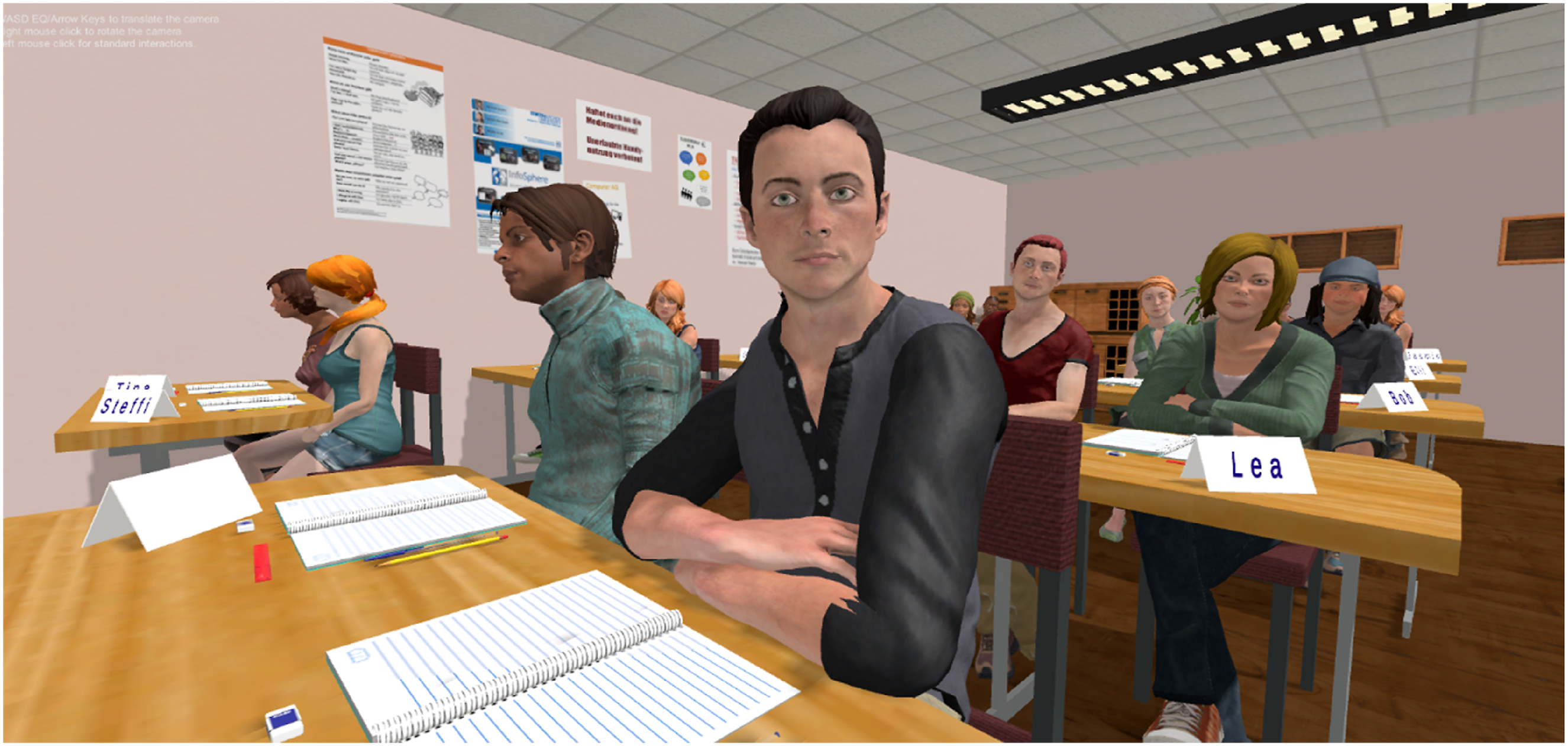
The technical infrastructure supporting the VR classroom included an HTC Vive Pro Eye system: a headset, two controllers, and two base stations for room-scale tracking. The headset has a resolution of 1440 × 1600 pixels per eye (2880 × 1600 combined resolution) with a 110° field of view. This headset was connected to an Alienware laptop equipped with a 2.2 GHz Intel Core i7-8750H processor, 16 GB of RAM, and an NVIDIA GeForce RTX 2060 graphics card with 6 GB of VRAM. This setup allowed the participants to physically navigate while engaging in a multisensory and immersive experience within the VR environment. Previous research has validated the authenticity and immersive quality of the VR setup, which contributed significantly to its realism (Wiepke et al., 2019, 2021).
Instruments
Feedback Quality
Content Analysis of Feedback Quality: Subcategories, Examples, and Intercoder Reliability (Cohen’s Kappa)
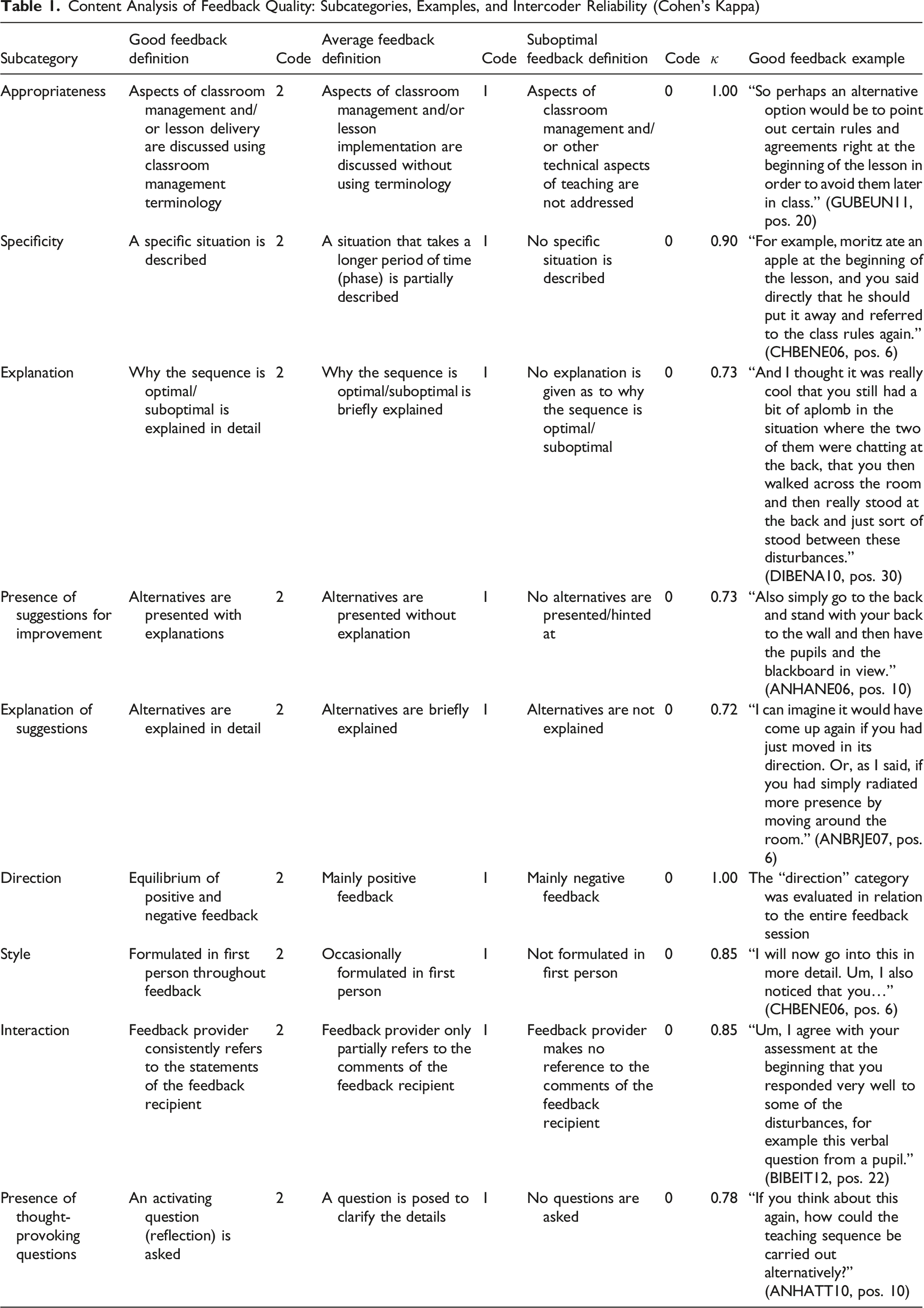
Feedback Perceptions of the Trainees (Feedback Receivers)
After receiving the peer feedback, we asked the trainees (feedback receivers) how they perceived the feedback by using an adapted version of the Feedback Perceptions Questionnaire (FPQ) by Strijbos et al. (2021). The questionnaire includes a total of 18 items, of which we adopted 10 and modified another 2 to fit our study design. It measures pre-service teachers’ perceptions of peer feedback in terms of fairness (e.g., “I consider this feedback fair”; α = 0.77), usefulness (e.g., “I consider this feedback useful”; α = 0.86), acceptance (e.g., “I accept this feedback”; α = 0.62) and willingness to improve (e.g., “I am willing to improve my performance because of the feedback”; α = 0.79). For this study, a rather active wording of the items was chosen, slightly deviating from the wording of the original items (e.g., “I would be satisfied with this feedback.”). Questionnaire items were rated from 1 = fully disagree to 11 = fully agree. Negatively phrased items were re-coded.
Methods of Analyses
We adopted a mixed-methods approach to enable a holistic view and greater depth of analysis. The statistical analyses provide general insights into the overall quality of the feedback sessions and the subsequent feedback perceptions of the pre-service teachers. However, it is the qualitative analysis of the feedback sessions that provide the detailed understanding necessary to fully grasp the underlying dynamics. With this dual approach, we aim to facilitate a comprehensive understanding of VR as a tool for pre-service teachers in feedback sessions. The research team processed the data material through independent efforts. One of the authors employed a quantitative methodology, utilizing a coding manual for analysis. Concurrently, the first author conducted a qualitative content analysis. This distinct methodological division enabled a nuanced examination of the data, allowing for a rich, in-depth analysis that leveraged the strengths of both quantitative and qualitative research paradigms.
Quantitative Analyses
Prior to the quantitative analyses, we cleaned the data to address inconsistencies in code assignment across different parts of the datasets. This process led to a reduction from 77 to 73 datasets for the quantitative analyses, thereby enhancing the reliability and accuracy of our analyses. The Shapiro-Wilk and Levenes’ tests were employed, and the Z-score method was applied. The data regarding feedback perception and that regarding feedback quality and focus were analyzed by applying one-way analyses of variance (ANOVA). All statistical calculations were performed using SPSS 29, and we set the significance level at p < 0.05 for all tests.
Qualitative Analysis
Regarding the qualitative analysis, Schreier (2014) emphasizes the importance of identifying, conceptualizing, and systematically describing selected content aspects within the material. In light of this and given the goal of examining the promises and pitfalls of VR-based microteaching for fostering high-quality feedback sessions in large amounts of qualitative data (77 transcribed feedback discussions, 39,272 words in total), we opted for Kuckartz’s (2016) method of a content-structuring qualitative content analysis; as it is systematic and rule-based, its results are intersubjectively comprehensible. This method comprises various approaches, which are all characterized by a rigidly structured methodology while allowing for a flexible strategy in category formation, making it the most appropriate choice for this context (Kuckartz, 2016). Figure 5 provides a visual depiction of the methodology employed. Overview of the Content-Structuring Content Analysis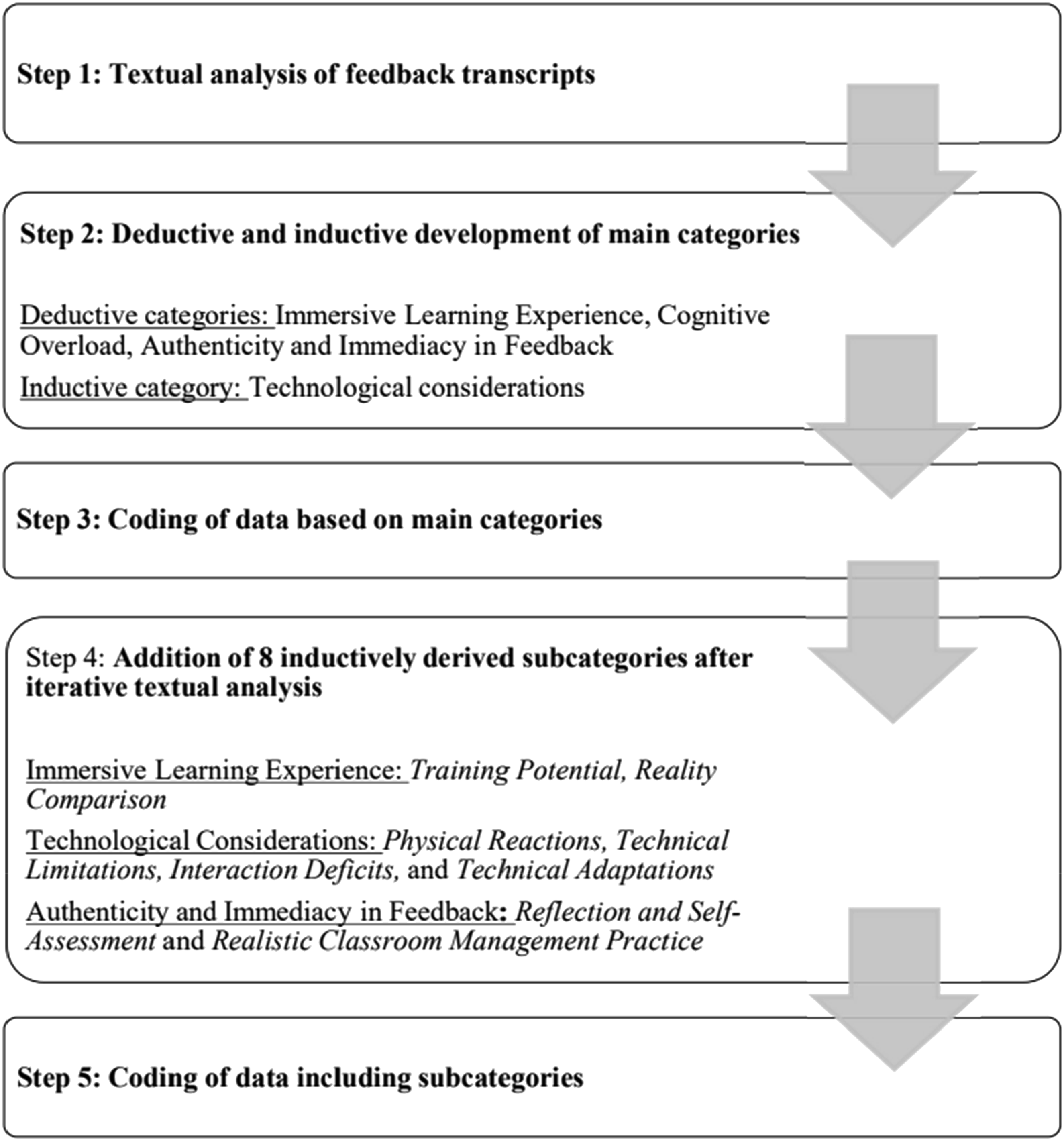
The initial stage of our qualitative study involved textual analysis of feedback transcripts, requiring multiple readings, the identification of key passages, and the recording of preliminary insights. The subsequent stage concentrated on establishing a categorization scheme for the analysis. Kuckartz (2016) posits that categorization may be approached deductively from theoretical frameworks and research questions, inductively from the data, or via a hybrid method. This study adopted the third strategy, deducing three primary categories from the literature (Immersive Learning Experience, Cognitive Overload, Authenticity and Immediacy in Feedback) and inducing one primary category (Technological Considerations). In the fourth stage, iterative textual analysis led to the addition of eight inductively derived subcategories. This was followed by a second round of coding and detailed data analysis using MAXQDA 2022, a specialized QDA tool that supports a digital and transparent data examination process. The coding procedure was followed by the analysis phase and, ultimately, the writing of the results section.
Results
Feedback Quality
The Shapiro-Wilk test, known for its higher precision with smaller sample sizes, was used to evaluate deviations from normality. The results indicated statistically significant deviations from normality in both groups (p < .001), indicating a violation of the normality assumption. Due to the asymmetry of the data, Levene’s test based on the median was used to assess the equality of variances. The results of Levene’s test indicated homogeneity of variances across all groups (p > .05). During data analysis, two outliers were identified within the VR group using the Z-score method (±3 SD). After review, the outliers were kept, as they reflected plausible variation within the study population. Therefore, to address our first research question, a one-way ANOVA was conducted to examine the effect of VR-based microteaching on the quality of pre-service teachers’ peer feedback compared to real-world microteaching. To evaluate the stability of the results with and without the outliers, a sensitivity analysis was performed.
Descriptive Statistics and ANOVA Results for Feedback Quality (VR-Based vs. Real-World Microteaching)
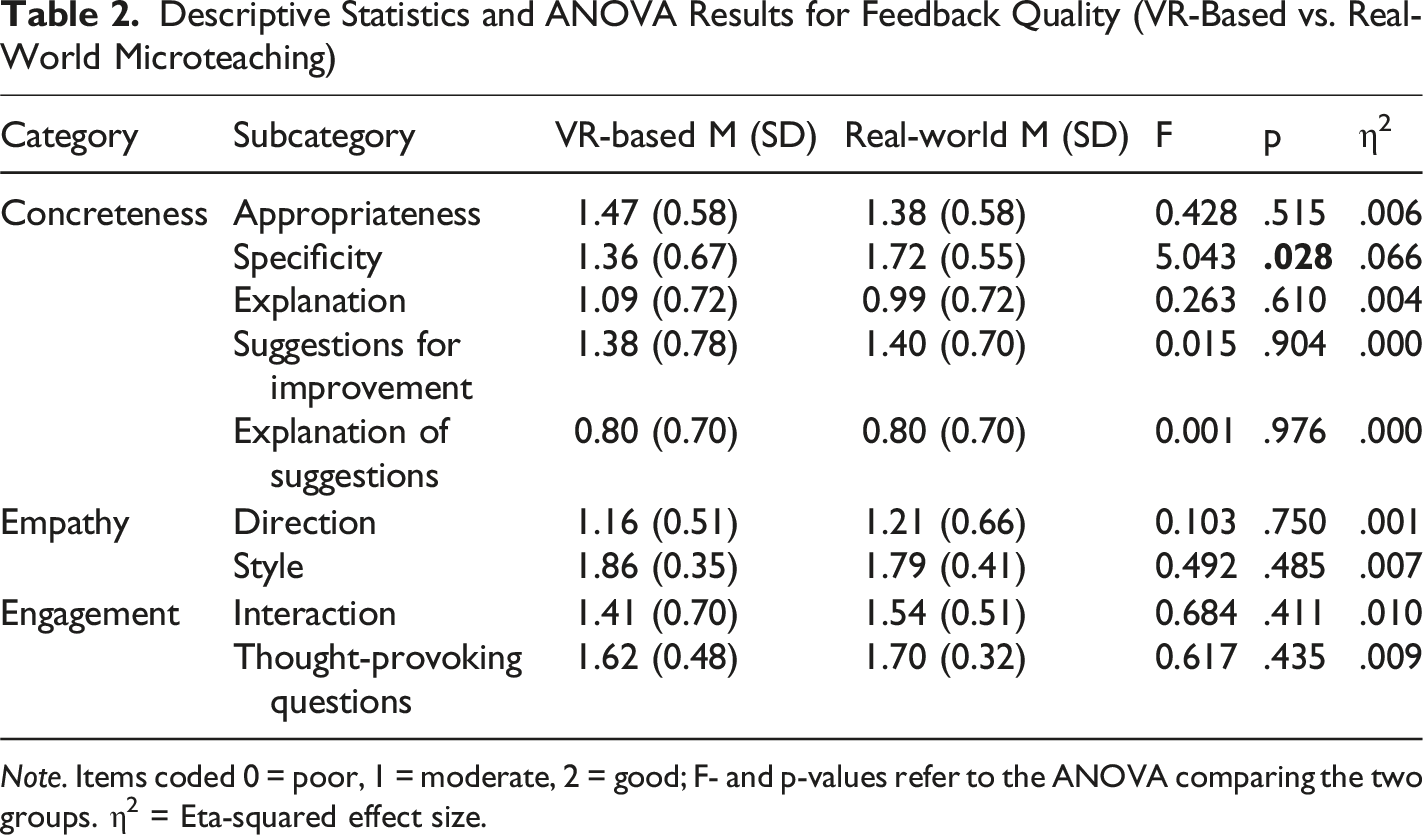
Note. Items coded 0 = poor, 1 = moderate, 2 = good; F- and p-values refer to the ANOVA comparing the two groups. η2 = Eta-squared effect size.
Since the initial ANOVA revealed a significant group difference for specificity, we conducted a follow-up ANOVA for the sub-subcategories learning environment, teacher, and students (for a brief description of the sub-subcategories please see the Instruments section). These analyses revealed that attention to the roles of both the teacher and the students was significantly higher in the real-world condition. Teacher: F (1, 71) = 12.35, p < .001, 95% CI [0.028, 0.296]; students: F (1, 71) = 7.18, p < .01, 95% CI [0.006, 0.231]. Overall, the feedback following the microteaching session in the real-world scenario described more events, particularly with regard to the actions of both the teacher and the students.
Feedback Perceptions
The Shapiro-Wilk test yielded statistically significant p-values (p < .05), indicating a significant departure from normality for most of the dependent variables. Despite this violation of normality, the median-based Levene test showed no significant violation of homoscedasticity for any of the variables (p > .05). During data analysis, potential outliers were identified using the Z-score method, with values greater than ±3 standard deviations considered outliers. A total of three outliers were identified in the data set. After careful review, two outliers from the VR group were retained in the analysis as these data points appeared to reflect plausible variation within the study population. One outlier from the VR group with a standard deviation of −6.36 was excluded from the data set. Finally, to investigate the influence of VR-based microteaching versus real-world microteaching on pre-service teachers’ perceptions of peer feedback, a one-way ANOVA was conducted. A sensitivity analysis was performed to assess the robustness of the results in the presence and absence of outliers.
Descriptive Statistics and ANOVA Results for Feedback Perception (VR-Based vs. Real-World Microteaching)
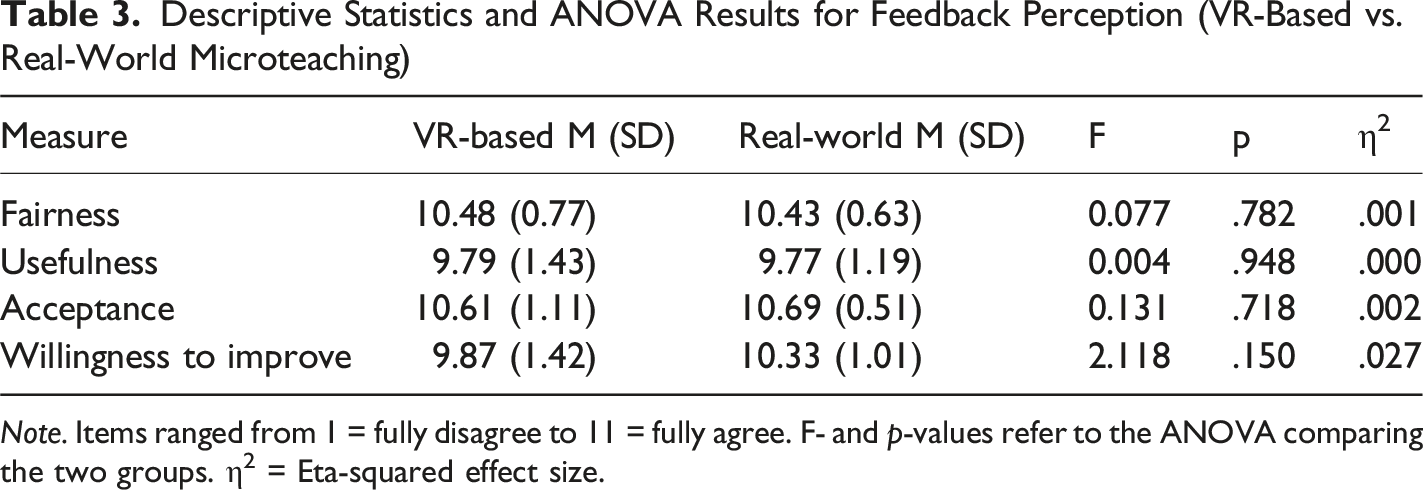
Note. Items ranged from 1 = fully disagree to 11 = fully agree. F- and p-values refer to the ANOVA comparing the two groups. η2 = Eta-squared effect size.
Qualitative Content Analysis
A combined deductive and inductive content-structuring analysis (Kuckartz, 2016) of the transcribed feedback sessions revealed four primary categories (written in
The first primary category,
The second primary category,
The third primary category,
The last primary category,
In conclusion, four primary categories emerged from the analysis of pre-service teachers’ feedback sessions following their VR-based microteaching experiences. First, the
Discussion
This study examined the differences in quality and perception of peer feedback among pre-service teachers following VR-based versus real-world microteaching. Additionally, it investigated the extent to which pre-service teachers perceive VR as an effective tool for facilitating feedback sessions. This study shows that VR-based microteaching produces feedback processes and perceptions that are largely similar to those in real-world settings. However, real-world microteaching elicits more specific peer feedback.
Feedback Quality
Regarding the first research question, the quantitative analysis showed no significant differences for the quality of any categories of the pre-service teachers’ feedback, except for specificity. Specificity refers to the extent to which concrete situations from the teaching session are described during the feedback discussions. The results indicate that participants in the real-world condition provided more detailed descriptions of specific events in their feedback than those in the VR-based condition. Further analysis revealed that, when describing such events, discussions following real-world microteaching paid significantly greater attention to both the teacher’s and students’ roles. Pre-service teachers’ increased focus on the teacher’s and students’ role within real-world microteaching may stem from an emphasis on teacher–student interaction within real simulation environments, highlighting the immersive and contextually rich nature of analog settings. In most cases, such environments still provide a richer sensory experience, which is why multisensory cues in VR training improve user experience and later task performance in real-world scenarios (Cooper et al., 2021).
The lack of significant differences aligns with previous findings (Huang et al., 2023b; Seufert et al., 2022) and should be viewed as a positive outcome, especially given the limited opportunities for pre-service teachers to practice in real classroom settings. Although the study design shares some features with traditional media comparison research, the primary focus of this study is on the feedback process rather than the medium itself. Quasi-experimental studies of this kind are essential for establishing an evidence base to inform future design-based research in teacher education. As Petersen et al. (2022) emphasize, “VR should not replace traditional ways of teaching (…) Rather, it can be a complement to traditional teaching that can increase accessibility.”
Feedback Perceptions
Regarding the second research question, the findings for feedback perceptions indicate that pre-service teachers rated the feedback they received highly in both VR-based and real-world conditions, with no statistically significant group differences in perceptions of fairness, usefulness, acceptance, or willingness to improve. These results suggest that participants considered the feedback process as both credible and beneficial, regardless of modality.
The high ratings of feedback perception across both modalities may reflect the strong standardization of feedback protocols and the preparatory training provided to all feedback providers. Previous research suggests that such standardization can minimize variation in perceived credibility and utility of feedback (Wisniewski et al., 2020). Furthermore, it is possible that pre-service teachers’ generally positive attitudes towards receiving any feedback, regardless of modality, are a function of limited prior feedback experiences or social desirability in structured settings (Altstaedter & Doolittle, 2014; Tsui & Ng, 2000). The finding that VR-based feedback was not perceived as inferior suggests that immersive digital environments can provide credible and accepted feedback experiences, supporting the integration of VR in practice-based teacher education.
Qualitative Analysis of VR-Based Microteaching Experiences
Regarding the third research question, the qualitative analysis supports the assumptions drawn from the quantitative comparisons. In particular, the distinction between real-world and VR-based microteaching modalities was a frequent topic of discussion in the feedback sessions, as reflected in the subcategories of Reality Comparison, Technological Limitations, and Interaction Deficits. These findings suggest that current VR technology does not fully capture the intricacies of real-world microteaching, particularly in terms of spontaneous teacher-student interactions and nonverbal cues. This limitation likely contributed to the observed differences in feedback quality between the two groups. While some improvements to the VR system are needed, the qualitative content analysis indicates that VR-based microteaching provides an immersive environment that supports preservice teachers’ reflection on key teaching competencies such as situational awareness and classroom management (e.g., Training Potential, Realistic Classroom Management Practice). This aligns with research that supports VR’s capacity to replicate complex real-world scenarios for professional development (Pottle, 2019). Moreover, feedback sessions with pre-service teachers indicated that the immersive VR experience facilitates engaging peer feedback (see
Despite the anticipated cognitive challenges associated with immersive learning environments (Makransky & Lilleholt, 2018), there were no explicit reports of cognitive overload from the participants in our study. The initial difficulties encountered by the participants in adapting to the VR environment were quickly overcome (see Technical Adaptation). However, the requisite multitasking – managing student behavior, adhering to the lesson plan, and responding to unpredictable student actions – hints at a substantial cognitive demand. While the qualitative analysis revealed the necessity to mitigate the Interaction Deficit in VR-based microteaching, the cognitive demands of multitasking may also prepare pre-service teachers more effectively for the subsequent real-world classroom setting. Those cognitive demands may enable pre-service teachers to efficiently manage their cognitive load. This ability is crucial for novice teachers facing the task of juggling multiple demands with limited cognitive resources, as discussed by Feldon (2007) and Moos and Pitton (2014). It may therefore be possible to train this ability in VR-based pre-service teacher education.
Overall, the results of the ANOVAs and in-depth analysis of the 77 feedback discussions indicate that, although current technology still lacks the capacity for complex student-teacher interaction, VR-based microteaching holds significant potential for teacher education. This is particularly true given that it provides a secure environment for practice and reflection. The qualitative analysis suggests that VR-based microteaching, when complemented by subsequent feedback sessions, can facilitate profound self-reflection and professional development.
Implications for Teacher Education
VR offers a novel avenue for teacher education, providing a realistic yet controlled environment for the cultivation of teaching competencies. In contrast to conventional video-based training, which predominantly develops observational and analytical abilities (e.g., Gaudin & Chaliès, 2015; Nückles, 2021), VR facilitates active skill acquisition through immersive, hands-on experience.
This study extends prior research (e.g., Huang et al., 2023b; Seufert et al., 2022) by providing empirical evidence that VR-based microteaching enables immersive feedback experiences that are comparable to real-world microteaching, albeit with less specificity in the feedback. While previous studies have explored VR’s role in teacher training (for reviews see Snelson & Hsu, 2020; Huang et al., 2023a), there has been limited research on its effectiveness in fostering high-quality peer feedback. Our findings bridge this gap by demonstrating that VR-based feedback sessions can achieve levels of specificity and engagement equivalent to real-world settings. This study contributes to the ongoing debate on the effectiveness of VR in teacher education and highlights its potential to improve reflective practice and feedback literacy in pre-service teachers.
This study demonstrates how VR technology can be used to integrate immersive simulations with immediate feedback, thereby supporting learners at all stages of teacher education. Immediate feedback is of paramount importance in fostering reflective practice among pre-service teachers, with the capacity of VR experiences to enhance self-assessment abilities being directly linked to this factor.
Furthermore, VR has the potential to significantly enhance traditional pedagogical approaches, such as real-world microteaching, by providing pre-service teachers with the opportunity to experiment with diverse teaching techniques in a secure setting, receiving constructive feedback along the way. These findings of this study indicate that integrating VR-based training at an early stage of Bachelor’s programs could prove highly advantageous.
The quantitative data from this study indicate no significant differences in perceptions of peer feedback or feedback quality, except in the category of specificity. Furthermore, an analysis of the qualitative data, specifically the subcategories Reality Comparison and Training Potential, suggests that teacher education programs should integrate VR simulations designed to address high-pressure teaching scenarios. This integration would better prepare pre-service teachers for the challenges they will encounter in the classroom, enhancing their adaptability and responsiveness. In particular, such pressure testing is rarely possible in real-world settings, and thus, VR can serve as a valuable complement to traditional teaching methods, increasing accessibility to specific training scenarios (Petersen et al., 2022).
Integrating VR-based microteaching in pre-service teacher education provides structured opportunities for deliberate practice and feedback provision. Given that feedback quality in teacher education is often variable, VR simulations could serve as a controlled environment for pre-service teachers to develop and refine their feedback skills before engaging in real-world teaching contexts. The ability to repeatedly engage in standardized simulations ensures that pre-service teachers receive equitable training opportunities, ultimately leading to more consistent and higher-quality feedback exchanges.
The incorporation of VR into teacher education can effectively bridge the gap between theoretical knowledge and practical application. Furthermore, VR-based microteaching, which is both scalable and cognitively demanding, has the potential to prepare pre-service teachers for real-world classroom interactions more effectively than traditional methods.
Future Research
The results of the present study suggest several avenues for future research. First, the promising results of our quasi-experimental study highlight the need for longitudinal studies to assess the effects of repeated VR-based microteaching sessions on teaching competence or design-based studies to explore different VR-learning environment iterations. Such studies could shed light on the sustainability and long-term benefits of VR in teacher education.
Second, the qualitative analysis revealed technical limitations that warrant the development and rigorous testing of new VR features aimed at improving user interaction with agents and facilitating more intuitive movement within the VR environment. Improvements in AI and machine learning could be used to develop more responsive and realistic virtual students, thereby enhancing the interactive quality of VR training. This could significantly enhance the immersive experience and, by extension, the ability to promote constructive feedback and positive learning outcomes. Expanding VR capabilities is more than just a technology update. It drives educational innovation by creating immersive, interactive environments that encourage deeper engagement with feedback and provide unique teaching experiences beyond traditional methods.
Third, future research could investigate how VR-based microteaching affects teachers’ emotional and cognitive load compared to traditional teaching methods. We found no explicit mention of cognitive load in all 77 peer feedback sessions. What we did find was implicit talk of high cognitive load, but not in relation to the VR environment, but in relation to the teaching itself. Makransky and Lilleholt (2018), on the other hand, confirmed higher cognitive load in VR environments and hypothesized that students learn less in a VR environment because of the higher cognitive load they observed. We hypothesize that these contradictory results are due to the fact that the cognitive overload we implicitly found in relation to classroom management is not caused by VR, but by the complex act of teaching itself. This could be explored in future studies that examine how pre-service and in-service teachers manage stress and mental effort in VR environments, and how VR experiences can be optimized to enhance learning without overwhelming users.
Finally, comparing feedback from VR-based microteaching with that from actual classroom observations could provide insights into the authenticity and effectiveness of VR-based teacher training. This comparison could reveal areas where VR-based simulations excel and where they fall short, guiding future refinements.
Limitations
The present study has some limitations. First, the research was limited to pre-service teachers from bachelor’s and master’s programs at a single university. This specificity limits the generalizability of our findings to broader educational contexts.
Second, although all feedback providers received the same standardized training, differences in their prior experience with teaching and feedback may have influenced how they observed teaching, formulated feedback, and interacted during feedback sessions. For instance, prior exposure to structured feedback either as a teacher or a learner may shape their understanding of feedback (e.g., To et al., 2023). Future research should explore the potential impact of prior teaching and feedback experience in more detail.
Thirdly, the research indicated the presence of a ceiling effect in the analysis of feedback perceptions. This suggests that the measurement scale may lack sufficient sensitivity to accurately capture subtle variations in feedback quality between the groups. This phenomenon may be attributed to the fact that pre-service teachers who are still developing their professional identity tend to evaluate feedback in a positive manner. This is because they generally receive a paucity of feedback, or because they wish to avoid the perception of negativity, particularly in environments where feedback is structured. As a result, this phenomenon may have obscured finer distinctions in how pre-service teachers perceive feedback. Future studies could investigate alternative or more nuanced scales with a broader response range or employ qualitative methods to gain deeper insights into these subtle differences.
Finally, the VR technology implemented did not fully replicate the intricate characteristics of real-world microteaching. However, this limitation reflects the current state of the technology and highlights the need for continued research in this area. It also indicates the significant potential of VR in educational settings, as substantial feedback discussions were possible with the existing technology.
Conclusion
In conclusion, this study contributes to the emerging field of VR’s applicability in pre-service teacher education. It highlights its strengths in simulating safe teaching environments where pre-service teachers can practice their skills and engage in high-quality feedback sessions. Despite its limitations, pre-service teachers expressed interest in using VR for microteaching and appreciated the opportunity to experiment in a risk-free environment. The ratings of feedback quality, feedback perceptions, and the qualitative analysis of the content of feedback sessions suggest that VR is a valuable tool for facilitating high-quality feedback discussions in teacher education. The use of VR-based, customizable, safe microteaching environments for experiential learning and feedback sessions provides immersive approximations of practice. Therefore, VR-based microteaching has the potential to enhance current approaches to teacher education.
Footnotes
ORCID iDs
Ethical Considerations
In Germany, the criteria set forth by the German Research Foundation (DFG) stipulate that a study must obtain ethical clearance if it subjects participants to significant emotional or physical stress, doesn’t fully disclose the study’s purpose, involves patients, or includes procedures like functional magnetic resonance imaging or transcranial magnetic stimulation. Our research did not meet any of these conditions, so it was not necessary for us to seek ethical approval. The pre-service teachers as well as the experts provided the feedback voluntarily. Moreover, all participants were informed about the study’s purpose and confidentiality as well as data protection information.
Author Contributions
Funding
The authors received no financial support for the research, authorship, and/or publication of this article.
Declaration of Conflicting Interests
The authors declared no potential conflicts of interest with respect to the research, authorship, and/or publication of this article.
Data Availability Statement
All data generated or analyzed during this study are either included in this published article or can be made available by the authors upon request.
Declaration of Generative AI in Scientific Writing
During the preparation of this work, the authors used ChatGPT (https://www.chat.openai.com/; GPT-3.5 and GPT-4) as well as DeepL (https://www.deepl.com/) and Grammarly. ( ) in order to improve the readability and language of single sentences. After using these tools, the authors reviewed and edited the content as needed and take full responsibility for the content of the publication.