




Abstract
Coding is increasingly popular in schools around the world and is often taught by non-specialist teachers as an integrated task with other subject areas. In this article, we explore the relationship between computer science (CS) concepts and students’ multimodal expression in a coding animated narrative (CAN) task in the context of an integrated English-Technology unit of learning. Through this collective case study, we explore how CS concepts underpin semiotic elements of an animated narrative, analyse the factors that influence the extent to which students exercise those concepts, and reveal the tensions and opportunities that a CAN task may present for learning computer science concepts in regular, non-specialist, cross-curricular classrooms. The findings suggest that CAN tasks are unique in presenting opportunities for students to learn challenging CS concepts such as synchronisation and parallelism. At the same time, CAN tasks present tensions for teaching CS concepts in non-specialist classrooms, where student projects are often judged on their visual qualities. In such settings, procedural, rather than conceptual knowledge, may be a more efficient route to creative outcomes. It also means that drawing skills need to be prioritised. Role specialisation often led to better quality projects but at the expense of individual students’ conceptual development in computer science.
Introduction
Coding has been described as a new literacy (Jacob & Warchauer, 2018) and its associated thinking skills are claimed to be essential for success in the 21st century (Wing, 2006). As a result, many countries are beginning to include coding in compulsory education, with some reflecting this in school curricular or syllabi (e.g., England, Denmark, Finland). However, coding and its related computational thinking skillset is often compressed into an already crowded curriculum, and is frequently ‘integrated’ with other subject areas and taught by non-specialist teachers (e.g., von Wangenheim et al., 2017). Few studies to date have explored the intersection between the technical and creative goals of coding in an integrated curriculum, although recent work has warned of potential incompatibility between them (Resnick & Rusk, 2020).
This article explores the relationship between computer science (CS) concepts and students’ multimodal expression, through an integrated curriculum that brings together English and Technology outcomes in a coding animated narrative (CAN) task. A CAN is a 1–2 min animated ‘micro-narrative’, authored using the popular block-based programming language, Scratch 3.0 (Resnick et al., 2009). CANs are unique in that they are expected to feature coded multimodal semiotic devices including variation in camera angles, facial expressions and gestures (van Leeuwen, 2005; Mills & Unsworth, 2018; Unsworth, 2013). The study investigated the extent to which CS concepts can be learnt through an integrated curriculum taught by non-specialist teachers. Findings revealed that while important CS concepts underpin key semiotic features of animated narratives, some tensions may exist between the creative and technical outcomes expected from such tasks.
Research Goal and Questions
The principal goal of this study was to investigate the extent to which integrated curriculum taught by non-specialist teachers was an effective ‘vehicle’ for students’ learning of basic computer science concepts, and build understanding of how these were used and factors influencing their use, for creating semiotic devices in animated narratives.Data collection and analysis was guided by these questions 1. To what extent were students required to understand and apply computer science concepts in order to create multimodal semiotic devices in CANs? 2. What factors influenced students’ understanding and application of computer science concepts when authoring CANs in non-specialist classrooms?
A Review of Literature
One of the earliest studies combining coding with storytelling was undertaken by Kelleher and Pausch (2007), who created a block-based programming language, Storytelling Alice, as a platform for storytelling for first-year undergraduate computing students. Their goal was to motivate and increase participation in CS, especially amongst girls. They argued that coding stories would provide girls with opportunities for self-expression, to think through issues they encounter in their own lives, and to share stories with friends and classmates. They also suggested that storytelling would give students an authentic context to apply object-oriented programming concepts. For example, methods and parameters could be applied to create multiple scenes, and loops could be used for movements such as bouncing a basketball. Kelleher and Pausch (2007) concluded that “creating an animated movie and learning to program a computer can be fundamentally the same activity” (p. 63).
More contemporary research on coding animations has made use of the popular block-based programming language, Scratch. In their early work, Brennan and Resnick (2012) argued that Scratch coding supports computational thinking, and that the computational concepts would transfer to other programming contexts. Since then, much research has been conducted to evaluate the efficacy of using block-based programming languages to teach CS concepts (e.g., Meerbaum-Salant et al., 2013). However, more recently, Resnick and Rusk (2020) have questioned the efficacy of block-based programming languages for developing computational thinking, commenting that the quest for technical knowledge was often at odds with the creative and expressive goals they originally conceived as being the principal goal of coding with Scratch. Related to this, literature on coding animations suggests that coding is often positioned either as a means for self-expression (Kafai & Peppler, 2011) or that animation and storytelling is promoted as a mechanism for learning CS concepts (Franklin et al., 2013). In cross-curricular terms, the merging of the creative and the technical has mostly been ‘hierarchical’ (Barnes, 2015) - that is, either coding was prioritised over creative goals, or creativity was prioritised over technical goals. Resnick and Rusk (2020) describe this situation as “coding at a crossroads” (p.120).
Although rare, a few studies have attempted an ‘integrated curriculum’, where knowledge in both subject areas was expected to advance (Barnes, 2015). A notable example was undertaken by Burke (2012), which involved a group of 10 grade 8 students working through a 7-week curriculum, using Scratch for storytelling. He reported that the students were able to create a digital story following a basic narrative structure, and made use of a range of fundamental computing concepts such as sequencing and looping, parallelism, and synchronisation. There were, however, two limitations noted in Burke’s study. First, he claimed that the visual nature of the medium constrained the students’ ability to express a personal story. Although he interpreted this as a weakness of the medium, we speculate that it may instead be related to a lack of multimodal communication skills and understanding of how semiotic features – defined briefly as “the actions, materials and artefacts we use for communicative purposes” (van Leeuwen, 2005, p. 285), can be used to communicate meaning. Just as good writing employs literary devices, good animated narratives require semiotic devices such as varied use of camera angles and facial expressions and gestures, to effectively express meanings and affects (Mills & Unsworth, 2018; Unsworth, 2013). Currently, very little is known about how these semiotic devices might be related to coding, and which CS concepts may be required to support the advancement of expressive goals through code.
A second limitation to Burke’s (2012) study was that understanding of CS concepts was assumed (or not), based on the presence or absence of particular code blocks. To determine this, he used the automatic tally tool, Scrape, and only reported the percentage of projects that made use of specific blocks, and the frequencies of their use. This is also the approach taken by the popular analysis tool Dr. Scratch (Moreno-León et al., 2015). However, Brennan and Resnick (2012) suggested use of tally tools and similar mechanisms be supplemented by artefact-based interviews, to give a more complete picture of student learning.
Countering this, Salac and Franklin (2020) suggested that interviews are time-consuming and impractical in the school context. This perspective has motivated a shift towards paper-based methods, often in the form of multiple choice questions, to assess students’ understanding of computer science concepts (e.g., Grover, 2020; Rachmatullah et al., 2020; Salac & Franklin, 2020). These methods often ask students to trace code, and/or identify the purpose of specific ‘snippets’ of code. Although studies using these methods have been validated statistically, it appears no work was undertaken to verify their results through collection and analysis of students’ verbal explanations.
This study builds on our previous work which challenged the popularly held notion that computational thinking is required for problem-solving in creative coding tasks (Woo & Falloon, 2022). It investigates the efficacy of an integrated curriculum taught by non-specialist teachers, for teaching basic CS concepts through coding animated narratives. It also identifies the limitations and challenges non-specialist teachers face in delivering coding across the curriculum. The study provides new insights into the key CS concepts, and levels of understanding of these, that students need for fluent expression using various semiotic devices, via coding narratives. Finally, the multiple data methods used in this study supported deeper understanding of the students’ actual knowledge of the CS concepts they used in creating their animations. This extends knowledge from previous studies, most of which simply focus on evidence indicating the application of concepts, without interrogating students’ actual understanding of them.
Research Design and Participants
This study was part of a 3-year Australian Research Council (ARC) Discovery Project, which aims to generate knowledge of cross-curricular teaching pedagogies and student learning of multimodal composition, coding, and computational thinking, through the development of animated narratives in regular classrooms. Its goal is to develop a new theoretical and practical foundation for the integrative teaching of contemporary multimodal text creation and coding for students in the middle school. Recognising the development of CS concepts is inseparable from the learning context, a collective case study design was employed to capture and understand the complexity of factors influencing coding in non-specialist classrooms (Stake, 1995).
This article reports the findings from the first two iterations of the project. Data were collected during 2021 (iteration 1) and 2022 (iteration 2) from Year 5/6 (ages 10–11) and 7 classes (age 12) in co-educational public schools in a large Australian city. All teacher participants were non-specialists, with minimal or no prior experience with Scratch, or coding more generally. The Year 5/6 class teachers were generalist teachers, while the secondary teacher was an English specialist. The same Year 7 teacher participated in both research iterations. However, the Year 5/6 teacher from the first iteration could not continue due to staffing changes, therefore a teacher from a different primary school was recruited for the second iteration.
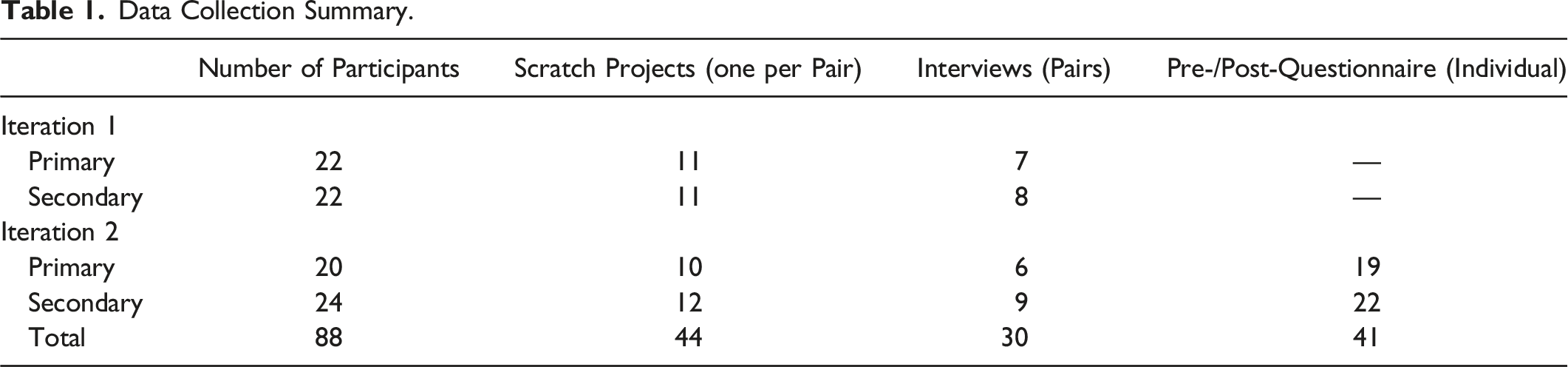
In total, 88 students participated across the two iterations. Data collected from students included their Scratch-authored CANs, interviews, and pre/post intervention questionnaires. The three data sources were triangulated to enhance the interpretive validity of results (Stake, 1995). First, forty-four (44) student-authored CANs were analysed for the code patterns and CS concepts used in their creation, and the multimodal semiotic features they exhibited. Second, thirty (30) student pairs were selected for post-intervention interviews to gather data on their experience of authoring the CANs, their use of multimodal semiotics, and their understanding of the coding concepts. The student pairs were purposively selected by their teachers to reflect gender balance and a range of Scratch experiences. In total, 30 student pairs, comprising 35 male students (58%) and 25 female students (42%), were interviewed. The students’ experiences with Scratch were broadly classified as low, mid and high. Low experience students (n = 24) had only started learning Scratch at the beginning of the school year. Mid-experience students (n = 20) had participated in out of school activities or learnt in previous school years, typically through coding games or robots. High-experience students (n = 16) had more than 1 year of experience learning coding at school and have reported to learn by themselves at home. While efforts were made to have equal representation of gender and experience groups, ultimately their composition was subject to the availability of consenting students. Third, students in iteration two were also asked to complete a questionnaire before and after the CAN learning unit. The questionnaire comprised two sections – the first related to students’ understanding of multimodal semiotics and the second explored their understanding of the key code blocks and targeted CS concepts. The questionnaire components that were relevant to the targeted CS concepts are included in Appendix A. Figure 1 summarises the overall research design, outlining the project preparation and format for both iterations. Table 1 summarises the volume of data collected from each source. Research design and data collection. Data Collection Summary.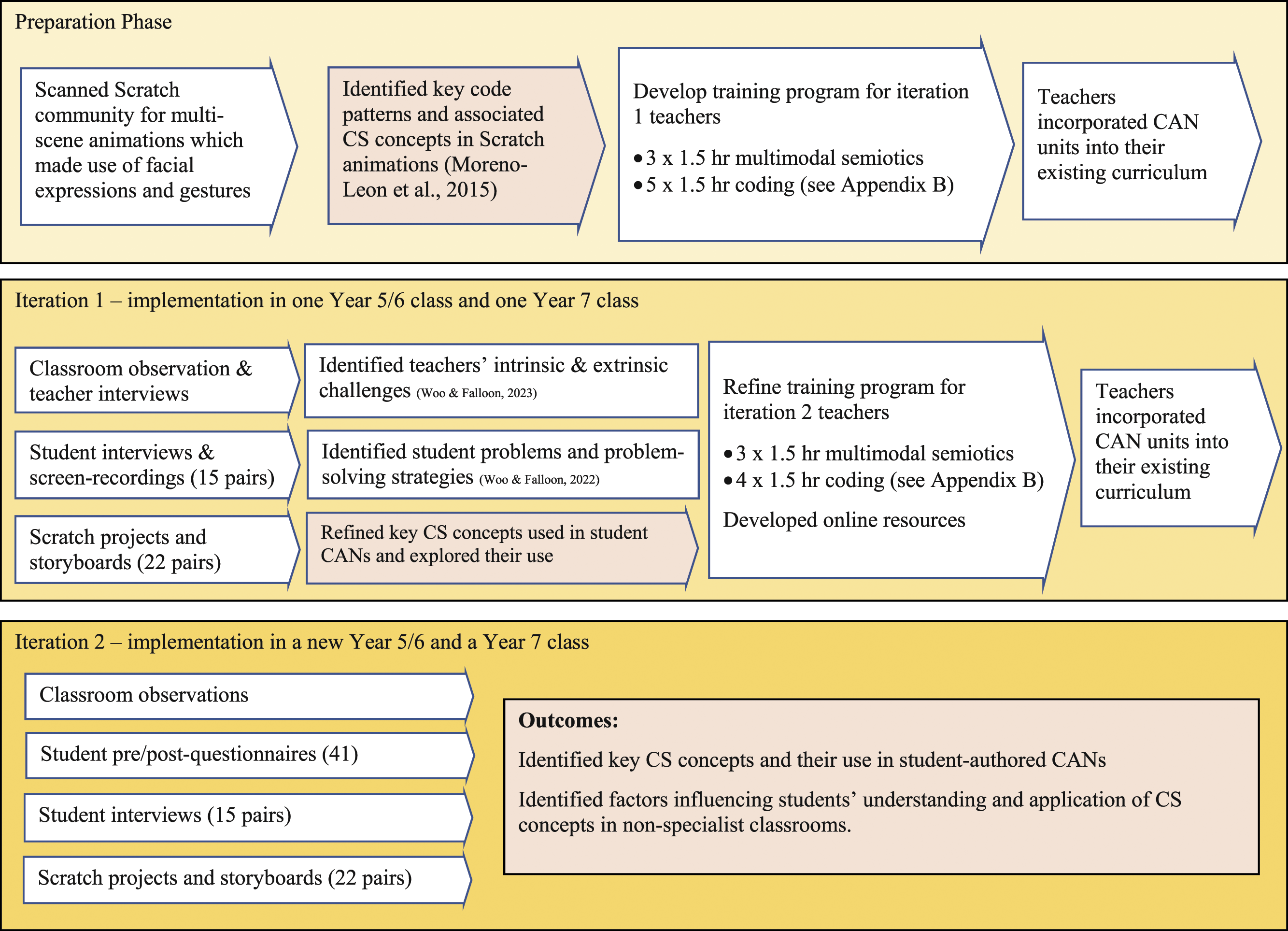
Data Coding and Analysis
Scratch Projects
All Scratch projects comprised three components – code, images (costumes and backdrops) and sound. Some previous studies concerned with CS concepts de-emphasised the use of images and sounds, as it was argued these could be distracting to students (e.g., Meerbaum-Salant et al., 2013). In this study, however, we were interested in the relationship between the use of images and sounds and students’ application of CS concepts in authoring their CANs. Therefore, Turbowarp, a Scratch mod that compiles projects into JavaScript, was used to obtain automatic counts of blocks and assets - where the asset count was defined as the number of costumes and sound files used within a project. Along with other data sources, the automatic counts were considered useful to obtain basic indications of any relationship existing between the use of codes and the presence of multimodal elements.
Framework for Application of Computer Science Concepts in Coding Animated Narratives.
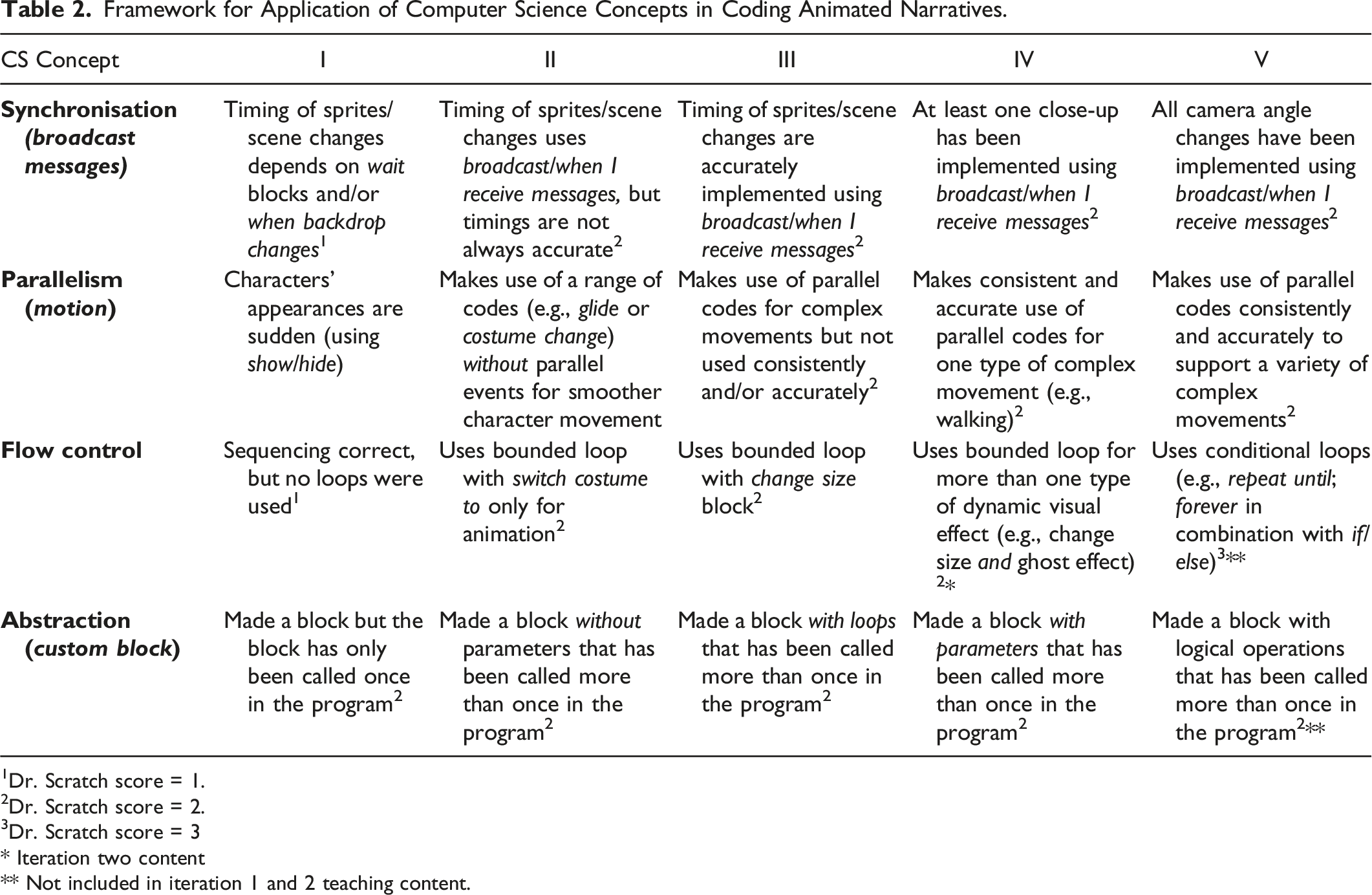
1Dr. Scratch score = 1.
2Dr. Scratch score = 2.
3Dr. Scratch score = 3 * Iteration two content ** Not included in iteration 1 and 2 teaching content.
The target concepts are ordered in Table 2 by the relative frequency of their appearance in students’ CANs. First, synchronisation is a key concept in concurrent programming, where “two or more sequential processes co-operate in performing a task” (Kolikant, 2001). In our study, to apply synchronisation in Scratch, students new to coding often used wait blocks to synchronise sprites (Level 1 on Dr. Scratch), and more advanced students tended to use when backdrop changes (Level 3) to create scenes. However, CAN teacher professional development and the associated learning units explicitly taught the students to use broadcast messages (Level 2 on Dr. Scratch). This was advantageous over using wait blocks because it allowed the code to be modularised, and improved the accuracy of timing scene changes. It was also more reliable than using when backdrop change because the same backdrop may appear multiple times in a CAN, and using unique broadcast messages avoids confusion. Sample data coded as evidence of the application of synchronisation are provided in Appendix C.
Second, parallelism is another concept in concurrent programming, and it has been referred to as “the way a computer executes sequences of instructions simultaneously” (Kwon et al., 2021). In Dr. Scratch, parallelism refers to codes that begin on the same event in a single sprite. This contrasts with synchronisation in which codes begin on the event, across different sprites. When authoring CANs, students’ main use of parallelism was to enable complex motion such as walking, therefore parallelism was combined with motion to form a combined category. The main difficulty we found students faced when using parallelism, was to ensure the timing of the parallel code stacks matched. To mitigate this, in the second iteration training program, we explicitly provided the teachers and students with exercises to practice calculating timing. Sample data illustrating coding decisions for parallelism are provided in Appendix D.
Third, flow control refers to the three algorithmic forms foundational to structured programming: sequence, iteration, and conditionals (McGowan, 1975). Flow control was the only concept where all three levels described in Dr. Scratch were evident in the student-authored CANs. See Appendix E for sample data illustrating coding decisions for flow control.
Fourth, abstraction is a common CS concept, and has been defined as ‘information-hiding’ and reducing complexity (Colburn & Shute, 2007). It is also one of the four elements of computational thinking that is being communicated to schools via curriculum and coding resource websites (e.g., BBC, 2021). Abstraction is often demonstrated by creating routines, procedures, or functions (Meyer, 1987), which are akin to using custom blocks in Scratch (Moreno-León et al., 2015). To create custom blocks, code patterns are created as modules and named according to their purpose, so that the new block can be called and reused multiple times in the program. Use of custom blocks was the only example of abstraction identified in the students’ CANs. Appendix F contains sample data illustrating coding decisions for abstraction.
Inter-Rater Agreement
Percentage Agreement and Cohen’s Kappa.
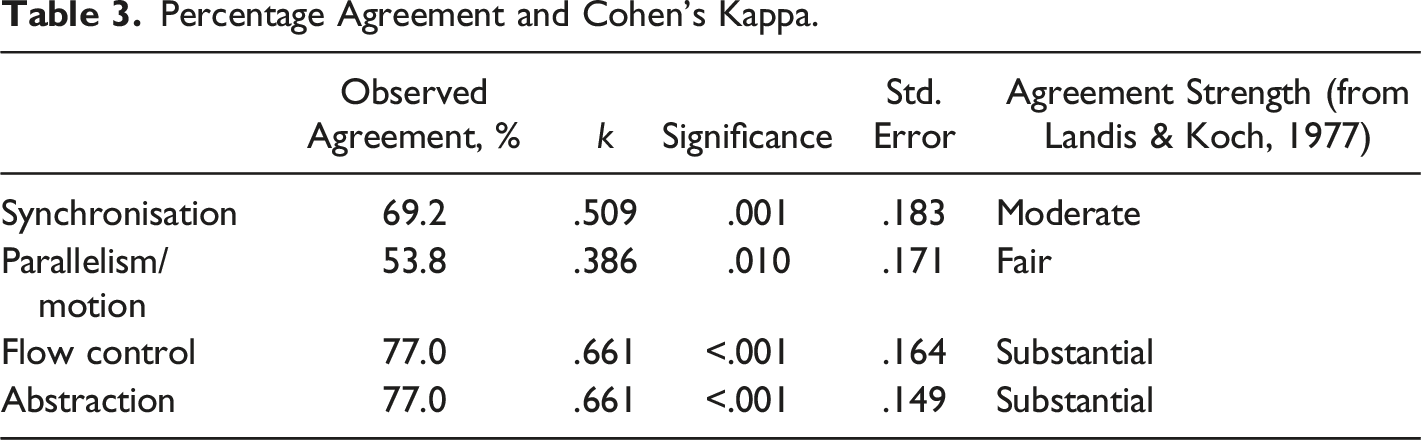
Using Landis and Koch (1977) levels of agreement strength, agreement for the concepts flow control and abstraction were substantial, and synchronisation was moderate. Interrater reliability for parallelism only achieved a fair level, most likely attributable to the author and research assistant applying different standards to assess whether movements in the CANs were ‘accurate’ to a satisfactory level.
Interviews
Student interviews were coded thematically using NVivo qualitative data analysis software. The coding focused on the students’ identification and knowledge of computer science concepts applied in creating their CANs. Interview data provided insights into students’ understandings of the targeted CS concepts, how and why they were used, and the nature of their coding practices.
Pre- and Post-Questionnaires
Student responses to the pre- and post-questionnaires (Appendix A) were recorded in Excel and imported into SPSS for analysis. A paired-sample t test was used to determine any change in understanding across the four concepts (synchronisation parallelism, flow control, abstraction) resulting from the CAN learning units.
Findings
Findings are generated from data collected across both project iterations. Combining data from all classes participating in iterations one and two enabled commonalities to be identified across datasets and project sites. In reporting data, Scratch projects are referenced using the initials of its two authors, and links to each project can be found in Appendix G.
Blocks and Assets
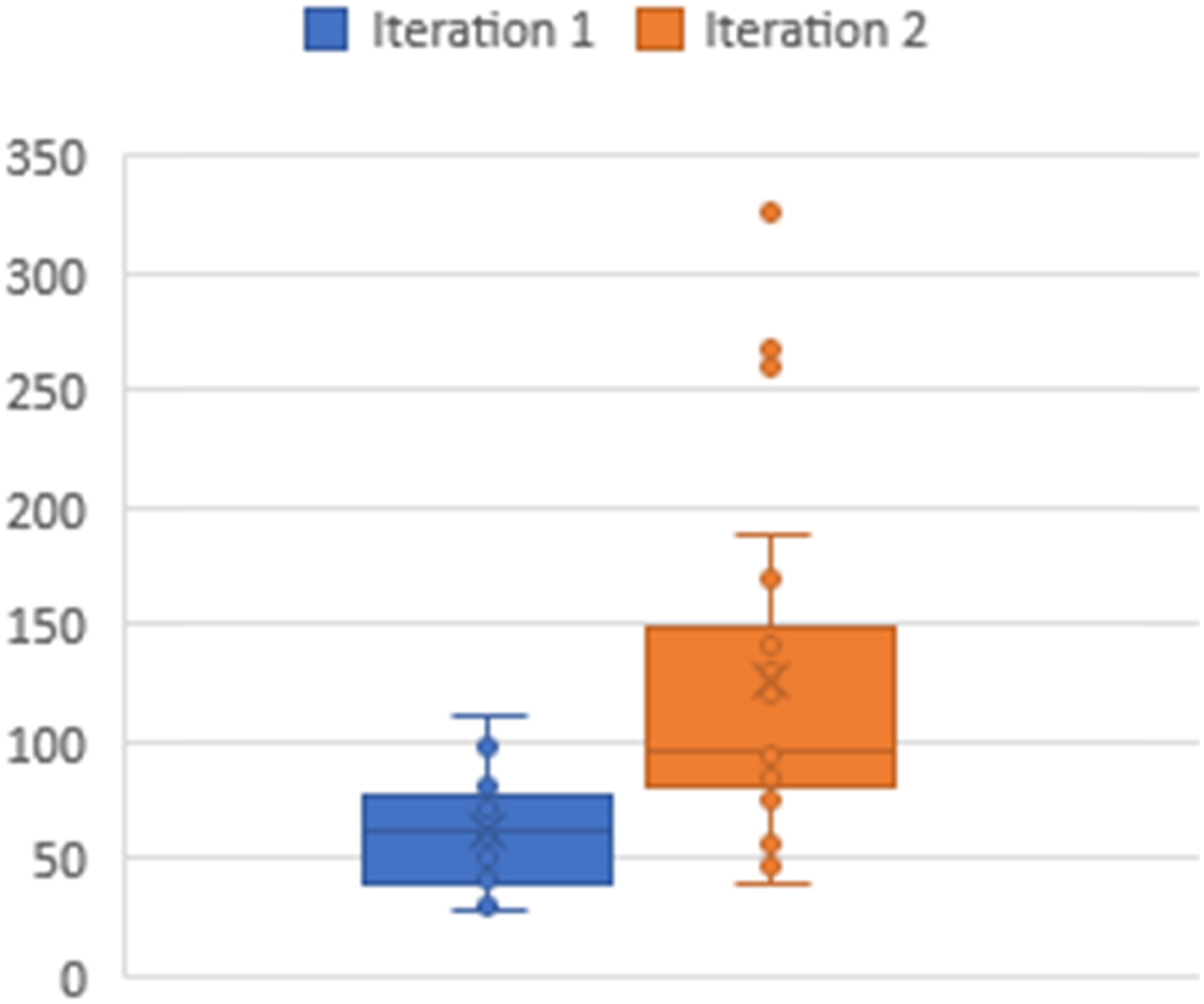
Across the two iterations, the mean block count was 402, and the mean asset count was 94 (see Figure 2 and 3). Using Pearson correlation, the number of blocks and the number of assets were found to be strongly correlated (r (44) = .78, p < .001), suggesting that increased use of multimodal elements may not necessarily be a distraction to coding. Number of blocks per project. Number of assets per project.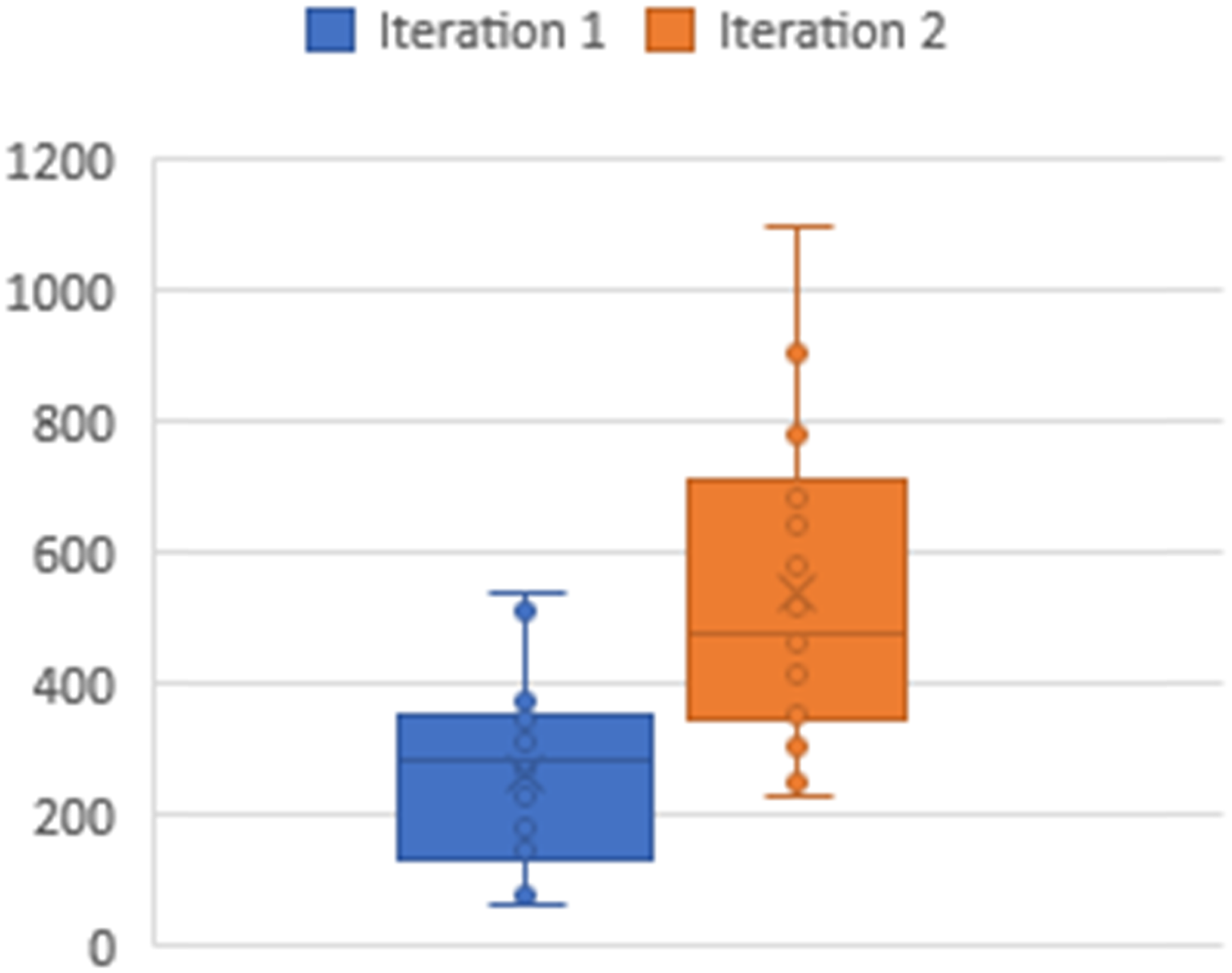
Computer Science Concepts and Code Patterns used in Authoring CANs
Synchronisation
Figure 4 indicates students made use of synchronisation to support close-ups (Type 4) and other camera angles (Type 5, see Table 2). Overall, the number of projects employing different camera angles more than doubled from iteration 1 (n = 8, 36%) to iteration 2 (n = 19, 86%). Interview data indicated students generally understood the main purpose of synchronisation to be orchestrating the timing of different sprites. For example, as student J commented, “you could just make a broadcast thing... That makes the character wait when it receives a broadcast, and then talk, which is what I tried to do for some of the text to speech.” (SJ, post-interview). Number of projects demonstrating each type of synchronisation (all projects).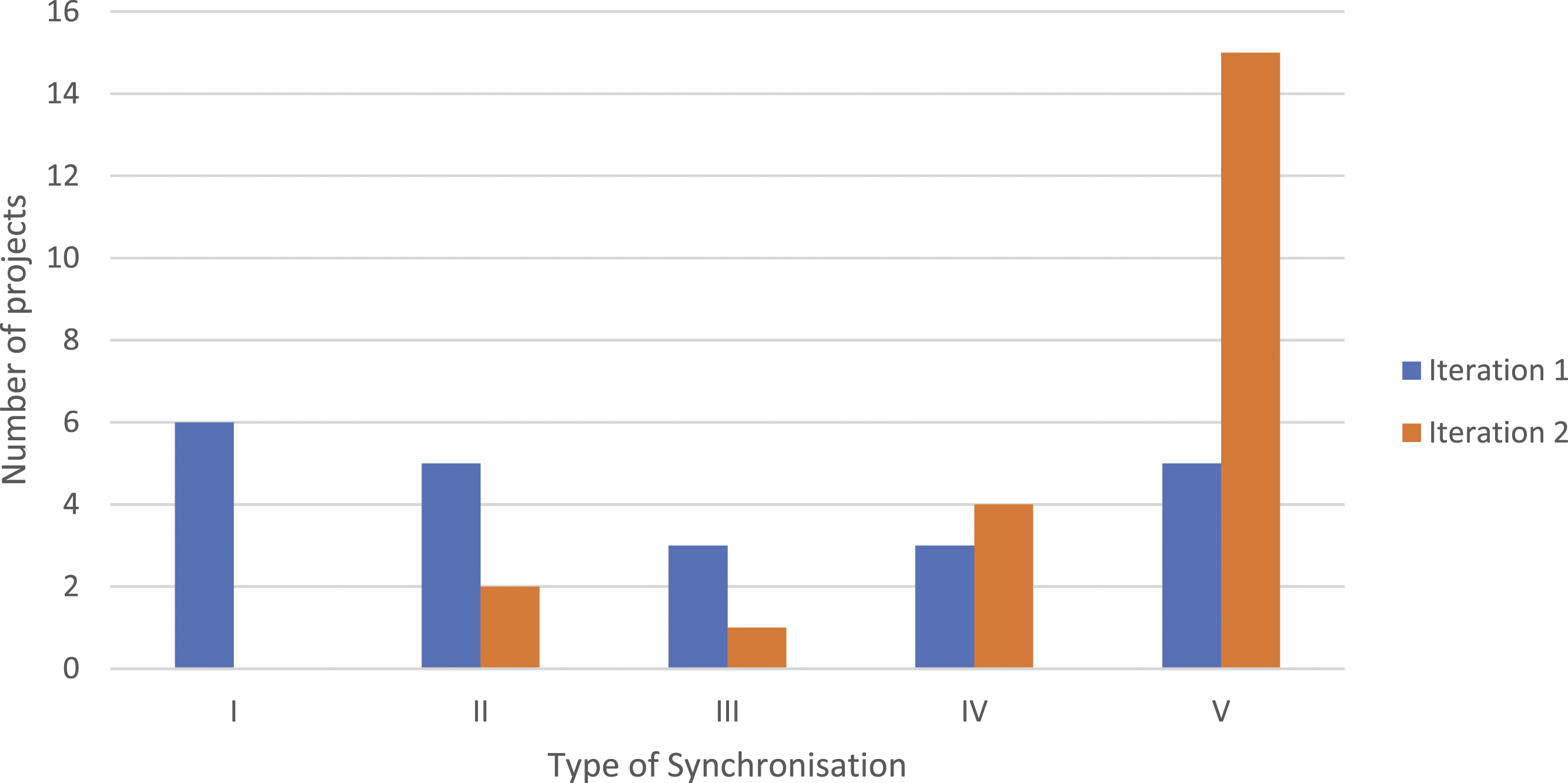
It should also be noted that while broadcast messages was used for synchronisation, it also had other purposes, such as modularisation. This is illustrated by student M, who commented, “it’s also easy if you use the broadcast messages instead of, like, just doing a long thing… that’s how we broke the scenes up.” (RM, post-interview).
Motion/Parallelism
Figure 5 indicates the number of projects that accurately implemented one or more types of parallel motion (Types 4 and 5) increased from iteration 1 (39%) to iteration 2 (68%). Although parallel codes were introduced to enable animation such as leg movements for walking and mouth movements for talking, students also adapted it to create non-human movements such as rain (e.g., KN). Number of projects demonstrating each type of motion/parallelism (all projects).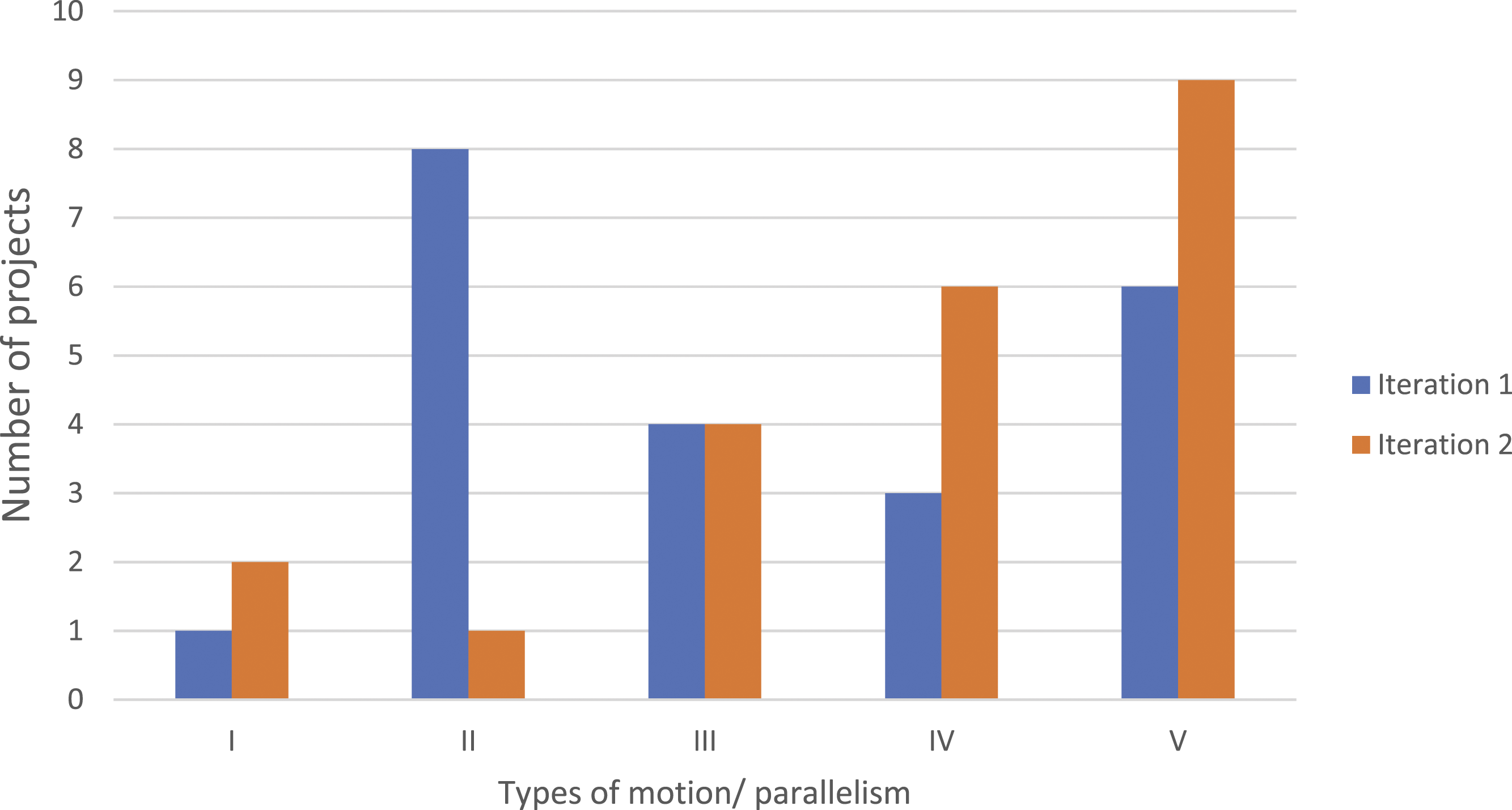
Interestingly, interview data suggested even students who were familiar with Scratch did not find the concept of parallelism particularly intuitive or automatic. As LC noted “that was, kind of, like, a revelation when you could do two things at once.” (LC, post-interview)
Flow Control
Figure 6 indicates there were more occurrences of students using loops (Types II to V) in iteration 2 (81%) compared to iteration 1 (74%). More specifically, students who used loops all used bounded loops with switch costume (Types II to V), which were introduced in the CAN learning unit as one of the two stacks of parallel codes to enable movements such as walking and talking. Number of projects demonstrating each type of flow control (all projects).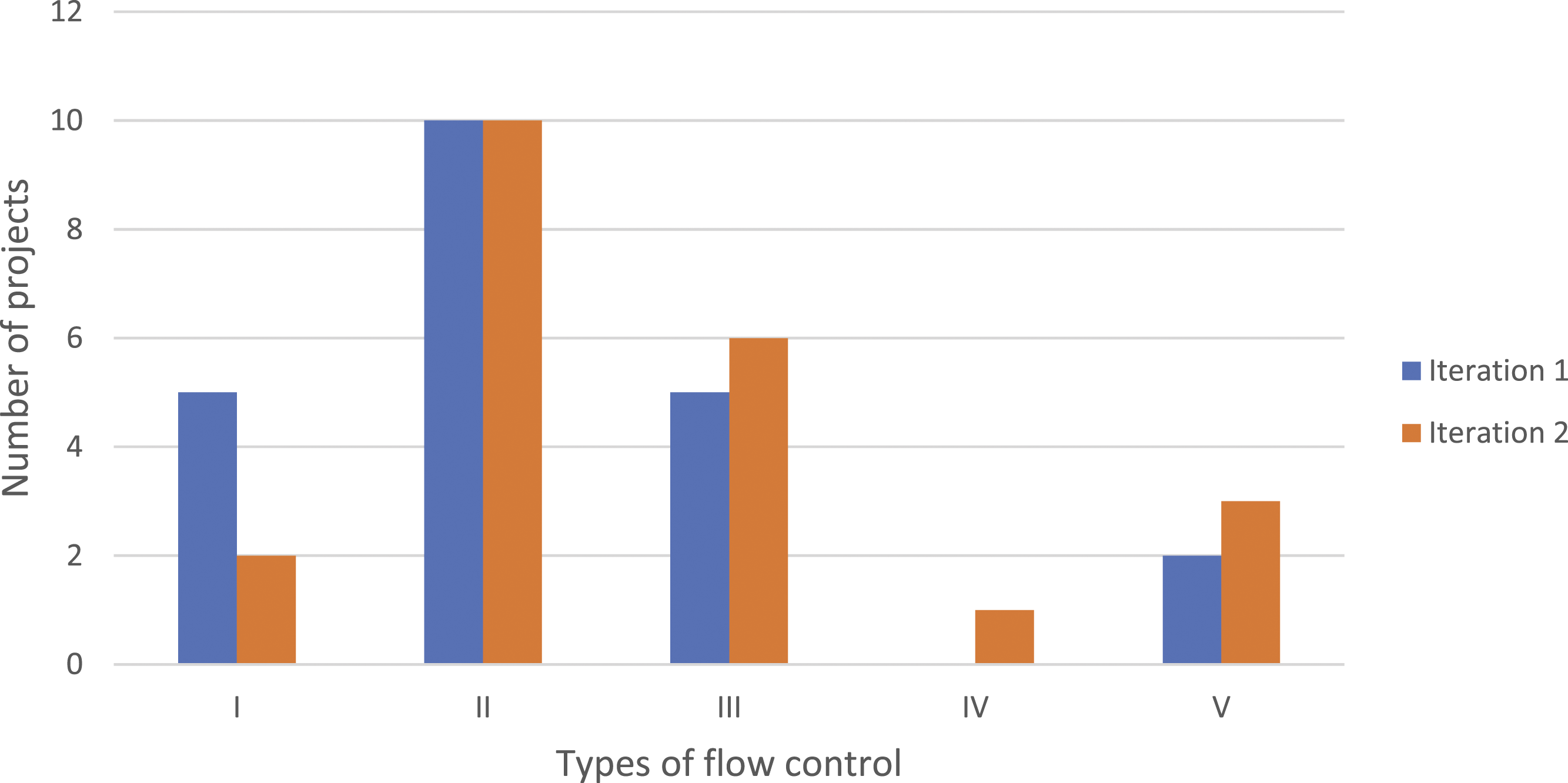
Students were also introduced to bounded loops with change size blocks in both iterations. Of the projects that used loops, twelve (27%) used change size blocks (Types III and IV). The main purpose for this was to create a sense of perspective for characters moving towards or away from the viewer (e.g., EC, LC). However, the change block can also enable other dynamics effects (such as brightness, ghost effect, colour effect) that were introduced in iteration 2, but only one project made use of it to create a fade-in effect (AG, Type IV). Interview data suggested that no other students planned to include dynamic visual effects in their CANs. Therefore, it would be defensible to argue that the limited evidence of other dynamic visual effects may not necessarily be an indication of the students’ ability, but may instead be an indication that students considered these effects were simply not required to author their narratives.
Lastly, there were five instances of students using conditional loops (Type V), although conditional loops were not explicitly taught during the CAN learning units. This suggests that some students’ may have transferred knowledge from other coding activities into their CAN authoring.
Abstraction
As indicated in Figure 7, there was limited evidence of the use of custom blocks. Only three projects in iteration 1 (14%), and 10 projects in iteration 2 (45%) created a custom block. Post-interview data also indicated while some students embraced the challenge, they did not consider abstraction to be necessary. This is illustrated by pair ND, who commented, Number of projects demonstrating each type of abstraction (all projects). N: I think it was cool, but… I think I could have used it a bit more because when I used it, since it was only for one time, technically it didn’t have any use, but I still think it was cool. (ND, post-interview)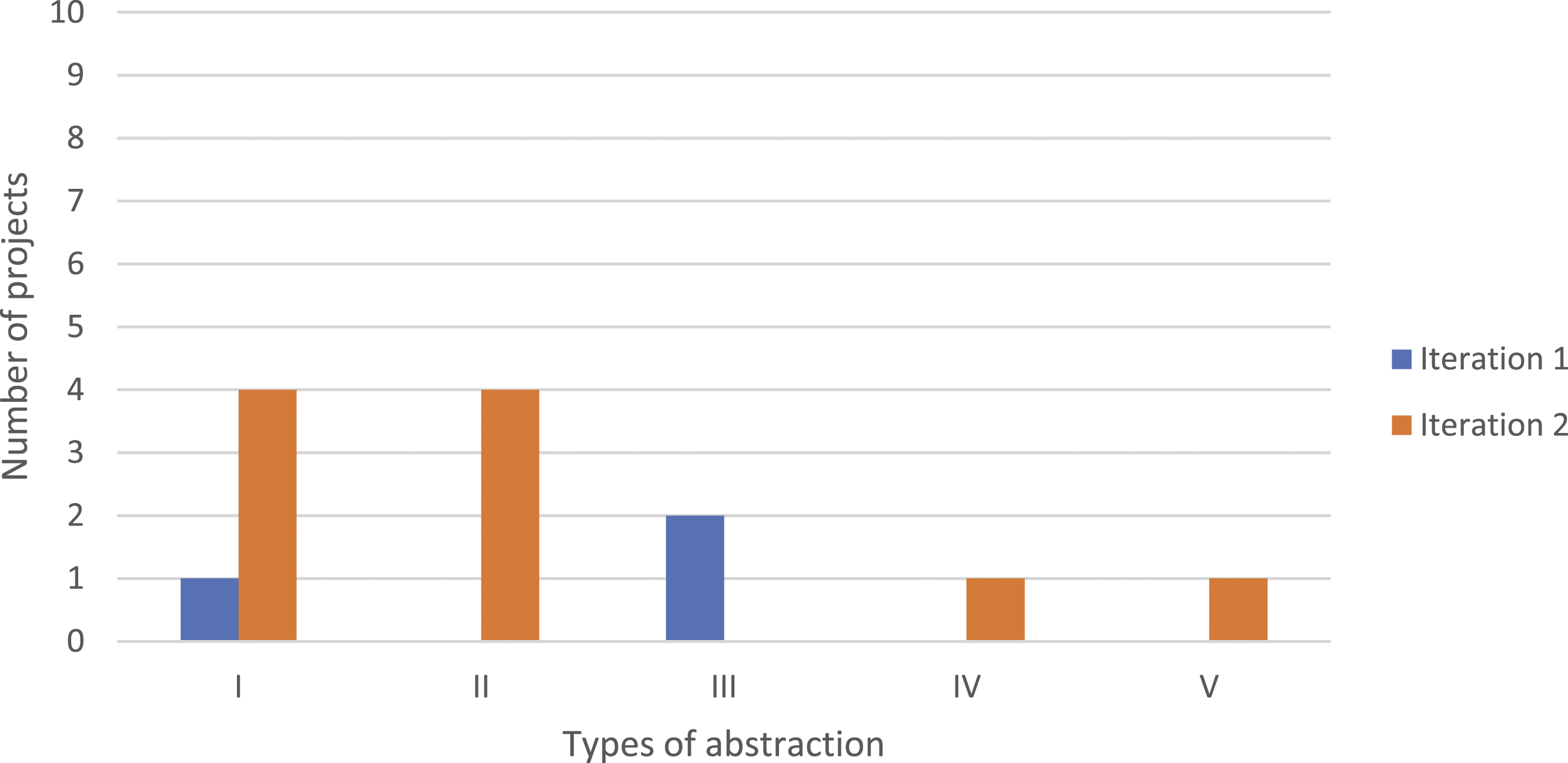
Student N realised that without reuse, their custom block was basically redundant. Similarly, KN commented, “I think we could have used the [custom]blocks a bit more but we didn’t, instead… if we needed to repeat something we’d just duplicate the code and just put it again” (KN, post-interview). It appears that students did not see any necessity to create custom blocks for abstraction or reuse. Interview data indicated the only reasons students cited for creating blocks was that it made walking or talking “easier” (e.g., KL, LC).
The exception to this was EC’s project that demonstrated Abstraction Type V, where a logical statement was used as part of the custom block definition. The custom block was part of a text-engine, which enabled custom characters to appear one after another, resembling typewriting. However, E revealed in the interview that the code was borrowed from an online tutorial. Therefore, this occurrence should be interpreted as competence in recognising and reusing code that is ‘fit for purpose’, rather than being reflective of the students’ understanding of the concepts embedded in the code.
Improvement in students’ understanding of CS concepts
Figure 8 summarises the number of correct responses in the pre- and post-questionnaire in iteration 2, grouped by the CAN-related CS concepts. There were improvements in the responses to all questions recorded between the pre- and post-questionnaires. Number of correct responses in the pre-intervention versus post-intervention questionnaire.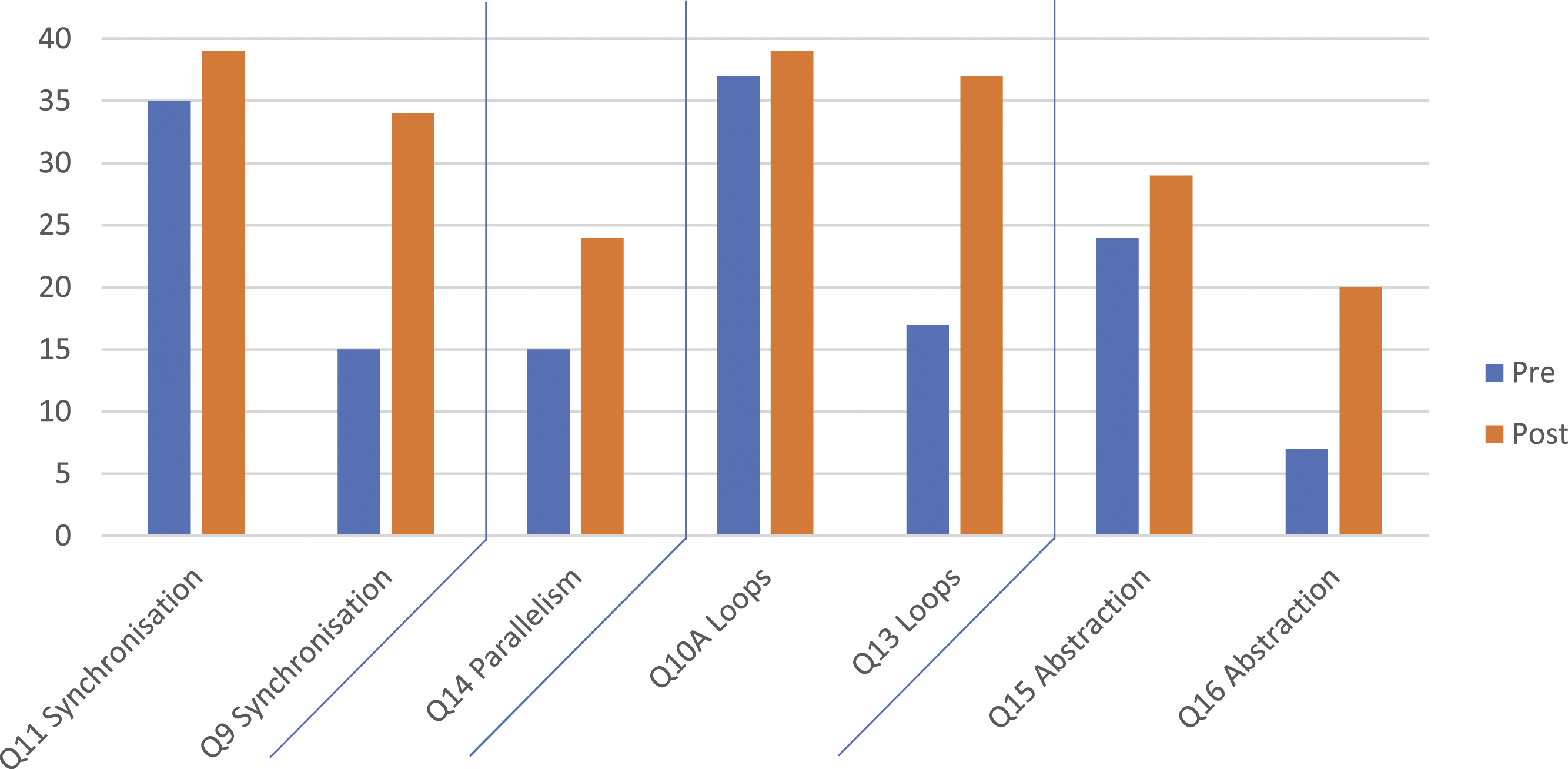
Paired-Sample t test for Pre- and Post-Questionnaire on CS Concepts.
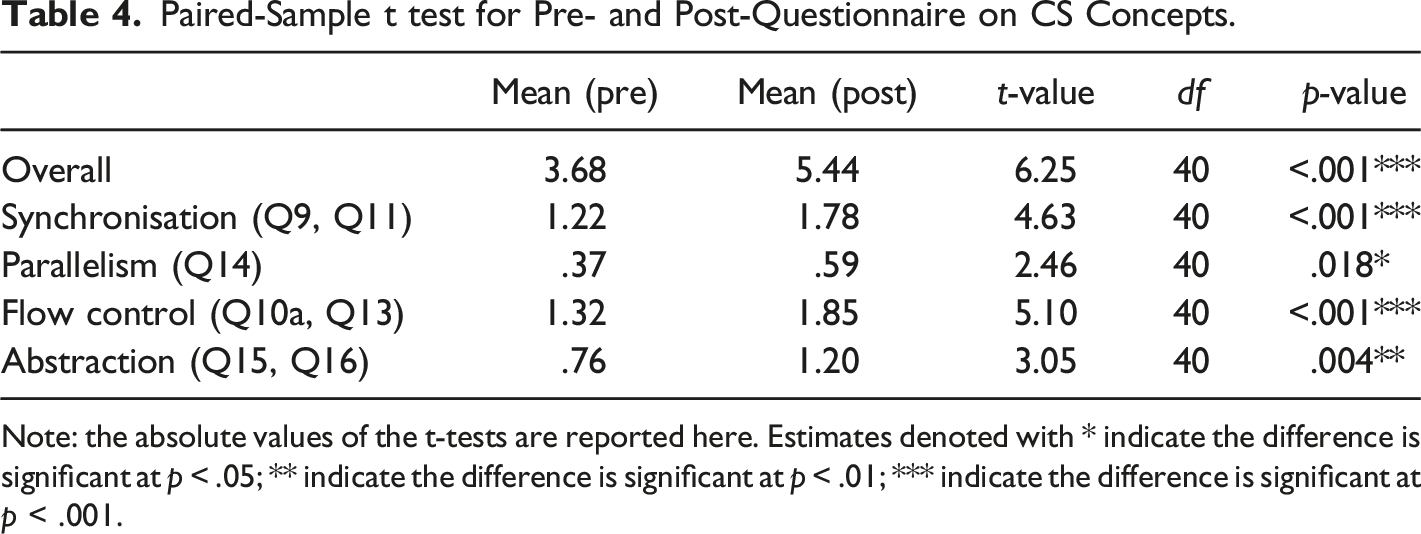
Note: the absolute values of the t-tests are reported here. Estimates denoted with * indicate the difference is significant at p < .05; ** indicate the difference is significant at p < .01; *** indicate the difference is significant at p < .001.
Discussion
In this section, we first discuss the utilisation of the four CS concepts to support multimodal expression, then we consider the factors that influenced students’ understanding and application of CS concepts and their creative expressions in CANs.
To What Extent Were Students Required to Understand and Apply Computer Science Concepts in Order to Create Multimodal Semiotic Devices in CANs?
Our results indicate that synchronisation and parallelism were the principal concepts used to enable multimodal semiotic devices. For example, close-ups could be effectively created using synchronisation via the use of broadcast messages. Additionally, some students transferred what they had learned to apply synchronisation for creating novel camera angles that had not been taught in the CAN learning units. Overall, most CANs included more than 10 scenes or camera angle changes, enabled by practices associated with modularisation using broadcast messages. CANs can therefore present a ‘natural’ context for students to repeatedly apply these concepts in novel ways, as determined by the unique requirements of their narratives.
Furthermore, previous research with Grade 4 and 5 students indicated that a major cause of errors in synchronisation was students failing to grasp a conversational metaphor (Resnick, 1991). Synchronisation requires students to give a command to one sprite, and let that sprite pass the command on to another, and so on. As Resnick (1991) described, it is “more like orchestrating a conversation among others as opposed to having a dialogue with another person.” (p. 164), and in his research, students found this unintuitive. By positioning students in the role of an animation director, our findings suggest that CAN authoring provides an appropriate context for introducing students to the concept of ‘orchestrating a conversation among others’ and thus helps overcome a major conceptual challenge for understanding synchronisation that has been encountered in previous studies (e.g., Resnick, 1991).
Parallelism was also frequently used in CAN authoring to enable complex movements such as walking and talking. This is a very positive result because previous research has found parallelism to be a difficult CS concept for Year 7 students to grasp (Kwon et al., 2021). In the second project iteration, more than two-thirds of the students made use of parallelism for complex motion in their projects. This contrasts with the results in a study by Franklin et al. (2013) in which only three out of 10 student pairs successfully incorporated complex motion using parallelism into their animation. Moreover, students in the current study extended their use of parallelism beyond the examples we provided, which illustrated its use for walking and talking, and have used it to create other moving elements such as rain. These results suggest that CAN authoring provides an effective means for students to learn about and apply synchronisation and parallelism, both of which are important concepts relating to concurrent programming.
In this study, we also investigated the use of flow control and abstraction in students’ CAN authoring. However, application of these concepts was much more limited. Students made use of bounded repeat loops to switch costumes, but few stories required automated graphic effects that could be enabled by change effects blocks. Similarly, despite teachers demonstrating custom blocks, few students found the need to incorporate them into their narratives. For those who tried to do so, their understanding of the concept of abstraction appeared limited to the specific application of creating movements. This was consistent with Meerbaum-Salant et al.’s (2013) finding that students engaged in specialising the concept — that is, where “a concept is perceived as a special case of itself” (p. 258). It appeared that although students were creating blocks, they may not have understood the purpose of abstraction as ‘information-hiding’ and reducing complexity (Colburn & Shute, 2007).
In summary, although students’ performance on all four concepts displayed statistically significant improvements in the post-test results, students’ interviews indicated that their conceptual understanding of the four concepts varied. Students displayed a reasonable understanding of synchronisation and parallelism, both of which are essential for creating multi-scene animations and complex movements. In contrast, concepts that did not directly affect the visual quality of the CANs appeared to be engaged only at a surface level. This included any use of abstraction or iteration beyond the most basic loops.
What Factors Influenced Students’ Understanding and Application of CS Concepts When Authoring Cans in Non-Specialist Classrooms?
Several teacher factors influenced students’ understanding of CS concepts when authoring CANs in non-specialist classrooms. These included the non-specialist teachers’ preference for teaching procedural over conceptual knowledge, the challenge of teaching drawing skills, and the tension between developing collaboration versus students acquiring individual knowledge.
The Preference for Procedural Over Conceptual Knowledge
Whereas the researchers spent much time in the first project iteration explaining computational thinking processes and discussing CS concepts, our non-specialist teachers did not prioritise this knowledge in their classroom implementation. Instead, they taught only about the basic blocks that were needed to create a working CAN (e.g., broadcast), and then left the students to figure out how to use them. This resulted in students’ overuse of trial-and-error as a problem-solving strategy, which was discussed at length in our earlier work (Woo & Falloon, 2022). Responding to this, in the second-iteration professional-learning program, we instead focused on commonly used code patterns and more procedural aspects of coding. That resulted in more focused and effective formative feedback being provided by the teachers to their students as well as better overall execution of the projects. It is somewhat paradoxical that the lesser focus on developing computational thinking and CS conceptual understandings in project iteration 2, actually helped improve the quality of students’ projects. However, this may be related to insufficient time being allocated to the teachers’ professional learning. The 4 × 1.5-hour coding sessions in iteration 2 may have been sufficient for the students to develop functional procedural knowledge, but the 5 × 1.5-hour sessions in iteration one appeared insufficient to develop deeper CS conceptual knowledge. Moreover, although understanding conceptual knowledge was desirable, the task simply demanded that students apply procedural knowledge. Deemphasising the need to understand the more abstract function of CS concepts, actually simplified the task for the non-specialist teachers. We suggest that a key difference between a non-specialist teacher and a CS specialist teacher’s approach to teaching coding is that the former is more likely to emphasise applying procedural knowledge in coding, whereas the latter is more likely to emphasise understanding conceptual knowledge. This issue may also be compounded by non-specialist teachers’ lack of confidence in assessing computer science concepts (Basu, 2019).
However, it should be acknowledged that even with the limitations of the non-specialist teachers, data clearly indicated that students developed a reasonable conceptual understanding of synchronisation and parallelism. At the moment, we have limited understanding about how procedural knowledge may progress to conceptual knowledge using integrated curriculum, e.g., does the progression demand quantitative (more practice) or qualitative (task design) change? This is an area for further research.
Drawing Skills as a Requirement for Coding Animated Narratives
Although some previous researchers have deliberately discouraged students from spending too much time on editing sprites (e.g., Meerbaum-Salant et al., 2013), iteration one findings from this study determined that it was almost impossible for students to effectively express original ideas through animations when they were restricted to only using the Scratch sprite library. Students’ dependence on switch costume for loops meant that most visual communication and storytelling was done by creating those costumes — which required well-developed drawing skills. Moreover, creating camera angles such as rear views and top views required students to manually draw those perspectives. We found that students with high coding experience but who were not confident with drawing authored some of the least engaging narratives and reported the greatest amount of frustration in the interviews. Teaching students how to modify facial expressions and gestures appeared to be an integral component of the successful production of narratives in iteration 2 — especially at the primary school, where the teacher allocated considerable time to enhance the students’ drawing skills.
One of the unanticipated outcomes of enhancing students’ drawing skills was that they also coded more. This was manifested in the positive correlation between the assets and block counts of each project. Almost paradoxically, while students in iteration two spent more effort on creating multimodal elements, they also used more blocks. This suggests that a synergy exists between expressive and technical demands associated with authoring a CAN. Whereas drawing skills are generally unrelated to developing CS concepts, this study indicates drawing skills are essential for students to develop successful outcomes in an integrated project of this nature. Teachers therefore need to be prepared to support students to develop drawing skills in order to maintain their engagement in creating an expressive CAN.
The Tension Between Fostering Collaboration Versus Individual Knowledge Development
The benefits of peer learning in coding tasks have often been referred to (e.g., Nouri et al., 2019), but few have signalled the tension that can exist between collaboration and individual knowledge development. In the current study, role specialisation was one way in which students collaborated effectively. For example, EC’s project contained the highest number of blocks (1103) and assets (268). The code within this project demonstrated EC’s mastery of all targeted CS concepts, and it included a wide array of multimodal semiotic devices. However, whereas student E achieved a perfect score in the post-intervention questionnaire, his partner, C, scored only 2 out of 7, indicating that his understanding of the relevant CS concepts had not progressed during the unit. Informal observations suggested this may have been due to the specialised roles each student took. In this case, E did most of the coding whereas C did most of the drawing. In short, although their efficient and effective collaboration produced a high-quality outcome, it did not support equal development of CS concepts. This trend was observed in other pairs who adopted the same approach (e.g., MG). This finding indicates that a tension may exist between viewing creative coding tasks such as CANs as effective means for developing students’ collaboration skills versus CANs being a useful ‘vehicle’ for building individual students’ CS knowledge.
Limitations
The subjective nature of qualitative research is acknowledged. To minimise this, the possibility of researcher bias was addressed by data triangulation, interrater reliability measures, and intensive discussion between members of the research team (see Parlett & Hamilton, 1977). Also, due to time constraints, the questionnaire employed single- or double-item measures for the targeted CS concepts. In addition, students’ application of computer science concepts was not part of school assessment in this study. Although observational assessment appeared to have a significant influence on unit design in the secondary school, future research could investigate more formally the role of school assessment and the influence of other external factors on students’ exercise of targeted CS concepts, especially abstraction and flow control.
Conclusion
This article began with an introduction about perspectives on the broader purpose of integrated creative coding tasks. We suggested that investigation was needed to explore these tasks’ efficacy as an effective means of developing students’ knowledge of computer science concepts. The findings suggest that several opportunities and tensions are present when considering the use of an integrated curriculum involving tasks such as CAN for teaching basic CS concepts.
First, CANs present unique opportunities for students to master the complex concepts of synchronisation and parallelism, that considerable literature has indicated are particularly difficult concepts for middle-school students to understand (e.g., Kwon et al., 2021; Resnick, 1991). However, its benefits for developing the more popular concepts of flow control and abstraction are more questionable.
Second, our findings also suggest tensions may exist between the creative purposes of CAN-based curriculum and the development of CS concepts. Non-specialist teachers’ practices of emphasising procedural over conceptual knowledge and allowing role specialisation led to CANs with high creative quality, but may have come at a cost to individual students’ conceptual development in computer science. The need to teach drawing skills may also create tension for some, especially under the time pressure of regular classrooms.
In conclusion, the findings of this study reflect Barnes (2015) observation that cross-curricular learning can easily result in less clarity about what a subject entail when teachers lack disciplinary knowledge. As the global shortage of computer science teachers persists, creative coding tasks may continue to play a role in widening access to computer science in middle school. In presenting the opportunities and tensions that cross-curricular tasks may present to the non-specialist teachers, the findings of this study demonstrate the limitations of these initiatives in developing deep CS conceptual knowledge and call for a rethink of the roles that cross-curricular tasks should play in a coding curriculum.
Supplemental Material
Supplemental Material - The Search for Computer Science Concepts in Coding Animated Narratives: Tensions and Opportunities
Supplemental Material for The Search for Computer Science Concepts in Coding Animated Narratives: Tensions and Opportunities Karen Woo, Garry Falloon in Journal of Educational Computing Research.
Footnotes
Declaration of conflicting interests
The author(s) declared no potential conflicts of interest with respect to the research, authorship, and/or publication of this article.
Funding
The research in this article was supported by an Australian Research Council Discovery Projects Grant [DP190100228], funded by the Australian Government. The views expressed herein are those of the authors and are not necessarily those of the Australian Research Council.
Statements on Open Data,Ethics
Due to participant confidentiality, the involvement young children, and the presence in data of potentially identifying information including names and images of students, ethical permission was not granted for data to be openly shared.
This research has been approved by the Australian Catholic University Human Research Ethics Committee [2019-105H] and the New South Wales Education Research Application Process [2019301]. The university ethics process adheres to the National Statement on the Ethical Conduct of Human Research (2007), which requires independent and unbiased analysis and reporting of research results. Informed consent to use student data was obtained from the school principals and teachers, as well as the participating students and their parents.

Supplemental Material
Supplemental material for this article is available online.
Author Biographies
References
Supplementary Material
Please find the following supplemental material available below.
For Open Access articles published under a Creative Commons License, all supplemental material carries the same license as the article it is associated with.
For non-Open Access articles published, all supplemental material carries a non-exclusive license, and permission requests for re-use of supplemental material or any part of supplemental material shall be sent directly to the copyright owner as specified in the copyright notice associated with the article.
