




Abstract
This review examines empirical research regarding workplace physical violence and aggression directed toward public servants. Practical recommendations to help prevent, intervene in, and control aggression and physical violence against public servants are presented, along with the analyses from which these recommendations stem are examined. The research methodology involved a comprehensive analysis of articles from 51 scholarly journals, encompassing publications in 2 languages without temporal restrictions. Our results are to the effect that most of the violence is perpetrated by users and citizens, not coworkers; few recommendations focus on the users and citizens who are violent. The recommendations fell into three categories: enhancing staff and management safety training for aggression prevention, investigating additional violence risk factors through research, and addressing discriminatory workplace practices that may trigger violence. Our research agenda outlines strategic directions for future investigation on physical work violence in the public sector.
Introduction
Workplace violence and aggression are multidimensional concepts. Kagan (2021, p. 129) distinguishes two main categories: verbal and physical violence. Verbal violence is defined as “an attempt to attack another person by means of harsh words, cursing, an aggressive manner of speech, threats, or any other manner of speech that it is not acceptable, but does not lead to physical injury,” while physical violence encompasses “any form of attack that has a physical component” (Carmi-Iluz et al., 2005, p. 2). While verbal aggression is the most common form (Caillier, 2021, p. 2), it can escalate to physical aggression—the most severe type of violence (Vigoda, 2002, p. 586).
According to a 2021 phone survey sponsored by the International Labour Organization (ILO, FLR & ISG, 2022) of 75,000 workers across 121 countries, nearly a quarter of employees -from all sectors-, 22.8%, have experienced at least one form of workplace violence or harassment during their careers. In the U.S., less than half of the nonfatal workplace violence episodes would be reported to police (Harrell et al., 2022, p. 26). This prevalence highlight the fact that violence against workers is widespread throughout the world, and is not a phenomenon specific to a given culture or limited by geographical boundaries (Kagan, 2021, p. 127).
Workplace violence has gradually emerged in certain public service professions—teaching, healthcare, social work, and urban transportation—that were previously unaffected (Bruce & Nowlin, 2011, p. 295). The critical role these professions play in delivering state services, along with their frontline employees’ interactions with the public, may explain the growing academic interest in this phenomenon (Keulemans & Schaap, 2025, p. 1; Davidovitz & Cohen, 2022, p. 74; Shier et al., 2021, p. 110). This violence, especially in the public sector, increases the likelihood of civil servants leaving their positions (Jiang & Jiang, 2024, p. 522).
Despite the proliferation of studies on workplace violence across several disciplines, particularly in public administration, researchers still lack a comprehensive overview of public administration studies documenting aggression and physical violence against public servants. This gap exists even though numerous systematic reviews have cataloged trends on the subject. These systematic reviews offer valuable insights, as they can examine specific phenomena within a single discipline (George et al., 2023, p. 1520) without selectively choosing approaches to fit prior ideological preferences. However, recent systematic reviews have primarily focused on the fields of health and social work (Chirico et al., 2022; Fricke et al., 2023; Mento et al., 2020), leaving a gap in the public administration literature.
The widespread nature of workplace violence can be explained by its significant implications for public administration and management. This violence generates both organizational and human consequences—reducing productivity, inducing occupational stress, impairing professional performance, heightening anxiety, diminishing work commitment, and increasing absenteeism (Rasool et al., 2020, p. 1). It also imposes significant financial costs (Clay, 2023, p. 5).
The problem of physically assaulting and hitting public servants is self-evident: “it probably is not necessary to offer a list of incidents of workplace violence to illustrate that there is a problem” (Fredericksen et al., 2016, p. 268). Public servants are particularly prone to being victims of workplace violence, which can lead to trauma (Getha-Taylor & Farnworth, 2022, pp. 388, 390). Employees who were victims of physical violence may be absent during their medical treatments, absent while recuperating from mental health issues, and less motivated and performant upon their return on the job. Consequences such as public servants’ injuries, sick leaves, absenteeism, burnout, and reduced job satisfaction all affect the quality of public services, budgets, and the cost of running public organizations (Mento et al., 2020, p. 8).
Workplace incivilities are only now starting to be documented with more regularity (Hatmaker et al., 2024, p. 432), but physical violence is not a mainstay in public administration research. Our research addresses this gap across public sector services broadly, not just health and social work services, in public management journals. We aim to record and analyze practical recommendations from scientific studies that can help prevent this phenomenon. This study will help practitioners understand the challenges public servants face and implement safety policies to prevent and manage violent situations.
We ask four research questions: What are the Reasons for Violence and Aggression against Public Servants in the Workplace ? What are the Theories Utilized to Research Physical Workplace Violence in the public administration Literature? What Methods are Deployed to Research Physical Workplace Violence in the public administration Literature? What practical recommendations does the public administration literature offer for preventing, addressing, and managing physical aggression and violence by users against public servants? This last research question aims to document solutions to a problem, not merely restate the problem itself.
Twenty-five articles identified in nine major public administration journals and dealing with violence and physical aggression at work are analyzed, after searching for such articles in 53 journals. Most studies mentioned physical aggressions and violence, but without measuring specific behavior like “physical attack not resulting in a visit to physician” or “physical attack resulting in a visit to a physician” (Zinter et al., 2024, p. 385). In addition to the types of violent manifestations, methodologies and theories employed in the articles, we code the practical implications for practitioners according to the why, what, when and where, who and how grid proposed by Dello Russo et al. (2023, pp. 1630–1631). The grid provides insights by clarifying why practitioners should follow recommendations, what these recommendations address, when and where to implement them, who they target, and how to execute them. The studies identify three key practical recommendations: enhancing workplace safety through staff and management training on preventing and handling aggression; broadening research to examine new violence risk factors; and transforming employer behaviors and attitudes to eliminate discriminatory employment practices that could trigger violence.
Literature Review
Violence and Aggression in the Workplace
Violence and aggression in the workplace are associated with a variety of causes. Two decades ago, physical violence and aggression at work were mostly experienced in professions related to retail, law enforcement, teaching, health care, transportation and private security (Peek-Asa et al., 2001, p. 146). In the healthcare field, incidents of violence correlate with medical malpractice or when the results of treatment do not meet the patient’s expectations (Mento et al., 2020, p. 7). In addition, violence happens in many cases when users are dissatisfied with the treatment they receive from front-line bureaucrats (Davidovitz & Cohen, 2022, p. 78). Factors such as socioeconomic conditions, drug and alcohol use problems, layoffs, oppressive workplaces, job security stress and family problems are known to be linked to workplace violence (Bruce & Nowlin, 2011, p. 295).
While the definitions of violence found in the literature may vary from one professional association and study to another, the fact remains that they broadly refer to the same ideas. Thus, they can be considered synonymous. Physical violence is distinct from mere workplace incivility or even workplace mistreatment like harassment or bullying (see Hatmaker et al. (2024, p. 434) for a discussion), but also from threat and emotional abuse (Eshuis et al., 2023, p. 812).
One of the studies we will be analyzing in the result section illustrates the nature of the physical assaults suffered by public servants in their workplaces. Most of it are from physical altercations against public servants in the spur of the moment, rather than the planned actions of radicalized members of organizations who want to target employees of governments they despise. Davidovitz and Cohen (2022) interviewed 71 teachers and social workers in Israel. These authors also distinguish between physical and verbal violence. Verbal violence was more frequent, occurring in 94% of cases, compared with only 21% of participants who had experienced physical violence (Davidovitz & Cohen, 2022, p. 77).
Workplace violence and aggression -irrespective of sectors- can be categorized into four types (Wassell, 2009, p. 1050), informed by previous typologies and developed from a systematic review. Type I refers to external or intrusive violence. This refers to violence orchestrated by people with no connection to the organization (Wassell, 2009, p. 1050). Type II refers to consumption-related violence. According to Wassell (2009, p. 1050), this refers to violence involving staff, customers or family violence against staff. Type III is relational violence. It refers to violence between workers, and can include domestic violence. Type IV is organizational violence, that is, violence against staff, customers, patients and other organizations (Wassell, 2009, p. 1050). This typology does not include verbal incivilities with hitting someone, under one umbrella. For this reason, we shall confine ourselves to the study of physical violence in this work, more specifically in the public sector. The term violence refers to physical violence. When we refer to non-physical violence, we will make this clear.
Kuckertz and Block (2021, p. 520), editors of a journal specializing in systematic reviews, recommend including the results of existing studies on the subject before proceeding with a new study. To this end, we consulted six systematic reviews on violence and aggression in the workplace. They mainly cover the health field, which encompassed public, private, hybrid and nonprofit healthcare organizations. Although these reviews were not “empty ones” -reviews that reject all identified studies, as seen with Gray (2021), who found 4,229 studies, kept none, and analyzed guidelines due to the lack of academic research- they analyzed only a handful of articles.
To categorize violence in the medical field, Fricke et al. (2023, p. 3372) analyzed 33 articles from five major journals. The recommendations contained in some of the articles analyzed focus on risk assessment, anticipation and intervention (Fricke et al., 2023, pp. 3365–3367). According to the authors, the prevention of workplace violence needs to be analyzed as a whole, and interventions coordinated (Fricke et al., 2023, p. 3377). Chirico et al. (2022, p. 14) analyzed 15 studies on violence against healthcare workers during theCovid-19 pandemic, finding front-line and emergency staff were primary victims. Ramzi et al. (2022, pp. 2–3) examined 17 studies, revealing violence prevalence ranging from 8.4% to 88.3% among healthcare workers during the pandemic.
Like us, Tragno et al. have limited themselves to physical violence in the workplace (2007, p. 238), but in several spheres of activity. Twenty-eight studies published between 1985 and 2005, from three databases, including definitions, theoretical approaches, and methodologies (Tragno et al., 2007, p. 238). Given the weaknesses of many studies, the authors questioned the feasibility of developing effective interventions based on rigorous analyses. A systematic review of 27 articles on workplace violence and aggression in medical care found that workplace violence occurs mainly in specialist departments such as psychiatry, geriatrics, and emergency, but also in polyclinics and waiting rooms (Mento et al., 2020, p. 1). Wassell (2009) examines 100 articles from nine databases, focusing on effective intervention and violence prevention in healthcare. The author categorizes workplace violence into three main areas: healthcare, retail, and general workplace settings (pp. 1050–1051). It is this last set that leads to the typology of violence we described earlier.
The existing systematic reviews of workplace violence reveal several limitations. First, these studies primarily focus on the healthcare sector, with lessons that may not apply to other segments of governmental public services with fewer ressources and more generic facilities. Second, they lack practical recommendations based on their analyses. While Fricke and his colleagues provide practical implications (p. 18), these focus solely on prevention measures. The authors do not address mechanisms for treating and managing violence. Although preventing violence and aggression against civil servants is crucial for curbing the problem, it would be unrealistic to expect prevention to be completely effective. Therefore, it is essential to compile and develop strategies from the literature for handling and managing violent incidents. Our objective is to address these gaps by presenting practical recommendations for preventing, treating, and managing physical aggression and violence by users toward civil servants.
Along with other essential characteristics of articles present in systematic reviews (Simsek et al., 2023, p. 298), we will present the answers to our research question, with an emphasis on the fourth, about the practical recommendations from the peer-reviewed articles.
Data and Method
Our aim was to draw up a portrait of the empirical research on physical aggression and violence suffered by public servants in 51 journals dedicated to public administration research, with a focus on recommendations. Our systematic review is therefore descriptive in scope (Aguinis et al., 2023, p. 52). Among our inclusion criteria, the articles had to deal with physical violence or physical aggression at work for public servants.
Public servants -civil servants in some countries- are unelected employees of public organizations (Shafritz et al., 2023, p. 15), often full-time employees (DiIulio, 2014, p. 98), either civilian employees, active duty military personnel, and contract employees (Light, 2019, p. 14), they are recruited based on their competence and tasked with implementing public policies (Galnoor & Oser, 2015, pp. 1888–1889). This definition excludes elected officials for key reasons. Unlike civil servants, elected officials hold temporary positions tied to electoral mandates, which creates a different pattern of exposure to violence. Research on violence against elected officials typically falls under political violence studies, requiring a distinct analytical framework (Birch et al., 2020; Daniele & Dipoppa, 2017; Lewis, 2023). Civil servants, by contrast, face workplace violence directly (Eshuis et al., 2023), especially when interacting with the public—such as during the COVID-19 pandemic or in local government settings. Their vulnerability to violence represents a critical public management concern.
The identification of potentially relevant articles took place in three phases. First, we searched for the terms “violence OR aggression” in titles and abstracts in the Web of Science database for public management journals listed in Clavariate’s Social Science Citation Index during the summer of 2023, and then in the winter of 2024, and the summer of 2024. These general keywords are those used in another systematic review of the literature on violence against healthcare workers (Mento et al., 2020, p. 2). Twenty-two journals were targeted. We restricted our focus to articles, excluding books and book chapters, as it is often the case as they cannot be as easily categorized as part of the public administration canon.
Secondly, we repeated this step for the Web of Science database for public administration journals listed in Clavariate’s Emerging Sources Citation Index, that is the journals from the public administration category that are not targeted at policies. Twenty-two other journals were targeted in the ESCI database. Several journals based outside Europe and North America are present. This helps extend the coverage to samples and contexts outside of rich, democratic Western countries (Henrich, 2021). Thirdly, we searched for the terms “violence” and then “agression” (the French spelling) in the titles and keywords of eight public management journals in Cairn and one in Érudit, two portals of French-language scientific journals, namely “Gestion et management public,” “Politiques et management public,” the “Revue française d’administration publique,” “Gestion et Finances publiques,” “Gestion et management public,” “Gouvernement et action publique,” and “Revue Gouvernance.” We did not restrict our criteria temporally. All studies were included if they met our criteria. With these seven French-language journals, a total of 51 journals were selected.
At the suggestion of Simsek et al. (2023, p. 297), to increase the systematic nature of the articles identified, we contacted authors. Like Campbell et al. (2023, p. 298) before us, we also contacted all authors of the selected studies published since 2016. Non-responding authors’ suggested studies were assessed against our criteria. While excluded, these studies provided insights into work violence.
Manifestations of violence were classified according to the four types in Wassell’s influential systematic review (2009, p. 1050): intrusive or external violence (type I), user or consumer violence (type II), relational violence (type III) and organizational violence (type IV). An article could present more than one type of violence. That said, our inclusion/exclusion criteria suggest that we should observe few articles with Type III violence - which includes workplace violence between employees included in our criteria, but also bullying, domestic violence and sexual harassment which are not - and more Type II violence, which includes “workplace violence events involving customer/patient/client and family violence against staff (. . .)” (Wassell, 2009, p. 1050).
To categorize the articles according to the methodology(ies) used, we adopted the grid of Goertz and Mahoney (2012, appendix), but with additional categories. We paid attention to the practical implications for practitioners, then coded about why practitioners should implement a recommendation, what is the purpose of the recommendation, when and where, and who is targeted by this recommendation, and what is the modality of the recommendation (Dello Russo et al., 2023, pp. 1630–1631). Our initial literature search identified 166 public administration articles on violence. After applying rigorous screening criteria, we refined this to a final list of 25 public administration articles suitable for inclusion in our systematic literature review. Figure 1 presents our Prisma protocol selection process for identifying articles in public administration that address workplace physical violence. Most of the studies that we excluded had to do with programs either preventing or addressing family or partner violence. Including them would not have improved our review, as covering more ground would have made the study more diluted and superficial (Ketchen et al., 2023, p. 165).
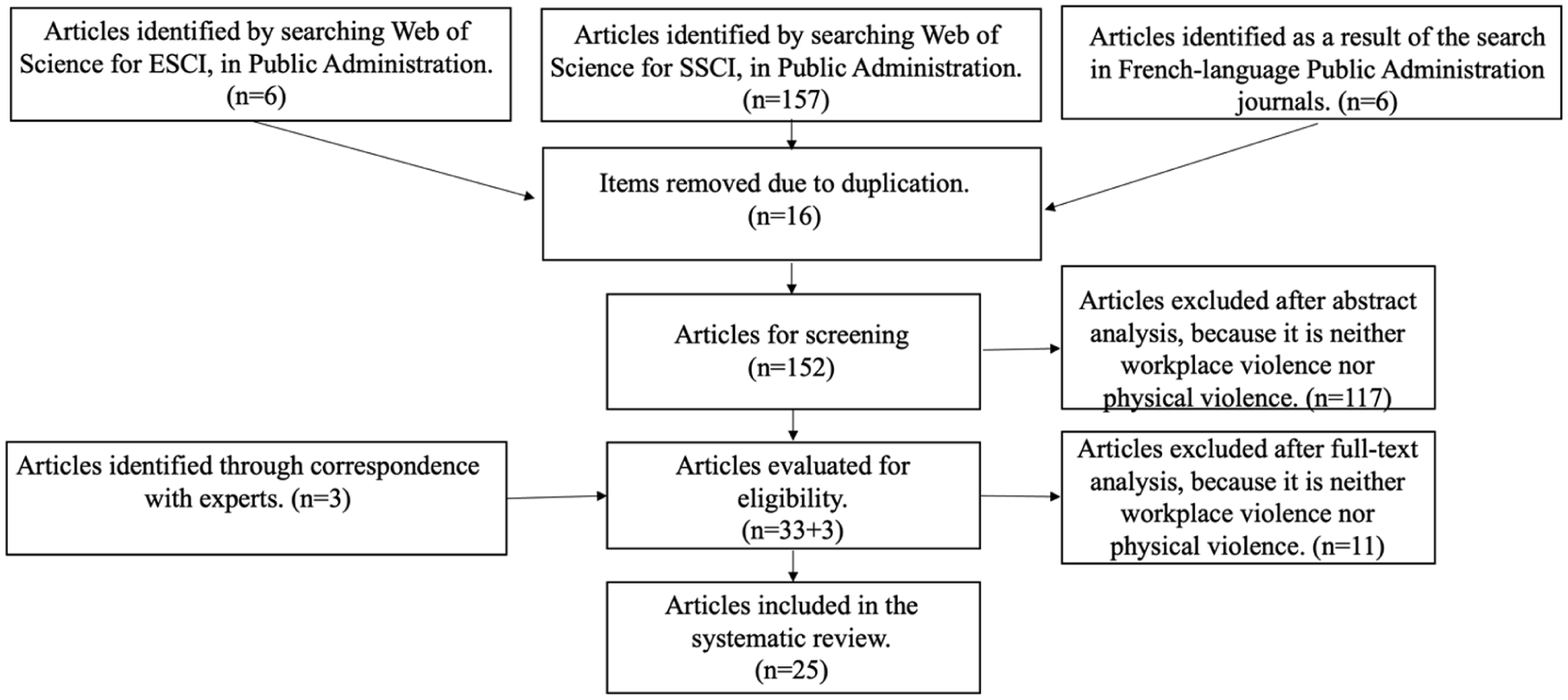
Prisma protocol selection to identify articles in public administration on physical violence and aggressions suffered by civil servants.
A double verification procedure was adopted for coding the selected articles. Coders met to resolve their differences by discussing their disagreements. In the first phase, six authors independently coded all articles. In the second phase of data collection in early 2024, four of these authors jointly recoded all articles to reach unanimous agreement. In the third phase of data collection in the summer of 2024, two coders repeated this task. Finally, both coders coded a new additional article in the winter 2025. The results presented next come from this consensual coding process.
Twenty-five articles analyzed may seem limited as a base for knowledge. In their systematic review of studies on workplace violence against healthcare workers between 2014 and 2020, Mento et al. (2020, p. 3) analyzed only 27 articles out of 1,334 identified at the start of the PRISMA process. Similarly, Ramzi et al. (2022, p. 3) and Chirico et al. (2022, p. 17) analyzed 17 and 15 articles respectively regarding violence against healthcare staff during the pandemic. It is still very much an emerging topic in public administration, even if multiple reports in different profession document this increase of violence against public servants.
Results
While sifting the articles for those meeting our systematic review of the literature’s criteria, we learned that the violence and aggression against public servants is a constant preoccupation, albeit a minor one for the discipline.
Characteristics of Physical Workplace Violence Against Public Servants in Public Administration
Table 1 summarizes when, in which countries and in which scientific journals the research was recorded.
Distribution of Articles by Year of Publication, Country and Journal.
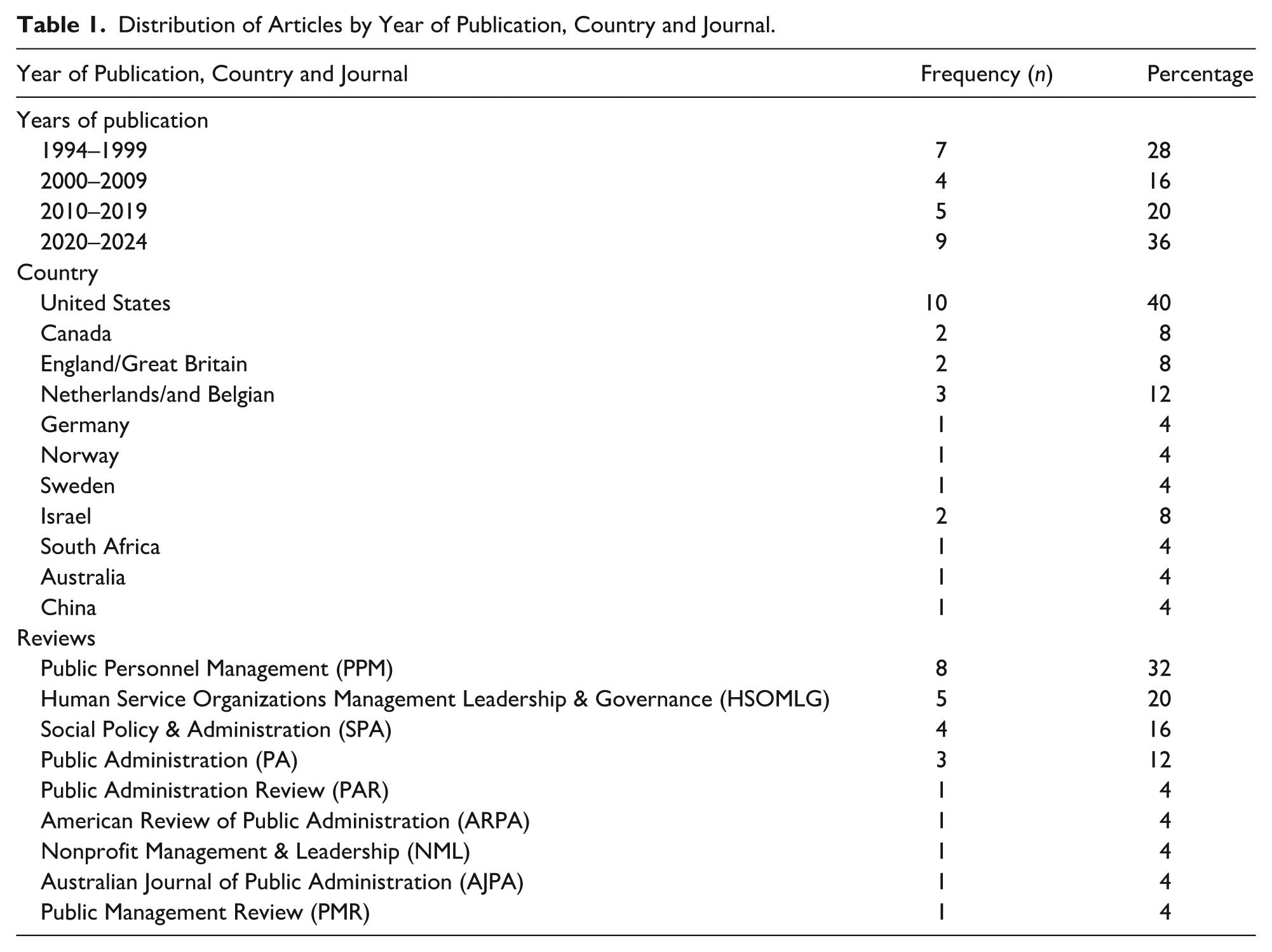
The articles meeting the inclusion criteria cover a period of almost 31 years, from 1994 to 2025. Studies looking at physical aggressions in the United States, represents 40% of the research carried out in public administration. Next come studies on Netherlands or/and Belgium for 12%, England, Canada, and Israel, each accounting for 9%. Finally, we have identified six other countries, each with one published article or 4% of the total. These are Germany, Norway, Sweden, South Africa, Australia and China. “Public Personnel Management” has been the journal where the majority of academic discussion takes place on the subject of workplace violence, maybe reflecting the perception that it is foremost a human resource (HR) issue. Other authors do not agree with that view. Overall, the small number of articles published by the eight journals supports Shier et al.’ contention that very little is known about the workplace and organizational conditions that prevent workplace violence (Shier et al., 2018, p. 2). Very little outside of the healthcare context, that is.
Research Question 1: What Are the Reasons for Violence and Aggression Against Public Servants in the Workplace
In the context of this study, the main reasons given by authors that can explain workplace violence and aggression against public officials are: economic conditions (Elliott & Jarrett, 1994, p. 289, Johnson & Indvik, 1994, p. 516; Chenier, 1998, p. 558, Hoobler & Swanberg, 2006, p. 229; Bruce & Nowlin, 2011, p. 295), emotional, social and behavioral reasons (Diamond, 1997, p. 229; Bruce & Nowlin, 2011, p. 295; Shier et al., 2018, p. 2, Kagan, 2021, p. 127), the work environment, including authoritarian management (Johnson & Indvik, 1994, p. 517; Chenier, 1998, p. 561; Bowman & Zigmond, 1997, p. 289, Karl & Hancock, 1999, p. 52, Bruce & Nowlin, 2011, p. 295; Shier et al., 2018, p. 2), recruitment policy (Karl & Hancock, 1999, p. 52; Kondrasuk et al., 2001, p. 187), downsizing and increased demand for service (Johnson & Indvik, 1994, p. 516, Hoobler & Swanberg, 2006, p. 229), interpersonal conflict (Hoobler & Swanberg, 2006, p. 229), narcotics and drug use (Bruce & Nowlin, 2011, p. 295) sometimes combined with prior psychiatric disorders (Brodin & Shanks, 2024, p. 1012). Research on this subject remains focused on identifying potential influences of violence, rather than determining the key factors linked to physical violence in the workplace.
Analysis of Types of Violence
In Table 2, incidents of violence are classified by the types of violence (Wassell, 2009, p. 1050), and by the unit of analysis of the articles.
Types of Violence and Units of Analysis.
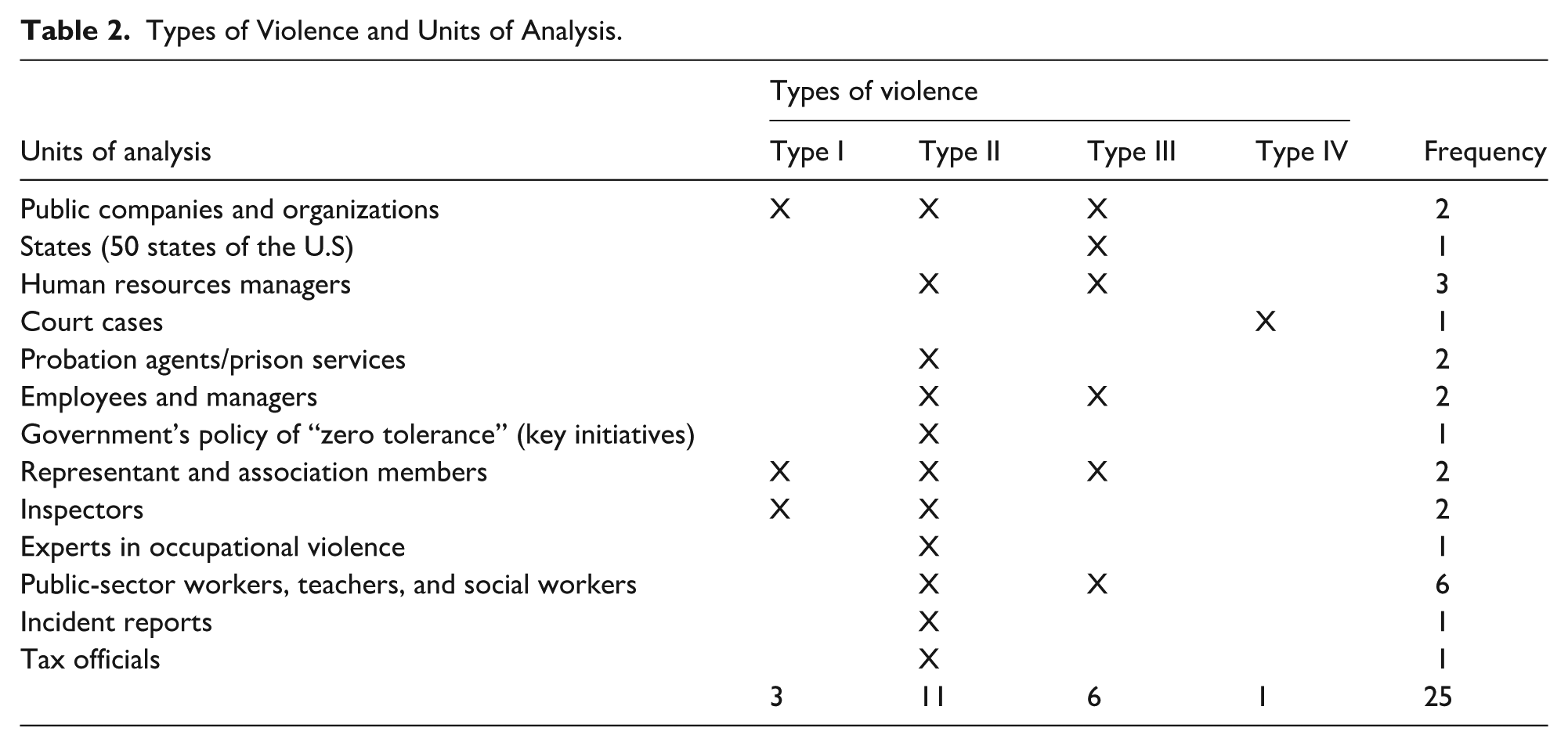
The table above shows that the type of violence most present in the articles we analyzed is type II violence (44%). This refers to violence involving the organization’s staff and customers/citizens (Wassell, 2009, p. 1050). They affect different categories of personnel in the public organization. These include social service workers, teachers, EMS workers, etc. Then there’s type 3 (24%). In this type, violence is observed between workers (Wassell, 2009, p. 1050). Given our inclusion and exclusion criteria, it is normal that the results are truncated toward type II and III violence.
Research Question 2: What Are the Theories Utilized to Research Physical Workplace Violence in the Public Administration Literature?
Roughly half of the articles in the sample did not mention theories. From the other half, conceptual frameworks mentioning a theory were frequent. Various theories of public administration have been mobilized, or at least mentioned by researchers to explain the antecedent or consequences of physical violence or aggressions against public servants. Among others, we have encountered rational choice theory (Sundström, 2016); job embeddedness theory (Jiang & Jiang, 2024), decision-making theory (Karl & Hancock, 1999); mobilized social cognitive theory (Kagan, 2021; Wassenaar et al., 2018); street-level bureaucracy Theory (Bowman & Zigmond, 1997; Davidovitz & Cohen, 2022); transaction cost theory (Chenier, 1998; Hoobler & Swanberg, 2006; Johnson & Indvik, 1994; Nigro & Waugh, 1996); administrative reform theory (Elliott & Jarrett, 1994; Shier et al., 2018, 2021; Thynne & Rodwell, 2018); the implicit theory of mobilized citizenship (Liegat et al., 2024); finally, the theory of mobilized agency (Bruce & Nowlin, 2011; Denney & O’Beirne, 2003; Diamond, 1997; Gabe & Ann Elston, 2008; Kondrasuk et al., 2001), social contagion theory (Eshuis et al., 2023), constructivist grounded theory (Elvegård & Almvik, 2024. Workplace violence differs from most other public sector phenomena.
Research Question 3: What Methods Are Deployed to Research Physical Workplace Violence in the Public Administrationforth Literature?
To categorize methodologies according to the authors’ methodological choices, that is, the approaches and methods used. In addition to the quantitative (32%; n = 8), qualitative (32%; n = 8), or mixed methods (8%; n = 2) commonly encountered, other articles rely much more on example-based explanations of violence (29%; n = 7). The later are articles that do not apply a particular method to the analysis of violence. They focus much more on explanations of the causes of violence based on examples and data collected by various organizations (Diamond, 1997, p. 237, Chenier, 1998, p. 561). A closer look at the years of publication reveals that most of these articles with an example-description aspect were published before the year 2000. Otherwise, approximative parity is observed between quantitative and qualitative analyses. We found that no study using methods aiming at proving causality, either via process tracing, qualitative-comparative analysis or fuzzy sets, experimental methods.
Research Question 4: What Practical Recommendations Does the Public Administration Literature Offer for Preventing, Addressing, and Managing Physical Aggression and Violence by Users Against Public Servants?
We identified 72 recommendations from the 25 articles meeting our inclusion criteria. Dello Russo et al. (2023, pp. 1630–1631) grid is made up of five elements answering the questions why (why should practitioners implement the recommendation?), what (what is the purpose of the recommendation?), when and where (when and where to implement the recommendation?), who (who is targeted by the recommendation?), and how (what is the modality of the recommendation?). We noticed that 20% of the articles make no formal mention of practical recommendations, indicating some room from improvement in the way research findings are translated into practical implications. This does not mean that researchers cannot learn from these articles.
Our results are presented in Tables 3 and 4, which take an article as the unit of analysis. In Table 3, no single criteria (W-H) can have a frequency greater than 17. On the other hand, in the Supplemental Annex A, the unit of analysis is the recommendation. Table 3 shows that most articles proposing practical recommendations reflect the “W-H” questions of the framework proposed by Dello Russo et al. (2023, pp. 1630–1631). This demonstrates that researchers have taken these different dimensions (why, when & where, who, how) into account when formulating their practical recommendations, which reinforces the relevance and applicability of their work. However, recommendations relating to “why – cognitions,” “what – actionable,” “when & where – organizational,” “how - obligation/necessity/advice” represent 68%, 64%, 80% and 68% of articles, respectively. On the other hand, recommendations relating to “when & where – occupational,” “who – HR professionals,” “who – clients(users)” and “How - neutral” were seldom included in articles. The onus of recommendations falls on organizations, with obligation, necessity of advice, without mentioning who has the role to implement them. Furthermore, some articles include proposed recommendations that do not specify who should implement them (“who - vague” 16% and “who - not mentioned” 28%).
Frequency of Practical Recommendations Reflecting “W-H” Questions, by Articles.
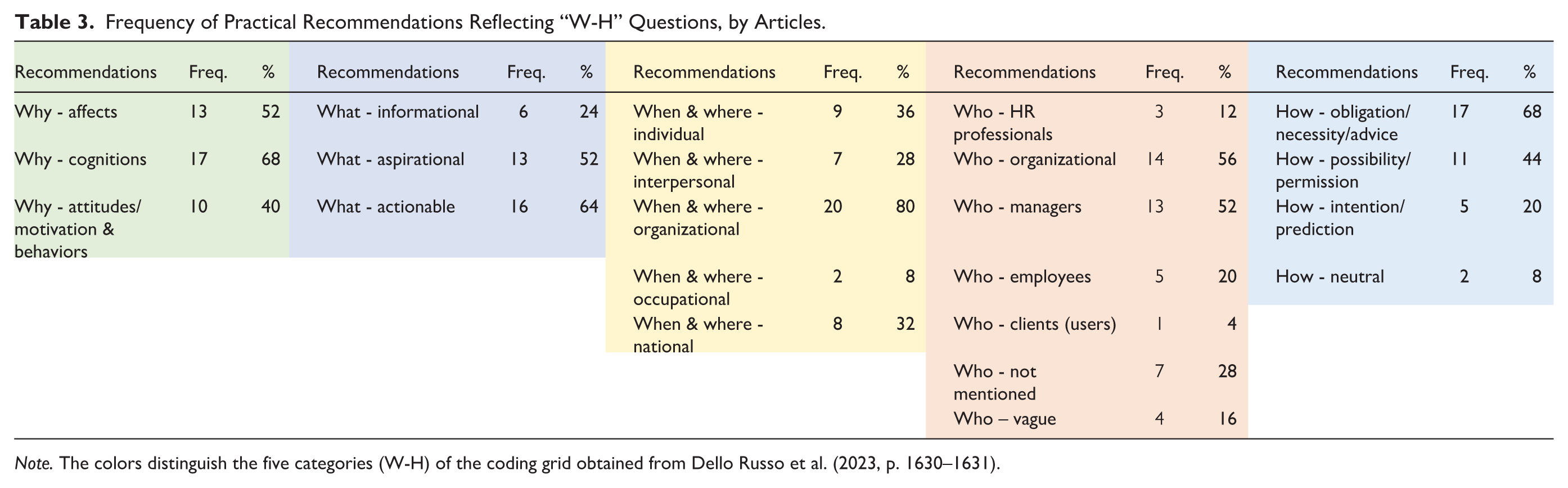
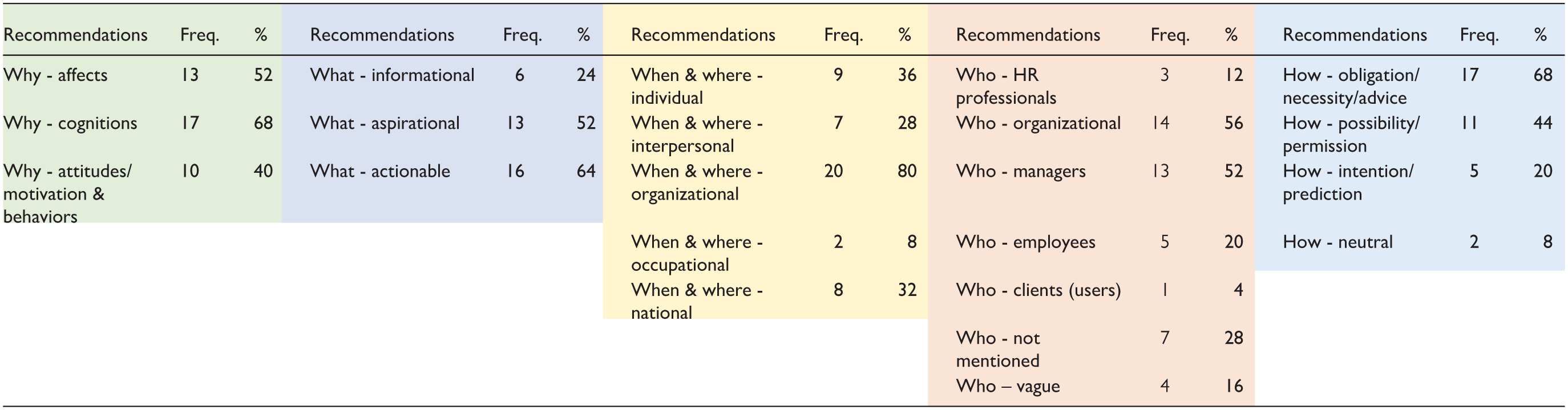
Note. The colors distinguish the five categories (W-H) of the coding grid obtained from Dello Russo et al. (2023, p. 1630–1631).
Analysis of All the Practical Recommendations Contained in the 22 Articles.
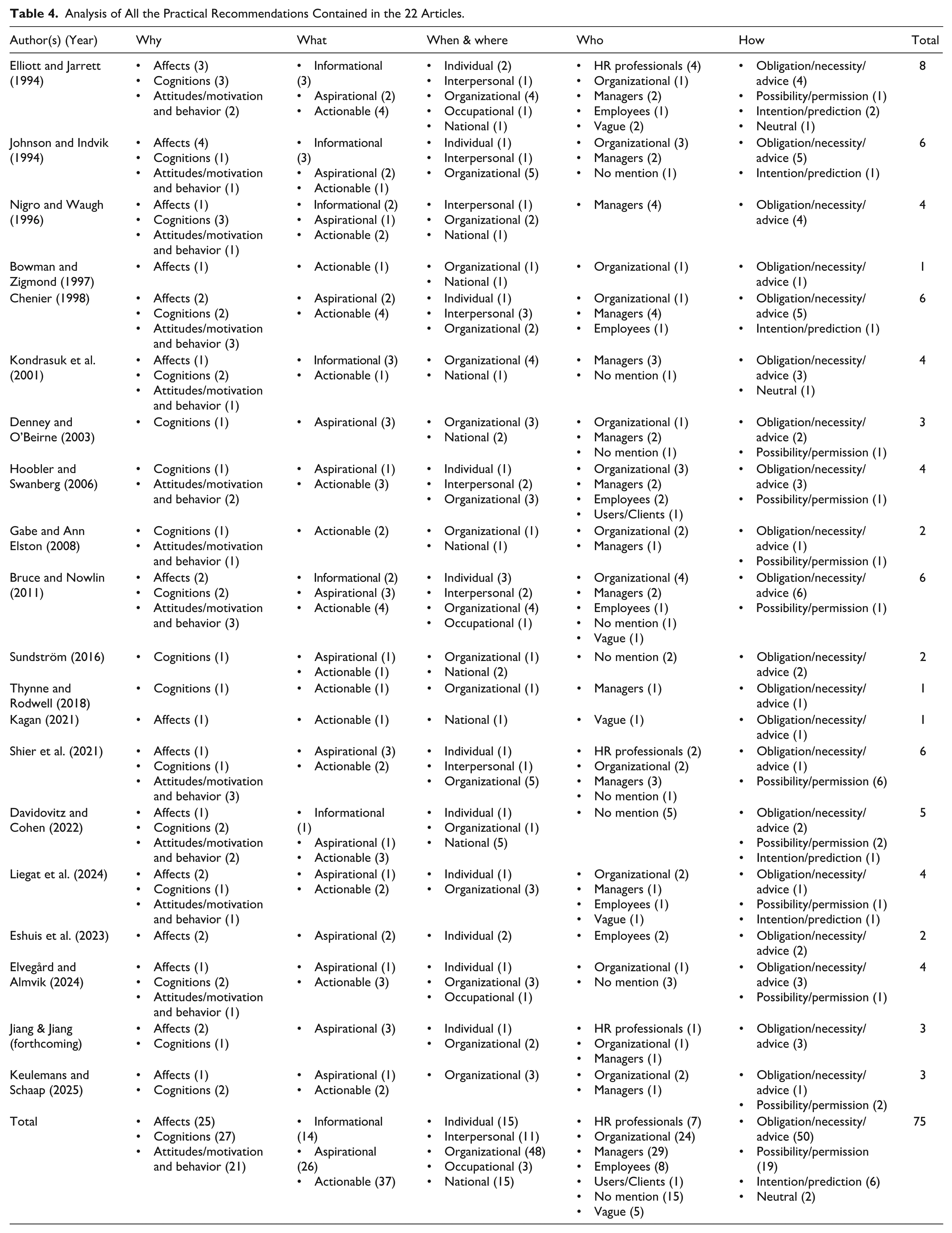
Table 4 presents less details than the Supplemental Annex A the substance of what authors recommended doing after reflecting or analyzing data about physical violence and aggressions toward public servants. Nevertheless, it offers a summary of which aspects of the recommendation(s) are covered.
In Table 4, the recommendations on why practitioners should implement the recommendation shows that cognition is the main reason for the majority of articles, followed by affect and completed by attitudes/motivations and behaviors. Recommendations about the purpose show that most articles include recommendations that are actionable, aspirational or informational. When it comes to when and where to implement the recommendation, authors mention the organizational, national level, and individual and interpersonal levels, as they cover most recommendations. The recommendations in articles are targeted at managers, organizations and seldom to employees and human resources professionals. Some other authors do not specify the addressee or are simply vague. As for the modality of the recommendations, in the articles, the majority referred to obligation/necessity/advice, followed by possibility/permission, intention/prediction and neutral. Overall, the recommendations found in articles were formulated with an eye for impact, action and obligation/necessity/advice are in line with the applied nature of the discipline of public administration. Just because an article gives recommendations covering many dimensions identified by Russo et al., it doesn’t automatically make it more valuable than an article covering fewer. Hoobler and Swanberg’s (2006) third recommendation serves as an example of this, as it is highly actionable: “(. . .) organizations where workers routinely deal with angry customers or citizens may do well to establish a progressive system of “discipline” for clients. Step one may be the issuance of a warning when an angry outburst occurs. Step two may permit the employee to ask the customer to leave the establishment or the employee to exit the scene. Step three may involve calling in security personnel or the police. Role-plays are an effective way to provide the practice necessary for employees to call upon these procedures when threats arise” (Hoobler & Swanberg, 2006, pp. 243–244)
Some practitioners can be inspired by such a highly detailed recommendation. Others might find more value in recommendations identifying outside sources for help, such as Davidovitz and Cohen (2022, p. 83), that “(d)ecision-makers should provide for counseling and support options from professionals such as qualified psychological therapists.” Overall, the practical suggestions outlined in Table 4 and detailed in Supplemental Annex A of the article can guide practitioners in planning their next steps within their agencies, even as recommendations are tentative.
Discussion
As we systematically reviewed the public administration literature, our main contribution was not to generate a new theory of workplace violence, but rather to take stock of the conceptual, empirical and practical constitution of a body of knowledge (Lim et al., 2022, p. 486). Nevertheless, we found that half the developing corpus on the topic did not mention theory. The other half was split between articles that applied a theory outside of the most frequent theories used in public management (Hattke & Vogel, 2023, p. 1546). We identified the practical recommendations for preventing, intervening in, and controlling aggression and physical violence by citizens and users against public servants.
While coding in minute details the 72 recommendations from these 25 academic studies from a five-dimensions grid (Dello Russo et al., 2023), we noted varying levels of detail among authors in their proposed solutions to this problem. Most authors deeply internalized the practical aspects of our discipline, drawing from months spent studying workplace violence. Most recommendations concerning workplace violence and aggression emphasize reinforcing safety and training. This increases the ability of staff and managers to prevent and handle aggressive situations. Other suggestions call for ongoing research to broaden our understanding of the subject and identify new risk factors for violence. The behavior and attitudes of employers are also important. They should abstain from unfair discrimination in all employment decisions and adopt safe working practices to avoid violence and aggression in the workplace.
Given that violence from users of public services is very often an expression of anger or frustration, Liegat et al. (2024, p. 236) recommend the introduction of training and counseling for public sector employees to increase individual capacities to both prevent and cope with aggression from citizens. Training should include listening, negotiation and conflict-avoidance techniques (Hoobler & Swanberg, 2006, p. 243). Employees should be trained to recognize when they need to remove themselves from tense situations or seek help from colleagues or supervisors. They should also understand how and where to report potentially violent incidents.
Finally, they will benefit from knowing what they can and should say to an unhappy customer (Hoobler & Swanberg, 2006, p. 243). Our results resonate with this, as the majority of violence documented in these studies is perpetrated by users/citizens, and not coworkers. To date, no effort has been made to establish a solid baseline for the prevalence of workplace violence in specific jurisdictions, and few recommendations address this gap. This reflects the core challenge outlined in the introduction: public services must continue operating even when their workers face threats. Perhaps this explains why researchers of workplace violence take a practical approach, focusing on protective measures for public sector workers. Taking the violent users and citizens as a given permeates this literature. We would argue that some researchers go as far as excuse it.
Besides, our results also confirm the occupational categories most affected by workplace violence, as highlighted in the literature, including law enforcement, teaching, and healthcare (Peek-Asa et al., 2001, p. 146), as well as front-line bureaucrats (Davidovitz & Cohen, 2022, p. 78). These findings suggest that HR managers should adopt safety measures specifically tailored to the risks inherent in each professional category. This approach will optimize the effectiveness of interventions.
Workplace violence is far from new. Johnson and Indvik (1994) aptly titled their essay “Workplace violence - An issue of the nineties.” They offered suggestions to managers about protecting public servants from violent colleagues. The tens and twenties are different; the violence comes from both sides of the service counter. It has evolved and become more complex over the years. Contrary to the work of Chappell and Di Martino (1998, p. 21) emphasizing that the incidence of workplace violence is higher in the United States and Canada, our research shows that, given the countries in which the studies in our sample were carried out, aggression and violence in the workplace today extend beyond cultures, continents and country borders (Kagan, 2021, p. 127). Studies of teacher-directed violence documents aggressions in multiple national contexts, including South Africa (Badenes-Ribera et al., 2022, p. 349). However, the geographical context of studies on violence against public servants has been limited almost exclusively to Western countries, with far less coverage of Africa and Asia. This Western focus could be interpreted in two ways. First, organizations in countries like the U.S. and England may have stronger employee protection policies and stricter punishment for perpetrators of violence, leading to better documentation. Second, these studies mainly focused on public sector organizations in countries with functioning bureaucracies, which typically have better systems for reporting and researching workplace violence. As a result, the existing peer-reviewed research may not fully represent the true global scope of this issue. This remains, however, an empirical question. Researchers from all countries can easily contribute to our knowledge about how public servants can be spared physical violence.
Limitations
We are not aware of a single empty systematic review published in public administration journals, as they exist in other fields. A 2025 scoping review titled “An Empty Scoping Review of Emergency Department to School Transition for Youth with Mental Health Concerns” states that “Two reviewers screened 907 manuscripts, but none of the manuscripts met the inclusion criteria” (Henderson Smith et al., 2025, p. 1460). This leads them to conclude a need to find best practices to help young people successfully return to school after being in the emergency department for mental health concerns (Henderson Smith et al., 2025, p. 1460). The current review identified studies documenting workplace violence against public servants. Many of our actionability-classified recommendations lack vetting for effectiveness beyond the original studies’ authors and reviewers. Based on our analysis results, we believe that while practical, actionable recommendations could be validated through future research, recommendations that are too vague or general are unlikely to effectively reduce physical assaults against public servants.
This study was coded along traditional dimensions often used in systematic reviews on other topics. Additionally, we focused our analysis primarily on practical recommendations, to the detriment of theory development or refinement (Simsek et al., 2023, p. 292). Future research might prove us wrong, especially if a theory of workplace violence is introduced to better explain why citizens physically attack the very people trying to help them.
Although we extended our research to two portals to include a language other than English, as suggested by Stern and Kleijnen (2020, p. 1818), these efforts did not translate into adding new articles for our analyses. We suspect that if we had extended our search to a third language, we could have provided readers with a richer and more diverse portrait of how public servants face physical violence at work.
Most of our keywords identified domestic violence programs and policies studies by public administration scholars. While important, we did not study them. We focused on physical violence. Focusing on some dimensions of a problem does not mean that we dismiss or disregard other forms of violence. We did not include incivilities, bullying and other forms of mistreatment in this review. The predictors and outcomes of being yelled at differ than being hit. Incivilities and bullying are phenomena worthy of their own studies.
Future Research
According to the American Federation of Government Employees (2016), most physical violence incidents are not reported; most employers would not make changes after an incident is reported. Although we do not want to discourage researchers from testing claims from this public servant unions that state/provincial workers are 10 times more likely to be the victims of physical aggressions than their private sector counterparts, studies should include measuring the prevalence of the problem, rather than treating prevalence as the endpoint.
A mainstay of systematic reviews is to call for more research using research methods that have yet to be applied to a problem. After all, some methods are better at contextualizing a phenomenon, other from presenting the long view of what worked, and others to parse out the relative contributions of some variables over others. However, workplace physical violence in the public sector is not a mature research subject. Much remains to be studied. From the limited number of studies on the topic, we do not believe that any research methods have been overused so far. We might learn as much from process tracing studies, comparative-historical analyses, rapid ethnographies, natural experiments, than from traditional methods like interviews and surveys, the two methodological workhorses of public administration. Nevertheless, we hope that this research will leapfrog cross-sectional interviews and survey experiments on affects, detached of behavior. As a passing observation, we noticed that articles using quantitative methods produced fewer practical recommendations compared with studies using qualitative methods.
A promising area of research on physical violence against public servants would be to test the effectiveness of measures to curb or cope with violence. That being said, promising actions can be deceiving when studied with the highest rigor. A meta-analysis of 10 randomized pre-post evaluations of workplace violence reduction programs revealed no decrease in violence incidents (Abeyta & Welsh, 2022, p. 6). Contrary to how Han and Perry (2020, p. 236) who identified best practices from the sprawling literature on Public Service Motivation, the candidates for best practices for workplace violence will be the ones championed by workers and their unions, and possibly pursed by their HR departments. Here are questions that can guide future research: What are the elements in workplace violence prevention policies that indeed curb violence? What elements clutter such policies, without moving the needle against this problem? Similarly, how should existing violence hazard assessment and inspection checklists be amended to focus on measures proven to lower violence? Are signs about zero-tolerance policies for violence – often treating verbal abuse as violence- effective? Do they do more harm than good? Overall, it is not clear to us that the “best practices” present in the gray literature have been vetted.
At the micro-level, research could determine if there a way for HR departments to tweak violent incident reports so that more public servants document the aggressions they lived through. At a macro-level, which vaunted clauses, for examples from the Canadian Union of Public Employee’s “Collective Bargaining Strategies to Prevent Workplace Violence,” are linked to reductions in violent aggressions, like a strong definition of what is violence, or the presence of audits to evaluate violence policies of procedures (Canadian Union of Public Employee [CUPE], 2018). We suspect that discerning readers will want to treat some of the recommendations presented in Table 4 as de facto proposition in need of triangulation and verification.
Conclusion
More than a decade ago, Vickers (2010, p. 10) stated that a violent and indulgent culture was rotting the working environment of public servants. In addition to humanly demanding tasks, she pondered how public servants “must also cope with degradation, humiliation, aggression, violation, abuse and embarrassment, the dismemberment of their careers and the violation of their privacy” (Vickers, 2010, p. 10). That statement stands out in public administration. Our discipline tends to see most public servants, and citizens -or residents, users, members of the public (Roberts, 2021)- in a positive light. Citizens are seen as member of the public that should be consulted (see Nisar, 2017, pp. 1411–1412), and might be local experts in their own right (Schachter, 2010, pp. 561–562). Members of the public are the ones funding government, voting in the elected officials at the heads of agencies, and the ones receiving public services. This is not in dispute. What a small number of public administration scholars know, is what more journalists have documented, and what public servants sadly know too well: physical violence is part of public servants’ professional life. Some users of public services are the opposite of the positive image that public administration researchers have in mind.
Physical violence and aggression against public servants forms the foundation of our study. Through analyzing practical recommendations for preventing, managing, and controlling citizen and user aggression toward civil servants, we discovered that users/citizens perpetrate the majority of violent incidents (type II violence) documented in the literature. Yet our coding results reveal that few recommendations address this specific type of violence. The implications of workplace violence for public administration are substantial—particularly regarding organizational management and human and financial costs. The State’s responsibility as an employer, have steadily grown more significant.
Indeed, in the first half of the 2020s, the culture wars in Western countries pits small but vocal slivers of the population who undermine public services, and excuse physical assaults on those offering them. The orthodox view of the politics-administrative dichotomy held by researchers, that there is no airtight demarcation between neutral expertise and politics is also held by member of the public. As politics become more partisan, the public service is also seen as partisan. This exposes the political nature of the public service. The research on public sector work violence is less a mirror of our societal reality that the harsh, unforgiving neon lighting of that reflection.
By their very nature, studies in our discipline focus on how to implement programs and policies to tackle deep and complex societal problems. The violence covered in this research is not the rare, spectacular kind, like the violence leading Texas teachers to be armed with guns to respond to mass killings in schools. It is the frequent physical violence which, though rarely fatal, lead a Flemish finance minister to call for the public servants under his watch to be equipped with air pistols to protect themselves from citizens: “Of course, they [finance inspectors] need to be trained. These are defensive weapons, with which you can’t kill anyone, but which already have a sufficient deterrent effect” (translated from Le Soir, February 5th, 2023). This example features a zealous politician suggesting harsh state responses to problematic citizens. Public administration scholars should have suggestions of their own on how to deal with public sector workers—from public transit drivers, to nurses, teachers, social workers, police officers, election workers, and librarians—who are physically attacked by the people they serve.
Supplemental Material
sj-docx-1-paq-10.1177_07349149251378159 – Supplemental material for Harming the Administrative State: A Review of Physical Work Violence and Aggressions toward Public Servants
Supplemental material, sj-docx-1-paq-10.1177_07349149251378159 for Harming the Administrative State: A Review of Physical Work Violence and Aggressions toward Public Servants by Bruno L. Djontu, Jonas Tchassem-Pinlap, Étienne Charbonneau, Evans Pierre, Christian Doly, Frédéric Takuété-Lontsi and Gado Mayimbo in Public Administration Quarterly
Footnotes
Acknowledgements
We thank Editor Rodriguez-Plesa, and the reviwers, for their comments and open-mindedness with this topic.

Funding
The authors disclosed receipt of the following financial support for the research, authorship, and/or publication of this article: Étienne Charbonneau acknowledges funding from the Canada Research Chairs program.
Declaration of Conflicting Interests
The authors declared no potential conflicts of interest with respect to the research, authorship, and/or publication of this article.
Supplemental material
Supplemental material for this article is available online.
References
Supplementary Material
Please find the following supplemental material available below.
For Open Access articles published under a Creative Commons License, all supplemental material carries the same license as the article it is associated with.
For non-Open Access articles published, all supplemental material carries a non-exclusive license, and permission requests for re-use of supplemental material or any part of supplemental material shall be sent directly to the copyright owner as specified in the copyright notice associated with the article.
