




Abstract
A new type of timber connection using densified wood dowels is being developed and tested. The procedure involves inserting these densified dowels into pre-drilled holes. As this connection technique is in its early stages, a unique design approach is necessary, considering the impact of temperature variations. The primary goal is to characterize the thermal behaviour of these connections under elevated temperatures. The study employs an experimental approach, complemented by numerical analysis, innovatively applying kinetic models, commonly used for investigating heat-related biomass characteristics, to wood. The method requires the use of thermogravimetric analysis to identify the kinetic parameters. The proposed pyrolysis kinetic model has been implemented in the Abaqus/Implicit code via a user subroutine UMATHT. The study concludes that using kinetic models enhances accuracy by considering mass loss, a key factor influencing thermal properties. Simulation successfully replicates temperature distribution and charred layer thickness, crucial for designing timber structures.
Introduction
The environmental implications of building construction are substantial. 1 With their extensive urban footprint, buildings rank among the foremost consumers of resources and raw materials. Globally, they account for 40% of energy consumption and contribute up to 33% of greenhouse gas (GHG) emissions in both developed and developing nations. 2 To mitigate these emissions, one solution lies in the utilization of construction and building materials derived from renewable resources. Timber aligns with this description, as it naturally stores carbon and can be sourced from renewable plantations. However, its combustible nature poses challenges in fire engineering, setting it at a disadvantage when compared to traditional building materials. Consequently, to promote the utilization of timber in construction, it is crucial to thoroughly understand its behaviour under normal (ambient) and extreme (fire) temperatures. This characterization is vital to ensure the reliability and stability of timber structures.
This study introduces a novel timber connection that uses densified wood dowels. By eliminating the requirement for glue, this innovative connection enables the construction of large-scale structures using timber alone. The concept entails inserting densified dowels into pre-drilled holes, which, on exposure to moisture, expand to secure the connection and enhance its rigidity. However, the characteristics of connections using densified wood dowels have not been extensively researched, with only limited studies focusing on their mechanical behaviour.3–6 Notably, the thermal behaviour of these connections, to the authors’ best knowledge, remains largely unexplored. Consequently, it is imperative to conduct a comprehensive investigation to develop a profound understanding of their thermal characteristics.
To achieve this objective, an approach based on experimentation and modelling is proposed. The proposed analytical approach incorporates kinetic models. The use of kinetic models7,8 instead of existing models9–12 stems from the observed dependence of the thermal properties on the density of a phenomenon demonstrated by several authors.13–16 Kinetic models consider the thermal degradation during the pyrolysis phase and the evolution of the physico-mechanical properties as functions of temperature.
The approach outlined in Eurocode 5 11 employs a conductive model founded on solving the transient heat transfer differential equation, incorporating thermal properties that vary with temperature to compute thermal fields. However, it overlooks the kinetics of thermal degradation during wood material pyrolysis and combustion, and critical factors in real fire scenarios. In addition, Eurocode 5 11 assesses the fire resistance of a timber element using the residual section method, relying on estimating the charred layer’s thickness. This method, as highlighted by Cachim et al., 14 minimally addresses the influence of density on the charring layer in Eurocode 5 11 charring rate models. Another limitation of the Eurocode 5 11 method becomes apparent when considering the thermal conductivity evolution with temperature. For instance, at temperatures exceeding 500°C, the conductivity shifts from λ = 0.09 to λ = 1.5 W/(m·K) (T = 1200°C). Once the charred layer forms at T = 300°C, its conductivity becomes six times lower than that of undamaged wood. This leads to a reduction in the λ value, contrary to the increase suggested by Eurocode 5. 11 Hence, the alternative is to model the physico-chemical reactions that take place when wood is exposed to heat. In the opinion of the authors, kinetic-based models, involving the thermal degradation of wood material during the pyrolysis and combustion stages17–25 are deemed more realistic than the residual section method, which relies on calculating the charred layer thickness during exposure to fire.
The goal of this study is to construct a mechanistic model of biomass pyrolysis and apply it to investigate the behaviour of connections using wood dowels under fire conditions. The parameters of the kinetic models are identified using experimental data obtained from thermogravimetric analysis (TGA). Integration of the kinetic model into a finite element model is achieved through user subroutine Umatht,8,26 and validation is conducted by comparing temperature profiles at various depths of the connection elements. This model enhances the understanding of the diverse phenomena governing the thermal behaviour of these connections. The developed numerical tool can then be used in the performance-based design of timber structures exposed to fire.
Kinetic characterization
TGA
Wood consists of three primary constituents: hemicellulose, cellulose and lignin, each of which undergoes thermal degradation at distinct temperatures. This observation indicates that kinetic models incorporating multiple reactions are more representative of reality. However, these models necessitate numerous parameters to describe the physico-chemical reactions that occur during the drying, pyrolysis, and combustion stages. A notable model fulfilling these requirements has been developed in the work by Grioui et al. 27 and additionally validated across various wood species.
The model requires TGA to identify the kinetic parameters. This technique consists in heating a sample at a constant rate while monitoring its weight continuously. The temperature at which various changes occur in the sample, such as decomposition, volatilization, or oxidation, can be determined from the corresponding weight loss or gain.
TGA tests were performed on densified spruce wood particles, as shown in Figure 1, under isothermal conditions in a pure nitrogen environment. The used apparatus is a thermogravimetric analyser, which assesses several parameters including moisture, volatile substances, and ashes under user-defined temperatures and atmospheres in one analysis. This analysis is applicable to various materials, adhering to the NF EN ISO 11358-1 standard.
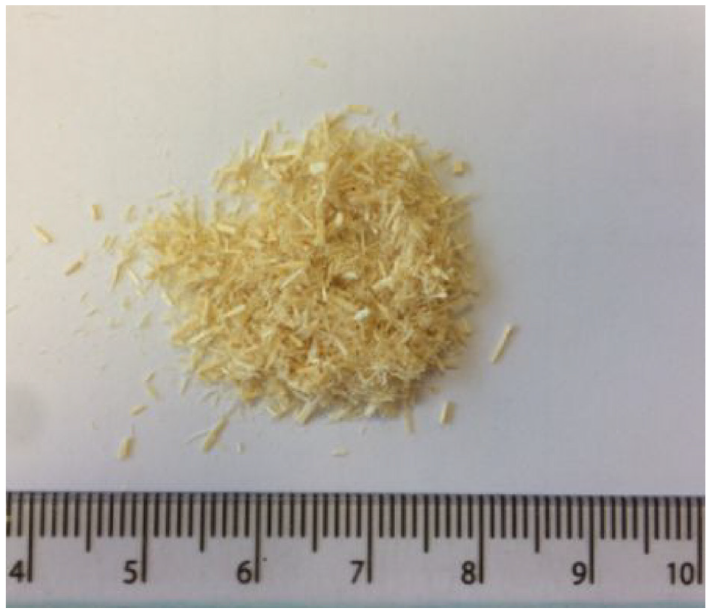
Densified spruce wood particles for TGA tests.
These tests were conducted using the densified samples. To mimic the conditions of a real fire, the exposed surface of the densified wood particles was subjected to two thermal loads: 600°C and 800°C, using three different heating rates (30, 40 and 50 K/min). The temperature profile resembling a standard fire curve 28 closely aligns with the curve generated by a heating rate of 30 K/min, reaching a plateau at 800°C (Figure 2). Each test was repeated five times to ensure reproducibility. It is important to note that the combustion of pyrolysis gases was not analysed in this study.
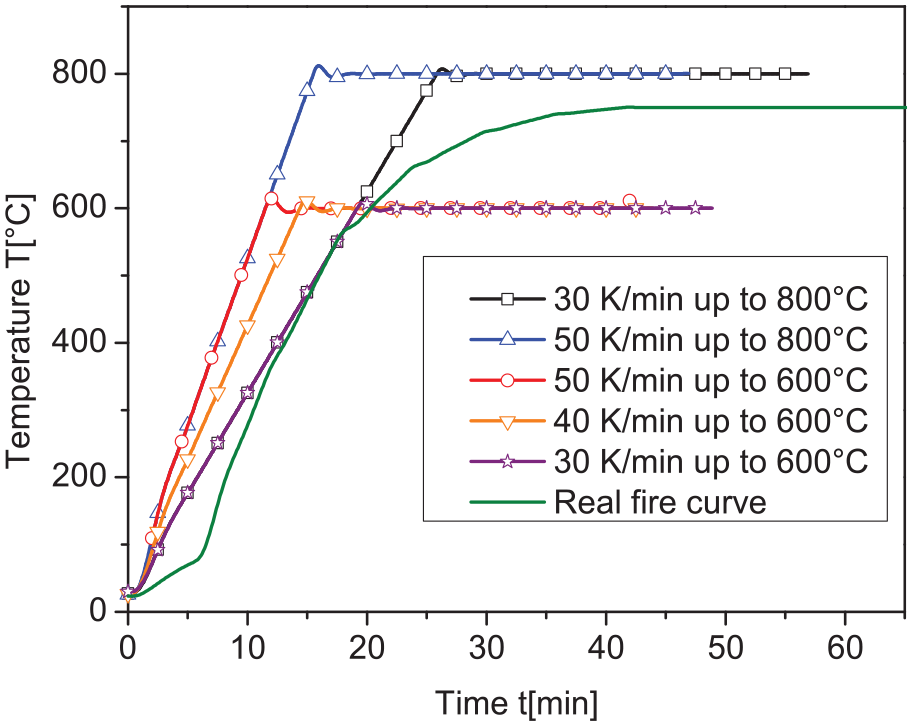
Different TGA testing conditions.
Figure 3 depicts the TGA curves acquired from the standard fire. 28 These curves distinctly indicate that the kinetics of both densified and non-densified (virgin) woods remain identical at the particle level. The progression of mass loss (MR) is Figure 3(a) and exhibits the following stages:
From ambient temperature to 100°C, approximately 2% of the initial mass is lost, representing the drying phase of the densified spruce wood particles;
Between 100°C and 240°C, the mass remains steady without notable changes;
Between 240°C and 390°C, which corresponds to the peak in Figure 3(b), a substantial mass loss of approximately 60% is observed;
Above 400°C, a relatively slow mass loss is observed;
At T = 600°C, the sample experiences 81% loss of its initial mass, with the remaining residue consisting of charcoal accounting for approximately 19% of the original mass.
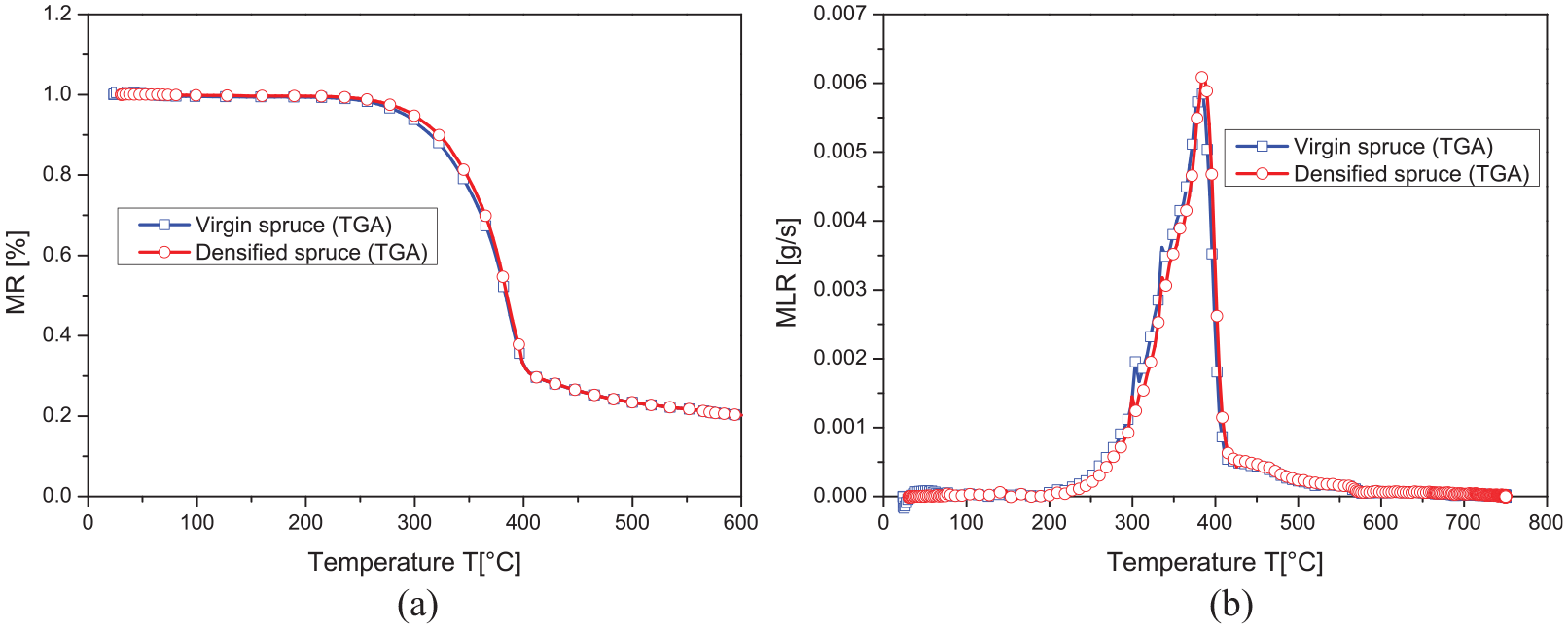
TGA curves for virgin and densified wood: (a) mass rate (MR): m/m0 and (b) mass loss rate (MLR).
The TGA results obtained for both virgin and densified wood particles exhibit nearly identical values. This similarity in kinetics between virgin and densified spruce wood can be attributed to the negligible effect of heat conduction in small particles. Figure 4 illustrates a comparison of the measured mass loss rates for different heating rates.
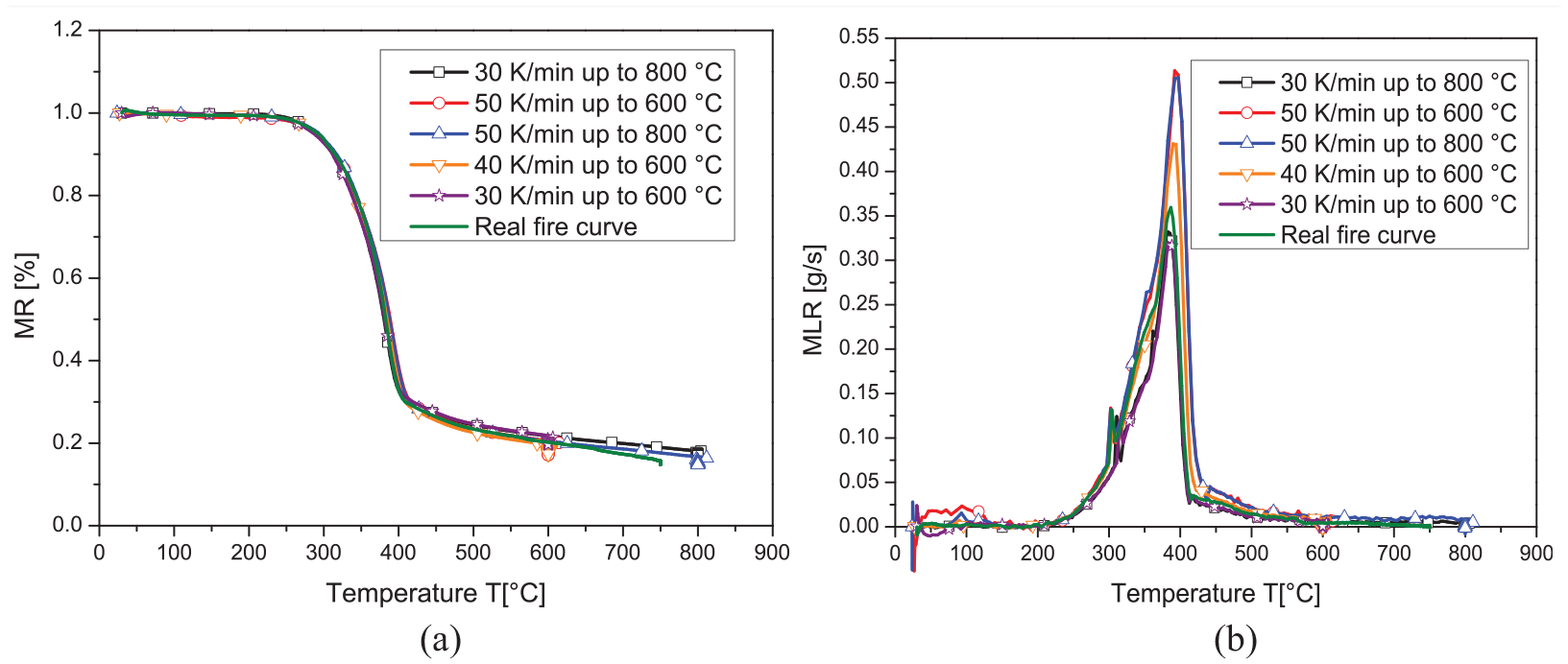
TGA curves under different conditions: (a) mass rate (MR): m/m0 and (b) mass loss rate (MLR).
Identification of the parameters of the Grioui et al.’s kinetic model
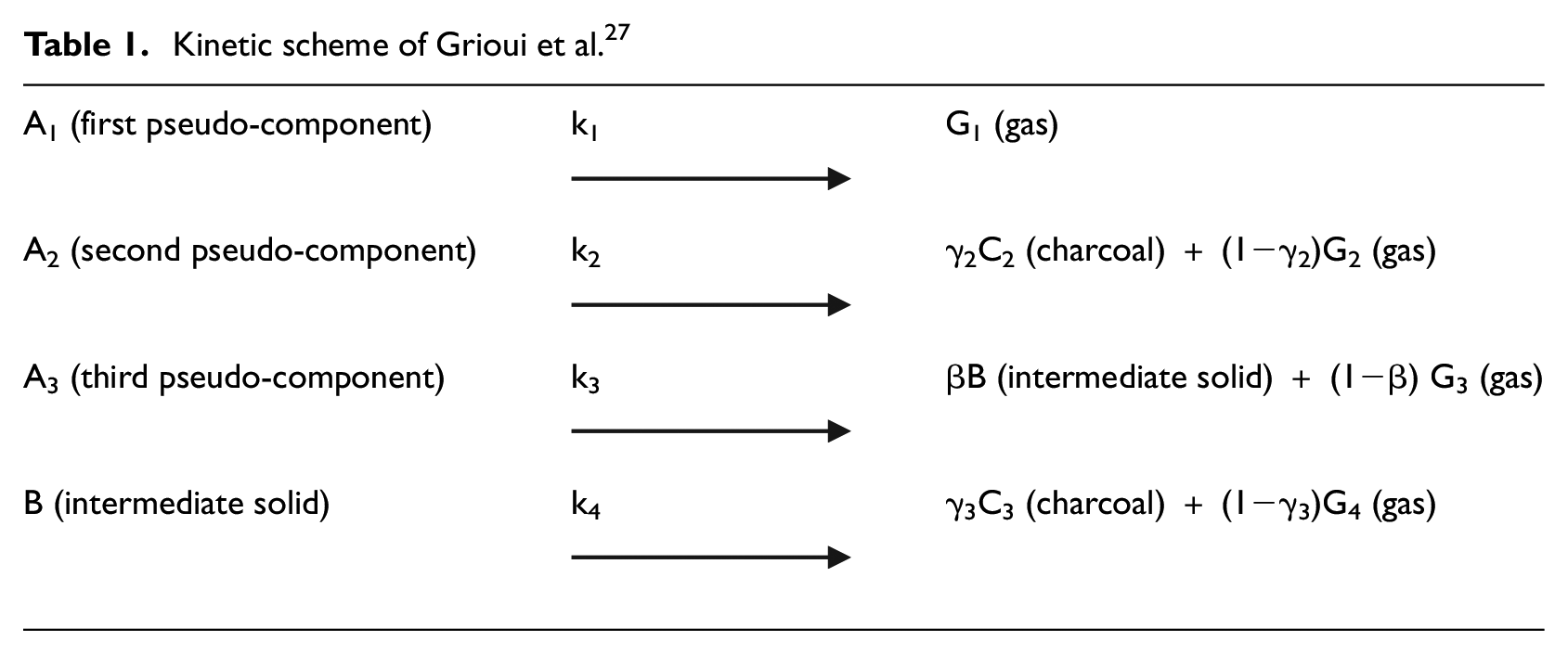
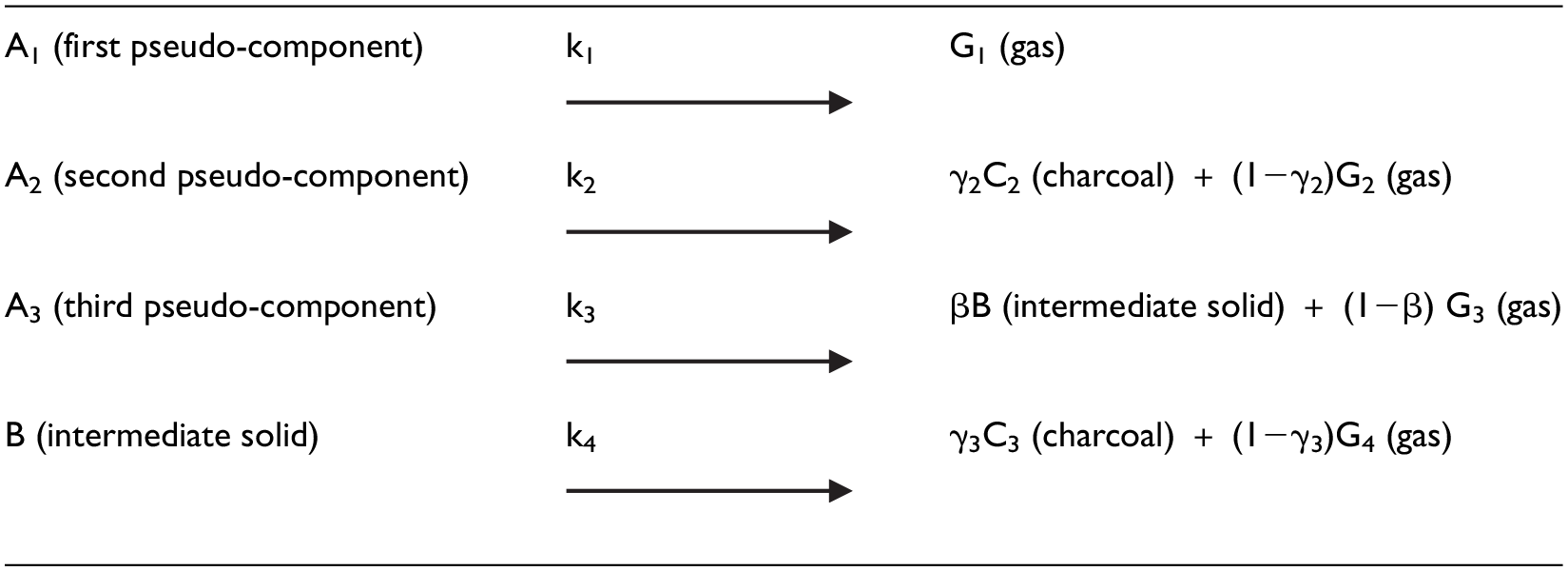
According to Grioui et al’.s 27 model, the thermal degradation of a wood particle takes place through four chemical reactions (k1, k2, k3 and k4) as shown in Figure 5. Wood comprises three pseudo-components, namely A1, A2 and A3, representing the constituents: lignin, cellulose and hemicellulose, respectively. The mass fractions of these pseudo-components are denoted as α1, α2 and α3, with the condition that α1 + α2 + α3 = 1. The first two pseudo-components, A1 and A2, undergo degradation in a single reaction, producing gases (G1) and (G2), and a char residue (C2). The thermal decomposition of A3 occurs in two steps. In the first step, it yields an intermediate solid (B) and gas (G3). Subsequently, in the second step, (B) transforms into char (C3) and gas (G4). The mass fractions (β) of the intermediate product (B) and the non-degradable solid carbons (γ2) and (γ3) are temperature-dependent. All four reactions depicted in the kinetic diagram presented in Table 1 follow the Arrhenius law.
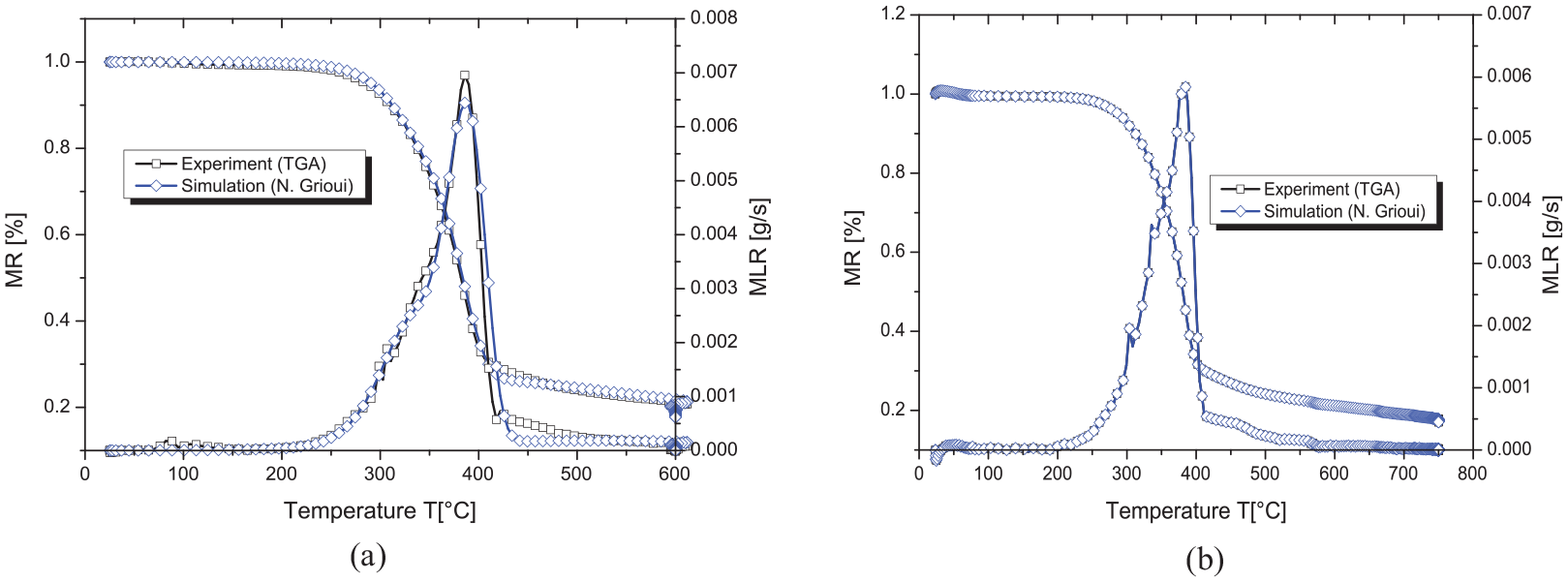
Comparison of the measured and calculated MLR for two different conditions: (a) heating rate 40 K/min and (b) real fire curve. 28
Kinetic scheme of Grioui et al. 27
The mass balance can be written as:

The total mass of the sample

The analytical resolution of the balance equations leads to the following equation:

where
Equation (3) shows that the mass of the sample during the pyrolysis at fixed temperature in an inert atmosphere depends on 10 parameters (α1, α2, α3, γ2, γ3, β, k1, k2, k3 and k4), and are defined by experimental correlations (Grioui et al.). 27
The rates of the four reactions

where
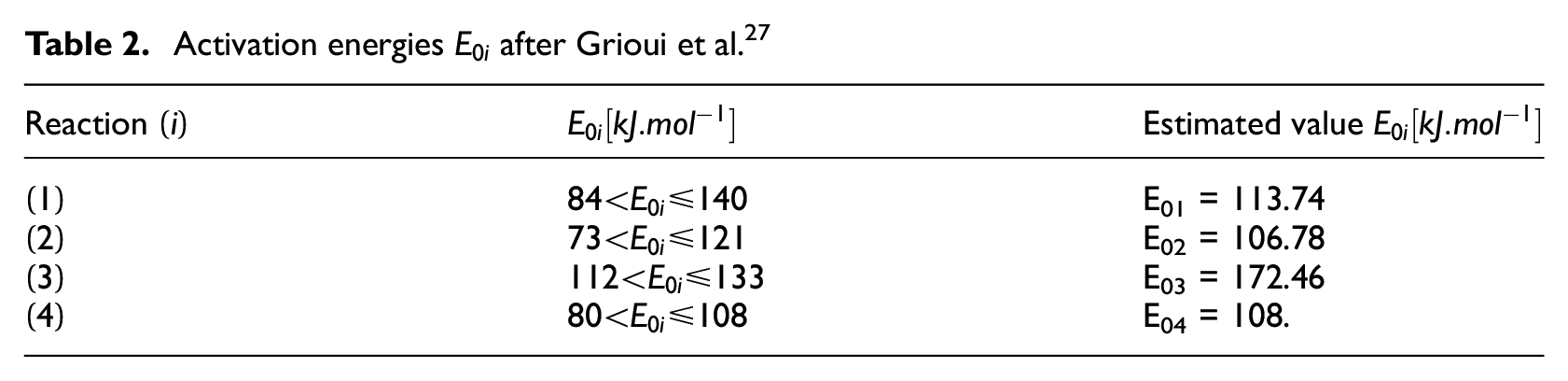
Activation energies
Estimation of the kinetic parameters
The initial step in the modelling process involves visually examining the data and identifying the patterns in the curves, such as the ones presented in Figure 4. Subsequently, the method of least squares is employed for curve fitting and parameter estimation. To minimize the errors between the data measured by the TGA and the values predicted by the kinetic model, the total least squares error function

where
Figure 5 illustrates a comparison between the predicted values and the experimental results obtained at a heating rate of 40 along with the standard fire curve. 28 In terms of qualitative agreement, the predicted values closely align with the measured values.
In what follows, the optimum kinetic parameters summarized in Table 2 are integrated into a finite element model to simulate fire tests. The estimated higher value of E03 = 172.46 kJ/mol in this study can be attributed to the challenge of distinguishing the decomposition of pseudo-component A3 from the decomposition of other components, especially A2, under isothermal conditions.
Finite element modelling
Heat transfer equations
The evolution of the temperature gradient in a wood sample is described by the differential equation:

where
The evolution of the mass with temperature exerts a direct impact on the variation of the thermal properties of the wood. The equivalent thermal conductivity of the solid (s) in the direction (j) is obtained with the help of the following relationships: 23

where X is the moisture content; and the indices (c) and (w) denote charcoal and wood, respectively.
The resolution of the differential equation (7) requires the definition of the initial temperature and the boundary conditions of the problem:


where
Fire test of a cross-laminated timber panel assembled with densified dowels
Cross-laminated timber (CLT) panels consisting of three laminates of spruce softwood, assembled perpendicular to each other by densified dowels, were subject to a fire test. The dimensions of the panel can be seen in Figure 6.
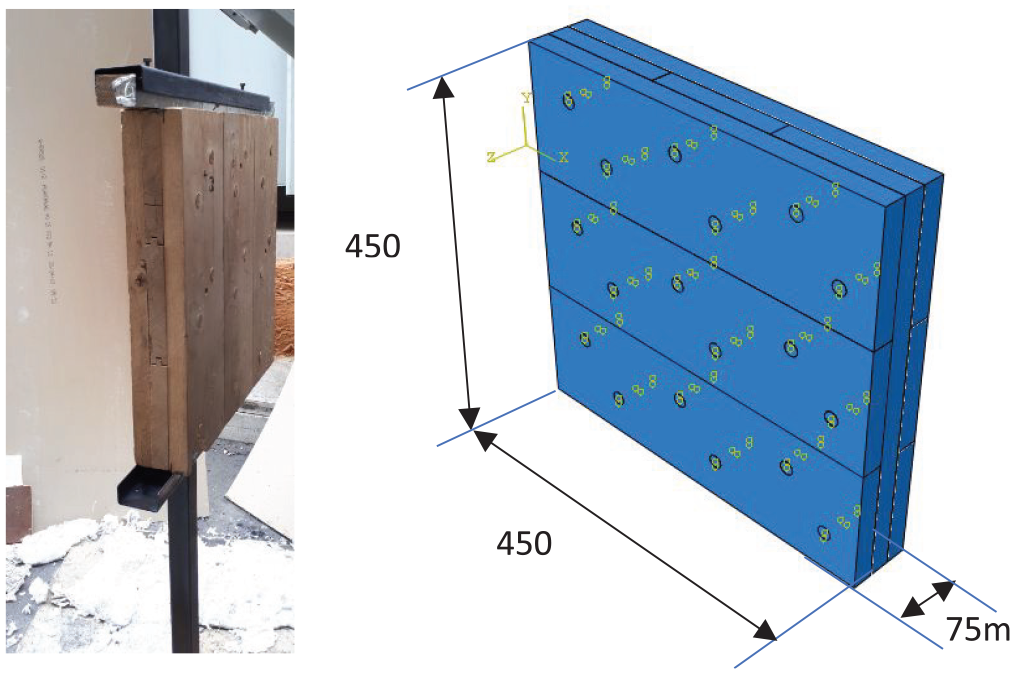
CLT panel assembled with densified wood dowels.
Figure 7 shows the test setup. The heat for the test was supplied by four radiant panels, each with a nominal power of 100 kW/m2 and capable of attaining a maximum surface temperature of around 2000°C. Each CLT panel was horizontally exposed to constant external heat fluxes, as shown in Figure 7. The distance between the tested sample and the radiant panel was approximately 20 cm. Two different thermal fluxes of 49 and 60 kW/m2 were applied.
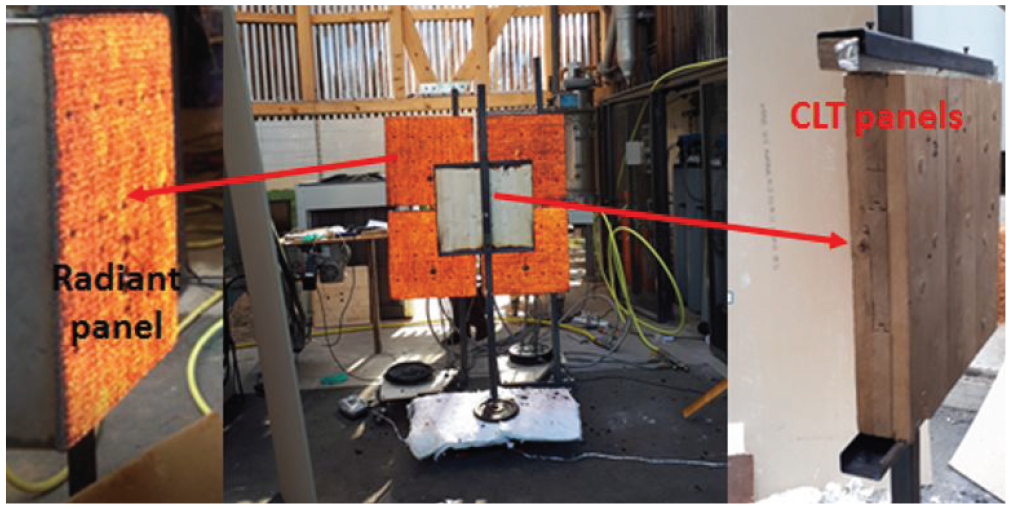
Fire test of a CLT panel.
The finite element mesh consists of 3800 DC2DA-type elements. For the simulations, two distinct heat fluxes, involving radiation and convection, are separately applied to a single face of the sample. The convective transfer coefficient is set to
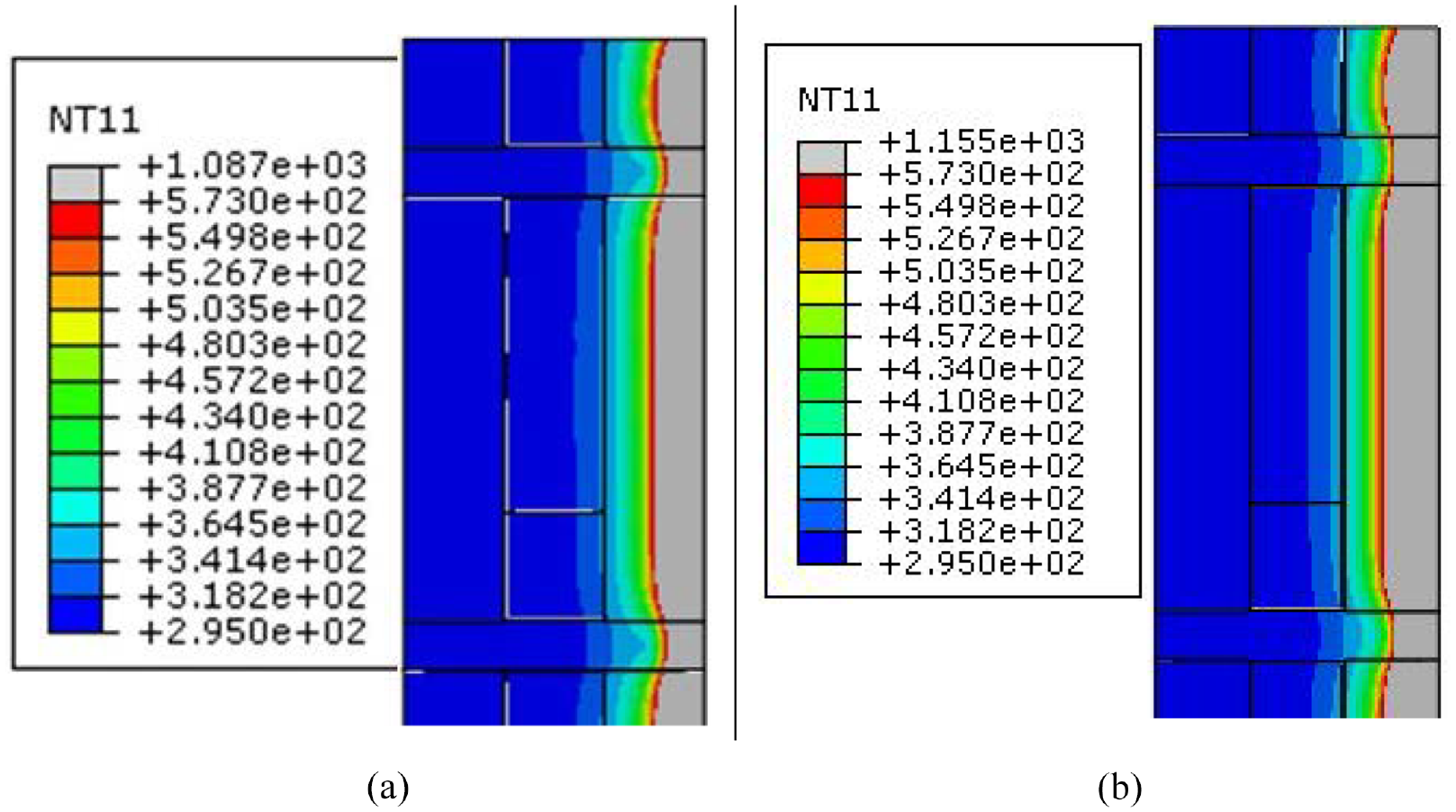
Predicted temperature profiles at a specific time of
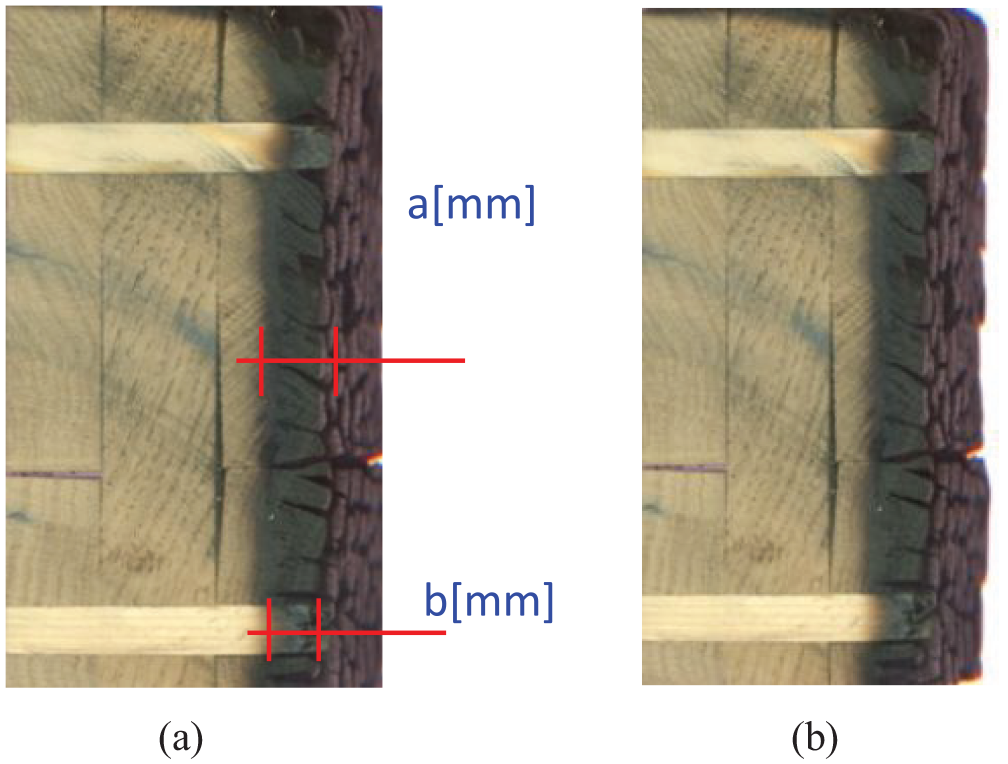
Photographs of the charred layer: (a) heat flux of 49
Table 3 provides a summary of the charred layer thicknesses after an exposure time of 15 min (t = 15 min). The measurements of the charred layer depth are taken at two locations: at the wood level (thickness a) and at the dowel level (thickness b) from the fire-exposed surface (Figure 9(a)).
Charring depth in CLT panels after fire exposure.
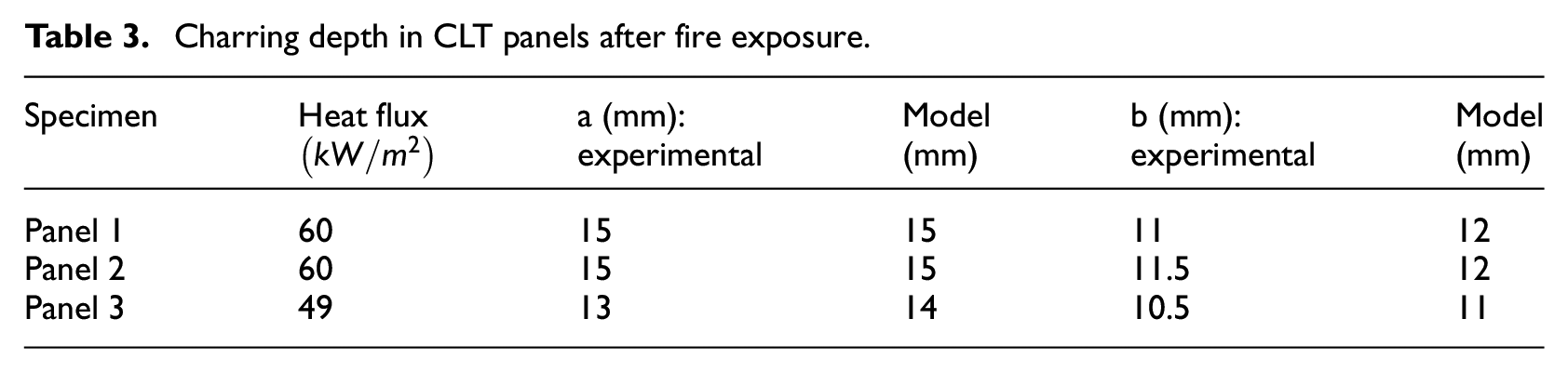
Moreover, the results illustrate the accuracy of the predictions made by the finite element model regarding the thicknesses of the charred layers formed following a 15-min exposure to fire. This successful prediction serves to strengthen the credibility and dependability of the pyrolysis model used in this study. Undoubtedly, the finite element model effectively captures crucial information necessary for calculating the residual section in terms of fire safety.
These results carry significance on two levels. First, they validate the observations made by Cachim and Franssen 14 and Fonseca et al. 15 who pointed out that as wood density increases, the charring rate decreases. Second, had we used the models advocated by Eurocode 5, 11 which do not consider the influence of density, the noticeable variation in the thickness of the charred layer around the dowel would have remained invisible.
Fire test of a CLT connection assembled with densified dowels
To further evaluate the effectiveness of using densified dowels, an additional test was conducted on an L-shaped connection between a column and a beam. The connection employed four dowels, each with a diameter of 16 mm. The beam and column consisted of three laminates, each measuring 32 mm in thickness. Figure 10 provides the dimensions of the L-shaped connection and the finite element model. The CLT panels used in this test were composed of the same material as characterized in the previous section.
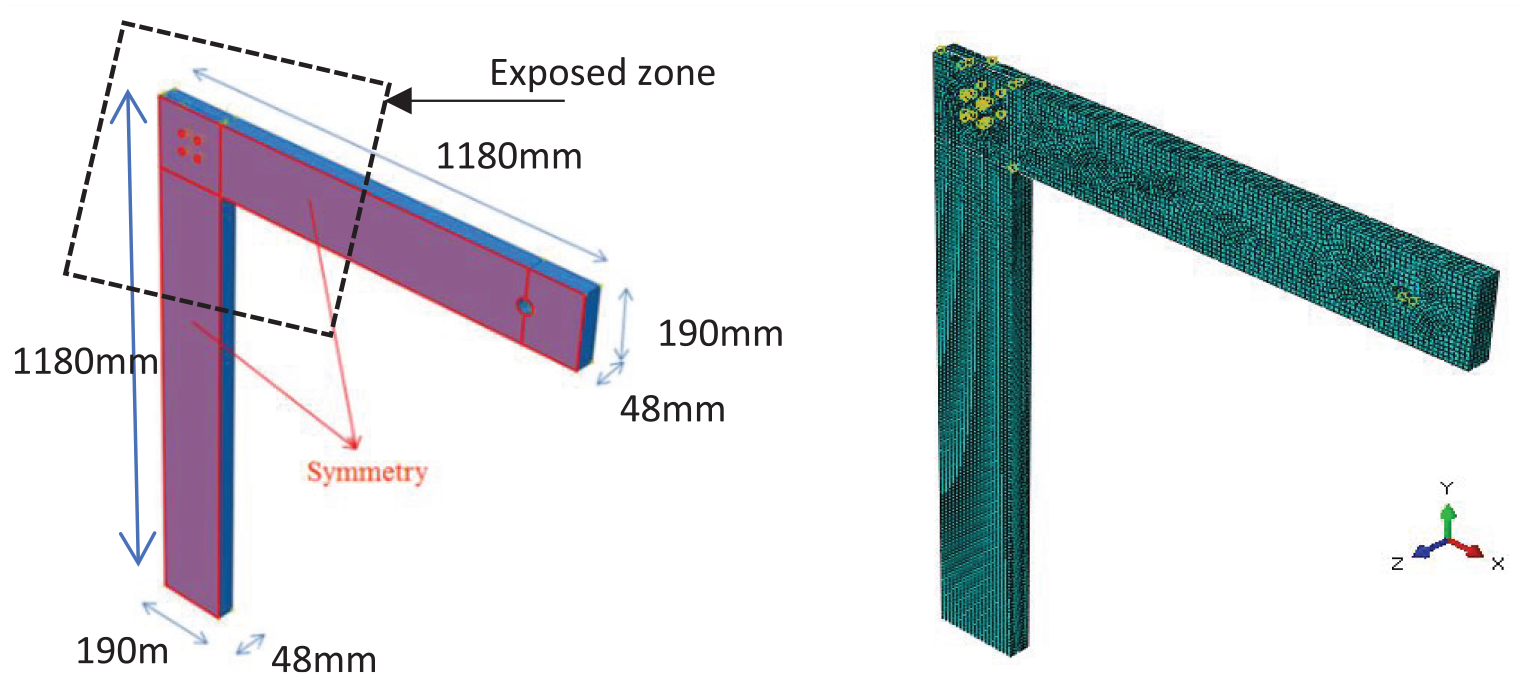
Dimensions of the ‘L’ connection and finite element model.
Figure 11 show the test setup and the char formation. The heat source consisted of four radiant panels, capable of generating a nominal power of 100
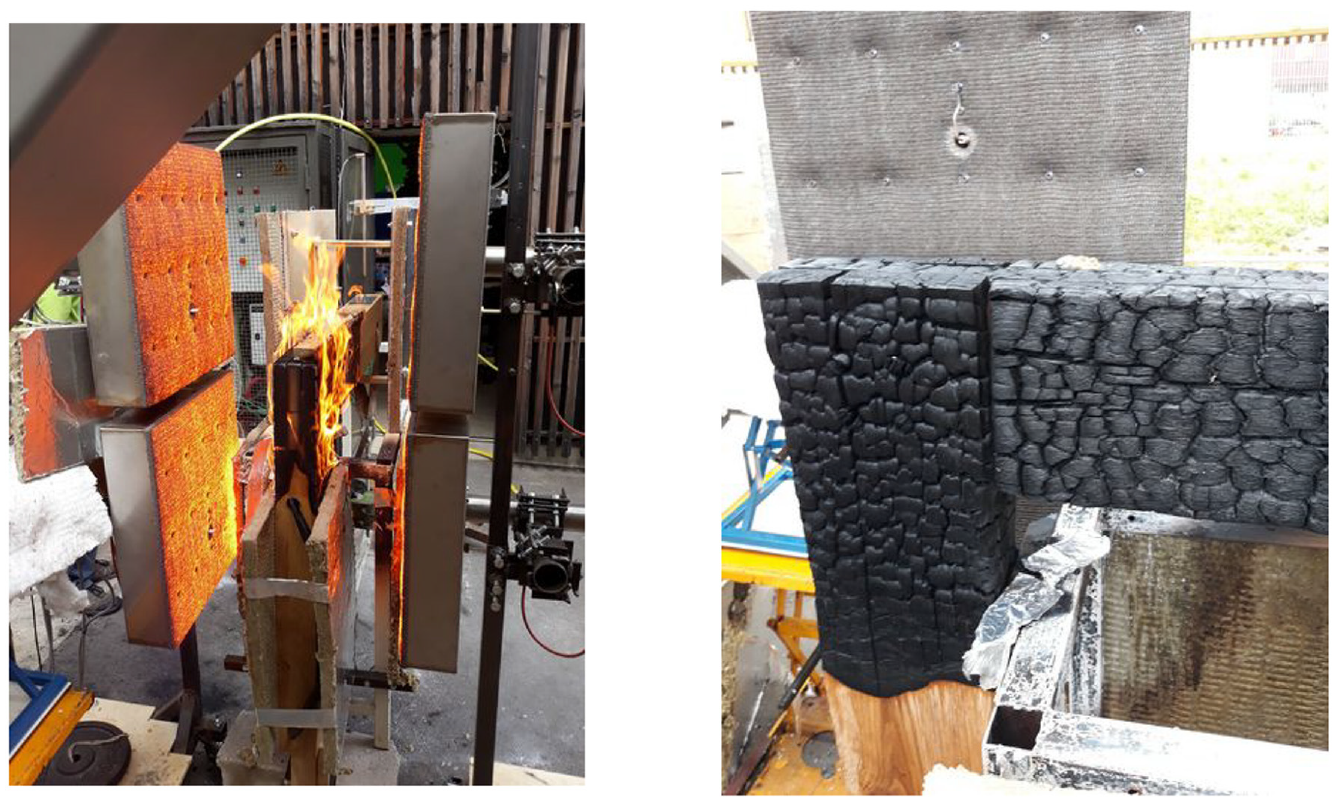
Fire test opf the ‘L’ connection.
To measure surface temperatures, a non-intrusive measurement technique was employed using a multi-spectral infrared camera, specifically the Orion SC7000 model from FLIR. This camera allowed for the study of temperature field evolution over a large surface area. In addition, temperatures within the assembly were recorded using four-type K thermocouples placed at the surface (0), 2, and 3 mm away from the fire-exposed surface.
The connection between the column and beam was modelled using a three-dimensional finite model. In this model, the convective transfer coefficient was set to
Figure 12 presents a comparison between the measured temperature values and the predicted values for two different constant heat fluxes: 49 and 60
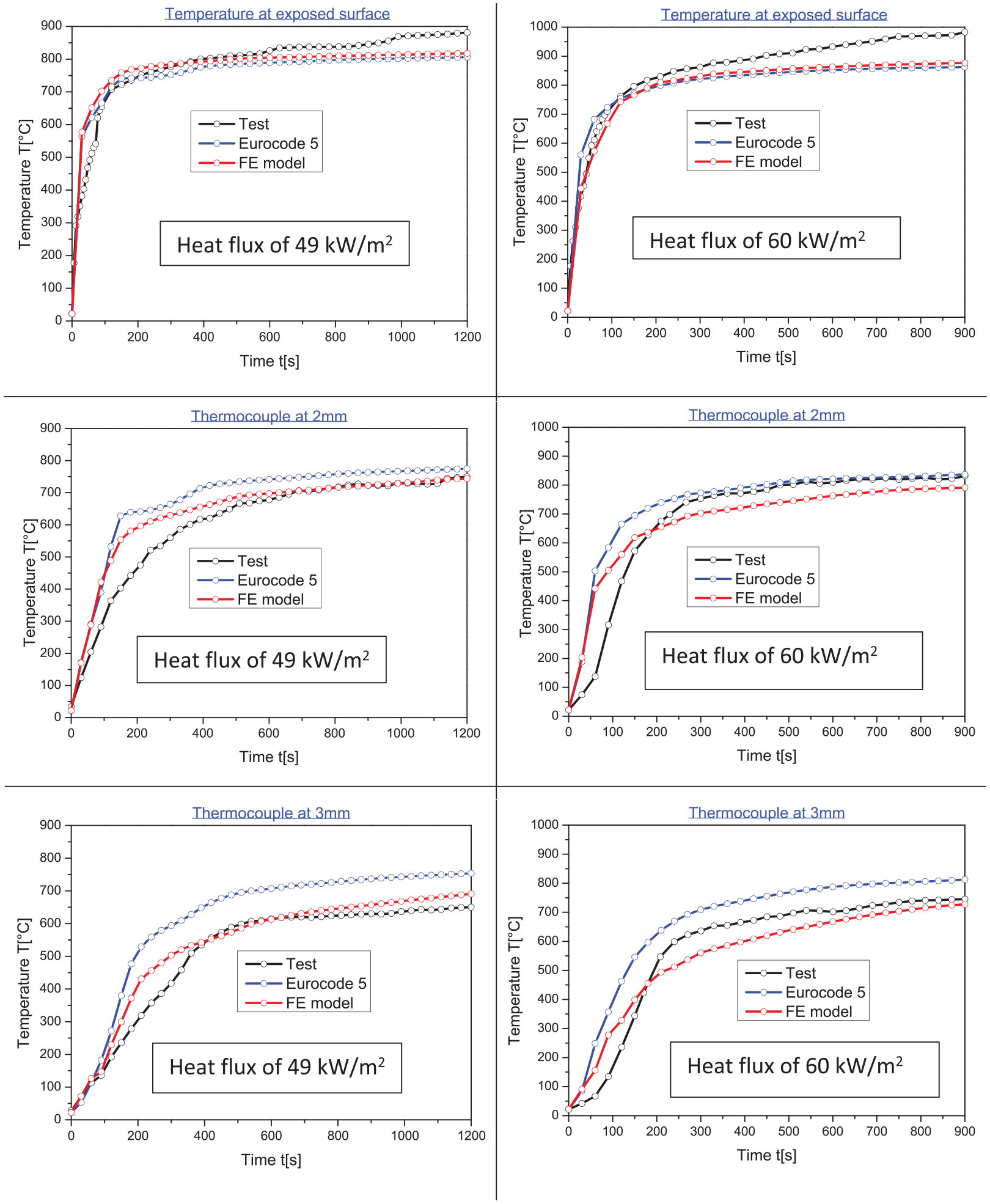
Temperature profiles at the different positions of the thermocouples.
In general, for surface temperatures at 0 mm, an increase in temperature is observed from 400°C onwards. This phenomenon could be attributed to the initiation of slow combustion of the charcoal, which is exothermic. A temperature plateau is reached at around 750°C, which occurs approximately 360 s into the simulation. Across all simulations, the results from the kinetic model integrated in Abaqus 26 best approximate the measured temperature values compared to Eurocode 5. 11 This finding is significant and underscores the value of employing pyrolysis models to analyse the fire behaviour of timber structures.
Figure 13 illustrates a comparison between the char formation estimated by the simulation for a heat flux of 49
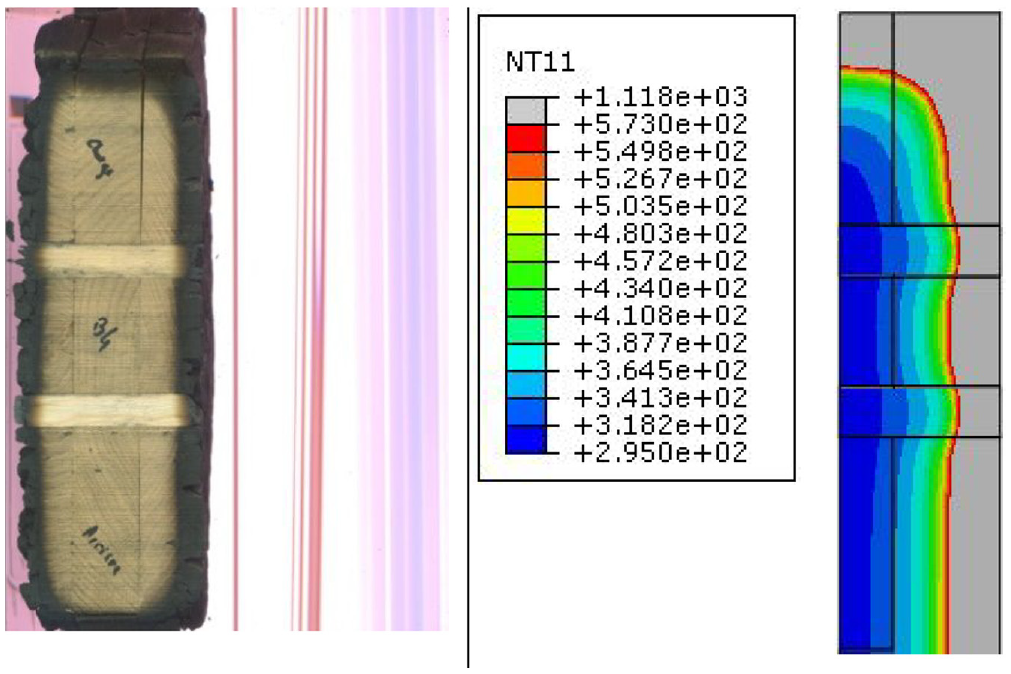
Char formation under a flux of 49 kW/m2.
Table 4 provides a summary of the charred layer thicknesses measured at various fire exposure times for the two different heat fluxes of 49 and 60
Comparison of measured and calculated charring depths in L-joint.
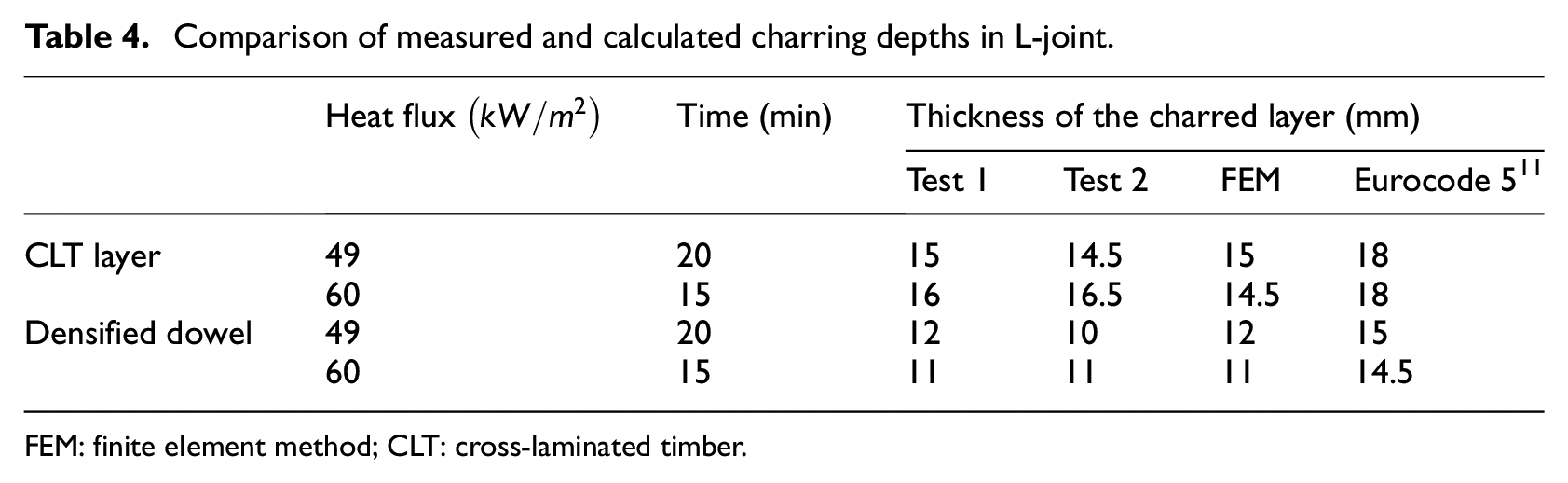
FEM: finite element method; CLT: cross-laminated timber.
Conclusion
This study contributes to the understanding and modelling of the behaviour of connections using densified wood dowels under fire conditions. The evolution of material properties with increasing temperature is formulated using a model that considers the kinetics of thermal decomposition of wood. This approach, commonly employed to characterize the thermal behaviour of biomass at high temperatures, is based on a multi-scale formulation derived from an ‘Arrhenius’ type velocity variation law. The various physico-chemical reactions occurring during the pyrolysis phase are described by multiple kinetic parameters. A technique for characterizing and optimizing these kinetic parameters was developed and compared with experimental test data. The validation of the developed numerical methodology is based on simulations of two in-house tests.
The main findings of this study are as follows:
Based on the examination of the two examples, it can be asserted that the modelling approach using kinetics is more precise compared to employing the model recommended by Eurocode 5 11 for depicting the variation of material properties with temperature, particularly as it does not account for the influence of density. If the Eurocode 5 11 model had been applied, the fluctuation in the thickness of the charred layer around the dowel would have gone unnoticed. Moreover, the use of the kinetics-based model substantiates the observations made by prior researchers,14,15 who highlighted that with an increase in wood density, the charring rate decreases.
The use of the kinetics-based model accurately reproduces the temperature diffusion within the wood material and estimates the thickness of the charred layer, essential information for calculating the residual section. This information is crucial for dimensioning wooden structures subjected to fire.
The determination of the kinetic parameters necessitates TGA analysis. This analysis was conducted on both compacted and non-compacted (original) woods to assess any alterations introduced by the densification process. It was found that the TGA results displayed almost indistinguishable values between the two. This similarity in kinetics was attributed to the minimal impact of heat conduction in small particles.
Both the experimental results and simulations demonstrate that the use of dowels slows down the diffusion of temperature within the connection, thereby enhancing fire safety. This finding highlights the potential benefits of incorporating densified dowels in timber construction.
Overall, this study significantly contributes to the knowledge and understanding of the behaviour of connections using densified wood dowels under fire conditions, providing valuable insights for the design and analysis of fire-resistant timber structures.
Footnotes
Declaration of conflicting interests
The author(s) declared no potential conflicts of interest with respect to the research, authorship, and/or publication of this article.
Funding
The author(s) received no financial support for the research, authorship, and/or publication of this article.
