



Abstract
The self-contained breathing apparatus is one of the most critical components of the firefighting personal protective ensemble providing protection from potentially toxic gases and products of combustion. Three models of self-contained breathing apparatus facepiece lenses meeting various editions of national standards were exposed to radiant thermal loads of 5, 10, 15, and 20 kW/m2 until thermal degradation resulted in hole formation or the test duration reached 30 min. Thermal damage was documented as time to crazing, bubbling, and hole formation. Temperature was recorded within the facepiece. There were significant differences in times to thermal damage between lenses. The facepiece lens model meeting the 2013 edition of National Fire Protection Association 1981 had significantly longer times to thermal degradation than those meeting older editions of the standard. Maximum temperatures were higher in the facepiece model meeting the 2013 edition of National Fire Protection Association 1981, likely because of the extended time the radiant load was applied.
Introduction
Firefighters regularly respond to hazardous environments, many of which are immediately dangerous to life and health (IDLH). In these settings, the personal protective equipment (PPE) is the primary line of defense from the products of combustion, elevated temperatures, radiant thermal flux, and mechanical harm. The self-contained breathing apparatus (SCBA) offers respiratory protection by isolating the firefighter from the ambient environment. This isolation minimizes exposure to toxic gases and provides thermal protection. The SCBA consists of a compressed air cylinder worn on the back, which supplies breathing air to the firefighter through the SCBA regulator. This positive pressure air supply ensures that chemical contaminants do not enter the facepiece. Furthermore, as the air from the cylinder enters the SCBA facepiece, it is directed along the interior surface of the lens, providing a slight reduction in surface temperature. 1
Despite the criticality of the SCBA, the SCBA facepiece lens is often regarded as the weakest point of the personal protective ensemble when exposed to elevated temperatures and thermal flux.1,2 In recent years, rapid changes in the environment where firefighters have been operating have led to line-of-duty deaths and near misses. National Institute for Occupational Safety and Health (NIOSH) firefighter fatality reports have noted that SCBA performance may have been a contributing factor in instances where the thermal conditions rapidly changed.3–8 Damage or failure of the SCBA facepiece is specifically noted in several cases.4,5,8 Commonly, these rapid changes in thermal conditions occur when the firefighter is in the exhaust side of the fire’s flow path.
Over the last 10 years, numerous studies have examined the impacts of radiant thermal loads on SCBA facepiece lens performance. In 2010, in an effort to reduce the incidence of facepiece failures in real-world emergencies, the National Institute of Standards and Technology (NIST) partnered with the Fire Protection Research Foundation (FPRF) to host a workshop focused on SCBA failures under thermal load. The NIST/FPRF workshop emphasized the need for continued research into the thermal loads firefighters encounter during emergency operations. 9
Initial studies conducted by NIST placed SCBA facepieces in real-world structures and examined the impact of propane-fueled calibration experiments and fires with furniture and home furnishings. 1 Temperature was recorded on the inside and outside surfaces of the lens, the inside and outside air, and on the surface of a breathing headform. Furthermore, heat flux was recorded next to the test stand. In three of the eight tests, a steady flow of 40 L/min was introduced to the facepiece as a surrogate for the flow during a firefighter’s breathing. 1 These data demonstrated the damage to facepiece lenses caused by radiant loads and the cooling impact of flow on the interior surface of the lens.
To characterize thermal exposures to SCBA facepiece lenses in a more controlled environment, NIST researchers used a gas-fired radiant panel and breathing machine to expose facepieces to heat fluxes ranging from 2 to 15 kW/m2. Throughout the experiments, temperature measurements were taken of the exterior lens surface, the interior lens surface, inside the facepiece, on the headform, and in the airway of the headform. Furthermore, time to various stages of thermal degradation was recorded. 10 The results of this study directly informed the development of the “Lens Radiant Heat Test” in the 2013 edition of National Fire Protection Association (NFPA) 1981. 11 Further experiments by NIST subjected the entire SCBA assembly, including the facepiece and air cylinder, to heated air streams. 12 SCBA were placed in flows at 100°C, 150°C, and 200°C for up to 1200 s.
The previous research efforts subjected new, unexposed facepiece lenses to radiant heat loads. However, in routine fire suppression and training operations, the facepiece lens is exposed to a wide range of thermal loads. In a continued effort to better characterize the firefighter’s operational environment, the Illinois Fire Service Institute (IFSI), UL Research Institute’s Fire Safety Research Institute (FSRI), and NIST conducted a number of experiments measuring the heat flux throughout the structures and on the firefighter’s helmet.13–16 Madrzykowski 17 compiled these data to create a summary of the thermal conditions indicating that heat flux data at the locations on the fireground ranged from 1 to 30 kW/m2, though positions where firefighters would most likely be operating ranged from 1 to 15 kW/m2.
Exposure of facepiece lenses to low intensity, repeat thermal loads (representative of Routine and Ordinary fireground conditions 17 ) has been shown to have a negative impact on the mechanical properties of the SCBA facepiece. 18 The appearance of thermal damage occurred after only 10 5-min cycles at 5 kW/m2. Mechanical properties were altered after 100 cycles of exposure, even in samples that did not include visible damage. These experiments demonstrated that physical changes to the lens may occur during standard use and may not be immediately evident on routine inspection of the facepiece lens.
Building on the repeat exposure studies conducted by Horn et al., 18 Kesler et al. 19 examined the mechanical properties and thermal performance of new and field-used SCBA facepiece lenses. Sections of lenses were subjected to quasi-static tensile and impact tests, and to the “Lens Radiant Heat Test” from the 2013 edition of NFPA 1981:2013. 11 In the “Lens Radiant Heat Test,” the lens is exposed to a heat flux of 15 kW/m2 for a duration of 5 min. Exposure to repeated thermal loads was shown to impact mechanical properties of the lenses, but no facepiece lenses failed to maintain positive pressure in the “Lens Radiant Heat Test.”
Important questions remain regarding the performance of SCBA facepiece lenses outside of the Routine and Ordinary condition exposures. Exposures classified as Thermal Class III and IV present serious hazards to firefighters and may be encountered when fire conditions rapidly change or when firefighters become located in the exhaust portion of the fire flow path.
Objectives
The objectives of this study were to examine the thermal degradation of SCBA facepiece lenses during single exposures to heat flux values representative of those encountered during Routine and Ordinary fireground conditions that a facepiece would be exposed to during firefighting and fire suppression operations. 17 Three models of new, unexposed, facepiece lenses were exposed to various radiant thermal loads. Two models met the 2007 edition of NFPA 1981 and one model met the 2013 edition. Specifically, the following three metrics were examined under various heat fluxes:
Thermal degradation of the facepiece as characterized by time to crazing, bubbling, and hole formation;
Thermal injury to the airway as characterized by time to reach a critical temperature;
Temperature at critical points: the airway temperature and the temperature of the air within the dead space between the facepiece lens.
Methods
Materials
Three models of SCBA facepieces were tested, all sourced from a single manufacturer and manufactured in May and June 2021. Facepieces met the standards laid forth in NFPA 1981, with two models following NFPA 1981–2007 edition and one model following NFPA 1981–2013 edition. The first model,
SCBA facepiece models used, similar to those used in a previous series of experiments. 19
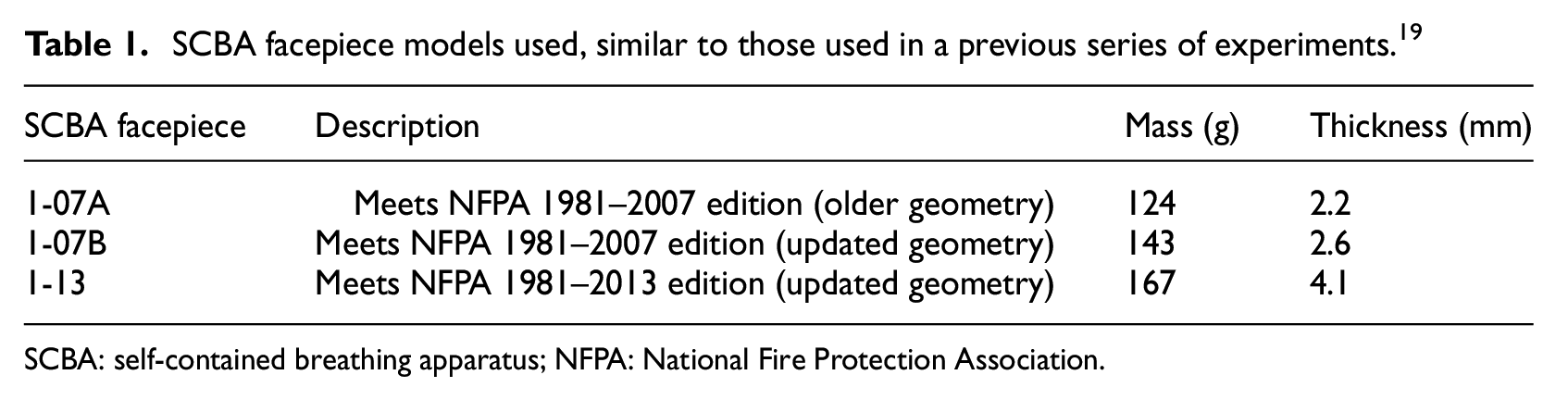
SCBA: self-contained breathing apparatus; NFPA: National Fire Protection Association.
Testing apparatus
A natural gas-fired radiant panel was used to provide consistent and repeatable thermal loads to the facepieces. Previous studies have used the same radiant panel18,19 based on the tests conducted by Putorti et al. 10 and used the “Lens Radiant Heat Test” from NFPA 1981:2013. 11 Figure 1 shows the testing apparatus with the breathing headform and SCBA facepiece. An air–gas mixture provides a uniform flame across the 39 cm (15.4 in) tall by 33 cm (13.0 in) wide panel. Air is fed to the panel at a rate of 450 L/min and natural gas is supplied at 33 L/min.
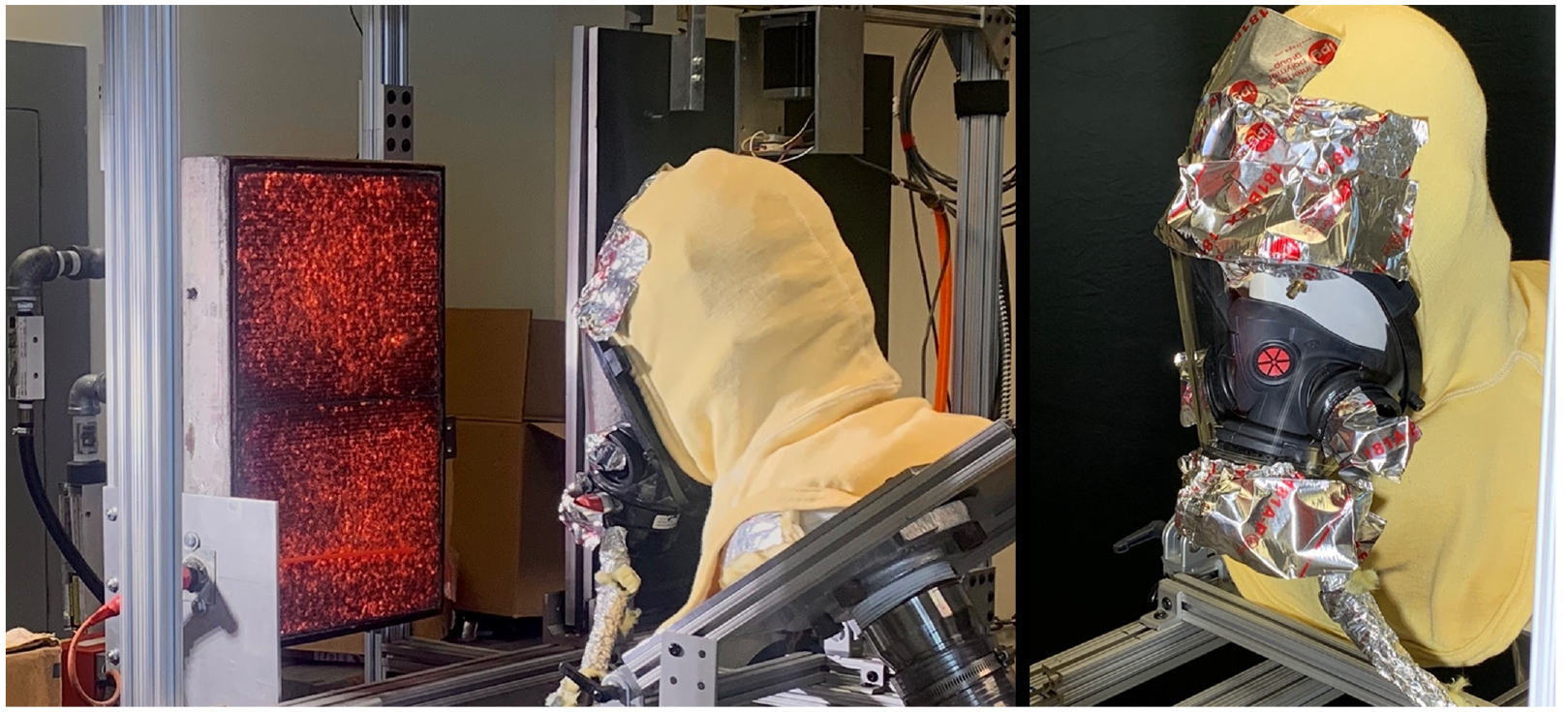
The testing apparatus consisted of a gas-fired radiant panel and breathing headform as in the Lens Radiant Heat Test in NFPA 1981:2013. 11
Prior to each test, the testing apparatus was allowed to run for 1 h to ensure that steady-state conditions were achieved. After the 1 h of warm-up, a water-cooled Schmidt–Boelter heat flux gauge (Medtherm Corp., Huntsville, AL, USA) was used to locate the prescribed heat flux. Heat flux was controlled by adjusting the distance between the gauge and the radiant panel along a linear track. After determining the proper location, the distance was marked, and the gauge removed from the test stand. At the highest heat flux, a minimum distance of 30 cm (11.8 in) was maintained between the panel and the facepiece to minimize convective heat transfer.
Facepieces were positioned on a breathing headform, such that the surface of the lens was parallel to the radiant panel as in previous studies.10,18,19 Components of the facepiece were protected with aluminum tape to avoid damage to the non-lens components with repeated testing. A Posi 3 USB 20 PosiChek system (Honeywell, USA) was used to control the breathing headform. To align with NFPA 1981:2013, 11 breathing was set to a rate of 40 L/min, ± 2, with a respiratory frequency of 24 breaths/min, ± 1. A standard fire service SCBA was used to supply air to the headform.
Experimental design
Tests were conducted at four heat flux intensities representing a range of thermal classes covering a range of thermal conditions the firefighter may encounter during fireground operations. Heat fluxes of 5, 10, 15, and 20 kW/m2 were selected as they range from ordinary to emergency thermal classes. 21 While most firefighting operations may encounter heat flux values ranging from 5 to 10 kW/m2, the higher heat flux values were included in this study to represent emergency situations, such as rapid changes in conditions resulting in firefighters facing a high thermal insult. Each facepiece lens was exposed to the prescribed heat flux until the lesser of 30 min or the occurrence of hole formation. At the end of the trial, the radiant load was removed, though breathing and data collection continued for two additional minutes. Three replicates of each condition were conducted.
Thermal degradation
Thermal degradation of the facepiece lenses was recorded throughout each of the tests. To quantify this metric, time to critical degrees of thermal degradation was recorded. Three degrees of degradation were tracked as in previous studies. 1 Specifically, time to crazing, bubbling, and hole formation were recorded. Representative examples of thermal degradation are shown in Figure 2. Crazing and bubbling were tracked visually and verified with video recording of each test. Hole formation was also tracked visually and verified by a change in pressure between the inside surface of the lens and the headform as recorded by the PosiChek.
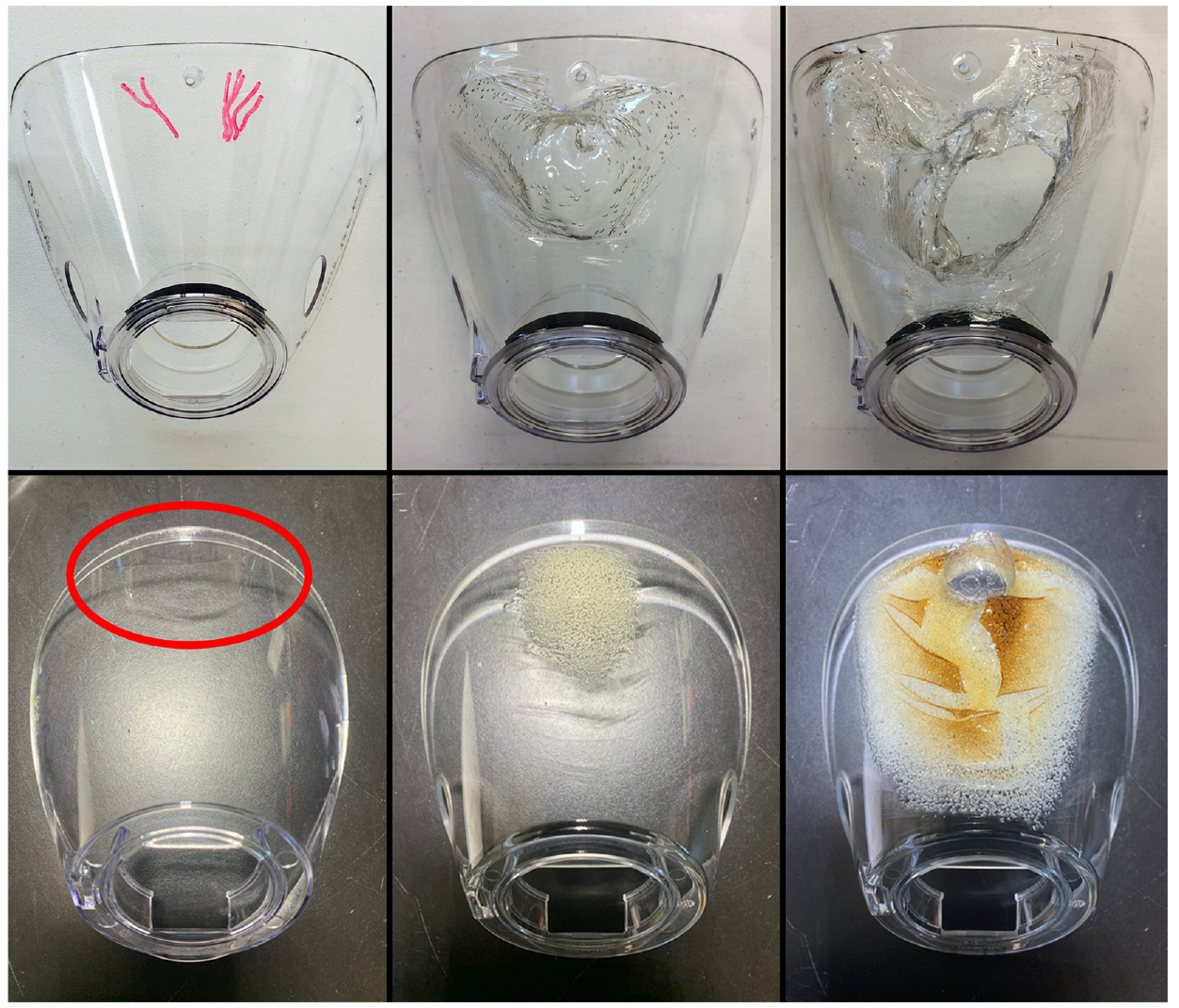
Representative images of thermal degradation in SCBA lenses meeting NFPA 1981–2007 edition (1-07A, top row) and lenses meeting NFPA 1981–2013 edition (1-13 lenses, bottom row): crazing (left, damage highlighted in red), bubbling (center), and hole formation (right).
Thermal injury and temperature
Throughout each test, temperature was recorded at two locations to quantify the risk of burn injury with the various facepieces. Inspired air temperature was recorded at the airway (Location 1) and the dead space air temperature was measured between the inside surface of the lens and the headform (Location 2). Data were collected at 1 Hz, using 0.25 mm bare bead Nickel–Chromium / Nickel–Alumel Type K thermocouples secured with aluminum tape. Data were recorded with a Squirrel 2040 Series Data Logger (Grant Instruments, Beaver Falls, PA, USA). Thermocouple locations are shown in Figure 3. Previous modeling efforts suggest that inhalation of air at temperatures exceeding the critical temperature of 85°C can lead to burns of the trachea, 22 thus, time to 85°C was measured and recorded.
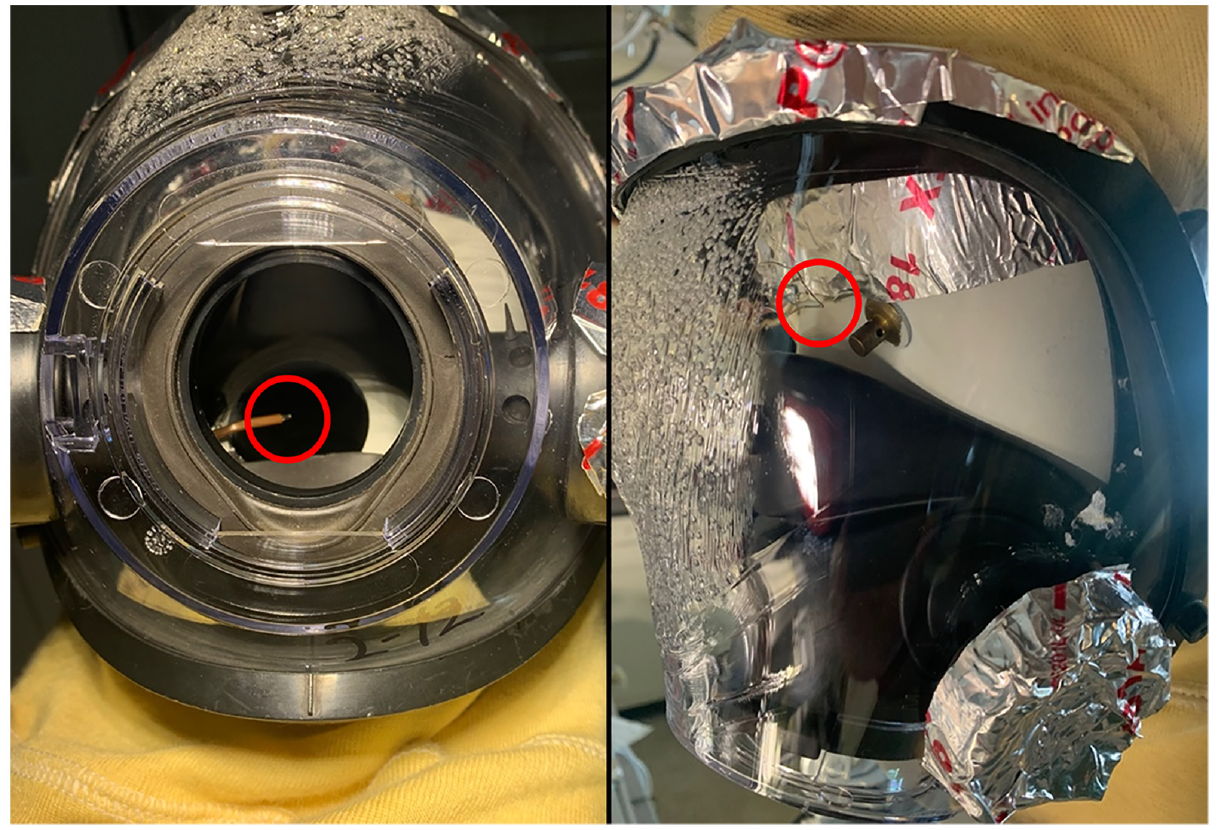
SCBA facepieces with thermocouple locations are highlighted in red. Temperature was measured at the airway (Location 1, left) and the dead space between the lens and headform (Location 2, right).
Data analysis
Time to thermal damage and time to temperature were averaged across three replicate trials for all conditions. In some instances, the lens did not reach specific damage thresholds or temperatures within the 30-min test. Maximum temperature was defined as the highest temperature reached throughout the trial. Replicate trials were averaged across three trials except in the case of condition 1-13 at 10 kW/m2 in which only two replicates had usable temperature data. Paired t-tests were conducted to compare time to thermal damage and temperature data between facepiece models, with the results determined to be statistically significant when p-value is less than 0.05. 23
Results and discussion
Thermal degradation
Time to thermal degradation of the facepiece was recorded and is reported in minutes to time of event as shown in Table 2. In some instances, certain thresholds of thermal degradation did not occur within the 30-min test. These instances are noted with “–” in Table 2.
Time to thermal degradation by mask type and heat flux. All times reported as mean (SD) in minutes. Instances where certain thresholds of thermal degradation were not reached are noted with “–.”
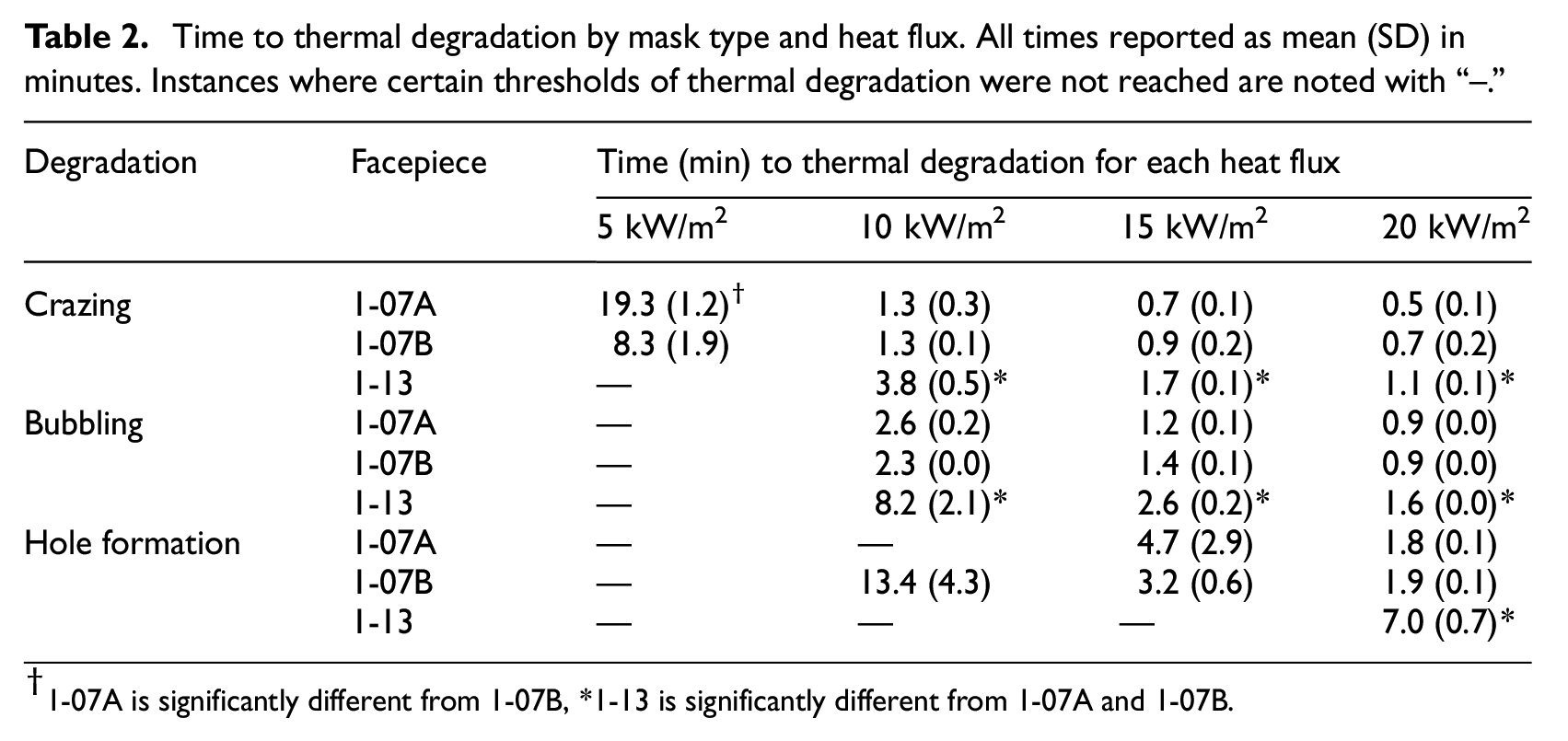
1-07A is significantly different from 1-07B, *1-13 is significantly different from 1-07A and 1-07B.
At 5 kW/m2, 1-07A and 1-07B had statistically significant differences in time to crazing, with damage appearing in 1-07B over twice as fast as in 1-07A. None of the facepiece lenses tested developed hole formation or bubbling at 5 kW/m2. Putorti et al. 10 did report two facepiece lens models showing bubbling at 5 kW/m2, but our results are consistent with the reported results for hole formation.
At 10 kW/m2, all lenses showed crazing and then developed bubbling. No significant differences were observed in time to bubbling or crazing between 1-07A and 1-07B, though 1-13 took significantly longer to develop either sign of thermal degradation. 1-07B developed hole formation at 13.4 min, slightly longer than previous work has observed in facepieces held to a similar standard, 10 but hole formation was not observed in 1-07A or 1-13.
At 15 kW/m2, 1-13 developed crazing and bubbling significantly slower than either 1-07A or 1-07B. 1-13 did not develop a hole throughout the 30-min test; however, holes did form in both 1-07A and 1-07B. There were no statistically significant differences between 1-07A and 1-07B for any of the levels of thermal degradation. The times for 1-07A and 1-07B align very closely with the previous literature. 10 The increased time to thermal degradation in the 1-13 lenses shows the impact of the changes in facepiece lens construction as a result of the introduction of the “Lens Radiant Heat Test” from NFPA 1981:2013. 11
At 20 kW/m2, all facepiece lenses reached hole formation. 1-07A and 1-07B lenses developed crazing in just 31 and 42 s, respectively (though not statistically different), bubbling occurred in less than 1 min, and holes developed after less than 2 min of exposure. The 1-13 lenses had significantly longer times to thermal degradation for each metric. This may be attributed to the increased thickness and corresponding increased mass of the 1-13 lenses (Table 1). Again, these results indicate that masks which are compliant to the “Lens Radiant Heat Test” will result in longer times to degradation than those lenses designed to meet older editions of the standard without the “Lens Radiant Heat Test.”
Thermal injury and temperature
Temperature was recorded throughout each trial. Representative plots of each test condition are shown in Figure 4. Time to thermal injury was measured as the time at which the temperature first exceeded the 85°C threshold 22 (the temperature at which damage to the trachea can occur) and is reported in minutes as shown in Table 3. In some instances, temperature at certain locations did not exceed the 85°C threshold within the test duration. These instances are noted with “–” in Table 3. In at least one replicate of each test condition, temperatures in the dead space between the lens and headform reached 85°C. Interestingly, at 5 kW/m2, temperatures in the dead space reached the threshold temperature fastest with 1-13, possibly due to the increased mass of the lens retaining more thermal energy than the thinner lenses. Temperatures in the airway did not exceed the 85°C threshold except with 1-13 at 15 kW/m2. This is an effect of the relatively high heat flux and lack of hole formation resulting in a prolonged exposure. At 20 kW/m2, hole formation occurred before internal temperatures were able to reach 85°C. These results strengthen past research efforts examining temperatures of the airway. For example, in extreme thermal conditions during previous research efforts where the entire SCBA assembly is exposed to temperatures of 100°C–150°C for 20 min, temperature of the airway remained below 85°C. 12 When the entire SCBA was exposed to temperatures of 200°C, temperature of the airway remained below 85°C for nearly 15 min. 12
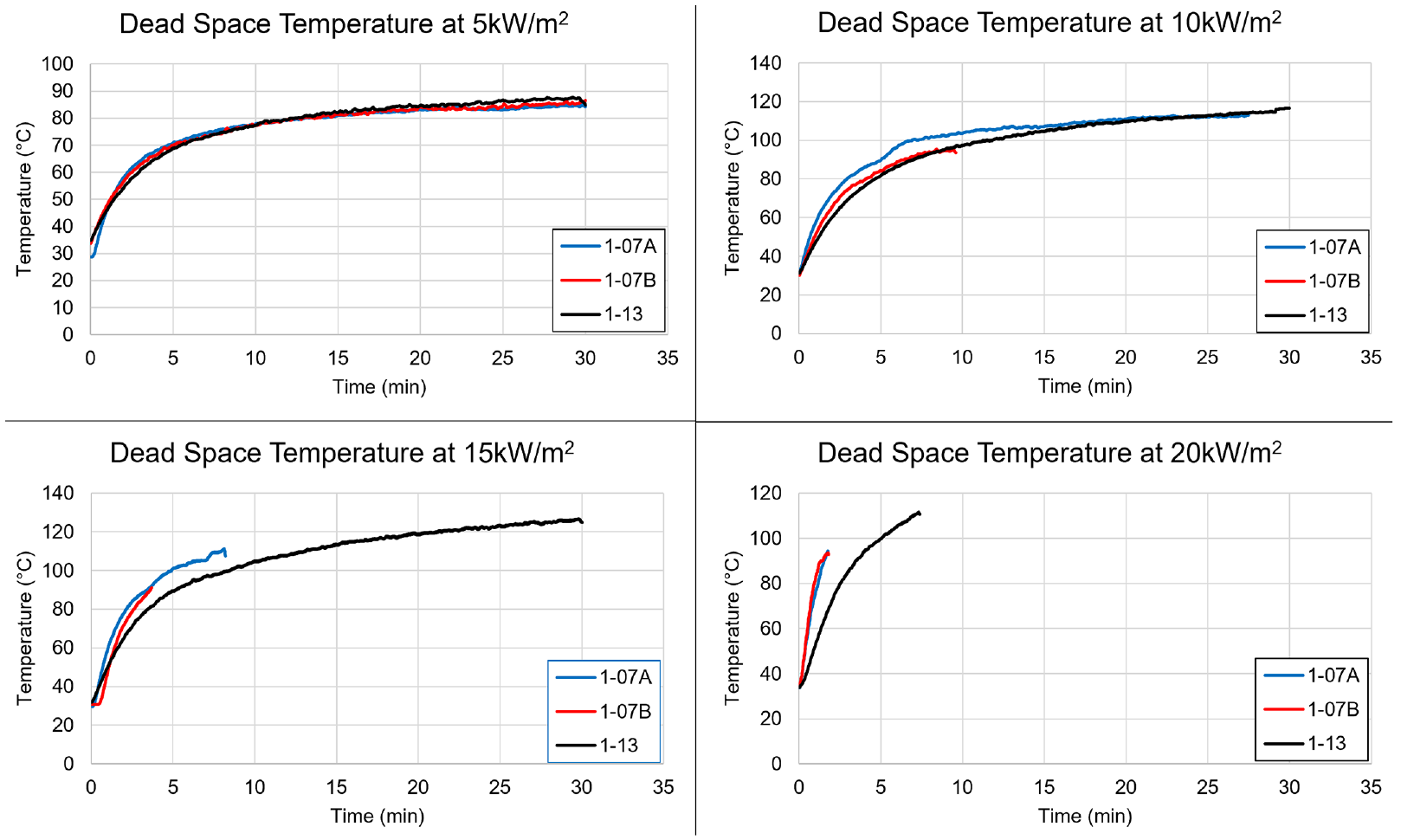
Representative plots of temperature through the test at each heat flux. Data were recorded until a hole formed in the facepiece or the test duration reached 30 min.
Time to critical temperature (85°C) by mask type and heat flux. All times reported as mean (SD) in minutes. Instances where critical temperature was not reached are noted with “–.”
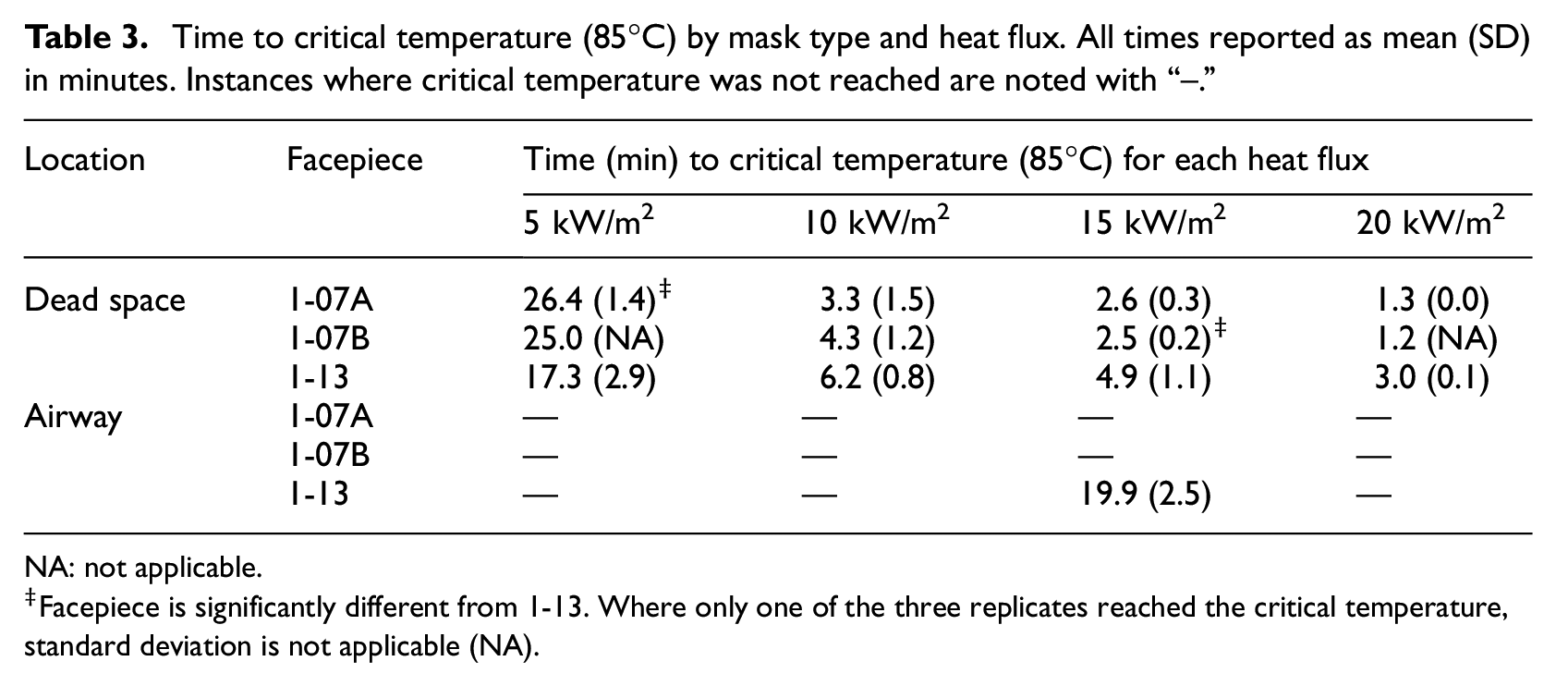
NA: not applicable.
Facepiece is significantly different from 1-13. Where only one of the three replicates reached the critical temperature, standard deviation is not applicable (NA).
At the lowest heat flux intensity (5 kW/m2), maximum temperatures at Locations 1 and 2 were not statistically significantly different between the facepiece lenses as shown in Table 4. At 10 kW/m2, temperatures in the dead space were not significantly different between 1-07A and 1-13, but there were significant differences between 1-07A and 1-07B, and nearly significant differences between 1-07B and 1-13 (p = 0.081). For tests at 15 and 20 kW/m2, 1-13 reaches significantly higher temperatures at both locations. This can be attributed to the duration of the exposure, as the 1-13 lenses took significantly longer to reach hole formation. Thermal degradation of the 1-07A and 1-07B lenses occurred more quickly than in 1-13, resulting in earlier hole formation and termination of the test. The highest temperatures of any of the tests occurred at 15 kW/m2 with 1-13. In these trials, hole formation did not occur resulting in the full exposure of 30 min.
Maximum temperature in the airway and the air between the lens and headform. Data are presented as mean (SD) in degree Celsius.
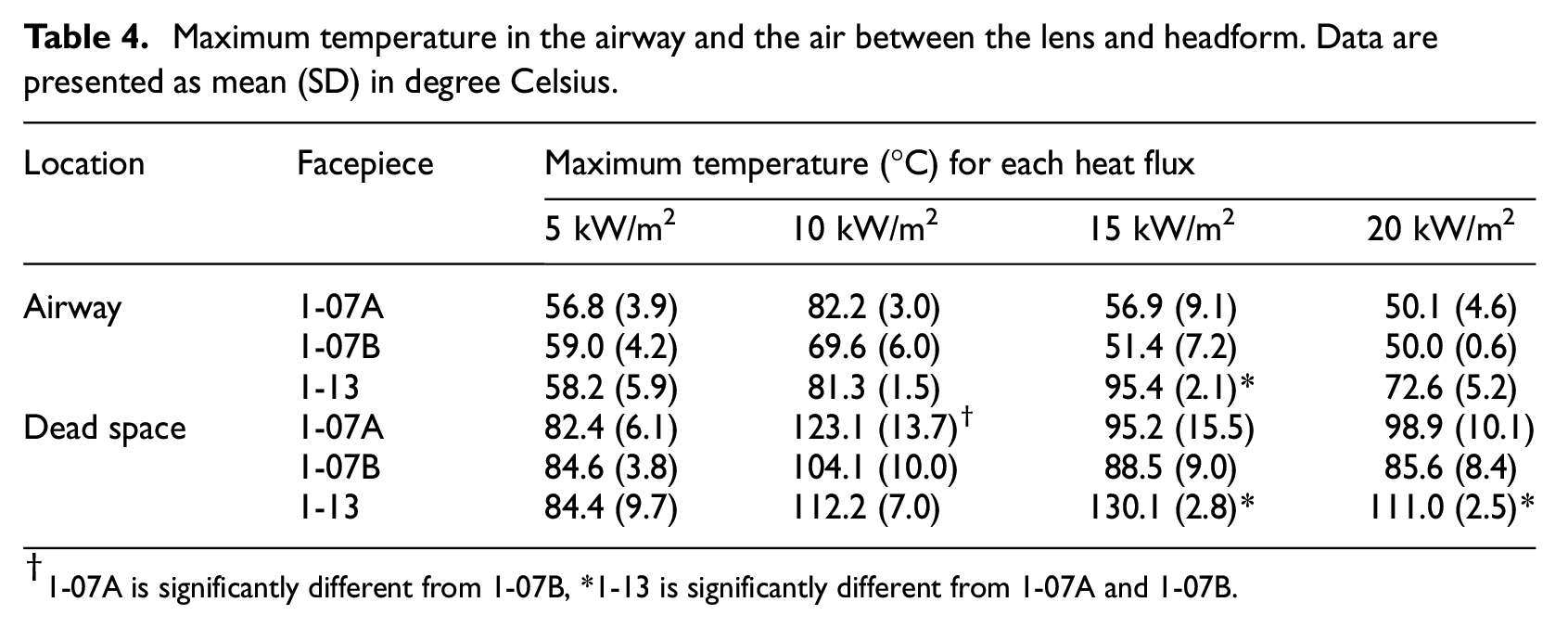
1-07A is significantly different from 1-07B, *1-13 is significantly different from 1-07A and 1-07B.
Conclusion
Previous research has shown the SCBA facepiece to be susceptible to damage from thermal loads which can be encountered during firefighting operations. This work has led to changes to NFPA 1981:2013, 11 specifically the introduction of the “Lens Radiant Heat Test.” SCBA facepieces meeting the 2013 edition of NFPA 1981 had increased time to thermal degradation and avoided hole formation at all but the most extreme heat flux tested (20 kW/m2). Maximum temperature within these facepiece lenses was higher than those meeting older editions of the standard. This can be attributed to longer exposure times, as the lenses meeting the 2013 edition of NFPA 1981 took longer to thermally degrade. Although the SCBA facepieces that comply with the latest NFPA standards exhibit improved thermal performance compared with older versions, all components of the PPE ensemble have limits regarding heat transfer and thermal performance.
There were testing limitations as these experiments were conducted in a controlled laboratory environment. As in previous research, thermal loads were applied from a flat panel and directed to the parallel lens surface. This arrangement does not fully reflect the radiant loads under fire conditions which may reach the facepiece from multiple sources. Furthermore, changes in the environment firefighters operate in (increased fuel loads, fuels with higher heat release rates) and increases in thermal protection in other components of firefighting PPE drive the need for further research into thermal degradation of facepiece lenses. Specifically, the prevalence of lithium-ion batteries in energy storage systems, vehicles, and mobility devices can result in fires with high heat release rates. There is a pressing need to continue to characterize the thermal environment the firefighter operates in and the performance of the SCBA facepiece in that environment.
Footnotes
Declaration of conflicting interests
The author(s) declared no potential conflicts of interest with respect to the research, authorship, and/or publication of this article.
Funding
The author(s) disclosed receipt of the following financial support for the research, authorship, and/or publication of this article: This project was funded as part of a subaward agreement to the Illinois Fire Service Institute through UL Research Institutes’ Fire Safety Research Institute under the DHS FEMA Assistance to Firefighters Grant program (award no. EMW-2018-FP-00476).
